
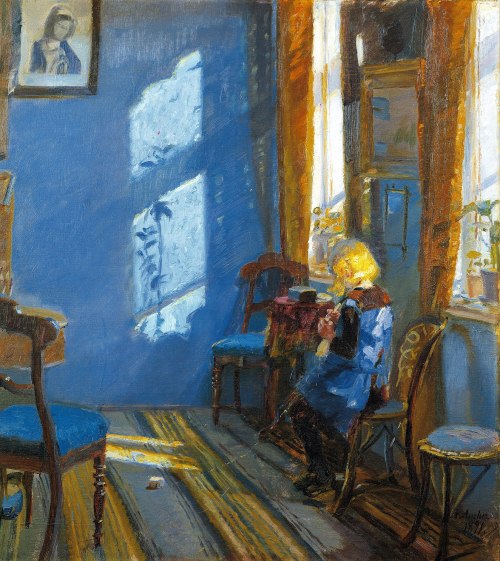
 Artist: Anna Ancher:
Title: Sunshine in the Blue Room. Helga Ancher Knitting in Grandmother’s Parlour
Alternate Title: Sunlight in the Blue Room
Date: 1891
Medium: oil on canvas
Dimensions: w58.8 x h65.2 cm (Without frame)
Collection: Skagens Museum
Inscriptions: A. Ancher 1891
What I love about this painting:
It is a painting that must be viewed from a distance, as only then does it come into focus. I love the way the light falls on the wall, the shadow of a plant silhouetted there. Helga’s golden hair stands out in contrast to the blue of the walls and matching blue of her dress. Who is the woman in the image on the wall? Is it a picture of grandmother?
This is definitely a blue room, a shade of blue with a kind of depth and boldness to it. It must have been a colorful home.
I love all of Anna Ancher’s work. She painted the humanity in the small everyday things, such a daughter sitting near a window, crocheting. She melded art with homemaking, proving that even in an era of oppression women could be artists to be reckoned with.
About this painting, via Wikipedia:
As indicated by its full title: Sunshine in the Blue Room. Helga Ancher Knitting in Grandmother’s Parlour (Solskin i den blå stue. Helga Ancher ved strikketøjet i bedstemoders stue), the painting depicts Anna’s daughter Helga knitting in her grandmother’s room. With her back to the observer, the child is busy crocheting. Despite its everyday subject, the painting is one of Anna Ancher’s most captivating masterpieces with its many shades of blue and the sense of tranquility it conveys. Devoid of action, the theme is essentially the play of light in the room. The only indication of the outside world is the light streaming through the window. Mette Bøgh Jensen, curator of Skagens Museum, explains that Anna Ancher’s interior paintings are “more about the colour and light than anything else”. The artist’s main interest is “not in replicating the reality of the room or wall, or even the light, but rather what is left when these things are stripped away and all that remains are colour and form”. Bøgh Jensen continues, “Anna Ancher’s art is unlike that of anyone else. In its essence it is tied to the special world of motifs in Skagen: the fishermen’s families, the harvesters, the heathers, the special colours, and the brilliant summer light.”
In her Concise Dictionary of Women Artists, Delia Gaze assesses Anna Ancher’s achievements as remarkable “in the modernity of her idiom, with its reduced, abstracting forms and bold expressive colours, singling her out as one of the most innovative painters of her generation, exceeding most of her male colleagues, including her husband” [1]
About the artist, via Wikipedia:
Anna Ancher (18 August 1859 – 15 April 1935) was a Danish artist associated with the Skagen Painters, an artist colony on the northern point of Jylland, Denmark. She is considered to be one of Denmark’s greatest visual artists.
Anna Kirstine Brøndum was born in Skagen, Denmark, the daughter of Ane Hedvig Møller (1826–1916) and Erik Andersen Brøndum (1820–1890). She was the only one of the Skagen Painters who was born and grew up in Skagen, where her father owned the Brøndums Hotel. The artistic talent of Anna Ancher became obvious at an early age and she became acquainted with pictorial art via the many artists who settled to paint in Skagen, in the north of Jylland.
While she studied drawing for three years at the Vilhelm Kyhn College of Painting in Copenhagen, she developed her own style and was a pioneer in observing the interplay of different colors in natural light. She also studied drawing in Paris at the atelier of Pierre Puvis de Chavannes along with Marie Triepcke, who would marry Peder Severin Krøyer, another Skagen painter.
In 1880 she married fellow painter Michael Ancher, whom she met in Skagen. They had one child, daughter Helga Ancher. Despite pressure from society that married women should devote themselves to household duties, she continued painting after marriage. [2]
Credits and Attributions:
Image: Sunlight in the Blue Room by Anna Ancher, Public domain, via Wikimedia Commons
[1] Wikipedia contributors, “Sunlight in the Blue Room,” Wikipedia, The Free Encyclopedia, https://en.wikipedia.org/w/index.php?title=Sunlight_in_the_Blue_Room&oldid=1047381792 (accessed January 6, 2022).
[2] Wikipedia contributors, “Anna Ancher,” Wikipedia, The Free Encyclopedia, https://en.wikipedia.org/w/index.php?title=Anna_Ancher&oldid=1041257716 (accessed January 6, 2022).
 Today, we continue that discussion with four more genres, each with many subgenres. First up is westerns. This is a popular genre with several common tropes and can be tricky to write respectfully and find a publisher for.
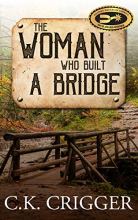 However, more and more, we are finding stories with female protagonists. An excellent example of this is the novel,
 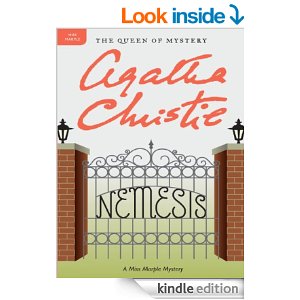 The Agatha Christie / Sherlock Holmes style of novel is the classic whodunnit. They feature a private detective with close ties to law enforcement but who is still an outsider. The detective sometimes has a sidekick who chronicles their cases. At times, the detectives butt heads with the police as resentment of the protagonist’s stepping on their turf crops up. This jealousy hinders the investigation. Clues are always inserted so that the reader doesn’t notice them until the denouement, and the sidekick never guesses right either.
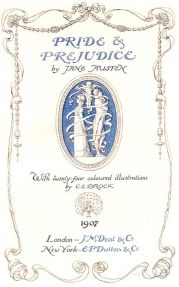 Definitions differ as to what constitutes a historical novel. On the one hand, the
  The rules of the category I am entering (Genre Fantasy/Sci-Fi) are clear: submissions must be of new, never-before-published novels. You can include only the first 25 pages of the manuscript, which will follow the synopsis.
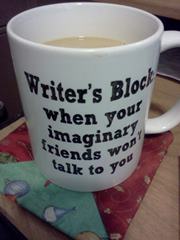 This is a task I would have found far more daunting without the support of my Tuesday morning writing group.
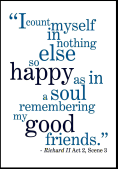 Attend a few meetings as an observer to see if this group is a good fit for you.
 Daily writing becomes easier once you make it a
 A prompt is a word or visual image that kick starts the story in your head. If you need an idea, go to
 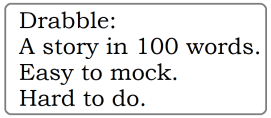 When you write to a strict word count limit, every word is precious and must be used to the greatest effect. By shaving away the unneeded info in the short story, the author has more room to expand on the story’s theme and how it supports the plot.
 To know that, you must know the genre of the work you are trying to sell. So, what exactly are genres? Publisher and author
  Mainstream (general) fiction—Mainstream fiction is a general term that publishers and booksellers use to describe works that may appeal to the broadest range of readers and have some likelihood of commercial success. Mainstream authors often blend genre fiction practices with techniques considered unique to literary fiction. It will be both plot- and character-driven and may have a style of narrative that is not as lean as modern genre fiction but is not too stylistic either. The novel’s prose will at times delve into a more literary vein than genre fiction. The story will be driven by the events and actions that force the characters to grow.
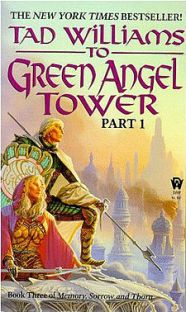 Fantasy is a fiction genre that commonly uses magic and other supernatural phenomena as a primary plot element, theme, or setting. Like sci-fi and literary fiction, fantasy has its share of snobs when it comes to defining the sub-genres. The tropes are:
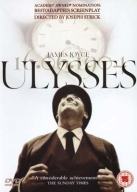 Literary fiction can be adventurous with the narrative. The style of the prose has prominence and may be experimental, requiring the reader to go over certain passages more than once. Stylistic writing, heavy use of allegory, the deep exploration of themes and ideas form the core of the piece.
 One step on the slippery slope of passive prose is the overuse of
 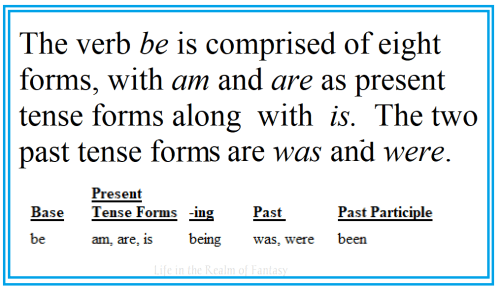 I think the habit of using one of the eight forms of the word be is more one of
  The whole thing looks quite complicated on the surface, but it doesn’t have to be. We must begin assembling our writers’ toolbox. One important tool is Bryan Garner’s
  I say cut back, not eliminate. Despite the misguided efforts of many gurus and Microsoft Word to erase all forms of ‘to be’ from the English language and replace it with ‘is,’ there are times when only a subjunctive will do the job.
 A critique group may tear your work apart, which stings a wounded ego. But we grow from this experience. We learn that opinions are subjective, and writers are thin-skinned creatures. We develop a thicker skin and muck on.
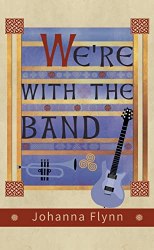 We’re With the Band, a novel by Johanna Flynn
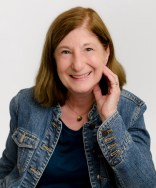 Johanna grew up in Spokane, Washington.


 Life in the Realm of Fantasy
