Transitioning from scene to scene #amwriting

In my previous post, I showed how each scene is a small area of focus within a larger story and has an arc of its own. Small arcs hold up a larger arc. These arcs are created by events, and all the arcs form a cathedral-like structure that we call the story arc, which is the outer shell or the novel’s framework.
transitionsBy creating small arcs in the form of scenes, we offer the reader the chance to experience the rise and fall of tension, the life-breath of the novel.

Pacing is created by the way an author links actions and events, stitching them together with quieter scenes: transitions.

Transitions can be fraught with danger for me as a writer because this is where the necessary information, the exposition, is offered to the reader. This is the “how much is too much” moment.

In my first draft, the narrative is sometimes almost entirely exposition. This happens because I am telling myself the story, trying to get the events down before I forget them.

Every narrative has a kind of rhythm. While the characters might be in the midst of chaos, we must ensure there is order in the layout of the narrative.

  • action,
  • processing the action,
  • action again,
  • another connecting/regrouping scene

These “processing” scenes are transitions, moving the plot forward while allowing the reader to make sense of what just happened.

One word that slips into my first draft prose is the word “got.” It is a mental code word that I subconsciously used when laying down the story. This word signifies a small incident to revise in the second draft.

“Got” is on my global search list of “telling words.” The words in the list are signals to me, indications that a scene needs to be reworded to make it a “showing” scene.

Got:” He got the message = he understood.
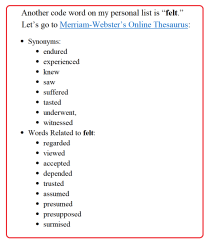
Code_word_FeltCode words are the author’s first draft multi-tool—a compact tool that combines several individual functions in a single unit. One word, one packet of letters serves many purposes and conveys multiple mental images to the author.

In fact, all passive phrasing is a code. The author’s “subconscious writer” embeds signals in the first draft. It tells the author that the characters are transitioning from one scene to the next. They, or their circumstances, are undergoing a change. Is this change something the reader must know?

Each lull in the action should lead us into a new scene. When transitions are done right, readers won’t notice the narrative moving from one event to the next, as the progression feels natural.

Let’s look at two more code words for transitions:

  • Went
  • Thought

When I see the word “went,” I immediately know someone is going somewhere. It is a transition scene taking the characters to the next event.

I ask myself, “How did they go?” Went can be changed to any number of verbs:

  • walked
  • drove
  • rode
  • took
  • teleported
  • And so on and so on

You get the idea.

We can’t have non-stop action, as that is exhausting to write and more exhausting to read. The characters and the reader both need to process information, so the character arc should be at the forefront during these transitional scenes. That period of relative calm is when you allow your characters’ internal growth to emerge.

We allow the characters to justify the decisions that led to that point and plan their next move, making it believable.

The transition is also where you ratchet up the emotional tension.

We have more options than simply moving the characters from point A to point B, several paths to choose from.
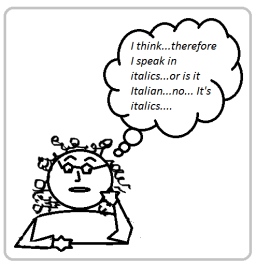
strange thoughtsThought (Introspection):

  • Introspection offers an opportunity for new information to emerge.
  • It opens a window for the reader to see who the characters are and how they react and illuminate their fears and strengths. It shows that they are sentient beings, self-aware.

Keep the moments of mind wandering brief. Go easy if you use italics to set thoughts off. A wall of italics is hard to read, so don’t have your characters “think” too much if you use those.

  • Characters’ thoughts must serve to illuminate their motives at a particular moment in time.
  • In a conversation between two characters, introspection must offer information not previously discussed.
  • Internal monologues should not make our characters all-knowing. It should humanize them and show them as clueless about their flaws and strengths. It should even show they are ignorant of their deepest fears and don’t know how to achieve their goals.

Sometimes we have more than one character with information the reader needs to make sense of the next event.

The key is to avoid “head-hopping.” The best way to avoid confusion is to give a new chapter to each point-of-view character. Head-hopping occurs when an author describes the thoughts of two point-of-view characters within a single scene.

Visual Cues: In my own work, when I come across the word “smile” or other words conveying a facial expression or character’s mood, it sometimes requires a complete re-visualization of the scene. I look for a different way to express my intention, which is a necessary but frustrating aspect of the craft.

Fade-to-black is a time-honored way of moving from one event to the next. However, I don’t like using fade-to-black scene breaks as transitions within a chapter. Why not just start a new chapter once the scene has faded to black?

One of my favorite authors sometimes has chapters of only five or six hundred words, which keeps each character thread truly separate and flowing well. A hard scene break with a new chapter is my preferred way to end a fade-to-black.

Chapter breaks are transitions. As we write, chapter breaks fall naturally at certain places.

Conversations can serve as good transitions that propel the story forward to the next scene. However, they can easily become info dumps. In literary terms, a good conversation is about something we didn’t know and builds toward something we are only beginning to understand.
DangerThat is true of every aspect of a scene—it must reveal something we didn’t know and push the story forward toward something we can’t quite see.

The transition is the most challenging part of the narrative for me to formulate in the first draft. I get stuck, trying to decide what information needs to come out and what should be held back.

The struggle to connect my action scenes into a seamless arc is why writing isn’t the easiest occupation I could have chosen.

But when everything comes together, writing is the most satisfying job I have ever had.
4 Comments

Filed under writing

The Functions of the Scene #amwriting

Now that we are in the midst of December, many people are reviewing what they wrote during NaNoWriMo and trying to put it in order. This is a good time to look at the function of the scene.

ScenesNovels consist of a string of moments united by a common theme. These scenes combine to form a story when you put them together in the right order and link them with a plot featuring a compelling protagonist who must overcome adversity.


I see the scene as a story within a larger story, a moment with an arc of its own.

Scenes are the building blocks of the story. Small arcs of action form chapters, which form the larger arc of plot. They combine to form a cathedral-like structure: the novel.

If you ask a reader what makes a memorable story, they will tell you that the emotions it evoked are what they remember, and why they loved that novel.

Therefore, no scene can be wasted. Each moment of the story must have a function, or the story fails to hold the reader’s interest. I work to make each scene as emotionally powerful as I can without going overboard.

A few things a scene can show:

  • Capitulation
  • Catalyst
  • Confrontation
  • Contemplation/Reflection
  • Decision
  • Emotions
  • Information
  • Negotiation
  • Resolution
  • Revelation
  • Turning Point

Make one or more of these functions the core of the scene, and you will have a compelling story.

Let’s return to a watershed chapter I’ve discussed before. In the Fellowship of the Ring, book one of J.R.R. Tolkien’s Lord of the Ring series, the longest chapter in the book details the Council of Elrond. The scene is set in Rivendell, Elrond’s remote mountain citadel.

The characters attending the Council have arrived there on separate errands. Each has different hopes for what would ultimately come from the meeting.

Despite their various agendas, each is ultimately concerned with the One Ring. Each has their own idea of how to use it to protect the people of Middle-earth from the depredations of Sauron, who is desperate to regain possession of it. This chapter is comprised of several scenes and serves more than one function.

GANDALF

Gandalf the Grey, by Nidoart, CC BY-SA 3.0

Information/Revelation: The Council of Elrond conveys information to both the protagonists and the reader. It is a conversation scene, driven by the fact that each person in the meeting has knowledge the others need. Conversations are an excellent way to deploy required information.

Remember, plot points are driven by the characters who have vital knowledge.

The fact that some characters are working with limited information creates high emotional tension.

At the Council of Elrond, many things are discussed, and the history of the One Ring is explained. This is not done in an info dump; instead, each character offers a new piece of the puzzle at the moment the reader needs to know it.

The reader and the characters receive the information simultaneously at this point in the novel.

Confrontation: A scene comprised only of action can be confusing if it has no context. A properly placed confrontational conversation (an argument/dispute) gives the reader the context needed to understand the reason for the action.

At the Council of Elrond, long-simmering racial tensions between Gimli the Dwarf and Legolas the Elf surface. Each is possessed of a confrontational nature, and it isn’t clear whether they will be able to set aside their prejudice and work together or not.

Other conflicts are explored, and heated exchanges occur between Aragorn and Boromir.

Negotiation: What concessions will have to be made to achieve the final goal? These concessions must be negotiated. Tom Bombadil is mentioned as one who could safely take the ring to Mordor as it has no power over him. Gandalf feels he would simply lose the ring or give it away. He explains that Tom lives in his own reality and doesn’t see the conflict with Sauron as a problem.

Bilbo volunteers, but he is too old and frail. Others offer, but none are accepted as good candidates for the job of ring-bearer for one reason or another. Each reason that is provided for why these characters are deemed less than satisfactory by Gandalf and Elrond deploys information the reader needs.

Turning Point: After much discussion, many revelations, and bitter arguments, Frodo declares that he will go to Mordor and dispose of the ring, giving up his chance to live his remaining life in the comfort and safety of Rivendell. Sam emerges from his hiding place and demands to be allowed to accompany Frodo. This is the turning point of the story.

(The movie portrays this scene differently, with Pip and Merry hiding in the shadows. Also, in the book, the decision regarding who will accompany Frodo, other than Sam, is not made for several days, while the movie shortens it to one day.)

Within the story’s arc are smaller arcs of conflict and reflection, each created by scenes. The arc of the scene is like any other: it begins, rises to a peak, and ebbs, ending on a slightly higher point of the overall story arc than when it started.

The scene must reveal something new and push the story toward something unknown.

959px-One_Ring_Blender_Render

The One Ring, Peter J. Yost, CC BY-SA 4.0

We are also pushing the character arc with each scene, raising the stakes a little. Our protagonist grows and is shaped by receiving needed information through action and conversation, followed by reaction and regrouping. This allows the reader to experience the story as the protagonist does.

The reader can then reflect and absorb the information gained before moving on to the next scene.

I will continue this discussion in my next post, which will focus on transitioning from scene to scene. Transitions are vital as they affect pacing and keep the story moving forward.


Credits and Attributions:

Gandalf the Grey, by Nidoart, CC BY-SA 3.0 <https://creativecommons.org/licenses/by-sa/3.0&gt;, via Wikimedia Commons (artwork by Nidoart nidoart.blogspot.fr)

Wikimedia Commons contributors, “File:GANDALF.jpg,” Wikimedia Commons, the free media repository, https://commons.wikimedia.org/w/index.php?title=File:GANDALF.jpg&oldid=608049709 (accessed December 12, 2021).

The One Ring, Peter J. Yost, CC BY-SA 4.0 <https://creativecommons.org/licenses/by-sa/4.0&gt;, via Wikimedia Commons.

Wikimedia Commons contributors, “File:One Ring Blender Render.png,” Wikimedia Commons, the free media repository, https://commons.wikimedia.org/w/index.php?title=File:One_Ring_Blender_Render.png&oldid=575573354 (accessed December 12, 2021).

9 Comments

Filed under writing

#FineArtFriday: After the Hurricane, Bahamas by Winslow Homer, reprise

Artist: Winslow Homer (1836–1910)

Title: After the Hurricane

Date: 1899

Medium: Transparent watercolor, with touches of opaque watercolor, rewetting, blotting and scraping, over graphite, on moderately thick, moderately textured (twill texture on verso), ivory wove paper.

Dimensions: Height: 38 cm (14.9 in); Width: 54.3 cm (21.3 in)

Inscriptions: Signature and date bottom left: Homer 99

Current Location: Art Institute of Chicago, not on view

What I love about this painting:

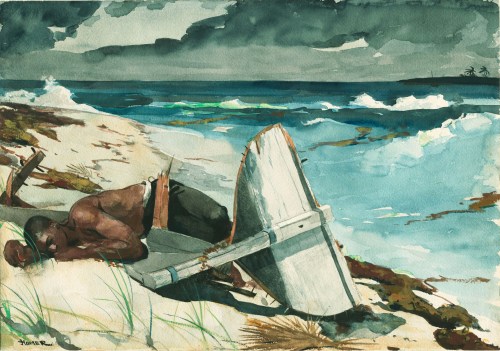
After the Hurricane, Bahamas is a watercolor painting by the American artist, Winslow Homer. It shows a man washed up on the beach after a storm, surrounded by the fragments of his shattered boat. The wreckage of the boat gives evidence of the severity of the powerful hurricane, which is retreating. Black clouds still billow but recede into the distance, and sunlight has begun to filter through the clouds.

The man may have lost his boat, but he has survived.

I love the way the whitecaps are depicted, and the colors of the sea are true to the way the ocean looks after a severe storm. Winslow Homer’s watercolor seascapes are especially intriguing to me as they are extremely dramatic and forceful expressions of nature’s power. The beauty and intensity of Homer’s vision of “ocean” are unmatched—in my opinion his seascapes are alive in a way few other artists can match.

This painting was done in 1899 and marked the end of Homer’s watercolor series depicting man against nature. That series was begun with Shark Fishing in 1885, the year he first visited the Caribbean and is comprised of at least six known paintings. The most famous of these watercolor paintings is The Gulf Stream, which was also painted in 1899. After the Hurricane, Bahamas is the last of the series.

About the artist, via Wikipedia

Winslow Homer (February 24, 1836 – September 29, 1910) was an American landscape painter and printmaker, best known for his marine subjects. He is considered one of the foremost painters in 19th-century America and a preeminent figure in American art.

Homer started painting with watercolors on a regular basis in 1873 during a summer stay in Gloucester, Massachusetts. From the beginning, his technique was natural, fluid and confident, demonstrating his innate talent for a difficult medium. His impact would be revolutionary. [1]


Credits and Attributions:

After the Hurricane, Bahamas by Winslow Homer, [Public domain], via Wikimedia Commons

[1] Wikipedia contributors, “Winslow Homer,” Wikipedia, The Free Encyclopedia, https://en.wikipedia.org/w/index.php?title=Winslow_Homer&oldid=1055649094 (accessed December 9, 2021).

Wikimedia Commons contributors, “File:Winslow Homer – After the Hurricane, Bahamas.jpg,” Wikimedia Commons, the free media repository, https://commons.wikimedia.org/w/index.php?title=File:Winslow_Homer_-_After_the_Hurricane,_Bahamas.jpg&oldid=428549979 (accessed December 9, 2021).

6 Comments

Filed under #FineArtFriday

The Story Arc: delivering backstory #amwriting

Many writers who managed to write the entire story arc of their novel during November are now going back and looking at what they have written. This can be a dangerous moment in the life of your book.

Info DumpIn my last post, I talked about the good and bad aspects of two editing programs that I am familiar with, the things they do and don’t help us identify in our work. One more thing these wonderful programs can’t help us with is identifying bloated backstory.

Walls of fictional history muck up the transitions and flatten the story arc. They block the doors from one scene to the next.

Every story has a past, a present, and hopefully, a future. We write the story of our characters’ present moments, no matter what narrative tense we are using. Each character emerges from our minds with a personality. That personality was formed in some way by an unwritten past.

That history shaped the characters even though it isn’t written, and at first, we don’t consciously think about it. We open a document and start writing—we envision our characters with unique personalities the moment they step onto the first page.

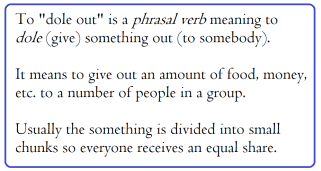
At some point, we realize that a bit of backstory is needed. But how much, and how should we dole it out?

This is where it gets dicey. In the revision process, it’s tempting to inform the reader of this history by placing blocks of information in the first pages. It seems logical: before a reader can understand this thing, they need to know this other thing.

We can provide the reader with the backstory in several ways:

  • In conversation.
  • Memory/flashbacks
  • A brief recap of events

Each of these methods is both good and bad. While a certain amount of backstory is necessary for character and plot building, too much outright telling halts the momentum, freezes the real-time story in its tracks.

The opening paragraphs must be active. The first lines must step onto the stage in a way that feels original, informative, and engaging. The passages that follow must reflect and build upon the tone and cadence of the opening lines.

Before we dump information, we should consider what must be accomplished in each scene and allow the backstory to inform the reader only when it’s necessary to advance the plot.

CAUTION INFO DUMP ZONE AHEADLook at the first scene of your manuscript. Ask yourself three questions.
  1. Who needs to know what?
  2. Why must they know it?
  3. How many words do you intend to devote to it?

Dialogue is the easiest way to dole out information.

It is also a great way to fall into an info dump.

Don’t allow conversations to deteriorate into bloated exposition detailing unimportant fluff just to fill up space.

“Jack, remember when you nearly blew up the ship? Remember how you spent two weeks in the brig?”

“Yes, Jill. That meant you were one gun short to save the day. I almost lost the war for you, but you prevailed. I’m lucky to be your sidekick.”

“Well, Jack, what we’re dealing with this time has nothing to do with that. I’m just pointing out the obvious.”

We’re all familiar with the term ‘flatlined’ as a medical expression indicating the patient has died. A story arc can flatline in two ways:

  • The pauses become halts, long passages of haphazard info dumps that have little to do with the action.
  • The action becomes random, an onslaught of meaningless events that make no sense.

One way to avoid a flatlined story arc is through character interaction. Your characters briefly discuss what happened and how to prevent it from happening again. Then, they bravely muck on to the next event.

Another way is to insert short moments of introspection between the action. Our character’s thoughts offer opportunities for doling out new information essential to the story.

Don’t ramble on, either in conversation or introspection. If you go on for too long, your reader will either skip forward or close the book.

When they are brief but informational, these moments open a window for the reader to see who the characters think they are. Their introspection illuminates their fears and strengths.

It shows that our characters have a sense of self.

The problem with conveying the backstory is that timing and pacing are essential. The moment to mention it in passing is when the character needs that information to make decisions as they go forward. If the character doesn’t need to know it, neither does the reader.

That way, you avoid the dreaded info dump, but the reader can extrapolate the needed backstory.

In the most gripping narratives I have read, character introspection is brief but delivers crucial information. Internal monologues are featured but are kept minimal, only addressing what is essential. They serve to illuminate a character’s motives at a particular moment in time.

So, conversation and introspection are where we only deliver information not previously discussed and that the reader needs to know at that moment. Repetition is monotonous and pads the word count with fluff.

I suggest you don’t stop the action with a prolonged recap of previous adventures. It’s all right to work in a brief mention. However, if the events were detailed in a previous book in that series, the reader will probably be aware of the history. As a reader, I can say that a longwinded rant about things I already know does not keep my interest.

No matter the genre, in all stories, complications create tension, and information is a reward.

A trick I have found for whittling down info dumps is this: look at the word count.

to dole out phrasal verbI look at each conversation and assess how many words are devoted to each character’s statement and response. Then, when I come to a passage that is inching toward a monologue, I ask myself, “what can be cut that won’t affect the flow of the story or gut the logic of the plot?”

Even with all the effort I apply to it, my editor will find places to shave off the unnecessary length.

Sometimes we write brilliantly, and those moments give us hope when we churn out less than stellar prose. Weeding that garden of words is not easy, but readers will be glad you tried.

2 Comments

Filed under writing

Editing Programs – the pros and cons #amwriting

With NaNoWriMo 2021 behind us, it’s time to talk about editing programs again. Several writers in our region have asked me if I use one in my own work.

MyWritingLife2021I do use Grammarly—but also, I don’t.

I rely on my knowledge of grammar and what I intend to convey more than I do an editing program. While they are good at alerting you to some errors, these helpful programs are not as useful as we wish they were.

No software can replace knowledge of grammar. An author must have confidence in what they intend to convey and how they wish to say it.

For this reason, editing software may not be a good tool for every author.

A person with no knowledge of grammar will not benefit from relying on an editing program for advice. There is no way to bypass learning the craft of writing.

You may have found that your word processing program has spellcheck and some minor editing assists. Spellcheck is notorious for both helping and hindering you.

they're their there cupSpellcheck doesn’t understand context, so if a word is misused but spelled correctly, it may not alert you to an obvious error.
  • There, their, they’re.
  • To, too, two.
  • Its, it’s

Grammarly is an editing program I use for checking my own work, in tandem with Pro Writing Aid. I pay a monthly fee for the professional versions of these two programs. Each one has strengths and weaknesses.

For me, especially in my first draft, some words are like tics—they fall out of my fingers and into my keyboard randomly and out of my voluntary control. I don’t self-edit as I go because, at that point, I’m just trying to get the story down. The second and third drafts are where I shape my grammar and phrasing.

I want to write active prose, so I don’t want to use words with no power behind them.

Often removing an adjective or adverb strengthens the prose. Descriptors are easy to find because these words frequently end with the letters ‘ly.’

You could do a global search for the letters ‘ly,’ and a list will pop up in the left margin of your manuscript.

However, the most ludicrous advice I’ve ever heard at a critique group came from an author who was about to publish his first book. He had a great deal of enthusiasm for the craft but was armed with too little knowledge: he told a new writer to remove all adverbs from her narrative.

Unfortunately, he forgot that words like “later,” or “everywhere,” or “never” or “alone” are also adverbs.

That sort of wrong-headed advice survives because it is based on a writing truth: unnecessary adverbs and adjectives inflate the word count but add no value. Worse, they sometimes fail to tell us something that we need to know.

In other words, use adverbs and adjectives when they are necessary and cut them when they aren’t.

In my own work, I seek out adverbs, descriptors, qualifiers, and “weed words.” I look at how they are placed in the context of the sentence and decide if they will stay or go. Many will go, but some must stay.

The BIG problem for those who don’t understand the basics of grammar is this: editing programs cannot see the context of the work they are analyzing.

In one of my older manuscripts, this sentence triggered the algorithm:

“The tea was cool and sweet, quenching her thirst.”

Grammarly suggested replacing quenching with quenched and then suggested a comma at the end instead of a period.

Pro Writing Aid made the same suggestion but didn’t tell me to add a comma.

These programs operate on algorithms defined by finite rules. They will often strongly suggest you insert an unneeded article or change a word to one that is clearly not the right one for that situation. That is where your eye and understanding of context and grammar must prevail.

chicago guide to grammarNew writers should invest in the Chicago Guide to Grammar, Usage, and Punctuation and learn how grammar works. For people new to the craft and who don’t understand grammar or how to construct a sentence or a paragraph, or how to write dialogue, editing programs will confuse and mislead them.

To get the best out of editing software, you must know the basics of how to write.

At this stage in our technology, understanding context is solely a human function. Context is defined as the parts of a written or spoken statement that precede or follow a specific word or passage, usually influencing its meaning or effect.

A person with no knowledge of grammar will not benefit from relying on Grammarly or any other editing program for advice. There is no way to bypass learning the craft of writing.

Because context is so important, I am wary of relying on these editing programs for anything other than alerting you to possible comma and spelling malfunctions.

You might disagree with the program’s suggestions. You, the author, have control and can disregard suggested changes if, as illustrated above, they make no sense. I regularly reject weird suggestions.

However, when the editing program highlights something, I examine the problem sentence. Just knowing that the way I phrased a sentence tripped the program’s algorithms encourages me to look at that passage with a critical eye.

I may not use the program’s suggestion, but something triggered the algorithm. That means my phrasing might need work. I may need to find a better way to get my idea across.

Timid WordsEven editors must have their work seen by other eyes. My blog posts are proof of this as I am the only one who sees them before they are posted. Even though I write them in advance, go over them with two editing programs, and then look at them again before each post goes live, I still find silly errors two or three days later.
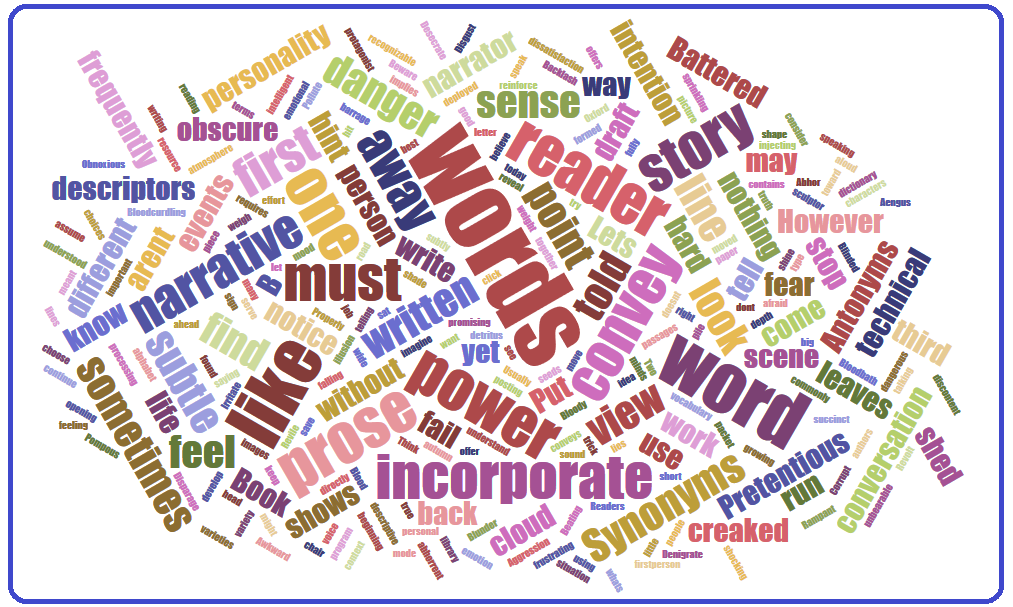
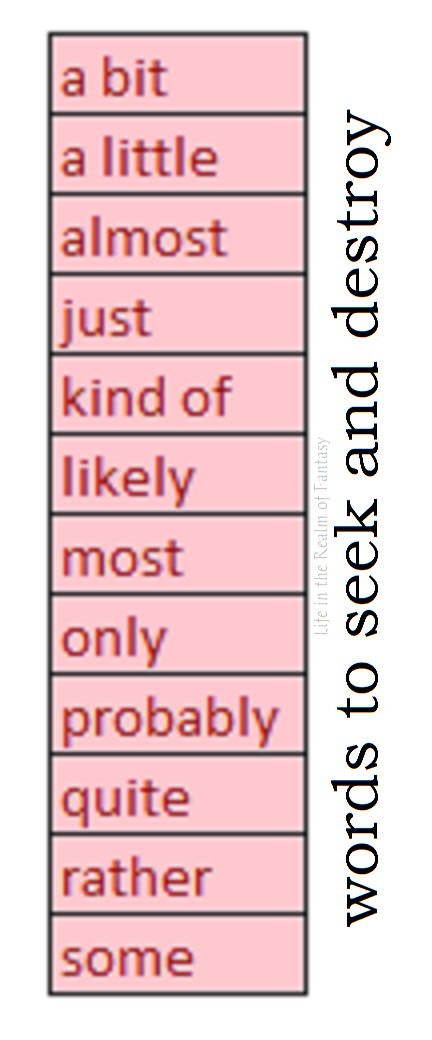
Certain words and phrases don’t add to the narrative and only increase the wordiness. Used too freely, they separate the reader from the experience.

In my first draft, these words are like tics. They fall out of my fingers and into my keyboard randomly and out of my voluntary control. I never self-edit as I write the first draft because I am just trying to get the story down. The second and third drafts are where you deal with grammar and phrasing.

When I begin revisions, I will seek out adverbs, descriptors, qualifiers, and other “weed words,” look at how they are placed in the context of the sentence, and decide if they will stay or go

You can’t take shortcuts. If you are too impatient and choose to “Replace All” without carefully thinking things through, you run the risk of making a gigantic mess of your work. Some weed words are parts of other words, for example:

  • very—every
  • has—hasten, chasten

powerwordsWordCloudLIRF06192021If you have decided something is a “crutch word,” examine the context. Inadvertent repetitions of certain words are easy to eliminate once we see them with a fresh eye.
Context is everything.

I can’t stress this enough: take the time to look at each example of the offending words individually.

It’s unfortunate, but there is no speedy way to do this. You will be rewarded, though, when your book is finished to the best of your ability.


17 Comments

Filed under writing

#FineArtFriday: Puget Sound on the Pacific Coast by Albert Bierstadt 1870 (reprise)

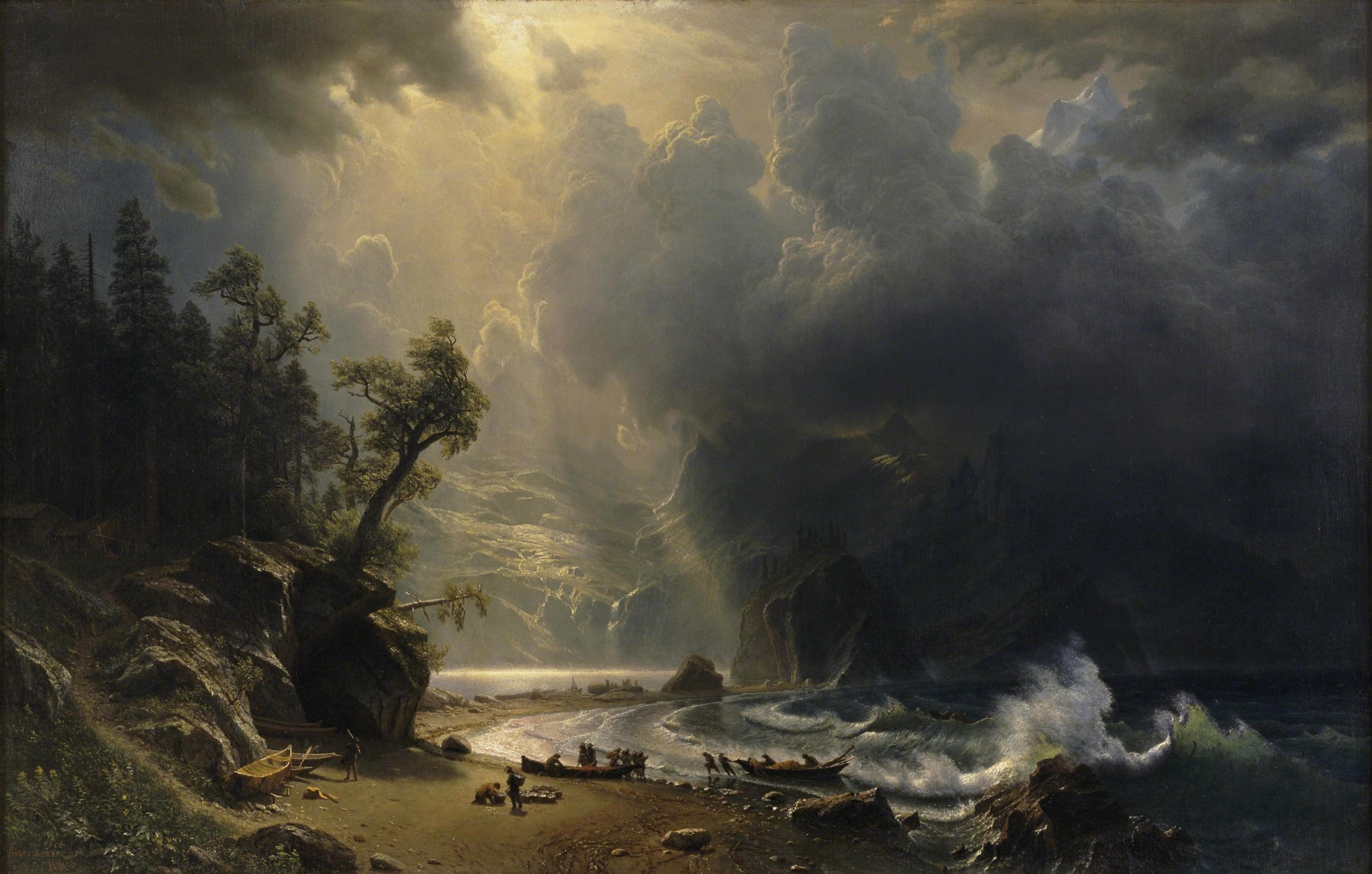
What I love about this painting:

I live on Puget Sound, and while the exact beach this image depicts likely does not exist, the cliffs are pretty accurate. I have seen many, many places here like it. The waters of the sound can get quite rough during storms, as this video shot three years ago by a storm chaser during a December storm shows: Wild Ferry Ride Across Puget Sound Dec. 16 2018.

Anyone who lives here will tell you, the view of the Olympic Mountains from over the sound is unparalleled.

At certain times of the year, rain sweeps in like a dark beast. I have often seen the sky as black and heavy as it is depicted in this painting. Shafts of sun between heavy rain squalls are frequent companions here. When the sun shines through the heavy clouds, the light looks very much the way he shows it.

A sky that looks like the one in this painting heralds a serious storm. If you are driving anywhere during this kind of weather, you are in for a slow, miserable trip.

Quote from http://www.SeattleArtMuseum.org, regarding Puget Sound on the Pacific Coast, 1870, which is now in their possession.

 “Bierstadt had likely not yet traveled to the Washington Territory in 1870. The painting was possibly a commission from a New York shipping magnate who had made his enormous fortune on the Pacific coast. Enterprising artist that he was, Bierstadt did not shy away from the challenge of painting a place he had not yet seen.”

I love that Bierstadt was a story teller as much as an entrepreneur in regard to his art. All the great artists were.

It has been suggested he put this picture together by piecing together places he had visited on the Lower Columbia River. Indeed, the trees and landscape there is much like that of Puget Sound, so it is possible. However, it would have been easy for him to have traveled north to the sound if he was on the  Lower Columbia—a matter of only eighty miles, so a week of travel for him by horse.

He was a man who traveled all over the west and painted what he felt as much as what he saw.

Wikipedia has this to say about Albert Bierstadt:

In 1867, Bierstadt traveled to London, where he exhibited two landscape paintings in a private reception with Queen Victoria. He traveled through Europe for two years, cultivating social and business contacts to sustain the market for his work overseas. His exhibition pieces were brilliant images, which glorified the American West as a land of promise and “fueled European emigration.” He painted Among the Sierra Nevada, California in his Rome studio, for example, showed it in Berlin and London before shipping it to the U.S. As a result of the publicity generated by his Yosemite Valley paintings in 1868, Bierstadt’s presence was requested by every explorer considering a westward expedition, and he was commissioned by the Atchison, Topeka, and Santa Fe Railroad to visit the Grand Canyon for further subject matter.

Bierstadt’s choice of grandiose subjects was matched by his entrepreneurial flair. His exhibitions of individual works were accompanied by promotion, ticket sales, and, in the words of one critic, a “vast machinery of advertisement and puffery.”

Bierstadt was highly successful in his day, which the more refined critics despised. Everything the critics mocked about his work are the aspects I love. The high contrasts of light and shadow, sweeping epic themes, and overblown romanticism—those are what I love about all his work.

In all his works, Bierstadt created an emotional landscape as much as a physical one.

Puget Sound on the Pacific Coast by Albert Bierstadt

  • Genre: landscape art
  • Date: 1870
  • Medium: oil on canvas
  • Dimensions: Height: 52.5 ″ (133.3 cm); Width: 82 ″ (208.2 cm)
  • Collection: Seattle Art Museum
  • Current location: Seattle Art Museum Downtown, Gallery Level 3, American Art

Credits and Attributions:

Puget Sound on the Pacific Coast, by Albert Bierstadt, signed and dated 1870 [Public domain]

Wikimedia Commons contributors, “File:Albert Bierstadt – Puget Sound on the Pacific Coast (1870).jpg,” Wikimedia Commons, the free media repository, https://commons.wikimedia.org/w/index.php?title=File:Albert_Bierstadt_-_Puget_Sound_on_the_Pacific_Coast_(1870).jpg&oldid=344396079 (accessed April 26, 2019).

Quote from the article: Puget Sound on the Pacific Coast, Seattle Art Museum website contributors, (accessed April 25, 2019).

5 Comments

Filed under #FineArtFriday

My Writing Life #amwriting

Someone recently suggested I write a post on the evolution of me as an author, so here it is.

MyWritingLife2021BFrom my earliest childhood, I always thought of myself as a writer. I just didn’t know how to write anything longer than a poem or a song in such a way that it was readable.

Most evenings, I listened to music on the stereo, writing my thoughts and ideas in a notebook while my kids did their homework.

My pen and ink ramblings weren’t “writing” as I see it now. They were more like frameworks to hold ideas that later became full-fledged stories.

Then, in 1987, my father bought me a secondhand IBM Selectric Typewriter, and my writing addiction took off.

For most of my writing life, I was like a five-year-old with a new set of paints. My enthusiasm for my stories was far greater than my ability to tell them.

I didn’t have the information I needed to make my work readable and didn’t know how to get it.

I felt embarrassed for even thinking that I could be an author.

orson_scott_card_write_scifi_fantasyOne day in 1990, I stumbled upon a book offered in the Science Fiction Book Club catalog: How to Write Science Fiction and Fantasy by Orson Scott Card. The day that book arrived in my mailbox changed my life.

I could become an author, and one of my favorite writers was going to tell me how to do it.

In the years since that book, I have amassed a library of books on the craft. Some are brilliant, some not so much, but I always learn something from them.

However, personal experience is a great teacher, and I’ve learned many things by trial and error.

So here in no particular order are six things I would like to pass on to you:

One: Make a style sheet as you go.

Build a glossary of words and spellings unique to your story and especially be sure to list names. I use an Excel spreadsheet, but you can use anything you like to help you stay consistent in your spelling.

And even though I think I am developing a thorough glossary, my editor will find many words to add to it.

Two: Develop a logical, consistent system for naming your files and save regularly.

Save each version of your manuscript with a different name so you can go back and retrieve bits you may need later. I use a system like this:

Heavens_Altar_V5.docx

That stands for Heaven’s Altar version five, and I work out of Word, so the extension is automatically a docx.

chicago guide to grammarThree: Find a local group of writers to meet with and talk about the craft.

Critique groups are great, but they are only one small part of the picture. Authors need to network with other authors because we need to discuss the craft with someone who doesn’t look at you with glazed eyes.

I gained a wonderful local group through attending write-ins for NaNoWriMo before the pandemic. While we haven’t been able to have in person meetings for a while, we meet weekly via zoom. They are a never-ending source of support and information about both the craft and the industry. We are a group of authors writing in a wide diversity of genres. We gladly help each other bring new books into the world, but more than that, we are good, close friends.

Four: Never stop educating yourself.

Learn how to say what you mean with your unique voice and your personal style. A college education is an expense we might not be able to wrangle. But you can buy books on grammar, books on style and substance, and books on writing craft.

Learn about structure and pacing from successful authors. Every coin you invest in your education will be returned to you with interest when your story makes a reader say they wished it hadn’t ended.

Self-education requires perseverance and a small investment of money, but you can do it.

storybyrobertmckeeSpend the money to go to conventions and attend seminars. You will learn so much about the craft of writing, the genre you write in, and the publishing industry as a whole—things you can only learn from other authors. I gained an extended professional network by joining The Pacific Northwest Writers Association and going to their conferences.
Five: Don’t even consider signing with the slick-talking publisher that contacts you out of the blue.

How can a publisher possibly want work they haven’t seen?

Make use of SFWA’s Writer Beware site. These predators want your work all right—and want to sell you publishing services you can do for yourself. You won’t benefit from the predator publisher’s “services,” but they will profit from your desperation to be published. They will publish your work in its raw unedited form, and you will never see a dime.

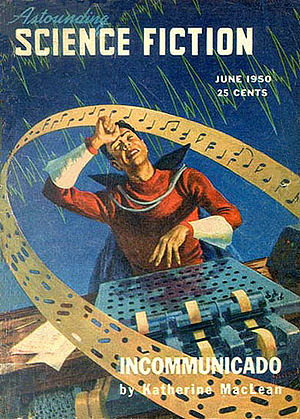
300px-Astound5006Six: My final suggestion is this: even though you are writing that novel, keep writing short stories too.

Short stories are a training ground, a way to hone your developing skills. They’re also the best way to get your name out there. My advice is to build a backlog of work from 2000 to 5000 words in length and keep them ready to submit to magazines, anthologies, and contests.

All those fabulous scenes and vignettes that roll through your head can be made into short pieces.

Get the Submittable App and see who is asking for the kind of stories you write. Start submitting your work, and don’t let rejections stop you. Just keep sending that work out to new places because someone will want it.

These are a few things that I wish I had known when I first started writing professionally but didn’t.

3 Comments

Filed under writing

The garden-path sentence #amwriting

As NaNoWriMo winds down, I am preparing to face a manuscript full of wandering, garbled sentences. These are the products of my fingers not being able to keep up with my brain. I might know what that sentence means, but my editor won’t. My job in December is to be alert and watch for ambiguous phrasings.

MyWritingLife2021About garden-path sentences, via Wikipedia, the fount of all knowledge:

(The term) garden path refers to the saying “to be led down the garden path,” meaning to be deceived, tricked, or seduced.

After reading, the sentence seems ungrammatical and makes almost no sense, requiring rereading to fully understand its meaning after careful parsing.” [1]

In this case, confusion arises because we attempt to understand sentences as we are reading them. The “garden-path sentence” begins by taking you toward a particular destination. Midway through, it takes a turn for the bizarre.

There are two types of garden-path sentences.  The first is a “local ambiguity,” meaning it can be cleared up easily with the addition of a word or punctuation, such as:

“The raft floated down the river sank.” Add one word to make it clear: “The raft that floated down the river sank.”

“We told the man the dog bit a medic could help him.” Add two words for clarity: “We told the man whom the dog bit that a medic could help him.”

Wikipedia offers this example: “The old train the young fight.” Adding a comma reads: “The old train, the young fight.” The addition of the comma makes sense of the words. One could also argue that the sentence means “The old train the young to fight.”

The other type of garden-path sentence is “globally ambiguous” because the meaning stays unclear no matter how many times you reread it when it is taken out of context.

A sentence should be understandable even when removed from its context. Wikipedia offers the sentence: “The cat was found by the shed by the gardener.”

Hydrangea_cropped_July_11_2017_copyright_cjjasperson_2017 copyWhen I have asked a beta reader to read a section of my work, they sometimes flag a paragraph as unclear. It might make perfect sense to me, but if I am the only one who understands it, it’s time to tear that paragraph down to see if each sentence can stand on its own.

Sara’s missing cat was found by the shed by the gardener. Mittens was frightened and hungry but safe.

Let’s break that paragraph down sentence by sentence:

  • Sara’s missing cat was found by the shed by the gardener.
  • Mittens was frightened and hungry but safe.

The first sentence is passive and ambiguous, open to interpretation. Was the cat by the shed? Or was the shed by the gardener? Or were the cat and the gardener both next to the shed?

Once I’ve taken it out of context, it’s easy to see why the reader didn’t understand it.

Usually, a simple rewording to make my phrasing more active is all that is required.

The gardener found Sara’s cat near the shed. Mittens was frightened and hungry but safe.

Often, a new author has been criticized for using the relative pronoun ‘that’ too freely. Thin-skinned and bleeding profusely, they will go to any length to avoid using the word that, which can lead to awkwardly phrased sentences.

Relative pronouns have a fundamental place in English. While it’s easy to turn them into crutch words, they are essential words that make nouns specific.

  • That dog bites, so watch out.
  • Harry Potter was the boy who lived.

The way to resolve the garden-path sentence is to:

  • Insert a relative pronoun (such as “that” or “who”) for clarity.
  • Insert proper punctuation for clarity.
  • Reword the sentence to make the prose active.

Readers want to read without bumps and hiccups. Anytime they have to stop and reread something, you risk losing them. Sentences that are ambiguous stop the eye, which throws the reader out of the story.

Clementines_Astoria_White_Hydrangea2019I don’t want to introduce vagueness into my work. Just because I like what I wrote doesn’t mean it has to stay in the finished product. Maybe I don’t see that it’s confusing, but my friends who read my raw manuscripts will.


Every time I participate in NaNoWriMo and then take that manuscript through revisions, my first draft skills become a little stronger. I write stronger sentences in my first drafts and have to make fewer changes, which feels like a victory.


Credits and Attributions:

[1] Wikipedia contributors, “Garden-path sentence,” Wikipedia, The Free Encyclopedia, https://en.wikipedia.org/w/index.php?title=Garden-path_sentence&oldid=1053287156 (accessed November 28

Comments Off on The garden-path sentence #amwriting

Filed under writing

#FineArtFriday: Saint Cecilia, by Edward Burne-Jones (revisited)

Saint Cecilia is the patroness of musicians, and her feast day is traditionally celebrated on November 22. The above image is my favorite rendering of her, as it is so vividly colored.

One of the most beautiful forms of art is stained glass, and the many works of Sir Edward Burne-Jones has inspired and influenced my own art.

While I have no patience with some of the more hyper-romanticized, physically impossible art produced by the Pre-Raphaelite Brotherhood, the  concept and execution of Burne-Jones’s artistic visions in glass is without peer. Vivid, intense colors, romantic subjects – each of his windows tells a story. They are glorious, and seem illuminated even when not back-lit by the sun.

About Saint Cecilia, From Wikimedia Commons:

One of nearly thirty versions of a window designed by Burne-Jones and executed by the company founded by William Morris (1834–1896), Saint Cecilia is a product of the Arts and Crafts movement they initiated. Friends at Oxford, Morris and Burne-Jones became disciples of John Ruskin and the Pre-Raphaelite movement and put into practice his vision for the renewal of art. They sought to counter the effects of the machine age by reviving medieval crafts, abolishing distinctions between fine and decorative arts, and beautifying objects of everyday life. Morris wrote on the philosophy of art and founded a company to execute textiles, wallpaper, and other objects, while Burne-Jones, in addition to painting and sculpting, studied with the Pre-Raphaelite painter Dante Gabriel Rossetti and designed murals, tapestries, and stained glass for Morris’s company.

The Gothic Revival style in architecture created a market for stained glass, especially in the 1870s, when Burne-Jones was a particularly prolific designer of windows. The first Saint Cecilia window, at Christ Church, Oxford (1875), shows the influence of the early Renaissance art he had seen in central Italy, most recently in 1871. The flat, abstracted, linear style and the wilting pose of the impossibly tall, graceful woman make reference to the work of Botticelli (Florentine, ca. 1445–1510), while the tapestry-like screen of pomegranate trees and fruits and the richly patterned brocade fabric recall the latest Gothic phase of Italian art, about 1400.

Saint Cecilia, an early Christian Roman virgin martyr, became the patron saint of music and was portrayed with an organ — here, a portable organ of the fifteenth century. Although water organs existed in the ancient world, pipe organs date from the fourteenth century, so we must assume Cecilia is singing the praises of God in heaven, not during her earthly life. In the window at Christ Church, she is flanked by lancet windows with music-making angels; scenes from the life of a fellow martyr saint, Valerian, and her own martyrdom are shown below. In Chicago, a Saint Cecilia window was included in the stained glass of the Second Presbyterian Church (1904); there, the fabric behind the saint is blue, and the tree bears lemons, demonstrating the permutations that could occur among these windows.

About the artist, from Wikipedia:

Sir Edward Coley Burne-Jones, 1st Baronet ARA (28 August 1833 – 17 June 1898) was an English artist and designer closely associated with the later phase of the Pre-Raphaelite movement, who worked closely with William Morris on a wide range of decorative arts as a founding partner in Morris, Marshall, Faulkner & Co. Burne-Jones was closely involved in the rejuvenation of the tradition of stained glass art in Britain.


Credits and Attributions:

Saint Cecilia, Edward Burne-Jones [Public domain], Stained and painted glasss, ca. 1900

Wikipedia contributors, “Edward Burne-Jones,” Wikipedia, The Free Encyclopedia, https://en.wikipedia.org/w/index.php?title=Edward_Burne-Jones&oldid=868174553 (accessed November 16, 2018).

Wikimedia Commons contributors, “File:Burne-Jones, Sir Edward, Saint Cecilia, ca. 1900.jpg,” Wikimedia Commons, the free media repository, https://commons.wikimedia.org/w/index.php?title=File:Burne-Jones,_Sir_Edward,_Saint_Cecilia,_ca._1900.jpg&oldid=303427881 (accessed November 16, 2018).

2 Comments

Filed under writing

The Surface of the Story #amwriting

One of my favorite places to walk is McLane Creek Nature Trail. Within that nature reserve is a large beaver pond, with several accessible, easy-to-walk trails that wind around the pond and through the woods.

McLaine_Pond_In_July_©_2018_ConnieJJapsersonStrolling along, watching the birds and animals that make their homes there grounds me. When we leave, I feel spiritually rested, more rooted in the earth, stronger and at peace with myself. It is a serene place, a place of stillness and calm.
The pond is always fascinating. When you watch the water, you can see the effects of the world around it reflected on its surface. On a windless day, the pool will be calm, still. The sky and any overhanging trees will be reflected in it.

When a storm blows in, things change. The waters move, and ripples and small waves stir things up. The waters turn dark, reflecting the stormy sky.

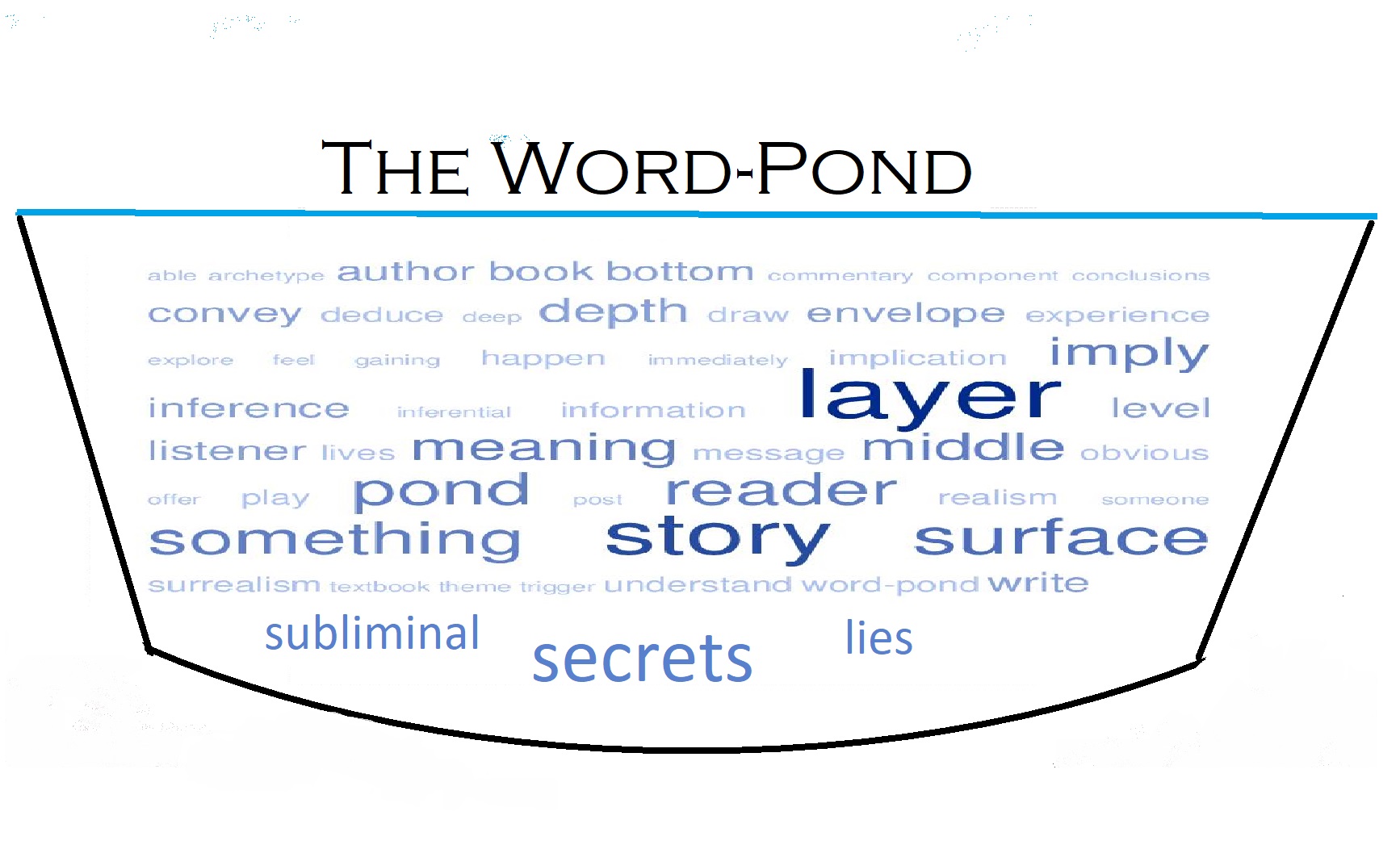
Just like the surface of a pond, the surface of a story is the what-you-see-is-what-you-get layer. It conceals what lurks in the depths but offers a few small clues as to what lies below.

This layer is comprised of

  • Genre
  • Setting
  • Action and interaction
  • All visual/physical experiences of the characters as they go about their lives.

Genre determines the shelf in the bookstore: General Fiction, Women’s Fiction, Contemporary Fiction, Romance, Science Fiction, Fantasy, Young Adult, Children’s books—those labels tell the reader what sort of story to expect.

I see the surface of a story as if it were a picture. At first glance, we see something recognizable. The all-encompassing shell of a story is the setting. The setting is comprised of things such as:

  1. Objects the characters see in their immediate environment
  2. Ambient sounds.
  3. Odors and scents.
  4. Objects the characters interact with.
  5. Weapons (swords, guns, phasers)

The still, reflective surface of a pond is affected by the breeze that stirs it. In the case of our novel, the breeze that stirs things up is made of action and emotion. These are the structural events that form the arc of the story:

  1. The opening.
  2. The inciting incident.
  3. Rising action and events that evolve from the inciting incident.
  4. The introduction of new characters.
  5. The action that occurs between the protagonist and antagonist as they jockey for position.
  6. The final showdown

Depth_word_cloud (50 words)-page-001The components that form the visual layer appear to be the story. However, once a reader wades in, they discover unsuspected depths.
We shape this layer through world-building. We can add fantasy elements, or we can stick to as real an environment as is possible.

In Alice’s Adventures in Wonderland, Lewis Carroll showed us how an author might play with the setting by incorporating an unusual juxtaposition of objects and animals. The characters behave and interact with their environment as if the bizarre things are normal. The setting has a slightly hallucinogenic feel, making the reader wonder if the characters are dreaming.

Yet, in the Alice stories, the placement of the unusual objects is deliberate, meant to convey a message or to poke fun at a social norm.

Most Sci-fi and some fantasy novels are set in recognizable worlds, very similar to where we live. The settings are familiar, so close to what we know, we could be in that world. That is where good world-building creates a literal layer that is immediately accepted by the reader.

Setting, action, interaction—these most obvious superficial components are the framework that supports the deeper aspects of the story.

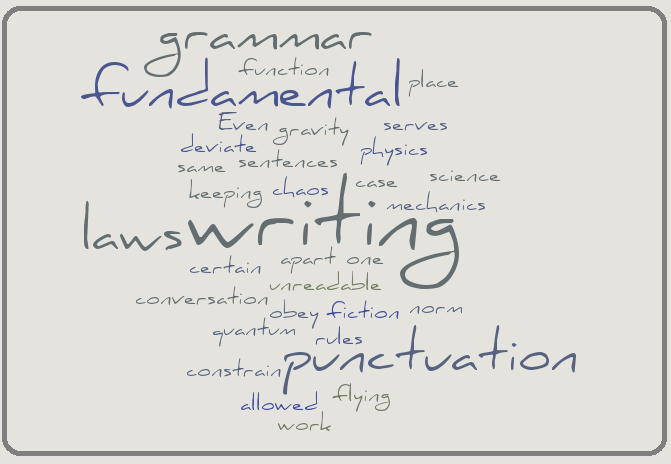
WordItOut-word-cloud-4074543The real story is how our characters interact and react to stresses within the overall framework of the environment and plot. Depth is found in the lessons the characters learn as they live through the events. Depth manifests in the changes of viewpoint and evolving differences in how they see themselves and the world.

Creating depth in our story requires thought and rewriting, but in the last week of NaNoWriMo, we are just trying to get the world built and the events in order. The first draft gives us the surface. We have an idea of what lies below, but at this point, all we are concerned with is getting the structure of the story down, and the characters in place with their personalities.

The true depths and emotions are yet to be discovered but will begin to reveal themselves in the second draft, sometime in December or January. That is when the real writing begins.

Comments Off on The Surface of the Story #amwriting

Filed under writing