
In my previous post, I showed how each scene is a small area of focus within a larger story and has an arc of its own. Small arcs hold up a larger arc. These arcs are created by events, and all the arcs form a cathedral-like structure that we call the story arc, which is the outer shell or the novel’s framework.
 By creating small arcs in the form of scenes, we offer the reader the chance to experience the rise and fall of tension, the life-breath of the novel.
Pacing is created by the way an author links actions and events, stitching them together with quieter scenes: transitions.
Transitions can be fraught with danger for me as a writer because this is where the necessary information, the exposition, is offered to the reader. This is the “how much is too much” moment.
In my first draft, the narrative is sometimes almost entirely exposition. This happens because I am telling myself the story, trying to get the events down before I forget them.
Every narrative has a kind of rhythm. While the characters might be in the midst of chaos, we must ensure there is order in the layout of the narrative.
- action,
- processing the action,
- action again,
- another connecting/regrouping scene
These “processing” scenes are transitions, moving the plot forward while allowing the reader to make sense of what just happened.
One word that slips into my first draft prose is the word “got.” It is a mental code word that I subconsciously used when laying down the story. This word signifies a small incident to revise in the second draft.
“Got” is on my global search list of “telling words.” The words in the list are signals to me, indications that a scene needs to be reworded to make it a “showing” scene.
“Got:” He got the message = he understood.
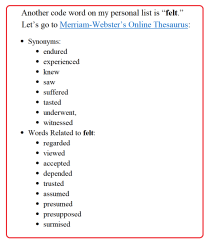 Code words are the author’s first draft multi-tool—a compact tool that combines several individual functions in a single unit. One word, one packet of letters serves many purposes and conveys multiple mental images to the author.
In fact, all passive phrasing is a code. The author’s “subconscious writer” embeds signals in the first draft. It tells the author that the characters are transitioning from one scene to the next. They, or their circumstances, are undergoing a change. Is this change something the reader must know?
Each lull in the action should lead us into a new scene. When transitions are done right, readers won’t notice the narrative moving from one event to the next, as the progression feels natural.
Let’s look at two more code words for transitions:
- Went
- Thought
When I see the word “went,” I immediately know someone is going somewhere. It is a transition scene taking the characters to the next event.
I ask myself, “How did they go?” Went can be changed to any number of verbs:
- walked
- drove
- rode
- took
- teleported
- And so on and so on
You get the idea.
We can’t have non-stop action, as that is exhausting to write and more exhausting to read. The characters and the reader both need to process information, so the character arc should be at the forefront during these transitional scenes. That period of relative calm is when you allow your characters’ internal growth to emerge.
We allow the characters to justify the decisions that led to that point and plan their next move, making it believable.
The transition is also where you ratchet up the emotional tension.
We have more options than simply moving the characters from point A to point B, several paths to choose from.
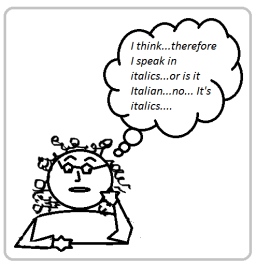 Thought (Introspection):
- Introspection offers an opportunity for new information to emerge.
- It opens a window for the reader to see who the characters are and how they react and illuminate their fears and strengths. It shows that they are sentient beings, self-aware.
Keep the moments of mind wandering brief. Go easy if you use italics to set thoughts off. A wall of italics is hard to read, so don’t have your characters “think” too much if you use those.
- Characters’ thoughts must serve to illuminate their motives at a particular moment in time.
- In a conversation between two characters, introspection must offer information not previously discussed.
- Internal monologues should not make our characters all-knowing. It should humanize them and show them as clueless about their flaws and strengths. It should even show they are ignorant of their deepest fears and don’t know how to achieve their goals.
Sometimes we have more than one character with information the reader needs to make sense of the next event.
The key is to avoid “head-hopping.” The best way to avoid confusion is to give a new chapter to each point-of-view character. Head-hopping occurs when an author describes the thoughts of two point-of-view characters within a single scene.
Visual Cues: In my own work, when I come across the word “smile” or other words conveying a facial expression or character’s mood, it sometimes requires a complete re-visualization of the scene. I look for a different way to express my intention, which is a necessary but frustrating aspect of the craft.
Fade-to-black is a time-honored way of moving from one event to the next. However, I don’t like using fade-to-black scene breaks as transitions within a chapter. Why not just start a new chapter once the scene has faded to black?
One of my favorite authors sometimes has chapters of only five or six hundred words, which keeps each character thread truly separate and flowing well. A hard scene break with a new chapter is my preferred way to end a fade-to-black.
Chapter breaks are transitions. As we write, chapter breaks fall naturally at certain places.
Conversations can serve as good transitions that propel the story forward to the next scene. However, they can easily become info dumps. In literary terms, a good conversation is about something we didn’t know and builds toward something we are only beginning to understand.
 That is true of every aspect of a scene—it must reveal something we didn’t know and push the story forward toward something we can’t quite see.
The transition is the most challenging part of the narrative for me to formulate in the first draft. I get stuck, trying to decide what information needs to come out and what should be held back.
The struggle to connect my action scenes into a seamless arc is why writing isn’t the easiest occupation I could have chosen.
But when everything comes together, writing is the most satisfying job I have ever had.
 Novels consist of a string of moments united by a common theme. These scenes combine to form a story when you put them together in the right order and link them with a plot featuring a compelling protagonist who must overcome adversity.

 In my last post, I talked about the good and bad aspects of two editing programs that I am familiar with, the things they do and don’t help us identify in our work. One more thing these wonderful programs can’t help us with is identifying bloated backstory.
 Look at the first scene of your manuscript. Ask yourself three questions.
 I look at each conversation and assess how many words are devoted to each character’s statement and response. Then, when I come to a passage that is inching toward a monologue, I ask myself, “what can be cut that won’t affect the flow of the story or gut the logic of the plot?”
 I do use Grammarly—but also, I don’t.
 Spellcheck doesn’t understand context, so if a word is misused but spelled correctly, it may not alert you to an obvious error.
 New writers should invest in the
  Even editors must have their work seen by other eyes. My blog posts are proof of this as I am the only one who sees them before they are posted. Even though I write them in advance, go over them with two editing programs, and then look at them again before each post goes live, I still find silly errors two or three days later.
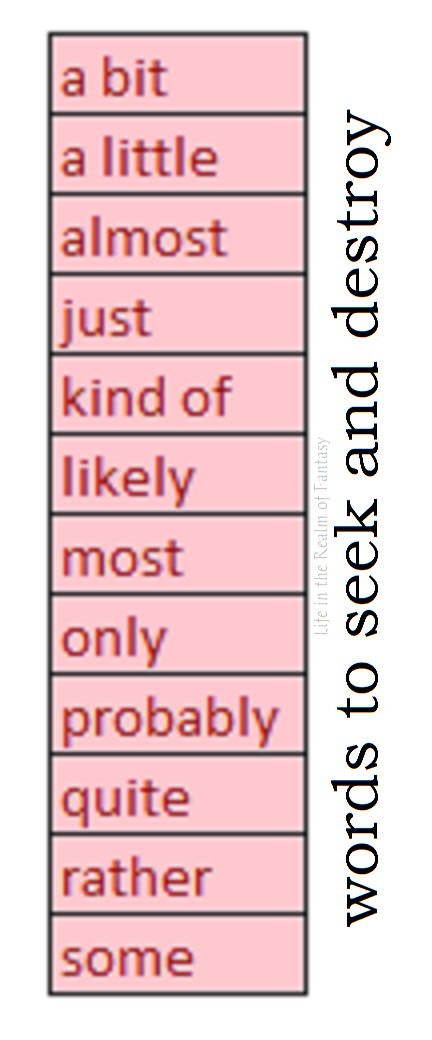
 If you have decided something is a “crutch word,” examine the context. Inadvertent repetitions of certain words are easy to eliminate once we see them with a fresh eye.
 From my earliest childhood, I always thought of myself as a writer. I just didn’t know how to write anything longer than a poem or a song in such a way that it was readable.
 One day in 1990, I stumbled upon a book offered in the
  Spend the money to go to conventions and attend seminars. You will learn so much about the craft of writing, the genre you write in, and the publishing industry as a whole—things you can only learn from other authors. I gained an extended professional network by joining The Pacific Northwest Writers Association and going to their conferences.
 Six: My final suggestion is this: even though you are writing that novel, keep writing short stories too.
 When I have asked a beta reader to read a section of my work, they sometimes flag a paragraph as unclear. It might make perfect sense to me, but if I am the only one who understands it, it’s time to tear that paragraph down to see if each sentence can stand on its own.
 I don’t want to introduce vagueness into my work. Just because I like what I wrote doesn’t mean it has to stay in the finished product. Maybe I don’t see that it’s confusing, but my friends who read my raw manuscripts will.
 Strolling along, watching the birds and animals that make their homes there grounds me. When we leave, I feel spiritually rested, more rooted in the earth, stronger and at peace with myself. It is a serene place, a place of stillness and calm.
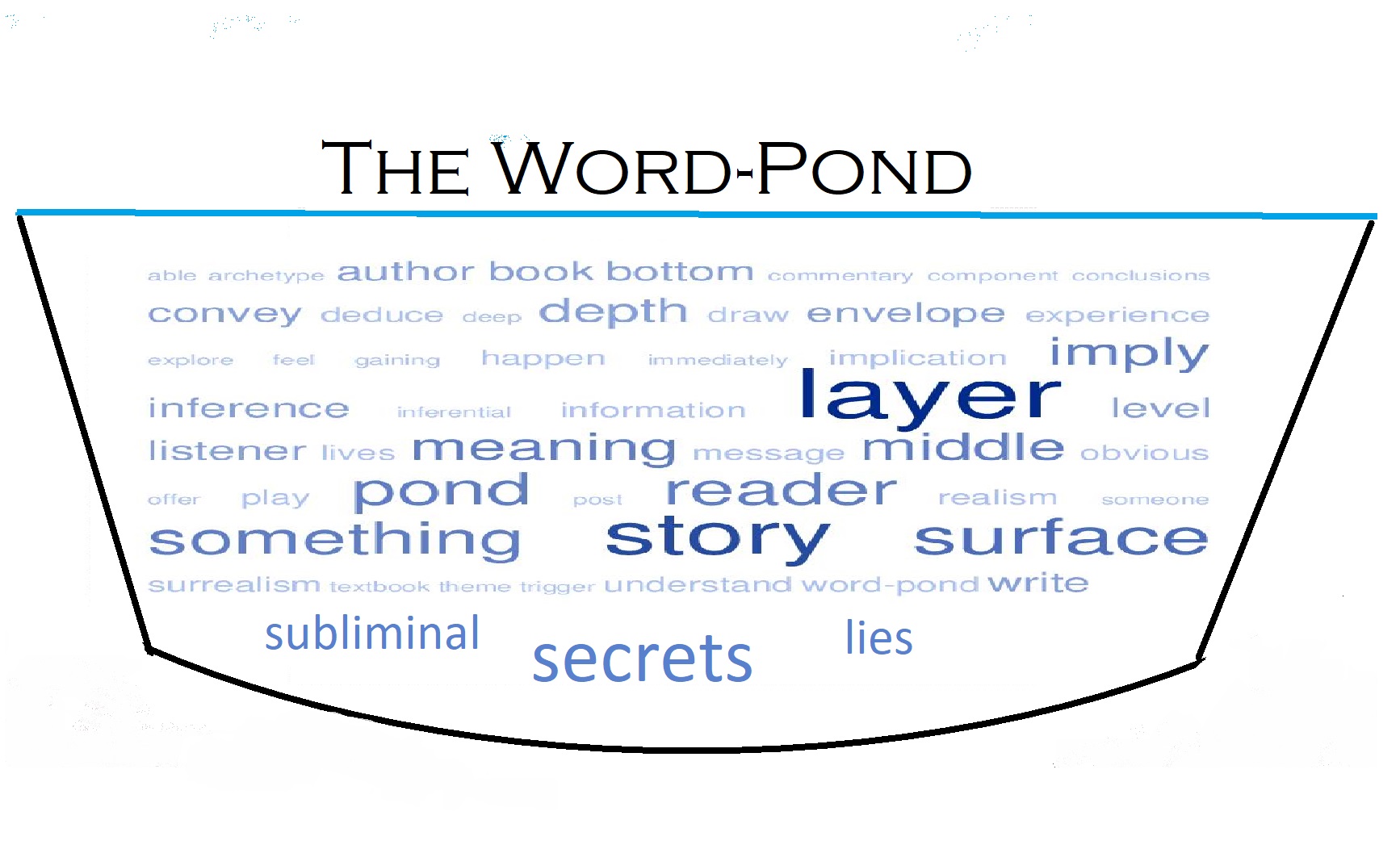 The components that form the visual layer appear to be the story. However, once a reader wades in, they discover unsuspected depths.
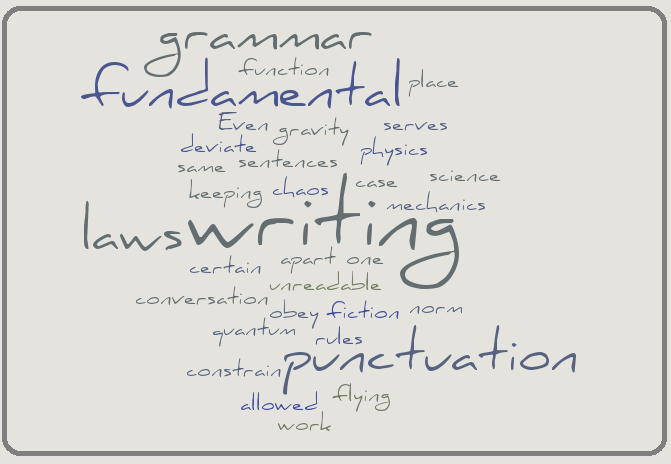 The real story is how our characters interact and react to stresses within the overall framework of the environment and plot. Depth is found in the lessons the characters learn as they live through the events. Depth manifests in the changes of viewpoint and evolving differences in how they see themselves and the world.


 Life in the Realm of Fantasy


.jpg)
