#NaNoPrep, The Story Arc Part 2 #amwriting

I have developed mad skills at carving out time for writing because I participate in NaNoWriMo every November. As a municipal liaison for the Olympia area, I must get a minimum of 1,667 new words written each day.
WritingCraft_NaNoPrep_Novel_in_a_monthI usually do this with a little advance preparation. Then on November 1st, I sit in front of my computer, and using the ideas I have outlined as my prompts, I wing it for at least two hours.

So, where am I in this process? I’m now listing prompts for the middle of my novel, book 2 of a fantasy series.

However, for this series of posts I’m using an exercise from a past seminar on plotting to illustrate how my method works. This is a plot that can be set in any contemporary, paranormal fantasy, or sci-fi world. Change the vehicles from cars to horses and carriages, and it can be placed in a historical world.

Depending on your personal inclination, this could be written as a political thriller or a romance, or a combination of both.

In my last post, we met our protagonist, Dave, an unmarried accountant. We saw him in his usual surroundings, a café he regularly has lunch at. An event occurred, which is the inciting incident. What could possibly have enticed Dave out of his comfort zone? What did he do that was out of character for him? He “paid it forward” and bought a stranger lunch.

  • This act changes his life. It’s the first point of no return, leading to the first crisis.

Dave didn’t know it, but that was the moment he was thrown out of his comfort zone and into the situation, which is the core of the plot.

  • Dave walked toward his office, only a few blocks away, but as he waited for the light to change so he could cross the street, a limousine pulled up alongside him. Four large men in black suits hustled him into the backseat.
  • He was forced at gunpoint onto a plane bound for a foreign nation, handcuffed to a suitcase with no explanation.

Those are the circumstances in which Dave found himself in my last post. 

scienceHow will the next phase of Dave’s story start? That will begin the middle section of the story, and this is what we are going to give a brief outline of.

As I’ve mentioned before, everything that occurs from here until the final page happens because Dave has an objective: he wants to go home.

I suggest we give ourselves a few prompts, all of which center around Dave achieving his objective: to get rid of the suitcase and go back to his job. He wants that desperately. Desire drives the story. Objectives + Risk = Story

  1. A silent guard accompanies Dave.
  2. Dave has been left in possession of his cell phone, but mysteriously, it has no signal.
  3. They arrive at the embassy.
  4. Dave is taken to an interrogation room and questioned about his relationship with the woman he bought lunch for.
  5. Dave discovers that the only key that can remove the handcuffs is in the custody of the mysterious woman who is interrogating him.
  6. The woman leaves the room. While she is out, Dave’s phone lights up with a text message from his boss in Seattle. Because he hasn’t been to work for two days and didn’t call in, he has been fired.
  7. He can’t seem to call out or reply to the message, another mysterious thing.
  8. The interrogator returns, having verified that Dave is who he claims he is. She also seems to know he’s now unemployed.
  9. She offers him a job. All he has to do is babysit the suitcase for two months until a certain agent who is otherwise occupied can claim it.
  10. Dave wants to go home, but he can’t. He’s unemployed and homeless in a foreign country with no luggage, and no money other than his credit cards, which have limits. If he accepts the job, he will be given a work visa, a flat to live in, and a salary.
  11. He needs these things to achieve his deepest desire: to go back to Seattle and get another accounting job, which he can do after fulfilling his part of the bargain.
  12. The wage he is offered is good, significantly so, which makes him nervous. Still, he can see no choice but to accept the job. (The second point of no return, leading to the next crisis.) After all, he’s always wanted to visit (Stockholm? Insert foreign capital here).
  13.  Anyway, how hard can it be to babysit a locked suitcase?

That question must come back to haunt him for the next 40,000 words, and if you list a few prompts, you will take Dave to his ultimate meeting with fate.

Hindrances matter. Add to the list of obstacles as you think of them, as those difficulties are what will force change on the protagonist, keeping him and his story moving forward.
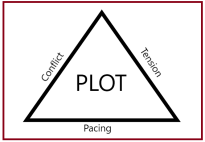
The_Pyramid_Conflict_Tension_PacingIn any story, the crucial underpinnings of conflict, tension, and pacing are bound together. Go too heavily on one aspect of the triangle, and the story fails to engage the reader. By outlining a few important events now, we can add trouble and hitches during the writing process and increase the tension. Pacing will be something to worry about in the second draft—at this point, we just want to get the bones of his adventure down on paper.

Scenes involving conflict are controlled chaos—controlled on the part of the author. Stories that lack conflict are character studies. And perhaps, a character study is what you wish to write, and that is okay too. It’s just a different kind of story, more literary in its approach. Regardless, it will need an arc of some sort to bring change and growth to the protagonist.

The middle is often easiest to write because that is where the action happens. But it can easily be messed up, again with too much detail inserted in dumps. Several more events will follow, all of them leading toward one or more confrontations with the enemy. Without a loose outline, some of these events will be “desperation events.”

  • Killing off random characters
  • Random explosions
  • Yet another gratuitous sex scene

Next week we will plot the conclusion of Dave’s adventure. We’ll also examine the way writing the ending first can inspire beginnings. My 2010 NaNoWriMo novel grew out of what was really the final chapter.


#NANOPREP SERIES TO DATE:

#NaNoPrep: part 1: What’s the Story?  (the storyboard)

#NaNoPrep, Setting: Creating the Big Picture

#NaNoPrep, Building Characters

#NaNoPrep, More Character Building

#NaNoPrep, Creating Societies

#NaNoPrep, Designing Science, Magic, and the Paranormal

#NaNoPrep, Terrain and Geography

#NaNoPrep, Connections and Interconnections

#NaNoPrep, Construction and Deconstruction

#NaNoPrep, The Story Arc Part 1

This Post: #NaNoPrep, The Story Arc Part 2
7 Comments

Filed under writing

#NaNoPrep, The Story Arc part 1 #amwriting

Today’s post begins a three-part series on the story arc. At this point, I’ve been talking about NaNoWriMo, National Novel Writing Month, for several weeks. It begins on November 1st, and to sign up, go to www.nanowrimo.org .

WritingCraft_NaNoPrep_Novel_in_a_monthWe know our genre and have written a few paragraphs that describe our characters and who they are the day before the story opens. Also, we know where the story takes place. (To catch up on earlier posts, the list is at the bottom of this article.)
I always feel it’s necessary to have a brief outline of the story arc when I sit down to write. “Pantsing it” is exhilarating, but my years of experience with NaNoWriMo have taught me that when I am winging it for extended lengths of time, I lose track of the plot and go off the rails.

Not having even a loose outline creates a lot more work in the long run. It stalls the momentum if I must stop writing, take the time to analyze where I’m at, and then throw together an outline for the next section. Stopping the flow lowers my NaNoWriMo word count for that day.

For those who are new to writing and are just learning the ropes, turning your idea about a book you’d like to write into a manuscript you would want to read takes a little work.

First, you need to know how to construct a story.

magicEvery reader knows that stories have a beginning, a middle, and an end. They start in a place of relative comfort, and through rising action, they follow the characters through events that change them for better or worse.
However, when a new writer sits down to write a novel in only thirty days with no plan and no idea what they’re going to write, they can easily lose interest and stop writing altogether. Others might force themselves to get their 50,000 words, but have no control of character arcs, setting, or plot. They end up with backstory infodumps and side quests to nowhere. The ending either slowly faints away or is chopped off.

All the infodumps and history can be gotten out of the way before you begin the opening paragraphs on November 1st.

The progression of events from an opening line to a final paragraph is called a story arc. It is called an arc because the action begins at a quiet point, rises to a pitch, and ends at another quiet point.

So, let’s consider the beginning. Now is a good time to write a line or two describing the opening scene, simple prompts for when the real work begins.

Beginnings are the most critical and are easiest to mess up with too much information. All beginnings are comprised of situation, circumstances, and objectives.

  • A good story opens with the main character and introduces their companions (if any). (Circumstances)
  • The antagonist and their cohorts are introduced. (Circumstances)
  • With the introductions out of the way, something occurs that pushes the main character out of their comfort zone. (Situation and Circumstances)
  • That event is called the “inciting incident” and is named that because this occurrence incites all the action that follows. (Objectives)
  • These scenes comprise the first ¼ of the story arc. The beginning ends with the first major incident, where the action kicks into high gear, transitioning to the middle section of the story. (Situation, Circumstances, and Objectives)

strange thoughts 2In your musings, on what day does the serious event occur, the one that changes everything? THAT day is where the story begins, and everything that happens before that moment is backstory and isn’t necessary. A plot outline I have used before as an example is set as a political thriller, but it could easily be a paranormal fantasy, a sci-fi thriller, or a romance.
At the outset of the story, we find our protagonist and see him/her in their normal surroundings. Once we have met them and seen them in their comfort zone, an event occurs which is the inciting incident. This is the first point of no return.

At the outset, Dave, an unmarried accountant, sees a woman from across a café, and through a series of innocent actions on his part, he is caught up in a spy ring. We begin with the protagonist.

  • What could possibly entice Dave out of his comfort zone? What would he spontaneously do that is out of character for him? Perhaps he buys a stranger lunch. This act must change his life.

Because Dave paid for a stranger’s meal, he draws the attention of the people who are following her. They think he must be involved with her, putting him at risk.

That was the inciting incident, the moment that changed everything.

Now, Dave is thrown out of his comfort zone and into the situation, which is the core of the plot.

  • On his way back to his office, a white limousine pulls up alongside him, and four men in black suits hustle him into the backseat. He is forced at gunpoint onto a plane bound for a foreign nation, handcuffed to a suitcase. The only other key that can remove the handcuffs is at the Embassy in the custody of a mysterious woman.

This is the circumstance in which Dave finds himself at the beginning of the story. 

  • How will the next phase of Dave’s story start? That will begin the middle section of the story.

Now we come to the next part of the core of your plot: objective.

  • At this point, our hero just wants to get rid of the suitcase and go back to his job. He wants that desperately. Desire drives the story.

Everything that occurs from here until the final page happens because Dave has an objective: he wants to go home.

However, to counter the enemy, we must decide how to get Dave and his story to the next plot point, which we’ll discuss in the next post.

Those paragraphs are all that is needed as far as an outline for the beginning goes, unless you’re in the mood to go deeper. All we need is an idea of who, what, and where. We’ll discuss how to plot the middle, or the why, in the next post.

WordItOut-word-cloud-4074543If you work at a day job and using the note-taking app on your cellphone to take notes during work hours is frowned on, you can still capture your ideas for the storyboard.
Carry a pocket-sized notebook and pencil and write those ideas down. You can discreetly make notes whenever you have an idea that would work well in your story, and you won’t be noticeably distracted or off-task.

Part 2 of this topic will talk about action and reaction, plotting the middle of the story arc.


#NANOPREP SERIES TO DATE:

#NaNoPrep: part 1: What’s the Story?  (the storyboard)

#NaNoPrep, Setting: Creating the Big Picture

#NaNoPrep, Building Characters

#NaNoPrep, More Character Building

#NaNoPrep, Creating Societies

#NaNoPrep, Designing Science, Magic, and the Paranormal

#NaNoPrep, Terrain and Geography

#NaNoPrep, Connections and Interconnections

#NaNoPrep, Construction and Deconstruction

This Post: The Story Arc Part 1

14 Comments

Filed under writing

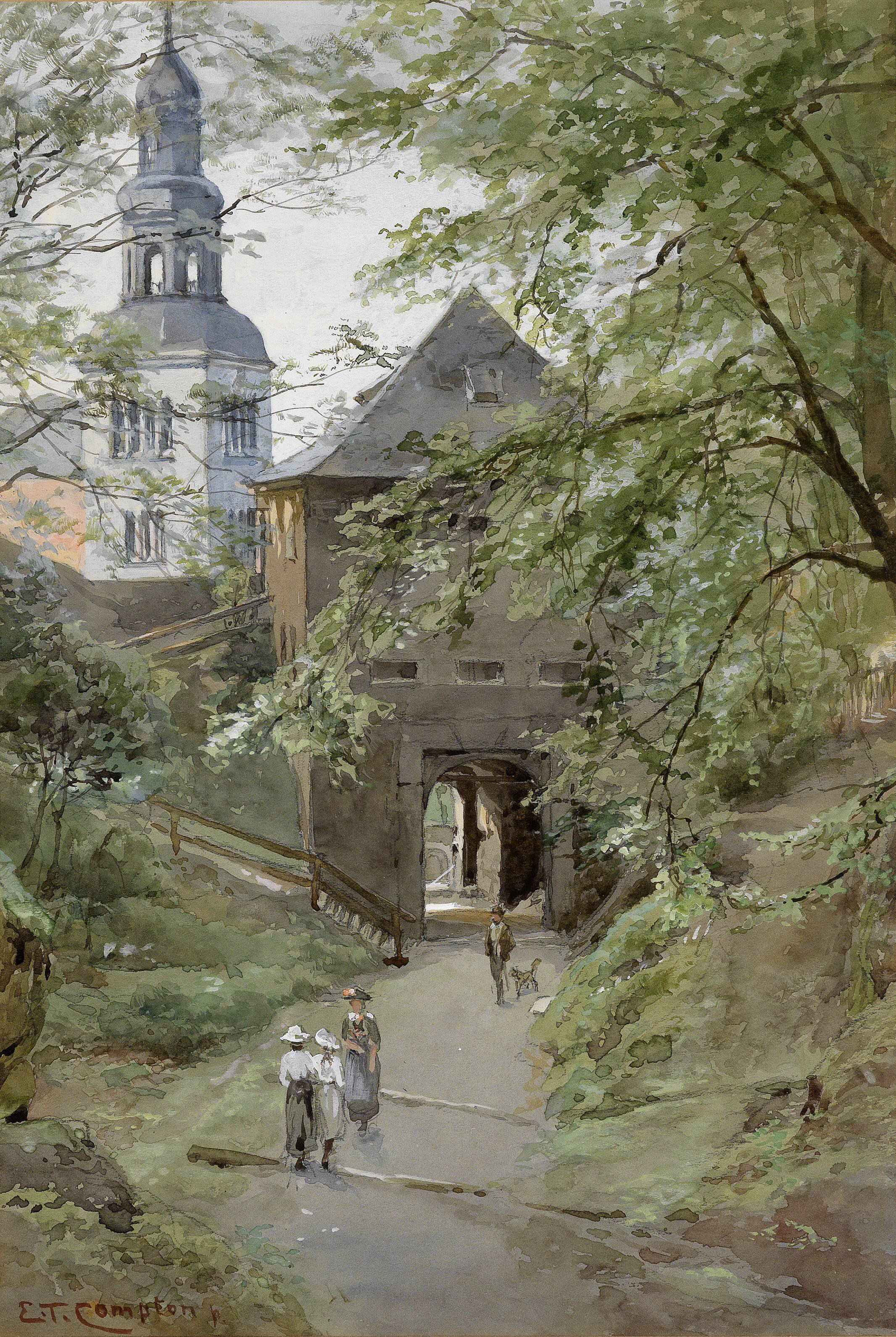
#FineArtFriday: Augustiner Bräu and Mülln Abbey by E. T. Compton

Edward_Theodor_Compton_Augustiner_Bräu_und_Kloster_MüllnPainting: Augustiner Bräu and Mülln Abbey in Salzburg

Artist:  Edward Theodore Compton (1849–1921)

Medium: Watercolor and opaque white on paper, 24,5 x 35,5 cm

Inscription: signed E. T. Compton

Date: by 1921

What I love about this image:

This is a cityscape, a genre which Compton was not famous for painting. The central building is a brewery, and in background rises the steeple of an Augustinian abbey. The day is pleasant, not too bright or warm, but comfortable. People are out without coats, so perhaps it was painted on one of those slightly overcast days in June.

The muted colors and gray skies make this a familiar kind of day to me, as June in the Pacific Northwest is frequently overcast, but pleasant.

Compton is known for his vast mountain-scapes, but this painting shows us that he found the architecture and community of his adopted country interesting too.

Judging by the dress of the walkers, I would say this was painted just after WWI. The skirts are not full and are hemmed well-above the ankle, which was not a pre-WWI style at all. The blouses are simple, with no lace or ruffles; the clothes of women who worked both at home and at jobs. After the war, cloth was expensive, and fashions changed accordingly.

About the Artist, Via Wikipedia:

Edward Theodore Compton, usually referred to as E. T. Compton, (29 July 1849 – 22 March 1921) was an English-born, German artist, illustrator, and mountain climber. He is well known for his paintings and drawings of alpine scenery, and as a mountaineer made 300 major ascents including no fewer than 27 first ascents.

Compton was born in Stoke Newington in London, the son of Theodore Compton, an art-loving insurance agent, and grew up in a deeply religious Quaker household. He attended various art schools, including, for a time, the Royal Academy in London, but otherwise he was mainly self-taught in art.

In 1867, wanting the best education for their artistically-talented son, and due to the high cost of schooling in England, the family decided to emigrate to Germany settling in Darmstadt. The city at that time was the seat of the Grand Duchy of Hesse under Grand Duke Ludwig III, and a community of artists had sprung up there. Entries in Compton’s diary show that both he and his father were art teachers – Alice, the Princess of Hesse numbered amongst Edward’s students.

Initially painting in the English romantic tradition, Compton later developed a more realistic representation of nature, being guided by his true artistic ideas while retaining topographical accuracy. Even his early watercolors show the great importance of brightness and light and his work is also remarkable for its portrayal of the elements such as water and air, including ascending mist and fog. He can be regarded as an impressionist.

Although Compton never had much formal art education and did not found a school, he influenced artists such as Ernst Platz and Karl Arnold as well as his son Edward Harrison Compton and daughter Dora Compton. [1]


Credits and Attributions:

[1] Wikipedia contributors, “Edward Theodore Compton,” Wikipedia, The Free Encyclopedia, https://en.wikipedia.org/w/index.php?title=Edward_Theodore_Compton&oldid=1021678754 (accessed September 30, 2021).

Image courtesy of: Wikimedia Commons contributors, “File:Edward Theodor Compton Augustiner Bräu und Kloster Mülln.jpg,” Wikimedia Commons, the free media repository, https://commons.wikimedia.org/w/index.php?title=File:Edward_Theodor_Compton_Augustiner_Br%C3%A4u_und_Kloster_M%C3%BClln.jpg&oldid=331463362 (accessed September 30, 2021).

Comments Off on #FineArtFriday: Augustiner Bräu and Mülln Abbey by E. T. Compton

Filed under #FineArtFriday, writing

NaNoPrep, Construction, and Deconstruction

We are building up to NaNoWriMo 2021. For the last few weeks, I’ve been focusing on the creation of a storyboard. We’ve discussed characters and worldbuilding. Today, we’ll talk about book construction and what we can learn by reading work published by the big traditional publishers.

WritingCraft_NaNoPrep_Novel_in_a_monthWhether you hope to be published traditionally or plan to go indie, you must know what the reading public is buying. You will probably write a book that is squarely set in your favorite genre.
I read in many genres. Most of what I write is genre fantasy, but mystery and contemporary fiction also intrigue me.

Your assignment for today is to find a book you love, sit down with a notebook and pencil, and dissect that narrative to discover what that author did to draw you in and keep you involved.

Even the best books have flaws. Great characters, proper pacing, and attention to plotting keep those rough places from derailing a brilliant book. The flaws are just as important for me to identify as are the things I love.

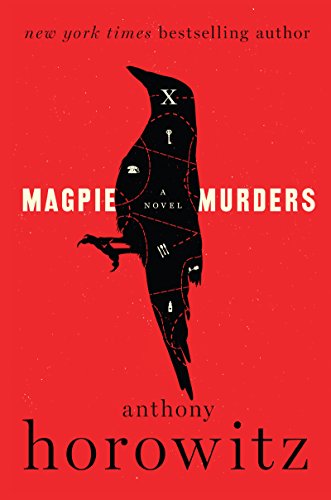
So, let’s take a look at the construction of a recent entry into the classic mystery genre that impressed me, Magpie Murders by Anthony Horowitz.

Publisher: ‎Harper; Unabridged edition (June 6, 2017)

Publication date: June 6, 2017

Print length: 501 pages

But first, THE BLURB:

41OtsmHYJLLWhen editor Susan Ryeland is given the manuscript of Alan Conway’s latest novel, she has no reason to think it will be much different from any of his others. After working with the bestselling crime writer for years, she’s intimately familiar with his detective, Atticus Pünd, who solves mysteries disturbing sleepy English villages. An homage to queens of classic British crime such as Agatha Christie and Dorothy Sayers, Alan’s traditional formula has proved hugely successful. So successful that Susan must continue to put up with his troubling behavior if she wants to keep her job.
Conway’s latest tale has Atticus Pünd investigating a murder at Pye Hall, a local manor house. Yes, there are dead bodies and a host of intriguing suspects, but the more Susan reads, the more she’s convinced that there is another story hidden in the pages of the manuscript: one of real-life jealousy, greed, ruthless ambition, and murder.

Masterful, clever, and relentlessly suspenseful, Magpie Murders is a deviously dark take on vintage English crime fiction in which the reader becomes the detective.

My Dissection:

First, Magpie Murders was published by one of the Big Traditional Publishing houses, Harper. This means the publisher decided it would sell enough in hard copy to justify supporting the author with advertising.

What makes this book better than the competition? Many authors published by Harper don’t get the kind of support this book got. What made this book more marketable?

  1. It was an original way to twist the Agatha Christie formula for cozy mysteries.
  2. Readers are given a story within a story, and within that story is hidden another story. The novel opens with an editor reading the manuscript of an author whom she despises personally but whose work she loves.
  3. We read the manuscript that editor Susan Ryeland has been given, experiencing it simultaneously as she does.
  4. Within the novel that Ryeland must edit are many clues, not only to the mystery she is supposed to edit but also to solve the murder of the author.
  5. Those clues take an unusual form—word games, something people who love anagrams and word puzzles will enjoy. The dead author used this trick to write his acquaintances into his novels, rearranging the letters of their names and portraying them in an unflattering light.
  6. The murdered author was known for using the plots of his less talented students’ work and stealing plots and names wholesale from Agatha Christie.
  7. These name anagrams are intended to be noticed by his fellow authors and acquaintances, a deliberate attempt to make them uncomfortable or angry.
  8. Halfway into the novel, our editor discovers that the final chapters of the book are missing. She goes on a mission to find those chapters.
  9. In the process, she discovers just how hateful and rotten the murdered man was.

chicago guide to grammarNow, let’s talk MECHANICS. The author of the Magpie Murders has worked as a journalist. He has taken the time to become educated in grammar and understands common industry standards.
  1. If you want to write a book that other people can read, you must understand the fundamental rules of grammar.
  2. He didn’t get too artful, except when he was writing as the murder victim. That artfulness was there to point out the victim’s arrogance.

What I take home from dissecting books like this is that a plot can be complicated, but simplicity is sometimes best for prose.

A few things I didn’t like, some of which were deliberate. These things didn’t ruin my enjoyment of the book:

  1. The pacing was a little uneven. In one place, it grinds to a complete halt. I could see why the author had made that choice as part of the overall plot, but I didn’t like it and wished he’d found a different way to make that point.
  2. The novel “written by the murdered man” was gripping, but I didn’t understand that fictional book’s ending until the editor confronted the author’s murderer. Again, that was deliberate on the dead author’s part, written that way as one more reason to hate him. But I would have liked to understand it before we got to that place.
  3. The relationship between Susan Ryeland and her boyfriend lacks tension. When their relationship was threatened with falling apart, I didn’t care.

Overall, this is an excellent, well-written book. If you write mysteries and want to know what the big publishers are looking for, you must read what they publish.

This is why I read what Tor Forge publishes in my genre of fantasy. If I hate it, I dissect it and find out why. An editor accepted that manuscript and promoted it, and I want to know why. If I love it, I dissect it for the same reason.

You must read if you want to know how a good book is plotted, how worlds are created, and how characters are built. Make notes and learn from the mistakes and successes of others.


#NaNoPrep series to date:

#NaNoPrep: part 1: What’s the Story?  (the storyboard)

#NaNoPrep, Setting: Creating the Big Picture

#NaNoPrep, Building Characters

#NaNoPrep, More Character Building

#NaNoPrep, Creating Societies

#NaNoPrep, Designing Science, Magic, and the Paranormal

#NaNoPrep, Terrain and Geography

#NaNoPrep, Connections and Interconnections

This Post: #NaNoPrep, Construction and Deconstruction

8 Comments

Filed under writing

#NaNoPrep, Connections and Interconnections

All through September, we’ve focused on building our NaNoWriMo storyboard. We’re preparing the groundwork that will allow us to write 1667 new words or more every day during the month of November.

We are four weeks into this series, and we’ve compiled a long list of essential things to consider. So now, we’re going to zoom in and take a closer look at what my co-ML, Lee French, calls “the stuff that permeates everything, and how they interact.”

We have looked at designing systems for technology and magic. We know which scenario we are choosing, and we’ve figured out how it works. Now we’re going to look at how those systems are connected to the people and how they impact the way our characters live in their worlds.

Lee reminds us that in the case of technology and magic both, the most significant impact is on the efficiency of routine tasks:

“In a contemporary, real-world setting, you have everything we have now. If you want to contact someone, you can call, text, or email them.

“In many fantasy settings, magic replaces tech with a fantastical version of something, like casting a spell instead of calling, texting, and/or emailing.

“In sci-fi settings, advanced tech typically makes things faster, like having a cranial implant that eliminates the need to type–all you do is ‘think’ and it happens. Maybe there aren’t voice calls anymore, and everything happens by text.

“In low-tech, no-magic settings, things take longer to accomplish. There is no phone, so you have to write a letter or go visit someone in person.”

Just because some technology exists doesn’t mean everyone has access to it.

We go back to considering the layers of society. Who is in charge? Where does our protagonist fit in that hierarchy? Who has access to the best magic/technology? Is our protagonist one of the lucky few or one of the underclasses? Where does the antagonist fit in society?

Think about the subgenre of cyberpunk: it encompasses many features of hard science fiction and the dark anarchy of classic Sturm und Drang but is set in a dystopian society. The religions people worship are technology and industry. Corporate uber-giants are the gods whose knowledge mere mortals desire and whom they seek to replace. Recreational drugs are the magic potions, and technology is the superpower mortals desire to wield.

And, just like all demi-gods in classical mythology, when a powerful and clever protagonist does manage that feat, nothing changes for mere mortals. The new gods are no better than those whose thrones they have usurped.

Wikipedia defines cyberpunk: Cyberpunk is a subgenre of science fiction in a future setting that tends to focus on the society of the proverbial “high tech low life”  featuring advanced technological and scientific achievements, such as information technology and cybernetics, juxtaposed with a degree of breakdown or radical change in the social order.” [1]

Works in this subgenre are always set in a post-industrial dystopian world with deep divisions in the strata of society. Some have a specified caste system, but most people live in extreme poverty in all cyberpunk tales. There will be a small middle class, and at the top, a few of the most powerful people hold incredible wealth. These societies have fallen into extreme chaos, which is the driver of the story.

Protagonists acquire and use technology in ways never anticipated by the original inventors. A central element of cyberpunk is “the street finds its own use for things.”

So, now we understand that privilege, or lack thereof, shapes a person’s place in society, no matter what genre you choose to best tell your story. How does the protagonist see themselves in relation to the antagonist? Better than, as good as, or beneath but clawing their way up?

Who are these characters when they’re home? Write a paragraph or two introducing them to you, showing them as they are when no one is looking. Do they cook, clean, answer messages, etc.? What tech/magic are they comfortable interacting with on a daily basis? Get this out of the way now, so it doesn’t make an appearance in the narrative as an unnecessary info dump later.

Considering these things now can speed things up when you plot your opening scene. You’ll see your characters fully formed in their comfort zone and know who they are and how they think. When you write those first lines, you will have no trouble seeing them as unique individuals.

If you are writing a novel set in our contemporary world, most of the work is already done. Your concerns should focus on the specifics of where your story takes place and the opinions of your characters.

If you choose to include contemporary politics, events, and tech, keep in mind that your novel will no longer be current in ten years. It will recount a history that recedes further into the past every year.

That is NOT a bad thing, not by any means.

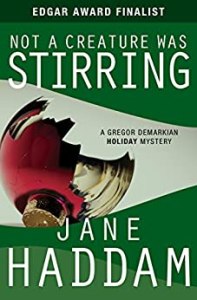
One of my favorite genres to read for pleasure is mystery. I have always enjoyed the characters in the Gregor Demarkian series by the late Jane Haddam. These novels were set firmly in the political climate of the 1990s and early 2000s, the era in which most books in the series were written.

While references to technology and political events date these books (as do the religious and social complications), great characters, murder, and the mystery of why it happens are timeless.

These novels are compelling despite the advances in today’s technology and the changes in the way society sees itself. The characters are engaging, and the worldbuilding creates a solid, believable image of 1990s Philadelphia.

If you are setting your story in a historical era, remember that sometimes the events of one year can change everything about a society.

If your story is set in a specific year with significant events that changed everything for whole societies, take some time to think about whether you want it before or after the incidents. Think about how those events impact your characters.

I would say that 2019 was a vastly different time than 2021. Any novel set in contemporary 2021 will have societal aspects and complications that are wholly unique to this time and this world and very different from one set in that long-ago-time of 2019.

#NaNoPrep series to date:

#NaNoPrep: part 1: What’s the Story?  (the storyboard)

#NaNoPrep, Setting: Creating the Big Picture

#NaNoPrep, Building Characters

#NaNoPrep, More Character Building

#NaNoPrep, Creating Societies

#NaNoPrep, Designing Science, Magic, and the Paranormal

#NaNoPrep, Terrain and Geography

This post: #NaNoPrep, Connections and Interconnections


Credits and Attributions:

[1] Wikipedia contributors, “Cyberpunk,” Wikipedia, The Free Encyclopedia, https://en.wikipedia.org/w/index.php?title=Cyberpunk&oldid=1020463998 (accessed May 15, 2021).

12 Comments

Filed under writing

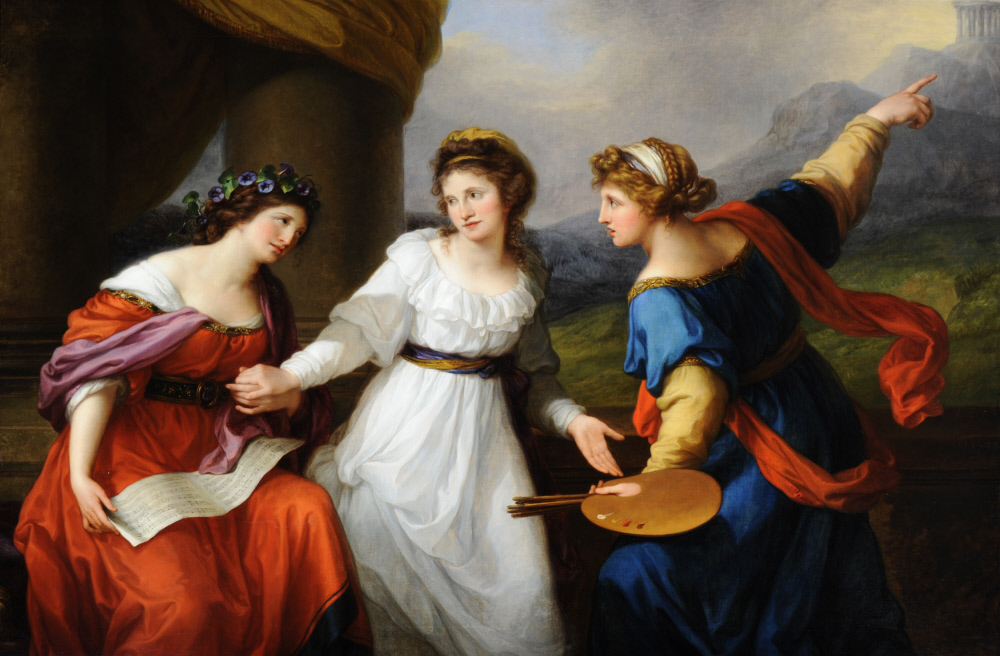
#FineArtFriday: Self-portrait Hesitating between the Arts of Music and Painting by Angelica Kauffmann 1791

Self-portrait of the Artist hesitating between the Arts of Music and Painting by Angelica Kauffman RA (Chur 1741 ¿ Rome 1807)

Artist: Angelica Kauffmann  (1741–1807)

Title: Self-portrait Hesitating between the Arts of Music and Painting

Date: 1791

Medium: oil on canvas

Dimensions: Height: 147 cm (57.8 in); Width: 216 cm (85 in)

Collection: The St Oswald Collection, Nostell Priory. (The National Trust)

What I love about this painting:

Balanced, powerful colors and the soft-brushed, multi-layered style of English portraitists Sir Joshua Reynolds and Thomas Gainsborough characterize all of Angelica Kauffman’s work. We see sharp clarity and attention to the smallest detail in the setting and the scene. Yet, the faces have a mystical, dreamlike quality.

This painting shows the struggle many artists suffer from, trying to decide which muse to follow. Kauffmann loved music and painting in equal measure. She had a natural soprano of operatic quality, yet she had the kind of artistic talent for painting that rarely comes along.

Art won out. I’m glad because, in those days before recordings, music was ephemeral. It was over when the last bow was taken, and the curtain closed. Only the lucky few in the opera house experienced it.

Artists like Kauffmann, who leave us their great works, bring enjoyment to thousands of people over the course of centuries.

Angelica Kauffmann was a beautiful, extraordinarily talented and well-educated woman in an era when talented, educated women were considered an annoyance. Slut-shaming isn’t a new method of trying to keep a woman down, although social media has made it into a handy weapon. The practice has been around for as long as humans have walked the earth.

Kauffmann’s talent and success, along with her friendship with Sir Joshua Reynolds, so annoyed fellow artist Nathaniel Hone that he went to great lengths to publicly humiliate both her and Reynolds in his painting, The Conjurer.

Hone’s attempt to put her in her place backfired, as rather than cowering in shame, Kauffmann held her head up and fought back, forcing him to remove the nude he’d painted (implying she’d posed for it) from his picture. Her reputation remained untarnished by the defamatory assault, but Hone’s crudely expressed jealousy, both professional and personal, did him no favors among his peers.

From Wikipedia:

Her friendship with Reynolds was criticized in 1775 by fellow Academician Nathaniel Hone, who courted controversy in 1775 with his satirical picture The Conjurer. It was seen to attack the fashion for Italian Renaissance art and to ridicule Sir Joshua Reynolds, leading the Royal Academy to reject the painting. It also originally included a nude caricature of Kauffman in the top left corner, which he painted out after she complained to the academy. The combination of a little girl and an old man has also been seen as symbolic of Kauffman and Reynolds’s closeness, age difference, and rumoured affair. [1]


About the Artist (also via Wikipedia):

Maria Anna Angelika Kauffmann RA (30 October 1741 – 5 November 1807), usually known in English as Angelica Kauffman, was a Swiss Neoclassical painter who had a successful career in London and Rome. Remembered primarily as a history painter, Kauffmann was a skilled portraitist, landscape and decoration painter. She was, along with Mary Moser, one of two female painters among the founding members of the Royal Academy in London in 1768.

In 1782, Kauffman’s father died, as did her husband in 1795. In 1794, she painted, Self-Portrait Hesitating Between Painting and Music, in which she emphasizes the difficult choice she had faced in choosing painting as her sole career, in dedication to her mother’s death. She continued at intervals to contribute to the Royal Academy in London, her last exhibit being in 1797. After this she produced little, and in 1807 she died in Rome, being honored by a splendid funeral under the direction of Canova. The entire Academy of St Luke, with numerous ecclesiastics and virtuosi, followed her to her tomb in Sant’Andrea delle Fratte, and, as at the burial of Raphael, two of her best pictures were carried in procession. [1]


Credits and Attributions:

Self-Portrait Hesitating Between the Arts of Music and Painting by Angelica Kauffmann, Public domain, via Wikimedia Commons. Wikimedia Commons contributors, “File:Angelica Kauffman. Self-Portrait Hesitating Between the Arts of Music and Painting.jpg,” Wikimedia Commons, the free media repository, https://commons.wikimedia.org/w/index.php?title=File:Angelica_Kauffman._Self-Portrait_Hesitating_Between_the_Arts_of_Music_and_Painting.jpg&oldid=527350844 (accessed September 23, 2021).

[1] Wikipedia contributors, “Angelica Kauffman,” Wikipedia, The Free Encyclopedia, https://en.wikipedia.org/w/index.php?title=Angelica_Kauffman&oldid=1045596134 (accessed September 23, 2021).

4 Comments

Filed under #FineArtFriday, writing

#NaNoPrep, Terrain and Geography

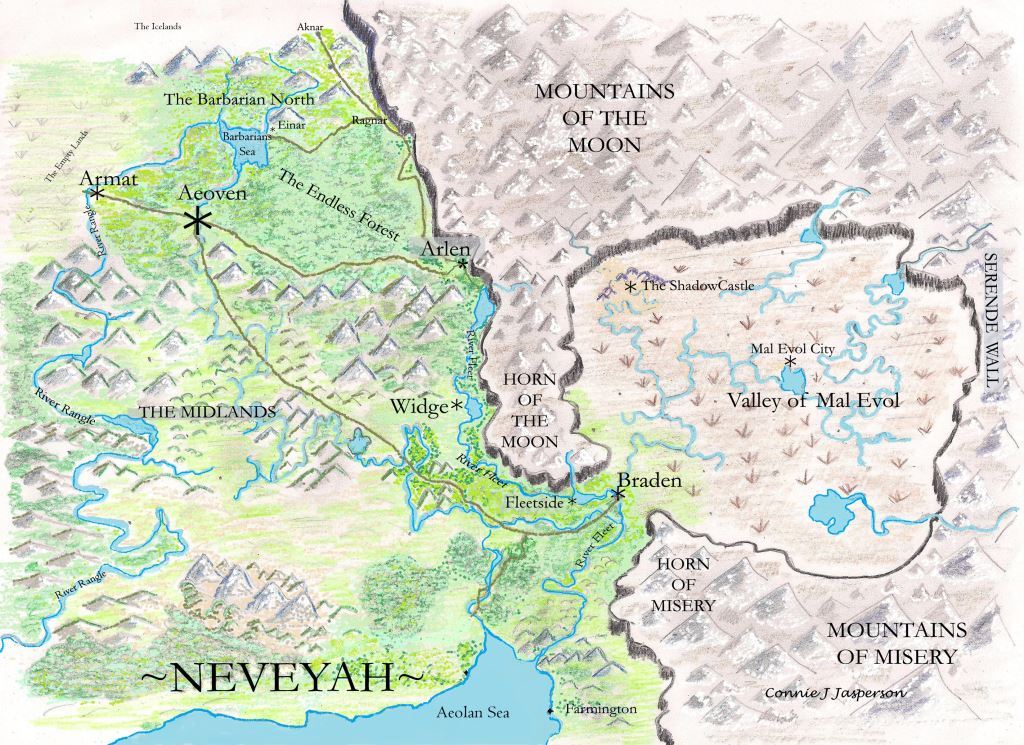
We are continuing the build of our storyboard for NaNoWriMo2021. My planned NaNoWriMo project takes place in the world of Neveyah, a world where five other books have been set. Neveyah is an alien environment, yet it’s extremely familiar to me.

WritingCraft_NaNoPrep_101I know that world because I based the plants and topography on the Pacific Northwest, where I live. Other than the Escarpment, which is the visible scar left behind by the Sundering of the Worlds, the plants and geography are directly pulled from the forested hills and farmlands of Southern Puget Sound and Western Washington State.
In 2008, when I first began writing in this world, I went to science to see how long it takes for an environment to recover from cataclysmic events. I took my information from the Channeled Scablands of Washington State, a two-hour drive from my home. This vast desert area is comprised of the scars of a series of natural disasters that occurred around 13,000 years ago.

From Wikipedia: The Cordilleran Ice Sheet dammed up Glacial Lake Missoula at the Purcell Trench Lobe. A series of floods occurring over the period of 18,000 to 13,000 years ago swept over the landscape when the ice dam broke. The eroded channels also show an anastomosing, or braided, appearance.

The story I’m prepping for takes place only a century after a world-shattering disaster, so the way the world was before the Sundering is still fresh in their lore. The elders remember the culture and technology and know firsthand what was lost in the cataclysm. I am plotting book 2 of a duology, so I’ve already established that my protagonist is a shaman and devoted to caring for the fragile ecology.

But perhaps you are writing a historical novel. A certain amount of worldbuilding will be required, no matter when or where your book is set.

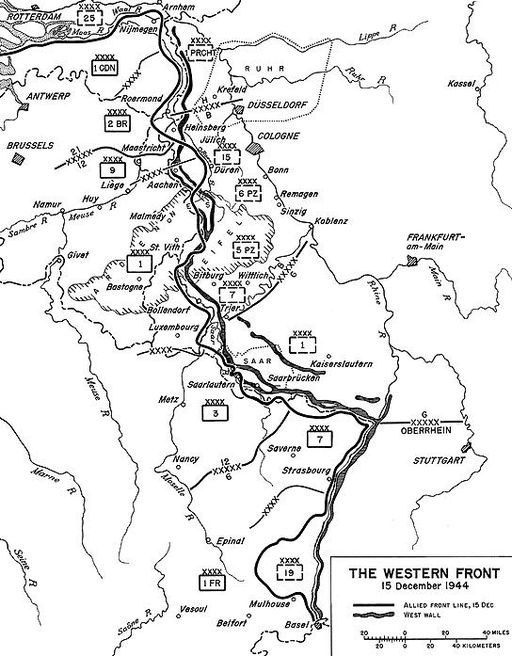
Let’s say you are writing an account of a soldier’s experiences in the Battle of the Bulge, also known as the Ardennes Counteroffensive. This battle was a pivotal point in World War II. American forces endured most of the attack, suffering their highest casualties of any operation during the war.

512px-Western_Front_Ardennes_1944

US Army Center for Military History, Public domain, via Wikimedia Commons

Researching and building the world this novel takes place in will be time-consuming but easy because a great deal of information about this battle exists. You can access documents and accounts from both sides of the war. The Ardennes region covers the province of Wallonia in eastern Belgium, northeast France, and Luxembourg, and many maps showing the area as it was in 1945 are still available in libraries and on the internet.

In regard to the events and battles of World War II, generals of both sides left many documents detailing how the terrain they were forced to fight on affected their decisions.

But even though your book may explore a real soldier’s experiences through newsreels, the pages of his diary, and the interview you had with him just before his death at the age of 94, you are still writing a fantasy.

This is because, in reality, the world of this book exists only in three places:

  1. it flows from the author’s mind
  2. to the pages of the book
  3. into the reader’s mind through the written word

We can only view history through the stained-glass of time. History, even recent events, assumes a mythical quality when we attempt to record it. Even a documentary movie that shows events filmed by the news camera may not be portrayed exactly as it was truly experienced. The facts are filtered through the photographer’s eye and the historian’s pen.

Modern Romance, historical, and contemporary novels are genres set in real-world locations. Their authors are fortunate, as information is usually available for the researcher to dig up. For an author recounting any historical era, information will be accessible since archaeologists and historians are constantly expanding our knowledge of history.

Any story set in prehistorical times is a fantasy.

  • Historical eras are those where we have written records.
  • Any story taking place in a society that left no written records must be considered a fantasy as little scientific facts are available, although mythology, conjecture, and theorizing abound.

If you are setting your novel in a real-world city as it currently exists, make good use of Google Earth. Bookmark it now, even if you live in that town, as the maps you will generate will help you stay on track while you are winging it during NaNoWriMo.

If you are writing a tale set in a fantasy or sci-fi setting, you are creating that world.

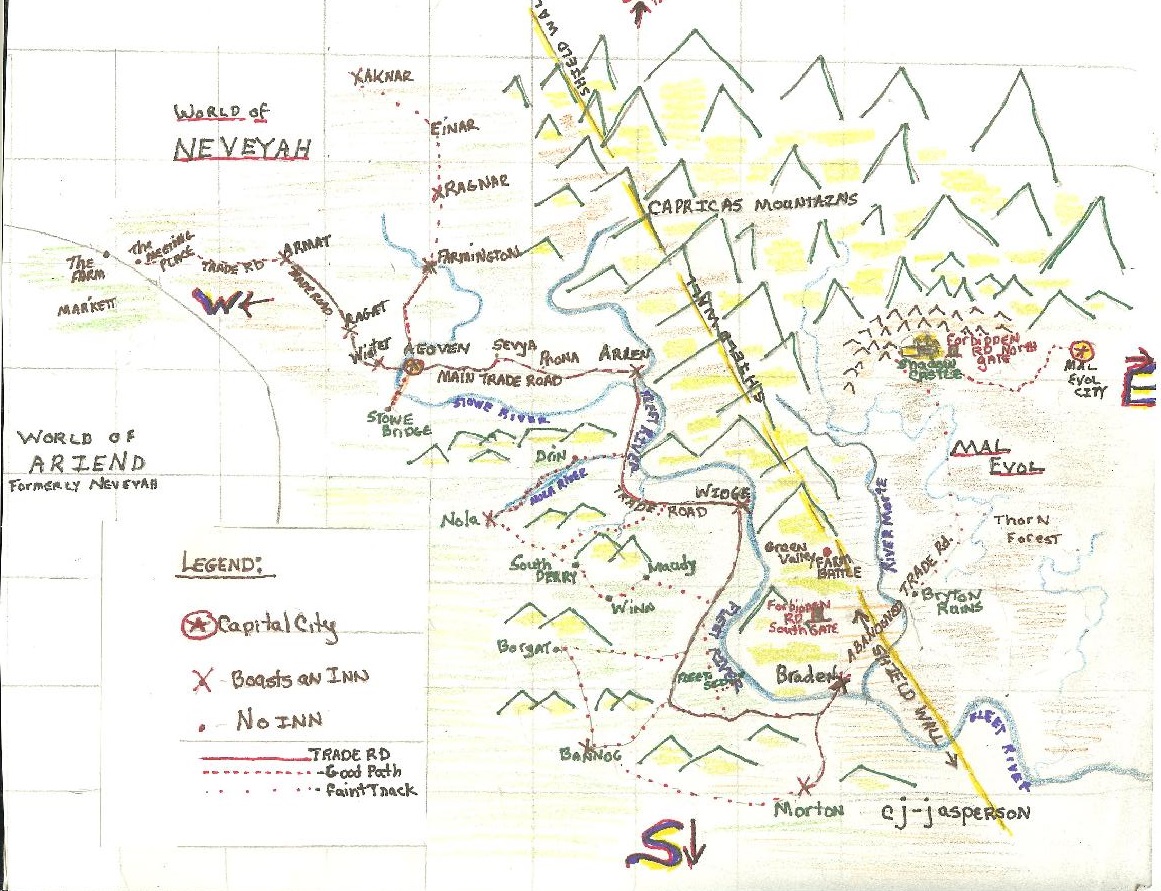
Neveyahmap jpeg of original scanned doc

Original Map of Neveyah from 2008 © Connie J. Jasperson

The first map of my world of Neveyah series was scribbled with a pencil on graph paper. Over time it evolved into a full-color relief map of the world as it exists in my mind.

I love maps. My own maps start out in a rudimentary form, just a way to keep my story straight. I use pencil and graph paper at this stage because:

  • As the rough draft evolves, sometimes towns must be renamed.
  • They may have to be moved to more logical places.
  • Whole mountain ranges may have to be moved or reshaped so that forests and savannas will appear where they are supposed to be in the story.

Map of Neveyah, color copy compressed

Neveyah © 2015 – 2021 Connie J. Jasperson

What should go on a map? At this point, not a whole lot.

  • The name of the town or area where the story begins.

Yep, that’s it, unless you are in the mood to draw maps. All you need for now is the jumping off point.

In November, you will add all the details as they occur to you, and believe me, they will come. In the meantime, your map page will be ready and waiting for you to note the particulars. When you are spewing words, the details will emerge, and you will have a place ready for them.

Why should you be worried about this now? It will be one thing you don’t have to worry about when you are pantsing it. The page will be there, and the map will be waiting for you to add to it.

When your characters are traveling great distances, they may pass through villages on their way. Perhaps the environment will impede your characters.

If environmental or geographical obstacles are pertinent to the story, it will be easy for you to take a moment to note their location on your map. This way, you won’t interrupt the momentum of your writing, and won’t contradict yourself if your party must return the way they came.

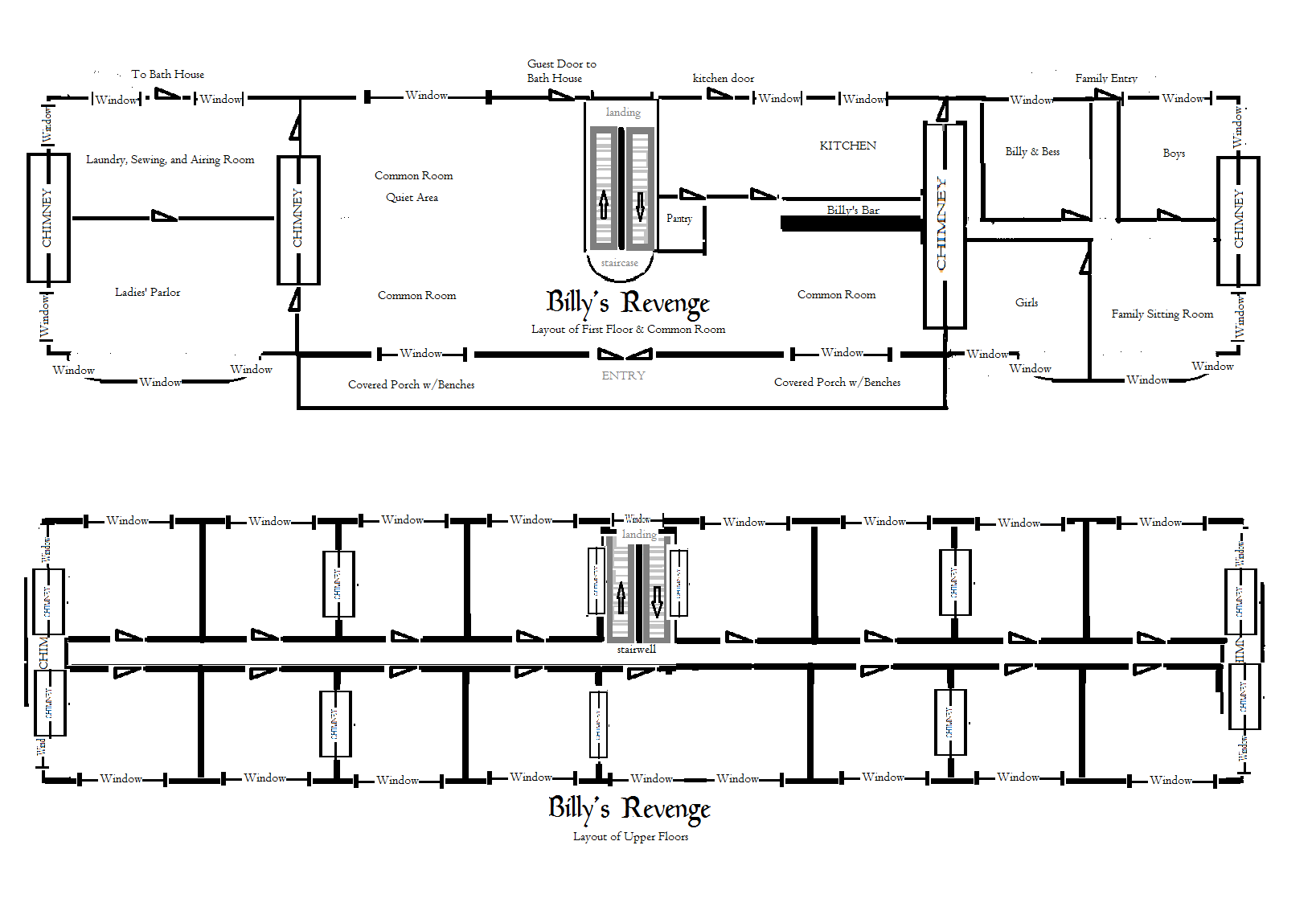
Billy's Revenge Floor plan ground floorIf your work is sci-fi, consider making a map of the place where the action happens. It could be a pencil-drawn floor-plan of a space station/ship or the line drawing of part of an alien world. I drew the floorplan of Billy’s Revenge for my reference, as most of the novel, Billy Ninefingers, takes place there.
Your storyboard is your lifeline in November, offering you dots to connect and help you stay organized when you are writing stream-of-consciousness. During the lead-up to November, make notes about your environment whenever you have an idea that you’d like to incorporate into your novel.


The #NaNoPrep series to date:

#NaNoPrep: part 1: What’s the Story?

#NaNoPrep, Setting: Creating the Big Picture

#NaNoPrep, Building Characters

#NaNoPrep, More Character Building

#NaNoPrep, Creating Societies

#NaNoPrep, Designing Science, Magic, and the Paranormal

Today’s post: #NaNoPrep, Terrain and Geography


Credits and Attributions:

Wikipedia contributors, “Channeled Scablands,” Wikipedia, The Free Encyclopedia, https://en.wikipedia.org/w/index.php?title=Channeled_Scablands&oldid=1031181669 (accessed September 21, 2021).

Wikimedia Commons contributors, “File:Western Front Ardennes 1944.jpg,” Wikimedia Commons, the free media repository, https://commons.wikimedia.org/w/index.php?title=File:Western_Front_Ardennes_1944.jpg&oldid=470134455 (accessed September 21, 2021).

11 Comments

Filed under writing

#NaNoPrep: Designing Science, Magic, and the Paranormal

Many authors will begin writing novels on November 1st.  Some will be genre fiction–fantasy, romance, sci-fi, etc.. I read sci-fi and seek out fantasy but I’m also a born skeptic. Logic is an area many first-time authors ignore, because some wonderful trick has captured their imagination. It may be a good idea but they didn’t think it through very well, so it doesn’t work.

Science, the paranormal, and magic must be written in such a way that we can easily and wholeheartedly suspend our disbelief.

WritingCraft_NaNoPrep_101Open your storyboard and create a new page. You are going to create the limits of science, magic, or the paranormal. By creating limitations, you create opportunities for conflict.

  • Hint: make a “glossary,” a list of the proper spellings for all words that relate to or are special to the science or magic in your story. This will save your sanity later on.

In designing a story where superpowers, super weapons, or magic are key elements, we have to keep two important ideas in mind:

Science is not magic. The writer of true science fiction must know the difference, especially when creating possible weapons. Superweapons and superpowers are science based. Think Stan Lee’s Spider-Man. The theory behind superweapons and /or superpowers might be improbable, but it’s logical and rooted in the realm of theoretical physics.

scienceAuthors of sci-fi must research and understand the scientific method. This path of testing and evaluation objectively explains nature and the world around us in a reproducible way. Sci-fi authors must look things up, read scientific papers, and ask questions.
An important thing for authors to understand is who their intended readers are. Those who read and write hard science fiction are often employed in various fields of science, technology, or education in some capacity. They know the difference between physics and fantasy.

The paranormal is not science or magic. It works best when the opening pages establish that the paranormal exists as a part of that world but has limitations. The paranormal should follow a logic of some sort. Start with a premise: Ghosts, or vampires, or shapeshifters, or werewolves, or any kind of paranormal entity exist.

  1. What are the conditions under which they cannot exist?
  2. If ghosts, can they interact with the physical world? Why or why not?
  3. What powers do the paranormal characters have?
  4. Under what conditions do their powers not work?
  5. What harms them? (Sunlight? A silver bullet? Something must be their kryptonite or there is no story.)

Magic is not science, but it should be. Magic also works best when the population accepts that it exists and has limitations. When you think about it, magic should only be possible if certain conditions have been met. It should be logical and follow a set of rules.

For me, magic as an element of a fantasy novel works under the following conditions:

  1. if the number of people who can use it is limited.
  2. if the ways in which it can be used are limited.
  3. if the majority of mages are limited to one or two kinds of magic and only certain mages can use every kind of magic.
  4. if there are strict, inviolable rules regarding what each kind of magic can do and the conditions under which it will work.
  5. if there are some conditions under which the magic will not work.
  6. if the damage it can do as a weapon or the healing it can perform is limited.
  7. if the mage or healer pays a physical/emotional price for the use.
  8. if the mage or healer pays a hefty price for abusing it.
  9. if the learning curve is steep and sometimes lethal.
  10. Is your magic spell-based rather than biological/empathic?
  11. If magic is spell-based, can any reasonably intelligent person learn it if they find a teacher or are accepted into a school?

magicSatisfying these conditions sets the stage for you to create the Science of Magic. This is an underlying, invisible layer of the world. By creating and following the arbitrary rules of this “science,” your story won’t contradict itself.

What challenges do your characters have to overcome when learning to wield their magic/superpower or super weapon?

Is the character born with the ability to use the superpower or magic? Or was it learned or conferred?

  • Are they unable to fully use their abilities?
  • If not, why?
  • How does their inability affect their companions?
  • How is their self-confidence affected by this inability?
  • Do the companions face learning curves too?
  • What has to happen before your hero can fully realize their abilities?

Personal Power and the desire for dominance is where the concepts of science, magic, and the paranormal converge.

In all my favorite science fiction and fantasy novels, the enemy has access to equal or better science/magic/superpower. How the protagonists overcome their limitations is the story.

The_Pyramid_Conflict_Tension_PacingConflict forces the characters out of their comfortable environment. The roadblocks you put up force the protagonist to be creative. Through that creativity, your characters become stronger than they believe they are.
Take the time to create the rules and write a document for yourself that clearly defines what limits characters face when using their magic.

  • If the protagonist and their enemy are not from the same school of magic or science, you should take the time to write out what makes them different and why they don’t converge.
  • You must also clearly state the limits of science for both the protagonist and antagonist. Take the time to write it out and be sure the logic has no hidden flaws.

In creating science technologies and magic systems, you are creating a hidden framework that will support and advance your plot. Within either system, there can be an occasional exception to a rule, but there must be a good reason for it, and it must be clear to the reader why that exception is acceptable.

An important thing to consider whether using magic or technology: the only time the reader needs to know these systems exist is when it affects the characters and their actions. Write it as a natural part of the environment rather than discussing it in an info dump.

Science and magic are two sides of the personal-power coin.

2020_nano_Project_coverIf you design this now, on November 1st, you will have the framework to showcase your characters ambitions, the drive to acquire more personal power, and the lengths characters will go to in their efforts to gain an edge over their opponents. Everything will be in place for a free-wheeling dive deep into the consequences of your protagonist’s struggle.
The fundamental tropes of science, magic, or superpowers offer your characters opportunities for success. But to be believable, those opportunities must not be free and unlimited.

Magic, science, and superpowers share common ground in one area—they offer characters an edge in whatever struggle they face.

However, neither science nor magic can support a poorly conceived novel. Both science and magic are just tools. Strong, charismatic characters, powerful struggles, and serious consequences for failure make a brilliant novel.

Do a little planning now so that when you begin writing on November 1st, you see your characters clearly and know what they are capable of and what they can’t do. Those limitations will offer you many opportunities for mayhem.


#NaNoPrep series to date:

#NaNoPrep: part 1: What’s the Story?

#NaNoPrep, Setting: Creating the Big Picture

#NaNoPrep, Building Characters

#NaNoPrep, More Character Building

#NaNoPrep, Creating Societies

15 Comments

Filed under writing

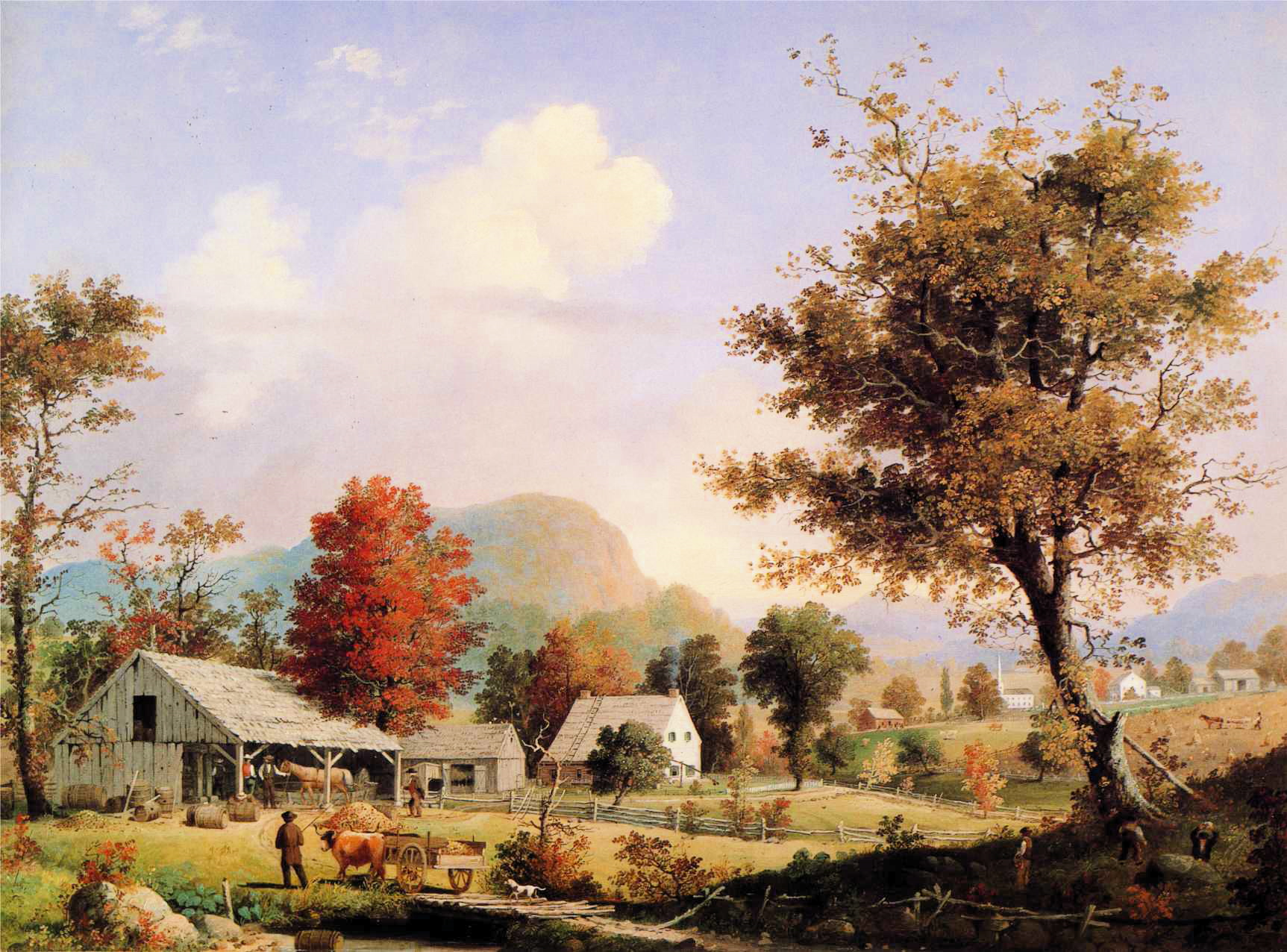
#FineArtFriday: Cider Pressing by George Henry Durrie 1855
George_Henry_Durrie_-_Cider_PressingCider Pressing by George Henry Durrie 1855

Date: 1855

Medium: oil on canvas

Dimensions: Height: 22.2 in (56.5 cm); Width: 30.2 in (76.8 cm)

Collection: Private collection (Mr. & Mrs. Eugene Bugbee)

What I love about this painting:

This is a quintessential, slightly romantic, view of history, a window into a New England day in autumn during the 19th century. A farmer leads his ox-drawn cart to the cider press. Is he selling them to the cider-man or just paying to have them juiced? Does he make his own apple jack, or is he a teamster, transporting goods for a fee?

A story can be found here, as in all Durrie’s paintings.

Juicing apples for unfermented ciders juices, jellies, and the highly fermented apple jack was an essential part of bringing in the harvest and preparing for winter, a part of the food chain we who get our food from the supermarket are disconnected from. But this was a scene that played out every fall, in every town and village.

Durrie’s colors are intensely vibrant, deep and rich, and each part of the scene is clear and placed with intent. The air is crisp and cool, but not yet cold. The leaves are turning all shades of red and gold, just as they are doing here today in the Pacific Northwest.

About the Artist, quoted from the National Gallery of Art:

Born in New Haven in 1820, the son of a Connecticut stationer, George Henry Durrie remained in that city virtually his entire life. Married to a choirmaster’s daughter, Sarah Perkins, in 1841, he immersed himself in the quiet pursuits of family and church. While he never achieved the fame of the most renowned nineteenth century American landscape painters, he appears to have had a fulfilling, productive career. His letters show that he never felt the need to move beyond his community, although he once briefly took a studio in New York and exhibited there regularly at the National Academy of Design.

Almost all of his compositions are relatively small in scale, few exceeding 18 x 24 inches, and his views are quiet and intimate. He knew and admired the works of Thomas Cole, and may have tried to emulate certain aspects of Cole’s style, yet he eschewed the Hudson River School’s compositional complexity and expansiveness. Because his paintings combined extensive genre elements with landscape they had a story-telling content that made them pleasant, accessible images to the average viewer.

The lithographic firm of Currier & Ives successfully reproduced ten of Durrie’s scenes and these, in turn, became popular calendar illustrations in the twentieth century. As a result, Durrie’s depictions of rural life in the mid-nineteenth century are now among the most familiar images in all of American art. As Martha Hutson has noted, however, these printed pictures do not convey the keen sensitivity to and understanding of conditions of atmosphere and light that are so pronounced in Durrie’s paintings. [1]

From Wikipedia:

In his teens the self-taught artist painted portraits in the New Haven area. In 1839 he received artistic instruction from Nathaniel Jocelyn, a local engraver and portrait painter. After 1842 he settled in New Haven, but made painting trips to New Jersey, New York, and Virginia. Around 1850, he began painting genre scenes of rural life, as well as the winter landscapes that became popular when Currier and Ives published them as lithographs. Four prints were published between 1860 and the artist’s death in New Haven in 1863; six additional prints were issued posthumously. The painter Jeanette Shepperd Harrison Loop studied with him. [2]


Credits and Attributions:

Wikimedia Commons contributors, “File:George Henry Durrie – Cider Pressing.JPG,” Wikimedia Commons, the free media repository, https://commons.wikimedia.org/w/index.php?title=File:George_Henry_Durrie_-_Cider_Pressing.JPG&oldid=369724230 (accessed September 15, 2021).

[1] National Gallery of Art contributors, “George Henry Durrie,” biography, © 2018 – 2021 National Gallery of Art, https://www.nga.gov/collection/artist-info.6397.html

[2] Wikipedia contributors, “George Henry Durrie,” Wikipedia, The Free Encyclopedia, https://en.wikipedia.org/w/index.php?title=George_Henry_Durrie&oldid=861433469 (accessed September 15, 2021).

2 Comments

Filed under #FineArtFriday, writing

#NaNoPrep, Creating Societies

Worlds are comprised of plants, animals, and geology, which we touched upon in the first post of this series. But if intelligent life-forms are living on that world, there will also be societies.

WritingCraft_NaNoPrep_101We humans are tribal and like having an overarching power structure because someone has to be the leader, which isn’t a job most people want once they see what is involved. Being the leader means bearing the responsibility when things go wrong, usually more often than basking in the glory when it’s all good.
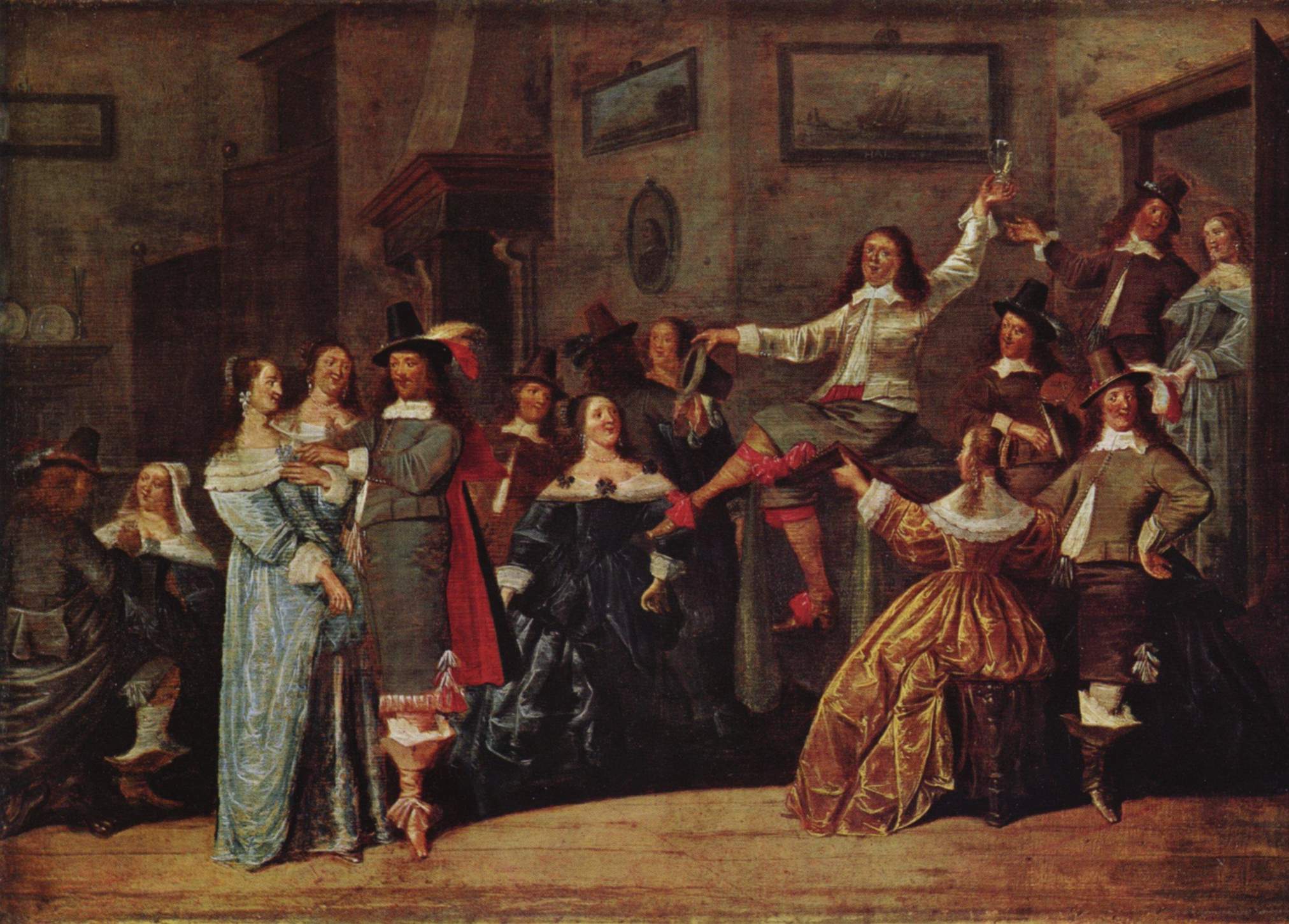
Proving how tribal we are, all smaller segments within societies, from families to businesses, to churches, to governments – all have organized leadership structures, even if they aren’t formally described as such.

We will be pantsing it (writing stream-of-consciousness) for the month of November, which means we’ll be writing at least 1667 new words every day, connecting the events that we will be storyboarding later in this series. We won’t have time to think about logic once we begin writing the narrative, which is why we’re creating the storyboard.

If your society is set in modern suburbia, that culture and those values will affect your characters’ view of their world.

But perhaps you are writing a sci-fi or fantasy novel. To show a world logically and without contradictions, we must know how things work in the cities and towns, whether set in a medieval world or on a space station. Merchants, scientists, priests, soldiers, teachers, healers, thieves – each occupation has a place in the hierarchy and has its own chain of command.

Dirck_Hals_001Society is always composed of many layers and classes. Below is a list of questions for you to consider when building your fantasy or sci-fi civilization. I admit it’s long, but please bear with me.
These are what I think of as “porch questions.” This is the stage where I sit on the  back porch and consider the world my characters will inhabit. Going somewhere quiet and pondering these questions will make the culture your characters inhabit clearer in your mind. 

How is your society divided? Who has the wealth? (Feel free to copy and paste the list to a page you can print out.)

  • Is there a noble class?
  • Is there a servant class?
  • Is there a merchant class
  • Is there a large middle class?
  • Who makes up the most impoverished class?
  • Who has the power, men, women—or is it a society based on mutual respect?

Ethics and Values: What constitutes morality and how do we treat each other?

  • Is marriage required?
  • How are women treated?
  • How are men treated?
  • How are the different races viewed?
  • Is there a cisgender bias or is there acceptance of different gender identities?
  • How are same-sex relationships viewed?
  • How are unmarried sexual relationships seen in the eyes of society?
  • How important is human life?
  • How is murder punished?
  • How are treachery, hypocrisy, envy, and avarice looked upon?
  • What about drunkenness?
  • How important is the truth?
  • What constitutes immorality?
  • How important is it to be seen as honest and trustworthy?

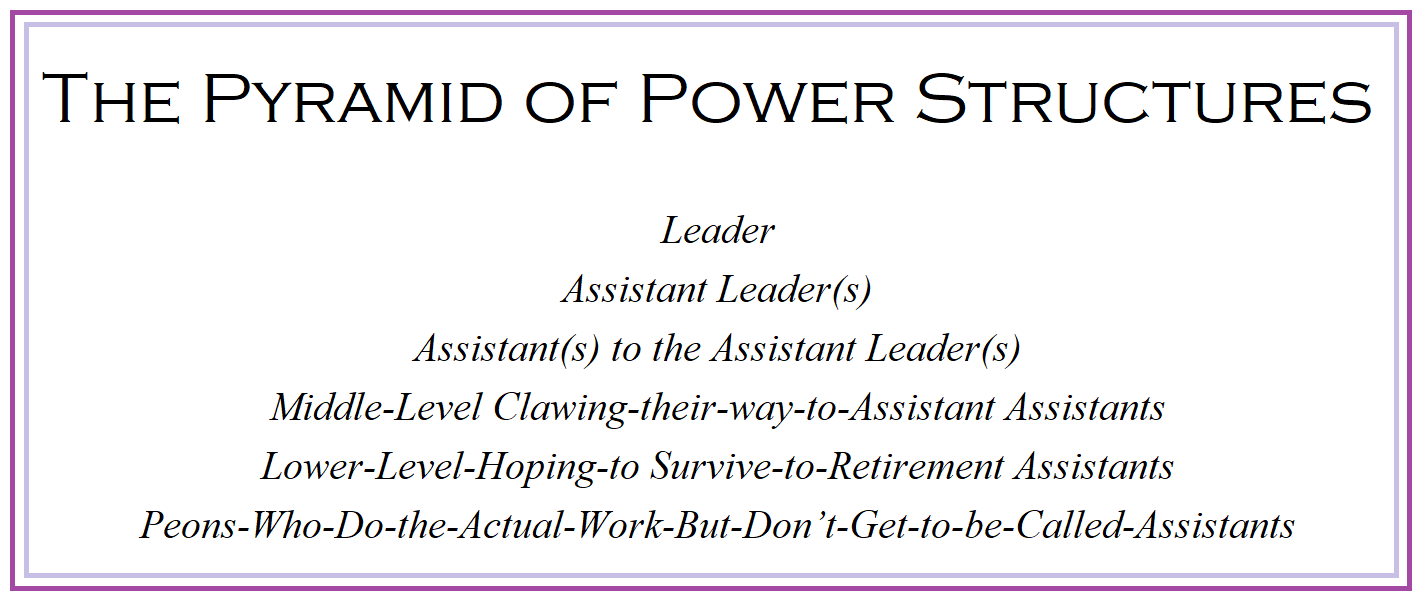
Power structures are the hierarchies that encompass the leaders, the people with the power. It is an overall system of restraint and control among selected members of a group. Think of it as a pyramid.

Pyramid_of_Power_Structures_09132021LIRF

Religion rarely is a component of sci-fi but often figures prominently in fantasy work. In sci-fi, science and technology take the place of religion, with similar hierarchies and fanatics, just with different job titles.

Archbishop might be replaced with Head of Research and Development.

Cardinal or Pope might be replaced with General, Admiral, or CEO (Chief Executive Officer).

Level of Technology: What tools and amenities are available to them? What about transport?

  1. Hunter/Gatherers?
  2. Agrarian/farming?
  3. Greco-Roman metallurgy and technology?
  4. Medieval metallurgy and technology?
  5. Pre-industrial revolution or late Victorian?
  6. Modern-day?
  7. Or do they have a magic-based technology?
  8. How do we get around, and how do we transport goods? On foot, by horse & wagon, by train, or by space shuttle?

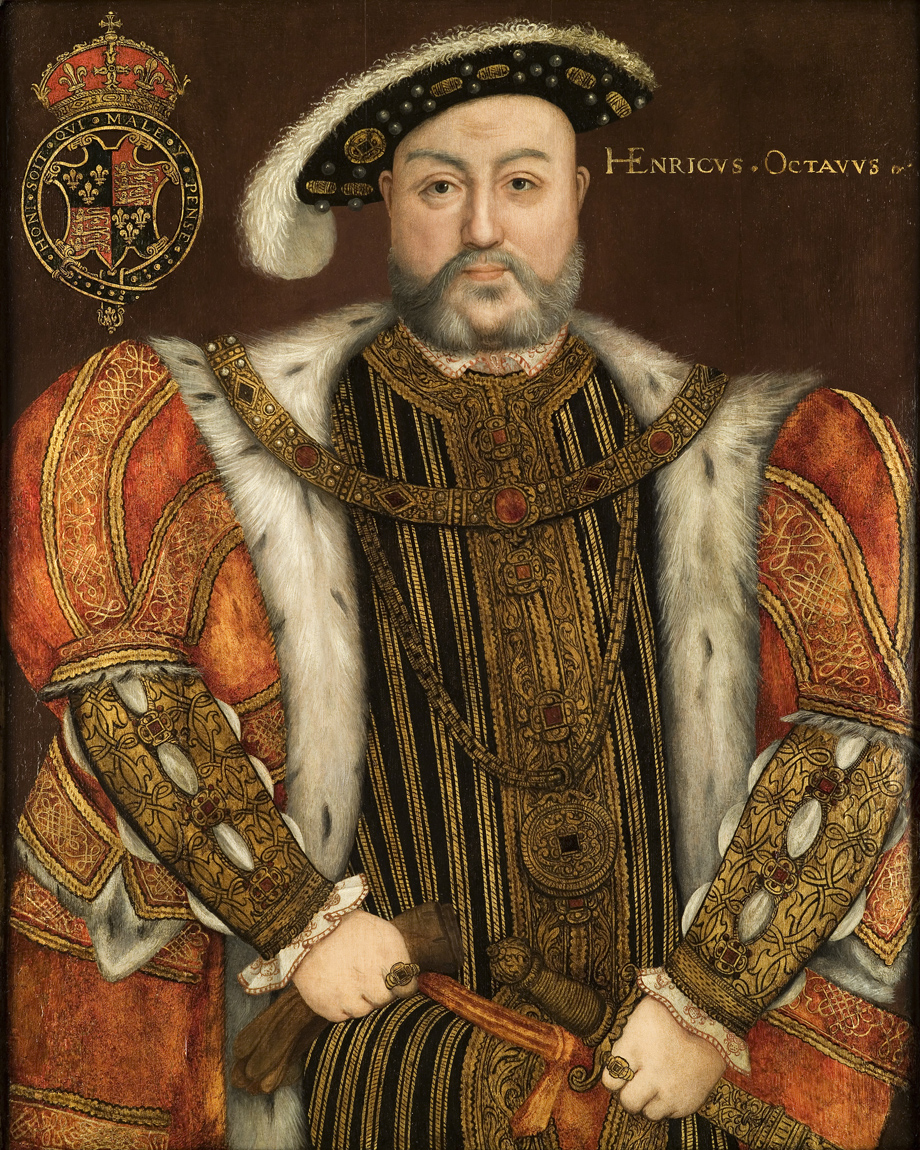
Portrait_of_King_Henry_VIII, Hans Holbein the YoungerGovernment: There will be a government somewhere, even if it is just the local warlord. Someone is always in charge because it’s easier for the rest of us that way:
  1. Is it a monarchy, theocracy, or a democratic form of government?
  2. How does the government fund itself?
  3. How are taxes levied?
  4. Is it a feudal society?
  5. Is it a clan-based society?
  6. How does the government use and share the available wealth?
  7. How do the citizens view the government?

Crime and the Legal System: What constitutes criminal behavior, and how are criminals treated?

Foreign Relations: Does your country coexist well with its neighbors?

  • If not, why? What causes the tension?

Waging War: This is another area where we have to ask what their level of technology is. It is critical for you, as the author, to understand what weapons your characters will bring to the front. You must also know what the enemy will be packing. Do the research and choose weaponry that fits your established level of technology.

  • What kind of weaponry will they use?
  • How are they trained?
  • Who goes to battle? Men, women, or both?
  • How does social status affect your ability to gain rank in the military?

A common trope in fantasy is magic, which brings up the need to train magic-gifted people. Authors use everything from dumb luck and experimentation to apprenticing to sorcerers, to training by religious orders, and in the case of Harry Potter, a school of some sort. (Never fear, we’re going to build believable magic and future-tech systems next week.)

In many real-world historical societies, the Church/Temple is the governing power. The head of the religion is the ruler, and the higher one rises within the religious organization, the more power one has. The same is true of both universities and research facilities.

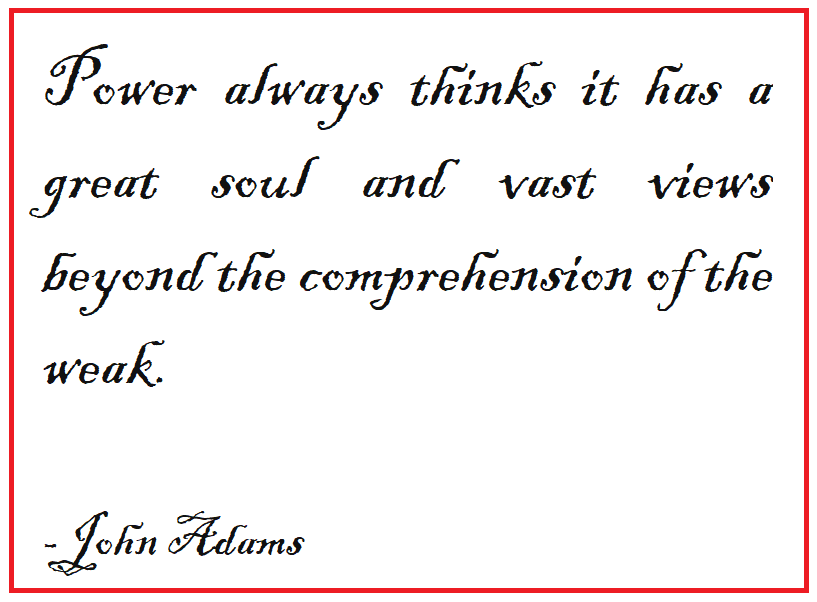
Power quote John AdamsPower in the hands of only a few people offers many opportunities for mayhem—followers may inadvertently create a situation where the leader believes they are anointed by the Supreme Deity. Even better, they may become the God-Emperor/Empress.

The same sort of God-complex occurs among academicians and scientists. Some people are prone to excess when presented with the opportunity to become all-powerful.

If you were unsure what your plot was before you got to this stage, now you might have a real villain, one presented to you by your society.

SO, in your world, what sort of society do you envision? How will that culture shape your characters?

Up Next: Magic and Future-tech

#NaNoPrep series to date:

#NaNoPrep: part 1: What’s the Story?

#NaNoPrep, Setting: Creating the Big Picture

#NaNoPrep, Building Characters

#NaNoPrep, More Character Building


Credits and Attributions:

Image: The Merry Company, Wikimedia Commons contributors, “File:Dirck Hals 001.jpg,” Wikimedia Commons, the free media repository, https://commons.wikimedia.org/w/index.php?title=File:Dirck_Hals_001.jpg&oldid=549782256 (accessed September 13, 2021).

Image: Henry VIII of England, Wikimedia Commons contributors, “File:Portrait of King Henry VIII.jpg,” Wikimedia Commons, the free media repository, https://commons.wikimedia.org/w/index.php?title=File:Portrait_of_King_Henry_VIII.jpg&oldid=250517909 (accessed September 13, 2021).

14 Comments

Filed under writing