
Today I’m reviewing We’re With the Band, a new novel by the award-winning author Johanna Flynn. This book is a departure from the serious tone of her debut novel, Hidden Pictures, taking a hilarious look at renaissance fairs, bands and groupies, and the cultural importance of Ireland’s historical treasures.
But first, the blurb:
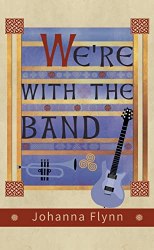 We’re With the Band, a novel by Johanna Flynn
Publisher: Palatine Press (November 29, 2021)
Language: English
Paperback: 322 pages
Lark’s life at fifty is a tour bus with failing brakes.
Failed marriage, failed social work career, failed romance with a renaissance faire knight.
If fifty is the new forty, her future doesn’t bode well.
A job comes along for a three-week band tour as a backup singer and bus driver in her native Ireland. But the country has changed since she moved to the US.
A lot.
Someone steals priceless artifacts from Dublin’s National Museum, and Lark suspects one of her bandmates is the thief. Can she manage the wild ride through the countryside, survive her quirky bandmates, reconnect with her crazy mom, and find the rare antiquities before they disappear forever on the black market?
We’re With the Band is a comedic romp across Ireland through the eyes of Lark Devlin and her best friend, Bev De Trow.
My review:
Lark Devlin is a hilarious modern gal with a healthy appetite for all that life offers. Bev is the voice of reason, not always heeded. The other characters are unique; some are hilarious, and others are a bit scary.
Rhett, the band leader, is a southerner obsessed with all things Irish. He hires Lark based on her Irish birth and accent.
When Lark and Bev meet the band members, they find a mix of people. Some are not as shallow as they appear at first.
Rhett has a secret agenda, and so do the other band members. Fortunately, no matter how cute the accent is, Lark is too smart to fall for a smooth operator.
However, in any group of healthy people, sparks will occasionally fly, and the members of the Band of Pirates are definitely healthy.
I absolutely love Lark’s mother. That woman is a firecracker.
The theft of national treasures upsets Lark on many levels, and she suspects someone in the band might be involved. These fears grow as they travel through Ireland, and evidence against one band member mounts.
The tour of Ireland is fraught with disasters, but the show goes on. I enjoyed seeing a side of the real country, the ordinary people and places we don’t see in movies. This world feels real, and that is because the author has lived in Ireland and knows the country and the people well.
Lark is sometimes impetuous when patience might be a better choice, but that is part of the fun. I laughed so much in places; the humor makes this book wonderful.
Deceit, treachery, a little of this and that—the journey turns perilous for Lark and Bev but always remains fun.
If you love high drama, dark intrigue, raunchy hilarity, and all things Irish, this book is for you.
About the author:
 Johanna grew up in Spokane, Washington.
Her curiosity ranges from the arts to science to accounting. All sorts of topics catch her interest. But her biggest thrill is connecting with others and sharing views.
She believes that’s why she wanted to become a writer from a young age and why she likes many different authors and genres.
She wrote her first book at age ten. Sadly, she could not find an agent for it. In reality, she had no idea what an agent was or that she needed one. What counted was she wanted to write a story, to get something on paper, and to share it.
At about the same time her dad gave her a small camera, so the pictures you see on this website are hers.
Like many, the dream of becoming a writer had to wait. But during those years, she spent time learning the craft, taking classes, and joining writers’ groups. She learned that writing is hard, often lonely work. The biggest lesson she learned is to persist.
Johanna feels lucky to belong to a group of talented writers and to have friends and relatives, who are her biggest fans, who give useful feedback, and who support her on this journey.
You can find Johanna and her books at www.johannaflynn.com
 By creating small arcs in the form of scenes, we offer the reader the chance to experience the rise and fall of tension, the life-breath of the novel.
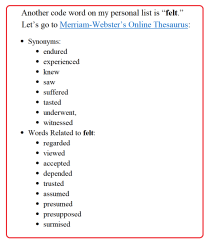 Code words are the author’s first draft
  Thought (Introspection):
 That is true of every aspect of a scene—it must reveal something we didn’t know and push the story forward toward something we can’t quite see.
 Novels consist of a string of moments united by a common theme. These scenes combine to form a story when you put them together in the right order and link them with a plot featuring a compelling protagonist who must overcome adversity.
 In my last post, I talked about the good and bad aspects of two editing programs that I am familiar with, the things they do and don’t help us identify in our work. One more thing these wonderful programs can’t help us with is identifying bloated backstory.
 Look at the first scene of your manuscript. Ask yourself three questions.
 I look at each conversation and assess how many words are devoted to each character’s statement and response. Then, when I come to a passage that is inching toward a monologue, I ask myself, “what can be cut that won’t affect the flow of the story or gut the logic of the plot?”
 I do use Grammarly—but also, I don’t.
 Spellcheck doesn’t understand context, so if a word is misused but spelled correctly, it may not alert you to an obvious error.
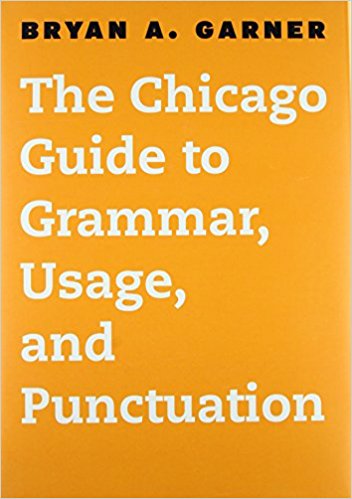 New writers should invest in the
  Even editors must have their work seen by other eyes. My blog posts are proof of this as I am the only one who sees them before they are posted. Even though I write them in advance, go over them with two editing programs, and then look at them again before each post goes live, I still find silly errors two or three days later.
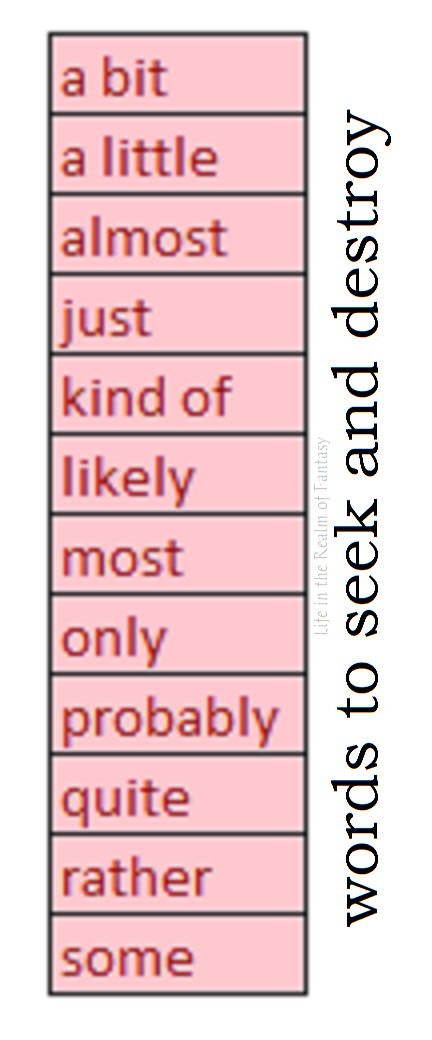
 If you have decided something is a “crutch word,” examine the context. Inadvertent repetitions of certain words are easy to eliminate once we see them with a fresh eye.
 From my earliest childhood, I always thought of myself as a writer. I just didn’t know how to write anything longer than a poem or a song in such a way that it was readable.
 One day in 1990, I stumbled upon a book offered in the
  Spend the money to go to conventions and attend seminars. You will learn so much about the craft of writing, the genre you write in, and the publishing industry as a whole—things you can only learn from other authors. I gained an extended professional network by joining The Pacific Northwest Writers Association and going to their conferences.
 Six: My final suggestion is this: even though you are writing that novel, keep writing short stories too.
 When I have asked a beta reader to read a section of my work, they sometimes flag a paragraph as unclear. It might make perfect sense to me, but if I am the only one who understands it, it’s time to tear that paragraph down to see if each sentence can stand on its own.
 I don’t want to introduce vagueness into my work. Just because I like what I wrote doesn’t mean it has to stay in the finished product. Maybe I don’t see that it’s confusing, but my friends who read my raw manuscripts will.


.jpg)