#FineArtFriday: Gassed by John Singer Sargent 1919

2560px-Sargent,_John_Singer_(RA)_-_Gassed_-_Google_Art_ProjectArtist: John Singer Sargent (1856–1925)

Title: Gassed

Date: 1919

Medium: oil on canvas

Dimensions: Height: 231 cm (90.9 in); Width: 611.1 cm (20 ft)

What I love about this painting:

This painting is a powerful antiwar statement. John Singer Sargent was a complicated man, as most artists are. Famous as a portrait artist, he painted landscapes that conveyed a sense of mood and emotion that few of his contemporaries could match.

He was commissioned as a war artist by the British Ministry of Information. He illustrated numerous scenes from the Great War. Sargent had been affected by what he had seen while touring the front in France and by the death of his niece Rose-Marie in the shelling of the St Gervais church, Paris, on Good Friday 1918.

The colors are muted, and even the pastels are dark and dirty. The suffering of the maimed and injured men is laid bare. Through the legs of the walking wounded, the rising moon illuminates the desire of the uninjured to try to find some normalcy. Dwarfing the players and their game, the vast sea of dead and injured stretches as far as the eye can see.

Above, two tiny figures represent the clash of biplanes in the distance, the ever-moving machine of death and inhumanity that is war.

About this painting, via Wikipedia:

[1] Gassed is a very large oil painting completed in March 1919 by John Singer Sargent. It depicts the aftermath of a mustard gas attack during the First World War, with a line of wounded soldiers walking towards a dressing station. Sargent was commissioned by the British War Memorials Committee to document the war and visited the Western Front in July 1918 spending time with the Guards Division near Arras, and then with the American Expeditionary Forces near Ypres. The painting was finished in March 1919 and voted picture of the year by the Royal Academy of Arts in 1919. It is now held by the Imperial War Museum. It visited the US in 1999 for a series of retrospective exhibitions, and then from 2016 to 2018 for exhibitions commemorating the centenary of the First World War.

The painting measures 231.0 by 611.1 centimeters (7 ft 6.9 in × 20 ft 0.6 in). The composition includes a central group of eleven soldiers depicted nearly life-size. Nine wounded soldiers walk in a line, in three groups of three, along a duckboard towards a dressing station, suggested by the guy ropes to the right side of the picture. Their eyes are bandaged, blinded by the effect of the gas, so they are assisted by two medical orderlies. The line of tall, blind soldiers forms a naturalist allegorical frieze, with connotations of a religious procession. Many other dead or wounded soldiers lie around the central group, and a similar train of eight wounded, with two orderlies, advances in the background. Biplanes dogfight in the evening sky above, as a watery setting sun creates a pinkish yellow haze and burnishes the subjects with a golden light. In the background, the moon also rises, and uninjured men play association football in blue and red shirts, seemingly unconcerned at the suffering all around them.

The painting provides a powerful testimony of the effects of chemical weapons, vividly described in Wilfred Owen‘s poem Dulce et Decorum Est. Mustard gas is a persistent vesicant gas, with effects that only become apparent several hours after exposure. It attacks the skin, the eyes and the mucous membranes, causing large skin blisters, blindness, choking and vomiting. Death, although rare, can occur within two days, but suffering may be prolonged over several weeks.

Sargent’s painting refers to Bruegel’s 1568 work The Parable of the Blind, with the blind leading the blind, and it also alludes to Rodin’s Burghers of Calais.

About the Artist, via Wikipedia:

[2] John Singer Sargent (January 12, 1856 – April 14, 1925) was an American expatriate artist, considered the “leading portrait painter of his generation” for his evocations of Edwardian-era luxury. He created roughly 900 oil paintings and more than 2,000 watercolors, as well as countless sketches and charcoal drawings. His oeuvre documents worldwide travel, from Venice to the Tyrol, Corfu, the Middle East, Montana, Maine, and Florida.

Born in Florence to American parents, he was trained in Paris before moving to London, living most of his life in Europe. He enjoyed international acclaim as a portrait painter. An early submission to the Paris Salon in the 1880s, his Portrait of Madame X, was intended to consolidate his position as a society painter in Paris, but instead resulted in scandal. During the next year following the scandal, Sargent departed for England where he continued a successful career as a portrait artist.

From the beginning, Sargent’s work is characterized by remarkable technical facility, particularly in his ability to draw with a brush, which in later years inspired admiration as well as criticism for a supposed superficiality. His commissioned works were consistent with the grand manner of portraiture, while his informal studies and landscape paintings displayed a familiarity with Impressionism. In later life Sargent expressed ambivalence about the restrictions of formal portrait work, and devoted much of his energy to mural painting and working en plein air. Art historians generally ignored artists who painted royalty and “society” – such as Sargent – until the late 20th century. [2]


Credits and Attributions:

[1] Wikipedia contributors, “Gassed (painting),” Wikipedia, The Free Encyclopedia, https://en.wikipedia.org/w/index.php?title=Gassed_(painting)&oldid=1029966714 (accessed July 15, 2021).

[2] Wikipedia contributors, “John Singer Sargent,” Wikipedia, The Free Encyclopedia, https://en.wikipedia.org/w/index.php?title=John_Singer_Sargent&oldid=1032671314 (accessed July 15, 2021).

Image source: File:Sargent, John Singer (RA) – Gassed – Google Art Project.jpg – Wikipedia (accessed July 15, 2021).

Comments Off on #FineArtFriday: Gassed by John Singer Sargent 1919

Filed under #FineArtFriday

Worldbuilding part two: maps, place names, and consistency #amwriting

My first novels were complete messes to edit. I didn’t have a clue about how to structure a plot and what to avoid. Surviving those editing experiences taught me many ways to smooth the path to a finished novel.

When a manuscript is first accepted, editors at all the large publishing houses begin creating a list of names, places, and created words. This document also contains a glossary and other information that pertains only to that manuscript. My editor refers to this as a stylesheet. Other editors refer to this as a “bible.”

WritingCraft_mapsSome people use a program called Scrivener, which is not too expensive, but which I found quite frustrating. Nevertheless, I understand that it works well for many people, so it may be an investment to consider.

For myself, I don’t need a fancy word-processing program. I use Microsoft Office 360 because I have used Microsoft software since 1993, and I’ve adapted to each upgrade they have made. I use Word for writing and editing and Excel to make stylesheets for each novel or tale I write. I make stylesheets for every book I edit.

If you prefer, you can use a pencil and paper and keep these lists in a ring binder. Or you can use Google Docs/Sheets or OpenOffice, both of which are free.

The stylesheet can take several forms, but it is a visual guide to print out or keep minimized until it’s needed. I copy and paste every invented word or name onto my list, doing this the first time they appear in the manuscript. If I am conscientious about this, I’ll be less likely to contradict myself later inadvertently.

Regardless of how you create your stylesheet, I suggest you include these elements:

  1. Names and invented words, all spelled the way you want them.
  2. The page or chapter where the word first appears.
  3. The meaning of each invented word.
  4. Maps, something rudimentary to show the layout of the world.
  5. Calendar.

This list is especially crucial for fantasy authors because we invent entire worlds, religions, and magic systems.

sample-of-rough-sketched-mapMaps are essential tools when you are building the world. Your map doesn’t have to be fancy. You need to know north, south, east, west, where rivers and forests are relative to towns, and locations of mountains.

You also need some idea of distances and how long it takes to travel using the common mode of transportation.

All you need is a pencil-drawn map, lines and scribbles telling you all the essential things. Use a pencil, so you can easily update it if something changes during revisions.

If you aren’t artistic and want a nice map later, this little map will enable them to provide you with a beautiful and accurate product. You will have a map that contains the information needed for readers to enjoy your book.

I also keep a calendar of events for each novel, and believe me, that calendar has saved me several times.

Map of Eynier Valley for HTB copy copy

Places written on a map tend to be ‘engraved in stone,’ so to speak. Readers will wonder where the town of Maldon is when the only village on the map at the front of the book that comes close to that name is listed as Malton.

To prevent that from happening, double-check what you have written on the map, and then do a global search for every possible variant of that name in your manuscript.

Just because you invented the world doesn’t mean you know it like the back of your hand.

That world is constantly evolving in your mind. I have been writing in the world of Neveyah since 2009, and I still contradict myself, which is why the stylesheet is so important.

Every story I write that is set in that world must have the right sights, sounds, and smells. When it comes to worldbuilding, the stylesheet is crucial.

What is the name of the world in which the story opens? The file name you give this document should contain it. My oldest stylesheet is labeled Neveyah_stylesheet.xls and has been evolving with each book in that series.

What did you name the town/village where the protagonists are living? Place names can give the reader an idea of the kind of world your town or village is set in.

I live in an area where the indigenous people were pushed aside and their land taken over and settled by a mixture of Scots, Irish, Germans, and Scandinavians. Our place names reflect all those cultures.

Forty miles west of my house is a coastal city named Aberdeen, and next to it is a city named Hoquiam, a city whose name has its origin in Native Culture.

This is how the countries of Canada and the US are from coast to coast; signs of European ancestry mingled with traditional names reflecting the tribes who were there first.

Are there forests? Mountains? Rivers? My part of the world has large tracts of forests, many wide rivers, and is mountainous, with numerous volcanos.

Each of these areas will affect how your communities live, what resources they have for building, and how long it takes to go from one place to another.

You can’t travel in a straight line over mountains or forests. Sometimes you must travel parallel to a river for a long way until you come to a place shallow enough to cross.

Stowe_River_Basin_Midwest_Neveyah_2020And we’ll just toss this out there – while you can drop a tall tree across a narrow creek, building bridges over rivers requires a certain amount of engineering. Cultures from the Stone Age on to modern times have had the skills needed to make bridges.

Archeology and history both tell us that humans, as a species, are tribal by nature. We band together for protection, shelter, better access to resources, and companionship.

We are creative, and archaeology shows us that our ancestors were capable of far more than we have traditionally believed.

Humans have always created communities where resources are plentiful, but climate changes.

History and geology tell us that what was once a good place may become a desert over time. Your maps should take all the terrain your characters must deal with into consideration.

We based our societies on our oral histories and family connections. How our ancestors lived in their chosen area and what their traditions became were shaped by the climate and the lay of the land. The resources available to them were the reasons they stayed and built communities.

Those aspects of worldbuilding will form the backdrop of your story. If you make a stylesheet, your invented world will be consistent and contain all the elements that make it feel solid to a reader.

Neveya_Map_Nov_2020


Credits and Attributions:

Map of Mearth, © 2015 Connie J. Jasperson, All Rights Reserved.  

Map of the Eynier Valley for Huw the Bard, © 2015 Connie J. Jasperson, All Rights Reserved.

Map of the Stowe River Basin, World of Neveyah, © 2021 Connie J. Jasperson, All Rights Reserved.

Map of Neveyah, World of Neveyah, © 2021 Connie J. Jasperson, All Rights Reserved.

12 Comments

Filed under writing

World-building part one: climate #amwriting

Hello from a small town near beautiful Olympia, Washington. June was a strange month, climate-wise. We usually have the same climate as those of you in Wales or England.

MyWritingLife2021BOn June 27th, within the space of days, we went from temperatures well below average, low to mid-60s, and pouring rain to suffering from temperatures well above 100 degrees—108 at my house, 111 at my sister’s house 10 miles away. We use Fahrenheit in the US, but for you in the UK and Europe, we topped out at around 44 degrees Celsius. For more on the week from H**l, see this article in the Seattle Times.

Now we’re back to temperatures that are slightly above normal, getting up to the mid to upper 80s, and we feel like that’s a cool breeze.

Air conditioning isn’t as commonly built into homes here as in other parts of the US. Those of us who have the occasional A/C window unit are the lucky ones. This is because, until recent years, summers here never really began until July 5th or so, with low clouds and drizzle for much of June, and they never became unbearably warm.

When the sun did arrive, temperatures, for most of the time we have kept records, ran into the high 70s or rarely, low to mid-80s. We are said to have a generally mild climate, and while that is changing, we hope it will remain mostly temperate.

When the heatwave hit, our free-standing A/C unit saved us, but when the outside temperature reached 108, the temperature in our back hallway was still 89 degrees.

Until this year, that seemed uncomfortably warm.

Now we’re grateful for a day that doesn’t end with us prostrate.

So, let’s look at the weather as a factor in world-building.

What follows is a plan to help you lay the groundwork for the world in which your novel is set. First, what sort of world is your life set in? When you look out the window, what do you see?

I always think that if an author can inject enough reality into a fantasy or sci-fi setting, the world will feel solid when I read it.

The weather can be shown in small, subtle ways. Usually, authors use the weather as background to give a sense of place to our characters’ interactions and the events they precipitate.

The path was slippery and required scaling the cliff in some places. By the time they arrived at the clifftop, the sky had begun to clear, and the low fog was dissipating. Patches of blue peeked from behind the gray clouds, and the wind had picked up.

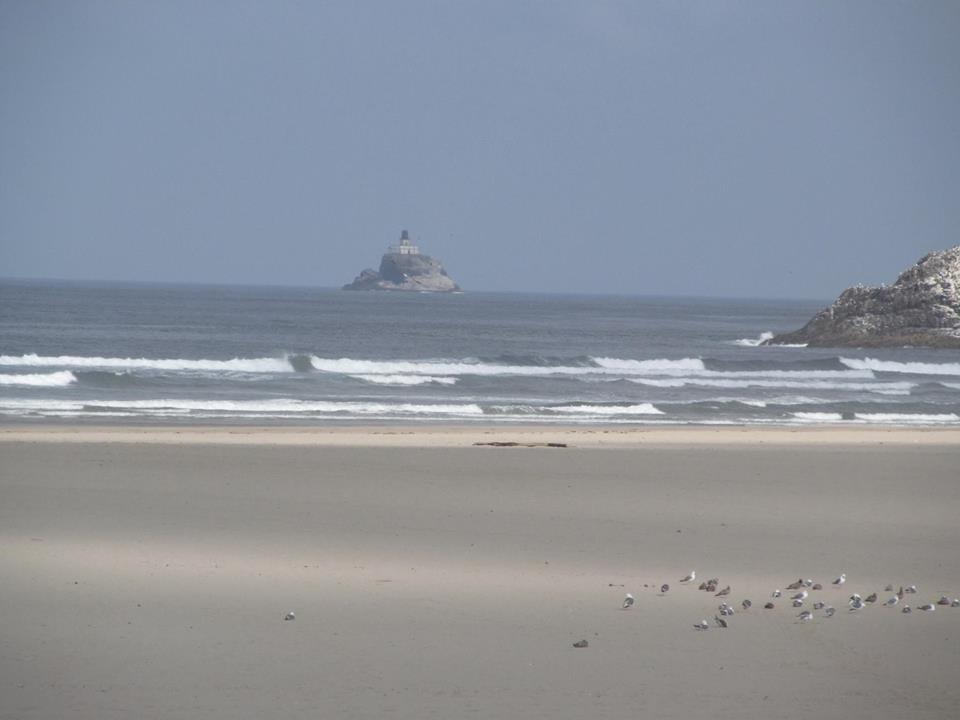
Haystack_Rock_in_the_fog_©2016_Connie_J_Jasperson_LIRF07112021

Haystack Rock in the Fog

Other times, weather becomes the star of the story. Tornados, hurricanes, bizarre heatwaves—these weather events can be the villain our heroes must overcome.

Once you have decided your overall climate, do some research on how the weather affects agriculture and animal husbandry.

The best way to make the fantasy world real is to visualize the scene clearly and place yourself there. Blend what you know about the natural world into it. Write out all the details that will never make it into your story, things you as the author must have set in your mind.

Now we get to the tactile parts of the setting:

How does the weather make the characters feel? Is it too warm, too wet, or is it pleasant? If your novel’s setting is a low-tech civilization, the weather will have a different kind of effect on your characters than one set in a modern society.

Parker observed the beach from his balcony. Far down at the north end of the cove, Leo and Claire walked beside the surf, with Leo’s gestures emphasizing his words. Claire was hunched against the sharp breeze in her hooded sweatshirt and agitated. It was clear her agent had told her something she didn’t want to hear.

In any era, the weather affects the speed with which your characters can travel great distances and how they dress. Bad weather always has a detrimental effect on transportation, a serious point to consider.

For example, when the heatwave was just beginning, when it was still only building, we made a trip 80 miles north to visit two of our daughters. We stayed the night in Snohomish, then stopped in Bothell to have lunch with our second oldest son. We left our last stop in Bellevue at 3 pm to head home.

sample-of-rough-sketched-mapThe journey from our youngest daughter’s house to our home 60 miles south of there took 3 ½ hours, a trip that should take an hour. Unfortunately, traffic had ground to a halt in many places. At times, we would speed along at 5 miles an hour, sometimes as fast as ten. Many drivers couldn’t handle the 94-degree heat of that day, and their short tempers combined with several stalled vehicles made for a miserable journey down I5.

But enough about the wretched climate and the effects of global warming on my life. Our next post will talk about location, and why I make simple maps for every fantasy world in which my work is set.


Credits and Attributions:

Haystack Rock in the Fog, © 2016-2021 Connie J. Jasperson, All Rights Reserved.

Map of Mearth, © 2015-2021 Connie J. Jasperson, All Rights Reserved.


9 Comments

Filed under writing

#FineArtFriday: Dogs by Jan Stobbaerts

Jan_Stobbaerts_-_DogsTitle: Dogs

Artist: Jan Stobbaerts  (1839–1914)

Date: between 1858 and 1914

Medium: oil on canvas

Dimensions: Height: 36.5 cm (14.3 in); Width: 45.5 cm (17.9 in)

What I like about this painting:

These dogs have the run of the house. They’re not too well groomed and probably spend a certain amount of time roaming the neighborhood. Both dogs have personality, and both are unrepentant ruffians.

This is a pair of canine hooligans bent on having a good time.

About the Artist, via Wikipedia [1]:

Jan Stobbaerts or Jan-Baptist Stobbaerts (18 March 1838 – 25 November 1914) was a Belgian painter and printmaker. He is known for his scenes with animals, landscapes, genre scenes and portraits or artists. With his dark-brown studio tones and forceful depiction of trivial subjects, Stobbaerts was a pioneer of Realism and ‘autochthonous’ Impressionism in Belgium.

While in his early works he painted scenes with pets in kitchen interiors in which the genre and anecdotal elements prevailed, from 1880 onwards stables and barns became a dominant theme in his work.[5] The compositions in this period were painted with an almost photographic realism.[8] His sober monochrome palette developed to a more balanced color scheme and he gave more attention to the effect of light.

Around 1890, Stobbaerts’ style underwent a considerable change likely under the influence of his discovery of Impressionism and his personal search for resolving the problem of light. Stobbaerts abandoned the detailed realism in favour of a very personal sfumato of light. His style became velvety, his brushwork looser and the paint more fluid. His paintings of the 1890s depicting scenes around the river Woluwe were made with an opaque, somewhat transparent paste. The artist concentrated on the effect of light and the forms, while they remained recognizable, became less clear as if seen through a soft-focus lens. The subject matter itself became less important. [1]


Credits and Attributions:

Wikimedia Commons contributors, “File:Jan Stobbaerts – Dogs.jpg,” Wikimedia Commons, the free media repository, https://commons.wikimedia.org/w/index.php?title=File:Jan_Stobbaerts_-_Dogs.jpg&oldid=354839586 (accessed July 9, 2021).

[1] Wikipedia contributors, “Jan Stobbaerts,” Wikipedia, The Free Encyclopedia, https://en.wikipedia.org/w/index.php?title=Jan_Stobbaerts&oldid=1025124429 (accessed July 9, 2021).

2 Comments

Filed under #FineArtFriday, writing

Fundamentals of Grammar: seven basic rules of punctuation #amwriting

Mark Twain famously said, “If it’s your job to eat a frog, it’s best to do it first thing in the morning. And if it’s your job to eat two frogs, it’s best to eat the biggest one first.”

MarkTwainEatAFrogQuotLIRF04042021Many authors  are just beginning their careers and trying to self-edit their NaNoWriMo manuscript. The problem is, they don’t know how to write a readable sentence or what constitutes a paragraph. If they are hoping to find an agent or self-publish, they have a big, ugly job ahead of them.

Most public schools in the US don’t go into depth in teaching creative writing, so the majority of students leave school with only a cursory understanding of basic mechanics.

We know good writing when we read it, but when we are just starting out, getting our thoughts onto paper so others enjoy it eludes us.

Learning to write in your native language involves work and means you must educate yourself. As Twain would say, this is a multi-frog task.

The biggest frog to swallow is gaining an understanding of basic punctuation.

Punctuation is the traffic signal that keeps the words flowing and the intersection manageable.

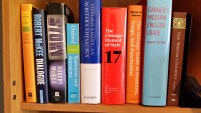
Trying to learn from a grammar manual can be complicated, but I learned by reading the Chicago Manual of Style, which is the rule book for American English. Most editors refer to this book when they have questions.

However, you don’t need to know everything that is in that book, because the basic rules are simple. If you know these seven laws, your writing will pass most editors’ tests.

What follows is a quick guide, a “How-To Guide for Basic Punctuation.”

Punctuation seems difficult because some advanced usages are open to interpretation. In those cases, how you habitually use them is your voice. Nevertheless, the foundational laws of comma use are not open to interpretation.

If you consistently follow these rules, your work will look professional.

First:  Let’s get two newbie mistakes out of the way:

  1. Never insert commas “where you take a breath” because everyone breathes differently.

  2. Do not insert commas where you think it should pause because every reader sees the pauses differently.

Commas and the fundamental rules for their use exist for a reason. If we want the reading public to understand our work, we need to follow them.

Second: Commas join two independent but related clauses.

The independent clause is a complete standalone sentence.

  • Edward worships the ground I walk on, but his adoration tires me.

Dependent clauses are unfinished and can’t stand on their own. Join them to the sentence with a conjunction.

  • Edward worships the ground I walk on and brings me my coffee. (And is a conjunction, a joining word.)

You do not join unrelated independent clauses (clauses that can stand alone as separate sentences) with commas as that creates a rift in the space/time continuum: the Dreaded Comma Splice:

comma-spliceComma Splice:

Boris kissed the hem of my garment, the dog likes to ride shotgun.

The dog has little to do with Boris, other than the fact they both worship me. The same thought, written correctly:

Boris kissed the hem of my garment.

The dog likes to ride shotgun.

The dog riding shotgun is an independent clause and does not relate at all to Boris and his adoration of me and should be in a separate paragraph. If you want Boris and the dog in the same sentence, you must rewrite it: Boris and the dog worship me, and both like to ride shotgun.

Third: A semicolon in an untrained hand is a needle to the eye of the reader. Use them only when two standalone sentences or clauses are short and relate directly to each other.

Some people (and Microsoft Word) think they signify an extra-long pause but not a hard ending. The Chicago Manual of Style says that belief is wrong. DON’T blindly accept what Spellcheck tells you!

Semicolons join short independent clauses, which can stand alone but which relate to each other. These are short sentences that would be too choppy if left separate.

  • The door swung open at a touch. Light spilled into the room.
  • The door swung open at a touch; light spilled into the room.
  • The door swung open at a touch, and light spilled into the room.

All three of the above sentences are technically correct. The usage you habitually choose is your voice. I usually suggest avoiding semicolons except under those circumstances, as they’re the gateway to run-on sentences.

When do we use semicolons? Only when two clauses are short and are complete sentences that relate to each other.

If the independent clauses don’t relate to each other, revise that passage. Use common sense and rewrite them, so they aren’t choppy. An example of a semicolon done wrong:

Boris attempted to kiss the hem of my garment; my boot was in his face.

The first clause is one whole idea: Boris adores me. The second clause is an entirely different idea: my boot was someplace inconvenient.

Two separate standalone clauses done right, assuming the mention of my boot is essential:

Boris attempted to kiss the hem of my garment, but my boot was in his face.

I don’t dislike semicolons as some editors do, but I generally try to find alternatives to them. I think they are too easily abused because Microsoft Word and most people don’t know how to use them.

Fourth: Colons. These head lists but are more appropriate for technical writing and are rarely needed in narrative prose.

Fifth:  Oxford commas, also known as serial commas. This is the one war authors will never win or find common ground, a true civil war. When listing a string of things in a narrative, we separate them with commas to prevent confusion. I like people to understand what I mean, so I always use the Oxford Comma/Serial Comma.

If there are only two things (or ideas) in a list, they do not need to be separated by a comma. If there are more than two ideas, the comma should be used as it would be used in a list.

We sell dogs, cats, rabbits, and birds.

Why we need clarity:

I accept this Nebula award and thank my parents Ralf and Maggie Jasperson and Poseidon.

Rumors abound regarding my demigoddess-like beauty and possibly heroic background. Could Poseidon be my father? Mother refused to talk about it, so the mystery remains unsolved. However, a comma after Jasperson would eliminate confusion.

virtually golden medallion of mayhem copyI accept this Nebula award and thank my parents, Ralf and Maggie Jasperson, and Poseidon.

Sixth: We use a comma after common introductory clauses.

After dark, Boris would change into his bat form and go hunting for insects.

Seventh: Punctuating dialogue: All punctuation goes inside the quote marks.

  1. A comma follows the spoken words, separating the dialogue from the speech tag.
  2. The clause containing the dialogue is enclosed, punctuation and all, within quotes.
  3. The speech tag is the second half of the sentence, and a period ends the entire sentence.

“I agree with those statements,” said the editor.

The editor said, “I agree with those statements.”

What do these seven rules mean? Punctuation tames the chaos that our words can become. It is the universally acknowledged traffic signal, signifying a pause or a joining to the reader.

If you follow these seven simple rules, your work will be readable. If your story is stellar, it will be acceptable to acquisitions editors.

10 Comments

Filed under writing

Successful Self-Editing #amwriting

Books are machines, comprised of many essential components. If one of those elements fail, the book won’t work the way the author envisions it. So, what are these parts?

no_graceful_way_outLIRF02212021Prose, plot, transitions, pacing, theme, characterization, dialogue, and mechanics (grammar/punctuation).

As an editor, I’ve seen every kind of mistake you can imagine and written many travesties myself. This tendency to not see the flaws in our own work is why I have an editor. I need someone with a critical eye to see my work before publication.

I am in the process of revising my Accidental Novel, prepping it to send to my editor. I have a three-part method, using specific tools that come with my word-processing program.

Phase one: the initial read-through. This stage is put into action once I have completed the revisions suggested by my beta readers. At this point, the manuscript looks finished, but it has only just begun the journey.

I use Microsoft Word. On the Review Tab, I access the Read Aloud function and begin reading along with the mechanical voice. Yes, it’s annoying and doesn’t always pronounce things right, but this first tool shows me a wide variety of places that need rewriting.

ReviewTabLIRF07032021I use this function rather than reading it aloud myself, as I tend to see and read aloud what I think should be there rather than what is.

  1. I habitually key the word though when I mean through. These are two widely different words but are only one letter apart. Most miss-keyed words will leap out when you hear them read aloud.
  2. Run-on sentences stand out when you hear them read aloud.
  3. Inadvertent repetitions also stand out.
  4. Hokey phrasing doesn’t sound as good as you thought it was.
  5. You hear where you have dropped words because you were keying so fast you skipped over including an article, like “the” or “a” before a noun.

This is a long process that involves a lot of stopping and starting, taking me a week to get through the entire 90,000-word manuscript. By the end of phase one, I will have trimmed about 3,000 words.

Phase Two: The Manual Edit

The_Pyramid_Conflict_Tension_PacingThis phase is where I find my punctuation errors most often. I look for and correct punctuation and make notes for any other improvements that must be made. Usually, I cut entire sections, as they are riffs on ideas that have been presented before. Sometimes they are outright repetitions, which don’t leap out when viewed on the computer screen.

  1. Open your manuscript. Break it into separate chapters, and make sure each is clearly and consistently labeled. Make certain the chapter numbers are in the proper sequence and that they don’t skip a number. For a work in progress, Baron’s Hollow, I labeled my chapter files this way:
  • BH_ch_1
  • BH_ch_2
  1. Print out the first chapter. Everything looks different printed out, and you will see many things you don’t notice on the computer screen or hear when the voice reads it aloud.
  2. Turn to the last page. Cover the page with another sheet of paper, leaving only the last paragraph visible.
  3. Starting with the last paragraph on the last page, begin reading, working your way forward.
  4. With a yellow highlighter, mark each place that needs correction.
  5. Put the corrected chapter on a recipe stand next to your computer. Open your document and begin making revisions as noted on your hard copy.

This is the phase where I look for what I think of as code words. I look at words like “went.” In my personal writing habits, “went” is a code word that tells me when a scene ends and transitions to another stage. The characters or their circumstances are undergoing a change. One scene is ending, and another is beginning.

In fact, all info dumps, passive phrasing, and timid words are codes for the author, laid down in the first draft.

Clunky phrasing and info dumps are signals telling me what I intend that scene to be. In the rewrite, I must expand on those ideas and ensure the prose is active. I must cut some of the info and allow the reader to use their imagination.

I look for all of the eight forms of the verb “be” and change that passive phrasing to make it active if possible. The forms of “be” are subjunctives and are tricky words. They’re necessary in some cases, but not always and can become crutches.

Be_Eight_Forms_LIRF05122019Passive phrasing does the job with little effort on the part of the author, which is why the first drafts of my work are littered with it. Active phrasing takes more effort because it involves visualizing a scene and showing it to the reader.

For example, when I see the word “went,” I immediately know someone goes somewhere. But “went” is a telling word and is passive phrasing. I ask myself, “How do they go?” Went can always be shown as a scene. Loretta opened the door, gave Burt the finger, and strode out.

By the end of phase two, I will have trimmed about 3,000 more words from my manuscript.

Phase three is the step that only works if you have an understanding of grammar and industry practices. Currently, at this stage in our technology, understanding context is solely a human function.

You may have found that your word processing program has spellcheck and some minor editing assists. Spellcheck is notorious for both helping and hindering you.

Tools like spellcheck don’t understand context, so if a word is misused but spelled correctly, it probably won’t alert you to an obvious error.

  • There, their, they’re.
  • To, too, two.
  • Its, it’s.

In the third phase of prepping my work to send to my editor, I go over each chapter one more time, this time using Grammarly. I have also used ProWriting Aid. Each one has strengths and weaknesses.

Context is critical. I am wary of relying on Grammarly or ProWriting Aid for anything other than alerting you to possible comma and spelling malfunctions.

If you don’t know anything about punctuation, don’t feel alone. Most of us don’t when we’re first starting out, and if this is your case, your best bet is to avoid these programs.

chicago guide to grammarUse that money to invest in a book like the Chicago Guide to Grammar, Usage, and Punctuation and learn how grammar works.

Good editing software is not cheap. But for my specific needs, it has been a worthwhile investment. If you do choose to invest in some, use common sense when reviewing the program’s suggestions.

This three-part process can take more than a month. When I’ve finished, I’ll have a manuscript to send my editor that won’t be full of distractions. She’ll be able to focus on finding as much of what I have missed as is humanly possible.

Hopefully, between the two of us, I’ll have a decent book to publish early in 2022.


10 Comments

Filed under writing

#FineArtFriday: Dawn In The Hills by Julian Onderdonk 1922

  • Julian_Onderdonk_(1882-1922)_-_Dawn_In_The_Hills_(1922)
  • Artist: Julian Onderdonk  (1882–1922)
  • Title: Dawn In The Hills
  • Date    1922
  • Medium: oil on canvas
  • Dimensions: Height: 76.2 cm (30″); Width: 101.6 cm (40″)
  • Collection: Private collection

What I love about this painting:

Onderdonk captured the surreal essence of early morning near San Antonio, Texas. The mists are rising in the hills, slowly revealing the riotous splendor of deep blue wildflowers. It is a rolling sea of bluebonnets, with the occasional white of the blackfoot or fleabane daisy mingled in.

The artist perfectly conveyed the mystical quality of that singular moment of the morning when the air is still and golden, and the day ahead is full of possibilities.

I could spend hours in this place.

About this painting:

Art historian Jeffrey Morseburg writes, “In the fall of 1922, as he was just entering his prime, Onderdonk was rushed to the hospital with an intestinal blockage. He failed to recover from the emergency surgery and died on October 27, 1922. His sudden death created an outpouring of emotion for the man who had become “The Dean of Texas Painters.” Just before he died, Onderdonk had finished a beautiful early morning view of a Texas hillside carpeted with Bluebonnets titled ‘Dawn in the Hills’ and another work, a bold fall scene titled ‘Autumn Tapestry.’” [1]

About the Artist, Via Wikipedia:

Julian Onderdonk was born in San Antonio, Texas, to Robert Jenkins Onderdonk, a painter, and Emily Gould Onderdonk. He was raised in South Texas and was an enthusiastic sketcher and painter. As a teenager Onderdonk was influenced and received some training from the prominent Texas artist Verner Moore White who also lived in San Antonio at the time. He attended the West Texas Military Academy, now the Episcopal School of Texas, graduating in 1900. His grandfather Henry Onderdonk was the Headmaster of Saint James School in Maryland, from which Julian’s father Robert graduated.

At 19, with the help of a generous neighbor, Julian left Texas in order to study with the renowned American Impressionist William Merritt Chase. Julian’s father, Robert, had also once studied with Chase. Julian spent the summer of 1901 on Long Island at Chase’s Shinnecock Hills Summer School of Art. He studied with Chase for a couple of years and then moved to New York City to attempt to make a living as an en plein air artist. While in New York he met and married Gertrude Shipman and they soon had a son.

Onderdonk returned to San Antonio in 1909, where he produced his best work. His most popular subjects were bluebonnet landscapes. Onderdonk died on October 27, 1922 in San Antonio.

President George W. Bush decorated the Oval Office with three of Onderdonk’s paintings. The Dallas Museum of Art has several rooms dedicated exclusively to Onderdonk’s work.

His art studio currently resides on the grounds of the Witte Museum.


Credits and Attributions:

[1] Julian Onderdonk, An Illustrated Biography by Jeffrey Morseburg, © 2011 https://julianonderdonk.wordpress.com/tag/julian-onderdonk-biography/  (accessed March 4, 2020).

Wikimedia Commons contributors, “File:Julian Onderdonk (1882-1922) – Dawn In The Hills (1922).jpg,” Wikimedia Commons, the free media repository, https://commons.wikimedia.org/w/index.php?title=File:Julian_Onderdonk_(1882-1922)_-_Dawn_In_The_Hills_(1922).jpg&oldid=278966540 (accessed March 4, 2020).

Wikipedia contributors, “Julian Onderdonk,” Wikipedia, The Free Encyclopedia, https://en.wikipedia.org/w/index.php?title=Julian_Onderdonk&oldid=882101452 (accessed March 4, 2020).

Comments Off on #FineArtFriday: Dawn In The Hills by Julian Onderdonk 1922

Filed under #FineArtFriday

Random Thoughts on Writing #amwriting

I’ve mentioned before that I don’t review books I don’t like. So, without naming names, let’s talk about why some books are not on my review list.

WritingCraft_lazyWritersPassive phrasing: If you watch them in real life, people don’t “begin” to pick up that knife. They don’t “start” to walk away.

They reach for the knife. They take the knife from the drawer.

They walk away.

We’re thinking and writing the story as it falls from our heads. Because we get into storytelling mode, the dog begins to bark, and the neighbors start to complain. In real life, the dog barks, and the neighbors complain.

When you write with a passive voice, it’s easy to use too many quantifiers, such as “it was really big” or “it was incredibly awesome.” It becomes easy to “tell” the story instead of showing it: “Bob was mad.”

Then there is the opposite extreme, showing far too much.

Some authors have been told their prose is passive and are desperate to avoid that. But they have a lot of detail they want to convey, so they resort to clumsy lead-ins and awkward descriptions. This only announces that a lengthy exposition is forthcoming. 

Please, don’t use a phrase like: “She felt her eyes roll over her host’s attire” and then follow it with a paragraph describing the host in microscopic detail. That unfortunately phrased sentence is one of the less obnoxious lines from a book I was unable to finish reading several years back. It stuck with me because the paragraph that followed it was so awful.

Nothing gives me the creeps more than a 250-word description of eyeballs independently rolling up and down and all over a purple velvet suit of dubious origin. I could see what the author was trying to say, but the host’s suit was the least of the travesties in that train wreck: most people’s eyeballs do not leap from their head and roll over anything.

Instead, they could have written the entire 250-word encounter this way: Vincent wore a suit of purple velvet, threadbare, and looking as if it came from his grandfather’s closet.

It’s a struggle sometimes, but we must try to slip descriptions into the narrative in less obvious ways.

Some authors swamp the reader with minute details: “Marge’s eyebrows drew together, her lips turned down, and her cheeks popped a dimple. Hate glared from her eyes.”

Some authors ruin the taste of their work with an avalanche of prettily written descriptors: “-ly” words.

Others may want to show their characters as human, so they have them natter on about nothing: “Remember when….” If the memory doesn’t pertain to the story or explain something about a character that has been a mystery, it doesn’t advance the plot. Rather than showing them as human, it pads the word count, stalls the momentum, and the reader stops reading.

ClicheDefinitionBingLIRF06282021Use of clichés. Speaking as a reader, please don’t use the word alabaster to describe a woman’s skin. Make an effort to find a different way to describe her appearance. It’s an easy word that says smooth and pale, but it’s an overused word that has become cliché.

As a matter of reference, it’s not usually necessary to describe a character’s skin other than with broad generalizations because you want the reader to imagine them for themselves, and we all have different ideas of beauty.

Clichés and catchphrases will appear in the first drafts of our work, but they are signposts for the second draft. They tell us to spend some time finding a creative way to show a person or event.

Events that occur for no reason and take the story nowhere: I loved “The Hitchhiker’s Guide to the Galaxy” series of books written by the late Douglas Adams.

The books detail the adventures of Arthur Dent, a hapless Englishman traveling the galaxy in his pajamas. He and his friend are transported off the earth just in time to miss the destruction of the planet by the Vogons, a race of unpleasant and bureaucratic aliens, to make way for an intergalactic bypass.

Douglas Adams’ work is a little bit “out there,” but he understood that there must be a reason for the protagonist to leave his home wearing his pajamas and a robe. He used that opportunity to show the cozy, comfortable environment Arthur was about to be thrust out of.

Adams understood he first had to show Arthur in his happy home, and then his protagonist had to be quickly yanked out there and placed on that Vogon Constructor Ship.

For me as an author, the easiest part of writing is inadvertently slipping some clumsy bit of phrasing into my narrative, having an action scene go hilariously (and impossibly) wrong. I don’t usually notice the awkwardness until my editor points it out.

The_Pyramid_Conflict_Tension_PacingAs a reader, things will pull me out of the narrative, and I will probably stop reading at that point. Most of these issues are the result of lazy writing habits.

Research: Using real science requires research, which is time-consuming. Writing true history, writing medical dramas, and using police and military procedures involves effort. You must glean research from more sources than Wikipedia and old CSI episodes.

If you are writing historical fiction, you must read many books on your subject. Make notes as you read each, noting the book title, the author, and the page number where you found the info—you may need to know those things later. It’s work, but this is a job where you can’t skimp.

If you are writing speculative fiction, you will accumulate science or other background information in your world-building process. You will want to keep it organized, and this is where the style sheet or storyboard comes in handy.

What the style sheet/storyboard should cover:

  • All names, created or not: Aeos, Aeolyn, Beryl, Carl, Edwin, etc.
  • Real and created animal names: alligator, stinkbear, thunder-cow, waterdemon
  • Created words that are hyphenated: fire-mage, thunder-cow
  • All place names, real or created: Seattle, Chicago, Ragat, Wister, Sevya, Arlen, Neveyah
  • Any research note you have accumulated.

See my post, Designing the story for more on how to make a storyboard or style sheet.

good_stories_LIRFmemeKeep your notes/stylesheet in a clearly labeled file, and back them up on a thumb drive or file them in the cloud via Dropbox, OneDrive, or Google Docs. I use and work out of a file-saving service, so my files won’t be lost no matter what happens to my computer.

Turning those notes into your story is an integral part of the writing process.

Plagiarism – this is most important: never copy lines from another person’s work and pass them off as your own. That is plagiarism, and you never want to be accused of that. If you must quote someone verbatim in your book, contact their publisher and get their legal permission to do so, and credit them by using proper footnotes. If you do not receive written consent, do not use their work.

Keep this written permission on file with any other legal papers that pertain to that book.

An excellent article on this can be found here: Cite Unseen: 3 Bits for a Better Bibliography


11 Comments

Filed under writing

Designing the story #amwriting

July is Camp NaNoWriMo month. If you are interested, join Camp NaNoWriMo to take on any writing project, novel or not, and set a word-count goal of your own. Yes, any goal, any project.

Words-And-How-We-Use-ThemI think of stories as if they were ponds filled with words. A pond has layers, and so do good stories. I see the three layers of a story as:

Surface: The Literal Layer; the what-you-see-is-what-you-get layer. Characters live, and events happen. These are reflected in the surface of the story. We change the look of the surface layer by choosing either realism or surrealism or a blend of the two.

Realism is a common form of storytelling. It is the what-you-see-is-what-you-get kind of story. The setting can be anywhere and told using the tropes of any genre. The reality of that world is solid and never changes.

Surrealism takes the feeling of a real world and gives it a slightly hallucinogenic twist. Everything feels real, but on the surface, it makes no sense. One must find understanding in each small increment rather than the larger chunks we are used to absorbing.

Beneath the story’s surface lies the middle: This is the area of unknown quantity filled with cause and effect: events and reactions. We see why these characters’ lives are important enough to be portrayed and why events happened. This is where emotions muddy the waters. It is a layer where inference and implication come into play.

Bottom: The Interpretive Layer. This level is not only foundational; it contains and shapes the story:

  • Themes
  • Voice/style
  • Messages
  • Symbolism
  • Archetypes

The words in this pond behave like the waters of a pond in nature. While close scrutiny reveals that the waters of a pond are separated into layers by temperature, salinity, microbial life, or by the sheer weight and pressure of the volume of water, the overall structure is one large, important thing: a hole filled with water.

Without water, a pond is a depression in the ground filled with possibilities only. The same is true for a novel.

If you want to write anything, it’s best to sit down and get that first draft out of you while the story is fresh in your mind. You’ll spend a year or more rewriting a novel, but if you don’t get the original ideas and entire story down while they’re fresh, you’ll lose them.

Many people say they intend to write a book. They begin, get a chapter or so into it, and lose the thread. They can’t see how to get the story from the beginning, to the crisis, to the resolution.

I draft a story plan in four acts. First, I tell myself how I believe the story will go. This only takes half an hour and gives me finite plot points, destinations where each section of the story will end. Once I have the four acts, I know where the turning points are and what should happen at each. The outline ensures there is an arc to both the overall story and to the characters’ growth.

A good way to discover what you are writing is to “think out loud.” Divide the story into four acts. Acts two and three are really one long extension of each other.

short-story-arcAct 1: the beginning: We show the setting, the protagonist, and the opening situation.

Act 2: First plot point: The inciting incident.

Act 3.: Mid-point: We show their dire condition and how they deal with it.

Act 4: Resolution: Let’s end this misery in a way that feels good.

Take a moment to analyze and plan what needs to be said by what point in the story arc. This method works for me because I’m a linear thinker.

PostItNotePadI have mentioned before that I use a spreadsheet program to outline my projects, but you can use a notebook or anything that works for you. You can do this by drawing columns on paper by hand or using post-it notes on a whiteboard or the wall. Some people use a dedicated writer’s program like Scrivener.

Everyone thinks differently, so there is no one perfect way to create that fits everyone.

In Excel, the storyboard for my ideas works this way:

At the Top of page one: I give the piece a working title.

If it’s an idea for a short story, I include the intended publication and closing date for submissions (not needed if it’s for a novel). I make a note of the intended word count. Having a word count limit keeps me alert for unnecessary backstory.

Page one of the workbook contains the personnel files.

Column A: Character Names. I list the important characters by name and list the critical places where the story will be set.

Column B: About: What their role is, a note about that person or place, a brief description of who and what they are.

Column C: The Problem: What is the core conflict?

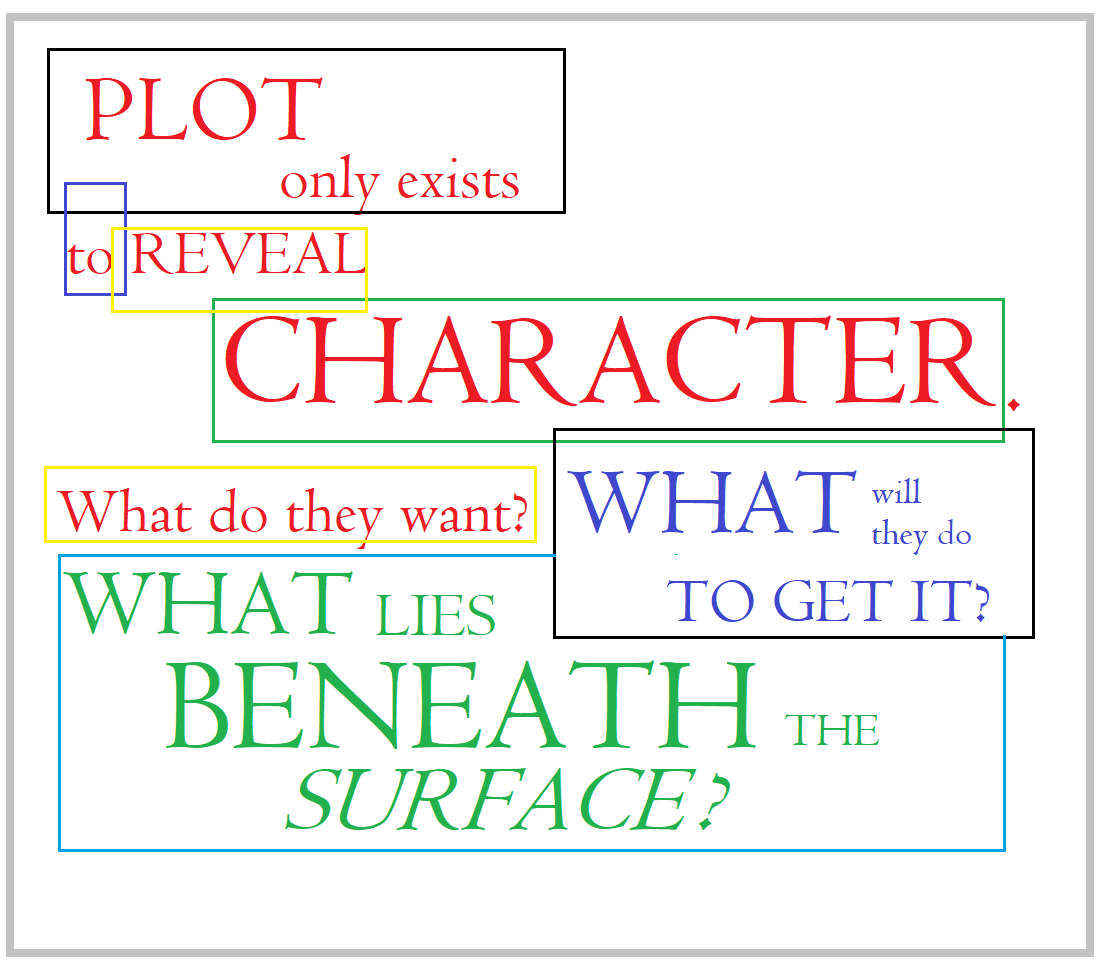
Column D: What do they want? What does each character desire?

Column E: What will they do to get it? How far will they go to achieve their desire?

On page two of the workbook, I create a page that outlines the projected story arc chapter by chapter.

Page three of the workbook is most important—it is the list of made-up words, names, and places. The way they appear on this list is how they should occur throughout the entire story or novel. This page ensures consistency and keeps the spellings from drifting as I plow along, laying down prose.

Update the glossary page anytime a name is added or changed, or new place or made-up word is added.

Page four will have maps and a calendar for that world. The calendar is a central piece that keeps the events happening in a logical way.

The workbook shown below is the stylesheet for the Tower of Bones series and has been evolving since 2009.

screenshotStyleSheetLIRF06262021We never really know how a story will go, even if we begin with a plan. The plan serves to keep us on track with length and to ensure the action doesn’t stall.

If you know the length of a book or story you intend to write, you know how many words each act should be and how many scenes/chapters you need to devote to that section.

As you write each event and connect the dots, the plot will evolve and change. You begin to explore the deeper aspects of the story. Emotions, both expressed and unexpressed, secrets withheld, truths discovered—all these details that emerge as you write will shape how the characters react to each other. In turn, these interactions will alter the shape of the larger story.

Creating a project for Camp NaNoWriMo is a good way to get into the habit of writing new words every day. When you write every day, you develop strengths and knowledge of the craft. Give yourself the gift of half an hour of private writing time every day.

You’ll never know what you’re capable of until you try.


Credits and Attributions:

DangApricot (Erik Breedon), CC BY-SA 3.0 <https://creativecommons.org/licenses/by-sa/3.0&gt;, via Wikimedia Commons. Wikimedia Commons contributors, ‘File:PostItNotePad.JPG’, Wikimedia Commons, the free media repository, 26 August 2020, 17:42 UTC, <https://commons.wikimedia.org/w/index.php?title=File:PostItNotePad.JPG&oldid=443715836> [accessed 26 June 2021]

10 Comments

Filed under writing

#FineArtFriday: Saint George and the Dragon by Paolo Uccello

paolo_uccello_stgeorge_and_dragonArtist:  Paolo Uccello (1397–1475)

Title: Saint George and the Dragon

Medium: oil on canvas

Dimensions: Height: 57 cm (22.4 in); Width: 73 cm (28.7 in)

The above painting by Paolo Uccello, from around 1470, is a surreal, stylized retelling of the legend of Saint George and the Dragon. The legend tells of the knight slaying a dragon that demanded human sacrifices. With the slaying of the dragon, the hero has saved the princess who was chosen to be the next offering.

Nothing looks real except the dragon which is nightmare come to life. I love the hyper-heroic way Uccello portrayed horses. The people are pallid, with no personality to their features. The dragon and the horse are alive, as if the scene is about them only. All the passion of the moment converges in the dragon and the horse.

Done in oil on canvas, the painting was one of the last of Uccello’s creations.

According to Wikipedia, the Fount of All Knowledge: The narrative (of Saint George) has pre-Christian origins (Jason and MedeaPerseus and AndromedaTyphon, etc.), and is recorded in various saints’ lives prior to its attribution to St George specifically. It was particularly attributed to Saint Theodore Tiro in the 9th and 10th centuries, and was first transferred to Saint George in the 11th century. The earliest narrative record of Saint George slaying a dragon is found in a Georgian text of the 11th century. [1]

About the Artist (via Wikipedia)

Born Paolo di Dono, his nickname, Uccello (of the birds), came from his fondness for painting birds. He worked in the Late Gothic tradition, emphasizing colour and pageantry rather than the classical realism that other artists were pioneering. His style is best described as idiosyncratic (eccentric or unique), and he left no school of followers.

With his precise and analytical mind, Paolo Uccello tried to apply a scientific method to depict objects in three-dimensional space. In particular, some of his studies of the perspective foreshortening of the torus are preserved, and one standard display of drawing skill was his depiction of the mazzocchio.

In the words of G. C. Argan: “Paolo’s rigour is similar to the rigour of Cubists in the early 20th century, whose images were more true when they were less true to life. Paolo constructs space through perspective, and historic event through the structure of space; if the resulting image is unnatural and unrealistic, so much the worse for nature and history.”

The perspective in his paintings has influenced many famous painters, such as Piero della FrancescaAlbrecht Dürer and Leonardo da Vinci, to name a few. [2]


Credits and Attributions:

Wikimedia Commons contributors, “File:Paolo Uccello 047.jpg,” Wikimedia Commons, the free media repository, https://commons.wikimedia.org/w/index.php?title=File:Paolo_Uccello_047.jpg&oldid=308602797  (accessed January 18, 2019).

Wikipedia contributors, “Saint George,” Wikipedia, The Free Encyclopedia, https://en.wikipedia.org/w/index.php?title=Saint_George&oldid=1029544183 (accessed June 23, 2021). [1]

Wikipedia contributors, “Paolo Uccello,” Wikipedia, The Free Encyclopedia, https://en.wikipedia.org/w/index.php?title=Paolo_Uccello&oldid=873078862  (accessed January 18, 2019). [2]

Comments Off on #FineArtFriday: Saint George and the Dragon by Paolo Uccello

Filed under #FineArtFriday, writing