Fundamentals of Writing: Character Depth – who do they think they are? #amwriting

Depth is a vast word, a sea of information created of layers. It is complex, intense, and profound. Characters with depth feel solid, alive, as real as your best friend.

depth-of-characterTo achieve a sense of depth, we begin with simplicity. Each character’s sub-story must be built upon who these characters think they are.

One of the most useful seminars I’ve ever attended was given by a Romance writer. He is a strong proponent of assigning verbs and nouns to each character at the outset as a way to get inside their heads.

If there is one thing Romance authors understand, it is how to create a strong impression of character.

When I plan a character, I make a simple word picture of them. The word picture is made of a verb and a noun, the two words that best describe each person. We want to know the good things about these characters, so we assign nouns that tell us how they see themselves at the story’s outset.

We also look at sub-nouns and synonyms, so put your thesaurus to work. In my book, Julian Lackland, I had four characters with significant roles, so I assigned them nouns that describe their principal defining quality.

This noun is the core characteristic thread that stays with them, is challenged by events, and either wins in the end or is their downfall.

Julian’s Noun is: Chivalry (Gallantry, Bravery, Daring, Courtliness, Valor, Love.) He sees himself as a good knight, a defender of innocence.

Beau’s Noun is: Bravery (Courage, Loyalty, Daring, Gallantry, Passion.) He aspires to chivalry but has a pragmatic side. He sees himself as a good knight but knows that good doesn’t always win.

Lady Mags’s Noun is: Audacity (Daring, Courage.) She is a good knight but is under no illusions about the people she defends. She is chivalrous but practical.

Bold Lora’s Noun is: Bravado (Boldness, Brashness.) She desires fame, is convinced that knights are defined by the celebrity their deeds bring them.

In real life, the way we see ourselves is the face we present to the world. Self-conceptions color how we react to events. We are gradually altered by events as life goes on. Our view of ourselves evolves, and our reactions are changed.

By the end of the story, the way our characters see themselves should have evolved. The circumstances you put them through must affect and remake them.

Once I know their nouns, I assign my characters a verb that describes their gut reactions. This word will shape the way they react to every situation that arises.

unreliable-narratorThey might think one thing about themselves, but this verb is the truth.

Julian has 2 Verbs. They are: Defend, Fight. Again, we also look at sub-verbs and synonyms: (Preserve, Uphold, Protect.)

Beau’s 2 Verbs are: Protect, Fight (Defend, Shield, Combat, Dare.)

Lady Mags’s 2 Verbs are: Fight, Defy (Compete, Combat, Resist.)

Bold Lora’s 2 Verbs are: Desire, Acquire (Own, Control, Imprison.)

When I wrote these characters, I knew how they believed they would react in a given situation and that knowledge drove the plot. Why was it so clear to me? Because I had drawn their portraits in a few descriptive words.

Julian must Fight for and Defend Chivalry. Julian’s commitment to defending innocents against inhumanity breaks his mind.

Beau must Fight for and Protect Bravery. Beau’s commitment to protecting Julian and concealing his madness breaks his health.

Lady Mags must Fight for and Defy Audacity. She’s at war with herself regarding her desire for a life with Julian and Beau. That war ruins her chance at happiness.

Bold Lora must Acquire Fame and Control Chivalry. Her thirst for notoriety destroys her.

When we uncover the nouns and verbs that describe who our characters think they are, we have a grip on creating characters who are alive to the reader.

How we phrase this when describing them in our outline is essential. Placing the verb before the noun describes a character’s core conflict. It lays bare their flaws and opens the way to building new strengths.

Knowing who our characters are before we meet them is important. Go ahead and make that personnel file detailing their backstory if you need to. Set that infodump aside because the real story will be built upon who they think they are on page one of this story.

Our characters’ preconceptions color their experience of events, which colors the readers’ view.

The characters we write are unreliable witnesses to the events that shape them. Their self-perception shades their reactions when they fail to live up to their own standards.

These are the watershed moments when our characters must examine their motives, and either face them or gloss over their failings.

Depth is instilled into to a scene where the characters prevail despite their flaws, succeeding against the odds. Or conversely, depth can be added when character flaws cause them to fail miserably at a point where they could have triumphed.

What two words describe the primary weaknesses of your characters, the factor that could be their ultimate ruin?

Julian Lackland: Obsession and Honor.

Beau Baker: Steadfast Loyalty.

Lady Mags De Leon: Stubbornness and Fear (of Entrapment).

Who are youKnowing the verb (action word) and the noun (object of the action) that best represented my characters made writing Julian Lackland easier. Their actions and reactions unfolded, and it was as if the story wrote itself.

So how do we get to know our characters and how they see themselves? Just as in real life, we meet and come to know them through conversations.

Conversations give shape to the story, turning what could be a wall of words into something personal.

Our next installment in this series will focus on revealing character through conversations.

17 Comments

Filed under writing

#FineArtFriday: Tokyo by Carl Randall 2011

Carl-randall-tokyo-painting-cityscapeArtist: Carl Randall (1975 – )

Title: Tokyo

Date: 2011

Medium: oil on canvas

Dimensions: Height: 150 cm (59 in); Width: 65 cm (25.5 in)

What I love about this image:

This image shows us the artist’s view of modern 21st Century society before the Covid-19 pandemic, painted predominantly in shades of gray. Technology is the all-knowing, ever-watchful god in this world.

Buildings, filled to capacity, loom over streets jammed with people, most talking into devices. Everyone goes forward, each individual focused on their own goal, unaware of the seething ocean of humanity around them, carried along on the currents and the tide.

About the artist (via Wikipedia):

Carl Randall was born in 1975, in the UK. He is a graduate of The Slade School of Fine Art London (BA Fine Art), the Royal Drawing School London (The Drawing Year), and Tokyo University of the Arts Japan (MFA & PhD Fine Art).

He was awarded The BP Travel Award 2012, for his proposal to walk in the footsteps of the Japanese ukiyo-e printmaker Andō Hiroshige, creating paintings of the people and places of contemporary Japan.  His project involved spending time in Japan resulting in a group of 15 paintings exhibited at the National Portrait Gallery in London as part of The 2013 BP Portrait Award exhibition, under the title “In the Footsteps of Hiroshige – The Tokaido Highway and Portraits of Modern Japan”. The exhibition subsequently toured to The Aberdeen Art Gallery Scotland, The Wolverhampton Art Gallery England, and then formed his solo exhibition in Japan ‘Portraits from Edo to the Present at The Shizuoka City Tokaido Hiroshige Museum, where the paintings were exhibited alongside Hiroshige’s original The Fifty-three Stations of the Tōkaidō woodblock prints. In conjunction with these exhibitions, the book Carl Randall – Japan Portraits was published, illustrating paintings and drawings made in Japan, with a foreword by British author Desmond Morris, and an introduction by the late American writer Donald Richie. A short documentary, Carl Randall – Japan Portraits was also made, showing the artist painting and drawing in Japan His Japan paintings were also the subject of a 2016 ‘World Update’ interview by the BBC World Service (titled ‘Painting the faces in Japan’s crowded cities’), and he was also interviewed by CNN about his Japanese work. [1]

To learn more about Carl Randall and his art, go to Carl Randall – Artist. Contemporary Figurative Painter.


Credits and Attributions:

[1] Wikipedia contributors, “Carl Randall,” Wikipedia, The Free Encyclopedia, https://en.wikipedia.org/w/index.php?title=Carl_Randall&oldid=1018005949 (accessed May 27, 2021).

Wikimedia Commons contributors, “File:Carl-randall-tokyo-painting-cityscape.jpg,” Wikimedia Commons, the free media repository, https://commons.wikimedia.org/w/index.php?title=File:Carl-randall-tokyo-painting-cityscape.jpg&oldid=504966563 (accessed May 27, 2021). This file is licensed under the Creative Commons Attribution-Share Alike 4.0 International lice

Comments Off on #FineArtFriday: Tokyo by Carl Randall 2011

Filed under #FineArtFriday

Fundamentals of Writing: Depth part 1 – identifying the weaknesses #amwriting

You have finished your first draft, successfully taken your characters from the opening pages through several disasters, and given them a smashing conclusion. You wrote “the end,” so now you’re finished! Time to upload it to Amazon and wait for the accolades to roll in.

depthPart1revisionsLIRF05252021STOP! If you value your reputation, you won’t rush to publish that mess just yet.

In my previous post, I outlined the stages of book construction using a traditional phased method of project management.

  1. The Concept. Make a note of that brilliant idea. Write it down, so you don’t forget it.
  2. The Planning Phase is where I create an outline. Some people don’t need this step, but I do.
  3. The Construction Phasewrite the first draft from beginning to the end.
  4. Monitoring and Controlling—For writers, this is actually a continuation of step three, a part of the construction phase. This is where you build quality into your product. If you are an outliner, this phase might go smoothly.
    • Create a style sheet as you go. See my post on style sheets here: Self-editing: Ensuring Consistency.
    • Find beta readers among your writing group and heed their concerns in the rewrites.
    • Take the manuscript through as many drafts as you must to have the novel you envisioned.
    • Employ a good line editor to ensure consistency in the quality of your product.
    • Find reliable proofreaders. (Your writing group is an invaluable resource.)
  5. Completion or Closing.

As you can see, when you write “the end” at the bottom of the last page, you have only completed the development and initial construction phase of this project.

800px-Singapore_Road_Signs_-_Temporary_Sign_-_Detour.svgNow you must set it aside, as you must gain a little distance from it to see it with a clear eye. This is where I seek an outside opinion on the strengths and weaknesses of my proto-novel. I am fortunate to have a local writing group of highly talented published authors. I also trade services with several editors. When the first draft of my manuscript is finished, I send it to a reader. While they are reading it, I work on something completely different.

You must ask your reader to look for and point out weaknesses. You need to know where you’ve over-explained, what needs to be expanded upon, and if the story has a satisfying conclusion. At this point, your manuscript needs line editing, but the first reader must understand that you aren’t at that stage yet. Beta readers must be able to look beyond those flaws and see the story as a whole.

Authors are thin-skinned. We are full of expectations that all readers will enjoy it and tell us how stellar it is. You must be prepared for your manuscript to come back with some critical observations. I have felt the sting and burn of honest criticism and was utterly crushed.

I had to put on my big-girl undies and grow up.

The real work begins when we get the first reader’s assessment back, and it isn’t what we thought we would hear.

If you had a conscientious reader, they noticed those massive info dumps. You know the ones, the long paragraphs of backstory we write to explain things.

Hopefully, your reader is familiar with your genre and knows about features such as horses, medicine, or police procedures. If so, they may tell you that more research is required.

Sometimes, the feedback we get means that we now have to completely rethink what we thought was the perfect novel.

Book- onstruction-sign copyAt this point, an amateur decides the beta reader missed the point and chooses to ignore their comments. Our unrealistic belief that our work is perfect as it falls from our minds is a failing that we must overcome if we want to engage readers.

When you have received your manuscript back with the reader’s comments, it’s time to begin the second draft. This is the area of construction where we straighten out confusing passages and make positive changes by adding or cutting scenes. We begin to add depth to our novel.

In my current manuscript, several areas were identified that needed attention.

First, my reader liked the overall story and found the characters engaging. However, she felt I hadn’t explored their relationships well enough to show their growing attraction. The eventual pairing seems to come out of nowhere. That relationship lacked depth.

Also, she pointed out where I had missed an excellent opportunity to inject real tension into the midpoint crisis. She also felt a lack of tension in the final pages.

In other words, the story lacks depth and tension at this point in its development. The work isn’t done; it’s only just begun.

This is where the intelligent author puts her reader’s observations to work. I took Alison’s comments to heart and considered the midpoint crisis. A solution presented itself, turning the story on its head. By doing that, an opportunity to make the final confrontation more perilous presented itself.

I added two chapters and trimmed back three. I slightly changed how the characters interact initially, making their mutual attraction a sub-thread that gradually grows from the moment when Character Two enters the story.

This novel tells the origin of an artifact that will be a strong thread in this series, but it is more focused on the internal battles we fight as part of the human condition. Each of us experiences emotional highs and lows in our daily lives. I must bring forward a specific layer of depth, the deep-rooted, personal reason for the emotions I want to portray.

Reactions must have a cause, something to react to. Depth can be instilled by adding a few well-chosen words, a sentence or two to show a flash of memory, a sensory prompt that a reader can empathize with.

But I'm not superstitious, LIRFIn my current work, the thoughts and motives of the characters are critical to the midpoint event and subsequent crisis of faith. Yes, who these people are, and their place in the story at the point where we meet them is crucial to the plot.

But the plot is only the surface. Below the surface, lending substance to the narrative, lies the layer of inference and implication. This layer conveys a sense of solidness, of complexity.

This layer must be handled deftly because you want the reader to feel like they have earned the information they are gaining. Yet, you must leave enough clues lying around that they can understand what you are implying. Readers can only extrapolate knowledge from information the author has offered them.

Depth is a vast word, considering that it consists of only five letters. Depth is complexity, intensity, and profoundness. These qualities are shown when each character’s sub-story is built upon who these characters think they are.

On Monday, we will take a closer look at some ways to build depth into the interactions of our characters.

2 Comments

Filed under writing

Fundamentals of Writing: Project Management #amwriting

Authors who want to take their books from idea to paperback must become project managers. Like any other endeavor, writing and successfully taking your novel to publication has many steps that take it from idea to proto-product to completion. It doesn’t matter if you are going indie or sticking to the traditional route.

ProjectManagementLIRF05232021Then there is the marketing of the finished product, but that is NOT my area strength, so I won’t offer any advice on that score.

Even on the surface, writing fiction is complex.

We all know a high-quality product when we see one. The manufacturer didn’t make it out of cheap components. They put their best effort and the finest materials they could acquire into creating it. Because the manufacturer cared about their product, we are proud to own it.

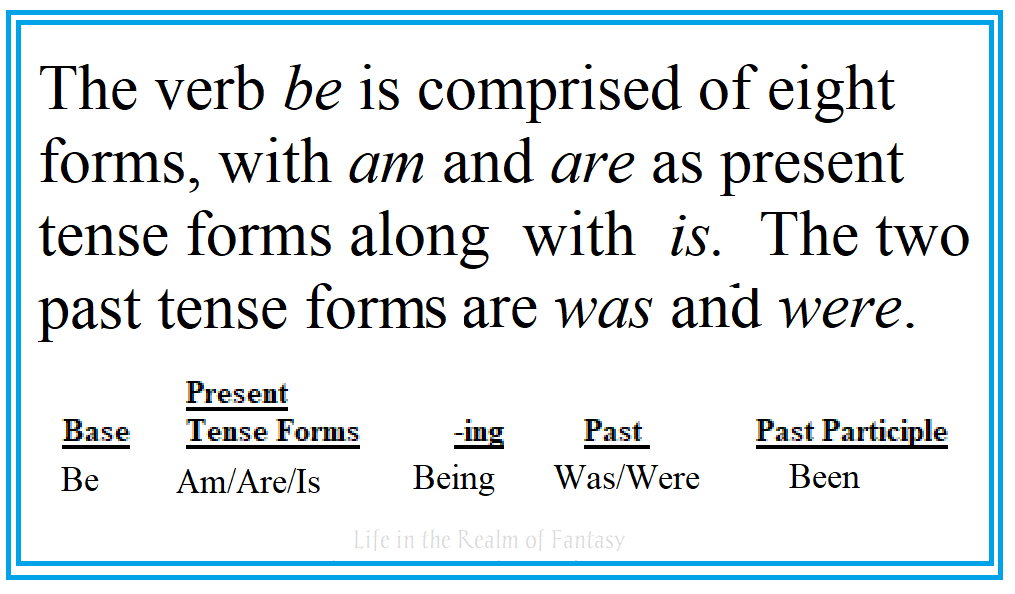
For authors, the essential component we must not go cheaply on is grammar. The way we habitually structure our prose (our voice) adds to the feeling of depth. We must have a fundamental understanding of basic mechanical skills as they are the rules of the road and prevent confusion:

  • Grammar
  • Punctuation

If you have a limited knowledge of grammar, your first obligation is to resolve that. The internet has many easy-to-follow self-education websites to help you gain a good understanding of basic grammar in whatever your chosen language is. One site that I like is https://grammarist.com/.

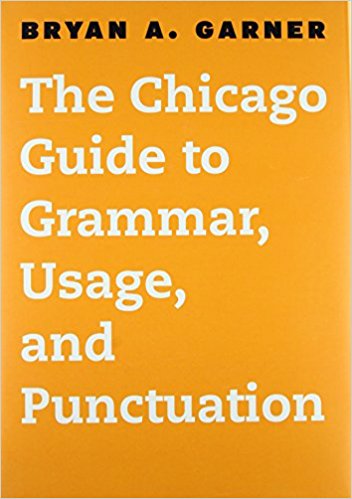
chicago guide to grammarIf you are writing in US English, I can highly recommend getting a copy of the Chicago Guide to Punctuation and Grammar. If you are writing in UK English, purchase the Oxford A – Z of Grammar and Punctuation.

Uneducated authors write erratic prose with inconsistent capitalizations, random commas, and use too many exclamation points. They show no understanding of how to punctuate dialogue, which leads to confusion and garbled prose.

Authors must know the rules of grammar to break them with style and consistency. How you break the rules is your unique voice.

Readers expect words to flow in a certain way. If you choose to break a grammatical rule, you absolutely must be consistent about it.

Ernest Hemingway, James Joyce, Alexander Chee, and George Saunders all have unique voices in their writing. All of them break the rules in one way or another, but they are deliberate and consistent. Each of these writers has written highly acclaimed work. Their prose is magnificent, and you never mistake their work for anyone else’s.

Alexander Chee employs run-on sentences and dispenses with quotation marks (which I find excruciating to read).

George Saunders writes as if he is speaking to you and is sometimes choppy in his delivery. But his work is wonderful to read.

We need a broad vocabulary, but we also need to be careful not to get too fancy with it. To be successful, we need an understanding of the tropes common to our chosen genre. We must employ those tropes to satisfy the general expectations of our readers. How we do that is our twist, the flavor that is our unique “secret sauce.”

We don’t consciously think about this, but organizational skills are critical because we want the story to flow easily from scene to scene. This is why successful authors are project managers, even if they don’t realize it.

The first aspect of this is to Identify your Project Goals. Your story is your invention. You want to sell that invention, so your effort and the materials you create it out of are what determine the quality of the finished product.

Some inventions are in development for years before they get to market. Others are complete and ready to market in a relatively short time. Regardless of your timeline, this is where project management skills really come into play.

I use a phased (or staged) approach. This method breaks down and manages the work through a series of distinct steps to be completed.

  1. Concept: The Brilliant Idea. Make a note of that idea, so you don’t forget it.
  2. The Planning Phase: creating the outline. Some people don’t need this step, but I do.
  3. The Construction Phase—writing the first draft from beginning to the end through multiple drafts.
  4. Monitoring and Controlling—This is where you build quality into your product.
    1. BGoogle Sheets Storyboard Template Screenshot 2017-10-15 07.13.09 cjjaspBCreating a style sheet as you go. See my post on style sheets here: Self-editing: Ensuring Consistency.
    2. Finding beta readers and heeding their concerns in the rewrites.
    3. Taking the manuscript through as many drafts as you must in order to have the novel you envisioned.
    4. Employing a good line editor to ensure consistency in the quality of your product.
    5. Finding reliable proofreaders. (Your writing group is an invaluable resource.)
  5. Completion or Closing—
    1. Employing a cover designer if you are going indie.
    2. Finding an agent if you are taking the traditional route.
    3. Employing a professional formatter for the print version if you are going indie.
    4. Courting a publisher if you are taking the traditional route.

After that comes marketing, whether you are going indie or traditional. Both paths require serious effort on your part. But as I said earlier, I have no professional skills in the area of marketing. I recommend you seek professional help but be wary—the waters are full of starving sharks waiting to devour you and your savings.

ok to write garbage quote c j cherryhWrite the basic story. Take your characters all the way from the beginning through the middle and see that they make it to the end. If you have completed the story and have it written from beginning to end, you can concentrate on the next level of the construction phase: adding depth.

We will work on some of the sublayers of depth in our next series on the craft of writing. First up, we will examine why your story isn’t finished just because it now has an ending.

10 Comments

Filed under writing

#FineArtFriday: The Fairy Mab, Henry Fuseli ca 1815-20

The Fairy Mab Johann_Heinrich_Füssli_038The Fairy Mab

Artist: Henry Fuseli  (1741–1825)

Date: from 1815 until 1820

Medium: oil on canvas

Dimensions: Height: 70 cm (27.5 in); Width: 90 cm (35.4 in)

Collection: Folger Shakespeare Library 

Current location: Washington, D.C.


About the artist, via Wikipedia:

[1] Describing Fuseli’s style, the 1911 edition of the Encyclopædia Britannica said that:

His figures are full of life and earnestness, and seem to have an object in view which they follow with intensity. Like Rubens he excelled in the art of setting his figures in motion. Though the lofty and terrible was his proper sphere, Fuseli had a fine perception of the ludicrous. The grotesque humour of his fairy scenes, especially those taken from A Midsummer-Night’s Dream, is in its way not less remarkable than the poetic power of his more ambitious works.

Though not noted as a colourist, Fuseli was described as a master of light and shadow. Rather than setting out his palette methodically in the manner of most painters, he merely distributed the colours across it randomly. He often used his pigments in the form of a dry powder, which he hastily combined on the end of his brush with oil, or turpentine, or gold size, regardless of the quantity, and depending on accident for the general effect. This recklessness may perhaps be explained by the fact that he did not paint in oil until the age of 25. [1]


Credits and Attributions:

The Fairy Mab by Henry Fuseli, Public domain, via Wikimedia Commons. Wikimedia Commons contributors, “File:Johann Heinrich Füssli 038.jpg,” Wikimedia Commons, the free media repository, https://commons.wikimedia.org/w/index.php?title=File:Johann_Heinrich_F%C3%BCssli_038.jpg&oldid=386917365  (accessed May 15, 2021).

[1] Wikipedia contributors, “Henry Fuseli,” Wikipedia, The Free Encyclopedia, https://en.wikipedia.org/w/index.php?title=Henry_Fuseli&oldid=1022033114 (accessed May 15, 2021).

Comments Off on #FineArtFriday: The Fairy Mab, Henry Fuseli ca 1815-20

Filed under #FineArtFriday

The Vegan on the Road to Vegas #amwriting

I am out of town and on a mini vacation this week. We are fully vaccinated and in Las Vegas for a grandchild’s wedding.

MyWritingLife2021My husband is recovering from a total hip replacement, so traveling out of town for an extended stay involves a lot of logistics. Also, I am vegan, which has an impact on things. I can eat in restaurants, but once I am away from my part of the world, the menu is often limited to a garden salad.

I have several militant vegan friends who can be… um… evangelical… so I go out of my way to NOT be difficult. If you are determined to cook for me, don’t get into a dither. Offer me a salad with oil and vinegar, bake me a potato, and give me a little guacamole or salsa to dress it up. Open a can of beans – I will be happy with just about anything you fix. Let’s be real! Anything with avocado is awesome!

I love a veggie plate with hummus. Many restaurants offer one as an appetizer plate, and I will make that my meal. I guarantee, I won’t feel cheated.

It may seem odd to many people who know that I once raised sheep and chickens, but that experience is partly why I am vegan. So, being vegan means that I eat nothing from an animal. No cheese, no meat, no eggs.

So, what do I eat? I live in the Pacific Northwest. The Vancouver B.C./Seattle/Portland area has a large vegetarian community, so most restaurants offer options that can be made vegan. The stores in my area have large sections of plant-based proteins, cheeses, and plant-based butters. Many delicious kinds of cheese are available from Miyoko’s Creamery. They can be found in most grocery stores here in the Pacific Northwest, as can Beyond Meat and Field Roast products. We also can often find Gardein products, a Canadian plant-based company.

These products taste good and are satisfying to the carnivores I am feeding, and are easy to prepare in many diverse ways.

Vegetables are amazingly versatile and quick to prepare. If you have an eye for art and color, you can impress even your five-year-old. Some of the most beautiful presentations you will see at fine restaurants are created from artistically plated fruits and vegetables.

book-plants-only-coverProtein is essential, and I have many delicious options to make that don’t involve processed foods. My favorite “impress-the-son-in-law” cookbook is this gem by Gaz Oakley: Plants-only Kitchen.

I also have a book by Miyoko Schinner, the Homemade Vegan Pantry, a book that has been the cornerstone of my personal style of cuisine. I’ve adapted many of my old recipes to my vegan lifestyle.

Tempeh is made from soybeans but differs from tofu (which I love for curries). It is a whole soybean product with different nutritional characteristics and textural qualities.

Tempeh has ‘tooth.’ The way you marinate the tofu or tempeh before you cook it is how you make it tasty. Plain tofu or tempeh is bland, waiting for you to liven it up. That blandness is what gives them a bad reputation among new vegetarians who don’t understand how to prepare them.

However, they take on the flavors of marinades well, so they are wonderful products to cook with.

Chickpeas (garbanzos) are an extremely versatile bean, with as many uses in the vegan kitchen as the soybean.

Flavor for gravies, pilafs, and soups comes from vegetable broth. There are two ways to get good rich flavor using vegetable broth. However, my go-to store-bought product for use at home is the reliable kitchen staple, Better Than Bouillion Vegetable Base. Otherwise, I make my own veggie broth base, using the recipe I found here: Homemade Vegetable Soup Base. It’s not complicated and is one of those shortcuts to great flavor that I regularly employ.

But you don’t have to cook fancy things for me. I’m happy with rice and vegetables sautéed in olive oil (or any other organic vegetable oil) rather than in butter, which comes from cows.

The_Homemade_Vegan_PantryThe most surprising thing about being vegan is how little it costs to eat well once you have your pantry basics. Going sans meat is the lazy person’s dream diet. It’s amazing how quickly you can get a meal on the table, and whether you are making beans or soup, the crockpot is your best friend. I often make my own bread from several different recipes, a tasty treat that takes less than five minutes to put together using my bread machine.

I would far rather spend my time writing than cooking. However, the meals in our household are important. The table is where we discuss the day and share our thoughts, hopes, and plans. How the food looks when the family sits down is as important as any other part of the meal. Fruit and veggies make decorating each plate easy.

But today, I’m partying in Vegas. Someone else is doing the cooking and cleaning, and I’m enjoying a spa day and a relaxing change from the routine. Our granddaughter’s wedding is a big day for us all, and we’re going to make the most of it.

4 Comments

Filed under writing

Cyberpunk and Sturm und Drang #amwriting

We all want to create intense moods and evoke a strong atmosphere in our work. This can range from subtle hints to full-on Sturm und Drang, but the intention is to captivate the reader either way.

What is Sturm und Drang? The English translation is literally Storm and Stress.

sturmUndDrang05152021LIRFSturm und Drang, as a literary form, evolved during the time of the American Revolutionary War. This was an era of global unrest and great hardship, especially in Europe. The main feature of Sturm und Drang is the expression of high emotions, strong reactions to events, and rebellion against rationalism. It is characterized by intense individualism and complex reactions.

Classical literature in this style began in 1772 with “Prometheus,” a poem by Johann Wolfgang von Goethe. The character of the mythic Prometheus addresses God (as Zeus) in hatred and defiance. Misotheism is the hatred of God or the Gods, stemming from a moment in a person’s life where one feels the gods have abused and abandoned him.

One can’t hate what one doesn’t believe in, so misotheism requires a firm belief in a God or Gods.

Wikipedia tells usPrometheus is the creative and rebellious spirit which, rejected by God, angrily defies him and asserts itself; Ganymede is the boyish self which is adored and seduced by God. One is the lone defiant, the other the yielding acolyte. As the humanist poet, Goethe presents both identities as aspects or forms of the human condition. [1]

Literature and music written in the style of Sturm und Drang were meant to shock the audience, inundating them with extremes of emotion.

A parallel movement occurred in the visual arts. Artists began producing paintings of storms and shipwrecks, showing the terror and irrational destruction wrought by nature. These pre-romantic works were fashionable in Germany from the 1760s on through the 1780s.

Alongside these frightening landscapes, disturbing depictions of nightmarish visions were gaining an audience in Europe. Goethe and many of his contemporaries admired and purchased paintings by artists like Henry Fuseli, horror-scapes intended to frighten the viewer.

the machine stops em forsterSo, this brings me to the subgenre of cyberpunk. One of the earliest science fiction short stories to feature a dystopian society was The Machine Stops, written by E. M. Forster. It was published in The Oxford and Cambridge Review (November 1909).

In cyberpunk, we see many of the features of classic Sturm und Drang but set in a dystopian society. The deities are technology and industry. Corporate uber-giants are the gods whose knowledge mere mortals desire and whom they seek to replace.

And, just like all demi-gods, when an exceptionally strong and clever protagonist does manage that feat, it’s business as usual. They are no better than the gods whose thrones they have usurped.

Wikipedia defines cyberpunk as a subgenre of science fiction in a future setting that tends to focus on the society of the proverbial “high tech low life  featuring advanced technological and scientific achievements, such as information technology and cybernetics, juxtaposed with a degree of breakdown or radical change in the social order. [2]

Cyberpunk began as a niche rebellion by authors like Phillip K. Dick. It is now considered mainstream speculative fiction and has a large audience.

Works in this genre are always set in a post-industrial dystopian world with deep divisions in the strata of society. Some have a specified caste system of sorts, but most people live in extreme poverty in all cyberpunk tales. There will be a small middle class, and at the top, a few of the strongest, most powerful people hold incredible wealth. These societies have fallen into extreme chaos, which is the driver of the story.

The MacGyver Effect is utilized to the fullest in these stories: protagonists acquire and use technology in ways never anticipated by the original inventors. A central trope of this genre is “the street finds its own uses for things.”  

In cyberpunk, the atmosphere is dark, heavily film noir. It is fast-paced, atmospheric, and alcohol is heavily abused. It is often sexist, although strong feminine cyberpunk is emerging. The prose usually has a pared-down style reminiscent of 1950s detective fiction. Street drugs are cheap and are the relaxation of choice in many cyberpunk novels.

Macbeth_consulting_the_Vision_of_the_Armed_HeadMany authors whose works appeared in the early days of cyberpunk were indies hoping to go mainstream. Their short stories appeared in popular sci-fi magazines because visionary editors risked their jobs and reputations by accepting and publishing work that their readers could have rejected.

The success of those short works piqued the interest of agents and larger publishers, enabling them to sell their longer work.

We indie authors are fortunate. We have a lot of latitude in what we choose to write. We can write and publish edgy work that would be turned away by traditional publishers, who would pass on it because it might not be a commercial success.

Authors who engage in artistic rebellion will often find great success — but usually, this comes after they are dead.


Credits and Attributions:

[1] Wikipedia contributors, “Prometheus (Goethe),” Wikipedia, The Free Encyclopedia, https://en.wikipedia.org/w/index.php?title=Prometheus_(Goethe)&oldid=994790116 (accessed May 15, 2021).

[2] Wikipedia contributors, “Cyberpunk,” Wikipedia, The Free Encyclopedia, https://en.wikipedia.org/w/index.php?title=Cyberpunk&oldid=1020463998 (accessed May 15, 2021).

Images:

Wikimedia Commons contributors, “File:Macbeth consulting the Vision of the Armed Head.jpg,” Wikimedia Commons, the free media repository, https://commons.wikimedia.org/w/index.php?title=File:Macbeth_consulting_the_Vision_of_the_Armed_Head.jpg&oldid=526733277 (accessed May 15, 2021).

The Machine Stops by E. M. Forster, published in the Oxford and Cambridge Review by Archibald Constable, 1909. Amazon LLC cover, published 05-15-2021, fair use.

6 Comments

Filed under writing

#FineArtFriday: The Dutch Proverbs by Pieter Bruegel the Elder, revisited

Pieter_Brueghel_the_Elder_-_The_Dutch_Proverbs_-_Google_Art_ProjectOne of the best allegorical paintings of all time is The Netherlandish Proverbs (also known as The Dutch Proverbs) by Pieter Brueghel the Elder, which was painted in 1559. A master at humor, allegory, and pointing out the follies of humanity, Brueghel the Elder is one of my favorite artists.

Artist: Pieter Bruegel the Elder
Year: 1559
Medium: Oil-on-panel
Dimensions: 117 cm × 163 cm (46 in × 64 in)
Location: Gemäldegalerie, Berlin

Quote from Wikipedia:

Critics have praised the composition for its ordered portrayal and integrated scene. There are approximately 112 identifiable proverbs and idioms in the scene, although Bruegel may have included others which cannot be determined because of the language change. Some of those incorporated in the painting are still in popular use, for instance “Swimming against the tide”, “Banging one’s head against a brick wall” and “Armed to the teeth”. Many more have faded from use, which makes analysis of the painting harder. “Having one’s roof tiled with tarts”, for example, which meant to have an abundance of everything and was an image Bruegel would later feature in his painting of the idyllic Land of Cockaigne (1567).

The Blue Cloak, the piece’s original title, features in the centre of the piece and is being placed on a man by his wife, indicating that she is cuckolding him. Other proverbs indicate human foolishness. A man fills in a pond after his calf has died. Just above the central figure of the blue-cloaked man another man carries daylight in a basket. Some of the figures seem to represent more than one figure of speech (whether this was Bruegel’s intention or not is unknown), such as the man shearing a sheep in the centre bottom left of the picture. He is sitting next to a man shearing a pig, so represents the expression “One shears sheep and one shears pigs”, meaning that one has the advantage over the other, but may also represent the advice “Shear them but don’t skin them”, meaning make the most of available assets.

You can find all of the wonderful proverbs on the painting’s page on Wikipedia, along with the thumbnail that depicts the proverb.

My favorite proverbs in this wonderful allegory?

Horse droppings are not figs. It meant we should not be fooled by appearances.

He who eats fire, craps sparks. It meant we shouldn’t be surprised at the outcome if we attempt a dangerous venture.

Now THAT is wisdom!


Credits and Attributions:

The Netherlandish Proverbs (Also known as The Dutch Proverbs) by Pieter Brueghel the Elder 1559 [Public domain], via Wikimedia Commons.

Wikipedia contributors, “Netherlandish Proverbs,” Wikipedia, The Free Encyclopedia, https://en.wikipedia.org/w/index.php?title=Netherlandish_Proverbs&oldid=829168138  (accessed May 3, 2018).

Comments Off on #FineArtFriday: The Dutch Proverbs by Pieter Bruegel the Elder, revisited

Filed under #FineArtFriday, writing

Crafting contrasts: @TadWilliams and Tolkien – how contrasts drive the story #amwriting

One of my favorite quotes for writers comes from the Buddha. “There has to be evil so that good can prove its purity above it.”

mood-emotions-1-LIRF09152020J.R.R. Tolkien understood this quite clearly. The Lord of the Rings trilogy is a significant reading commitment, one fewer and fewer readers are willing to undertake. It was written in a highly literate style that everyone understood a century ago.

Lengthwise, the saga isn’t as long as people make it out to be when compared to Robert Jordan‘s or Tad Williams’ epic (and highly literate) fantasy series. The LOTR series totals only 455,175 words over the course of all three books.

Tolkien shows the peace and prosperity that Frodo enjoys and then forces him down a road not of his choosing. He takes the hobbit through personal changes, forces him to question everything.

Frodo’s story is about good and evil, war and peace, and the hardships endured in the effort to destroy the One Ring and negate the power of Sauron. Why would ordinary middle-class people, comfortable in their rut, go to so much trouble if Sauron’s evil posed no threat to their peace and prosperity?

300px-The_Dragonbone_ChairTad Williams’s masterpiece, the Dragon Bone Chair, is the first book in the fantasy series Memory, Sorrow, and Thorn. These are the first three books in the epic Osten Ard series.  I read this book when it first went to paperback and had to re-read it again immediately upon finishing it. This book (and indeed the whole series) had a profound impact on me, and also my children when they became older teens.

In both the Lord of the Rings trilogy and Tad Williams’ Osten Ard books, we have two of the most enduring works of modern fantasy fiction. Both feature an epic central quest and smaller side quests, all of which must be completed for the protagonists to arrive at the final resolution.

Through it all, we have joy and contentment sharply contrasted with deprivation and loss, drawing us in and inspiring the deepest emotions.

This use of contrast is fundamental to the fables and sagas humans have been telling since before discovering fire. Contrast is why Tolkien’s saga set in Middle Earth is the foundation upon which modern epic fantasy is built.

It’s also why Tad Williams’ work in The Dragonbone Chair, first published in 1988, changed the way people saw the genre of epic fantasy, turning it into hard fantasy. His work has inspired a generation of fantasy writers: George R.R. Martin and Patrick Rothfuss, to name just two of the more famous.

In all his works, whether it’s the paranormal Bobby Dollar series or his epic Osten Ard series, Tad Williams’ novels come to life because he juxtaposes emotions in his characters and builds contrasts into every setting in his worlds. Ease and beauty are juxtaposed against harshness and deprivation.

f scott fitzgerald The Great GatsbyNo matter where we live, San Francisco, Seattle, or Middle Earth, these fundamental human experiences are personal to every reader. We have each experienced pain and loss, joy and love.

When the author successfully uses the contrasts of our human experience to tell their story, the reader empathizes with the characters. They live the story as if they were the protagonist.

So, what do I mean by contrasts in world-building? It can be shown in subtle ways.

Contrasting plenty against poverty in your world-building shows the backstory without requiring an info dump.

First comes the sunshine, and then the storm, and then the aftermath. Feast is followed by famine, thirst followed by a flood. Love and loss, safety and danger, loyalty and betrayal—contrast gives the story texture, and pacing turns a wall of words into something worth reading.

In our real world, war, famine, and flood are followed by times of relative peace and plenty. The emotions and experiences of people living through all those times are the real stories.

This is not just played out in fantasy novels; it’s our human history and our future.

I say this regularly, but I must repeat it: education about the craft of writing has many facets. We learn the architecture of story by reading novels and short stories written by the masters, both famous and infamous.

We shouldn’t limit our reading to the old favorites that started us on this writing path. You may not love the novels on the NY Times literary fiction bestseller list but it’s a good idea to read one or two of them every now and then as a means of educating yourself.

What you don’t like is as important as what you enjoy. Why would a book that you dislike be so successful? No matter how much money a publisher throws at them, some books are stinkers.

It’s alright to admit you disliked a book that Oprah or Reese Witherspoon recommends.

I despised House of Sand and Fog from page one but read it to the end. It begins in a bad place, and continues downhill, an unrelentingly depressing novel that left me with a bad taste in my mouth. Ugliness followed by more ugliness doesn’t make the ugliness beautiful.

clouds ms clipartPlot, in my opinion, is driven by the highs and lows. You don’t need to pay for books you won’t like. Go to the library or to the secondhand bookstore and see what they have from the NYT bestseller list that you would be willing to examine.

Give that book a postmortem. Why does—or doesn’t—it resonate with you?

  • Did the book have a distinct plot arc?
  • Did it have a strong opening that hooked you?
  • Was there originality in the way the characters and situations were presented?
  • Did you like the protagonist and other main characters? Why or why not?
  • Were you able to suspend your disbelief?
  • Did the narrative contain enough contrasts to keep things interesting?
  • By the end of the book, did the characters grow and change within their personal arc? How were they changed?
  • What sort of transitions did the author employ that made you want to turn the page? How can you use that kind of transition in your own work?
  • Did you get a satisfying ending? If not, how could it have been made better?

Reading and dissecting the works of successful authors is a necessary component of any education in the craft of writing.

Answering these questions will make you think about your own work. You will put more thought into how you deploy the contrasting events that change the lives of your characters.

7 Comments

Filed under writing

Crafting Action and Violence #amwriting

I am well acquainted with how the human body moves when fighting, either with weapons or bare-handed. I know this personally as I was the goalie on a women’s hockey team in my late teens. Also, at the age of nineteen, I married the bass player in a heavy metal band. We were divorced several years later, and while we remain good friends, some aspects of those years were difficult to live through.

crafting violenceThe human body moves in many ways when fighting, some of which are effective, and others not so much. In the 1990s, I studied Shao Chi Chuan, a gentler form of martial arts. I write about people who fight, and I draw upon my personal experience.

But let’s talk about literary violence. Random gore and sexual violence have no place in the well-crafted novel. The keyword here is random.

Blood and sex are sometimes a part of the more profoundly moving stories I have read. Those scenes showed meticulous plotting, and the incidents were watershed moments in the protagonists’ lives.

At times, those passages are difficult on a personal level to read. However, if they are moments that change everything, they do have a purpose. Events that change the protagonist’s life for good or ill must be crafted, and transitions must make them fit seamlessly into the narrative.

I rarely read horror, except that which is written by Dean Lappi. The violence is all the more frightening in his books because it is subtly foreshadowed and unavoidable and occurs at a surprising moment. All the things that make you feel squeamish are not random, not inserted for shock value, or just to liven things up. The characters are multidimensional, and the world they live in can be terrifying.

If you are writing horror, reread the works that inspired you. Follow their lead and plot your novel well.

I want to make this extremely clear: If the violent events don’t somehow move the story forward, change the protagonist profoundly, or affect their view of the world, you have wasted the reader’s time.

Whenever you must write scenes that involve violence, ask yourself five questions:

  1. Is this scene necessary, or am I just trying to liven up a stagnant story arc?
  2. What does this scene show about the world my protagonist lives in?
  3. Will this event fundamentally change my protagonist and affect how they go forward?
  4. What does this event accomplish that advances the plot toward its conclusion?
  5. Why was this event unavoidable?
Excalibur London_Film_Museum_ via Wikipedia

Excalibur London_Film_Museum_ via Wikipedia

Suppose the choices the protagonist has made prior to this point do not make this scene unavoidable. In that case, the violence is gratuitous and doesn’t belong there.

Some books open in the middle of the action, and I have done this on occasion as a prologue to show a backstory event. However, this kind of opening can confuse the reader, who is at the disadvantage of not knowing what is going on.

When you open a novel with the characters already thrust into the middle of an action scene, it should introduce the characters and show the root of the crisis. The key is to make it clear that it is a backstory event, and you should make it character-driven.

Whether it is shown in the prologue or the opening chapter, the first event, the inciting incident, is the one that changes everything and launches the story.

I love stories about good people solving terrible problems. The first incident has a domino effect. More things occur that push the protagonist out of his comfortable life and into danger.

Their peril might be physical or emotional. While I have experienced violent situations, I’ve also faced many things that shook my world but didn’t threaten my physical safety.

Fear of loss, fear of financial disaster, fear of losing a loved one—terror is subjective and deeply personal

Either way, the threat and looming disaster must be shown, and the solution should be held just out of reach. If it was resolved too easily, why? What sort of trap was laid, and why did they take the bait?

As in real life, emotions run high. The situation is sometimes chaotic, but the protagonists believe they can resolve the problem if they can just achieve “the one thing.”

Despite their growing doubts, the characters continue to be put to the test, and the subplots kick into gear.

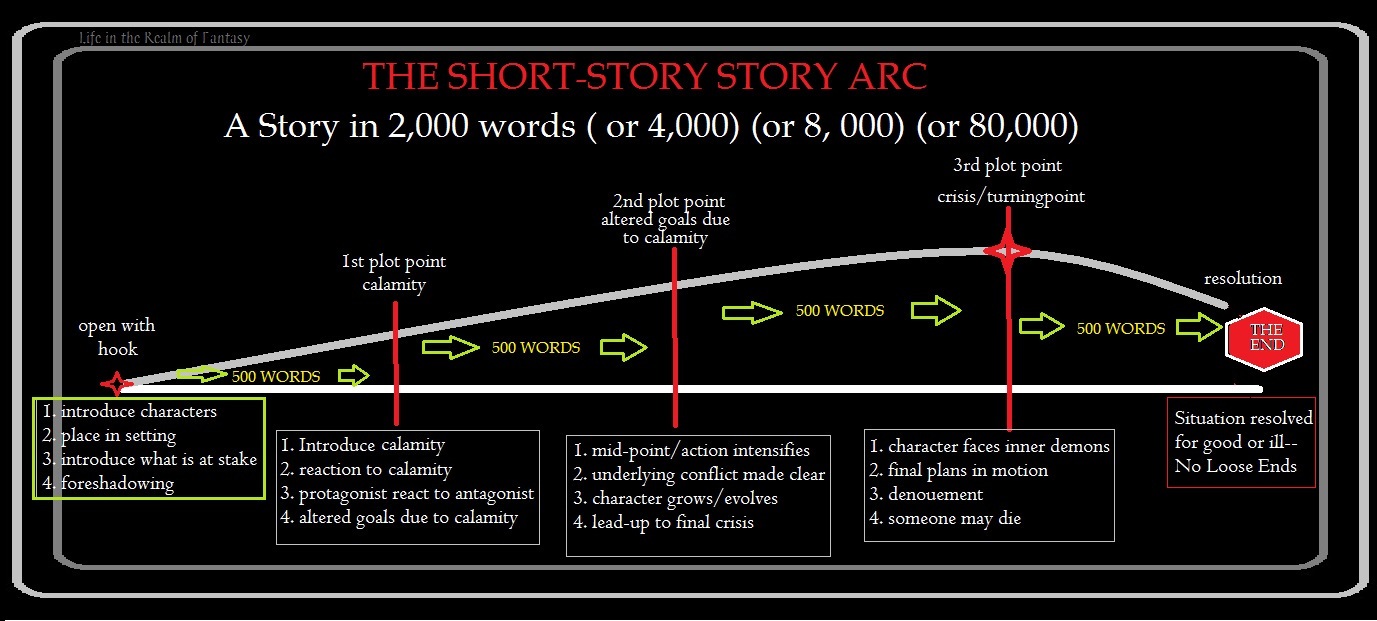
Scenes form the overall story arc structure, but please, don’t waste the reader’s time with pointless banter. Each conversation or event must show something new and propel the plot forward, moving the protagonist and antagonist further along the story arc to the final showdown.

In the early part of the story, each scene should illuminate the motives of the characters. Like a flower gradually opening, the reader gains information at the same time as the protagonist does. The reader may see clues from the antagonists’ side, which the characters don’t know will affect the plot in the future.

Those clues are foreshadowing, showing why the forthcoming action is unavoidable. Through the first half of the book, subtle foreshadowing is essential, as it piques the reader’s interest and makes them want to know how the book will end.

The midpoint in the novel is a place where a watershed moment should occur. It launches the third act and makes the characters’ struggle more difficult.

At this point, the protagonist and allies are becoming aware that they may not achieve their objectives after all. Bad things have happened, and the protagonists must get creative and work hard to acquire or accomplish their desired goals.

Through experiencing these (sometimes) violent events, the protagonist suffers a crisis of faith. They fear they may not have what it takes, and their quest won’t be fulfilled.

Just when the characters have recovered from the midpoint catastrophe, another disaster occurs, the event that launches the final act. This event is where someone who was previously safe may die.

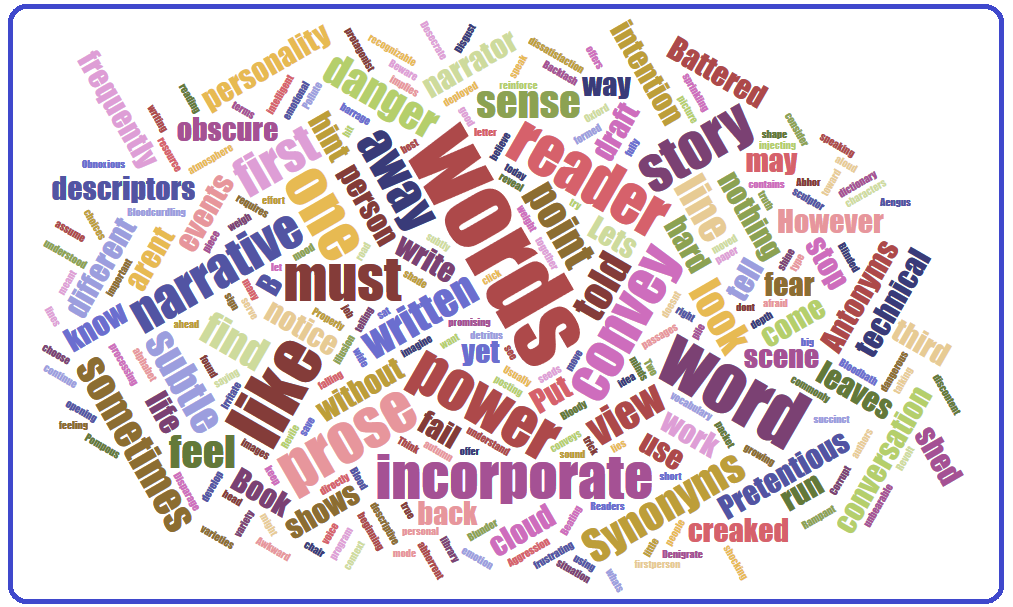
WordItOut-word-cloud-4074543Scenes that involve violence are difficult to write well unless you know how the action will affect your protagonist. Also, you must remember to give the protagonist and the reader a small break between incidents for regrouping.

This requires planning on the part of the author. We consider how each battle or catastrophe will be unavoidable. We must also ask ourselves how surviving it will change the characters for good or ill.

Incidents that raise the very real specter of possible failure elevate the emotional stakes and keep the reader turning the page.

Our task is to design the action scene so that it fits naturally into a narrative. This is a critical skill we must develop if we want to move our readers emotionally.

In the next post, we’ll discuss contrasts, and how the transition from conflict to quiet and back again can make or break your narrative.

6 Comments

Filed under writing