Tag Archives: Art

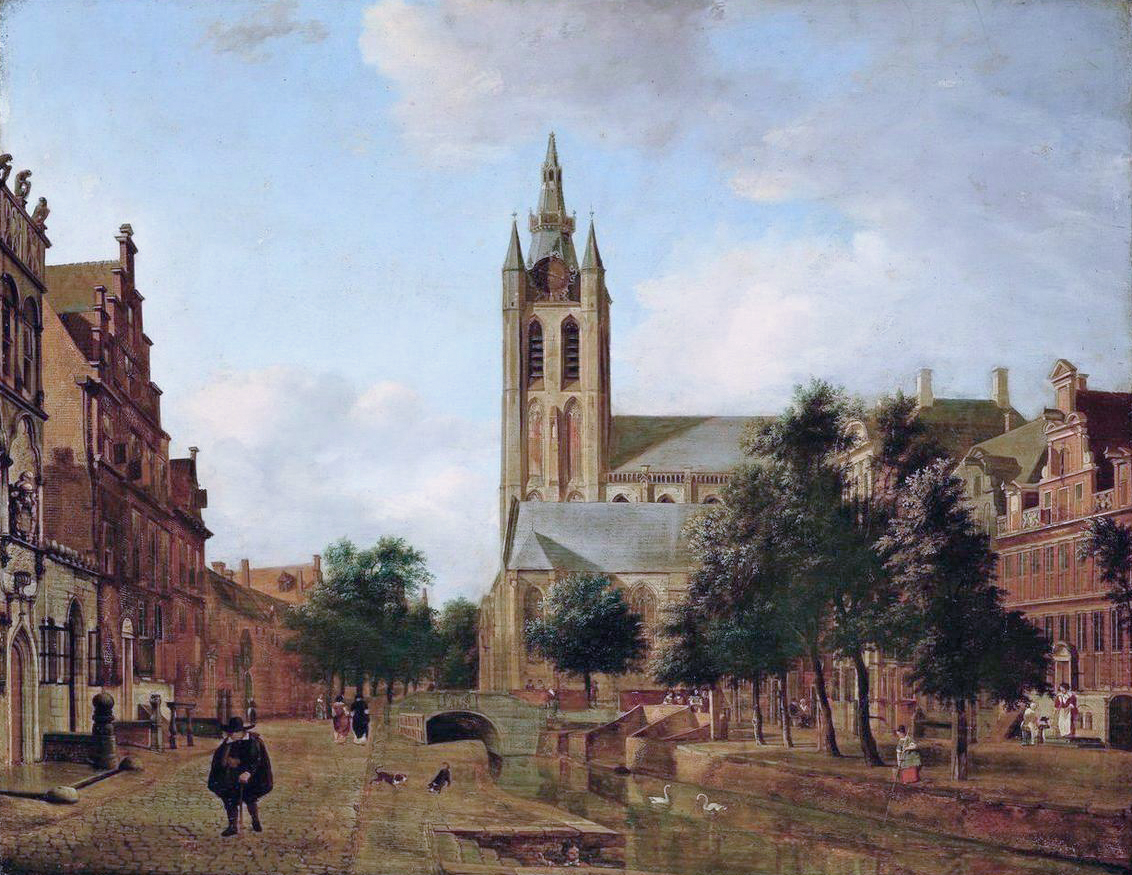
#FineArtFriday:The Oude Kerk on the Oude Delft in Delft by Jan van der Heyden 1675

Artist: Jan van der Heyden (1637–1712)

Title: The Oude Kerk on the Oude Delft in Delft

Genre: landscape painting

Date: 1675

Medium: oil on panel

Dimensions: height: 45 cm (17.7 in); width: 57 cm (22.4 in)

Collection: National Museum of Art, Architecture and Design

What I love about this painting:

This scene shows us a fine day in the city of Delft, on the Trekvliet, a shipping canal that has existed since the 13th century. This canal flows past the foundations of the Oude Kerk. Van der Heyden has painted the tower as leaning, which is an accurate depiction. It currently leans two meters from the vertical.

We see the clean and prosperous street, with special attention paid to the architecture. The staffage (people) in this painting were most likely painted by Adriaen van de Velde. He collaborated with Adriaen van de Velde more frequently than Johannes Lingelbach or Eglon van der Neer, although they did sometimes work with him.

Fluffy white clouds sail across the scene. The air is not too warm or too cool. Instead, it is just right. The sky is that lovely shade of blue, the color that says “summer is near and all will be well.”

As a writer of fantasy, I often go to Wikimedia Commons for worldbuilding ideas, depending on the kind of era in which a story is set. If your work is set in a post-renaissance era, this is the kind of street and architecture that will be featured in the richest town. The buildings will be good to look at, made of stone and wood. The street will be paved, and if there is a canal, there will be places for barges and small watercraft to tie up.

About the artist, via Wikipedia:

Jan van der Heyden (5 March 1637, Gorinchem – 28 March 1712, Amsterdam) was a Dutch Baroque-era painterglass painterdraughtsman and printmaker. Van der Heyden was one of the first Dutch painters to specialize in townscapes and became one of the leading architectural painters of the Dutch Golden Age. He painted a number of still lifes in the beginning and at the end of his career. 

Jan van der Heyden was also an engineer and inventor who made significant contributions to contemporary firefighting technology. Together with his brother Nicolaes, who was a hydraulic engineer, he invented an improvement of the fire hose in 1672.  He modified the manual fire engine, reorganized the volunteer fire brigade (1685) and wrote and illustrated the first firefighting manual (Brandspuiten-boek). A comprehensive street lighting scheme for Amsterdam, designed and implemented by van der Heyden, remained in operation from 1669 until 1840 and was adopted as a model by many other towns and abroad.

Painting was not the sole occupation and interest of van der Heyden. In fact he never joined Amsterdam’s painters’ guild. Even while his work was in great demand, he did not rely on his art to make a living. His principal source of income was, in fact, not painting. Rather he was employed as engineer, inventor and municipal official. He was clearly greatly preoccupied with the problem of how to fight fires effectively, and, with his brother Nicolaes, devoted much time between 1668 and 1671 to inventing a new, highly successful water pumping mechanism.

He devised streetlamps and the first street-lighting system for Amsterdam and was in 1669 appointed director of street lighting.

In 1673 the two brothers received official appointments to manage the city’s fire-fighting equipment and organisation. The two official appointments were sufficient to ensure the prosperity of the artist

Jan van der Heyden moved in 1680 to the Koestraat near the St. Anthonismarkt. Here he built a new family home and a factory for producing fire equipment. In collaboration with his eldest son Jan, he published in 1690 an illustrated book on firefighting, entitled ‘Beschrijving der nieuwlijks uitgevonden en geoctrojeerde Slangbrandspuiten’ (‘Description of the recently invented and patented hose fire engines’).

Jan van der Heyden died a wealthy man in 1712. His wife survived her husband by only a month. The inventory of the estate made soon after her death include more than 70 of his own paintings. [1]


Credits and Attributions:

IMAGE: Wikimedia Commons contributors, “File:Jan van der Heyden – The Oude Kerk on the Oude Delft in Delft.jpg,” Wikimedia Commons, https://commons.wikimedia.org/w/index.php?title=File:Jan_van_der_Heyden_-_The_Oude_Kerk_on_the_Oude_Delft_in_Delft.jpg&oldid=1035884888 (accessed June 12, 2025).

[1] Wikipedia contributors, “Jan van der Heyden,” Wikipedia, The Free Encyclopedia, https://en.wikipedia.org/w/index.php?title=Jan_van_der_Heyden&oldid=1293390184 (accessed June 12, 2025).
2 Comments

Filed under #FineArtFriday

#FineArtFriday: The Milkmaid by Johannes Vermeer (revisited)

What I love about this painting:

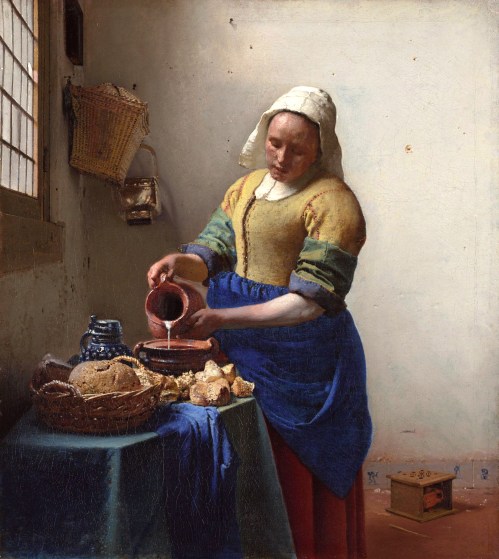
It seems like a good time to revisit Vermeer’s famous painting, known as “the Milkmaid.” This is lovely look into the past, a window into daily life of 1657 – 1658. I love the realism, the way the maid carefully pours the milk into the bread.

All of Vermeer’s known works illustrate how the quiet moments in life can be the most profound.

Wikipedia has many things to say about this painting.


About Johannes Vermeer, the Master of Light (from Wikipedia)

Johannes Vermeer (October 1632 – December 1675) was a Dutch painter who specialized in domestic interior scenes of middle-class life. He was a moderately successful provincial genre painter in his lifetime but evidently was not wealthy, leaving his wife and children in debt at his death, perhaps because he produced relatively few paintings.

Vermeer worked slowly and with great care, and frequently used very expensive pigments. He is particularly renowned for his masterly treatment and use of light in his work.

Vermeer painted mostly domestic interior scenes. “Almost all his paintings are apparently set in two smallish rooms in his house in Delft; they show the same furniture and decorations in various arrangements and they often portray the same people, mostly women.”

He was recognized during his lifetime in Delft and The Hague, but his modest celebrity gave way to obscurity after his death. He was barely mentioned in Arnold Houbraken‘s major source book on 17th-century Dutch painting (Grand Theatre of Dutch Painters and Women Artists), and was thus omitted from subsequent surveys of Dutch art for nearly two centuries. In the 19th century, Vermeer was rediscovered by Gustav Friedrich Waagen and Théophile Thoré-Bürger, who published an essay attributing 66 pictures to him, although only 34 paintings are universally attributed to him today. Since that time, Vermeer’s reputation has grown, and he is now acknowledged as one of the greatest painters of the Dutch Golden Age. [2]

About the featured painting, The Milkmaid, also from Wikipedia:

Despite its traditional title, the picture clearly shows a kitchen or housemaid, a low-ranking indoor servant, rather than a milkmaid who actually milks the cow, in a plain room carefully pouring milk into a squat earthenware container (now commonly known as a “Dutch oven”) on a table. Also on the table are various types of bread. She is a young, sturdily built woman wearing a crisp linen cap, a blue apron and work sleeves pushed up from thick forearms. A foot warmer is on the floor behind her, near Delft wall tiles depicting Cupid (to the viewer’s left) and a figure with a pole (to the right). Intense light streams from the window on the left side of the canvas.

The painting is strikingly illusionistic, conveying not just details but a sense of the weight of the woman and the table. “The light, though bright, doesn’t wash out the rough texture of the bread crusts or flatten the volumes of the maid’s thick waist and rounded shoulders”, wrote Karen Rosenberg, an art critic for The New York Times. Yet with half of the woman’s face in shadow, it is “impossible to tell whether her downcast eyes and pursed lips express wistfulness or concentration,” she wrote.

“It’s a little bit of a Mona Lisa effect” in modern viewers’ reactions to the painting, according to Walter Liedtke, curator of the department of European paintings at The Metropolitan Museum of Art, and organizer of two Vermeer exhibits. “There’s a bit of mystery about her for modern audiences. She is going about her daily task, faintly smiling. And our reaction is ‘What is she thinking?'” [1]


Credits and Attributions:

The Milkmaid, by Johannes (Jan) Vermeer ca. 1658 [Public domain or Public domain], via Wikimedia Commons.

[1] Wikipedia contributors, “The Milkmaid (Vermeer),” Wikipedia, The Free Encyclopedia, https://en.wikipedia.org/w/index.php?title=The_Milkmaid_(Vermeer)&oldid=853243011 (accessed August 31, 2018).

[2] Wikipedia contributors, “Johannes Vermeer,” Wikipedia, The Free Encyclopedia, https://en.wikipedia.org/w/index.php?title=Johannes_Vermeer&oldid=854172655 (accessed August 31, 2018).

7 Comments

Filed under #FineArtFriday, writing

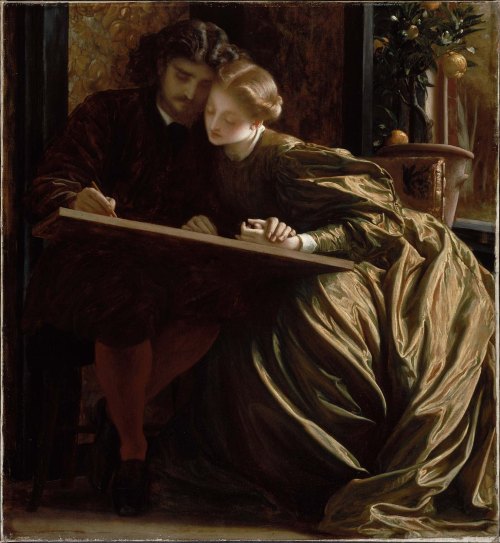
#FineArtFriday: The Painter’s Honeymoon by Frederic Leighton, 1st Baron Leighton ca. 1864

Artist: Frederic Leighton, 1st Baron Leighton: The Painter’s Honeymoon

Title: The Painter’s Honeymoon

Date: 1864

Medium: painting

Dimensions: 83.8 × 76.8 cm (32.9 × 30.2 ″)

What I like about this painting:

This is a real departure from Leighton’s usual precise nudes. There is a great deal of emotion and closeness depicted here. The folds of the wife’s skirt are shown with his usual vivid sharpness, as are the hands of both the painter and his wife. Their hands are portrayed as gentle and tender—and yet they are clearly defined, as they are the medium through which the painter expresses himself.

Their faces are not as distinct, as if they are still in the romantic haze of their new life together.

According to Wikipedia:

The Painter’s Honeymoon was first exhibited at the Royal Academy in 1866 – it appears that Leighton deliberately prevented it from being shown publicly in the years following its completion. As Leighton was renowned for his lack of confidence and shyness, many of his contemporaries believed he felt he had betrayed too much of his own emotion to feel comfortable exhibiting the picture.


Credits and Attributions:

The Painter’s Honeymoon by Frederic Leighton, 1st Baron Leighton [Public domain]

Wikipedia contributors, “The Painter’s Honeymoon,” Wikipedia, The Free Encyclopedia, https://en.wikipedia.org/w/index.php?title=The_Painter%27s_Honeymoon&oldid=902492011 (accessed October 18, 2019).

2 Comments

Filed under #FineArtFriday

#FineArtFriday: The Milkmaid, by Johannes Vermeer #laborday

In America, the first Monday in September is Labor Day, the last long weekend of summer. The weather is still warm, and many people will be enjoying the last big holiday of the summer, barbecuing or camping out. Many will be traveling long distances and staying in hotels.

Because Labor Day is a national holiday, many workers will have Monday off. But those who work in the hospitality industry and in food service will be working overtime, making the holiday good for everyone else. People in the retail industry will also be working long hours, as the last big sales before Halloween will be in effect.

Over the course of my life, I have worked in a wide variety of jobs, most of them paying a low wage. By the mid-nineties, things were easier. As a bookkeeper/office manager I made $7.50 an hour (two dollars over minimum at the time) but I worked less than 30 hours a week with no benefits whatsoever. On weekends and holidays, I worked as a hotel housekeeper in a union shop, making $8.50 (three dollars over minimum), working about 20 hours a week. That gave me enough income from the two jobs to live on and provide for my children.

While I was raising my children, no matter what job I had during the week, I kept my weekend job at the hotel, because when other jobs went away, I always had that one to fall back on.

Only hotel housekeepers with the highest seniority will work a forty hour week. The rest average twenty to thirty hours a week because people travel on weekends more than they do during the week, and certain times of the year are less traveled than others. We maids and laundry workers would have had nothing more than minimum wage without the union. Because of the union, we who did the dirty work earned a little more than those who worked at non-union hotels, and we had a few benefits such as health insurance and a 401k to set aside a little money for our retirement.

Not every union is good, and not every union is reasonable. But I have gratitude that my family and I were protected by a good, reasonable labor organization during those years that were such a struggle for me. Every worker deserves that his/her employer treats them with respect and a fair wage in return for their labor.

As we entered the new millennium, the entry-level job market had improved, and I joined the ranks of Corporate America. Working in the data entry pool for several large corporations over the next few years, I earned enough to give up my part-time job as a hotel maid.

I now have the luxury to live my dream, writing the books that I always wanted to write when I didn’t have the time. And while the world is a different place in many ways than it was in the 1980s, someone still must do the dirty jobs, the work that no one else wants. These people are heroes.

I have nothing but respect for those people who work long hard hours in all areas of the service industry, struggling to support their families. Look around you and see the people who make your life easier just by being there every day doing their job.

Every one of them is a person just like you, a living, caring human being with hopes, ambitions, triumphs, and tragedies. Every one of them has a story and a reason to be where they are, doing the task they have been given. Most love what they do and do the best job that they can.

Take the time to say a little “thank you” to all those women and men who take your unintentional abuse when you are stressed out and “don’t have time to wait,” or are upset by things you have no control over and need to vent at someone who can’t or won’t fight back. Give a little thanks to those who do the dirty work and enable you to live a little easier.


About Johannes Vermeer, the Master of Light (from Wikipedia)

Johannes Vermeer (October 1632 – December 1675) was a Dutch painter who specialized in domestic interior scenes of middle-class life. He was a moderately successful provincial genre painter in his lifetime but evidently was not wealthy, leaving his wife and children in debt at his death, perhaps because he produced relatively few paintings.

Vermeer worked slowly and with great care, and frequently used very expensive pigments. He is particularly renowned for his masterly treatment and use of light in his work.

Vermeer painted mostly domestic interior scenes. “Almost all his paintings are apparently set in two smallish rooms in his house in Delft; they show the same furniture and decorations in various arrangements and they often portray the same people, mostly women.”

He was recognized during his lifetime in Delft and The Hague, but his modest celebrity gave way to obscurity after his death. He was barely mentioned in Arnold Houbraken‘s major source book on 17th-century Dutch painting (Grand Theatre of Dutch Painters and Women Artists), and was thus omitted from subsequent surveys of Dutch art for nearly two centuries. In the 19th century, Vermeer was rediscovered by Gustav Friedrich Waagen and Théophile Thoré-Bürger, who published an essay attributing 66 pictures to him, although only 34 paintings are universally attributed to him today. Since that time, Vermeer’s reputation has grown, and he is now acknowledged as one of the greatest painters of the Dutch Golden Age.

About the featured painting, The Milkmaid, also from Wikipedia:

Despite its traditional title, the picture clearly shows a kitchen or housemaid, a low-ranking indoor servant, rather than a milkmaid who actually milks the cow, in a plain room carefully pouring milk into a squat earthenware container (now commonly known as a “Dutch oven”) on a table. Also on the table are various types of bread. She is a young, sturdily built woman wearing a crisp linen cap, a blue apron and work sleeves pushed up from thick forearms. A foot warmer is on the floor behind her, near Delft wall tiles depicting Cupid (to the viewer’s left) and a figure with a pole (to the right). Intense light streams from the window on the left side of the canvas.

The painting is strikingly illusionistic, conveying not just details but a sense of the weight of the woman and the table. “The light, though bright, doesn’t wash out the rough texture of the bread crusts or flatten the volumes of the maid’s thick waist and rounded shoulders”, wrote Karen Rosenberg, an art critic for The New York Times. Yet with half of the woman’s face in shadow, it is “impossible to tell whether her downcast eyes and pursed lips express wistfulness or concentration,” she wrote.

“It’s a little bit of a Mona Lisa effect” in modern viewers’ reactions to the painting, according to Walter Liedtke, curator of the department of European paintings at The Metropolitan Museum of Art, and organizer of two Vermeer exhibits. “There’s a bit of mystery about her for modern audiences. She is going about her daily task, faintly smiling. And our reaction is ‘What is she thinking?'”


Credits and Attributions:

The Milkmaid, by Johannes (Jan) Vermeer ca. 1658 [Public domain or Public domain], via Wikimedia Commons.

Wikipedia contributors, “The Milkmaid (Vermeer),” Wikipedia, The Free Encyclopedia, https://en.wikipedia.org/w/index.php?title=The_Milkmaid_(Vermeer)&oldid=853243011 (accessed August 31, 2018).

Wikipedia contributors, “Johannes Vermeer,” Wikipedia, The Free Encyclopedia, https://en.wikipedia.org/w/index.php?title=Johannes_Vermeer&oldid=854172655 (accessed August 31, 2018).

2 Comments

Filed under #FineArtFriday, writing

#FlashFictionFriday: Reflections on the Water

A rough, log bench at water’s edge

Pictured in mind’s eye,

Reflections on the water

Of an evening long gone by.

I see us as we were that night,

Grandmother, lake, and me.

Flannel shirt over frayed housedress

Beside denims worn with style,

Philosophies and grand ideas

Beside wisdom without guile.


She told me why the stars were hung

In the inky sea above.

A brilliant ebb and flowing dance

A ballet of starry love

To cricket song and bullfrog drum.

But I was bored with country life

And lured by rattle and hum.

“What you seek you’ll never find

In neon glow and city block.”

I longed to leave that place behind

New paths I yearned to walk.


And now I stand on memory’s shore

With Grandma once again.

The lake, and shore, and skies above,

Have gone, and gone again.

And simple wisdom I have gained,

Reflecting on the lake,

Grandma’s wisdom still remains

In who I came to be

Though different paths I take.


Credits and Attributions

Reflections on the Water by Connie J. Jasperson © 2017 All Rights Reserved

Moonrise, by Stanisław Masłowski   PD 100 yrs [[File:MaslowskiStanislaw.WschodKsiezyca.1884.ws.jpg|MaslowskiStanislaw.WschodKsiezyca.1884.ws]]

Comments Off on #FlashFictionFriday: Reflections on the Water

Filed under #FineArtFriday, #FlashFictionFriday, Poetry

#FineArtFriday: More Things in Heaven

And therefore as a stranger give it welcome.
There are more things in heaven and earth, Horatio,
Than are dreamt of in your philosophy.

Hamlet, Act 1, scene 5, by William Shakespeare


About the Eagle Nebula: Quote from Wikipedia:

The Eagle Nebula is part of a diffuse emission nebula, or H II region, which is catalogued as IC 4703. This region of active current star formation is about 7000 light-years distant. A spire of gas that can be seen coming off the nebula in the northeastern part is approximately 9.5 light-years or about 90 trillion kilometers long.[4]

The cluster associated with the nebula has approximately 8100 stars, which are mostly concentrated in a gap in the molecular cloud to the north-west of the Pillars.[5] The brightest star (HD 168076) has an apparent magnitude of +8.24, easily visible with good binoculars. It is actually a binary star formed of an O3.5V star plus an O7.5V companion.[6] This star has a mass of roughly 80 solar masses, and a luminosity up to 1 million times that of the Sun. The cluster’s age has been estimated to be 1–2 million years.[7]

The descriptive names reflect impressions of the shape of the central pillar rising from the southeast into the central luminous area. The name “Star Queen Nebula” was introduced by Robert Burnham, Jr., reflecting his characterization of the central pillar as the Star Queen shown in silhouette.[8]


Credits and Attributions

Quote from Hamlet, Act 1, scene 5, by William Shakespeare, [Public Domain]

The Fairy of Eagle Nebula  By NASA [Public domain], via Wikimedia Commons

Wikipedia contributors, “Eagle Nebula,” Wikipedia, The Free Encyclopedia, https://en.wikipedia.org/w/index.php?title=Eagle_Nebula&oldid=804691133 (accessed October 12, 2017).

2 Comments

Filed under #FineArtFriday, #FlashFictionFriday, writing

Mapping the Story

Billy's Revenge Floor plan ground floor

Billy’s Revenge © Connie Jasperson 2015

I was worried I wouldn’t have a blog post for today. The power was out most of Saturday due to a large storm here, and there have been times when that  lasts three days here.  When that happens I have no way to post my blog, although I hear you can post them from cell phones if you know the magic words.

I’ll just say that if I have to key my blog on a cell phone, it will take 5 years to get it ready for posting.  I am the world’s slowest text-message-er. Of course, if you have predictive texting set up, and make good use of auto-fill, you could have some real fun, and do it quickly! But that was another blog post.

After the power outage, my printer/scanner was not speaking to my computer, so I couldn’t print or scan. I did behave, no temper tantrums here. My IT man, (a.k.a. my beloved, long-suffering husband with the patience of a saint) took the time to rectify that situation. I was at the limits of my endurance with that thing.

So, because our power was out, I worked on a pencil sketch of a new map for an upcoming novel, Billy’s Revenge. On Sunday, I digitalized it. It isn’t complete, and is out of proportion in some places but when it is finished, it will tell me everything I need to know about Limpwater.

Map of Limpwater copy

Map of Limpwater, © Connie Jasperson 2015

I always have some sort of map to work with, even if it’s just scribbled, when I am writing in a world of my invention, and they all start out as pencil sketches. Eventually, they become the digital versions you see in my books.

That book will consist of 1 novel and 4 short stories that all revolve around the inn known as Billy’s Revenge. Huw the Bard returns, as does Julian Lackland. Billy Ninefingers has a few misadventures that threaten his career, mess with his chances  to convince Dame Bess to marry him, and set him on a path he never thought he would find himself traveling.

In the opening short story, we meet Eddie, Billy’s father, and see the origins of the Rowdies. Eddie’s story sets the stage for Billy’s trouble with Bastard John. Several short stories that were cut from The Last Good Knight will be included at the end of Billy’s novel, as they don’t pertain to Julian Lackland as much as they do the entire group of Rowdies, Billy Ninefingers included, and they are fun stories.

BNF sign

BR Pub Sign © Connie Jasperson

I’ve had the sign that will hang over the porch in front of Billy’s inn ready for quite a while–hanging it is going to be the trick.

When the power went out, I had Photoshop open and was working on the cover for Valley of Sorrows. But while I know how the graphics will be and I am happy with their layout, I’m not really happy with the art I have located so far, but it’s still early days. I will keep searching, which I enjoy doing.

Anyway Saturday  was not as productive as it could have been.

And Sunday was a busy, catch-up day. Fortunately, it rained off and on all day, so I was able to finish a lot of what I needed to get done.  Today will be as crazy as any Monday ever is, and I will simply have to make time for revisions.  All I need is an hour here and there. I am close to having it ready for editing. I will have Valley of Sorrows published in the spring of 2016, if all continues to go well.

4 Comments

Filed under Books, Publishing, Uncategorized, writer, writing

Great Cover Ups

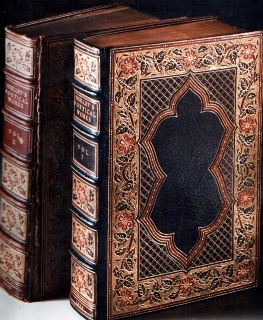
Old Restored booksBook covers. Remember when they were tooled, engraved leather, hand-made by monks? Yeah, me neither, but I do love good, well designed book covers.

We indies stress over them, and I suppose the Big 5 publishers do too, to a certain extent. But what, besides money and great designers who will make them for us, are elements that make a great book cover?

First up, in my opinion, a catchy cover has mystique. It expresses the central theme of the book, but it’s like a blurb–it can only capture one moment in time, so you have to choose what you will go for: mood, mystery, or great art.

Occam’s Razor (also known as Ockham’s Razor) comes into play here. According to iUniverse’s article on Cover Design Essentials, “…the essential theory is that unnecessary elements will decrease the overall efficiency and aesthetic appeal of a design. It can be a good indicator of why one design may succeed and another one will not. A good writer will spend hour after hour editing and re-editing their book, cutting words, paragraphs and so forth until it is “clean.” The cover designer’s method is not much different, other than it is a visual process rather than a written one.” 

In my own limited experience this is so true.  

Caged_bird2Book covers have really evolved since my childhood. They used to be quite simple, with the art kept to a minimum. In the 1950’s and 60’s, book covers were stark, modern–and in my opinion, boring, such as Maya Angelou’s I Know Why the Caged Bird Sings.

My great problem is, I have always known what catches my eye, but not how to achieve it. So what are the simple, affordable elements of a good, catchy cover?

Again, iUniverse says (and I quote) good covers:

  1. Fall within the norms for your genre but visually stand out among other books.
  2. Appeal to readers and convince them to take a closer look at your book with a strong visual presence.
  3. Reflect the content of your book and expose readers to your writing style.
  4. Convince a potential reader to invest in a literary journey with your story.

Well, that is a hell of a lot to pack into a cover. And it’s hard to do! I am struggling with this aspect of being an indie. I am an artist, but until 2010 my work has been mostly in pastels and pencil. But I love Photoshop, and have been spending a lot of time designing covers and and learning how to make the graphics and the title a part of the art that captures the eye, but does not detract from the cover art.

I have been examining a lot of wonderful book covers, trying to define what it was about them that I liked so that my next book cover will be more true to what I want it to be. Being an old dog learning a new trick, I must learn from the masters.

So, here are only a few of my all-time favorite book covers, in no particular order:

Simple and to the point: The Martian, by Andy Weir tells us everything we need to know–this is going to be a hell of an adventure.

The MArtian Andy Weir

♦♦♦♦

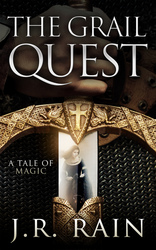
Grail Quest, by J.R. Rain, cover artist not credited–intriguing, and made me want to look inside.

Grail, JR Rain 2

♦♦♦♦

To Green Angel Tower, Tad Williams, as painted by the brilliant Michael Whelan–representing the mood, characters, and setting of the book, and visually stunning. I can’t replicate this sort of beauty, but I can admire it, nonetheless.

Green_Angel_Tower_P1

♦♦♦♦

Heart Search book three: Betrayed, Carlie M.A. Cullen, cover by Nicole Antonia Carro. Completely speaks to what is inside the book–dark, mysterious, and a bit vampiric.

Betrayal front cover

♦♦♦♦

Roadmarks, Roger Zelazny, cover by the late Darrell K. Sweet. Simple, well-placed elements, promising a real roller-coaster ride inside.

Roadmarks_first

♦♦♦♦

The Girl With All the Gifts, M.R. Carey–almost retro 1970s, yet intriguing. 

The_Girl_with_All_the_Gifts m.r. carey

♦♦♦♦

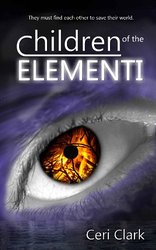
Children of the Elementi, Ceri Clark–this cover is a real winner, as much for the graphics as for the stunning yet simple art.

children of the  elementi

♦♦♦♦

Antithesis, Kacey Vanderkarr — cover art by Najla Qamber.

Antithesis by Kacey Vanderkar

♦♦♦♦

For me, books that portray the features of the characters on the cover are a bit dicey. They never look the way I, as the reader, think they should. So, usually I find myself gravitating to the symbolic aspects of the cover and ignoring the artist’s conception of the characters. I want mystique, intrigue…the hint of danger and adventure. A book cover must flip the switch on my curiosity, make me wonder what is inside…and that particular trigger is subjective.

Each reader is lured by something different, which is what makes this aspect of indie publishing so difficult. However, I am beginning to understand what it is that I am looking for when I am drawn to a cover, so…I’ve been busy learning graphic design. I will be doing a cover reveal for my forthcoming book, Mountains of the Moon, a book based in the World of Neveyah, the same world as the as Tower of Bones series, and which is set to be released July 15, 2015.

My son, Dan, who is a graphic designer has really given me some pointers on this particular cover. I have been to “YouTube University,” and learned how to make vectors for this cover (I made two!) and I have learned several other unique little tricks of Photoshop. I have the layout finalized, and the graphics, and will be revealing it at the end of June.

6 Comments

Filed under Books, Humor, Literature, Publishing, writing

My love affair with Willam Butler Yeats

Yeats Mural and quoteWilliam Butler Yeats was an Irish poet and one of the foremost figures of 20th century literature. A pillar of both the Irish and British literary establishments, in his later years he served as an Irish Senator for two terms.

His poetry is one of my favorite sources of inspiration.  In his early years he  was not afraid to write of faeries, and mystical things that fired my childish imagination. Later, as he grew as both a writer and as a person, he also wrote wonderful works that were more firmly rooted in reality.

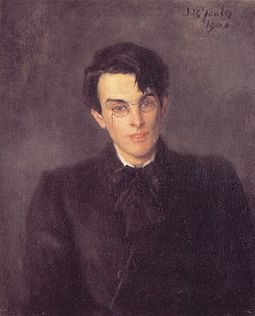
William Butler Yeats, painted by his father, John Butler Yeats, 1900

William Butler Yeats, painted by his father, John Butler Yeats, 1900

Born in Ireland on June 13 1865, Yeats was born into the Protestant, Anglo-Irish minority that had controlled the economic, political, social, and cultural life of Ireland. His free-thinking, bohemian parents counteracted that cultural bias, and raised him to be proud to be an Irish poet and writer. He was raised in a home where art and literature were celebrated, His father was a famous artist, John Butler Yeats, who was renowned for his portraits, though his work never earned enough to keep the family financially secure–thus they moved around a lot.

The entire Butler Yeats family were highly artistic; his brother Jack became an esteemed painter, while his sisters Elizabeth and Susan Mary—known to family and friends as Lollie and Lily—became involved in the Arts and Crafts Movement. That movement of decorative arts was exemplified by traditional craftsmanship using simple forms and it often used medieval, romantic or folk styles of decoration. It advocated economic and social reform and has been said to be essentially anti-industrial.

WB Yeats early essaysIn December 1923, Yeats was awarded the Nobel Prize in Literature, just after Ireland had gained independence. Fortunately, the prize led to a significant increase in the sales of his books, when his publishers Macmillan  capitalized on the publicity. He was able to repay not only his own debts, but those of his father–this was a huge source of relief for the whole family.

To a certain extent,  Yeats was a product of the arts and crafts movement. His poetry was whimsical and serious, and completely reflective of his passionate, turbulent life.  He has been quoted as saying a poet should labor “at rhythm and cadence, at form and style, ” and was a founding member of the Rhymers’ Club, a group of London poets who met to read and discuss their poems. The Rhymers placed a very high value on subjectivity,  how someone’s judgment is shaped by personal opinions and feelings instead of outside influences, and on craftsmanship.

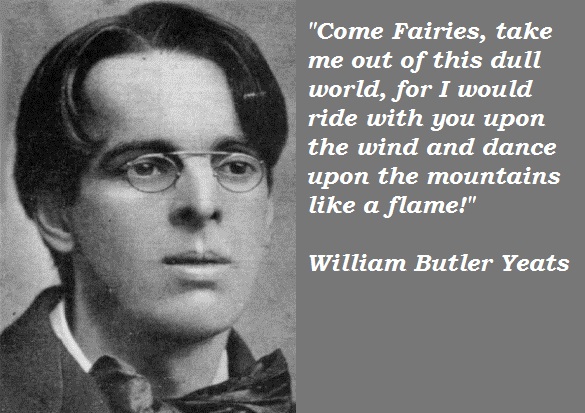
william-butler-yeatss-quotes-4This emphasizes to me the value of a writing group–even Yeats had a group of people to bounce ideas off, and that group improved his craftsmanship.

Reading the work of W.B.Yeats greatly shaped my own view of poetry and literature in general. His life was unconventional, and chaotic, and his love affairs were famous, especially his life-long, frequently unrequited love for the Irish revolutionary/actress, Maud Gonne. He struggled with love and morality as did all free-thinking artists and writers in his day–but his struggles and the struggles of his contemporaries freed their imaginations, and they produced great works.

Of all his works, this is my favorite:

The Stolen Child by  W.B. (William Butler) Yeats

WHERE dips the rocky highland
Of Sleuth Wood in the lake,
There lies a leafy island
Where flapping herons wake
The drowsy water rats;
There we’ve hid our faery vats,
Full of berrys
And of reddest stolen cherries.
Come away, O human child!
To the waters and the wild
With a faery, hand in hand,
For the world’s more full of weeping than you can understand.

Where the wave of moonlight glosses
The dim gray sands with light,
Far off by furthest Rosses
We foot it all the night,
Weaving olden dances
Mingling hands and mingling glances
Till the moon has taken flight;
To and fro we leap
And chase the frothy bubbles,
While the world is full of troubles
And anxious in its sleep.
Come away, O human child!
To the waters and the wild
With a faery, hand in hand,
For the world’s more full of weeping than you can understand.

Where the wandering water gushes
From the hills above Glen-Car,
In pools among the rushes
That scarce could bathe a star,
We seek for slumbering trout
And whispering in their ears
Give them unquiet dreams;
Leaning softly out
From ferns that drop their tears
Over the young streams.
Come away, O human child!
To the waters and the wild
With a faery, hand in hand,
For the world’s more full of weeping than you can understand.

Away with us he’s going,
The solemn-eyed:
He’ll hear no more the lowing
Of the calves on the warm hillside
Or the kettle on the hob
Sing peace into his breast,
Or see the brown mice bob
Round and round the oatmeal chest.
For he comes, the human child,
To the waters and the wild
With a faery, hand in hand,
For the world’s more full of weeping than he can understand.

 >>><<<

Loreena McKennitt, the Stolen Child  (via You Tube)

6 Comments

Filed under Books, Fantasy, Humor, Literature, Publishing, Uncategorized, writer, writing

Dark, Gothic, and hurtling toward disaster

Steampunks  by Kyle Cassidy

Steampunks by Kyle Cassidy

Well…apparently my current scifi work-in-progress, a short story, is steampunk. Who knew? My good friend, author Lee French, figured it out yesterday at our regular Tuesday morning brainstorming session at Panera. After she pointed it out, I could see it clearly, despite my original thought that because I had set it on a mining-colony world, it was a scifi tale.

I was a little surprised I hadn’t seen it earlier, and once it was pointed out, I could see why I was struggling with the tale–I didn’t know what I was writing.

It began as an exercise in writing from the point of view of the flâneur–the man of leisure, the idler, the urban explorer, the connoisseur of the street. Click here for Scott Driscoll‘s great blogpost on the flâneur. In short, he tells us that: “With a flâneur narrating, you can remove the noticing consciousness from your point of view character to accomplish other purposes.”  

The flâneur  is frequently found in literature from the 19th century.  The story is filtered through his eyes and perceptions–it distances the reader from the immediacy of the scene, so be forewarned: genre-nazis and arm-chair editors who want the material delivered in 60 second sound-bytes of action won’t love it. Literary fantasy explores the meaning of life or looks at real issues, and I tend to write from that aspect. Often, the fantastic setting is just a means to posing a series of questions. Sometimes the quest the hero faces is in fact an allegory for something else. I read good literary fantasy–it tends to be written by men and women who can actually write. Not only are the words and sentences pregnant with meaning, but they are often beautifully constructed, and I learn the craft of writing from reading it.

The Rainy Day, Gustave Caillebotte

The Rainy Day, Gustave Caillebotte

My flâneur is Martin Daniels, a young, wealthy, retired crystallographer. He spends his time roaming his city’s streets and sitting in sidewalk cafés observing his fellow citizens, and making social and aesthetic observations. He regularly finds himself crossing paths with one man in particular, Jenner: a self-made man who came up through the mines.

Jenner is battering against the prevailing social barriers which stand in the way of his achieving a political office that he covets, using whatever means at his disposal. He is uncouth, a barely civilized rough-neck with a bad reputation, but something about him draws Martin’s attention, and so he finds himself both observing Jenner, and listening to the whispered gossip that surrounds the man.

One day, as Jenner is passing Martin’s table,  his hat blows off and Martin catches it, returning it to him. Jenner then introduces himself, and admits that he has been watching Martin for some time. He has a task for Martin, one that intrigues him enough to bring him out of retirement. Thus begins an odd relationship.

Thus my flâneur ceases to be merely an observer, and becomes my protagonist, yet he is reporting the events from the distance of his memory, so he is still the observer.

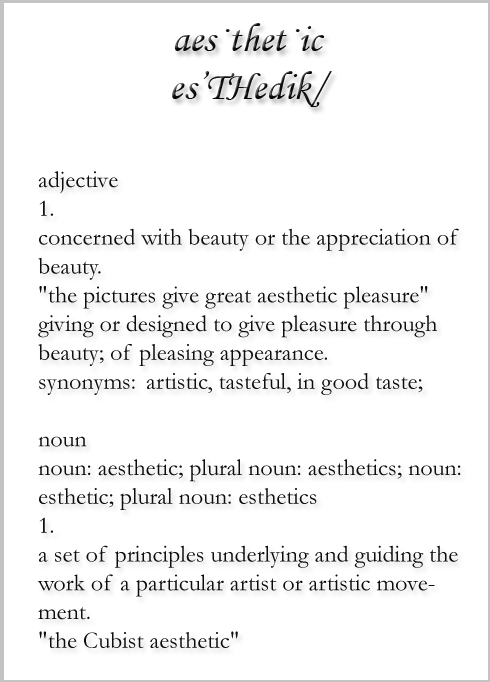
aesthetic definitionSo what is Steampunk?  Mike Perschon, in his dissertation, The Steampunk Aesthetic: Technofantasies in a Neo-Victorian Retrofuture, has described it as “…an aesthetic that mixes three features: technofantasy, neo-Victorianism, and Retrofuturism.” The key word here is aesthetic.

So how does that relate to my short story? When I looked at it with a critical eye, I realized it incorporates all three of those devices:

Technofantasy: Technology that lacks plausibility, or utilizes fantasy elements as the force or motive behind an action or process. No explanations will be given. The technology exists within the story, not the real world.

Neo-Victorianism: A setting that evokes the nineteenth century, whether it is set there or  not. In my tale, the use of the flâneur evokes a 19th century atmosphere, as do the other constraints I had inadvertently written into it.

Retrofuturism: How we think the past viewed the future. It is set in the distant future, but it is a future I think Victor Hugo would have recognized.

I have always perceived steampunk as cogs and diodes, dark atmosphere, rather Gothic, and with a plot that has the protagonists hurtling toward disaster. Now I know it is all that and more. They hurtle toward disaster, with a nineteenth century flair.

Thus my sci-fi flâneur is now the protagonist in a steampunk mystery. This short story, which had sort of stalled, is now back on track and fun to write. Through writing short stories we have the opportunity to write in different genres, and stretch our writing-wings.

I learn more about the craft of writing with each tale, and that fires me up, helping me see my longer works with fresh eyes.

2 Comments

Filed under Adventure, Books, Fantasy, Humor, Literature, Publishing, Self Publishing, Steampunk, Uncategorized, writer, writing