Tag Archives: books

Loki, Zorg, and why I love the bad-boys

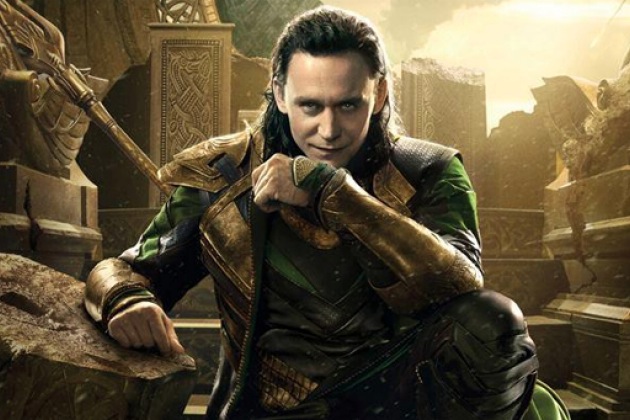
Thor-Everything-LokiI love swashbuckling sword-fights and movies fraught with testosterone and machismo. I don’t need it in real life, thank you–that’s what I have books and movies for. So what are my favorite movies?

Thor–anything Thor will be a winner  from my point of view.

Let’s just say that anything featuring a bad-boy god with a twisted sense of humor is high on my list of must-watch movies. Plot? Sure, if you say so–but this is a movie so bring on the eye-candy now.

I love the character of Loki as played by Tom Hiddleston. He is everything the God of Mischief should be, and then some. He’s like that beloved ex-boyfriend–you’re always glad to see him, and even happier to see him leave.

Fifth_element_poster_(1997)What other sorts of movies intrigue me? Well, I am a huge fan of the 5th Element. I adore the character of Korben Dallas as played by Bruce Willis, but for me the man who stole the film was Zorg, as played by Gary Oldman.  Who doesn’t love a megalomaniac industrialist enslaved to The Great Evil? What a guy! And lets face it, Korben Dallas is just as much fun as Han Solo, and both are quintessential bad-boys.

The thing that intrigued me most about the 5th Element was the way the film portrays consumerism in that society as a living, breathing thing that has veered out of control. Extreme lust for technology and power is set against that of a simple man wanting a simple life–our own flaws are laid bare in the characters of Zorg and Korben Dallas.

But where is the eye-candy in that movie? Well you have to admit it is one of the most visually stunning films of the twentieth century.

You might wonder where I am going with this-so do I. Oh wait!  Bad-boys! Why I love to write about the bad-boys and read about them and even see the movies featuring them!

han-solo-smugglerThe bad-boys are intriguing, dangerous, and definitely not the boy your mama set you up with.

They are fun.  So I have two new manuscripts in the works and one features a bad-boy, a man who falls from grace and years later returns. Some of his experiences have changed him, but some things will never change. While his basic arrogance has been tempered, he is still the man he always was, but with a better grasp of what is truly important.

A bad-boy is a multidimensional character, made of many layers both good and bad, and as the story progress those layers are peeled away, revealing a new facet, but also hinting that more still lies hidden. The trick is to make those layers lure the reader (or watcher) in.  Loki, Han Solo, and Korben Dallas are all characters who intrigued me. They are written perfectly, because at the end of the movie, the observer still doesn’t know them well, but wants to.

From watching these movies, I’ve learned that one should dole out the character in small bits, showing a layer at a time, but always holding out the lure that far more lies hidden beneath the surface.

That is the trick, and it’s one thing to know it and another to do it.  But we try!


2 Comments

Filed under Adventure, Battles, Blogger, blogging, Fantasy, History, Humor, Literature, mythology, Politics, Publishing, Uncategorized

Death Valley

Extreme-Heat-Death-ValleyEvery artist who has successfully created works other people enjoyed is a slave to the creative muse. Each artist endures those horrible moments when they question their choice of career–they have a series of bad days and inspiration is far from their grasp. Every note they play, every word they write, every picture painted is dead and dull. Forcing it doesn’t help, and indeed drives it further away.  These are the moments when we are walking in the Death Valley of creativity.

I have no magic bullet, no super-human powers of creativity to bestow upon you.  For me, the joy of creativity in music, art, and writing is the rebellious feeling of stealing the time to do it. I make music, I do graphics, and I write, doing each whenever the muse strikes me.

In the old days I would come home from work with a small notebook full of ideas and after I had fed the masses, everything else would fall by the way while I put those ideas to paper. Even when you must earn a living, creativity must be allowed to flow when you feel it, because it is a finite commodity.

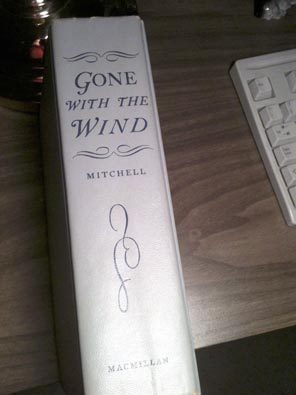
But I will tell you this: You Are Not Alone. Margaret Mitchell only published one book: Gone With The Wind.

gone with the wind 2Quoted from the fount of all knowledge,  WikipediaMargaret Munnerlyn Mitchell (November 8, 1900 – August 16, 1949) was an American author and journalist. One novel by Mitchell was published during her lifetime, the American Civil War-era novel, Gone with the Wind, for which she won the National Book Award for Most Distinguished Novel of 1936[1] and the Pulitzer Prize for Fiction in 1937. In more recent years, a collection of Mitchell’s girlhood writings and a novella she wrote as a teenager, Lost Laysen, have been published. A collection of articles written by Mitchell for The Atlanta Journal was republished in book form.

And did you know that Edgar Allen Poe and Oscar Wilde each only wrote one novel in their careers?  I am assuming this was because they suffered from long periods of having nothing they thought was worthy to show the world.

Poe understood the value of writing the short story. While he is generally considered the inventor of the detective fiction genre, his body of work consisted of–wait–how many short stories did he write? “Almost eighty” it says on page 373 of the official volume of the Big Read. The Edgar Allan Poe Society of Baltimore says the number is sixty-nine – counting “both short fiction and novels.” This appears to be the most widely published number.
So how many short stories did Edgar Allan write? By all reports he was a troubled man, and it’s possible that not even he knew for sure.

Poe is further credited with contributing to the emerging genre of science fiction. He was the first well-known American writer to try to earn a living through writing alone, resulting in a financially difficult life and career. Are we surprised? I don’t think so.

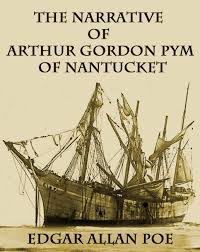
narrative of arthur gordon pym edgar allen poeBut though he is considered by many to be the most famous of our American authors, he only published one novel: The Narrative of Arthur Gordon Pym of Nantucket (1838) is the only complete novel written by our famous man, Edgar Allan Poe. The work relates the tale of the young Arthur Gordon Pym, who stows away aboard a whaling ship called the Grampus. Various adventures and misadventures befall the protagonist, Pym, including shipwreck, mutiny, and cannibalism, before he is rescued by the crew of the Jane Guy.

Indie author Mary W. Walters has written a wonderful blogpost on the subject of turning writers block into building blocks, available here.

So even if you feel the stream of creativity has run dry, it’s frustrating, yes–but nothing to get to worried about. At some point, when it is least convenient, that muse will strike again. You will once again feel that divine energy, that spark of madness that is the breath of life for a poem, a song, a novel or a painting. When you feel it, go with it.


4 Comments

Filed under Adventure, Battles, Blogger, blogging, Books, Fantasy, History, Humor, Literature, Publishing, Self Publishing, Uncategorized, WordPress, writer, writing

Resurrection, Reconstruction, and the Great Reckoning

cocacola_08

Coca-Cola HD Wallpapers

I have been writing like a crazy person for the last two weeks.  Well, I am a crazy person, but–I have been spewing the basic rough draft of a novel in the most unlinear way possible.  I have my plot outline and I am following it, sort of.  With that as my guide, even when I am jumping around in the manuscript like a mini-van full of toddlers hopped up on jelly-beans and coca-cola, I am still within the actual framework of the story that was originally outlined.

But what if, as occasionally happens, you suddenly realize that four chapters previously you shot the villain and buried him when he should actually have been struck by lightning? He was always going to die, that was a given, because he must be the undead villain, hell-bent on revenge.

330px-Zombie_haiti_ill_artlibre_jnlThe good thing about being an author is that once you realize there was a mistake, you can always un-shoot them. Then you can strike them with lightning as they should have been in the first place, send them to Hell and and have some minor devil trying to work his way up the management chain in the underworld resurrect them as your creepy, decaying, undead villain.

And if you are in the middle of NaNoWriMo, every time you rewrite the the scene with a slightly different outcome, it counts toward your word count.

Just sayin’.

So, here there I was, happily writing along, when suddenly I realized I had to change a rather large plot-hole, and knew I had to do it while I was thinking about it. First I did a global search for the name of the character that has taken the wrong turn. I changed the font color to red in that section, and began rewriting the scene the way it SHOULD have been written in the first place, using the usual black font.

Now, during normal writing sessions, I would simply cut the offending scene out of the ms, and paste it into a separate document which I then save to my ‘Background File’ in the same folder as my main manuscript. By doing that, I don’t lose information I may need later.

virtually golden medallion of mayhem copyBut this is National Novel Writing Month, and every word in that manuscript  counts toward my region’s total wordcount! We are the Olympia Washington USA region and we have a Word War on with Salem Oregon USA: the Capital Smackdown! On November 30, the day of the Great Reckoning,  The Virtually Golden Medallion of Mayhem is up for grabs!

We have never won this awesome…thing-a-ma-bob….

But we want it.

And in the per-writer stats Salem is slightly ahead of us in this battle. OH! the misery!

So if that means I have a multicolored manuscript for a few weeks, so be it!

Besides, if I don’t begin to make those changes when first I realize they need to be done, I might forget until a beta reader points it out. Thus, I find myself up at all hours of the night ironing out plots points, trying to keep an unmanageable group of characters in line and trying desperately to keep that all-important word-count up!

2 Comments

Filed under Adventure, Battles, Blogger, Books, Fantasy, Humor, Literature, Publishing, Self Publishing, Uncategorized, WordPress, writer, writing

How I came to fall off the Earth (and why I don’t care)

The Arc of the StoryWow–what a wild week this has been–28k words written on my NaNoWriMo manuscript, and a dip into a culture that is nothing short of amazing.  What a challenge–to write a great story well enough that people will want to read it, and to do justice to a whole culture.

We should have challenges in our work–if it comes too easy it’s fluff. A lot of people are happy with fluff, but not me, and I suspect, not you!

As you all know, I have written some very difficult scenes in the past, not for the gratuitous effect, but because those situations made my character who they were. They were life altering moments where the path suddenly changed, and everything that followed was driven by that incident.

A friend recently asked me how I handle writing such scenes.

When it’s a tough scene, I write as much as I can when I first know what has to be written. Then I set it aside and come back to it later to expand on it and shape to my intent. For me, a scene has to be done in stages so that it flows naturally. At the end of my my last journey though a manuscript, I will have a seamless narrative that flows from one scene to the next, always building toward the final denouement and the conclusion.

a medieval keggerBut right now I have five bodies to get rid of, so I need to get back to writing. Hero set down his mug of mead and picked up the shovel. He looked first at pile of corpses and then at the sky. They didn’t usually fall from the sky and he wondered what Author was up to now, that he should suddenly have to dispose of so many. However, Author was inscrutable and Her mind mysterious. One could only go with the flow, and dispose of the corpses as they fell.

OH the endless agony–but for a little hilarity amidst the eternal darkness of November take a look at Stephen Swartz’s blog post this week:

How NaNoWriMo is like being in Interstellar


5 Comments

Filed under Blogger, Fantasy, Humor, Literature, mythology, Uncategorized, WordPress, writer, writing

Plug in to The Matrix


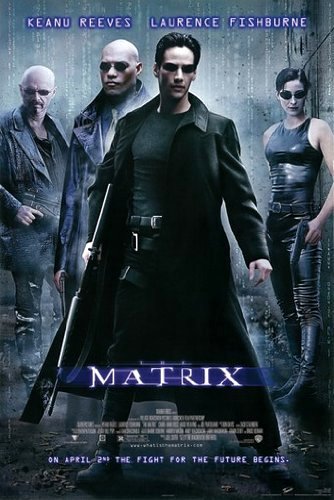
the Matrix PosterNovels have layers. Theme is what the story is about on a deeper level than the plot details. It’s the big meaning, and often it’s a moral meaning. Love, honor, family, and revenge are all some common, underlying themes.

I think of the scenes in my books as if they were scenes in a movie. Each conversation is a scene.

Sometimes, we find ourselves in Outer Mongolia as we wrangle our words. Our mind is off chasing squirrels, and our fingers are madly keying dialogue. It happens, and then we find ourselves writing paragraphs of discussion regarding the vase on the kitchen table. Why are we discussing this vase?  If there is a reason that will emerge later, keep it. If it is just idle fluff, lose it.

I actually have a scene in one of my forthcoming books where the characters do just that. They are discussing a vase that was made by a child, but the conversation is not important for the sake of the vase, nor is it really about that object. It is there to expose how important an absent person is to one of the speakers, and the brief interaction between the two speakers endears to the reader one of the characters who will later meet a sad end. The underlying themes of this book are brotherhood, family, romantic love, honor, duty. The obvious theme is the successful resolution of a quest. The core plot device around which the story evolves is an ongoing War of the Gods, and the world in which the tale is set in is their battleground, offering all sorts of opportunities for mayhem.

Consider the first scene of one of my favorite movies of all time, The Matrix. This movie has a lot of action, but it has a lot of dialogue also, and that dialogue advances the plot and never loses the theme of the story.

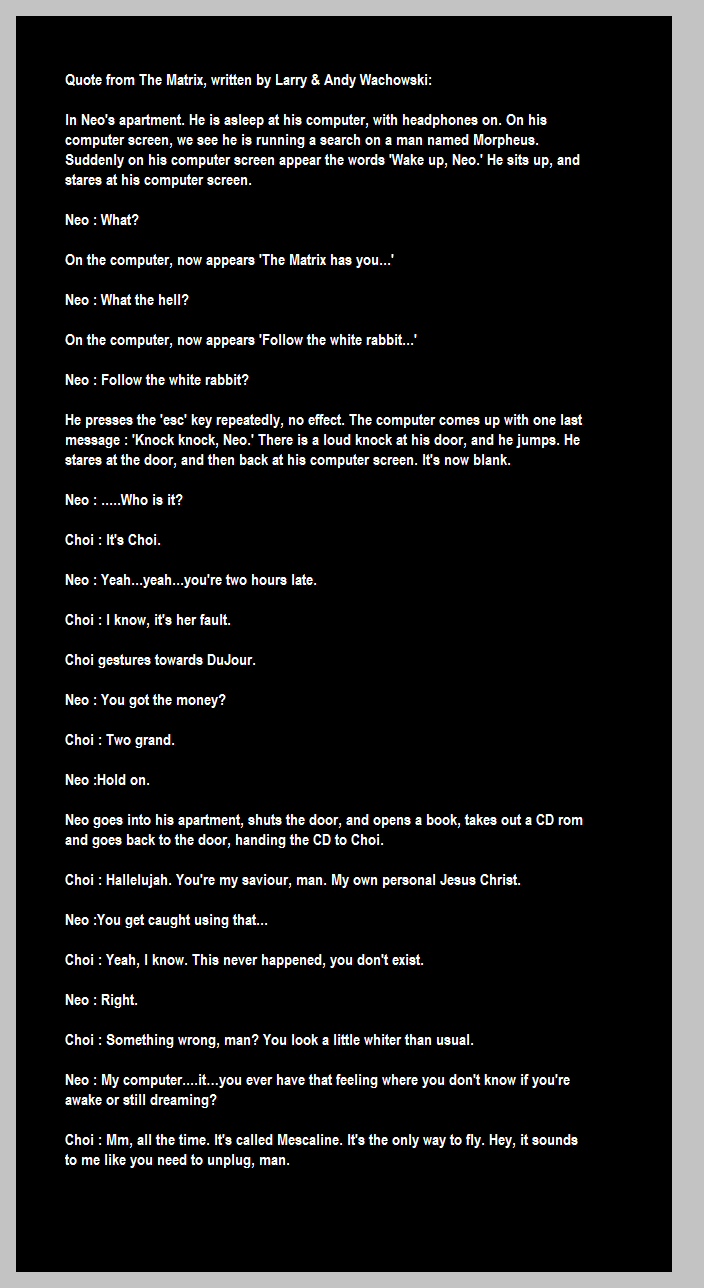
Quotes from the matrix

The conversation concerns a drug deal, but the underlying theme is never lost. The key words are in the first line, written on the computer, The Matrix has you, the third line, follow the white rabbit, and in that very last line, telling Neo to unplug. The Matrix is all about waking up, about what reality is, and about Neo as the potential savior of the world, which has been enslaved by a virtual reality program. It is about escaping that program. The conversations that happen in the course of the film all advance that theme, even the minor interactions, from the first conversation to the last.

The Arc of the StoryWe must approach conversations in our novels as if they were scenes in a movie. In a good movie, we don’t notice it, but there is an arc. In a story arc, a character undergoes substantial growth or change. It ends with the denouement in the last third or quarter of a story. The end of a narrative arc is the denouement, the final resolution. It shows what happens as a result of all the conflict that the characters have gone through.

If we don’t keep the arc of the story moving with each scene, we will lose our reader, and to that end, each conversation must reflect the underlying themes of the story without beating the reader over the head with it. As in real life, some of the people know more than others, and to advance the plot and the theme, small clues must come out over the course of each scene, each scene building to the finale.

I876MilanoDuomo‘ve said this before, but we must build the overall arc of the story from scenes, each of which is a small arc, in the same way a gothic cathedral is constructed of many arches that all build toward the top.  The underlying arches strengthen the overall construction. Without arches, the cathedral wouldn’t remain standing for very long. The novel is a cathedral and your scenes are the arches that hold it up. The conversations that form those scenes are miniature arches, each with a beginning, a high point, and a resolution.


4 Comments

Filed under Adventure, Battles, blogging, Books, Fantasy, Humor, Literature, mythology, Publishing, Self Publishing, Uncategorized, WordPress, writer, writing

The race is on!

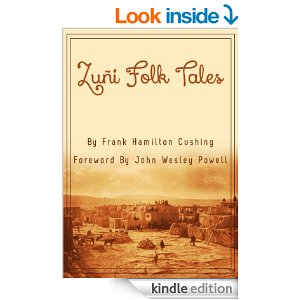
Zuni Folk Tales Frank Hamilton CushingNational Novel Writing Month is in full swing.  I have 30 days in which I can do nothing but write, write, write. The wheels are turning in my head, and my new story is flowing at a slow but steady rate. I know who I am writing about, and I know what his story is. I know what the action is and where it goes within the framework of the novel.

My only problem is I can’t key fast enough. When I do key fast it becomes illeggiebble…illegeabngle… .

Doh!

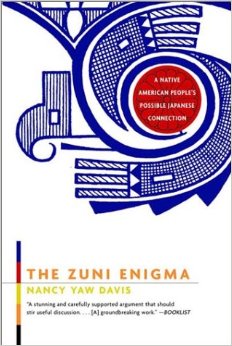
the Zuni EnigmaAnyway I have just received my newest textbook, The Zuni Enigma: A Native American People’s Possible Japanese Connection, written by Anthropologist Nancy Yaw Davis. I  have found some wonderful legends in the small book,  Zuni Folk Tales, by Frank Hamilton Cushing.

This book is an incredible departure for me.  Not only am I working in a world that exists in reality, I am working with a culture that is both known and unknown to me, and I must do it with respect.  This novel is a historical fantasy, but it is set in the 1890’s. I have to remain true to the period, to the two cultures this tale depicts, and I have to make my character real.

Zuni frank hamilton ushingWhat makes this even more tricky, is I am telling this story from the perspective of the main character–something I have not done before. But this tale is a diary in a way about one man’s journey, and the duality of his path in life. It is a stand-alone novel, and while it is definitely fantasy, I think it will be more of a literary novel than Genre Fantasy.

The Zuni are a private, mysterious people, and rightfully so. This makes it imperative that I know what I am talking about. Fortunately have been immersing myself in the Zuni culture through the work of early anthropologist Frank Hamilton Cushing.

Frank Hamilton Cushing’s stay at Zuñi pueblo from 1879 to 1884 made him the first professional anthropologist actually to live with his subjects. Learning the language and winning acceptance as a member not only of the tribe but of the tribal council and the Bow Priesthood, he was the original participant observer and the only man in history to hold the double title of “1st War Chief of Zuñi, U. S. Ass’t Ethnologist.”

My goal is to honor these amazing people, respect their privacy and maintain their mystery, and entertain my readers. The story is amazing–if only I can get it right.

6 Comments

Filed under Adventure, Battles, blogging, Fantasy, Humor, Japan, Literature, writer, writing

Mmmm…chocolate…

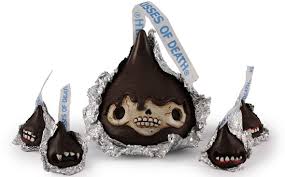
halloween kisses

Kisses of Death by artist Andrew Bell

I’ve always thought that if you really wanted to do something creepy for Halloween, you should hand out little mini-packs of chocolate covered ants, or something. I  just feel there is nothing scary about a Reese’s Peanut Butter Cup, and to do the most sinister night of the year justice, we should serve evil treats.

Halloween is the most important day of the year for many reasons–not the least of which is the annual midnight write in at Shari’s Restaurant for those intrepid heroes who can’t wait a minute longer to start their November Novel!

HTB New Front Cover with gold frameI wrote Huw the Bard in 2011 as my NaNoWriMo Novel–it had a different working title. In 2014 it was published, and the changes it went through in those two years was amazing. Fortunately I have a supportive husband who  regularly allows me to neglect him.

This year I am writing a novel that begins in the old west of northern New Mexico, where a journey to take a holy relic to be melted down at the smelters in Durango takes a terrifying turn into a world between the worlds. The first plan I had for this story was to co-write it with indie author Aura Burrows, but that didn’t pan out as various commitments made it impossible for us to get together on it, and she is unable to do it. But I fell in love with my main character, William Two Cats, and I am going to tell his story.

I have a working title, I have designed a placeholder book cover, I know who and what I am writing about, and tonight at midnight I am off to the races. On the National Novel Writing Month website I am Dragon_Fangirl, and you can see my book page and follow my progress here.

William Two Cats is a man of two worlds, the white-man’s world and the world of the A’shiwi–the people we call the Zuni Pueblo Indians,and yet he is a man of neither. His white mother insisted he be educated him in both cultures, and his Zuni father agreed. The tribal elders know he is destined to be firmly centered between the two worlds, and ensure he takes the path of the shaman. When we meet William, he has left the pueblo.

I can’t wait to get started on this new novel, counting down the hours to midnight…counting…counting….

Oh, look! We still have chocolate covered ants left! Yum!

What? They’re not vegan?

Curses….

ants


2 Comments

Filed under Blogger, blogging, Books, Food, Humor, Publishing, Self Publishing, Vegan, WordPress

Prepping for NaNoWriMo 2014

nano_14_ml_badge_300pxNational Novel Writing Month begins in just 15 days. I am the Olympia Washington municipal liaison, but this year I will not be able to attend the first two days of write-ins in my region, as I will be at Northwest Bookfest, a conference at Northwest University,  both as an attendee and as a presenter. On Sunday November 2, I will be talking about writing natural dialogue. As you know, I love to talk about the craft of writing, and can talk until the cows come home, to use a tired cliché.

However, I will be working at my word count through the evening in my hotel room–and cheering my fellow WriMos on with virtual write-ins. Beginning Monday the 3rd of November, my life will revolve around writing the rough draft of my novel, helping my friends get their rough draft written, and encouraging the young (and not so young) writers of our community to explore their storytelling abilities.

Patrick Rothfuss said in his pep talk last year, “Thou shalt not just think about writing. Seriously. That is not writing. The worst unpublished novel of all-time is better than the brilliant idea you have in your head. Why? Because the worst novel ever is written down. That means it’s a book, while your idea is just an idle fancy. My dog used to dream about chasing rabbits; she didn’t write a novel about chasing rabbits. There is a difference.”

Oly Nanos icon for fb 2That completely describes what NaNoWriMo is all about–getting that novel out of your head and on to paper. If you don’t write it, you will never see what a wonderful idea it really was–and even if it doesn’t go as well as you planned, who cares? This is about the journey, more than it is about the destination.

It will be a month of dirty dishes, dirty house, piled up laundry…oh wait, that’s normal for around here. But anyway, I will do nothing but attend as many write ins here in the local area as I can and find as many ways to encourage secret authors to get that book out of their head and on to paper as is humanly possible.

I can hardly wait to get started!

2 Comments

Filed under Adventure, Blogger, blogging, Books, Fantasy, Humor, Literature, Publishing, Self Publishing, WordPress, writer, writing

Stephen Swartz, A Dry Patch of Skin

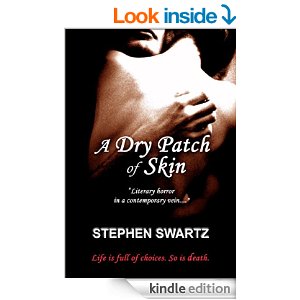
A patch of Dry Skin, Stephen SwartzToday, my dear friend, Stephen Swartz, author of the new book,  A Dry Patch of Skin has consented to answer a few questions for us. Stephen is a true renaissance man–an accomplished musician, and the author of seven published novels, he is also a professor of English at a well-known university in Oklahoma.

I became friends with Stephen in 2011 through ABNA, and we have remained good friends since. I find him hilarious, and I really enjoy his work. He has kindly consented to sit down and allow me to “virtually interview ” him. I am especially curious about his wonderful new book, which is a vampire tale. It’s most certainly not your mama’s sparkly vampires! If you are curious, here is my review: Best in Fantasy: A Dry Patch of Skin

CJJ: Tell us a little of early life and how you began writing:
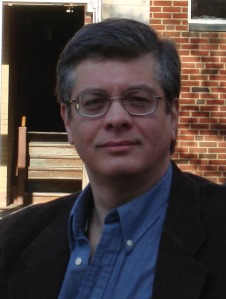
Stephen Swartz 2007SS: It seems like I’ve always been making up stories, much to my parents’ chagrin. I began by drawing panel comics, then added dialog, then began writing paragraphs. I read a lot of science fiction and fantasy in my youth, plus the classics of literature. They influenced my writing mostly by pushing me to try to “out-do” those authors with my own stories. My early writing was limited by the limitations of typewriters and correction fluid. When I got my first computer in 1986, all of my vast library of stories finally could be written. And the world shuddered….


CJJ: Tell us about your most recent book.

SS: A DRY PATCH of SKIN is a contemporary vampire story, but not at all modeled after any of the current vampire TV shows, films, or the books they are based on. I deliberately tried to keep it real. Thus, I researched diseases which cause symptoms approximating the vampire’s condition. In that way, I wanted the reader to experience what it would be like to become a vampire. I decided to tell the story through the POV of a man who is transforming against his will into something he does not want to become. All the tropes and memes of vampire stories are there, but they are realized in a medically accurate fashion—as much as possible. It gets a bit religious at the end, so…call it magical realism.


CJJ: How did you come to write this novel?

SS: I had the idea in rough form ever since Twilight came out and I tried to explain to my daughter, who was hooked on the Bella/Edward story, what “real” vampirism was. For that explanation, I recalled a report years ago on one of those news magazine shows about a man suffering from porphyria, sometimes called the “vampire disease”; the medical explanations for his affliction made perfect sense in terms of why he might be called a vampire if he happened to live in a certain time and place rather than modern America. Watching that interview (he wore a hood to cover his face), I could truly feel the anguish of being in that situation, and given that my art is answering What-if questions, I sought a vehicle for illustrating that awful situation.


CJJ: Do you have a specific ‘Creative Process’ that you follow, such as outlining or do you ‘wing it’?

SS: For A DRY PATCH of SKIN, I worked a bit differently than usual. I began with snatches of my real life, anecdotes that were humorous or telling in some way, then fictionalized them. My initial goal was to explore the character I was inventing, to get down his personality, way of expressing himself, his identity, and so on. As a story set in 2014 in the same city where I live, it was quite schizophrenic to write fiction about the places I regularly visit.

Unlike some authors, I generally do not make lists of traits or compose background profiles of my characters; sometimes I do not know all about them when they come on stage and I get to know them as readers do. (Of course, I go back in revision and make it all fit together.) I do collect information as I create them but it stays in my head. Sometimes browsing the internet will bring me an image that fits what I see in my head.

I knew from the start the direction A DRY PATCH of SKIN would go but I did not have the exact action of the climactic scene until I was mid-way into the writing. Once I “knew” how it would end, the direction of the plot shifted a bit to head toward that conclusion. I found by the end, fortunately, that I happened to have dropped some good seeds along the way which conveniently blossomed in the final chapters—much as Chekhov’s musket in Act 1 must be fired by Act 3. I suppose it’s a matter of how my twisted mind works; I’m not always conscious of the big picture under the cacophony of surface features, but my deeper self knows…because he sleeps with my muses.

CJJ: How does your work differ from others of its genre?

SS: A DRY PATCH of SKIN was a personal challenge, something in a genre I have not written previously. The saving aspect for me, however, was that it is, at the core, a tragic love story. (Is that a spoiler?) The trappings of vampire transformation become the vehicle for pulling off that tragedy. Or is it that the transformation, the struggle to avoid it or prevent it, is made more tragic with the love interest? At any rate, I’ve consciously tried to go counter to all the usual tropes of the vampire genre. In fact, the characters often mention, critique, and spoof some of the popular works of the genre during their conversations. I hope this novel will be both a fun “review” of the vampire literature as well as a realistic portrayal of a biological problem; in that sense, it’s a medical thriller.

CJJ: Why do you write what you do?

SS: A DRY PATCH of SKIN was a departure from my usual kind of novel (contemporary anti-romance or sci-fi on a grand scale). I was intrigued by the question and wanted to see if I could write it if only to see how such a situation might play out. I seldom write as a challenge or game, but this time I did. For writing in general, I simply want to follow my desire to see what happens next for the people I create and the situations I put them in. I know that sounds cruel, but that’s how I roll. It probably keeps me out of jail or the mental hospital.

Next, I’ve been challenged to write an epic fantasy with dragons. Epic fantasy is no problem; dragons are—because it’s in my nature to try to explain them in an authentic zoological way.

CJJ: I certainly can’t wait to see what sort of spin you give dragons! I know why I chose the indie route for my work, but I’m curious as to why you’ve chosen this path.

SS: Strange you should ask because while I have always done things my way (Thanks, Frank!), the results have not always been glorious. After a health scare a few years back, I realized what I wanted most in whatever time I thought I had left was to publish one of the books I’d already written. Years before that, I had gone through the lengthy process of soliciting with actual reams of paper in mailing boxes and the 6-12 month wait for a response by paper form letter. But just a few years ago, the world apparently  changed and querying and soliciting were being done electronically, which opened up a whole new world of possibilities. I was impatient, for health reasons, so I caught the attention of a small publisher with a book I entered into a contest. That did not go so well but I did get a taste of the brave new world of publishing. The rest is what some call history—and others call serendipity.

CJJ: What advice would you offer an author trying to decide whether to go indie or take the traditional path?

SS: I suppose there are all kinds of reasons and they tend to be settled on an individual basis. I described my situation, but even without that push from Father Time I’d probably still discover the small and indie publishers and hook up with one of them eventually. If I were young and had a market-ready book with a ready-made audience, I’d query that thing to the farthest star. If you are short on time or believe your work is specialized and thus out of the mainstream, you probably have to go indie.

My goal the past four years has been to make the books I’ve previously written available, at least that, not so much for my ego as for being able to check them off my so-called bucket list. Then I wrote something new! And made it available, too. And I wrote something new again! I have to give credit to the publishing of my early books for the spark of creativity that caused me to write my new books.

Thank you Stephen, for answering my questions! For those readers who are interested in reading more of Stephen’s writing journey, you can find him blogging at:

Deconstruction of the Sekuatean Empire

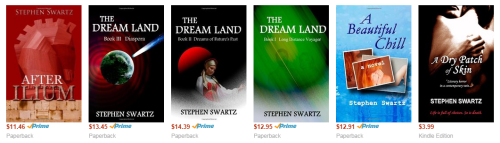
 You can purchase all the books written by Stephen Swartz from this page at Amazon.com
stephen swartz's books

8 Comments

Filed under Blogger, blogging, Books, Dragons, Fantasy, Humor, Literature, Self Publishing, Uncategorized, vampires, WordPress, writer, writing

What I’ve learned from Agatha Chistie

The_Body_in_the_Library_US_First_Edition_Cover_1942I don’t know about you, but I loved Agatha Christie’s novels as much for the great characters as for the mysteries. She had a way of putting the reader right into the society of the time. Take, for instance, Miss Marple.

She’s elderly and has no visible means of support, yet she is not poor. We think she must be living on inherited wealth, but while she is not poor, she also is not conspicuously rich. She is an elderly spinster who was once engaged, is obviously from a good family, and is godmother to a number of young men and women who sometimes get into trouble and need her sharp eyes to sort out mysteries.

She has a nephew, Raymond West, who must be a sister’s child as the name is different, yet no mention is ever made of Jane’s family beyond him. Did she raise him? She is quite close to him.

The_Moving_Finger_First_Edition_Cover_1942She is well-traveled, and can afford to go to Egypt, and to the Caribbean. Miss Marple has close friends in high society. She knows people with hyphenated names and large estates. She doesn’t let wealth or social standing blind her to the true frailties of human nature–she knows that greed and sex are the root cause of nearly every crime.

She owns her own cottage in St. Mary Mead, and it’s not small or mean in any way–she has the ability to hire a young lady to come in and help with the heavy cleaning, although it is difficult to find one who respects the china.

A_Caribbean_Mystery_First_Edition_Cover_1964Miss Marple takes great interest in the life of her village, and it is through her knowledge of that life that she is able to solve complicated, well planned murders. Her ability to work out the motives for each suspect is directly related to how their actions remind her of certain people she has known over the years in her village. Be careful what you say around her, because she will know what you did by connecting the dots between what you said and what happened.

All this information about Miss Jane Marple comes out in her conversations with other characters, delivered over the course of an entire book, and yet one feels as if one knows her right away.

The_Murder_at_the_Vicarage_First_Edition_Cover_1930In the first full book in which she appears, The Murder at the Vicarage, she isn’t really as likable as she is in later books–she seems a bit of a gossip, and rather mean-spirited at that, always expecting the worst of people.

But over the course of 12 books she evolves, and so does our knowledge of her–or does it?

She is genteel, slightly nosy, very comforting and she is on to you–so don’t even think about doing it.

What I have learned from Agatha Christie is that memorable characters grow on you over the course of the book–they are not delivered fully formed on the first page. They are intriguing and we don’t always know what they will do next. There is a hint of mystery about them, and at the end of the book we want to know more.

A_Murder_is_Announced_First_Edition_Cover_1950This sense of intrigue is what we want to instill in all our characters, whether we write sci-fi, romance, fantasy, pot-boilers, or cozy mysteries. If you think about your own experience in life, once it is apparent that you know everything there is to know about a person, they cease to intrigue you. It is the complexities of your friends that keep them interesting, the little things you never knew that amaze you when they are revealed.

Developing a character, deploying just enough information at the right moments to pique the reader’s curiosity is a balancing act, and I’ve come to believe that not everyone can do it with finesse.

Revealing the character over the course of time, and allowing them grow is crucial to keeping the reader’s interest. I think this can only happen if the author has a true understanding of who their character is. This person must be fully formed in the author’s mind so that when they emerge on to the paper they have a sense of realism, as if they are someone the reader would want to know.

nemesis agatha christieMiss Jane Marple was modeled on Agatha Christie’s step grandmother, and on her Aunt (Margaret West), and her friends. Observing these sharp old ladies taught Agatha how a little life-experience can cut through the smoke and mirrors to the truth of people’s’ motivations rather quickly, and that they were often correct in their sometimes mean-spirited assumptions.

I find that doing a small biography of my characters for my own records helps me to understand my people, and while I generally write in the genre of fantasy, people are who they are regardless of the setting you place them in. Characters will react and behave a certain way depending on their history and values. Some are brave, some are lucky, some are stupid beyond belief, but the ones who keep you reading are the ones who still have more to reveal about themselves when the last page has been turned.


Comments Off on What I’ve learned from Agatha Chistie

Filed under Adventure, blogging, Books, Fantasy, Literature, Publishing, Romance, Self Publishing, Uncategorized, writer, writing