Tag Archives: creative writing

Winter’s Heart

HolidayTree2012Web Olympia Downtown Association

Olympia Downtown Association

I love the way the Christmas lights  light up the dark streets at this time of the year. It removes a little of the creepy ‘horror movie’ factor from being downtown at night. Why can’t we have them on the bare trees all winter long? They make the long, dark nights feel so much kinder.

It rains a lot here, some years more than others. This year seems to be a ‘more’ year, but that’s what we like up here. Something about the  gloomy days fires my desire to write. The climate of Northern Waldeyn in my book, Huw the Bard, is inspired by the weather here in the great Northwest, as are the forests and the mountainous countryside. Even the waterfalls are inspired by those that can be found here in my home state of Washington.

We made the weekend journey north to see our kids and drop off presents for our grandkids this weekend, slogging up I-5 in the pouring rain and heavy traffic. It’s not too bad if you aren’t in a hurry-so I never make that trip with high expectations of arriving anywhere in a timely fashion–it can’t be done. Far too many vehicles clog the lone artery that connects Olympia Washington with Vancouver, British Columbia to the North, and San Diego, California to the South.

With our traveling done, and the winter solstice past us, we’re just preparing for our small Christmas day celebration here at Casa del Jasperson. After Christmas, I intend to settle in and get serious about writing again. I’ve been editing a wonderful book, which is a pleasure. I also have several irons in the fire, so to speak–the third book in the Tower of Bones series, Mountains of the Moon, is in the middle of the editing process at Eagle Eye Editors. MOTM is a prequel to Tower of Bones, and is a lighthearted book.

I’m in the final stages of reformatting Tower of Bones to be republished sometime in early 2015–new cover, new maps, all new interior, and Forbidden Road also has a new cover, new maps and a newly reformatted interior. I am still working on the cover for Mountains of the Moon, but I have an idea of what I want to do. The design studio in my Room of Shame is cranking out artwork as fast as I can think it up.

I’ve gotten the two followup books to Forbidden Road through the rough draft stage and into to the final fleshing out. The Wayward Son, and Valley of Sorrows had to be written concurrently, and the story line necessitated a name change in the earlier books, as a minor character became a major character, and her name was nearly identical to that of another major character. Since I had already pulled the two earlier books for reformatting, I decided to just take the plunge, and make that change globally. The Wayward Son is the story of John Farmer’s redemption, and takes place during the same months as Forbidden Road.

I’ve learned how to make vectors, and am getting the hang of creating digital art, and have found that I have a talent for graphic design. At least I like my pretty pictures.

All in all, it’s going to be a busy year. I can hardly wait to see what is going to come along next–maybe I’ll take up alpaca ranching. I’ve never done that before. They can’t be any worse than sheep…which were a pain, if you want the truth.

Okay. No alpacas. But they are awfully cute.

4 Comments

Filed under Adventure, Battles, blogging, Books, Fantasy, Humor, Literature, Publishing, Self Publishing, writing

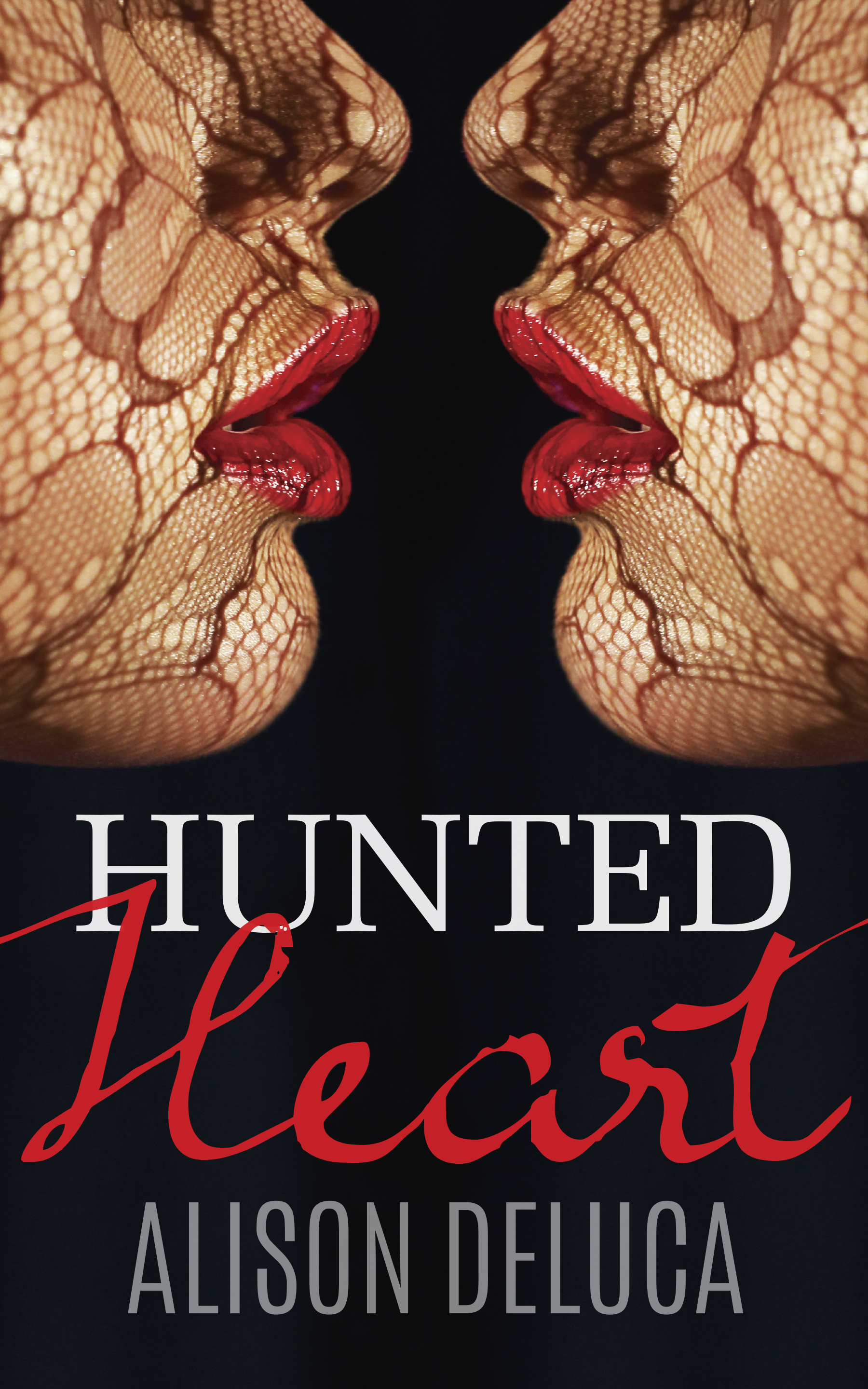
Hunted Heart, by Alison Deluca

Most avid readers of the fantasy genre are fans of the old fairytales as told by the Brothers Grimm and I am no exception. In fact it was my love of fairytales that inspired me to write in the first place. I am always interested in reading other authors’ takes on these fairy tales. It is amazing how differently two authors will tell what began as the same story.

Today my good friend, Alison DeLuca, author of  the steampunk Crown Phoenix Series, has consented to answer a few questions for us, and allow me to share the wonderful cover of her new book, Hunted Heart. It is a standalone book, and is a true fairytale, the premise of which had really intrigued me.

CJJ: Alison, tell us a little of early life and how you began writing:

AD: I always loved reading. My early favorites were Alice in Wonderland, the Odyssey, Arabian Nights, and fairytales of all kinds.

CJJ: Tell us about your most recent book.

AD: Hunted Heart is an adult version of Snow White. Prince Kas is the one threatened by the wicked queen, and the huntress, Tali, is given the job of taking him to the forest to cut out his heart. They end up falling for each other, but not without a great deal of adventure along the way. Yes, there is a wicked queen and my version of a poisoned apple. And we mustn’t forget True Love’s Kiss…

CJJ: How did you come to write this novel?

AD: Someone I met online prompted me and begged me to write the story – she is the J.R. in my dedication. I loved her idea of making the hunter a strong female and ran with it.

CJJ: Do you have a specific ‘Creative Process’ that you follow, such as outlining or do you ‘wing it’?

AD: This book was an exercise in winging! The Snow White structure supported my story, and I was able to take off from there. Writing a fairytale redux is completely addictive – I might have to do a few others.

CJJ: How does your work differ from others of its genre?

AD: It is genderbent, and I’ve set the story in a mythical Norse country. I couldn’t resist including Freja, Iduna, and a few others from Norse tales. It’s also quite adult, with violence and some sexy scenes, and a charity project: Tali, my main character, suffers from some terrible abuse as a child, and so 100% of the royalties go to HelptheChildren.org.

CJJ: Why do you write what you do?

AD: Honestly, because I can’t help it. When I get an idea it needles me until I pin it down on paper. It’s like giving birth, to be honest.

CJJ: I so know that feeling! I know why I chose the indie route for my work, but I’m curious as to why you’ve chosen this path.

AD: I love the freedom indie publishing gives me. I’m able to write what I like and donate the proceedings when I do a charity project like this.

CJJ: What advice would you offer an author trying to decide whether to go indie or take the traditional path?

AD: Both have their merits and challenges. Being an indie does give you freedom but also relies on individual marketing. Traditional publishing gives more support but gives the author little choice on things like covers and presentation. Both are good in their way – each author must decide for herself how she would like to proceed!

 CJJ: Alison–I love the answers you gave my stock questions!  Thank you for giving me this opportunity to get the word out about your charity, HelptheChildren.org.

AD: Thank you so much for having me on your blog, Connie. This was a lot of fun!

And without further discussion, here is that amazing, most intriguing book cover:

HuntedHeart cover final


I confess I am blown away by this one, and I have become quite a fan of Alison’s graphic designer.

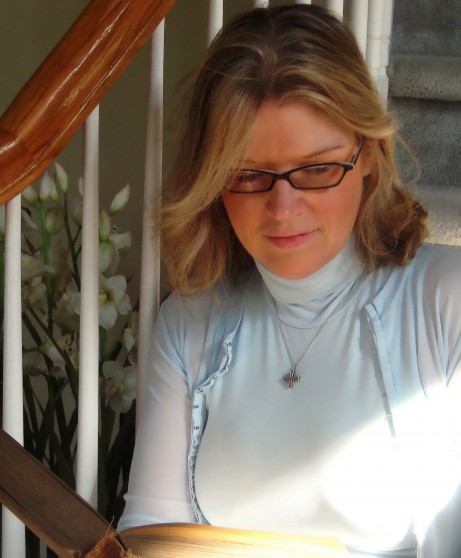
Alison DeLuca HeadshotAlison DeLuca is the author of several steampunk and urban fantasy books.  She was born in Arizona and has also lived in Pennsylvania, Illinois, Mexico, Ireland, and Spain.

Currently she wrestles words and laundry in New Jersey.

You can find Alison here:

Facebook – http://www.facebook.com/alison.deluca.author

OR http://on.fb.me/TNWEfb

Twitter – http://twitter.com/ – !/AlisonDeLuca

Google + http://bit.ly/ADGoogle

Author Central: http://amzn.to/ADeLucaAuthorCentral

Pinterest: http://pinterest.com/alisondeluca/

I have long been a fan of all of Alison’s work and have been fortunate enough to have some of my own work  included included along side of hers in a charitable anthology, Christmas O’Clock,  a book of wonderful short stories for children that is available in both paperback and for the kindle. (All proceeds for Christmas O’Clock go to Water Is Life to help children and families in an international effort.)


4 Comments

Filed under Adventure, Battles, blogging, Books, charity, Fairies, Fantasy, Humor, mythology, Romance, Self Publishing, Steampunk, WordPress, writer, writing

Loki, Zorg, and why I love the bad-boys

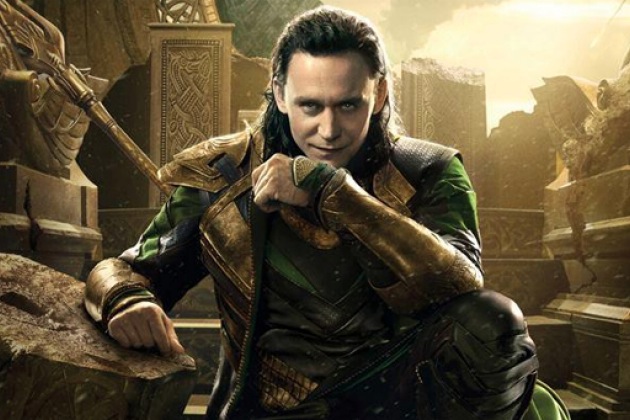
Thor-Everything-LokiI love swashbuckling sword-fights and movies fraught with testosterone and machismo. I don’t need it in real life, thank you–that’s what I have books and movies for. So what are my favorite movies?

Thor–anything Thor will be a winner  from my point of view.

Let’s just say that anything featuring a bad-boy god with a twisted sense of humor is high on my list of must-watch movies. Plot? Sure, if you say so–but this is a movie so bring on the eye-candy now.

I love the character of Loki as played by Tom Hiddleston. He is everything the God of Mischief should be, and then some. He’s like that beloved ex-boyfriend–you’re always glad to see him, and even happier to see him leave.

Fifth_element_poster_(1997)What other sorts of movies intrigue me? Well, I am a huge fan of the 5th Element. I adore the character of Korben Dallas as played by Bruce Willis, but for me the man who stole the film was Zorg, as played by Gary Oldman.  Who doesn’t love a megalomaniac industrialist enslaved to The Great Evil? What a guy! And lets face it, Korben Dallas is just as much fun as Han Solo, and both are quintessential bad-boys.

The thing that intrigued me most about the 5th Element was the way the film portrays consumerism in that society as a living, breathing thing that has veered out of control. Extreme lust for technology and power is set against that of a simple man wanting a simple life–our own flaws are laid bare in the characters of Zorg and Korben Dallas.

But where is the eye-candy in that movie? Well you have to admit it is one of the most visually stunning films of the twentieth century.

You might wonder where I am going with this-so do I. Oh wait!  Bad-boys! Why I love to write about the bad-boys and read about them and even see the movies featuring them!

han-solo-smugglerThe bad-boys are intriguing, dangerous, and definitely not the boy your mama set you up with.

They are fun.  So I have two new manuscripts in the works and one features a bad-boy, a man who falls from grace and years later returns. Some of his experiences have changed him, but some things will never change. While his basic arrogance has been tempered, he is still the man he always was, but with a better grasp of what is truly important.

A bad-boy is a multidimensional character, made of many layers both good and bad, and as the story progress those layers are peeled away, revealing a new facet, but also hinting that more still lies hidden. The trick is to make those layers lure the reader (or watcher) in.  Loki, Han Solo, and Korben Dallas are all characters who intrigued me. They are written perfectly, because at the end of the movie, the observer still doesn’t know them well, but wants to.

From watching these movies, I’ve learned that one should dole out the character in small bits, showing a layer at a time, but always holding out the lure that far more lies hidden beneath the surface.

That is the trick, and it’s one thing to know it and another to do it.  But we try!


2 Comments

Filed under Adventure, Battles, Blogger, blogging, Fantasy, History, Humor, Literature, mythology, Politics, Publishing, Uncategorized

Resurrection, Reconstruction, and the Great Reckoning

cocacola_08

Coca-Cola HD Wallpapers

I have been writing like a crazy person for the last two weeks.  Well, I am a crazy person, but–I have been spewing the basic rough draft of a novel in the most unlinear way possible.  I have my plot outline and I am following it, sort of.  With that as my guide, even when I am jumping around in the manuscript like a mini-van full of toddlers hopped up on jelly-beans and coca-cola, I am still within the actual framework of the story that was originally outlined.

But what if, as occasionally happens, you suddenly realize that four chapters previously you shot the villain and buried him when he should actually have been struck by lightning? He was always going to die, that was a given, because he must be the undead villain, hell-bent on revenge.

330px-Zombie_haiti_ill_artlibre_jnlThe good thing about being an author is that once you realize there was a mistake, you can always un-shoot them. Then you can strike them with lightning as they should have been in the first place, send them to Hell and and have some minor devil trying to work his way up the management chain in the underworld resurrect them as your creepy, decaying, undead villain.

And if you are in the middle of NaNoWriMo, every time you rewrite the the scene with a slightly different outcome, it counts toward your word count.

Just sayin’.

So, here there I was, happily writing along, when suddenly I realized I had to change a rather large plot-hole, and knew I had to do it while I was thinking about it. First I did a global search for the name of the character that has taken the wrong turn. I changed the font color to red in that section, and began rewriting the scene the way it SHOULD have been written in the first place, using the usual black font.

Now, during normal writing sessions, I would simply cut the offending scene out of the ms, and paste it into a separate document which I then save to my ‘Background File’ in the same folder as my main manuscript. By doing that, I don’t lose information I may need later.

virtually golden medallion of mayhem copyBut this is National Novel Writing Month, and every word in that manuscript  counts toward my region’s total wordcount! We are the Olympia Washington USA region and we have a Word War on with Salem Oregon USA: the Capital Smackdown! On November 30, the day of the Great Reckoning,  The Virtually Golden Medallion of Mayhem is up for grabs!

We have never won this awesome…thing-a-ma-bob….

But we want it.

And in the per-writer stats Salem is slightly ahead of us in this battle. OH! the misery!

So if that means I have a multicolored manuscript for a few weeks, so be it!

Besides, if I don’t begin to make those changes when first I realize they need to be done, I might forget until a beta reader points it out. Thus, I find myself up at all hours of the night ironing out plots points, trying to keep an unmanageable group of characters in line and trying desperately to keep that all-important word-count up!

2 Comments

Filed under Adventure, Battles, Blogger, Books, Fantasy, Humor, Literature, Publishing, Self Publishing, Uncategorized, WordPress, writer, writing

Plug in to The Matrix


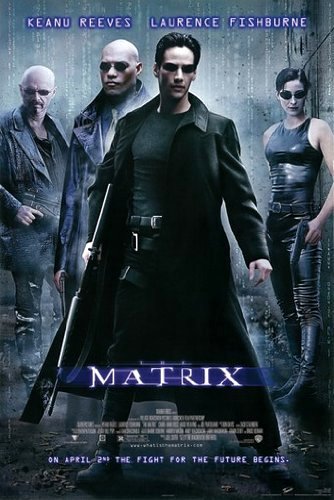
the Matrix PosterNovels have layers. Theme is what the story is about on a deeper level than the plot details. It’s the big meaning, and often it’s a moral meaning. Love, honor, family, and revenge are all some common, underlying themes.

I think of the scenes in my books as if they were scenes in a movie. Each conversation is a scene.

Sometimes, we find ourselves in Outer Mongolia as we wrangle our words. Our mind is off chasing squirrels, and our fingers are madly keying dialogue. It happens, and then we find ourselves writing paragraphs of discussion regarding the vase on the kitchen table. Why are we discussing this vase?  If there is a reason that will emerge later, keep it. If it is just idle fluff, lose it.

I actually have a scene in one of my forthcoming books where the characters do just that. They are discussing a vase that was made by a child, but the conversation is not important for the sake of the vase, nor is it really about that object. It is there to expose how important an absent person is to one of the speakers, and the brief interaction between the two speakers endears to the reader one of the characters who will later meet a sad end. The underlying themes of this book are brotherhood, family, romantic love, honor, duty. The obvious theme is the successful resolution of a quest. The core plot device around which the story evolves is an ongoing War of the Gods, and the world in which the tale is set in is their battleground, offering all sorts of opportunities for mayhem.

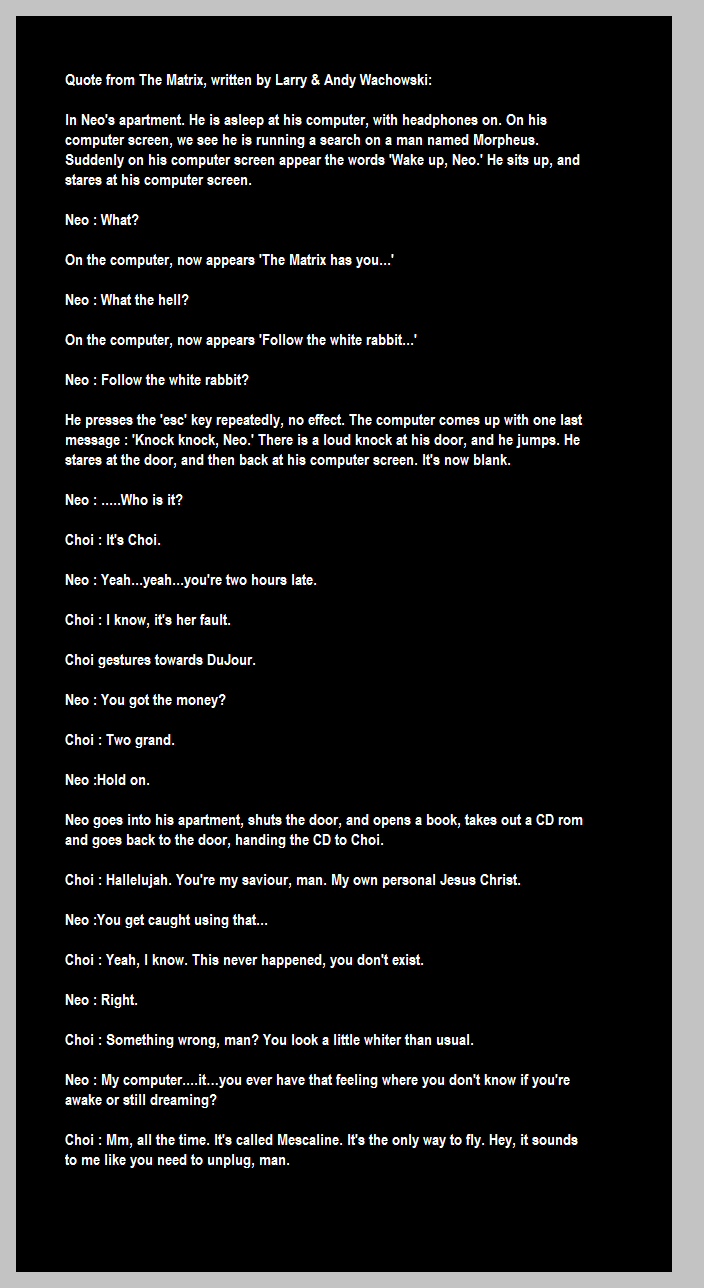
Consider the first scene of one of my favorite movies of all time, The Matrix. This movie has a lot of action, but it has a lot of dialogue also, and that dialogue advances the plot and never loses the theme of the story.

Quotes from the matrix

The conversation concerns a drug deal, but the underlying theme is never lost. The key words are in the first line, written on the computer, The Matrix has you, the third line, follow the white rabbit, and in that very last line, telling Neo to unplug. The Matrix is all about waking up, about what reality is, and about Neo as the potential savior of the world, which has been enslaved by a virtual reality program. It is about escaping that program. The conversations that happen in the course of the film all advance that theme, even the minor interactions, from the first conversation to the last.

The Arc of the StoryWe must approach conversations in our novels as if they were scenes in a movie. In a good movie, we don’t notice it, but there is an arc. In a story arc, a character undergoes substantial growth or change. It ends with the denouement in the last third or quarter of a story. The end of a narrative arc is the denouement, the final resolution. It shows what happens as a result of all the conflict that the characters have gone through.

If we don’t keep the arc of the story moving with each scene, we will lose our reader, and to that end, each conversation must reflect the underlying themes of the story without beating the reader over the head with it. As in real life, some of the people know more than others, and to advance the plot and the theme, small clues must come out over the course of each scene, each scene building to the finale.

I876MilanoDuomo‘ve said this before, but we must build the overall arc of the story from scenes, each of which is a small arc, in the same way a gothic cathedral is constructed of many arches that all build toward the top.  The underlying arches strengthen the overall construction. Without arches, the cathedral wouldn’t remain standing for very long. The novel is a cathedral and your scenes are the arches that hold it up. The conversations that form those scenes are miniature arches, each with a beginning, a high point, and a resolution.


4 Comments

Filed under Adventure, Battles, blogging, Books, Fantasy, Humor, Literature, mythology, Publishing, Self Publishing, Uncategorized, WordPress, writer, writing

The Great Dialogue Debate

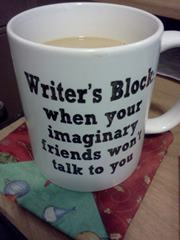
My Coffee Cup © cjjasp 2013We meet our friends on the street, or in a bar or a coffee shop and we talk talk talk.  And so do our characters.  Sometimes those wild and wacky imaginary friends of ours just won’t be quiet, and it drives us nuts. Other times they behave like a thirteen-year-old forced to go on the old family vacation,  sitting in stony silence staring at her signal-less phone, refusing to participate with those people who claim to be her parents and who dragged her off to the wilderness for something called ‘family time.’

Eww.

But when they DO choose to participate in the conversation, how do we make them sound natural? There is a lot of argument in writers forums on this subject, but I go from the point of view of the reader. What is easiest for the reader to follow?

Take a good long look at the works of established writers whose dialogue is crafted in such a way that you, as the the reader, didn’t feel like you were reading it: you felt like you were living it. Did they get too fancy, and uber creative?

No, they kept it simple, and showed you the conversation.

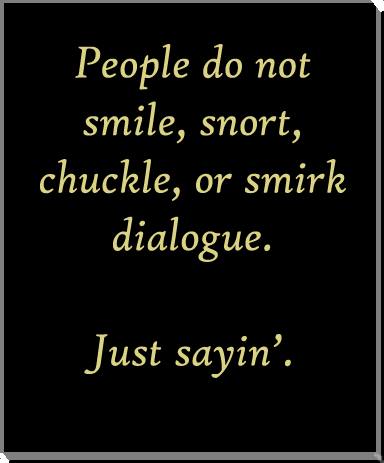
First off–my pet peeve: people do not smile, snort, chuckle, or smirk dialogue. They don’t giggle it either, but they DO say it, they reply it, and many times they ask it. As long as you mainly stick to said, replied, answered, and asked, your reader won’t even notice the attributions are there. If you are writing genre-fiction, there is no need to get creative with your attributions, or ‘dialogue tags’ as we call them: stick to ‘John said’ (not said John, which sounds too old-fashioned these days.) Unless you absolutely need a John screamed or a Sarah uttered or a Paula retorted (which you pretty much never do) just say it and let the reader do the rest. Fancy synonyms for ‘said’ are usually unnecessary and distracting.

You can skip using dialog tags altogether for a back-and-forth or two, but not if there are more than two speakers in the scene, and not for more than a few exchanges. Readers want to be able to track who is saying what.

Sometimes it’s okay to miss a few beats. Beats are what screen-writers call the little bits of physical action that is inserted into dialogue:

People do not snort dialogueBack in the office with the door shut tight, Junior and Pap plotted the special hunting trip for the nice tabloid man. Junior unbraided his hair and pulled it back into his customary long ponytail. Off came the blanket, which he told Pap smelled musty, and the headband. “Tell Johnny thanks for the loan of his buckskins,” he said as he stripped them off, stuffed them into a gym bag, and then pulled on a pair of slacks. “I’ll need them tomorrow for this picnic. That idiot wanted to leave at dawn! I told him after breakfast, so what do you think—about ten o’clock? I usually don’t go to bed until dawn.”

Beats or actions serve to punctuate the dialogue, to give the scene movement, and to maintain a strong mental picture in the absence of description.

Small actions showing the mood of a character are often best placed where there is a natural break in the dialogue, as they allow the reader to experience the same pause as the characters. They’re an effective tool and are essential to good dialogue, but don’t overdo it. If your characters are fluttering their eyelashes, gazing into the distance or opening their laptops between every second line of conversation, the scene becomes about the action and not the dialogue, and the impact is diluted or lost entirely.

This means that when we add gestures and actions to the conversation we want it to be meaningful,.  Otherwise, just use a simple dialogue tag, like said, or replied. This is why we don’t want to make the mistake of getting rid of attributions entirely—because the verbal exchanges become confusing and the action takes over, making the dialogue fade into the background noise of foot shuffling and paper rattling.
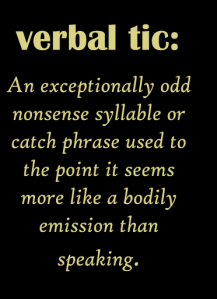
verbal tic memeBut what about exclamations and verbal tics?

We frequently speak this way  in real life, but we don’t want it in our work so I recommend you avoid using them. When a character overuses exclamations, it is exhausting for the reader to wade through paragraphs peppered with instance after instance of “Ahhhh…” “Ugh!” “Yuck!”  “Blech!”

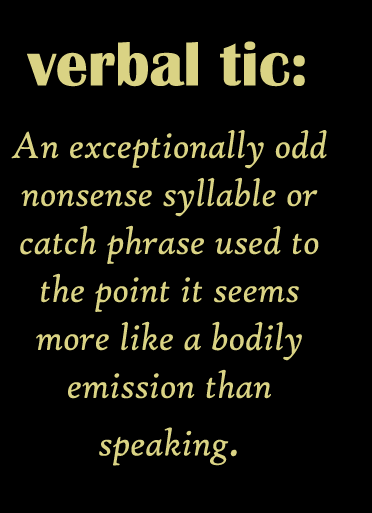
For example, have you ever met a person who drones on with a long “A-a-and a-a-ahhhhhhhhh….” holding conversations hostage with meaningless syllables? These are ‘thinking syllables.’ This is what is known as a ‘verbal tic’ and can be such an ingrained habit the guilty party is unaware they are doing it. They’re often quite hurt if you try to hurry them along.

It’s a habit that we don’t enjoy in a conversation, and don’t want to read in novel, so I recommend you don’t begin more than a few sentences with thinking syllables like  “Ahh…” or “Hmmm….”

These are difficult speech behaviors to convey, because they are supremely annoying in real life and are excruciating to read in a book. As a reader, I’ve come to feel your best bet when dealing with verbal tics is to give a brief instance of their speech pattern and after that, if it is important, mention occasionally the way their habits annoy other characters.

What about accents? Grammar Girl, Mignon Fogarty, says “When writing for a character with an accent, it is tempting to render the character’s speech phonetically using nonstandard spellings. However, this practice is risky and should be avoided, unless you specifically want to emphasize how a character speaks. First, there’s the question of how accurate to be. The more accurate the phonetic spelling, the more frustrating it will be to read.”  

Don’t overdo spelling them out.  You have no idea how hard it is to wade through that:

490px-Henry_Singleton_The_Ale-House_Door_c._1790“Me lempsor’ ‘urt an’ oi’m feelin’ dead knackered. Oi nade ter kip for a while.”

Translation: “My feet hurt and I’m feeling dead tired. I need to sit and rest a while.”  I think you could get away with just using knackered and kip to convey the general idea, and not lose the reader’s interest. If you choose to replace ‘to’ with ‘ter’ for a specific character, be sure to do it consistently and consider leaving it at that.

I have walk-on characters who are minotaurs, and the physical transformation from man to minotaur affects their ability to speak, some more than others. They also come from a different world. This posed a dilemma for me. Because the lower ranked minotaur soldiers make only brief appearances, I can get away with a bit more of a dialect or a speech impediment. The higher ranking ones made it through the remaking with more of their wit and abilities intact, and therefore speak more clearly. I mention they have an accent and leave it at that.

More and more, I am leaning away from writing heavy accents into my dialogue. I recommend going light and limiting the use of misspellings, bad grammar, and vulgar accents especially if you are trying to point out that the character is uneducated or from a rural background.  Use only a few well-chosen words to convey the idea of the accent and use them in a consistent manner for that character in such a way that it isn’t incomprehensible. It’s very easy to go over the top with it, and then the character becomes a parody, a cartoon of a person, instead of someone who feels real.

This winds up my rant on annoying habits we don’t want to inject into our dialogue. Accents, dialects, verbal tics–these are things we need to convey, but we must be mindful of our readers’ supply of patience. Show a little, and let the reader’s imagination do the rest.

5 Comments

Filed under blogging, Books, Fantasy, Humor, Literature, Publishing, Self Publishing, Uncategorized, writer, writing

Achieving a Balanced Narrative

395px-Ellimans-Universal-Embrocation-Slough-1897-AdI was involved (as a horrified bystander) in an online dispute over how much description is needed in today’s genre fiction.  I walked wide of that mess, as it was clear that one author with an online pseudonym was in assassin mode. The other, whose prose had been harshly critiqued, also using a pseudonym, had called in her flying monkeys, all of whom proceeded to tear the argumentative ‘troll’ to shreds.

Ugh.  What a waste of time for all of us, bystanders included. It should have been a civilized discussion about using adjectives and achieving balance when showing and not telling your story.

Sadly, in this case the troll was right, but his attitude was so arrogant, he negated the value of his opinion, with normally sane people reduced to begging him to just ‘shut it.’

The prose in question was far too florid for my taste, forcing the reader to watch every excruciating, drawn out second as the the main character slowly curved his lush, full lips into a sexy, white smile, his pink tongue just touching his full, trembling, lower lip.

Pardon me, I must go barf now.

I prefer to read work written with in a lean style, as too much showing gets in the way of the story. It becomes a matter of the author forcing his vision onto me, as the reader, and is just as unpleasant to read as a narrative that tells you how to feel.

This is my view on the subject of description in the narrative: when you write about a room, any room, you don’t describe the details of room. You tell the character’s story as he enters the room.

What does the character see? What does he or she do in response to those things? Do they use the old wall-mounted telephone? Do they open the drapes? Perhaps he picks up the newspaper, and continues into the kitchen. Each character is different, and will see and do different things, and through those actions your room will come into focus in the mind of the observer–the reader.

Describing emotions is done the same way as describing the setting. We have all been told over and over again that in narrative, the most intimate way to show a feeling is to show the state of the protagonist’s body.

But how do we do that?  Let’s take humiliation:

Her face turned bright red in embarrassment.  

This sentence is what we call telling–the author has baldly told you how the character feels and why. This separates the reader from the sense of being the character. While the character may feel that her face had flushed, it’s unlikely that she would know the exact shade of red she had turned. To make it from the protagonist’s point of view and keep it simple, just write what happened.

Her face burned and she turned away.

Here is my  thought on this subject: we don’t need to get crazy, and give the minute details of her burning flesh heating up until she could see her nose glowing like Rudolph on steroids…we just need simple descriptions that point the reader in the right direction. If our character is really humiliated you can add one more descriptor, but still keep it simple:

Her face burned, and nauseated, she turned away.  

This is as much humiliation as I would put a reader through in one sentence. Realistically, the protagonist would feel the burning of her face, and would feel the nausea. The reader will taste the nausea if you describe the sensations with too much detail so keep the details to the bare minimum.

With that said, it is crucial that you give SOME clues as to what the character is feeling, as the reader will be completely lost without some sort of visual cues.

640px-Bicycling-ca1887-bigwheelersTake a look at what the protagonist’s body might be doing. What did it feel like when you experienced the same emotion? What did your body do? What did you feel inside? Was there a heaviness in your chest? A lump in your throat? Did you feel light-headed or weak-kneed? Did your face burn? Close your eyes and think about how you experience an emotional moment and allow your senses to take over.

With that memory in your head, write it down.

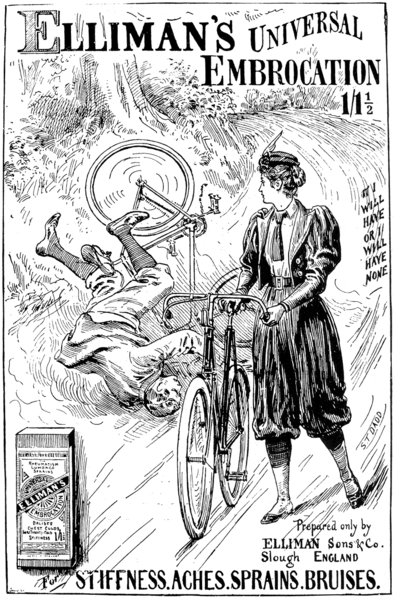
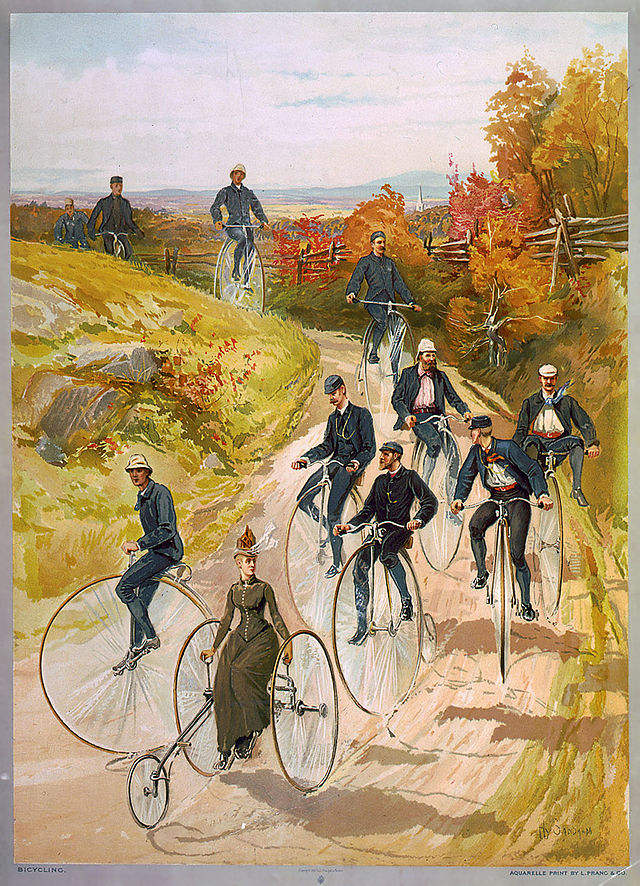
Just remember that it is crucial that you don’t over do it. Just like riding a bicycle, you must have balance in your descriptions: there must be enough description to intrigue the reader, but not so much it overpowers the story.


2 Comments

Filed under Adventure, Battles, blogging, Books, Fantasy, Humor, Literature, Publishing, Romance, Self Publishing, Steampunk, Uncategorized, WordPress, writer, writing

So Bad it’s Good

long_live_dead_languages_latin_poster-r90bf04eb9e534fd48a8e4149dadac2aa_vhzd_8byvr_512

Long Live Dead Languages!

We love to play with our words like a cat and a ball of yarn. We can take a word with a perfectly clear meaning and then turn it around and make it also speak it’s opposite.  “That’s so bad” can mean it’s very good. “That’s sick” can also mean it’s good, although I’m not sure why.

We love to turn words into the opposite of what they originally meant.  It is such a common hobby, skewing words and redesigning their meanings, that even the word describing that action has several different names.

I find that ambiguity interesting. It is entirely appropriate that this type of word should not have a clearly defined label. Two words to describe this concept were invented in the  1960s.  A contronym (or autoantonym) is a word with multiple meanings, one of which is defined as the reverse of one of its other meanings.

This means that when you use these words in your writing you must be sure the context clearly identifies which meaning is intended. English is a fluid, evolving language and, like Latin, will one day be considered an extinct language. Sometimes a language that has changed so much that linguists describe it as a different language (or different stage) is called “extinct”, as in the case of Old English, a forerunner of Modern English.

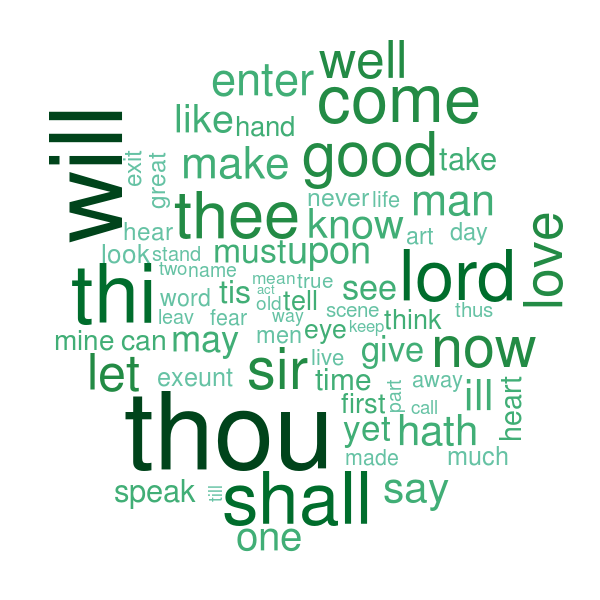
shakespeare-word-cloudIn many cases, the language never stopped being spoken, it simply evolved. Take Latin, for example: there is no point at which Latin died. Instead, it evolved in different ways in different geographic areas, and its modern forms are now identified by many different names such as French, Spanish, Italian, Romanian, Catalan, Venetian–all the languages we call Romance Languages.

We don’t call them that because they are romantic–in this case the word romantic means originating in Rome.  The root of the word Romance is of Rome. Latin is not dead–the roots of Latin form part of the base upon which Modern English is built, and we who proudly speak a variation on Old Saxon use the name of that fabled city-state to describe the most precious and intimate of emotions–that wonderful heady feeling we call romance.

So what words are currently also their own opposites?  For a large list, click on this link which will take you to Daily Writing Tips

gibberish-american businesses onlineMy point with all of this is that we must be very clear about the context in which we use certain words, because with the ever-changing world around us, the language we depend on to convey our meanings is changing. I see it as being in a period of change as radical as that of the Renaissance, when literally (which now can also mean figuratively) thousands of words were coined and reinvented.

2 Comments

Filed under Blogger, blogging, Fantasy, Humor, Literature, Publishing, Romance, Self Publishing, WordPress, writer, writing

SomeWhen Over the Rain Clouds, Lisa M. Peppan interview

KCover-SWOtRCThe Pacific Northwest has been the home of many famous authors, Frank Herbert, Ken Kesey, Ursula K. Le Guin, and J. A. Jance among them.  There is something about the dark and the damp that encourages creativity. We have a huge community of authors, with critique groups and strong support for each other.

Recently one of my friends from Bellingham, Washington, author of historical fiction J. L. Oakley, introduced me to another friend of her’s, fantasy author Lisa M. Peppan. Lisa’s book, SomeWhen Over The Rain Clouds is an intriguing book I am currently reading on my vacation–I can’t put it down!

Here is the BLURB:

SWotRB blurb

Lisa has consented to answer a few questions about her writing process and where her book fits into the genre of fantasy.

CJJ: Tell us a little of your early life and how you began writing:

LMP: Once I got the hang of it, I became a voracious reader.  My favorite still is L. Frank Baum’s Oz books.  It’s his fault, me writing.  I tried my hand at a few short stories but it wasn’t until after reading a poorly written fantasy that I was inspired to write a better story.

CJJ: What are you currently working on?

LMP: While my cover-artist works on a cover for the sequel to “SomeWhen Over the Rain Clouds”, I’m working on a third book.  Might be a fourth, possibly a fifth.  Maybe more.  Same alternate universes and most of the same characters, all bundled together as The Geaehn Chronicles.  The Geaehn Chronicles has a Facebook page.

CJJ: Do you have a specific ‘Creative Process’ that you follow, such as outlining or do you ‘wing it’?

LMP: SomeWhen started life as 98 handwritten pages.  With a rough idea of the kind of people I wanted my characters to be, I ran astrological birth charts for them and compatibility charts for every possible combination of the four.  While mulling over potential plot complications, I wrote detailed biographies for my main characters, drafted maps, and re-read a selection of mythologies, and, well, once I knew my characters and the world I was sending them to, I wound them up and let them go.  So far, this has worked for two and half books.

CJJ: How does your work differ from others of its genre? Why do you write what you do?

LMP: In all the fantasy I’ve read, cab drivers were things that moved protagonists from Point A to Point B.  Three of my four main characters are Seattle cab drivers who recognize that they’ve become involved in a fantasy-novel-type situation; the fourth knows it’s so much more than that.   I drove a taxi cab for 11 years, did a little dispatching, and knew cab drivers were so much more than things (most of them), and wrote the kind of book I’d enjoy reading.

CJJ: I know why I chose the indie route for my work, but I’m curious as to why you’ve chosen this path.

LMP: In the Spring of 1984, on a particularly slow day as a taxi cab driver, SomeWhen Over the Rain Clouds was born.  Over the years, I got many really nice rejection slips.  Then along came a first novel contest on Amazon.  Though I shot myself in the foot for the contest (ask me why and how bad), I was among the 100 best entrants that year.  It also made me aware of that most marvelous purveyor of POD novels, CreateSpace.  When a long-published author friend went Indie, because it appeared to be the direction publishing was going, I took the plunge.

CJJ: What advice would you offer an author trying to decide whether to go indie or take the traditional path?

LMP: Most traditional brick-and-mortar publishers want to see smartly written synopses.  I tried but my best effort (to date) is 23 pages, and Indie doesn’t require one*.  Indie or traditional…?  If you write fantasy that you’ve given a truly fresh spin and you keep getting really nice rejection slips with handwritten notes saying things like, “Great premise” and “Best wishes finding a home for it!!”, go Indie.

*You won’t need the synopsis but you will want a snappy blurb for the back of the book

CJJ: Your experiences with traditional publishing rather closely mirror mine, Lisa!  Thank you for agreeing to be virtually here today, and for the insight into how your creative process works.

Here is a short excerpt of this wonderful book:

excerpt SWotRB

Intrigued?  Lisa’s book is SomeWhen Over The Rain Clouds and can be found at these fine stores — just click on the links:

www.amazon.com

Barnes & Noble

‘Like’ Lisa on Facebook

LMPeppan

Born in Seattle as the eldest of three, Lisa was a curious and adventuresome child who delighted in taking things apart to see just exactly how they worked.  It is a Testament to the Bravery of her parents that they went on to have two more children.

In 1981, after having held a number of jobs in a variety of fields, it was no real surprise to her parents or brothers when Lisa went to work as a cab driver for North End Taxi, a small mom-and-pop cab company in north Seattle.  During the summer of 1984, as a cab driver, after reading what she felt was a poorly written fantasy novel, she said, to no one in particular, “I can do better than that.”

Unplanned early retirement in 1992 gave Lisa time to learn about computers and html coding.  Armed with these new tools, she resumed her family research.  This led to a new hobby–19th century Living History–and from there she caught a glimpse of the scope and diversity of her Aboriginal heritage that spanned North America, north and south of the border.  What her father and his parents worked so very hard to hide, she works diligently to recover so the next generation will know who they are and where they came from; the time for hiding has passed.

When she isn’t reading, writing, researching, or playing in the past, Lisa enjoys quiet moments in the mountains, ferryboat rides on Puget Sound in November, windy days on any beach, hairy chests on men, rare steaks, and purple roses.

Lisa can be contacted at lisapeppan at gmail dot com

Comments Off on SomeWhen Over the Rain Clouds, Lisa M. Peppan interview

Filed under Adventure, blogging, Books, Fantasy, Humor, Literature, Publishing, Self Publishing, Uncategorized, WordPress, writer, writing

Lamed in the land of Language

IBM_SelectricMy first draft sits sullenly on my desk, glaring at me with repetitiousness and flatness of prose.  No matter how I grasp for words, a sword remains a sword, remains a sword…since to refer to it as a blade or weapon would require stretching the vocabulary…

…ellipses rise and fall with frequency across my page…boring, jarring frequency…

My characters are Angry!  Not mad, furious, enraged, excited, wrathful, indignant, exasperated, aroused, or inflamed–no–they are merely

‘angry.’

I frequently tell them how awesome they are, because my mind is inelastic, and awesome is all I know. Truthfully, they are amazing, incredible, unbelievable, improbable, fabulous, wonderful, fantastic, astonishing, astounding, AND extraordinary. But my lamed vocabulary shall forever deem them ‘awesome.’

Roget's Thesaurus 1st editionMy thesaurus has been used and abused, and still my lazy (indolent, slothful, idle, inactive, sluggish) mind gropes for words.

Inspiration has played me false. Fake, fraudulent, counterfeit, spurious, untrue, and unfounded? No! ’tis erroneous, deceptive, groundless and fallacious, this twisty beast, Inspiration.

I go quietly into the depths of the Room of Shame, that hall of horror that is my office, where I shall once again attempt to wrangle words in the desert of desperation.

4 Comments

Filed under Adventure, blogging, Books, Fantasy, Humor, Literature, Self Publishing, Uncategorized, WordPress, writer, writing