Tag Archives: creative writing

#amwritng: The #NanoNovel: the mechanics of writing dialogue

jack-kerouac-quote-memeEveryone has read books that inspire them to become writers. But many authors just starting out don’t know how to write the kind of book they envision.

Consider writing conversations: it’s just people talking, right? No big deal.

Wrong. Many authors just starting out don’t know where the periods (full stops) and commas go, inside or outside the quotation marks. They are inconsistent where they put them throughout the manuscript because they are unsure of what way is right.

They send me things with the punctuation inside the quotation marks sometimes, outside sometimes, and with quote marks missing half the time. I always decline those editing jobs, as it would take a year of my time to get that work into shape. But I do tell them why I couldn’t accept it, and how to correct it so an editor could work with them.

Wrong: “dorothy flew over the rainbow in a house”. Said Toto. I went with her”.

Right: “Dorothy flew over the rainbow in a house,” said Toto. “I went with her.”

1. Always begin what is actually spoken (dialogue) with a capitalized word, no matter where in the sentence it begins.

  • Mary glanced over her shoulder and said, “I’m sorry. I can’t go with you.” 

However, interrupted dialogue, when it resumes, is not capped, although the rules of punctuation and quotation marks still apply.

  • “I’m sorry to tell you,” said Mary, “but I can’t go with you.”

2. Direct dialogue is someone speaking to you or someone else and requires quotation marks.

  • I’m sorry. I can’t go with you,” said Mary.

I’m a US author, so I used double quotes, also called closed quotes. The UK usage is different and often uses apostrophes, or what they call inverted commas.

Regardless of whether you are a UK or US author, be consistent and make sure ALL punctuation goes inside the quote marks.

Yes, I did say All punctuation.

3. How does one set off a quote from someone else within dialogue?

Set it apart with single quotes (apostrophes, inverted commas) and keep it inside the closed quotes. You can do this two ways:

George said, “When I asked her, Mary replied ‘I can’t go.’ But I’m sure she was lying.”

George said, “When I asked, Mary replied ‘I can’t go.'”

Note that in the second sentence 3 apostrophes are placed after the period (full stop): 1 apostrophe and 1 double (closed) quote mark. This is in keeping with the rule that all punctuation in dialogue goes inside the quotation marks.

4. Indirect dialogue is a recapping of dialogue that someone previously spoke.

  • When asked, George said Mary couldn’t go.

Note there are no quotes used in indirect dialogue. Also in the above sentence, the word that is implied between said and Mary.

Dialogue tags, or attributions (said, replied) can come before the dialogue, especially if you want the dialogue tag to be noticed. To make them less noticeable put them in the middle or at the end of sentences. In my own work, I want the dialogue and not the attribution to stand out. However, when more than two people are involved in a conversation, I move the dialogue tags further to the front, so the reader isn’t left wondering who is speaking.

5. You can skip using dialogue tags altogether for a back-and-forth or two, but

  • not if there are more than two speakers in the scene, and
  • not for more than a few exchanges.

Readers want to be able to track who is saying what.

Sometimes it’s okay to miss a few beats. Beats are what screen-writers call the little bits of physical action that is inserted into dialogue. Small actions showing the mood of a character are often best placed where there is a natural break in the dialogue, as they allow the reader to experience the same pause as the characters. They’re an effective tool and are essential to good dialogue, but don’t overdo it. If your characters are fluttering their eyelashes, gazing into the distance or opening their laptops between every second line of conversation, the scene becomes about the action and not the dialogue, and the impact is diluted or lost entirely.

This means that when we add gestures and actions to the conversation we want it to be meaningful,.  Otherwise, just use a simple dialogue tag, like said, or replied.

Please don’t make the mistake of getting rid of attributions entirely because the verbal exchanges become confusing and the action takes over, making the dialogue fade into the background noise of foot shuffling and paper rattling.

I’ve mentioned before that I prefer simple attributions such as said, replied, and answered because they are not as likely to stop the reader’s eye. Some things to consider:

6. People don’t

  • snort,
  • smirk,
  • smile,
  • or frown dialogue as it is physically impossible.

They can say it with a smile, but the smile is a facial expression and does not speak.

Avoid verbal tics like “hmmm…” and “ahhh…” as they just take up space and add fluff to your narrative. When people in real life preface all of their sentences with drawn-out ahs and hmms it can be aggravating to listen to them. Consider how irritating it would be to read it.
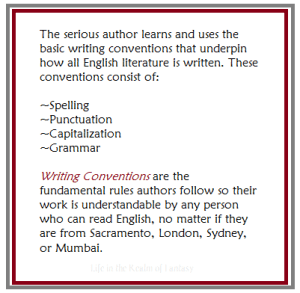
writing_conventions_meme_lirf20167. Sometimes we have two ideas in a sentence that we think are one, and we connect them with commas.  But closer examination shows they are not.

  • “Hello, sir, we bathed your dog,” she said.

The above dialogue contains a run-on sentence, despite its shortness. We may actually speak it in this fashion, words run together, but for a reader, punctuation clarifies ideas.

The dialogue contains two separate ideas. “Hello, sir,” is an acknowledgment and a greeting. “We bathed your dog,” indicates an action was taken regarding his dog. It should be:

  • “Hello, sir. We bathed your dog,” she said.
  • “Hello sir,” she said. “We bathed your dog.”

We can take some style and voice liberties with dialogue, and indeed, we should, but adhering to the accepted standard rules of punctuation makes your work readable by anyone who speaks or reads English.


Researched Source:

Section six, Punctuation, pages 306-310: The Chicago Manual of Style, 16th Edition, University of Chicago Press, © 2010
4 Comments

Filed under writing

#amwriting: The strong novella vs. a weak novel

via buzzfeed

Sometimes we find that our work-in-progress is not really a novel after all. We get to the finish point, and that place might be only at the 40,000-word mark (or less).

In some circles, 40,000 words is a novel, but in fantasy, it is less than half a book. A short novel that has been read to shreds is far better than a long, boring book ending its days as a doorstop.

I recommend not trying to stretch the length if you have nothing of value to add to the tale. It’s better to be known for having written a strong novella than a weak novel. So, now at the end of the rough draft, your book must become a novella.

In the second draft, you will weed out many words and cut the unnecessary repetitions. The manuscript is going to both expand and contract, but when the final ms is complete, it may be only 35,000 words. But why do I think this?

I have experienced this very thing. Sometimes, when I was just finishing the rough draft, I discovered that besides the four chapters that had to go since they don’t belong there anymore, 3 more chapters were mostly background, rambling to get my personal mindset into the story. That sort of background doesn’t need to be in the finished product, other than a brief mention in conversation. Often, when I go in and remove large chunks of exposition, I’m able to condense those chapters into one passage or scene that actually moves the story forward.

Another thing to watch for when you are in the second draft, are areas where you may have repeated yourself, with a slightly different phrasing. These are hard for the author to pick out, but they can be found. Decide which phrasing you like the best, and go with that.

Also in the rough draft, we use a lot of words we can cut or find alternatives for, words and phrases that weaken our narrative:

  • There was
  • To be

We change these words to more active phrasing, and sometimes we gain a few words in the process.

In conversations especially, it’s good to use contractions. ‘Was not’ becomes ‘wasn’t,’ ‘has not becomes hasn’t,’ etc.

It’s amazing how many times we can simply cut some words out, and find the prose is stronger without them. Many times they need no replacement.

Sometimes we use what I think of as “crutch” words. You can really lower your word-count when you look at each instance and see if you can get rid of these words. These are overused words that fall out of our heads along with the good stuff as we are sailing along:

  • so,
  • very,
  • that,
  • just,
  • literally
  • very

The fact is, you must be willing to be ruthless. Yes, you may well have spent three days or even weeks writing a chapter you are about to cut. But now that you see it in the context of the overall story arc, you realize it is bogging things down, and NO–Sometimes there is no fixing it. Just because we wrote something does not mean we have to keep it in the story.

But do save it in a separate file, as you may be able to use it later. I always have a file folder labeled “Outtakes.” Many times those cut pieces become the core of a new story.

I strongly feel that no matter how much you like the prose you have just written for a given chapter, if the chapter or passage does not advance the story, it must go.

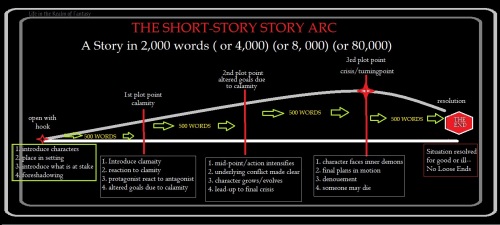
Pay close attention to the story arc. Large chunks of exposition flatten it, pushing the plot point back, and the reader may give up. Once you have your rough draft complete, measure the tale against the blueprint of the story arc.

  • Where does the inciting incident occur?
  • Where does the first pinch point occur?
  • What is happening at midpoint? Are the events of the middle section moving the protagonist toward their goal?
  • Where does the third plot point occur?

short story arc

It’s not important to have written a novel. Whether you write short stories or 700-page doorstops, you are an author.  It is, however, extremely important to have written well. A powerful, well-written novella can be a reading experience that shakes the literary world:

  1. A Christmas Carol, by Charles Dickens
  2. Breakfast at Tiffany’s, by Truman Capote
  3. Candide, by Voltaire
  4. Three Blind Mice, by Agatha Christie
  5. The Strange Case of Dr. Jekyll and Mr. Hyde, by Robert Louis Stevenson
  6. The Time Machine, by H.G, Wells
  7. Of Mice and Men, by John Steinbeck
  8. The Old Man and the Sea, by Ernest Hemingway
  9. Animal Farm, by George Orwell
  10. The Turn of the Screw, by Henry James

8 Comments

Filed under writing

#amwriting: Midpoint in the Character Driven Novel

LOTR advance poster 2Some novels are character-driven, others are event-driven.

ALL novels follow an arc.  For my personal reading pleasure, I prefer literary fantasy, which has a character-driven plot. Events happen, often in a fantasy setting, but the growth of the characters is the central theme, and the events are just the means to enable that growth.

You may have built a great world, created a plausible magic system or, conversely, you may have created an alien world with plausible technologies based on advanced scientific concepts. You may have all sorts of adventures and hiccups for your protagonist to deal with. All that detail may be perfect, but without great, compelling characters, setting and action is not reason enough for a reader to stick with your story.

Despite your amazing setting and the originality of your plot, if you skimp on character development, readers won’t care about your protagonist. You must give them a reason to stick with it.

In a character driven novel, the midpoint is the place where the already-high emotions really intensify, and the action does too. From this point on, the forces driving the plot are a train on a downhill run, picking up speed. There is no  turning back now. The characters continue to be put to the test, and the subplots kick into gear.

Of course, plotting and pacing of your entire story arc is critical, but it is especially so from midpoint to the third plot point.

As you approach midpoint of the story arc, the personal growth for the protagonist and his/her friends begins to drive the plot. These are the events that tear the hero down, break him emotionally and physically so that in the final fourth of the book he can be rebuilt, stronger, and ready to face the villain on equal terms.

How does the protagonist react to the events? What emotions drive him/her to continue toward the goal?

In a character -driven novel, this is the place where the protagonists suffer a loss of faith or have a crisis of conscience. It may be a time when the main character believes they have done something unfair or morally wrong, and they have to learn to live with it.

What personal revelations come out about the protagonist, or conversely what does he discover about himself?

This part of the novel is often difficult to write because the protagonist has been put through a personal death of sorts–his world has been destroyed or shaken to the foundations. You as the author are emotionally invested in the tale and are being put through the wringer as you lay it down on the paper.

What has happened? Remember, the protagonist has suffered a terrible personal loss or setback. Perhaps she no longer has faith in herself or the people she once looked up to.

  • How is she emotionally destroyed by the events?
  • How was her own personal weakness responsible for this turn of events?
  • How does this cause the protagonist to question everything she ever believed in?
  • What makes her pull herself together and just keep on going?
  • How is she different after this personal death and rebirth event

LOTR advance posterThe truth underlying the conflict now emerges. Also, the villain’s weaknesses become apparent. The hero must somehow overcome her own personal crisis and exploit her opponent’s flaws. It’s your task to convey the hard decisions she must make, and show that she truly does have the courage to do the job. The villain has had his/her day in the sun, and they could possibly win.

This low point is a crucial part of the hero’s journey, the place during which she is taken down to her component parts emotionally, and rebuilds herself to be more than she ever believed she could be.

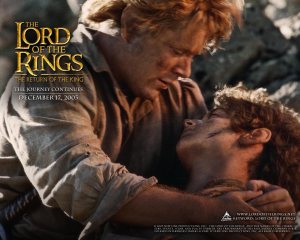
At this point in the novel, if you have done it right, your reader will be sweating bullets, praying that Frodo and Sam can just hold it together long enough to make it to Mt. Doom.

2 Comments

Filed under writing

#amwriting: choosing an effective writing group

MSClipArt MP900390083.JPG RF PD

As it is November, and I am attending a lot of write-ins with people just beginning their writing careers, I am frequently asked if I am a member of a writing group. I am, but it is not a traditonal group, by any means. We are all published authors and are more of an author-support beta-reading group. But what the new author is asking, is how to find a group that will be a good fit for them. To answer that question, I am revisiting a post from March of 2015, originally titled “Critique groups vs beta reading groups.”


Every writer needs honest, constructive feedback in order to grow in their craft. Many will join critique or beta reading groups. These groups come in all sorts and sizes, some specializing in general fiction and some in genres like mystery, science fiction, fantasy, or romance.

Most communities have clusters of authors—after all, nowadays everyone either is an author or has a couple in the family . In your community you will find groups for beginners, or some that cater to more advanced crowds. I guarantee there will be one to fit your needs.

We’ve all heard the horror stories regarding critique groups, and perhaps even experienced one. Making a poor choice in writing groups can be devastating—it can undermine a budding author’s confidence and destroy a person’s joy in the craft. The seas are rough out there but many writing groups are really good, supportive gatherings of authors who stay for years and welcome new authors into their group with open arms.

Other groups can be cliquish, unwelcoming, and daunting to new arrivals. Authors just beginning to explore this necessary part of the craft will not come back to one of these groups if they were given the cold-shoulder the first time.

I suggest that you sit in on a group in your area. Do not offer your work on the first time, but do take notes, paying special attention to these points:

  1. Do they treat the submitted work with respect, or do they nitpick it to shreds?
  2. Do they allow discussion of a critiqued work or is the author supposed to sit there and silently take the punishment?

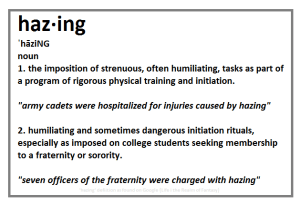
hazing-definitionIf the latter is the case, that group is engaged in a subtle form of hazing, more than in critiquing. Thank them for allowing you to sit in, and walk away from them.

There is a difference in types of writing groups, too. Some are traditional critique groups, people who usually read a few pages aloud at their sessions and discuss it in detail in a round-table fashion. This sort of focus can be just right for some authors, especially those in the final stages of making their manuscript submission-ready.

Because traditional critique groups focus only on 3 or 4 pages at a time, they lack the context to be able to discern if your protagonist has developed sufficiently along his character arc by the first 1/4 of the tale. However, they can tell you if you have made editing errors, and discuss small points of technique within those few pages, which you can then apply to the overall manuscript.

This is an important aspect of the process, but is not always the kind of input an author is seeking.

The one flaw these sorts of groups have is they don’t have the ability to properly critique the larger picture—pacing, overall story arc, worldbuilding, character development, and on, and on–because these things can only be judged in larger context. So if, like me, that is the sort of input you are looking for, my advice is to find a beta reading group.

Critique groups cannot do what beta readers can.

But how do you select a group? Before you join a writing group, you have the right to know what that group focuses on.

A beta reading group will focus on these questions:

  1. Where did my chapter bog down?
  2. What did they think about my characters?
  3. Where did they get confused and what did they have to read twice?
  4. Did it become unbelievable or too convenient at any point?
  5. What do they think will happen to the characters now?

Then after you have sat in on one of their sessions and observed how they treat each others’ work, ask yourself, “What kind of vibes did I get from this group of people? Will I benefit from sharing my work with this group? Did the comments they made to each other sound helpful?” Hopefully, the answer to those questions will be a resounding “yes.”

If the answer is anything other than a resounding “yes,” run now. Run far, far away.

Red Flags to Watch For:

There are common negatives to watch out for in all writing groups: If you have stumbled into a group where the most visible member is a self-important, read-all-the-books-on-writing-so-I-know-it-all kind of a person, don’t bother joining or you’ll be subjected to many accounts of how their writing group in Minnesota was so much better than this pathetic group.

Another author you might watch out for is the ubiquitous Famous-Author-Name-Dropper, a person who must be important because she has been to a great many seminars and conventions with these famous people, and hung out in the bar with one of them once. If it turns out she is in your prospective group, it may not be the group you are looking for. Sometimes they are the same person, sometime not, but either one of these wannabe-famous authors are poison—in their eyes the group only exists to admire them, and they will casually cut your work to shreds, dismissing it as merely amateur in the face of their “professional” experience.

When you are considering joining a group, ask the leader/chairperson these questions:

  1. If the group is a beta reading group focused on first drafts, what do they consider a first draft? Do you have to hire an editor and have it thoroughly edited before you submit it to this group? I say this because a fully edited manuscript is not a first draft, and that group would be a waste of your time.
  2. Will you receive insights into your manuscript on points you hadn’t considered, or will the focus of the discussion centered on minor editing issues that you are already aware of?
  3. Ask the leader to define for you the specific areas that readers will be looking at:
  1. Character development,
  2. pacing the arc of the scene,
  3. pacing the arc of the conversation,
  4. worldbuilding,

So let’s say you have found a group who seems to a good bunch of people, and yes, they read and write in your genre. You trust them enough to submit your first piece to the group. After the session is over, ask yourself:

  1. Do I still feel positive about my work or do I feel like my work was treated as being less than important?
  2. Did I gain anything from the experience that would advance the plot or did I just hear a rehash of arm-chair editing from a wannabe guru?

that which does not kill meThe answers to these questions have to be that you feel good about your work, that you saw through their eyes the weaknesses, and that they can be fixed.

New authors join writing groups feeling a great deal of trepidation, filled with uncertainty and fear. They fear being belittled and told their work is crap, and sometimes that happens. At the end of the day, you have to feel as if you have gained something from the experience.

Hopefully you will be as fortunate as I have been, and find a group of beta readers you can mesh with, people who will support and nurture you in the same way that you will them.


This post was first published March 2, 2015, under the title “Critique groups vs beta reading groups” by Connie J. Jasperson

7 Comments

Filed under writing

#amwriting: circumstance, objective, and the story arc

Book- onstruction-sign copyIf you intend to write a novel, especially a fantasy novel, a little pre-planning and at least a smidge of an outline is really beneficial.

Consider the beginning: At the outset of any good story, we find our protagonist, and see him/her in their normal surroundings. An event occurs (the inciting incident) and the hero is thrown out of his comfort zone and into the Situation, which is the core idea of your plot.

This is the circumstance in which your protagonist finds himself at the beginning of the story. Some things for you consider before you you begin writing:

  • How will the story start?
  • What is the hero’s personal condition (strength, health) at the beginning?
  • How will that condition be changed, for better or worse, by the hero himself or by the antagonistic force?
  • What could possibly entice him out of his comfort zone?

Now we come to the core of your story: Objective. Without this, there is no story.

In every class I’ve taken on plot development, the instructors have emphasized that a protagonist has no reason to exist unless he/she has a compelling objective. If your main character doesn’t want something badly enough to do just about anything to achieve it over the next couple hundred pages, then he doesn’t deserve to have a story told about him.

That harsh edict is true because everything you will write from the moment of the inciting incident to the last page will detail that quest. Your protagonist must desire nothing more than to achieve that objective. Every scene and conversation will push the protagonist closer to either achieving that goal or failing, so if you make it a deeply personal quest, the reader will become as invested in it as you are.

In the book, Tower of Bones, Edwin wants to free Marya from captivity in Mal Evol. It’s a mission that begins as a somewhat noble desire to help his friends free a healer he has never met, but along the way he realizes she is the girl he has been dreaming about for several years. Once he realizes that, it becomes personal, and he becomes driven. That is when it becomes a real story.

When writing fantasy, you need a broad outline of your intended story arc, and you really need to know how it will end. If you try to “pants” it, you might end up with a mushy plot that wanders all over the place and a story that may not be commercially viable.

  • What will be your inciting incident?
  • What is the goal/objective?
  • At the beginning of the story, what could the hero possibly want to cause him to risk everything to acquire it?
  • How badly does he want it and why?
  • Who is the antagonist?
  • What moral (or immoral) choice is the protagonist going to have to make in his attempt to gain that objective?
  • What happens at the first pinch point?
  • In what condition do we find the group at the midpoint?
  • Why does the antagonist have the upper hand? What happens at the turning point to change everything for the worse?
  • At the ¾ point, your protagonist should have gathered his resources and companions and should be ready to face the antagonist. How will you choreograph that meeting?

These are just a few things to think about when you are planning to write a fantasy novel, because so much goes into world building and creating magic systems that it is easy to get involved in large info dumps and bunny trails to nowhere.

Some people are able to visualize a story in its entirety and can write a coherent first draft without even a minimal outline.

I am not one of those people, nor are the majority of writers. An outline will tell you what you need to have happen next to arrive at the end of the book in a reasonable number of words: 100,000 to 125,000 for a first epic fantasy novel. You don’t have to go into detail, but if you give yourself a rough outline, you will know how many words you have to accomplish each task within the story line.

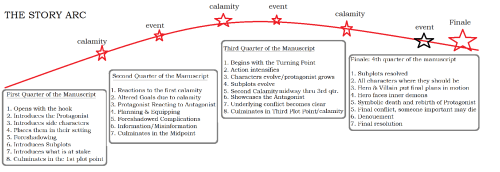
The Story Arc

You want to have a smoothly functioning story arc, so you don’t become desperate and resort to killing off characters just to stir things up.  That doesn’t really help, because you run out of characters, and people don’t like it when you kill off someone they liked.

Besides, you might need that character later.

2 Comments

Filed under Fantasy, Literature, writing

#amwriting: consider the short story

via buzzfeed

For the author struggling to get their name out there, one of the best ways is writing and submitting short stories to magazines, contests, and anthologies. You might earn a little cash, and you have the added thrill that someone liked your work enough to publish it.

But how does one go about writing a short story? First, you need a theme, an idea or message that flows through a story from beginning to end. The theme is what readers think the work is about, but it is also what the work itself says about the central subject.

In a given work the theme might never be mentioned outright, but the characters’ actions are motivated by it, and the plot revolves around it. (In case you need it, here is a list of 101 common themes in books.)

The structure of the short story is the same as for a novel: it consists of the Story Arc, which is the term that describes plot structure, or the sequence of events that occur within a story.

Plot Structure is the way the story is arranged:

*the setup

*the obstacle

*the turning point

*the resolution/outcome

THE SETUP: You must have a good hook. In some cases, the first line is the clincher, but especially in a short story, by the end of the first page you must have your reader hooked and ready to be enthralled.

One of the best first lines ever: George Eliott’s Middlemarch starts, “Miss Brooke had that kind of beauty which seems to be thrown into relief by poor dress.” That line makes you want to know Miss Brooke. And the reader wonders who the observer is who chronicles this. It is a novel, but if it had been a short story, it would still have hooked the reader.

Good first lines make the reader beg to know what will happen next.  We have to think about that first line, those first paragraphs, and how to land our reader.

After the hook, you must immediately get down to business, as you have no words to waste. Consider these things when writing the opening paragraphs:

  1. The opening lines set the tone for the story.
  2. The opening lines introduce the dramatic question that is the core of the story.
  3. The opening lines introduce the sense of place, the setting of the story.

Sometimes you have a short story you can’t seem to get off the ground. Something stalls it. It could be that you are trying to place too much background in at the beginning. Ask yourself where the story truly begins and start there.

Consider the length of the story you intend to write. Most literary magazines want stories of 1000 to 4000 words in length, but many will say no more than 2000 words. That places a real constraint on you as the storyteller because, to sell your work to that magazine, you must fit your story into a very small box. Every word in a 2000-word story is critical and has a specific task — that of advancing the plot. To that end, in a story of only 2,000 words:

  • No subplots are introduced
  • Minimal background is introduced
  • The number of characters must be limited to 2 or 3 at most

How do you fit a story into 2000 words? Make the Story Arc your friend.

Divide your story into four acts and assign a word limit to each of those acts: in a 2000 word story, each act would be 500 words long.

short story arc

Writing short fiction forces the author to become more economical and yet poetic in how they lay down their prose.

  • Each word must set the scene and convey the atmosphere, and every conversation must impart both information and give the reader a sense of who these characters are.
  • Every sentence must propel the story to the conclusion.
  • By the end of the first ¼ of the manuscript, the reader should have an idea of who the character is, what their moral compass is, what the character wants, and what they are willing to do to acquire it.

Be economical with your words: If you are writing a less formal story, make liberal use of contractions in the narrative as well as in the dialogue: hasn’t, he’d, wasn’t, didn’t, couldn’t, etc. A contraction is a “Two-fer” word – you get two words for the price of one.

Ditch the “crutch” words. You will lower your word-count when you look at each instance and see if you can get rid of these words. Removing them tightens your prose and makes room for important words that will convey the story more effectively.

“Crutch” words are overused words that fall out of our heads along with the good stuff as we are sailing along:

  • so
  • very
  • that
  • just
  • literally
  • there was
  • to be

We all use them too liberally in the rough draft. When we are doing revisions, we look at each instance of those words and decide if the sentence is stronger without it. Nine out of ten times, it is.

As I have said before, writing short stories gets you writing more:

  • more often,
  • more widely on a broad range of topics, and
  • more creatively using a variety of styles.

Using and building on the skills gained in writing short stories can only grow you as an author. Your prose will become stronger and tighter, and you will have a better grip on story construction.

9 Comments

Filed under Publishing, writing

#amwriting: Interview with author Stephen Swartz

Today is the final installment in my series of interviews with working authors who are also teaching writing craft. This has been a wonderful series, as each approaches the craft from a different angle, and my final guest has a great deal to offer.

stephen-swartzA little background on today’s guest, author Stephen Swartz. He is a Professor of English at a major Midwestern university, and is a world traveler, often spending his summers teaching in Beijing, China at the University of International Business and Economics. Also, he is the author of numerous short stories and novels, and is a fellow founding author of Myrddin Publishing. He has also published poetry and written for scholarly journals on the subject of composition and identity, linguistics, and psychology.

CJJ: What do you enjoy the most about teaching?  Conversely, what would you change about your job if you were able?

SS: I’m rather parental when it comes to teaching. I like seeing my students become excited about writing and push themselves to explore their potential. I enjoy seeing their writing improve paper by paper, not only technically but also in showing their deeper thought processes. As it is, there are constraints on what I think would be best when it comes to writing instruction. Partly, it is a matter of budgeting, enrollment, and accreditation requirements. It is also a matter of what students are interested in career-wise; many do not think they will need to write in their careers. So I have limitations I must work within. And, of course, each semester brings a new mix of students so I must constantly adapt the lessons to accommodate them; it really is like reinventing the wheel. Writing fiction keeps me balanced.

CJJ: As you know, many authors are writing for children, preteens (middle-grade), and YA. In a comment on this blog recently, you said, “Meanwhile, the style (I think) should match the nature of the story and especially the mindset and education level of the narrator.” Can you expand on that idea a little?

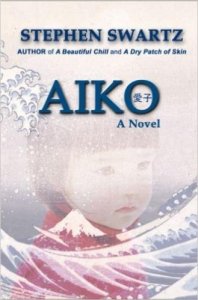
SS: What I think I meant was in reference to the sophistication of the language the narrator of a story uses. That’s the author’s responsibility. If the narrator of a story is well-educated (for example, see my vampire novel A Dry Patch of Skin), he would speak in a well-educated manner, with sophisticated style and a large vocabulary. A less educated character (or a child) would speak differently, using simpler vocabulary and often incorrect sentence constructions. A foreign character speaking English would have similar language limitations; the dialog should show those limitations. However, we cannot let the language be too authentic if doing so would cause the reader difficulty. I once wrote a character who was supposed to speak with a Scottish accent; the result was rather bad. Having just enough (a particular repeating word or phrase) to hint at the accent would have been enough. I’ve been fortunate to have both studied linguistics and foreign languages as well as listened to speakers of varying ages and accents. I lived in Japan for five years and teaching English there taught me how non-native speakers “butcher” the language. I think I captured that effect well in my novel Aiko, set in Japan. Besides formal training, I also think I have a good ear for speech and so I do my best to replicate the character’s way of speaking based on the real speaking I’ve heard.

aikoCJJ: You have published eight books, in a variety of genres, and are now finishing up an epic fantasy novel (of EPIC proportions!). Yet, none of your characters have a sameness to them. How do you visualize your characters when you begin to place them in their story?

SS: Excellent question. My answer must, however, be simple. I’m schizophrenic. My mental defect allows me to grab pieces of other people’s lives, behavior, speech, and motivations which I then craft into plausible, even realistic, fictionalized personas. I recognize I have a few stock-in-trade character I use over and over with names changed and perhaps a quirk switched for a different quirk. I suppose I take one of my stock characters and customize him/her for the role I need him/her to play.

The hardest character to write is the protagonist because that character usually starts as a version of myself. The challenge is to let the hero act as the hero would naturally act (following his/her motivations and typical behavior) and not as I, the real me, would likely act. When I wrote out the story of a friend of mine who grew up in Greenland, I was writing a female protagonist—and using the first-person point of view. That novel was based on her life so I could imitate her way of speaking from interviews with her. The challenge for me in writing that novel was to make her language style change from her childhood to her teenage years to her adulthood.

For my current work-in-progress, the epic fantasy, I returned to a basic male protagonist, a hunky dragonslayer, and cobbled together a bit of a movie star, a little of me, and a pieces of other people I know to create the singular hero.

CJJ: In your upcoming novel, EPIC FANTASY *WITH DRAGONS, you portray a variety of races in a fantasy environment, each with unique cultures. What tips can you give in regard to keeping fantasy cultures diverse, and yet not devolving into too much backstory?

 SS: Not truly different races, not in the sense that Tolkien has them with dwarves and hobbits. I tried to keep the ethnicity in my story more subtle. Given the setting (no spoilers here), there is a wide variety of “types” among the cast members, not just to make a politically correct checklist but because they mix well in interesting ways. One famous author (I think it was Dostoevsky but it may be a more modern writer) liked to think up unique people and ponder how they might interact if put in a room together. I did the same with my epic fantasy only on the larger stage of the story world.

Regarding the world-building, I cheated a bit in this novel by setting it in a familiar setting (again, no spoilers here). Readers may recognize it eventually but it is not explicitly “given away” in the text. Even so, as I traced the path my hero would take on his quest, I marked certain locations on the map as being “different” societies with unusual customs—not different races or ethnicities. Like all good epic fantasy tales based on a quest, there is a series of episodes—self-contained mini-story arcs, strung together, one adventure after another—so the structure is easy to arrange. Following the geographical layout of the setting, what “can happen” to our hero necessarily changes from location to location.

A better example of world-building may be my science-fiction trilogy The Dream Land, which involves a pair of nerdy teens who discover a doorway to another world—which I created as a fully realized planet with continents, oceans, history and culture, and several different races, as well as unique flora and fauna. The world-building was half the fun of writing those novels; pushing my hero and heroine into this new world and watching them figure things out was the other fun part.

I think the key to “keeping fantasy cultures diverse, and yet not devolving into too much backstory” is to remember that, to the characters in the story, it is all known and common (usually) so they should speak and act toward everything there as though it was all common to them. You have to find creative ways of introducing ideas and details without them coming out as a “Let’s go meet Bill, your cousin, who, as you know, is also my long-lost brother” kind of writing. In my current epic fantasy novel, I can get away with some of that “messaging” because my hero is on a quest and does not know about the places he visits, so having a local character explain things is quite natural. People like to talk, so I let these “local yokels” ramble on and the history and customs of the place come out in a more natural way.

CJJ: In all of your novels, there is a certain amount of world building, even the novels set in contemporary environments. What advice can you give regarding making the settings feel real to the reader while keeping the backstory minimal?

SS: Research, if it is a real place. Read other books about the location, fiction or non-fiction. As I wrote A Girl Called Wolf, which is set in Greenland, I also read a very evocative book on the travels of early explorers written by a woman undertaking her own contemporary travels there. Her writing and descriptions painted such vivid pictures for me that I could describe the locations both accurately and passionately.

The most realistic setting I’ve ever used was my own city in the set in the same year I was writing it. I’m referring to my vampire novel, set in Oklahoma City with places named, set in 2014, when I was actually writing it so what happened in real time happened in the book. That was a fun exercise. But then our hero goes to Europe so I went back to researching.

For make-believe worlds, I think it’s simply a matter of transposing what we know of real locations to an imaginary location. For example, in The Dream Land Trilogy, I would think of an Earth animal and reinvent it as something more exotic: the common mount, a horse, became a 3-toed donkey with a dewlap, stripes on half its body, long rabbit ears, and a rat tail. Similarly, I’m more science-focused so even in a fantasy story I remain concerned with such things as the distance of the planet from its sun and the ratio of land to ocean, and so on. Even in my epic fantasy, a genre where magic is required, I have magic operating on scientific principles but it is explained in highly metaphorical language—but it still looks like magic!

CJJ: Thank you for indulging my curiosity, Stephen. I love talking craft with you around the virtual water cooler at Myrddin, and enjoy your blog, The DeConstruction of the of the Sekuatean Empire.

>>><<<

You can find Stephen Swartz at any of these places:

Stephen Swartz Amazon Author Page

Website: The DeConstruction of the Sekuatean Empire

Stephen Swartz  Myrddin Publishing page

Twitter: @StephenSwartz1

Stephen Swartz’s FB Author Page

2 Comments

Filed under writing

#amwriting: Interview with Scott Driscoll

As part of my lead up to #NaNoWriMo2016 and November’s month of literary madness, I am continuing my series of guest interviews. Today, we are speaking with the always intriguing Scott Driscoll.

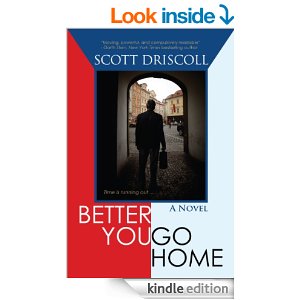
Scott is an award-winning writing instructor at UW Continuing and Professional Education, is a well-known journalist and editor, and is the author of Better You Go Home, a literary novel which takes the reader to Prague shortly after the Velvet Revolution. (My review can be read here.)

I have attended several seminars offered by Scott through PNWA, and have always come away feeling inspired.

CJJ: What books influenced you most as young reader?

SD: Like most children, I liked any story that fueled my imagination, such as Aesop’s Fables, Grimm Fairy Tales, and the like. Somewhere in middle school I discovered a preference for realism and actually read, and was fascinated by, Moby Dick. I distinctly remember going to class and sniffing the palms of my hands, convinced I’d somehow got ambergris, which never really washes off, on my hands. Steinbeck’s Of Mice and Men also impressed me greatly at that age. I found American social realism (aka naturalism), such as anything by Drieser, dreary beyond belief.

CJJ: How did these books influence your early writing?

SD: The dreary books I was forced to read in adolescence and as a young teen led me to conclude that you had to be pedantic and stuffy to be a writer and that turned me off to writing fiction altogether. The exceptions would be Huck Finn and Tom Sawyer and E. A. Poe stories. Those were exciting. What I didn’t realize until later is that I was looking for a voice that spoke to me. I really didn’t hear that voice until I encountered French existential novelists like Camus and Jean Genet (especially in The Thief’s Journal, a fictionalized memoir). Compared with potted stories like de Maupassant’s, these took me into what felt like a word wilderness, where you could easily get off trail and run into danger and I loved that feeling. I also discovered and loved Dostoevsky and Kafka. There was a darkness and urgency and psychological depth in that writing that I could not find in American authors, until, in college, I discovered the novels of Norman Mailer and Edward Abbey and now I had a voice that was raw and stories that were more about the psychological life of the characters and less about managing a plot. Not that I had anything against plot. It was the raw power of the words I needed to fall in love with first.

CJJ: You have said elsewhere that “Writing for me is about applying form to the mysteries we suffer.” Can you expand a little on this idea?

SD: I borrowed that phrase from Wright Morris. On my blog site I wrote about the first time, as an adult, I tried to write fiction. I was 21 years old, taking a break from college, living in Darwin, Australia and working warehouse and restaurant jobs to save money so I could travel on. With time on my hands, and a depressing lack of anything better to do, I essentially locked myself in my boarding house room, sat under the paddle fan, and spent several hours writing nothing. What I lacked, I realized, was not the ability to write, but knowledge of form. Without an understanding of story structure, I would churn out a stream of words that was nothing more than a verbal outpouring of my inner angst, the kind of sophomoric, I realized that day, drivel that excites only high school English teachers, who are grateful for any grammatical verbal pyrotechnics. Without an understanding of form, I could not begin to solve the mysteries I knew were locked up inside me.

CJJ: You have also said “Any story that involves a quest – and that is most stories – starts with a disturbing event known to writers and film-makers as the “inciting incident.” What is the most important thing for an author to consider when creating this event?

SD: It took me a long time to accept that any story with any kind of plot must start with a disturbance. But once you accept that, what does it really mean? A disturbance, as in, someone gets mugged, a bank gets robbed, aliens land, a shark throws a vacation resort town into chaos? If it’s just event for event’s sake, anything is possible and nothing is particularly meaningful. Rather, an inciting incident must disturb a balance that pertains in the hero’s world, and must do so by working against a deeply held value, so that the hero, we can be sure, will not shrug it off as simply bad news but rather will be forced to react in a way that will further endanger the balance in that familiar world.

Better You Go Home Scott DriscollCJJ: When did you first have the idea to write “Better You Go Home,” and how long did it take to complete it?

SD: In 1994, three and a half years after the Velvet Revolution, I went to the Czech Republic to track down family that my Czech relatives in Iowa had stopped communicating with. I found the village, the farmhouse, met some people, but had been too cheap to hire a translator and didn’t get beyond discovering that there was some unspeakable mystery, some “inciting incident,” that had created a rift in the family. In 1999, armed with better information sent to me by a cousin who’d followed my lead to that village, and armed this time with a translator, my father and I went back to this village and heard stories, and reviewed records, and I learned enough that I felt I could write a novel with this family mystery at its heart. At the time I had quit writing fiction (needing to make money) and started instead writing for magazines, and between that and teaching and being divorced and raising a child, I really didn’t have time to write a novel (but stayed up late virtually every night reading everything I could get my hands on related to the topic). A couple years later, needing to get back to fiction, I started in pretending I was writing chapters, but really just produced fluff based on my research. From the time I began writing chapters that could stick, and publication, ten years went by.  I had told my wife—we married just before the time I got serious with this novel—I’d have it done in two years. Our son likes to remind me that he was ten when it was published. I remind him that I was busy. But, really, honestly, it took so long because my early understanding of the story lacked the form that would allow me to finally tell the story. Much of my groping in the early years could have been circumvented had I discovered that form early in the process.

CJJ: Once a new work is in progress, what are the main hurdles you have to overcome in laying down the first draft?

SD: That depends. If it’s a short story, I will usually allow myself to have a crude idea based on a situation that sets forth from a known inciting incident with a disturbed character but without a known outcome, just set forth and go, knowing the real story will emerge in the re-writes anyway. With a novel, it’s worth doing more planning.  Once you have your premise, the first hurdle you have to overcome is finding a basic story structure that will naturally lead to a surprising but inevitable outcome. Then you work on your characters, that is, you start with characters in mind, but now you have to imagine how the events required by the story structure you have imagined will be causally connected to the characters’ needs and wants and fears and expressed and hidden desires. Without causal connections you just have meaningless events. Once causal connections are asserted, you encounter another hurdle. The characters begin to morph according the logical requirements of the causal connections you have asserted. Without a strong sense of the story structure, things can quickly morph into an ugly, hydra-headed monster, ie, chapters screaming to be thrown away.

CJJ: What are you working on now?

SD:  Two things. First, a collection of connected stories that show a young couple starting off careers and family and that show how that trajectory unfolds over the years. For my raw material, I am using stories published years ago, but that I felt never broke through to their bigger potential. Will I achieve that now? Let’s just say, I know a whole lot more about writing now than I did then. I only hope that I can recapture the immediacy that can easily get lost behind a command of technique. My second project, still in the planning stages, is a sci-fi time travel novel. This will be my first attempt at a popular fiction genre. I was put up to it by an editor friend. My wife was intrigued by the idea of me writing a novel that had the potential to make some money. Having handed over an 18,000 word treatise, that covers my idea for the story nearly chapter by chapter, I am now excited to get to work.

CJJ: What books can you recommend for new writers who are just beginning to learn the craft?

SD: The best book on craft, generally, is Writing Fiction by Janet Burroway, now in its ninth edition. That said, Story by Robert McKee, though written for screenplay writers, contains the best craft talks, with illustrations from films, on plot and character and scene that I have ever come across. I would definitely start with those two, then add Scene & Structure by Jack Bickham, as an enhancement to what McKee has to say. Then, they should all get their hands on What If, the third edition, edited by Anne Bernays and Pamela Painter. (Do not let Amazon trick you into buying the inadequate first edition.) This book is full of mini-lessons and exercises for writers who know about craft but need practice.

CJJ: Where can people find your classes and seminars this fall?

SD: In fall 2016, starting the first week of October, I am teaching one section of Literary Fiction I, the introductory course, and one section of Advanced Fiction Writing, a course intended for writers of both literary and popular fiction who’ve had experience with taking writing classes or who have extensive writing experience. Both classes are offered through the University of Washington in the Professional and Continuing Education department. If interested, folks should go to www.keeplearning.uw.edu and look for these courses, or, if they have questions, seek more details at www.pce.uw.edu. They can also email me at sdriscol@uw.edu. I also teach a summer workshop class and that is posted on my blog site. http://www.scottdriscollblogs.wordpress.com.

  • In the meantime, I am a guest editor reviewing manuscripts at the fall 2016 Write On The Sound conference and will be at the Edmonds, WA site on Saturday Oct 1 and Sunday Oct 2. On Nov. 10, I will be a guest workshop leader at the November meeting of the Skagit Valley Writer’s League, held in Mt. Vernon, WA. Those interested can peruse their web site for more information. In May, 2017, I will be a workshop leader, lecturer etc. at the Write On The River conference held in Wenatchee, WA


Scott, thank you so much, for being a part of this little series on the craft of writing. As always, you are a joy to talk to!


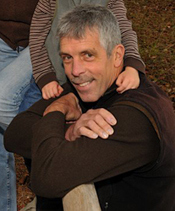
scott-driscoll1 Scott Driscoll can be found 


2 Comments

Filed under writing

#amwriting: Interview with Terry Persun, poet and author

Today we are continuing a series of interviews with published authors who are also instructors. They write in a variety of fields, and each approaches the craft from a slightly different point of view. Because they come from such varied backgrounds, I have gained a great deal of knowledge of writing craft from attending their seminars.

As it’s Friday and I often post poetry and flash fiction on Fridays, we are talking with Terry Persun, a poet and novelist who resides in the Northwest.

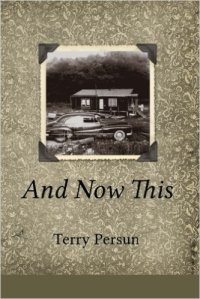
51eyfcn4pzl-_sx331_bo1204203200_CJJ: You write in three areas, poetry, nonfiction, and fiction. Your fiction work ranges through three sub-genres, Sci-fi/fantasy, mystery/thriller, and mainstream/historical. As are many poets, you’re well-known for questioning the political, spiritual, and cultural status quo.

How does your poetic bent shape your non-fiction and genre novel work?

TP: What an amazing question. I often think about how my poetry helps to shape my novels, but seldom my nonfiction. So let’s start with novels: much of the best poetry is about image, and the same goes for the novel. An image (showing not telling) can create an emotion that will stick with the reader. Poetry allows me to practice that. Even when you’re discussing cultural elements, an image is more important than abstract words like horrific or painful. A poet must know how to show those abstractions. Think about the last time you saw an image of a child in a war zone, it’s much more impactful than being told that there were several women and children killed in the attack. Even which image is important—movie directors know which angle to take. As for nonfiction: I think pacing and word choice stand out the most. In a poem, I can create a line break or a stanza break, similarly with nonfiction I might create a new paragraph or move the article from prose to bulleted copy. Again, an image might be best in nonfiction as well. For example, instead of saying, “Make sure your enclosure is leak proof.” I said, “Using the proper sealing approach will eliminate the concern of having grease oozing out of your enclosure.” Seeing the grease oozing out of something is much more impactual than telling someone to provide better sealing. There are probably many more things that poetry brings to my writing that I may not be completely aware of.

CJJ: You have published five poetry collections. I own one of them, And Now This. These poems resonated with me, as my father was also a WWII vet. These poems deal with the effects of your father’s wartime experiences on your family during the 1960s. Battle related PTSD is also a theme in my forthcoming novel. Reading your poetry made me feel less alone in that experience, and helped me develop my protagonist in the initial stages.

You seem to have an instinctive gift for meter in your free verse. One of my favorite opening passages of all time is from one of the poems in this collection, from the opening poem,

First Memory

I’m standing in the corner,

Crying.

My hands are not my own,

They’re trembling.

This passage drops the reader straight into your young reality, unapologetically showing the life you had then.  Because they are free verse, the lines don’t rhyme, yet they are poetic and speak to me on a level that the prose in a novel rarely does. I also love the opening passage from another poem in this collection, In the Story of My Father.

What advice would give budding poets in regard to meter and phrasing their free verse?

TP: Language has its own music. Even prose has music to it. It’s my assertion that the best prose can often be broken into poems. In classes I sometimes will take a Hemingway paragraph and create a poem from it. Having said that, the number of beats, the number of syllables, where you place commas or choose to create a complex sentence, all have an effect on the final work. What I advise new poets is to first of all read a lot of poetry—especially the kind you’re trying to write. Notice how much of a breath you need to take, where natural and unnatural breaks might occur (use both), and where can you end a line that leads a reader in a false direction. Poetry infused prose can only make it better.

Doublesight--Terry PersunCJJ: One of my favorite fantasy novels is Doublesight, in which you created a world populated by shapeshifters. Zimp is a wonderful character, and I like how you portrayed her growing into her responsibilities.

You have opened your Doublesight world to fans to create fanfiction in, via Kindle Worlds.

How has the work offered by others in your world affected your view of Zimp’s world, and has it changed your direction in anyway?

TP: That’s a tough question to answer, because anything written in that world changes the way I see it. Once it’s opened to other interpretations, each character becomes deeper and more mysterious. I start to see the character differently and wonder more about him or her. It also lets me see how others view the story, the time period, the characters. I become more interested in the world as others work in it. My hope is that it’s fun and expansive for the authors as well, offering them another viewpoint to explore, another idea to examine. Plus, every Doublesight story uploaded into Kindle Worlds helps to market all the other books in the world. This cross-marketing will eventually help each author gain a new audience for their own books.

CJJ: Your video course is quite extensive, and I’d like you tell the readers what the course entails, and how they can take it.

TP: I believe you’re talking about the “Make Money Writing” course. You can access it through my website or through Youtube. I have taught that class quite a bit and is often standing room only. I’ve been freelancing for 20 years and working with freelancers on the magazine side for another 20 prior to that. I know how magazine editors think, what they need, and how to reach them. I also know how to help a writer find their way into freelancing. In the course, I run through how to decide what to write, the parts of the magazine, the editorial calendar, how to touch base with editors, and the main types of articles they need for their publications. I’ve consulted with several major magazine groups about their editorial packages, as well as how to move copy through their company so that they don’t waist time and end up with the best possible pieces to publish.

CJJ: I’ve attended several of your seminars at the annual PNWA conference and enjoyed them immensely. You’re based in the Pacific Northwest and have taught many classes all over the region. Will you be offering any seminars over the next year?

TP: I will be at the PNWA Cottage in September teaching a course on working with Amazon’s 12+ platforms for writers (go to PNWA.org for the list of classes), then at Rivers of Ink in October where I’ll be one of their Keynote speakers and also teach a class called Use Your Writing as Marketing. In November, I’ll be in Kauai for their annual Writers’ Conference where I’m teaching Self and Independent Publishing, and will be working one-on-one with attendees interested in a variety of methods of publication. I was involved in three other groups/conferences earlier this year. I am always willing to come up with a program if there is enough interest. Just let me know.


Terry, thank you so much for your insights and advice, both here and at the annual PNWA conference.

I highly recommend Terry’s works. His poetry is deep and thought provoking, and his novels are fun and fantastic.  His books can be found on Amazon at:

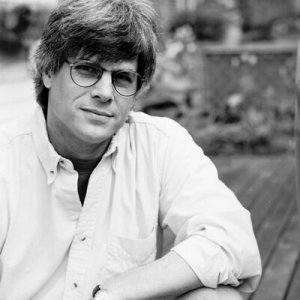
tpersun_the_mug_shot_pic_b-w_400x400Terry Persun on Amazon Author Central

For any of you who are interested in attending his seminars, or looking into his video course, you can find him at any of these places.

Facebook page:

https://www.facebook.com/TerryPersun

Website:

http://www.terrypersun.com

Twitter: @TPersun

Pinterest:

https://www.pinterest.com/terrypersun/ 

Goodreads:

https://www.goodreads.com/author/show/1219743.Terry_Persun

LinkedIn:

https://www.linkedin.com/profile/view?id=AAIAAAAwxc8B6UnSc6LNvK9rhZHPutf5VEgswes&trk=nav_responsive_tab_profile_pic


On  Monday, Scott Driscoll has agreed to join us here.

Comments Off on #amwriting: Interview with Terry Persun, poet and author

Filed under #FlashFictionFriday, Fantasy, Poetry, writing

#amwriting: consider the scenery

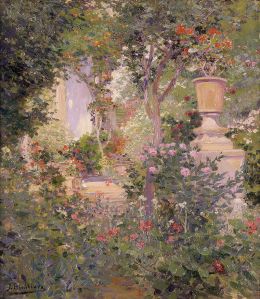
 The Garden of the Author, by José Benlliure Gil via Wikimedia Commons


The Garden of the Author, by José Benlliure Gil via Wikimedia Commons

I had an intriguing email conversation with a new acquaintance, a young man I met through PNWA at the recent conference. He was struggling in his writing group, trying to get a handle on  the showing vs. telling aspect of writing. As he writes mysteries, the setting and environment of certain scenes are quite important.

I suggested he view the scene through his protagonist’s eyes.

Every memorable element in a fictional story must be necessary to the story.  In creative writing, this concept is referred to as “Chekhov’s Gun,” as it is a principal formally attributed to the great Russian playwright, Anton Chekhov. He said this with regard to the settings for his plays, but in terms of writing, what this means is that if your characters notice a gun on the wall, someone must fire that gun, or it should be removed from the scene.

It was a neighborhood Dionte was unfamiliar with.  Just as he entered Tyrone’s gate, his phone dinged, a text from Ty. He’d had to leave for a minute, but Dionte should go on in and wait in the kitchen. Both men were on the board of the Community Action Council, but he didn’t know Tyrone well, and wondered where he’d been called off to.

What does Dionte see, and how does it register in his awareness?

He went up the walk, climbing the worn steps of the front porch. Feeling odd at entering the home of a casual acquaintance when he wasn’t there, Dionte reached for the knob and turned it. The door swung open, and entering the small sitting room, he was overwhelmed by the amount of clutter.

Tyrone had no TV that Dionte could see, but most of the furniture in the room was buried under stacks of newspapers and piles of laundry. His computer was partially hidden behind a stack of library books and a coffee cup, half full, sat atop them. A plate with a slice of toast sat beside the keyboard as if Ty had left in the middle of his breakfast.

Feeling claustrophobic, Dionte found the path to the kitchen, unsure now what sort of mess awaited him in there. To his surprise, the kitchen was immaculate.

The incongruity of the pristine kitchen contrasting with the clutter of Tyrone’s living room is all noted mentally. Each thing on our character’s path into and through Ty’s home is an image that registers in Dionte’s consciousness briefly, but is not mentioned again.

Tyrone had said there might be a serious problem, but wanted Dionte’s take on it before he brought it up at a meeting. Wondering what it could be, Dionte sat at the table, looking at the clock on the stove, seeing it was 11:15. He’d gotten the text only a few minutes before. Tyrone had to have been called to somewhere close by, as he’d left his house unlocked. He hadn’t passed Dionte in the front, so he must have left through the back.

The sound of someone coming up the back steps caught his attention, and his eyes were drawn to the screen door.

It’s a murder mystery, so who was approaching? What happened next? And why is the toast by the computer important?

Scenes require a certain amount of description. Let’s say we’re writing a short story about a grandfather fixing dinner for his grandson. He’s had to go out shopping, and now he carries his groceries home in a snowstorm, fearing he will slip and fall. This scene could be set several ways, and here are two, one less wordy than the other.

Snow fell softly. Holding a bag of groceries, he gazed at the stairs leading from the walk to the front door, fearing a layer of ice lurked beneath the pristine whiteness.

OR

He gazed at the icy stairs leading from the un-shoveled walk to the front door, his bag of groceries growing heavier.

Either way works, but personally, I would go with the second.

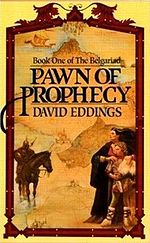
Pawn_of_Prophecy_coverIn 1982 I picked up Pawn of Prophecy by the late David Eddings. This was an amazing, eye-opening book for me, both as a reader and an author.  Eddings had the ability to convey a sense of place in a few well-chosen words. He put those words into  beautiful, poetic prose. The book opens in the kitchen of a farmhouse with Garion’s memories of playing under the table in a kitchen as a small child.

Garion’s earliest memories are of being a toddler: the sound of knives deftly dicing vegetables, his aunt keeping him corralled and happy under the table while she works, the sparkle of the gleaming pots and kettles high on the wall lulling him to nap.

“And sometimes in the late afternoon when he grew tired, he would lie in a corner and stare into one of the flickering fires that gleamed and reflected back from the hundred polished pots and knives and long-handled spoons that hung from pegs along the whitewashed walls and, all bemused, he would drift off to sleep in perfect peace and harmony with all the world around him.”

Later, when Garion has been completely uprooted, this passage becomes important, as it describes the place he thinks of as home. In that paragraph, we see the important things in the room, and we have a visual image of it. The child’s sense of contentment and safety that the kitchen represented is conveyed by the impressions of the kitchen instead of the image of it. The detail supports the story rather than impeding it.

The scenery in the narrative must be organic. It has to be purposeful and not just there to fill the space. I like books where the scenery is shown in brief impressions. We see it only when it needs to be there. Sometimes we see it through the protagonist’s eyes, and other times we see the protagonist set in the scene as described by a narrator, but everything we see must be a part of the characters’ experience.

4 Comments

Filed under writing