Tag Archives: creative writing

#amwriting: 3 steps for keeping the story straight

1916 Momus Pinocchio via Wikimedia CommonsEvery liar knows it’s difficult to keep a story straight–the story keeps evolving and soon it’s out of control.  However, writers, those spinners of awesome lies on paper, must devise ways to avoid this little problem.

Some people use a program called Scrivener which is not too expensive, but which seems to have a tricky learning curve. I downloaded the free version but couldn’t make heads or tails of it and found it quite frustrating. Nevertheless, I understand that it works well for many people, and to them I say, “Good for you.”

For myself, I don’t want a fancy word-processing program. I just use MS Office, because I have been using the programs that come with that software since 1993, and I’ve been able to adapt to each upgrade they have made. It’s affordable, so I use Word to write and edit in, and occasionally use Excel  to make small charts that are my style guides for each  novel or tale I write, and also for every book I edit.

Helpful tip #1: Create a style sheet for every work-in-progress. Whether it is a handwritten list or spreadsheet–keep track of what you named people, places, and things.

Bleakbourne Style Sheet

By creating a visual guide that I can print out or  keep minimized until I need it, I will not inadvertently contradict myself later on in the tale. This particular chart is the style-sheet for a serial I am writing for Edgewise Words Inn, a small online blogzine.

Lets consider Lord Tenneriff, the name of a minor character. Because I noted it on the style sheet and gave a small explanation when I first used it, I will always remember that Lord Tenneriff was spelled with two ‘n’s and two ‘f’s, and with no ‘e’ at the end of it.  The heading of the sheet is like this:

Character Name       Word 1st appears      Other names       Meaning?

            Jason Tenneriff              chapter 1                                                      a local lord

                                                         chapter 2                   Bleakbourne             a village

By listing out the names of every character no matter how minor, even the horses, I will not have a continuity problem by the time I hit chapter 14 of this series. For my editing clients, I also list all magic spells, every god, demon or dwarf that comes into the tale. Anything that is named goes onto that style sheet exactly the way it was first mentioned, the chapter it was first mentioned in, and the brief description of what it means.

Every author has a different way of visualizing these things, and this is what works for me.

Helpful tip #2: Map it out:
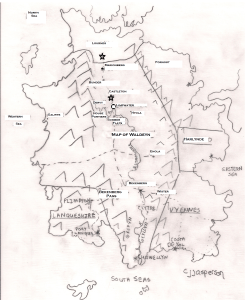
Map of WaldeynSo how do you visualize your country and the world you are creating? I have discussed this before–I draw maps.

They start out like this, all blotchy and hand-drawn, with whiteout covering the changes. After a while of refining them they end up looking more like real maps.

Its a gradual process, and the actual shapes and where the places are will evolve throughout writing the tale, but it will remain basically that way.

Many authors will use locales they are familiar with for their fantasy maps, just changing the names of major cities.  This is a good way to do it, because your world is already well defined for you, and Northwesterners know that Portland, Oregon is about 170 miles south of Seattle, Washington.  You are safe using currently existing terrain.

map of Waldeyn 2015 with lettering cooper black copyBut safe isn’t exactly my thing, so I had to invent both the world of Waldeyn (Huw the Bard), and the World of Neveyah (Tower of Bones). This is what the hand-drawn map of Waldeyn from above has evolved into————>

Helpful Tip #3: Version control:

When we first begin to write seriously we learn how critical it is to have proper naming of our files to ensure version control.  The most recent file will usually be the best edited unless you have accidentally saved an earlier version over it. ALWAYS use a separate file for each version, and ALWAYS use consistent file labeling practices to avoid this tragedy!

Use good file labeling practices, even if you have a fancy program that handles structuring your manuscript.

As an editor, I am particularly careful how I name the files of my clients.

  1. I use a specific sort of naming system. It will ALWAYS be Book_ AuthorName_script.doc .
    This is the main file folder for this book and this author!
  2.  The file folder will contain everything that pertains to this author and his work. There will be at least two folders in this file, and can have up to six. Version control is critical, so proper naming of the files is absolutely essential. If he should ever lose his files, I will have the most recent version on hand.
  3. The raw manuscript in its entirety is saved in this file, and I will name it:
  •  Book_ AuthorName_rawscript.doc

There will be 2 files for every step of the process this manuscript goes through with me: One file will be from the author’s desk to me, and the other will be from my desk to the author.  I will break the raw ms down into chapters, and label each chapter in that file consecutively:

  • Book title_Ch1_ author initials_cjj_edit_rnd1.doc

This tells me that this is Book A, chapter 1, by Author SoAndSo, and was edit round one of that ms.

For my own work I label the files uniformly, like this: The main folder will be labeled with the working title, such as Bleakbourne on Heath. Inside the main folder will be the style sheet, and any images that will be used, including maps if needed.
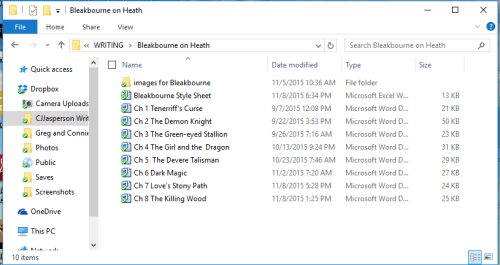
Version Control 1

These three tips, creating a style guide, drawing a map, and labeling your files so you have good version control will help you navigate the shoals of the authoring business. You will always know who you are talking about, where you are, and you will be working in the most recent version of your work.

3 Comments

Filed under Publishing, writer, writing

#amwriting: #NaNoWriMo–let the madness begin!

nanowrimo-yoda

Google images, via http://www.writingchimp.com

Every November I participate in National Novel Writing Month, or NaNoWriMo. Around our house it is also referred to as “National Pot Pie Month,” an homage to my culinary efforts during November.

For the last four years I have been the Municipal Liaison for the Olympia, Washington Region. This year indie author Lee French agreed to be a co-ML with me, which really takes the pressure off in regard to small ML duties. We have 165 active novelists and are gaining new wrimos all the time.

At 12:01 am on Sunday November 1st, I met with 9 authors at Shari’s Restaurant (open 24 hours) and we worked for three hours, getting our first day’s word count written and uploaded to the national site. Then we went home and wrote some more.

tumblr_nw1cowIO1M1u2qtoxo1_1280

2015 nano calendars via tumblr.com

It is true that the primary goal of participating in NaNoWriMo is to produce a 50,000 word novel in the space of 30 days. That sounds crazy but it can be done–I do it every year. The first draft of Huw the Bard was written from start to finish during November of 2011 as my nano-novel that year. Mountains of the Moon was written in 2012, and published 2015.

HOWEVER:  I spent the month of October 2011 outlining the novel. After the first draft was completed, I spent the next three years getting HTB ready for publication, rewriting it through 3 more drafts, having it edited professionally, and finally it was published in March of 2014.

Many people use the concept of NaNoWriMo to jump-start their noveling career, but there are just as many who spend the month of November writing family histories or memoirs, writing daily blog posts, writing essays, or even working on their dissertations. I know two people who write screenplays during November.

epiphany

The month of November is when we celebrate the act of creative writing, and encourage every person with an inner author to let that creative energy flow.

This year, I am working on a series of mixed genre short-short stories that will be written in the month of November 2015 during National Novel Writing Month.

My intention is to write one tale a day, or two or three longer tales a week, many of them set in a Medieval village, but some set in the fantastic future.  Robots, Spaceships, Dragons, Fairies, even Mad Scientists and Crazed Wizards–all will be fair game.

crest-bda7b7a6e1b57bb9fb8ce9772b8faafbFor me, writing the first draft of a novel  is only the beginning. Once that is out of the way, the real work begins–making it fit for others to read, getting it through the editing process with a professional editor, these are tough but necessary steps.  I don’t rush the revisions. I have nothing to lose by taking the time to do it right. Right now, I have three books on the back burner in various stages of dismemberment, and in December I will return to getting them through that process.

This year there will be no novel in the traditional sense, but hopefully a LOT of short stories will emerge from my fevered mind, things I can use for contests and submissions to magazines and anthologies.

NaNo-2015-Participant-Banner

1 Comment

Filed under Uncategorized

#amwriting: creating religion within the context of the tale

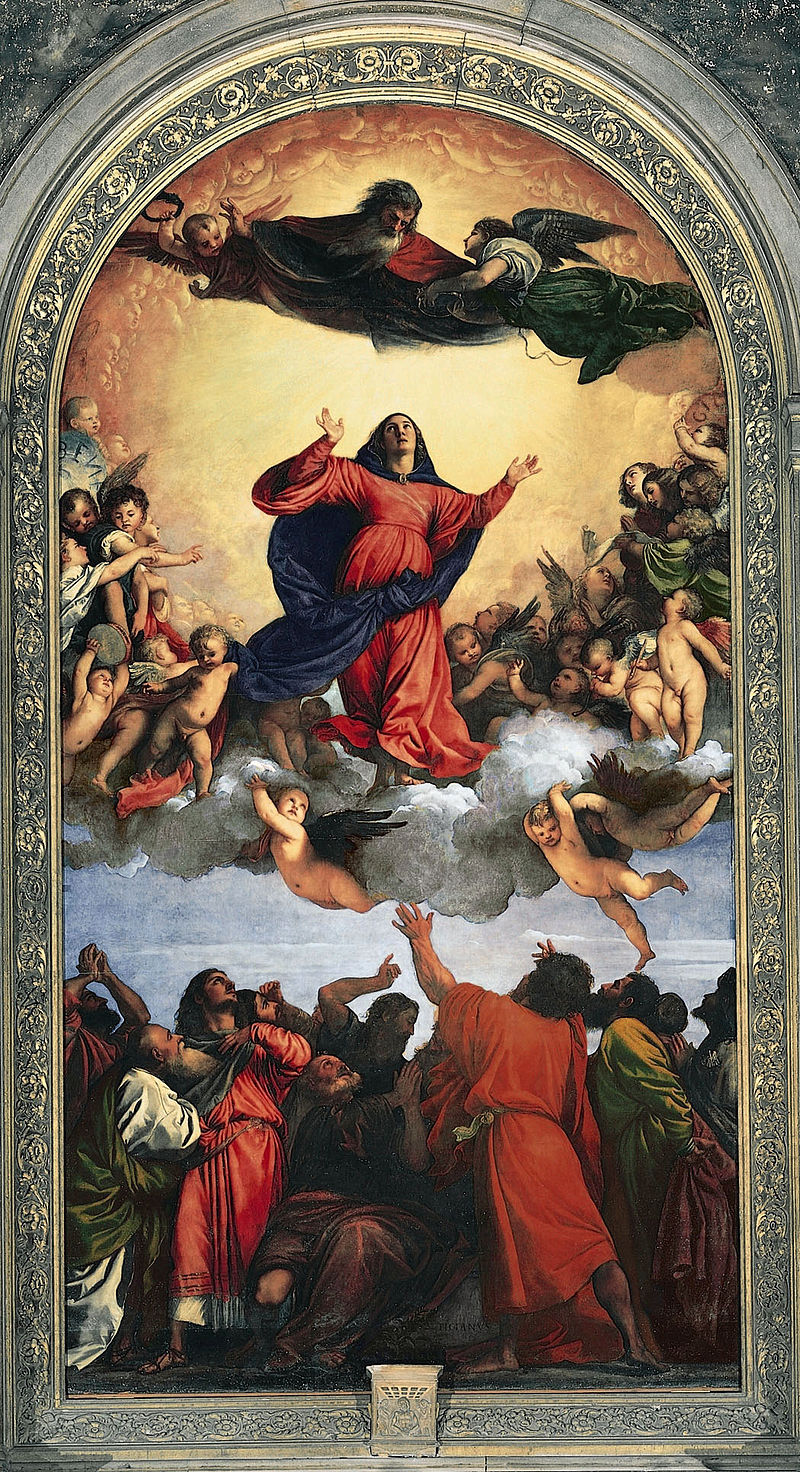
Assunta, by Titian, 1516-1518, via Wikimedia Commons

Assunta, by Titian, 1516-1518, via Wikimedia Commons

One thing we fantasy authors must occasionally deal with is developing religions within the context of the tale.

Most of what we will discuss here won’t actually make it into the written pages of your tale, but if you don’t have a good understanding of what you are writing about, you will inadvertently introduce discrepancies into your tale.

First, ask yourself “why does this religion matter?”  If it doesn’t matter, it doesn’t belong in your tale.

However, when you have a heavenly power-struggle, you have some intriguing opportunities for mayhem.

Are there many gods and goddesses? What is their relationship with each other and how does it play into your story?

If you choose to create a religion as a key plot point, here are some questions to ask:

  1. How central to the life of the protagonist or antagonist is religion? Is the protagonist a member of the priestly class, perhaps a priestess or priest of a particular god or goddess?
  2. What does the protagonist gain from following this deity?
  3. How jealous is this deity?
  4. What is the protagonist/antagonist willing to do for their faith? Will they die for their deity or is it a more abstract religion?
  5. The priesthood—who can join?
  6. Can only the nobility rise in the priesthood, or can anyone with the ability to learn gain power within the organization?
  7. How do the nobility and the priestly class get along? Do they have a good accord or are they jostling for power?
  8. And within that religious organization, who has the most power?
  9. What does that person do with their power?

How important is your religion politically? In Rome, the church was central to their government, in some cases having more power than the ruling nobility. During the Middle Ages, Rome slowly fell under the political control of the Papacy, which had settled in the city since the 1st century AD. In the 8th century, Rome became the capital of the Papal States, which lasted until 1870.

You don’t have to re-invent the wheel here–history is full of great ideas to draw upon.

A_Glass_of_Wine_with_Caesar_Borgia_-_John_Collier

Painting by John Collier, “A glass of wine with Caesar Borgia” via Wikimedia Commons

Consider the Borgias–Wikipedia, the fount of all knowledge says this about them: Especially during the reign of Alexander VI, they were suspected of many crimes, including adultery, incest, simony, theft, bribery, and murder (especially murder by arsenic poisoning). Because of their grasping for power, they made enemies of the Medici, the Sforza, and the Dominican friar Savonarola, among others. They were also patrons of the arts who contributed to the Renaissance.

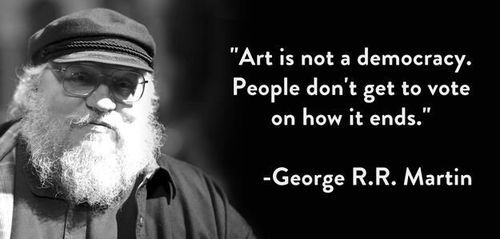
See? Even George R.R. Martin knows that the renaissance offers great opportunity for good plot twists in your fantasy project.

Now let’s examine the political environments of the medieval city-states of Venice, Milan, Florence, Genoa, Pisa, Siena, Lucca, and CremonaRodney Stark, an American sociologist of religion, proposes that the city-state was a ‘marriage of responsive government, Christianity, and the birth of capitalism’ as we know it. He argues that these states were mostly republics, unlike the great European monarchies of France and Spain, where absolute power was vested in rulers who could and did stifle commerce.

It has been suggested (in Wikipedia, the fount of all knowledge) that by keeping both direct Church control and imperial power at arm’s length, the independent city republics of medieval Italy prospered because their commerce was based on early capitalist principles. The church was still involved in their daily lives, but this slight, deliberate separation of church and state ultimately created the societal conditions that brought about the artistic and intellectual flowering of the renaissance.

And for you, the author, understanding the commerce and economics of your fantasy society is extremely important, so that inconsistencies don’t get introduced. The reader won’t care, and doesn’t want the background info, but you need to know it.

If your protagonists are poor, why are they poor? Is poverty widespread, or is it only the one family? Where is all the money–is it in the hands of the church or is it in the hands of the middle-class? If it’s in the hands of the church–you’ve a good plot-point to work with.

Thus if religion of some sort is an integral part of your work, you as the author must have a good knowledge of what the influence of that institution is, the structure of the priesthood, the power they wield in society at large, how (or if) they control the economy, and how this organization is viewed by the ordinary citizen.

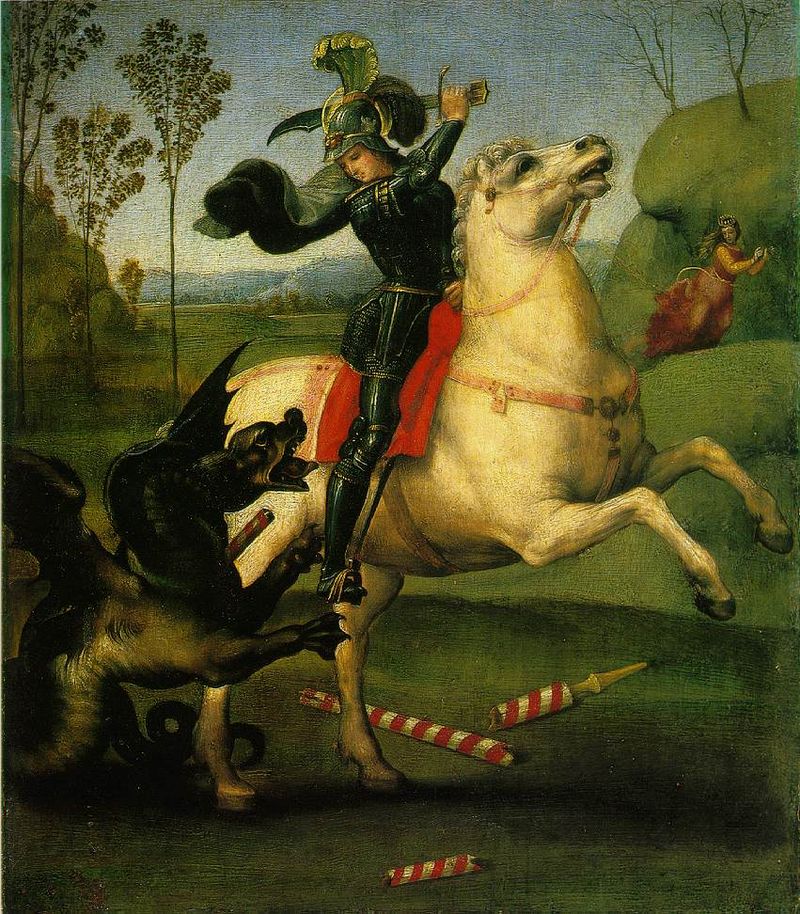
St. George and the Dragon, Raphael via Wikimedia Commons

St. George and the Dragon, Raphael via Wikimedia Commons

Many authors avoid this altogether, by having only a vague mention of religion, simply mentioning a connection with a particular deity as the reason for the ability to use and control magic.

Others make religion and opposing religions the foundation of their works. How you handle religion in your manuscript is up to you, but if you make it a central part of your tale, I suggest you create a document in which you establish the basics of your religion(s) clearly. Update it as the rules evolve, which they certainly will do over the first two drafts of your novel. During your writing process, refer back to this document regularly.

The reader doesn’t care about those details, and will put the book down if they are included. But if you don’t know what you are writing about, can’t remember what you wrote three chapter ago, and contradict yourself too often, your reader will lose the ability to suspend his disbelief.

Keeping the reader immersed in the tale, forgetting that it is only a fiction is the primary goal every author wants to achieve.

2 Comments

Filed under Fantasy, Publishing, Uncategorized, writing

#Inspiration: Seeking truth and beauty via Wikimedia Commons

Seljalandsfoss,_Suðurland,_Islandia,_2014-08-16,_DD_201-203_HDR

Inspiration.

It can be found in nature, and through the eyes of the artist or photographer. Through the miracle of the internet, I can find inspiration any time of the day or night, just by seeing what the picture of the day at Wikimedia Commons is. This was today’s gorgeous, surreal image: Sunset view from the back of the Seljalandsfoss waterfall, photo by Diego Delso, Wikimedia Commons, License CC-BY-SA 4.0.

Stiftskirche_Herzogenburg_Deckenfresken_01Several days ago, the image of the day was architectural: The ceiling frescos in Herzogenburg Monastery Church (Lower Austria). The church was consecrated on October 2nd, 1785. This image was uploaded by an author who uploaded with the user name Uoaei1, but who has won many awards for his/her images.

Roosa_hommikuudu_Tolkuse_rabasThen there was this gorgeous photograph by Märt KoseMorning in Tolkuse bog, Luitemaa Nature Conservation Area, Pärnu County, Estonia.

Inspiration in breathtaking images, free of cost, available for anyone, rich or poor. Everyday, a new picture is chosen as the image of the day, and if you like the artist, you can check out more of his/her works as, I did Diego Delso:

Iglesia_de_San_Colmano,_Schwangau,_Alemania,_2015-02-15,_DD_15Winter landscape of St Coloman church (de), photographed by Diego Delso, and located in Schwangau, Bavaria, southern Germany. St Coloman church is of baroque style and was constructed, the way it is today, in the 17th century in honor to Saint Coloman, replacing a chapel of the 15th century. The Irish pilgrim is said to have taken a break at this spot in his pilgrimage to the Holy Land in 1012.

I can visualize the crusaders riding in this winter landscape. I would have stopped there too!

The imagination transforms the beauty around us, and we create “what ifs” via the written word or the canvas and paint. This is why I always find myself looking at paintings too, when I am visiting Wikimedia Commons. I leave you with two images of a palace, seen though the eyes of two different artists:

Palacio_de_Nymphenburg,_Múnich,_Alemania,_2015-07-03,_DD_01-18_HDR_PAN

Panoramic View of the Nymphenburg Palace, Diego Delso, Wikimedia Commons, License CC-BY-SA 4.0

Nymphenburg, View From the Seaside painting by Joseph Wenglein 1883

Nymphenburg, View From the Seaside painting by Joseph Wenglein 1883 PD|100

The first is a photograph is the Panoramic View of the Nymphenburg Palace as seen through Diego Delso’s camera-eye and posted on Wikimedia Commons using the License CC-BY-SA 4.0. The painting below that is the palace as seen through the artist Joseph Wenglein‘s eye, A Seaside View of Nymphenburg Palace

Both images are the creations of artists using different mediums, both are of the same baroque palace in Munich, Bavaria (southern Germany). The palace is the main summer residence of the former rulers of Bavaria of the House of Wittelsbach. It was designed by Agostino Barelli and constructed by order of Ferdinand Maria and Henriette Adelaide of Savoy in 1664. Famous for its symmetry and extravagant beauty, the palace was expanded and redesigned several times until the last modifications in 1826.

More than 125 years separate their visions, but I am connected with and inspired by both artists because I, a middle-class woman in a rural town, can view and admire their work.

1 Comment

Filed under Fantasy, Humor, Uncategorized, writing

#amwriting: the external eye

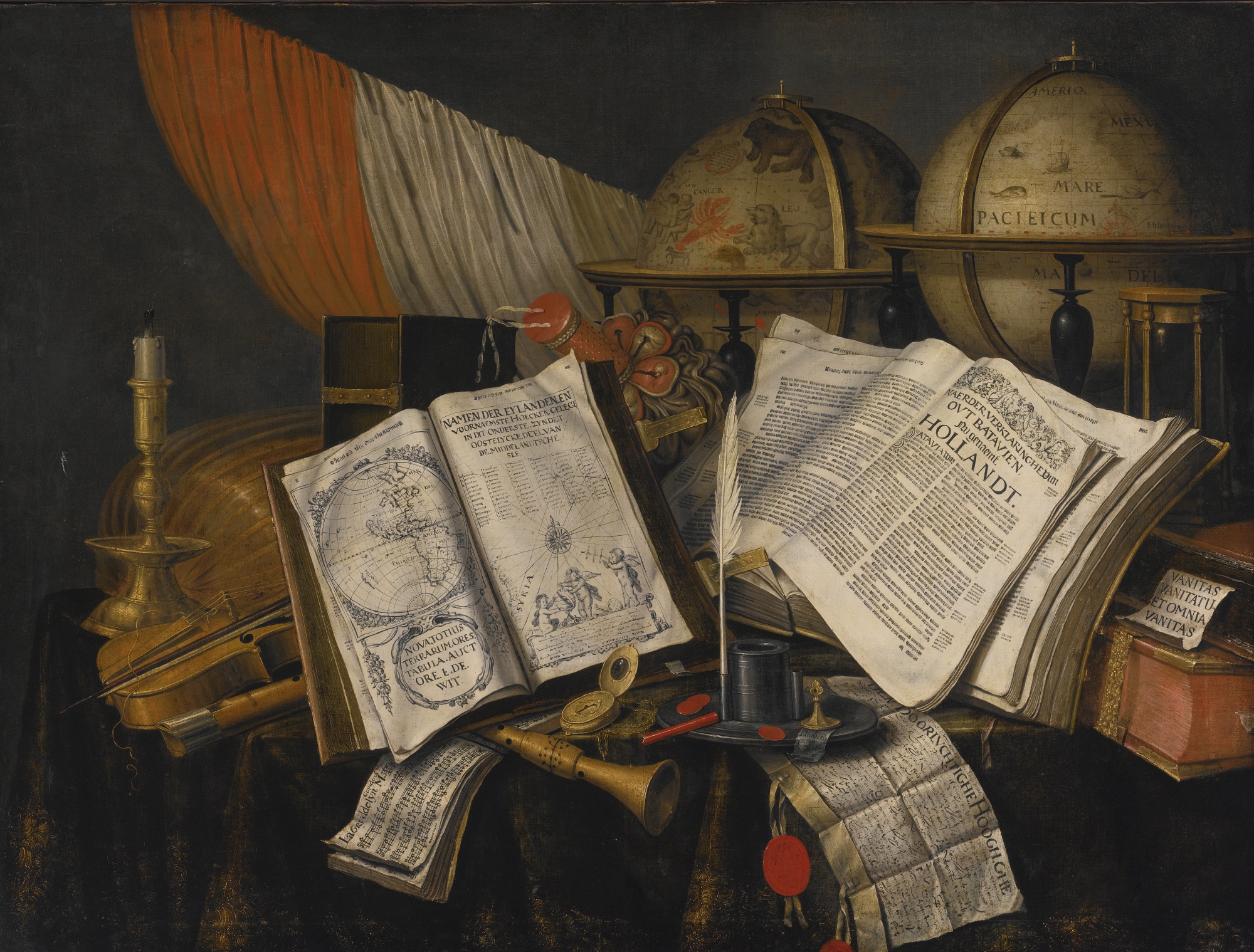
EDWAERT_COLLIER_VANITAS_STILL_LIFEMore people than ever are writing books. In today’s marketplace, every author must find ways to get his/her manuscript in as perfect shape as they can before they begin shopping for agents and publishers.  At every seminar I attend this one fact is stressed most firmly.

What this tells me is that agents and editors at the large publishing houses see so many submissions on a daily basis that they don’t have time to do more than look at the first page or two before deciding to look further. If it is not formatted to industry standard, or if it is a rough draft, it goes into the trash, based on that quick glance. (See my post, How to Format Your Manuscript for Submission.)

Therefore, we make our manuscript as good as we can before we send it off to an agent or a large publishing house, or take the plunge and self publish. To this end, during the second or third draft we may consult what has become known as the beta-reader, volunteers who read our work, knowing it is in its infancy.

You can find many good freelance editors who offer this service, but I do recommend you ask them what it involves and what kind of report you will get back before you commit your funds to it. I can also recommend Critters Writers Workshop, a free author-driven service. Or you may have a spouse or good friends who will help you with this.

A word to the wise: Editors and other authors make terrible beta readers, because it is their nature to dismantle the manuscript and tell you how to fix it.

But what if you don’t have the luxury of a reader who both likes the kind of work you write and who also is willing to spend the time reading your work?  Consider asking them to read a selected chapter, instead of asking them to read the whole thing.

I suggest this, because reading the rough-draft of an entire novel is a huge commitment to ask of someone. It is not reading for pleasure, although we hope they enjoy it.

Give your reader this list of questions, and ask him/her to please answer them, explaining that you can’t continue until you hear back from them:

  1. Were the characters likable?
  2. Where did the plot bog down and get boring?
  3. Were there any places that were confusing?
  4. What did the reader like? What did they dislike?
  5. What do they think will happen next?

You need a reader who reads your genre, reads fairly quickly, and won’t devolve into an editor.  Questions two and three are the most important: Where is it boring, and where is it confusing? Having it read in small chunks will give you a good idea of what you need to do with the ms as a whole.

I usually send my  manuscripts  in short pieces to my trusted crew when I need to know if I am on the right track. But the final ms in the Tower of Bones series is different. I hope to have it ready for publication by spring, so I have taken the plunge and sent Valley of Sorrows to David Cantrell for a structural edit. Dave and I have worked together on many projects.

Structural editing is digging deep. This is a tricky novel, because it tells two separate but entwined story-lines, Edwin’s and Lourdan’s, so I need an interested, but surgical, eye on it before I begin the final revisions. Dave has read Tower of Bones, and knows the world, the magic system, and the characters.

I hear you asking, what if he asks me to cut something I think is an integral part of the piece? I will have to decide what to do after I:

  • Re-read the section in question: Is it garbled? Was my intention not clear when I wrote it?
  • Look at the section in the context of the entire manuscript: Will losing this section change the story in a way that I don’t want? Or will cutting that section allow a more important point to shine?
  • Decide how married I am to that plot point. Sometimes divorce is the only answer.

In my own work I have discovered that if a passage seems flawed, but I can’t identify what is wrong with it, my eye wants to skip it.

But another person will see the flaw, and they will show me what is wrong there. That is why I rely on the external eye, and work with a structural editor.

4 Comments

Filed under Literature, Publishing, Uncategorized, writer, writing

#amwriting: Rothfuss and Gaiman, crafting good prose

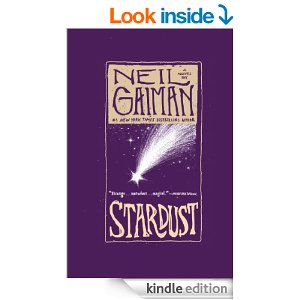
Stardust, Neil GaimanSome fantasy qualifies as literary fiction because of the way in which the story is delivered.

One example of what I think of as literary fantasy is Neil Gaiman’s Stardust. In the very first sentence of chapter one, Gaiman commits the most heinous crime an author can commit, according to those critique groups armed with a little dangerous knowledge:

Quote: There once was a young man who wished to gain his hearts desire. 

And then, to make matters worse, he throws out a bit of background:

  1. Our story starts in the village of Wall, a tiny town about a night’s drive from London. A giant wall stands next to the town, giving it its name.
  2. There’s only one spot to pass through this huge grey rock wall, and it’s always guarded by two villagers at a time, and they are vigilant at their task.
  3. This is peculiar, because all one can see through the break in the wall is meadows and trees. It looks as if nothing frightening or strange could be happening there, but no one is allowed to go through the break in the wall.
  4. The guards only take a break from the wall once every nine years, on May Day, when a fair comes to the meadow

omg! Did he really do that? What was he thinking, starting a fantasy novel with a TELLING, PASSIVE sentence followed by an info dump?  To answer your question, he thought he was offering up a good story, and guess what? HE WAS!

And he did it with beautiful, immersive prose.

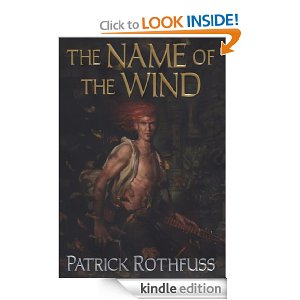
name of the wind -patrick rothfussWho else writes great prose? Patrick Rothfuss, for one. Take the first lines of The Name of the Wind. 

Quote:  It was night again. The Waystone Inn lay in silence, and it was a silence of three parts.

Rothfuss then goes on to commit what some purists (aka trolls) consider a heinous crime–he DESCRIBES THE SILENCE. He does this on the first page and guess what–the reader is sucked into the story and has no desire to leave.  To compound that crime, the story is a story within a story, told to a chronicler, and what most would use as the prologue actually comes after the first chapter, in chapter eight:

(quote) If this story is to be something resembling my book of deeds, we must begin at the beginning. At the heart of who I truly am. To do this, you must remember that before I was anything else, I was one of the Edema Ruh.

When we write, we are writing because we have a story to tell. (Yes, I said tell). To that end, every word must count, every idea must be conveyed with meaningful words, and sometimes you can just have a little fun with it.

In the opening lines of Gaiman’s Stardust, nothing unimportant is mentioned although the prose meanders in a literary way. Yes, he takes the long way, but the attitudes, mores, and personalities of Tristam’s village are conveyed with humor and the journey is the best part of this fairytale. He never devolves into purple prose.

The Elements of Style calls “Purple Prose” “hard to digest, generally unwholesome, and sometimes nauseating.”  To be fair, purple prose is subjective and each reader has a different level of tolerance for it, but it is something we definitely don’t want. What do you want to convey? Choose your words based on what you want the reader to see and feel:

  • Plain: He set the mug down. (conveys action–what’s going to happen next?)
  • Somewhere in the middle: He eased the tankard onto the table. (conveys a medieval atmosphere–what’s going to happen next?)
  • Bleah: Without haste, the tall, blond barbarian set the immense, pewter, ale-filled cup with a wooden handle onto the stained surface of the rough, wooden table. (conveys nausea–don’t care what happens next.)

Of course you are not going to devolve into sticky-sweet goo in your attempts to show the mood and atmosphere. But please, if I may use a cliché here, don’t “throw  the baby out with the bathwater.” Lean prose with well chosen imagery will express your ideas in such a way that the reader can hang their imagination on your words.

In direct contrast to Gaiman’s lighthearted opening prose in Stardust, the opening lines of Rothfuss’ The Name of the Wind, are dark and heavy with portent.  Rothfuss sets the mood, and conveys the subtle power kept restrained by Kote/Kvote, and he uses this atmosphere to drive the tale.

Both Rothfuss and Gaiman use words chosen for their imagery. Gaiman’s story is told with sardonic humor, which makes it all the darker, and Rothfuss’ prose evokes the dark of nightmares. They write with widely different styles, but both books are dark, both books are fantasy, and both books moved me.

Both authors write so well that the internet is rife with haters and trolls who can’t wait to trash their next book. THAT, sadly, is the mark of success, or genius, in today’s world of fanatics in dark rooms, armed with a rigid idea of what fantasy should be, and waging war via the internet on authors who dare to write outside those boundaries .

GRRM Meme 3Write from your heart, and dare to write what moves you. Think about the rush of “yeah, this is it!” that you get when you read a piece that takes you out of this world and changes your life for a few brief moments. That author knows something about the craft, or you would not have been so moved by it.

Study the prose of those whose work shocks, rocks, and shakes you. See how they craft the sentences, and form the moods and emotions that drive the plot. Learn from them how to show the true character of a protagonist, or the smell of an alley by the wharves. Read, and then apply what you’ve learned from the masters to your own work.

4 Comments

Filed under Fantasy, Humor, Literature, Publishing, writer, writing

#amwriting: Write like a pansy

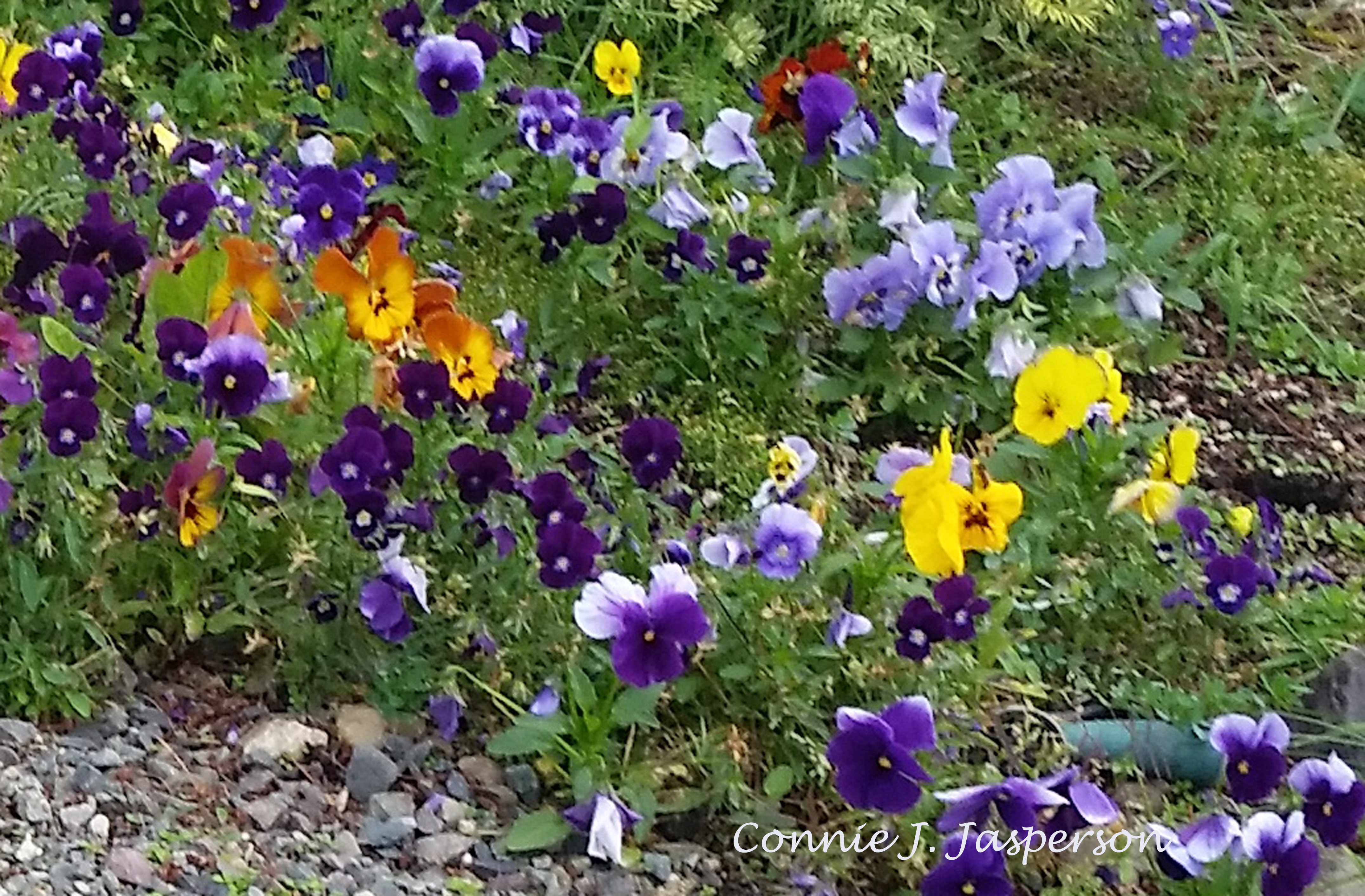
Free-Range Pansies photo credit cjjap copyMy favorite books are written by fearless writers. These authors dare to write because they have something to say, not because they have something they think will sell.

So how does that concept of fearlessness tie in with the title of this blog post? It does say “pansy,” right?

Don’t sell pansies short.

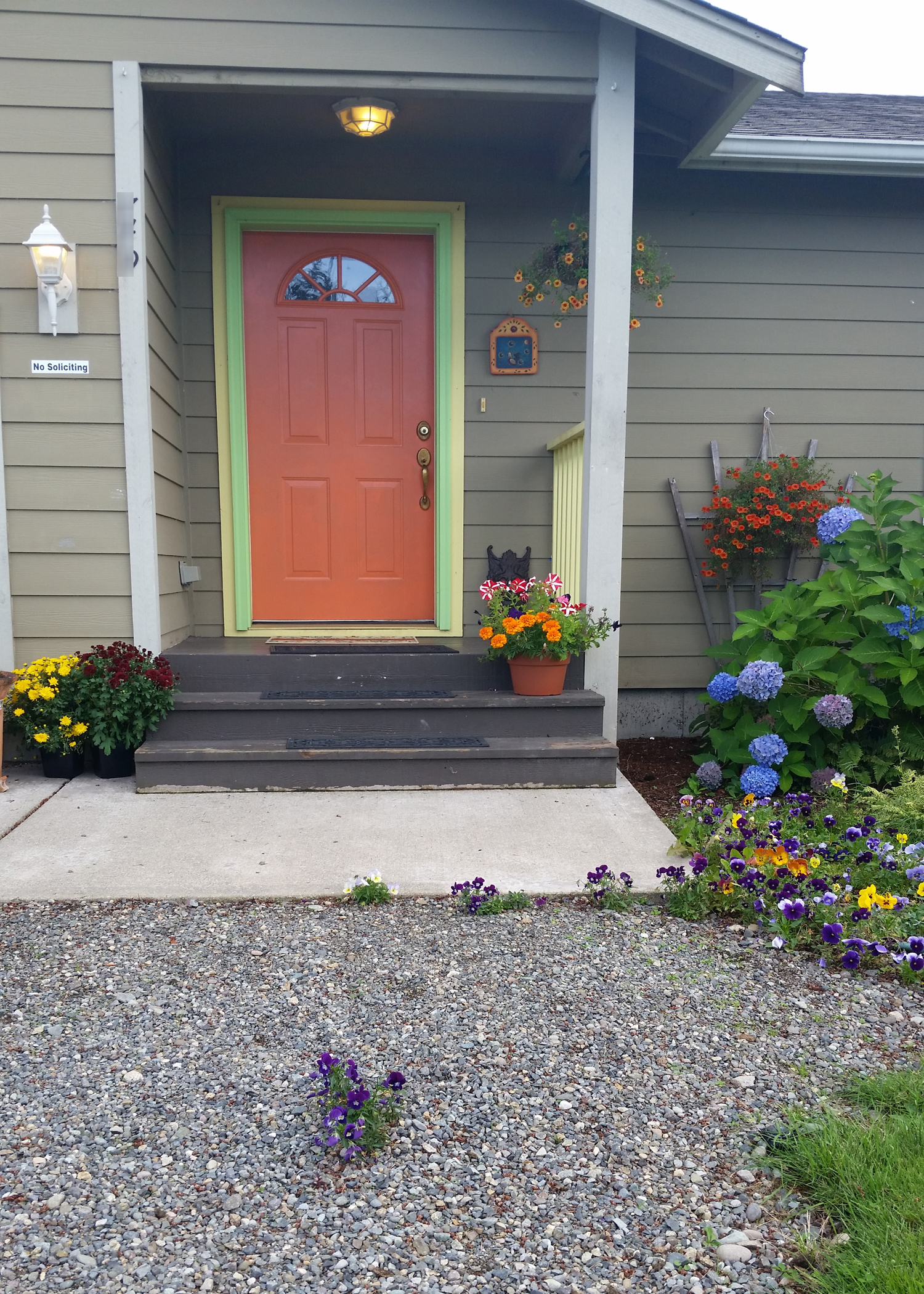
Pansies are fearless plants. They thrive in the strangest places–at least in our yard they do. My husband is an avid gardener, but he really doesn’t plant a lot of annuals. He does get a few hanging baskets and sets a few pots on the front steps for color. Other than that, our yard has large shrubs, lilacs and hydrangeas.

But it wasn’t always that way:

This story began ten years ago, when we bought our house. It was just a brand new tract-house, sticking out of the rocky, Northwest mud. No grass, no plants, nothing but mud everywhere. What we didn’t know then is that we sit on glacial tilllots of rock, and very little soil.

The house came with no landscaping, although a month after we moved in, the builder did spray hydro-seed over the scant inch of topsoil where our front…lawn…would attempt to grow. We were a little strapped for funds, so we  bought $100.00 worth of annuals, and a few perennials, and had a few yards of topsoil for berms brought in so  at least the front of the house would look decent.

Some of those annuals that made our yard look okay that year were pansies.

Ten years and a professional landscaping later, those few pansies that were just for fill that first year are still going strong, reseeding themselves and expanding their reach every year.

During those ten years, we have had deep freezes, we’ve nearly been flooded, and this year we have had an unprecedented drought.

?

And every year, those pansies have grown bolder, and stronger. They’ve thrived  when nothing else did, and this year they have staked out new territory–our driveway.

Yep! The soil they like the best is the driveway gravel. It’s harsh and dry, with few nutrients. Apparently pansies are like authors: adversity makes them strong.

My husband and I like our free-range pansies–and we’re pretty much treating them the way we do our grand-kids:

If that’s where they want to grow, fine. Just don’t break anything.

That is pretty fearless, setting down roots where a Subaru Forester is regularly parked by a man who may forget you’re there and park on top of you.

And what does this tale of resilience and free-range gardening have to do with writing?

Be fearless in your writing. Write because you have a story to tell, and only you can tell it.  If the story takes you to uncomfortable places, but you can’t stop writing it, just go with it. Sometime the best work is a little edgy, and a lot scary to write.

What you do with your work after you’ve written it is up to you, but I’ve always been glad that the bold writers dared to publish their work.

300px-JohnSteinbeck_TheGrapesOfWrath


3 Comments

Filed under Humor, Publishing, Uncategorized, writing

#amwriting: keeping short stories short, when all your stories want to be long

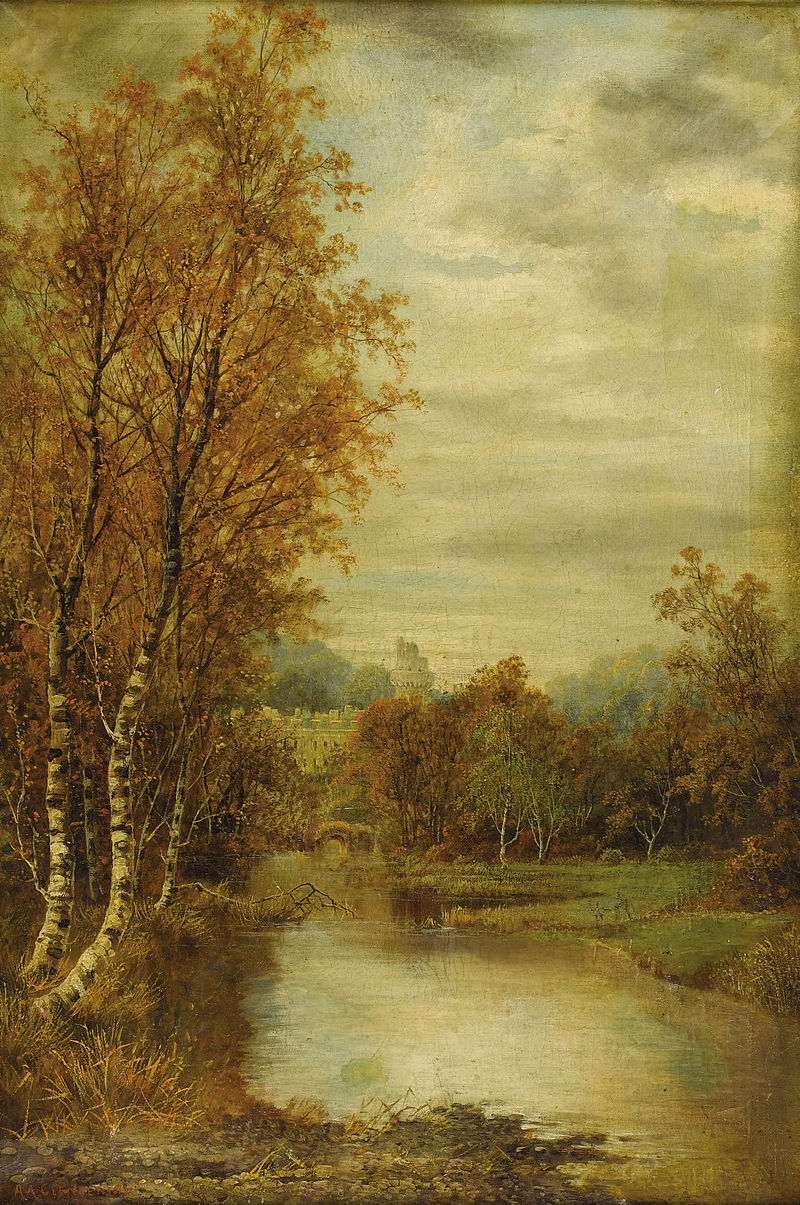
Autumn Landscape With Pond And Castle Tower-Alfred Glendening-1869

Autumn Landscape With Pond And Castle Tower-Alfred Glendening-1869

Over the summer I posted several times about why we need to write short stories, and each time I’ve talked about writing them to build stock for submissions to magazines, anthologies, or to enter into contests. Today, I want to talk about the art of keeping a story short.

First, decide what length you want to write to–if you have no specific contest in mind, 2000 to 4000 is a good length that will fit into most submission guidelines.

For those of you who have trouble writing short works for contests and anthologies with rigid word-count limits, this is where mapping your story becomes really important.

Let’s say you want to write a story that can be no longer than 2,000 words. You know what the story is, but when you sit down and begin writing, it’s like there is way too much story for only 2,000 words. You need to map it out.

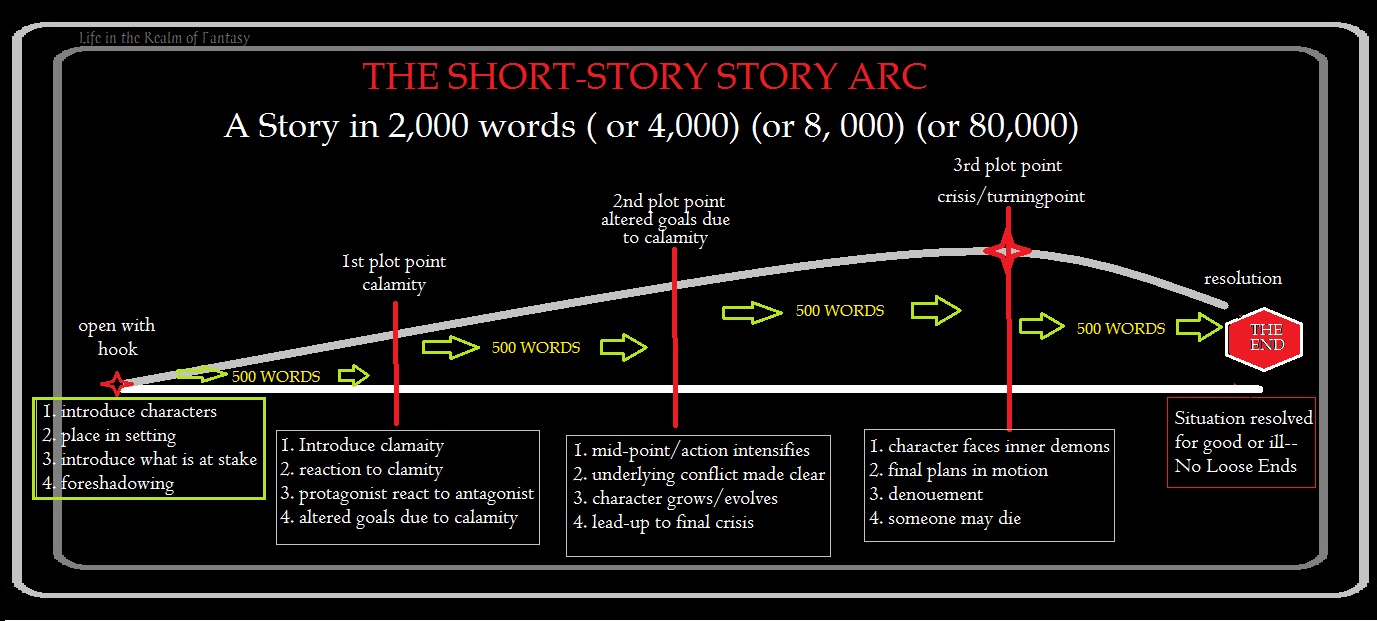
Short-stories are just like novels, in that they have an arc, and you can make it work for you.  By looking at it from the perspective of the story arc, you can see what you have to accomplish, and how many words you have to accomplish it in.

short story arc

Every word in a 2000 word story is critical and has a specific task–that of advancing the the plot. To that end, in a story of only 2,000 words:

  1. No subplots are introduced
  2. Minimal background is introduced
  3. The number of characters must be limited to 2 or 3 at most
  4. Every sentence must propel the story to to the conclusion

Lets say you are writing a fantasy, titled, A  Song Gone Wrong. Because he was a bit too specific when a putting a local warlord’s fling with another man’s wife into a song, our protagonist  is now a wanted man. Divide your story this way:

Act 1: the beginning: You have 500 words to show these plot points

  1. setting: the village of Imaginary Junction,
  2. the weather is unseasonably cold
  3. In an alley, a bard, Sebastian, is  hiding from the
  4. Soldiers of the lord he has inadvertently humiliated

Act 2: First plot point: You have 500 words to tell how

  1. the soldiers surround and capture Sebastian
  2. he is hauled before the angry lord and
  3. thrown into prison, sentenced to hang at dawn, but now you are at:

Act 3.: Mid-point: You have 500 Words to explain how

  1. Sebastian meets a dwarf, Noli, also sentenced to die
  2. Noli is on the verge of managing an escape, but needs help with one last thing
  3. Noli and Sebastian manage to complete the escape route
  4. but the guard seems suspicious, hanging around their cell door, hampering their escape

Act 4: Resolution–you have 500 words to show how

  1. The smart guard finally is relieved by a less wary guard, which
  2. allows Sebastian and Noli to squeeze through the escape route
  3. They are spotted at the last minute, but Noli’s friends are waiting, and
  4. they are whisked to a dwarf safe-house, leading to Sebastian’s next short-story adventure

Once you have parsed out what needs to be said by what point, and in how many words, you can then get to the nitty-gritty of turning that far-fetched tale of woe into a good short-story.

You will see that in order to keep to the strict limit of words, you will have to choose your words carefully. You will have to find words that really convey what you want to say, concisely in one or two sentences. Sebastian can’t give Noli a recap  of his troubles in your hearing–all that will have to be off-stage. On-screen conversations are critical–they will convey the personalities and the minimal backstory of the piece.

After a few times of creating short stories this way, you won’t need to think about it. When you know the length a given tale has to be, you can mentally divide it into acts and just write for fun.

2 Comments

Filed under Publishing, Uncategorized, writer, writing

Elements of the story: when the novel is not a novel after all

Book- onstruction-sign copy

In the rough draft, the goal is to get the work out of your head, and the concepts onto the page. To that end, I advise you to just write, and try not to self-edit as you go, because you may lose your train of thought.

If we let ourselves drop into the zone, in the first draft we are in story-teller-mode, which is where our best work happens. Yes, our prose is uneven and may contain things we wish had been written by someone else, but all we were doing was getting the idea down:

Thus it was that On departing Billy’s Revenge on this particular job, Lackland and Mags had kept the conversation cordial and polite, but little of substance passed between them. Oh, They joked and laughed, and said all the things that as they would say to with any Rowdy that they were on a job working with, but it felt all wrong. Still, Even so, Lackland did not press for anything more from Lady Mags, although he was full of questions and desperate for answers. 

It’s okay write crap when you are just getting it on to paper. You have to get the basic ideas down before you can craft them into a proper novel or short-story. (That drivel was from the rough draft of my 2010 nanowrimo manuscript. I can get rid of at least 24 words in that paragraph, and although I did replace several words, losing the fluff made it stronger.)

Remember, the rough draft–the first draft–is the proto-story, the just-born infant that is the child of your creativity. You do the shaping when you come back to it in the second draft. Some will stay, and some will go.

This weekend I discovered that one of my works in progress is not really a novel after all.

It was at 85,000 words, but it has occurred to me that it is a novella, because in the first half of the book, 4 chapters don’t advance the protagonist’s story. When I am done weeding it out, the ms may only top out at about 50,000 words.  In some circles that is a novel, but in fantasy, it is half a book.

Still, I’m not going to try to force it to be any longer than it is, because I have nothing of value to add to the tale. I would much rather be known for having written a strong novella than a weak novel. So, now at the end of the rough draft, this book must become a novella.

Those four cut chapters total about 16,000 words. Add to that the words that will be weeded out in the second draft and I would say its going to lose a lot more weight–perhaps another 8,000 to 10,000 words. But why do I think this? Because I am just finishing the rough draft and I have realized several things:

  1. __Hell's Handbasket__400 1Besides the four chapters that must go since they don’t belong there anymore, 3 more chapters are mostly background that doesn’t need to be in the finished product. When I went in and removed large chunks of exposition I was able to condense those 3 chapters into 1 that actually moved the story forward.
  2. Add to that the fact that in the rough draft we will always have a lot of words we can cut (or find alternatives for), words and phrases that weaken our narrative:
  • There was
  • To be

I will also make some contractions, ‘was not’ becomes ‘wasn’t,’ ‘has not becomes hasn’t,’ etc.

It’s amazing how many times we can simply cut some words out, and find the prose is stronger without them. Many times they need no replacement.

Sometimes we use what I think of as “crutch” words. You can really lower your word-count when you look at each instance and see if you can get rid of these words. These are overused words that fall out of our heads along with the good stuff as we are sailing along:

  • so,
  • very,
  • that,
  • just,
  • so,
  • literally
  • very

But back to one of my current works-in-progress: why am I cutting an 85,000 word MS down to 50,000 or so words?

800px-Singapore_Road_Signs_-_Temporary_Sign_-_Detour.svgA lot of what I have written is good work, but as I said, several long passages don’t advance my protagonist’s tale. They pertain to a different character’s story set in that world–so they were a rabbit-trail to nowhere in the context of this tale. However, those passages will come in handy later if I choose to write that character’s story, so I am saving them in file labeled “Out Takes.”

The fact is, you must be willing to be ruthless. Yes, you may well have spent three days or even weeks writing that chapter. But now that you are seeing it in the context of the overall story arc, you realize it is bogging things down, and NO–Sometimes there is no fixing it. Just because we wrote it does not mean we have to keep it.

In genre fiction, no matter how much you like the prose you have just written for a given chapter, if the chapter does not advance the story, it must go. The story arc must not be derailed, and sometimes amputation is the only cure.

The Story Arc copy

3 Comments

Filed under Publishing, writer, writing

Elements of the story: Crafting magic systems

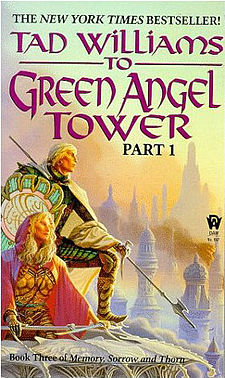
Green_Angel_Tower_P1I am thrilled that Tad Williams is writing another series of books set in Osten Ard. Tad is an author who  absolutely understands the craft of writing fantasy. He knows what makes epic fantasy EPIC. There is just the slightest hint of the rebellious indie in his work, which makes it a little wild. But more than that, Tad understand how important it is to make the limitations and roadblocks forced on the protagonists power the narrative.

If you love epic fantasy and have not read his powerful trilogy, Memory, Sorrow, and Thorn–you should.

In Tad’s work, magic systems feel natural, organic and are not all powerful. I love epic fantasy books where the magic systems have been as well thought out as the political systems, and the characters are limited in what they can do with them.

I despise books where the hero/heroine can do anything, and be as awesome as she/he needs to be, all because he/she has a special power. No need to worry about planning that mission, because our hero can read minds and predict the future–he knows exactly how to thwart Evil Badguy. Several boring scenes later, an opportunity for something interesting turns up, but no! The author has blessed his favorite supercharacter with (cue the fanfare) amazing magic powers that have no explanation, and apparently no limits.

If you are writing fantasy, consider this–Infinite abilities instills infinite boredom in me as a reader.

Let’s talk about magic. Who has magic? What kind of magic–healing or offensive or both? What are the rules for using that magic and why do those rules exist? Magic is an intriguing tool in fantasy, but it should only be used if certain conditions have been met:

  1. if the number of people who can use it is limited
  2. if the ways in which it can be used are limited
  3. if not every mage can use every kind of magic
  4. if there are strict, inviolable rules regarding what each magic can do and the conditions under which it will work.
  5. if there are some conditions under which the magic will not work
  6. if the learning curve is steep and sometimes lethal

Even if it does not come into the story, you should decide who is in charge of teaching the magic, how that wisdom is dispensed, and who will be allowed to gain that knowledge.

  1. is the prospective mage born with the ability to use magic or
  2. is it spell-based, and any reasonably intelligent person can learn it if they can find a teacher?

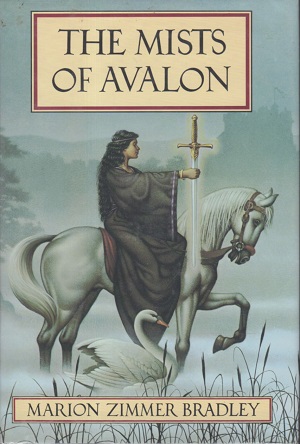
Mists_of_Avalon-1st_edMagic and the ability to wield it usually denotes power. That means the enemy must be their equal or perhaps their better. So if they are not from the same school, you now have two systems to design. You must create the ‘rules of magic.’  Take the time to write them out, and don’t break the laws, without having a damned good explanation for why that particular breaking of the rules is possible.

Limits make for better, more creative characters. In the Mists of Avalon, Marion Zimmer Bradley made the magic a natural outcome of religion, something only a few characters had access to, and they paid a great price each time they used it.

Lets pretend we have a mage, Gerald—we’ll make him a lowly journeyman mage, just allowed out of magic school on his own. Events beyond his control occur, and only he can rid the world of Stinky Sam. Sam is a very powerful, very naughty wizard, who will crush young, untried Gerald with no effort whatsoever.

Let’s say Gerald has a few skills at the beginning: he can draw water out of the air for drinking, and maybe he can use the elements of fire and lightning as weapons. Can he also use magic to heal people?  Can he heal himself?  What are the rules governing these abilities and how do these rules affect the progress of the story?  When it comes to magic, limitations open up many possibilities for plot development.

For this to be a good story, our bad guy, Stinky Sam, must be a master in whatever area Gerald has chosen–and he should have a few skills and abilities Gerald might never learn.

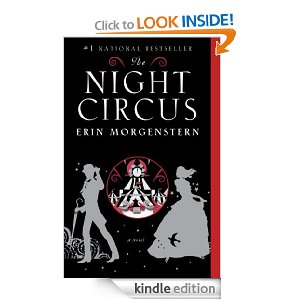
the night circus by erin morgensternThis means Gerald must work hard to overcome the obstacles set in his path by Stinky Sam.  With the successful completion of difficult tasks, and overcoming great hardships, Gerald will learn what he needs to know about his magic/gifts, and acquire the ability to counter Stinky Sam’s best efforts in the final showdown, although it will be difficult.

In great fantasy, evil is very strong, and has great magic–but there are rules.  The evil one might be a bully and he may have some awesome skills, but he’s not omnipotent, or there would be no story. All magic systems have limits, which means he has a weakness. With the discovery of the antagonist’s limitations, your character has the opportunity to grow and develop to his fullest potential in process of finding and exploiting it.

2 Comments

Filed under Fantasy, Publishing, writer, writing