Tag Archives: fiction

What I’m reading

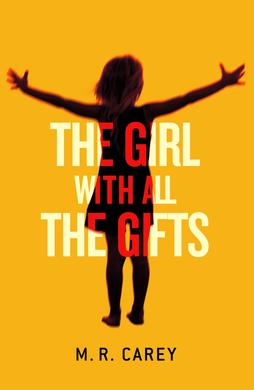
The_Girl_with_All_the_Gifts m.r. careyI just finished reading a great book, The Girl With All the Gifts, by UK author M.R. Carey (Mike Carey, of X-Men Legacy fame). I loved it as much as I did The Martian, by Andy Weir. At first glance the two novels have nothing in common other than they are both considered speculative fiction, but they do have one common feature–they both really rang my bells.

My friend, who also does not normally read dystopian fiction, directed me to it. The action is intense, and it is at times gory, but what makes this book so significant is not the fact it is about Zombies and the war against the undead (which is a theme I don’t usually gravitate to.) The truly powerful character of Melanie, the ten-year-old girl is the real driving force behind this novel.

I really get into character-driven works. That’s why I enjoy such a wide variety of genres in my eternal search for a good read.

The main character in this tale is Melanie, a girl who loves school and her favorite teacher is Miss Justineau.  Melanie is multi-layered and despite the horrible truth of what she is, she is innocent and trusting.
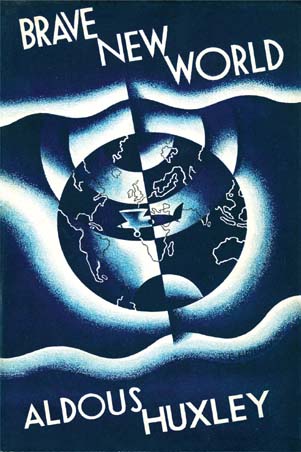
BraveNewWorld_FirstEditionSo what is dystopian fiction? The core plot of dystopian fiction revolves around the premise that society has crumbled for one reason or another, and details the struggle to survive and raise humanity from the ashes. According to Wikipedia, the fount of all knowledge:

Dystopia is defined as a society characterized by a focus on negative societies such as mass poverty, public mistrust, police state, squalor, suffering, or oppression, that society has most often brought upon itself. Most authors of dystopian fiction explore at least one reason why things are that way, often as an analogy for similar issues in the real world. In the words of Keith M. Booker, dystopian literature is used to “provide fresh perspectives on problematic social and political practices that might otherwise be taken for granted or considered natural and inevitable.”
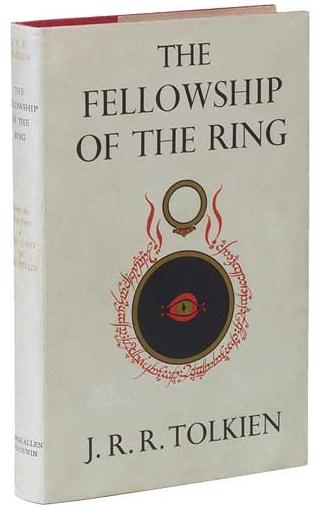
FellowshipOfTheRingNo matter the genre, stories are all driven by one of two elements, plot or character. A plot driven story is one where the plot defines who a character is. Take J.R.R. Tolkien’s Lord of the Rings: Even if you remove Frodo, who is the main protagonist and replace him with another hobbit, the event, which is the battle for middle earth still takes place, the call to action still exists. He is an awesome character who leaps off the page, yes–but this is a plot-driven tale.

But in  The Girl With All the Gifts, the plot is completely driven by Melanie. Her emotions, her love for her teacher and the innocent faith she has in both Miss Justineau, who sees her as a child, albeit a dangerous one, and Sergeant Eddie Parks, who sees her as a monster, but who nonetheless does the right thing–take these away and you just have a book about humanity dealing with zombies and the collapse of society.

In all of the books I have lately read, several that were character driven really stand out. Characters who are not flat, who leap off the page and grab you–characters who strike some chord within you and who stay with you long after the last page. When I close the book after the final paragraphs, if those characters are still with me, that book is a winner.

2 Comments

Filed under Adventure, Battles, Blogger, Books, Fantasy, Humor, Literature, Publishing, Self Publishing, Uncategorized, WordPress, writer, writing

NaNoWriMo: The Final Push

edgar allen poe quoteI’ve been talking a lot about NaNoWriMo–National Novel Writing Month. My friends are curious and ask if it’s a contest.

The answer is yes, in a way, but no.

It is a contest in the sense that if you write 50,000 words and have them validated through the national website you ‘win.’ But it is not a contest in the sense that it is a month that is solely dedicated to the act of writing a novel.

Now lets face it–a novel that is only 50,000 words long is not a very long novel. That falls more into the line of a long novella and is only half a novel, in my opinion. But a dedicated author can get the basic structure and story-line of a novel down in those thirty days simply by sitting down for an hour or two each day and writing a minimum of 1667 words per day.

That is not a lot. Most authors, when they are in the zone, double or triple that.

And again, we must face an ugly fact: Just because you can sit in front of a computer and spew words does not mean you can write anything that others want to read. Over the next few months there will be many books emerging that will testify to this fundamental truth.

But also, over the next few months many people will realize they enjoy writing; that for them this month of madness was not about getting a certain number of words written by a certain date. This was about writing and completing a novel they had wanted to write for years, something that had been in the back of their minds for the longest time. These people will join writing groups and begin the long journey of learning the craft of writing.

neil gaiman quote 2They are the real winners.

These authors will take the time and make the effort to learn writing conventions, they will attend seminars, they will develop the skills needed to take a story and make it a novel with a proper beginning, a great middle and an incredible end.

They will properly polish and edit their work and run it past critique groups before they publish it.

These are books I will want to read.

It’s not easy. Sometimes what we hear back from our readers and editors is not what we wanted to hear. The smart authors haul themselves to a corner, lick their wounds, and rewrite the damned thing so it’s more readable. They will be successful, for a variety of reasons, all of them revolving around dedication and perseverance.

But when we write something that a reader loves–that is a feeling that can’t be described.

Success as an author these days can’t be measured in cash. It can only be measured in what satisfaction you as an author get out of your work. Traditionally published authors see less of their royalties than indies, but they sell more books. It is a conundrum, and one many new authors will be considering in the new year.

But if you don’t write that book, you aren’t an author, and you won’t have to worry about it. NaNoWriMo will jump-start many discussions about this very issue. At this writing there are 3 days counting today left for many writers to get their 50,000 words and earn that certificate. Some of us have completed our first draft, and some of us still have a ways to go.

Winner-2014-Twitter-ProfileMy book has a beginning, a middle and an end, but will not become a novel for two or more years..  It is, instead, a rough draft sitting in the pile of other rough drafts, waiting to be rewritten when that flash of inspiration takes me over and I am driven to make it real. Huw the Bard began life in NaNoWriMo 2011, under the working title, The Bard’s Tale. He was published in 2014, and his story makes a darned good novel, if I do say so myself. (Shameless, I know.)

But although he was written in 30 days, he was then rewritten over the course of the following year, and edited over the course of the year after that. The life of a book from concept to publishing is a process. Some are quicker at negotiating this process than others, but having once rushed to publish with unhappy results,  I now take a more leisurely path.


Comments Off on NaNoWriMo: The Final Push

Filed under Adventure, Battles, Blogger, blogging, Books, Fantasy, Humor, Literature, news of the world, Publishing, Self Publishing, Vegan, WordPress, writer, writing

Gratitude

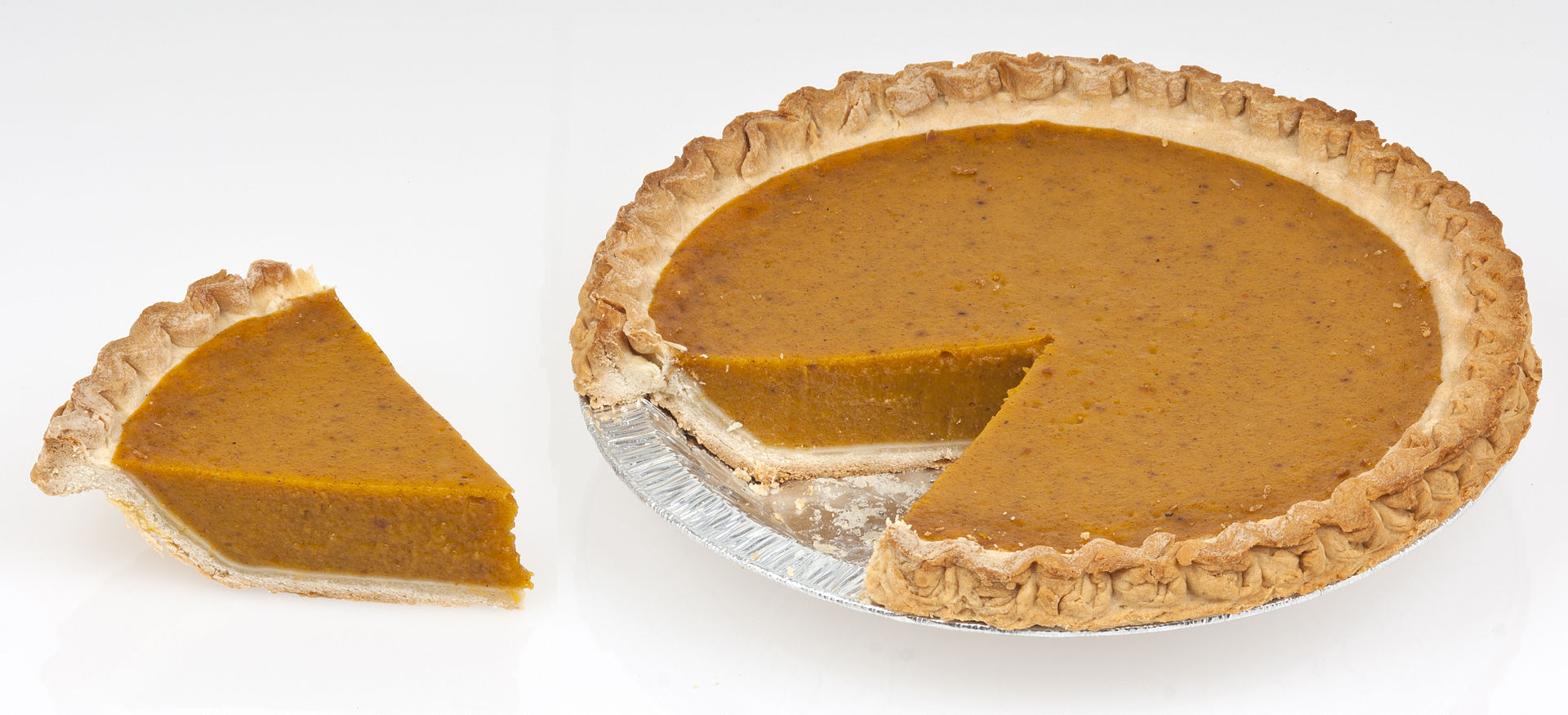
Pumpkin-Pie-Whole-SliceTomorrow, here in the US, is a national holiday, a day of Thanksgiving. We gather at the homes of relatives, overeat, and then some of us embark on  the 30 days of Christmas shopping.

I don’t.

Oh, I will go to my daughter’s house and overeat, and I will give sincere and heartfelt thanks for all the many blessings I have been given in this life. And I have been blessed, far more than I deserve. I am comfortable, and I have the luxury of being able to write full-time, because my husband has a good, fairly stable job.

But grandma does not shop. Grandma does not go to the midnight sales, the door-busters, the Black Friday events that seem to be a national sport here.

Grandma does the internet for all her shopping these days. Amazon, Zulily, Overstock.com–these are the stores grandma shops in.

christmas-gift-bagsAnd it’s nearly all done already. All I have to do is get a few little thing-a-ma-jigs for you-know-who, and then we’re set!

Shopping for loved ones is so darned difficult. I can’t tell you how much I hate it. No matter how hard I sweat, no matter how pretty I wrap them, the gifts I think are awesome for so-and-so never seem to live up to their potential.

Thus I have become the queen of gift-cards.

Starbucks, Amazon, Barnes&Noble–gift cards are the way to go. The recipient can get what they want, and I am off the hook for another year.

But if you are looking for the awesomest gift ever, may I recommend a book?  Books are small vacations, little diversions into foreign lands and cultures, windows into other people’s lives.

Books can also change the world.

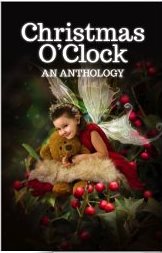
The company that publishes my books, Myrddin Publishing, just announced the successful campaign to raise funds for the international charity, Water is Life, via sales of their Christmas anthology, Christmas O’Clock.

christmas oclock coverChristmas O’Clock is a collection of holiday-themed stories including magic, space travel, and Rudolph. With two complete chapter books, lots of stories, and plenty of spirit, this anthology is great for kids of all ages. Two of the stories in this collection are mine!

In 2014 the publishing group donated all the revenue generated from sales of this book, totaling over $200.00 in royalties. This purchased three bucket systems and eight drinking straws, providing fresh water to three families, and eight individuals. Their goal is to double that in 2015.

It may not seem like a lot, but for those families who now have clean water, it was huge.  We can do better, and this year we intend to.

All proceeds from this wonderful book go to Water Is Life to help children and families in an international effort.

Christmas O’Clock  can be purchased at www.amazon.com

Paperback via this link: http://bit.ly/CoCpaperback  $9.51

And for the Kindle via this link http://bit.ly/CoCusE  $2.99

a medieval tablesetup 1I live in a soft, easy world of plenty with clean, clear water and plenty of food. I have a warm, dry place to live that is safe and pestilence-free. Not every family has such luxury. My husband and I believe it is our duty to help those who don’t and we do this through actively volunteering in our community. You know that I am involved  as a municipal liaison for National Novel Writing Month and I contribute time and energy to literacy programs here locally, but my husband is far more active on a grassroots level, and what he does has a direct effect within our community.

MH900438718My husband, Greg,  is on the board of the Community Action Council, and has been for more than twenty years. Community Action Council is a private, non-profit 501c(3) agency governed by a volunteer Board of Directors.  Their multipurpose organization focuses on meeting the needs of low-income individuals and families through a variety of programs designed to help them become independent and more self-sufficient. They work collaboratively to develop strategies that address poverty in our local communities,  providing essential human services in Lewis, Mason and Thurston Counties since 1966.

I am Grateful, with a capital ‘G’, for all my many blessings, for my husband who works tirelessly in the service of our community and for the opportunities I’ve been given to help make a difference in this sometimes terrible world.


4 Comments

Filed under Adventure, Battles, Blogger, blogging, Books, charity, Fantasy, Food, History, Humor, Literature, news of the world, Politics, Publishing, Self Publishing, Spirituality, Uncategorized, writer, writing

Hunted Heart, by Alison Deluca

Most avid readers of the fantasy genre are fans of the old fairytales as told by the Brothers Grimm and I am no exception. In fact it was my love of fairytales that inspired me to write in the first place. I am always interested in reading other authors’ takes on these fairy tales. It is amazing how differently two authors will tell what began as the same story.

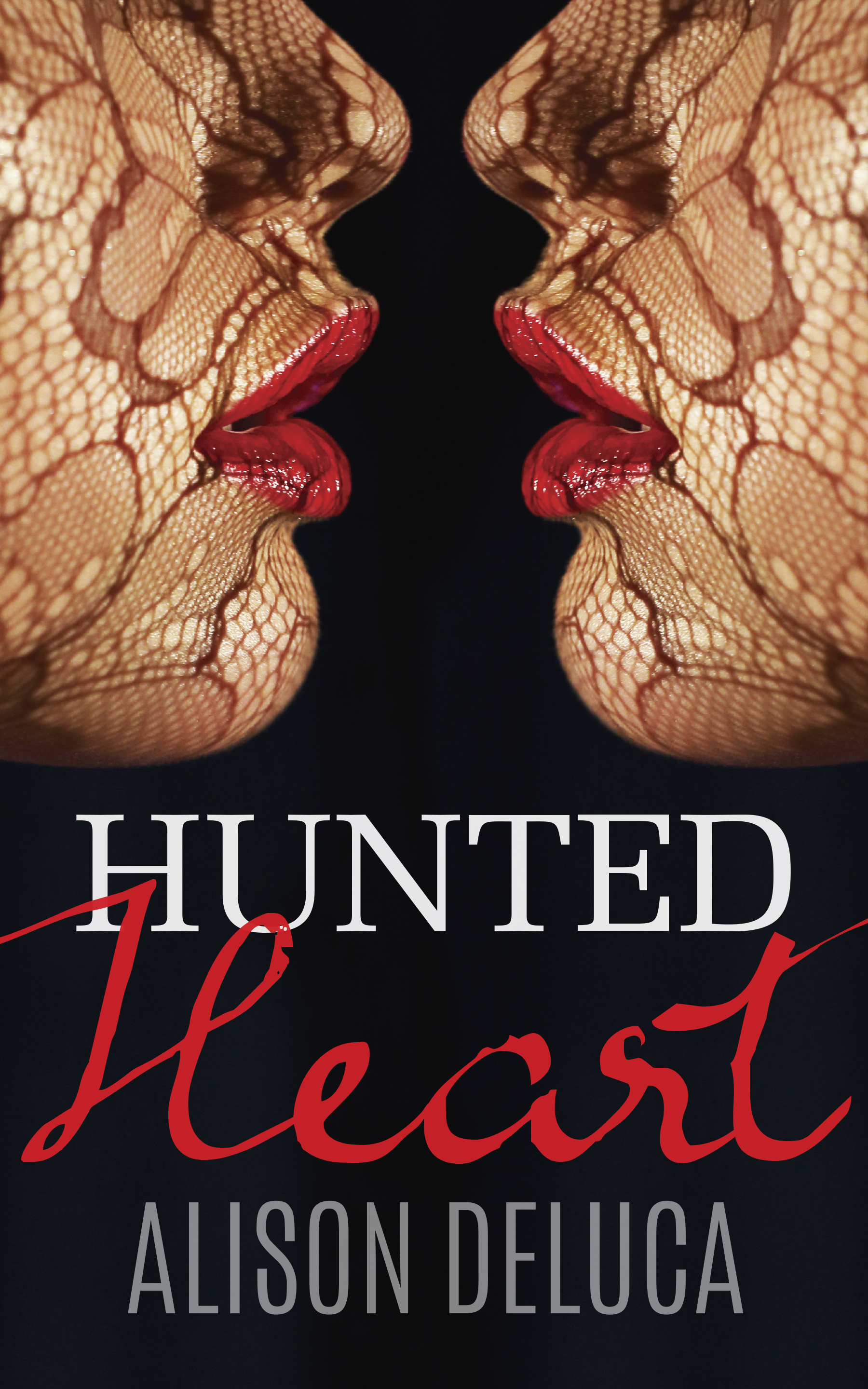
Today my good friend, Alison DeLuca, author of  the steampunk Crown Phoenix Series, has consented to answer a few questions for us, and allow me to share the wonderful cover of her new book, Hunted Heart. It is a standalone book, and is a true fairytale, the premise of which had really intrigued me.

CJJ: Alison, tell us a little of early life and how you began writing:

AD: I always loved reading. My early favorites were Alice in Wonderland, the Odyssey, Arabian Nights, and fairytales of all kinds.

CJJ: Tell us about your most recent book.

AD: Hunted Heart is an adult version of Snow White. Prince Kas is the one threatened by the wicked queen, and the huntress, Tali, is given the job of taking him to the forest to cut out his heart. They end up falling for each other, but not without a great deal of adventure along the way. Yes, there is a wicked queen and my version of a poisoned apple. And we mustn’t forget True Love’s Kiss…

CJJ: How did you come to write this novel?

AD: Someone I met online prompted me and begged me to write the story – she is the J.R. in my dedication. I loved her idea of making the hunter a strong female and ran with it.

CJJ: Do you have a specific ‘Creative Process’ that you follow, such as outlining or do you ‘wing it’?

AD: This book was an exercise in winging! The Snow White structure supported my story, and I was able to take off from there. Writing a fairytale redux is completely addictive – I might have to do a few others.

CJJ: How does your work differ from others of its genre?

AD: It is genderbent, and I’ve set the story in a mythical Norse country. I couldn’t resist including Freja, Iduna, and a few others from Norse tales. It’s also quite adult, with violence and some sexy scenes, and a charity project: Tali, my main character, suffers from some terrible abuse as a child, and so 100% of the royalties go to HelptheChildren.org.

CJJ: Why do you write what you do?

AD: Honestly, because I can’t help it. When I get an idea it needles me until I pin it down on paper. It’s like giving birth, to be honest.

CJJ: I so know that feeling! I know why I chose the indie route for my work, but I’m curious as to why you’ve chosen this path.

AD: I love the freedom indie publishing gives me. I’m able to write what I like and donate the proceedings when I do a charity project like this.

CJJ: What advice would you offer an author trying to decide whether to go indie or take the traditional path?

AD: Both have their merits and challenges. Being an indie does give you freedom but also relies on individual marketing. Traditional publishing gives more support but gives the author little choice on things like covers and presentation. Both are good in their way – each author must decide for herself how she would like to proceed!

 CJJ: Alison–I love the answers you gave my stock questions!  Thank you for giving me this opportunity to get the word out about your charity, HelptheChildren.org.

AD: Thank you so much for having me on your blog, Connie. This was a lot of fun!

And without further discussion, here is that amazing, most intriguing book cover:

HuntedHeart cover final


I confess I am blown away by this one, and I have become quite a fan of Alison’s graphic designer.

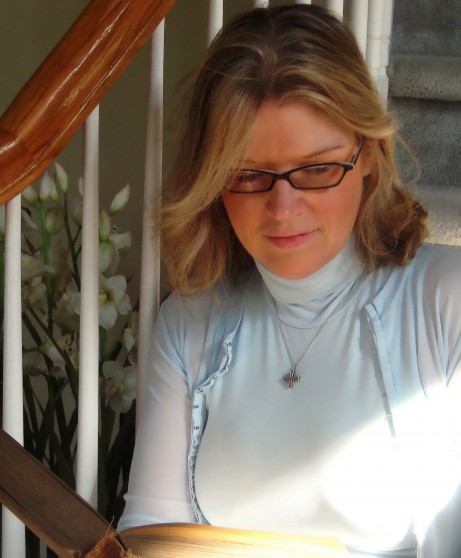
Alison DeLuca HeadshotAlison DeLuca is the author of several steampunk and urban fantasy books.  She was born in Arizona and has also lived in Pennsylvania, Illinois, Mexico, Ireland, and Spain.

Currently she wrestles words and laundry in New Jersey.

You can find Alison here:

Facebook – http://www.facebook.com/alison.deluca.author

OR http://on.fb.me/TNWEfb

Twitter – http://twitter.com/ – !/AlisonDeLuca

Google + http://bit.ly/ADGoogle

Author Central: http://amzn.to/ADeLucaAuthorCentral

Pinterest: http://pinterest.com/alisondeluca/

I have long been a fan of all of Alison’s work and have been fortunate enough to have some of my own work  included included along side of hers in a charitable anthology, Christmas O’Clock,  a book of wonderful short stories for children that is available in both paperback and for the kindle. (All proceeds for Christmas O’Clock go to Water Is Life to help children and families in an international effort.)


4 Comments

Filed under Adventure, Battles, blogging, Books, charity, Fairies, Fantasy, Humor, mythology, Romance, Self Publishing, Steampunk, WordPress, writer, writing

Death Valley

Extreme-Heat-Death-ValleyEvery artist who has successfully created works other people enjoyed is a slave to the creative muse. Each artist endures those horrible moments when they question their choice of career–they have a series of bad days and inspiration is far from their grasp. Every note they play, every word they write, every picture painted is dead and dull. Forcing it doesn’t help, and indeed drives it further away.  These are the moments when we are walking in the Death Valley of creativity.

I have no magic bullet, no super-human powers of creativity to bestow upon you.  For me, the joy of creativity in music, art, and writing is the rebellious feeling of stealing the time to do it. I make music, I do graphics, and I write, doing each whenever the muse strikes me.

In the old days I would come home from work with a small notebook full of ideas and after I had fed the masses, everything else would fall by the way while I put those ideas to paper. Even when you must earn a living, creativity must be allowed to flow when you feel it, because it is a finite commodity.

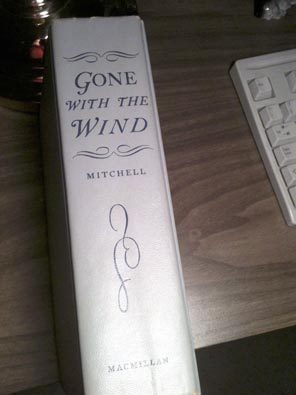
But I will tell you this: You Are Not Alone. Margaret Mitchell only published one book: Gone With The Wind.

gone with the wind 2Quoted from the fount of all knowledge,  WikipediaMargaret Munnerlyn Mitchell (November 8, 1900 – August 16, 1949) was an American author and journalist. One novel by Mitchell was published during her lifetime, the American Civil War-era novel, Gone with the Wind, for which she won the National Book Award for Most Distinguished Novel of 1936[1] and the Pulitzer Prize for Fiction in 1937. In more recent years, a collection of Mitchell’s girlhood writings and a novella she wrote as a teenager, Lost Laysen, have been published. A collection of articles written by Mitchell for The Atlanta Journal was republished in book form.

And did you know that Edgar Allen Poe and Oscar Wilde each only wrote one novel in their careers?  I am assuming this was because they suffered from long periods of having nothing they thought was worthy to show the world.

Poe understood the value of writing the short story. While he is generally considered the inventor of the detective fiction genre, his body of work consisted of–wait–how many short stories did he write? “Almost eighty” it says on page 373 of the official volume of the Big Read. The Edgar Allan Poe Society of Baltimore says the number is sixty-nine – counting “both short fiction and novels.” This appears to be the most widely published number.
So how many short stories did Edgar Allan write? By all reports he was a troubled man, and it’s possible that not even he knew for sure.

Poe is further credited with contributing to the emerging genre of science fiction. He was the first well-known American writer to try to earn a living through writing alone, resulting in a financially difficult life and career. Are we surprised? I don’t think so.

narrative of arthur gordon pym edgar allen poeBut though he is considered by many to be the most famous of our American authors, he only published one novel: The Narrative of Arthur Gordon Pym of Nantucket (1838) is the only complete novel written by our famous man, Edgar Allan Poe. The work relates the tale of the young Arthur Gordon Pym, who stows away aboard a whaling ship called the Grampus. Various adventures and misadventures befall the protagonist, Pym, including shipwreck, mutiny, and cannibalism, before he is rescued by the crew of the Jane Guy.

Indie author Mary W. Walters has written a wonderful blogpost on the subject of turning writers block into building blocks, available here.

So even if you feel the stream of creativity has run dry, it’s frustrating, yes–but nothing to get to worried about. At some point, when it is least convenient, that muse will strike again. You will once again feel that divine energy, that spark of madness that is the breath of life for a poem, a song, a novel or a painting. When you feel it, go with it.


4 Comments

Filed under Adventure, Battles, Blogger, blogging, Books, Fantasy, History, Humor, Literature, Publishing, Self Publishing, Uncategorized, WordPress, writer, writing

NaNoWriMo and the Road to Hell

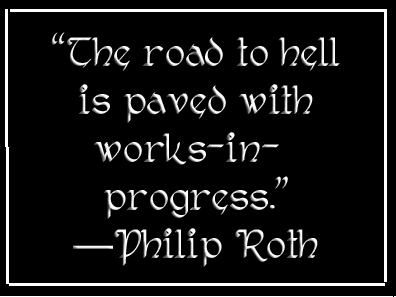
The road to hell Phillip Roth QuoteOkay–I admit it. I have a bunch of works in progress, in three different worlds. If, as Phillip Roth has been quoted as saying,  “The road to hell is pave with works-in-progress,” then I am strapped into the handbasket and barreling down the highway toward an extremely hot destination.

But it’s not my fault.

I have to write when the mood strikes and sometime the mood strikes for a different manuscript than the one it struck for only the day before.

Doh.

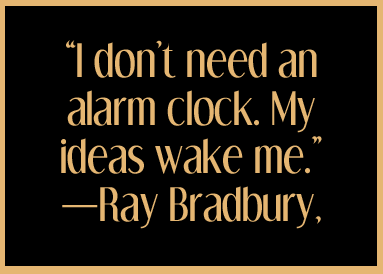
Alarm clock quote ray bradburyAt times I am faced with the dilemma of NaNoWriMo–28,000 words toward the goal and I can’t think of where I want to take it just yet.

As Ray Bradbury said, “I don’t need an alarm clock. My ideas wake me.” I write what I can when I can, and write the second story in an alternate color, such as green. Fortunately–once I have the ideas down for the other world, a bolt of inspiration strikes me and I am again back on track with the new nano manuscript.

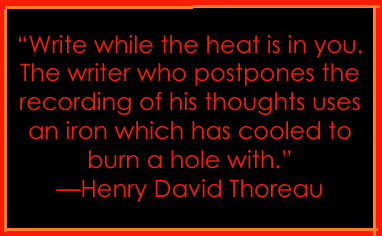
write-henry david thoreau quoteAnd then there is the annoying problem of writing the back story I will never use, but which serves to cement the story in my head as I am creating it. I write that in red. At the end of November, all these things will be easy to cut and sort out by color-code. They are important in the long run–the ideas for the shelved work-in-progress will not be wasted, and the background material for the current work-in-progress is there so that my world and my characters will have substance in my mind when I write them.

ok to write garbage quote c j cherryhThis is my month of writing madly–of dedicating all my time to the craft. My month of chicken-pot-pies and frozen pizza.  This is the month when my daughters do all the work of preparing the upcoming holiday meal and I steal a few brief hours to play with the babies.

And perhaps write a few notes in my notebook as ideas strike me. And the best part is, all this garbage I spew today will have a long journey through the editing process before it hits the pages of an actual book.

2 Comments

Filed under Adventure, Battles, blogging, Books, Fantasy, Literature, Publishing, Self Publishing, Uncategorized, writer, writing

How I came to fall off the Earth (and why I don’t care)

The Arc of the StoryWow–what a wild week this has been–28k words written on my NaNoWriMo manuscript, and a dip into a culture that is nothing short of amazing.  What a challenge–to write a great story well enough that people will want to read it, and to do justice to a whole culture.

We should have challenges in our work–if it comes too easy it’s fluff. A lot of people are happy with fluff, but not me, and I suspect, not you!

As you all know, I have written some very difficult scenes in the past, not for the gratuitous effect, but because those situations made my character who they were. They were life altering moments where the path suddenly changed, and everything that followed was driven by that incident.

A friend recently asked me how I handle writing such scenes.

When it’s a tough scene, I write as much as I can when I first know what has to be written. Then I set it aside and come back to it later to expand on it and shape to my intent. For me, a scene has to be done in stages so that it flows naturally. At the end of my my last journey though a manuscript, I will have a seamless narrative that flows from one scene to the next, always building toward the final denouement and the conclusion.

a medieval keggerBut right now I have five bodies to get rid of, so I need to get back to writing. Hero set down his mug of mead and picked up the shovel. He looked first at pile of corpses and then at the sky. They didn’t usually fall from the sky and he wondered what Author was up to now, that he should suddenly have to dispose of so many. However, Author was inscrutable and Her mind mysterious. One could only go with the flow, and dispose of the corpses as they fell.

OH the endless agony–but for a little hilarity amidst the eternal darkness of November take a look at Stephen Swartz’s blog post this week:

How NaNoWriMo is like being in Interstellar


5 Comments

Filed under Blogger, Fantasy, Humor, Literature, mythology, Uncategorized, WordPress, writer, writing

Plug in to The Matrix


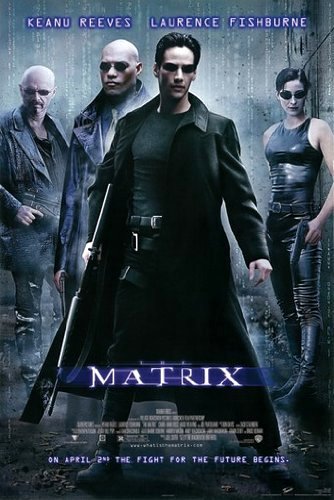
the Matrix PosterNovels have layers. Theme is what the story is about on a deeper level than the plot details. It’s the big meaning, and often it’s a moral meaning. Love, honor, family, and revenge are all some common, underlying themes.

I think of the scenes in my books as if they were scenes in a movie. Each conversation is a scene.

Sometimes, we find ourselves in Outer Mongolia as we wrangle our words. Our mind is off chasing squirrels, and our fingers are madly keying dialogue. It happens, and then we find ourselves writing paragraphs of discussion regarding the vase on the kitchen table. Why are we discussing this vase?  If there is a reason that will emerge later, keep it. If it is just idle fluff, lose it.

I actually have a scene in one of my forthcoming books where the characters do just that. They are discussing a vase that was made by a child, but the conversation is not important for the sake of the vase, nor is it really about that object. It is there to expose how important an absent person is to one of the speakers, and the brief interaction between the two speakers endears to the reader one of the characters who will later meet a sad end. The underlying themes of this book are brotherhood, family, romantic love, honor, duty. The obvious theme is the successful resolution of a quest. The core plot device around which the story evolves is an ongoing War of the Gods, and the world in which the tale is set in is their battleground, offering all sorts of opportunities for mayhem.

Consider the first scene of one of my favorite movies of all time, The Matrix. This movie has a lot of action, but it has a lot of dialogue also, and that dialogue advances the plot and never loses the theme of the story.

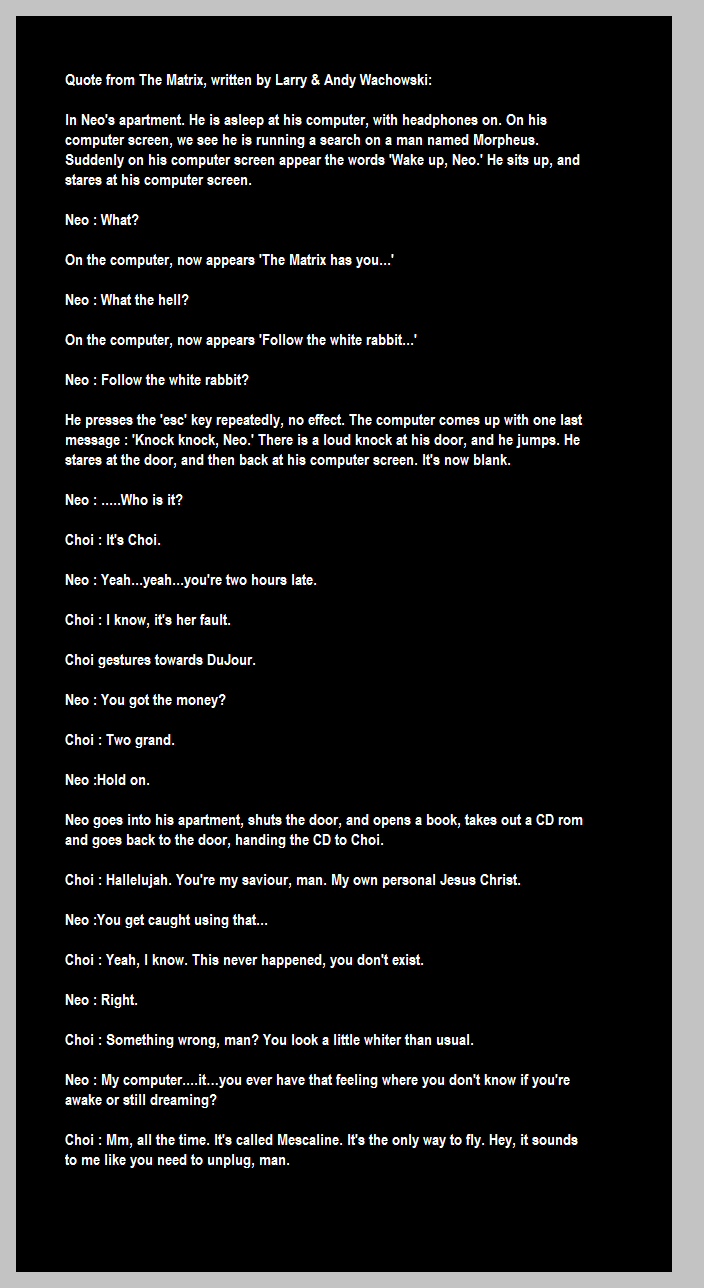
Quotes from the matrix

The conversation concerns a drug deal, but the underlying theme is never lost. The key words are in the first line, written on the computer, The Matrix has you, the third line, follow the white rabbit, and in that very last line, telling Neo to unplug. The Matrix is all about waking up, about what reality is, and about Neo as the potential savior of the world, which has been enslaved by a virtual reality program. It is about escaping that program. The conversations that happen in the course of the film all advance that theme, even the minor interactions, from the first conversation to the last.

The Arc of the StoryWe must approach conversations in our novels as if they were scenes in a movie. In a good movie, we don’t notice it, but there is an arc. In a story arc, a character undergoes substantial growth or change. It ends with the denouement in the last third or quarter of a story. The end of a narrative arc is the denouement, the final resolution. It shows what happens as a result of all the conflict that the characters have gone through.

If we don’t keep the arc of the story moving with each scene, we will lose our reader, and to that end, each conversation must reflect the underlying themes of the story without beating the reader over the head with it. As in real life, some of the people know more than others, and to advance the plot and the theme, small clues must come out over the course of each scene, each scene building to the finale.

I876MilanoDuomo‘ve said this before, but we must build the overall arc of the story from scenes, each of which is a small arc, in the same way a gothic cathedral is constructed of many arches that all build toward the top.  The underlying arches strengthen the overall construction. Without arches, the cathedral wouldn’t remain standing for very long. The novel is a cathedral and your scenes are the arches that hold it up. The conversations that form those scenes are miniature arches, each with a beginning, a high point, and a resolution.


4 Comments

Filed under Adventure, Battles, blogging, Books, Fantasy, Humor, Literature, mythology, Publishing, Self Publishing, Uncategorized, WordPress, writer, writing

The race is on!

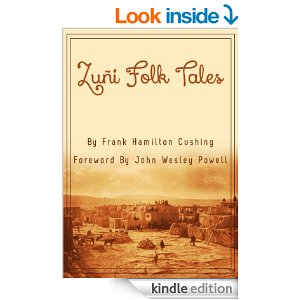
Zuni Folk Tales Frank Hamilton CushingNational Novel Writing Month is in full swing.  I have 30 days in which I can do nothing but write, write, write. The wheels are turning in my head, and my new story is flowing at a slow but steady rate. I know who I am writing about, and I know what his story is. I know what the action is and where it goes within the framework of the novel.

My only problem is I can’t key fast enough. When I do key fast it becomes illeggiebble…illegeabngle… .

Doh!

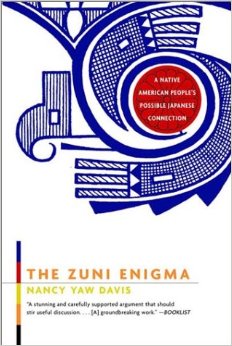
the Zuni EnigmaAnyway I have just received my newest textbook, The Zuni Enigma: A Native American People’s Possible Japanese Connection, written by Anthropologist Nancy Yaw Davis. I  have found some wonderful legends in the small book,  Zuni Folk Tales, by Frank Hamilton Cushing.

This book is an incredible departure for me.  Not only am I working in a world that exists in reality, I am working with a culture that is both known and unknown to me, and I must do it with respect.  This novel is a historical fantasy, but it is set in the 1890’s. I have to remain true to the period, to the two cultures this tale depicts, and I have to make my character real.

Zuni frank hamilton ushingWhat makes this even more tricky, is I am telling this story from the perspective of the main character–something I have not done before. But this tale is a diary in a way about one man’s journey, and the duality of his path in life. It is a stand-alone novel, and while it is definitely fantasy, I think it will be more of a literary novel than Genre Fantasy.

The Zuni are a private, mysterious people, and rightfully so. This makes it imperative that I know what I am talking about. Fortunately have been immersing myself in the Zuni culture through the work of early anthropologist Frank Hamilton Cushing.

Frank Hamilton Cushing’s stay at Zuñi pueblo from 1879 to 1884 made him the first professional anthropologist actually to live with his subjects. Learning the language and winning acceptance as a member not only of the tribe but of the tribal council and the Bow Priesthood, he was the original participant observer and the only man in history to hold the double title of “1st War Chief of Zuñi, U. S. Ass’t Ethnologist.”

My goal is to honor these amazing people, respect their privacy and maintain their mystery, and entertain my readers. The story is amazing–if only I can get it right.

6 Comments

Filed under Adventure, Battles, blogging, Fantasy, Humor, Japan, Literature, writer, writing

Bloated exposition and the power of the “No!”


Book- onstruction-signTwo-year-olds are awesome little balls of angst and joy. It’s either all happiness or all misery for them. I just spent the last two days babysitting my youngest grandson, who is two, while my daughter, a well-known musician, was in the recording studio. The dialogue between me and my grandson went something like this:

Me: “Would you like to eat dinner?”

2 yr old: “No dinner!”

Me: “Do you have to potty?”

2 yr old: “No Potty!”

Me: “Would you like ice-cream?”

2 yr old: “No ice-cream!”

It doesn’t matter what you ask the child–he is currently hardwired to say “NO!” to everything, no matter how badly he really wants it.  Everything is high drama and terrible tragedy for him–and his gut reaction to every question is driven by his newly acquired “power of the NO,”  a super-power that regularly goes to his head.

Unlike the two-year-old with his simple cut-and-dried answer for everything, we authors have a large amount of backstory that we are just sure the reader must know every minuscule detail of, and in order to avoid info dumps, we write conversations to do just that, so that the reader will not lack for information.

But this is where we authors need to exercise the power of the NO. It is also one of the hardest things we do–trying to decide what is crucial to the advancement of the plot and what could be done without. I am currently looking quite closely at one of my manuscripts, and I may cut an entire chapter that is only background. It’s awesome background, and I love this background–but when looked at with an independent eye, it doesn’t do anything but stall the forward momentum of my book.

Don’t give your characters long paragraphs with lines and lines and lines of uninterrupted dialogue. Those can become info dumps laced with useless fluff and are sometimes seen as a wall of words by the reader. This is referred to, in the industry, as bloated exposition.

When the dialogue is trying to tell the reader too much, characters end up saying a lot of unnatural and awkward things.

 “Remember the first day at the academy? We showed up wearing identical uniforms. I was so humiliated. I hated you for that. I didn’t speak to you at all until Commander Janson forced us to be partners in the biology lab, but I managed to get us through that with all A’s. But look at you now, you lucky dog. You are fortunate enough to be my second in command.”

“I know, sir. I despised you too, especially when you made me do all the dirty work, cutting up that alien amphibian. And you took all the credit for it. But now here we are, the best of friends and in command of the finest ship in the fleet, the USS George Lucas. I really, really love being your flunky. It is just the awesomest gig ever.”

Probably not gonna happen. When two characters go back and forth explaining precisely what they are feeling or thinking, it doesn’t seem remotely real. The only time exposition works in a novel is when both the reader and the character being spoken to do not know the information being artfully dumped.

dump no infoWhen reading, even dedicated readers will skip over large, unbroken blocks of words. Elmore Leonard said, “Try to leave out the part that readers tend to skip.” I feel this goes double for dialogue.

Cut to the chase. In real life, you might want to talk at length about the small details, but most of the important information is dealt with right away, and the rest is just socializing. When I think of the novels I enjoy the most, the important information in their conversations is dealt with up front, and the minor details emerge later as they become important.

Consider a phone conversation at work or when you’re in a hurry, and a friend just had a car accident. Your friend has a story to tell, and you have questions. “Are you hurt? Can you drive the car? Do you need anything?” While the boss is glaring at the back of your head, you won’t ask if they had insurance or if your friend will sue (unless you work for a legal firm and you’re fishing for business.)

There’s another important reason to avoid fluff in your dialogue besides the fact it makes a book more enjoyable:

In the real world, Indies and self-publishers pay the costs to publish their works up front. In the ebook format, costs are minimal and it doesn’t matter, but a paper book by a new author that has to sell for more than $12.99 may not sell well. Remember, with a longer book, your costs are increased because until you’re established, you must purchase your own stock to sell on consignment in local book stores. You’ll also need to buy books for your table at trade shows, conventions, and at most book-signings. You’ll want to keep your cost as low as possible and still turn out a good book.

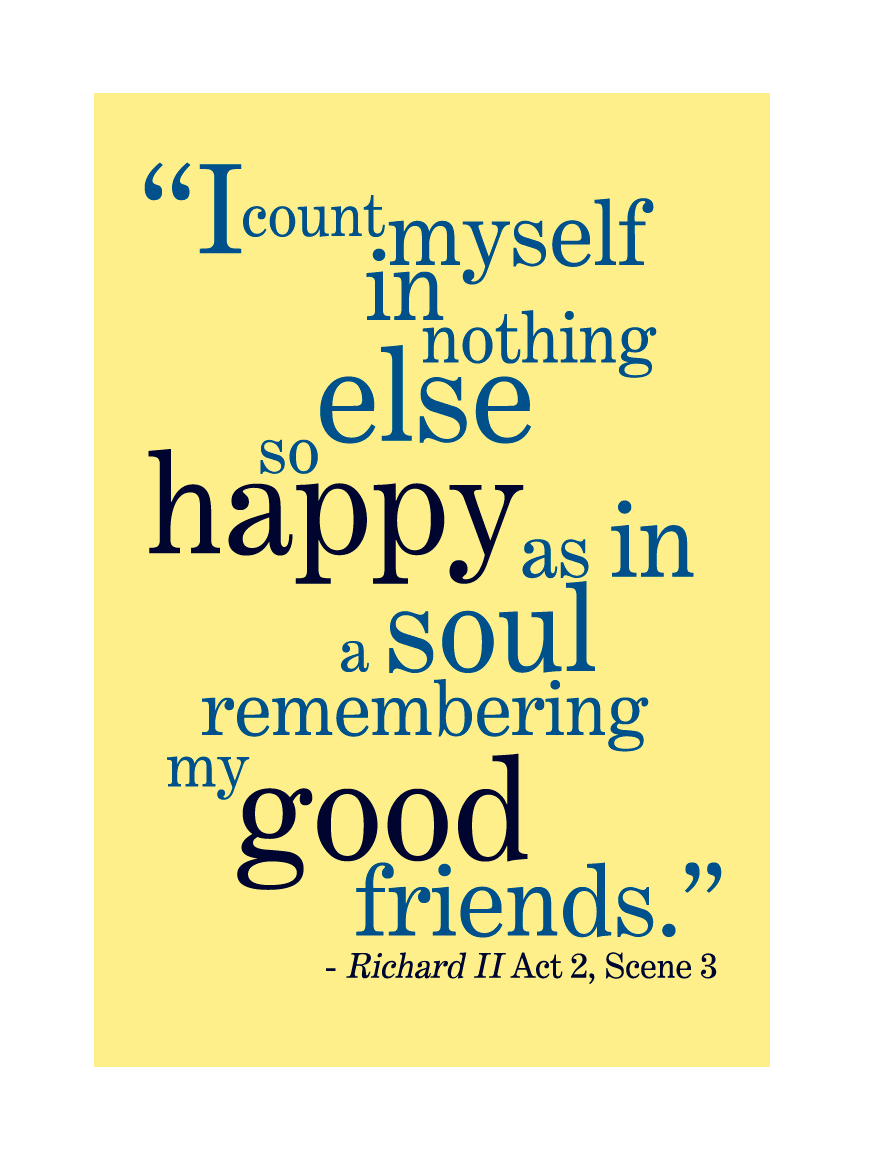
Shakespeare_ICountMyselfFor an indie who writes fantasy, which tends to be longer books and is my genre, it’s most cost-effective for you to keep your work to between 90,000 and 120,000 words if you intend to print through CreateSpace, which prints my paper books. So, wise authors will avoid empty filler in their conversations at all costs.

Having said to keep it short, I know there are times when a character will have a long story to tell, and if it’s done right, it works. Usually, these are stories within stories, and they’re a bit tricky to do right. Deploy the facts, and go light on the fluff.

Remember, what worked in a Shakespeare monologue does not work in a dialogue between two people. Fictional dialogue is about give and take, meant to sound realistic but sharpened by the fact that each character needs something, and by the fact that their needs do not mesh. You won’t get two-page speeches if you remember to visualize your conversation.

5 Comments

Filed under Adventure, Battles, Blogger, blogging, Books, Fantasy, Humor, Literature, Publishing, Self Publishing, Uncategorized, writer, writing