Tag Archives: indie publishing

Lay, lie, laid

to lie means to restIs it to lay, to lie, or what? I want to get this right but these words can be a complicated morass of misery. It boils down to a simple concept: is it RECLINING  or was it PLACED THERE?

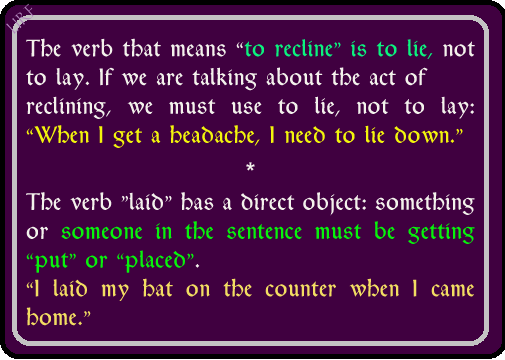
“Lay” is a verb meaning to put or place something somewhere. It has a direct object. Its principal parts are “lay,” “laid,” “laid,” and “laying.”

What the words refer to is the action: If you set it (object) there, it is laying there. Lay it there. Lay it on the pillow.

If it is resting or reclining, it is lying there. Lie down. Lying down. Lie down, Sally. (Clapton had it wrong? Say it isn’t so!)

The internet is your friend, and can teach you many things besides how to make cute kitty memes. Quote from the wonderful website Get it Write: The verbs to lie and to lay have very different meanings. Simply put, to lie means “to rest,” “to assume or be situated in a horizontal position,” and to lay means “to put or place.” (Of course, a second verb to lie, means “to deceive,” “to pass off false information as if it were the truth,” but here we are focusing on the meaning of to lie that gives writers the most grief.)

As another great resource, in his July 7th, 2015 post on this subject for Writers’ Digest,  Brian A. Klems gave us a useful chart:

Lay vs. Lie Chart


Infinitive    Definition         Present    Past    Past Participle    Present Participle


to lay      to put or place     lay(s)           laid     laid                     laying
something down

to lie     to rest or recline    lie(s)            lay      lain                     lying

“end of quoted text” 
Brian A. Klems is an awesome author and blogger. Check out his personal blog at The Life of Dad.

>>><<<

This is where things get tense: present, past and future.

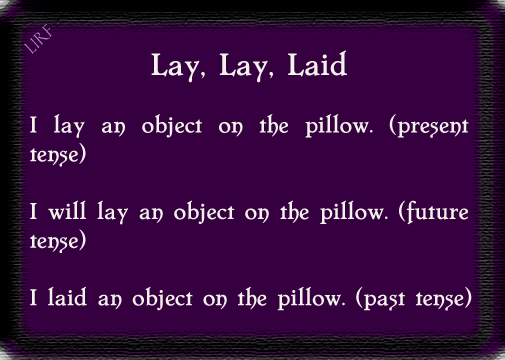
A ring lay on the pillow. 

Lay, Lie, Laid

But I needed to rest:

LYING AS IN RESTING copy

So what this all boils down to is:

final comment lay laid

But just to confuse things:

A living body lies down and rests as is needed.

A dead body is cleaned up and laid out by other people,  if said corpse was important to them. However, after having been laid out, said corpse is lying in state to allow mourners to pay their respects.

5 Comments

Filed under Humor, Literature, Publishing, Uncategorized, writer, writing

Gearing up for #PNWA2015

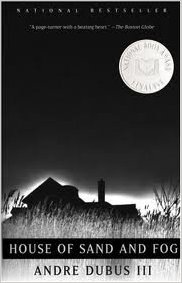
House of Sand and Fog Andre Dubus III

I love conventions. Especially writer’s conventions, where the craft of writing is the central theme, so that is why I look forward to the PNWA convention every year. Two weeks from now, that is where I will be, along with fellow Myrddin Publishing Group editor and bff, Irene Roth Luvaul.

It is horribly expensive, but for me, it is so worth it.

This year, Andre Dubus III will be the keynote speaker. While I frequently read literary fiction, I have to say I didn’t really enjoy his book, House of Sand and Fog, although it was excellently crafted. I found it exceedingly depressing, as I did most books touted by Oprah’s Book Club, which I generally don’t find to be much of a recommendation any more. Oprah is a wonderful lady, but her tastes in literature are far different than mine.

Let’s face it–I’m an escape-reader. I read to get away from the misery of the world, so while the story is thought-provoking, and worthy of every honor it has received, I didn’t enjoy it. I prefer happy endings.

But that doesn’t really matter–I want to hear what he has to say. I don’t care for George R.R. Martin‘s work either. But I love to hear George speak, and so I am looking forward to hearing what Andre Dubus III has to say.

SUPPORT YOUR LOCAL AUTHORSMy hubby took a vacation-day yesterday, giving himself a 4 day weekend to help me take my books 75 miles north to Bellevue. 3 hours each direction, inching along I-5 and I-405 in 90 degree heat–what fun!

This was so they can  be included in the PNWA July 16-19 convention’s Friday Autograph Party event. I’m pretty excited about that. My good friend, Lindsay Schopfer will also be signing books, as will 58 other authors.

I’ll be showcasing the World of Neveyah series, and Huw the Bard, so 4 books for the signing event. But all my books will be there.

Every attendee will receive an Ebook copy of Tales from the Dreamtime courtesy of Smashwords. I so wish I could give them each a copy of the audio book–Craig Allen’s narration is simply amazing.

I really enjoy the PNWA conference. A lot of people who are going the traditional route use it to pitch to agents and editors, but that doesn’t interest me. I am happy as an indie and have no plans to court a large publisher.

What I am interested in are the seminars on the craft of writing. Every year I come away from this event feeling completely inspired, and ready to write.

Friday morning Irene and I will attend the annual meeting. I do have some concerns which I have made a list of, and wish I lived closer to Seattle to be more of a volunteer. Living 75 miles away limits what I can do to help out, but I could do some virtual assisting, if there is an option for that.

Also, I will be attending seminars given by Scott Driscoll, Robert Dugoni, and Lindsay Schopfer.

creamy_wild_rice_and_mushroom_soup_recipe

creamy wild rice and mushroom soup w/coconut milk

All in all, I think it will be a fun event, and am planning my food ahead for it, as the vegan can never count on the kindness of strangers when it comes to food. The wise vegan author travels well-prepared to stay in a room with no microwave, in a hotel that is less than understanding about what constitutes a vegan meal.

I can honestly say I am NOT looking forward to the dinners, but will be well-able to provide for myself, and who needs food anyway–were gonna be talking books!

Comments Off on Gearing up for #PNWA2015

Filed under Literature, Publishing, writer

Phrasal verbs–minions of evil, or sometimes useful?

Book- onstruction-sign copyPhrasal verbs are usually two-or three-word phrases consisting of a verb plus an adverb, or a verb plus a preposition, or both. They are just another aspect of English vocabulary, and can be considered a form of compound verbs.  We use them all the time, but what, exactly, are they?

First, what is an adverb?

The term adverb is somewhat of a catchall word to describe many kinds of words having little in common other than the fact they don’t fit into any of the other available categories (noun, adjective, preposition, etc.) and they modify an action word—a verb.

The principal function of adverbs is to act as modifiers of verbs or verb phrases. An adverb used in this way gives information about the manner, place, time, frequency, certainty, or other circumstances of the activity denoted by the verb or verb phrase. Too many modifiers in your narrative and voila! Purple prose.

phrasal verbsThere are three main types of phrasal verb constructions depending upon whether the verb combines with a preposition, a particle, or both.

Wikipedia, the fount of all knowledge, has a good example of these three forms:

Verb + preposition (prepositional phrasal verbs)

  1. Who is looking after the kids? – after is a preposition that introduces the prepositional phrase after the kids.
  2. They picked on nobody. – on is a preposition that introduces the prepositional phrase on nobody.
  3. ran into an old friend. – into is a preposition that introduces the prepositional phrase into an old friend.
  4. She takes after her mother. – after is a preposition that introduces the prepositional phrase after her mother.
  5. Sam passes for a linguist. – for is a preposition that introduces the prepositional phrase for a linguist.
  6. You should stand by your friend. – by is a preposition that introduces the prepositional phrase by your friend.

Verb + particle (particle phrasal verbs)

  1. They brought that up twice. – up is a particle, not a preposition.
  2. You should think it over. – over is a particle, not a preposition.
  3. Why does he always dress down? – down is a particle, not a preposition.
  4. You should not give in so quickly. – in is a particle, not a preposition.
  5. Where do they want to hang out? – out is a particle, not a preposition.
  6. She handed it in. – in is a particle, not a preposition.

Verb + particle + preposition (particle-prepositional phrasal verbs)

  1. Who can put up with that? – up is a particle and with is a preposition.
  2. She is looking forward to a rest. – forward is a particle and to is a preposition.
  3. The other tanks were bearing down on my panther. – down is a particle and on is a preposition.
  4. They were really teeing off on me. – off is a particle and on is a preposition.
  5. We loaded up on Mountain Dew and chips. – up is a particle and on is a preposition
  6. Susan has been sitting in for me. – in is a particle and for is a preposition.

(end of quoted example, thank you Wikipedia)

We use phrasal verbs all the time in our daily speech and in our writing. However, whenever it’s possible we should look for simpler ways to phrase our thoughts when writing, unless we are writing conversations spoken in the local vernacular.

Why do I feel that way? The way I see them, phrasal verbs are  two-or-three words (an action word and modifiers) forming what can be considered a separate verb-unit with a specific meaning. In other words, they use more words than is really needed to express a thought:

  • Who is looking after (verb unit) the kids? == Who is watching the kids?
  • They brought that up (verb unit) twice. == They mentioned it twice.
  • Who can put up with (verb unit) that? == Who can endure that?

We use these phrasings because they sound natural to us—that is the way people in your area might speak. But when used too frequently in a written piece, phrasal verbs junk up the narrative. They subtly contribute to what we call “purple prose” because the overuse of them separates the reader from the story.

Unless you are writing poetry, simplicity is best, because you want to immerse your reader in the experience.

ok to write garbage quote c j cherryhWhen we are revising our first draft, and tightening our narrative we should be examining the prose for weak phrasing. Each time you come across phrasal verbs in your work, look at the sentence it occurs in as if it were an isolated incident and ask yourself if it needs to be there. Many times a phrasal verb really is  the only way to express what you are trying to say, but equally often a more concise way can be found.

Phrasal verbs have their places, but if you can simplify a thought and make the sentence stronger, do so.

2 Comments

Filed under Literature, Publishing, Uncategorized, writer, writing

Great Cover Ups

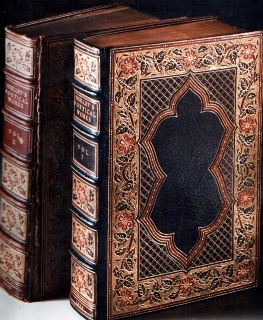
Old Restored booksBook covers. Remember when they were tooled, engraved leather, hand-made by monks? Yeah, me neither, but I do love good, well designed book covers.

We indies stress over them, and I suppose the Big 5 publishers do too, to a certain extent. But what, besides money and great designers who will make them for us, are elements that make a great book cover?

First up, in my opinion, a catchy cover has mystique. It expresses the central theme of the book, but it’s like a blurb–it can only capture one moment in time, so you have to choose what you will go for: mood, mystery, or great art.

Occam’s Razor (also known as Ockham’s Razor) comes into play here. According to iUniverse’s article on Cover Design Essentials, “…the essential theory is that unnecessary elements will decrease the overall efficiency and aesthetic appeal of a design. It can be a good indicator of why one design may succeed and another one will not. A good writer will spend hour after hour editing and re-editing their book, cutting words, paragraphs and so forth until it is “clean.” The cover designer’s method is not much different, other than it is a visual process rather than a written one.” 

In my own limited experience this is so true.  

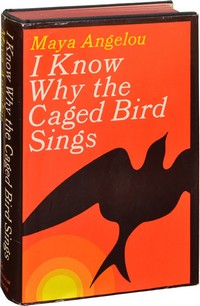
Caged_bird2Book covers have really evolved since my childhood. They used to be quite simple, with the art kept to a minimum. In the 1950’s and 60’s, book covers were stark, modern–and in my opinion, boring, such as Maya Angelou’s I Know Why the Caged Bird Sings.

My great problem is, I have always known what catches my eye, but not how to achieve it. So what are the simple, affordable elements of a good, catchy cover?

Again, iUniverse says (and I quote) good covers:

  1. Fall within the norms for your genre but visually stand out among other books.
  2. Appeal to readers and convince them to take a closer look at your book with a strong visual presence.
  3. Reflect the content of your book and expose readers to your writing style.
  4. Convince a potential reader to invest in a literary journey with your story.

Well, that is a hell of a lot to pack into a cover. And it’s hard to do! I am struggling with this aspect of being an indie. I am an artist, but until 2010 my work has been mostly in pastels and pencil. But I love Photoshop, and have been spending a lot of time designing covers and and learning how to make the graphics and the title a part of the art that captures the eye, but does not detract from the cover art.

I have been examining a lot of wonderful book covers, trying to define what it was about them that I liked so that my next book cover will be more true to what I want it to be. Being an old dog learning a new trick, I must learn from the masters.

So, here are only a few of my all-time favorite book covers, in no particular order:

Simple and to the point: The Martian, by Andy Weir tells us everything we need to know–this is going to be a hell of an adventure.

The MArtian Andy Weir

♦♦♦♦

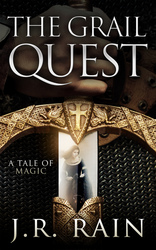
Grail Quest, by J.R. Rain, cover artist not credited–intriguing, and made me want to look inside.

Grail, JR Rain 2

♦♦♦♦

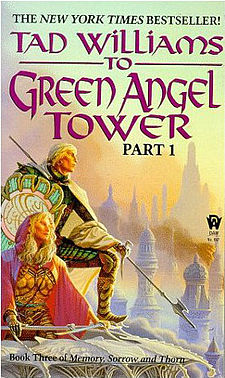
To Green Angel Tower, Tad Williams, as painted by the brilliant Michael Whelan–representing the mood, characters, and setting of the book, and visually stunning. I can’t replicate this sort of beauty, but I can admire it, nonetheless.

Green_Angel_Tower_P1

♦♦♦♦

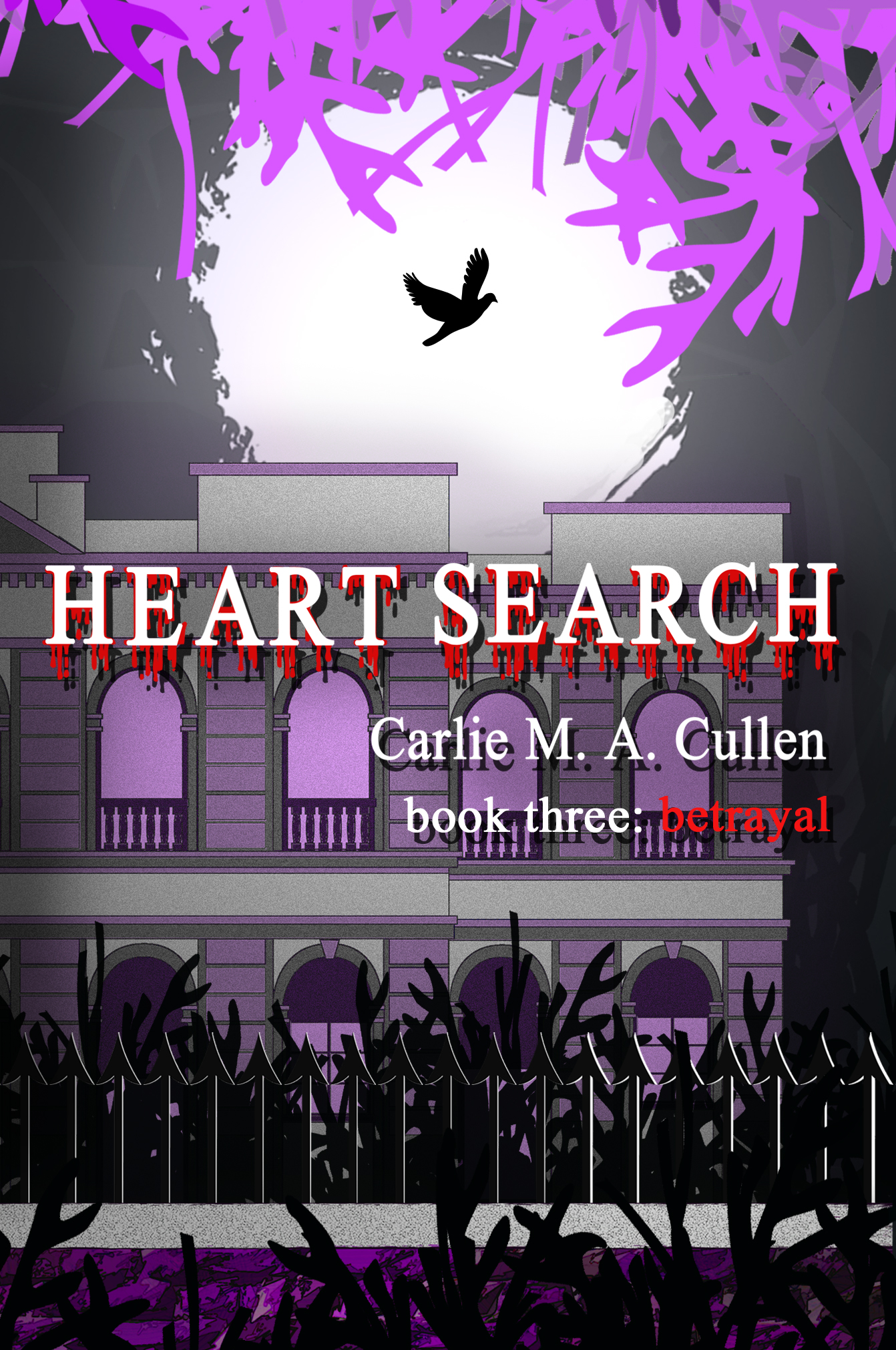
Heart Search book three: Betrayed, Carlie M.A. Cullen, cover by Nicole Antonia Carro. Completely speaks to what is inside the book–dark, mysterious, and a bit vampiric.

Betrayal front cover

♦♦♦♦

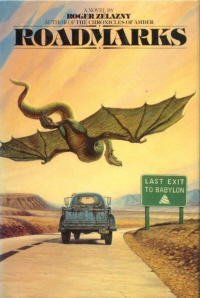
Roadmarks, Roger Zelazny, cover by the late Darrell K. Sweet. Simple, well-placed elements, promising a real roller-coaster ride inside.

Roadmarks_first

♦♦♦♦

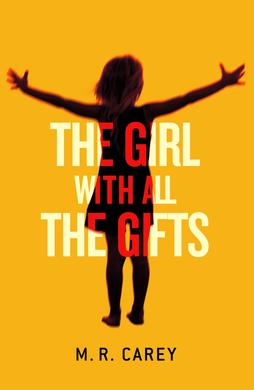
The Girl With All the Gifts, M.R. Carey–almost retro 1970s, yet intriguing. 

The_Girl_with_All_the_Gifts m.r. carey

♦♦♦♦

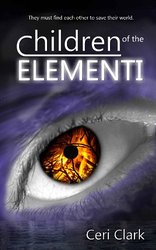
Children of the Elementi, Ceri Clark–this cover is a real winner, as much for the graphics as for the stunning yet simple art.

children of the  elementi

♦♦♦♦

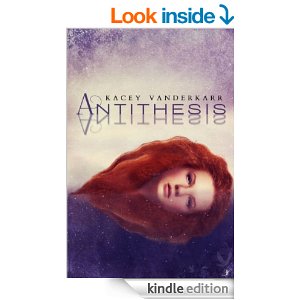
Antithesis, Kacey Vanderkarr — cover art by Najla Qamber.

Antithesis by Kacey Vanderkar

♦♦♦♦

For me, books that portray the features of the characters on the cover are a bit dicey. They never look the way I, as the reader, think they should. So, usually I find myself gravitating to the symbolic aspects of the cover and ignoring the artist’s conception of the characters. I want mystique, intrigue…the hint of danger and adventure. A book cover must flip the switch on my curiosity, make me wonder what is inside…and that particular trigger is subjective.

Each reader is lured by something different, which is what makes this aspect of indie publishing so difficult. However, I am beginning to understand what it is that I am looking for when I am drawn to a cover, so…I’ve been busy learning graphic design. I will be doing a cover reveal for my forthcoming book, Mountains of the Moon, a book based in the World of Neveyah, the same world as the as Tower of Bones series, and which is set to be released July 15, 2015.

My son, Dan, who is a graphic designer has really given me some pointers on this particular cover. I have been to “YouTube University,” and learned how to make vectors for this cover (I made two!) and I have learned several other unique little tricks of Photoshop. I have the layout finalized, and the graphics, and will be revealing it at the end of June.

6 Comments

Filed under Books, Humor, Literature, Publishing, writing

#Proofreading is not #editing

Epic Fails signWhile some people will dispute this, proofreading is not editing.

Proofreading is done after the final revisions have been made, and hopefully it is done by someone who has not seen the manuscript before. That way, they will see it through new eyes, and the small things in your otherwise perfect manuscripts will stand out.

Anita Campbell, in her May 28, 2015 guest post for the SBA’s Blog-Industry Word says: “The first step of effective proofreading is understanding that not every typo or issue is alike.  Each needs to be attacked in a different way.” While she is speaking of editing blogposts, and short works, that profoundly true of longer manuscripts.

Even though an editor has combed your manuscript and you have made thousands of corrections, both large and small, there may be places where the reader’s eye will stop. Words have been left out, punctuation is missing–any number of small, hard-to-detect things can occur even after the most thorough of edits.

After the final edit we go over our work with a fine-toothed comb, trying to proof it ourselves. We read it aloud, and we read it from the bottom up, but our eye sees what it expects to see. We catch many things, but we don’t catch it all.

This is where the third person in the process comes in–the proofreader.

First of all, proofreading is not editing. Editing is a process that I have discussed at length elsewhere, and is completed long before we get to the proofreading stage.

SO, at the outset, the proofreader must understand that no matter how tempting it may be, they have not been invited to edit the manuscript for content. That has already been done and done again. If they cannot refrain from asking for large revisions regarding your style and content, find another proofreader.

What The Proofreader Should Look For:

Spelling—misspelled words, and homophones (words that sound the same but are spelled differently). These are words that spell-checker may or may not catch, so a human eye is critical for this.

  • Wrong:  Bobby wint out the door, slamming the screen.
  • Right:  Bobby went out the door, slamming the screen.
  • Wrong: There cat escaped and he had to chase it
  • Right: Their cat escaped and he had to chase it.

Repeated words and cut-and-paste errors. These are insidious and damned difficult to spot, and spell-checker won’t find always them. Sometimes they seem like unusually garbled sentences.

  • Wrong: First of all, First of all, it is accepted practice to italicize thoughts.
  • WrongFirst of all, it is accepted practice to practice thoughts.
  • Wrong: First of all, it is accepted to ot  thoughts.
  • Right: First of all, it is accepted practice to italicize thoughts.

Missing closed quotes:

  • Wrong: “Doctor Mendel, you’re new to the area. What do you know about the dead man? asked Officer Shultz.
  • Right: “Doctor Mendel, you’re new to the area. What do you know about the dead man? asked Officer Shultz.

Numbers that are digits:

  • Wrong: There will be 3000 guests at the reception.
  • Right: There will be 300 guests at the reception.

Dropped and missing words:

  • Wrong: Within minutes the place was crawling with cops, and Officer Shultz was sitting at my kitchen table me gently while I made hot water for tea.
  • Right: Within minutes the place was crawling with cops, and Officer Shultz was sitting at my kitchen table grilling me gently, while I made hot water for tea.

keep clam and proofread

Each time you create a new passage in your already edited manuscript, you run the risk of creating another undetected error.

At some point your manuscript is done. You have been through the editing process, and the content and structure is as good as you can get it, but you need one last eye looking for small flaws. Before you upload that masterpiece to Kindle or wherever, do yourself a favor and have it proofread by an intelligent reader, who understands what you are asking them to do and who is willing to do only that.

11 Comments

Filed under Books, Humor, Literature, Publishing, Uncategorized, writer, writing

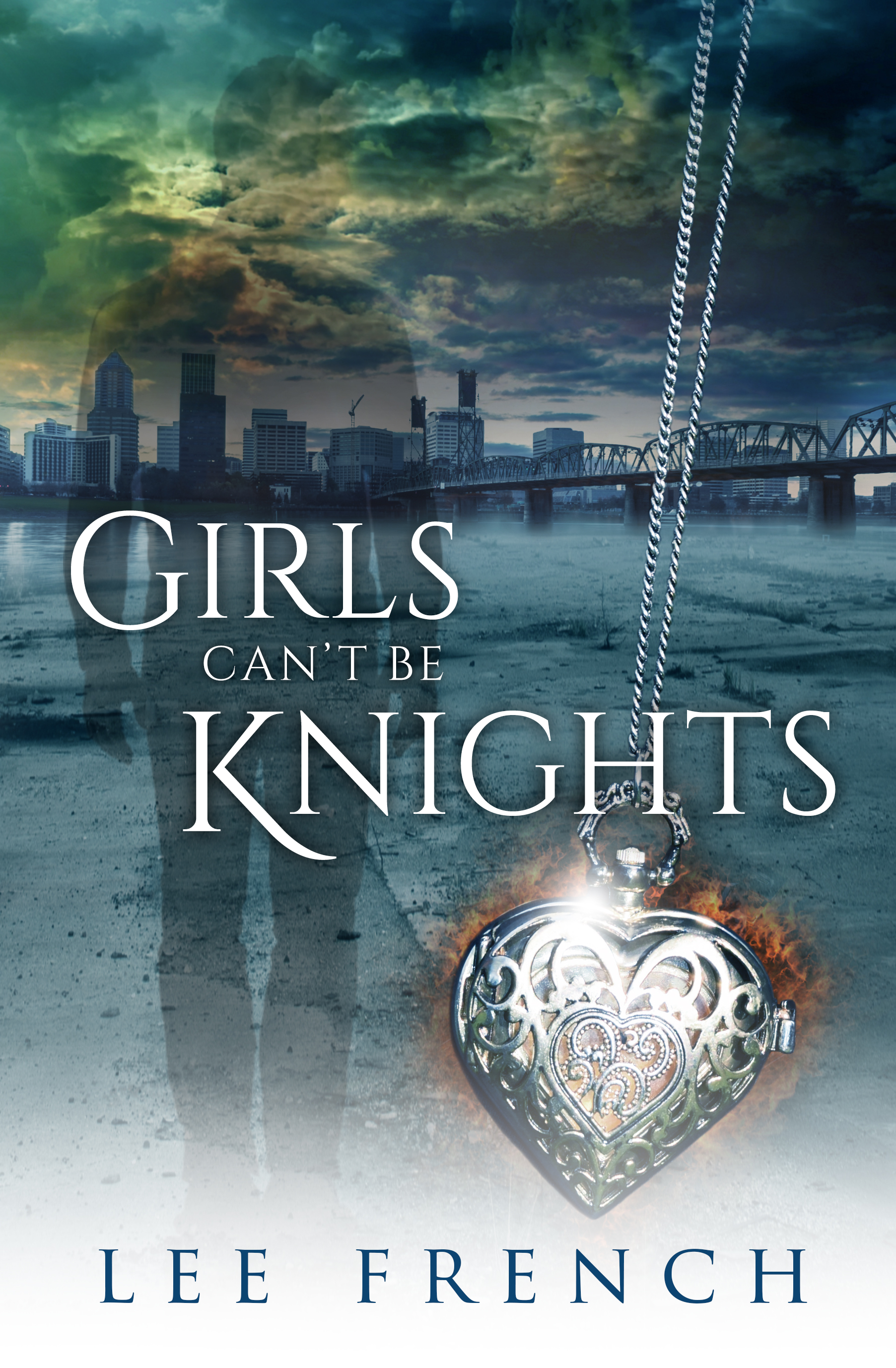
Girls Can’t be Knights, Lee French cover reveal and interview

My good friend and fellow member of Myrddin Publishing Group, Lee French, has a new book coming out soon. The cover is gorgeous, in my opinion. I also love the title, Girls Can’t Be Knights.  This book is a young adult fantasy novel, championing Girl Power while exploring the world of a secret organization, the Spirit Knights. I can totally get behind that!

Set in Portland Oregon, Girls Can’t Be Knights is another in the long line of French’s impressive career, which includes nine books, one trilogy, one epic fantasy series and a short story. Her works are popular among fantasy and paranormal readers, with many re-reading books several times after purchase.

Lee has consented to answer a few questions for us:

CJJ: Tell us a little of early life and how you began writing:
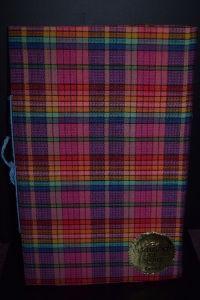
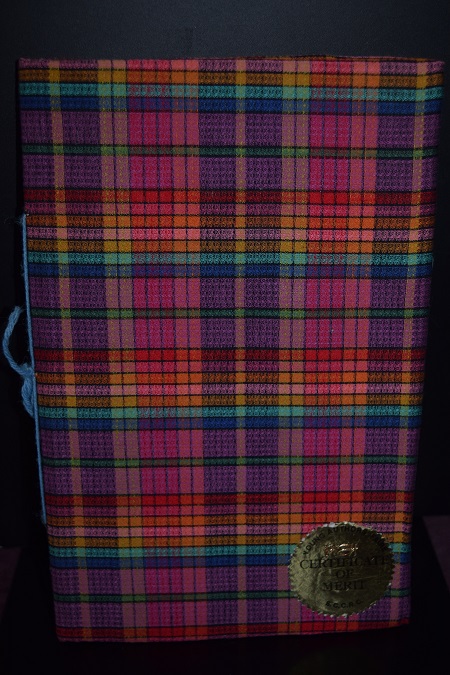
Lee French's First Book

Lee French’s First Book

LF: I was a late reader, not really grasping the whole thing until 2nd grade. Once I did, I clung to books with both hands and a glare for anyone who dared to attempt prying one away. At that time, my school district ran an annual book fair, for which they encouraged students of all ages to submit “books” for “judging.” With my mom’s help, I self-published an epic six page volume about The Mean Old Man’s Backyard, which is to say that I cut all the paper, wrote all the words, drew all the pictures, and let her glue the fabric to the cardboard for the cover.

From that point on, I considered myself a “writer,” though I considered it a hobby for a long time.

CJJ: That is a cute book! Tell us about your most recent book. How did you come to write this novel?

LF:  Girls Can’t be Knights started as all my books do—with an idea that sounds brilliant but is ultimately kinda dumb. I wrote it for NaNoWriMo last year, which means it had curious ideas and plot points that had to be rewritten quite a bit. The primary idea comes from Les Miserables, specifically the idea of two men, eash the hero of his own story, striving against each other. The two main characters were Valjean and Javert, and elements of that remain. What happened is that Claire stepped in and demanded agency. The core ideas had to mutate to accommodate her.

CJJ: How does Girls Can’t be Knights differ from your other two series of books?

LF: This is my first foray into YA. The Maze Beset trilogy is similar to urban fantasy, though being about people with superpowers who got them through a genetic thingy, it’s technically science fiction. Like that trilogy, The Greatest Sin is generally suitable for teen readers, but wasn’t written with them in mind.

CJJ: Do you have a specific ‘Creative Process’ that you follow, such as outlining or do you ‘wing it’?

LF:  When I first took the plunge into writing novel length work, I winged it. A lot. October 29, 2008, I decided to do NaNoWriMo for the first time and had just a basic idea of where I’d go. I finished, but it was awful. The next year, I took outlining a little too far. Since then, I’ve found a happy medium that works for me, where I go back and forth between winging it and outlining. The first chapter of a book is usually off the cuff, then I outline a few chapters, then I work up to the outline and wing a bit, then go back to the outlining. It works for me, which is the most important part of any Process.

CJJ: What genre would you consider this book, and how does it differ from others of its genre?

LF: Girls Can’t Be Knights is Young Adult Urban Paranormal/Fantasy Adventure. This book is all about family issues. Justin has a happy traditional family, but he’s the only one, and he came to it by way of domestic abuse between his own parents. This story shows a number of characters in various stages of dealing with broken homes and lost family members, and for various reasons. I’m really looking forward to pursuing the theme further in the second book, which is untitled as yet and will probably be out in 2016.

CJJ: What sort of books do you read for pleasure?

LF: As a book blogger, I don’t really read for pleasure in the strictest sense anymore. My reading material is almost exclusively indies, because that’s who needs book reviews. I’ve had the good fortune to meet a number of excellent indie authors, though, and their writing is mostly what I read, ensuring that steampunk, traditional fantasy, the occasional bit of space sci-fi, and some guilty pleasure smut fills my reading time slots.

CJJ: When you are not writing, what do you do for fun?

LF: Though writing is, admittedly, the most fun thing I do, I also enjoy baking, gardening, and cycling. Every year, I participate in Ragbrai, which is a lunatic pedal-powered festival across Iowa that attracts about 20,000 other cyclists for long days of torturous riding in abysmal heat punctuated by camping every night. It’s awesome.

CJJ: I know why I chose the indie route for my work, but I’m curious as to why you’ve chosen this path.

LF: At first, I chose it because the process of querying an agent or publisher made me freeze in panic. It also made my hideously impatient side cringe at the expectation of waiting months to get rejected. After pursuing it for almost two years now, I’ve come to the conclusion that I’d probably be unhappy with a traditional publisher. I’m too impatient, I have too much need for control over the aspects, and I actually *gasp* enjoy formatting my own books. If someone took one of my books and gave me a cover that I didn’t like without letting me at least make suggestions, I’d probably punch them in the face.

CJJ: What advice would you offer an author trying to decide whether to go indie or take the traditional path?

LF: Read everything you can about how it works and don’t discount one or the other because you’ve “heard” x or y thing. Independent publishing is now a major force in the market, but traditional publishing isn’t going to roll over and die. There are benefits and detriments to both paths, and every author has to decide what’s right for them. Investigate the market to discover who your audience is and where and how they shop. Get out and meet other authors in your area. Pay attention to the books you come across and how you came across them. All the information you need to make the best choice for you is out there.

CJJ: I always enjoy your POV, especially on the way the publishing industry works, and what indies need to take note of. And now, the blurb, and the the cover reveal for Lee’s new book:

>>><<<

GIRLS CAN’T BE KNIGHTS

by Lee French

release date June 12, 2015
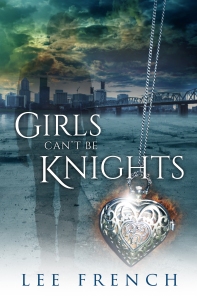
Girls Can't Be Knights KINDLEPortland has a ghost problem.

Sixteen-year-old Claire wants her father back. His death left her only memories and an empty locket. After six difficult years in foster care, her vocabulary no longer includes “hope” and “trust”.

Everything changes when Justin rides his magical horse into her path and takes her under his wing. Like the rest of the elite men who serve as Spirit Knights, he hunts restless ghosts that devour the living.

When an evil spirit threatens Claire’s life, she’ll need Justin’s help to survive. And how could she bear the Knights’ mark on her soul? Everybody knows Girls Can’t Be Knights.

>>><<<
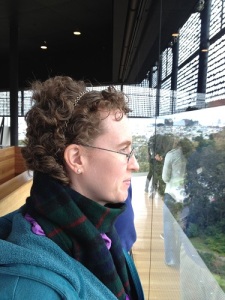
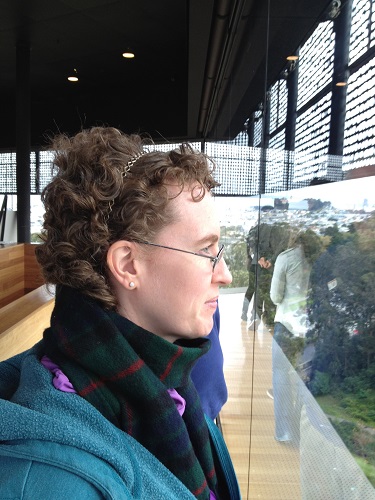
Lee French PhotoLee French lives in Olympia, WA, and is the author of several books, most notably the Maze Beset Trilogy, The Greatest Sin series (co-authored with Erik Kort), and assorted tales in her fantasy setting, Ilauris. She is an avid gamer and active member of the Myth-Weavers online RPG community, where she is known for her fondness for Angry Ninja Squirrels of Doom. In addition to spending much time there, she also trains year-round for the one-week of glorious madness that is RAGBRAI, has a nice flower garden with one dragon and absolutely no lawn gnomes, and tries in vain every year to grow vegetables that don’t get devoured by neighborhood wildlife.


She is an active member of the Northwest Independent Writer’s Association and the Olympia Writer’s Coop, as well as serving as the co-Municipal Liaison for the NaNoWriMo Olympia Region.


Comments Off on Girls Can’t be Knights, Lee French cover reveal and interview

Filed under Books, Humor, Publishing, Uncategorized, writer, writing

My Writing Life: David P. Cantrell

My Writing LifeToday indie author and blogger, David P. Cantrell, has consented to answer a few questions for us. Dave is a fellow staff-member at Edgewise Words Inn, a reader-oriented blog where Dave Cantrell, Lee French, and I post a variety of short articles, human interest stories, some short stories, memes, and generally have a great time just writing. At the end of this post, I will be reblogging Dave’s most recent post on Edgewise Words Inn, a little thing called “Ten Things I’ve learned as a Quadriplegic.” I think you’ll find that post as interesting and inspiring as I did.

But first, my virtual interview with Dave:

CJJ: Tell us a little of early life and how you began writing:
DPC: I grew up in Southern California after immigrating from Indiana at age five. I was a mediocre student in grade school, sports were much more interesting, but sadly, I was a mediocre athlete too. I wasn’t horrible at either of them, mind you—I got by.

I’ve often wondered where I’d be today if my family hadn’t moved to a new school district. I had completed one semester of eighth grade before the summer of the move. The new district couldn’t accommodate split semesters and required me to restart the grade. I became very bored in math and petitioned to join an experimental math class (eighth grade algebra—it sounds quaint now.)

The math teacher let me in for a semester with the proviso that I earn a Cee or better, otherwise it was back to regular math. I struggled, but the teacher worked with me, and I didn’t want to be put back. I think she took pity on me when she wrote a Cee on my report card. Whether she did or not, I’ll never know, but that Cee changed my life. Ultimately, I got a Bee in the subject, and took Geometry during the summer following middle school—No I wasn’t that nerdy, my girlfriend wanted company. I started high school taking a junior level math class.

I learned to enjoy reading in eighth grade. It’s difficult to remember which book lit the flame, but I think it was I Robot by Isaac Asimov. At any rate, reading eventually ignited the writing flame.

CJJ: You are right–the love of reading is the jumping-off-point to attempting to write. I happen to know what you are working on, but my readers don’t, so let’s talk about your current work in progress. 

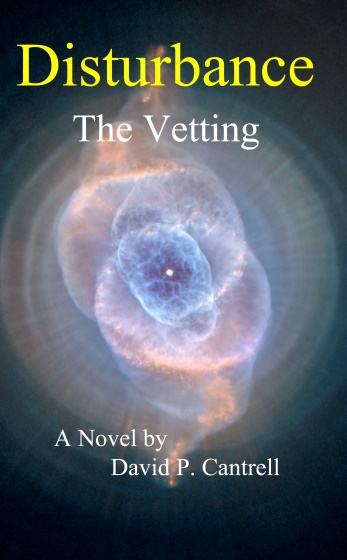
Disturbance - the VettingDPC: My one and only book is a work in progress. I published part one, Disturbance: The Vetting, in July 2014 and took it off the market in January 2015. The initial publishing was a mistake, but I’m glad I made it. I’ve learned a good deal about the process of writing, formatting and editing because of the mistake. I’ve met wonderful, supportive authors from around the globe as a result of it too.

CJJ: How did you come to write this novel?
DPC: Well-meaning idiots made me do it. That’s mean, but true in a sense. I started posting short “Slice-of-Life” stories on Facebook, items like “The Chicken Parmesan Saga.” I was encouraged to create a blog and gave it a go. I beta read Sci-Fi novels for a talented author, Jasper T. Scott. His comments gave me the idea that I might be able to write. I jumped into the deep-end.

CJJ: I’m mostly an outliner, myself. Do you have a specific ‘Creative Process’ that you follow, such as outlining or do you ‘wing it’?
DPC: Please define creative process. I tried to outline, but got hung-up on the order of things. What comes first, character or story? Can they exist independently? I’m a wing-it writer that prays for an outline to magically appear, and in it does sometimes.

CJJ: This is the question I hate to be asked, but here I am asking you: how does your work differ from others of its genre?
DPC: I want to write stories that make the reader think or learn something new. I love action oriented stories as much as the next person, but I want to write page turner’s that make the reader stop and think about what they’ve just read every once in a while. I get frustrated by the mantra to keep the story moving forward, if the words don’t keep it moving they are useless, not necessary.

CJJ: Why do you write what you do?
DPC: I write for the joy of research (I love an excuse to learn new things) and the hope to touch a stranger with my words.  Touching strangers is why I smile and say hello to them as they walk their dog down my block. Their response makes me feel good.

I recall a day my wife asked me to pick up something from our local grocer on my way home from work. It must have been summer because daylight abounded. I was a middle aged over-weight man walking across a parking lot and saw a stunning mid-twenties women dressed to the nines walking to her own car with a bottle of wine.  I worried if I said anything she’d think I was perverted. As I passed her we made brief eye contact and I said, “You look beautiful the evening.”  The smile on her face brings tears to my eyes as I write this.

CJJ: I like that little vignette you just painted for us, and feel somewhat the same myself when it comes to making people smile. So, when it comes to publishing, I know why I chose the indie route for my work, but I’m curious as to why you’ve chosen this path.
DPC: Is there a better way for an unknown to get their work before a world audience? I don’t care if I make a lot of money selling books. Don’t get me wrong, I’d love to do it, but it isn’t why I’m writing. I want to touch others, and honestly, I want the ego stroke that comes with it.

CJJ: What advice would you offer an author trying to decide whether to go indie or take the traditional path?
DPC: If money is your goal, try the traditional path. No one can promise better odds of making money on that path, but if you don’t give it a go you’ll always think you should have.

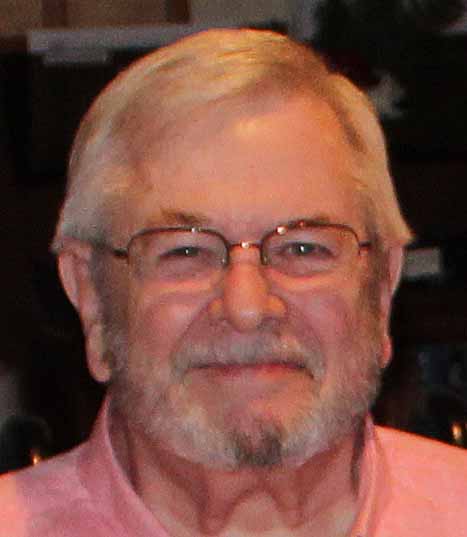
Dave Cantrell Author pictureDavid P. Cantrell lives with his wife of nearly four decades in the beautiful coastal community of Arroyo Grande< California. He is a retired CPA, enthusiastic (but not particularly good) home cook and avid reader. He enjoys history, historical novels, science fiction, non-fiction, fantasy, crime, thrillers, contemporary fiction and even a western now and again.

Before a spinal cord injury in 2009, he spent his creative efforts writing IRS defenses for his clients and on woodworking; building a variety of items, from chessboards to a Murphy Bed. The spinal cord injury left him paralyzed from the neck down, but with the help and love of his wife and caring therapists, he was able to recover significant function. Woodworking was behind him, and he accepted that.

Thank you Dave—you are a joy to know and to have as a friend, and you are an integral part of my personal writing life.

And now, “Ten Things I’ve learned as a Quadriplegic” By David P. Cantrell

(Reblogged from Edgewise Words Inn)

Being a quadriplegic (aka tetraplegic) is a learning opportunity. I found my opportunity when a confluence of events left me prostrate. Actually, I don’t remember being on the floor, I learned it later from my wife. She also told me I repeatedly asked if I’d had a heart attack while in the local ER. I don’t remember that either, but I’m not surprised. After all, I was an overweight, hypertensive, diabetic, chain-smoking CPA working on a deadline.

The first thing I clearly remember is the voice of an EMT talking to his ambulance driver as we arrived at a bigger hospital. I wasn’t sure why I was in the ambulance, but I knew something very strange was happening. I learned a good deal about myself over the following months.

  1. Paralyzed means: Crap, I can’t move and I don’t mean immobile.
    There’s a big difference between the two. Immobile means I can’t move right now because I’m drugged, strapped down or really-really sleepy, perhaps all three. Paralysis means so much more.
  1. Disrespect or abuse of a good woman’s love and support deserves retribution.
    If I’ve done either, shame on me. The memory of ICU, day one, is vague, but real. My teary-eyed wife held my hand, which I could not feel, and said, ‘I have your heart and your mind, that’s all I need.’ To this day, it’s our motto ….(To read the rest, click here to be transferred to Edgewise Words Inn and the rest of Ten Things I’ve Learned as a Quadriplegic)

Comments Off on My Writing Life: David P. Cantrell

Filed under Adventure, Battles, Books, Fantasy, Humor, Literature, Uncategorized, writer, writing

When inspiration fails…

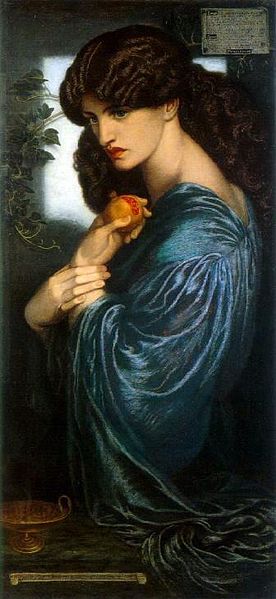
276px-Dante_Gabriel_Rossetti_-_ProserpineThere are days when I just can’t come up with a new idea. The creative juices are flowing, but they’re moving  more like unimaginative sludge. I don’t see these moments as writer’s block—the ideas are lying dormant. They just don’t want to bloom quite yet.

This is when I clean the house. For some reason, inspiration always strikes when I am doing some mindless task, and though you wouldn’t know it from my office, I work better when the house is in order. If that hasn’t jarred an idea loose, I put on some Loreena McKennitt or Blackmore’s Night and go out to the internet and search for ideas, by looking at fantasy images from Canstock or Dreamstime.

Sometimes I just peruse the old masters from the renaissance era out on Wikimedia Commons, like Dante’s Persephone.

Then there are times when I have a cornucopia of ideas. They can’t all be used, there are so many of them. I try to write them down for use later, and that helps when I have a temporary dry spell.

That is, they help unless I forget to make full notes about the whole idea—random notes like “Give the dog a biscuit” are just a bit too ambiguous to be really helpful. Know what dog would have been helpful–however that random note did inspire me to give Billy Ninefingers a hilarious sidekick, a dog named Bisket.

Sometimes I get going on a tale and all of a sudden my enthusiasm just sort of faints somewhere along the line and I don’t know why. It turns out that idea really wasn’t a novel—it was a short story and it just wanted to be done and over with.  Short stories are wonderful exercises for writing longer pieces. If you can, you should try to build up a backlog of short pieces under 7000 words in length, because you never know when a call for short stories will come along and you might have the chance to be published in an anthology.

Old Restored booksAlso, writing short fiction helps you get the hang of using a story arc in smaller increments, to help the layers of your longer pieces.

Sometimes I get stuck in the middle, and don’t know what is going to happen next. That is really frustrating, but I just set is aside to come back to it later. Other times I get a little bit of a jump-start by talking to members of my writing group.

But there are times the piece just has to be shelved for a while.  That’s okay, because when I pull it out, I will say, “Hey! This is awesome—I love this story.” I never fail to find that spark when I run across a tale I forgot I had half-written.

I never get bored with my characters, but I sometimes get bored with the drivel I write for them to do. That is why sometimes walking away from a stalled story for a short while is a good idea. At that point I am beating a dead horse and it’s a waste of time. Later I will see the manuscript through new eyes and a better way to get my heroes to the final battle will strike.

When I am stuck on a paragraph that I just can’t get right, I email a writing buddy and run it past them. We bounce it back and forth until it conveys the idea I think it needs to–or I throw it out.

I’m always happy to talk with them when they are stuck, so it all balances out.

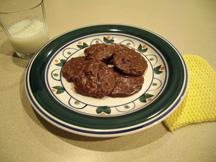
GrandmasNoBakeCookiesMy point is that we all suffer from occasional lapses of the creative muse. I never let lack of inspiration for one project stop me from pushing forward—I just find something that does interest me and do that for a while until I have my fire back.

Sometimes I just have to make cookies for a while. Chocolate no-bakes...yummy….

4 Comments

Filed under Adventure, Battles, blogging, Books, Fantasy, Humor, Literature, Publishing, Self Publishing, Uncategorized, writer, writing

What I #amwriting

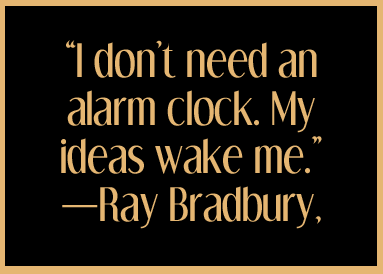
Alarm clock quote ray bradburyI normally begin my day at about 5:30 a.m. with editing for my clients–I like to do that when I am at my sharpest which is always in the morning.  I spend the afternoons writing, and right now I have two manuscripts that I am working on, and several short-stories. My evenings I either write blog posts or work on designing book covers.

Other than writing, most of my work these days centers around finishing up publishing the second editions of the Tower of Bones Series. The book itself, Tower of Bones, has been republished, and book II in the series, Forbidden Road, is in the process of being proofed and should be available soon–hopefully within two weeks.

In addition to revamping the TOB series, I hope to have the prequel to the series, a stand-alone novel, Mountains of the Moon, published by July 15, 2015, with a few copies to take to the PNWA conference. That means it has to be finished and ready to proof by June 25–which may be pushing it. However, things are moving so perhaps I will be able to meet this new deadline.

As I said, I have two novels in the works: concurrently with The Wayward Son, I am fleshing out the final book of the Tower of Bones series, Valley of Sorrows. This book deals with the aftermath of the events in Forbidden Road and winds up that story.

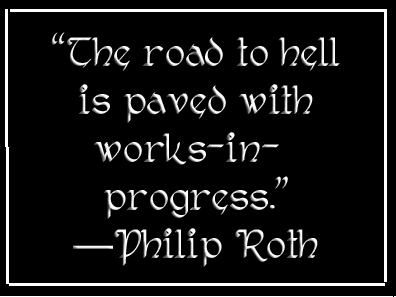
The road to hell Phillip Roth QuoteIn the aftermath of an incident that occurred in the last days of the war in Mal Evol, John lost the use of most of his magic. He has managed to keep that disability a secret for thirty years. The Wayward Son is the story of John’s redemption, and explains the events that happened in Aeoven while Edwin and the others were gone. These incidents culminated in John and Garran being sent to meet Edwin in Braden at the end of Forbidden Road. 

John Farmer’s story is intriguing to me, because he is a man concealing many secrets. A lot is going on under the surface–he suffers from survivor’s guilt and PTSD, which often develops after a person is exposed to one or more traumatic events. In The Wayward Son, John’s rocky relationship with Garran is explored, and also his love affair with the Abbess of Aeoven, Halee.

While I was re-editing the series to date, I took the liberty of changing several once-minor characters’ names, as they had suddenly become important in the two later books, and their names were too close to other, already prominent, characters’ names. Since I was changing them anyway, I made them widely different. Thus Marta Randsdottir is now Halee Randsdottir. Her original name was nearly identical to Edwin’s wife, Marya, a problem since the two women figure prominently in The Wayward Son.

The problem was inadvertently begun in 2009 when I was writing Tower of Bones as the story-line and walk-through for an RPG, and was scrounging around for good character names. I didn’t know at that time it would become a book, and it didn’t occur to me that NEVER naming any character with a similar sounding, looking, or rhyming name is something every author should take note of. This is important, no matter how minor the characters seem to be, because, just like Halee, they may have a larger part to play later and the confusion will ruin the story.

The magnitude of the problem first became evident when I was writing Forbidden Road, but I thought I was stuck with it. Referencing the two women in the same paragraph was dreadfully confusing, since their names were only one letter off from each other.

ok to write garbage quote c j cherryhFor a long time, I didn’t know what to do about the name problem. I thought I was stuck with it, but one of the beauties of being an indie is the freedom I have to make adjustments when a gross error is discovered. Since I was completely revamping the series anyway, it was the perfect time to take the plunge and rectify that mistake. The series now has new maps, new interiors, and new covers.

It was just another lesson I’ve learned since leaping into this mad circus of indie publishing, but now I know to never name two characters in the same book with names that begin and end with the same letters. Don’t do it!


Comments Off on What I #amwriting

Filed under Adventure, Battles, Books, Fantasy, Humor, Literature, Publishing, Self Publishing, Uncategorized, writer, writing

When this job becomes work: the book signing event

SUPPORT YOUR LOCAL AUTHORSI must admit, I am not really a people person. I’m a bit awkward, and not really sure of myself, and I have a sense of humor that is too off-the-wall for most people. That is one reason why being an author is such a good fit for me–I can work from home and most of my interactions are imaginary.

Nevertheless, there are times when I must put on the public persona of the Successful Author. I’m not really that good at this one-on-one public thing…yet. I’ve had the good fortune to be involved in multi-author events with other indie authors, with more experience at it, and I’ve been able to see how they approach the gig.

It’s tricky–you can’t just assault people, shouting “Buy my book!”

Walking the line between being obnoxious, and telling people what they want to know about the book is tricky. The minute someone asks me what Huw the Bard is all about, my mind grinds to a halt. It’s almost like I never even read it, although I do remember writing it.

My first public event was last month at NorWesCon, and that was interesting because I was a vendor, so I was there all four days, but in the vendors’ room. For me, that was a tee-shirt-and-jeans event, because I don’t own any costumes, or ren-fair clothes (yet).

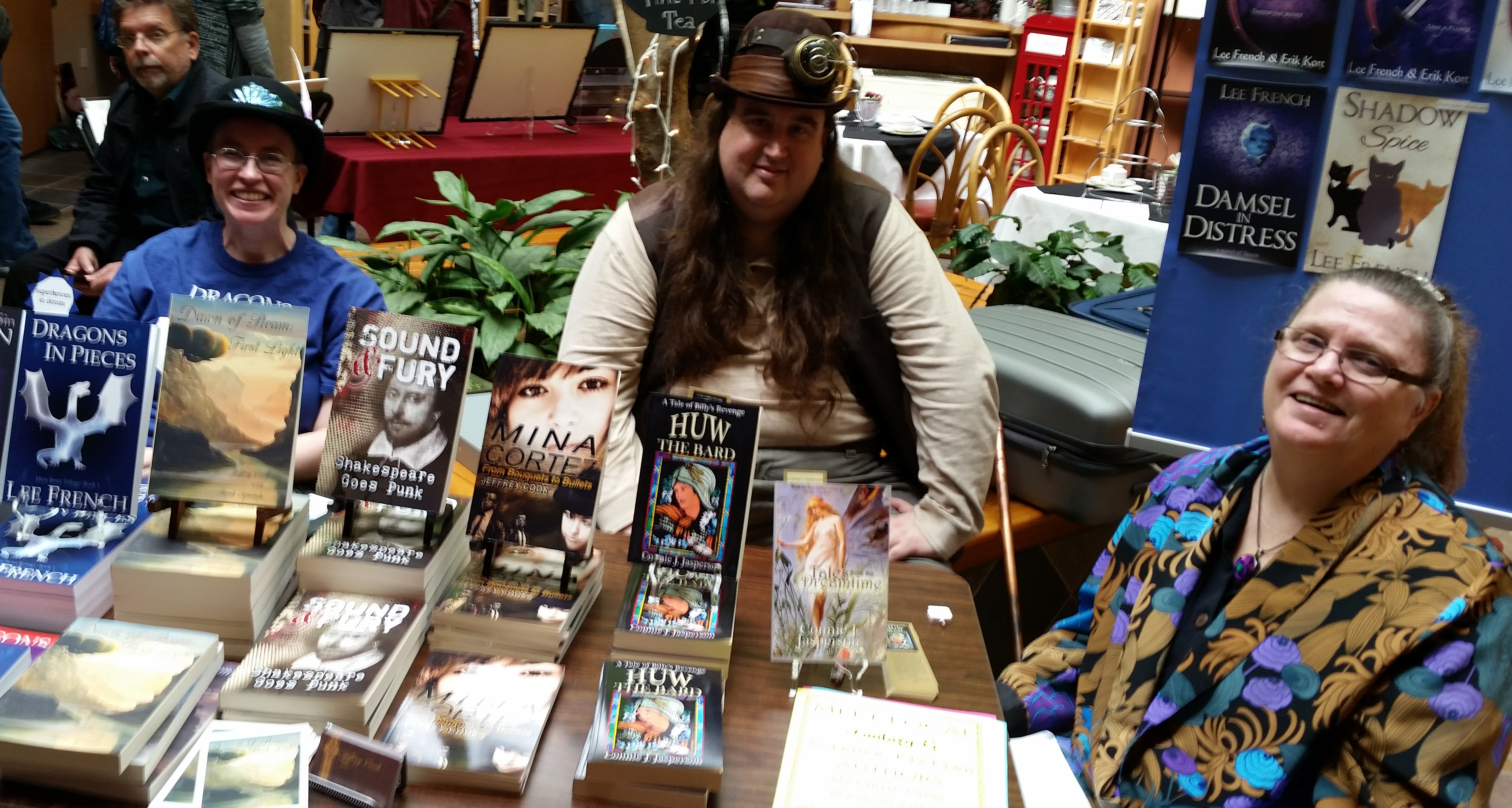
My second public event was this last Saturday. Two other local indies, fantasy author Lee French, and steampunk author Jeffrey Cook joined me at the Two Sister’s Tea Room in downtown Olympia for a book signing. This was a very different situation, and was much more pleasant. This signing was timed for the middle of one of the largest festivals in the the city, the annual Procession of the Species, so we had many people stopping and conversing with us.

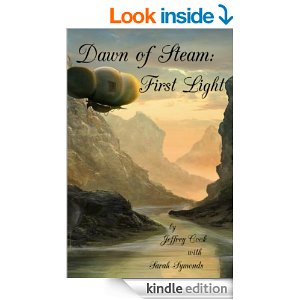
Dawn of Steam First LightSeveral people really stand out in my mind–I was moved to tears by one lady from Hawaii who bought Dawn of Steam, First Light, from Jeffrey.  She said she was a new reader, that she had come from a place where reading was not encouraged. She also said she was currently enjoying Charles Dickens’ classic novel,  The Pickwick Papers. I was awed by the absolute joy she took in the written word as she looked through Jeffrey’s book, and by how happy it made her that he signed it for her.

It was really brought home to me then that reading is still a privilege denied to many people of the world, often not by their wish, but by circumstances beyond their control.

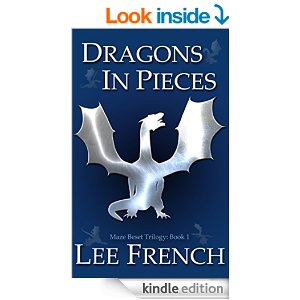
dragons in pieces lee frenchThen there was the wonderful character who was absolutely crazy for dragons. He not only bought Lee’s book, Dragons in Pieces, but insisted on buying one of the little plastic Dragon heads she had created with her 3-d printer as decorations.

Lee was selling books like she owned the only snocone stand in the desert.

I wasn’t, but I had a great time anyway, and handed out a lot of book marks.

From left: Lee French, Jeffrey Cook, Connie Jasperson

From left: Lee French, Jeffrey Cook, Connie Jasperson

For that event, I went all out clothing-wise. I went to the Goodwill and shopped the fat-lady rack on senior citizens’ half-price day, and found what seemed like the perfect, brilliantly-garish, machine-washable, fancy-label jacket to wear with my rather boring black blouse and black trousers. It was only about twenty years out of style, and was the perfect price for my tapped out pocket-book: $3.99, with my old-peoples’ discount.

I am still looking for the right event-outfits. I want something a little wonderful, but with not quite as much purple as the flashy jacket. I love purple, but as an accent color.

Our next event is in three weeks, so that gives me a lot of time to find something suitable for the comfy grandma who writes RPG game-based hack-and-slash epic adventures, and also sometimes writes literary fantasy.

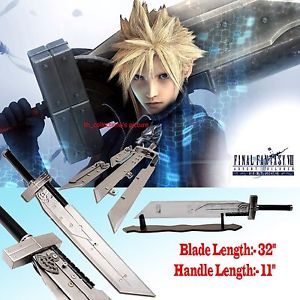
Maybe what I need is a green velvet renaissance faire dress, with Cloud’s buster-sword from Final Fantasy VII in a shoulder scabbard. That  should get my style of writing across well enough.

cloud strife and buster blade


2 Comments

Filed under Adventure, Battles, Books, Fantasy, Humor, Literature, Publishing, Uncategorized, writer, writing