I’ve been asked many times what I see as the differences between keeping a journal and writing a memoir.
 First, journaling is similar to keeping a diary, but different. You start writing in a stream-of-consciousness style, detailing your observations of where you are in life at that moment.
I find myself journaling when I am unable to write creatively. That is not to say that keeping a journal is not creative, because it is. It is simply a different kind of creative writing.
For example, I’m offering you an excerpt from my journal entry for April 25, 2026. For the second time that month, my husband had been admitted to the hospital, this time with aspiration pneumonia. That morning, I had arrived at eight, expecting to be allowed to visit. Usually, spouses and support people are allowed to be with the patient whenever possible, so I spend the entire day there.
But not that day. Visiting hours began at 10 o’clock, and that was when I would be admitted, and not a moment before. He was in a different unit from the usual one, a short-stay unit with different rules.
 So, I sat in the cafeteria, confused and feeling angry at myself for feeling angry. I had a cup of watery tea, which didn’t help my mood, which I knew was unreasonable. So I decided it was a good time to clean out my purse. which was full of unnecessary receipts and other debris of modern life.
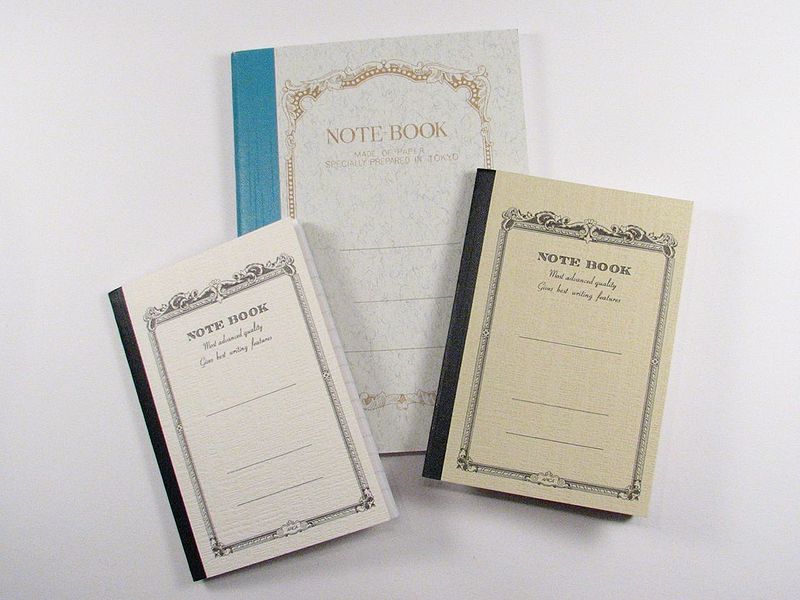
Have you ever noticed that sometimes life hits you with a hard dose of your own mortality? In doing that bit of minor housekeeping, I got one that morning. Fifteen minutes later, I pulled out my notebook and began journaling, detailing the lousy event.
April 25, 2026
Today, I threw away a five-dollar bill.
Greg is in the hospital again, and I’m stuck waiting in the cafeteria, so I cleaned out my purse and separated the cash from the trash.
Then I tossed the unwanted papers into the cafeteria’s trash bin.
As I did so, I saw something green go in, something that should have still been in my hand but wasn’t.
The cash wasn’t unwanted, but I don’t usually carry any, so maybe that’s why it happened.
Forty years ago, that would have been a disaster, and I would have ignored the glares of judgmental strangers and fished for it. Today, I was too embarrassed by the blunder to dumpster dive in the cafeteria.
Hopefully, I’ll be able to get into G’s room soon. The way things are going, I’ll probably toss a twenty in the bin along with my paper cup just so the fiver won’t be lonely, and because I can’t pay attention to anything right now.
Later, I was able to note what the doctor said and our best options. My hubby is currently back in the Adult Family Home, in Hospice care. He is happy and doing as well as can be under the circumstances.
 Personally, I can write anywhere. I often find I can sort out a plot hole at the coffee shop on the corner near my apartment. It’s a great place for journaling too, especially when I can’t calm my mind enough to work on my other projects.
Perhaps you have chosen to write in a coffee shop or a public park. You are sitting there with paper and pencil, but where do you start? What do you write?
You could write about your impressions of the people around you. You might include impressions of your environment and how you fit into it.
Some journals are intensely personal. Others are daily diaries, recounting daily activities, lightly touching on conversations. Some journals delve deeply into the writer’s philosophical thoughts.
If you are a novelist, mind-wandering with a pen and paper about your problems can help jump-start your imagination. This can lead to insights that reinvigorate your other work-in-progress.
Although the current state of news journalism in America tends to ignore this fact, fiction is different from truth.
Fiction is spinning yarns, keeping them straight, and making the world believe the tale until the last page. (FYI: American news media isn’t doing too well at that.)
Keeping a personal journal is writing the truth as you see it. Those are the five key words: the truth as you see it.
Sometimes, new authors say their project is a memoir. If a hopeful writer tells me this, I always ask if they have read any memoirs. If they haven’t, there may be a problem. Reading the memoirs written by successful authors is the best way to learn how the plots of outstanding memoirs are constructed.
Memoirists should ask two questions of their work. Will you detail actual memories or write a fictionalized account? Do you dare to name names or not?
- Naming names could be opening a can of worms, so think long and hard before you do that.
Some who write journals have no intention of publishing their work. Many just want to keep a family history, a fun project. Some may go so far as to explore their family tree through organizations such as Ancestry.com.
Here are some considerations if you are creating a record for your children, grandchildren, nieces, nephews, and other young and future family members.
- Are you just curious, or are you searching for an identity, trying to discover who you are and where your family comes from? Research from a site such as Ancestry.com or gleaned from family bibles, letters, and other collected papers will greatly help you.
- Will you include photographs or interviews with older family members who may remember something about your family’s history?
This is a project I’ve considered taking on, but I know I would never finish it. I don’t need another unfinished project lying around.
 Whether you are journaling for fun or posterity, or writing a memoir, the important thing is to write something every day. It’s good exercise and strengthens your ‘writing’ muscles. If I dedicate 3 hours a day to just writing stream-of-consciousness, I will chunk out 2500 to 3000 words. Of course, half those words will be mis-keyed and misspelled.
But hey, no one is perfect. Some words I accidentally invented: first-draft examples of “I meant to do that.”
But imperfections in the first draft are part of writing. The element of “what did I intend when I wrote this word” is an opportunity to explore and expand on an idea.
Or to eliminate it.
It’s your journal and your choice.