Tag Archives: literature

#amreading: the genesis of an author

Nymphenburg, View From the Seaside painting by Joseph Wenglein 1883

Nymphenburg, View From the Seaside painting by Joseph Wenglein 1883

I find the process of creativity as experienced by others intriguing, and am always curious about how they became authors.

My own journey to this place in my life was pretty tame. But some people  become authors via more adventurous, alternative paths.

This notion is explored in Elizabeth McKenzie’s frank, autobiographical post published on January 26, 2016, for LitHub.

Max Ernst, The Elephant Celebes 1921, Tate, London via WikipediaAppropriately titled “Surrealism and Decomposition. Or How I Wrote My Novel,”  McKenzie takes us on a journey through both her personal quest for enlightenment and creativity and the authors whose works colored her writing life. The quote that hooked me into reading this piece: “I read Rimbaud and Breton and Lautreamont and started according my dreams the respect I felt towards art. I wanted to have visions, I wanted, as Rimbaud put it, to take part in the systematic disordering of the senses.”

Her honest account of her sometimes psychedelic journey through alternate forms of consciousness and literary greatness is quite intriguing and took me back to my college days when many of my friends also chose that path for enlightenment.

Psychedelics were never an option for me, although in that way I was the odd one in my circle. The notion of them frightened me. Life in the early 1970s was surreal enough in its cold reality. My form of mind-expansion came in books.

The authors whose works influenced me as a young adult might surprise those who know me.

In my twenties, sci-fi and fantasy books were expensive and hard to get. The libraries stocked a few, but not as many as I required, as fast as I read.

When I was young, my parents were prolific readers and were members of both Doubleday Book Club and Science Fiction Book Club. They also purchased two to four paperbacks a week at the drugstore and subscribed to Analog and several other magazines.

samuel pepys diaryThere was always something new and wonderful to read around our house, and most of it was speculative fiction, although we had the entire 54 volume leather-bound set of the Great Books of the Western World, and our father insisted we attempt to read and discuss what we could.

Some were mostly understandable, such as William Shakespeare and Samuel Pepys.

Plato, not so much, and yet his work did influence me.

At the age of 14 I didn’t understand Pepys, but I read him, and while we were bass fishing on a Saturday morning, Dad would talk about the differences between life and morality in Pepys’ London and our life in suburban America in 1969. His thought was that I should learn about the 17th century and the Great Fire in London from an eye witness, just as I had learned about the war in the Pacific from John F. Kennedy‘s autobiographical novel,  PT 109.

But Pepys’ London of 1666 was so different from the ‘Mod’ subculture of the London of 1966 (and the Beatles) that I was familiar with thanks to Life magazine. To me, it was almost like speculative fiction. In many ways it was more difficult  for me to believe in historical London than Tolkien’s Middle-Earth.

When I married and left home, I still read every sci-fi or fantasy novel that came out in paperback, budgeting for books the way others of my acquaintance budgeted for beer. I read the classics for my irregular college classes, and learned to love Chaucer and James Joyce. For a variety of reasons I never earned a college degree, but I’ve never stopped reading and researching great literature.

But reading for entertainment was still my “drug.” I jonesed for new books by the great ones, Anne McCaffrey, Jack Chalker, and Roger Zelazny, reading and rereading them until they were shreds held together with duct tape.

As a married student attending college in Bellingham Washington, purchasing books for pleasure became a luxury. I found a secondhand bookstore where I could get a brown paper shopping bag full of novels in too poor a condition to sell on their shelves for $2.00 a bag if you had a bag of books to trade in.

As a college drop-out I went through a bag of books every week, and within a year, I had read every book they had.

Devils Cub Georgette HeyerThus, out of desperation, I discovered a whole new (to me) genre: regency romances written by Georgette Heyer, and other romance writers of that generation. Those books, along with beat up copies of bestsellers by Jack Kerouac, James Michener, and Jacqueline Susann began to show up in the pile beside my bed.

So at least some of my literary influences can be traced back to dragons, booze, morality, and England’s romantic Regency—lived vicariously through these authors’ eyes.

Always when the budget permitted, I returned to Tolkien, Zelazny, McCaffrey, Asimov, Bradbury, and as time passed, Piers Anthony, David Eddings, Tad Williams, L.E. Modesitt Jr., and Robert Jordan to name only a few.

And there were so many, many others whose works I enjoyed. By the 1990s, the genres of fantasy and sci-fi were growing authors like a field grows weeds, and I loved it.

All of the books I read as a child and young adult have influenced my writing. They still inspire me.

Nowadays I rarely am able to read more than a chapter or two before falling asleep. My Kindle is full of books, and I haven’t got the time to read them because I have to write my own story. Having the luxury to spend a day wallowing in a book is a treat to be treasured.

Old booksBut it is because of the uncountable authors whose works I have been privileged to read that I was inspired to think that my own scribblings might be worth pursuing.

Writing has always been necessary to me, as natural as breathing. In the beginning, my writing was unformed and was a reflection of whoever I was reading at the moment. As I matured and gained confidence, I found my own ideas and stories, and they took over my life.

Once that happened, I became a keyboard-wielding writing junkie.

Some days I write well, and others not so much, but every day I write something.

And every day I find myself looking for the new book that will rock my universe, a new “drug” to satisfy my craving, even if I know I won’t have time to read it.

I’m addicted to dreams and the people who write about them. Reading is my form of mind expanding inspiration. Without the authors whose books formed my world, I would never have dared to write.

Life would be so boring.

2 Comments

Filed under Publishing, writer, writing

Into the Woods, a fantasy anthology

MyrddinAnthologyECoverWe at Myrddin Publishing Group are starting the new year with the launch of our anthology, Into the Woods. We’re even having an all-weekend-long Facebook party, with Myrddin Authors dropping in and out over the course of the next few days. There will be gifts, and prizes and just fun and games with the Myrddin crew. The online Facebook Party starts here, so stop on by and and hang out with us!

This collection of amazing tales came about almost by accident.

One day last summer I was looking through stock images I’d found for a cover I was designing for another author. I came across a wonderful image of a lonely house set in the woods. I’m not sure why, but suddenly, like the proverbial dog after a squirrel, I was off looking at images of houses in the woods–like that was going to get any work done.

Of course, my brain is hardwired to write stories, so I found myself imagining all sorts of scenarios and plots to go with these amazing images. Then, it occurred to me that if I was inspired to write by these images, my fellow authors here at Myrddin Publishing would also be.

I threw out a challenge to the group: Write a short story about a house in the woods. The only caveat was the tale had to fall under the genre of fantasy, and the theme was “a house in the woods.”

And wow! What a response– I received nine wildly different tales, ranging from humor to ghostly, to romantic, to horror. These ten tales are some of the best I have read.

In the first tale, “A Peculiar Symbiosis,” Alison DeLuca gives us a moving story of a man who discovers he loves his wife–but only after she is dead.

“The Forest House” is my own take on the Tam Lin tale. Tam Lin is a character in a legendary ballad originating from the Scottish Borders as collected by Francis Child, but there are many tales from all over northern Europe featuring variations on his name, and the story will have slight variations. It is also associated with a reel of the same name, also known as Glasgow Reel. I had always wondered if Tam Lin and the Faerie Queen had a child, and if they had, what would have happened to it when Janet rescued Tam?

In “A House in the Woods,” Stephen M. Swartz takes us back to the 1960s with this dark fantasy. Two boys playing in the woods come across an abandoned house, and discover a true ghost story.

Irene Roth Luvaul takes us deep into the forest in “The Guardian.” A woman discovers her family’s history, and the terrible secret a cabinet once held.

Ross M. Kitson offers up a A Matter of Faith.” In this dark prequel to Kitson’s epic Prism series, an uptight paladin must find a way to work with a free-thinking druid, if he is to be successful in finding and killing a demon.

In “If I Have to Spell it Out” Austin musician and author Marilyn Rucker lightens things up with her hilarious take on two cousins quarreling over the tenancy of their family home, via letters.

“A Haunted Castle” by Lisa Zhang Wharton shows us that a house can can also be a haunted castle in the Bavarian Forest, in her hilarious, hallucinogenic tale of ghosts, rottweilers, and a costume party.

Myrddin Publishing Group’s own master of horror, Shaun Allan, swings us back to the dark side with a horrifying twist on the Hansel and Gretel tale, with “Rose.” Told with his usual flair for words and style, this is a chilling story of demonic magic. Definitely not your mama’s Hansel and Gretel!

In “Hidden,” Carlie M.A. Cullen takes us deep into the woods, where two young women take shelter from a storm in an abandoned house, with terrible consequences.

For the final tale in this treasury, fantasy author Lee French presents us with a post-Civil War tale of star-crossed love, in her magical tale, “Forever.” Tara and Marcus share a forbidden love–and only one place is safe for them.

I am continually amazed and awed by the talent of the wonderful authors I am privileged to work with at Myrddin Publishing Group. You can purchase this wonderful collection of short stories at Amazon by clicking on the buy button below:

Into the Woods: a fantasy anthology

Amazon Buy Button PNG

1 Comment

Filed under Books, Fantasy, Literature, writing

#TalesFromBlackFriday : The Marriage Counselor

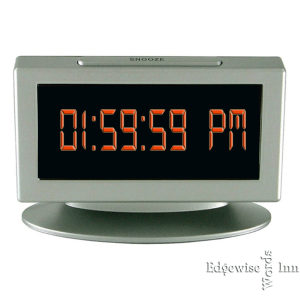
Digital Clock FaceI shook my head to get rid of the sudden, loud buzzing sound in my ears. Feeling a little disoriented, I looked at the calendar, which said Thursday, the day I dreaded most. Sometimes I felt like it was always Thursday. It was nearly time for my regular two o’clock appointment…the couple from hell, pardon my cursing. After my heart attack about six months before, they had begun coming to me, and were likely to give me another one. They never missed an appointment no matter how I wished they would.

I watched the clock tick from one fifty-nine to two o’clock.

My receptionist opened the door. “Mr. and Mrs. Haydes are here. Shall I show them in?”

 ***

I lifted my pen from the notepad and regarded the couple seated across from me. “Would you listen to yourselves? You make marriage sound like hell. It doesn’t have to be that way. You both sabotage it every chance you get.”

“Of course marriage is hell,” said the husband across from me, dressed in a double-breasted, blue suit, giving him an almost nautical appearance. Add a captain’s hat and he’d look like a cast member on The Love Boat. “It’s the absolute worst thing that could possibly have happened to a once-studly man like myself. But just like the moth flying into the flame, I had to do it. ‘Don’t go toward the light,’ my friends all said. But did I listen? Hell, no!”

His wife snorted. “Luke always does the exact opposite of what anyone advises him to do. That’s what he gets for being a devil-may-care, I’m-gonna-do-it-my-way sort of a guy. He’s Satan. That makes me Satan’s wife. Of course it’s hell—it comes with the territory. If I can put up with him, he can put up with me.” This week she wore little makeup and was neatly coiffed, with not a hair out of place. In a counterpoint to Luke’s dashing attire, she wore a beige wool suit, cut to just below her modestly crossed knees, with low-heeled pumps. Mrs. Haydes could have been a proper matron from any Protestant congregation, right down to her puritanical sense of morality.

This forty-five minute session of misery began promptly at two o’clock every Thursday. They booked their appointments under the pseudonyms, Lucifer and Persephone Haydes. He preferred to be called Luke, and she preferred to be called Mrs. Haydes. After six months of working with this pair of nut cases, I was beginning to suspect they were playing a game of mess-with-the-counselor.

Last week she’d been dressed like a teenaged skateboarder, and he as an English literature professor. The week before that, she was a hippie, complete with headband and love beads, and he was a cricket player.

Every week it was something different but always opposites. Mrs. Haydes seemed to choose her wardrobe based on what she thought would annoy him most, and he went with the opposite because he really couldn’t do anything else. He had the worst case of oppositional defiant disorder I had ever seen.

“Why are you here?” I had to ask, despite knowing I wouldn’t get an answer. “I no longer understand what you are trying to save here. You never take my advice. And you’ve been aware since the outset that I am a pastor, not a magician. What do you hope to gain from this?” I tapped my foot and looked at the clock. We were only fifteen minutes into this session, and I was already exhausted. “What you really need is a good divorce lawyer, not a counselor. I can tell you every reason why you should stay married, and if you are looking for religious affirmation, I can give you chapter and verse on the apostle Paul’s views regarding marriage. Over the last six months, I have done so repeatedly.  We’ve discussed what you originally saw in each other and what you each want from your relationship, but you’re still at this impasse.  I think that at this stage divorce is the only answer for the two of you.”

Luke snorted. “Don’t bother telling me anything the apostle Paul said—I wrote that book. I was delusional.”

“I think the pastor is right,” said Mrs. Haydes, primly folding her hands. “Divorce is the only option. I’m sure no one would blame me for leaving a devil like you.”

“I’m not giving up half of everything I own,” said Luke, clearly aghast at the notion. “Do you know how many divorce lawyers she has access to? No way am I going to let her off so easily.”

“I come from a broken family,” said Mrs. Haydes, discreetly wiping a tear. “I don’t want our children to grow up in a broken home. But it would be better than Anaheim. It’s a bad environment to raise children in. I want to move back to our palace in Hell. All it needs is a little remodeling.”

I couldn’t stop myself. I had to ask it. “And you think Hell is a good environment to raise kids in?”

“Well, at least there’s no crime in hell. We have the finest law enforcement professionals in the universe.” She glared at me defensively. “Where should I be raising them? Seattle? I’m not exposing my children to a bunch of pot-smoking vegans who ride bicycles and wear socks with sandals.”

Luke brightened up. “I love Seattle—perhaps we should move there. I could get some goats or raise alpacas. They have the best coffee in the world!”

Mrs. Haydes sniffed. “The place is full of vulgar vegetarians. They’re always taking their children to yoga and soccer, where everyone gets a trophy whether they win or lose—it’s just wrong. We will most certainly not be moving to Seattle.”

“Enough,” said Luke. “I’m going vegan and we’re moving to Seattle and that’s final.” He turned to me, missing her small, satisfied smile. “What I really want to talk about is the stint we did on ‘Home Hunters.’ She destroyed me in front of millions of people, and I have to watch it every time they rerun that episode, which they seem to do three times a week.”

“Well dear, it airs on one of your networks, and you make the rules. You’re the one who decides why the television viewing public has 999 channels available to them, and all but three of them at any given time are showing the same reruns of Pawn Shop Heroes, Home Hunters, or Gator Boys.”

From the look on Luke’s face, I could see that Mrs. Haydes had the knife and was twisting it for all she was worth.

“Besides, I said very clearly that I wanted the extremely modern condo, with all the sleek furnishings and the gorgeous, terrazzo floors. I said it at least six times. It’s on the videotape of the show.” She smiled at him smugly. “You just had your heart set on that cozy, little pink bungalow with the seventies’ décor and the orange shag carpet. You insisted, and so, of course, I gave in. Once you make up your mind, it’s impossible to change it.”

“See?” Luke exploded. “See how she manipulates me? How could I not go for the house she said she didn’t want? It was like asking the dog not to eat the chocolate you left on the coffee table. I’m Satan! I’m not really an agreeable sort of guy, and she knows exactly how to manipulate me, so now, twice a week, everyone in America gets to watch me buying grandma’s overpriced, decorating nightmare. It’s been voted the most popular episode of all time! She embarrassed me in front of God and the world.” He dropped his head into his hands. “We’re moving to Seattle now, and it’s going to be hell trying to sell that dump in Anaheim. I won’t even be able to rent it out for enough to cover the carrying costs. What a life!”

I knew this session was going nowhere. Their sessions never went anywhere positive because they were masters at circular reasoning. “What is it you want from me? You must have some reason for putting me through this agony every week.”

“I despise him, so I want a divorce, of course,” said Mrs. Haydes, with a smug, little smile. “I’ll be happy with my half of everything, and, of course, alimony. I gave up my career to raise our children, you know, and of course, they will need child support.” She aimed her tight, fundamentalist smirk  at me. “We won’t waste your time any further.”

“No. No. No!” Luke’s eyes popped out of his head. “No divorce. I adore you, Persey—you’re the love of my life!” He kissed her hand.  “I would be lost without you. Think of the children.”

“I love you too, Luke—I just hate being around you. And now you’re going to be forcing all your hippy, vegetarian food on me.” She turned away from him, primly pursing her lips. “You know how I love steak.”

“No dear, not vegetarian. Vegan. It’s good for you, you’ll love it. Why, I’ve a recipe for smoked tofu that will put a smile on that pretty face in no time.” Luke smiled his most charming smile. “If there is one thing I understand, it’s how to barbecue. You’ll adore my smoked tofu salad.”

“If you say so, dear. I’ll likely throw up.”

The two rose and left my office. I sighed.

Luke might claim to be Satan, and yes, it was even possible given how contrary he was, but if that was case, Mrs. Haydes ruled in Hell. There was no mistake about that.

I heard my receptionist speaking in the anteroom. Yes, Mrs. Haydes was scheduling another appointment…two o’clock next Thursday.

Satan might move to Seattle, or he might not. Somehow, I knew his new penchant for tofu and coffee wouldn’t get me off the hook.

I shook my head to get rid of the sudden, loud buzzing sound in my ears. Feeling a little disoriented, I looked at the calendar, which said Thursday, the day I dreaded most. Sometimes I felt like it was always Thursday. It was nearly time for my regular two o’clock appointment…the couple from hell, pardon my cursing. After my heart attack about six months before, they had begun coming to me, and were likely to give me another one. They never missed an appointment no matter how I wished they would.

I watched the clock tick from one fifty-nine to two o’clock.

My receptionist opened the door. “Mr. and Mrs. Haydes are here. Shall I show them in?”


The Marriage Counselor © Connie J. Jasperson 2015

“The Marriage Counselor” was first published March 6, 2015  on Edgewise Words Inn

2 Comments

Filed under Fantasy, Humor, Literature, writing

#amwriting: Rothfuss and Gaiman, crafting good prose

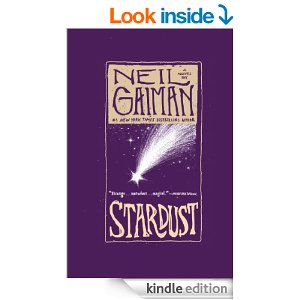
Stardust, Neil GaimanSome fantasy qualifies as literary fiction because of the way in which the story is delivered.

One example of what I think of as literary fantasy is Neil Gaiman’s Stardust. In the very first sentence of chapter one, Gaiman commits the most heinous crime an author can commit, according to those critique groups armed with a little dangerous knowledge:

Quote: There once was a young man who wished to gain his hearts desire. 

And then, to make matters worse, he throws out a bit of background:

  1. Our story starts in the village of Wall, a tiny town about a night’s drive from London. A giant wall stands next to the town, giving it its name.
  2. There’s only one spot to pass through this huge grey rock wall, and it’s always guarded by two villagers at a time, and they are vigilant at their task.
  3. This is peculiar, because all one can see through the break in the wall is meadows and trees. It looks as if nothing frightening or strange could be happening there, but no one is allowed to go through the break in the wall.
  4. The guards only take a break from the wall once every nine years, on May Day, when a fair comes to the meadow

omg! Did he really do that? What was he thinking, starting a fantasy novel with a TELLING, PASSIVE sentence followed by an info dump?  To answer your question, he thought he was offering up a good story, and guess what? HE WAS!

And he did it with beautiful, immersive prose.

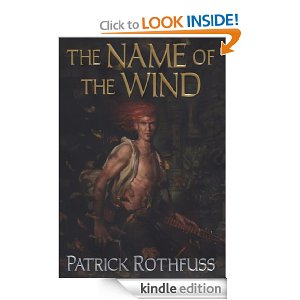
name of the wind -patrick rothfussWho else writes great prose? Patrick Rothfuss, for one. Take the first lines of The Name of the Wind. 

Quote:  It was night again. The Waystone Inn lay in silence, and it was a silence of three parts.

Rothfuss then goes on to commit what some purists (aka trolls) consider a heinous crime–he DESCRIBES THE SILENCE. He does this on the first page and guess what–the reader is sucked into the story and has no desire to leave.  To compound that crime, the story is a story within a story, told to a chronicler, and what most would use as the prologue actually comes after the first chapter, in chapter eight:

(quote) If this story is to be something resembling my book of deeds, we must begin at the beginning. At the heart of who I truly am. To do this, you must remember that before I was anything else, I was one of the Edema Ruh.

When we write, we are writing because we have a story to tell. (Yes, I said tell). To that end, every word must count, every idea must be conveyed with meaningful words, and sometimes you can just have a little fun with it.

In the opening lines of Gaiman’s Stardust, nothing unimportant is mentioned although the prose meanders in a literary way. Yes, he takes the long way, but the attitudes, mores, and personalities of Tristam’s village are conveyed with humor and the journey is the best part of this fairytale. He never devolves into purple prose.

The Elements of Style calls “Purple Prose” “hard to digest, generally unwholesome, and sometimes nauseating.”  To be fair, purple prose is subjective and each reader has a different level of tolerance for it, but it is something we definitely don’t want. What do you want to convey? Choose your words based on what you want the reader to see and feel:

  • Plain: He set the mug down. (conveys action–what’s going to happen next?)
  • Somewhere in the middle: He eased the tankard onto the table. (conveys a medieval atmosphere–what’s going to happen next?)
  • Bleah: Without haste, the tall, blond barbarian set the immense, pewter, ale-filled cup with a wooden handle onto the stained surface of the rough, wooden table. (conveys nausea–don’t care what happens next.)

Of course you are not going to devolve into sticky-sweet goo in your attempts to show the mood and atmosphere. But please, if I may use a cliché here, don’t “throw  the baby out with the bathwater.” Lean prose with well chosen imagery will express your ideas in such a way that the reader can hang their imagination on your words.

In direct contrast to Gaiman’s lighthearted opening prose in Stardust, the opening lines of Rothfuss’ The Name of the Wind, are dark and heavy with portent.  Rothfuss sets the mood, and conveys the subtle power kept restrained by Kote/Kvote, and he uses this atmosphere to drive the tale.

Both Rothfuss and Gaiman use words chosen for their imagery. Gaiman’s story is told with sardonic humor, which makes it all the darker, and Rothfuss’ prose evokes the dark of nightmares. They write with widely different styles, but both books are dark, both books are fantasy, and both books moved me.

Both authors write so well that the internet is rife with haters and trolls who can’t wait to trash their next book. THAT, sadly, is the mark of success, or genius, in today’s world of fanatics in dark rooms, armed with a rigid idea of what fantasy should be, and waging war via the internet on authors who dare to write outside those boundaries .

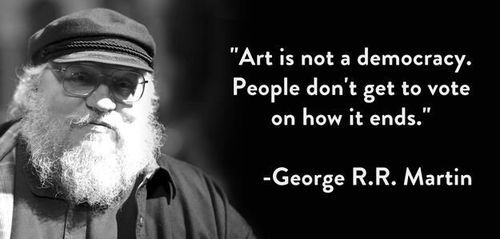
GRRM Meme 3Write from your heart, and dare to write what moves you. Think about the rush of “yeah, this is it!” that you get when you read a piece that takes you out of this world and changes your life for a few brief moments. That author knows something about the craft, or you would not have been so moved by it.

Study the prose of those whose work shocks, rocks, and shakes you. See how they craft the sentences, and form the moods and emotions that drive the plot. Learn from them how to show the true character of a protagonist, or the smell of an alley by the wharves. Read, and then apply what you’ve learned from the masters to your own work.

4 Comments

Filed under Fantasy, Humor, Literature, Publishing, writer, writing

Marilyn Rucker, Nick’s, and September

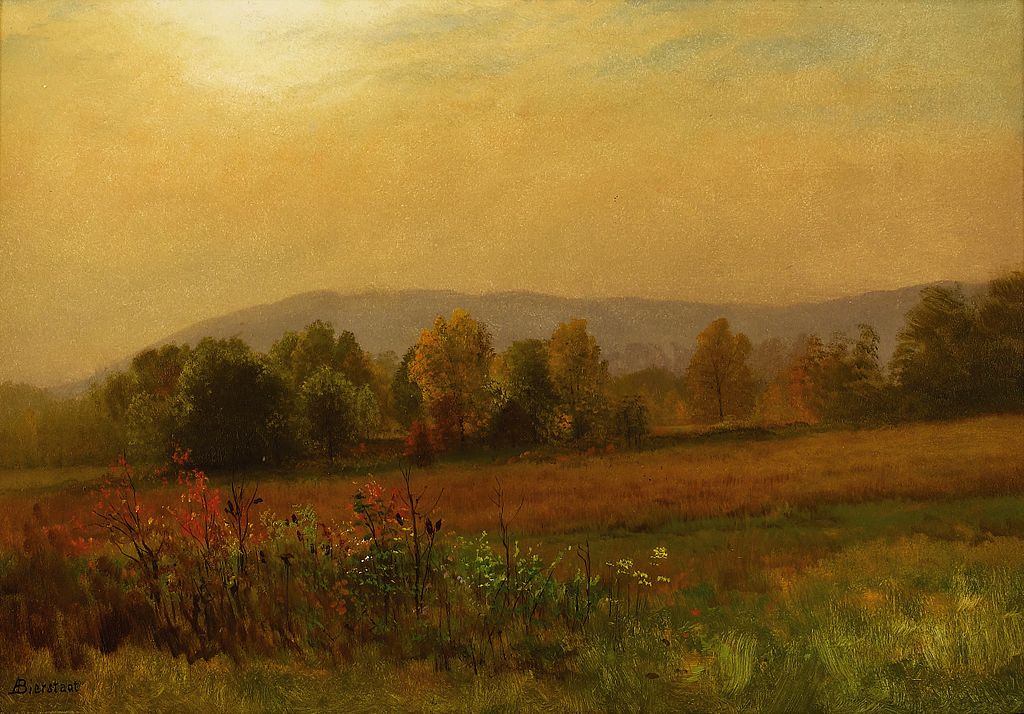
Albert Bierstadt - Autumn Landscape PD|100 via Wikimedia Commons

Albert Bierstadt – Autumn Landscape PD|100 via Wikimedia Commons

September is the month that always sneaks up too fast. This year we had a long drought, with 80 and 90 degree weather (that is 26.7  and 32.2 degrees Celsius)  and well above from the first of May through most of August.

Then, just about the time we took our vacation to Cannon Beach, the weather turned cold, and a little rain finally began to fall. Over the last week it has been cold and rainy here, so much so that I have had to wear socks in the house, and long-sleeved jammies for work. (!!!) And the rain–in the last two weeks we have had more than in the prior four months.

The unwatered lawns are turning green again in our less-than-affluent suburban neighborhood–it’s likely to be a bad year for hay up here in the Northwest.

Interstellar Pirate QueenLast evening my dear old hubby and I met in Bellevue with well-known musician and author, Marilyn Rucker, who is up from Texas to perform at Tumbleweed Music Festival in Richland, Washington.  Marilyn wrote Sax and the Suburb, a hilarious and entertaining band-geek murder mystery. Marilyn is an awesome performer, and her music has been featured on King of Queens, and many other television shows. She plays with both The Studebakers and the Hootchcakes Band, but is performing solo in Richland.

If you love hilarious, witty music, give her solo album, Interstellar Pirate Queen a spin. It’s full of wry wit and fabulous, entertaining music to write to.

But we did have an amazing dinner at a place we had never been to, as we are rarely in Bellevue, and we discovered this little jewel in the culinary crown of the Puget Sound region by accident. The place is called Nicks Greek and Italian Cuisine, and all I can say is “Ooh, baby.”

And Nick himself is quite the character with his lovely accent and genuine, welcoming way.

My hiatus from contract editing is over, and I am back at work once again. Writing has to assume the secondary position in my pantheon of tasks. I have a wonderful fantasy novel by Carlie M.A. Cullen currently in my editing pile. I’m also editing an anthology for my publisher, Myrddin Publishing. The work I have received for this anthology so far is outstanding–Myrddin has some fine authors under its banner.

I will take another break from editing in November, as that is NaNoWriMo month.

This year I plan to use that as my opportunity to write a 2000 to 4000 word short-story every day until I have my 50,000 words, and then I will wing it, until November has ended. I am currently building my list of prompts.

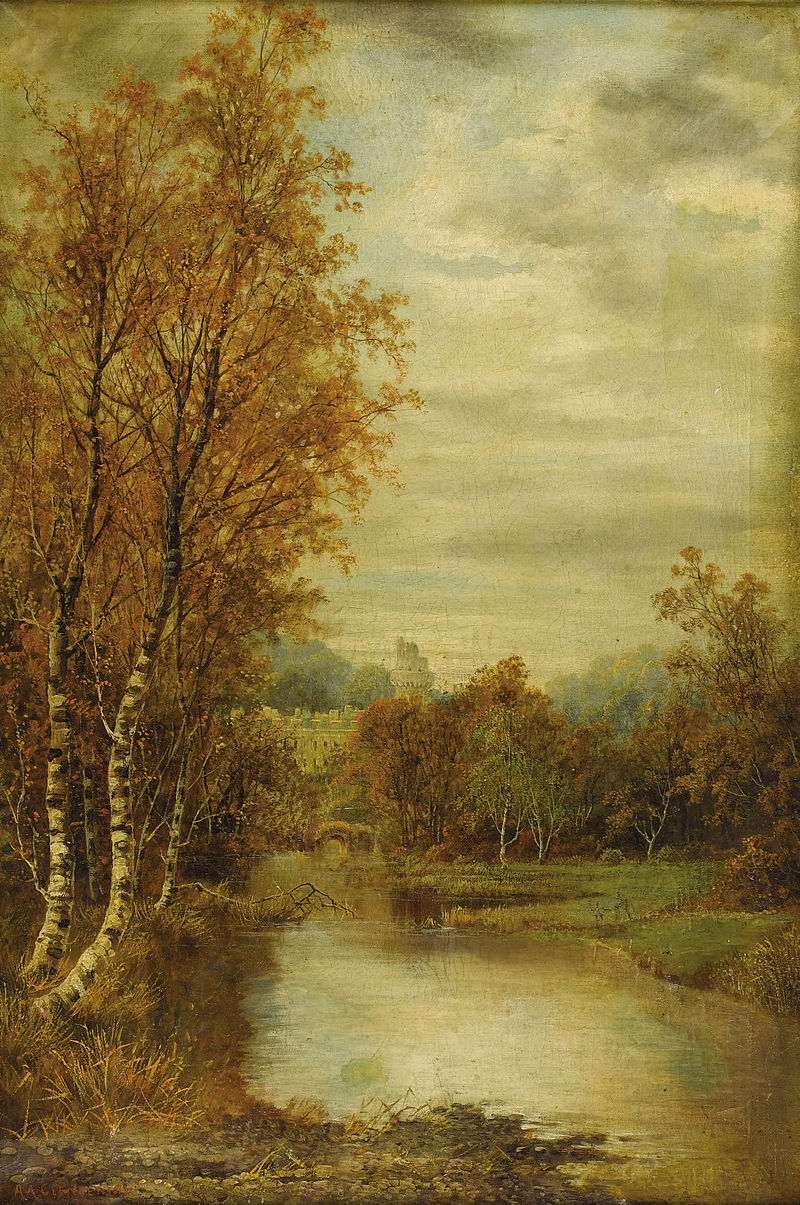
Autumn Landscape With Pond And Castle Tower-Alfred Glendening-1869

Autumn Landscape With Pond And Castle Tower-Alfred Glendening-1869

September is the month I enjoy the least. It represents the end of fun, the last hurrah of the summer. It means playtime is over and work begins in earnest. I hope the weather will turn nice again for a week or so, to give us those final few days of sunshine and 75 degrees (23.3)–that is the perfect, ideal summer day, the kind of day we were denied this year because of the unusual, San Diego-style heat.

I want to sit on my back porch with my kindle and enjoy the last bits of sunshine before the monsoons close in. I want to sit there, watching the birds and planning my next writing adventure, and I will, if only the rain would relax for a week or so, and allow me that little pleasure.

My wish for this winter is that it snows prodigiously in the mountains where it belongs, and rains frequently here in the lowlands. Then, promptly on July 5th as is expected, may our allotted six weeks of summer begin anew with temperatures in the low 80s. Please, may we have a “normal” year, if normal can be measured in our ever-changing world.

1 Comment

Filed under Fantasy, Humor, writing

My love affair with Willam Butler Yeats

Yeats Mural and quoteWilliam Butler Yeats was an Irish poet and one of the foremost figures of 20th century literature. A pillar of both the Irish and British literary establishments, in his later years he served as an Irish Senator for two terms.

His poetry is one of my favorite sources of inspiration.  In his early years he  was not afraid to write of faeries, and mystical things that fired my childish imagination. Later, as he grew as both a writer and as a person, he also wrote wonderful works that were more firmly rooted in reality.

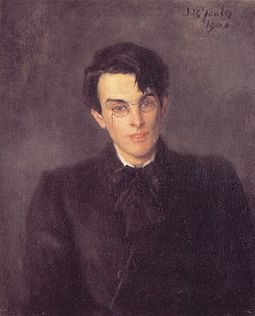
William Butler Yeats, painted by his father, John Butler Yeats, 1900

William Butler Yeats, painted by his father, John Butler Yeats, 1900

Born in Ireland on June 13 1865, Yeats was born into the Protestant, Anglo-Irish minority that had controlled the economic, political, social, and cultural life of Ireland. His free-thinking, bohemian parents counteracted that cultural bias, and raised him to be proud to be an Irish poet and writer. He was raised in a home where art and literature were celebrated, His father was a famous artist, John Butler Yeats, who was renowned for his portraits, though his work never earned enough to keep the family financially secure–thus they moved around a lot.

The entire Butler Yeats family were highly artistic; his brother Jack became an esteemed painter, while his sisters Elizabeth and Susan Mary—known to family and friends as Lollie and Lily—became involved in the Arts and Crafts Movement. That movement of decorative arts was exemplified by traditional craftsmanship using simple forms and it often used medieval, romantic or folk styles of decoration. It advocated economic and social reform and has been said to be essentially anti-industrial.

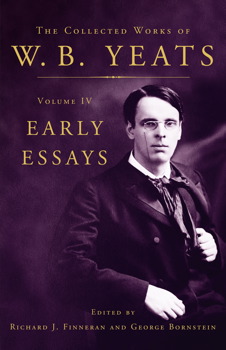
WB Yeats early essaysIn December 1923, Yeats was awarded the Nobel Prize in Literature, just after Ireland had gained independence. Fortunately, the prize led to a significant increase in the sales of his books, when his publishers Macmillan  capitalized on the publicity. He was able to repay not only his own debts, but those of his father–this was a huge source of relief for the whole family.

To a certain extent,  Yeats was a product of the arts and crafts movement. His poetry was whimsical and serious, and completely reflective of his passionate, turbulent life.  He has been quoted as saying a poet should labor “at rhythm and cadence, at form and style, ” and was a founding member of the Rhymers’ Club, a group of London poets who met to read and discuss their poems. The Rhymers placed a very high value on subjectivity,  how someone’s judgment is shaped by personal opinions and feelings instead of outside influences, and on craftsmanship.

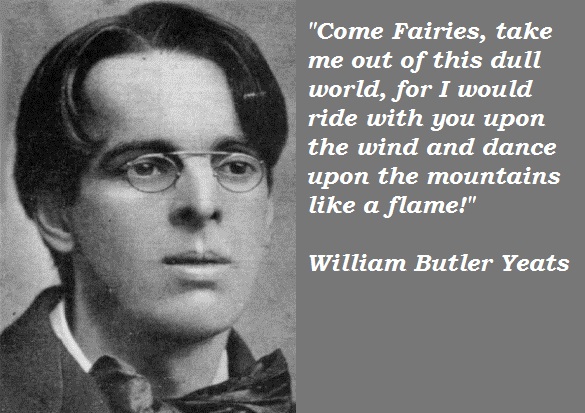
william-butler-yeatss-quotes-4This emphasizes to me the value of a writing group–even Yeats had a group of people to bounce ideas off, and that group improved his craftsmanship.

Reading the work of W.B.Yeats greatly shaped my own view of poetry and literature in general. His life was unconventional, and chaotic, and his love affairs were famous, especially his life-long, frequently unrequited love for the Irish revolutionary/actress, Maud Gonne. He struggled with love and morality as did all free-thinking artists and writers in his day–but his struggles and the struggles of his contemporaries freed their imaginations, and they produced great works.

Of all his works, this is my favorite:

The Stolen Child by  W.B. (William Butler) Yeats

WHERE dips the rocky highland
Of Sleuth Wood in the lake,
There lies a leafy island
Where flapping herons wake
The drowsy water rats;
There we’ve hid our faery vats,
Full of berrys
And of reddest stolen cherries.
Come away, O human child!
To the waters and the wild
With a faery, hand in hand,
For the world’s more full of weeping than you can understand.

Where the wave of moonlight glosses
The dim gray sands with light,
Far off by furthest Rosses
We foot it all the night,
Weaving olden dances
Mingling hands and mingling glances
Till the moon has taken flight;
To and fro we leap
And chase the frothy bubbles,
While the world is full of troubles
And anxious in its sleep.
Come away, O human child!
To the waters and the wild
With a faery, hand in hand,
For the world’s more full of weeping than you can understand.

Where the wandering water gushes
From the hills above Glen-Car,
In pools among the rushes
That scarce could bathe a star,
We seek for slumbering trout
And whispering in their ears
Give them unquiet dreams;
Leaning softly out
From ferns that drop their tears
Over the young streams.
Come away, O human child!
To the waters and the wild
With a faery, hand in hand,
For the world’s more full of weeping than you can understand.

Away with us he’s going,
The solemn-eyed:
He’ll hear no more the lowing
Of the calves on the warm hillside
Or the kettle on the hob
Sing peace into his breast,
Or see the brown mice bob
Round and round the oatmeal chest.
For he comes, the human child,
To the waters and the wild
With a faery, hand in hand,
For the world’s more full of weeping than he can understand.

 >>><<<

Loreena McKennitt, the Stolen Child  (via You Tube)

6 Comments

Filed under Books, Fantasy, Humor, Literature, Publishing, Uncategorized, writer, writing

When inspiration fails…

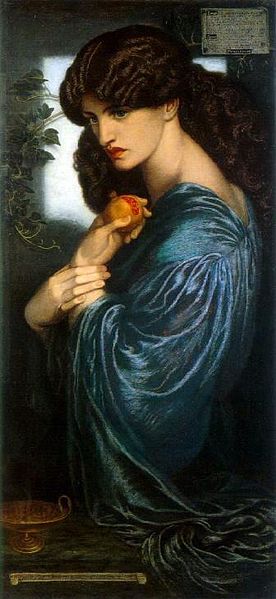
276px-Dante_Gabriel_Rossetti_-_ProserpineThere are days when I just can’t come up with a new idea. The creative juices are flowing, but they’re moving  more like unimaginative sludge. I don’t see these moments as writer’s block—the ideas are lying dormant. They just don’t want to bloom quite yet.

This is when I clean the house. For some reason, inspiration always strikes when I am doing some mindless task, and though you wouldn’t know it from my office, I work better when the house is in order. If that hasn’t jarred an idea loose, I put on some Loreena McKennitt or Blackmore’s Night and go out to the internet and search for ideas, by looking at fantasy images from Canstock or Dreamstime.

Sometimes I just peruse the old masters from the renaissance era out on Wikimedia Commons, like Dante’s Persephone.

Then there are times when I have a cornucopia of ideas. They can’t all be used, there are so many of them. I try to write them down for use later, and that helps when I have a temporary dry spell.

That is, they help unless I forget to make full notes about the whole idea—random notes like “Give the dog a biscuit” are just a bit too ambiguous to be really helpful. Know what dog would have been helpful–however that random note did inspire me to give Billy Ninefingers a hilarious sidekick, a dog named Bisket.

Sometimes I get going on a tale and all of a sudden my enthusiasm just sort of faints somewhere along the line and I don’t know why. It turns out that idea really wasn’t a novel—it was a short story and it just wanted to be done and over with.  Short stories are wonderful exercises for writing longer pieces. If you can, you should try to build up a backlog of short pieces under 7000 words in length, because you never know when a call for short stories will come along and you might have the chance to be published in an anthology.

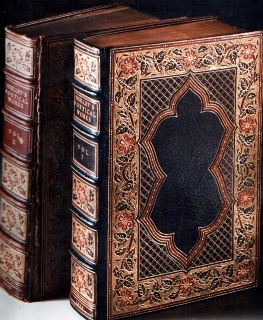
Old Restored booksAlso, writing short fiction helps you get the hang of using a story arc in smaller increments, to help the layers of your longer pieces.

Sometimes I get stuck in the middle, and don’t know what is going to happen next. That is really frustrating, but I just set is aside to come back to it later. Other times I get a little bit of a jump-start by talking to members of my writing group.

But there are times the piece just has to be shelved for a while.  That’s okay, because when I pull it out, I will say, “Hey! This is awesome—I love this story.” I never fail to find that spark when I run across a tale I forgot I had half-written.

I never get bored with my characters, but I sometimes get bored with the drivel I write for them to do. That is why sometimes walking away from a stalled story for a short while is a good idea. At that point I am beating a dead horse and it’s a waste of time. Later I will see the manuscript through new eyes and a better way to get my heroes to the final battle will strike.

When I am stuck on a paragraph that I just can’t get right, I email a writing buddy and run it past them. We bounce it back and forth until it conveys the idea I think it needs to–or I throw it out.

I’m always happy to talk with them when they are stuck, so it all balances out.

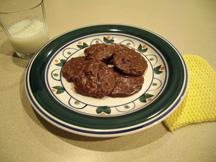
GrandmasNoBakeCookiesMy point is that we all suffer from occasional lapses of the creative muse. I never let lack of inspiration for one project stop me from pushing forward—I just find something that does interest me and do that for a while until I have my fire back.

Sometimes I just have to make cookies for a while. Chocolate no-bakes...yummy….

4 Comments

Filed under Adventure, Battles, blogging, Books, Fantasy, Humor, Literature, Publishing, Self Publishing, Uncategorized, writer, writing

Elements of the Story: the story arc

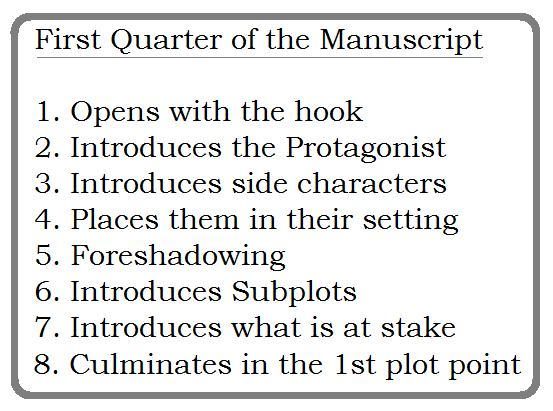
Elements of the Story 1st Quarter of the MSWhen I first began writing, I wasn’t concerned with the nuts-and-bolts aspects of a tale–I wrote stories to read to my children, and I wrote stories I wanted to read. The stories lived in my mind, and I got a great deal of pleasure from writing them. It never occurred to me to submit them to a publisher, and I wouldn’t have known how to do that anyway.

It wasn’t until my youngest child was in high-school that I began thinking about writing as a vocation, and began looking for places to submit my work. So my evolution as a writer was: I began by writing songs in high-school and also writing poetry, graduated to writing fairytales for my kids and short stories for myself, and finally began my serious attempt at a novel in 1996.

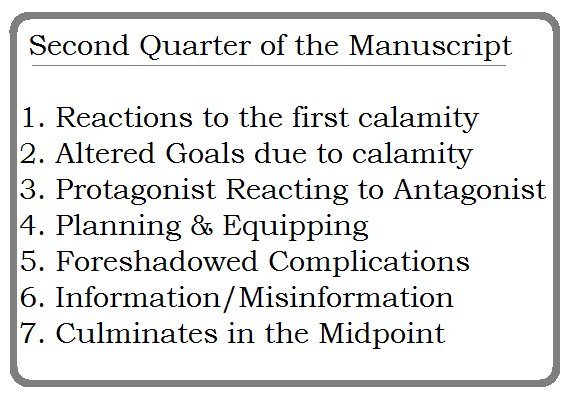
2nd quarter of the manuscriptI began writing for my own pleasure, and had no idea of how to plot a novel. Since that first attempt at a novel, I have completed six novels, and am working on 3 more at this time. Each book has been an improvement over the previous one. Through working with good editors and educating myself,  I feel like I finally understand how  a good novel is constructed.

In my early books, I didn’t understand the way a good story worked. I knew one when I read one, but I didn’t really understand what made that story immersive and memorable.

I had a grasp of how to create characters, and I had a good idea for the basic plot,  but I was weak in the area of structuring the novel. Once I realized that weakness, I set out to resolve it.

For the last two years, that has been the area I’ve worked hardest on putting into practice, and for those who have beta-read my yet to be published work, that change in my understanding of how to write a novel is clear.

Now, I have an instinctive understanding that the evolution of the story can be graphed out in an arc–the Story Arc. I had heard of this concept, and in writing groups some authors will talk about it as if they understand it, but when you read their work it’s clear they don’t.

It wasn’t until Scott Driscoll, author of Better You Go Home gave a seminar on it last year that the pieces fell into place for me.

The Story Arc copy

Some books are character-driven, others are event-driven. ALL of them follow an arc.  For my personal reading pleasure, I prefer Literary Fantasy, which has a character-driven plot. Events happen, often in a fantasy setting, but the growth of the characters is the central theme, and the events are just the means to enable that growth.

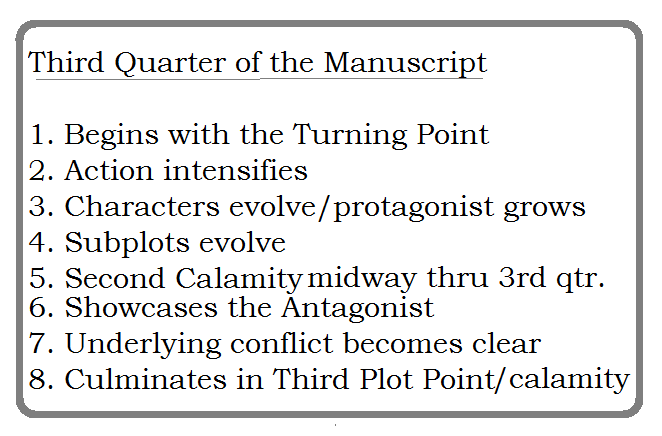
3rd qtr of manuscriptI write literary fantasy, with some emphasis on the fantasy. My own books, as in Huw the Bard, tend to be more character-driven than action oriented, as the Hero’s Journey is what intrigues me, but large events occur that cause personal growth. Whether your books are character- or event-driven, there must be an arc to the story.

We have talked about the way the manuscript can be divided into quarters.  Let’s consider the midpoint. The midpoint of the story arc begins the second half of the book. The first calamities have occurred and up to this point, the characters have been reacting to the antagonist’s moves.

The midpoint of the story arc is the Turning-Point, the place where there is no turning back. Consider J.R.R.Tolkien’s The Hobbit: At the midpoint, Bilbo is committed to seeing the Dwarves regain their home, and Smaug is routed, but at great cost. Now, he can see only disaster ahead of them, if Thorin continues down the moral path he has chosen.  Bilbo has been changing, but now he shows his true courage, by hiding the Arkenstone. Then he takes matters into his own hands in order to head off the impending war.  Bilbo tries to ransom the Arkenstone , but Thorin refuses to see reason. He banishes Bilbo, and battle is inevitable.

This arc is the same in every good, well-plotted novel: in the first half of the book everything had gone to hell, emotions were high, and the situation was sometimes chaotic, but the protagonist thought he had a grip on it. The Midpoint is the place where the already-high emotions really intensify, and the action does too. From this point on, the forces driving the plot are a train on a downhill run, picking up speed, and there is no stopping it or turning back now. The characters continue to be put to the test, and the subplots kick into gear.

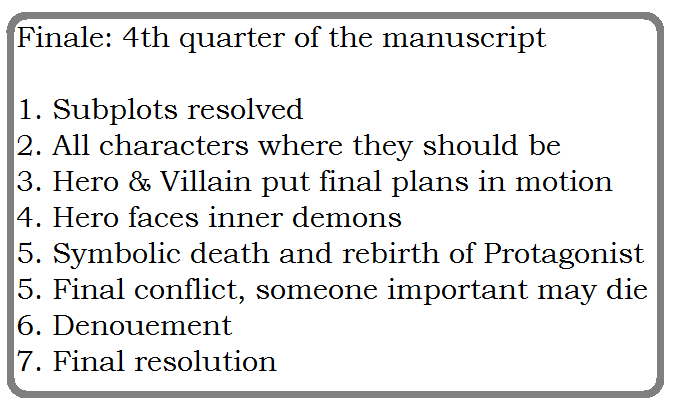
4th qtr of MSThe second half is where the villain shines–the evil one is on a roll and it’s his ballgame. The truth underlying the conflict now emerges, and it culminates in the third calamity, the third plot point. This is also where the villain’s weaknesses begin to emerge, and the hero must somehow exploit them.

The third quarter of the book, from the midpoint to the third plot point is critical. These events tear the hero down, break him emotionally and physically so that in the final fourth of the book he can be rebuilt, stronger, and ready to face the villain on equal terms.

The third quarter of the book frequently sets the hero on the path to enlightenment, but first he must undergo a symbolic death and rebirth.

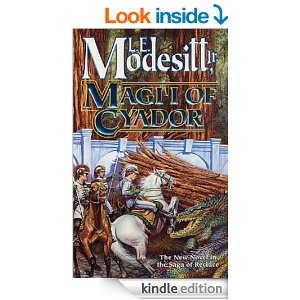
If you want to read classic fantasy where this type of story arc is really clear and yet the stories are strongly character driven, you should read:

magii of cyador


Magi’i of Cyador and Scion of Cyador by L. E. Modessit Jr. (2 books)


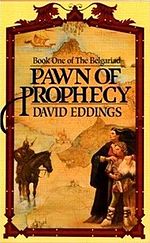
Pawn_of_Prophecy_cover


The Belgariad by David Eddings (5 book series)


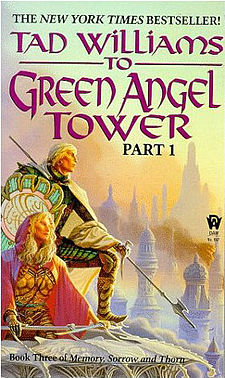
Green_Angel_Tower_P1


Memory, Sorrow, and Thorn by Tad Williams (4 paperbacks, 3 hard bound or ebooks)

6 Comments

Filed under Books, Fantasy, Literature, Publishing, Self Publishing, writer, writing

Structuring the Novel: the third plot-point, crisis of conscience

I don’t feel well. I have a mountain of work, and a spring virus has destroyed my very tight schedule.  I would bang my head if I didn’t already feel so crappy.

Today I have a client’s MS to begin editing.

Today I have revisions of my own to make on a ms I am getting ready to publish.

Today I was supposed to have a blog post ready to post on structuring the epic fantasy novel.

The Arc of the StoryWe were going to talk about the story arc, and how the third quarter of the book always begins with another life-changing plot-point. I was going to talk about how the the plot drives personal growth for the protagonist and his/her friends at this point.

And then I was going to discuss how this is the place where the protagonists often lose their faith or have a crisis of conscience. What personal revelations come out about the protagonist, or conversely what does he discover about himself?

I had intended to discuss how difficult this part of the novel often is to write, due to the fact that the protagonist has been put through a personal death of sorts–his world has been destroyed or shaken to the foundations and he no longer has faith in himself or the people he once looked up to.

  • How is he/she emotionally destroyed by the events?
  • How was her/his own personal weakness responsible for this turn of events?
  • How does this cause the protagonist to question everything she ever believed in?
  • What makes him pull himself together and just keep on going?
  • How is she different after this personal death and rebirth event?

quarrantine symbolI had intended to talk about that, but I don’t want to expose you to this crummy virus.  It always puts me through the emotional wringer to write this particular section of a tale, and I don’t feel well, so I can’t deal with talking about it. This low point is such a crucial part of the hero’s journey, the place during which he is taken down to his component parts emotionally, and rebuilds himself to be more than he ever believed he could be.

This is where she makes the hard decisions and learns that she truly does have the balls to do the job–

But I am too sick to talk about it.

I blame The Boy.  He was sniffling during his visit last week, and you know what a germ factory the average eight-year-old is.

4 Comments

Filed under Adventure, Books, Fantasy, Humor, Literature, Publishing, Self Publishing, Uncategorized, writer, writing

Marketing tips from the eight-year-old

Me & Logan, Cannon Beach Oregon August 2014

Me & The Boy

My oldest daughter and her son came to stay for a long weekend. It was fun, and wonderful, having The Boy around, especially now that he is eight. He is becoming a well-behaved person, and developing a few manners, although he is still only eight, and rather a barbarian in many ways

Of course, it poured down rain while he was here. but we had fun anyway.

He discovered that grandma is a writer, and writes “real books.” He was quite proud. “I’m gonna read these when I’m a grown up.”

I confess, I did bask in the glory, until he explained that I had made a huge marketing error.

My biography is in the back of my books, but not my picture. The Boy said, “I want the kids at school to know that my grandma writes real books, but they won’t believe it if there’s no picture.”

I didn’t want to tell him that the camera steals my soul, and I hate every picture I’ve ever seen of me. But, after thinking about it, I agreed that he might have a point.

I also didn’t tell him that people who write books are a dime a dozen. Everyone you meet either is an author, or has a couple of the ne’er-do-wells in the family. Apparently people who are otherwise unemployable write books, in order to appear useful.

I didn’t tell him that, because for a shining moment, I was special. He was proud of me, his grandma, because I can write real books. I have to admit, that felt pretty good.

So we looked through the pictures of me. I thought this one would work, as it’s the most recent and hides my ample, middle-aged waistline.

Connie J. Jasperson profile pic 3

He said, “No–it doesn’t really look like you. You’re hair is a lot fuzzier than that.”

I said, “But I combed it just for that photo. I even put on lipstick.”

He wasn’t swayed.

So I tried a different one. “This one is only two years old.”

Connie J. Jasperson Profile Pic

I thought it was perfect, as it also hides the ample, middle-aged, waistline.

He was not impressed.  “Are you kidding? Your hair’s too short in that one.”

Heavy sigh. “This one?”

Connie J. Jasperson


“Get real, Grandma–people want to see the real you. The one who cooks and stuff.”

“No, they don’t,” I said. “People don’t care about that. I don’t think I need a picture in the back of my books.”

“Trust me, Grandma. I’ve read a lot of books, and they all have the writer’s picture in the back. I want my friends to know it’s you.”

After much discussion he picked a picture.  I doubt it will go in the back of a book, but this is what he picked.

Fall 2014 profile foto for avatars

“Why did you pick that one? I use that one as my Facebook icon. ”

“Because that’s how you look. Comfy, and like a grandma. With fluffy hair.”

It’s hard to argue with that sort of logic. But I’ll probably have to have a professional picture made at some point.

One that doesn’t show my middle-aged waistline or the comfy fluffiness of my hair.

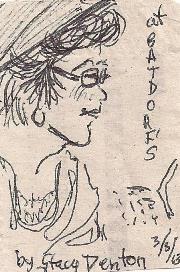
extra small caricature of connie  by street artist Stacey Denton


10 Comments

Filed under Books, Fantasy, Humor, Literature, Publishing, Uncategorized, writer, writing