Tag Archives: literature

Sharpening my clause

I’ve been reading a lot lately, some for editing, which is a great pleasure, and some for my own amazement, which can be a mixed bag of nuts.
 .
So let’s talk about what it is that makes reading for pleasure not a pleasure at times:  Some authors don’t understand the basic rules of how to write coherently.  I suppose that’s not a surprise to you, but I am always shocked.
 .
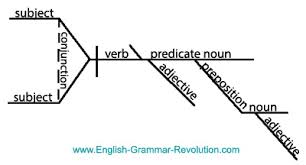
So what makes a coherent sentence? We want a subject, a verb and some words to help explain those two things. We call this a sentence.
.
Sentences frequently consist of clauses. Okay, they always do, but…anyway:
.
clause
klôz/
noun
  1. a unit of grammatical organization next below the sentence in rank and in traditional grammar said to consist of a subject and predicate.
 .
Well, that seems pretty simple–simply confusing, anyway.
 .
According to About Education: A clause may be either a sentence (an independent clause) or a sentence-like construction within another sentence (a dependent or subordinate clause).
 .
Subordinate Clause definition: A group of words that has both a subject and a verb but (unlike an independent clause) cannot stand alone as a sentence. Also known as a dependent clause. Contrast with coordinate clause.
.
Example:
If a free society cannot help the many who are poor, it cannot save the few who are rich.
(John F. Kennedy)
 .
Mostly I find subordinate clauses cropping up in conversation–dialogue–when I look at my own writing. These “grammatical juniors” are like any other form of seasoning in our writing and must be used consciously and sparingly. When we write with too many subordinate clauses, we separate the reader from the narrative.
 .
If you go on a cruise that consists exclusively of drinking, dancing, and partying, I shall worry.
.
Well, I won’t really worry, but I shall be jealous.
.
In genre fiction, which is what I write, readers do not want to be held away from the story by too many words. They want to be immersed in the tale, living it with the characters. One way we do this by providing balance in how we phrase our sentences, using a variety of sentence structures. We use complex sentences, consisting of:
 .

Fun-Fruit-Skewers-21. a simple clause 
I went to the grocery store.  (the meat of the matter)
2. a dependent clause
because I needed skewers. (technically not necessary but adds to it)
 .
I went to the grocery store because I needed skewers.  
 .
Who was I going to skewer? I don’t know, but I at least I had the right tool for the job.
 .
We can set the clause off with commas:
 .
The lake, its surface calm and black with deceptive serenity, called to me.
.
The lake called to me is the meat of this sentence, the clause describing it is technically not necessary, but without that clause the sentence is flat.
 .
An excellent FREE and entertaining resource for writers who want to get a grip on clauses, commas, and all that conjunction stuff is:
.
 .
You might want to check it out, it costs nothing and is really easy to understand.

4 Comments

Filed under Blogger, blogging, Books, Fantasy, Humor, Literature, Publishing, Self Publishing, Uncategorized, WordPress, writer, writing

Journaling or Noveling

As summer ends and fall approaches, those of us who are regular NaNoWriMo writers begin to plan for our month of committed writing. We are jotting down ideas as they come to us, and making notes to help springboard ourselves into November with all our guns a blazing.

Generic-180x180People who have never heard of NaNoWriMo are always surprised that it is not only people who want to be published authors who use this month to create 50,000 word manuscripts. Family historians, dedicated diarists, people working on their PhD–anyone who wants or needs a month dedicated to getting a particular thing written will do so in November. More people do this during November than you would think–about half of our WriMos in my regional area are journaling or writing their theses. The support of the group really helps the graduate students stay focused, and it also bolsters those who are diarists and encourages them to write more about their thoughts and philosophies.

330px-Title_page_William_Shakespeare's_First_Folio_1623I’ve been asked many times what I see as the differences between journaling and noveling. (Sorry, word-nazis–I know,  I know! I just invented that word but hey, why not loosen up a bit and have a little fun with language? Willie Shakespeare did it all time!)

Anyway, journaling is keeping a diary. You do this on a daily basis, or at least frequently. According to Tiny Buddha “Journaling can help with personal growth and development. By regularly recording your thoughts you will gain insight into your behaviors and moods.” You start where you are in life at that moment, and for ten or fifteen minutes a day, you write stream of consciousness. This is an awesome way to jump-start your brain.

Noveling is telling lies, keeping them straight, and making the world believe it until the last page.  Again, William Shakespeare was awesome at this, and he put his work into the form of plays and sonnets, which were the most accessible media of the time for the common people.

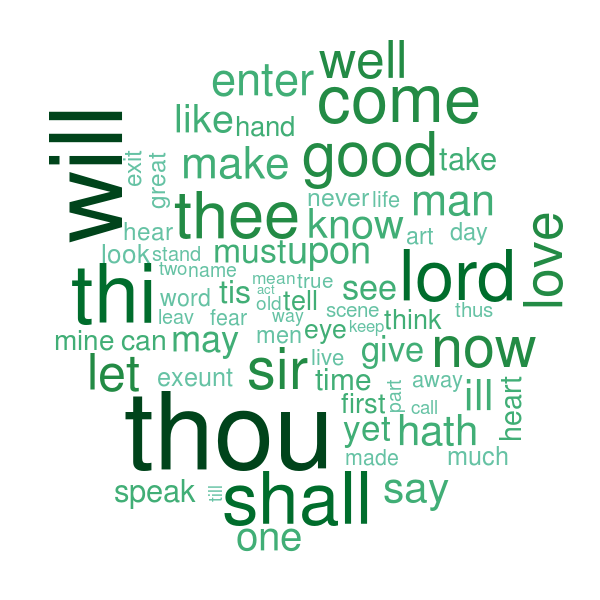
shakespeare-word-cloudHow many words did William Shakespeare invent? According to Shakespeare Online Dot Com: “The English language owes a great debt to Shakespeare. He invented over 1700 of our common words by changing nouns into verbs, changing verbs into adjectives, connecting words never before used together, adding prefixes and suffixes, and devising words wholly original. …  For a more in-depth look at Shakespeare’s coined words, please click here.”

Whether you are journaling or noveling, the important thing is to do it every day. Write for as long as you can when you can, and that will build your ‘writing’ muscles. If I dedicated 3 hours a day to just writing stream of conscious, I will chunk out 2500 to 3000 words–about half of which are mis-keyed and misspelled, but hey, no one is perfect. Some words I invent–and some words invent me, but either way, I love words.

Comments Off on Journaling or Noveling

Filed under Blogger, blogging, Books, Fantasy, History, Humor, Literature, Publishing, Self Publishing, Uncategorized, WordPress, writer, writing

Conveying the Mood

Something I’ve lately realized is that every author, even my favorite, has what I think of as ‘fall-back’ tricks they use when describing certain scenes, little quirks and twists of words that are as personal and unique as a signature. The great authors can get away with this, because their stories are just so darned compelling that we don’t notice or don’t care.

I’ve had to face it–when I, as an author, make a habit of resorting to writing my characters with excessive shrugging or sighing, it’s clear I’ve run out of ideas. I recently had a wonderful discussion with several other authors who have noticed this phenomenon in their own work. After that discussion, I found myself wondering how to maintain speed in my writing when I am in the zone, but still have a variety of words and ideas available to me for describing mood and emotion.

So–since tattoos are expensive, and my palm isn’t really large enough to contain a really good table of visual cues, I resorted to my handy-dandy Excel program, and created one there.

What I discovered while compiling this, is that my little brain is quite limited. I had to struggle to picture what these moods and emotions looked like.  Once I had the facial expression in my mind, it was easier to imagine how a character might appear to an observer.

What these cues do is help me come up with a fresh description when I want to show something that may happen frequently within a group of characters. I don’t necessarily use these cues verbatim as they are written here, but they do give my mind a jumping off point and I can extrapolate from there.

Please feel free to: right click> save as> png or jpeg and print it out for your own use.

Conveying Mood and Emotion in Writing


9 Comments

Filed under blogging, Books, Fantasy, Humor, Literature, Publishing, Self Publishing, Uncategorized, WordPress, writer, writing

Don’t dump it-deploy it

CAUTION INFO DUMP ZONE AHEADMost of my work takes place in  a world I invented, right down to the religion. Because my world is very different, whenever I sit down to write, I have the most incredible urge to spew background information. I want my reader to understand the world I’ve created, so I want to give them information. Lot’s and lots of information. OMG, do I have information for you.

But is the information for you as the reader, or for me as the author? There you have it–writing it down cements the world in my head.  Now my info-dumps are cut and kept in a file that contains all my background information. I need that info to write the story, but the reader only needs enough bare bones to fire his imagination.

So how shall I do this? A prologue? Well, I’m leaning away from prologues nowadays, although it can be done–David Eddings did it really well in The Belgariad, and Anne McCaffrey also did in her Pern novels. In some cases a prologue sets the stage. But in online writing groups  I frequently  see that a large number of folks don’t bother to read prologues, preferring to get directly to the story. If folks aren’t going to bother reading it, why should I waste my time writing it?

The key to describing the fantasy setting and the social structure of that world is to let the story do it naturally. Deploy the info in small increments as the characters go through their daily life.

Let’s pretend we’re writing a detective novel:

Joe Stone stood, illuminated by the harsh light of the fridge, staring at the six-pack of beer that represented the sum total of his groceries. Grabbing one, he twisted the cap off, and took a long, desperately needed pull.

dump no infoA sour smell rose from his sink as he peered through the broken blinds, more concerned with the dead body in his rundown tool shed than the shabby state of his kitchen. He wondered who the stiff was, and how the dead man pertained to the divorce case he was investigating.

Most importantly, he wondered how he could avoid taking the rap for it.

That he was being deliberately set up was a given, but by who? Pulling his phone  from his pocket, Joe scrolled through his contacts. He had one last friendly ear at the police department, his old partner, Mike Copper. The question was, would Mike believe him or would he leap to the conclusion that Joe had snapped again? 

So, now you have a picture of Joe Stone. He’s probably single,  a private investigator, his home is in disrepair, his empty fridge tells us doesn’t eat at home very often, and he may drink more than is good for him.

Joe is an ex cop, possibly fired for use of excessive force, as he fears he has only one sympathetic ear there. He’s involved in a nasty private investigation, the corpse in the shed tells us that.

TRUST YOUR READERThere’s no need for an info dump to aid the reader in forming a picture of Joe. All that information was deployed by his actions, and while reading the events of the next 72 hours, more snippets will come out, and this complicated man and his world will become more clear to the reader.

Settings make no difference. Writing fantasy novels is the same thing as writing novels set in the real world. Assume your world is real and slip the info in the natural places.

Belnek knelt by the low fire in front of his hut, pulling the turnips out of the coals, brushing the burnt flakes away. His mouth watered, and he wished there had been meat to roast, but once again, when he checked his snares, they had been empty.

Realizing what he had just thought, he gasped,  fearing the god would interpret his thoughts as ingratitude and would make the harvest scant too. He raised his eyes to the east where the shining towers of the gods were said to be. Closing his eyes he, said a prayer to Osin, thanking him for the turnips, asking his blessing on the meal.

Book- onstruction-signNow you see a man who is not rich, but who has a hut and a fire, and has turnips to roast. Prayers come as naturally to him as breathing–he is a devout man, sure his god is all-knowing, and concerned that he is seen as a devoted, grateful man. His snares are apparently empty quite often, so game has become scarce, and it concerns him.

We have the basics of his world, low-tech, agrarian. In that small scene, intimate details of Belnek’s life is shown and in that way the reader has enough info to begin to picture the world outside Belnek’s hut. There is no need to dump a huge amount of information, because it will come out as his story unfolds.

For me the real trick is to rein it in, because I love every last little detail about my imaginary worlds. But that doesn’t mean my readers will love them. Most readers only need the skeleton of the world so that they can visualize it themselves. The hard part is finding that magic moment where you have given them exactly the right amount of details to involve the reader, but not so much they become bored.

Listen to your beta readers, and make adjustments accordingly. If they feel they can be honest with you, they will point out where you need to tighten the narrative, or expand a bit more on the details.


4 Comments

Filed under blogging, Books, Fantasy, Humor, Literature, Publishing, Self Publishing, Uncategorized, WordPress, writer, writing

The Flâneur ~ the 4th POV

In a literary fiction seminar  I attended at a recent convention in Seattle, University of Washington  professor, Scott Driscoll, discussed  a fourth point of view I had heard of in college, that of the detached observer.  I had forgotten about it, and Driscoll gave it a name I’d never heard of: the Flâneur (idler, lounger, loiterer.) Many of you have heard of it as third-person objective or third-person dramatic. I see it as a completely separate way to show a story.

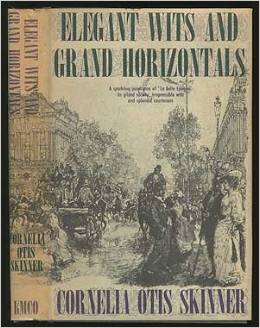
elegat wits and grand horizontalsWriting in 1962, Cornelia Otis Skinner said that there is no English equivalent of the term,  flâneur,  “just as there is no Anglo-Saxon counterpart of that essentially Gallic individual, the deliberately aimless pedestrian, unencumbered by any obligation or sense of urgency, who, being French and therefore frugal, wastes nothing, including his time which he spends with the leisurely discrimination of a gourmet, savoring the multiple flavors of his city”.

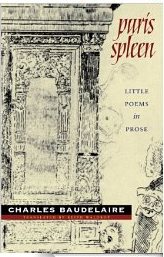
paris spleenThe French author, Charles  Baudelaire, characterized the flâneur as a “gentleman stroller of city streets.” He saw the flâneur as having a key role in understanding, participating in and portraying the city. Thus, in the narrative, a flâneur plays a double role by existing  as a present, but ignored, member of society who remains a detached observer of all that occurs within the story.

Having the option to use this point of view in the narrative of genre fiction opens up many possibilities for originality an author may not have considered:

  • he is NOT omniscient as in having complete or unlimited knowledge, awareness, or understanding of the fictional universe–he doesn’t know everything–but he does know what he sees.
  • he sees more than the individual characters do because his random travels take him all over town regularly, and he observes most of the tale as it unfolds.
  • Because he only knows what he sees, some information crucial to the resolution of the final events will be revealed to him at the last minute–a surprise to him too. When the last pieces of the puzzle are put together, his commentary summarizes the fall-out and final outcome of the characters involved.

Men without WomenIt is a POV used in classic french modernist literature to describe the story of certain social scenes in the city, but I can see this as a useful way to relate the events on a space-station, or indeed in many traditional genre fiction social settings.

Now for the downside of using the flâneur as your vehicle to convey your narrative:

  • He is not reliable—he has his own personality, offering subtle judgments and unconscious opinions on the behavior of the characters. Therefore, just as in a first-person narrative, the reader cannot be sure he is telling the unbiased truth.
  • The narrator  tells the story without describing any of the character’s thoughts, opinions, or feelings; so the reader can only guess at character motivations, and must assume the objective observer truly is objective and has told the truth in that regard.
  • It separates the reader from the intimacy of the action and slows the pace down.
  • It could become voyeuristic, if one writes graphic love scenes. {eeew.}

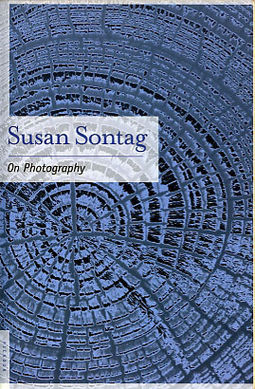
255px-On_PhotographyThe POV of a flâneur is also a vehicle used in in art, and in street photography.  Susan Sontag in her 1977 collection of essays, On Photographydescribes how, since the development of hand-held cameras in the early 20th century, the camera has become the tool of the flâneur:

The photographer is an armed version of the solitary walker reconnoitering, stalking, cruising the urban inferno, the voyeuristic stroller who discovers the city as a landscape of voluptuous extremes. Adept of the joys of watching, connoisseur of empathy, the flâneur finds the world “picturesque.”

Susan SontagOn Photography, pg. 55

I don’t see myself using this style of POV for an entire novel, but I can think of a thousand ways to use it in short-stories. Come November, when NaNoWriMo begins, I may give it a whirl, just for practice. Writing is a craft and I love finding different ways to express it. A fresh point of view to write from can only stretch my writing skills.

4 Comments

Filed under Blogger, Books, Fantasy, History, Humor, Literature, Publishing, Self Publishing, Uncategorized, WordPress, writer, writing

Crafting the scene

I often sit and stare out the window at some point or another during the day–a habit perhaps from the old days of being an ADD kid imprisoned in the basement classrooms of the old Michael T. Simmons Elementary school in 1965. Although that building has been long ago torn down and a new one now serves the community, I still remember sitting in Mrs. White’s overcrowded classroom, staring up at the small window, unable to concentrate on anything but the blue sky outside.  She was my favorite teacher, because she knew I needed extra help with math, and in a class with 42 children, she found the time to give it to me.

Amaranthus and Savvy at the needles by haystack rock cannon beach 2012I still stare out my windows when I am rolling a plot point over in my mind, and I sometimes notice what is happening in the neighborhood.  The window is closed, so I can’t hear their words, but I often see the children.

At first it looks as if they are all happily playing.  Then two of them stand up and from their posture you can see a quarrel is brewing. Suddenly one of them  clouts the other on the head with a toy sword, and another child intervenes. The angry child leaves, and the others are left to console the sobbing child with the bump on his head.

We know that what we have witnessed is not the whole story–there is a whole novel surrounding that interaction. If what I witnessed from my window was a book, this event would read this way:

1. Deciding to meet and spending the day playing in the neighbor’s yard is a chapter in the much larger story of how a group of children in one neighborhood spent their summer

2. The quarrel and resulting bump on the head with the final moments of consolation are one complete scene within that chapter, setting the stage for the next scene–tattling on and achieving penalties for the aggressor, who then apologizes and seeks acceptance back into the group. These two separate scenes comprise the whole chapter, Playing at So-and-So’s Yard.

The Arc of the StoryMost authors understand that there is an arc to the overall novel–the Story Arc,  which  consists of :

  • a. Exposition, where we introduce our characters and their situation.
  • b. Rising Action, where we introduce complications for the protagonist
  • c. Climax, the high point of the action, the turning point of the narrative
  • d. Falling Action, the regrouping and unfolding of events that will lead to the conclusion
  • e. Resolution, in which the problems encountered by the protagonist are resolved, providing closure for the reader.

However, within the larger story there are many smaller stories, all scenes created with this same arc, that come together to create this all-encompassing drama. The way these scenes unfold is what keeps our readers interested and invested in the narrative until the end of the book.

The main difference in the arc of the scene vs the overall arc of the novel is this: the end of the scene is the platform from which your next scene launches. 

This means each scene begins at a slightly higher point on the novel’s Narrative Arc than the previous scene did, pushing the narrative toward the climax.

876MilanoDuomoWhen you are structuring your novel, think of the way Gothic Cathedrals are constructed–smaller arcs of stone support the larger arcs until you have a structure that can withstand the centuries.

Like a Gothic cathedral, each small arc of the scene  builds and strengthens the overall arc of the greater novel. By creating small arcs in each scene, we offer the reader the chance to experience the rise and fall of tension, a pulse which never completely falls but is always increasing toward the high point of the book, giving the reader small rewards of emotional satisfaction along the way to the big event, the grand climax.

Better You Go Home, Scott DriscollAt the Pacific Northwest Writers Association Conference this last weekend, I went to a presentation by University of Washington Professor Scott Driscoll, who is a highly acclaimed author of literary fiction. His book, Better You Go Home is a gripping tale of a man in search of his roots and something more. Scott spoke at length on the importance of creating an arc within each scene, small arcs that propel the plot forward and hook the interest of the reader. In Scott’s work, each scene sets that hook just a little bit deeper.

Some authors make each individual scene a chapter, and some group several scenes with a common theme together to create a chapter. It’s your book–do it however suits you best.

The important thing to remember is that each scene that comprises the framework of the overall narrative arc must have its own arc–the Arc of the Scene.


4 Comments

Filed under blogging, Books, Fantasy, Humor, Literature, Publishing, Self Publishing, Uncategorized, WordPress, writer, writing

What does “Submission-Ready” mean?

Gamalost-NorwegianOldCheeseI’m not talking bondage here, friends, so get your mind out of the erotica.

I’m talking about a manuscript with the potential to be made into something publishable.

I see a lot of manuscripts. Some are quite promising, some not so much. Literally anyone can write and publish a book nowadays, but not everyone can write a book others will want to read–THAT is a craft, and there are many who don’t feel the need to learn it before they submit their work to an editor or a publisher.  The quality of their work stinks like gamalost cheese, but they have the gall to wonder why the Big 6 haven’t snapped it up.

gibberish-american businesses onlineIt is important to learn the craft of writing, if you want readers to enjoy your work. Spend the time to learn the mechanics of the language you are writing in. However, if you are simply writing a pretentious pseudo-literary art piece, fine–go on and have at it–no one will ever read it, and you can feel superior for having written it. If you dare to compare yourself to James Joyce I will run you out of the writing group quicker than you can say Ulysses.

Before you submit your manuscript, take the time to make it submission-ready:

1. Properly format it: Set the indents, use a serif font of .11 or .12, double-space it with no extra space between the paragraphs, and do not justify it.

2. Hire an editor to help you straighten out the flaws YOU can’t see.

3. Go to the publisher’s website and find out what their submission guidelines are and FOLLOW THEM. (Yes, they apply to EVERYONE, no matter how famous, even  you.) If you skip this step, you will wait a year to hear that your ms has been rejected, and they won’t tell you why.  It’s not worth their time to teach you how to be a writer–you have to learn that on your own.

For a more in-depth description of this whole process, see my series “WORD-A Shifty Beast.”

learn something newTry to learn something new every day in your writing life, and with each success you have, try to keep some humility.  You will grow as an author, your work will remain fresh, and I will continue to beg to read it.

If you read the kind of work you want to write, you will gain inspiration from the masters in your genre. When I am not writing or editing, I am reading. And when I have the chance to read for pleasure, I read epic fantasy, paranormal fantasy and science fiction. When I find a book that rings my bells, I talk about it, and blog about it. Conversely, if I hated it, I never mention it again.

Yep–I’m that kind of a reader.


3 Comments

Filed under Blogger, blogging, Books, Fantasy, Humor, Literature, Publishing, Self Publishing, Vegan, WordPress, writer, writing

Nurturing the Muse

photo ©Leah Reindl 2014 used by permission

photo ©Leah Reindl 2014 used by permission

I come from a family whose creative muse is frequently expressed in music or in art. Musicians and artists dot the landscape of the old family tree. So far as I know, other than my daughter Leah, I am the only one who writes novels, but it may be that I am the only one who ever had the time to spend on such an endeavor.

When I watch children at play, I see the creativity that all musicians and artists know, that wonderful sense of “Ah ha! This is fun!” that comes with making something that exists only to bring pleasure to those who hear or see it. I see this sense of “I can do it!” in all the children, but by the time they are teenagers, much of that joy in creativity has been trained out of them. I wonder why and how it happens.

When I was young and working at dead-end jobs, I would come home and while my children did their homework or played, I would write, draw, or play the guitar. It was selfish, yes–in that it gave me pleasure. But it was not selfish, as it didn’t take me out of their world, and was something we could share. It taught them that they could take the time to be creative.

If there is any advice I would give young parents, it is to be creative in the presence of your children. You go to work every day, and by that you are teaching them that one must earn a living, yes, but the reward of earning that living is a life of love and creativity.

Some people will say bitterly that their job has burned all their energy and creativity from them. I say this is not necessarily so–you must take the time and energy you expend on hating your circumstances, and convert it into something creative. It’s amazing how many people I know who tell me they aren’t creative, but they doodle the most amazing  little pictures on the handouts during those requisite boring meetings-to-nowhere that we all endure in Corporate America.

That is creativity trying to get out.

The reason children are so creative is that they don’t do it for other people, they are doing it solely for the fun of it. Get out the crayons and a blank sheet of paper for a child who hasn’t been to school yet, and watch what happens. Add old magazines, round-end scissors, and mix up some flour & water paste, and the possibilities are endless. But once that child gets into a social environment where he begins to feel less talented than the child next to him, he shuts that creativity down.

science of relationships dot comInside every adult at the water cooler is kindergartner with a picture to draw, a song to sing, or a story to tell. Somewhere along the line, they began to fear they weren’t good enough and put it aside. Soon they have an “I can’t do it” attitude, because they fear failure and embarrassment. They have forgotten the joy of making a good, creative mess. They don’t remember how they learned as much from the failures as they did from the successes.

Don’t let the fact you have no money stand in your way. It takes very little money to draw a picture, or to write a story. You don’t need an expensive computer program–all you need is a pencil and paper.  And music?  You don’t need to play an instrument to sing. If you always wanted music lessons but couldn’t afford them, a great way to learn is to join a community choir. It’s free, and takes a little time away from your TV, but it is a way to jumpstart your joy of making music.

Our children are all artistic and creative in the most amazing (to me) ways, and I think that is because I never stopped making art or music.  They all sing or play instruments, or create art. Our older son, Billy, and youngest daughter, Meg, are working musicians. Billy is a drummer in a band with my ex-husband and my brother. Meg is a young mother and a working musician with several mp3s to her credit. If you are curious, here is her Facebook page where you can hear her work: Meg is Singing.

Meg and Billy are both incredible musicians, playing the drums, the guitar, keyboards, and in Meg’s case, the flute. Music is their passion. Son Dan is a guitar virtuoso, but he plays for his own pleasure. He is an incredible sports photographer, and his work can be seen here: SpotKazu

Christy and Leah express their art in other ways. Christy is an engineer who deeply loves her craft, and brings her sense of beauty into her home, designing an environment that is both serene and filled with color. Leah is an artist, one of her pictures can be seen at the top of this page, and a hair-dresser. She loves her craft as much as Christy does hers. They go to work, and art is expressed in their daily lives, enriching the lives of their children.

This is why I am and have always been a happy person despite the bumps and hardships of life–I did what I had to do to put food on the table, but I played and sang and wrote poems and goofy stories in my free time. My children were my audience and my co-creators. My husband’s children were raised in the same sort of environment (he is a trumpet player and she is an actress) and all 5 of our kids are sheer genius to me. They far outstrip me with their talents and abilities, and with their drive and ambition.

Tower of Bones Trailer, Music by MEG

2 Comments

Filed under blogging, Books, Fantasy, Humor, Literature, Music, Publishing, Self Publishing, Spirituality, writer, writing

Cats and the Physical Laws of the Known Universe

ceramic cat and cupI realized the other day that I am a cat-lady. Oh, I don’t own a cat, or even a dog for that matter, but I am still a cat-lady.  I love cats…ceramic cats. I have 3 of them.

They are the perfect companions. Their demeanor is a little aloof, but what do you expect from a cat?  They rarely meow, eat very little, require only an occasional dusting, and never try to hijack my laptop.

I’ve never yet had to clean up a hairball.

That said, there is something lacking in my relationship with these strangely well-behaved creatures.

Alas, I am a lazy woman. The amount of vacuuming a living cat introduces into my life breaks the laws of physics. Let’s do the math–I’m an author so we’ll do it with a story-problem:

Mr. & Mrs. Catpeople  are humans who currently have 0 cats. They are ordinary people, not too messy, and not too tidy. Normally, they only have to vacuum their bungalow once a week. One spring day Mrs. Catpeople  loses her suburban mind and decides to bring home a cat. If she only had to vacuum the house 1 time a week when two humans resided in her home, how many times will she vacuum with the addition of a cat?

Cat on MozartOkay… 2 people + 1 cat = 3 creatures.  so, if she cleans once a week when there are 2 creatures in the house, with the addition of a third creature, and assuming you can’t half-vacuum (although you can vacuum half-assed), it should mean she has to vacuum twice. But the fur on the sofa appears every day as if by magic, increasing exponentially with the arrival of guests, which requires her to vacuum morning and evening…. so that = 14 times a week that Mrs. Catpeople must haul out the Hoover.

See? I’ve done the math and it doesn’t add up. Of course, I failed traditional math classes regularly, but according to my calculations,  Mrs. C will be up to her eyeballs in cat fluff inside of two weeks, because no normal human being can keep up with that amount of flying  fur.

The only reasonable conclusion one can come to is that cats clearly do not obey the same rules of physics as humans do. After all, when it stands on your chest at 3:25 a.m., does your 7 lb cat not gain 25 lbs?

And when they see an invisible object of their desire at the top of the new drapes, are they not able to travel faster than the speed of light?

These are proof to me that cats are like subatomic particles.  They are here and not here, both before and after, and only exist when you are looking at them.

Cat with attitudeBut, while math, or indeed physics, was never my forte, extrapolating stories always was, so here is the true ending of our story-problem, the one math teachers never tell you:

One day while eating his organic Cheerios, Mr. Catpeople suddenly realizes the cat is speaking to him. At first it seems fun, but gradually he realizes the evil creature is shooting feline  thought-rays at him, trying to take control of his mind. Every where he turns, the cat is looking at him.   “Get an ax…Kill the dog….”

Mr. Catpeople sets his spoon down and his remaining Cheerios go soggy while he wrestles with this directive. It seems reasonable, but… “Um, we don’t have a dog.” 

“Did I say ‘dog?’ Sorry. I meant kill the annoying woman with the evil vacuum….”

So the true answer to the problem is ‘0’ because after the funeral Mr. Catpeople will be vacuuming.


2 Comments

Filed under Adventure, blogging, Humor, Literature, Self Publishing, Uncategorized, WordPress, writer, writing

Fantasy and the cold hard truth

Saint_Alban_(cropped)In a good novel, there is a moment where the interactions between certain characters can become highly charged, fraught with anger and other intense emotions. That is the case with what I am writing now:  three of my characters spent a long time fighting alongside each other, brothers and sisters in arms, completely dependent on each other.

They have a long history. Several terrible incidents occurred during the war they once fought that they don’t understand, and which created a rift between them. Some of their close companions were killed under bad circumstances (are there ever any good ones?) and each of my characters suffers a little survivor’s guilt.

After the war, they went their separate ways and for the last 25 years, have rarely seen each other or spoken. They all bear a burden of responsibility for things they can’t change, and their lives are affected by this, although they don’t know why. For each of them, their anger and remorse are expressed in different ways.

Two of them can’t be in the same room for long without trying to kill each other.

One character in particular suffers disturbing recurring flashbacks, avoidance or numbing of memories of the event, and what we call ‘fight or flight syndrome,’ the uncontrollable urge to either fight or flee. These characters all three demonstrate varying degrees of avoidance,  withdrawal, aggressive defense, or in one case, complete frozen immobility. Certain memories trigger these behaviors, and now all three are being forced to face their demons.

My challenge is to bring these people back together with sensitivity and realism, in order to advance my story, and use only 1/3 of the allotted word-count for this book.

Does this sound like Post Traumatic Stress Disorder (PTSD)? You’re right. For more information on PTSD, see an article  on the website, Military Pathways, and this news article aired by CBS on their show, 60Minutes.

Because it’s a new term, I can’t refer to this ‘injury of the spirit’ as PTSD in my manuscript. But I can give it another name and air both the symptoms and the sometimes life-long problems untreated PTSD causes.

GeorgeSPatton - WikipediaMy father, and my uncles all suffered from this long after World War II ended. In many ways it has shaped our post WWII society. Our fathers were told to just shut up and  get on with their lives–something that is not always an easy thing. Alcoholism and domestic abuse lay just under the surface of many families in our community, hidden but there.

Prior to World War I, the U.S. Army considered the symptoms of battle fatigue to be cowardice or attempts to avoid combat duty. While the causes, symptoms, and effects of the condition were familiar to physicians, it was generally less understood in military circles. General George Patton garnered substantial controversy after he slapped two United States Army soldiers under his command during the Sicily Campaign of World War II.

It was common for soldiers who reported these symptoms to receive harsh treatment. At the time of the slapping incidents, the two soldiers Patton assaulted were suffering from “battle fatigue,” otherwise known as “shell shock” or “battle stress.” Today, this condition is characterized as a form of PTSD, which can result from prolonged severe exposure to death and destruction, among many other traumatic events.

220px-Sir_Galahad_(Watts)

Even though I write fantasy, the reactions of my characters to certain situations has to be realistic, and that is where a good grasp of what really happens to our vets comes in handy. Post Traumatic Stress Disorder (PTSD) is real and affects our returning veterans. More must be done to help ease our military wounded back into society, but generally speaking we pay more lip-service to that problem than we do tax dollars.

We write about incredible personal challenges, because they make great stories. But what about the people who live through those moments? How do they quietly go back to the farm once the war is over, and pretend it never happened? This is what I am writing about now, and it has been an emotional journey for me as as an author and a human being. Everyday, our paths are crossed by men and women living with PTSD caused by a variety of terrible circumstances,  They are just ordinary people trying to keep their lives together, not understanding why they sometimes do the things they do, and wondering why things just keep going to hell all around them.


2 Comments

Filed under Adventure, Battles, Blogger, blogging, Books, Fantasy, knights, Literature, Publishing, Self Publishing, WordPress, writer, writing