Tag Archives: NaNoWriMo

How I came to fall off the Earth (and why I don’t care)

The Arc of the StoryWow–what a wild week this has been–28k words written on my NaNoWriMo manuscript, and a dip into a culture that is nothing short of amazing.  What a challenge–to write a great story well enough that people will want to read it, and to do justice to a whole culture.

We should have challenges in our work–if it comes too easy it’s fluff. A lot of people are happy with fluff, but not me, and I suspect, not you!

As you all know, I have written some very difficult scenes in the past, not for the gratuitous effect, but because those situations made my character who they were. They were life altering moments where the path suddenly changed, and everything that followed was driven by that incident.

A friend recently asked me how I handle writing such scenes.

When it’s a tough scene, I write as much as I can when I first know what has to be written. Then I set it aside and come back to it later to expand on it and shape to my intent. For me, a scene has to be done in stages so that it flows naturally. At the end of my my last journey though a manuscript, I will have a seamless narrative that flows from one scene to the next, always building toward the final denouement and the conclusion.

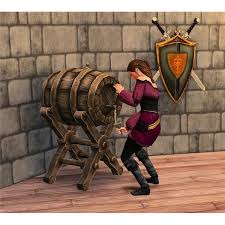
a medieval keggerBut right now I have five bodies to get rid of, so I need to get back to writing. Hero set down his mug of mead and picked up the shovel. He looked first at pile of corpses and then at the sky. They didn’t usually fall from the sky and he wondered what Author was up to now, that he should suddenly have to dispose of so many. However, Author was inscrutable and Her mind mysterious. One could only go with the flow, and dispose of the corpses as they fell.

OH the endless agony–but for a little hilarity amidst the eternal darkness of November take a look at Stephen Swartz’s blog post this week:

How NaNoWriMo is like being in Interstellar


5 Comments

Filed under Blogger, Fantasy, Humor, Literature, mythology, Uncategorized, WordPress, writer, writing

Plug in to The Matrix


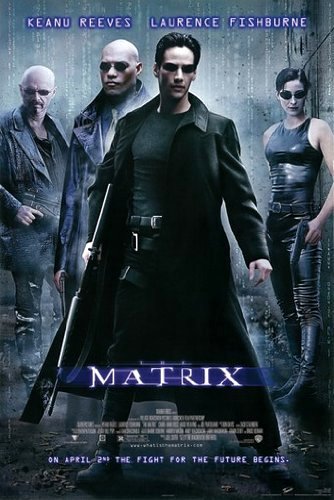
the Matrix PosterNovels have layers. Theme is what the story is about on a deeper level than the plot details. It’s the big meaning, and often it’s a moral meaning. Love, honor, family, and revenge are all some common, underlying themes.

I think of the scenes in my books as if they were scenes in a movie. Each conversation is a scene.

Sometimes, we find ourselves in Outer Mongolia as we wrangle our words. Our mind is off chasing squirrels, and our fingers are madly keying dialogue. It happens, and then we find ourselves writing paragraphs of discussion regarding the vase on the kitchen table. Why are we discussing this vase?  If there is a reason that will emerge later, keep it. If it is just idle fluff, lose it.

I actually have a scene in one of my forthcoming books where the characters do just that. They are discussing a vase that was made by a child, but the conversation is not important for the sake of the vase, nor is it really about that object. It is there to expose how important an absent person is to one of the speakers, and the brief interaction between the two speakers endears to the reader one of the characters who will later meet a sad end. The underlying themes of this book are brotherhood, family, romantic love, honor, duty. The obvious theme is the successful resolution of a quest. The core plot device around which the story evolves is an ongoing War of the Gods, and the world in which the tale is set in is their battleground, offering all sorts of opportunities for mayhem.

Consider the first scene of one of my favorite movies of all time, The Matrix. This movie has a lot of action, but it has a lot of dialogue also, and that dialogue advances the plot and never loses the theme of the story.

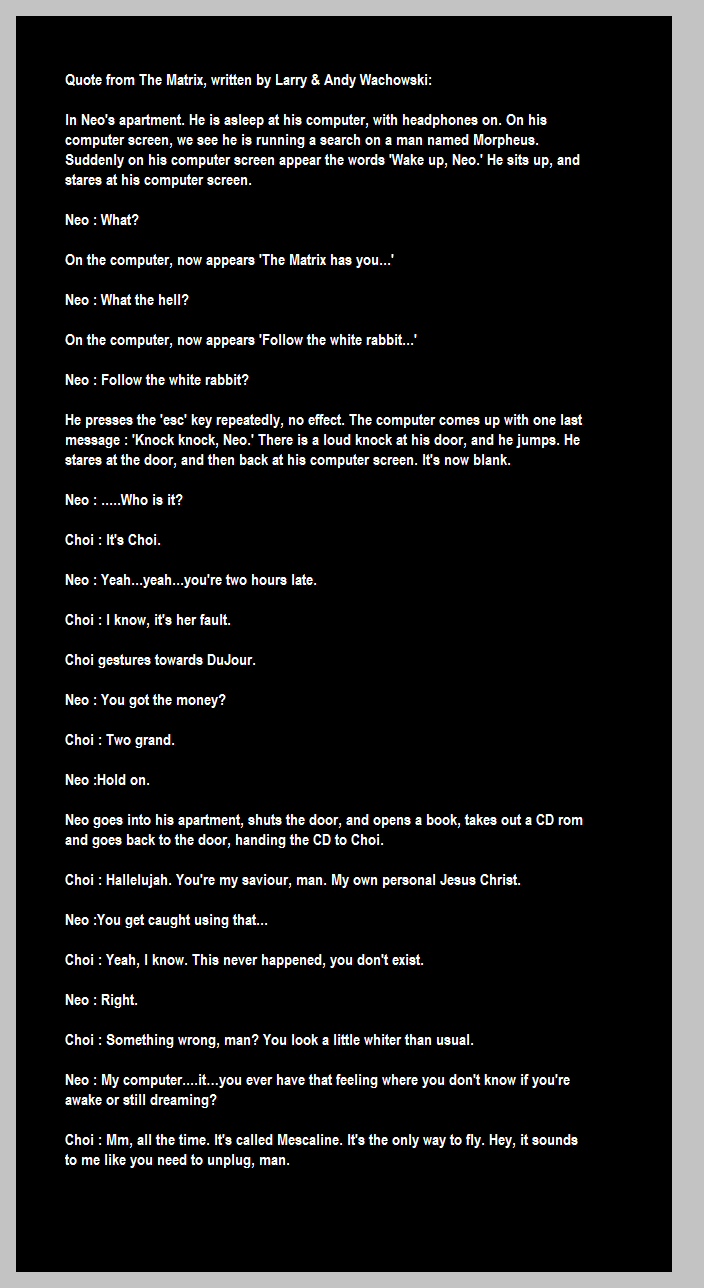
Quotes from the matrix

The conversation concerns a drug deal, but the underlying theme is never lost. The key words are in the first line, written on the computer, The Matrix has you, the third line, follow the white rabbit, and in that very last line, telling Neo to unplug. The Matrix is all about waking up, about what reality is, and about Neo as the potential savior of the world, which has been enslaved by a virtual reality program. It is about escaping that program. The conversations that happen in the course of the film all advance that theme, even the minor interactions, from the first conversation to the last.

The Arc of the StoryWe must approach conversations in our novels as if they were scenes in a movie. In a good movie, we don’t notice it, but there is an arc. In a story arc, a character undergoes substantial growth or change. It ends with the denouement in the last third or quarter of a story. The end of a narrative arc is the denouement, the final resolution. It shows what happens as a result of all the conflict that the characters have gone through.

If we don’t keep the arc of the story moving with each scene, we will lose our reader, and to that end, each conversation must reflect the underlying themes of the story without beating the reader over the head with it. As in real life, some of the people know more than others, and to advance the plot and the theme, small clues must come out over the course of each scene, each scene building to the finale.

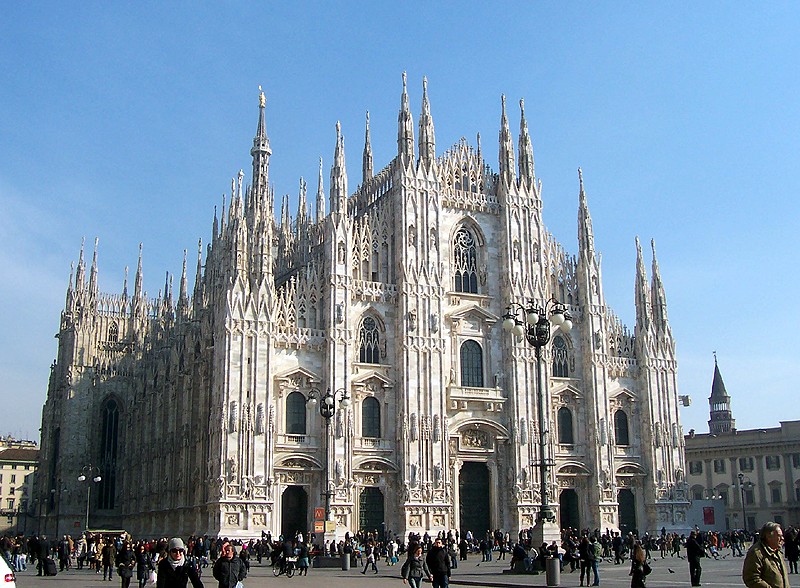
I876MilanoDuomo‘ve said this before, but we must build the overall arc of the story from scenes, each of which is a small arc, in the same way a gothic cathedral is constructed of many arches that all build toward the top.  The underlying arches strengthen the overall construction. Without arches, the cathedral wouldn’t remain standing for very long. The novel is a cathedral and your scenes are the arches that hold it up. The conversations that form those scenes are miniature arches, each with a beginning, a high point, and a resolution.


4 Comments

Filed under Adventure, Battles, blogging, Books, Fantasy, Humor, Literature, mythology, Publishing, Self Publishing, Uncategorized, WordPress, writer, writing

The race is on!

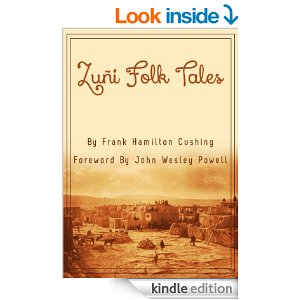
Zuni Folk Tales Frank Hamilton CushingNational Novel Writing Month is in full swing.  I have 30 days in which I can do nothing but write, write, write. The wheels are turning in my head, and my new story is flowing at a slow but steady rate. I know who I am writing about, and I know what his story is. I know what the action is and where it goes within the framework of the novel.

My only problem is I can’t key fast enough. When I do key fast it becomes illeggiebble…illegeabngle… .

Doh!

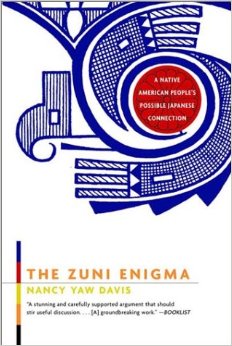
the Zuni EnigmaAnyway I have just received my newest textbook, The Zuni Enigma: A Native American People’s Possible Japanese Connection, written by Anthropologist Nancy Yaw Davis. I  have found some wonderful legends in the small book,  Zuni Folk Tales, by Frank Hamilton Cushing.

This book is an incredible departure for me.  Not only am I working in a world that exists in reality, I am working with a culture that is both known and unknown to me, and I must do it with respect.  This novel is a historical fantasy, but it is set in the 1890’s. I have to remain true to the period, to the two cultures this tale depicts, and I have to make my character real.

Zuni frank hamilton ushingWhat makes this even more tricky, is I am telling this story from the perspective of the main character–something I have not done before. But this tale is a diary in a way about one man’s journey, and the duality of his path in life. It is a stand-alone novel, and while it is definitely fantasy, I think it will be more of a literary novel than Genre Fantasy.

The Zuni are a private, mysterious people, and rightfully so. This makes it imperative that I know what I am talking about. Fortunately have been immersing myself in the Zuni culture through the work of early anthropologist Frank Hamilton Cushing.

Frank Hamilton Cushing’s stay at Zuñi pueblo from 1879 to 1884 made him the first professional anthropologist actually to live with his subjects. Learning the language and winning acceptance as a member not only of the tribe but of the tribal council and the Bow Priesthood, he was the original participant observer and the only man in history to hold the double title of “1st War Chief of Zuñi, U. S. Ass’t Ethnologist.”

My goal is to honor these amazing people, respect their privacy and maintain their mystery, and entertain my readers. The story is amazing–if only I can get it right.

6 Comments

Filed under Adventure, Battles, blogging, Fantasy, Humor, Japan, Literature, writer, writing

Mmmm…chocolate…

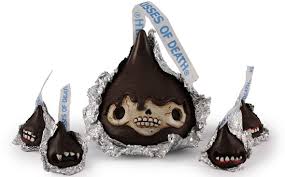
halloween kisses

Kisses of Death by artist Andrew Bell

I’ve always thought that if you really wanted to do something creepy for Halloween, you should hand out little mini-packs of chocolate covered ants, or something. I  just feel there is nothing scary about a Reese’s Peanut Butter Cup, and to do the most sinister night of the year justice, we should serve evil treats.

Halloween is the most important day of the year for many reasons–not the least of which is the annual midnight write in at Shari’s Restaurant for those intrepid heroes who can’t wait a minute longer to start their November Novel!

HTB New Front Cover with gold frameI wrote Huw the Bard in 2011 as my NaNoWriMo Novel–it had a different working title. In 2014 it was published, and the changes it went through in those two years was amazing. Fortunately I have a supportive husband who  regularly allows me to neglect him.

This year I am writing a novel that begins in the old west of northern New Mexico, where a journey to take a holy relic to be melted down at the smelters in Durango takes a terrifying turn into a world between the worlds. The first plan I had for this story was to co-write it with indie author Aura Burrows, but that didn’t pan out as various commitments made it impossible for us to get together on it, and she is unable to do it. But I fell in love with my main character, William Two Cats, and I am going to tell his story.

I have a working title, I have designed a placeholder book cover, I know who and what I am writing about, and tonight at midnight I am off to the races. On the National Novel Writing Month website I am Dragon_Fangirl, and you can see my book page and follow my progress here.

William Two Cats is a man of two worlds, the white-man’s world and the world of the A’shiwi–the people we call the Zuni Pueblo Indians,and yet he is a man of neither. His white mother insisted he be educated him in both cultures, and his Zuni father agreed. The tribal elders know he is destined to be firmly centered between the two worlds, and ensure he takes the path of the shaman. When we meet William, he has left the pueblo.

I can’t wait to get started on this new novel, counting down the hours to midnight…counting…counting….

Oh, look! We still have chocolate covered ants left! Yum!

What? They’re not vegan?

Curses….

ants


2 Comments

Filed under Blogger, blogging, Books, Food, Humor, Publishing, Self Publishing, Vegan, WordPress

What’s in YOUR belfry?

APPROACHING HELLI’ve got a jammed-up calendar right now. I’m preparing my presentation on writing natural dialogue for Northwest Bookfest, which will be held in Kirkland Washington at Northwest University on Nov. 1 & 2, 2014. I’m really looking forward to that, but they’ve given me a slot between 10:30 a.m and 12:00  on Sunday morning-so that’s a lot of talking about talking. I can do it– heck, you know me. If I talk myself hoarse, I’ll let everyone out a few minutes early for lunch because that’s the kind of girl I am.

But in the meantime, I am still finalizing my seminar and the worksheets to go with it, and I have to also publicize it via twitter, press releases, and blogposts. After all–I really do want people to attend this sock-hop!

NaNoWriMo-General-FlyerNot only that, but I’m trying to get a book-signing/talk about the self-publishing industry for myself and Lindsay Schopfer at a local bookstore (whose website has no working contact links and who rarely answers their phone and never answers their voice-mail.) The nice-but-vague young man whom I have spoken to so far seems to have rather a low opinion of indies, but I am going to conquer that bookstore yet!

I am also building my calendar for my nano group in preparation for NaNoWriMo, which also begins on November 1st. While I do this, I have to  get the Christmas promotions finalized for my published books. I fit all of this in the copious amounts of free time I have between editing for clients, and making required revisions of my own current work, and finishing my next novel.

Being an indie author means it’s all on me. I have to generate any buzz about my books that will be generated, and I have to do it in such a way that my friends don’t all unfriend me, and my husband still looks forward to coming home. Maybe I do have bats in my belfry, but at least I’m having fun.

330px-Title_page_William_Shakespeare's_First_Folio_1623I console myself with the thought that Shakespeare had the same trouble. I do have my Twitter campaign planned–the genuine not-too-annoying-please-buy-my-books-I’ll-do-anything campaign. I have a Goodreads Ad campaign currently ongoing. I will stand naked on a street corner until I sell a book.  I will get a Google Ad campaign going.

I have several ads to put in the local paper regarding NaNoWriMo, and also I have a press release for Christmas O’ClockMyrddin Publishing’s charity anthology. We want to push that book and hopefully double our sales this year as the royalties from all sales go to benefit Water is Life. This charity is very dear to my heart, as millions of people go without safe drinking water, and they seek to change that.

I am my own publicist, secretary, chauffeur, housekeeper, and chef–so I guess you know, nothing much is getting done around the house.

Watch out for that low flying grandma–this broom ain’t stopping anytime soon.

4 Comments

Filed under Adventure, Battles, Blogger, blogging, Books, Fantasy, Humor, Literature, Publishing, Self Publishing, Uncategorized, WordPress, writer, writing

Prepping for NaNoWriMo 2014

nano_14_ml_badge_300pxNational Novel Writing Month begins in just 15 days. I am the Olympia Washington municipal liaison, but this year I will not be able to attend the first two days of write-ins in my region, as I will be at Northwest Bookfest, a conference at Northwest University,  both as an attendee and as a presenter. On Sunday November 2, I will be talking about writing natural dialogue. As you know, I love to talk about the craft of writing, and can talk until the cows come home, to use a tired cliché.

However, I will be working at my word count through the evening in my hotel room–and cheering my fellow WriMos on with virtual write-ins. Beginning Monday the 3rd of November, my life will revolve around writing the rough draft of my novel, helping my friends get their rough draft written, and encouraging the young (and not so young) writers of our community to explore their storytelling abilities.

Patrick Rothfuss said in his pep talk last year, “Thou shalt not just think about writing. Seriously. That is not writing. The worst unpublished novel of all-time is better than the brilliant idea you have in your head. Why? Because the worst novel ever is written down. That means it’s a book, while your idea is just an idle fancy. My dog used to dream about chasing rabbits; she didn’t write a novel about chasing rabbits. There is a difference.”

Oly Nanos icon for fb 2That completely describes what NaNoWriMo is all about–getting that novel out of your head and on to paper. If you don’t write it, you will never see what a wonderful idea it really was–and even if it doesn’t go as well as you planned, who cares? This is about the journey, more than it is about the destination.

It will be a month of dirty dishes, dirty house, piled up laundry…oh wait, that’s normal for around here. But anyway, I will do nothing but attend as many write ins here in the local area as I can and find as many ways to encourage secret authors to get that book out of their head and on to paper as is humanly possible.

I can hardly wait to get started!

2 Comments

Filed under Adventure, Blogger, blogging, Books, Fantasy, Humor, Literature, Publishing, Self Publishing, WordPress, writer, writing

Autumn’s advent

Larch Forest fwp.mt.gov

Larch Forest fwp.mt.gov

I love the changing of the seasons. In the native northwest forests, the colors of the big-leaf maples,  and alders paint the landscape in shades of yellow and gold, dotted with pops of red sumac and scarlet vine-maples. The gold of the larches in the high-country is startling to those who’ve never seen a deciduous conifer. I am awed by the majesty of the autumn forest.

The sky is also changing. The days grow shorter and the rains of the monsoon months approach.

The gray overcast tends to linger unending, eternal.  I wonder if the sun will ever shine again. And just as I am feeling desperately sorry for myself  the clouds part to reveal a patch of blue so beautiful my eyes hurt, and I must wear my sunglasses to shield my weak, northwesterner’s eyes.

Irene, who is from Texas, mocks me for needing protection from the rare occurrences of sun–but we who have grown up in the long dark winters have little tolerance for it; thus the cheap sunglasses become so much more than a fashion statement.

These are the writing months, the mad dash to finish that first draft, and the build up to NaNoWriMo. These are the days when inspiration knocks me in the head and takes me far, far away. These are the days when I dive into reading for pleasure and forget to cook dinner.

Autumn glory lingers for a brief few weeks, then the rain moves in and turns unraked leaves to soggy, moldy  messes waiting for the winds of November to set them free–free to fly from yard to yard as my mind soars in other realms.

But evening and morning still bring colors as the sun turns the clouds every shade of angry that is possible–gold, red, purple and even black–occasionally juxtaposed against that poignant shade of blue that makes my heart ache, and my eyes sting with tears unshed.


2 Comments

Filed under Adventure, Blogger, blogging, Books, Fantasy, Humor, Literature, Publishing, Romance, Self Publishing, Uncategorized, writer, writing

Journaling or Noveling

As summer ends and fall approaches, those of us who are regular NaNoWriMo writers begin to plan for our month of committed writing. We are jotting down ideas as they come to us, and making notes to help springboard ourselves into November with all our guns a blazing.

Generic-180x180People who have never heard of NaNoWriMo are always surprised that it is not only people who want to be published authors who use this month to create 50,000 word manuscripts. Family historians, dedicated diarists, people working on their PhD–anyone who wants or needs a month dedicated to getting a particular thing written will do so in November. More people do this during November than you would think–about half of our WriMos in my regional area are journaling or writing their theses. The support of the group really helps the graduate students stay focused, and it also bolsters those who are diarists and encourages them to write more about their thoughts and philosophies.

330px-Title_page_William_Shakespeare's_First_Folio_1623I’ve been asked many times what I see as the differences between journaling and noveling. (Sorry, word-nazis–I know,  I know! I just invented that word but hey, why not loosen up a bit and have a little fun with language? Willie Shakespeare did it all time!)

Anyway, journaling is keeping a diary. You do this on a daily basis, or at least frequently. According to Tiny Buddha “Journaling can help with personal growth and development. By regularly recording your thoughts you will gain insight into your behaviors and moods.” You start where you are in life at that moment, and for ten or fifteen minutes a day, you write stream of consciousness. This is an awesome way to jump-start your brain.

Noveling is telling lies, keeping them straight, and making the world believe it until the last page.  Again, William Shakespeare was awesome at this, and he put his work into the form of plays and sonnets, which were the most accessible media of the time for the common people.

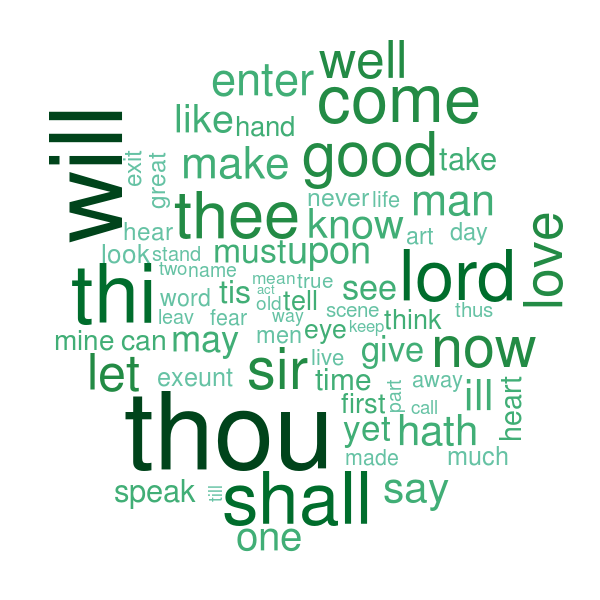
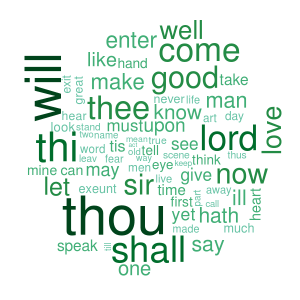
shakespeare-word-cloudHow many words did William Shakespeare invent? According to Shakespeare Online Dot Com: “The English language owes a great debt to Shakespeare. He invented over 1700 of our common words by changing nouns into verbs, changing verbs into adjectives, connecting words never before used together, adding prefixes and suffixes, and devising words wholly original. …  For a more in-depth look at Shakespeare’s coined words, please click here.”

Whether you are journaling or noveling, the important thing is to do it every day. Write for as long as you can when you can, and that will build your ‘writing’ muscles. If I dedicated 3 hours a day to just writing stream of conscious, I will chunk out 2500 to 3000 words–about half of which are mis-keyed and misspelled, but hey, no one is perfect. Some words I invent–and some words invent me, but either way, I love words.

Comments Off on Journaling or Noveling

Filed under Blogger, blogging, Books, Fantasy, History, Humor, Literature, Publishing, Self Publishing, Uncategorized, WordPress, writer, writing

10 Things to Do—Part 1, The First 5 Speedbumps

shakespeare-word-cloud

There are things that happen in the natural course of writing the first draft that make it painful for people to read. DO NOT SHOW IT TO YOUR ADORING FANS JUST YET. This really is NOT the time to ask for feedback unless you want to be lied to. They will look at you with a possum-in-the-headlights smile, and say “Wow…this is really…nice.”

What they really are thinking is, “Holy s**t. This disjointed, hokey mess sucks.” That friend will poke needles in their eyes before they read another piece of your work again.

Just sayin’.

But even though the first draft is always stinkaroo, don’t try to edit as you write because it interferes with your creative processes and blocks the flow of ideas. While you’re writing the first draft these bloopers should be allowed to just fall where they may, because you just need to get the ideas down.  You will reshape them in the 2nd draft. So, today I’m posting the first half of a two-part series on 10 Things to Do in the second draft of your manuscript.

Before you do anything, just put it to one side. Forget about it for a while.

A month or so later, after you have gained a different perspective is when you begin to look for these problems.  Fine tuning and rephrasing will settle most of them, and a good flamethrower will take care of the rest!

First we will look at:

800px-Singapore_Road_Signs_-_Temporary_Sign_-_Detour.svg1. The Info Dump (my personal failing)

Often new authors feel they need to dump a lot of back story at a novel’s beginning before readers will understand the main story. I did this in my first novel, and I have regretted it ever since! It seems like logical thinking: “Before you get this, you need to know this.” But the problem was, I gave the info dump in the first five pages.  Those are the pages that acquisition editors look at and decide whether or not to continue reading the submission. For those of us planning to go the indie route, those pages are also the pages the prospective buyer sees in the “look inside” option on Amazon dot com.

While back story is important for character and plot building, too much outright “telling” freezes the real-time story in its tracks. And for modern genre fiction, beginnings must be active—they need to move.

Here is the opening paragraph of my next novel in the Tower of Bones series, Mountains of the Moon. It is a prequel to the first two novels, and this is the way it currently reads in its second draft stage. It may be changed once the editor gets her hands on it, but right now this is how it stands with the info dump removed:

Wynn Farmer discovered his old boots had holes worn in the soles when he heard the soft, squishing sound, perfectly in sync with every step he took. If he’d known he would be dropped into some strange world when he left the house, he might have planned ahead a little better and slipped some new cardboard into his boots, just until he could get them resoled. Now he trudged along a faint path through a dark, eerie prairie with wet feet, shivering in the cold, misty rain and completely lost.

In the second draft we alter the original words we wrote, subtly slipping little details into the narrative while showing the real-time story, and doing it in such a way that it is part of the action and the dialogue, fading into the background.  The reader will understand what you are showing them without feeling bludgeoned by it.
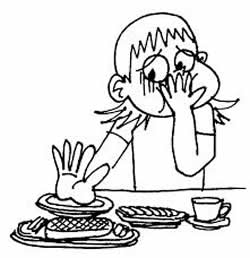
 

nausea42. Telling Instead of Showing in Prose (heh, heh–my own personal failing)

In the rush of the first draft, of getting all our thoughts about the storyline down, sometime our minds go faster than we can write. We use a kind of ‘mental shorthand’ and write things such as:

Erving was furious.

Martha was discouraged.

These are really just notes telling us what direction this tale is supposed to go. Modern readers don’t want to be told how the characters felt—they want to see. When you come across this in a novel, it is clear the author has published a first draft.

Thus, when you come across this in your first draft, now is the time to follow those road signs and expand on the scene a little. Instead of telling the reader that Martha was furious, you will show this emotion.

Martha stamped her foot, and clenched her fists.

Erving’s body shook with rage, and his face went white.

Show the reader the emotions. It adds word count, but you will also be taking word count away in other places in the manuscript as you go along.
 

cover_art_Billy_39_s_Revenge3. Using Dialogue to Tell, Not Show (oh yeah–my personal failing)

“I’m simply not going to do it,” Vivian hissed. (Reader: “What, is she a snake?”)

“Why, oh why, did I ever trust her?” Greg said dejectedly. (Reader: “Aw, that’s sad. Boring!”) (Closes book.)

Please, OH please, avoid attaching adverbs ending in “ly” to speech tags. They are the devil!

If you want to convey an attitude in dialogue, the words themselves should communicate it.  Greg’s words already communicate dejection. If you need more, add a line of action:

In low tones, Vivian said, “You couldn’t pay me enough to do that.” She turned and walked away.

Greg threw up his hands. “Why did I trust her?”

This gives readers the opportunity to see for themselves the scene you painted with words.


4. A Lack of Contractions in Dialogue (Wait–this is my personal failing too!  What’s going on here?)

“Arrabelle, I do not want you to leave me!”

This is one of the worst NaNoWriMo manuscript flaws BECAUSE when we are in the midst of November, we are desperate for word count. “Don’t use contractions” is one of the prime directives of Chris Baty’s  “No Plot? No Problem” and if word-count is all you are in the game for, then fine.  However, IF you ever intend to publish your work you should use contractions in dialogue. Depending on the type of story you are writing, you may want to use them elsewhere, if that is the style of your work.

This problem may also be a throwback to those days in your high school English class, when teachers deducted points for the use of contractions in term papers. But contractions are effective at conveying realistic speech.

You want dialogue to sound natural? Use contractions.
 

Dialogue Tags © cjjasp 20145. Too Many Speech Tags in Dialogue (Hey–I have that problem too! What the heck…?)

“Jake, are you okay?”  Vaia wailed.

 “Of course I’m all right,” Jake groaned. “What a silly question.”

 “But your arm,” Vaia said. “I thought maybe you…well, the way you’re holding it…I guess I thought—”

 “You thought I’d injured it,” Jake said.

 “Well…yes,” Vaia said.

Especially when only two characters are talking, readers should be able to keep track of speaker ID with ease. In those situations, speech tags are rarely, if ever, needed. In fact, doing away with tags entirely, unless they are absolutely necessary, is frequently suggested to be a great strategy, although I don’t go that far. Instead of using a speech tag, insert a burst of action before or after a line of dialogue that identifies the speaker and lends opportunities to deepen character chemistry, conflict, and emotions.

Vaia felt something trickling down her cheek. She wiped it, and her hand came away with blood. Jake was pale, and held his arm at a strange angle. “Jake, are you okay?”

 “Of course I’m all right. I’m always all right.”

 She reached toward his shoulder, toward the torn shirt—but something held her back. “But your arm. I thought maybe ….”

 “I’m hurt, but I think it’s fine. You thought maybe I had broken it.” He willed her to admit that she cared.

 The intensity of his gaze forced her to look away. “Well…. I did think that. Can you still fight?” 

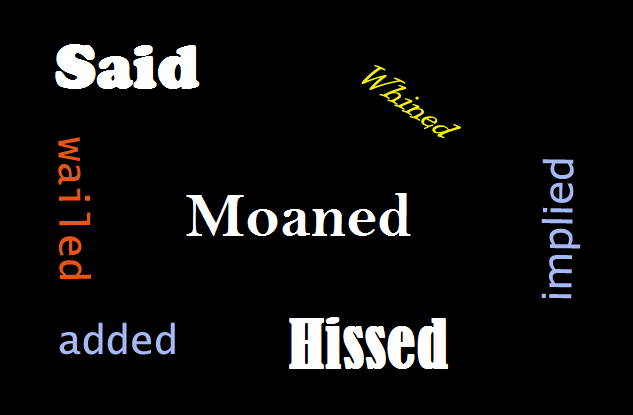
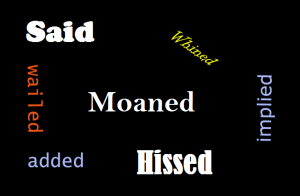
Trade in empty speech tags for emotion-infused writing that can do so much more. HOWEVER—Remember that the reader needs to have clear direction as to who is speaking to whom, otherwise you will lose the reader. And I do recommend you don’t get too creative with them.  Said, replied–those are usually all that is required. If you throw in hissed, or moaned, once in a great while for specific circumstances, fine, but not too much please. It’s too distracting for me as a reader.  I close that book and move on to the next when the  characters do too much hissing and moaning. Just sayin’.

This covers the first 5 things to look for in your second draft. Items 6 through 10 will be covered on Wednesday!


1 Comment

Filed under Adventure, Battles, Books, Fantasy, Humor, Literature, Publishing, Uncategorized, writer, writing

Kamikaze Noveling

NaNoWriMo-General-FlyerWell, here we are again, back at the beginning, right where my crazy life as a full-time author began. November is National Novel Writing Month and for the next 30 days I plan to write at least 1667 words per day, or double that if possible.

It’s kamikaze noveling–Some people go so far as to use a program called Write or Die. I am crazy, but not that crazy–this program forces you to keep pouring down the words or it will make noises at you, and perhaps delete what you have already written.

I would have to shoot the damned thing. (sorry.)

Even without the cattle prod of Dr. Wicked’s little program, I am going to literally spew the words on to paper, and get that novel written. I will not make corrections, I will not go back and redo anything.  I will just write it as it falls out of my head. Corrections happen in the second draft, and that is for January. What I have to concentrate on now is writing this first draft, just getting it out of my head.

I will not be writing the book I so carefully outlined and planned all last month after all.  I will instead be doing a complete rewrite of the book I have been stalled on for the last year, Valley of Sorrows.  I had an epiphany last Thursday, and I know what I have to do to make that story live. All I have to do is scrap 70,000 words and start over from a different character’s point of view.

*doh*

But writing is like painting your walls–if you don’t like what you’ve written, change it!

SO, What is this NaNoWriMo all about anyway?

nano_12_new_Come_Write_In_Logo1There is an online organization — NaNoWriMo.org —  and according to their Wikipedia page, this is what they are all about:

The goal of NaNoWriMo is to get people writing, no matter how bad the writing is, through the end of a first draft. The idea is that many people are scared to start writing because it won’t be any good, and if there’s a time to celebrate length, rather than quality, more people will write an entire first draft, which they can then proceed to edit if they wish.[citation needed]

The project started in July 1999 with just 21 participants, but by the 2010 event over 200,000 people took part – writing a total of over 2.8 billion words.[2]

Writers wishing to participate first register on the project’s website, where they can post profiles and information about their novels, including synopsis and excerpts. Word counts are validated on the site, with writers submitting a copy of their novel for automatic counting. Municipal leaders and regional forums help connect local writers with one another for holding writing events and to provide encouragement.

2013-ML-Facebook-ProfileBut as for how I became involved in it–a young writer friend of mine in the Philippines whom I had met while writing fanfiction for an RPG gamers fansite talked me into entering the 2010 NaNoWriMo. I was hooked! Now I find myself in my second year as Municipal Liaison for the Olympia Washington USA region, helping 1471 local writers pry that book out of their creative mind and get it on paper.

That first year I had no idea what to write, as I had been working on several writing projects for the previous two years. But one night it occurred to me – How does a Hero gracefully retire from the business of saving the world?

Perhaps he doesn’t.

Perhaps there are so few Heroes that there is no graceful retirement… and then I wondered – how did he find himself in that position in the first place? He had been young and strong once; he must have had companions. Why did he not quit when he was ahead? At that point I had my story.

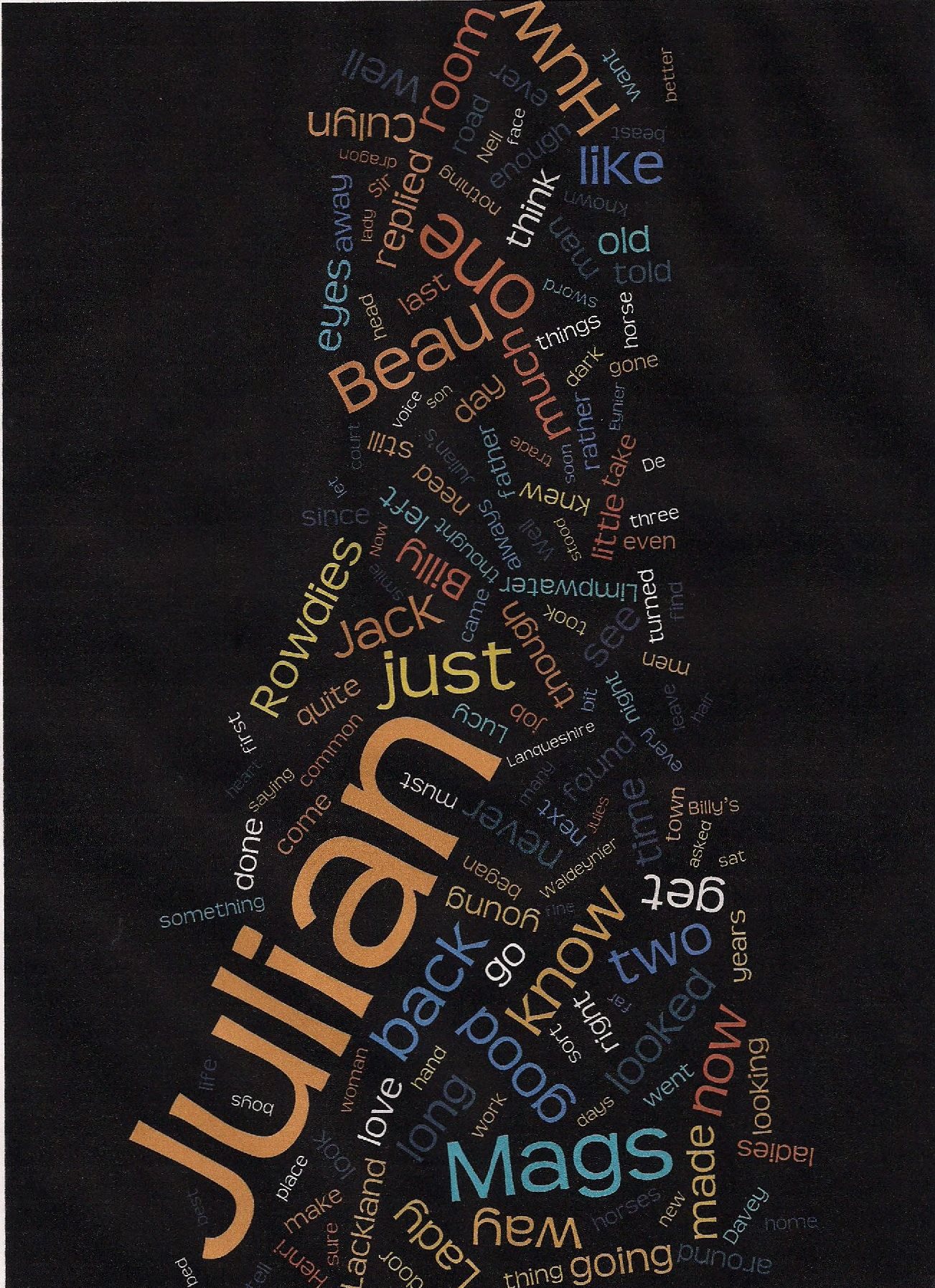
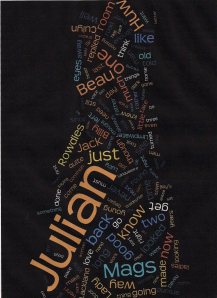
And thus Julian Lackland and Lady Mags were born, and Golden Beau. But they needed a place to live – so along came Billy Nine-fingers, Captain of the Rowdies and his inn, Billy’s Revenge. When I first met Billy and his colorful crew of mercenaries I was hooked. I had to write the tale.

Julian’s tale was originally published through a small publisher, and while that didn’t go so well, it was a great learning experience. He is once again in the works with a new title, a new editor, several new vignettes,  and a leaner style of storytelling. Over the last three years, the characters in Julian’s book  spawned two other novels, one of which, Huw the Bard, is in the editing process at Eagle Eye Editors.

This year is already starting in an awesome way. I am on fire to get John’s story written, and to bring Edwin and the boys home. Now I know what has to be written and at midnight tonight, the first words go down.

I will be sitting in a 24 hour restaurant with some of our other WriMos, at our 2nd annual “First Hours of November” write-in. We will drink coffee and write, write write. I will stay there until the sun is up, writing this wonderful story with 6 or 7 of my new best friends.

Life doesn’t get better than this.

2013-Participant-Twitter-Header (1)

3 Comments

Filed under Battles, Books, Humor, knights, writer, writing