Tag Archives: self publishing

Plug in to The Matrix


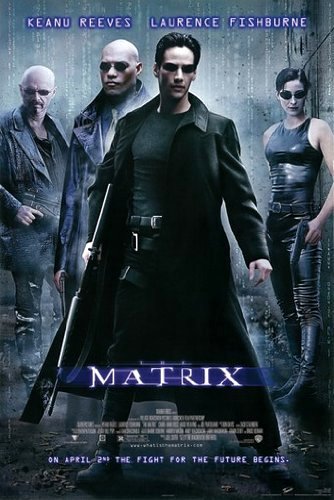
the Matrix PosterNovels have layers. Theme is what the story is about on a deeper level than the plot details. It’s the big meaning, and often it’s a moral meaning. Love, honor, family, and revenge are all some common, underlying themes.

I think of the scenes in my books as if they were scenes in a movie. Each conversation is a scene.

Sometimes, we find ourselves in Outer Mongolia as we wrangle our words. Our mind is off chasing squirrels, and our fingers are madly keying dialogue. It happens, and then we find ourselves writing paragraphs of discussion regarding the vase on the kitchen table. Why are we discussing this vase?  If there is a reason that will emerge later, keep it. If it is just idle fluff, lose it.

I actually have a scene in one of my forthcoming books where the characters do just that. They are discussing a vase that was made by a child, but the conversation is not important for the sake of the vase, nor is it really about that object. It is there to expose how important an absent person is to one of the speakers, and the brief interaction between the two speakers endears to the reader one of the characters who will later meet a sad end. The underlying themes of this book are brotherhood, family, romantic love, honor, duty. The obvious theme is the successful resolution of a quest. The core plot device around which the story evolves is an ongoing War of the Gods, and the world in which the tale is set in is their battleground, offering all sorts of opportunities for mayhem.

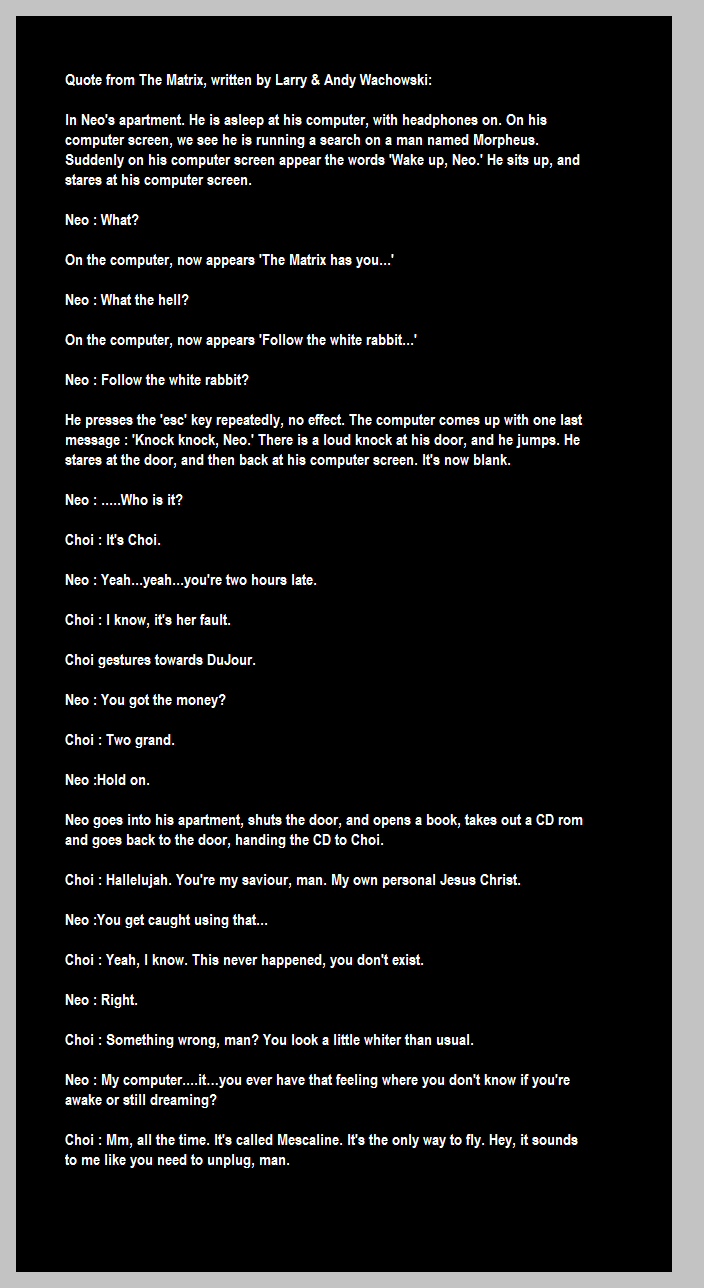
Consider the first scene of one of my favorite movies of all time, The Matrix. This movie has a lot of action, but it has a lot of dialogue also, and that dialogue advances the plot and never loses the theme of the story.

Quotes from the matrix

The conversation concerns a drug deal, but the underlying theme is never lost. The key words are in the first line, written on the computer, The Matrix has you, the third line, follow the white rabbit, and in that very last line, telling Neo to unplug. The Matrix is all about waking up, about what reality is, and about Neo as the potential savior of the world, which has been enslaved by a virtual reality program. It is about escaping that program. The conversations that happen in the course of the film all advance that theme, even the minor interactions, from the first conversation to the last.

The Arc of the StoryWe must approach conversations in our novels as if they were scenes in a movie. In a good movie, we don’t notice it, but there is an arc. In a story arc, a character undergoes substantial growth or change. It ends with the denouement in the last third or quarter of a story. The end of a narrative arc is the denouement, the final resolution. It shows what happens as a result of all the conflict that the characters have gone through.

If we don’t keep the arc of the story moving with each scene, we will lose our reader, and to that end, each conversation must reflect the underlying themes of the story without beating the reader over the head with it. As in real life, some of the people know more than others, and to advance the plot and the theme, small clues must come out over the course of each scene, each scene building to the finale.

I876MilanoDuomo‘ve said this before, but we must build the overall arc of the story from scenes, each of which is a small arc, in the same way a gothic cathedral is constructed of many arches that all build toward the top.  The underlying arches strengthen the overall construction. Without arches, the cathedral wouldn’t remain standing for very long. The novel is a cathedral and your scenes are the arches that hold it up. The conversations that form those scenes are miniature arches, each with a beginning, a high point, and a resolution.


4 Comments

Filed under Adventure, Battles, blogging, Books, Fantasy, Humor, Literature, mythology, Publishing, Self Publishing, Uncategorized, WordPress, writer, writing

Bloated exposition and the power of the “No!”


Book- onstruction-signTwo-year-olds are awesome little balls of angst and joy. It’s either all happiness or all misery for them. I just spent the last two days babysitting my youngest grandson, who is two, while my daughter, a well-known musician, was in the recording studio. The dialogue between me and my grandson went something like this:

Me: “Would you like to eat dinner?”

2 yr old: “No dinner!”

Me: “Do you have to potty?”

2 yr old: “No Potty!”

Me: “Would you like ice-cream?”

2 yr old: “No ice-cream!”

It doesn’t matter what you ask the child–he is currently hardwired to say “NO!” to everything, no matter how badly he really wants it.  Everything is high drama and terrible tragedy for him–and his gut reaction to every question is driven by his newly acquired “power of the NO,”  a super-power that regularly goes to his head.

Unlike the two-year-old with his simple cut-and-dried answer for everything, we authors have a large amount of backstory that we are just sure the reader must know every minuscule detail of, and in order to avoid info dumps, we write conversations to do just that, so that the reader will not lack for information.

But this is where we authors need to exercise the power of the NO. It is also one of the hardest things we do–trying to decide what is crucial to the advancement of the plot and what could be done without. I am currently looking quite closely at one of my manuscripts, and I may cut an entire chapter that is only background. It’s awesome background, and I love this background–but when looked at with an independent eye, it doesn’t do anything but stall the forward momentum of my book.

Don’t give your characters long paragraphs with lines and lines and lines of uninterrupted dialogue. Those can become info dumps laced with useless fluff and are sometimes seen as a wall of words by the reader. This is referred to, in the industry, as bloated exposition.

When the dialogue is trying to tell the reader too much, characters end up saying a lot of unnatural and awkward things.

 “Remember the first day at the academy? We showed up wearing identical uniforms. I was so humiliated. I hated you for that. I didn’t speak to you at all until Commander Janson forced us to be partners in the biology lab, but I managed to get us through that with all A’s. But look at you now, you lucky dog. You are fortunate enough to be my second in command.”

“I know, sir. I despised you too, especially when you made me do all the dirty work, cutting up that alien amphibian. And you took all the credit for it. But now here we are, the best of friends and in command of the finest ship in the fleet, the USS George Lucas. I really, really love being your flunky. It is just the awesomest gig ever.”

Probably not gonna happen. When two characters go back and forth explaining precisely what they are feeling or thinking, it doesn’t seem remotely real. The only time exposition works in a novel is when both the reader and the character being spoken to do not know the information being artfully dumped.

dump no infoWhen reading, even dedicated readers will skip over large, unbroken blocks of words. Elmore Leonard said, “Try to leave out the part that readers tend to skip.” I feel this goes double for dialogue.

Cut to the chase. In real life, you might want to talk at length about the small details, but most of the important information is dealt with right away, and the rest is just socializing. When I think of the novels I enjoy the most, the important information in their conversations is dealt with up front, and the minor details emerge later as they become important.

Consider a phone conversation at work or when you’re in a hurry, and a friend just had a car accident. Your friend has a story to tell, and you have questions. “Are you hurt? Can you drive the car? Do you need anything?” While the boss is glaring at the back of your head, you won’t ask if they had insurance or if your friend will sue (unless you work for a legal firm and you’re fishing for business.)

There’s another important reason to avoid fluff in your dialogue besides the fact it makes a book more enjoyable:

In the real world, Indies and self-publishers pay the costs to publish their works up front. In the ebook format, costs are minimal and it doesn’t matter, but a paper book by a new author that has to sell for more than $12.99 may not sell well. Remember, with a longer book, your costs are increased because until you’re established, you must purchase your own stock to sell on consignment in local book stores. You’ll also need to buy books for your table at trade shows, conventions, and at most book-signings. You’ll want to keep your cost as low as possible and still turn out a good book.

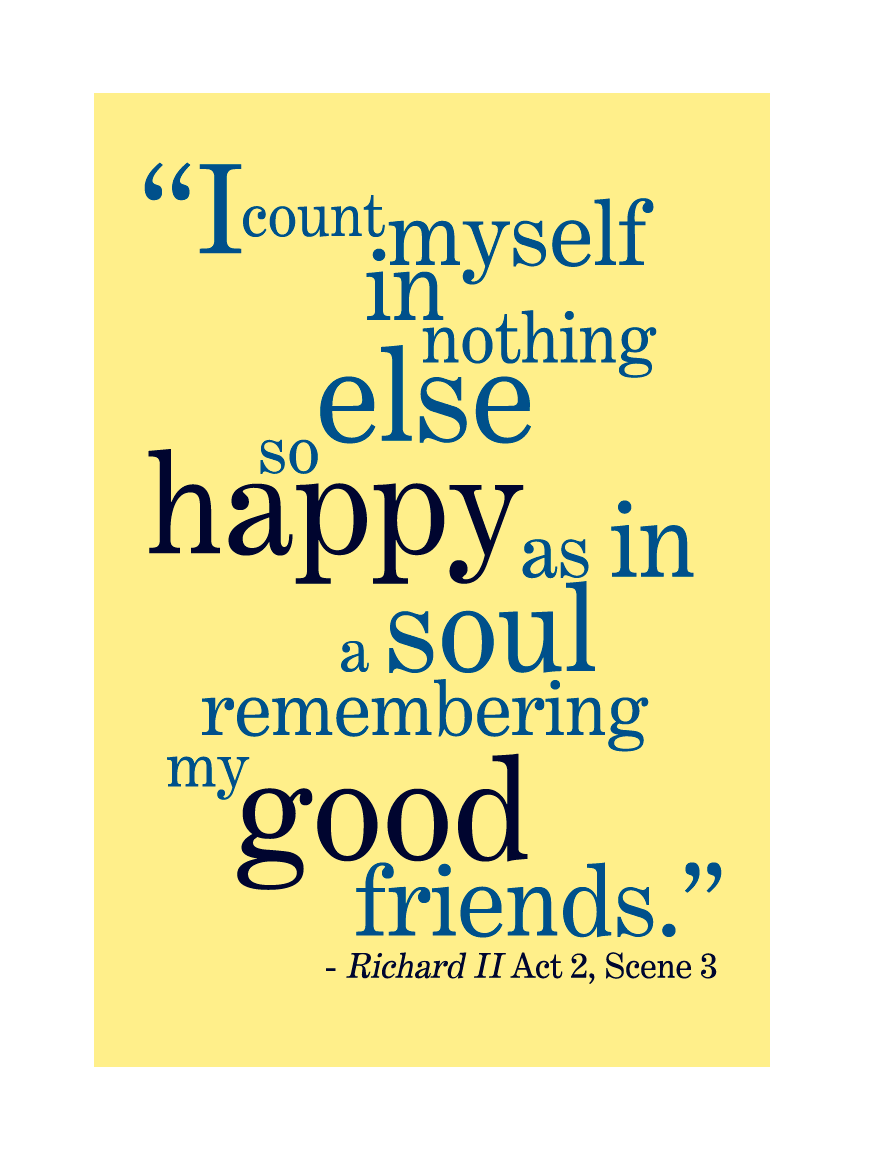
Shakespeare_ICountMyselfFor an indie who writes fantasy, which tends to be longer books and is my genre, it’s most cost-effective for you to keep your work to between 90,000 and 120,000 words if you intend to print through CreateSpace, which prints my paper books. So, wise authors will avoid empty filler in their conversations at all costs.

Having said to keep it short, I know there are times when a character will have a long story to tell, and if it’s done right, it works. Usually, these are stories within stories, and they’re a bit tricky to do right. Deploy the facts, and go light on the fluff.

Remember, what worked in a Shakespeare monologue does not work in a dialogue between two people. Fictional dialogue is about give and take, meant to sound realistic but sharpened by the fact that each character needs something, and by the fact that their needs do not mesh. You won’t get two-page speeches if you remember to visualize your conversation.

5 Comments

Filed under Adventure, Battles, Blogger, blogging, Books, Fantasy, Humor, Literature, Publishing, Self Publishing, Uncategorized, writer, writing

Prepping for NaNoWriMo 2014

nano_14_ml_badge_300pxNational Novel Writing Month begins in just 15 days. I am the Olympia Washington municipal liaison, but this year I will not be able to attend the first two days of write-ins in my region, as I will be at Northwest Bookfest, a conference at Northwest University,  both as an attendee and as a presenter. On Sunday November 2, I will be talking about writing natural dialogue. As you know, I love to talk about the craft of writing, and can talk until the cows come home, to use a tired cliché.

However, I will be working at my word count through the evening in my hotel room–and cheering my fellow WriMos on with virtual write-ins. Beginning Monday the 3rd of November, my life will revolve around writing the rough draft of my novel, helping my friends get their rough draft written, and encouraging the young (and not so young) writers of our community to explore their storytelling abilities.

Patrick Rothfuss said in his pep talk last year, “Thou shalt not just think about writing. Seriously. That is not writing. The worst unpublished novel of all-time is better than the brilliant idea you have in your head. Why? Because the worst novel ever is written down. That means it’s a book, while your idea is just an idle fancy. My dog used to dream about chasing rabbits; she didn’t write a novel about chasing rabbits. There is a difference.”

Oly Nanos icon for fb 2That completely describes what NaNoWriMo is all about–getting that novel out of your head and on to paper. If you don’t write it, you will never see what a wonderful idea it really was–and even if it doesn’t go as well as you planned, who cares? This is about the journey, more than it is about the destination.

It will be a month of dirty dishes, dirty house, piled up laundry…oh wait, that’s normal for around here. But anyway, I will do nothing but attend as many write ins here in the local area as I can and find as many ways to encourage secret authors to get that book out of their head and on to paper as is humanly possible.

I can hardly wait to get started!

2 Comments

Filed under Adventure, Blogger, blogging, Books, Fantasy, Humor, Literature, Publishing, Self Publishing, WordPress, writer, writing

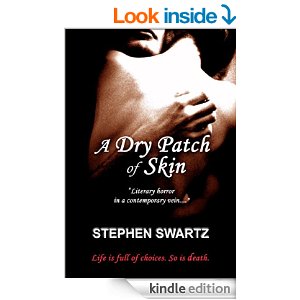
Stephen Swartz, A Dry Patch of Skin

A patch of Dry Skin, Stephen SwartzToday, my dear friend, Stephen Swartz, author of the new book,  A Dry Patch of Skin has consented to answer a few questions for us. Stephen is a true renaissance man–an accomplished musician, and the author of seven published novels, he is also a professor of English at a well-known university in Oklahoma.

I became friends with Stephen in 2011 through ABNA, and we have remained good friends since. I find him hilarious, and I really enjoy his work. He has kindly consented to sit down and allow me to “virtually interview ” him. I am especially curious about his wonderful new book, which is a vampire tale. It’s most certainly not your mama’s sparkly vampires! If you are curious, here is my review: Best in Fantasy: A Dry Patch of Skin

CJJ: Tell us a little of early life and how you began writing:
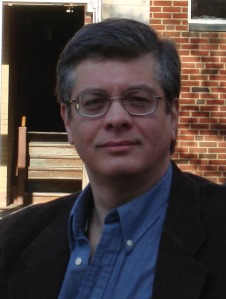
Stephen Swartz 2007SS: It seems like I’ve always been making up stories, much to my parents’ chagrin. I began by drawing panel comics, then added dialog, then began writing paragraphs. I read a lot of science fiction and fantasy in my youth, plus the classics of literature. They influenced my writing mostly by pushing me to try to “out-do” those authors with my own stories. My early writing was limited by the limitations of typewriters and correction fluid. When I got my first computer in 1986, all of my vast library of stories finally could be written. And the world shuddered….


CJJ: Tell us about your most recent book.

SS: A DRY PATCH of SKIN is a contemporary vampire story, but not at all modeled after any of the current vampire TV shows, films, or the books they are based on. I deliberately tried to keep it real. Thus, I researched diseases which cause symptoms approximating the vampire’s condition. In that way, I wanted the reader to experience what it would be like to become a vampire. I decided to tell the story through the POV of a man who is transforming against his will into something he does not want to become. All the tropes and memes of vampire stories are there, but they are realized in a medically accurate fashion—as much as possible. It gets a bit religious at the end, so…call it magical realism.


CJJ: How did you come to write this novel?

SS: I had the idea in rough form ever since Twilight came out and I tried to explain to my daughter, who was hooked on the Bella/Edward story, what “real” vampirism was. For that explanation, I recalled a report years ago on one of those news magazine shows about a man suffering from porphyria, sometimes called the “vampire disease”; the medical explanations for his affliction made perfect sense in terms of why he might be called a vampire if he happened to live in a certain time and place rather than modern America. Watching that interview (he wore a hood to cover his face), I could truly feel the anguish of being in that situation, and given that my art is answering What-if questions, I sought a vehicle for illustrating that awful situation.


CJJ: Do you have a specific ‘Creative Process’ that you follow, such as outlining or do you ‘wing it’?

SS: For A DRY PATCH of SKIN, I worked a bit differently than usual. I began with snatches of my real life, anecdotes that were humorous or telling in some way, then fictionalized them. My initial goal was to explore the character I was inventing, to get down his personality, way of expressing himself, his identity, and so on. As a story set in 2014 in the same city where I live, it was quite schizophrenic to write fiction about the places I regularly visit.

Unlike some authors, I generally do not make lists of traits or compose background profiles of my characters; sometimes I do not know all about them when they come on stage and I get to know them as readers do. (Of course, I go back in revision and make it all fit together.) I do collect information as I create them but it stays in my head. Sometimes browsing the internet will bring me an image that fits what I see in my head.

I knew from the start the direction A DRY PATCH of SKIN would go but I did not have the exact action of the climactic scene until I was mid-way into the writing. Once I “knew” how it would end, the direction of the plot shifted a bit to head toward that conclusion. I found by the end, fortunately, that I happened to have dropped some good seeds along the way which conveniently blossomed in the final chapters—much as Chekhov’s musket in Act 1 must be fired by Act 3. I suppose it’s a matter of how my twisted mind works; I’m not always conscious of the big picture under the cacophony of surface features, but my deeper self knows…because he sleeps with my muses.

CJJ: How does your work differ from others of its genre?

SS: A DRY PATCH of SKIN was a personal challenge, something in a genre I have not written previously. The saving aspect for me, however, was that it is, at the core, a tragic love story. (Is that a spoiler?) The trappings of vampire transformation become the vehicle for pulling off that tragedy. Or is it that the transformation, the struggle to avoid it or prevent it, is made more tragic with the love interest? At any rate, I’ve consciously tried to go counter to all the usual tropes of the vampire genre. In fact, the characters often mention, critique, and spoof some of the popular works of the genre during their conversations. I hope this novel will be both a fun “review” of the vampire literature as well as a realistic portrayal of a biological problem; in that sense, it’s a medical thriller.

CJJ: Why do you write what you do?

SS: A DRY PATCH of SKIN was a departure from my usual kind of novel (contemporary anti-romance or sci-fi on a grand scale). I was intrigued by the question and wanted to see if I could write it if only to see how such a situation might play out. I seldom write as a challenge or game, but this time I did. For writing in general, I simply want to follow my desire to see what happens next for the people I create and the situations I put them in. I know that sounds cruel, but that’s how I roll. It probably keeps me out of jail or the mental hospital.

Next, I’ve been challenged to write an epic fantasy with dragons. Epic fantasy is no problem; dragons are—because it’s in my nature to try to explain them in an authentic zoological way.

CJJ: I certainly can’t wait to see what sort of spin you give dragons! I know why I chose the indie route for my work, but I’m curious as to why you’ve chosen this path.

SS: Strange you should ask because while I have always done things my way (Thanks, Frank!), the results have not always been glorious. After a health scare a few years back, I realized what I wanted most in whatever time I thought I had left was to publish one of the books I’d already written. Years before that, I had gone through the lengthy process of soliciting with actual reams of paper in mailing boxes and the 6-12 month wait for a response by paper form letter. But just a few years ago, the world apparently  changed and querying and soliciting were being done electronically, which opened up a whole new world of possibilities. I was impatient, for health reasons, so I caught the attention of a small publisher with a book I entered into a contest. That did not go so well but I did get a taste of the brave new world of publishing. The rest is what some call history—and others call serendipity.

CJJ: What advice would you offer an author trying to decide whether to go indie or take the traditional path?

SS: I suppose there are all kinds of reasons and they tend to be settled on an individual basis. I described my situation, but even without that push from Father Time I’d probably still discover the small and indie publishers and hook up with one of them eventually. If I were young and had a market-ready book with a ready-made audience, I’d query that thing to the farthest star. If you are short on time or believe your work is specialized and thus out of the mainstream, you probably have to go indie.

My goal the past four years has been to make the books I’ve previously written available, at least that, not so much for my ego as for being able to check them off my so-called bucket list. Then I wrote something new! And made it available, too. And I wrote something new again! I have to give credit to the publishing of my early books for the spark of creativity that caused me to write my new books.

Thank you Stephen, for answering my questions! For those readers who are interested in reading more of Stephen’s writing journey, you can find him blogging at:

Deconstruction of the Sekuatean Empire

 You can purchase all the books written by Stephen Swartz from this page at Amazon.com
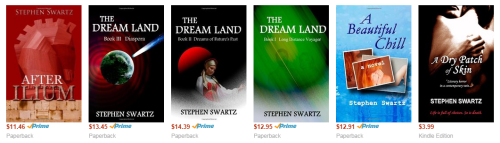
stephen swartz's books

8 Comments

Filed under Blogger, blogging, Books, Dragons, Fantasy, Humor, Literature, Self Publishing, Uncategorized, vampires, WordPress, writer, writing

What I’ve learned from Agatha Chistie

The_Body_in_the_Library_US_First_Edition_Cover_1942I don’t know about you, but I loved Agatha Christie’s novels as much for the great characters as for the mysteries. She had a way of putting the reader right into the society of the time. Take, for instance, Miss Marple.

She’s elderly and has no visible means of support, yet she is not poor. We think she must be living on inherited wealth, but while she is not poor, she also is not conspicuously rich. She is an elderly spinster who was once engaged, is obviously from a good family, and is godmother to a number of young men and women who sometimes get into trouble and need her sharp eyes to sort out mysteries.

She has a nephew, Raymond West, who must be a sister’s child as the name is different, yet no mention is ever made of Jane’s family beyond him. Did she raise him? She is quite close to him.

The_Moving_Finger_First_Edition_Cover_1942She is well-traveled, and can afford to go to Egypt, and to the Caribbean. Miss Marple has close friends in high society. She knows people with hyphenated names and large estates. She doesn’t let wealth or social standing blind her to the true frailties of human nature–she knows that greed and sex are the root cause of nearly every crime.

She owns her own cottage in St. Mary Mead, and it’s not small or mean in any way–she has the ability to hire a young lady to come in and help with the heavy cleaning, although it is difficult to find one who respects the china.

A_Caribbean_Mystery_First_Edition_Cover_1964Miss Marple takes great interest in the life of her village, and it is through her knowledge of that life that she is able to solve complicated, well planned murders. Her ability to work out the motives for each suspect is directly related to how their actions remind her of certain people she has known over the years in her village. Be careful what you say around her, because she will know what you did by connecting the dots between what you said and what happened.

All this information about Miss Jane Marple comes out in her conversations with other characters, delivered over the course of an entire book, and yet one feels as if one knows her right away.

The_Murder_at_the_Vicarage_First_Edition_Cover_1930In the first full book in which she appears, The Murder at the Vicarage, she isn’t really as likable as she is in later books–she seems a bit of a gossip, and rather mean-spirited at that, always expecting the worst of people.

But over the course of 12 books she evolves, and so does our knowledge of her–or does it?

She is genteel, slightly nosy, very comforting and she is on to you–so don’t even think about doing it.

What I have learned from Agatha Christie is that memorable characters grow on you over the course of the book–they are not delivered fully formed on the first page. They are intriguing and we don’t always know what they will do next. There is a hint of mystery about them, and at the end of the book we want to know more.

A_Murder_is_Announced_First_Edition_Cover_1950This sense of intrigue is what we want to instill in all our characters, whether we write sci-fi, romance, fantasy, pot-boilers, or cozy mysteries. If you think about your own experience in life, once it is apparent that you know everything there is to know about a person, they cease to intrigue you. It is the complexities of your friends that keep them interesting, the little things you never knew that amaze you when they are revealed.

Developing a character, deploying just enough information at the right moments to pique the reader’s curiosity is a balancing act, and I’ve come to believe that not everyone can do it with finesse.

Revealing the character over the course of time, and allowing them grow is crucial to keeping the reader’s interest. I think this can only happen if the author has a true understanding of who their character is. This person must be fully formed in the author’s mind so that when they emerge on to the paper they have a sense of realism, as if they are someone the reader would want to know.

nemesis agatha christieMiss Jane Marple was modeled on Agatha Christie’s step grandmother, and on her Aunt (Margaret West), and her friends. Observing these sharp old ladies taught Agatha how a little life-experience can cut through the smoke and mirrors to the truth of people’s’ motivations rather quickly, and that they were often correct in their sometimes mean-spirited assumptions.

I find that doing a small biography of my characters for my own records helps me to understand my people, and while I generally write in the genre of fantasy, people are who they are regardless of the setting you place them in. Characters will react and behave a certain way depending on their history and values. Some are brave, some are lucky, some are stupid beyond belief, but the ones who keep you reading are the ones who still have more to reveal about themselves when the last page has been turned.


Comments Off on What I’ve learned from Agatha Chistie

Filed under Adventure, blogging, Books, Fantasy, Literature, Publishing, Romance, Self Publishing, Uncategorized, writer, writing

But let’s talk about books for a while

I noticed something this weekend–I’m obsessed with books.  No, it’s true! Apparently, and I have to agree, it’s all I can think of to discuss. Not only that, but my friends are all obsessed with what they are reading, too.

What a surprise!

So what have I read lately that really rings my bells? Several things, actually, in a wide range of genres.

Sleeping Late on Judgement Day Tad WilliamsI just finished the third book in Tad Williams’s Bobby Dollar series, Sleeping Late on Judgement Day. Wow, my favorite bad angel, Bobby Dollar, finally gets a break. I love the twists and turns of William’s prose, as his hard-boiled angel gets down to the dirty business of cleaning up the mean streets of Heaven. He uses ordinary words in an extraordinary way, but never commits the sin of dropping the reader out of the story.  THIS is why I read his work.  I highly recommend this book to all those who like a bit of a hardboiled-detective twist to their paranormal fantasy. It is a smart, well-crafted journey into the human condition, set in an environment guaranteed to keep things interesting, and peopled with unforgettable characters. I gave it 5 full stars on my book review blog, Best in Fantasy.

Better You Go Home Scott DriscollI also read Better You Go Home, by Seattle area author, Scott Driscoll.  This is not fantasy, it is literary fiction and a medical thriller. Chico Lenoch is an intriguing character. The tale is told in the first person, which I usually find difficult to get into as a reader, but didn’t in this case. Also something I usually find off-putting but didn’t in this case is the way Chico occasionally ‘breaks the fourth wall’–he sometimes addresses the reader directly. It works, because you are in his head the whole time and it feels perfectly natural. Driscoll is a professor at the University of Washington, and is work is both literate and intriguing. This is not genre fiction, instead it is written for mature, dedicated readers who want substance in a book. No fluff here, just good solid craftsmanship. I also gave it five full stars in my review.  But let’s be real–I don’t go to all the trouble of reviewing books I don’t love.

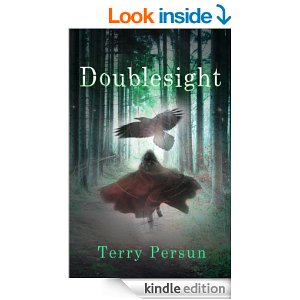
Doublesight--Terry PersunThen, in July I read a fantasy by another local author, Terry Persun: Doublesight. This was the most intriguing twist on the old shapeshifter theme I had ever read. Wholly human or wholly crow depending on what form she is in, Zimp is a great character, both endearing and aggravating. At first, she is weak and allows a less qualified, but more aggressive clan member, Arren, to make decisions for her. This book is as much about personalities and the need to remember their own commonality as it is about the great evil that threatens their kind. Each individual is sharply drawn, and has presence, struggling for their own place in their society while their world faces calamity. Zimp and Lankor, who is a doublesight dragon,  struggle to do what they know is right, in the face of treachery and occasional bad judgement.

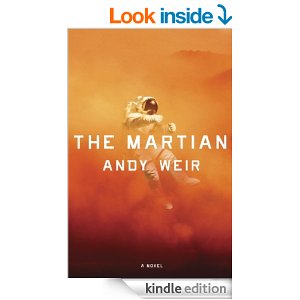
The MArtian Andy WeirMy mind is still blown by The Martian, by Andy Weir. This is hardcore science fiction and may well be the best book I read all year. Mark Watney is hilarious. He is the sort of man who gets through life by finding something positive in every disaster, and mocking the hell out of everything that is negative. A horrendous storm destroys much of their base, and his team is forced to abort their mission.  During the emergency evacuation of the Ares 3 landing site, he is severely injured in an accident that appears to have killed him. His body is unretrievable, and unaware that he is still alive, he is left behind. His companions begin the long journey back to Earth, grief-stricken at his sudden death. However, Mark is that rare breed of human, an astronaut, so of course he is extremely resourceful. He does what he has to in order to survive his injuries, and then figures out exactly what he must do to stay alive until the next mission.

I definitely read a mix of self-published and indie authors, but I like authors who take chances with their work, and who eschew the hamster wheel to hell of the Big Six publishing giants, who mindlessly chug out sequel after boring sequel. Tad Williams writes like an indie, rebellious and defiant. Scott Driscoll is also ‘a bit out there’ in the approach he takes in writing Chico’s story.

I love my job!


2 Comments

Filed under Adventure, Battles, Blogger, blogging, Books, Fantasy, Humor, Literature, Publishing, WordPress, writer, writing

Achieving a Balanced Narrative

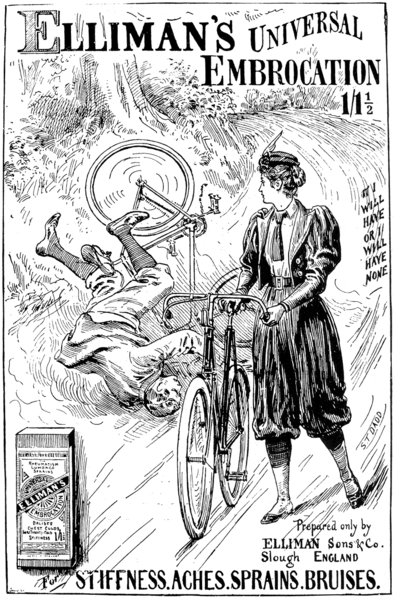
395px-Ellimans-Universal-Embrocation-Slough-1897-AdI was involved (as a horrified bystander) in an online dispute over how much description is needed in today’s genre fiction.  I walked wide of that mess, as it was clear that one author with an online pseudonym was in assassin mode. The other, whose prose had been harshly critiqued, also using a pseudonym, had called in her flying monkeys, all of whom proceeded to tear the argumentative ‘troll’ to shreds.

Ugh.  What a waste of time for all of us, bystanders included. It should have been a civilized discussion about using adjectives and achieving balance when showing and not telling your story.

Sadly, in this case the troll was right, but his attitude was so arrogant, he negated the value of his opinion, with normally sane people reduced to begging him to just ‘shut it.’

The prose in question was far too florid for my taste, forcing the reader to watch every excruciating, drawn out second as the the main character slowly curved his lush, full lips into a sexy, white smile, his pink tongue just touching his full, trembling, lower lip.

Pardon me, I must go barf now.

I prefer to read work written with in a lean style, as too much showing gets in the way of the story. It becomes a matter of the author forcing his vision onto me, as the reader, and is just as unpleasant to read as a narrative that tells you how to feel.

This is my view on the subject of description in the narrative: when you write about a room, any room, you don’t describe the details of room. You tell the character’s story as he enters the room.

What does the character see? What does he or she do in response to those things? Do they use the old wall-mounted telephone? Do they open the drapes? Perhaps he picks up the newspaper, and continues into the kitchen. Each character is different, and will see and do different things, and through those actions your room will come into focus in the mind of the observer–the reader.

Describing emotions is done the same way as describing the setting. We have all been told over and over again that in narrative, the most intimate way to show a feeling is to show the state of the protagonist’s body.

But how do we do that?  Let’s take humiliation:

Her face turned bright red in embarrassment.  

This sentence is what we call telling–the author has baldly told you how the character feels and why. This separates the reader from the sense of being the character. While the character may feel that her face had flushed, it’s unlikely that she would know the exact shade of red she had turned. To make it from the protagonist’s point of view and keep it simple, just write what happened.

Her face burned and she turned away.

Here is my  thought on this subject: we don’t need to get crazy, and give the minute details of her burning flesh heating up until she could see her nose glowing like Rudolph on steroids…we just need simple descriptions that point the reader in the right direction. If our character is really humiliated you can add one more descriptor, but still keep it simple:

Her face burned, and nauseated, she turned away.  

This is as much humiliation as I would put a reader through in one sentence. Realistically, the protagonist would feel the burning of her face, and would feel the nausea. The reader will taste the nausea if you describe the sensations with too much detail so keep the details to the bare minimum.

With that said, it is crucial that you give SOME clues as to what the character is feeling, as the reader will be completely lost without some sort of visual cues.

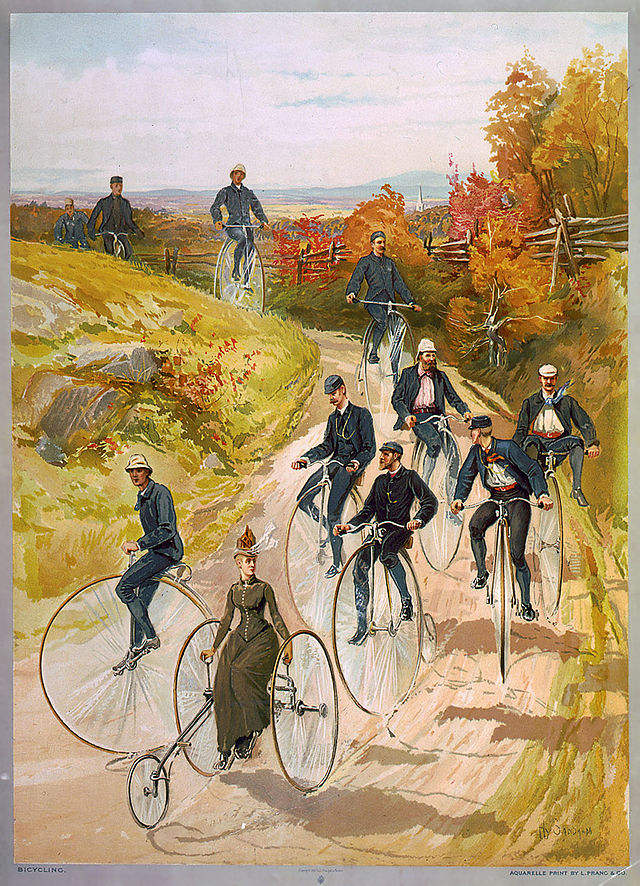
640px-Bicycling-ca1887-bigwheelersTake a look at what the protagonist’s body might be doing. What did it feel like when you experienced the same emotion? What did your body do? What did you feel inside? Was there a heaviness in your chest? A lump in your throat? Did you feel light-headed or weak-kneed? Did your face burn? Close your eyes and think about how you experience an emotional moment and allow your senses to take over.

With that memory in your head, write it down.

Just remember that it is crucial that you don’t over do it. Just like riding a bicycle, you must have balance in your descriptions: there must be enough description to intrigue the reader, but not so much it overpowers the story.


2 Comments

Filed under Adventure, Battles, blogging, Books, Fantasy, Humor, Literature, Publishing, Romance, Self Publishing, Steampunk, Uncategorized, WordPress, writer, writing

Conveying the Mood

Something I’ve lately realized is that every author, even my favorite, has what I think of as ‘fall-back’ tricks they use when describing certain scenes, little quirks and twists of words that are as personal and unique as a signature. The great authors can get away with this, because their stories are just so darned compelling that we don’t notice or don’t care.

I’ve had to face it–when I, as an author, make a habit of resorting to writing my characters with excessive shrugging or sighing, it’s clear I’ve run out of ideas. I recently had a wonderful discussion with several other authors who have noticed this phenomenon in their own work. After that discussion, I found myself wondering how to maintain speed in my writing when I am in the zone, but still have a variety of words and ideas available to me for describing mood and emotion.

So–since tattoos are expensive, and my palm isn’t really large enough to contain a really good table of visual cues, I resorted to my handy-dandy Excel program, and created one there.

What I discovered while compiling this, is that my little brain is quite limited. I had to struggle to picture what these moods and emotions looked like.  Once I had the facial expression in my mind, it was easier to imagine how a character might appear to an observer.

What these cues do is help me come up with a fresh description when I want to show something that may happen frequently within a group of characters. I don’t necessarily use these cues verbatim as they are written here, but they do give my mind a jumping off point and I can extrapolate from there.

Please feel free to: right click> save as> png or jpeg and print it out for your own use.

Conveying Mood and Emotion in Writing


9 Comments

Filed under blogging, Books, Fantasy, Humor, Literature, Publishing, Self Publishing, Uncategorized, WordPress, writer, writing

Kicking off the annual PNWA writers conference

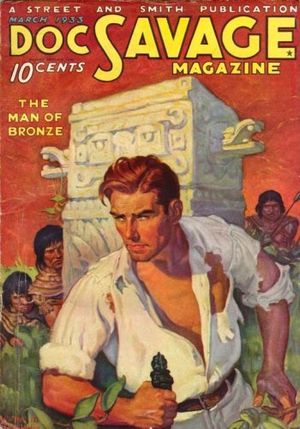
300px-DocsavageWell it’s that time of the year again–today is the first day of the Pacific Northwest Writers Association Conference, held in Seattle, Washington. I’m a proud member of PNWA, and find incredible inspiration at these conventions. This year’s keynote speaker is James Rollins, the well-known master of magic, mayhem, and monsters.  According to Wikipedia, the fount of all knowledge,  “Rollins found the authors of the Doc Savage series inspirational as a youth and acquired an extensive collection of the popular 1930′s and 1940′s pulp magazine stories.”

Quite frankly, I too adored Doc Savage, and discovering that another author was influenced by that wonderful, lurid, misogynistic series is quite a treat.  I’m looking forward to hearing him speak tonight.

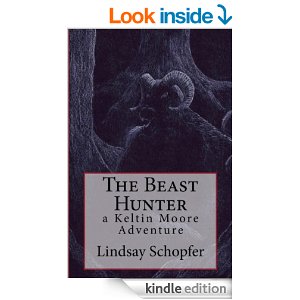
Another person whose seminar I am looking forward to will be given by Lindsay Schopfer, author of The Beast Hunter. He will be talking on the subject of unlocking character motivation, and I am quite interested in hearing what he has to say on the subject, as he is an accomplished author, and his characters leap off the page.

The Beast Hunter, Lindsay SchopferIt’s one thing to understand the mechanics of writing, the nuts and bolts of how to put together a coherent sentence and join it together with other sentences to make paragraphs. Most writers can do that. It’s quite another thing to write paragraphs that become stories other people will want to read.  Attending writers conferences and seminars gives me insight into how successful authors whom I’ve admired over the years think, and helps me stay fired up about my own work.

I will reconnect with many local northwest authors who I’ve become friends with over the years, and of course I’ll be connecting with agents and editors from all over the country.  This is a huge opportunity for me to absorb the mojo that happens whenever writers gather to talk shop. My next blog post will cover the events and hilarity of this one.

Jake RansomLast year I did learn one important thing–even the Hilton doesn’t have a clue when it comes to providing decent vegan entrees, no matter how the conference organizers claim they will offer them. Rather than starve as I did last year, this year I am commuting from home and bringing my own sack-lunch with plenty of snacks. It’s a bit of a drive, a little over 1 hour each way, but if the dinners provided are less than adequate, I’ll survive.

Today’s lunch will be an avocado, lettuce and tomato sandwich on whole-wheat. ♥  It doesn’t get any better than that!

Comments Off on Kicking off the annual PNWA writers conference

Filed under Adventure, Battles, Books, Humor, Publishing, Self Publishing, Uncategorized, Vegan, WordPress, writer, writing

What does “Submission-Ready” mean?

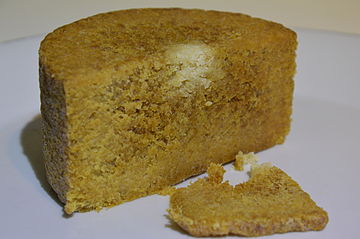
Gamalost-NorwegianOldCheeseI’m not talking bondage here, friends, so get your mind out of the erotica.

I’m talking about a manuscript with the potential to be made into something publishable.

I see a lot of manuscripts. Some are quite promising, some not so much. Literally anyone can write and publish a book nowadays, but not everyone can write a book others will want to read–THAT is a craft, and there are many who don’t feel the need to learn it before they submit their work to an editor or a publisher.  The quality of their work stinks like gamalost cheese, but they have the gall to wonder why the Big 6 haven’t snapped it up.

gibberish-american businesses onlineIt is important to learn the craft of writing, if you want readers to enjoy your work. Spend the time to learn the mechanics of the language you are writing in. However, if you are simply writing a pretentious pseudo-literary art piece, fine–go on and have at it–no one will ever read it, and you can feel superior for having written it. If you dare to compare yourself to James Joyce I will run you out of the writing group quicker than you can say Ulysses.

Before you submit your manuscript, take the time to make it submission-ready:

1. Properly format it: Set the indents, use a serif font of .11 or .12, double-space it with no extra space between the paragraphs, and do not justify it.

2. Hire an editor to help you straighten out the flaws YOU can’t see.

3. Go to the publisher’s website and find out what their submission guidelines are and FOLLOW THEM. (Yes, they apply to EVERYONE, no matter how famous, even  you.) If you skip this step, you will wait a year to hear that your ms has been rejected, and they won’t tell you why.  It’s not worth their time to teach you how to be a writer–you have to learn that on your own.

For a more in-depth description of this whole process, see my series “WORD-A Shifty Beast.”

learn something newTry to learn something new every day in your writing life, and with each success you have, try to keep some humility.  You will grow as an author, your work will remain fresh, and I will continue to beg to read it.

If you read the kind of work you want to write, you will gain inspiration from the masters in your genre. When I am not writing or editing, I am reading. And when I have the chance to read for pleasure, I read epic fantasy, paranormal fantasy and science fiction. When I find a book that rings my bells, I talk about it, and blog about it. Conversely, if I hated it, I never mention it again.

Yep–I’m that kind of a reader.


3 Comments

Filed under Blogger, blogging, Books, Fantasy, Humor, Literature, Publishing, Self Publishing, Vegan, WordPress, writer, writing