Tag Archives: self publishing

Dial-a-Plot

No matter how careful I am when building my outline, there is always a point where I am writing by the seat of my pants.  As I am normally rather a linear plotter, this can really change the direction a tale goes in.

I hear people whining all the time about this character or that one dying right and left in Game of Thrones. I don’t have HBO, so I’ve never seen it, but I have friends who seem to find this distressing.  I suspect that winging it and writing to a deadline is why people die  so frequently in George R.R. Martin’s world–it’s certainly how they meet a messy end in my world.

But how do we fly freely with our narrative, and yet not destroy the awesome story arc we have created? How do we avoid having to hide the mangled corpses of our beloved characters when they might be useful later?

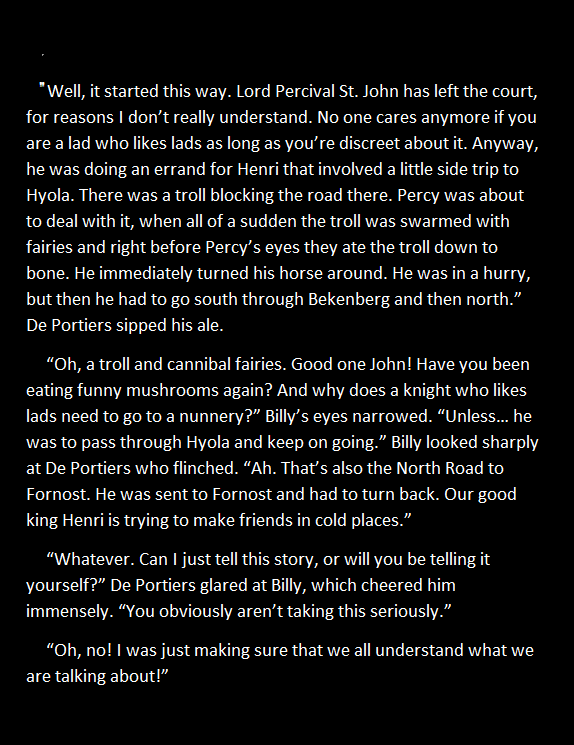
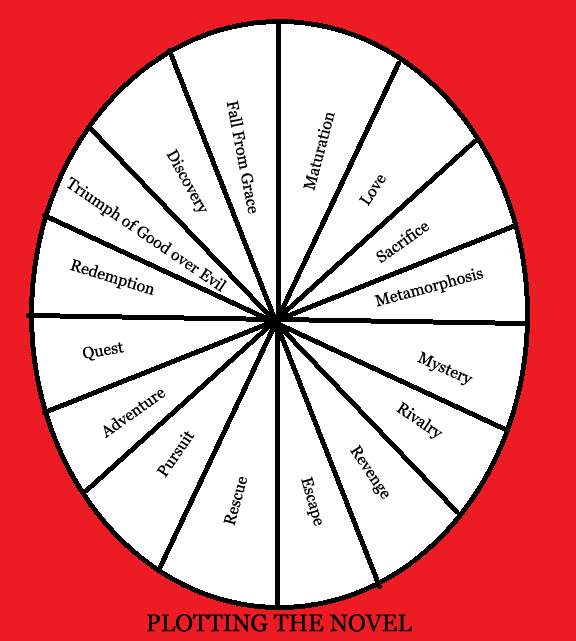
Enter my home-made Dial-a-Plot (sustainably powered by dark matter).  It’s just your standard circular thingy that can be printed out and taped to your desk.  Whenever you have lost your way writing your epic fantasy, rather than resort to a sudden influx of something as far-fetched as cannibal fairies, feel free to refer back to this little gadget to remind you of those elements that really drive a plot.

Dial-a-Plot

When your writing mind has temporarily lost its momentum and you are stretching the boundaries of common sense, it can’t hurt to take some time to consider the central themes that inject true tension into the story, to keep the action moving and the heroes swinging their swords.

Hopefully you won’t have to resort to killing anyone you might need later, and cannibal fairies won’t take your tale in a direction you can’t recover gracefully from…unless…heh heh…Cannibal FAiries

8 Comments

Filed under blogging, Books, Fairies, Fantasy, knights, Literature, Politics, Publishing, Romance, Self Publishing, Uncategorized, WordPress, writer, writing

The Girl With the Tolstoy Tattoo

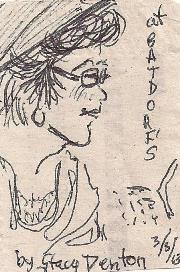
extra small caricature of connie  by street artist Stacey DentonYour blog is up. The Template is as well laid out as you could make it. You have your books or relevant social media listed in the sidebar. You have the catchiest blog title on the block. Now all you need to do is start blogging!

1. If you are using WordPress CHOOSE A CATEGORY NOW for your post–do it 1st so that you don’t forget to do it. I published this blog in the categories of Blogging, Self Publishing, Books, Fantasy, Literature, Humor, Publishing, and Writing.  Each blog post may have a different category. If you should forget to choose the category, it will go into the ‘uncategorized’ pile–the dreaded WordPress slush pile where blogs go to die.

Also in WordPress, chose a few TAGS now so that you do not forget to tag the post. That button is below the Categories list. Chose tags that most represent the core of your post, so that searcher for that subject will find it. For this post I am using ‘Blogging, Writing, Self Publishing, Humor, WordPress, Blogger’.   Also, ‘The Girl With the Tolstoy Tattoo.”

blogging 1.1

If you are using Blogger, PICK YOUR LABELS NOW–Blogger doesn’t use categories, so your labels are very important. On the right hand side, click on ‘LABELS’ and simply type your key words into the BOX, separated by commas. In Blogger, LABELS are what TAGS are in WordPress, so use words that are the core of what you are blogging about so that interested searcher will find your blog:

blogging 2.1

Now that you have that out-of-the-way, it’s time to blog!

2. Hook me with that catchy blog post title!  Today’s post is called “The Girl With the Tolstoy Tattoo” — for a multitude of reasons. I have a tattoo (it’s not Tolstoy) but we are all struggling authors, even those of us who blog on the most random subjects. And if you are ever at a writer’s convention, there is no better icebreaker in the autograph line than to offer to show Tad Williams your Tolstoy tattoo. (If you have one, and if you are insane.) (Be sure to add ‘Tad Williams’ to the Tags or Labels for that post.)

3. Put that catchy title in the White box at the top of the page:blogging 3.1

Now there are two paths for you.   You can wing it, keying directly into the Post box as I am doing now, or you can write it on a WORD document and copy and paste it into the body of the post.  I don’t do that often, because word is rife with HINKY FORMATTING that screws up your blog posts for both Blogger and WordPress, and then you have to use the handy “REMOVE FORMATTING” button that is located in the ribbon (tool box) of both Blogger and WordPress:

blogging 3.2

blogging 3.3

Both Blogger and WordPress have spell check functions, and both will save at times as you go, but as in everything, it is up to you to click “SAVE DRAFT” and save your work fairly frequently.

Play around with it. Practice uploading images and inserting them, playing with it until you feel comfortable and know how to ensure the image will appear where you want it, and will be the size you want it to be:

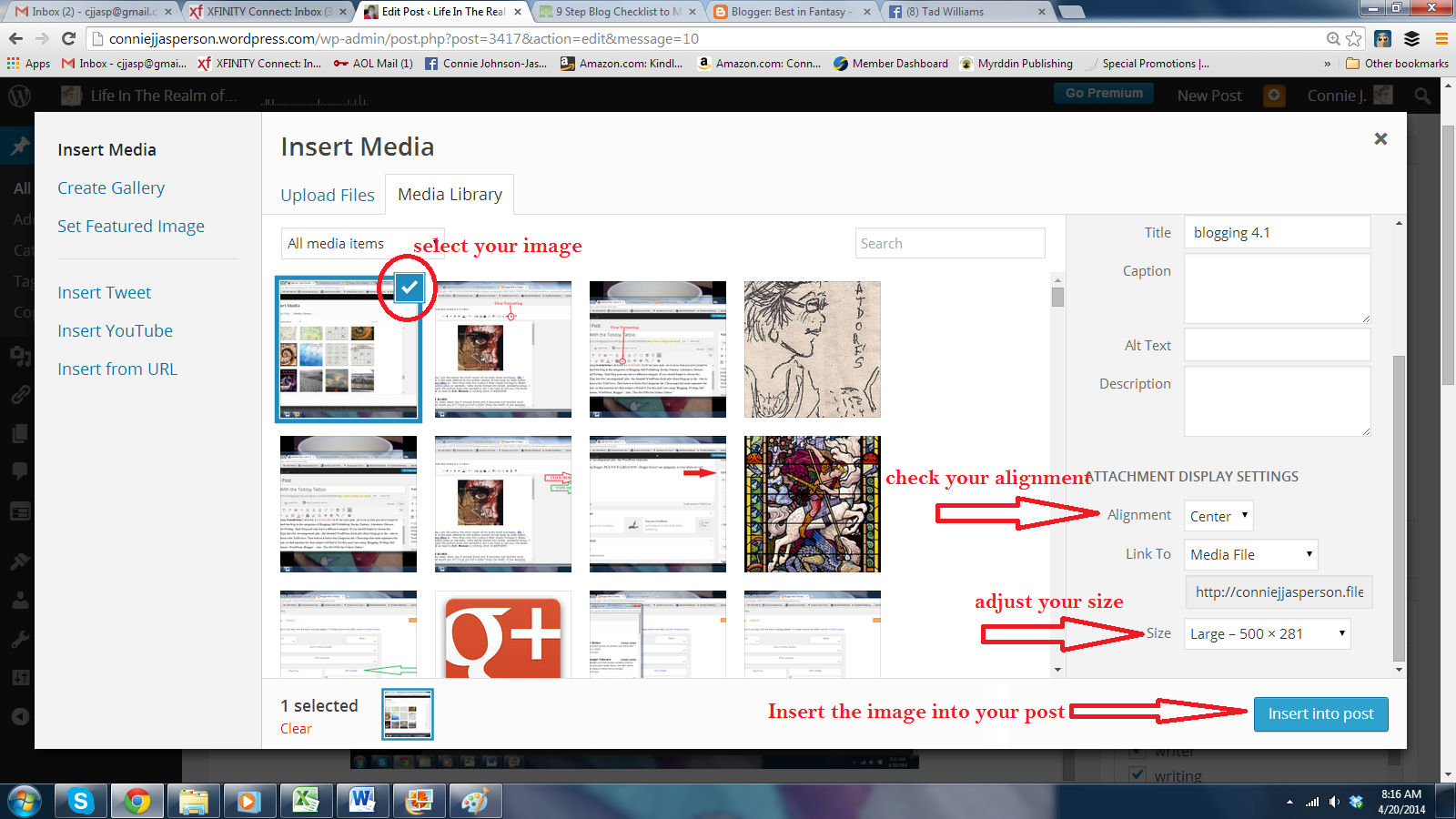
In WordPress, place your cursor in the body of the blog post and click once at the spot where you will want the image. Then scroll up to the left side of the ribbon (tool box) and click on “ADD MEDIA.” This menu will appear:


blogging 4.1

If this is your first blog post, you won’t have anything in your media library yet, so Click on “Upload Files.” Select the image you want to post,  then check your alignment, i.e. left, right, or center. Adjust your size options to fit your need for the image in that post (those requirements vary from post to post.) Then click ‘INSERT INTO POST.”

blogging 5.1


In Blogger you click on the little Picture in the ribbon (when you hover your mouse over it, it will say ‘insert image’). A pop-up menu will appear, and then you will upload the image, decide the placement and the size.  This nearly foolproof simplicity is why most people who have “never done this before” like Blogger.

blogging 6.1


Now your picture of your Tolstoy tattoo is right there, illustrating your hilarious post where you discuss why getting that tattoo while drinking vodka shots at the “Fans of Great Russian  Authors” convention wasn’t as good an idea as it seemed at the time, and that maybe the T-Shirt would have been a better investment.

leo_tolstoy_t_shirt-r207720cff4e14b059c7bba5cdb41c6c9_804gs_512 from Zazzle


All you have to do now is post your links to Twitter, Facebook, Tumbler and all other  social media you can think of and Voilà! You are a blogger. Do this regularly, and you will build up a following, and you will develop credibility as an author. Your name will be searchable on Google and Bing, and all other search engines.

3 Comments

Filed under Blogger, blogging, Books, Fantasy, Humor, Literature, Publishing, Self Publishing, WordPress, writer, writing

10 Things to Do—Part 1, The First 5 Speedbumps

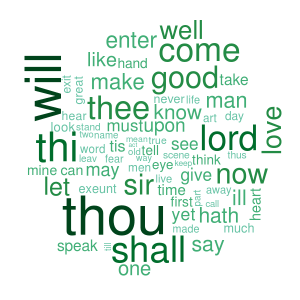
shakespeare-word-cloud

There are things that happen in the natural course of writing the first draft that make it painful for people to read. DO NOT SHOW IT TO YOUR ADORING FANS JUST YET. This really is NOT the time to ask for feedback unless you want to be lied to. They will look at you with a possum-in-the-headlights smile, and say “Wow…this is really…nice.”

What they really are thinking is, “Holy s**t. This disjointed, hokey mess sucks.” That friend will poke needles in their eyes before they read another piece of your work again.

Just sayin’.

But even though the first draft is always stinkaroo, don’t try to edit as you write because it interferes with your creative processes and blocks the flow of ideas. While you’re writing the first draft these bloopers should be allowed to just fall where they may, because you just need to get the ideas down.  You will reshape them in the 2nd draft. So, today I’m posting the first half of a two-part series on 10 Things to Do in the second draft of your manuscript.

Before you do anything, just put it to one side. Forget about it for a while.

A month or so later, after you have gained a different perspective is when you begin to look for these problems.  Fine tuning and rephrasing will settle most of them, and a good flamethrower will take care of the rest!

First we will look at:

800px-Singapore_Road_Signs_-_Temporary_Sign_-_Detour.svg1. The Info Dump (my personal failing)

Often new authors feel they need to dump a lot of back story at a novel’s beginning before readers will understand the main story. I did this in my first novel, and I have regretted it ever since! It seems like logical thinking: “Before you get this, you need to know this.” But the problem was, I gave the info dump in the first five pages.  Those are the pages that acquisition editors look at and decide whether or not to continue reading the submission. For those of us planning to go the indie route, those pages are also the pages the prospective buyer sees in the “look inside” option on Amazon dot com.

While back story is important for character and plot building, too much outright “telling” freezes the real-time story in its tracks. And for modern genre fiction, beginnings must be active—they need to move.

Here is the opening paragraph of my next novel in the Tower of Bones series, Mountains of the Moon. It is a prequel to the first two novels, and this is the way it currently reads in its second draft stage. It may be changed once the editor gets her hands on it, but right now this is how it stands with the info dump removed:

Wynn Farmer discovered his old boots had holes worn in the soles when he heard the soft, squishing sound, perfectly in sync with every step he took. If he’d known he would be dropped into some strange world when he left the house, he might have planned ahead a little better and slipped some new cardboard into his boots, just until he could get them resoled. Now he trudged along a faint path through a dark, eerie prairie with wet feet, shivering in the cold, misty rain and completely lost.

In the second draft we alter the original words we wrote, subtly slipping little details into the narrative while showing the real-time story, and doing it in such a way that it is part of the action and the dialogue, fading into the background.  The reader will understand what you are showing them without feeling bludgeoned by it.
 

nausea42. Telling Instead of Showing in Prose (heh, heh–my own personal failing)

In the rush of the first draft, of getting all our thoughts about the storyline down, sometime our minds go faster than we can write. We use a kind of ‘mental shorthand’ and write things such as:

Erving was furious.

Martha was discouraged.

These are really just notes telling us what direction this tale is supposed to go. Modern readers don’t want to be told how the characters felt—they want to see. When you come across this in a novel, it is clear the author has published a first draft.

Thus, when you come across this in your first draft, now is the time to follow those road signs and expand on the scene a little. Instead of telling the reader that Martha was furious, you will show this emotion.

Martha stamped her foot, and clenched her fists.

Erving’s body shook with rage, and his face went white.

Show the reader the emotions. It adds word count, but you will also be taking word count away in other places in the manuscript as you go along.
 

cover_art_Billy_39_s_Revenge3. Using Dialogue to Tell, Not Show (oh yeah–my personal failing)

“I’m simply not going to do it,” Vivian hissed. (Reader: “What, is she a snake?”)

“Why, oh why, did I ever trust her?” Greg said dejectedly. (Reader: “Aw, that’s sad. Boring!”) (Closes book.)

Please, OH please, avoid attaching adverbs ending in “ly” to speech tags. They are the devil!

If you want to convey an attitude in dialogue, the words themselves should communicate it.  Greg’s words already communicate dejection. If you need more, add a line of action:

In low tones, Vivian said, “You couldn’t pay me enough to do that.” She turned and walked away.

Greg threw up his hands. “Why did I trust her?”

This gives readers the opportunity to see for themselves the scene you painted with words.


4. A Lack of Contractions in Dialogue (Wait–this is my personal failing too!  What’s going on here?)

“Arrabelle, I do not want you to leave me!”

This is one of the worst NaNoWriMo manuscript flaws BECAUSE when we are in the midst of November, we are desperate for word count. “Don’t use contractions” is one of the prime directives of Chris Baty’s  “No Plot? No Problem” and if word-count is all you are in the game for, then fine.  However, IF you ever intend to publish your work you should use contractions in dialogue. Depending on the type of story you are writing, you may want to use them elsewhere, if that is the style of your work.

This problem may also be a throwback to those days in your high school English class, when teachers deducted points for the use of contractions in term papers. But contractions are effective at conveying realistic speech.

You want dialogue to sound natural? Use contractions.
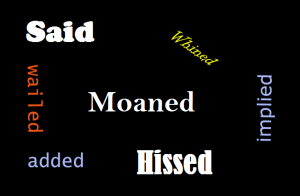
 

Dialogue Tags © cjjasp 20145. Too Many Speech Tags in Dialogue (Hey–I have that problem too! What the heck…?)

“Jake, are you okay?”  Vaia wailed.

 “Of course I’m all right,” Jake groaned. “What a silly question.”

 “But your arm,” Vaia said. “I thought maybe you…well, the way you’re holding it…I guess I thought—”

 “You thought I’d injured it,” Jake said.

 “Well…yes,” Vaia said.

Especially when only two characters are talking, readers should be able to keep track of speaker ID with ease. In those situations, speech tags are rarely, if ever, needed. In fact, doing away with tags entirely, unless they are absolutely necessary, is frequently suggested to be a great strategy, although I don’t go that far. Instead of using a speech tag, insert a burst of action before or after a line of dialogue that identifies the speaker and lends opportunities to deepen character chemistry, conflict, and emotions.

Vaia felt something trickling down her cheek. She wiped it, and her hand came away with blood. Jake was pale, and held his arm at a strange angle. “Jake, are you okay?”

 “Of course I’m all right. I’m always all right.”

 She reached toward his shoulder, toward the torn shirt—but something held her back. “But your arm. I thought maybe ….”

 “I’m hurt, but I think it’s fine. You thought maybe I had broken it.” He willed her to admit that she cared.

 The intensity of his gaze forced her to look away. “Well…. I did think that. Can you still fight?” 

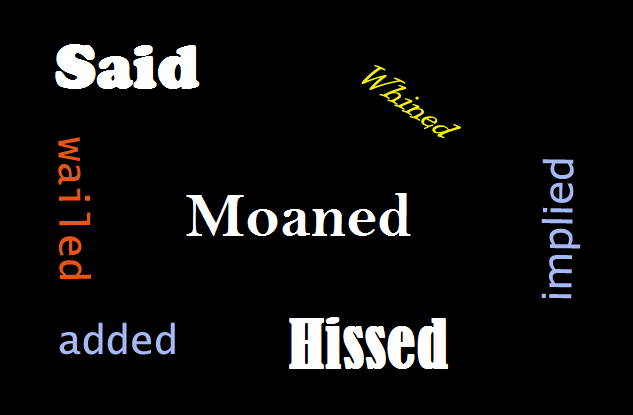
Trade in empty speech tags for emotion-infused writing that can do so much more. HOWEVER—Remember that the reader needs to have clear direction as to who is speaking to whom, otherwise you will lose the reader. And I do recommend you don’t get too creative with them.  Said, replied–those are usually all that is required. If you throw in hissed, or moaned, once in a great while for specific circumstances, fine, but not too much please. It’s too distracting for me as a reader.  I close that book and move on to the next when the  characters do too much hissing and moaning. Just sayin’.

This covers the first 5 things to look for in your second draft. Items 6 through 10 will be covered on Wednesday!



1 Comment

Filed under Adventure, Battles, Books, Fantasy, Humor, Literature, Publishing, Uncategorized, writer, writing

HUW the BARD Launch

HTB New Front Cover with gold frameToday is the official launch of HUW THE BARD, a novel set in the alternate medieval world of Waldeyn.

I am doing something quite unique, for me–I am hosting a Virtual Launch Party via Facebook, complete with virtual canapes, champagne, and caviar. The link for this event is here: Huw The Bard Launch Party. Any and all are welcome to stop by and share in the revelry.

This is the hard part of going the indie route–I wrote, had it edited, got it published, and now I have to sell it. There is an art to this, I ‘m sure! Some people with moderately good books are quite successful, and others with truly great books, not so much.  Even Charles Dickens had trouble selling his work, back in the early days of publishing. In fact, most of the early authors of books we now consider classics were unheard of in their own time, except by a few intrepid readers.

So now, in this modern era of social media, I am trying to let the world know I wrote a book. I want folks who might be interested in it to be able to find it.

But I want to do this in such a way that I am not spamming my Facebook friends — because they get enough of that already without me adding to it. Hence, my launch party, open to the public and of course, my friends. How this will go, I don’t know, but I have been looking at other avenues of exposure, and now begins the (tasteful) twitter campaign. Also, many of my friends are supporting me by posting reviews, excerpts and cover reveals on their blogs, which is a huge help.

Carlie M.A. Cullen posted a lovely review.

Maria V.A. Johnson also posted a great review.

Fresh Pot of Tea, Alison DeLuca hosted the cover reveal, and posted an excerpt of the book.

So if you are available, feel free to stop on by  the Launch Party, have a virtual canape and swap a joke or two with me and my friends. I will be posting medieval music that I have come across on YouTube, and of course, we will talk about the book.

HUW THE BARD on Amazon.com

YouTube video book trailer featuring the music of Tom Cusack


Lute onBlack Background


4 Comments

Filed under Adventure, Battles, Books, Dragons, Fantasy, History, Humor, Literature, Publishing, Romance, Uncategorized, writing

The Bitter Pill

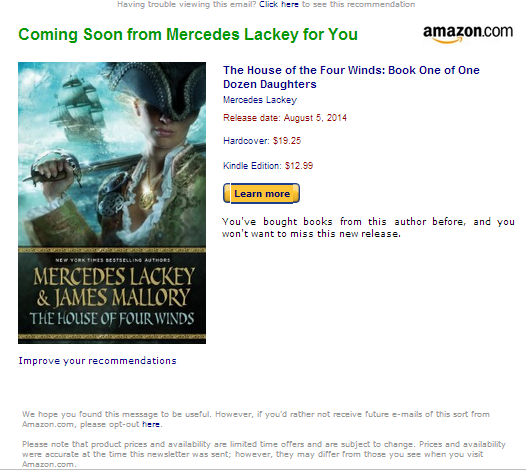
Advanced Notice from Amazon re Merceds Lackey's new bookOne of the most confusing things about being an indie author is pricing your book. Quite honestly, if you price it too high–I probably won’t buy it unless you are my dear friend (don’t worry Tad Williams, I will sell my car to get your next book.)

For me, anything over $4.99 is too high, and $2.99 is the perfect spot. I love those $0.99 books too!

I am sorry, Mercedes Lackey & James Mallory–your publisher has priced you out of the ballpark for me–I read four to six books each week and will not be able to pre-order The House of Four Winds for my Kindle. In fact, at that price, I will have to wait until the paperback turns up at my local second-hand book store.

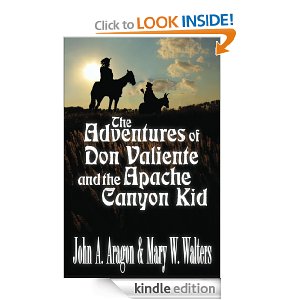
Don ValienteIn a recent post discussing Hugh Howey‘s report, Author Earnings: the Report, on her excellent blog, The Militant Writer, Mary Walters  boiled it down to manageable chunks and made a great many good points. One in particular is of great interest to those of us trying to choose a publishing path, and who may be wavering between going indie, or remaining on a traditional path. She writes:

  • Readers are not buying traditionally published e-books as frequently as they are indie published e-books, because indie-published books cost less. Therefore, traditionally published authors are getting read less often, and are making less money per book sold than indie authors are.

This is important news for traditionally published authors.

It is also important news for major publishers, who are going to lose their authors if they don’t smarten up.

We won’t go into the impact all this is having on good literature, but Howey believes that the data suggests that “even stellar manuscripts are better off self-published.”

Speaking as an author this is sad, because I am like everyone who writes a book, secretly hoping to get picked up by a big publisher. On so many levels that would be a great honor, to have my work recognized by an industry I have always respected. But when I look at this conundrum as a reasonable human being, no one wants to be tied the wheel and sold into eternal serfdom for the rest of their writing career. No one wants to be forced to write stale sequel after sequel, just because the first book rocked and now the series brand is a guaranteed sale for the publisher. Where is the joy of creativity in that?

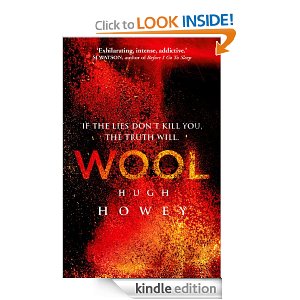
wool by hugh howeyThis is where each author must make a key decision regarding what we will commit our energy to: Will we court the favor of an industry that has much to offer us, but expects to be paid in more than their pound of flesh? Or will we soldier on, trying to find that sweet-spot that Hugh Howey has found, and perhaps hit the big time through our own efforts?

I choose to follow in Mr. Howey’s footsteps. I haven’t been that successful yet, but what I earn is mine. I am the captain of my ship, and if I fail to navigate the shark-infested waters of publishing, at least I have given it my best effort. I will continue to price my books as reasonably as I can, and hope that with persistent efforts on my part, their sales will gain ground.

The harsh truth is that the big publishers are rushing to publish manuscripts by big name authors that are just as poorly edited and just as abysmally plotted as those in the $0.99 bin at Amazon.com. How many paperbacks have you bought, gotten halfway through them, and said, “This is s**t!”… ?

I would rather pay less than $12.99 for that privilege, thank you.

George R.R.Martin formatting issue 3 via book blog page views, margaret ebyI find that traditionally published books are fraught with problems just as frequently as not, and it pisses me off, because the big publishers LOUDLY proclaim their quality is superior, when time has proven it is not necessarily so. This is why I go to the secondhand bookstore for the traditionally published books, and haunt the Kindle store, looking  for the indies.

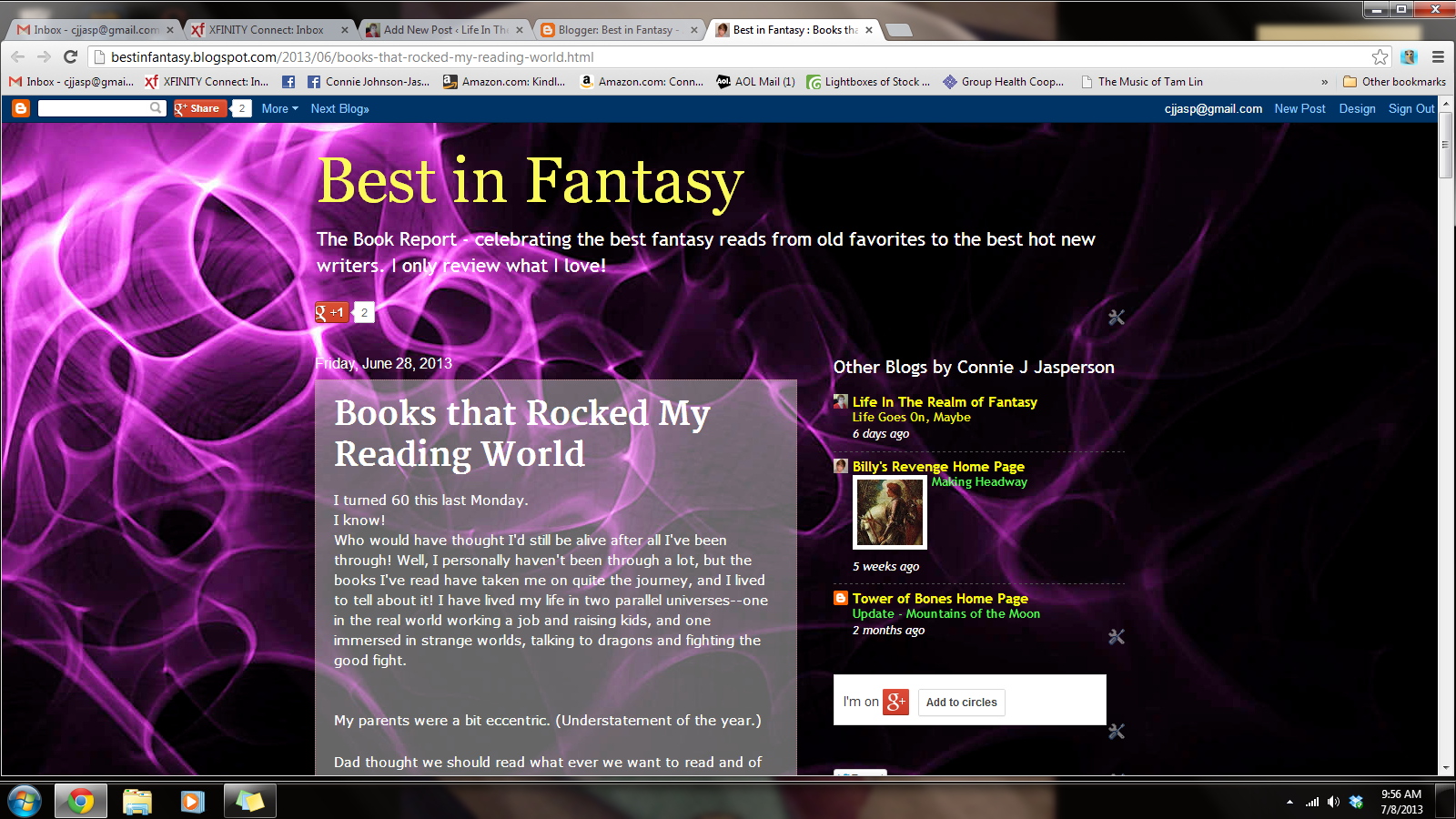
There is gold out there in those inexpensive Kindle books, and I am vindicated every time I read a true gem.  This is why I blog about the books I love on my Best in Fantasy blog–an attempt to bring attention to the many amazing books that entertain me.

7 Comments

Filed under Books, Fantasy, Literature, Publishing, Uncategorized, Vegan, writer, writing

The Curse of The Indie Author, and the Cure

BIF Blog Print ScreenYou all know I write, and you all know I read.  You may not know that I read 2 to 6 books a week and I blog about the ones I really like on a book review blog called Best in Fantasy. I try to write a new post for every Friday.

I began that blog two years ago, with an eye to promoting the books I loved, books that moved me.  As it progressed, I began seeking out and promoting the books of indie authors. I do not accept free manuscripts, as I want to feel NO pressure to say nice things about a book. I always buy the downloads for this blog.

DR 3 Prism Ross M KitsonI have read some incredible, amazing work over the last 2 years–work I would never have been exposed to if not for the Kindle and the fact most indie downloads range in price from .99 to 4.99 and many can be found for free during promotional days.

This amazing access to great, innovative writing has created an entire sub-culture in the writing industry.  People like me, bloggers who regularly read and love to discuss what they read are springing up everywhere and they are talking about what they read. And let me tell you, I have read some truly well-crafted books that stayed with me.

Authors are also springing up everywhere.  Nearly everyone I meet is either a self-published author or a close relative of one. How humorous it is to find that we once-exalted tellers of tales are no longer special–everyone has a book in them or at least thinks they do, and they are publishing them.

This rapid expansion of the self-publishing industry has come with a price, however, and it is a huge one.

The ease with which anyone possessing the ability to read, access  a computer and use the internet can publish their work independently has sparked a revolution. If you have read your American history, revolutions are NOT easy nor are they bloodless and pain-free.

For every book by an indie (or indeed by a traditionally published author) that I can feel good about recommending on Best in Fantasy, I see on average 6 that are just plain awful. These are books that would never make past the intake editor or an agent.

Some indie books are so abysmally edited it is apparent the author is the only person who has ever seen the manuscript. Some are moderately edited but not very well or professionally, and the author (as in my case with The Last Good Knight) gives way too much back-story up front and in huge info-dumps. This loses the attention of all but the most determined reader immediately, people who would ignore most typos and slight inconsistencies for a really good tale. This is where the unbiased eye of the editor can make a great novel out of a promising tale.

There are an incredible number of people writing books who have absolutely no concept of how to tell a coherent story. Not only is the book over-the top with descriptions (which take all the fun out the book) the whole thing can sometime feel like one long ego-stroking, autobiographical trip through the personal fantasies of the author, with him as the main character.  Those books have what I think of as the ‘creepy-voyeur’ factor built into them, and I just can’t get too far into them before barfing.

the Book of Ruth - jane HamiltonOthers start with a great idea, but the author leaves you wondering what happened to that kernel of brilliance, as the story sort of dies at the end and you are left wishing you had quit reading at page fifty.   This happens with just as MANY traditionally published books as with the indies, folks! Take “The Book of Ruth” for example.  How it made the Oprah Book Club I will never know, but it is one of the most depressing and abysmal books I have ever read, and I have read quite a few bad books. It totally turned me off of The Oprah Book Club.

The big 6 traditional publishers pretend that much of the crap they publish is all sheer magic, while loudly pointing out the faults inherent in self-publishing.  And, while it makes me angry that they decry us as worthless but leap to publish us the minute we show any sign of real success, there are hard truths here we indies who are committed to the CRAFT of writing must face.

What this ability to publish any piece of garbage that falls out of your head does for us as indies is to tar us all with the same brush. THIS is the curse of the indie author.

The cure for this curse is as follows:

1. Learn how to write in your native language. Grammar and Punctuation are essential, even in modern literature.

2. Join a writing group and meet other authors, either in your local area or on-line. This will help you with steps 3 and 4. Enter writing contests such as Amazon’s Breakthrough Novel Awards and participate in the boards and threads. Ignore the trolls, they pop-up everywhere (usually with badly written ego-stroking crap to their publishing credit.)

3. Develop a thick hide, and find an unbiased eye among your trusted acquaintances to read your work as you are writing it, so you can make changes more effectively and not be overwhelmed at the prospect of rewriting an entire manuscript from scratch.

4. Lose your ego. Your ego gets in the way of your writing.  Are you writing for yourself or for others to read and enjoy your work?

5. Find a good professional editor. Check their references, and when you do engage their services, do not take their criticisms personally. This editor must be someone you can work closely with, who makes suggestions and lets YOU make the changes on your masterpiece yourself. They must understand it is your work and you have the right to disagree with any suggested changes. If you have this symbiotic relationship, you will turn out a good final product.

This blog-post today has been inspired by the fact that over the last three weeks, I cracked open a total of 19 books, both indie AND mainstream, and was only able to find one book that I enjoyed and gave four stars to because of editing issues, and one AWESOME, amazing book that will get 5 stars from me.

Traditional publishers are failing us as readers by pushing their successful authors to spew a book or even two a year,  beating dead horses and creating long-winded series that go nowhere and have no entertainment value.

Some of the worst books I read over the last two years were written by two authors who have also written books I really enjoyed, but their best books were written in the early days, when these authors were not book-producing machines.

I expect more from a traditionally published book than a boring info-dump at the beginning, and lackluster characters you don’t give a hoot about.  I hold every book I read to that standard, and I am willing to forego some editing bloopers, which with the rush to publish nowadays, they ALL have, traditional or non-traditional.

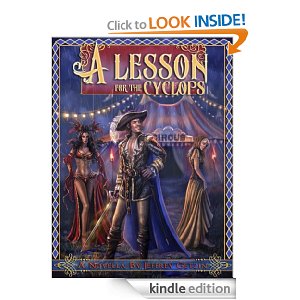
A Lesson for the Cyclops Jeffrey Getzin

I just want to read a good story!

I want to be swept away to new lands and people I want to know and meet.

I want to be challenged and entertained.

Books are my drug and my addiction, and I am compelled to talk about them, to share them and re-read them.  That is why I blog every Friday on what I enjoyed reading that week.  Stop by this coming Friday afternoon and see what I am reviewing this week on Best in Fantasy. There will be a new review posted by 7:00 a.m. PDT.

In the meantime you can checkout the review for A Lesson for the Cyclops, a wonderful novella written by indie Author Jeffrey Getzin.

12 Comments

Filed under Adventure, Books, Fantasy, Literature, Uncategorized, writer, writing