
In my previous post, Agency and Character Development, I briefly mentioned the importance of consequences. It is a word with many uses and connotations.
 Let’s look at both the meanings and synonyms for the word consequences.
Consequence (noun)
[kon-seh-kwens]
consequences (plural noun)
[1] The result or effect of an action or condition.
“Many programmers were laid off from work as a consequence of the failing economy.”
Synonyms:
Result, upshot, outcome, sequel, effect, reaction, repercussion, reverberations, ramification, end, end result, conclusion, termination, culmination.
[2] Importance or relevance.
“That’s of no consequence.”
Synonyms:
Importance, import, significance, account, moment, momentousness, substance, note, mark, prominence, value, weightiness, weight, concern, interest, gravity, seriousness.
[3] Social distinction. (Slightly dated usage. Its synonyms are more commonly used.)
“Adelaide Brown was a woman of consequence.”
Synonyms:
Fame, distinction, eminence, preeminence, prominence, repute, reputation, prestige, acclaim, celebrity, note, notability, mark, standing, stature, account, glory, illustriousness.
For today’s post, let’s consider agency and the importance of choice. How will the results of their decisions affect our characters’ lives? After all, a story isn’t interesting without a few self-inflicted complications.
Once again, we will go to J.R.R. Tolkien and look at Bilbo’s choices and his path to becoming the eccentric eleventy-one-year-old hobbit who vanishes (literally), leaving everything, including the One Ring, to Frodo.
 In the morning, after the unexpected (and unwanted) guests leave, he has two choices, to stay in the safety of Bag End, or hare off on a journey into the unknown. He chooses to run after the dwarves, and so begins the real story—how a respectable hobbit became a burglar and became a hero in the process.
The consequences of his decision will shape his entire life afterward. Where he was once a staid country squire, having inherited a comfortable income and existence, he is now expected to steal an important treasure from a dragon. At the outset, that particular job doesn’t seem real. He is beset by problems, one of which is his general unfitness for the task. He’s always been well-fed, never had to exert himself much, and suddenly, his opinions carry no weight.
Bilbo’s hidden sense of adventure emerges early when the company encounters a group of trolls. He is supposed to be a thief, so he is sent to investigate a strange fire in a forest. Reluctantly, he agrees. Upon reaching the blaze, he observes that it is a cookfire for a group of trolls.
Bilbo has reached a fork in the path of life. He must make a choice: the smart thing would be to turn around at that point and warn the dwarves. However, his ego feels the need to do something to prove his worth. “He was very much alarmed as well as disgusted; he wished himself a hundred miles away—yet somehow he could not go straight back to Thorin and Company empty-handed.” [1] Bilbo feels the need to impress the Dwarves and makes decisions he comes to regret.
In the process of nearly getting everyone eaten and having to be rescued by Gandalf, he discovers several historically important weapons. One of them is Sting, a blade that fits Bilbo perfectly as a sword.
At first, Sting has no name, a long knife that the hobbit Bilbo Baggins discovers in the cave of trolls. Gandalf and the dwarf Thorin also find their respective swords, Glamdring and Orcrist.
Although it is only a dagger, its length corresponds to a short sword for a creature the size of the hobbit. It turns out that, like the swords of Gandalf and Thorin, this dagger was forged by the elves of Gondolin in the First Age and possesses a magical property—it shines with a blue glow when orcs are close.
 The blade does not acquire its name until later in the adventure, after Bilbo, lost in the forest of Mirkwood, uses it to kill a giant spider and rescue the Dwarves. This is when Bilbo’s decisions become more thoughtful, and his courageous side begins to emerge.
Decisions and consequences shape Bilbo’s character and force his growth. His experiences and bad choices along the way have consequences that shape how he thinks. As the Dwarves continue to get into trouble, he makes plans for their rescue and considers what may or may not go wrong before implementing them. He doesn’t know it, but he thinks like a warrior instead of a staid country squire.
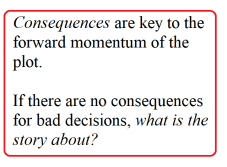
Consequences force the character arc. Sometimes the decisions our characters make as we are writing them surprise us. But if those decisions make the story too easy, they should be discarded.
We, as their creator, must take over, cut or rewrite those scenes, and force the story back on track.
Credits and Attributions:
[1] Quote from The Hobbit, or There and Back Again, by J.R.R. Tolkien, published 1937 by George Allen & Unwin, Ltd.
 This is an excellent time to look at the freedom we give our characters to act and react within the story. I have mentioned many times that I am a plotter. However, when I am in the process of writing the first draft of a novel, the characters sometimes take over. The plot veers far from what I had intended when I began writing it.
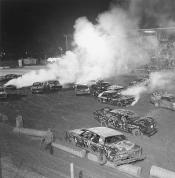 This happens because my work is character-driven, and sometimes, they’re like demolition derby drivers.
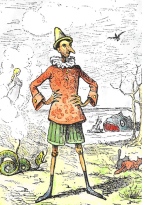 This is called giving your characters “agency.” Agency is an integral aspect of the craft of writing. It means that you allow your characters to make decisions that don’t necessarily follow the original plot outline. This gives them a chance to become real, the way
 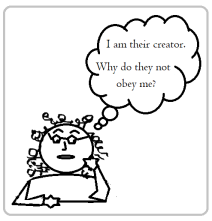 No matter how they respond, they will be placed in situations where they have no choice but to go forward. After all, I am their creator, the deity of their universe. I have an outline that predestines them to specific fates, and nothing they can do will stop that train.
 On November 1st, when we began setting the first words on the blank page, our minds formed images, scenes we attempted to describe. In his book, The Language Instinct,
 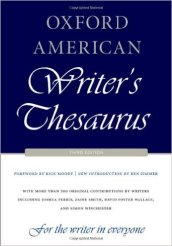 Once you find them, you need to go to the thesaurus to find alternatives that better express your intent.
 If you don’t have it already, a book you might want to invest in is
  Each chapter is comprised of one or more scenes. These scenes have an arc to them: action and reaction. These arcs of action and reaction begin at point A and end at point B. Each launching point will land on a slightly higher point of the story arc.
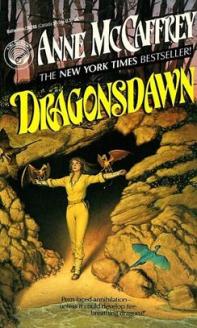 he scenes we are looking at today have two distinct environments to frame them: first the planet and then the abandoned colony ship, Yokohama. These scenes are filled with emotion, high stakes, and rising dread for the sure and inevitable tragedy that we hope will be averted. Not all the drama is in Sallah Telgar’s direct interaction with Avril Bitra. The environment heightens the drama, the sense of impending doom.
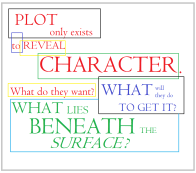 We see Avril taunting Sallah for her matronly body and move out again to see Avril tying a cord to Sallah’s crushed foot and forcing her to make the navigational calculations for Avril’s escape. We move close up and hear the interaction, Sallah pretending to do as Avril asks but really setting her enemy’s doom in action. The camera moves to the wide view again, and we hear the interaction with her frantic husband on the ground. We are caught up in her determination to seize this only chance, using her dying breaths to get the information about the thread spores to the scientists on the ground.
 But more importantly, even if you are traditionally published, you pay for the books you sell at shows.


 She also wrote the brilliant, hilarious standalone novel,
  About Ellen King Rice: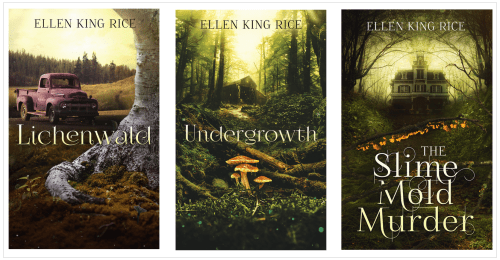
 In an instant, an entire manuscript is gone, wiping away hundreds of hours of work on their labor of love.
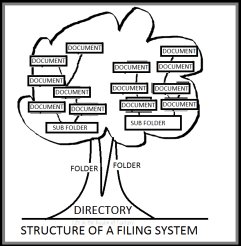
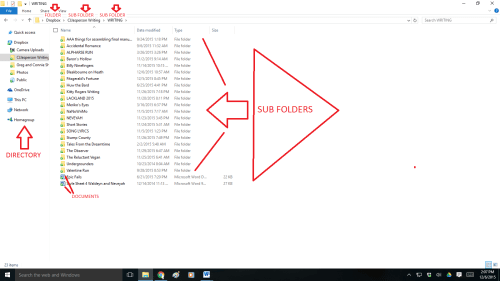 A filing system is quite simple, rather like a tree from the ground up. For most documents, my system is a standard office-type system that consists of:
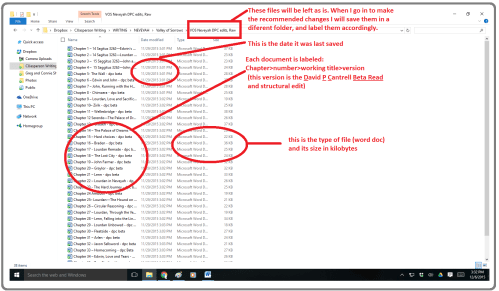 Name your files consistently and save each version in a separate folder within the master folder. Below is the master file for Valley of Sorrows.
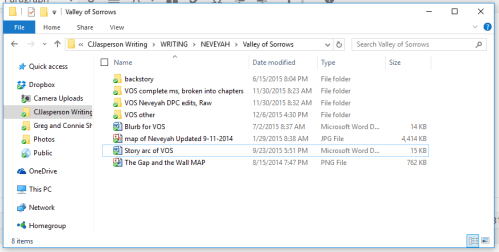 You may create many versions of your manuscript. YOU MUST manage your versions with meticulous care, or you will lose files, have to rewrite sections you just wrote, and which were brilliant, or any number of horrible, irritating situations.
 It’s a platform where you can advertise your books and discuss your interests, and most importantly, talk about what you are writing.
 Writing blogposts requires me to become a thinking author, as well as a pantser. I can write using the “stream-of-consciousness” method or from an outline of whatever interests me at the time. I do the research, and the post begins to write itself.
 I love to see what questions people might want to have answered. Sometimes topics crop up at my writing group that no one has an answer to, and then I get to do a little research—my favorite thing. Other times I find interesting questions in the writers’ forums that I frequent.
 If you feel that it’s too much work, consider how you update your other social media. Try posting a haiku, a tweet-length post, or an Instagram-style post once or twice a week. Any social media platform post can be converted to serve as a blog post.
 Today, we continue that discussion with four more genres, each with many subgenres. First up is westerns. This is a popular genre with several common tropes and can be tricky to write respectfully and find a publisher for.
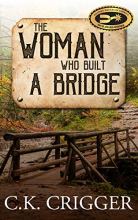 However, more and more, we are finding stories with female protagonists. An excellent example of this is the novel,
 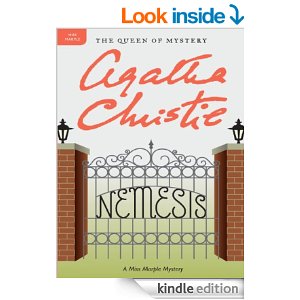 The Agatha Christie / Sherlock Holmes style of novel is the classic whodunnit. They feature a private detective with close ties to law enforcement but who is still an outsider. The detective sometimes has a sidekick who chronicles their cases. At times, the detectives butt heads with the police as resentment of the protagonist’s stepping on their turf crops up. This jealousy hinders the investigation. Clues are always inserted so that the reader doesn’t notice them until the denouement, and the sidekick never guesses right either.
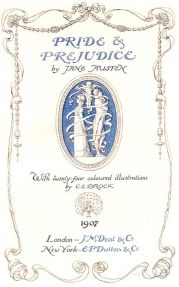 Definitions differ as to what constitutes a historical novel. On the one hand, the
  The rules of the category I am entering (Genre Fantasy/Sci-Fi) are clear: submissions must be of new, never-before-published novels. You can include only the first 25 pages of the manuscript, which will follow the synopsis.
 This is a task I would have found far more daunting without the support of my Tuesday morning writing group.
 Attend a few meetings as an observer to see if this group is a good fit for you.


 Life in the Realm of Fantasy