
The habit of creative writing usually begins small. It’s an idea, something we wish someone would write. At first, it’s a hobby we must fit around our work schedule and family obligations. Somehow, that hobby grows and grows. For some of us, it becomes a second job that pays little and demands a great deal of attention.
 When a new writer decides to begin their career by embarking on writing a novel, the magnitude of the undertaking soon becomes apparent.
At first, they are fired up about the project. For several pages, the words flow. Unfortunately, the fire of enthusiasm burns low as creativity fails.
They have the idea. They have the characters. But they don’t have the skills to write something as long and involved as a novel.
Many people see that as a sign that they are untalented. They put it away and never write again.
But the truth is, the project was too ambitious for their skill level. They haven’t learned the tools of the trade and received no reward for their efforts.
I suggest people begin by writing micro fiction. Drabbles are a form of micro fiction, an entire story in exactly 100 words.
Some forms of poetry, such as haiku, are not micro fiction, as they don’t tell a fully developed story.
 Writing a drabble takes less time than writing a 3,000-word story or a 70,000-word novel, but all writing is a time commitment. When writing a drabble, you can expect to spend an hour or more getting it to fit within the 100-word constraint.
First, we need a prompt, a jumping-off point. We have 100 words to write a scene that tells the entire story of a moment in a character’s life.
Some contests give whole sentences for prompts. Others offer one word, and still others have no prompt at all.
A prompt is a word or visual image that kick-starts the story in your head. If you need an idea, go to Reedsy’s Weekly Writing Prompts.
But prompts are only the beginning. To write a story of any length, we need these essential components:
- A setting
- One or more characters
- A conflict
- A resolution.
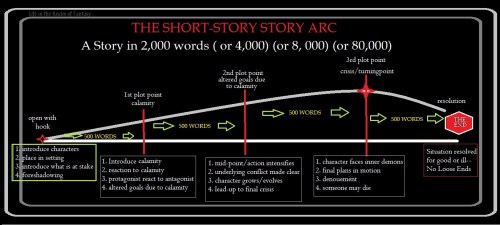
 I use a loose outline to break the arc of every story I write into acts, each with a specific word count. (I’ve included a graphic at the bottom of this post.)
A drabble may have only 100 words, but my process works the same as for a novel.
For a novel, I divide my outline this way: 10,000 or so words to open the story, set the scene, introduce the characters and get to the inciting incident. 50,000 or so words for the heart of the story. 10,000 or so words for the conclusion.
A micro fiction is outlined the same way:
- I have about 25 words to open the story and set the scene.
- I have about 50 – 60 for the heart of the story.
- I give myself 10 – 25 words to conclude it.
- The story must be told in precisely 100 words. (Not more, and not less—exactly 100 words.)
Writing micro fiction teaches you to tell a story without exposition.
However, you should save the clumps of exposition and backstory in a separate file because they do come in usefully as part of your world-building and character development exercises.
- Every word you write and discard might be useful in a later story.
- Label the file with a title that says what it is.
- Save it in a master file that contains ideas for longer stories.
 I mentioned rewards in the title of this post. The completed story is a small gift you give yourself, and the surge of endorphins you experience in that moment of “Yes! I can write after all!” are the reward.
When you write to a strict word count limit, every word is precious and must be used to the greatest effect. By shaving away the unneeded info in the short story, the author has more room to expand on the story’s theme and how it supports the plot.
I suggest you save your drabbles and short scenes in a clearly labeled file for later use. Each one has the potential to be a springboard for writing a longer work. Or you might want to submit it to a drabble contest.
Contests for micro fiction abound on the internet. Whether you choose to submit a drabble to a contest or hang on to it doesn’t matter. Either way, the act of writing micro fiction hones your skills, and you will have captured the heart of your brilliant idea.
Micro fictions are the distilled essence of novels. They contain everything the reader needs to know about that one moment in time. The reader wants to know what happens next.
You will have succeeded in writing your story, and that success is a reward in itself.
 We humans are tribal. We prefer an overarching power structure leading us because someone has to be the leader. We call that power structure a government.
 Power structures are the hierarchies encompassing the leaders and the people with the power. Government is an overall system of restraint and control among selected members of a group. Think of it as a pyramid, a few at the top governing a wide base of citizens.
 The same sort of God complex occurs among academicians and scientists. Some people are prone to excess when presented with the opportunity to become all-powerful.
 Some people call this writers’ block. I think of it as a temporary lull in my creativity.
 Sometimes, the problem is that your mind has seen a shiny thing, a different project that wants to be written, and you can’t focus on the job at hand. If that is the case, work on the project that is on your mind. Let that creative energy flow, and you can reconnect with the first project once the new project is out of the way.
 In my real life, getting our house ready to put on the market saps my creativity, but I am muddling along. Boxes here and there, getting rid of this and that—it’s exhausting. Sometimes I don’t have the energy to write.
 When we daydream, our brain is free to process tasks more effectively.
 Every writer knows the backstory is what tells us who the characters are as people and why they’re the way they are. At the beginning of our career, it seems logical to inform the reader of that history upfront. “Before you can understand that, you need to know this.”
 But knowing this and putting it into action are two different things.
 Be aware: if you are writing from an omniscient POV, this can be tricky and lead to “
 Romance novels average 50,000 to 70,000 words. In shorter novels, there is no room for sweeping, epic backstories. Instead, information and backstory are meted out only as needed through conversations and internal dialogue/introspection.
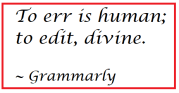 Even with all the effort I apply to it, my editor will find things that don’t matter. She will gently take a metaphorical axe to it, highlighting that which doesn’t advance the story or add to the intrigue.
 In his book,
 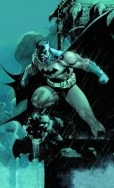 Batman is a
  Apollo 13 (April 11–17, 1970) was the seventh crewed mission in the
  Authors make readers when they do in-person book signings. We have the chance to connect with potential readers on a personal level, and they might buy a paper book. If we are personable and friendly, they might tell their friends how much they liked meeting us. Those friends will buy eBooks. (We hope!)


 She also wrote the brilliant, hilarious standalone novel,
 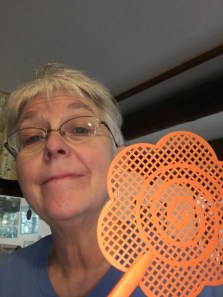 About Ellen King Rice: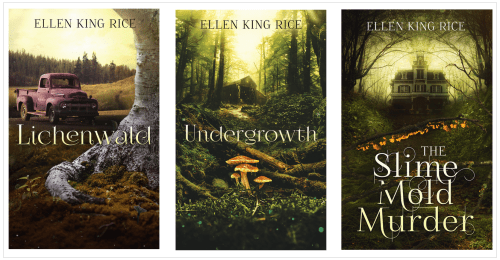
 A new year has begun, and open calls for spring and summer contests and anthologies will start appearing in various forums that I frequent. Finding places to submit your work can be challenging, but here are links to two groups on Facebook where publishers post open calls for short stories.
 My problem is this: all my stories want to grow longer than 1,000 words. It requires weeks of effort to get my work to fit within that parameter. So, I often write practice stories, limiting myself to telling the whole story in 1000 words or less. These practice shorts serve several purposes: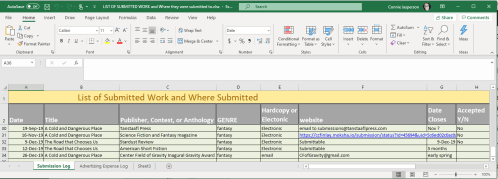
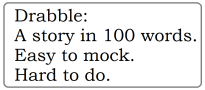 As a poet, I find it far easier to tell a story in 100 words than in 1,000. That 100-word story is called a
  That way, you won’t be left wondering how to attend a conference and still cover your household bills.
 For me, revisions begin with the second draft and sometimes involve radical changes to the storyline or character arcs. I may take a manuscript through many drafts before finally getting the story right.
 NEVER DELETE months of work. Don’t trash what could be the seeds of another novel. Save it in an outtakes file and use it later. I give the subfile a name like HA_outtakes_20Dec2022. That file name tells me the cut chapters were last changed on December 20, 2022.
 Then, I give the second draft a new file name: Heavens_Altar_version_2, which becomes the version I work on out of the main file folder.
 Either way, the characters will be profoundly changed from who they thought they were on page one, becoming who they are when the final sentence is written. The character arc is formed by their experiences.
 True inspiration is not an everlasting firehose of ideas. Sometimes there are dry spells. If you take another look at the work you have cut and saved in an outtakes file, you might see it with fresh eyes. You might see the seeds of a different story, and the fire for writing will be reignited.
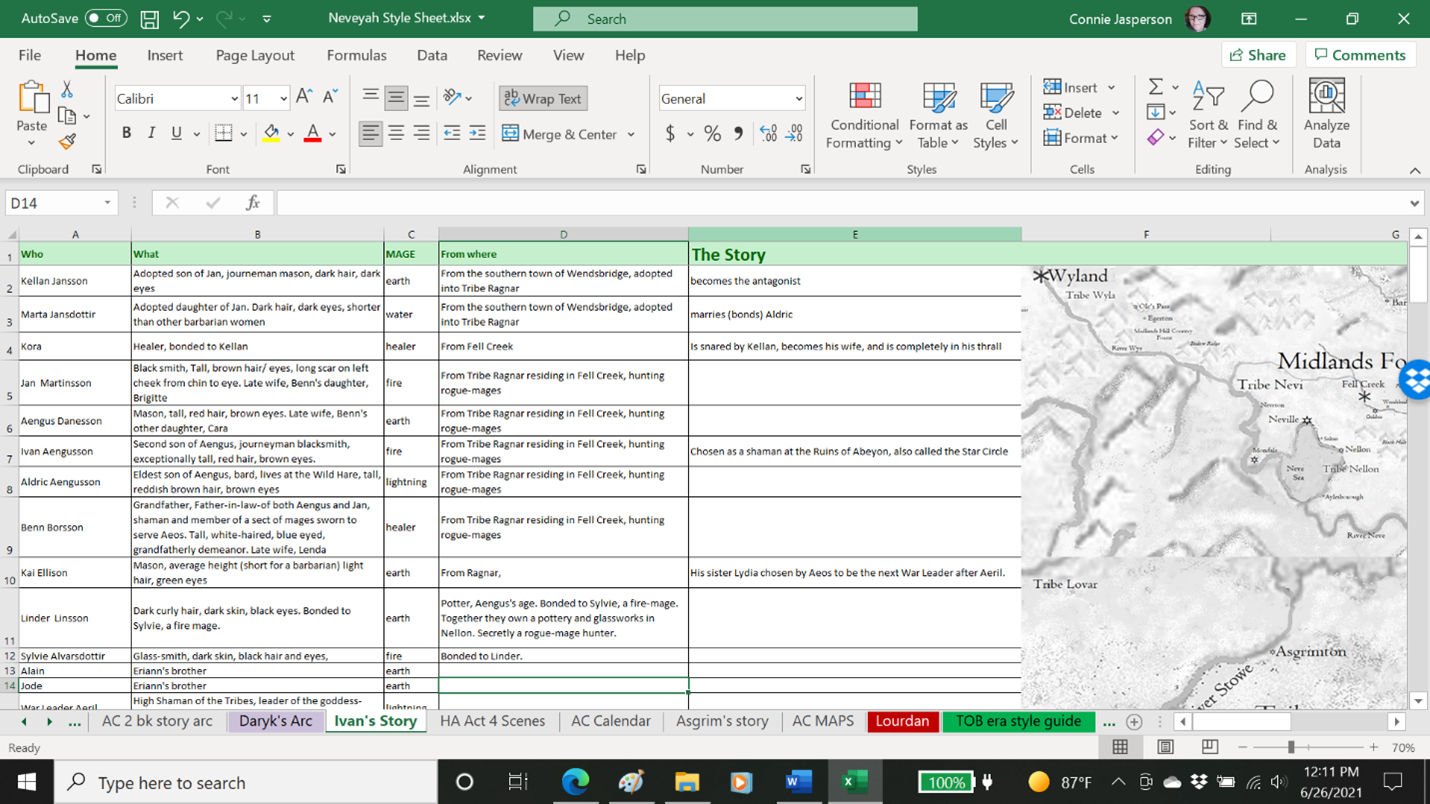
 When a manuscript comes across their desk, editors and publishers create a list of names, places, created words, and other things that may be repeated and pertain only to that manuscript. This is called a stylesheet.
 For short stories, the stylesheet will probably be a Word document. I have written them out by hand on occasion. You can create them in Google Sheets or Docs, which is free.
 Page Two: The projected story arc will be on page two of the workbook. I list each chapter by the events that need to be resolved at various points in the manuscript.
 We never really know how a story will go, even if we begin with a plan. We will probably deviate some from the original outline. Usually, for me, the major events will remain as they were plotted in advance, even though side themes will evolve. The outline keeps me on track with length and ensures the action doesn’t stall.
 The plot usually evolves as I write each event and connect the dots. In one instance, it was completely changed. The original plot didn’t work at all, so drastic measures had to be taken.


