
In the past few weeks, we have looked at the structural elements of the story, such as theme, narrative mode, point of view, and the author’s voice. We’ve talked about showing emotions and writing believable drama. We have dissected how a story flows from scene to scene.
 So now, we realize that we must submit our work to contests or publications if we ever want to get our name out there. We have looked at our backlog of short stories and gone out to sites like Submittable or the Submission Grinder to discover contests or magazines that we’d like to send them to.
After all, some of these old ramblings could be pretty good if we dusted them off and polished them up a bit.
So now we’re going to look at the structural elements of a story that has been sitting for a while. Let’s have a look at one of many short works I wrote during lockdown but forgot about.
 The first thing we’re going to look at is the problem. Is the problem worth having a story written around it? If not, is this a “people in a situation” story, such as a short romance or a scene in a counselor’s office? What is the problem and why did the characters get involved in it?
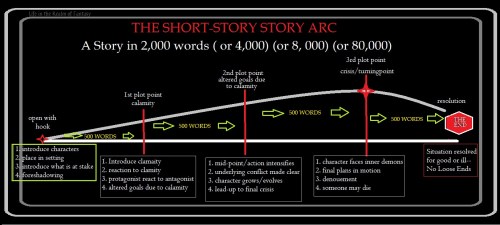
The following is the core plot of a short story that came in just under 4,000 words.
A messenger, Oriana, and her partner are on a mission to a local ruler from his brother, the king. Before they arrive there, her partner quarrels with her and attempts to steal the coins that belong to the king. She knocks him out, retrieves what he had stolen, and continues her quest to take the coins to the king’s brother.
At the brother’s town, Oriana collects a small jewel, one that is really an item of great magical power. The king will use it to end the drought that has been crippling the country. Now, she must convey it back to the king.
Oriana meets a wanderer, Geran Rose, who, unaware of what she is carrying, joins her. They travel together, but then the next day, the former partner shows up, accompanied by a demon. Now, the messenger realizes what the thief is really after. She can’t let the demon have the jewel but knows she can’t defeat him. However, a dragon can. So, she and her companion lead the demon into dragon country, knowing that they could die as easily as the demon.
First, I look at believability. It is a fantasy set in a world of humans, elves, dwarves, and dragons, so in that world, would the central event I have detailed really happen? More importantly, would it happen in the way I have shown?
- The dragons are wild creatures, sentient and, most importantly, looking for a good meal. Why would dragons desire to eat a demon? They love the taste of elves, but they love the taste of demons more. These dragons crave the darkness that the demon embodies in the same way I crave chocolate.
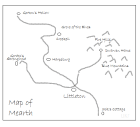 Worldbuilding is crucial in a short story. Is the setting I have chosen the right place for this event to happen? In this case, I say yes, that it is the only place where such a story could happen.
I absolutely loved writing the scenes set at the edge of the burning lands. But have I left enough clues in the setting for a reader to visualize the world? My writing group will tell me.
The next aspect I look at is characterization, or how I have portrayed the protagonist and other characters. I ask my characters the same questions that I would ask of those in a novel. Answering these questions also tells me if the plot is believable and relatable.
Are these the right people for their roles? Yes, the elf, Oriana is the only one who could carry this off. The human, Geran Rose is the perfect sidekick, intelligent, and a good fighter. The elven thief and the high-ranking demon were easy to write because they were so outrageously fun.
 Point of view: First person – Oriana tells us this story as it happens. We are in her head for the entire story. Do her actions and reactions feel organic and natural? After some work, I think yes, but again, I’ll have to run it by someone to be sure.
In a short story, conversations and brief moments of mind wandering can be vital in advancing the plot. Are the conversations unique to each character? I hope so, but my writing group will tell me more.
This is a short story, so do these scenes of conversation and internal dialogue show us something about my protagonist’s personality and provide information we need to know without dumping it? Again, I hope so.
What is the unifying theme, the thread that runs throughout the story and ties things together? In this case, it is the many nuances and ramifications of betrayal. Is that theme strong enough to lend believability to the plot?
The last thing I look at is crucial to a reader’s enjoyment of my short story.
How does it end? Is the ending satisfying and finite? I like the way my short story ends, but will my writing group agree?
In your short story, ask yourself if you wonder what could have happened next. Do you want to write more stories around these characters?
I have another story in the works for Oriana and Geran Rose, which involves a traitor, a ballgown, and the universal womanly desire for clothing with useful pockets.
Writing short stories is fun, a way of clearing the mind when I am stuck for ideas on a longer piece. Do make the effort to examine the structure of your short stories and rearrange the scenes as needed.
On Monday, we’ll walk through the steps for revising and self-editing your short work. This final phase of the process is crucial because what you submit must be grammatically clean and look professional.
 I am not the only person who experiences these moments of low creative energy. When this happens, I set the longer work aside and go rogue—I write poetry and drabbles and short stories.
 Maybe you are writing, but so far, you have written nothing novel or even novella-length. Perhaps you have been writing a little of this and a bit of that, and now you have a pile of disparate, exceptionally short fiction, and you don’t know what to do with it.
 Microfiction is the distilled soul of a novel. It has everything the reader needs to know about a singular moment in time. It tells that story and makes the reader wonder what happened next. Each short piece we write increases our ability to tell a story with minimal exposition.
 When submitting to a publication, you send your work directly to the publisher. In return, you can expect to receive a communication from the senior editor, either a rejection or an acceptance.
 To wind this up—take another look at that backlog of short work. Edit it, read it aloud, and edit it again. Then, consider submitting that work to a contest or magazine. It’s good experience for indie writers, but more than that, you might hit the jackpot!
 I do a lot of rambling in my first drafts because I’m trying to visualize the story. While I try to write this mental blather in separate documents, the random thought processes often bleed over into my manuscript.
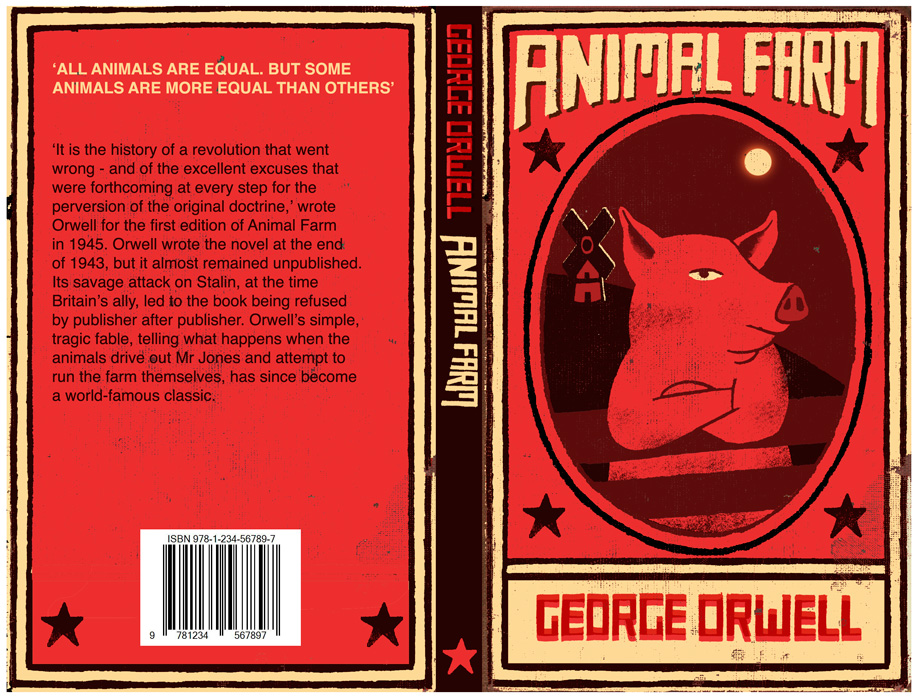 40,000 words in fantasy is less than half a book. That makes it a novella. But I send it to my beta reader to see what she thinks. If she feels the plot lacks substance at that length, I let it rest for a while, then come back to it. Then, I can see where to add new scenes, events, and conversations to round out the story arc. That might bring it up to the 60,000-word mark.
 In the second draft, I will discover passages where I have repeated myself but with slightly different phrasing. My editor is brilliant at spotting these, which is good because I miss plenty of them when I am preparing my manuscript for editing. I wrote that mess, so even though I try to be vigilant, repetitions tend to blend into the scenery.
 I have learned to be brutal. I might have spent days or even weeks writing a chapter that now must be cut.
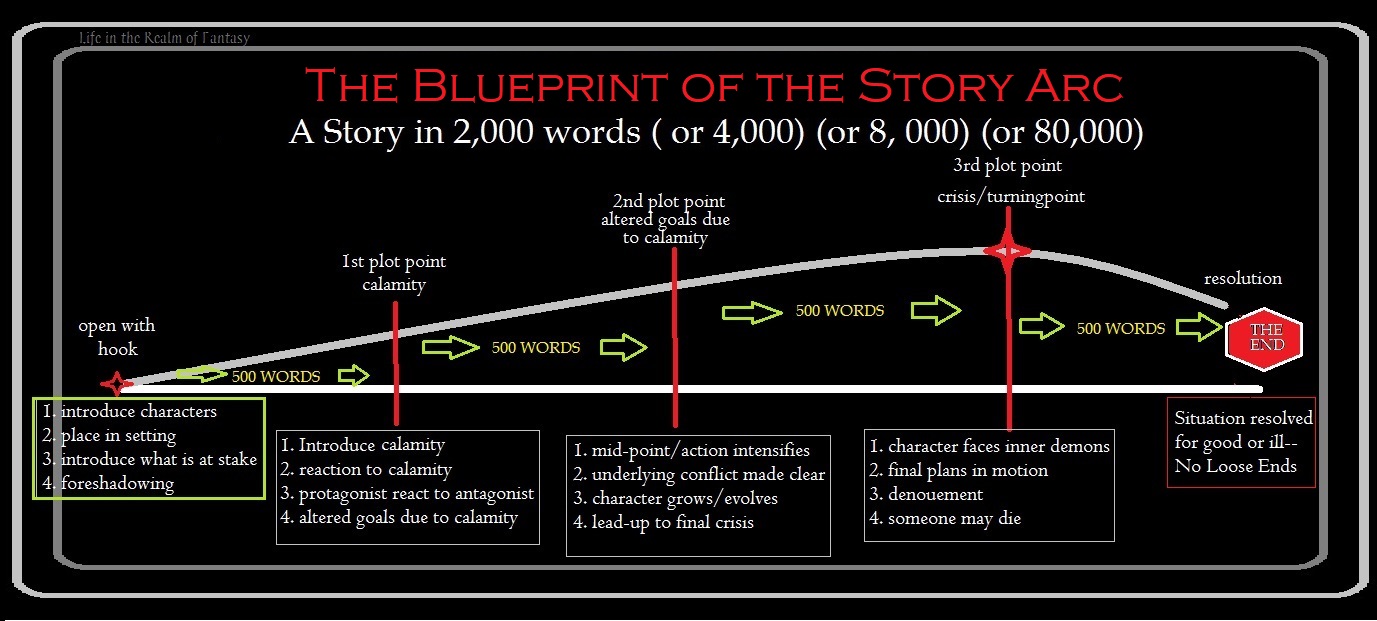 Even if this story is one part of a series, we who are passionate about the story we’re reading need firm endings.
 The Emperor’s Soul, by Brandon Sanderson
 When we speak aloud, we habitually use certain words and phrase our thoughts a particular way. The physiology of our throats is unique to us. While we may sound very similar to other members of our family, pitch monitoring software will show that our speaking voice is distinctive to us.
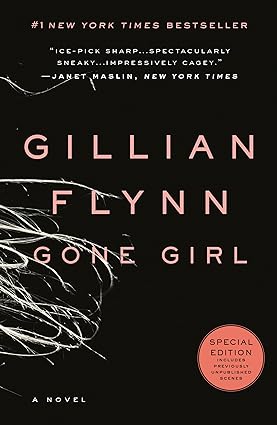 Flynn’s style of prose is rapid-fire, almost stream-of-consciousness, and yet it is controlled and deliberate. She is creative in how she uses the literary device of narrative mode. Primarily, Gone Girl is written in the first person present tense. But sometimes Flynn breaks the fourth wall by flowing into the second person present tense and speaking directly to us, the reader.
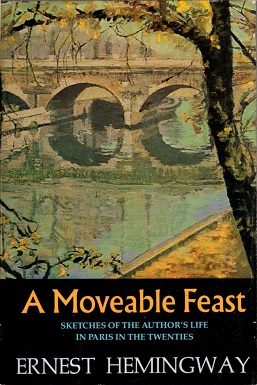 “I was learning something from the painting of Cézanne that made writing simple true sentences far from enough to make the stories have the dimensions that I was trying to put in them. I was learning very much from him but I was not articulate enough to explain it to anyone. Besides it was a secret.”
 In my previous post, we talked about narrative point of view. POV is the perspective, the personal or impersonal “lens” through which we communicate our stories. It is the mode we choose for conveying a particular story.
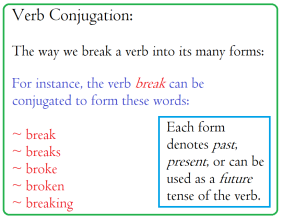 When I begin my second draft, those weak verb forms function as traffic signals. They were a form of mental shorthand that helped me write the story before I lost my train of thought. But in the rewrite, weak verbs are code words that tell me what the scene should be rewritten to show.
 The way we habitually phrase sentences, how we construct paragraphs, the words we choose, and the narrative mode and time we prefer to write in is our voice. It includes the themes we instinctively write into our work and the ideals we subconsciously hold dear.
 If we move to a different window, the view changes. Some views are better than others.
 Last week, I mentioned head–hopping, a disconcerting literary no-no that occurs when an author switches point-of-view characters within a single scene. I’ve noticed it happens more frequently in third-person omniscient narratives because it’s a mode in which the thoughts of every character are open to the reader.
 I find that when I can’t get a handle on a particular character’s personality, I open a new document and have them tell me their story in the first person.
 Recognizing where the real drama begins is tricky. Let’s have a look at the novel
  I admire the audacity of having Michell, a protagonist who considers his professional reputation as his most prized possession, commit such a catastrophic action as stealing those original letters. It proves there is potential for drama in the least likely places.
 I’m not a Romance writer, but I do write about relationships. Readers expecting a standard romance would be disappointed in my work which is solidly fantasy. The people in my tales fall in love, and while they don’t always have a happily ever after, most do. The other aspect that would disappoint a Romance reader is the shortage of smut.
 In his book
  When a beta reader tells me the relationship seems forced, I go back to the basics and make an outline of how that relationship should progress from page one through each chapter. I make a detailed note of what their status should be at the end. This gives me jumping-off points so that I don’t suffer from brain freeze when trying to show the scenes.
 I think our characters have to be a little clueless about Romance, even if they are older. They need to doubt, need to worry. They need to fear they don’t have a chance, either to complete their quest or to find love.
 But the scenes themselves are pictures within the larger picture of the story arc. Think of the story arc as a blank wall. We place the scenes on that blank wall in the order we want them, but without transition scenes, these moments in time appear random, as if they don’t go together.
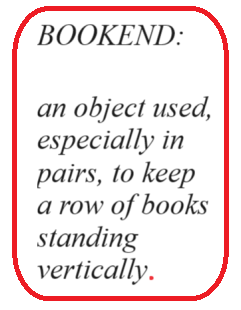 Our bookend scenes are not empty words. They should reveal something and push us toward something unknown. They lay the groundwork for what comes next.
 One of my favorite authors sometimes has chapters of only five or six hundred words, keeping each character thread separate and flowing well. A hard scene break with a new chapter is my preferred way to end a nice, satisfying fade-to-black.
 In a novel or story, each scene occurs within the framework of the environment.
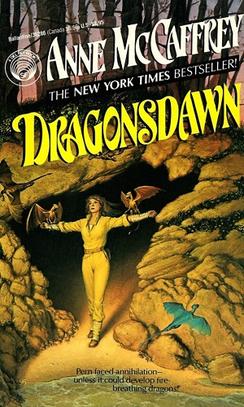
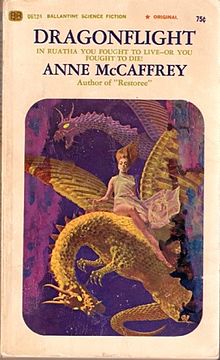 The Dragonriders of Pern series is considered science fiction because McCaffrey made clear at the outset that the star (Rukbat) and its planetary system had been colonized two millennia before, and the protagonists were their descendants.
 The scenes we are looking at today have two distinct environments to frame them. In both settings, the surroundings do the dramatic heavy lifting. This chapter is filled with emotion, high stakes, and rising dread for the sure and inevitable tragedy that we hope will be averted.
 Sallah enters the shuttle just as the airlock door closes, catching and crushing her heel. She manages to pull it out so that she isn’t trapped, but she is severely injured.
 This is an incredibly emotional scene: we are caught up in her determination to seize this only chance, using her last breaths to get the information about the thread spores to the scientists on the ground.


 Life in the Realm of Fantasy