
Last week, we discussed the query and cover letter, so today, we’re talking about the other thing we dread: the synopsis. A synopsis is a short summary, and in this case, it summarizes the content of your story or book.
 Indies occasionally have to write a synopsis if they submit their longer work to contests, agents, or publishers. When a literary contest or publisher asks for a synopsis, they don’t want a book blurb, which is a “this is why you should buy my book” teaser.
They do want a short description filled with all the spoilers so that the work goes to the right editor or (in the case of a contest) reader.
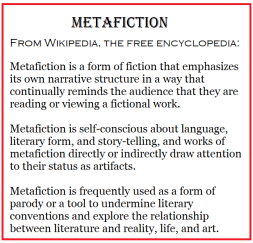
You want an editor or reader who reads metafiction if that is what you are submitting. The synopsis lets them know you understand what kind of work they’re seeking.
Most submissions these days are electronic. I know I say this far too often, but properly naming your files is crucial to a happy work life. You want your submission to be easily found in an editor’s files.
 Don’t label your synopsis file with a generic name like “synopsis.docx.” Be specific and include the book title in the label:
- Don_Quixote_synopsis.docx
Underscores are used in place of spaces in file names because some operating systems don’t recognize spaces. But most operating systems recognize the underscore as a space. You never know if your intended recipient is using a Mac, a PC, or a Linux machine, and you want them to be able to open your files.
The requested length of a synopsis can vary—some agents and editors will want a shorter synopsis, so check their website for the guidelines. For an average novel of less than 100,000 words, 500 to 800 words is a good length for the summary and won’t scare your intended editor/publisher.
No one likes being faced with an endless wall of words.
- All that is usually required to summarize a short story is a paragraph or two in the cover letter.
You might wonder why agents and editors want a synopsis when they can have the whole manuscript? They receive a mountain of submissions daily and must find the time to look at everything that lands in their inbox.
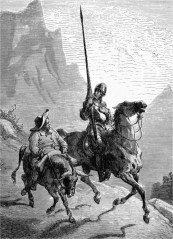
Don Quixote and Sancho Panza, Gustave Dore PD|100
If they like the cover letter, they will turn to the synopsis. Once you’re past that hurdle, if the characters intrigue them and they like how the plot evolves, they will look at the first chapter or two. After that, they might ask for the entire manuscript.
Your synopsis is not intended to entertain the editor, but you want your voice to interest them. It is meant to briefly recount the who, what, where, when, and why of your entire novel, but it must sound like you.
What do we include in our synopsis if we must boil a novel down to 500 – 800 words? (Which is only around two pages.) This is the most difficult aspect of my life as a writer, and frankly, I stink at it.
I can easily summarize my friends’ novels, but my own? It’s like trying to summarize your child to the new teacher who will be in charge of them for the next year. The quirks and backstory get in the way of an impartial discussion.
The Jericho Writers website tells us to summarize your novel, include all the twists, and don’t give it the hard sell. Start at the beginning and hit the high points of the plot all the way to the end.
Try to make it interesting and still keep it within the word count.
In this, as in most things, the internet is your friend. For a great article with an excellent example of a synopsis, a good template, and many more details on how to write a synopsis, go to https://jerichowriters.com/synopsis/.
The following synopsis is of a book published in 1605, which is 1,072 pages long. A book of this length would require a 2,000-word synopsis to cover the high points.
400-word Synopsis of the first 10 chapters of The Ingenious Gentleman Don Quixote of La Mancha by Miguel de Cervantes
Don Quixote is a metafictional account of the mid-life crisis and adventures of a nobleman (hidalgo) from La Mancha named Alonso Quixano. The first chapters are taken from “the archives of La Mancha,” and the rest is translated from an Arabic text by the Moorish author Cide Hamete Benengeli.
Nearing 50 years of age and living in an unnamed section of La Mancha with his niece and housekeeper, Quixano is usually a rational man. He is obsessed with reading tales of chivalry and knights-errant. However, by not sleeping adequately because he was reading, Quixano is easily given to anger. He believes every word of his fictional books of chivalry to be true.
While he is asleep in his bed, his niece, the housekeeper, the parish curate, and the local barber burn most of his chivalric and other books. The priest must decide which books are bad for morality, so he can know them well enough to describe every naughty scene.
After the books are burned, the niece and priest seal up the room which contained the library, later telling Quixano that it was the action of a wizard.
The loss of his books causes him to lose his mind. Quixano decides to become a knight-errant. He will revive chivalry and serve his nation, under the name Don Quixote de la Mancha.
After a short period of feigning health, Don Quixote requests his neighbor, Sancho Panza, to be his squire, promising him a governorship. Sancho is a poor and simple farmer but is far more practical than Don Quixote. He agrees to the offer, sneaking away with Don Quixote in the early dawn.
They begin their quest to revive chivalry, starting with Don Quixote’s attack on windmills that he believes to be ferocious giants.
The two next encounter two Benedictine friars traveling on the road ahead of a lady in a carriage. The friars are not traveling with the lady but happen to be on the same road. Don Quixote believes the friars are enchanters who hold the lady captive. He knocks a friar from his horse and is challenged by an armed Basque traveling with the company.
As he has no shield, the Basque uses a pillow from the carriage to protect himself, which saves him when Don Quixote strikes him. The combat ends with the lady leaving her carriage and commanding those traveling with her to “surrender” to Don Quixote. [1]
 I recommend you go to the Jericho Writers site and follow their guidelines if asked for a synopsis. The article there is one of the most comprehensive and useful ones I’ve read anywhere. Again, that article can be found at https://jerichowriters.com/synopsis/.
Once you have written your cover letter and synopsis, attach them to the email or submissions website with whatever else the contest or publisher asks for—the first two chapters, possibly the first twenty pages, etc.
This is where luck comes into the equation. We can only hope the submission is opened on the day and moment when the editor is looking for a story exactly like the one we have submitted.
CREDITS AND ATTRIBUTIONS:
[1] 400-word Synopsis of the first 10 chapters of The Ingenious Gentleman Don Quixote of La Mancha by Miguel de Cervantes, condensed from Wikipedia. Wikipedia contributors, “Don Quixote,” Wikipedia, The Free Encyclopedia, https://en.wikipedia.org/w/index.php?title=Don_Quixote&oldid=943081150 (accessed 1 Aug 2023).
Don Quijote de La Mancha and Sancho Panza, 1863, Gustave Doré [Public domain], via Wikimedia Commons.
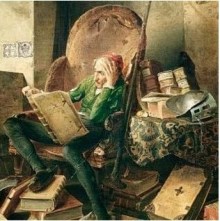
Don Quixote in the Library, by Adolf Schrödter, 1834 PD|100, via Wikimedia Commons.
 I quickly regretted that decision.
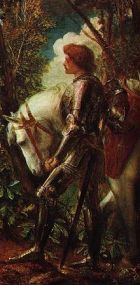 Arthur and his court originated as ordinary 5th or 6th-century warlords. But the tales featuring them were written centuries later. Their 11th-century chroniclers presented them in contemporary armor as worn by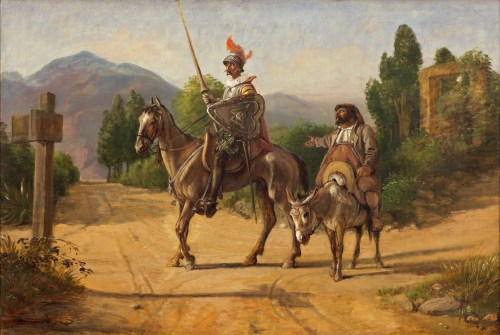
 I am an abject fangirl for Don Quixote, so different versions of both Galahad and Quixote appear regularly in my work.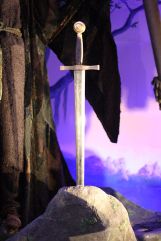
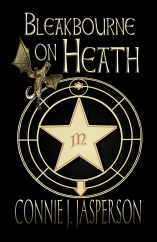 And sometimes a theme refuses to let go of me. I took Arthurian myth and the chivalric code and turned them inside out with the characters of Lancelyn and Galahad in
  Some authors despise that process so much that they go indie, thinking they won’t have to leap that hurdle. But there is no escaping it.
 Writing these kinds of personal introductions is a pain—but only because we don’t know what is expected or what we should include.
 Please do NOT give it the hard sell. The
  Large Publishing Houses: Large traditional publishers want agented submissions only. On the rare occasions they open the doors to unagented authors, their editors expect a 1-page, 300-word description of your novel. This is the query letter, as described above. Your manuscript is not attached to this—if they like what they see in the query, they will look at the synopsis and possibly ask for the first chapter.
 Sometimes my queries get good results, and sometimes not. I’ve said this before, but query letters are like ice cream. Everyone likes certain flavors and must be pushed to try new ones.
 During the 1980s and 90s, I listened to music on the stereo, writing my thoughts and ideas in a notebook while my kids did their homework. I drew dragons and fantasy landscapes and worked three part-time jobs to pay the bills.
 For most of my writing life, I was like a toddler given a package of
 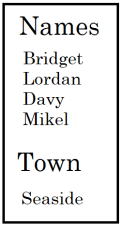 Build a glossary of words and spellings unique to your story, and be sure to list names. I use an Excel spreadsheet, but you can use anything you like to help you stay consistent in your spelling.
 The master file might be titled: Lenns_Story
 I gained a fantastic local group through attending write-ins for NaNoWriMo, the Tuesday Morning Rebel Writers. Since the pandemic, and with several of our members now on the opposite side of Washington State, we meet weekly via Zoom. We are a group of authors writing in a wide variety of genres.
 Learn about structure and pacing from successful authors. Spend the money to go to conventions and attend seminars. You will learn so much about the craft of writing, the genre you write in, and the publishing industry as a whole—things you can only learn from other authors. I gained an extended professional network by joining
  The year that followed was filled with mistakes and struggles. Legitimate publishers NEVER contact you. You must submit your work to them, and they prefer to work with agented authors.
 Short stories and micro fiction are a training ground, a way to hone your skills. They’re also the best way to get your name out there. I suggest you build a backlog of work from 100 to 5,000 words in length. Keep them ready to submit to magazines, anthologies, and contests.
 When I plan a character, I make a simple word picture of them. The word picture is made of a verb and a noun, the two words that best describe each person.
 When I write my characters, I know how they believe they will react in a given situation. Why? Because I have drawn their portraits using words:
 Sometimes the path to publication is fraught with misery; next week, we will discuss that. Other times, the book writes itself and flies out the door. Who knows how my next novel will go?
 A character’s preconceptions color their experience of events. We readers see the story through their eyes, which shades how we perceive the incidents.
 This is a literary theme and is known as the hero’s journey. But it is only the overarching theme. For that hero’s main character arc to work, they need subthemes.
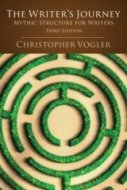 What is the “hero’s journey” and why am I so fond of it?
  When
When Other novels are entirely character-driven, focusing on the protagonist of the narrative. Much thought is given to how prose is crafted stylistically, using a wide vocabulary. These novels feature thoughtful, in-depth character studies of complex, often troubled, characters. The story is in their day-to-day dealings with these issues. Action is less important than introspection, and the setting frames the characters and their arcs of growth.
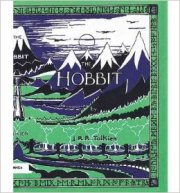
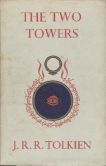 Let’s look again at J.R.R. Tolkien’s
  When we are constantly prodded to make our work focus on action and events, it becomes easy to forget that characters have an internal arc. They must grow for good or ill.
 I step away from my project for a week or two or even longer when stuck. When I come back to it, the characters and their journey is new again, inspiring me to finish their story. This is why I am a slow writer.
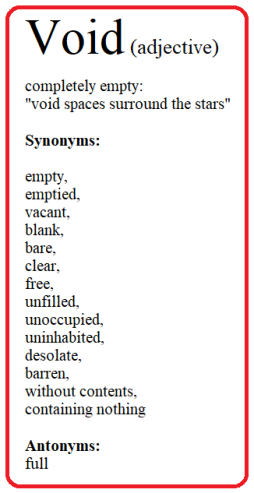
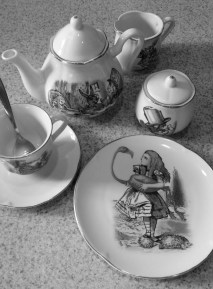
 It’s a mystery. The cup is full, and then it is empty, a Schrodinger’s cup of tea, there and not there.
 Humans are amused by things and incidents that violate the accepted way things should work and which do so in a non-threatening manner. We see the characters having difficulty in certain situations and find humor in the fact their dilemmas are so relatable.
 I like things that surprise me, situations that detour sharply from the expectations of normal. In
  I do have a cruel streak when it comes to my written characters. The ability to laugh at oneself and to learn from missteps is critical in real life. Admitting you are the architect of your own disaster and accepting your own human frailty is a major step to adulthood.
 Do you write your heroes with few flaws, or do you portray them as “warts and all?” That becomes a matter of what you want to read.
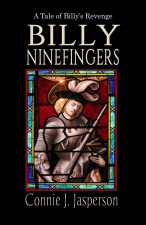 Still, I write stories about people who might have existed and have their own views of morality. In each tale, I try to get into the characters’ heads. I want to understand why they sometimes make terrible choices, acts that profoundly change their lives.
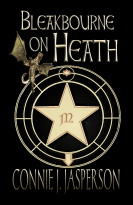
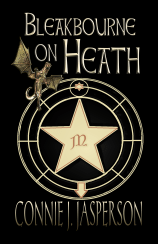 To me, the flawed hero has much to offer us. In my most recently published book, a stand-alone novel called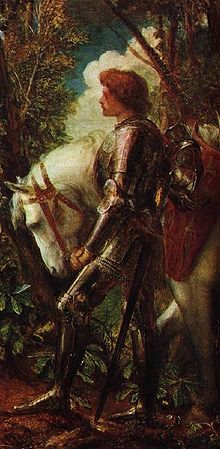
 The difference between the antagonist and the hero is the amount of grayness in their moral compass. When does the gray area of morality begin edging toward genuinely dark? What are they not willing to do to achieve their goal?
 One of my favorite authors writes great storylines and creates wonderful characters. Unfortunately, the quality of his work has deteriorated over the last decade. It’s clear that he has succumbed to the pressure from his publisher, as he is putting out four or more books a year.
 This frequently happens to me in a first draft, but whoever is editing for him is letting it slide, as it pads the word count, making his books novel-length. I suspect they don’t have time to do any significant revisions.
 When we lay down the first draft, the story emerges from our imagination and falls onto the paper (or keyboard). Even with an outline, the story forms in our heads as we write it. While we think it is perfect as is, it probably isn’t.
 Inadvertent repetition causes the story arc to dip. It takes us backward rather than forward. In my work, I have discovered that the second version of that idea is usually better than the first.
 You see things from a different angle when you start reading the chapter from the end and work your way toward the beginning. It’s amazing how many bloopers show up when you do this, even though you have already read it aloud. When you read it aloud you were going the direction you always go, the way you know so well. The mind tricks us, and we read what should be there instead of what is.
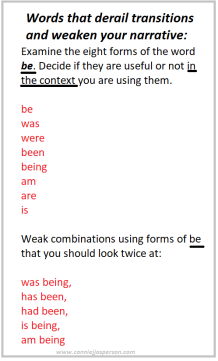 Here are a few things that stand out when I do this:
 I am fortunate to have excellent friends willing to do this for me. Their suggestions are thoughtful and spot-on.
 In my work, the suggestions offered by the beta reader (first reader) guide and speed up the revision process. My editor can focus on doing her job without being distracted by significant issues that should have been caught early on.
 Characters: Is the point of view character (protagonist) clear? Did you understand what they were feeling? Were they likable? Did you identify with and care about them? Were there various character types, or did they all seem the same? Were their emotions and motivations clear and relatable?
 Editing is a process unto itself and is the final stage of making revisions. The editor goes over the manuscript line-by-line, pointing out areas that need attention: awkward phrasings, grammatical errors, missing quotation marks—many things that make the manuscript unreadable. Sometimes, major structural issues will need to be addressed. Straightening out all the kinks may take more than one trip through a manuscript.
 An editor is not the author. They can only suggest remedies, but ultimately all changes must be approved and implemented by the author.
 A reader won’t be familiar with it and will notice what we have overlooked.


 Life in the Realm of Fantasy