My dear friend, author Stephen Swartz, has kindly agreed to share some of his wisdom with us. Stephen is a fellow co-founder of Myrddin Publishing Group and is the author of eighteen novels. He writes in whatever genre suits his mood, and his work is always original and bold. So, without further yak-yak on my part, here is Stephen.
>>><<<
I’ve been asked to write about five or six things I’ve learned about being a so-called Indie author. Probably it will be closer to five than six, but no more than seven, unless I get inspired. Inspiration is the hardest part, however. That’s one thing.
 How to get inspiration? That translates to getting a story idea. I used to think up nifty situations and wondered how an average person would deal with it. That’s the good ol’ what-if set-up you find mostly used in sci-fi stories. The problem with focusing on the cool idea is that usually the characters who have to deal with it become rather cardboard. That’s fine when you’re a young writer or producing a first draft. Slap it down and keep going. You can come back later to beef up the character, add description details, and so on. Whatever the idea is, get it out of your head at any cost.
I think a lot of new writers get hung up trying to write perfectly from the start. That will eat you alive, so stop doing that. Write whatever, as dumb or meaningless as it may come out of you. It won’t be the final version. You can fix it up later. I was already doing that when I came upon a quote (attributed to poet William Stafford), that goes a little bit like this: “When the writing gets hard, I lower my standards.” So I have a file of unfinished stories I dabble with whenever I need to work the gears a bit before I get to my serious writing – or when I hit a wall and need to pause before continuing the serious writing.
 What is serious writing? Even if it’s comedy, it’s the writing you take seriously. What you want readers to admire, no matter the genre. That is all well and good, but you will find that what you think is good isn’t always what readers think is good. Got nothing to do with what you’re writing or how well you write it, it’s just the way it is. So don’t take yourself too seriously; you can take your writing seriously, of course. The idea is that the writing will get better for readers each time you go through a manuscript and revise and edit it. How many times you go through it is your decision. It helps to get someone else’s eyes on it at some point, especially if you are new at writing. You can look at a map but until you get to your destination you can’t be sure that map is accurate and you’re going the right way. Sounds like another thing I learned.
Characters are the bane of my existence, so I put them through Hell and only some come back. Can’t be afraid to bust some noses. We aren’t all Mary Sue and her pretty dolls to whom nothing even remotely bad ever happens. Real people are flawed, make mistakes, say stupid things, miss a lot, sin like there’s no tomorrow, take wrong turns, and get lost. They fret and regret and get down on themselves. You have to show all of that through description (body language, including nods and sighs) and dialog that matches the character. If writing in such a way that you can pop into the character’s head, you can slip in some thoughts and feelings and backstory to add richness to the character’s presence in the story. Every scene is an opportunity to broaden a character into a full-fledged person you’d want to sit down and have a cup of coffee with…right up until you kill ’em off. That’s the one big thing I learned in my long-ago MFA program in Creative Writing: interesting characters will draw your readers in better than a cool idea or weird setting.
 I started reading a long time ago. Started writing soon after, making up my own stories which I thought were better than the ones I read. I borrowed here and there – and in later writing had to tone it down so as not to sound like the sources I borrowed from (sci-fi authors, mostly). You develop your own style eventually if you write enough. So write a lot; you don’t have to show it to anyone. I like to try writing in different styles, too. I like trying to have characters speak in different ways, some slang, vernacular, accents, different levels of education, just for my own amusement – which is cruel, I’ll admit. But trying different things is good for a writer. Read different styles, too, and try to imitate them. Read the juicy parts aloud, let them get stuck in your head. Consider what is special about the style the author uses. Compare and contrast with other authors you read, and with your own writing. Most of all, read a lot in different genre and different writing styles. How much you absorb from that differs for everyone, but try it.
You may hear about story arcs and how to outline a story (or novel) and think you have to do that, too. You don’t. Well, awrighty, if you read a lot then you don’t. You’ll pick up a sense of pacing from reading a lot, and you’ll know when to let things happen. It’s not a perfect system but, if you got it in you (i.e., a plot ‘clock’ ticking away, urging you to pull that trigger already) it’ll work. I seldom outline more than scribbling a few notes about what happens next. I do get to the middle and have to pause and look ahead to see how to get to the end, but that’s the fun part of writing. I know how the final scene will be usually by the time I’ve written a fifth of the way into the novel (about 20,000 words). I think I’ve changed what happens at the end only twice in 18 novels.
If it helps, think of a movie, the kind we find these days: the action hook, the backstory & character development, then we get on with the story, reach the mid-point, more action, crisis after crisis…. Well, you get to know what to expect every few moments. That’s not interesting. So shake it up. Sure, keep enough that it looks like it’s supposed to for the audience’s sake, but do some things differently for variety. Same with a book: keep enough of the genre features so that readers know what genre it is (maybe!) but change or add some things that keep the reader guessing. I like to mash-up my novels: two or more genre together. First of all, it’s simply more interesting for me to write. Second, I like for readers to get something unexpected (or so I’ve been told I tend to believe!). Like a crime thriller (my novel EXCHANGE) with that age-gap romance in the later chapters that turns creepy by the end. Didn’t see that coming, did you?
 Finally you have a complete story (or novel) from beginning to end and the plot is satisfying, characters compelling, dialog crisp, and so on. What next? Read and revise at least three times, but put it away at least a few days between each reading (a month is optimal; go get some coffee). Yes, I know you’re eager to get into it again but make yourself wait. Go to your slush file and work on that erotica. Now back to your masterpiece. Try to read it as a reader who’s never seen it before: what would the average reader think and feel in this scene or on that page? You’re no longer thinking of how to write the story so now you focus on how someone you don’t know might understand it. (Sure, go ahead and correct those pesky mistypes as you find them. No rule saying you have to do that in a separate pass.) I like to look at scenes in isolation: every scene should do something, even if it is “only” showing a character’s personality. I read dialog aloud (or, recently, have my computer read it to me); I catch a lot of mistakes and sloppy or weak sentences that way. Run spellchecker until it’s about to fall off the rails but understand it is not actually reading and still will miss errors. You must read your manuscript with your own eyes and ears more than twice. Look for pet-peeve errors (e.g., I type ‘form’ a lot when I mean ‘from’; obviously the spellchecker will not catch it because ‘form’ is correctly spelled, just the wrong word). I run a search for them. Most importantly, never ever hit “replace all”!
I’ve lost count on the number of advice things. Maybe this is enough to get you started. Some is common sense, of course, some you’ve likely heard before. Much is just my personal routine which may or may not work for other writers. I know myself, my foibles and tendencies, so I can more or less keep them in check or know what to look for when editing. Know thy self is another advice thing.
Lastly, I think the two biggest flaws in the writing of “new authors” I have read are: 1) a dull story, and 2) a flat cast. In the MFA program I suffered through (that’s a separate blog post) the professor once told me, when a story I’d written wasn’t working: “Get a better idea.” Yes, there are some ideas that just don’t make good stories – or, in the alternative, you or I just can’t pull it off satisfactorily. Even with a good idea, a cast of characters that are like cardboard won’t keep a reader reading. Yes, it’s true, no matter how long I insisted. A good idea is only as good as the crafting of the story, that is, the writing itself. More than writing correctly, it should have a flavor, a style, a particular way of letting the words flow – and that is up to the author, perhaps with some help from the narrator.
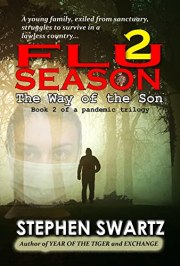
In my most recent novels, FLU SEASON*, a trilogy focused on the hardships of a family trying to survive a 9-year pandemic and the lawlessness that follows, an autistic teen son narrates the first two books while his daughter narrates the third book. Each has a unique way of speaking which I let out freely, including poor grammar and Southern vernacular. It builds the personality of the character and adds flavor to the setting. They absolutely cannot, should not, speak with perfect grammar. As I work on a sequel to the trilogy, I have a character who has more education so he speaks with more correctness than those before him.
Now I’ve gone past my nap time. Add up the advice and it probably comes down to do your own thing, keep doing it, share as much as you are comfortable doing, and read a lot for ideas.
*FLU SEASON, a pandemic trilogy:
Book 1: The pandemic of 2020-22 has ended, but what if its worst days extended into 6 years? Follow autistic teen Sandy and his single Mom (& her tuba) as they flee a city in collapse for the hope of sanctuary with relatives, a plan which doesn’t succeed. (Nov. 2022)
Book 2: Sanctuary from a pandemic is only good if you can stay there. When Sandy and his young family are exiled from the island, he struggles to find a way to save them while they face the worsening situation. Without Mom to guide him, Sandy must take on all the responsibilities for survival in the lawless outerlands. (May 2023)
Book 3: There is no safe space – except maybe hiding away in the forest of a national park. But when others have the same idea, Sandy’s family faces a variety of opportunities and challenges. As the post-pandemic world recovers, it is his daughter who must carry the family forward, no matter the difficulties she and her sisters must face. (Sept. 2023)
You can read more about this trilogy here:
http://stephenswartz.blogspot.com/2023/08/flu-season-3-dawn-of-daughters.html
and here (with more about writing process):
http://stephenswartz.blogspot.com/2023/05/the-flu-season-trilogy-doing-what-i-do.html
About the Author
 Stephen Swartz is the author of literary fiction, science fiction, fantasy, romance, and contemporary horror novels. While growing up in Kansas City, he dreamed of traveling the world. His novels feature exotic locations, foreign characters, and smatterings of other languages–strangers in strange lands. You get the idea: life imitating art.
After studying music and even composing a symphony, Stephen planned to be a music teacher before turning to fiction writing, and taught writing at a university in Oklahoma. Stephen Swartz has published poetry, stories, essays, and articles for scholarly journals in the U.S. and Japan

 Every year I participate in NaNoWriMo (National Novel Writing Month). I sit down and write, and by doing that for two hours every day, I manage to crank out the high points of a story and get my wordcount and the “winners” certificate. A year or so later, I have connected the dots and end up with a coherent first draft that tops out at around 120,000 words.
 Who are the players?
 Characters usually arrive in my imagination as new acquaintances inhabiting a specific environment. That world determines the genre.
 You might want to attend a conference but are worried about cost. I have ways to keep your expenses down.
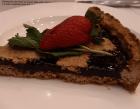 Four: Did I mention food? If you are planning to attend a large convention or conference where you will need to stay in a hotel, take simple foods that can be prepared without a stove and are filling. As I am vegan, I’m an accomplished hotel-room chef. Most coffee bars don’t offer many plant-based options. If they do, there will likely only be one to choose from, and it may not interest you. While that bias is changing, I still travel prepared.
 I’m a small fish in a vast ocean. Attending local conferences puts me in contact with other authors and industry professionals, most of whom are successfully pursuing their craft. I meet people I don’t usually come into contact with as they hail from all over Washington State, Oregon, Idaho, and British Columbia.
 Not every program or platform supports curly quotes, so those gurus who claim they are the only quotes you should use are wrong.
 Another frustration, this one of my own devising, is the mess I have deliberately created in a new project. I’d run into a wall with this story last winter, so I set it aside. Then, two weeks ago, I had the bright idea to change the viewpoint and make it present tense.
 We do get out sometimes, though. We have a wonderful
  September is always a month of transition. The summer weather is changing to cooler days, and leaves are turning red and yellow. The days are growing shorter, and the traffic outside our windows during rush hour is a little more frantic.
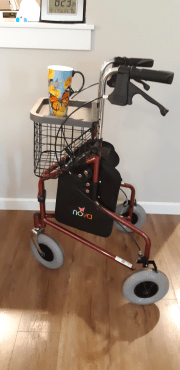 Something we don’t think about when we’re young and healthy is that the equipment disabled people rely on can fail. The first thing that failed this week was his little walker for getting around in indoor spaces—I’ve named it R2D2 since it’s perfect for serving drinks on the space-yacht that is our home.
 So, we had to supply dates and names of previous marriages and divorces—which, in my case, involved getting copies of three divorce decrees from the county. (I’ve had a life, and while I could have done some things differently, I don’t regret it for a moment.)
 But enough chit-chat about me. Let’s talk about writing. This week, I made headway on a first draft I had set aside a year or so ago because I was stuck at the 30,000-word point. I changed the narrative tense from close third person omniscient to first person present tense for the protagonist and third person present tense for the side characters. That change kickstarted things and the plot is unfolding as it should.
 Also, my first drafts are not written linearly. I write what I am inspired to, skipping the spots I have no clue about. I fill in those places later. Even after completing the first draft, things will change structurally with each rewrite.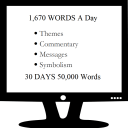
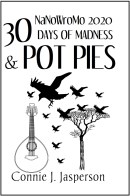
 It wasn’t exactly literary brilliance, but it gave my idea a jumping-off point. I just began telling the story as it fell out of my mind. Surprisingly, I discovered my word count averaged 2,500 to 3,000 words daily. By day fifteen, I knew I would have no trouble getting to 50,000, and by November 21st, I had passed the 50,000-word mark.
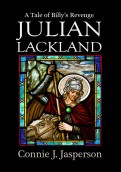 But I took that incoherent mess apart, and over the next ten years, it became three books:
  It helps to check in on the national threads each day. Look at your regional threads on the national website to keep in contact with other local writers. You will find out when and where write-ins are scheduled.
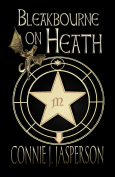 Included in this mess were ten dreadful poems, along with chapters 7 through 11 of
  Conferences are excellent places to make good connections with other writers. You meet people you can talk to about every aspect of the experience of writing as well as craft. No one’s eyes glaze over when you try to explain your main character’s inner demons and you find people with struggles similar to your own.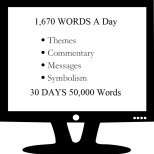
 Some new writers are completely fired up for their novels, obsessed. They go at it full tilt for a week or even two, and then, at the 20,000-word mark, they take a day off. Somehow, they never get back to it. These writers will continue to write off and on and may participate in NaNoWriMo again.
 Cooking is my love language. I have many tips and ideas for getting word count and having a proper family feast. As a dedicated writer, I know how to plan for all aspects of life.
 By just doing that, I will have 50,000 (or more) words by midnight on November 30th.
 Be willing to be flexible. Do you work best in short bursts? Or, maybe you’re at your best when you have a long session of privacy and quiet time. Something in the middle, a melding of the two, works best for me.
 A good way to ensure you have that time is to encourage your family members to indulge in their own interests and artistic endeavors. That way, everyone can be creative in their own way during that hour, and they will understand why you value your writing time so much.
 Writers and other artists do have to make some sacrifices for their craft. It’s just how things are. But don’t sacrifice your family for it.
 His chosen genre is mainstream fiction, and the characters he presents are interesting and full of human frailties. So, without any more talk on my part, here is Dennis Mansker.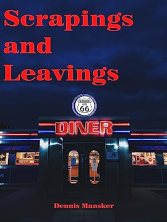
 About the author: Dennis Mansker considers himself at 78 one of the latest of late bloomers. He published his first book, A Bad Attitude: A Novel from the Vietnam War, in 2002 at the age of 57. His second book, Scrapings and Leavings, will be published in 2023, and he is hard at work on his third book, Destiny in Dallas, which is on track to be published early in 2024.
 We forget to consider how the action affects both the protagonist and the reader. The reader needs a small break between incidents to process what just happened, and the characters need a chance to regroup and make plans.
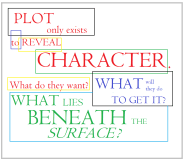 Stories are a balancing act detailing the lives of engaging characters having intriguing and believable adventures. The reader lives and processes the action as it happens, suspending their disbelief.
 But if you are writing genre fiction, the market you are writing for expects more action than introspection. These stories are also character-driven, but the adventure, how the protagonist meets and overcomes the battles and roadblocks, is what interests the reader.
 Conversations illuminate a group’s relationship with each other and sheds light on our characters’ fears. It shows that they are self-aware and should present information not previously discussed.
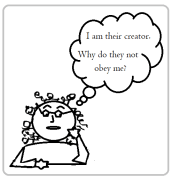 Great characters begin in an unfinished state, a pencil sketch, as it were. They emerge from the events of their journey in full color, fully realized in the multi-dimensional form in which you initially visualized them.


 Life in the Realm of Fantasy