
Every now and then, I come across a book where the protagonist finds themselves dealing with the dangerous creatures inhabiting that place. I especially loved the way man and tiger developed a wary cohabitation in Life of Pi.
 Strange beasts are a common trope in speculative fiction.
We all approach this aspect of our work differently. Lindsay Schopfer‘s Beast Hunter series is one series of books where this is done well. When planning this post series, I asked Lindsay how he approached designing his beasts.
Connie: “Is Kelton’s world a colonized planet? If not, what natural mechanism spawns the creatures in your Beast Hunter world?”
Lindsay: Of all the questions I get asked by fans, yours is probably the most common. Folks want to know where the beasts come from in the Adventures of Keltin Moore. The truth is, I’ve intentionally not answered that question for a long time. I consider it the single biggest conceit of Keltin’s stories, which is why I work so hard to make other elements in the story feel as authentic as possible.
So, why do I feel the need to be so vague on a subject that fans are obviously interested in? The original idea for Keltin Moore’s world came from a RPG video game, which is one of the main reasons why the series shares many conventions with role-playing games, including the presence of a variety of dangerous creatures in an otherwise ‘normal’ world. While some games may give token explanations for their wandering monsters, the majority of enemy units in these games are just accepted as a part of the RPG world, no more unusual than ability cool-downs or health regenerating potions.
Of course, there’s a second, more deeper level to this question. Whether or not I choose to tell the fans where my beasts come from, do I, as the author, know what their origins are? Honestly, I have an idea, but it isn’t set in stone. This felt like a dirty secret of mine until very recently as I was rereading my collection of Hellboy library editions by Mike Mignola.
Within the collection, there are several interviews and insights provided by the author, and I was shocked to learn how little Mignola actually knew about his own world. His methodology for building the mythos of Hellboy seems to have revolved around whatever interested him at the time that he was creating each individual element.
If some deeper meaning was necessary for fans, then it would be their responsibility to puzzle out these conclusions on their own. While this kind of shoot-from-the-hip world building may be abhorrent to highly organized speculative fiction writers, it was very validating to an impulsive creative like me.
So, will I ever give a definitive answer of where the beasts in Keltin’s world come from? I don’t know. While it could be rewarding for both me and my fans, I’m also mindful of the fact that leaving some questions unanswered gives my readers more opportunities to share in the creative process with me.
After all, as soon as my books are published, they are no longer mine alone. They are also my readers’, and I owe it to them to give them the freedom to imagine their own explanations for questions left unanswered. If I ignore that, I run the risk of repeating the mistakes of other creatives that decided that they needed to answer all the questions on their own, resulting in a dissatisfying, authorial dictatorship. Metachlorians, anyone?
As he says, Lindsay doesn’t over-engineer anything, and that is his style. In his books, the plots revolve around the discovery of predatory creatures in a populated area and how the protagonists devise ways to hunt and kill them. Schopfer’s creatures feel as if they’re formed out of nightmares.
You can find his books on Amazon at this link: Amazon.com: Lindsay Schopfer: books, biography, latest update. I highly recommend his work.
 I am more of a planner. Like Lindsay, some of my fantasy work is RPG game-based. My mind works in a linear, logical manner. In real life, if something anomalous to the native plants and animals exists, it arrived there via external means.
But I am curious monkey – I want to know how it got there. So, in Mountains of the Moon, (RPG game-based fantasy), the war of the gods resulted in a few creatures born from other worlds being cut off from returning to their home world.
These creatures are rare but have elemental magic to defend themselves and are often predatory. In the case of water-sprites, they are annoying but cute. As large predators do in real life, each beast has a preferred place to nest and a favored range where they will hunt. As in real life, this knowledge affects how people travel.
We don’t walk into a place where lions are known to hunt.
My beasts aren’t inherently evil but will hunt and kill humans for food and must be removed from inhabited areas. A culture of mercenaries exists to protect travelers and traders.
In my books, the origins of the rare beasts are not really discussed, but I know how they got there. I like knowing that, so I don’t contradict myself.
I don’t only write fantasy. Many of my short stories are contemporary fiction set here in the Pacific Northwest. I use the plants and animals native to the Puget Sound area, and that familiarity makes dressing each scene easy.
When I am writing fantasy, I take what I know and reshape it to fit my fantasy world. By using what I know, I can visualize as I am writing, and it emerges as an organic part of the background. I don’t have to explain it. It just is.
Our subconscious minds recognize the trees in our neighborhoods and the animals that call our areas home. We know how our part of the world looks and smells with each change of the seasons, just the same as we know that racoons or the neighbor’s dog will get into the trash can if you don’t bungee cord the lid down.
 Suburban coyotes, racoons, possums, deer – they all make their living in our backyards. In real life, our local fauna is there, part of the environment. Some are predators, so we keep our cats inside and work around the wildlife as a matter of course.
When your characters walk out their front door, what do they see? I only notice our yard when the grass is too long or a favorite plant is in bloom. But I feel the chill a cold March wind brings from the west. I see the way the heat rises from the pavement in August. The local bird species might come and go with the seasons, but they are noisy, calling to each other off and on all day.
You may be a pantser like Lindsay, or you might be a planner like me. There is no one perfect way to do this.
No matter how you approach creating the plants and animals of your world, write them as if they’re just part of the scenery. The environment must be the background, set dressing that frames the narrative without taking over.
 Here, the shoreline of Puget Sound determines the path of the interstate highway. The major cities and towns are located where there are good deepwater ports.
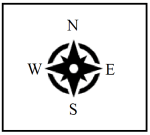 If you are designing a fantasy world, you might want to make a pencil-drawn map. Place north at the top, east to the right, south to the bottom, and west to the left. Those are called
 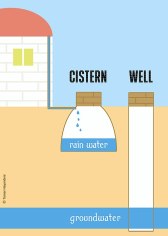 Access to water is crucial to life and prosperity. Humans have long understood the value of clean water for drinking, and you can’t count on getting that from streams or pools. Wells and the technology to make them have been around for a very long time. Cisterns have too, collecting rainwater for drinking and irrigation.
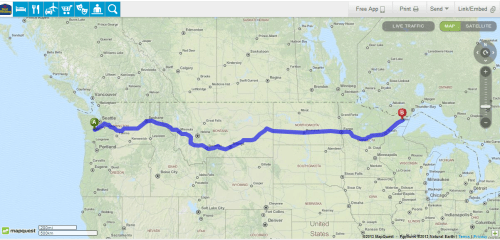 Those birch trees were nowhere near as tall as the giant cedars and Douglas firs I was familiar with. But once you were away from the road, the birch forests became dark jungles, tangled and mysterious.
 We humans are tribal. We prefer an overarching power structure leading us because someone has to be the leader. We call that power structure a government.
 Power structures are the hierarchies encompassing the leaders and the people with the power. Government is an overall system of restraint and control among selected members of a group. Think of it as a pyramid, a few at the top governing a wide base of citizens.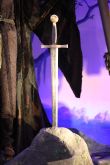
 The same sort of God complex occurs among academicians and scientists. Some people are prone to excess when presented with the opportunity to become all-powerful.
 Once NaNoWriMo is over, I try to shave my cast of thousands down to a reasonable level.
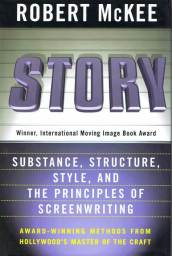 Take a second look at the characters in each scene and remove those with no real purpose. (Save everything you cut in a separate file—you might want to reuse these characters someday.)
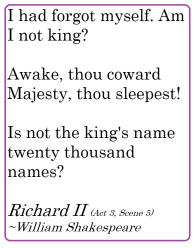 What is even worse, halfway through the first draft of the second book in the series, Marta suddenly was a protagonist with a significant storyline. She actually becomes Marya’s mother-in-law in the third book. Fortunately, I was in the final stage of editing book one for publication. I immediately realized I had to make a major correction: Marta was renamed Halee.
 Names are also a component of world-building. While recording Tales from the Dreamtime, a novella consisting of three fairy tales, my narrator had trouble pronouncing the names of two characters. This happened because I had written the names so they would feel foreign and look good on paper.
  Some people call this writers’ block. I think of it as a temporary lull in my creativity.
 Sometimes, the problem is that your mind has seen a shiny thing, a different project that wants to be written, and you can’t focus on the job at hand. If that is the case, work on the project that is on your mind. Let that creative energy flow, and you can reconnect with the first project once the new project is out of the way.
 In my real life, getting our house ready to put on the market saps my creativity, but I am muddling along. Boxes here and there, getting rid of this and that—it’s exhausting. Sometimes I don’t have the energy to write.
 When we daydream, our brain is free to process tasks more effectively.
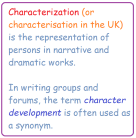
 When I begin writing a first draft, I try to approach writing each scene as if I were shooting a movie. We know that each conversation is an event that must advance the story, but it must also give us glimpses of who each person is.
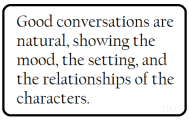 Having the fundamentals of the conversation to work with sharpens the scene in my mind, enabling me to frame it properly. Once I know what they are talking about and have the rudimentary dialogue straight, I add the scenery. Then, I insert the props and add the speech tags. The interaction grows, shedding more light on their relationship.
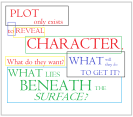 My above sample is not perfect, as it is from the first draft of a short story I never actually finished, but you get the idea. We learn more about the characters’ relationship with each other and see their place in this environment. The layers that form this scene are:
 Set dressing (the props you place in the scene) shows the immediate environment. Having characters interact with props provides opportunities to insert hints that a deeper backstory exists. However, only have them interact with props that are organic or crucial to the story. This eliminates the problem of
  By beginning with the conversation and envisioning each scene as if I were filming a movie, I can flesh it out and show everything the reader needs to hang their imagination on. The reader’s mind will supply the details of the immediate setting depending on the clues I give.
 Every writer knows the backstory is what tells us who the characters are as people and why they’re the way they are. At the beginning of our career, it seems logical to inform the reader of that history upfront. “Before you can understand that, you need to know this.”
 But knowing this and putting it into action are two different things.
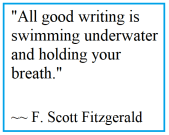 Be aware: if you are writing from an omniscient POV, this can be tricky and lead to “
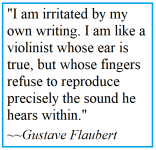 Romance novels average 50,000 to 70,000 words. In shorter novels, there is no room for sweeping, epic backstories. Instead, information and backstory are meted out only as needed through conversations and internal dialogue/introspection.
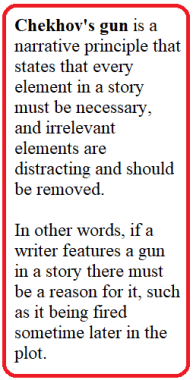
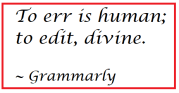 Even with all the effort I apply to it, my editor will find things that don’t matter. She will gently take a metaphorical axe to it, highlighting that which doesn’t advance the story or add to the intrigue.
 In many thrillers and cyberpunk novels, the faceless behemoth of corporate greed is the overarching antagonist. It can be represented by characters who are portrayed as utterly committed to doing their job and loyal to their employer. In many cyberpunk novels, the antagonists tend to be goons-in-suits, enforcers who work for the corporation.
 Level 7 is a 1959 science fiction novel by the Ukrainian-born Israeli writer
 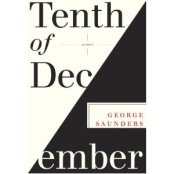 This type of psychopathic antagonist is explored exceedingly well in George Saunders’ brilliant sci-fi short story,
 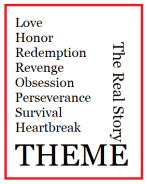 When evil is a behemoth on the order of a mega-corporation or a military coup, the villains who represent it all have reasons for their loyalty. They’re like the hero; they care intensely, obsessively about something or someone. They have logical motives for supporting what we are portraying as the enemy. Our job as authors is to make those deeply held justifications the driving force behind their story.
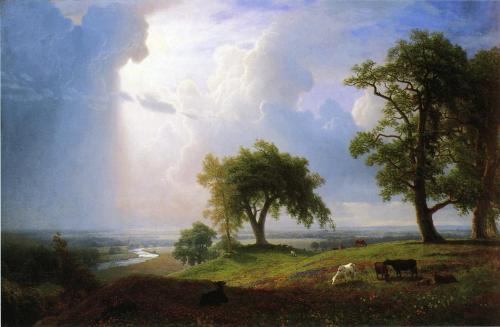 Artist: Albert Bierstadt (1830–1902)
 Volume control is a crucial part of the overall pacing of your story. “Loud” deafens us and loses its power when it’s the only sound. However, like the opening movement of Beethoven’s 5th Symphony, the entire range of volume can be effectively used to create a masterpiece.
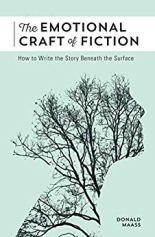 Dark emotions, such as depression, can be shown through a character’s reactions to things that once pleased them. Perhaps they no longer find beauty in the things they once enjoyed.
 Visceral reactions are involuntary—we can’t stop our face from flushing or our heart from pounding. We can pretend it didn’t happen or hide it, but we can’t stop it. An internal physical gut reaction is difficult to convey without offering the reader some information, a framework to hang the image on.
 Conflict keeps the protagonist from achieving their goals. Significant conflicts and emotions are easy to write about. But in real life, our smaller, more internal conflicts frequently create more significant roadblocks to success than any antagonist might present.


 Life in the Realm of Fantasy
