
Many highly respected, award-winning authors began as freelancer authors, writing narrative essays, and other articles, humorous or serious in nature. Narrative essays are drawn directly from the author’s real-life experiences but aren’t necessarily factual or accurate.
 They often detail an experience or event and how it shaped the author on a personal level. For those of us who wish to earn actual money from writing, the narrative essay appeals to a broader audience than short stories, so more magazine editors are looking for them.
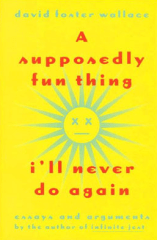
I have mentioned one of my favorite narrative essays before, 1994’s Ticket to the Fair (now titled “Getting Away from Already Being Pretty Much Away from It All“) by the late David Foster Wallace and published in Harpers. It is a humorous, eye-opening story of a “foreign” (east coast) journalist’s assignment to cover the 1993 Iowa State Fair. Wallace wrote it from his own point of view.
At the outset, Wallace tells us how he was born several hours’ drive from the fair but had never attended it. He was a slightly arrogant city boy without knowledge of farms, farm culture, or animals.
In pursuit of his dream, Wallace left the Midwest for the East Coast and never looked back after graduating high school and college. He was overjoyed when he was assigned to report on the fair for Harpers. As a naïve young correspondent, he didn’t think about the fair beyond the fact that he was getting his first official press pass, making him a “real” reporter.
Wikipedia summarizes Ticket to the Fair this way: Wallace’s experiences and opinions on the 1993 Illinois State Fair, ranging from a report on competitive baton twirling to speculation on how it represents Midwestern culture and its subsets. Rather than take the easy, dismissive route, Wallace focuses on the joy this seminal midwestern experience brings those involved.
He was shocked and repelled by some aspects of showing farm animals in a fair. Raising and caring for hogs or sheep can be a dirty business and he was unprepared for the sights and smells.
But he saw the joy and pride people have in their livestock and their skills. By connecting with their enjoyment, he was able to write a narrative that made his name as an author.
 But just what is an essay in the first place? The primary purpose of an essay is to offer readers thought-provoking content. The narrative essay conveys our ideas in a palatable form, so writing this sort of piece requires authors to have some idea of the craft of writing.
That means we must understand and write to the publishing industry’s standards of grammar and mechanics.
A narrative essay is a story that begins with an experience. You know how that experience began and ended, so you must plan how you want your account to be perceived. You must develop both content and structure.
Just like any other form of short fiction, a narrative essay has
- an introduction,
- a plot,
- characters,
- a setting,
- a climax,
- a conclusion.
It’s not a memoir, so we can’t ramble on. Authors must choose words that convey the intended mood concisely.
We must be intentional with how we phrase things because narrative essays often present profound and (sometimes) uncomfortable ideas. A skillful writer can offer these concepts in a way that the reader feels connected to the story, even if they disagree.
A good essay is a conversation in an entertaining form, one that expresses far more than mere opinion.
Names should be changed, for your protection, as narrative essays give readers the author’s personal view of the world, the places we go, and the people we meet along the way.
An honest narrative essay contains an author’s opinions. Sometimes those sentiments are not glowing accolades.
Those who write narrative essays can make a living because literary magazines have open calls for them. Editors and publishers are seeking well-written essays with fresh ideas about wide-ranging topics.
Some will pay well for first publication rights.
 HOWEVER – if you want to be published by a reputable magazine, you must pay strict attention to grammar and editing.
Never submit anything less than your best work. After you have finished the piece, I suggest you set it aside for a week or two. Then come back to it with a fresh eye and check the manuscript for:
- Spelling—misspelled words, autocorrect errors, and homophones (words that sound the same but are spelled differently). These words are insidious because they are actual words and don’t immediately stand out as being out of place.
- Repeated words and cut-and-paste errors. These are sneaky and dreadfully difficult to spot. Spell-checker won’t always find them. To you, the author, they make sense because you see what you intended to see. For the reader, they appear as unusually garbled sentences.
- Missing punctuation and closed quotes. These things happen to the best of us.
- Digits/Numbers: Miskeyed numbers are difficult to spot when they are wrong unless they are spelled out.
- Dropped and missing words.
If you want to work as a freelance author, don’t be afraid to use your words – readers of narrative essays have a wide vocabulary. That said, never use jargon or technical terms that only people in certain professions would know unless it is a piece in a publication geared for that segment of readers.
Above all, be intentional and active with your prose, and be bold. I enjoy reading works by authors who are adventurous in their prose.
And on that note, we must be realistic. At first, you will have trouble selling your work. This is because you haven’t gained a reputation yet, and your work might not appeal to the first editors you send it to.
If you put two people in a room and give them the most exciting thing you’ve ever read, you’ll hear two different opinions about it. They probably won’t agree with you.
 Don’t be discouraged by rejection. Rejection happens far more frequently than acceptance, so don’t let fear of rejection keep you from writing pieces you’re emotionally invested in.
I always say this, but it is true: the way you handle critiques and rejections tells editors what kind of person you are to work with. Rejection gives you the chance to cross the invisible line between amateur and professional. Always take the high ground.
- If an editor has sent you a detailed rejection, respond with a simple “thank you for your time.”
- If it’s a form letter rejection, don’t reply.
When you receive that email of acceptance, do that happy dance, and don’t be shy about it.
There is no better feeling than knowing someone you respect liked your work enough to publish it.
Credits and Attributions:
Wikipedia contributors, “A Supposedly Fun Thing I’ll Never Do Again,” Wikipedia, The Free Encyclopedia, https://en.wikipedia.org/w/index.php?title=A_Supposedly_Fun_Thing_I%27ll_Never_Do_Again&oldid=1093971404 (accessed July 12, 2022).
 First of all, camp is relaxed, not an ordeal. You are only tied to the loose goals you set for yourself. You can choose any kind of project, whatever word count goal you feel comfortable with, and there is no pressure.
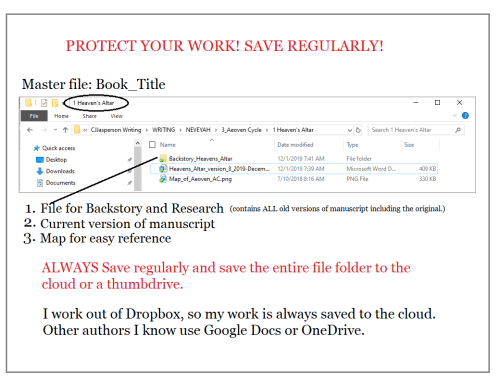 Even if you don’t have a title, name your manuscript with a good, descriptive working title, such as The_Vampire_Story. You can call it something else later.
 But that first book was a nightmare to edit and straighten out. It became three books, Huw the Bard, Billy Ninefingers, and Julian Lackland.
 Unfortunately, maps have fallen out of favor thanks to satellite technology and the GPS in our cell phones. Many people don’t know how to read a map.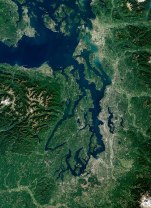
 If you are designing a fantasy world, you only need a pencil-drawn map. Place north at the top, east to the right, south to the bottom, and west to the left. Those are called
 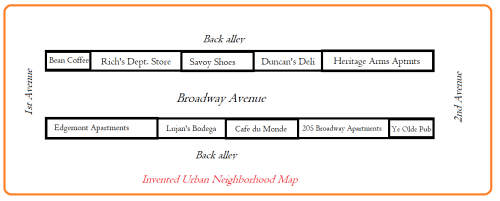 Use a pencil, so you can easily note whatever changes during revisions. Your map doesn’t have to be fancy. Lay it out like a standard map with north at the top, east on the right, south at the bottom, and west on the left.
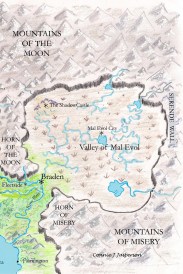 Many towns are situated on rivers. Water rarely flows uphill. While it may do so if pushed by the force of wave action or siphoning, water is a slave to gravity and chooses to flow downhill. When making your map, locate rivers between mountains and hills.
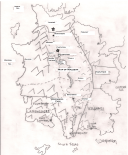 Maybe you aren’t artistic but will want a nice map later. In that case, a little scribbled map will enable a map artist to provide you with a beautiful and accurate product. An artist can give you a map containing the information readers need to enjoy your book.
 In my part of the world, the native forest trees I see in the world around me are mostly Douglas firs, western red cedars, hemlocks, big-leaf maples, alders, cottonwood, and ash. Because I am familiar with them, these are the trees I visualize when I set a story in a forest.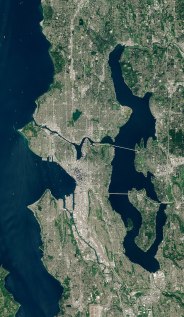
 Every fantasy world has a setting, and that environment has a climate. Certain climates limit the variety of foods available.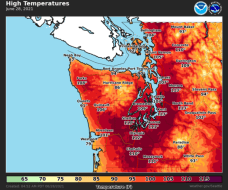
 We know from bitter experience that weather affects the food we produce and influences what is available in grocery stores. Abnormal heat waves across temperate states, category 4 hurricanes along the Atlantic seaboard and the Gulf of Mexico, and category 4 tornadoes down the center of the US and Canada, and even deep freezes in Texas and the deep south have been our lot in the last five years.
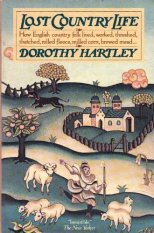 Once you have decided your historical era, terrain, and overall climate, research similar areas of the real world to see how weather affects their approach to agriculture and animal husbandry. Look into the past to discover ancient agricultural methods to see how low-tech cultures fed their large populations:
 Also, if your story is set in a particular era, how plentiful was food at that time? Famines occurring all across Europe and Asia over the last two-thousand years are well documented. Egyptian, Incan, and Mayan history is also fairly well documented so do the research.
 We have witnessed monumental changes since the turn of the millennium. We know California teeters on the edge of disaster, that a water shortage threatens the lives of millions, as well as one of the largest agriculture industries in the US.
 Escape from Spiderhead is a science fiction story set in a prison. It is built around several themes. The central theme is crime and punishment, and Saunders grabs hold of this theme and runs with it.
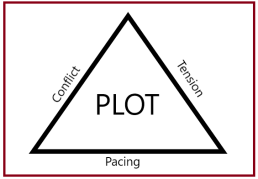 Saunders takes a deep dive into the theme of redemption in this tale. He didn’t take the expected path with his plot arc and didn’t opt for revenge by giving Abnesti the drug, which was the obvious choice.
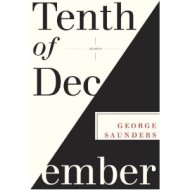 I will say now – the story and the movie are two different things. The film bears some resemblance to the story it is based on but – it is not that story. All writers should be aware that you no longer control the direction of your story when you sell the movie rights.
 The main character,
  The summer I turned ten, I was scavenging the house for something to read and discovered my father’s personal library. He had the entire collection of Encyclopedia Britannica’s
  Knightly virtues
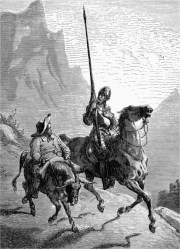
 Quixote’s insanity is gentle and easy to sympathize with—he can’t understand the harshness of the people around him. He is a man of action and a champion of the oppressed.
 Here are a few sayings you might hear every day in one form or another that were coined by Cervantes:
 The events set in this world are linked by family, warped by lies and secrets kept across three generations. Themes of hubris, truth vs. falsehood, heroism, and coming of age power this truly epic fantasy series.
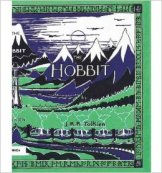 , demons, magic or sorcery, and multilayered quests. They often have constructed languages, coming-of-age themes, and multivolume narratives.
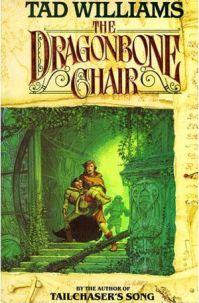 Binabik‘s people, the Qanuc, are called trolls by the humans and Sithi. They are a cross between Tolkien’s dwarves and hobbits, made wiser and less concerned about gold. The Hunën are brutish giants who serve the Norns and are often at war with the Qanuc.
 In that case, it’s time to widen your reading horizons and try reading something in a different subgenre. Maybe you’d like a space opera or a portal fantasy. You’ll never know what you are missing if you don’t read outside your favorite genre.
 Now, we probably wouldn’t have plumped for such a fancy getaway, but my husband has a conference there, and what with him not driving right now, I am along as chauffeur.
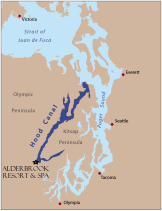 It’s a fjord, not a canal, so why they named it that, I don’t know. But there it is, one more thing our pioneering ancestors have to answer for.
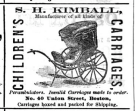 The man and the baby: We arrived on Sunday afternoon. We sat at a romantic table for two for our first dinner, overlooking the beach. It’s the Pacific Northwest, so people come dressed for January in June (or June-uary as June is known here). The lawn chairs were full of guests lounging in their summer finery of Gore-Tex and wool, ignoring the intermittent misty rain and drinking steaming coffees. Off to one side was a young man sitting alone. Beside him was the fanciest baby pram I’ve ever seen.
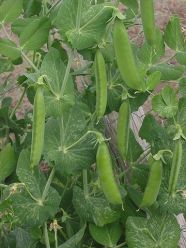 On Monday, I decided to be adventurous. I thought I would try the spring salad with fresh peas, pea vines, fennel, watermelon radishes, and a champagne vinaigrette. I had never thought of eating pea vines, but I’m not afraid to try new things.
 Today we are on our way home, where we will indulge in budget-friendly home-cooked meals and other economies for a few weeks to make up for this splurge.
 We who write because we love words spend a great deal of time framing what our words say. We choose some words above others because they say what we mean more precisely, or they color our prose with the right emotion.
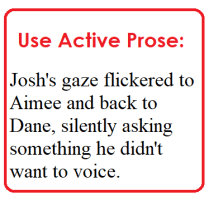 Two: Placement of verbs in the sentence can strengthen or weaken it.
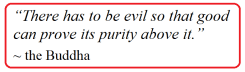 Four: Contrast—In literature, we use contrast to describe the difference(s) between two or more things in one sentence. The blue sun burned like fire, but the ever-present wind chilled me.
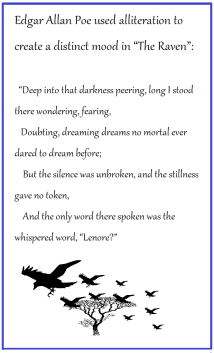 Seven: Alliteration is the occurrence of the same letter (or sound) at the beginning of successive words, such as the familiar tongue-twister: Peter Piper picked a peck of pickled peppers. Alliteration lends a poetic feeling to passages and enhances the atmosphere of a given scene without creating wordiness.
 Active phrasing generates emotion. Sometimes, using similes, repetition, and alliteration in subtle applications enhances the worldbuilding without beating your reader over the head.
 Readers connect with these stories across generations and across the centuries because the fundamental concerns of human life aren’t unique to one society, one technological era, or one point in time.
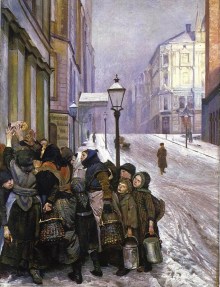 Acquiring food becomes their first priority. Having a surplus of food becomes a reason to celebrate. To go without adequate food for any length of time changes a person and makes one determined to never go hungry again.
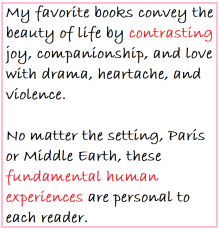 Love and loss, safety and danger, loyalty and betrayal—the eternal themes of tragedy and resolution. Hardship contrasted against ease provides the story with texture, turning a wall of “bland” into something worth reading.
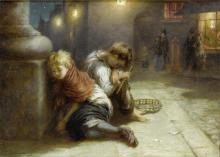 We writers must make our words count. We have to show the comfort zone in the moments leading up to the disaster, not too much, but just enough to show what will soon be lost.


 Life in the Realm of Fantasy
.jpg&oldid=670161517)