
Many of us are in the revision process, working on the novels we wrote during November’s NaNoWriMo. These novels are disjointed and uneven, but they contain the essence of what can be a great book—with a lot of work.
 On November 1st, when we began setting the first words on the blank page, our minds formed images, scenes we attempted to describe. In his book, The Language Instinct, Steven Pinker notes that we are not born with language, so we are NOT engineered to think in words alone. We also think in images.
For each author, certain words become a kind of mental shorthand, code words used with frequency in the first draft because they are efficient. Code words are small packets of letters that contain a world of images and meaning for us. These words help us get the story down more quickly when we are in the grip of creativity. Code words are a speedy way to convey a wide range of information.
Because we use them, we can get the first draft of a story written from beginning to end before we lose the fire for it.
I have mentioned before that one codeword I sometimes find in my first draft prose is the word “got.” It’s a word that my family used and is ingrained in my subconsciousness as a tool word.
It is a tool word because it serves numerous purposes and conveys many images with only three letters. “Got” is on my global search list of codewords. The words in the list are signals to me, indications that a scene needs to be reworded to express my true intent.
Got can signify understanding or comprehension, as in “she got it.” Some other instances where I might use “got” as a code word for my second draft:
- He got the dog into the car. (put, placed)
- He got the mail. (acquired)
- He got (became) In an instance like this, an entire scene must be written, one I didn’t take the time to write during the rush of NaNoWriMo.
Codewords are the author’s multi-tool—a compact tool that combines several individual functions in a single unit. One little word, one small packet of letters serves many purposes and conveys a myriad of mental images.
Every author thinks differently, so your codewords will be different from mine. One way to find your secret codewords is to have the Read Aloud tool read each section. I find most of my inadvertent crutch words that way. When you hear them read aloud, they really stand out.
 Once you find them, you need to go to the thesaurus to find alternatives that better express your intent.
A first draft codeword high up my personal list is “felt.” Let’s go to Merriam-Webster’s Online Thesaurus:
- Synonyms:
- endured
- experienced
- knew
- saw
- suffered
- tasted
- underwent,
- witnessed
- Words Related to felt:
- regarded
- viewed
- accepted
- depended
- trusted
- assumed
- presumed
- presupposed
- surmised
We all overuse certain words without realizing it. That is where revisions come in and is where writing takes effort. You’ll discover that some words have very few synonyms that work.
When you discover one of your first draft codewords, go to the thesaurus, find all the synonyms you can, and list them in a document for easy access. If it is a word like smile or shrug, you have your work cut out, but consider making a small list of visuals.
Consider the word “smile.” It’s a common code word, a five-letter packet of visualization. We can use it to show happiness, but also it can suggest so many other moods and unspoken emotions.
Synonyms for the word smile are few and usually don’t show what I mean. When I find that word, it sometimes requires a complete revisualization of the scene. What am I really trying to convey with the word smile? I look for a different way to express my intention, which can be frustrating.
Facial expressions are only one of the many ways to display happiness, anger, spite, and other emotions. We shouldn’t rely only on a character’s face to show their moods.
Yes, their eyebrows raise or draw together, foreheads crease, and eyes sometimes twinkle. However, posture conveys a great deal. Shoulders sometimes slump, and hands often tremble. Sometimes characters refuse to look at the person they are speaking with.
Sometimes the brief image of a smile is the best expression to convey your intention.
Nothing is more off-putting than reading a story where a person’s facial expressions take center stage. As a reader, I’m more concerned with what is happening inside the characters than about the melodramatic outward display.
Think about the body language an onlooker would see if a character were angry.
- Crossed arms.
- A stiff posture.
- Narrowed eyes.
A little list of those mood indicators can keep you from losing your momentum and will readily give you the words you need to show all the vivid imagery you see in your mind.
 If you don’t have it already, a book you might want to invest in is The Emotion Thesaurus by Angela Ackerman and Becca Puglisi. Some of the visuals they list aren’t my cup of tea, but they know how to show what people are thinking.
The revision process is sometimes the most challenging aspect of writing because we are also looking at scene composition and framing (which was covered in my previous post). It takes time to revisualize each scene when we are also looking for codewords and rewriting entire paragraphs.
But codewords don’t always need changing—sometimes, a smile is a smile, and that is okay.
 Each chapter is comprised of one or more scenes. These scenes have an arc to them: action and reaction. These arcs of action and reaction begin at point A and end at point B. Each launching point will land on a slightly higher point of the story arc.
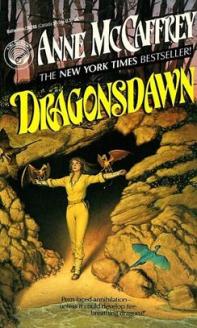 he scenes we are looking at today have two distinct environments to frame them: first the planet and then the abandoned colony ship, Yokohama. These scenes are filled with emotion, high stakes, and rising dread for the sure and inevitable tragedy that we hope will be averted. Not all the drama is in Sallah Telgar’s direct interaction with Avril Bitra. The environment heightens the drama, the sense of impending doom.
 We see Avril taunting Sallah for her matronly body and move out again to see Avril tying a cord to Sallah’s crushed foot and forcing her to make the navigational calculations for Avril’s escape. We move close up and hear the interaction, Sallah pretending to do as Avril asks but really setting her enemy’s doom in action. The camera moves to the wide view again, and we hear the interaction with her frantic husband on the ground. We are caught up in her determination to seize this only chance, using her dying breaths to get the information about the thread spores to the scientists on the ground.
 But more importantly, even if you are traditionally published, you pay for the books you sell at shows.


 She also wrote the brilliant, hilarious standalone novel,
 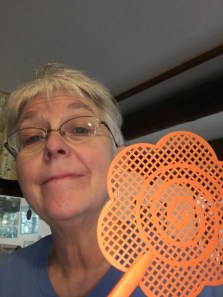 About Ellen King Rice:
 In an instant, an entire manuscript is gone, wiping away hundreds of hours of work on their labor of love.
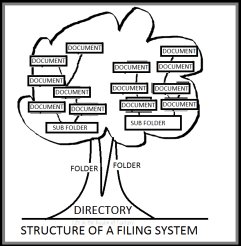
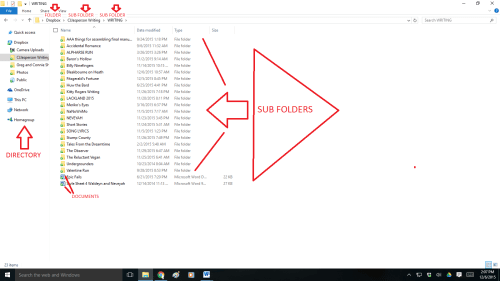 A filing system is quite simple, rather like a tree from the ground up. For most documents, my system is a standard office-type system that consists of:
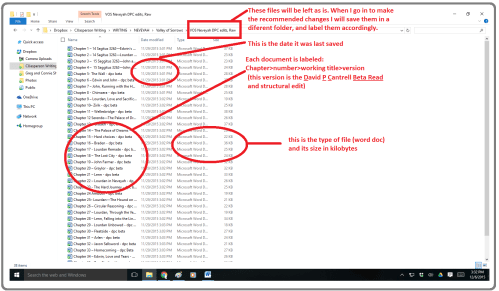 Name your files consistently and save each version in a separate folder within the master folder. Below is the master file for Valley of Sorrows.
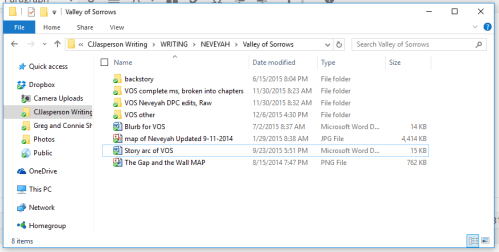 You may create many versions of your manuscript. YOU MUST manage your versions with meticulous care, or you will lose files, have to rewrite sections you just wrote, and which were brilliant, or any number of horrible, irritating situations.
 It’s a platform where you can advertise your books and discuss your interests, and most importantly, talk about what you are writing.
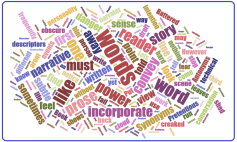 Writing blogposts requires me to become a thinking author, as well as a pantser. I can write using the “stream-of-consciousness” method or from an outline of whatever interests me at the time. I do the research, and the post begins to write itself.
 I love to see what questions people might want to have answered. Sometimes topics crop up at my writing group that no one has an answer to, and then I get to do a little research—my favorite thing. Other times I find interesting questions in the writers’ forums that I frequent.
 If you feel that it’s too much work, consider how you update your other social media. Try posting a haiku, a tweet-length post, or an Instagram-style post once or twice a week. Any social media platform post can be converted to serve as a blog post.
 Today, we continue that discussion with four more genres, each with many subgenres. First up is westerns. This is a popular genre with several common tropes and can be tricky to write respectfully and find a publisher for.
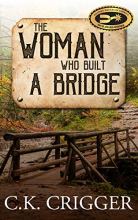 However, more and more, we are finding stories with female protagonists. An excellent example of this is the novel,
 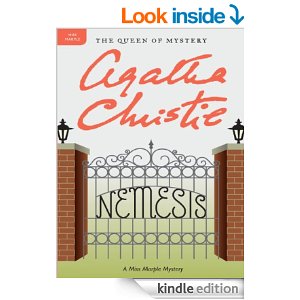 The Agatha Christie / Sherlock Holmes style of novel is the classic whodunnit. They feature a private detective with close ties to law enforcement but who is still an outsider. The detective sometimes has a sidekick who chronicles their cases. At times, the detectives butt heads with the police as resentment of the protagonist’s stepping on their turf crops up. This jealousy hinders the investigation. Clues are always inserted so that the reader doesn’t notice them until the denouement, and the sidekick never guesses right either.
 Definitions differ as to what constitutes a historical novel. On the one hand, the
  The rules of the category I am entering (Genre Fantasy/Sci-Fi) are clear: submissions must be of new, never-before-published novels. You can include only the first 25 pages of the manuscript, which will follow the synopsis.
 This is a task I would have found far more daunting without the support of my Tuesday morning writing group.
 Attend a few meetings as an observer to see if this group is a good fit for you.
 Daily writing becomes easier once you make it a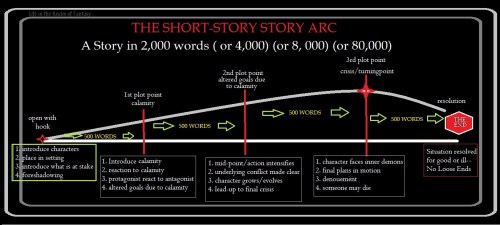
 A prompt is a word or visual image that kick starts the story in your head. If you need an idea, go to
 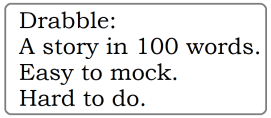 When you write to a strict word count limit, every word is precious and must be used to the greatest effect. By shaving away the unneeded info in the short story, the author has more room to expand on the story’s theme and how it supports the plot.
 To know that, you must know the genre of the work you are trying to sell. So, what exactly are genres? Publisher and author
  Mainstream (general) fiction—Mainstream fiction is a general term that publishers and booksellers use to describe works that may appeal to the broadest range of readers and have some likelihood of commercial success. Mainstream authors often blend genre fiction practices with techniques considered unique to literary fiction. It will be both plot- and character-driven and may have a style of narrative that is not as lean as modern genre fiction but is not too stylistic either. The novel’s prose will at times delve into a more literary vein than genre fiction. The story will be driven by the events and actions that force the characters to grow.
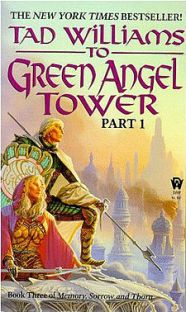 Fantasy is a fiction genre that commonly uses magic and other supernatural phenomena as a primary plot element, theme, or setting. Like sci-fi and literary fiction, fantasy has its share of snobs when it comes to defining the sub-genres. The tropes are:
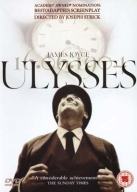 Literary fiction can be adventurous with the narrative. The style of the prose has prominence and may be experimental, requiring the reader to go over certain passages more than once. Stylistic writing, heavy use of allegory, the deep exploration of themes and ideas form the core of the piece.


 Life in the Realm of Fantasy