Tag Archives: writing

July is Camp NaNoWriMo Month #amwriting

July is Camp NaNoWriMo. Many people in my region are showing interest already. (NaNoWriMo = National Novel Writing Month.) Why, you ask, would you want to do two NaNoWriMos in one year?
First of all, Camp is relaxed, not an ordeal. You aren’t tied to anything more than loose goals. You can choose any kind of project, whatever word count goal you feel comfortable with, and there is no pressure.

Two years ago, I declared I would write 10,000 words, which turned out to be four short stories. You could declare your intention to write as few as 100 words.

The reason camp exists is that if you plan to write a 50,000 word novel in the month of November, you may find it harder to make time for writing than you planned. It helps if you develop some time management skills in advance.

Writing daily is more manageable once it becomes a habit. Making the best use of your time requires a little self-discipline, something we all could use a bit more of.

If you are interested in participating, the link for that is https://nanowrimo.org/what-is-camp-nanowrimo

To participate in Camp, just announce a project, then make sure to check “Associate with a NaNoWriMo Event” and select the current Camp NaNoWriMo event.

You can announce your project starting in June for July’s Camp NaNoWriMo session.

Once you’ve done that, you should be ready to start your project. You’ll be able to start tracking your writing on July 1 on their website.

When you reach your writing goal, the site will automatically confirm your win. You will receive a certificate celebrating your achievement, along with a bunch of other winner goodies.

Do you want to become part of the broader NaNoWriMo writing community?  Check out the Camp NaNoWriMo forums.

Headquarters offers authors options to start or join an existing writing group. Check out the “Writing Groups, Assemble” forum for open groups, and more.

Whenever we begin talking about NaNoWriMo, I always feel the need to mention saving your files.

If you are a new author, or unfamiliar with using a computer or electronic notepad, saving your files is an important habit to develop. If you value your hard work, you won’t be lazy or slapdash about this.

  1. Even if you don’t have a title, name your manuscript with a good, descriptive working title, such as The_Dinosaur_Story. You can call it something else later.
  2. Never delete a manuscript. If you suddenly decide you need to make such radical changes that you need to start over, save it in the same master file but with a new descriptive name: The_Dinosaur_Story_version_2.  Save each new version separately so that if you change your mind, you don’t lose work you might need later.
  3. Losing your files is a traumatic experience. Some authors lose several years of work in a surprise computer crash – an unimaginable tragedy. Entire manuscripts can go missing when a thumb-drive is lost, or a hard drive is corrupted.

You must save regularly. If you are using a Chromebook or working out of Microsoft’s OneDrive, this won’t be a problem. However, if you’re using an ordinary word-processing program such as Word or Open Office, you do need to be conscientious.

I use a file hosting service. I have a lot of images on file, so I pay for an expanded version, but they do have a free version that offers you as much storage as a thumb drive. I like using a file hosting service because my work can’t be lost or misplaced, and is always accessible from my desktop, laptop, or Android. I work out of those files, so they are automatically saved and are where I want them when I close my programs.

You can use any storage system that is free to you–Google Drive, OneDrive, or a standard portable USB flash drive.

Save regularly.

Did I mention that you should save consistently?

Did I suggest that you DON’T put off saving to a backup of some sort? PLEASE, do it every day before you close your files.

The manuscript I am currently working on is set in the Tower of Bones world. I’m on Version 11, just so you know. Sometimes a significant section has to be rewritten as it doesn’t fit the original intent of the story.

All the previous versions are good but took the story in the wrong direction. With character name changes, two of my outtakes became novellas set in that world.

The option to repurpose work that no longer fits is why I never discard any manuscript.

My next series will cover the way I devise a plot, build a world, and create characters. I take a couple of days to do these things.

Many of these things are basic, and perhaps you have your own system. Or maybe you prefer to write by the seat of your pants. That is the way I write poetry, so I understand “the joy of pantsing,” and I will talk about that too.

In my case, if I have the idea for a novel, good prep means I don’t lose sight of my story arc when I sit down to write it in November.
2 Comments

Filed under writing

Emotion: it’s complicated, part 2 #amwriting


Authors are regularly admonished to “show-don’t-tell.” Let’s ignore the know-it-all bludgeoning you with that rule for the moment, because nothing is worse than an unbalanced narrative.

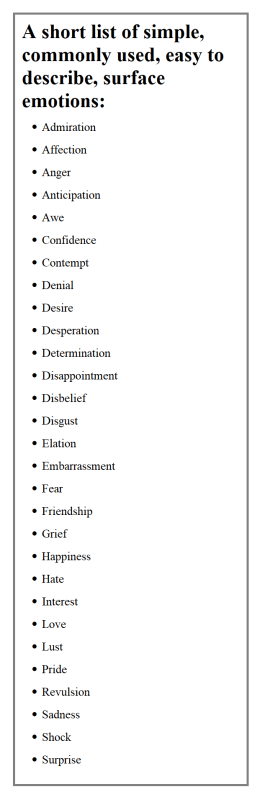
If you have no idea how to begin showing the underlying emotions of your characters, a useful handbook that offers a jumping-off point is The Emotion Thesaurus by Angela Ackerman and Becca Puglisi.

This book is quite affordable and is full of hints that you can use to give depth to your characters. They will offer nine or ten suggestions that are physical indications for each of a wide range of surface emotions.

Do your readers a favor. Choose only one physical indicator per emotion per scene.

Showing must be balanced with some telling, or it becomes all about eye-rolling and forehead creasing. Showing mixed with telling makes for a smoother narrative.

Some telling can be done in conversations, through internal thoughts, and the observations of others in a scene.

Writing emotions is a balancing act. Most times, you can get away without dragging the reader through five or six small facial changes in a scene, simply by giving their internal reactions a little thought.

If you only show the outward physical indicators of a particular emotion, you only wrote half the story.

When something “strikes home” with us, it happens on a visceral (physical) level. In other words, emotions that hit us hard evoke sudden feelings deep within our guts as well as in our hearts and minds.

Yes, these feelings can be reflected in our expressions. However, facial contortions alone don’t show what is going on inside the character.

Visceral reactions are involuntary.

We can’t stop our face from flushing or our heart from pounding.

We might be able to hide our reactions from others, but we can’t stop how these emotions feel.

This internal physical gut reaction is difficult to convey without offering the reader some information, a framework to hang the image on. You must tell the reader the character’s face went hot, or their stomach knotted up.

One way to create a sympathetic response in the reader is to use a simple 1 – 2 – 3  trick of word order when describing the character’s experience.

  1. Start with the visceral response. How does a “gut reaction” feel? Nausea, gut punch, butterflies—what?
  2. Follow up with a ‘thought’ response. “Oh my god!” That is how it hits us, right? Gut punch then mental reaction as we process the event.
  3. Third, finish up with body language.

Severe emotional shock strikes us physically with a three-way punch:

  • disbelief—the OMG moment
  • knocking knees, shaking hands, or a shout of “No!”
  • disassociation—a coping or defense mechanism meant to minimize or help a person tolerate stress.

When we write mild reactions, it’s not necessary to offer a lot of emotional description because ‘mild’ is boring. A raised eyebrow, a sideways glance—small gestures show the attitude and normal condition of the character.

However, strong emotions are compelling. Highly charged situations are strengthened by the way we write the emotional experience.

If you want to emphasize a particular chemistry between two characters, good or bad, employing their visceral reactions is the way to do so.

Most authors who have been in writing groups for any length of time become adept at writing emotions on a surface level.

They don’t merely write, “He smiled.” Their characters’ facial expressions are an ever-moving display of lips curving up or pulling down beneath twinkling, hard-eyed glares. Eyebrows raise or draw together, foreheads crease, shoulders slump and hands tremble, dimples pop, eyes spark—and so on and so on.

Taken individually and combined with other clues, some description is necessary.

However, nothing is more aggravating than trying to enjoy a narrative where facial expressions and body slumping take center stage.

This is why I feel as concerned with what is happening to my characters internally as I do about describing the outward display.

Combining the surface of the emotion (physical) with the deeper aspect of the emotion (internal) requires thought. We struggle to balance showing the external with telling the internal so that the reader isn’t baldly told what to experience.

We write it, and sweat over it, searching for the right words to show what we intend. Many times, we come back later and rewrite it.

By using this twofold approach of mixing showing with telling, we hope the reader will become immersed in the lives of our characters.

Some emotions are complicated and deeply personal, difficult to show, and even more challenging to express internally. These are the gut-wrenching moments that make our work speak to the reader.

Each of us experiences emotional highs and lows in our daily lives. We have deep-rooted, personal reasons for our emotions, and so must our protagonist.

Writing genuine emotions requires practice and thought. Motivation is critical.

WHY does the character react in that way? Emotions without cause have no basis for existence, no foundation. They lack credibility and leave us, the reader, feeling as if the story is shallow, a lot of noise about nothing.

Timing and pacing are essential.

The emotion hits and the character is processing it.

That is the moment to slip in a brief mention of the backstory. That way, you avoid an info dump, but the reader can extrapolate the information needed to make the emotion real.

Simplicity has impact. When looking for words with visceral and emotional power, consonants are your friend. Verbs that begin with consonants are powerful.

Use forceful words, and you won’t have to resort to a great deal of description. Weak word choices separate the reader from the experience, dulling the emotional impact of what could be an intense scene.

A good exercise for writing deep emotions is to create character sketches for people you currently have no story for. Just as in all the many other skills necessary to the craft of writing a balanced narrative, practice is required.

The key is to practice writing emotions, and you may find a later use for these practice characters. The more we practice this aspect of the craft, the better we get at it.

And the more we write, the more individual and recognizable our writing-voice becomes.


Credits and Attributions:

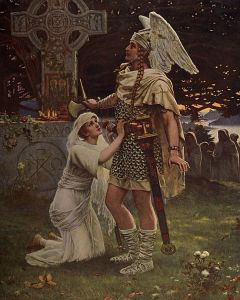
Sir Galahad, by Herbert Gustave Schmalz, 1881 via Wikimedia Commons contributors, “File:Schmalz galahad.jpg,” Wikimedia Commons, the free media repository, https://commons.wikimedia.org/w/index.php?title=File:Schmalz_galahad.jpg&oldid=363278568 (accessed June 23, 2020).

5 Comments

Filed under writing

Emotion: it’s complicated #amwriting

When we discuss our work with other writers, the word mood is sometimes used interchangeably with atmosphere. I see those two aspects of story as conjoined twins, marching along together. They are separate but intertwined so closely that they seem as one.

Mood happens in the background over the length of the story. Mood allows the emotions the writer instills into the story to be more specific, more intensely colored.

Atmosphere is also long-term but is part of worldbuilding. Atmosphere is conveyed by setting, which affects the overall mood of a piece.

Together, atmosphere and mood have the power to intensify the reader’s impression of the emotions experienced by the characters.

Emotion is immediate, short term. It exists in the foreground but works best when in conjunction with the overall atmosphere/mood.

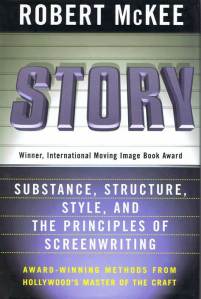
Robert McKee, one of my favorite teachers on craft, tells us that “emotion is the experience of transition, of the characters moving between a positive and negative.”

As we read, we become invested in the characters and experience their emotional highs and lows. These transitions range in intensity from subtle to forceful.  I like books where emotions are dynamic, but where the character’s internal struggle becomes personal to me.

Despite being comprised of only four letters, mood is a vast word serving several purposes. It is created by the setting (atmosphere), by the exchanges of dialogue (conversation), and the tone of the narrative (word choices, descriptions). It is also affected by (and refers to) the emotional state of the characters—their personal mood.

Emotions that are undermotivated lack credibility and leave us, the reader, feeling as if the story is flat. We have deep, personal reasons for our passions and hates, and so must our characters.

Thus, emotions drive the characters’ actions and create a sense of urgency. If we don’t feel some emotional intensity connected to the deeds and actions taken by our protagonists, we don’t care about them.

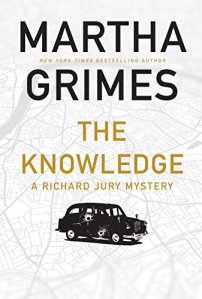
In Martha Grimes’ book, The Knowledge, a man, wearing a bright red scarf, steps out of a taxi in front of a nightclub. He has barely left the vehicle when he shoots and kills a couple who are waiting to get in. This is an apparently random act. Why?

Martha Grimes shows us this scene through the taxi driver’s eyes. We experience it in his shocked disbelief and horror.

Then, making no effort to disguise himself, the shooter gets back in the cab and forces the driver (at gunpoint) to take him to Waterloo Station.

All during the ride, we feel the driver’s terror, applaud his resourcefulness, and hope like hell he won’t be murdered.

In a stunning, baffling end to that scene, the man pays the driver, gives him a large tip, and disappears into the crowd at Waterloo and walks straight to the parking lot.

The assassin then gets into a Porsche and drives to Heathrow, where he casually boards a plane to Dubai. Before takeoff, he unwittingly helps an underage detective who is following him become a stowaway on the flight.

What? Why?

I need to know why, and I need to know right now! This story is compelling because it is about emotions as much as it is about the action.

Which is more important, mood or emotion?

Both and neither.

The emotions our characters experience have an effect on the overall mood and atmosphere of a story.

In turn, as I showed in my post, Mood and Atmosphere: Where Inference meets Interpretation, the atmosphere of a particular environment has a significant effect on the characters’ personal mood.

Just as in real life, the individual moods of our characters collectively affect the emotional state of the group.

We know that emotion is the experience of transition from the negative to the positive and back again. Experiencing intense emotion should change a character’s values. Characters should have an arc to their lives, over which they either grow or regress.

This is part of the inferential layer as the audience must infer (or deduce) the experience. Our task is to make the emotions real, but not maudlin.

You can’t tell a reader how to feel. Readers must experience what the character feels and understand their reasons and motives on a human level.

What is mood? Wikipedia says:

In literature, mood is the atmosphere of the narrative. Mood is created through the setting (locale and surroundings in which the narrative takes place), the attitude (of the narrator and of the characters in the narrative), and the descriptions.

Although atmosphere and setting are connected, they may be considered separately to a degree. Atmosphere is the aura of mood that surrounds the story. It is to fiction what the sensory level is to poetry. Mood is established to affect the reader emotionally and psychologically and to provide a feeling for the narrative.

In other words, the setting can contribute to the atmosphere. However, setting is only a place. Setting is context, not atmosphere.

How is atmosphere separate from setting? It’s part of the world, the environment, right? It’s just worldbuilding.

Yes and no. Atmosphere is associated with the environment but is a created ambiance, written to evoke a specific frame of mind or emotion in the reader.

Atmosphere is created of layers and applied to the setting. It is comprised of the odors, ambient sounds, and visuals you write into the environment. It is influenced by how you write the characters’ moods and emotions as they move through the setting.

Atmosphere is environmental, separate but connected to the general emotional mood of a piece.

From the first line of the first paragraph of a story, we want to establish the feeling of atmosphere, the general mood that will hint at what is to come.

Robert McKee tells us that the mood/dynamic of any story is there to make the emotional experience of our characters specific. Happy, sad, neutral—the overall environmental mood is no substitute for the characters’ emotions. However, the two, overall mood and emotion, must work together to draw the reader in.

This inferential layer of any story is the place where we have connected the dots and drawn an outline that shows what our story is.

Filling the outline of the story with color requires thought on our part. Emotions are the colors we use to show a picture.

In my next post we’ll discuss the tricky dance of show and tell—the art of conveying specific emotions without bludgeoning the reader with them.


Credits and Attributions:

Much of my information comes from watching seminar-videos on the craft of writing found on YouTube and posted by Robert McKee. He is an excellent teacher, and YouTube University is a free resource for the struggling author. His book,  “Story” by Robert McKee, is a core textbook of my personal library. Robert McKee on YouTube

Wikipedia contributors, “Mood (literature),” Wikipedia, The Free Encyclopedia, https://en.wikipedia.org/w/index.php?title=Mood_(literature)&oldid=895686542 (accessed July 7, 2019).

6 Comments

Filed under writing

Choosing Words to add Depth #amwriting

Words with few alternatives become problems for me, as in certain circumstances, they can become repetitive. Sometimes, the thesaurus that comes with my word-processing program doesn’t offer me enough substitutes to make a good choice.

For that reason, I have both the Oxford Dictionary of Synonyms and Antonyms and Oxford American Writers’ Thesaurus near to hand. When I find myself searching for an alternative word, I refer to these books.

I find it saves time to refer to the hard copy book rather than the internet. However, that is a perfectly reasonable cost-free alternative. Having good reference books at hand keeps my attention on my work, rather than surfing the net.

We all use the same words to tell the same stories.

Why do I say such a terrible thing? It’s true—there only a few basic plots from which all stories are derived, and we have only so many words in the English language with which to tell them.

Ian Chadwick offers us this observation in his article, Three, six, seven, nine… how many basic plots?

 Last summer, a story in The Atlantic told of university researchers who used software to parse through 2,000 works of literature to determine there are six basic plots:

  1. Rags to Riches (rise)
  2. Riches to Rags (fall)
  3. Man in a Hole (fall then rise)
  4. Icarus (rise then fall)
  5. Cinderella (rise then fall then rise)
  6. Oedipus (fall then rise then fall)

Which is one less than Christopher Booker lists in his lengthy 2004 book, The Seven Basic Plots:

  1. Overcoming the Monster
  2. Rags to Riches
  3. The Quest
  4. Voyage and Return
  5. Comedy
  6. Tragedy
  7. Rebirth

Around the end of his book, Booker actually lists two more plots which are, historically speaking, not as common (by his assessment, they are late additions to our literary canon, although I think that could be argued against), so he discounts them as less important:

Rebellion Against ‘The One’

Mystery

So, yes, we are all telling the same stories, and we all must use words with the same meanings, but we sound different on the page.

Why is this?

The way we habitually write prose is our unique voice. The words I use might mean the same as those you use, but I might choose a different form of it.

Take the word loud:

  • Noisy
  • Boisterous
  • Deafening
  • Raucous
  • Lurid
  • Flamboyant
  • Ostentatious
  • Thunderous
  • Strident
  • Vulgar
  • Loudmouthed

These are only a few of the many options we have – www.PowerThesaurus.com  lists 1,992 alternatives for the word loud.

When we write, we are building a specific image for our readers. We select words intentionally for their nuances. We want to convey our idea of the mood and atmosphere as well as the information. What ambiance does the setting convey, and how can our word choices add depth to that feeling?

Thunderous conveys more power than loud, even though they mean the same thing in the context of sound.

Lurid conveys more power than loud, and in the context of color, they mean the same thing.

Don’t get too creative, though. Do your readers a favor and use words that are common enough that most people won’t need a dictionary to understand the narrative.

Would you choose the word obstreperous or the more common form, argumentative? They mean the same thing, but both begin with a vowel and feel passive. Hostile, confrontational, surly—many common words convey different shades of the meaning in a more straightforward, more powerful way.

This is not to say that less commonly used words should be ignored. Your prose should never be “dumbed-down.”

The point is, don’t use words that my Texan editor refers to as “ten-dollar words.” A ten-dollar word is a long obscure word used in place of one that is smaller and more well-known.

The origin of ten-dollar words dates back to the early 19th century when writers and speakers would use pretentious words to seem smarter than the average person. This obnoxious habit turns potential readers away, as no one likes to be talked down to.

When it comes to word selection, consider the image you want to convey as if you were an artist. Make an effort to find the right words to show the story.

Words are the paint you will use to draw the picture for the reader. Plot, no matter how well constructed, is only a framework for the story.

As a reader progresses through a narrative, their imaginations supply images about the people and the events. The real story happens inside the reader’s head.

The reader’s experience is made richer or poorer by the words you choose.

If you build your story out of words that evoke powerful images, they will get to know the characters, feel as if they live in that world, and absorb the events more quickly.

They will be compelled to keep turning the page.

As a reader, I live for those books written by authors who aren’t afraid to choose their words.


Credits and Attributions:

Three, six, seven, nine… how many basic plots? by Ian Chadwick © 2017 Scripturient. http://ianchadwick.com/blog/three-six-seven-nine-how-many-basic-plots/ (accessed 16 June 2020).

10 Comments

Filed under writing

Mood and Atmosphere: Where Inference meets Interpretation #amwriting

Mood and atmosphere exist in the inferential layer of the story. They are two separate but entwined forces that form subliminal impressions in the awareness of the reader. Where you find atmosphere in the setting, you also find mood in the characters.

What is the interpretive aspect of this layer? The author’s job is to deploy inference in such a way that the reader can interpret their intention. That is, they can effortlessly understand where the author was going with that thought.

The aspects we call mood and atmosphere are created by inference, a word-picture that is shown rather than bluntly stated. Writers infer, readers interpret.

Books have two authors. The first author is obviously the writer.

The second author is intangible, a ghost, and doesn’t influence the story until after it is published. It is the intended reader whose imagination will recreate the story as they read the words on the page.

How a reader feels the emotion and absorbs the atmosphere is the interpretive layer.

Emotion is a constant force in our lives. On the page, it must be truthful, or it becomes maudlin. A character’s mood is an emotional backdrop that begins with their experiences. It encompasses the reader as they immerse themselves in a story.

The way emotional inference is conveyed on the page determines the success or failure of the author’s intention.

Let’s explore one of the all-time masterpieces of atmosphere and mood: Wuthering Heights, the 1847 gothic novel by Emily Brontë.

The word Gothic in a novel’s description immediately tells us we are looking at a dark, moody piece set in a stark, desolate environment, and it will include some supernatural elements. In classic Gothic novels, these elements are circumstantial and often later proven to be figments of the protagonist’s mind.

Also, the word Gothic in a novel description means a story will be fraught with emotion and intensity, and take place in a dark, forbidding setting.

The general mood is heavily influenced by other aspects of the narrative: setting, theme, ambiance, and phrasing. These form the inferential layer.

A reader’s perception of a setting’s atmosphere is affected by a character’s emotions. Emotion, as written on the page, is the character’s experience of transitioning from the negative to the positive and back again.  As the characters’ emotions change from high to low throughout the story, the overall mood is influenced.

This is because the reader has suffered through emotions in real life and can easily recognize and relate to a character’s experience.

Consequently, for the atmosphere and mood of a setting to affect the reader’s interpretation of a story, the author must convey a sense of familiarity to a place the reader has never been.

“Familiar” does not mean safe or comforting. It means the elements of the environment are recognizable on a subliminal level, something the reader can understand without having experienced it, or being bluntly told.

In this layer, visual objects in a room or an outdoor space color the atmosphere and affect the characters’ moods. Gothic atmosphere has a winter feel to it even in summer.

Barren landscapes and low windswept hills feel gothic to me.

The atmosphere/mood dynamic of any narrative is there to make the emotional experience of the story specific. The atmosphere of a setting is not a substitute for emotions that an author can’t figure out how to write.

However, creating the right atmosphere leads to shaping the characters’ overall mood, and the right mood can help you articulate the specific emotions.

In Wuthering Heights, the atmosphere contributes to and magnifies certain characters’ obsessions. It lays bare hate, selfishness, and revenge. These elements are demonstrated in the course of exploring the destructive power of obsession and fixated, unchanging love.

The Gothic aspects of Wuthering Heights expose how upper-class Victorians benefitted from and perpetuated gender inequality within their society.

Environmental symbols are subliminal landmarks for the reader. In Wuthering Heights, the landscape is comprised primarily of moors. These desolate places are wild and starkly beautiful. They are vast expanses, which although high in elevation, are dangerously boggy. These moorlands are often made of peat, a high-carbon-content muck composed of decomposing vegetation.

About Dartmoor, via Wikipedia:

Much more rain falls on Dartmoor than in the surrounding lowlands. As much of the national park is covered in thick layers of peat (decaying vegetation), the rain is usually absorbed quickly and distributed slowly, so the moor is rarely dry. In areas where water accumulates, dangerous bogs or mires can result. Some of these, topped with bright green moss, are known to locals as “feather beds” or “quakers” because they can shift (or ‘quake’) beneath a person’s feet. Quakers result from sphagnum moss growing over the water that accumulates in the hollows in the granite. [1]

Historically, we find many accounts of people drowning in bogs. Moorlands, as a setting for a novel, present a recognizable danger. People and animals are known to stumble into waterlogged places and drown. Becoming lost and drowning is a possibility that is raised several times throughout the novel.

Thus, the environment of the moors sets the mood by raising the specter of murderous, untamed nature. Setting the story in that environment immediately implies infertility and death.

Another aspect of this setting that contributes to the atmosphere is graphic: Moorland is visually the same wherever you look, so the lack of visible landmarks makes it easy to lose your way. In this novel, the setting conveys a powerful emotion: the fear of being both lost and trapped.

Most of the action occurs at Wuthering Heights, which is the manor from which the novel takes its name. The neighboring house, where other scenes are set, is Thrushcross Grange. They are neighbors, but a vast stretch of moorland lies between the two houses. These houses are far from neighboring towns, in their words, “far from the stir of society.” Distance emphasizes the loneliness of the setting.

Thinking about and planning symbolism in an environment is key to developing the general atmosphere and affecting the mood. Brontë made each house symbolic of its inhabitants.

Those who reside at Wuthering Heights tend to be intense, wild, and passionate—untamed like the moorlands.

Conversely, the characters living at Thrushcross Grange are closer to town, and are passive, civilized, and calm.

That underlying threat of danger in the environment affects the mood and emotions of the characters. It affects the overall atmosphere of the novel.

Thus, before we are even introduced to the characters’ motives or the plot, we find that the mood/atmosphere of Wuthering Heights is dark and gothic.

And so, to wind this up, atmosphere and mood are intertwined. They are fundamental aspects of the inferential and interpretive layers of the story and getting them right takes a bit of work.

But making the effort can result in a novel that is deep and well worth reading.


Credits and Attributions:

[1] Wikipedia contributors, “Dartmoor,” Wikipedia, The Free Encyclopedia, https://en.wikipedia.org/w/index.php?title=Dartmoor&oldid=959755158 (accessed June 14, 2020).

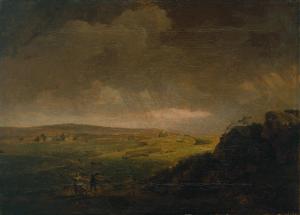
Moorland Landscape with Rainstorm by George Lambert. Wikimedia Commons contributors, “File:George Lambert – Moorland Landscape with Rainstorm (1751).jpg,” Wikimedia Commons, the free media repository,https://commons.wikimedia.org/w/index.php?title=File:George_Lambert_-_Moorland_Landscape_with_Rainstorm_(1751).jpg&oldid=234912081 (accessed July 16, 2019).

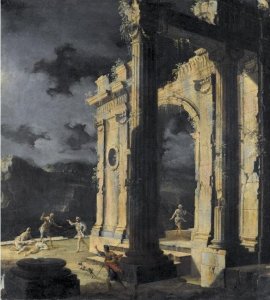
Wikimedia Commons contributors, “File:An architectural capriccio with figures amongst ruins under a stormy night sky, oil on canvas painting by Leonardo Coccorante.jpg,” Wikimedia Commons, the free media repository, https://commons.wikimedia.org/w/index.php?title=File:An_architectural_capriccio_with_figures_amongst_ruins_under_a_stormy_night_sky,_oil_on_canvas_painting_by_Leonardo_Coccorante.jpg&oldid=291488853 (accessed May 19, 2019).

6 Comments

Filed under writing

The literal layer #amwriting

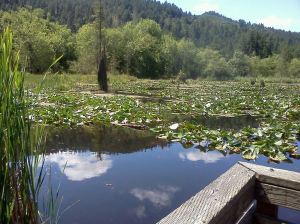
McLane Pond, taken in July 2018

Stories are created from countless layers. Today we are looking at the many outwardly visible aspects of a story. These are the surface features that define not only genre but which either attract or repel a reader at first glance.

If you’ve ever seen a pond on a calm day, you may have noticed the sky and any overhanging trees reflected on the still surface. The picture I’ve included at the top here is one my husband and I took while walking the McLane Nature Trail, not far from our home. We took it in July of 2018.

If you were there on a stormy day, things were different. The waters were gray, reflecting the color of the clouds. Ripples and waves stirred the waters.

The surface of a story is the Literal Layer, the what-you-see-is-what-you-get layer.

In a story, events and the way our characters move through them stir the surface, creating the image our reader sees.

This surface is comprised of

  • Setting
  • Action and Interaction
  • All visual/physical experiences of the characters as they go about their lives.

When we look at the surface, we immediately see something recognizable.

Setting and props – things such as:

  1. Objects the characters see in their immediate situation
  2. Ambient sounds that form the background
  3. Odors/scents of the immediate environment
  4. Objects the characters interact with
  5. Weapons (swords, guns, phasers)

The mechanical order of events forms the structure of the literal layer because they appear to be the story. This framework is the easel on which the setting and props are displayed:

  1. The opening.
  2. The inciting incident.
  3. Rising action and events that evolve from the inciting incident.
  4. The introduction of new characters.
  5. The action that occurs between the protagonist and antagonist as they jockey for position.
  6. The final showdown

How do we shape this literal layer to entice the casual reader? We can add tropes common to a particular genre. Sci-fi or fantasy elements offer an immediate clue to a prospective buyer.

Many sci-fi and some fantasy novels are set in close-to-real-world environments. The settings are familiar, akin to what we know. As readers, we could be in that world.

Good world-building creates a literal layer that is immediately accepted by the reader.

Sentinel, 05 August 2019

An obvious point I still want to make, is that the literal layer is also comprised of word combinations and word choices. This aspect distinguishes the level at which the intended reader will be able to comprehend and enjoy.

I prefer the prose in my casual reading material to be suitable for the average adult, not too pretentious, and not dumbed down. I seek that happy medium when I peruse the paperbacks or use the “Look Inside” option for eBooks at the big store in the sky.

What we put into the surface layer of our story draws the reader to look more closely at the depths. Setting, action, interaction—these most obvious components should give the reader a hint that there are profound aspects of the story, more than what-you-see-is-what-you-get.

While the surface elements of the story ruffle the surface and stir things up on the literal layer, they are only a glimpse of the deeper waters.

A memorable story has soul and hidden depths. It makes you think about larger issues you might not have considered before.

Plot charts the twists and turns of events, but depth opens our eyes, enabling us to see how other people think, feel, and experience life.

Depth changes observers into participants.

Prose and how we choose words to express emotion and ideas most powerfully is the medium by which we convey depth.

Writing to formal constraints, as I’ve discussed in several previous posts, forces us to find words that drill down and say what we really mean. By using the dictionary of synonyms and antonyms, we can find ways to write concise prose that isn’t repetitive, isn’t longwinded, but still has a cadence to it that is our voice, our style.

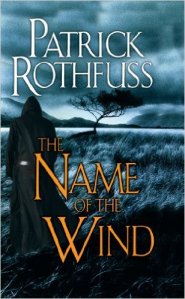
Have you read the opening page of The Name of the Wind by Patrick Rothfuss yet? That is your homework.

Go to the eBook section of the library or go to the online store of your choice and use the “look inside” option or the “download sample” option. You don’t have to do more than read the first paragraphs to complete this task.

Use one of the above cost-free methods to see how a master wordsmith uses prose to stir the surface in the opening pages of a fantasy novel.

With that ruffling of the waters in the first paragraphs, you are given a glimpse into the depths that lurk below.


Credits and Attributions:

Photograph, McLain Pond in July, © 2018 by Connie J. Jasperson, from the author’s private photos.

Sentinel, 05 August 2019 (One of the Needles, Cannon Beach) © 2019 by Connie J. Jasperson, All Rights Reserved (author’s own work).

7 Comments

Filed under writing

The Inferential Layer: Drama #amwriting (reprise)

Today’s post is a reprise of one first posted August 26, 2019. Circumstances beyond my control meant I didn’t have a post ready for today–sorry! The reason I chose this post to reprise is that it deals with drama, and how we instill it into our work. I feel it dovetails nicely with the discussions we’ve had recently regarding poetry. We want to instill emotion and impact into our work so the words we use must be powerful.


Whether you are writing a screenplay, a short story, or a novel, you are writing something that you hope will resonate with the reader and move them. A lesson that screenwriters learn early on is that each scene must be viewed as a mini-story; a complete story within the larger story. They learn this early because they don’t have the luxury of space that we who write novels have. The entire story of a screenplay must be told within a finite framework of time, so the writer must wring the most emotional impact out of the least amount of words.

I’m still working on this, myself. But I’m getting there.

So, where do we start? We begin with the most fundamental reason people purchase books or go to plays and movies—drama. The inferential layer of the Word-Pond we call Story is all about the drama, and I’m not talking over-the-top hysterics here. We combine emotional highs and lows with action and reaction in each passage to create dramatic scenes that leave a mark on the reader.

Of course, we understand large, emotionally charged, outwardly noisy dramatic scenes. They impact us and leave us reeling. But the only way those events have power is if they have context. They must be balanced by quieter, more introspective moments.

Drama can happen in the mildest of scenes, places where it looks as if nothing important is happening. The follow-up/regrouping scenes are places where you have the opportunity to waylay the reader with something unexpected. This is where you show the reader what is happening beneath the surface, the inner demons and fears the characters now face.

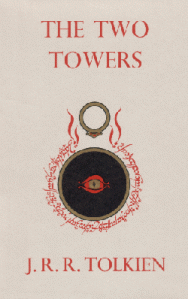
Consider  The Two Towers by J.R.R.Tolkien. Let’s look at the emotional impact of the scene that takes place in Shelob’s Lair. Frodo and Sam have survived incredible hardships and have made it to Cirith Ungol.  The passage is an excellent example of the dramatic story within a story that advances the overall plot.

Drama is the hope we feel in the moment when Frodo faces Shelob with the Phial of Light. Drama is the moment Frodo fails, the moment he is stung.

It is the shock, the horror, the moment where Sam reluctantly takes up Frodo’s sword, Sting.

It is triumph when Shelob impales herself on Sting, a weapon made of Mithril and a sword in the hands of a hobbit. But really, Sting is only a long-knife, and despite its mythic properties, it is not long enough to kill the giant arachnid, Shelob.

Still, she is wounded and scuttles away.

Drama is in the despair, the quiet moment afterward, where Samwise realizes that everything they have just endured was for nothing.

Drama is the moment of sharp introspection, the internal conversation when Sam fears his own weakness; the moment when his faith is not just shaken—it is lost. It is that moment of profound despondency in Shelob’s Lair, the dark night of the soul where Sam believes the spider has killed Frodo.

What about love? Few emotions have as much dramatic potential as that of love. It has many shades, from friendship to affection, to desire, to passion, to obsession, to jealousy, to hate.

Let’s look at the Pulitzer Prize winning short story, Brokeback Mountain, by Annie Proulx (synopsis via Wikipedia):

In 1963, two young men, Ennis del Mar and Jack Twist, are hired for the summer to look after sheep at a seasonal grazing range on the fictional Brokeback Mountain in Wyoming. Unexpectedly, they form an intense emotional and sexual attachment, but have to part ways at the end of the summer. Over the next twenty years, as their separate lives play out with marriages, children, and jobs, they continue reuniting for brief liaisons on camping trips in remote settings.

Ennis and Jack are tied to each other, but they love their wives and children. They are products of their society, and their personal reactions to the intensity of their relationship are both hurtful and understandable in the context of their time and situation. People have love affairs in books all the time, and we often find them forgettable. It is the complexity of external societal pressure and deep, confusing emotion that makes Ennis and Jack’s attachment memorable.

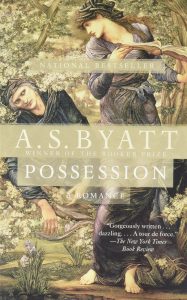
Then there is the novel, Possession, by A.S. Byatt, winner of the 1990 Booker prize. This is a complex relationship that begins in a rather boring manner – it opens in a library when Roland Michell, a scholar and professional man of high morals commits a crime: he steals the original drafts of letters he has come across in his research. This act has the potential of becoming his professional suicide. The synopsis via Wikipedia:

(Roland Mitchell) begins to investigate. The trail leads him to Christabel LaMotte, a minor poet and contemporary of Ash, and to Dr. Maud Bailey, an established modern LaMotte scholar and distant relative of LaMotte. Protective of LaMotte, Bailey is drawn into helping Michell with the unfolding mystery. The two scholars find more letters and evidence of a love affair between the poets (with evidence of a holiday together during which – they suspect – the relationship may have been consummated); they become obsessed with discovering the truth. At the same time, their own personal romantic lives – neither of which is satisfactory – develop, and they become entwined in an echo of Ash and LaMotte. The stories of the two couples are told in parallel, with Byatt providing letters and poetry by both of the fictional poets.

Love, whether unacknowledged or returned, physical or platonic, is complicated. The sections of movies, books, and short stories where the arc of the scene showcases true emotional complexity stick with me. I find myself contemplating them long after the story has ended.

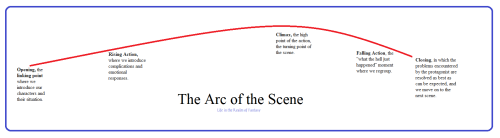
In all three literary examples, The Lord of the Rings, Brokeback Mountain, and Possession, it is the interpersonal relationships entwined with the action that illuminates the drama. Action scenes require some sort of emotion to give them context, to shape them into an arc:

  1. Opening, the linking point where we introduce our characters and their situation.
  2. Rising Action, where we introduce complications and emotional responses.
  3. Climax, the high point of the action, the turning point of the scene.
  4. Falling Action, the “what the hell just happened” moment where we regroup.
  5. Closing, in which the problems encountered by the protagonist are resolved as best as can be expected, and we move on to the next scene.

The resolution of one scene is the linking point to the next, the door that takes us further into the story. The dramatic arc of each scene ends at a higher point in the overall story arc.

The emotions surrounding the drama in our literature attracts us, captivates us, keeps us interested. In every story, drama is the moment you, the reader, realize you must take up the hero’s task; you must carry the evil One Ring to Mount Doom.

Drama done well can take the reader from joy to despair to resignation and back to hope within the arc of the scene. This is good pacing and urges the reader to keep turning the page to see what is coming next.


Credits and Attributions:

Wikipedia contributors, “Brokeback Mountain (short story),” Wikipedia, The Free Encyclopedia, https://en.wikipedia.org/w/index.php?title=Brokeback_Mountain_(short_story)&oldid=902058091 (accessed August 24, 2019).

Wikipedia contributors, “Possession (Byatt novel),” Wikipedia, The Free Encyclopedia, https://en.wikipedia.org/w/index.php?title=Possession_(Byatt_novel)&oldid=909067002 (accessed August 24, 2019).

The Two Towers, by J.R.R. Tolkien, first edition cover, Publisher George Allen & Unwin, © 11 November 1954, Fair Use.

Possession by A.S. Byatt, first edition cover, Publisher Chatto and Windus, © 1990, Fair Use.

Comments Off on The Inferential Layer: Drama #amwriting (reprise)

Filed under writing

The Drabble #amwriting

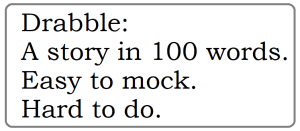
Right now, we have a lot of opportunities to sell our extremely short stories. Many online publications are looking for drabbles (100-word stories) and flash fictions under 750 words.

These editors are looking for new, unpublished work, so get out your pens and start writing.

You might ask why you would want to write something that short, and I do see your point. But if not having the time to sit down and write a novel is holding you back from writing, you have another option: extremely short fiction.

When you force yourself to create within strict wordcount limits, you increase your ability to tell a story with minimal exposition. We grow in the craft and gain different perspectives when we write short stories and essays.

This is especially true if you practice writing drabbles. Trying to tell a story in 100 words or less teaches you several skills.

  • You are forced to develop economy of words.
  • You begin to see what the core plot elements of a story might be.

When you have a backlog of short stories, you also have a vault full of ready-made characters and premade settings to draw on.

I hear you saying that any investment of time is difficult if it takes you away from your longer works. It’s hard to not feel jealous of the scant time we have for that.

Look at this as a muscle-building routine. Writing a 100-word story takes far less time than writing a 2,000 word short fiction, or a 70,000-word novel.

Something you should consider: you are more likely to sell a drabble than a short story, and more likely to sell a short story than a novel.

Just saying.

Writing a drabble is like any other form of writing. You should expect to spend an hour or so writing and then editing it to fit within the 100-word constraint.

A 100-word story has the same basic components as a longer story:

  1. A setting.
  2. 1 or 2 characters.
  3. A conflict.
  4. A resolution.
  5. No subplots are introduced.
  6. Minimal background is introduced.
  7. Every sentence propels the story to the conclusion.

First, we need a prompt, a jumping-off point. Some contests give whole sentences for prompts, others offer one word, and still others no prompt at all.

A prompt is a word or visual image that kickstarts the story in your head. The prompt for the following drabble was sunset.

I break short stories into acts by taking the number of words I plan to fit the story into and dividing it into 3 sections.

A drabble works the same way. We break it down to make the story arc work for us.

For a drabble, we have about 25 words to open the story and set the scene, about 50 – 60 for the heart of the story, and 10 – 25 words to conclude it.

For this drabble, I used:

24 Words (opening): We sat on the beach near the fire, two old people bundled against the cold Oregon sunset. Friends we’d never met fished the surf.

51 words (middle and crisis): Wind whipped my hair, gray and uncut, tore it from its inept braid. The August wind was chill inside my hood, but I remained, pleased to be with you, and pleased to be on that beach.

Mist rose with the tide, closed in and enfolded us, blotting out the falling stars.

25 Words (conclusion): Laughing at our folly, we dragged our weary selves back to our digs, rented, but with everything this old girl needed—love, laughter, and you.

The above drabble is a 100-word romance, one I have used here before. It has a beginning, a middle, and an end. The opening shows our protagonist on the beach with someone for whom she cares deeply.

The conflict in this tale is the weather. Wind and blowing mist make it too cold for our protagonist to stay on the beach and forces her indoors.

The resolution is a romantic evening spent in front of the fireplace.

Drabbles contain the ideas and thoughts that can easily become longer works, such as this drabble did in my poem, Oregon Sunset.

I think of drabbles as the distilled essences of novels. In 100 words, they offer everything the reader needs to know. A good drabble makes the reader ponder what might have happened next.

In this way, writing drabbles teaches us how to write a good hook. Knowing how to write a great hook is critical. The first paragraphs of our longer works must intrigue the reader or they will set it aside.

Write your story ideas in the form of drabbles and flash fictions. Save them for later use as they could hold the seeds of a longer work.

Save the drabble/flash fiction for submission to a publication or contest, as it won’t spoil whatever novel you think it might grow into.

When you can’t write on the project you’ve given your soul to, it’s time to take a break. The act of writing random ideas and emotions down is a kind of vacation from your other work. It rests your mind and clears things so you can return to your main project with all your attention.

Whether you choose to submit a drabble or hang on to it doesn’t matter. The idea is written down and accessible for when you need a new project.

In that regard, drabbles are the literary equivalent of dried beans and rice. They are resources we can set aside for a rainy day.

9 Comments

Filed under writing

On Poetry: Interview with Maria V A Johnson @amwriting

One week ago, I asked three good friends who write both novels and poetry, Stephen Swartz, Shaun Allan, and Maria V.A. Johnson to each answer the same 5 questions about how they approach writing both poetry and novels. (Which is why my questions might seem familiar.) It’s amazing how differently they have answered.

Each author has shared a different aspect of how they tap into their inner poet.

Part 1, Stephen Swartz can be found if you click on this link.

Part 2, Shaun Allan can be found if you click on this link.

I first met Maria when she joined Myrddin Publishing Group, the indie publishing cooperative I have been involved with since 2012. Maria is a meticulous editor and is easy to work with, and her poems are moving and inspirational.


CJJ:  When did you begin to write poetry?

MVAJ: I first started writing poetry when I was 16. My Nan died and I wanted to write something for the funeral. It drew heavily on inspiration found online, but I discovered I enjoyed it and haven’t looked back since.

CJJ: What is your favorite form, rhyming or free?

MVAJ: When it comes to forms, I’m a very modern girl and prefer free, though I did experiment a lot while at University.

CJJ: For me, poetry becomes an emotional catharsis. Where do you find the emotional strength to write and publish something as deeply personal as poetry?

MVAJ: I like to think that I’m not unique and others are in the same place as me. If my poetry can help them in some way, then I believe it is worth the emotional upheaval of sharing this part of myself. On the plus side, having a form of Autism (known as Aspergers) means that I struggle to connect with my emotions. While I can do it, my natural state is slightly distanced which lessens the pain of sharing. It does have a downside though – when I do connect to write, it can be quite overwhelming.

CJJ: We all write what we are in the mood for. Which literary form, novel or poetry is easiest for you today?

MVAJ: I’ve discovered that the best form for my poetry is modern free. This type is more focused on imagery than anything else, and I find that this works best with the hyperfocus that is part of being autistic.

CJJ: What are you currently working on?

MVAJ: At the moment I’m not working on anything. All my projects have been on hold since I bought a puppy in January. She was just reaching the stage where I could get back to work when the Covid-19 Lockdown took effect and I haven’t been in the right frame of mind to do anything, so I’ve been making greeting cards instead. However, I have a couple of projects to return to when I can. One is a poetry collection about disabilities, and one is a short novel about a damaged girl post-coma. I tend to flit between the two as the muse moves me.


Thank you, Maria, for giving us a glimpse of your writing world. I think many authors are finding it difficult to be creative right now.

On Wednesday, for the final post in this interview series, I have the good fortune of featuring Alan Shue. He is a poet and the author of three hilarious children’s books. Alan lives in my area and is active in local writing groups where we have mutual friends—so I prevailed on a member of my writing group to connect us via email.

(That was bold, I know, but nothing ventured, nothing gained!)

I can’t wait to share Alan’s interview with you. I’ve changed up the questions and he’s been a good sport about it.


About Maria V A Johnson:

Maria V A Johnson is a voracious reader, professional editor, and published author and poet with a Bachelor of Arts Honours Degree in English and Creative Writing. She loves the challenge of taking a raw manuscript and turning it into a polished novel. She specialises in Fantasy, however she can edit any genre. She first started writing seriously, when at sixteen she wrote a poem for her grandmother’s funeral and she grew to love poetry and writing from there.

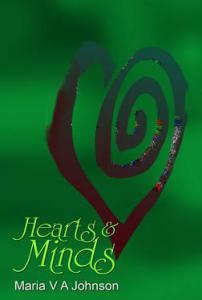
She has collaborated in several anthologies which raise money for Farleigh Hospice in Chelmsford, Essex. She also has a poetry collection called Hearts and Minds released November 2012 and has been published in several anthologies since. Her first novel is currently in editing and she is working on her second as well as another poetry collection.

She has been diagnosed with Autism Spectrum Disorder, though she doesn’t consider it a disability, but rather a different way of looking at the world. If you want to know more about it, visit the National Autistic Society page at: https://www.autism.org.uk/

Maria’s book of poetry, Hearts and Minds, is available at Amazon.

You can find her at: https://maria7627.wordpress.com/

3 Comments

Filed under writing

The Author Community, by Mollie Hunt, Cat Writer #amwriting

This is the sixth and final post in a six-week blog tour series for the Northwest Independent Writers’ Association.  NIWA serves pacific northwest writers working to achieve professional standards in independent writing, publishing and marketing.


Many creative professions have a reputation for being competitive, hostile, and dare I say, catty, toward each other. Thankfully, this tendency for animosity, for the most part, has passed the author community by. Even as a budding writer, I was treated with respect by my fellows. I have been helped when I needed help, mentored when I needed mentoring, liberally complimented on my work, and generally accepted wherever I’ve gone within the writing circle.

This didn’t happen by chance, however. I did my part. Though I’m an introvert, I pushed myself to get out and meet people, ask questions, and make contacts. One of the most satisfactory way of doing that was to join writers’ groups. Along with NIWA, I am a member of Sisters in Crime, the Cat Writers’ Association, and Oregon Writers Colony. I have belonged to a few others as well, but these are the ones that have helped me learn, produce, and promote my books. If a group isn’t helpful to your work, then what are you getting for your yearly dues besides another name to add to your list of credits?

Each of those groups I listed offers me something different.

NIWA is a fellowship of local independent authors. Though I’m both self- and press-published, this group is extremely helpful. They put together communal bookselling events, host an impressive website and booklist, and offer a members Facebook page where I can communicate with others about anything and everything book.

My local faction of Sisters in Crime has information geared specifically for the mystery writer. They offer presentations from police, detectives, pathologists, and other professions we see a lot of in mysteries. One time, our group took the Ghost Tour of Fort Vancouver, because you never know when a ghost might come up in your novel.

Oregon Writers Colony supports members in all phases of writing, from “I want to write a book but don’t know where to start” to famous authors like Jean Auel. They have several different programs throughout the year, both to teach and inspire, as well as promote and sell members’ books.

The Cat Writers’ Association is the cat’s pajamas if your stories involve felines. They also have a stunning list of members from all branches of creativity. Bloggers, artists, photographers, as well as fiction and non-fiction authors make up this international organization.

There are many more writers’ groups, both national, international, and in your local area. I encourage you to look into them to see what they have to offer.

Besides writers’ groups, Book Faires and events are a great way to get to know other people in your author community. The more you participate, the more your circle of will grow.

Online and Facebook Groups offer another way of relating to those in your field and well and an opportunity to gather fans. Some groups allow you to advertise your work, where others are strictly for conversations about elements of craft. Try NIWA FANS AND FRIENDS to get started.

Once you begin to look for and engage with your author community, the possibilities open up exponentially. Good luck! And thanks for reading.


Thank you for following the NIWA Blog Tour. Let’s do it again soon!

Check out this week’s other participating NIWA blogsites:

About Mollie Hunt: Native Oregonian Mollie Hunt has always had an affinity for cats, so it was a short step for her to become a cat writer. Mollie Hunt writes the Crazy Cat Lady cozy mystery series featuring Lynley Cannon, a sixty-something cat shelter volunteer who finds more trouble than a cat in catnip, and the Cat Seasons sci-fantasy tetralogy where cats save the world. She also pens a bit of cat poetry.

Mollie is a member of the Oregon Writers’ Colony, Sisters in Crime, the Cat Writers’ Association, and NIWA. She lives in Portland, Oregon with her husband and a varying number of cats. Like Lynley, she is a grateful shelter volunteer.

You can find Mollie Hunt, Cat Writer on her blogsite: www.lecatts.wordpress.com

Amazon Page: www.amazon.com/author/molliehunt

Facebook Author Page: www.facebook.com/MollieHuntCatWriter/

@MollieHuntCats

Comments Off on The Author Community, by Mollie Hunt, Cat Writer #amwriting

Filed under writing