Category Archives: Adventure

What’s in YOUR belfry?

APPROACHING HELLI’ve got a jammed-up calendar right now. I’m preparing my presentation on writing natural dialogue for Northwest Bookfest, which will be held in Kirkland Washington at Northwest University on Nov. 1 & 2, 2014. I’m really looking forward to that, but they’ve given me a slot between 10:30 a.m and 12:00  on Sunday morning-so that’s a lot of talking about talking. I can do it– heck, you know me. If I talk myself hoarse, I’ll let everyone out a few minutes early for lunch because that’s the kind of girl I am.

But in the meantime, I am still finalizing my seminar and the worksheets to go with it, and I have to also publicize it via twitter, press releases, and blogposts. After all–I really do want people to attend this sock-hop!

NaNoWriMo-General-FlyerNot only that, but I’m trying to get a book-signing/talk about the self-publishing industry for myself and Lindsay Schopfer at a local bookstore (whose website has no working contact links and who rarely answers their phone and never answers their voice-mail.) The nice-but-vague young man whom I have spoken to so far seems to have rather a low opinion of indies, but I am going to conquer that bookstore yet!

I am also building my calendar for my nano group in preparation for NaNoWriMo, which also begins on November 1st. While I do this, I have to  get the Christmas promotions finalized for my published books. I fit all of this in the copious amounts of free time I have between editing for clients, and making required revisions of my own current work, and finishing my next novel.

Being an indie author means it’s all on me. I have to generate any buzz about my books that will be generated, and I have to do it in such a way that my friends don’t all unfriend me, and my husband still looks forward to coming home. Maybe I do have bats in my belfry, but at least I’m having fun.

330px-Title_page_William_Shakespeare's_First_Folio_1623I console myself with the thought that Shakespeare had the same trouble. I do have my Twitter campaign planned–the genuine not-too-annoying-please-buy-my-books-I’ll-do-anything campaign. I have a Goodreads Ad campaign currently ongoing. I will stand naked on a street corner until I sell a book.  I will get a Google Ad campaign going.

I have several ads to put in the local paper regarding NaNoWriMo, and also I have a press release for Christmas O’ClockMyrddin Publishing’s charity anthology. We want to push that book and hopefully double our sales this year as the royalties from all sales go to benefit Water is Life. This charity is very dear to my heart, as millions of people go without safe drinking water, and they seek to change that.

I am my own publicist, secretary, chauffeur, housekeeper, and chef–so I guess you know, nothing much is getting done around the house.

Watch out for that low flying grandma–this broom ain’t stopping anytime soon.

4 Comments

Filed under Adventure, Battles, Blogger, blogging, Books, Fantasy, Humor, Literature, Publishing, Self Publishing, Uncategorized, WordPress, writer, writing

Prepping for NaNoWriMo 2014

nano_14_ml_badge_300pxNational Novel Writing Month begins in just 15 days. I am the Olympia Washington municipal liaison, but this year I will not be able to attend the first two days of write-ins in my region, as I will be at Northwest Bookfest, a conference at Northwest University,  both as an attendee and as a presenter. On Sunday November 2, I will be talking about writing natural dialogue. As you know, I love to talk about the craft of writing, and can talk until the cows come home, to use a tired cliché.

However, I will be working at my word count through the evening in my hotel room–and cheering my fellow WriMos on with virtual write-ins. Beginning Monday the 3rd of November, my life will revolve around writing the rough draft of my novel, helping my friends get their rough draft written, and encouraging the young (and not so young) writers of our community to explore their storytelling abilities.

Patrick Rothfuss said in his pep talk last year, “Thou shalt not just think about writing. Seriously. That is not writing. The worst unpublished novel of all-time is better than the brilliant idea you have in your head. Why? Because the worst novel ever is written down. That means it’s a book, while your idea is just an idle fancy. My dog used to dream about chasing rabbits; she didn’t write a novel about chasing rabbits. There is a difference.”

Oly Nanos icon for fb 2That completely describes what NaNoWriMo is all about–getting that novel out of your head and on to paper. If you don’t write it, you will never see what a wonderful idea it really was–and even if it doesn’t go as well as you planned, who cares? This is about the journey, more than it is about the destination.

It will be a month of dirty dishes, dirty house, piled up laundry…oh wait, that’s normal for around here. But anyway, I will do nothing but attend as many write ins here in the local area as I can and find as many ways to encourage secret authors to get that book out of their head and on to paper as is humanly possible.

I can hardly wait to get started!

2 Comments

Filed under Adventure, Blogger, blogging, Books, Fantasy, Humor, Literature, Publishing, Self Publishing, WordPress, writer, writing

What I’ve learned from Agatha Chistie

The_Body_in_the_Library_US_First_Edition_Cover_1942I don’t know about you, but I loved Agatha Christie’s novels as much for the great characters as for the mysteries. She had a way of putting the reader right into the society of the time. Take, for instance, Miss Marple.

She’s elderly and has no visible means of support, yet she is not poor. We think she must be living on inherited wealth, but while she is not poor, she also is not conspicuously rich. She is an elderly spinster who was once engaged, is obviously from a good family, and is godmother to a number of young men and women who sometimes get into trouble and need her sharp eyes to sort out mysteries.

She has a nephew, Raymond West, who must be a sister’s child as the name is different, yet no mention is ever made of Jane’s family beyond him. Did she raise him? She is quite close to him.

The_Moving_Finger_First_Edition_Cover_1942She is well-traveled, and can afford to go to Egypt, and to the Caribbean. Miss Marple has close friends in high society. She knows people with hyphenated names and large estates. She doesn’t let wealth or social standing blind her to the true frailties of human nature–she knows that greed and sex are the root cause of nearly every crime.

She owns her own cottage in St. Mary Mead, and it’s not small or mean in any way–she has the ability to hire a young lady to come in and help with the heavy cleaning, although it is difficult to find one who respects the china.

A_Caribbean_Mystery_First_Edition_Cover_1964Miss Marple takes great interest in the life of her village, and it is through her knowledge of that life that she is able to solve complicated, well planned murders. Her ability to work out the motives for each suspect is directly related to how their actions remind her of certain people she has known over the years in her village. Be careful what you say around her, because she will know what you did by connecting the dots between what you said and what happened.

All this information about Miss Jane Marple comes out in her conversations with other characters, delivered over the course of an entire book, and yet one feels as if one knows her right away.

The_Murder_at_the_Vicarage_First_Edition_Cover_1930In the first full book in which she appears, The Murder at the Vicarage, she isn’t really as likable as she is in later books–she seems a bit of a gossip, and rather mean-spirited at that, always expecting the worst of people.

But over the course of 12 books she evolves, and so does our knowledge of her–or does it?

She is genteel, slightly nosy, very comforting and she is on to you–so don’t even think about doing it.

What I have learned from Agatha Christie is that memorable characters grow on you over the course of the book–they are not delivered fully formed on the first page. They are intriguing and we don’t always know what they will do next. There is a hint of mystery about them, and at the end of the book we want to know more.

A_Murder_is_Announced_First_Edition_Cover_1950This sense of intrigue is what we want to instill in all our characters, whether we write sci-fi, romance, fantasy, pot-boilers, or cozy mysteries. If you think about your own experience in life, once it is apparent that you know everything there is to know about a person, they cease to intrigue you. It is the complexities of your friends that keep them interesting, the little things you never knew that amaze you when they are revealed.

Developing a character, deploying just enough information at the right moments to pique the reader’s curiosity is a balancing act, and I’ve come to believe that not everyone can do it with finesse.

Revealing the character over the course of time, and allowing them grow is crucial to keeping the reader’s interest. I think this can only happen if the author has a true understanding of who their character is. This person must be fully formed in the author’s mind so that when they emerge on to the paper they have a sense of realism, as if they are someone the reader would want to know.

nemesis agatha christieMiss Jane Marple was modeled on Agatha Christie’s step grandmother, and on her Aunt (Margaret West), and her friends. Observing these sharp old ladies taught Agatha how a little life-experience can cut through the smoke and mirrors to the truth of people’s’ motivations rather quickly, and that they were often correct in their sometimes mean-spirited assumptions.

I find that doing a small biography of my characters for my own records helps me to understand my people, and while I generally write in the genre of fantasy, people are who they are regardless of the setting you place them in. Characters will react and behave a certain way depending on their history and values. Some are brave, some are lucky, some are stupid beyond belief, but the ones who keep you reading are the ones who still have more to reveal about themselves when the last page has been turned.


Comments Off on What I’ve learned from Agatha Chistie

Filed under Adventure, blogging, Books, Fantasy, Literature, Publishing, Romance, Self Publishing, Uncategorized, writer, writing

Words

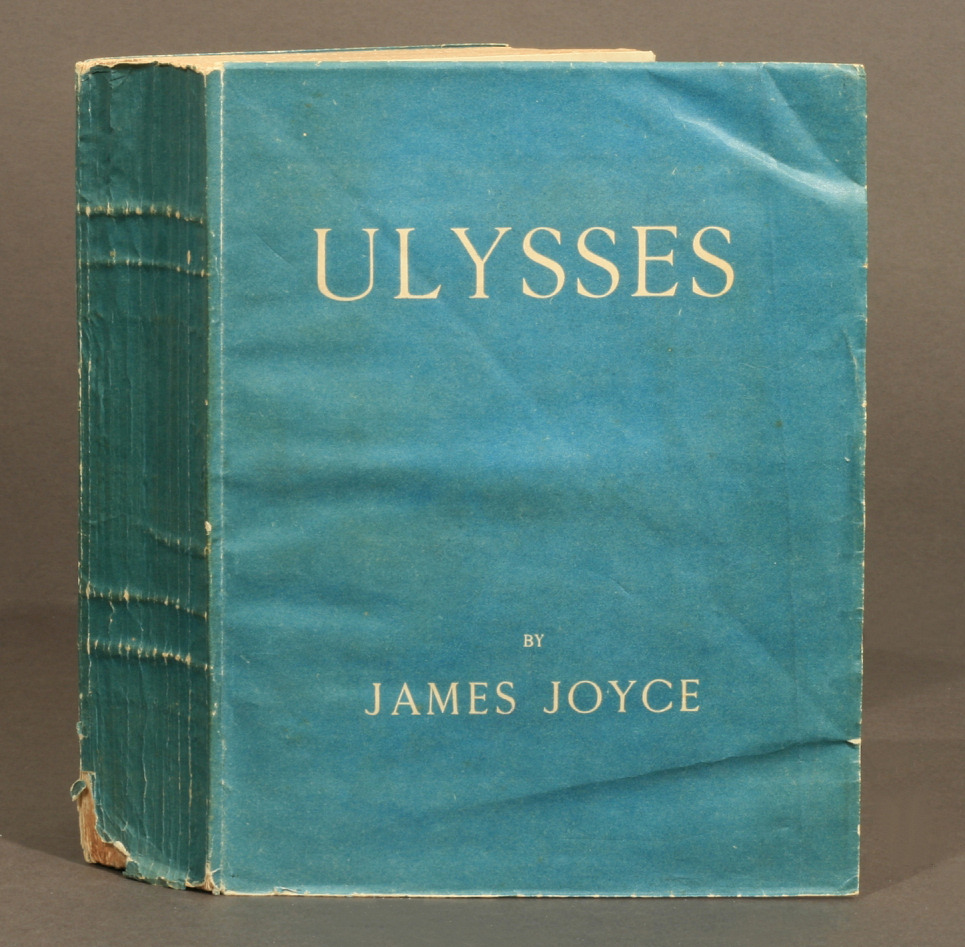
Ulysses cover 3I’ve been having a kind of rolling conversation with Professor Stephen Swartz regarding James Joyce’s Ulysses. It reminded me of what I realized when I was reading it in college–that it is a series of great one-liners strung together. It is nearly incomprehensible to folks like me when taken in a large chunk, but like all of Joyce’s work,  cut down to small bits, it’s got some hilarious, witty moments. So what is this fascination that I feel for James Joyce and his work? I’m a moderately uneducated hack-writer of genre fiction, but there is something about his way with words, a kind of addiction that keeps pulling me back.

Ulysses was never originally published as a single volume, instead it was first published as a serial in the American journal, The Little Review over the span of two years from March 1918 to December 1920, in 18 episodes, and was first published as a single volume in 1922. It’s an incredibly long book for the era, 265,000 words. Books of that length are much more common nowadays, but usually only in genre-fantasy. (Robert Jordan, Tad Williams.)

Ulysses 4Ulysses details the wandering appointments and encounters of Leopold Bloom in Dublin over the course of an ordinary day, 16 June 1904. Ulysses is the Roman name of Odysseus, the hero of a classic Greek heroic tale that was Joyce’s favorite as a boy,  Homer’s epic poem Odyssey. The novel establishes a series of parallels between its characters and events and those of the poem.  Leopold Bloom corresponds to Odysseus the Wanderer, Molly Bloom to Penelope (Ulysses’s long-abandoned, ever-faithful wife), and Stephen Dedalus, Telemachus (Ulysses’s and Penelope’s son who seeks endlessly for knowledge of his father.)

265,000 words to describe one day in the life an extraordinary Irishman.

But they are great words, a series of deliciously twisted, carefully structured phrases strung together in a delirious, stream-of-consciousness that hovers on the edge of making sense while entertaining you–if you can face the wall of words that is each episode.

“History,” Stephen said, “is a nightmare from which I am trying to awake.”

Shakespeare is the happy hunting ground of all minds that have lost their balance.

Mr Leopold Bloom ate with relish the inner organs of beasts and fowls. He liked thick giblet soup, nutty gizzards, a stuffed roast heart, liverslices fried with crustcrumbs, fried hencods’ roes. Most of all he liked grilled mutton kidneys which gave to his palate a fine tang of faintly scented urine. 

“Can’t bring back time. Like holding water in your hand.”

“Bury the dead. Say Robinson Crusoe was true to life. Well then Friday buried him. Every Friday buries a Thursday if you come to look at it.”

“We were always loyal to lost causes…Success for us is the death of the intellect and of the imagination.” 


UlyssesJames Joyce’s prose is deliberate, shocking and full of puns, parodies, and allusions. He shows us his characters clearly, and depicts them with broad humor.

All of what James Joyce put into his work is what we, as modern writers, want to inject into our own work; only perhaps in a more accessible form that a broader audience of readers will enjoy.

It takes a special kind of obsession to wade through a doorstop like Ulysses for pleasure, as most people are forced  into it (as I was originally) by the requirements of a college class in literature. It’s the sort of thing no one does without a good reason.

For me, that reason is the fabulous one-liners that pepper the nearly hallucinogenic narrative. I simply open it to any page and start reading, letting what happens on that page sink into my consciousness, cringing or laughing as may be.

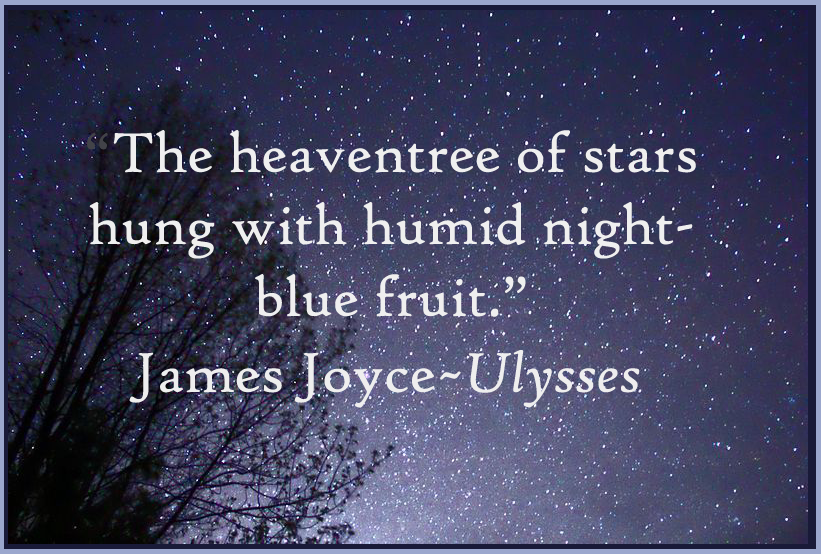
800px-Night_Sky_Stars_Trees_Quote

2 Comments

Filed under Adventure, blogging, Books, Fantasy, History, Literature, mythology, Publishing, Romance, Self Publishing, writing

Autumn’s advent

Larch Forest fwp.mt.gov

Larch Forest fwp.mt.gov

I love the changing of the seasons. In the native northwest forests, the colors of the big-leaf maples,  and alders paint the landscape in shades of yellow and gold, dotted with pops of red sumac and scarlet vine-maples. The gold of the larches in the high-country is startling to those who’ve never seen a deciduous conifer. I am awed by the majesty of the autumn forest.

The sky is also changing. The days grow shorter and the rains of the monsoon months approach.

The gray overcast tends to linger unending, eternal.  I wonder if the sun will ever shine again. And just as I am feeling desperately sorry for myself  the clouds part to reveal a patch of blue so beautiful my eyes hurt, and I must wear my sunglasses to shield my weak, northwesterner’s eyes.

Irene, who is from Texas, mocks me for needing protection from the rare occurrences of sun–but we who have grown up in the long dark winters have little tolerance for it; thus the cheap sunglasses become so much more than a fashion statement.

These are the writing months, the mad dash to finish that first draft, and the build up to NaNoWriMo. These are the days when inspiration knocks me in the head and takes me far, far away. These are the days when I dive into reading for pleasure and forget to cook dinner.

Autumn glory lingers for a brief few weeks, then the rain moves in and turns unraked leaves to soggy, moldy  messes waiting for the winds of November to set them free–free to fly from yard to yard as my mind soars in other realms.

But evening and morning still bring colors as the sun turns the clouds every shade of angry that is possible–gold, red, purple and even black–occasionally juxtaposed against that poignant shade of blue that makes my heart ache, and my eyes sting with tears unshed.


2 Comments

Filed under Adventure, Blogger, blogging, Books, Fantasy, Humor, Literature, Publishing, Romance, Self Publishing, Uncategorized, writer, writing

The Castle of Otranto, Northanger Abbey, and The Mysteries of Udolpho

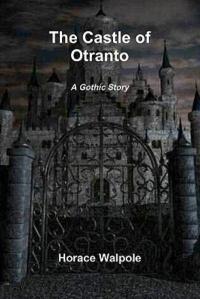
the-castle-of-otranto-a-gothic-storyThe  late nineteenth century was a great era in which the seeds of the genre of fantasy were planted, a time when books chronicling magic, mayhem, and dark mysteries found fertile soil in the imaginations of thousands of educated, book-hungry middle-class men and women. This was the emergence of the Gothic Novel.

Gothic novels have common themes consisting of incidents of physical and psychological terror, remote, crumbling castles, seemingly supernatural events, a brooding, scheming villain, and (most importantly) a persecuted heroine.

The Castle of Otranto is a novel written in 1764 by Horace Walpole. Many consider it to be the first gothic novel, the beginnings of the literary genre that would spawn the likes of Bram Stoker, Edgar Allan Poe, and Daphne du Maurier.  Walpole chronicles the story of Manfred, lord of the castle, and his family. The book begins on the wedding-day of his sickly son Conrad and princess Isabella. Just before the wedding, however, Conrad is crushed to death by a gigantic helmet (!) that falls on him from above. This strange, unexplained event is particularly ominous in light of an ancient prophecy “that the castle and lordship of Otranto should pass from the present family, whenever the real owner should be grown too large to inhabit it.” This sets into motion terrible events.

It also suggests that decking your halls with heavy armor may not be a good idea, for all you medieval Martha Stewart(s) out there.

So anyway–Manfred decides the only way for him to avoid destruction is to marry Isabella himself, but first he must divorce his current wife. Isabella runs away, aided by a peasant named Theodore. ” It’s all very melodramatic and exciting, with Isabella hiding in caves, and the fortuitous appearance of mysterious knights, and dark curses.  Theodore is revealed to be the true prince of Otranto and Manfred’s daughter, Matilda, dies, leaving Manfred to repent. Theodore becomes king and eventually marries Isabella “because she is the only one who can understand his true sorrow.”

Even Jane Austen loved Gothic novels.
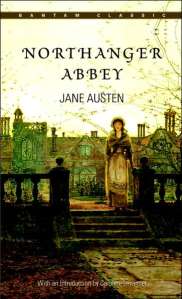
NorthangerAbbeyNorthanger Abbey  was the first of Jane Austen’s novels to be completed for publication, written circa 1798–99. It was originally written as a send-up of the gothic novel, the Mysteries of Udolpho. She died in 1817 and her book was posthumously published.

The book details the adventures of seventeen-year-old Catherine Morland. She is one of ten children of a country clergyman. Although a tomboy in her childhood, by the age of 17 she has read so many Gothic novels that she considers herself to be in training to be a heroine. Catherine reads voraciously, and Ann Radcliffe’s Mysteries of Udolpho is a favorite.

She meets and falls in love with Henry Tilney and after a bit of drama, is invited to visit at his family’s home. Catherine, because of her love affair with Gothic novels, expects the abbey to be exotic and frightening. Sadly, it turns out that Northanger Abbey is a pleasant home and decidedly not Gothic. However, (cue the dramatic music) the house includes a mysterious suite of rooms that no one ever enters. Catherine learns that they were Mrs Tilney’s, who died nine years earlier. Catherine decides that, since General Tilney does not now seem to be affected by the loss of his wife, he may have murdered her or even imprisoned her in her chamber.

I LOVED this novel when I read it while in college in Bellingham, Washington in the 1970s. I wore out three hard-bound copies of it!
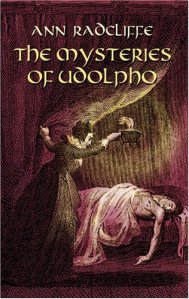
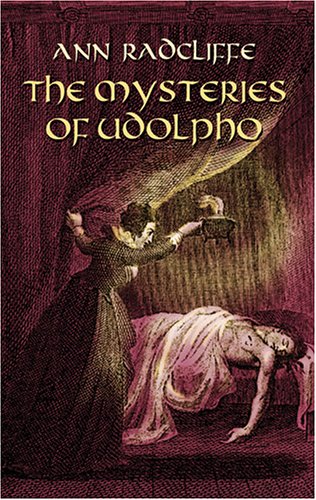
mysteries-of-udolpho-coverSo what inspired Jane Austen to write a Gothic novel? It was her own love of a work written an Englishwoman who, in turn, was inspired by the Gothic work of Horace Walpole.  The Mysteries of Udolpho by Ann Radcliffe, was published in four volumes on May 8, 1794. Walpole began the genre, but Radcliffe made it popular.

Set in the year 1584 in southern France and northern Italy, the novel details the plight of Emily St. Aubert, a young French woman. Her mother is dead, and while journeying with her father, she meets Valancourt, a handsome man who also feels an almost mystical kinship with the natural world. Emily and Valancourt quickly fall in love. After the death of her father she is sent to live with her aunt, Madame Cheron. Emily suffers imprisonment in the castle Udolpho at the hands of Signor Montoni, an Italian brigand who has married her aunt. Emily’s romance with the dashing Valancourt is frustrated by Montoni and others. Emily also investigates the mysterious relationship between her father and the Marchioness de Villeroi, and its connection to the castle at Udolpho.

Radcliffe’s fiction is characterized by apparently supernatural events that are then provided with rational explanations. She was a forward-thinking woman, as was Jane Austen, in that in all Radcliffe’s works traditional moral values are reinforced, the rights of women are strongly advocated, and reason always prevails. Sir Walter Scott was quoted as saying, in regard to Ann Radcliffe’s work, “Her prose was poetry and her poetry was prose. She was, indeed, a prose poet, in both the best and the worst senses of the phrase. The romantic landscape, the background, is the best thing in all her books; the characters are two-dimensional, the plots far-fetched and improbable, with elaboration of means and futility of result.”

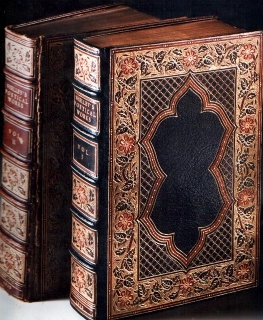
Old Restored booksThe roots of our modern fascination with all things dark and mysterious goes back to the first stories told by our tribal ancestors, under the stars around campfires. Every tribe (and in later millennia, every family) had a storyteller who wove tales of darkness, of good triumphing over evil, of sin and redemption. When written languages were invented, the upper classes in early societies had literature written for them by the likes of Homer and Li Fang .

In western societies, the renaissance began the great lust for books. With the advent of the printing press and the emergence of an affluent, educated middle-class, reading novels became a popular way to while away one’s well-earned leisure hours in the evening or on a Sunday afternoon. This habit survived, despite frequent, intense puritanical censure of such frivolity.

It is because of those nineteenth century pioneers of early popular literature that we modern readers have such a wide variety of work to entertain us. Kindles and other ebook-readers show up among the patrons of every coffee shop and in every airport-lounge and every doctor’s waiting room.

Much may have changed how we take delivery of that content–few books arrive at my house with thick paper and leather bindings nowadays, but nothing has changed in the desire to just quietly enjoy a good story when one has a little downtime.

2 Comments

Filed under Adventure, Battles, blogging, Books, Fantasy, History, Humor, Literature, Publishing, Self Publishing, Uncategorized, WordPress, writer

But let’s talk about books for a while

I noticed something this weekend–I’m obsessed with books.  No, it’s true! Apparently, and I have to agree, it’s all I can think of to discuss. Not only that, but my friends are all obsessed with what they are reading, too.

What a surprise!

So what have I read lately that really rings my bells? Several things, actually, in a wide range of genres.

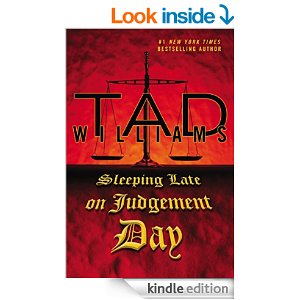
Sleeping Late on Judgement Day Tad WilliamsI just finished the third book in Tad Williams’s Bobby Dollar series, Sleeping Late on Judgement Day. Wow, my favorite bad angel, Bobby Dollar, finally gets a break. I love the twists and turns of William’s prose, as his hard-boiled angel gets down to the dirty business of cleaning up the mean streets of Heaven. He uses ordinary words in an extraordinary way, but never commits the sin of dropping the reader out of the story.  THIS is why I read his work.  I highly recommend this book to all those who like a bit of a hardboiled-detective twist to their paranormal fantasy. It is a smart, well-crafted journey into the human condition, set in an environment guaranteed to keep things interesting, and peopled with unforgettable characters. I gave it 5 full stars on my book review blog, Best in Fantasy.

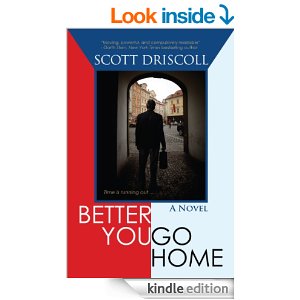
Better You Go Home Scott DriscollI also read Better You Go Home, by Seattle area author, Scott Driscoll.  This is not fantasy, it is literary fiction and a medical thriller. Chico Lenoch is an intriguing character. The tale is told in the first person, which I usually find difficult to get into as a reader, but didn’t in this case. Also something I usually find off-putting but didn’t in this case is the way Chico occasionally ‘breaks the fourth wall’–he sometimes addresses the reader directly. It works, because you are in his head the whole time and it feels perfectly natural. Driscoll is a professor at the University of Washington, and is work is both literate and intriguing. This is not genre fiction, instead it is written for mature, dedicated readers who want substance in a book. No fluff here, just good solid craftsmanship. I also gave it five full stars in my review.  But let’s be real–I don’t go to all the trouble of reviewing books I don’t love.

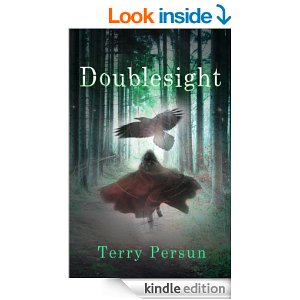
Doublesight--Terry PersunThen, in July I read a fantasy by another local author, Terry Persun: Doublesight. This was the most intriguing twist on the old shapeshifter theme I had ever read. Wholly human or wholly crow depending on what form she is in, Zimp is a great character, both endearing and aggravating. At first, she is weak and allows a less qualified, but more aggressive clan member, Arren, to make decisions for her. This book is as much about personalities and the need to remember their own commonality as it is about the great evil that threatens their kind. Each individual is sharply drawn, and has presence, struggling for their own place in their society while their world faces calamity. Zimp and Lankor, who is a doublesight dragon,  struggle to do what they know is right, in the face of treachery and occasional bad judgement.

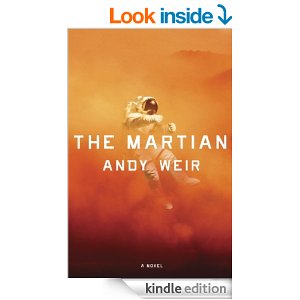
The MArtian Andy WeirMy mind is still blown by The Martian, by Andy Weir. This is hardcore science fiction and may well be the best book I read all year. Mark Watney is hilarious. He is the sort of man who gets through life by finding something positive in every disaster, and mocking the hell out of everything that is negative. A horrendous storm destroys much of their base, and his team is forced to abort their mission.  During the emergency evacuation of the Ares 3 landing site, he is severely injured in an accident that appears to have killed him. His body is unretrievable, and unaware that he is still alive, he is left behind. His companions begin the long journey back to Earth, grief-stricken at his sudden death. However, Mark is that rare breed of human, an astronaut, so of course he is extremely resourceful. He does what he has to in order to survive his injuries, and then figures out exactly what he must do to stay alive until the next mission.

I definitely read a mix of self-published and indie authors, but I like authors who take chances with their work, and who eschew the hamster wheel to hell of the Big Six publishing giants, who mindlessly chug out sequel after boring sequel. Tad Williams writes like an indie, rebellious and defiant. Scott Driscoll is also ‘a bit out there’ in the approach he takes in writing Chico’s story.

I love my job!


2 Comments

Filed under Adventure, Battles, Blogger, blogging, Books, Fantasy, Humor, Literature, Publishing, WordPress, writer, writing

Achieving a Balanced Narrative

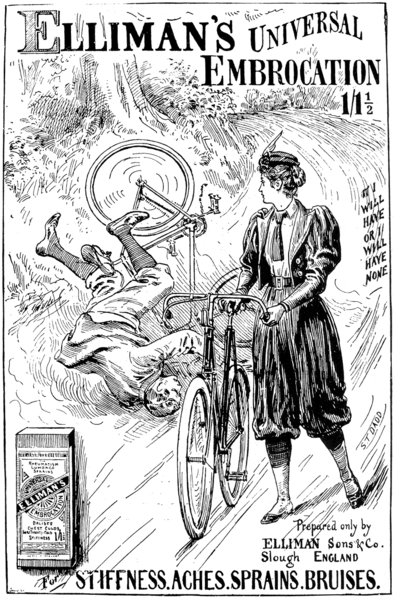
395px-Ellimans-Universal-Embrocation-Slough-1897-AdI was involved (as a horrified bystander) in an online dispute over how much description is needed in today’s genre fiction.  I walked wide of that mess, as it was clear that one author with an online pseudonym was in assassin mode. The other, whose prose had been harshly critiqued, also using a pseudonym, had called in her flying monkeys, all of whom proceeded to tear the argumentative ‘troll’ to shreds.

Ugh.  What a waste of time for all of us, bystanders included. It should have been a civilized discussion about using adjectives and achieving balance when showing and not telling your story.

Sadly, in this case the troll was right, but his attitude was so arrogant, he negated the value of his opinion, with normally sane people reduced to begging him to just ‘shut it.’

The prose in question was far too florid for my taste, forcing the reader to watch every excruciating, drawn out second as the the main character slowly curved his lush, full lips into a sexy, white smile, his pink tongue just touching his full, trembling, lower lip.

Pardon me, I must go barf now.

I prefer to read work written with in a lean style, as too much showing gets in the way of the story. It becomes a matter of the author forcing his vision onto me, as the reader, and is just as unpleasant to read as a narrative that tells you how to feel.

This is my view on the subject of description in the narrative: when you write about a room, any room, you don’t describe the details of room. You tell the character’s story as he enters the room.

What does the character see? What does he or she do in response to those things? Do they use the old wall-mounted telephone? Do they open the drapes? Perhaps he picks up the newspaper, and continues into the kitchen. Each character is different, and will see and do different things, and through those actions your room will come into focus in the mind of the observer–the reader.

Describing emotions is done the same way as describing the setting. We have all been told over and over again that in narrative, the most intimate way to show a feeling is to show the state of the protagonist’s body.

But how do we do that?  Let’s take humiliation:

Her face turned bright red in embarrassment.  

This sentence is what we call telling–the author has baldly told you how the character feels and why. This separates the reader from the sense of being the character. While the character may feel that her face had flushed, it’s unlikely that she would know the exact shade of red she had turned. To make it from the protagonist’s point of view and keep it simple, just write what happened.

Her face burned and she turned away.

Here is my  thought on this subject: we don’t need to get crazy, and give the minute details of her burning flesh heating up until she could see her nose glowing like Rudolph on steroids…we just need simple descriptions that point the reader in the right direction. If our character is really humiliated you can add one more descriptor, but still keep it simple:

Her face burned, and nauseated, she turned away.  

This is as much humiliation as I would put a reader through in one sentence. Realistically, the protagonist would feel the burning of her face, and would feel the nausea. The reader will taste the nausea if you describe the sensations with too much detail so keep the details to the bare minimum.

With that said, it is crucial that you give SOME clues as to what the character is feeling, as the reader will be completely lost without some sort of visual cues.

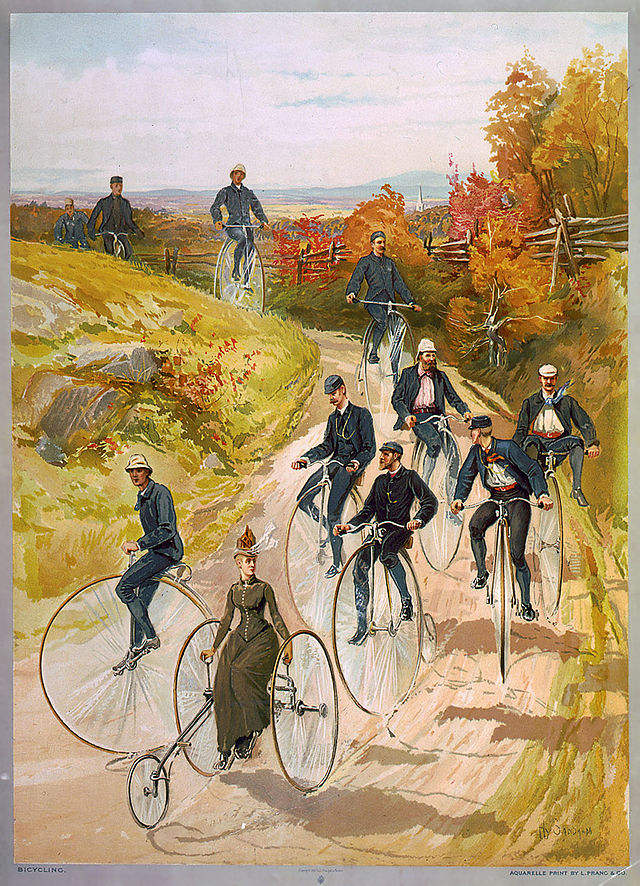
640px-Bicycling-ca1887-bigwheelersTake a look at what the protagonist’s body might be doing. What did it feel like when you experienced the same emotion? What did your body do? What did you feel inside? Was there a heaviness in your chest? A lump in your throat? Did you feel light-headed or weak-kneed? Did your face burn? Close your eyes and think about how you experience an emotional moment and allow your senses to take over.

With that memory in your head, write it down.

Just remember that it is crucial that you don’t over do it. Just like riding a bicycle, you must have balance in your descriptions: there must be enough description to intrigue the reader, but not so much it overpowers the story.


2 Comments

Filed under Adventure, Battles, blogging, Books, Fantasy, Humor, Literature, Publishing, Romance, Self Publishing, Steampunk, Uncategorized, WordPress, writer, writing

Write write write…

225px-Ff12castRight now I am writing two fantasies, both based in  the world of Neveyah, which was originally designed for an old-school RPG that didn’t get built.

When I write in Neveyah, I find myself gaming more during my downtime than reading. Dragon Age, Final Fantasy–those are my games.  Anything where I can go out and hack, slash, and throw a little magic around, while great music and wonderful storylines unfold–those are the games that intrigue me.  Anything to get to that all important cut scene!

Not only am I writing the 3rd and 4th books in the Tower of Bones series, I am in the re-editing process for Tower of Bones, the first book in the series. It has been a slow process, as my editor in England has been unwell, and has also had her own wonderful work to write. But it is getting there, and when it is republished, it will be what it should have been when it was originally written.

When I first started this gig, I knew I wanted to be an indie, even though I knew it would be hard, and my sales would be miserable. The point for me was that I could be published and have some control over my work.

What I didn’t realize, is that your friends, wonderful people that they are, are not editors. They don’t really notice anything but the most glaring errors, and they miss a great many of those! Places where you have repeated yourself ad nauseam, and places that are phrased in a confusing way are skipped over.  Large plotholes, clichés, and intriguing auto-correct mistakes get missed when your eager-to-help friends try to edit your work.

You see–very rarely are you BFFs with an editor to begin with–although, through this process, I have become BFFs with MY editors.

Your friends know they don’t like what you wrote, but they don’t know why, so they plow through it as fast as they can just to get the misery done with. They will spot a few problems, which helps, but isn’t going to make your ms readable.

Oh, they aren’t going to tell you that, but they will think it. “This is really different. I’m a little confused about the dog who was an arsonist, but it’s really…unique.”

Do hire an editor. Even if you plan to submit it to a large publisher, do this, so that what you submit will be the best you can offer them.

SO, right now I am working on two books, one that runs concurrent with Forbidden Road, detailing events involving Edwin’s father, John Farmer, and also the follow-up to Forbidden Road, concluding that tale. I am also occasionally working on the rewrite of The Last Good Knight, which is what  Julian Lackland’s story was originally, and is the book Huw the Bard evolved from.  That one is complete, but it needs to sit on the back-burner for a spell while I gain some perspective on it.  Then I will go through it one more time and find an editor for it.

Then, there is Mountains of the Moon, which is in the editing queue.  Not sure if that will be done anytime soon, but rushing to publish is no longer my thing.

Goodness knows how all this will come together, but I love it.


2 Comments

Filed under Adventure, Blogger, blogging, Books, Fantasy, Final Fantasy, Humor, Literature, Publishing, Self Publishing, Uncategorized, writer, writing

Infinite power equals infinite boredom

I attended a seminar on World Building this week offered by Lindsey Schopfer, local author and writing coach. One of my strengths is in that area, and I realized, as I listened to his talk, that it is because I use the same steps he does to make my world as real as is possible. I always know WHERE I am writing, WHO, and WHAT I am writing about.

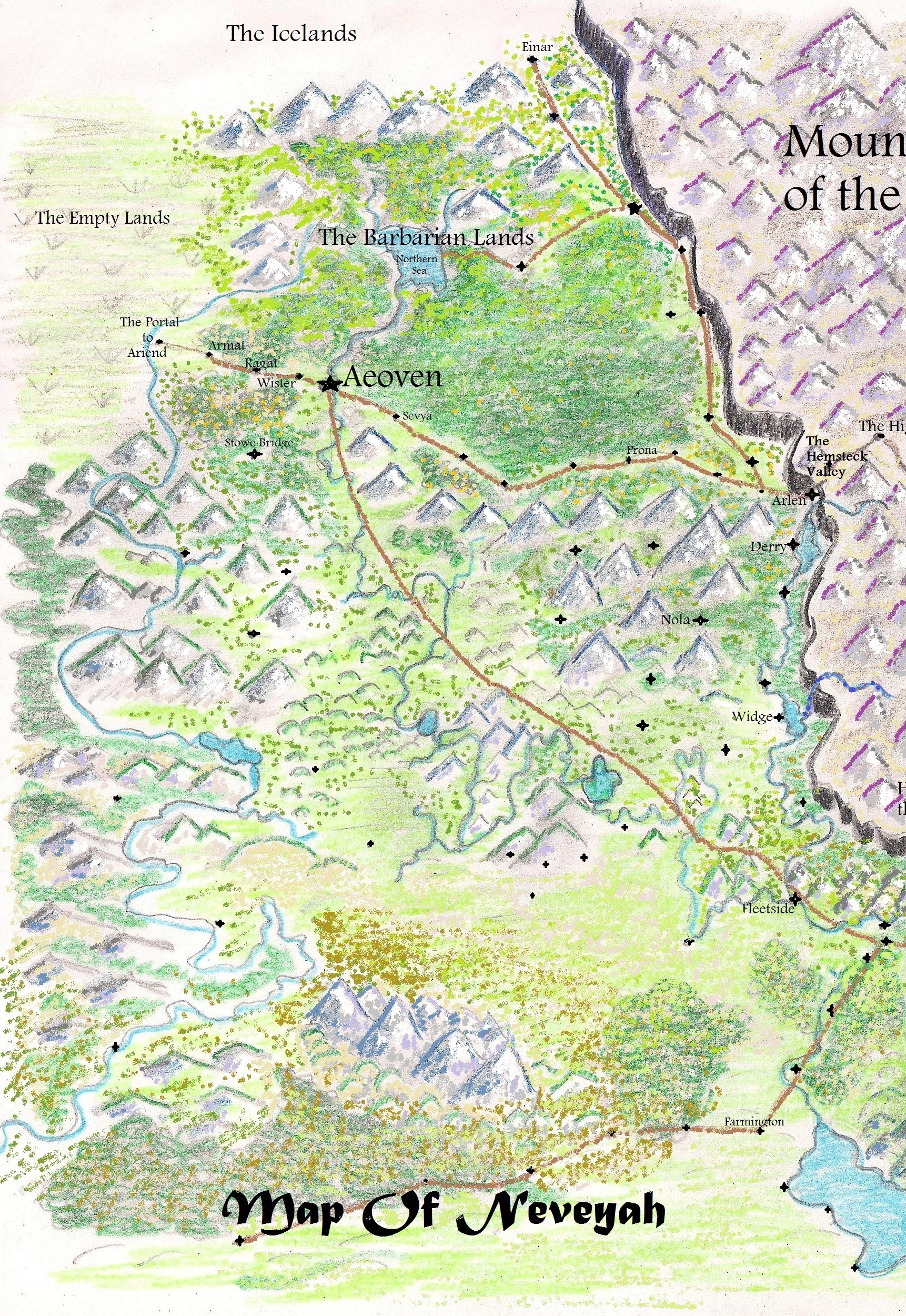
I begin by drawing a sketchy map.This way I have an idea of where the towns are in relation to each other. Nothing on a map is ever finite, they are only approximations–artistic guesses.

Heart of Neveyah relief 3-4-2013 001As I write, my map evolves, becoming more complex as the topography becomes more clear to me. In Neveyah, I began with a pencil sketch, and that evolved into a relief map that gave me the opportunities for injecting tension into the tale that I needed. It also provided me with a detailed explanation of where the resources are, so that funding my country is not an issue.

I build their political and monetary structure, and the prevailing religion. I decide who has the power and privilege in that society, and who is the underclass.

As I create the power-structure and the maps, the opportunities for creating tension within the story also grow. I keep a list of those ideas so that when I run short on creativity I have a bit in the bank, so to speak.

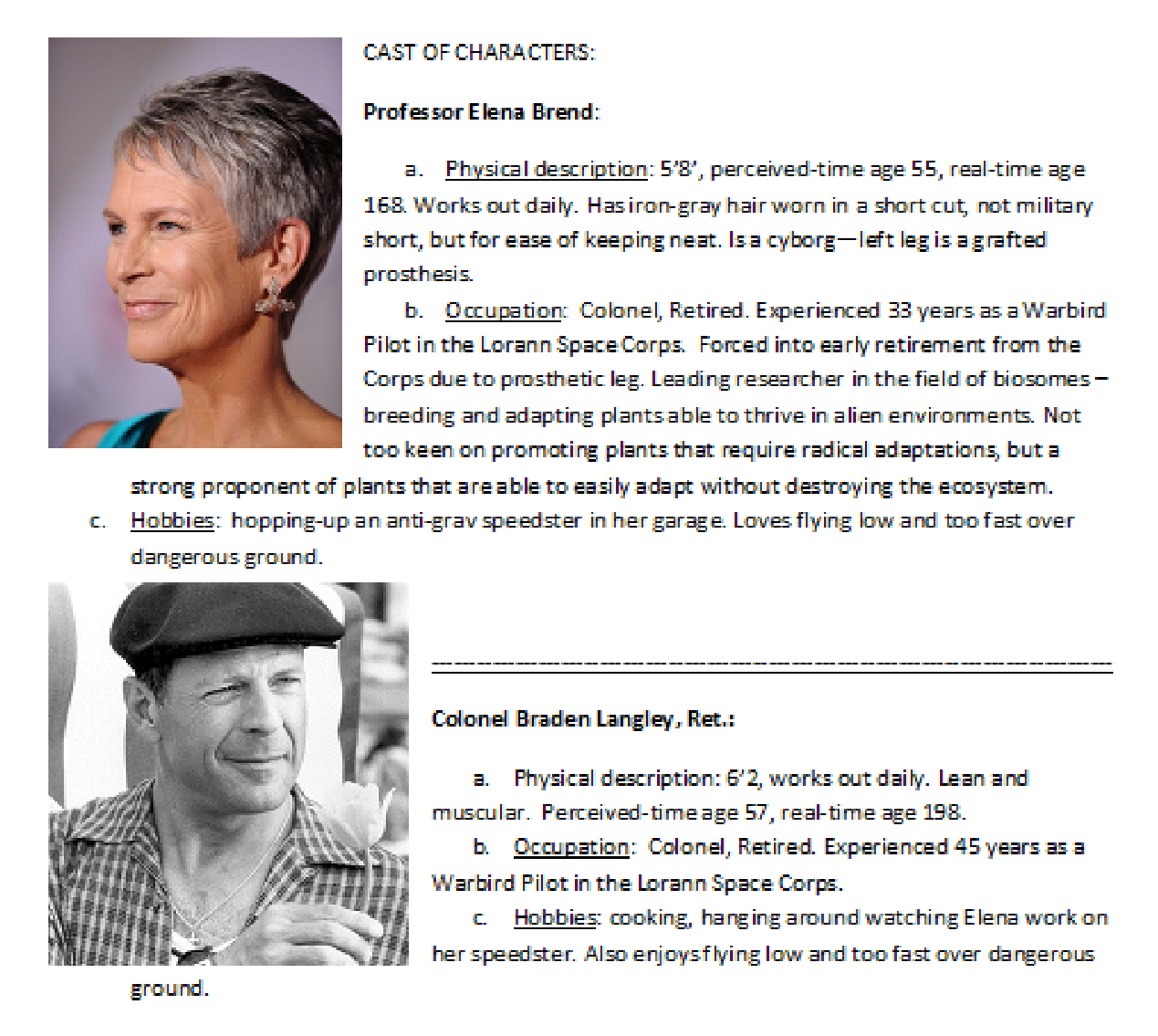
Another thing Lindsey mentioned that I also do is to create a sort of personnel file. (I was an office-manager for years, so I think in those terms.) Is everyone human? If not, what are their species and how do they differ from humans? What are their origins and why are they all together on this world. This information will most likely not make it into the tale, but it is important for me to know.

personel file for Elena and LangleySome people draw their characters, but my artistic talents run to less realistic things. In some cases, I select an actor who best represents my character or who could play him/her well. I am a whiz at cartoons and maps, but not at drawing people or animals, so that’s why I resort to simpler methods to cement them in my head. Once I know who they are, that is where I stop. The reader will decide from the bare-bones descriptions I will give as to what they look like and that will be more intriguing than if I belabor their violet eyes and stunning cheekbones.

When I design a religion, I do it from the ground up.  I know who the gods are, what they require of their worshipers and the rituals that worship involves.  The same goes for the political system. Who is in charge of the country, and what is their power-base? What is their currency and how do they get it? Alternatively, how do they spend it? Are they despots or benevolent?

Then, there is the magic. Who has magic? What kind of magic–healing or offensive or both? What are the rules for using that magic and why do those rules exist? I despise books where there are no clearly defined rules for the magic, because infinite power instills infinite boredom in me as a reader.

http://www.hdwallpapers.in/

Ask yourself what sort of wild creatures will live in your world. What do they look like and how big are they? How do they survive, what do they eat? Are they hunted, or are they simply benign creatures that harm no one? What is their place in the ecosystem?

How are you going to name your people and beasts? Do your readers a favor and use spellings that look fairly simple and look good on paper. DO NOT USE THE CONVENIENT NAME GENERATOR websites that the internet is rife with. They provide you with hokey, ridiculous  names no barbarian worth his salt would claim.

How do they dress? Do they wear armor? How difficult is that armor to get on and off?

How do they travel? Horses or spaceships each have certain basic requirements–both require fuel of some sort and both frequently need maintenance, whether it is currying or cleaning the exhaust vents. Who does this?

In conclusion, assembling this background information is time-consuming, but once I have it all together, my work is so much easier. The hard work is mostly done at that point, so there is less stopping and starting. All I have to do is get my heroes off the sofa and out of the house to the final battle on time, so they can save the world.


6 Comments

Filed under Adventure, blogging, Books, Dragons, Fantasy, Literature, Publishing, Self Publishing, WordPress, writer, writing