Category Archives: Blogger

Bloated exposition and the power of the “No!”


Book- onstruction-signTwo-year-olds are awesome little balls of angst and joy. It’s either all happiness or all misery for them. I just spent the last two days babysitting my youngest grandson, who is two, while my daughter, a well-known musician, was in the recording studio. The dialogue between me and my grandson went something like this:

Me: “Would you like to eat dinner?”

2 yr old: “No dinner!”

Me: “Do you have to potty?”

2 yr old: “No Potty!”

Me: “Would you like ice-cream?”

2 yr old: “No ice-cream!”

It doesn’t matter what you ask the child–he is currently hardwired to say “NO!” to everything, no matter how badly he really wants it.  Everything is high drama and terrible tragedy for him–and his gut reaction to every question is driven by his newly acquired “power of the NO,”  a super-power that regularly goes to his head.

Unlike the two-year-old with his simple cut-and-dried answer for everything, we authors have a large amount of backstory that we are just sure the reader must know every minuscule detail of, and in order to avoid info dumps, we write conversations to do just that, so that the reader will not lack for information.

But this is where we authors need to exercise the power of the NO. It is also one of the hardest things we do–trying to decide what is crucial to the advancement of the plot and what could be done without. I am currently looking quite closely at one of my manuscripts, and I may cut an entire chapter that is only background. It’s awesome background, and I love this background–but when looked at with an independent eye, it doesn’t do anything but stall the forward momentum of my book.

Don’t give your characters long paragraphs with lines and lines and lines of uninterrupted dialogue. Those can become info dumps laced with useless fluff and are sometimes seen as a wall of words by the reader. This is referred to, in the industry, as bloated exposition.

When the dialogue is trying to tell the reader too much, characters end up saying a lot of unnatural and awkward things.

 “Remember the first day at the academy? We showed up wearing identical uniforms. I was so humiliated. I hated you for that. I didn’t speak to you at all until Commander Janson forced us to be partners in the biology lab, but I managed to get us through that with all A’s. But look at you now, you lucky dog. You are fortunate enough to be my second in command.”

“I know, sir. I despised you too, especially when you made me do all the dirty work, cutting up that alien amphibian. And you took all the credit for it. But now here we are, the best of friends and in command of the finest ship in the fleet, the USS George Lucas. I really, really love being your flunky. It is just the awesomest gig ever.”

Probably not gonna happen. When two characters go back and forth explaining precisely what they are feeling or thinking, it doesn’t seem remotely real. The only time exposition works in a novel is when both the reader and the character being spoken to do not know the information being artfully dumped.
dump no infoWhen reading, even dedicated readers will skip over large, unbroken blocks of words. Elmore Leonard said, “Try to leave out the part that readers tend to skip.” I feel this goes double for dialogue.

Cut to the chase. In real life, you might want to talk at length about the small details, but most of the important information is dealt with right away, and the rest is just socializing. When I think of the novels I enjoy the most, the important information in their conversations is dealt with up front, and the minor details emerge later as they become important.

Consider a phone conversation at work or when you’re in a hurry, and a friend just had a car accident. Your friend has a story to tell, and you have questions. “Are you hurt? Can you drive the car? Do you need anything?” While the boss is glaring at the back of your head, you won’t ask if they had insurance or if your friend will sue (unless you work for a legal firm and you’re fishing for business.)

There’s another important reason to avoid fluff in your dialogue besides the fact it makes a book more enjoyable:

In the real world, Indies and self-publishers pay the costs to publish their works up front. In the ebook format, costs are minimal and it doesn’t matter, but a paper book by a new author that has to sell for more than $12.99 may not sell well. Remember, with a longer book, your costs are increased because until you’re established, you must purchase your own stock to sell on consignment in local book stores. You’ll also need to buy books for your table at trade shows, conventions, and at most book-signings. You’ll want to keep your cost as low as possible and still turn out a good book.
Shakespeare_ICountMyselfFor an indie who writes fantasy, which tends to be longer books and is my genre, it’s most cost-effective for you to keep your work to between 90,000 and 120,000 words if you intend to print through CreateSpace, which prints my paper books. So, wise authors will avoid empty filler in their conversations at all costs.

Having said to keep it short, I know there are times when a character will have a long story to tell, and if it’s done right, it works. Usually, these are stories within stories, and they’re a bit tricky to do right. Deploy the facts, and go light on the fluff.

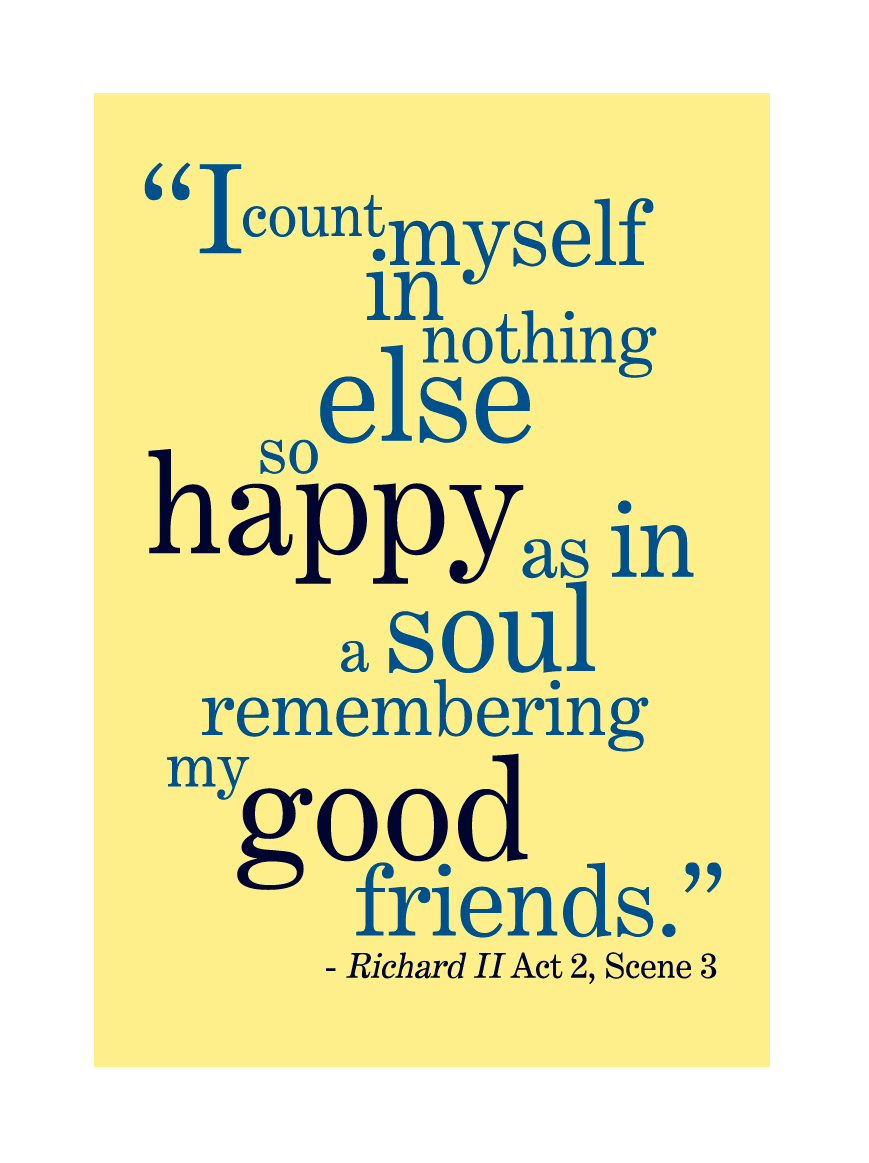
Remember, what worked in a Shakespeare monologue does not work in a dialogue between two people. Fictional dialogue is about give and take, meant to sound realistic but sharpened by the fact that each character needs something, and by the fact that their needs do not mesh. You won’t get two-page speeches if you remember to visualize your conversation.

5 Comments

Filed under Adventure, Battles, Blogger, blogging, Books, Fantasy, Humor, Literature, Publishing, Self Publishing, Uncategorized, writer, writing

Dazed and confused

my sisters grave robert dugoniI am a a bit dazed and confused right now. I have been intensely preparing to give a seminar on writing dialogue at conference next weekend, but now the convention has been cancelled. Apparently not enough people pre registered. And I was all prepped to hear an announcement from Robert Dugoni!  Now I won’t know what it is until he tweets it. And his book, My Sister’s Grave was just named one of the top five thrillers of 2014.  I love it when an Indie goes viral!

But on the positive side, I am now free to focus on editing for clients, prepping for NaNoWriMo 2014 and several other things that demand my attention. Also, I don’t have to hope and pray I can find a vegan-friendly restaurant near the hotel (which I also cancelled.)

I had planned to talk about talking–at least about how your characters might talk, if they were talking to you in real life.

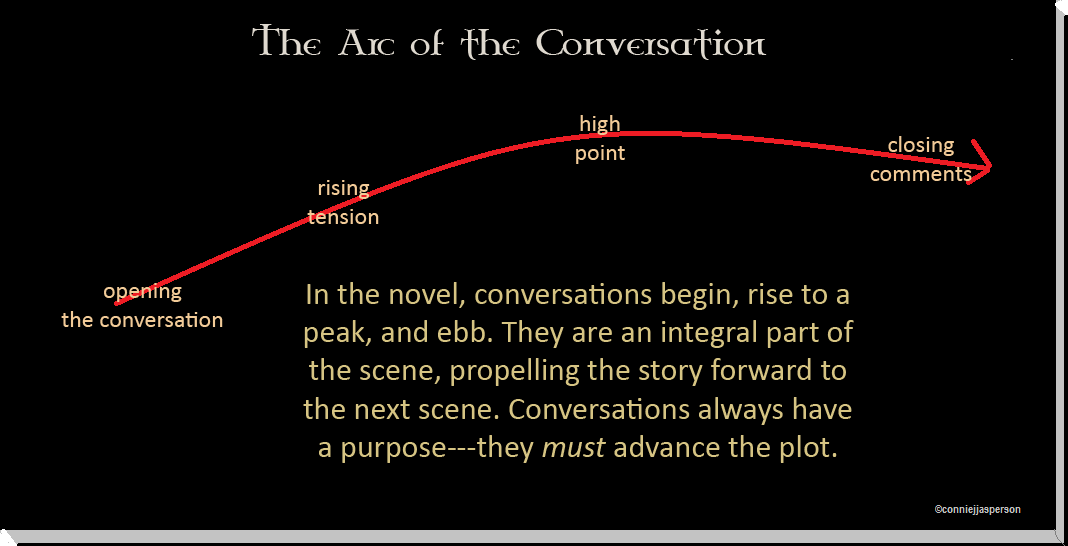
So how do we convey a sense of naturalness and avoid the pitfalls of the dreaded info dump and stilted dialogue? First, we must consider how the conversation fits into the arc of the scene.

It begins, rises to a peak, and ebbs, an integral part of the scene, propelling the story forward to the next scene. A good conversation is about something and builds toward something. J.R.R. Tolkien said dialogue has a premise or premises and moves toward a conclusion of some sort. If nothing comes of it, the dialogue is a waste of the reader’s time.

First we must identify what must be conveyed in our conversation.

  1. Who needs to know what?
  2. Why must they know it?
  3. And how many paragraphs do you intend to devote to it?

My rule of thumb is, keep the conversations short and intersperse them with scenes of actions that advance the plot. Walls of conversation don’t keep the action moving and will lose readers, so make the conversations important—and intriguing.

Author James Scott Bell says dialogue has five functions:

  1. To reveal story information
  2. To reveal character
  3. To set the tone
  4. To set the scene
  5. To reveal theme

So now that we know what must be conveyed and why, we arrive in the minefield of the manuscript. That will be the subject of my next blogpost.

The Arc of the Conversation

2 Comments

Filed under Battles, Blogger, blogging, Books, Fantasy, Humor, Literature, Publishing, Romance, Self Publishing, Uncategorized, WordPress, writer, writing

What’s in YOUR belfry?

APPROACHING HELLI’ve got a jammed-up calendar right now. I’m preparing my presentation on writing natural dialogue for Northwest Bookfest, which will be held in Kirkland Washington at Northwest University on Nov. 1 & 2, 2014. I’m really looking forward to that, but they’ve given me a slot between 10:30 a.m and 12:00  on Sunday morning-so that’s a lot of talking about talking. I can do it– heck, you know me. If I talk myself hoarse, I’ll let everyone out a few minutes early for lunch because that’s the kind of girl I am.

But in the meantime, I am still finalizing my seminar and the worksheets to go with it, and I have to also publicize it via twitter, press releases, and blogposts. After all–I really do want people to attend this sock-hop!

NaNoWriMo-General-FlyerNot only that, but I’m trying to get a book-signing/talk about the self-publishing industry for myself and Lindsay Schopfer at a local bookstore (whose website has no working contact links and who rarely answers their phone and never answers their voice-mail.) The nice-but-vague young man whom I have spoken to so far seems to have rather a low opinion of indies, but I am going to conquer that bookstore yet!

I am also building my calendar for my nano group in preparation for NaNoWriMo, which also begins on November 1st. While I do this, I have to  get the Christmas promotions finalized for my published books. I fit all of this in the copious amounts of free time I have between editing for clients, and making required revisions of my own current work, and finishing my next novel.

Being an indie author means it’s all on me. I have to generate any buzz about my books that will be generated, and I have to do it in such a way that my friends don’t all unfriend me, and my husband still looks forward to coming home. Maybe I do have bats in my belfry, but at least I’m having fun.

330px-Title_page_William_Shakespeare's_First_Folio_1623I console myself with the thought that Shakespeare had the same trouble. I do have my Twitter campaign planned–the genuine not-too-annoying-please-buy-my-books-I’ll-do-anything campaign. I have a Goodreads Ad campaign currently ongoing. I will stand naked on a street corner until I sell a book.  I will get a Google Ad campaign going.

I have several ads to put in the local paper regarding NaNoWriMo, and also I have a press release for Christmas O’ClockMyrddin Publishing’s charity anthology. We want to push that book and hopefully double our sales this year as the royalties from all sales go to benefit Water is Life. This charity is very dear to my heart, as millions of people go without safe drinking water, and they seek to change that.

I am my own publicist, secretary, chauffeur, housekeeper, and chef–so I guess you know, nothing much is getting done around the house.

Watch out for that low flying grandma–this broom ain’t stopping anytime soon.

4 Comments

Filed under Adventure, Battles, Blogger, blogging, Books, Fantasy, Humor, Literature, Publishing, Self Publishing, Uncategorized, WordPress, writer, writing

Prepping for NaNoWriMo 2014

nano_14_ml_badge_300pxNational Novel Writing Month begins in just 15 days. I am the Olympia Washington municipal liaison, but this year I will not be able to attend the first two days of write-ins in my region, as I will be at Northwest Bookfest, a conference at Northwest University,  both as an attendee and as a presenter. On Sunday November 2, I will be talking about writing natural dialogue. As you know, I love to talk about the craft of writing, and can talk until the cows come home, to use a tired cliché.

However, I will be working at my word count through the evening in my hotel room–and cheering my fellow WriMos on with virtual write-ins. Beginning Monday the 3rd of November, my life will revolve around writing the rough draft of my novel, helping my friends get their rough draft written, and encouraging the young (and not so young) writers of our community to explore their storytelling abilities.

Patrick Rothfuss said in his pep talk last year, “Thou shalt not just think about writing. Seriously. That is not writing. The worst unpublished novel of all-time is better than the brilliant idea you have in your head. Why? Because the worst novel ever is written down. That means it’s a book, while your idea is just an idle fancy. My dog used to dream about chasing rabbits; she didn’t write a novel about chasing rabbits. There is a difference.”

Oly Nanos icon for fb 2That completely describes what NaNoWriMo is all about–getting that novel out of your head and on to paper. If you don’t write it, you will never see what a wonderful idea it really was–and even if it doesn’t go as well as you planned, who cares? This is about the journey, more than it is about the destination.

It will be a month of dirty dishes, dirty house, piled up laundry…oh wait, that’s normal for around here. But anyway, I will do nothing but attend as many write ins here in the local area as I can and find as many ways to encourage secret authors to get that book out of their head and on to paper as is humanly possible.

I can hardly wait to get started!

2 Comments

Filed under Adventure, Blogger, blogging, Books, Fantasy, Humor, Literature, Publishing, Self Publishing, WordPress, writer, writing

Stephen Swartz, A Dry Patch of Skin

A patch of Dry Skin, Stephen SwartzToday, my dear friend, Stephen Swartz, author of the new book,  A Dry Patch of Skin has consented to answer a few questions for us. Stephen is a true renaissance man–an accomplished musician, and the author of seven published novels, he is also a professor of English at a well-known university in Oklahoma.

I became friends with Stephen in 2011 through ABNA, and we have remained good friends since. I find him hilarious, and I really enjoy his work. He has kindly consented to sit down and allow me to “virtually interview ” him. I am especially curious about his wonderful new book, which is a vampire tale. It’s most certainly not your mama’s sparkly vampires! If you are curious, here is my review: Best in Fantasy: A Dry Patch of Skin

CJJ: Tell us a little of early life and how you began writing:

Stephen Swartz 2007SS: It seems like I’ve always been making up stories, much to my parents’ chagrin. I began by drawing panel comics, then added dialog, then began writing paragraphs. I read a lot of science fiction and fantasy in my youth, plus the classics of literature. They influenced my writing mostly by pushing me to try to “out-do” those authors with my own stories. My early writing was limited by the limitations of typewriters and correction fluid. When I got my first computer in 1986, all of my vast library of stories finally could be written. And the world shuddered….


CJJ: Tell us about your most recent book.

SS: A DRY PATCH of SKIN is a contemporary vampire story, but not at all modeled after any of the current vampire TV shows, films, or the books they are based on. I deliberately tried to keep it real. Thus, I researched diseases which cause symptoms approximating the vampire’s condition. In that way, I wanted the reader to experience what it would be like to become a vampire. I decided to tell the story through the POV of a man who is transforming against his will into something he does not want to become. All the tropes and memes of vampire stories are there, but they are realized in a medically accurate fashion—as much as possible. It gets a bit religious at the end, so…call it magical realism.


CJJ: How did you come to write this novel?

SS: I had the idea in rough form ever since Twilight came out and I tried to explain to my daughter, who was hooked on the Bella/Edward story, what “real” vampirism was. For that explanation, I recalled a report years ago on one of those news magazine shows about a man suffering from porphyria, sometimes called the “vampire disease”; the medical explanations for his affliction made perfect sense in terms of why he might be called a vampire if he happened to live in a certain time and place rather than modern America. Watching that interview (he wore a hood to cover his face), I could truly feel the anguish of being in that situation, and given that my art is answering What-if questions, I sought a vehicle for illustrating that awful situation.


CJJ: Do you have a specific ‘Creative Process’ that you follow, such as outlining or do you ‘wing it’?

SS: For A DRY PATCH of SKIN, I worked a bit differently than usual. I began with snatches of my real life, anecdotes that were humorous or telling in some way, then fictionalized them. My initial goal was to explore the character I was inventing, to get down his personality, way of expressing himself, his identity, and so on. As a story set in 2014 in the same city where I live, it was quite schizophrenic to write fiction about the places I regularly visit.

Unlike some authors, I generally do not make lists of traits or compose background profiles of my characters; sometimes I do not know all about them when they come on stage and I get to know them as readers do. (Of course, I go back in revision and make it all fit together.) I do collect information as I create them but it stays in my head. Sometimes browsing the internet will bring me an image that fits what I see in my head.

I knew from the start the direction A DRY PATCH of SKIN would go but I did not have the exact action of the climactic scene until I was mid-way into the writing. Once I “knew” how it would end, the direction of the plot shifted a bit to head toward that conclusion. I found by the end, fortunately, that I happened to have dropped some good seeds along the way which conveniently blossomed in the final chapters—much as Chekhov’s musket in Act 1 must be fired by Act 3. I suppose it’s a matter of how my twisted mind works; I’m not always conscious of the big picture under the cacophony of surface features, but my deeper self knows…because he sleeps with my muses.

CJJ: How does your work differ from others of its genre?

SS: A DRY PATCH of SKIN was a personal challenge, something in a genre I have not written previously. The saving aspect for me, however, was that it is, at the core, a tragic love story. (Is that a spoiler?) The trappings of vampire transformation become the vehicle for pulling off that tragedy. Or is it that the transformation, the struggle to avoid it or prevent it, is made more tragic with the love interest? At any rate, I’ve consciously tried to go counter to all the usual tropes of the vampire genre. In fact, the characters often mention, critique, and spoof some of the popular works of the genre during their conversations. I hope this novel will be both a fun “review” of the vampire literature as well as a realistic portrayal of a biological problem; in that sense, it’s a medical thriller.

CJJ: Why do you write what you do?

SS: A DRY PATCH of SKIN was a departure from my usual kind of novel (contemporary anti-romance or sci-fi on a grand scale). I was intrigued by the question and wanted to see if I could write it if only to see how such a situation might play out. I seldom write as a challenge or game, but this time I did. For writing in general, I simply want to follow my desire to see what happens next for the people I create and the situations I put them in. I know that sounds cruel, but that’s how I roll. It probably keeps me out of jail or the mental hospital.

Next, I’ve been challenged to write an epic fantasy with dragons. Epic fantasy is no problem; dragons are—because it’s in my nature to try to explain them in an authentic zoological way.

CJJ: I certainly can’t wait to see what sort of spin you give dragons! I know why I chose the indie route for my work, but I’m curious as to why you’ve chosen this path.

SS: Strange you should ask because while I have always done things my way (Thanks, Frank!), the results have not always been glorious. After a health scare a few years back, I realized what I wanted most in whatever time I thought I had left was to publish one of the books I’d already written. Years before that, I had gone through the lengthy process of soliciting with actual reams of paper in mailing boxes and the 6-12 month wait for a response by paper form letter. But just a few years ago, the world apparently  changed and querying and soliciting were being done electronically, which opened up a whole new world of possibilities. I was impatient, for health reasons, so I caught the attention of a small publisher with a book I entered into a contest. That did not go so well but I did get a taste of the brave new world of publishing. The rest is what some call history—and others call serendipity.

CJJ: What advice would you offer an author trying to decide whether to go indie or take the traditional path?

SS: I suppose there are all kinds of reasons and they tend to be settled on an individual basis. I described my situation, but even without that push from Father Time I’d probably still discover the small and indie publishers and hook up with one of them eventually. If I were young and had a market-ready book with a ready-made audience, I’d query that thing to the farthest star. If you are short on time or believe your work is specialized and thus out of the mainstream, you probably have to go indie.

My goal the past four years has been to make the books I’ve previously written available, at least that, not so much for my ego as for being able to check them off my so-called bucket list. Then I wrote something new! And made it available, too. And I wrote something new again! I have to give credit to the publishing of my early books for the spark of creativity that caused me to write my new books.

Thank you Stephen, for answering my questions! For those readers who are interested in reading more of Stephen’s writing journey, you can find him blogging at:

Deconstruction of the Sekuatean Empire

 You can purchase all the books written by Stephen Swartz from this page at Amazon.com

stephen swartz's books

8 Comments

Filed under Blogger, blogging, Books, Dragons, Fantasy, Humor, Literature, Self Publishing, Uncategorized, vampires, WordPress, writer, writing

Autumn’s advent

Larch Forest fwp.mt.gov

Larch Forest fwp.mt.gov

I love the changing of the seasons. In the native northwest forests, the colors of the big-leaf maples,  and alders paint the landscape in shades of yellow and gold, dotted with pops of red sumac and scarlet vine-maples. The gold of the larches in the high-country is startling to those who’ve never seen a deciduous conifer. I am awed by the majesty of the autumn forest.

The sky is also changing. The days grow shorter and the rains of the monsoon months approach.

The gray overcast tends to linger unending, eternal.  I wonder if the sun will ever shine again. And just as I am feeling desperately sorry for myself  the clouds part to reveal a patch of blue so beautiful my eyes hurt, and I must wear my sunglasses to shield my weak, northwesterner’s eyes.

Irene, who is from Texas, mocks me for needing protection from the rare occurrences of sun–but we who have grown up in the long dark winters have little tolerance for it; thus the cheap sunglasses become so much more than a fashion statement.

These are the writing months, the mad dash to finish that first draft, and the build up to NaNoWriMo. These are the days when inspiration knocks me in the head and takes me far, far away. These are the days when I dive into reading for pleasure and forget to cook dinner.

Autumn glory lingers for a brief few weeks, then the rain moves in and turns unraked leaves to soggy, moldy  messes waiting for the winds of November to set them free–free to fly from yard to yard as my mind soars in other realms.

But evening and morning still bring colors as the sun turns the clouds every shade of angry that is possible–gold, red, purple and even black–occasionally juxtaposed against that poignant shade of blue that makes my heart ache, and my eyes sting with tears unshed.


2 Comments

Filed under Adventure, Blogger, blogging, Books, Fantasy, Humor, Literature, Publishing, Romance, Self Publishing, Uncategorized, writer, writing

But let’s talk about books for a while

I noticed something this weekend–I’m obsessed with books.  No, it’s true! Apparently, and I have to agree, it’s all I can think of to discuss. Not only that, but my friends are all obsessed with what they are reading, too.

What a surprise!

So what have I read lately that really rings my bells? Several things, actually, in a wide range of genres.

Sleeping Late on Judgement Day Tad WilliamsI just finished the third book in Tad Williams’s Bobby Dollar series, Sleeping Late on Judgement Day. Wow, my favorite bad angel, Bobby Dollar, finally gets a break. I love the twists and turns of William’s prose, as his hard-boiled angel gets down to the dirty business of cleaning up the mean streets of Heaven. He uses ordinary words in an extraordinary way, but never commits the sin of dropping the reader out of the story.  THIS is why I read his work.  I highly recommend this book to all those who like a bit of a hardboiled-detective twist to their paranormal fantasy. It is a smart, well-crafted journey into the human condition, set in an environment guaranteed to keep things interesting, and peopled with unforgettable characters. I gave it 5 full stars on my book review blog, Best in Fantasy.

Better You Go Home Scott DriscollI also read Better You Go Home, by Seattle area author, Scott Driscoll.  This is not fantasy, it is literary fiction and a medical thriller. Chico Lenoch is an intriguing character. The tale is told in the first person, which I usually find difficult to get into as a reader, but didn’t in this case. Also something I usually find off-putting but didn’t in this case is the way Chico occasionally ‘breaks the fourth wall’–he sometimes addresses the reader directly. It works, because you are in his head the whole time and it feels perfectly natural. Driscoll is a professor at the University of Washington, and is work is both literate and intriguing. This is not genre fiction, instead it is written for mature, dedicated readers who want substance in a book. No fluff here, just good solid craftsmanship. I also gave it five full stars in my review.  But let’s be real–I don’t go to all the trouble of reviewing books I don’t love.

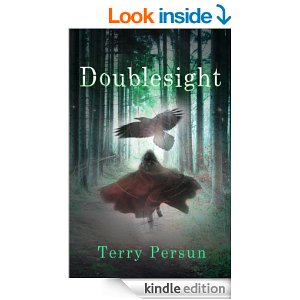
Doublesight--Terry PersunThen, in July I read a fantasy by another local author, Terry Persun: Doublesight. This was the most intriguing twist on the old shapeshifter theme I had ever read. Wholly human or wholly crow depending on what form she is in, Zimp is a great character, both endearing and aggravating. At first, she is weak and allows a less qualified, but more aggressive clan member, Arren, to make decisions for her. This book is as much about personalities and the need to remember their own commonality as it is about the great evil that threatens their kind. Each individual is sharply drawn, and has presence, struggling for their own place in their society while their world faces calamity. Zimp and Lankor, who is a doublesight dragon,  struggle to do what they know is right, in the face of treachery and occasional bad judgement.

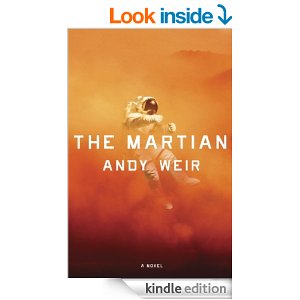
The MArtian Andy WeirMy mind is still blown by The Martian, by Andy Weir. This is hardcore science fiction and may well be the best book I read all year. Mark Watney is hilarious. He is the sort of man who gets through life by finding something positive in every disaster, and mocking the hell out of everything that is negative. A horrendous storm destroys much of their base, and his team is forced to abort their mission.  During the emergency evacuation of the Ares 3 landing site, he is severely injured in an accident that appears to have killed him. His body is unretrievable, and unaware that he is still alive, he is left behind. His companions begin the long journey back to Earth, grief-stricken at his sudden death. However, Mark is that rare breed of human, an astronaut, so of course he is extremely resourceful. He does what he has to in order to survive his injuries, and then figures out exactly what he must do to stay alive until the next mission.

I definitely read a mix of self-published and indie authors, but I like authors who take chances with their work, and who eschew the hamster wheel to hell of the Big Six publishing giants, who mindlessly chug out sequel after boring sequel. Tad Williams writes like an indie, rebellious and defiant. Scott Driscoll is also ‘a bit out there’ in the approach he takes in writing Chico’s story.

I love my job!


2 Comments

Filed under Adventure, Battles, Blogger, blogging, Books, Fantasy, Humor, Literature, Publishing, WordPress, writer, writing

Write write write…

225px-Ff12castRight now I am writing two fantasies, both based in  the world of Neveyah, which was originally designed for an old-school RPG that didn’t get built.

When I write in Neveyah, I find myself gaming more during my downtime than reading. Dragon Age, Final Fantasy–those are my games.  Anything where I can go out and hack, slash, and throw a little magic around, while great music and wonderful storylines unfold–those are the games that intrigue me.  Anything to get to that all important cut scene!

Not only am I writing the 3rd and 4th books in the Tower of Bones series, I am in the re-editing process for Tower of Bones, the first book in the series. It has been a slow process, as my editor in England has been unwell, and has also had her own wonderful work to write. But it is getting there, and when it is republished, it will be what it should have been when it was originally written.

When I first started this gig, I knew I wanted to be an indie, even though I knew it would be hard, and my sales would be miserable. The point for me was that I could be published and have some control over my work.

What I didn’t realize, is that your friends, wonderful people that they are, are not editors. They don’t really notice anything but the most glaring errors, and they miss a great many of those! Places where you have repeated yourself ad nauseam, and places that are phrased in a confusing way are skipped over.  Large plotholes, clichés, and intriguing auto-correct mistakes get missed when your eager-to-help friends try to edit your work.

You see–very rarely are you BFFs with an editor to begin with–although, through this process, I have become BFFs with MY editors.

Your friends know they don’t like what you wrote, but they don’t know why, so they plow through it as fast as they can just to get the misery done with. They will spot a few problems, which helps, but isn’t going to make your ms readable.

Oh, they aren’t going to tell you that, but they will think it. “This is really different. I’m a little confused about the dog who was an arsonist, but it’s really…unique.”

Do hire an editor. Even if you plan to submit it to a large publisher, do this, so that what you submit will be the best you can offer them.

SO, right now I am working on two books, one that runs concurrent with Forbidden Road, detailing events involving Edwin’s father, John Farmer, and also the follow-up to Forbidden Road, concluding that tale. I am also occasionally working on the rewrite of The Last Good Knight, which is what  Julian Lackland’s story was originally, and is the book Huw the Bard evolved from.  That one is complete, but it needs to sit on the back-burner for a spell while I gain some perspective on it.  Then I will go through it one more time and find an editor for it.

Then, there is Mountains of the Moon, which is in the editing queue.  Not sure if that will be done anytime soon, but rushing to publish is no longer my thing.

Goodness knows how all this will come together, but I love it.


2 Comments

Filed under Adventure, Blogger, blogging, Books, Fantasy, Final Fantasy, Humor, Literature, Publishing, Self Publishing, Uncategorized, writer, writing

So Bad it’s Good

long_live_dead_languages_latin_poster-r90bf04eb9e534fd48a8e4149dadac2aa_vhzd_8byvr_512

Long Live Dead Languages!

We love to play with our words like a cat and a ball of yarn. We can take a word with a perfectly clear meaning and then turn it around and make it also speak it’s opposite.  “That’s so bad” can mean it’s very good. “That’s sick” can also mean it’s good, although I’m not sure why.

We love to turn words into the opposite of what they originally meant.  It is such a common hobby, skewing words and redesigning their meanings, that even the word describing that action has several different names.

I find that ambiguity interesting. It is entirely appropriate that this type of word should not have a clearly defined label. Two words to describe this concept were invented in the  1960s.  A contronym (or autoantonym) is a word with multiple meanings, one of which is defined as the reverse of one of its other meanings.

This means that when you use these words in your writing you must be sure the context clearly identifies which meaning is intended. English is a fluid, evolving language and, like Latin, will one day be considered an extinct language. Sometimes a language that has changed so much that linguists describe it as a different language (or different stage) is called “extinct”, as in the case of Old English, a forerunner of Modern English.

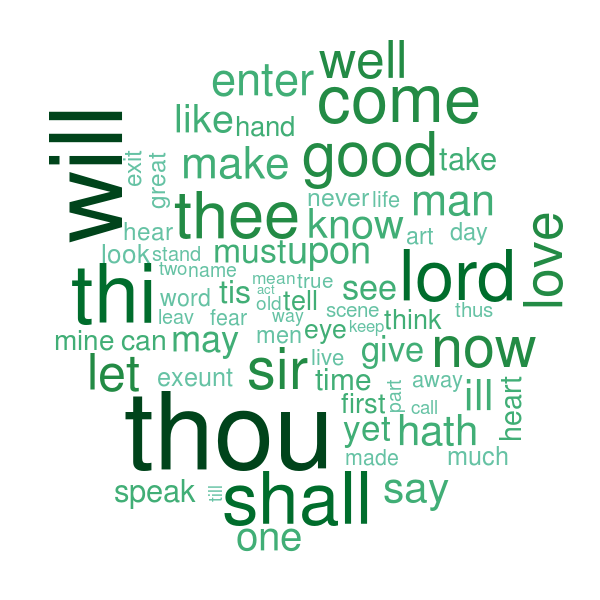
shakespeare-word-cloudIn many cases, the language never stopped being spoken, it simply evolved. Take Latin, for example: there is no point at which Latin died. Instead, it evolved in different ways in different geographic areas, and its modern forms are now identified by many different names such as French, Spanish, Italian, Romanian, Catalan, Venetian–all the languages we call Romance Languages.

We don’t call them that because they are romantic–in this case the word romantic means originating in Rome.  The root of the word Romance is of Rome. Latin is not dead–the roots of Latin form part of the base upon which Modern English is built, and we who proudly speak a variation on Old Saxon use the name of that fabled city-state to describe the most precious and intimate of emotions–that wonderful heady feeling we call romance.

So what words are currently also their own opposites?  For a large list, click on this link which will take you to Daily Writing Tips

gibberish-american businesses onlineMy point with all of this is that we must be very clear about the context in which we use certain words, because with the ever-changing world around us, the language we depend on to convey our meanings is changing. I see it as being in a period of change as radical as that of the Renaissance, when literally (which now can also mean figuratively) thousands of words were coined and reinvented.

2 Comments

Filed under Blogger, blogging, Fantasy, Humor, Literature, Publishing, Romance, Self Publishing, WordPress, writer, writing

Sharpening my clause

I’ve been reading a lot lately, some for editing, which is a great pleasure, and some for my own amazement, which can be a mixed bag of nuts.
 .
So let’s talk about what it is that makes reading for pleasure not a pleasure at times:  Some authors don’t understand the basic rules of how to write coherently.  I suppose that’s not a surprise to you, but I am always shocked.
 .
So what makes a coherent sentence? We want a subject, a verb and some words to help explain those two things. We call this a sentence.
.
Sentences frequently consist of clauses. Okay, they always do, but…anyway:
.
clause
klôz/
noun
  1. a unit of grammatical organization next below the sentence in rank and in traditional grammar said to consist of a subject and predicate.
 .
Well, that seems pretty simple–simply confusing, anyway.
 .
According to About Education: A clause may be either a sentence (an independent clause) or a sentence-like construction within another sentence (a dependent or subordinate clause).
 .
Subordinate Clause definition: A group of words that has both a subject and a verb but (unlike an independent clause) cannot stand alone as a sentence. Also known as a dependent clause. Contrast with coordinate clause.
.
Example:
If a free society cannot help the many who are poor, it cannot save the few who are rich.
(John F. Kennedy)
 .
Mostly I find subordinate clauses cropping up in conversation–dialogue–when I look at my own writing. These “grammatical juniors” are like any other form of seasoning in our writing and must be used consciously and sparingly. When we write with too many subordinate clauses, we separate the reader from the narrative.
 .
If you go on a cruise that consists exclusively of drinking, dancing, and partying, I shall worry.
.
Well, I won’t really worry, but I shall be jealous.
.
In genre fiction, which is what I write, readers do not want to be held away from the story by too many words. They want to be immersed in the tale, living it with the characters. One way we do this by providing balance in how we phrase our sentences, using a variety of sentence structures. We use complex sentences, consisting of:
 .
Fun-Fruit-Skewers-21. a simple clause 
I went to the grocery store.  (the meat of the matter)
2. a dependent clause
because I needed skewers. (technically not necessary but adds to it)
 .
I went to the grocery store because I needed skewers.  
 .
Who was I going to skewer? I don’t know, but I at least I had the right tool for the job.
 .
We can set the clause off with commas:
 .
The lake, its surface calm and black with deceptive serenity, called to me.
.
The lake called to me is the meat of this sentence, the clause describing it is technically not necessary, but without that clause the sentence is flat.
 .
An excellent FREE and entertaining resource for writers who want to get a grip on clauses, commas, and all that conjunction stuff is:
.
 .
You might want to check it out, it costs nothing and is really easy to understand.

4 Comments

Filed under Blogger, blogging, Books, Fantasy, Humor, Literature, Publishing, Self Publishing, Uncategorized, WordPress, writer, writing