Category Archives: Blogger

Journaling or Noveling

As summer ends and fall approaches, those of us who are regular NaNoWriMo writers begin to plan for our month of committed writing. We are jotting down ideas as they come to us, and making notes to help springboard ourselves into November with all our guns a blazing.

Generic-180x180People who have never heard of NaNoWriMo are always surprised that it is not only people who want to be published authors who use this month to create 50,000 word manuscripts. Family historians, dedicated diarists, people working on their PhD–anyone who wants or needs a month dedicated to getting a particular thing written will do so in November. More people do this during November than you would think–about half of our WriMos in my regional area are journaling or writing their theses. The support of the group really helps the graduate students stay focused, and it also bolsters those who are diarists and encourages them to write more about their thoughts and philosophies.

330px-Title_page_William_Shakespeare's_First_Folio_1623I’ve been asked many times what I see as the differences between journaling and noveling. (Sorry, word-nazis–I know,  I know! I just invented that word but hey, why not loosen up a bit and have a little fun with language? Willie Shakespeare did it all time!)

Anyway, journaling is keeping a diary. You do this on a daily basis, or at least frequently. According to Tiny Buddha “Journaling can help with personal growth and development. By regularly recording your thoughts you will gain insight into your behaviors and moods.” You start where you are in life at that moment, and for ten or fifteen minutes a day, you write stream of consciousness. This is an awesome way to jump-start your brain.

Noveling is telling lies, keeping them straight, and making the world believe it until the last page.  Again, William Shakespeare was awesome at this, and he put his work into the form of plays and sonnets, which were the most accessible media of the time for the common people.
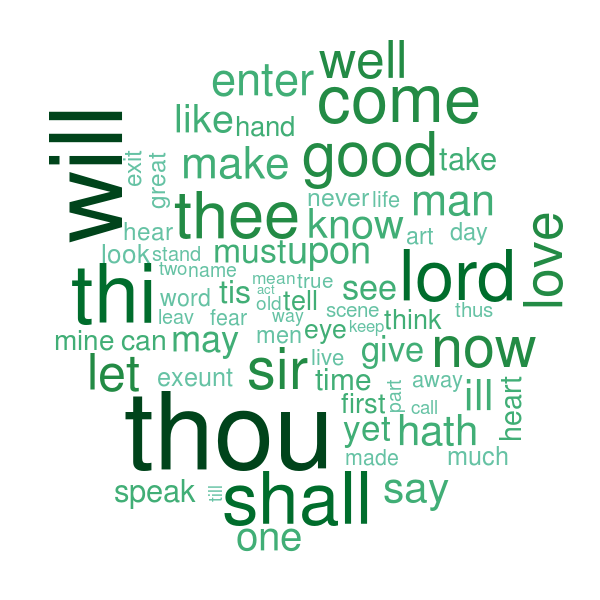
shakespeare-word-cloudHow many words did William Shakespeare invent? According to Shakespeare Online Dot Com: “The English language owes a great debt to Shakespeare. He invented over 1700 of our common words by changing nouns into verbs, changing verbs into adjectives, connecting words never before used together, adding prefixes and suffixes, and devising words wholly original. …  For a more in-depth look at Shakespeare’s coined words, please click here.”

Whether you are journaling or noveling, the important thing is to do it every day. Write for as long as you can when you can, and that will build your ‘writing’ muscles. If I dedicated 3 hours a day to just writing stream of conscious, I will chunk out 2500 to 3000 words–about half of which are mis-keyed and misspelled, but hey, no one is perfect. Some words I invent–and some words invent me, but either way, I love words.
Comments Off on Journaling or Noveling

Filed under Blogger, blogging, Books, Fantasy, History, Humor, Literature, Publishing, Self Publishing, Uncategorized, WordPress, writer, writing

The Flâneur ~ the 4th POV

In a literary fiction seminar  I attended at a recent convention in Seattle, University of Washington  professor, Scott Driscoll, discussed  a fourth point of view I had heard of in college, that of the detached observer.  I had forgotten about it, and Driscoll gave it a name I’d never heard of: the Flâneur (idler, lounger, loiterer.) Many of you have heard of it as third-person objective or third-person dramatic. I see it as a completely separate way to show a story.

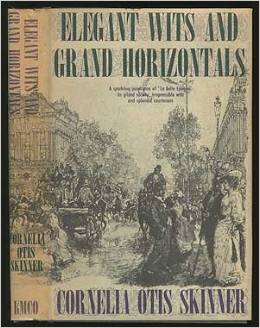
elegat wits and grand horizontalsWriting in 1962, Cornelia Otis Skinner said that there is no English equivalent of the term,  flâneur,  “just as there is no Anglo-Saxon counterpart of that essentially Gallic individual, the deliberately aimless pedestrian, unencumbered by any obligation or sense of urgency, who, being French and therefore frugal, wastes nothing, including his time which he spends with the leisurely discrimination of a gourmet, savoring the multiple flavors of his city”.

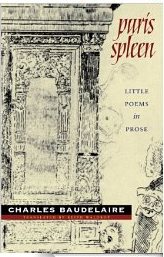
paris spleenThe French author, Charles  Baudelaire, characterized the flâneur as a “gentleman stroller of city streets.” He saw the flâneur as having a key role in understanding, participating in and portraying the city. Thus, in the narrative, a flâneur plays a double role by existing  as a present, but ignored, member of society who remains a detached observer of all that occurs within the story.

Having the option to use this point of view in the narrative of genre fiction opens up many possibilities for originality an author may not have considered:

  • he is NOT omniscient as in having complete or unlimited knowledge, awareness, or understanding of the fictional universe–he doesn’t know everything–but he does know what he sees.
  • he sees more than the individual characters do because his random travels take him all over town regularly, and he observes most of the tale as it unfolds.
  • Because he only knows what he sees, some information crucial to the resolution of the final events will be revealed to him at the last minute–a surprise to him too. When the last pieces of the puzzle are put together, his commentary summarizes the fall-out and final outcome of the characters involved.

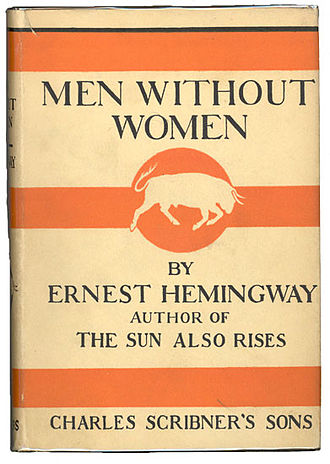
Men without WomenIt is a POV used in classic french modernist literature to describe the story of certain social scenes in the city, but I can see this as a useful way to relate the events on a space-station, or indeed in many traditional genre fiction social settings.

Now for the downside of using the flâneur as your vehicle to convey your narrative:

  • He is not reliable—he has his own personality, offering subtle judgments and unconscious opinions on the behavior of the characters. Therefore, just as in a first-person narrative, the reader cannot be sure he is telling the unbiased truth.
  • The narrator  tells the story without describing any of the character’s thoughts, opinions, or feelings; so the reader can only guess at character motivations, and must assume the objective observer truly is objective and has told the truth in that regard.
  • It separates the reader from the intimacy of the action and slows the pace down.
  • It could become voyeuristic, if one writes graphic love scenes. {eeew.}

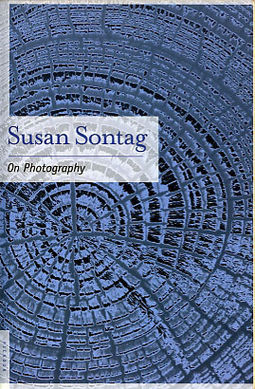
255px-On_PhotographyThe POV of a flâneur is also a vehicle used in in art, and in street photography.  Susan Sontag in her 1977 collection of essays, On Photographydescribes how, since the development of hand-held cameras in the early 20th century, the camera has become the tool of the flâneur:

The photographer is an armed version of the solitary walker reconnoitering, stalking, cruising the urban inferno, the voyeuristic stroller who discovers the city as a landscape of voluptuous extremes. Adept of the joys of watching, connoisseur of empathy, the flâneur finds the world “picturesque.”

Susan SontagOn Photography, pg. 55

I don’t see myself using this style of POV for an entire novel, but I can think of a thousand ways to use it in short-stories. Come November, when NaNoWriMo begins, I may give it a whirl, just for practice. Writing is a craft and I love finding different ways to express it. A fresh point of view to write from can only stretch my writing skills.

4 Comments

Filed under Blogger, Books, Fantasy, History, Humor, Literature, Publishing, Self Publishing, Uncategorized, WordPress, writer, writing

What does “Submission-Ready” mean?

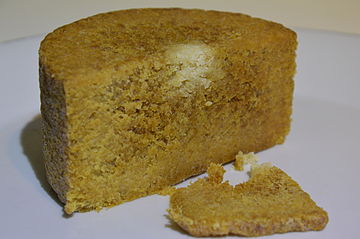
Gamalost-NorwegianOldCheeseI’m not talking bondage here, friends, so get your mind out of the erotica.

I’m talking about a manuscript with the potential to be made into something publishable.

I see a lot of manuscripts. Some are quite promising, some not so much. Literally anyone can write and publish a book nowadays, but not everyone can write a book others will want to read–THAT is a craft, and there are many who don’t feel the need to learn it before they submit their work to an editor or a publisher.  The quality of their work stinks like gamalost cheese, but they have the gall to wonder why the Big 6 haven’t snapped it up.

gibberish-american businesses onlineIt is important to learn the craft of writing, if you want readers to enjoy your work. Spend the time to learn the mechanics of the language you are writing in. However, if you are simply writing a pretentious pseudo-literary art piece, fine–go on and have at it–no one will ever read it, and you can feel superior for having written it. If you dare to compare yourself to James Joyce I will run you out of the writing group quicker than you can say Ulysses.

Before you submit your manuscript, take the time to make it submission-ready:

1. Properly format it: Set the indents, use a serif font of .11 or .12, double-space it with no extra space between the paragraphs, and do not justify it.

2. Hire an editor to help you straighten out the flaws YOU can’t see.

3. Go to the publisher’s website and find out what their submission guidelines are and FOLLOW THEM. (Yes, they apply to EVERYONE, no matter how famous, even  you.) If you skip this step, you will wait a year to hear that your ms has been rejected, and they won’t tell you why.  It’s not worth their time to teach you how to be a writer–you have to learn that on your own.

For a more in-depth description of this whole process, see my series “WORD-A Shifty Beast.”

learn something newTry to learn something new every day in your writing life, and with each success you have, try to keep some humility.  You will grow as an author, your work will remain fresh, and I will continue to beg to read it.

If you read the kind of work you want to write, you will gain inspiration from the masters in your genre. When I am not writing or editing, I am reading. And when I have the chance to read for pleasure, I read epic fantasy, paranormal fantasy and science fiction. When I find a book that rings my bells, I talk about it, and blog about it. Conversely, if I hated it, I never mention it again.

Yep–I’m that kind of a reader.


3 Comments

Filed under Blogger, blogging, Books, Fantasy, Humor, Literature, Publishing, Self Publishing, Vegan, WordPress, writer, writing

Update from the Realm of Fantasy

cover_art_Billy_39_s_RevengeI live in a fantasy world, hence the name of this blog. What better way to immerse one’s self in fantasy than in a good book? I love to read, and everyone who follows this blog knows I read anywhere from 1 to 6 books a week.

I also love writing, and right now I have 4 projects in the works:

1. The remastering of Tower of Bones  at the very capable hands of Eagle Eye Editors.

2. Finishing the final draft of Julian Lackland so that it can be made submission-ready.

3. Finishing writing the first draft of Valley of Sorrows.

4. Getting Mountains of the Moon through the editing process at Eagle Eye Editors.

These projects take all my time that isn’t occupied with publicizing Huw the Bard (or editing for other authors, or blogging , or beta-reading, or…)

IMG727Just so you know that I really am writing when I am holed up in the Room of Shame (my office.)

Many of the stories in Julian Lackland evolved from The Last Good Knight, and while there is a great deal that is new, it incorporates all but two chapters of the old book. It details the large events from his life, covering 40 years, beginning as he is leaving court as a very young man, hoping to join Billy Ninefingers and the Rowdies.

Young Julian is a strange mix–incredibly naive about how the world really works but at the same time he is quite worldly-wise about the way people are, and incredibly forgiving. He has a wide view of sexual morality, and a sharply defined view of good and evil.

The other writing project that occupies my time is Valley of Sorrows, the third book in the Tower of Bones series.  I have struggled with that tale, trying to keep it confined into one book.  However, there will be a fourth book that comes out of the mountain of words I have written here. Edwin’s quest will be resolved first, and I hope to get it into print in 2015.

It’s a crazy existence, being a writer, but it’s so fulfilling. I wonder how I ever survived before I had such a wonderful way to spend my time.

Comments Off on Update from the Realm of Fantasy

Filed under Blogger, blogging, Fantasy, Humor, knights, Literature, Publishing, Self Publishing, Uncategorized, writer

Comatose Ambiguity

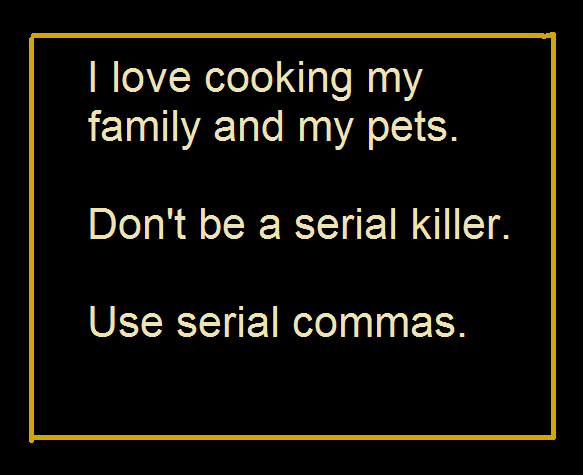
CommasThe Chicago Manual of Style, Strunk and White’s Elements of Style, most authorities on American English and Canadian English, and some authorities on British English (for example, Oxford University Press and Fowler’s Modern English Usage) recommend or require the use of the Oxford comma, also known as a serial comma.

Newspaper style guides (such as those published by The New York Times, The Los Angeles Times, the Associated Press, The Times newspaper in the United Kingdom, and the Canadian Press) recommend against it, possibly for economy of space.


IN GENERAL, OXFORD COMMAS ARE INTENDED TO RESOLVE AMBIGUITY:

ambiguityThe style that consistently uses the Oxford comma may be less likely to result in ambiguity. Consider the oft quoted, but (according to Snopes) mythological, book dedication:

To my parents, Ayn Rand and God.

There is ambiguity about the writer’s parentage, leading the reader to believe that the writer claims Ayn Rand and God are the parents. A comma before and removes the ambiguity:

To my parents, Ayn Rand, and God.

But lists can also be written in other ways that eliminate the ambiguity without introducing the serial comma, such as using other punctuation, or none, to introduce or define them. For example, in the following manner:

 To God, Ayn Rand and my parents.

I have used both styles in my writing, but am leaning more and more toward the Oxford comma.

Another wonderful example, reportedly collected by Nielsen Hayden, was found in a newspaper account of a documentary about country music legend, Merle Haggard:

Among those interviewed were his two ex-wives, Kris Kristofferson and Robert Duvall.

Whoa!  Who knew that Kris Kristofferson and Robert Duvall were Merle Haggard’s ex-wives? An Oxford comma would eliminate this hilarious inaccuracy:

Among those interviewed were his two ex-wives, Kris Kristofferson, and Robert Duvall.

I usually argue for consistent use of the serial comma because:

  1. Use of the Oxford comma is consistent with conventional practice as suggested by the Chicago Manual of Style, which is my primary reference manual.
  2. It matches the spoken cadence of sentences better, so reading passages aloud will flow more easily. This is something to consider if you intend to have your work turned into an audiobook.
  3. Properly used, it resolves ambiguity.
  4. Its use is consistent with other means of separating items in a list, for example, when consistently included before the last item even when and or or is present.
  5. Its omission can suggest a stronger connection between the last two items in a series than actually exists. (My parents, Ayn Rand and God.)

Common arguments against use of the serial comma:

  1. Improperly used, the comma may introduce ambiguity, and many authors are not clear on its proper use.
  2. I agree that it can be redundant in a simple list because the words  and & or  can serve to mark the logical separation between the final two items, when the final two items are a compound single item. (My parents, Marge and Bob.)
  3. When space is at a premium, the comma adds unnecessary bulk to the text—not usually an issue in a novel or short story. This is a journalistic issue common when writing for a newspaper.

It is fashionable for wouldbe writers to argue against using the Oxford comma, claiming it is unnecessary. However, I frequently see manuscripts where good authors fail to delineate a list in such a way that their intention is clear, by using and & or, thus resulting confusion, and a book that is less enjoyable than it should be.

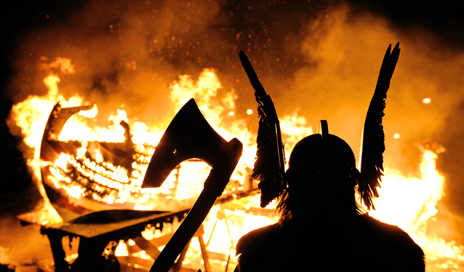
_72982736_vikings courtesy of BBCThe Oxford comma is the basis of many violent quarrels in writing groups–people tend to be rabidly for or against either side. There is common ground here, people so put away the torches!

Good writing incorporates proper use of both styles and, above all else, avoids ambiguity.


1 Comment

Filed under Blogger, blogging, Books, Fantasy, Literature, Publishing, Uncategorized, WordPress, writer, writing

Fantasy and the cold hard truth

Saint_Alban_(cropped)In a good novel, there is a moment where the interactions between certain characters can become highly charged, fraught with anger and other intense emotions. That is the case with what I am writing now:  three of my characters spent a long time fighting alongside each other, brothers and sisters in arms, completely dependent on each other.

They have a long history. Several terrible incidents occurred during the war they once fought that they don’t understand, and which created a rift between them. Some of their close companions were killed under bad circumstances (are there ever any good ones?) and each of my characters suffers a little survivor’s guilt.

After the war, they went their separate ways and for the last 25 years, have rarely seen each other or spoken. They all bear a burden of responsibility for things they can’t change, and their lives are affected by this, although they don’t know why. For each of them, their anger and remorse are expressed in different ways.

Two of them can’t be in the same room for long without trying to kill each other.

One character in particular suffers disturbing recurring flashbacks, avoidance or numbing of memories of the event, and what we call ‘fight or flight syndrome,’ the uncontrollable urge to either fight or flee. These characters all three demonstrate varying degrees of avoidance,  withdrawal, aggressive defense, or in one case, complete frozen immobility. Certain memories trigger these behaviors, and now all three are being forced to face their demons.

My challenge is to bring these people back together with sensitivity and realism, in order to advance my story, and use only 1/3 of the allotted word-count for this book.

Does this sound like Post Traumatic Stress Disorder (PTSD)? You’re right. For more information on PTSD, see an article  on the website, Military Pathways, and this news article aired by CBS on their show, 60Minutes.

Because it’s a new term, I can’t refer to this ‘injury of the spirit’ as PTSD in my manuscript. But I can give it another name and air both the symptoms and the sometimes life-long problems untreated PTSD causes.

GeorgeSPatton - WikipediaMy father, and my uncles all suffered from this long after World War II ended. In many ways it has shaped our post WWII society. Our fathers were told to just shut up and  get on with their lives–something that is not always an easy thing. Alcoholism and domestic abuse lay just under the surface of many families in our community, hidden but there.

Prior to World War I, the U.S. Army considered the symptoms of battle fatigue to be cowardice or attempts to avoid combat duty. While the causes, symptoms, and effects of the condition were familiar to physicians, it was generally less understood in military circles. General George Patton garnered substantial controversy after he slapped two United States Army soldiers under his command during the Sicily Campaign of World War II.

It was common for soldiers who reported these symptoms to receive harsh treatment. At the time of the slapping incidents, the two soldiers Patton assaulted were suffering from “battle fatigue,” otherwise known as “shell shock” or “battle stress.” Today, this condition is characterized as a form of PTSD, which can result from prolonged severe exposure to death and destruction, among many other traumatic events.

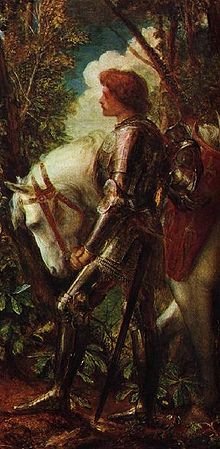
220px-Sir_Galahad_(Watts)

Even though I write fantasy, the reactions of my characters to certain situations has to be realistic, and that is where a good grasp of what really happens to our vets comes in handy. Post Traumatic Stress Disorder (PTSD) is real and affects our returning veterans. More must be done to help ease our military wounded back into society, but generally speaking we pay more lip-service to that problem than we do tax dollars.

We write about incredible personal challenges, because they make great stories. But what about the people who live through those moments? How do they quietly go back to the farm once the war is over, and pretend it never happened? This is what I am writing about now, and it has been an emotional journey for me as as an author and a human being. Everyday, our paths are crossed by men and women living with PTSD caused by a variety of terrible circumstances,  They are just ordinary people trying to keep their lives together, not understanding why they sometimes do the things they do, and wondering why things just keep going to hell all around them.


2 Comments

Filed under Adventure, Battles, Blogger, blogging, Books, Fantasy, knights, Literature, Publishing, Self Publishing, WordPress, writer, writing

The Girl With the Tolstoy Tattoo

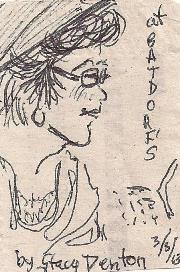
extra small caricature of connie  by street artist Stacey DentonYour blog is up. The Template is as well laid out as you could make it. You have your books or relevant social media listed in the sidebar. You have the catchiest blog title on the block. Now all you need to do is start blogging!

1. If you are using WordPress CHOOSE A CATEGORY NOW for your post–do it 1st so that you don’t forget to do it. I published this blog in the categories of Blogging, Self Publishing, Books, Fantasy, Literature, Humor, Publishing, and Writing.  Each blog post may have a different category. If you should forget to choose the category, it will go into the ‘uncategorized’ pile–the dreaded WordPress slush pile where blogs go to die.

Also in WordPress, chose a few TAGS now so that you do not forget to tag the post. That button is below the Categories list. Chose tags that most represent the core of your post, so that searcher for that subject will find it. For this post I am using ‘Blogging, Writing, Self Publishing, Humor, WordPress, Blogger’.   Also, ‘The Girl With the Tolstoy Tattoo.”

blogging 1.1

If you are using Blogger, PICK YOUR LABELS NOW–Blogger doesn’t use categories, so your labels are very important. On the right hand side, click on ‘LABELS’ and simply type your key words into the BOX, separated by commas. In Blogger, LABELS are what TAGS are in WordPress, so use words that are the core of what you are blogging about so that interested searcher will find your blog:

blogging 2.1

Now that you have that out-of-the-way, it’s time to blog!

2. Hook me with that catchy blog post title!  Today’s post is called “The Girl With the Tolstoy Tattoo” — for a multitude of reasons. I have a tattoo (it’s not Tolstoy) but we are all struggling authors, even those of us who blog on the most random subjects. And if you are ever at a writer’s convention, there is no better icebreaker in the autograph line than to offer to show Tad Williams your Tolstoy tattoo. (If you have one, and if you are insane.) (Be sure to add ‘Tad Williams’ to the Tags or Labels for that post.)

3. Put that catchy title in the White box at the top of the page:blogging 3.1

Now there are two paths for you.   You can wing it, keying directly into the Post box as I am doing now, or you can write it on a WORD document and copy and paste it into the body of the post.  I don’t do that often, because word is rife with HINKY FORMATTING that screws up your blog posts for both Blogger and WordPress, and then you have to use the handy “REMOVE FORMATTING” button that is located in the ribbon (tool box) of both Blogger and WordPress:

blogging 3.2

blogging 3.3

Both Blogger and WordPress have spell check functions, and both will save at times as you go, but as in everything, it is up to you to click “SAVE DRAFT” and save your work fairly frequently.

Play around with it. Practice uploading images and inserting them, playing with it until you feel comfortable and know how to ensure the image will appear where you want it, and will be the size you want it to be:

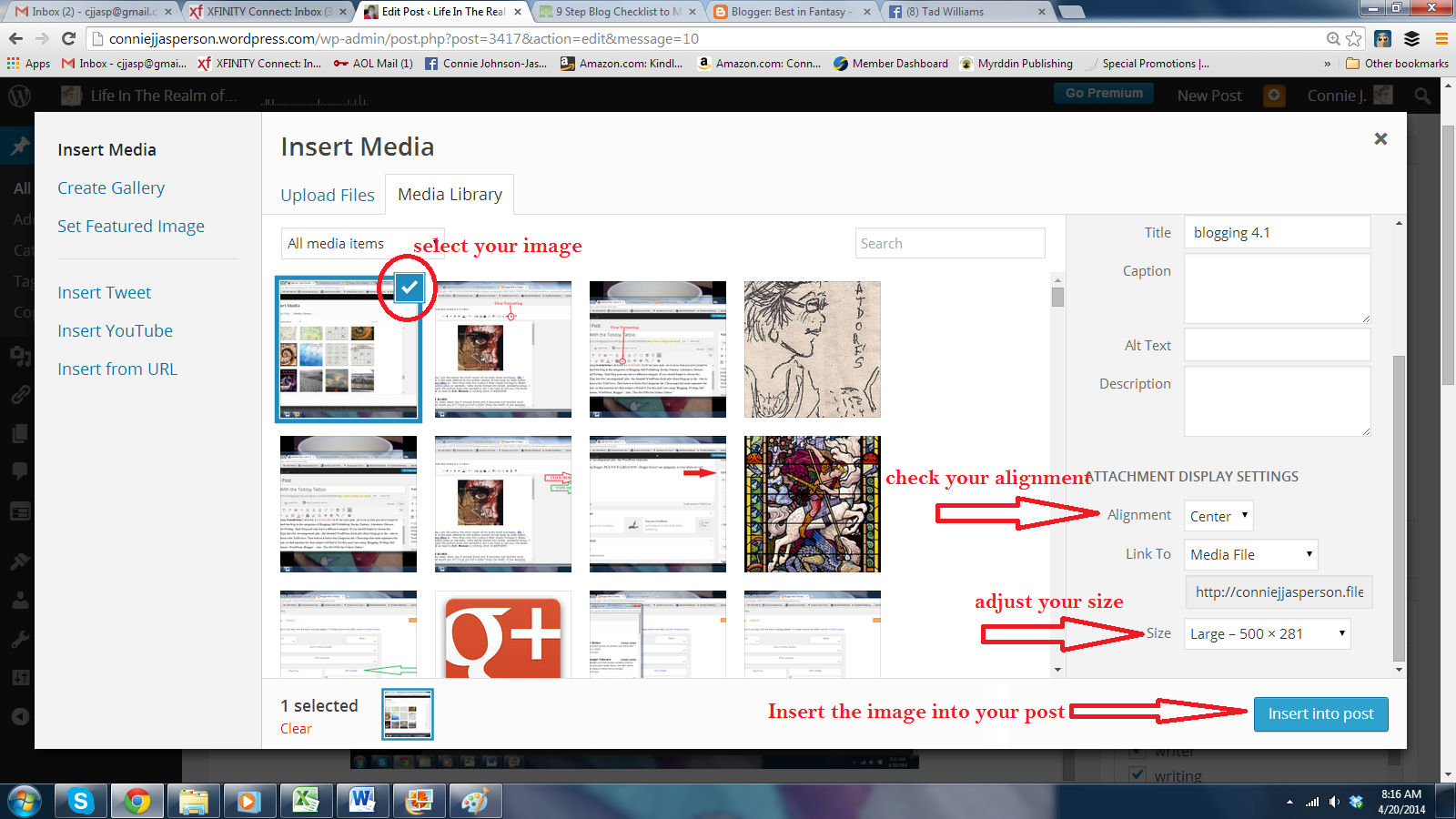
In WordPress, place your cursor in the body of the blog post and click once at the spot where you will want the image. Then scroll up to the left side of the ribbon (tool box) and click on “ADD MEDIA.” This menu will appear:


blogging 4.1

If this is your first blog post, you won’t have anything in your media library yet, so Click on “Upload Files.” Select the image you want to post,  then check your alignment, i.e. left, right, or center. Adjust your size options to fit your need for the image in that post (those requirements vary from post to post.) Then click ‘INSERT INTO POST.”

blogging 5.1


In Blogger you click on the little Picture in the ribbon (when you hover your mouse over it, it will say ‘insert image’). A pop-up menu will appear, and then you will upload the image, decide the placement and the size.  This nearly foolproof simplicity is why most people who have “never done this before” like Blogger.

blogging 6.1


Now your picture of your Tolstoy tattoo is right there, illustrating your hilarious post where you discuss why getting that tattoo while drinking vodka shots at the “Fans of Great Russian  Authors” convention wasn’t as good an idea as it seemed at the time, and that maybe the T-Shirt would have been a better investment.

leo_tolstoy_t_shirt-r207720cff4e14b059c7bba5cdb41c6c9_804gs_512 from Zazzle


All you have to do now is post your links to Twitter, Facebook, Tumbler and all other  social media you can think of and Voilà! You are a blogger. Do this regularly, and you will build up a following, and you will develop credibility as an author. Your name will be searchable on Google and Bing, and all other search engines.

3 Comments

Filed under Blogger, blogging, Books, Fantasy, Humor, Literature, Publishing, Self Publishing, WordPress, writer, writing