Category Archives: History

Words

Ulysses cover 3I’ve been having a kind of rolling conversation with Professor Stephen Swartz regarding James Joyce’s Ulysses. It reminded me of what I realized when I was reading it in college–that it is a series of great one-liners strung together. It is nearly incomprehensible to folks like me when taken in a large chunk, but like all of Joyce’s work,  cut down to small bits, it’s got some hilarious, witty moments. So what is this fascination that I feel for James Joyce and his work? I’m a moderately uneducated hack-writer of genre fiction, but there is something about his way with words, a kind of addiction that keeps pulling me back.

Ulysses was never originally published as a single volume, instead it was first published as a serial in the American journal, The Little Review over the span of two years from March 1918 to December 1920, in 18 episodes, and was first published as a single volume in 1922. It’s an incredibly long book for the era, 265,000 words. Books of that length are much more common nowadays, but usually only in genre-fantasy. (Robert Jordan, Tad Williams.)
Ulysses 4Ulysses details the wandering appointments and encounters of Leopold Bloom in Dublin over the course of an ordinary day, 16 June 1904. Ulysses is the Roman name of Odysseus, the hero of a classic Greek heroic tale that was Joyce’s favorite as a boy,  Homer’s epic poem Odyssey. The novel establishes a series of parallels between its characters and events and those of the poem.  Leopold Bloom corresponds to Odysseus the Wanderer, Molly Bloom to Penelope (Ulysses’s long-abandoned, ever-faithful wife), and Stephen Dedalus, Telemachus (Ulysses’s and Penelope’s son who seeks endlessly for knowledge of his father.)

265,000 words to describe one day in the life an extraordinary Irishman.

But they are great words, a series of deliciously twisted, carefully structured phrases strung together in a delirious, stream-of-consciousness that hovers on the edge of making sense while entertaining you–if you can face the wall of words that is each episode.

“History,” Stephen said, “is a nightmare from which I am trying to awake.”

Shakespeare is the happy hunting ground of all minds that have lost their balance.

Mr Leopold Bloom ate with relish the inner organs of beasts and fowls. He liked thick giblet soup, nutty gizzards, a stuffed roast heart, liverslices fried with crustcrumbs, fried hencods’ roes. Most of all he liked grilled mutton kidneys which gave to his palate a fine tang of faintly scented urine. 

“Can’t bring back time. Like holding water in your hand.”

“Bury the dead. Say Robinson Crusoe was true to life. Well then Friday buried him. Every Friday buries a Thursday if you come to look at it.”

“We were always loyal to lost causes…Success for us is the death of the intellect and of the imagination.” 
 

UlyssesJames Joyce’s prose is deliberate, shocking and full of puns, parodies, and allusions. He shows us his characters clearly, and depicts them with broad humor.

All of what James Joyce put into his work is what we, as modern writers, want to inject into our own work; only perhaps in a more accessible form that a broader audience of readers will enjoy.

It takes a special kind of obsession to wade through a doorstop like Ulysses for pleasure, as most people are forced  into it (as I was originally) by the requirements of a college class in literature. It’s the sort of thing no one does without a good reason.

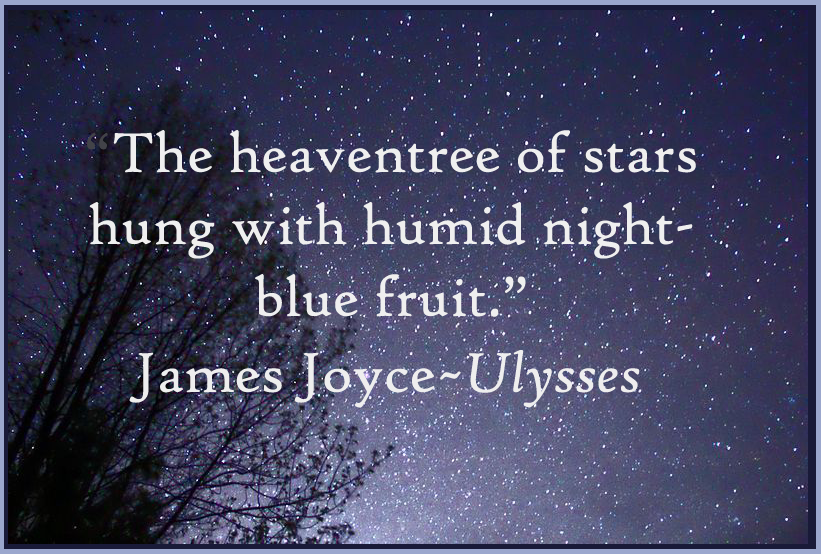
For me, that reason is the fabulous one-liners that pepper the nearly hallucinogenic narrative. I simply open it to any page and start reading, letting what happens on that page sink into my consciousness, cringing or laughing as may be.
800px-Night_Sky_Stars_Trees_Quote

2 Comments

Filed under Adventure, blogging, Books, Fantasy, History, Literature, mythology, Publishing, Romance, Self Publishing, writing

The Castle of Otranto, Northanger Abbey, and The Mysteries of Udolpho

the-castle-of-otranto-a-gothic-storyThe  late nineteenth century was a great era in which the seeds of the genre of fantasy were planted, a time when books chronicling magic, mayhem, and dark mysteries found fertile soil in the imaginations of thousands of educated, book-hungry middle-class men and women. This was the emergence of the Gothic Novel.

Gothic novels have common themes consisting of incidents of physical and psychological terror, remote, crumbling castles, seemingly supernatural events, a brooding, scheming villain, and (most importantly) a persecuted heroine.

The Castle of Otranto is a novel written in 1764 by Horace Walpole. Many consider it to be the first gothic novel, the beginnings of the literary genre that would spawn the likes of Bram Stoker, Edgar Allan Poe, and Daphne du Maurier.  Walpole chronicles the story of Manfred, lord of the castle, and his family. The book begins on the wedding-day of his sickly son Conrad and princess Isabella. Just before the wedding, however, Conrad is crushed to death by a gigantic helmet (!) that falls on him from above. This strange, unexplained event is particularly ominous in light of an ancient prophecy “that the castle and lordship of Otranto should pass from the present family, whenever the real owner should be grown too large to inhabit it.” This sets into motion terrible events.

It also suggests that decking your halls with heavy armor may not be a good idea, for all you medieval Martha Stewart(s) out there.

So anyway–Manfred decides the only way for him to avoid destruction is to marry Isabella himself, but first he must divorce his current wife. Isabella runs away, aided by a peasant named Theodore. ” It’s all very melodramatic and exciting, with Isabella hiding in caves, and the fortuitous appearance of mysterious knights, and dark curses.  Theodore is revealed to be the true prince of Otranto and Manfred’s daughter, Matilda, dies, leaving Manfred to repent. Theodore becomes king and eventually marries Isabella “because she is the only one who can understand his true sorrow.”

Even Jane Austen loved Gothic novels.

NorthangerAbbeyNorthanger Abbey  was the first of Jane Austen’s novels to be completed for publication, written circa 1798–99. It was originally written as a send-up of the gothic novel, the Mysteries of Udolpho. She died in 1817 and her book was posthumously published.

The book details the adventures of seventeen-year-old Catherine Morland. She is one of ten children of a country clergyman. Although a tomboy in her childhood, by the age of 17 she has read so many Gothic novels that she considers herself to be in training to be a heroine. Catherine reads voraciously, and Ann Radcliffe’s Mysteries of Udolpho is a favorite.

She meets and falls in love with Henry Tilney and after a bit of drama, is invited to visit at his family’s home. Catherine, because of her love affair with Gothic novels, expects the abbey to be exotic and frightening. Sadly, it turns out that Northanger Abbey is a pleasant home and decidedly not Gothic. However, (cue the dramatic music) the house includes a mysterious suite of rooms that no one ever enters. Catherine learns that they were Mrs Tilney’s, who died nine years earlier. Catherine decides that, since General Tilney does not now seem to be affected by the loss of his wife, he may have murdered her or even imprisoned her in her chamber.

I LOVED this novel when I read it while in college in Bellingham, Washington in the 1970s. I wore out three hard-bound copies of it!

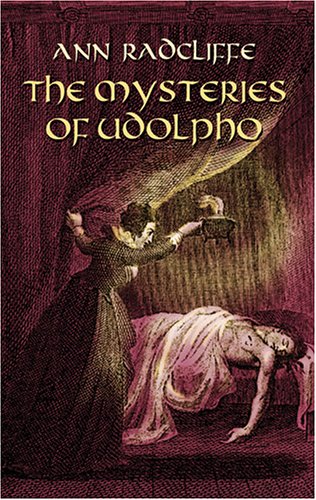
mysteries-of-udolpho-coverSo what inspired Jane Austen to write a Gothic novel? It was her own love of a work written an Englishwoman who, in turn, was inspired by the Gothic work of Horace Walpole.  The Mysteries of Udolpho by Ann Radcliffe, was published in four volumes on May 8, 1794. Walpole began the genre, but Radcliffe made it popular.

Set in the year 1584 in southern France and northern Italy, the novel details the plight of Emily St. Aubert, a young French woman. Her mother is dead, and while journeying with her father, she meets Valancourt, a handsome man who also feels an almost mystical kinship with the natural world. Emily and Valancourt quickly fall in love. After the death of her father she is sent to live with her aunt, Madame Cheron. Emily suffers imprisonment in the castle Udolpho at the hands of Signor Montoni, an Italian brigand who has married her aunt. Emily’s romance with the dashing Valancourt is frustrated by Montoni and others. Emily also investigates the mysterious relationship between her father and the Marchioness de Villeroi, and its connection to the castle at Udolpho.

Radcliffe’s fiction is characterized by apparently supernatural events that are then provided with rational explanations. She was a forward-thinking woman, as was Jane Austen, in that in all Radcliffe’s works traditional moral values are reinforced, the rights of women are strongly advocated, and reason always prevails. Sir Walter Scott was quoted as saying, in regard to Ann Radcliffe’s work, “Her prose was poetry and her poetry was prose. She was, indeed, a prose poet, in both the best and the worst senses of the phrase. The romantic landscape, the background, is the best thing in all her books; the characters are two-dimensional, the plots far-fetched and improbable, with elaboration of means and futility of result.”

Old Restored booksThe roots of our modern fascination with all things dark and mysterious goes back to the first stories told by our tribal ancestors, under the stars around campfires. Every tribe (and in later millennia, every family) had a storyteller who wove tales of darkness, of good triumphing over evil, of sin and redemption. When written languages were invented, the upper classes in early societies had literature written for them by the likes of Homer and Li Fang .

In western societies, the renaissance began the great lust for books. With the advent of the printing press and the emergence of an affluent, educated middle-class, reading novels became a popular way to while away one’s well-earned leisure hours in the evening or on a Sunday afternoon. This habit survived, despite frequent, intense puritanical censure of such frivolity.

It is because of those nineteenth century pioneers of early popular literature that we modern readers have such a wide variety of work to entertain us. Kindles and other ebook-readers show up among the patrons of every coffee shop and in every airport-lounge and every doctor’s waiting room.

Much may have changed how we take delivery of that content–few books arrive at my house with thick paper and leather bindings nowadays, but nothing has changed in the desire to just quietly enjoy a good story when one has a little downtime.

2 Comments

Filed under Adventure, Battles, blogging, Books, Fantasy, History, Humor, Literature, Publishing, Self Publishing, Uncategorized, WordPress, writer

Journaling or Noveling

As summer ends and fall approaches, those of us who are regular NaNoWriMo writers begin to plan for our month of committed writing. We are jotting down ideas as they come to us, and making notes to help springboard ourselves into November with all our guns a blazing.

Generic-180x180People who have never heard of NaNoWriMo are always surprised that it is not only people who want to be published authors who use this month to create 50,000 word manuscripts. Family historians, dedicated diarists, people working on their PhD–anyone who wants or needs a month dedicated to getting a particular thing written will do so in November. More people do this during November than you would think–about half of our WriMos in my regional area are journaling or writing their theses. The support of the group really helps the graduate students stay focused, and it also bolsters those who are diarists and encourages them to write more about their thoughts and philosophies.

330px-Title_page_William_Shakespeare's_First_Folio_1623I’ve been asked many times what I see as the differences between journaling and noveling. (Sorry, word-nazis–I know,  I know! I just invented that word but hey, why not loosen up a bit and have a little fun with language? Willie Shakespeare did it all time!)

Anyway, journaling is keeping a diary. You do this on a daily basis, or at least frequently. According to Tiny Buddha “Journaling can help with personal growth and development. By regularly recording your thoughts you will gain insight into your behaviors and moods.” You start where you are in life at that moment, and for ten or fifteen minutes a day, you write stream of consciousness. This is an awesome way to jump-start your brain.

Noveling is telling lies, keeping them straight, and making the world believe it until the last page.  Again, William Shakespeare was awesome at this, and he put his work into the form of plays and sonnets, which were the most accessible media of the time for the common people.

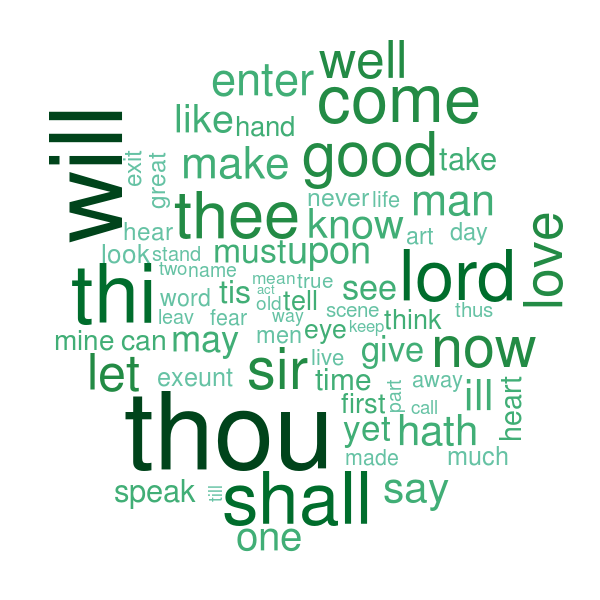
shakespeare-word-cloudHow many words did William Shakespeare invent? According to Shakespeare Online Dot Com: “The English language owes a great debt to Shakespeare. He invented over 1700 of our common words by changing nouns into verbs, changing verbs into adjectives, connecting words never before used together, adding prefixes and suffixes, and devising words wholly original. …  For a more in-depth look at Shakespeare’s coined words, please click here.”

Whether you are journaling or noveling, the important thing is to do it every day. Write for as long as you can when you can, and that will build your ‘writing’ muscles. If I dedicated 3 hours a day to just writing stream of conscious, I will chunk out 2500 to 3000 words–about half of which are mis-keyed and misspelled, but hey, no one is perfect. Some words I invent–and some words invent me, but either way, I love words.

Comments Off on Journaling or Noveling

Filed under Blogger, blogging, Books, Fantasy, History, Humor, Literature, Publishing, Self Publishing, Uncategorized, WordPress, writer, writing

The Flâneur ~ the 4th POV

In a literary fiction seminar  I attended at a recent convention in Seattle, University of Washington  professor, Scott Driscoll, discussed  a fourth point of view I had heard of in college, that of the detached observer.  I had forgotten about it, and Driscoll gave it a name I’d never heard of: the Flâneur (idler, lounger, loiterer.) Many of you have heard of it as third-person objective or third-person dramatic. I see it as a completely separate way to show a story.

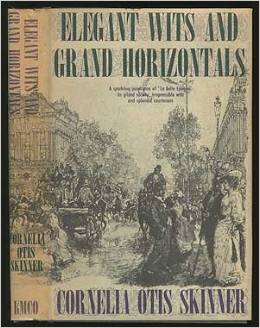
elegat wits and grand horizontalsWriting in 1962, Cornelia Otis Skinner said that there is no English equivalent of the term,  flâneur,  “just as there is no Anglo-Saxon counterpart of that essentially Gallic individual, the deliberately aimless pedestrian, unencumbered by any obligation or sense of urgency, who, being French and therefore frugal, wastes nothing, including his time which he spends with the leisurely discrimination of a gourmet, savoring the multiple flavors of his city”.

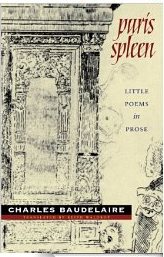
paris spleenThe French author, Charles  Baudelaire, characterized the flâneur as a “gentleman stroller of city streets.” He saw the flâneur as having a key role in understanding, participating in and portraying the city. Thus, in the narrative, a flâneur plays a double role by existing  as a present, but ignored, member of society who remains a detached observer of all that occurs within the story.

Having the option to use this point of view in the narrative of genre fiction opens up many possibilities for originality an author may not have considered:

  • he is NOT omniscient as in having complete or unlimited knowledge, awareness, or understanding of the fictional universe–he doesn’t know everything–but he does know what he sees.
  • he sees more than the individual characters do because his random travels take him all over town regularly, and he observes most of the tale as it unfolds.
  • Because he only knows what he sees, some information crucial to the resolution of the final events will be revealed to him at the last minute–a surprise to him too. When the last pieces of the puzzle are put together, his commentary summarizes the fall-out and final outcome of the characters involved.

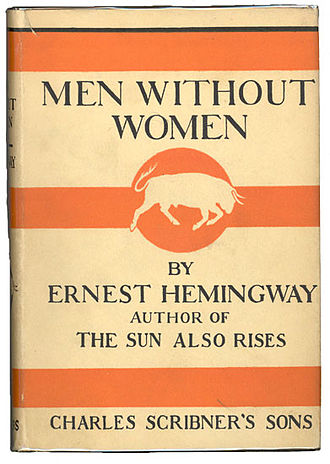
Men without WomenIt is a POV used in classic french modernist literature to describe the story of certain social scenes in the city, but I can see this as a useful way to relate the events on a space-station, or indeed in many traditional genre fiction social settings.

Now for the downside of using the flâneur as your vehicle to convey your narrative:

  • He is not reliable—he has his own personality, offering subtle judgments and unconscious opinions on the behavior of the characters. Therefore, just as in a first-person narrative, the reader cannot be sure he is telling the unbiased truth.
  • The narrator  tells the story without describing any of the character’s thoughts, opinions, or feelings; so the reader can only guess at character motivations, and must assume the objective observer truly is objective and has told the truth in that regard.
  • It separates the reader from the intimacy of the action and slows the pace down.
  • It could become voyeuristic, if one writes graphic love scenes. {eeew.}

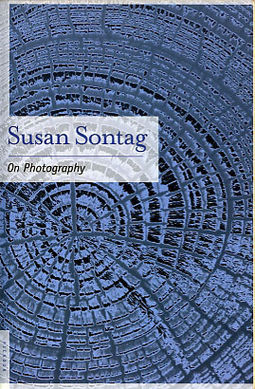
255px-On_PhotographyThe POV of a flâneur is also a vehicle used in in art, and in street photography.  Susan Sontag in her 1977 collection of essays, On Photographydescribes how, since the development of hand-held cameras in the early 20th century, the camera has become the tool of the flâneur:

The photographer is an armed version of the solitary walker reconnoitering, stalking, cruising the urban inferno, the voyeuristic stroller who discovers the city as a landscape of voluptuous extremes. Adept of the joys of watching, connoisseur of empathy, the flâneur finds the world “picturesque.”

Susan SontagOn Photography, pg. 55

I don’t see myself using this style of POV for an entire novel, but I can think of a thousand ways to use it in short-stories. Come November, when NaNoWriMo begins, I may give it a whirl, just for practice. Writing is a craft and I love finding different ways to express it. A fresh point of view to write from can only stretch my writing skills.

4 Comments

Filed under Blogger, Books, Fantasy, History, Humor, Literature, Publishing, Self Publishing, Uncategorized, WordPress, writer, writing

Pareidolia

Martian_face_vikingSo I was reading a rather badly crafted novel last night–one that was entirely forgettable other than this one word: pareidolia.  I tried to get my kindle to find the meaning, and it was unable to answer that question too.  But  Wikipedia, the fount of all knowledge, came to the rescue:

Pareidolia (/pærɨˈdliə/ parr-i-doh-lee-ə) is a psychological phenomenon involving a vague and random stimulus (often an image or sound) being perceived as significant, a form of apophenia. Common examples include seeing images of animals or faces in clouds, the man in the moon or the Moon rabbit, and hearing hidden messages on records when played in reverse.

The word comes from the Greek words para (παρά, “beside, alongside, instead”) in this context meaning something faulty, wrong, instead of; and the noun eidōlon (εἴδωλον “image, form, shape”) the diminutive of eidos. Pareidolia is a type of apophenia, seeing patterns in random data.

Sir Paul McCartney, image from Rolling Stone MagazineHuh. Who knew? Apparently people have been suffering from pareidolia  for thousands of years: seeing patterns in the stars and calling them constellations,  faces and images in clouds, and seeing the face of the Virgin Mary in the patterns on their french toast. They also hear the Beatles implying “Paul is dead” when you play their songs backwards.   The Rorschach inkblot test uses pareidolia in an attempt to gain insight into a person’s mental state.

330px-Francesco_Melzi_-_Portrait_of_Leonardo_-_WGA14795You aren’t crazy–you are extremely creative and able to visualize it pretty clearly. Even Leonardo Da Vinci understood the phenomenon–apparently he wrote of pareidolia as a device for painters, writing “if you look at any walls spotted with various stains or with a mixture of different kinds of stones, if you are about to invent some scene you will be able to see in it a resemblance to various different landscapes adorned with mountains, rivers, rocks, trees, plains, wide valleys, and various groups of hills. You will also be able to see divers combats and figures in quick movement, and strange expressions of faces, and outlandish costumes, and an infinite number of things which you can then reduce into separate and well conceived forms.”

Well, it’s a word I most likely won’t use, but there it is — pareidolia — a new word in my vocabulary.


10 Comments

Filed under Adventure, Battles, blogging, Books, Fantasy, History, mythology, Self Publishing, WordPress, writer, writing

Timber Rose, by J.L. Oakley – official launch

Timber RoseToday is the launch of J.L. Oakley’s ‘Timber Rose.’ As a third-generation, life-long resident of the Pacific Northwest, I am proud of our rich history. I know it’s not fantasy, but I am a multidimensional reader and I’ve been looking forward to this book all year. I loved her first book, ‘Tree Soldier.’ 

Oakley will be officially launching  ‘Timber Rose’ at Village Books in Fairhaven, in Bellingham Washington today at  4:00 P.M.  If you are a Northwest resident and can make the drive to Bellingham, by all means do so.

Here is the Blurb on the back of the book:

1907. Women climbing mountains in skirts. Loggers fighting for the eight hour day. The forests and mountains of the North Cascades are alive with  progress, but not everyone is on board. Caroline Symington comes from a prominent family in Portland, Oregon. Much to her family’s dismay, she’s more interested in hiking outdoors and exploring the freedoms of a 1907’s New Woman than fancy parties and money. She plans to marry on her own terms, not her parents. When she falls in love with Bob Alford, an enterprising working-class man who loves the outdoors as much as she, little does she know how sorely her theories will be tested. Betrayed by her jealous sister, Caroline elopes, a decision that causes her father to disown her. The young couple moves to a rugged village in the North Cascade Mountains where Caroline begins a new life as the wife of a forest ranger. Though she loves her life in the mountains as a wife and mother, her isolation and the loss of her family is a challenge. As she searches for meaning among nature, she’s ushered along by a group of like-minded women and a mysterious, mountain man with a tragic past.

‘Timber Rose’ has already received a fine review from Barbara Lloyd McMichael of the Bellingham Herald. Published on April 3, 2014, you can read McMichael’s review of Timber Rose here:  Prequel taps early 20th century for drama.

tree soldierI’ve known and admired J.L. Oakley for several years, having ‘met’ her in the virtual universe in 2011, when we both entered the  ABNA (Amazon Breakthrough Novel Awards) contest that year. This year she entered her book, Tree Soldier, and has made it to the second round of the contest.
Janet is also an active member of the Pacific Northwest Writers Association, of which I am also a member. She has been a presenter as several PNWA conventions, and is a well-known historian here in the Pacific Northwest.
.
And if you are curious to know more about her, here is Janet’s official bio:


About the writer:

Janet Oakley is an award winning author of memoir essays and novels. Her work appears in various magazines, anthologies, and other media including the Cup of Comfort series and Historylink, the on-line encyclopedia of Washington State history.  She writes social studies curricula for schools and historical organizations, demonstrates 19thcentury folkways, and was for many years the curator of education at a small county museum in La Conner, WA.  Her historical novels, The Tree Soldier set in 1930s Pacific NW and The Jossing Affair set in WW II Norway were PNWA Literary Contest finalists.  Tree Soldier went on to win the 2013 EPIC ebook award for historical fiction and grand prize for Chanticleer Book Reviews Lit Contest.

She writes both non-fiction and fiction, applying her research skills to both types of writing.  In 2006 she was the manager of a History Channel grant, researching old court cases in early Washington Territory.

She especially enjoys the hunt in old newspapers, court cases, and other delights in archives around the country.  The history of the Pacific Northwest is rich and not as well known in the rest of the country beyond Lewis and Clark’s passage through, yet crucial happenings took place here that influenced the formation of United State of America.  In December 2012, an article on a  19th century bark that was a part of the coastal trade between Puget’s Sound and San Francisco was published the prestigious Sea Chest.

>>><<<

This wraps up my post for today, but if you have a chance, get to Village Books in Bellingham and meet Janet, a.k.a. J.L. Oakley.

fort-nistqually-talk-june-6-2012

Comments Off on Timber Rose, by J.L. Oakley – official launch

Filed under Books, History, Literature, Mt St Helens, Publishing, Uncategorized, writer, writing

HUW the BARD Launch

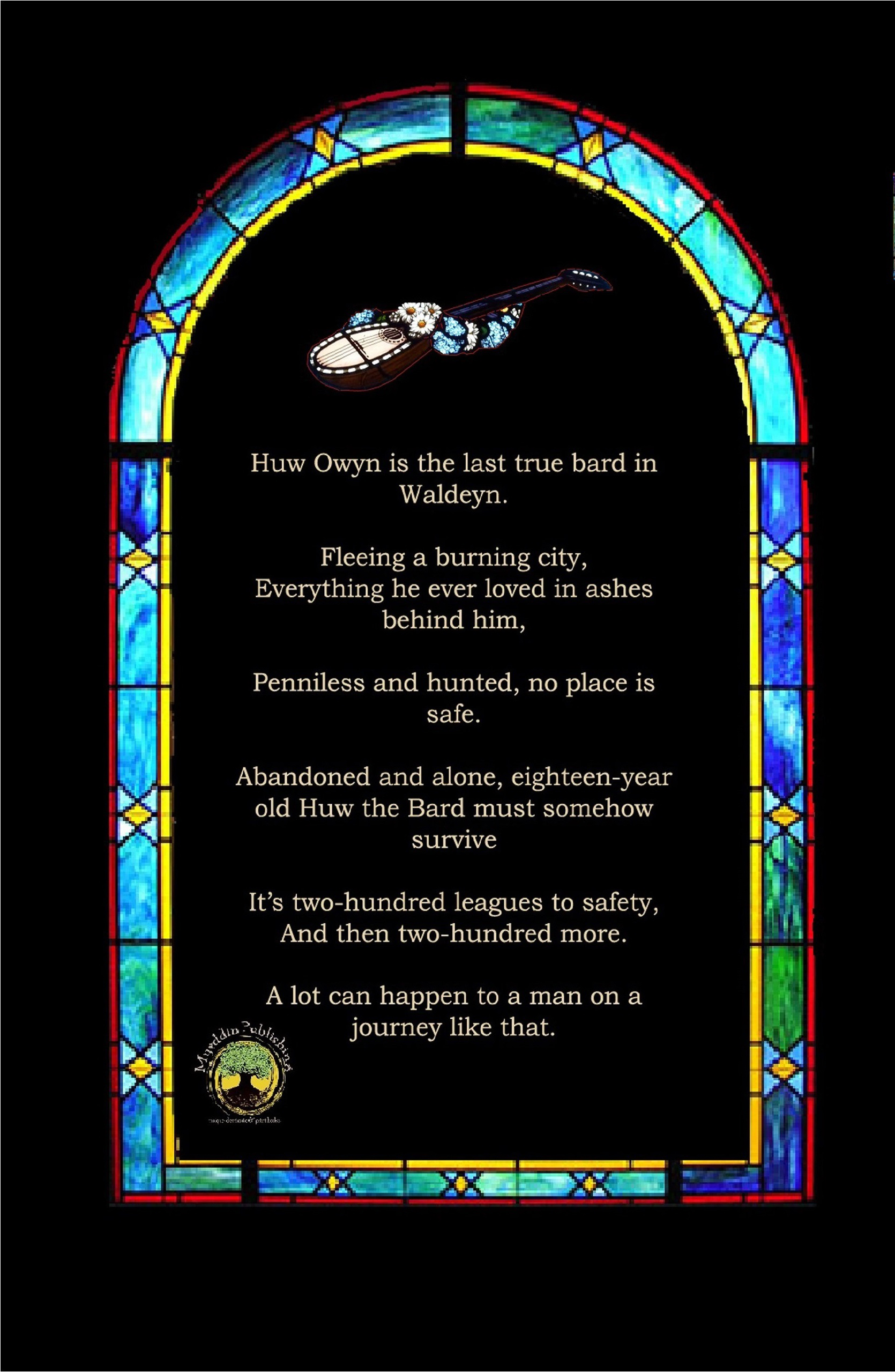
HTB New Front Cover with gold frameToday is the official launch of HUW THE BARD, a novel set in the alternate medieval world of Waldeyn.

I am doing something quite unique, for me–I am hosting a Virtual Launch Party via Facebook, complete with virtual canapes, champagne, and caviar. The link for this event is here: Huw The Bard Launch Party. Any and all are welcome to stop by and share in the revelry.

This is the hard part of going the indie route–I wrote, had it edited, got it published, and now I have to sell it. There is an art to this, I ‘m sure! Some people with moderately good books are quite successful, and others with truly great books, not so much.  Even Charles Dickens had trouble selling his work, back in the early days of publishing. In fact, most of the early authors of books we now consider classics were unheard of in their own time, except by a few intrepid readers.

So now, in this modern era of social media, I am trying to let the world know I wrote a book. I want folks who might be interested in it to be able to find it.

But I want to do this in such a way that I am not spamming my Facebook friends — because they get enough of that already without me adding to it. Hence, my launch party, open to the public and of course, my friends. How this will go, I don’t know, but I have been looking at other avenues of exposure, and now begins the (tasteful) twitter campaign. Also, many of my friends are supporting me by posting reviews, excerpts and cover reveals on their blogs, which is a huge help.

Carlie M.A. Cullen posted a lovely review.

Maria V.A. Johnson also posted a great review.

Fresh Pot of Tea, Alison DeLuca hosted the cover reveal, and posted an excerpt of the book.

So if you are available, feel free to stop on by  the Launch Party, have a virtual canape and swap a joke or two with me and my friends. I will be posting medieval music that I have come across on YouTube, and of course, we will talk about the book.

HUW THE BARD on Amazon.com

YouTube video book trailer featuring the music of Tom Cusack


Lute onBlack Background


4 Comments

Filed under Adventure, Battles, Books, Dragons, Fantasy, History, Humor, Literature, Publishing, Romance, Uncategorized, writing

HUW the BARD cover reveal


HTB New Front Cover with gold frame


HTB back cover for create space

Excerpt from ‘HUW THE BARD’ 

Copyright 2014 by Connie J. Jasperson, All Rights Reserved

Desperately Huw continued fighting despite the intense pain in his now useless left hand. Somewhere along the way, Huw noticed it was just he, Derik and Bil still fighting.

After what felt like hours, Bil got in a lucky swing and had the creature hamstrung. It lay thrashing on its side, but still the men could rarely get close enough to the beast to do any more damage. Huw stumbled across a sword, and without thinking he picked it up and threw it, hoping to hit an eye. He heaved it just as the creature opened its mouth to snap at Bil.

The sword entered the gaping maw and sank to the hilt, impaling the soft tissue in the creature’s throat. The firedrake writhed in the dirt, gagging, struggling vainly to dislodge it with his little arms. The high-pitched keening shredded the hearing of everyone in its range. At last they were able to swarm the creature, the three of them hacking at it until they succeeded in finally cutting the great head off, ending the battle.

The silence was deafening, and Huw reeled. “I don’t know about you lads, but someone else is going to have to bury this thing. I’m knackered.” The pain of his injuries rushed in, causing him to drop his sword. Huw fell to his knees, puking his guts up. The last thing he saw was the clearing slowly spinning, as he fell forward into a soft pool of darkness.

 >>><<<

Off and on all day other excerpts from ‘Huw the Bard’  will be appearing on these lovely blogs:

www.carliemacullen.com

www.deborahjayauthor.com

http://alisondeluca.blogspot.com/

www.mariavajohnson.com.

>>><<<

HUW the BARD trailer on YouTube

>>><<<

But this is not the only wonderful thing happening this week!  My novella of short stories, Tales From the Dreamtime has been made into an audiobook, and is now available at Amazon and also through iTunes. The wonderful narration was done by Craig Allen, a voice-actor of extraordinary ability. His reading brings the words to life, and working with Craig was a joy.

I have discovered audiobooks, and find them to be wonderful companions on road trips, or even to listen to as I work around my house.

This has definitely been a busy week, and Monday will be even more so, with the launch of Huw the Bard, and the ensuing madness of promoting my work.  Promotion is my weak spot–but I must get better at it. Promotion is part of the indie author’s daily routine, and I must not be lazy!

Comments Off on HUW the BARD cover reveal

Filed under Adventure, Battles, Books, Dragons, Fantasy, History, Literature, Romance, Uncategorized, writing

Name that Kid

fist_names_generatorA Facebook friend of mine whose given name is ‘Tad’ remarked that he had never liked his name, that he had always felt more like a Christopher. I can totally relate!  I was stuck with a not-too-goofy first name, Connie, which I never really liked,  but my middle name…. To this day I can’t spell it with out concentrating really hard: Lieuettice.

In a way I understand my mother’s dilemma. Good names are hard to think up! My friend, Irene, is always hammering at me to give my characters names that don’t all start with the same letters…which I wish I had thought about earlier on in the Tower of Bones series (doh).

_72982736_vikings courtesy of BBCSo lately I’ve had to resort to my handy  list of Saxon Names. Or my list of Popular Viking Baby Names.   “Come here, BRÖKK, my fine, strapping hero…put on this armor and at least look like you want to go out and wrestle a dragon….you and DAGFINNR can pillage the village when you’re done.”

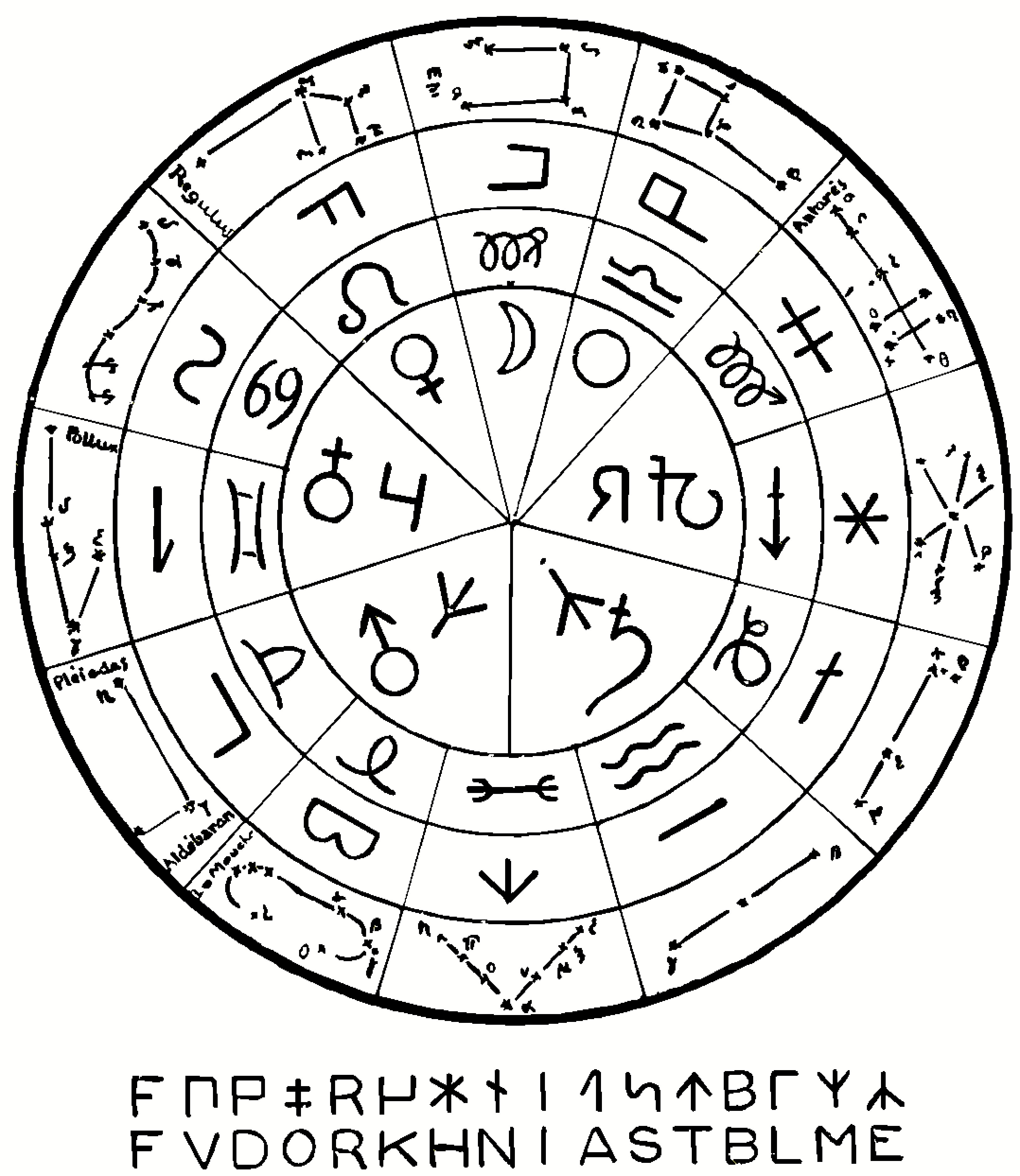
Runes001So, my dilemma in my current work in progress is that two of the female characters have names that begin with the same letter. When I began writing the series, I didn’t realize the second character would become so important in the story–and now, three books into the series, I CAN’T CHANGE HER NAME!  (bangs head on desk.)

But, instead of sitting here, wailing “Why, why why?” I suppose I should just get on with writing the story.

Note to self:  Always name your character names that begin with different letters–there are twenty-six letters in the English alphabet, for the love of Tolstoy…and if we get into the Elder Futhark we can use all those lovely runes….

names

7 Comments

Filed under Adventure, Battles, Books, Dragons, Fantasy, History, Humor, Literature, Uncategorized, writer, writing

Ode to Writer’s Block

Ode to Writers Block 

What beauty is this, that lies sleeping near my heart?

‘Tis word—and word should tumble from my pen,

Not lie locked within the chamber dark and inky.

Where hides the key to free thee from thy prison?

Oh, lovely word, spring forth from the trap that is my mind,

Set thee down upon this paper, word.

Let me hold thee, and from thee let me form the dreams,

The hopes and fantasies that fill my eyes and blind me to all but thee,

Oh word! Fill my paper with thy bounteous delight,

As you fill my head with longing,  and my wastebasket with scrap.

©2014 Connie J. Jasperson, All Rights Reserved

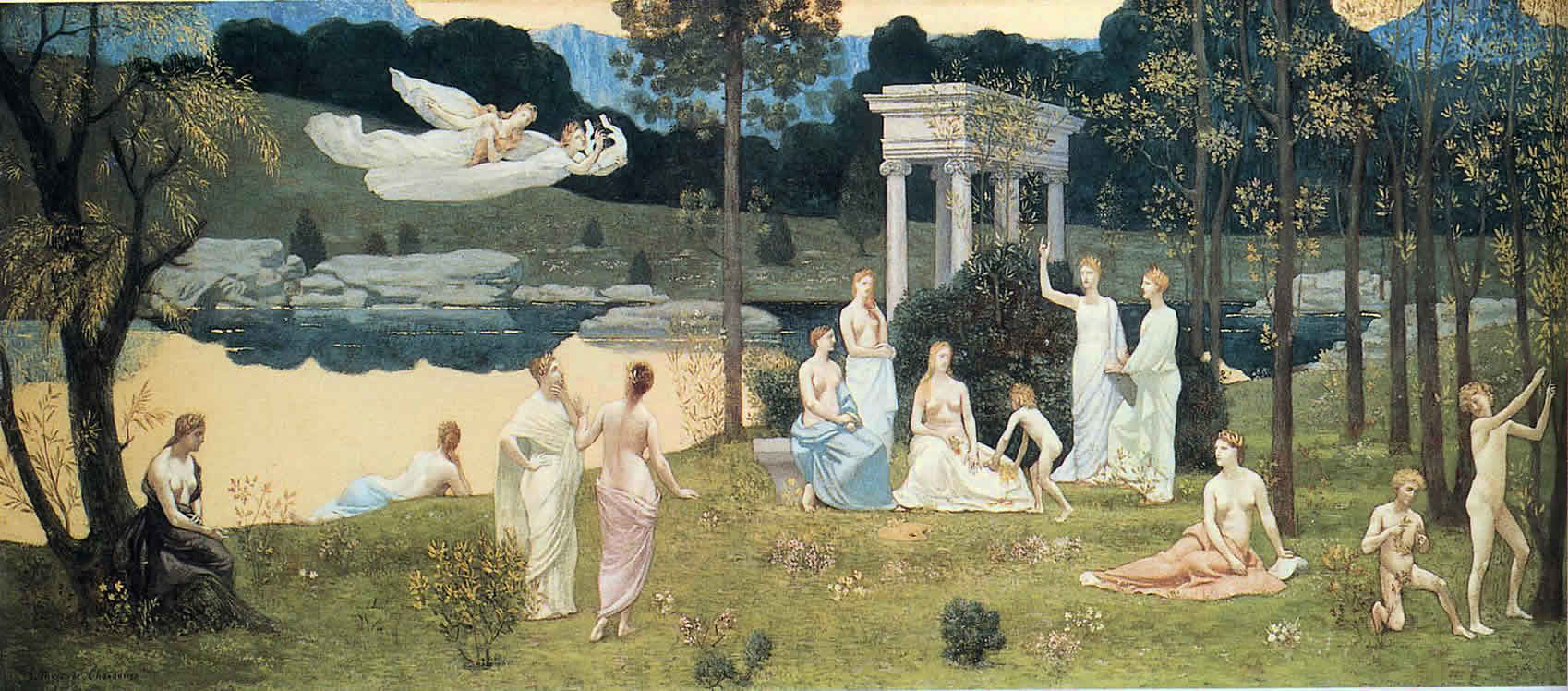
Arts and the Muses by Pierre Puvis de Chavannes, 1884-1889

Arts and the Muses by Pierre Puvis de Chavannes, 1884-1889

3 Comments

Filed under Adventure, Battles, Books, History, Humor, Uncategorized, writer