Category Archives: Humor

Journaling or Noveling

As summer ends and fall approaches, those of us who are regular NaNoWriMo writers begin to plan for our month of committed writing. We are jotting down ideas as they come to us, and making notes to help springboard ourselves into November with all our guns a blazing.

Generic-180x180People who have never heard of NaNoWriMo are always surprised that it is not only people who want to be published authors who use this month to create 50,000 word manuscripts. Family historians, dedicated diarists, people working on their PhD–anyone who wants or needs a month dedicated to getting a particular thing written will do so in November. More people do this during November than you would think–about half of our WriMos in my regional area are journaling or writing their theses. The support of the group really helps the graduate students stay focused, and it also bolsters those who are diarists and encourages them to write more about their thoughts and philosophies.

330px-Title_page_William_Shakespeare's_First_Folio_1623I’ve been asked many times what I see as the differences between journaling and noveling. (Sorry, word-nazis–I know,  I know! I just invented that word but hey, why not loosen up a bit and have a little fun with language? Willie Shakespeare did it all time!)

Anyway, journaling is keeping a diary. You do this on a daily basis, or at least frequently. According to Tiny Buddha “Journaling can help with personal growth and development. By regularly recording your thoughts you will gain insight into your behaviors and moods.” You start where you are in life at that moment, and for ten or fifteen minutes a day, you write stream of consciousness. This is an awesome way to jump-start your brain.

Noveling is telling lies, keeping them straight, and making the world believe it until the last page.  Again, William Shakespeare was awesome at this, and he put his work into the form of plays and sonnets, which were the most accessible media of the time for the common people.

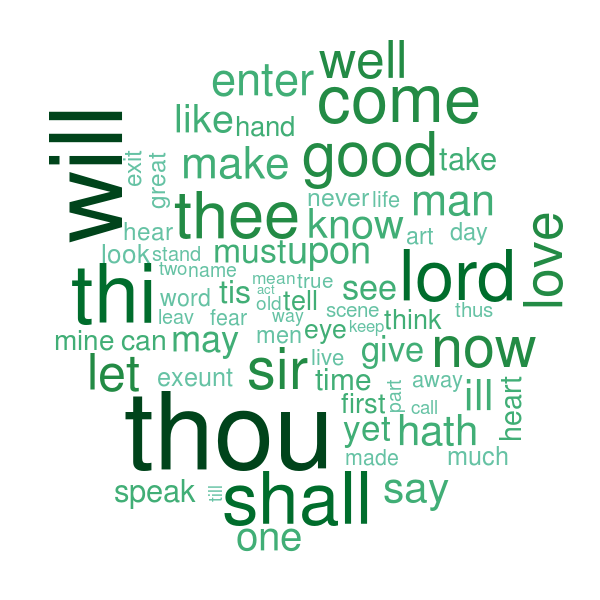
shakespeare-word-cloudHow many words did William Shakespeare invent? According to Shakespeare Online Dot Com: “The English language owes a great debt to Shakespeare. He invented over 1700 of our common words by changing nouns into verbs, changing verbs into adjectives, connecting words never before used together, adding prefixes and suffixes, and devising words wholly original. …  For a more in-depth look at Shakespeare’s coined words, please click here.”

Whether you are journaling or noveling, the important thing is to do it every day. Write for as long as you can when you can, and that will build your ‘writing’ muscles. If I dedicated 3 hours a day to just writing stream of conscious, I will chunk out 2500 to 3000 words–about half of which are mis-keyed and misspelled, but hey, no one is perfect. Some words I invent–and some words invent me, but either way, I love words.

Comments Off on Journaling or Noveling

Filed under Blogger, blogging, Books, Fantasy, History, Humor, Literature, Publishing, Self Publishing, Uncategorized, WordPress, writer, writing

Conveying the Mood

Something I’ve lately realized is that every author, even my favorite, has what I think of as ‘fall-back’ tricks they use when describing certain scenes, little quirks and twists of words that are as personal and unique as a signature. The great authors can get away with this, because their stories are just so darned compelling that we don’t notice or don’t care.

I’ve had to face it–when I, as an author, make a habit of resorting to writing my characters with excessive shrugging or sighing, it’s clear I’ve run out of ideas. I recently had a wonderful discussion with several other authors who have noticed this phenomenon in their own work. After that discussion, I found myself wondering how to maintain speed in my writing when I am in the zone, but still have a variety of words and ideas available to me for describing mood and emotion.

So–since tattoos are expensive, and my palm isn’t really large enough to contain a really good table of visual cues, I resorted to my handy-dandy Excel program, and created one there.

What I discovered while compiling this, is that my little brain is quite limited. I had to struggle to picture what these moods and emotions looked like.  Once I had the facial expression in my mind, it was easier to imagine how a character might appear to an observer.

What these cues do is help me come up with a fresh description when I want to show something that may happen frequently within a group of characters. I don’t necessarily use these cues verbatim as they are written here, but they do give my mind a jumping off point and I can extrapolate from there.

Please feel free to: right click> save as> png or jpeg and print it out for your own use.

Conveying Mood and Emotion in Writing


9 Comments

Filed under blogging, Books, Fantasy, Humor, Literature, Publishing, Self Publishing, Uncategorized, WordPress, writer, writing

Yes, but how do you really feel?

x - y chromosomesI love writing and I love my characters, but they are so stubborn about some things. Of course, many of them have ‘Y’ chromosomes, but still…. It’s frustrating because they don’t want to to talk about how they’re feeling.

Oh, for the love of Tolstoy–don’t they get it? I’m  a woman. I need you people to talk to me. Tell me what’s going on in your imaginary head.

It’s difficult to show the characters’ emotions and thought processes when it’s so much easier to just say he felt, or she was some emotion.  These thoughts and feelings are central to making our characters feel real. But describing them from a distance, as an author must do, may disconnect the reader from that character.

Sometimes, descriptions don’t allow the reader to experience the moment with the character. Instead, the author is telling them how the character feels.What we must ensure is that our readers remain immersed in the narrative, that no ‘speed-bumps’ come along to knock them out of it. Heart Search cover

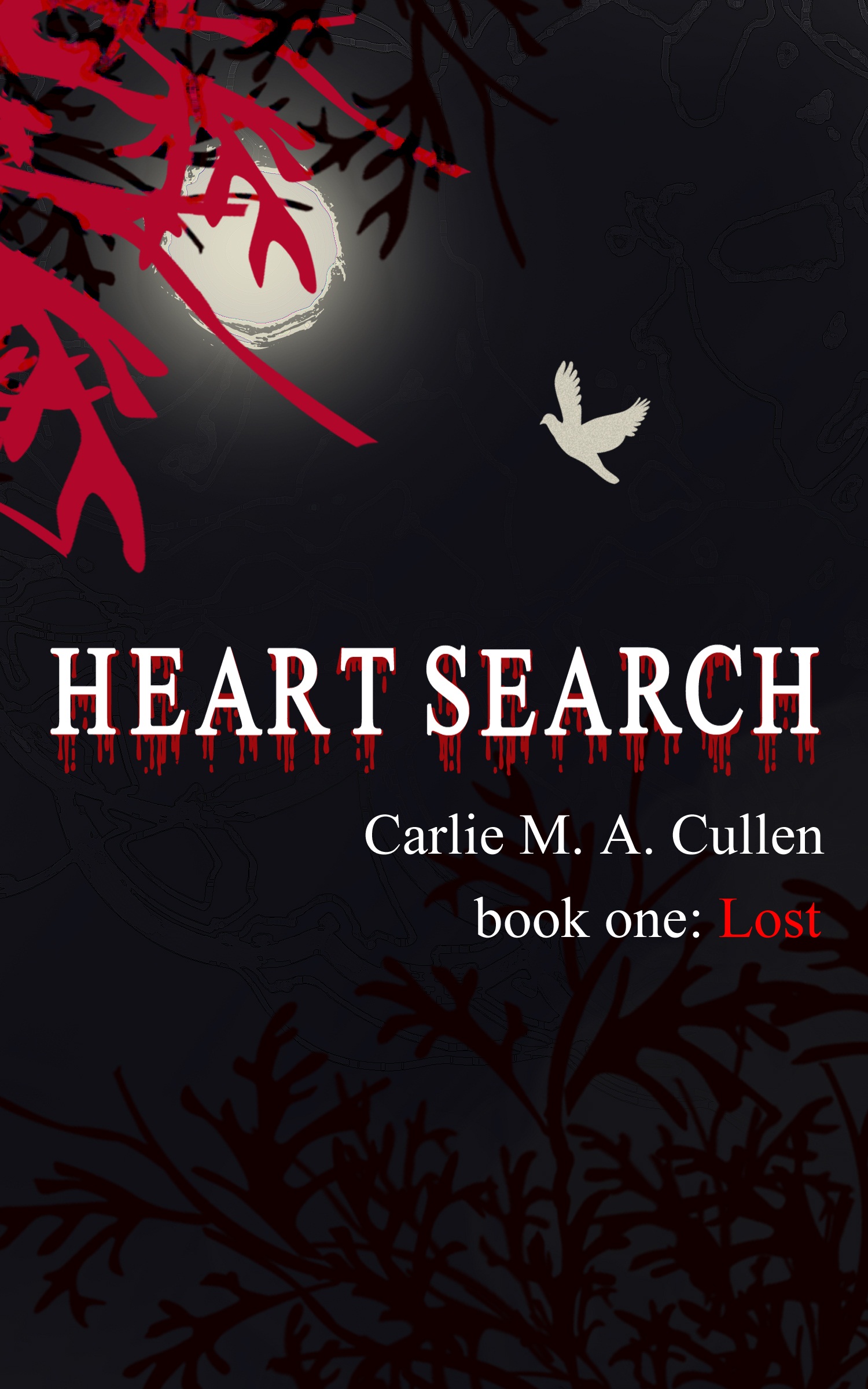
One of the best at this is Carlie M.A. Cullen, whose urban fantasy series Heart Search  featuring a coven of vampires is gaining in popularity. I think her books are so compelling because of her ability to draw a reader into the character without going over the top. So, how does she do it?

The opening line of chapter one of Heart Search Book 1, Lost reads like this: The sun, a ferocious golden orb, burnt into his skin as Joshua wandered aimlessly through the country park.

She could have just written The sun was hot and Joshua was killing time in a park.

But she didn’t, and the story is better for it–AND she showed you both the scene and Joshua’s mood in that one sentence.

So what can we learn from reading our favorite authors? We can see how they craft their tales, and we can learn those skills. Painters do this all the time, and we paint with words. 480px-Schmalz_galahad

Let’s pretend we’re writing a fantasy novel. We can go over the top, like a painting by Herbert Gustave Schmalz, or we can find a happy medium between too much and too little. There is no need to sink into overly sentimental and exaggerated pathos in order to inject feeling into our work.

Here we have a character who is on the run from a creature of some sort. 1. He was afraid. He was terrified to look back.

Example one tells the reader how the character feels. We might write this in our first draft when we are just trying to get the story out of our heads. An unskilled writer would consider it just fine the way it is, as it expresses his thoughts perfectly.

However, it tells the reader how to feel, and readers really don’t like being told what to do.

2. He wiped the sweat from his brow with a trembling hand, fear from his narrow escape coursing through his veins. Heart pounding, he leaned against the wall, listening for any sounds that shouldn’t be there before chancing a glance around the corner.

Personally, I would read book number two over book number one, because it’s more interesting and makes me want to know more about this character and his problems. We need to use physical symptoms a character might experience combined with their actions, but  we need to describe them in such a way that it is a natural part of the scene.

John slid down the wall, sitting in the mud, his breaths coming in hard, ragged gasps. Something trickled down his cheek, and wiping it, his hand came away with blood.

Another example: Theodor_Hosemann_Weinstube_1858

Lord Deccan’s fist hit the table. “Wine now, you miserable worm–or I’ll cut off your other ear!”

The one-eared innkeeper scuttled to the cellar. He quickly searched the shelves filled with dusty jars of cheap wine, settling at last on a vintage he thought might suffice.

Baldric’s guests normally drank from wooden tankards, but he knew that wouldn’t suit. There was a goblet, one he’d come by in a peculiar way, but it was a fine cup and would do well enough to stave off a tantrum of the lordly variety.

His shoulders hunched in anticipation of trouble, he approached the angry lord’s table. Setting the only goblet before the nobleman, he left the bottle and stepped away, bowing with feigned obeisance. Baldric had  survived  the  war with all but his left ear intact, and intended to remain that way.

Sir Paul McCartney, image from Rolling Stone MagazineWhat we are doing here is exactly like interpreting what our loved one is telling us, when he/she refuses to use their words. Seeing them sitting slouched in the chair, clicker in hand and numbly flipping through channels is a good indication of their mood. So we must picture the scene and describe it .

We must show the emotions as they are reflected by the physical cues our characters give us, but don’t tell them–a difficult trick to master but one we must all do if we want our work to engage the reader.

7 Comments

Filed under blogging, Fantasy, Humor, Publishing, Self Publishing, Uncategorized, WordPress, writer, writing

SomeWhen Over the Rain Clouds, Lisa M. Peppan interview

KCover-SWOtRCThe Pacific Northwest has been the home of many famous authors, Frank Herbert, Ken Kesey, Ursula K. Le Guin, and J. A. Jance among them.  There is something about the dark and the damp that encourages creativity. We have a huge community of authors, with critique groups and strong support for each other.

Recently one of my friends from Bellingham, Washington, author of historical fiction J. L. Oakley, introduced me to another friend of her’s, fantasy author Lisa M. Peppan. Lisa’s book, SomeWhen Over The Rain Clouds is an intriguing book I am currently reading on my vacation–I can’t put it down!

Here is the BLURB:

SWotRB blurb

Lisa has consented to answer a few questions about her writing process and where her book fits into the genre of fantasy.

CJJ: Tell us a little of your early life and how you began writing:

LMP: Once I got the hang of it, I became a voracious reader.  My favorite still is L. Frank Baum’s Oz books.  It’s his fault, me writing.  I tried my hand at a few short stories but it wasn’t until after reading a poorly written fantasy that I was inspired to write a better story.

CJJ: What are you currently working on?

LMP: While my cover-artist works on a cover for the sequel to “SomeWhen Over the Rain Clouds”, I’m working on a third book.  Might be a fourth, possibly a fifth.  Maybe more.  Same alternate universes and most of the same characters, all bundled together as The Geaehn Chronicles.  The Geaehn Chronicles has a Facebook page.

CJJ: Do you have a specific ‘Creative Process’ that you follow, such as outlining or do you ‘wing it’?

LMP: SomeWhen started life as 98 handwritten pages.  With a rough idea of the kind of people I wanted my characters to be, I ran astrological birth charts for them and compatibility charts for every possible combination of the four.  While mulling over potential plot complications, I wrote detailed biographies for my main characters, drafted maps, and re-read a selection of mythologies, and, well, once I knew my characters and the world I was sending them to, I wound them up and let them go.  So far, this has worked for two and half books.

CJJ: How does your work differ from others of its genre? Why do you write what you do?

LMP: In all the fantasy I’ve read, cab drivers were things that moved protagonists from Point A to Point B.  Three of my four main characters are Seattle cab drivers who recognize that they’ve become involved in a fantasy-novel-type situation; the fourth knows it’s so much more than that.   I drove a taxi cab for 11 years, did a little dispatching, and knew cab drivers were so much more than things (most of them), and wrote the kind of book I’d enjoy reading.

CJJ: I know why I chose the indie route for my work, but I’m curious as to why you’ve chosen this path.

LMP: In the Spring of 1984, on a particularly slow day as a taxi cab driver, SomeWhen Over the Rain Clouds was born.  Over the years, I got many really nice rejection slips.  Then along came a first novel contest on Amazon.  Though I shot myself in the foot for the contest (ask me why and how bad), I was among the 100 best entrants that year.  It also made me aware of that most marvelous purveyor of POD novels, CreateSpace.  When a long-published author friend went Indie, because it appeared to be the direction publishing was going, I took the plunge.

CJJ: What advice would you offer an author trying to decide whether to go indie or take the traditional path?

LMP: Most traditional brick-and-mortar publishers want to see smartly written synopses.  I tried but my best effort (to date) is 23 pages, and Indie doesn’t require one*.  Indie or traditional…?  If you write fantasy that you’ve given a truly fresh spin and you keep getting really nice rejection slips with handwritten notes saying things like, “Great premise” and “Best wishes finding a home for it!!”, go Indie.

*You won’t need the synopsis but you will want a snappy blurb for the back of the book

CJJ: Your experiences with traditional publishing rather closely mirror mine, Lisa!  Thank you for agreeing to be virtually here today, and for the insight into how your creative process works.

Here is a short excerpt of this wonderful book:

excerpt SWotRB

Intrigued?  Lisa’s book is SomeWhen Over The Rain Clouds and can be found at these fine stores — just click on the links:

www.amazon.com

Barnes & Noble

‘Like’ Lisa on Facebook

LMPeppan

Born in Seattle as the eldest of three, Lisa was a curious and adventuresome child who delighted in taking things apart to see just exactly how they worked.  It is a Testament to the Bravery of her parents that they went on to have two more children.

In 1981, after having held a number of jobs in a variety of fields, it was no real surprise to her parents or brothers when Lisa went to work as a cab driver for North End Taxi, a small mom-and-pop cab company in north Seattle.  During the summer of 1984, as a cab driver, after reading what she felt was a poorly written fantasy novel, she said, to no one in particular, “I can do better than that.”

Unplanned early retirement in 1992 gave Lisa time to learn about computers and html coding.  Armed with these new tools, she resumed her family research.  This led to a new hobby–19th century Living History–and from there she caught a glimpse of the scope and diversity of her Aboriginal heritage that spanned North America, north and south of the border.  What her father and his parents worked so very hard to hide, she works diligently to recover so the next generation will know who they are and where they came from; the time for hiding has passed.

When she isn’t reading, writing, researching, or playing in the past, Lisa enjoys quiet moments in the mountains, ferryboat rides on Puget Sound in November, windy days on any beach, hairy chests on men, rare steaks, and purple roses.

Lisa can be contacted at lisapeppan at gmail dot com

Comments Off on SomeWhen Over the Rain Clouds, Lisa M. Peppan interview

Filed under Adventure, blogging, Books, Fantasy, Humor, Literature, Publishing, Self Publishing, Uncategorized, WordPress, writer, writing

Don’t dump it-deploy it

CAUTION INFO DUMP ZONE AHEADMost of my work takes place in  a world I invented, right down to the religion. Because my world is very different, whenever I sit down to write, I have the most incredible urge to spew background information. I want my reader to understand the world I’ve created, so I want to give them information. Lot’s and lots of information. OMG, do I have information for you.

But is the information for you as the reader, or for me as the author? There you have it–writing it down cements the world in my head.  Now my info-dumps are cut and kept in a file that contains all my background information. I need that info to write the story, but the reader only needs enough bare bones to fire his imagination.

So how shall I do this? A prologue? Well, I’m leaning away from prologues nowadays, although it can be done–David Eddings did it really well in The Belgariad, and Anne McCaffrey also did in her Pern novels. In some cases a prologue sets the stage. But in online writing groups  I frequently  see that a large number of folks don’t bother to read prologues, preferring to get directly to the story. If folks aren’t going to bother reading it, why should I waste my time writing it?

The key to describing the fantasy setting and the social structure of that world is to let the story do it naturally. Deploy the info in small increments as the characters go through their daily life.

Let’s pretend we’re writing a detective novel:

Joe Stone stood, illuminated by the harsh light of the fridge, staring at the six-pack of beer that represented the sum total of his groceries. Grabbing one, he twisted the cap off, and took a long, desperately needed pull.

dump no infoA sour smell rose from his sink as he peered through the broken blinds, more concerned with the dead body in his rundown tool shed than the shabby state of his kitchen. He wondered who the stiff was, and how the dead man pertained to the divorce case he was investigating.

Most importantly, he wondered how he could avoid taking the rap for it.

That he was being deliberately set up was a given, but by who? Pulling his phone  from his pocket, Joe scrolled through his contacts. He had one last friendly ear at the police department, his old partner, Mike Copper. The question was, would Mike believe him or would he leap to the conclusion that Joe had snapped again? 

So, now you have a picture of Joe Stone. He’s probably single,  a private investigator, his home is in disrepair, his empty fridge tells us doesn’t eat at home very often, and he may drink more than is good for him.

Joe is an ex cop, possibly fired for use of excessive force, as he fears he has only one sympathetic ear there. He’s involved in a nasty private investigation, the corpse in the shed tells us that.

TRUST YOUR READERThere’s no need for an info dump to aid the reader in forming a picture of Joe. All that information was deployed by his actions, and while reading the events of the next 72 hours, more snippets will come out, and this complicated man and his world will become more clear to the reader.

Settings make no difference. Writing fantasy novels is the same thing as writing novels set in the real world. Assume your world is real and slip the info in the natural places.

Belnek knelt by the low fire in front of his hut, pulling the turnips out of the coals, brushing the burnt flakes away. His mouth watered, and he wished there had been meat to roast, but once again, when he checked his snares, they had been empty.

Realizing what he had just thought, he gasped,  fearing the god would interpret his thoughts as ingratitude and would make the harvest scant too. He raised his eyes to the east where the shining towers of the gods were said to be. Closing his eyes he, said a prayer to Osin, thanking him for the turnips, asking his blessing on the meal.

Book- onstruction-signNow you see a man who is not rich, but who has a hut and a fire, and has turnips to roast. Prayers come as naturally to him as breathing–he is a devout man, sure his god is all-knowing, and concerned that he is seen as a devoted, grateful man. His snares are apparently empty quite often, so game has become scarce, and it concerns him.

We have the basics of his world, low-tech, agrarian. In that small scene, intimate details of Belnek’s life is shown and in that way the reader has enough info to begin to picture the world outside Belnek’s hut. There is no need to dump a huge amount of information, because it will come out as his story unfolds.

For me the real trick is to rein it in, because I love every last little detail about my imaginary worlds. But that doesn’t mean my readers will love them. Most readers only need the skeleton of the world so that they can visualize it themselves. The hard part is finding that magic moment where you have given them exactly the right amount of details to involve the reader, but not so much they become bored.

Listen to your beta readers, and make adjustments accordingly. If they feel they can be honest with you, they will point out where you need to tighten the narrative, or expand a bit more on the details.


4 Comments

Filed under blogging, Books, Fantasy, Humor, Literature, Publishing, Self Publishing, Uncategorized, WordPress, writer, writing

My Writing Toolbox

xcg65LacAApparently, I think visually. Actually, I come from a family who, while we are quite verbal, all tend to think visually.

We are musicians, artists, engineers and authors. These are occupations where we create images and think in terms of a whole picture.

I recently read an article, written by Gerald Grow of the School of Journalism at Florida A&M University in Tallahassee. I was intrigued by his theory on how the type of thinker we are influences the way we write. He says, “Visual thinking produces whole, patterned expressions such as maps, symbols, and pictures. Verbal activity leads to sequences such as narratives and explanations.”  He goes on to say that visual thinkers tend to write briefly-evoked scenes about one another with little connective explanation. I don’t necessarily agree with him, but it’s a good topic to ponder.

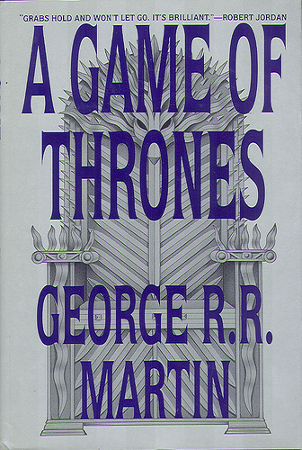
AGameOfThronesIndeed, a lot of what I read in genre fiction is written in 30-second sound-bytes, and it is because 3 generations of our society have become dependent on visual entertainment delivered in short segments–small pictures if you will. Reading is not as popular as it was, since many people think it’s much less work to watch A Game of Thrones than it is to read it.

I disagree–getting lost in a great book is not work at all! That reminds me, I should probably read that book. I own it, I started reading it in 1996, but had a hard time following the way it jumped around. I put it aside and never got back to it. But now I’m curious as to why folks are so crazy for it.

Anyway—

Gerald Grow also writes, “Since everything tends to happens at once and in present time to visual thinkers, they tend to choose static verbs, the passive voice, and heavily depend on forms of the verb ‘to be.’” 

When we first start out in this craft  we tend to write weak sentences. This is because we are approaching it from the point of view of the story-teller. We sit down and tell the story, and that is quite verbal when you think about it. I think it has more to do with lack of experience than how a brain visualizes, because we all seem to start out that way.

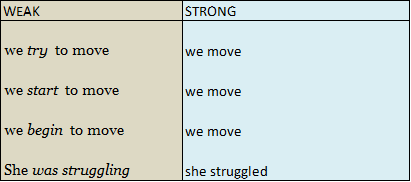
Weak narrative happens when, as story-tellers, we are separated from the moment by words that block our intimacy with the action:

wak vs strong table

Many of us do not have an education in journalism, and yet we choose to write. As we grow in the craft, if we want our work to be enjoyed by many people, we train ourselves to craft stronger sentences.

We write short stories, and send them off. Sometimes they are rejected, and sometimes not. We write longer short stories, novellas. We write novels, sometimes with WAY too many words. Our writing groups give us support and good, honest critiques. We know they will not tell us our work is awesome, if it stinks like Bubba’s socks.

They may tear it apart. But we grow from this experience. We learn that opinions are subjective, and writers are opinionated prima donnas–and we will do anything to never have that experience again.

Learning the craft of writing  is like learning the craft of carpentry–if you want to craft beautiful work, you must choose to learn what the proper tools for the job are and how to use them. My toolbox contains:

  1. MS Word
  2. The Chicago Manual of Style
  3. The Oxford A-Z of Grammar & Punctuation
  4. The Olympia Writers Co-Op
  5. NaNoWriMo Write-Ins
  6. Trusted, knowledgeable beta-readers
  7. Good, well recommended editors
  8. online writing classes
  9. regularly attending seminars
  10. reading in my genre

nano_12_new_Come_Write_In_Logo1What is in your toolbox? You might be surprised at just what you have acquired in the line of tools for advancing in this craft. Whether you are a visual thinker or a verbal thinker, you have the ability to express your ideas.

It takes a lot of work to rise from apprentice to journeyman to master in any craft. I don’t know if I will ever achieve that status as an author, but I will keep working and learning. and above all, I will keep reading.


5 Comments

Filed under blogging, Books, Fantasy, Humor, Literature, Publishing, Self Publishing, WordPress, writer, writing

On Motivation

Periodically I get so far off track that I have to completely scrap the mess I am working on.  It’s as if I began writing one book, but somewhere along the line it becomes another.

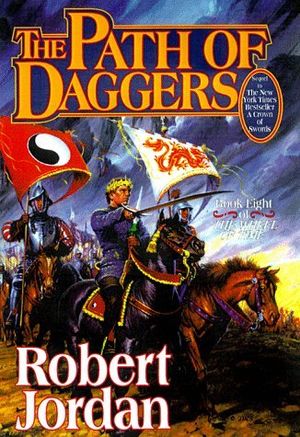
300px-WoT08_ThePathOfDaggersOne of the worst, most divergent messes I have created as a writer occurred early on in my current work-in-progress. I was  apparently channeling Robert Jordan. (The Path of Daggers) (Sorry, Wheel of Time fans–I had to say it. I loved the series overall, but he lost us there. It’s okay to admit it.)

I became so completely sidetracked by the stories of my random squirrels…er…side characters…that I completely lost track of the character whose story I had begun writing. I wrote well over 200,000 words that did not advance that story.

I got so lost that I had to rein it in somehow. I’m not Robert Jordan, so there’s no way folks are going to stick with me while I meander through 15 books in the trilogy.

I shelved that MS, re-titled it  Junk for my next book,  and started all over again, this time with an outline. But all is not lost–I have 3 books worth of material for later, and it was a good exercise in how NOT to write a novel.

What originally got me going off in so many directions  was the search for one particular character’s motivation. WHY does he behave the way he does?   I wasn’t sure how to go about it, and I began by writing a backstory that I knew would never make it into the book. It was intended to show me who this person is, and what motivates him, but it got out of hand rather quickly.

In a workshop I attended at a recent convention,indie author  Lindsay Schopfer boiled character motivation down to one  simple thing: Need. Every action by a character must be motivated by some need.

Well, it sounds simple, enough, but it really can be complicated. After Lindsay’s talk, it occurred to me that I had gone about it the hard way. The simplest way would be to graph it out, and the internet is rife with all sorts of inspirational thingys of this nature, but I’m a rebel. I gotta do it my own way.

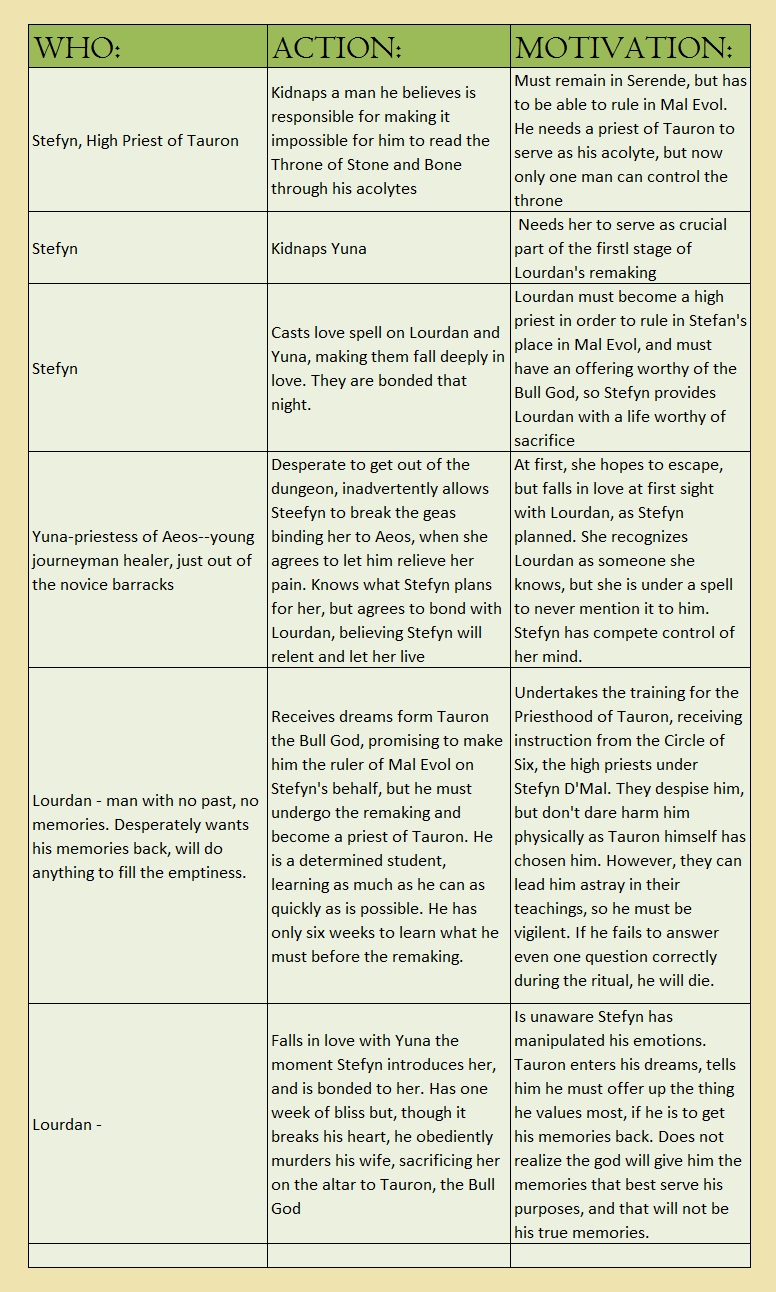
SO–I was a bookkeeper for years–I fired up Excel, and made me a handy-dandy Motivational Chart, where I identified the characters, what their action was, and what motivated that action.

What does a character need? Well, what do real people need?  The basics are  food, shelter, and garments. Once they have those items, they may need transportation, they may need entertainment. They need companionship. They need spirituality, or love, or sex. Once we identify what a character needs, we need to know how far they are willing to go to acquire it.

The lengths they will go to achieve their goal is the real story

This is one section of the long chart:

motvation table

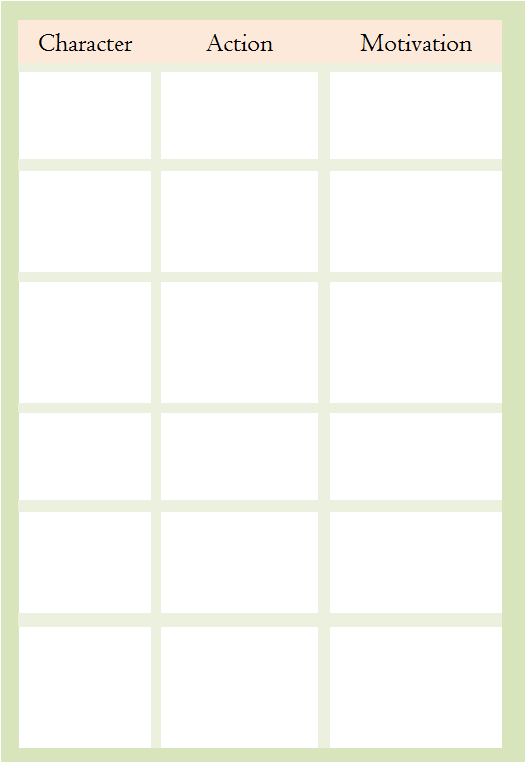
Now, you don’t have to be able to use MS Excel to make your own motivational chart. Get your ruler out, and block off sections on a standard sheet of paper. If you don’t have a ruler, use the straight side of something long, like a foil-box or a plastic-wrap box.  The point is, you want to tame the chaos on one horizontal tier of a grid:

character –>his actions –> and why he did it (his motivations.)

motivation table - blank

In the process of doing that you may find yourself ironing out some plot wrinkles, as I did. I am a linear thinker–so I need to have my characters as clear to me as if they were my dearest friends. For me, that means I will make a chart from now on, rather than wasting time writing words to nowhere.

After I did this, I wrote 25,000 words that launched the real story. Charting my character’s motivations works well for me.  I will be story-boarding my work in this fashion in the future.


5 Comments

Filed under Battles, Books, Fantasy, Humor, Literature, Publishing, Self Publishing, Uncategorized, writer, writing

The Flâneur ~ the 4th POV

In a literary fiction seminar  I attended at a recent convention in Seattle, University of Washington  professor, Scott Driscoll, discussed  a fourth point of view I had heard of in college, that of the detached observer.  I had forgotten about it, and Driscoll gave it a name I’d never heard of: the Flâneur (idler, lounger, loiterer.) Many of you have heard of it as third-person objective or third-person dramatic. I see it as a completely separate way to show a story.

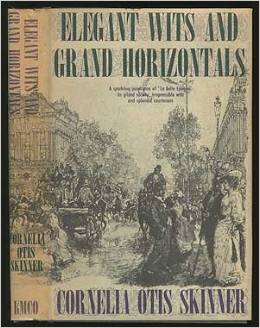
elegat wits and grand horizontalsWriting in 1962, Cornelia Otis Skinner said that there is no English equivalent of the term,  flâneur,  “just as there is no Anglo-Saxon counterpart of that essentially Gallic individual, the deliberately aimless pedestrian, unencumbered by any obligation or sense of urgency, who, being French and therefore frugal, wastes nothing, including his time which he spends with the leisurely discrimination of a gourmet, savoring the multiple flavors of his city”.

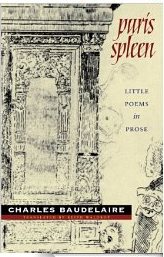
paris spleenThe French author, Charles  Baudelaire, characterized the flâneur as a “gentleman stroller of city streets.” He saw the flâneur as having a key role in understanding, participating in and portraying the city. Thus, in the narrative, a flâneur plays a double role by existing  as a present, but ignored, member of society who remains a detached observer of all that occurs within the story.

Having the option to use this point of view in the narrative of genre fiction opens up many possibilities for originality an author may not have considered:

  • he is NOT omniscient as in having complete or unlimited knowledge, awareness, or understanding of the fictional universe–he doesn’t know everything–but he does know what he sees.
  • he sees more than the individual characters do because his random travels take him all over town regularly, and he observes most of the tale as it unfolds.
  • Because he only knows what he sees, some information crucial to the resolution of the final events will be revealed to him at the last minute–a surprise to him too. When the last pieces of the puzzle are put together, his commentary summarizes the fall-out and final outcome of the characters involved.

Men without WomenIt is a POV used in classic french modernist literature to describe the story of certain social scenes in the city, but I can see this as a useful way to relate the events on a space-station, or indeed in many traditional genre fiction social settings.

Now for the downside of using the flâneur as your vehicle to convey your narrative:

  • He is not reliable—he has his own personality, offering subtle judgments and unconscious opinions on the behavior of the characters. Therefore, just as in a first-person narrative, the reader cannot be sure he is telling the unbiased truth.
  • The narrator  tells the story without describing any of the character’s thoughts, opinions, or feelings; so the reader can only guess at character motivations, and must assume the objective observer truly is objective and has told the truth in that regard.
  • It separates the reader from the intimacy of the action and slows the pace down.
  • It could become voyeuristic, if one writes graphic love scenes. {eeew.}

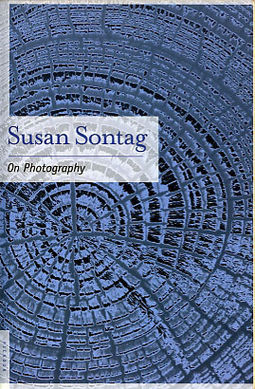
255px-On_PhotographyThe POV of a flâneur is also a vehicle used in in art, and in street photography.  Susan Sontag in her 1977 collection of essays, On Photographydescribes how, since the development of hand-held cameras in the early 20th century, the camera has become the tool of the flâneur:

The photographer is an armed version of the solitary walker reconnoitering, stalking, cruising the urban inferno, the voyeuristic stroller who discovers the city as a landscape of voluptuous extremes. Adept of the joys of watching, connoisseur of empathy, the flâneur finds the world “picturesque.”

Susan SontagOn Photography, pg. 55

I don’t see myself using this style of POV for an entire novel, but I can think of a thousand ways to use it in short-stories. Come November, when NaNoWriMo begins, I may give it a whirl, just for practice. Writing is a craft and I love finding different ways to express it. A fresh point of view to write from can only stretch my writing skills.

4 Comments

Filed under Blogger, Books, Fantasy, History, Humor, Literature, Publishing, Self Publishing, Uncategorized, WordPress, writer, writing

Crafting the scene

I often sit and stare out the window at some point or another during the day–a habit perhaps from the old days of being an ADD kid imprisoned in the basement classrooms of the old Michael T. Simmons Elementary school in 1965. Although that building has been long ago torn down and a new one now serves the community, I still remember sitting in Mrs. White’s overcrowded classroom, staring up at the small window, unable to concentrate on anything but the blue sky outside.  She was my favorite teacher, because she knew I needed extra help with math, and in a class with 42 children, she found the time to give it to me.

Amaranthus and Savvy at the needles by haystack rock cannon beach 2012I still stare out my windows when I am rolling a plot point over in my mind, and I sometimes notice what is happening in the neighborhood.  The window is closed, so I can’t hear their words, but I often see the children.

At first it looks as if they are all happily playing.  Then two of them stand up and from their posture you can see a quarrel is brewing. Suddenly one of them  clouts the other on the head with a toy sword, and another child intervenes. The angry child leaves, and the others are left to console the sobbing child with the bump on his head.

We know that what we have witnessed is not the whole story–there is a whole novel surrounding that interaction. If what I witnessed from my window was a book, this event would read this way:

1. Deciding to meet and spending the day playing in the neighbor’s yard is a chapter in the much larger story of how a group of children in one neighborhood spent their summer

2. The quarrel and resulting bump on the head with the final moments of consolation are one complete scene within that chapter, setting the stage for the next scene–tattling on and achieving penalties for the aggressor, who then apologizes and seeks acceptance back into the group. These two separate scenes comprise the whole chapter, Playing at So-and-So’s Yard.

The Arc of the StoryMost authors understand that there is an arc to the overall novel–the Story Arc,  which  consists of :

  • a. Exposition, where we introduce our characters and their situation.
  • b. Rising Action, where we introduce complications for the protagonist
  • c. Climax, the high point of the action, the turning point of the narrative
  • d. Falling Action, the regrouping and unfolding of events that will lead to the conclusion
  • e. Resolution, in which the problems encountered by the protagonist are resolved, providing closure for the reader.

However, within the larger story there are many smaller stories, all scenes created with this same arc, that come together to create this all-encompassing drama. The way these scenes unfold is what keeps our readers interested and invested in the narrative until the end of the book.

The main difference in the arc of the scene vs the overall arc of the novel is this: the end of the scene is the platform from which your next scene launches. 

This means each scene begins at a slightly higher point on the novel’s Narrative Arc than the previous scene did, pushing the narrative toward the climax.

876MilanoDuomoWhen you are structuring your novel, think of the way Gothic Cathedrals are constructed–smaller arcs of stone support the larger arcs until you have a structure that can withstand the centuries.

Like a Gothic cathedral, each small arc of the scene  builds and strengthens the overall arc of the greater novel. By creating small arcs in each scene, we offer the reader the chance to experience the rise and fall of tension, a pulse which never completely falls but is always increasing toward the high point of the book, giving the reader small rewards of emotional satisfaction along the way to the big event, the grand climax.

Better You Go Home, Scott DriscollAt the Pacific Northwest Writers Association Conference this last weekend, I went to a presentation by University of Washington Professor Scott Driscoll, who is a highly acclaimed author of literary fiction. His book, Better You Go Home is a gripping tale of a man in search of his roots and something more. Scott spoke at length on the importance of creating an arc within each scene, small arcs that propel the plot forward and hook the interest of the reader. In Scott’s work, each scene sets that hook just a little bit deeper.

Some authors make each individual scene a chapter, and some group several scenes with a common theme together to create a chapter. It’s your book–do it however suits you best.

The important thing to remember is that each scene that comprises the framework of the overall narrative arc must have its own arc–the Arc of the Scene.


4 Comments

Filed under blogging, Books, Fantasy, Humor, Literature, Publishing, Self Publishing, Uncategorized, WordPress, writer, writing

Kicking off the annual PNWA writers conference

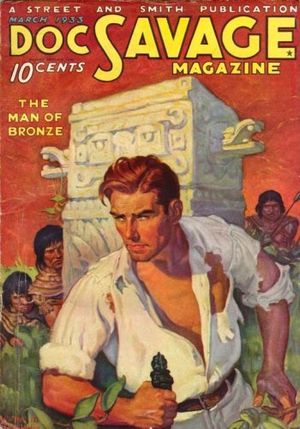
300px-DocsavageWell it’s that time of the year again–today is the first day of the Pacific Northwest Writers Association Conference, held in Seattle, Washington. I’m a proud member of PNWA, and find incredible inspiration at these conventions. This year’s keynote speaker is James Rollins, the well-known master of magic, mayhem, and monsters.  According to Wikipedia, the fount of all knowledge,  “Rollins found the authors of the Doc Savage series inspirational as a youth and acquired an extensive collection of the popular 1930′s and 1940′s pulp magazine stories.”

Quite frankly, I too adored Doc Savage, and discovering that another author was influenced by that wonderful, lurid, misogynistic series is quite a treat.  I’m looking forward to hearing him speak tonight.

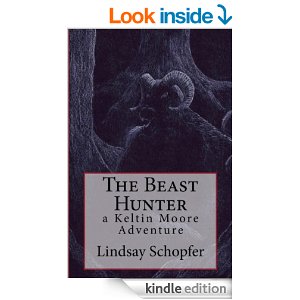
Another person whose seminar I am looking forward to will be given by Lindsay Schopfer, author of The Beast Hunter. He will be talking on the subject of unlocking character motivation, and I am quite interested in hearing what he has to say on the subject, as he is an accomplished author, and his characters leap off the page.

The Beast Hunter, Lindsay SchopferIt’s one thing to understand the mechanics of writing, the nuts and bolts of how to put together a coherent sentence and join it together with other sentences to make paragraphs. Most writers can do that. It’s quite another thing to write paragraphs that become stories other people will want to read.  Attending writers conferences and seminars gives me insight into how successful authors whom I’ve admired over the years think, and helps me stay fired up about my own work.

I will reconnect with many local northwest authors who I’ve become friends with over the years, and of course I’ll be connecting with agents and editors from all over the country.  This is a huge opportunity for me to absorb the mojo that happens whenever writers gather to talk shop. My next blog post will cover the events and hilarity of this one.

Jake RansomLast year I did learn one important thing–even the Hilton doesn’t have a clue when it comes to providing decent vegan entrees, no matter how the conference organizers claim they will offer them. Rather than starve as I did last year, this year I am commuting from home and bringing my own sack-lunch with plenty of snacks. It’s a bit of a drive, a little over 1 hour each way, but if the dinners provided are less than adequate, I’ll survive.

Today’s lunch will be an avocado, lettuce and tomato sandwich on whole-wheat. ♥  It doesn’t get any better than that!

Comments Off on Kicking off the annual PNWA writers conference

Filed under Adventure, Battles, Books, Humor, Publishing, Self Publishing, Uncategorized, Vegan, WordPress, writer, writing