Category Archives: Humor

What I #amwriting

Alarm clock quote ray bradburyI normally begin my day at about 5:30 a.m. with editing for my clients–I like to do that when I am at my sharpest which is always in the morning.  I spend the afternoons writing, and right now I have two manuscripts that I am working on, and several short-stories. My evenings I either write blog posts or work on designing book covers.

Other than writing, most of my work these days centers around finishing up publishing the second editions of the Tower of Bones Series. The book itself, Tower of Bones, has been republished, and book II in the series, Forbidden Road, is in the process of being proofed and should be available soon–hopefully within two weeks.

In addition to revamping the TOB series, I hope to have the prequel to the series, a stand-alone novel, Mountains of the Moon, published by July 15, 2015, with a few copies to take to the PNWA conference. That means it has to be finished and ready to proof by June 25–which may be pushing it. However, things are moving so perhaps I will be able to meet this new deadline.

As I said, I have two novels in the works: concurrently with The Wayward Son, I am fleshing out the final book of the Tower of Bones series, Valley of Sorrows. This book deals with the aftermath of the events in Forbidden Road and winds up that story.
The road to hell Phillip Roth QuoteIn the aftermath of an incident that occurred in the last days of the war in Mal Evol, John lost the use of most of his magic. He has managed to keep that disability a secret for thirty years. The Wayward Son is the story of John’s redemption, and explains the events that happened in Aeoven while Edwin and the others were gone. These incidents culminated in John and Garran being sent to meet Edwin in Braden at the end of Forbidden Road. 

John Farmer’s story is intriguing to me, because he is a man concealing many secrets. A lot is going on under the surface–he suffers from survivor’s guilt and PTSD, which often develops after a person is exposed to one or more traumatic events. In The Wayward Son, John’s rocky relationship with Garran is explored, and also his love affair with the Abbess of Aeoven, Halee.

While I was re-editing the series to date, I took the liberty of changing several once-minor characters’ names, as they had suddenly become important in the two later books, and their names were too close to other, already prominent, characters’ names. Since I was changing them anyway, I made them widely different. Thus Marta Randsdottir is now Halee Randsdottir. Her original name was nearly identical to Edwin’s wife, Marya, a problem since the two women figure prominently in The Wayward Son.

The problem was inadvertently begun in 2009 when I was writing Tower of Bones as the story-line and walk-through for an RPG, and was scrounging around for good character names. I didn’t know at that time it would become a book, and it didn’t occur to me that NEVER naming any character with a similar sounding, looking, or rhyming name is something every author should take note of. This is important, no matter how minor the characters seem to be, because, just like Halee, they may have a larger part to play later and the confusion will ruin the story.

The magnitude of the problem first became evident when I was writing Forbidden Road, but I thought I was stuck with it. Referencing the two women in the same paragraph was dreadfully confusing, since their names were only one letter off from each other.

ok to write garbage quote c j cherryhFor a long time, I didn’t know what to do about the name problem. I thought I was stuck with it, but one of the beauties of being an indie is the freedom I have to make adjustments when a gross error is discovered. Since I was completely revamping the series anyway, it was the perfect time to take the plunge and rectify that mistake. The series now has new maps, new interiors, and new covers.

It was just another lesson I’ve learned since leaping into this mad circus of indie publishing, but now I know to never name two characters in the same book with names that begin and end with the same letters. Don’t do it!
 

Comments Off on What I #amwriting

Filed under Adventure, Battles, Books, Fantasy, Humor, Literature, Publishing, Self Publishing, Uncategorized, writer, writing

When this job becomes work: the book signing event

SUPPORT YOUR LOCAL AUTHORSI must admit, I am not really a people person. I’m a bit awkward, and not really sure of myself, and I have a sense of humor that is too off-the-wall for most people. That is one reason why being an author is such a good fit for me–I can work from home and most of my interactions are imaginary.

Nevertheless, there are times when I must put on the public persona of the Successful Author. I’m not really that good at this one-on-one public thing…yet. I’ve had the good fortune to be involved in multi-author events with other indie authors, with more experience at it, and I’ve been able to see how they approach the gig.

It’s tricky–you can’t just assault people, shouting “Buy my book!”

Walking the line between being obnoxious, and telling people what they want to know about the book is tricky. The minute someone asks me what Huw the Bard is all about, my mind grinds to a halt. It’s almost like I never even read it, although I do remember writing it.

My first public event was last month at NorWesCon, and that was interesting because I was a vendor, so I was there all four days, but in the vendors’ room. For me, that was a tee-shirt-and-jeans event, because I don’t own any costumes, or ren-fair clothes (yet).

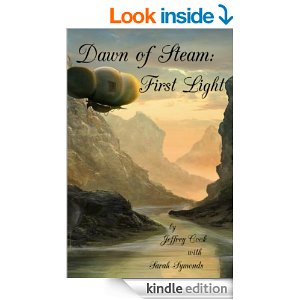
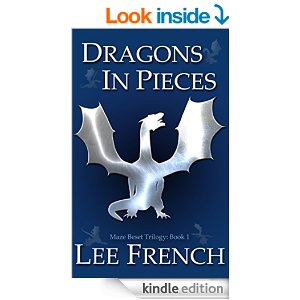
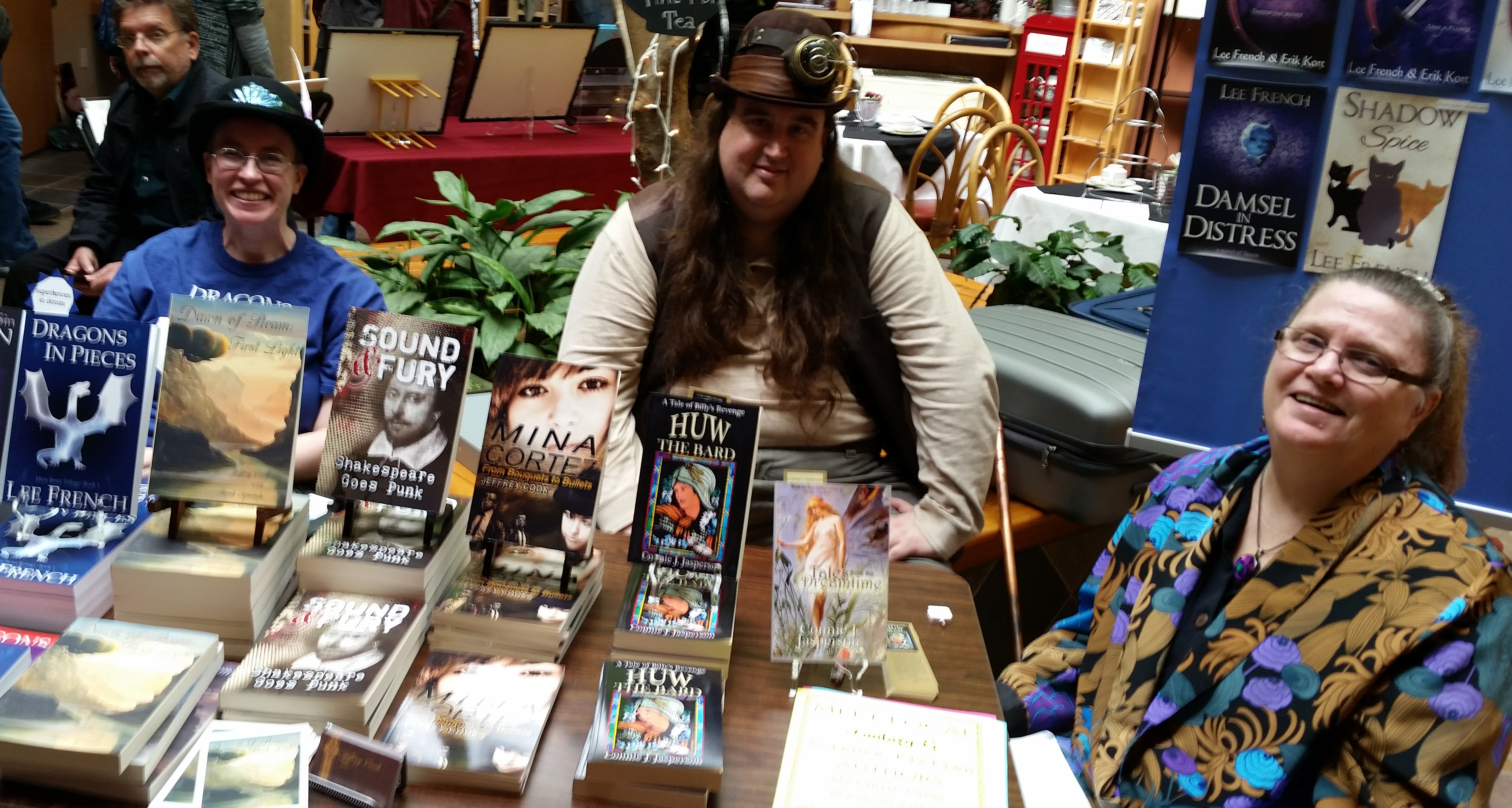
My second public event was this last Saturday. Two other local indies, fantasy author Lee French, and steampunk author Jeffrey Cook joined me at the Two Sister’s Tea Room in downtown Olympia for a book signing. This was a very different situation, and was much more pleasant. This signing was timed for the middle of one of the largest festivals in the the city, the annual Procession of the Species, so we had many people stopping and conversing with us.

Dawn of Steam First LightSeveral people really stand out in my mind–I was moved to tears by one lady from Hawaii who bought Dawn of Steam, First Light, from Jeffrey.  She said she was a new reader, that she had come from a place where reading was not encouraged. She also said she was currently enjoying Charles Dickens’ classic novel,  The Pickwick Papers. I was awed by the absolute joy she took in the written word as she looked through Jeffrey’s book, and by how happy it made her that he signed it for her.

It was really brought home to me then that reading is still a privilege denied to many people of the world, often not by their wish, but by circumstances beyond their control.

dragons in pieces lee frenchThen there was the wonderful character who was absolutely crazy for dragons. He not only bought Lee’s book, Dragons in Pieces, but insisted on buying one of the little plastic Dragon heads she had created with her 3-d printer as decorations.

Lee was selling books like she owned the only snocone stand in the desert.

I wasn’t, but I had a great time anyway, and handed out a lot of book marks.

From left: Lee French, Jeffrey Cook, Connie Jasperson

From left: Lee French, Jeffrey Cook, Connie Jasperson

For that event, I went all out clothing-wise. I went to the Goodwill and shopped the fat-lady rack on senior citizens’ half-price day, and found what seemed like the perfect, brilliantly-garish, machine-washable, fancy-label jacket to wear with my rather boring black blouse and black trousers. It was only about twenty years out of style, and was the perfect price for my tapped out pocket-book: $3.99, with my old-peoples’ discount.

I am still looking for the right event-outfits. I want something a little wonderful, but with not quite as much purple as the flashy jacket. I love purple, but as an accent color.

Our next event is in three weeks, so that gives me a lot of time to find something suitable for the comfy grandma who writes RPG game-based hack-and-slash epic adventures, and also sometimes writes literary fantasy.

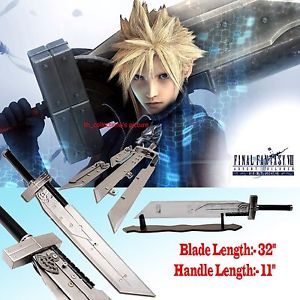
Maybe what I need is a green velvet renaissance faire dress, with Cloud’s buster-sword from Final Fantasy VII in a shoulder scabbard. That  should get my style of writing across well enough.

cloud strife and buster blade


2 Comments

Filed under Adventure, Battles, Books, Fantasy, Humor, Literature, Publishing, Uncategorized, writer, writing

The Gormenghast Novels

Gormenghast trilogyOne of the strangest, most compelling series of books I ever read was the literary, yet still fantastic, Gormenghast series of novels, written by the late Mervyn Peake during the years following WWII.

It has been said of this series that it is the the first true fantasy of manners.

Satirizing the manners and affectations of a social class or of multiple classes, often represented by stereotypical stock characters, a “Fantasy of manners” is fantasy literature that owes as much or more to the comedy of manners as it does to the traditional heroic fantasy of J. R. R. Tolkien and other authors of high fantasy.

The Washington Post Book World had this to say about the series:  “This extravagant epic about a labyrinthine castle populated with conniving Dickensian grotesques is the true fantasy classic of our time.” 

The immense,  labyrinthine Hayholt, featured in Tad Williams’ epic masterpiece, Memory, Sorrow, and Thorn,  seemed reminiscent of castle Gormenghast to a certain extent, when I first read that series. I don’t know if Williams is a Gormenghast fan–I’ve never asked him, although I should. I do know he is not afraid to write great literary fantasy.

The Gormenghast series opens with the book, Titus Groan. Although the book takes its name from Titus, and he  is technically the main character, the book only covers the first two years of his life. Titus-the-baby appears infrequently throughout, but is still an integral part of the plot, inciting change in the routine of the immense castle. At the age of one, he becomes the Earl of Groan. The great library has been deliberately burned, sending the old earl, his father, spiraling into madness. He vanishes, having been eaten by Death Owls (!) while attempting to hide the body of his murdered chef, Swelter, who was murdered by another of his servants.

225px-Titus Groan novel

Mark Robertson’s cover illustration for the Mandarin paperback edition

Wikipedia gives this as the plot introduction for the series: “The book is set in the huge castle of Gormenghast, a vast landscape of crumbling towers and ivy-filled quadrangles that has for centuries been the hereditary residence of the Groan family and with them a legion of servants.

“The Groan family is headed by Lord Sepulchrave, the seventy-sixth Earl of Groan. He is a melancholy man who feels shackled by his duties as Earl, although he never questions them. His only escape is reading in his library. His wife is the Countess Gertrude. A large-framed woman with dark red hair, she pays no attention to her family or the rest of Gormenghast. Instead, she spends her time locked away in her bedroom, in the company of a legion of cats and birds, the only things toward which she shows affection.”

GORMENGHAST-72dpiThese complicated, convoluted books of nonsense are not for everyone. They are beautifully written, but the less perceptive, more impatient type of reader will find this series confusing and plot-less. Despite being a dark, Gothic fantasy, the prose is literary. For some casual readers, this work will be considered too heavy on the descriptions  It may also contain too many “ten-dollar” English words–words of more than one syllable.

But for those readers like me, readers who adore beautiful prose, deep, involving  books, and darkly baroque settings peopled with unforgettable characters, the Gormenghast Novels strike a chord deep within the soul. These books must be savored, experienced in the fullest sense of the word. The focus is on the breathtaking visual descriptions, and while I am thrilled by it, the verbal beauty of Gormenghast is what will leave many impatient modern readers cold.

For me, Gormenghast is a surreal, visual painting, created of beautifully crafted words., and frankly, I say to hell with anyone who mocks my enjoyment of it.

Mark Robertson's cover illustration for the Mandarin paperback edition

Mark Robertson’s cover illustration for the Mandarin paperback edition

Just like J.R.R. Tolkien’s work, when you are reading this series of novels, the journey itself is more important than the destination. And speaking of J.R.R.–I just want to say that while this series is often compared to Tolkien’s work, there is very little similarity between the two, other than they are both extremely well written fantasy, written by authors with a good command of the English language and all its nuances.

Mervyn Peake was famous as a writer, portrait artist, and illustrator, and was considered brilliant in both fields. In 1959, after the publication of the third of his Gormenghast novels, the dreadful disease of dementia finally claimed him, eventually robbing him of his ability to draw.

Tragically Peake was unable to live normally for the last years of his life, and died in a nursing home 1968 at the age of 57, having left his literary masterpiece uncompleted in the way he had envisioned it.


10 Comments

Filed under Adventure, Books, Fantasy, Humor, Literature, Publishing, Self Publishing, Uncategorized, writer, writing

Structuring the Novel: the third plot-point, crisis of conscience

I don’t feel well. I have a mountain of work, and a spring virus has destroyed my very tight schedule.  I would bang my head if I didn’t already feel so crappy.

Today I have a client’s MS to begin editing.

Today I have revisions of my own to make on a ms I am getting ready to publish.

Today I was supposed to have a blog post ready to post on structuring the epic fantasy novel.

The Arc of the StoryWe were going to talk about the story arc, and how the third quarter of the book always begins with another life-changing plot-point. I was going to talk about how the the plot drives personal growth for the protagonist and his/her friends at this point.

And then I was going to discuss how this is the place where the protagonists often lose their faith or have a crisis of conscience. What personal revelations come out about the protagonist, or conversely what does he discover about himself?

I had intended to discuss how difficult this part of the novel often is to write, due to the fact that the protagonist has been put through a personal death of sorts–his world has been destroyed or shaken to the foundations and he no longer has faith in himself or the people he once looked up to.

  • How is he/she emotionally destroyed by the events?
  • How was her/his own personal weakness responsible for this turn of events?
  • How does this cause the protagonist to question everything she ever believed in?
  • What makes him pull himself together and just keep on going?
  • How is she different after this personal death and rebirth event?

quarrantine symbolI had intended to talk about that, but I don’t want to expose you to this crummy virus.  It always puts me through the emotional wringer to write this particular section of a tale, and I don’t feel well, so I can’t deal with talking about it. This low point is such a crucial part of the hero’s journey, the place during which he is taken down to his component parts emotionally, and rebuilds himself to be more than he ever believed he could be.

This is where she makes the hard decisions and learns that she truly does have the balls to do the job–

But I am too sick to talk about it.

I blame The Boy.  He was sniffling during his visit last week, and you know what a germ factory the average eight-year-old is.

4 Comments

Filed under Adventure, Books, Fantasy, Humor, Literature, Publishing, Self Publishing, Uncategorized, writer, writing

More Wisdom of the Ages: Write the Damned Book

tumblr_mxurcgAUxq1rbp59ao1_500

Yes. Even Loki loves my work and want’s me to just get on with it. But here I am, stalled and unable to concentrate. because of things…strange, annoying things…. And what about this word? Is it even real?

tumblr_mainykvINL1r0wqrdo1_500


Never mind. I’ll just sit here and. sulk for a while. What is my purpose? Why do I do this?

tumblr_ndi15fZRpu1syd000o1_500

But I have a gift–a gift, I tell you!  Someday people will say “I knew that loser back when she had a job!”

tumblr_ng6dg8wwg51u02tlio1_1280


But no…I must hold fast to my dreams of someday selling vast quantities of kindle downloads! Someday I will sell more books than Hugh Howey. And he sold a bunch…so many that he scared the big publishers into acting like dumbasses…they showed up  at his house with pitchforks and Hachettes….

tumblr_ng6esx01YT1syd000o1_1280


Someday I will be more than just the crazy old lady locked in the office for everyone’s safety. Someday I will be famous for having written a fantasy series that rivals Tolkien…someday.

batman-game-of-thrones-meme-quotes-Favim.com-896707

Special thanks to Tumblr for providing me with all the diversions!

4 Comments

Filed under Adventure, Books, Humor, Publishing, Uncategorized, writing

Elements of the story: calamity, villainy, and the hero’s struggle

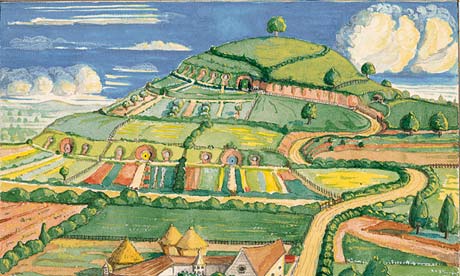
Tolkien's art work for Hobbiton-across-the-water

Hobbiton-across-the-water, by J.R.R. Tolkien

Most writing coaches agree that the first 1/4 of your story is where you reveal your characters and show their world while introducing hints of trouble and foreshadowing the first plot point. That is the first act, so to speak.

The Calamity:

Something large and dramatic must occur right around the 1/4 mark to force the hero into action, an intense, powerful scene that changes everything. Quite often, in epic fantasy the inciting scene will be comparatively disastrous, and one that that forces the protagonist to react. He/she may be thrust into a situation that radically changes their life and forces them to make a series of difficult decisions.

  • What incident or event will occur at the first plot point?
  • What negative effect does this event have for the protagonist and his/her cohorts?
  • How are hero’s efforts countered?
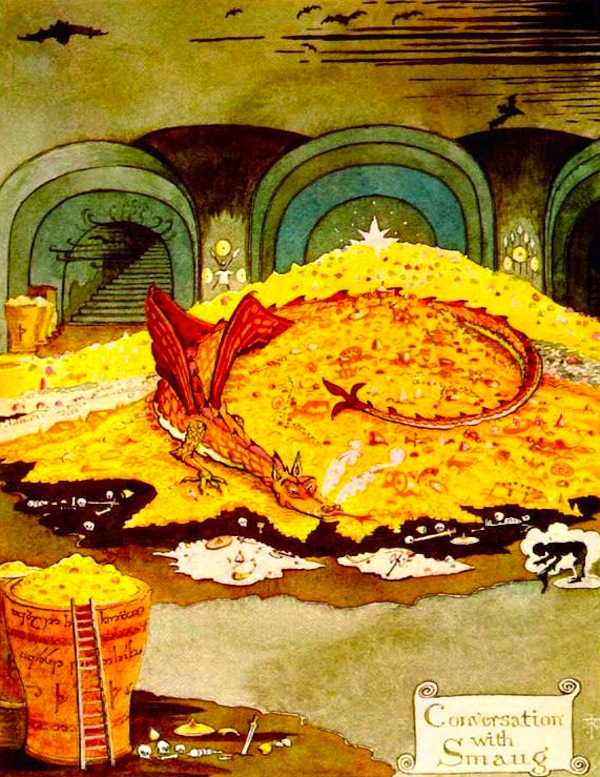
A conversation with Smaug by J.R.R. Tolkien

A conversation with Smaug by J.R.R. Tolkien

The Villain:

Conflict drives the story.  We know a great story has a compelling protagonist, but in order to have a great conflict, you must also have a great adversary. The hero has an objective, and so does the villain.

  • Identify the opponent–who is he/she, and what is their power-base?
  • What is the adversary’s primary goal, and who or what are they willing to sacrifice to achieve it?
  • Do the hero and the villain know each other, or are they faceless enemies to each other?
  • How does the adversary counter the hero’s efforts?

In fantasy, and often in thrillers and horror, we have an adversary who is capable of great evil. They may have supernatural powers, and at first they seem invincible. Their position of greater power forces the hero to become stronger, craftier, to develop ways to beat the adversary at his game. A strong, compelling villain creates interest and drives the conflict. Write several pages of back-story for your own use, to make sure your antagonist is as well-developed in your mind as your protagonist is, so that he/she radiates evil and power when you put them on the page. If you know your antagonist as well as you know the hero, the enemy will be believable when you write about their actions.

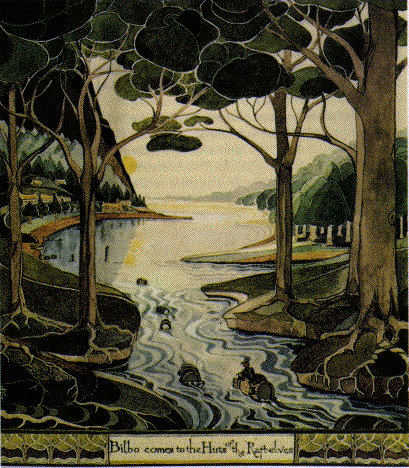
Bilbo comes to the huts of the raftelves by J.R.R. Tolkien

Bilbo comes to the huts of the Raft elves by J.R.R. Tolkien

The Hero’s Struggle:

Now the story is hurtling toward the midpoint, that place called the second plot-point. The characters are acting and reacting to events that are out of their control. Nothing is going right-the hero and his/her cohorts must scramble to stay alive, and now they are desperately searching for the right equipment or a crucial piece of information that will give them an edge. The struggle is the story, and at this point it looks like the hero may not get what they need in time.

Their weaknesses must be first exploited by the adversary, and then overcome and turned into strengths by the hero. The hero must grow.

During this part of the story you must build upon your characters’ strengths.  Identify the hero’s goals, and clarify why he/she must struggle to achieve them.

  • How does the hero react to being thwarted in his efforts during the second act to the midpoint?
  • How does the villain currently control the situation?
  • How does the hero react to pressure from the villain?
  • How does the struggle deepen the relationships between the hero and his cohorts/romantic interest?
  • What complications (for the hero) arise from a lack of information regarding the conflict, and how will he/she acquire that necessary information?
  • Midway between the first plot point and the second plot point, what new incident will occur to once again dramatically alter the hero’s path? This will be a turning point, drama and mayhem will ensue, perhaps offering the hero a slim chance. What stands in his/her way of realizing that small chance and what will the hero sacrifice to attain it?

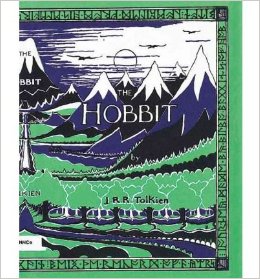
the hobbitThe first half of the book can be exciting or a bore–and because I’m always growing as an author, my new rule is “don’t write boring books.”

I say this because the books I loved to read the most were crafted in such a way that we got to know the characters, saw them in their environment, and bam! Calamity happened, thrusting them down the road to Naglimund or to the Misty Mountains.

Calamity combined with villainy creates struggle, which creates opportunity for great adventure, and that is what great fantasy is all about.

2 Comments

Filed under Adventure, Books, Fantasy, Humor, Literature, Publishing, Self Publishing, Uncategorized, writer, writing

Marketing tips from the eight-year-old

Me & Logan, Cannon Beach Oregon August 2014

Me & The Boy

My oldest daughter and her son came to stay for a long weekend. It was fun, and wonderful, having The Boy around, especially now that he is eight. He is becoming a well-behaved person, and developing a few manners, although he is still only eight, and rather a barbarian in many ways

Of course, it poured down rain while he was here. but we had fun anyway.

He discovered that grandma is a writer, and writes “real books.” He was quite proud. “I’m gonna read these when I’m a grown up.”

I confess, I did bask in the glory, until he explained that I had made a huge marketing error.

My biography is in the back of my books, but not my picture. The Boy said, “I want the kids at school to know that my grandma writes real books, but they won’t believe it if there’s no picture.”

I didn’t want to tell him that the camera steals my soul, and I hate every picture I’ve ever seen of me. But, after thinking about it, I agreed that he might have a point.

I also didn’t tell him that people who write books are a dime a dozen. Everyone you meet either is an author, or has a couple of the ne’er-do-wells in the family. Apparently people who are otherwise unemployable write books, in order to appear useful.

I didn’t tell him that, because for a shining moment, I was special. He was proud of me, his grandma, because I can write real books. I have to admit, that felt pretty good.

So we looked through the pictures of me. I thought this one would work, as it’s the most recent and hides my ample, middle-aged waistline.

Connie J. Jasperson profile pic 3

He said, “No–it doesn’t really look like you. You’re hair is a lot fuzzier than that.”

I said, “But I combed it just for that photo. I even put on lipstick.”

He wasn’t swayed.

So I tried a different one. “This one is only two years old.”

Connie J. Jasperson Profile Pic

I thought it was perfect, as it also hides the ample, middle-aged, waistline.

He was not impressed.  “Are you kidding? Your hair’s too short in that one.”

Heavy sigh. “This one?”

Connie J. Jasperson


“Get real, Grandma–people want to see the real you. The one who cooks and stuff.”

“No, they don’t,” I said. “People don’t care about that. I don’t think I need a picture in the back of my books.”

“Trust me, Grandma. I’ve read a lot of books, and they all have the writer’s picture in the back. I want my friends to know it’s you.”

After much discussion he picked a picture.  I doubt it will go in the back of a book, but this is what he picked.

Fall 2014 profile foto for avatars

“Why did you pick that one? I use that one as my Facebook icon. ”

“Because that’s how you look. Comfy, and like a grandma. With fluffy hair.”

It’s hard to argue with that sort of logic. But I’ll probably have to have a professional picture made at some point.

One that doesn’t show my middle-aged waistline or the comfy fluffiness of my hair.

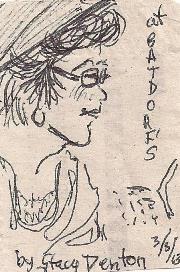
extra small caricature of connie  by street artist Stacey Denton


10 Comments

Filed under Books, Fantasy, Humor, Literature, Publishing, Uncategorized, writer, writing

Elements of the story: Circumstances and Objectives

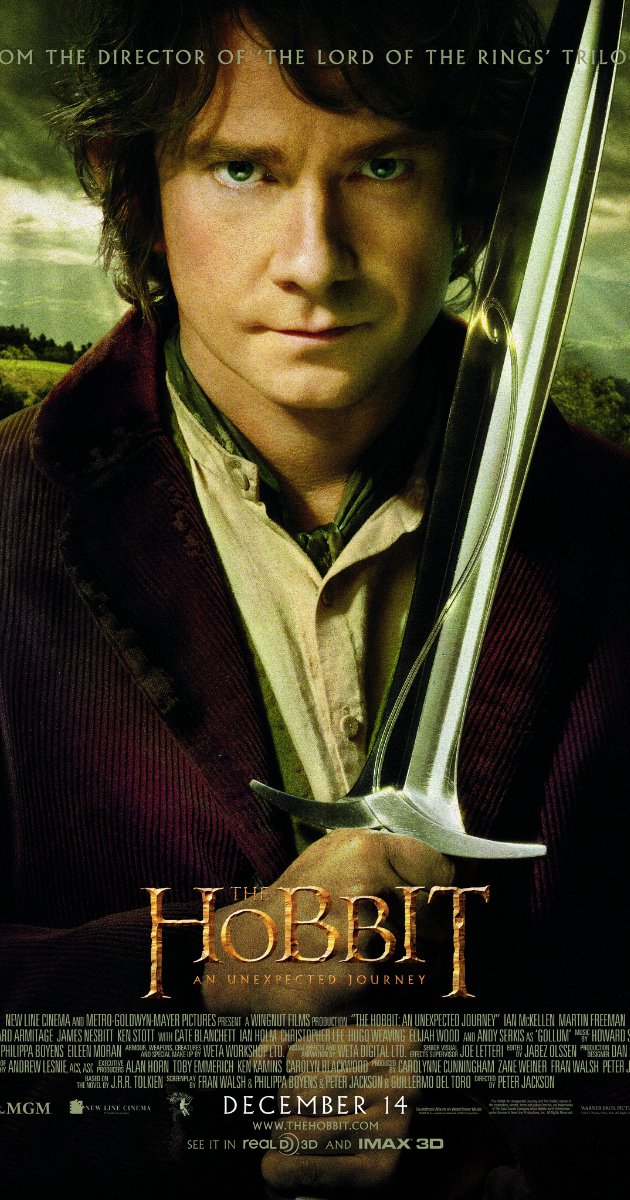
the hobbitAt the outset of any good story, we find our protagonist, and see him/her in their normal surroundings. An event occurs, and Hero is thrown out of his comfort zone and into the Situation, which is the core idea of your plot. This is the circumstance in which your protagonist finds himself in the beginning of the story. 

In the opening pages of The Hobbit, by J.R.R. Tolkien, a respectable hobbit, Bilbo Baggins, is living a comfortable life in a prosperous, sheltered village, and has no desire to change that in any way. However, a casual, polite greeting made to a passing wizard sets a string of events into motion that will eventually change the course of history of Middle Earth.

the hobbit movie poster 3The wizard, Gandalf, tricks Bilbo into hosting a party for Thorin Oakenshield and his band of dwarves, who sing of reclaiming the Lonely Mountain and its vast treasure from the dragon Smaug. When the music ends, Gandalf unveils a map showing a secret door into the Mountain and proposes that the dumbfounded Bilbo serve as the expedition’s “burglar”. The dwarves ridicule the idea, but Bilbo becomes a little indignant, and joins despite himself. The next morning he has second thoughts, but the last minute Bilbo literally runs out the door, with nothing but the clothes on his back.

  • How will the story start?
  • What is the hero’s personal condition (strength, health) at the beginning?
  • How will that condition be changed, for better or worse, by the hero himself or by the antagonistic force?
  • What could possibly entice him out of his comfort zone?

Now we come to the next part of the core of your plot: Objective

the hobbit movie posterA protagonist has no business showing up on the page unless he/she has a compelling objective. If he doesn’t want something badly enough to do just about anything to achieve it over the next couple hundred pages, then he doesn’t deserve to have a story told about him.

Bilbo does have an objective. Once he gets past his feeling of having made a terrible mistake, he desires nothing more than to help his friends achieve their goal: that of regaining their lost kingdom. Gandalf exerts a parental influence over Bilbo at the outset, guiding him and pushing him out of his comfortable existence.  But it is Bilbo who has common sense and compassion, who gradually takes over leadership of the party, guiding and rescuing them from their own greedy mistakes. This is a fact the dwarves can’t bear to acknowledge, and also a fact he doesn’t realize himself.

Those turning points where with each adventure Bilbo gains confidence and a tool or weapon he will later need are what make up the best parts of the adventure. That is what you must inject into your adventure, be it urban fantasy or science fiction.

  • At the beginning of the story, what could the hero possibly want to cause him to risk everything to acquire it?
  • How badly does he want it and why?
  • What moral (or immoral) choice is he going to have to make in his attempt to gain that objective?

Perhaps your tale is set on a space station. What does your protagonist need that is in short supply? What does he have to do to get it?

Perhaps you are writing an urban fantasy. Perhaps your main character is a vampire. He/she requires sustenance–what will he/she do to get it? Or conversely, if a human, what will he/she do to avoid becoming vampire-food?

Protagonists begin their tale in their current surroundings. They are thrown out of their comfortable existence by circumstances, and forced to identify objectives they must achieve or acquire in order to resolve their situation.

hobbit-battle-five-armies-bilbo-posterCircumstances and Objectives combine to form the plot. Character A desires Objective B–and will do anything to acquire it.  Along the way, Character A has a series of adventures that force him to grow and change, but which in the end give him the strength, the moral courage to enable the final resolution.

Thus, whichever you conceive first, characters or objective, you need to know why your character is willing to leave his circumstances and embark on his adventure. That objective must be compelling enough for him to risk everything he values to achieve it.

But what if a side character has such a compelling story that the book becomes about him, and not our hobbit? If you notice that is the case, rewrite your book so that the character with the  most compelling story is the protagonist from page one.

Potential for gain must outweigh the potential for loss–so if he is risking his life, there had better be a damned big payoff at the end, whether monetary or in moral coin. Without that risk and potential for gain, there is no story.


2 Comments

Filed under Books, Fantasy, Humor, Literature, Publishing, Uncategorized, writer, writing

Elements of a story: Identifying your protagonist

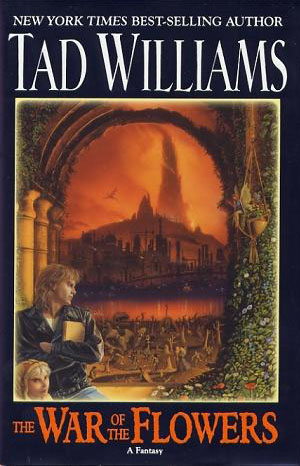
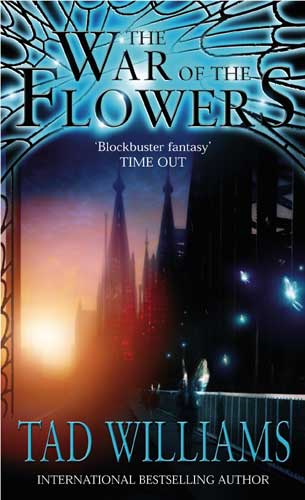
War_of_the_FlowersGreat plots drive great stories, but the best stories start with a character that really moved me. The trouble is, when we first begin to write a story, one character leads to another and soon, each character is vying to tell your their own story. It’s sort of like a family gathering, where they all talk at once, and you love them all.

This makes writing a true stand-alone book difficult. Tad Williams managed to do just that in 2003 with The War of the Flowers.  Theo Vilmos is a thirty-year-old lead singer in a marginally successful rock band. Fearing he is past his prime, he seeks refuge in a remote cabin in the woods. There, he reads a memoir written by a (perhaps) dead relative. This relative claimed he had visited the magical world of Faerie. A series of strange events occurs and before Theo knows it, he too is drawn into a place that is both strange and yet familiar to him, revealing the truth about many things that had always puzzled him.

war_flowersWilliams had another great character to draw on in his little fairy, Applecore, but he kept it contained in one wonderful novel detailing Theo Vilmos’ adventures rather than going too far afield and having to serialize it. This is a model we lesser-known fantasy authors might want to take a closer look at and somehow revive: the stand-alone novel.

We might have a great story in our head, and we may have an awesome cast of characters dying to leap onto the page, but until we know who the hero is, we have no story. From the first page to the last, Tad Williams knew who his hero was in The War of the Flowers, and it’s clear that he never doubted it was Theo Vilmos.

Sometimes  identifying just whose emotional and physical journey you will be following is easier said than done. When faced with a pantheon of great characters, ask yourself these questions (listed here in no particular order):

  • Who among these people has the most to lose?
  • Which character do you find the most interesting?
  • Who’s personal story inspired this tale in the first place?
  • Who will be best suited to taking full advantage of all this plot’s possibilities?

Dragonbone_ChairFrom my point of view, one of the best fantasy series of all time is Tad Williams’  epic, three-volume masterpiece, Memory, Sorrow, and Thorn. It opens with volume one, The Dragonbone Chair. This is a very different tale than The War of the Flowers, much larger, and encompassing several entire cultures on the edge of disaster.

In this opening volume, Tad had many great characters to draw on, all of whom had strong stories. Indeed, there is a large cast of characters with incredible possibilities, but as a reader I liked that he managed to tell their stories without losing sight of the original story that sparked the series in the first place.

The fact that Williams was able to weave the many threads of such a large cast of characters into one enthralling story and still leave (Seoman) Simon Snowlock as the main protagonist with a gripping story-line  is amazing.

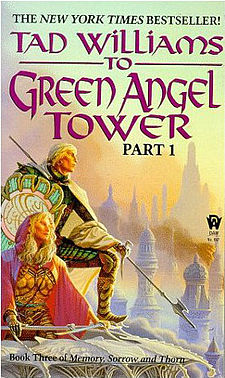
Green_Angel_Tower_P1Yet in this series, Tad Williams does just that. He could have written it as the story of Prince JosuaPrincess Miriamele, Binabik the Troll, or even the Norn prince, Jiriki. They are each compelling characters, with deep, intriguing back-stories, and any of them would have been an awesome protagonist.

Each and every one of the many characters in this series was strong enough to warrant a book of their own, but Simon the kitchen boy remains the central character, and the other story-lines are detailed but remain subordinate to his, fleshing it out and defining his ultimate fate, driving the plot to the final denouement, and the cataclysmic events in Green Angel Tower.

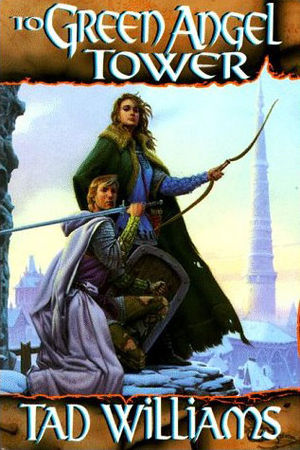
To_Green_Angel_TowerThis juggling act, this ability to not become sidetracked by your wonderful side-characters while telling their story is critical to the progression of your plot. It’s excruciatingly easy to become so enthralled with the story-line of a minor player that you derail your novel in the first draft.

I’m a gamer and I play Final Fantasy type RPGs. I adore side-quests, and I love a little back-story to flesh out whatever tale I’m reading, but just like in a game, the protagonist and the core plot has to stay in motion. Memory, Sorrow, and Thorn has a lot of side-quests, and a lot of back-story, but despite the opportunities for derailment, it is propelled irresistibly toward the final catastrophic event, and does it in three admittedly large books.

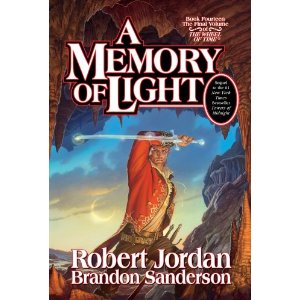
A_Memory_of_Light_cover (1)As much as I adored the Wheel of Time series, Robert Jordan seemed to fall into the trap of loving all his characters too much, and wanting to tell each of their truly epic stories in the one series–and it couldn’t be done without aggravating his fans.

Consider this: although it was originally planned as a six-book series, The Wheel of Time grew to encompass fourteen volumes, a prequel novel, and a companion book.  Jordan began writing the first volume, The Eye of the World, in 1984. It was published in January 1990. With Jordan’s death on 16 September 2007, the conclusion of the series was in question, but Brandon Sanderson stepped in and did a masterful job of taking Jordan’s incredible mass of notes and background, along with the rough draft and finished the series’ final three installments.

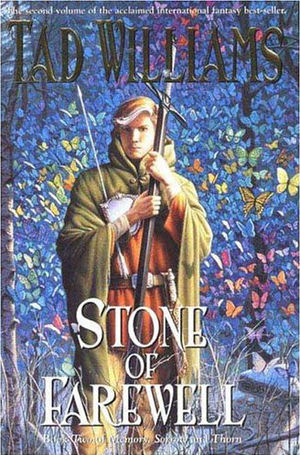
Stone_of_FarewellIt occasionally happens that you have chosen a protagonist, but another character suddenly seems to have a more intriguing way about him. It is up to you to make a decision–who will be the central character? If, after all is said and done, a different character than the one you originally thought was the protagonist comes to the fore, you must go back and rewrite your beginning to to reflect that.

Deciding who that protagonist will be is a matter of knowing which character has the most opportunity to take full advantage of all the possibilities. The other characters serve only to propel him/her to the final conflict.

Sometimes, as in Memory, Sorrow, and Thorn, that character is the 14 year old kitchen boy on the verge of manhood, and not the battle-hardened prince with the tragic history.


Comments Off on Elements of a story: Identifying your protagonist

Filed under Adventure, Books, Fantasy, Humor, Literature, Publishing, Uncategorized, writer, writing

Conventions: Hawking your books vs attending the convention

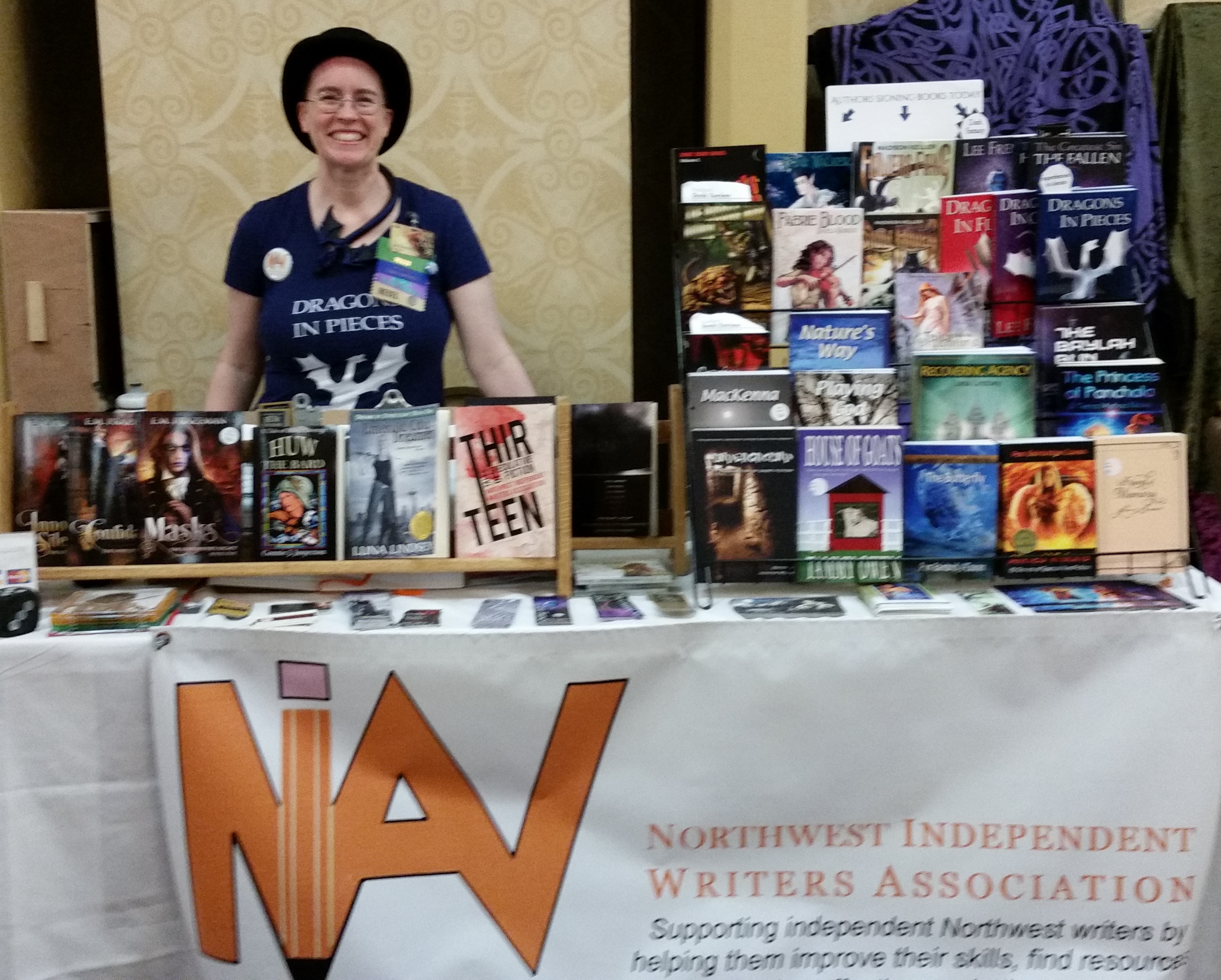
Lee French at Norwescon 2015 in NIWA Booth

Lee French at Norwescon 2015 in NIWA Booth

Going Indie means going it alone, and doing it the hard way. However–there are now small bands of indies coming together to help each other, and in the process, help themselves.

One such organization is Northwest Independent Writers Association, an organization of indie and small-press authors based in Western Oregon and Western Washington. We seem to be situated along the I-5 corridor from south of the Portland area north through the Seattle area.

This last week I attended Norwescon, carpooling the first day with fellow Myrddin Publishing Group author, Lee French. She is an awesome person, as well as a wonderful, creative author.

My book, Huw the Bard, was in the rack at the NIWA table, and I met some of the most wonderful people: Angela Korra’ti, Madison Keller, Jake Elliot, and Luna Lindsey were all there, manning the table and helping each person who stopped to find a book that fit them, regardless of if it was their own book or not–we were selling each others’ books as well as our own.

I ran into my good friend, fellow NIWA  member, Thomas Gondolfi , who was working his own booth.

Saturday night, Lee, Jake, Angela and I had dinner with fellow NIWA member, steampunk author, Jeffrey Cook.

Huw the Bard at NorwesconMy feet are killing me–today, I am not sure I will do it again, but I am glad I did this time.  My view will likely change as I begin to feel rested again.

Huw the Bard was not a good fit for that venue–they were more into fairies and steampunk, which Huw is obviously not. However, I think he would do well at a ren-fair, as the people who were interested in him were all ren-fair people.  Most likely my best books for a gaming venue will be my World of Neveyah series, as it is RPG game-based, and gaming of all varieties is what Norwescon is all about.

Standing in the booth for most of 4 days did me in, I do confess.  I also was somewhat of a 5th wheel, in that the booth was too small for the number of authors who were there and willing to contribute their time and energy to the project. There was only room for 1 chair, and so we stood. I felt a bit unnecessary, at times, which is not a good way to feel, but they very kindly tolerated me.

Angela Korra’ti has a knack for selling her books, and I tried to learn as much as I could from her. Jake Elliot and Lee French seemed to know what they were doing too–there is definitely a learning curve to pitching your book live and in person.

norwesconBeing an indie author, or being published by a small press means you are on your own as far as getting the word out about your books.  This means if you want your books seen at a convention, you have to pay for the table, buy your stock, and get the word out, because no one else will.

It also means you must spend the convention in the dealers’ room at your booth, pitching your product to strangers, rather than taking in the panels and hearing speakers like George R. R.  Martin. But I did see him in the lobby while I was getting coffee, and I saw many, many people who really love his work, far more than I do–and they stood for hours to get to see him.

I would have loved to hear George speak, but I had books of my own to hawk. I never thought I would live long enough to be able to say that.

This is where you discover that going indie means honing an elevator pitch that will sell your book in thirty seconds. That will be my next trick.

cashbox 3This is also where you discover that the Sparco cash-box you bought, and  that was not cheap, is nearly impossible to unlock, but it makes an awesome weapon if you are ever mugged on the way back to your hotel. Which I wasn’t, but I’m an author, and that’s how I think.

It’s also where you discover that your target audience was not at that convention.

Most importantly, this is where you realize that your poor old feet are  just not up to you spending 10 hours a day standing on them.

I understand there is some controversy regarding the Hugo award nominations–but I didn’t hear them announced, as I was trying to sell books. I suppose a shakeup is inevitable, and I will have to do some reading to find out for myself what the problem is, in the eyes of the reading world.  That will be interesting–accusations of blocks of special interest groups gaming the outcome and such intrigue me, and I will definitely want to get to the bottom of that!
14 Comments

Filed under Adventure, Books, Fantasy, Humor, Publishing, Uncategorized, writer, writing