Category Archives: mythology

David Eddings – Setting the Scene

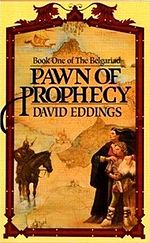
Pawn_of_Prophecy_coverIn 1982 I picked up Pawn of Prophecy by the late David Eddings. This was an amazing, eye-opening book for me, as both a reader and an author.  Eddings had the ability to convey a sense of place in a few well-chosen words.  The book opens in the kitchen of a farmhouse with Garion’s memories of playing under the table in a kitchen as small child.

This is the first book in the 5 volume series, the Belgariad and chronicles the childhood of an orphaned boy, Garion, who is being raised by his Aunt Pol who works as the cook on a prosperous farm in a place called Sendaria. Garion has friends, and as time progresses he even has a wistful almost-romance with one of the girls there. But all is not as it appears, and Garion knows nothing of the reality of his family or the world he lives in.

He has other friends; Durnik the smith who is in love with Garion’s Aunt Pol, and a strange old traveling storyteller, Mr. Wolf whom his aunt seems to know well and whom she grudgingly tolerates despite his strange attire and love of ale.

What David Eddings does in the first chapters of this book is truly magical.  He immediately drew me in and within two paragraphs I was immersed in this world–I could smell the smell scents of the kitchen and visualize the people who worked there so companionably in the generous employ of Farmer Faldor. I felt I knew them, and I felt I knew that farm.

I am not a boy, but Eddings put me inside a boy’s mind and I understood that boy on a personal level. Garion’s confusion and dismay as everything he takes for granted begins to crumble around him is real and I felt his anger, his hurt and confusion. I understood his need to stand on his own and I knew fear when he did.

Eddings managed to draw me into that world with an economy of prose. He gives the reader just enough detail to fire the imagination, and the reader’s own mind does the rest, unencumbered by too much of the author’s personal vision of the scene. He does this by describing what the boy remembers of the kitchen, and more emphasis is placed on the emotions evoked by scents and memories of conversations, supported by the merest framework of the scene. Edding’s world is filtered through the eyes of the people who live in it.

Garion’s earliest memories are of being a toddler–the sound of knives deftly dicing vegetable, his aunt keeping him corralled and happy under the table while she works, the sparkle of the gleaming pots and kettles high on the wall lulling him to nap.

“And sometimes in the late afternoon when he grew tired, he would lie in a corner and stare into one of the flickering fires that gleamed and reflected back from the hundred polished pots and knives and long-handled spoons that hung from pegs along the whitewashed walls and, all bemused, he would drift off to sleep in perfect peace and harmony with all the world around him.”

In that passage we see the entire kitchen, and we have a visual image of it. The child’s sense of contentment and safety that the kitchen represented is conveyed by the impressions of the kitchen instead of the image of it. The detail supports the story rather than impeding it.

Many times I see authors try to force an exact, detailed picture of their world on the reader, and it ruins the story for me.  An author doesn’t have to beat me over the head with minute detail; that sort of thing bores me.

What reading the work of David Eddings has taught me is that economy of detail and simple lines often make a more powerful picture than a detailed drawing that looks like a search and find game. Some indie authors set a scene with so much detail it reads like an episode of Hoarders. I understand that, as I too wrestle with the tendency.

In the editing process I have had some of my most cherished passages detailing certain places or people thrown out with the simple phase “This is hokey”, and while it hurts to see those words in the comments, it is true and so it is time to throw out a beloved passage and opt for a lean description.

Sometime I opt for too lean a description and when the comment  “What were they feeling? Howthe belgariad did they show it?” appears in the right hand column  I sometimes wonder why they can’t see it when it is as plain as day.  But upon examination I realize that maybe a line or two more might help explain the emotion of a scene.

Still, it is important to remember that my reader has an idea of what true beauty is, and they may not think a girl with sun-yellow hair in perfect ringlets framing a heart-shaped face with fine, arching eyebrows over corn-flower-blue eyes peering through dark curling lashes is as beautiful as I may think she is. It may be better for me to refer to her as fair-haired and astonishingly pretty, and leave it at that.

If I could ask for any skill, it would be create a world with the precision and fine craftsmanship David Eddings brought to his work. To this end, I read the works of the great masters of fantasy hoping to absorb some of their techniques and wizardry. I also read the works of newly published indie authors hoping to find that one kernel of genius that will strike a chord in my soul and transport me to a world not of my own making.

The next installment in this series will be focusing on just that–indies of great talent whose works are as yet unknown but which have had an impact on me as a reader.
5 Comments

Filed under Adventure, Battles, Books, Dragons, Fantasy, Humor, mythology, writing

Mucking out after the dragon

MH900053412I thought I had The Last Good Knight all cleaned up. I was SURE I had it as straight as could be! Many eyes have looked at it, and still there are places that need attention!  Fortunately, Carlie Cullen is applying her red pen to the hitches and halts in the flow, without changing the story or the structure since it has been published for so long.  It’s a good story, probably my favorite but it has had a rough life.

This is the one tale that never had a real line-edit, and I was so new to this business that I thought the brief once-over my former publisher gave it was a true edit.  They were new at the business too, and were learning a lot as they went along. It was a good edit, in that it cleaned up certain obvious things, but it was very quick and not a true, in-depth edit. I was not involved in the actual edit, as the changes that were made were not offered to me for my approval. Thus, getting that book re-edited so that it reads more easily is somewhat like mucking out after a dragon.  Just about the the time I think it’s all done, there is another steaming pile of…goodness…look at the time, I should be cooking dinner.

Having worked with two editors since leaving the former publisher, I now see what was NOT done for The Last Good Knight the first time, and thank god, one of my editors, Carlie Cullen is giving it her attention. The biggest challenge is dealing with these things and moving on, instead of banging my head on my desk in frustration when she points out something I should have seen.

But that is why these sorts of edits are SO critical. We, as authors, only see what we THINK we wrote. This is something I can’t stress strongly enough–get an independent eye on your work.  If you have a friend who has worked as a paralegal for her entire career, proof-reading lawyers briefs as Irene Luvaul did, even better!  If you can’t find an editor you can afford, you can do this: Print your work out one chapter at a time, and sit down with the yellow high-lighter. take an envelope and go down the page one line at a time. You will catch a great deal that way!

I don’t feel nearly so badly about TLGK once I take a close look at my earlier works though – those tales who began their lives on performa-630-192the old Mac  in the mid nineties. Once they were transferred to disc and then transferred again to PC they were put away and forgotten.  Some have great storylines, and really fun characters, but I would have to completely rewrite them in order to make a silk purse out of the sow’s  ear they are right now.  There must be an entire library of badly written prose on those old mac floppies.

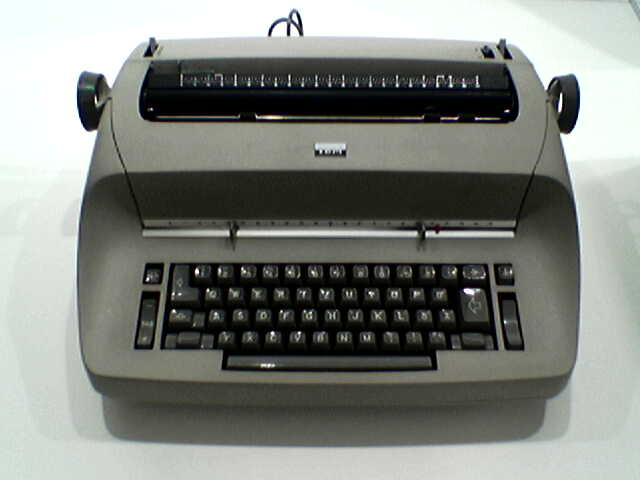
There are many flaws in my earlier works, especially the ones going back to my days of pecking them out on the old IBM Selectric.They are rife with misspellings, poor grammar, clichés, head-hopping, and hokey dialogue.  But underneath all the bad fluff I see the bones of the story I was so proud of having written in the first place, and I realize that there was spark there.  This is why I say don’t be discouraged by your first initial draft of any work.  All it needs is a lot more attention from you and the eye of an editor.

IBM_SelectricI was once a singer in a heavy metal band, and the opening lines of one of the songs I wrote went like this:

“It’s a cold and lonely morning, the sky dawns bland and white.

The emptiness inside my heart is as chilling as the night.”

It was cheerful little tune (NOT!) but with my ex-husband’s awesome guitar solos it was quite popular among our friends. We were very hip and very serious about the craft when we played. Of course I was 26 at the time, and quite sure I was the next female Ronnie James Dio. The band as a whole took ourselves far too seriously, and it soon got to the point where it wasn’t fun anymore.    It was a long time before I realized exactly why we fell apart the way we did, when we were having such a good time playing  small gigs as a local band. We became too caught up with the art of the music, instead of getting on with it and we forgot why we were doing it in the first place.

I admit that I don’t need serious anymore.  I don’t need to take my writing so seriously that it’s not fun.

With that said, I do need to turn out the best finished product I am able to do, and that means allowing someone I trust to look at it and say, “This just doesn’t read right. Maybe if you change this a little….”   I am not married to my prose, although I am sure it is the finest prose  in the world. Oh, look…more dragon poo.

3 Comments

Filed under Adventure, Books, Dragons, Fantasy, Humor, Literature, mythology, writer, writing

The Terry Pratchett School of Prose

The Color of Magic_cover terry pratchettOne of the earliest influences on my sometimes smartassed style of writing was Sir Terry Pratchett, O.B.E.‘s watershed fantasy series, Discworld. Sir Terry takes  J. R. R. Tolkien, Robert E. Howard, H. P. Lovecraft and William Shakespeare, as well as mythology, folklore and fairy tales, and mashes them up in this hilarious series of tales. There are 39 books in this trilogy!  Talk about prolific!

Discworld is a flat disc balanced on the backs of four elephants which, in turn, stand on the back of a giant turtle, Great A’Tuin. Oh my goodness – what opportunities for mayhem were locked in that kernel of a plot!  The series begins with “The Colour of Magic.”

One of my favorite books in the series is “Mort.” It is the 4th book and is the first to give Death the main storyline.

As a teenager, Mort had a personality and temperament that made him rather unsuited to the family farming business. Mort’s father, named Lezek, felt that Mort thought too much, which prevented him from achieving anything practical. Thus, Lezek took him to a local hiring fair, hoping that Mort would land an apprenticeship with some tradesman; not only would this provide a job for his son, but it would also make his son’s propensity towards thinking someone else’s problem.

The conversation between Lezek and his brother Hamish as they discuss Mort’s future in the opening pages is hilarious and quite revealing in its simplicity. In this snippett, Lezek and Hamish are observing Mort as he attempts to frighten some birds away from the crop.

“He’s not stupid, mind” said Hamish. “Not what you’d call stupid.”mort - terry pratchett

“There’s a brain there all right,”Lezek conceded. “Sometimes he starts thinking so hard you has to hit him round the head to get his attention. His granny taught him to read, see? I reckon it overheated his mind.”

At the job fair, Mort at first has no luck attracting the interest of an employer. Then, just before the stroke of midnight, a man concealed in a black cloak arrives on a white horse. He says he is looking for a young man to assist him in his work and selects Mort for the job. The man turns out to be Death, and Mort is given an apprenticeship in ushering souls into the next world (though his father thinks he’s been apprenticed to an undertaker).

I love the snarky way Pratchett takes clichés and runs with them. He grabs the boring, bland, overdone themes of western literature by the tail and swings them.  When he sets them down they are SO much more fun to watch!

What I have learned from the Terry Pratchett school of prose is that dialog tells us as much about the speaker himself as it does about the words expressed.  In the quoted passage above we see enough of the two men who are speaking to have some idea of who they are.  Pratchett gives us the personality and demeanor of the character in those simple lines.  We can see them, fully formed in our minds eye as they speak. .

That is the hand of the master, and it is what I someday hope to be able to bring to my own work.  The important thing to remember is you must read the works of the masters, because if you have no idea of what good writing really is, you can’t write it. Read the best works in your genre and continue writing your own stories and never let the struggle of getting your work out there take away the joy of writing it. It’s not easy, going indie, but it is so rewarding!

11 Comments

Filed under Books, Fantasy, Humor, mythology, writer, writing

Building the Beast

Anne_Anderson05 - Beauty sat down to dinner with the Beast illustration PDArt - Wikimedia CommonsI have been suffering with a cold for the last week and so my writing output has dwindled to nearly nothing.  I have gotten some work done, but not the amount I had hoped for.

I worked on a scene requested by my editor, Irene Luvaul, for Huw the Bard, one to liven up a dull stretch just a bit.  I didn’t want to put Huw through the wringer again when he has already suffered so much, and he was so close to making his way to Billy’s Revenge, but she was right – a bit of tension would add to the interest.

So I alternately thought and slept on it for more than a week, trying to force my plague-ridden body peck out a few lines with merit to them.

I couldn’t think of anything.

But then a passing paragraph toward the end of Billy’s Revenge I – The Last Good Night (under revision again, cleaning up the manuscript, thank you Carlie Cullen for volunteering) gave me the idea for a strange creature with which I could freak out poor naive Huw. (Having the right editor in the first place solves SO many problems further down the road.)

Firesprites.

But this meant – you guessed it – Building the Beast.  The only trouble was, I didn’t really know what one looked like – after all they were only mentioned in passing as being a nuisance.

Now, I only had three passing references in BR1 that talked about these creatures, but those few sentences told me quite a bit about them, actually.

So when I thought about it I realized I did have enough to build one. I just needed to assemble the parts.

1. They are either  elemental creatures, or poisonous creatures, one or the other. I say this because they are called ‘FIREsprites’. Yet, logic tells me they can’t be made of fire, or there would be no forest. Therefore, they must be poisonous, and the poison must be an acid that burns like fire.

2. They must be small. Otherwise King Henri’s horse would not have stepped into a nest of them and thrown his rider.

3.  Something about them makes people think of fire, and it must be something bad, because Lackland and the people of Waldeyn feel compelled to kill the entire nest when they find them, sort of like fire ants only bigger and badder.  But they must be something that one lone woman (Lady Mags) could deal with, with only the aid of an amulet.

I always think it’s better when the folks who actually have to deal with them tell me what they look like, so here is what Matt St. Couer told Huw and I about firesprites.

Matt said, “Now we need to herd them to the center of the nest and get them bunched up in as tight a group as we can.  Don’t touch them, whatever you do. The slime on their skin will burn you like the hottest fire, and there’s no stopping it from eating your flesh away. That’s why they’re called firesprites. The wounds keep putrefying, and amputation is the only remedy. Water helps but only if you get the water on the affected area right away, before the poison has done too much damage. I’m talking minutes here, and you have to really sluice the wounds to get the poison off. Sadly, they never seem to nest near water.”

Ulleen said, “They like to nest along roads because there’s not so much foliage and they get more sun there.  The sun heats their nests and hatches their eggs.”

“They don’t look much like a sprite, do they,” Huw said, thinking they were interesting but not really fairy-like.  “At least, not what I always thought a sprite should look like. They look more like naked chipmunks with hairless tails. But their skin is pretty, all shiny and coppery like that.”

“I think they were named that because when they’re looking for grubs and such all you see is a little flash of copper as they disappear into the brush,” Ulleen replied. “I’ve always wondered about that too.”

Now as far as actually building the beast goes,  I have quite a lot of dragon parts lying around my office, and I can assemble a dragon in no time at all. I will even stick wings on it, if you like your dragons airborne. But dragon parts are far too large for this project, so I’ll have to look elsewhere.

Somewhere in here I have a box with everything one might need to assemble a demon.

I think this is the box.

Yes!

I’m partial to waterdemons. They’re quite fun to put into a fight-scene and some of their components will be perfect for the job. Clear, gelatinous skin is exactly what these little guys need, and I have a lot of it in this box. If I take some of that and turn it all coppery, it will actually be kind of pretty, in a hairless chipmunk sort of way. With the addition of a really strong acid to the gelatinous goo I think we’ll have a cute little firesprite!

I love arts and crafts time!

4 Comments

Filed under Adventure, Books, Dragons, Humor, knights, mythology, writing

Oh, the Agony

The Aspirin Shop © 2012 Connie J Jasperson All Rights Reserved

The Aspirin Shop © 2012 cjjasp All Rights Reserved

Yes, we now find ourselves in the deepest depths of January. The days are short and dark, and my desk is piled high with the visions and revisions of my current works-in-progress. I stare at the mountain of work that demands my attention and my mind is consumed with solving that eternal paradox,  “Who gave me this damned cold? Which little germ-factory that I call a grandchild is the culprit?”

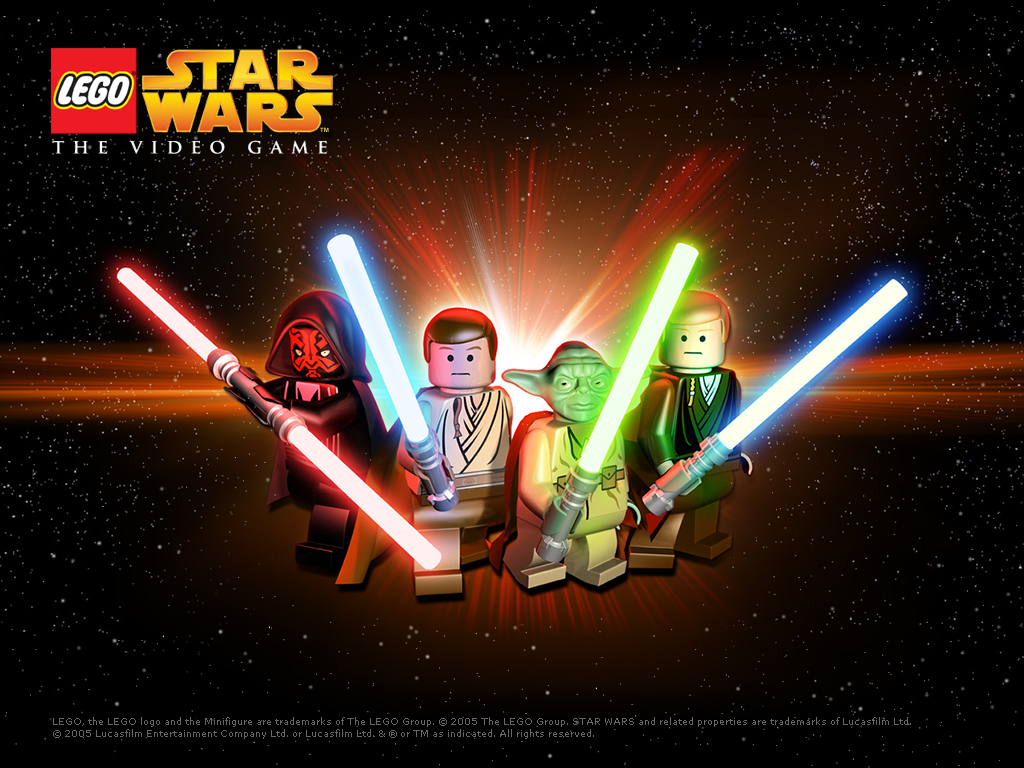
Alas, the responsible party is most likely sitting in his kindergarten class having a snack and discussing tactics for beating “Lego Star Wars”  with his mates while Grandma suffers the agonies of the damned.

In the meantime, cold or no cold, I must somehow wind up the tale before me. My characters have already been through quite a lot, and they aren’t in tip-top condition. Still, they have a job to do and they are going to do it or die in the process.

At this juncture my characters are lurking high in the  branches of fir trees outside the stone walls of a mountain keep, observing the small village surrounding the castle they need to enter. They need to decide how to enter the haunted castle, and they need to make a plan for getting to the rogue-mage and eliminating him.  Once he is dead, the spells he’s layered over his guards will be broken and my team should be able to leave safely.

Once inside the keep, they will have to make their way through the halls, killing off the bespelled guards as they come to them until they have finally met the mage they have been sent to kill.

They’ve already fought a dragon and been caught in an avalanche. They’ve fought many other elemental creatures and each other.

Now here they are, poised on the edge of finishing this adventure and Grandma’s too stoned on NyQuil to concentrate long enough to get them to where they can kill the evil bad dude.

This could take a while.

It’s just so much wo-o-o-ork…..

Actually this game looks fun. I think I’ll just rest in the play-room for a moment….

lego-star-wars-the-game desk top wall paper

3 Comments

Filed under Adventure, Battles, Dragons, Fantasy, Humor, knights, mythology, Romance, writing

Alton Brown, the Futility of Stone Calendars, and Chocolate Chile Cookies

Chocolate-Crackled-Cookies

As Homer Simpson once said, “Mmmm… chocolate….”

I love to bake cookies, and I have found the tastiest cookie ever.  I spent the end of the world baking cookies, just on the off-chance that the world would not end, and Christmas would arrive. If that were so, I would need to serve cookies and coffee to random guests as they might appear over the impending holidays, so better safe than sorry. The picture above left is for Chocolate Crackled Cookies, and is not only made with yummy chocolate, there is Roasted Saigon Cinnamon and Ancho Chile Powder in them.  The odd sounding combination works perfectly! 

Of course, Alton Brown tells us that when the Mayans and Aztecs were not killing time with 220px-Alton_brown_2011chiseling long-range calendars, they were known to drink hot chocolate spiced with chilies. Of course, most Meso-Americans were quite busy with religious obligations and  had very little time to pursue hobbies such a stamp collecting or assembling jigsaw puzzles, so calendar chiseling may have offered a diversion from the endless social rounds of war and ritual human sacrifice. Heck, even a simple ball game tended to end badly for the loser, so I’m sure a bit of hacking away at the old boulder with a hammer and chisel offered some relatively safe relaxation.

You know, I think the fact that the Mayan Calendar was chiseled into stone and ended on 12-21-2012 is a perfect reminder as to why we don’t use stone anymore for things like long-range calendars and day-planners.  After all, stone is a finite medium!  There is only so much stone available at a given point for a chiseler to chisel upon, so it stands to reason that at some point the calendar chiseler will run out of stone and the stone calendar will end.

Anyway, I find the Google Calendar to be much less trouble than a stone to fit into my purse, seeing as it is available on my phone, my laptop and my pc as well as the Android.  Unfortunately, I am no longer allowed to plead ignorance in regard to appointments I’ve made and forgotten about.  I get email reminders 2 days, 1 day and 2 hours in advance, along with pop-up reminders.  The phone dings, and I (like Pavlov’s Dog) automatically reach to see what conditioned behaviors the digital-leash is encouraging me to exhibit now.

The Infinity Bridge by Ross M KitsonSo now I that I have digressed and wasted copious quantities of time by baking, criticizing the Mayans time-keeping system and eating chocolate cookies, I will sit in my office and write a post (one day late) for my Best in Fantasy blog, this one examining the best book covers of 2012.  There is some mighty fine artwork out there and indie books are just as beautifully covered as the books published by the ‘Big 6’ publishers.

 CRWN PHNX MASHUP

 51EwwPIAJbL__BO2,204,203,200_PIsitb-sticker-arrow-click,TopRight,35,-76_AA278_PIkin4,BottomRight,-64,22_AA300_SH20_OU01_

NORTHMAN cover JD Hughes

3 Comments

Filed under Adventure, Battles, Books, Humor, mythology, Uncategorized, writer, writing

The Alternative Guide to Alternate Realities

The Infinity Bridge by Ross M KitsonToday we are going on a voyage, visiting three very different realities, or as I like to think of them, Blogs.  We are on a progressive blog tour, guided by the incredible Ross M. Kitson, author of the Steampunk fantasy, The Infinity Bridge.  Part I of this tour is today, here on Life in the Realm of Fantasy

Part II will be tomorrow Dec 13, 2012 at  www.alisondeluca.com – Alison Deluca’s wonderful blog.

Day III will be at Ross’s own blog http://rossmkitson.blogspot.co.uk

I encourage you to check out these blogs and follow this post through all the realities it travels through!

>>><<<

Alternative guide to Alternate Realities 1: Literature

By

Ross M. Kitson

One of the key aspects of my latest book, The Infinity Bridge, is the existence of parallel universes or alternate realities. As the book is written for the teen market upwards (MG/YA is the latest term, to avoid the patronising ‘kid’s book’ I suppose) I spent a good while musing about whether to include a meaty information dump in the next about the ideas of alternate reality. And here’s an odd thing- the more I thought about it, the more I realised that as an idea in fiction/TV/film it is so thoroughly established that I didn’t need to bother!

I think my first exposure to the idea of alternate reality came in the form of comics (which was pretty much my first form of literature anyhow). I’m going to ramble about those in a separate post—for this one I’m going to focus on alternate reality in books.

The idea that history may have taken a different course, and the ramifications of that, have been a popular theme for centuries. The first works about the topic popped up in Victorian literature (N Hawthorne’s short story ‘P Correspondence’ and C Holford’s ‘Aristopia’) but the real boom in the topic came in the pulp science fiction of the forties and fifties. During this time some awesome writers, including Heinlein, L Sprague De Camp, Poul Anderson, Andre Norton and Larry Niven turned their hand to the topic. In many of these works we have protagonist able to cross between the alternate realities, often armed with knowledge of their own historical variant, via portals or machines. In some tales they are ‘police’ figures (the best example of this being H Beam Piper’s Para-time books, which I read recently and absolutely loved) trying to address some renegade or some disruption, whereas in others the individuals are more passive in their roles, thrown into the new reality and learning of its variance as the reader dose.

The concept of parallel worlds and alternate history progressed from the pulp SF realm and into that of more popular and conventional literature. A recurrent favourite of the genre is the course of World War 2 being changed: Philip K Dick ‘The Man in the High Castle’ describes the Axis powers winning WW2 (and has a character in it who writes a book about the Allies winning!); Robert Harris ‘Fatherland’ is a similar very popular example. I’ve yet to read one where Adolf has a better moustache, however.

In MG-YA books the theme is quite a popular one too. I recently read Time Riders by Alex Scarrow in which three teens are recruited by a futuristic agency to help ‘mend time.’ The first novel explores the idea that time travellers go back in time and assist Hitler by stopping him attempting to invade Russia. The ramifications are that an alternate timeline is created, which alters the present in which the heroes occupy. My 10 year old son took the plot in his stride, and when we talked about it had no issues about the whole concept!

Purists of the SF genre would ponder whether works of alternate histories are fantasy or SF, namely is there any science behind it (I feel like Jennifer Aniston in a shampoo advert… ‘now here comes the science’).

Semantics would argue ‘alternate histories’ are not the same as ‘parallel universes.’ The idea is that parallel universes co-exist, namely they run along at the same time, whereas only one ‘alternate history’ can exist, i.e. the history has changed and continues along its new course. For me this is pretty pedantic, but since I grew up with the ideas in Star Trek, Dr Who and comics I’m hardly a hard-core sci-fi buff…

There is a school of thought in Quantum physics that gives a degree of theoretical credence to parallel worlds and alternate histories: the Many-Worlds Interpretation, or the ‘relative state formulation.’ It’s the sort of quantum theory advanced since the 1950s and sufficient to make you reach for a large spliff and say ‘Hey, man’ as someone in a brown corduroy jacket begins to explain it. Its basic tenet is familiar though- every event even at a quantum level, can go a number of ways. As a result there are a myriad set of possibilities that extend out from each other in a never ending tree. There was a famous thought experiment to do with a cat, a radioactive isotope and a vial of poison (Schrodinger’s Cat, not to be confused with Schroder’s piano in Charlie Brown). I’ve rambled enough now, so I’ll leave you to seek that one out yourself (or follow Douglas Adam’s Dirk Gently’s Holistic Detective Agency where the cat had got bored and simply wandered off).

To me the popularity of the alternate history is that it forces us into questioning our world, querying about how things came to be how they are, and extending that idea from simple practical aspects (what if we flew around in airships not planes) to greater moral and ethical considerations (what if the philosophy of the Nazis were part of our own daily belief structure; what if the Americans lost the War of Independence and remained a colony of Europe, how would it alter their perspective of the world and their Constitution-based beliefs?).

I think that the idea of alternate reality, alternate history and parallel worlds is so ingrained now in our literature that it hardly needs explanation and I think a massive part of that is the progression of the idea from 50s sci-fi into the popular realms of TV and Film.

And in my next post on the topic, I’ll explore that some more….

>>><<<

Part II will be posted tomorrow Dec 13, 2012 at  www.alisondeluca.com – Alison Deluca’s wonderful blog. http://alisondeluca.blogspot.com/2012/12/the-inspiration-behind-adventures-of.html

Day III will be at Ross’s own blog http://rossmkitson.blogspot.co.uk and will run on December 14, 2012!

>>><<<

Ross M. Kitson

Author Bio

Ross M Kitson is a published author in the fantasy genre, with an ongoing series (The Prism Series), a number of short stories on Quantum Muse web-zine and several stories in Steampunk and fantasy anthologies.

His debut series for Myrddin is due for release in October 2012, and is a sci-fi series set in modern day York. It is written for ages 12+, although its combination of killer androids, steam-powered airships, kick-ass heroines and action packed chases will appeal to all ages.

Ross works as a doctor in the UK specializing in critical care and anaesthesia. He is happily married with three awesome children, who nagged him incessantly to write something that they could read. His love of speculative fiction and comics began at a young age and shows no signs of fading.

You can Follow Ross on Twitter:   @rossmkitson

You can find him on Facebook  http://www.facebook.com/TheNuKnights http://www.facebook.com/ross.kitson.9

Ross M Kitson’s Books are available at Amazon.comUS and Amazon.comUK.

4 Comments

Filed under Adventure, Battles, Books, Fantasy, Humor, knights, mythology, Steampunk, Uncategorized, writing

The Zombie Apocalypse–and so it begins…

Halloween is just a day or two away. Wednesday night will see the streets of my town filled with the walking dead, the could-be-dead and the just plain skeletal remains of the dead. Should I plan poorly and run out of Reese’s Peanut Butter Cups or Hershey’s Chocolate Bars before 9:00 P.M. or so, I will most likely wish I was dead! After all, my deeds that night are all that stands between the undead apocalypse and the good people of the world.

What is this fascination we have with death?  So many books are being written about the undead, vampires and zombies.  In my town Zombies are very popular, being quite athletic and charitably minded, with many turning out this last week for the Zombie Dash 5k run.

According to Zynga executive, Travis  Boatman, who has been making games for two decades,  “People want to smash and maim and kill people,” Travis says. “But people don’t  alway like smashing and maiming and killing real people because, well, there’s  something unsettling about that. Zombies are people,” Travis continues, “so they fulfill people’s desire to  smash and maim and kill people. But they’re also already dead. So there’s  nothing unsettling about smashing and maiming and killing them.”

Read more of Travis’s Interview at : Zynga

Vampires are of course very romantic, and frequently are the most popular books on the store racks. Anne Rice made the vampire quite romantic and disturbingly sexy in her 1976 novel, Interview With the Vampire. Stephanie Meyers made them not only romantic, she made them mainstream with her mega-popular  Twilight.  Heck, she even managed to make damp, dreary Forks, Washington seem somehow  more mysterious, much more glamorous and a LOT less rainy than it actually is. After all, Forks averages 212 days per year with measurable precipitation — and trust me, that is a LOT of dark, rainy days.

I am a superhero, and  October 31st is a most important night in the calendar of this superhero. It is the one night of the year when the veil between the worlds is most thin and the undead wait, literally DYING to invade our streets. Without my efforts to stave off the annual apocalypse which each year is poised to take place on November 1st, who knows what mayhem would abound?

How do I do this?  I have certain skills… and I’ve much arcane and mystical knowledge. Dressed in my ritual garb, I will personally perform the annual sacrifice which appeases those uneasy dead who roam the streets.

The vampires and zombies who will be knocking at my door on Wednesday will be, for the most part, less than four feet tall, wearing rain coats over their rags and capes, and carrying plastic bags for the annual sacred offering of chocolate.  I will be wearing my lucky witch’s hat and  flying-cape as I ritualistically drop chocolate into the offering-bags, hoping against hope that the annual tribute will keep my neighborhood safe from the walking dead for one more year.

I take my work seriously, when it comes to protecting my town. If it wasn’t for me and fifty dollars worth of chocolate, who knows what evil these undead marauders could unleash for the next year? It’s a terribly lonely thing, knowing that one fat grandma in a witch’s hat armed only with a bucket of chocolate is all that stands between human-kind and the zombie apocalypse.

6 Comments

Filed under Adventure, Dragons, Fantasy, Humor, mythology, Romance, Uncategorized, vampires, writer, writing