Category Archives: Uncategorized

More Wisdom of the Ages: Write the Damned Book

tumblr_mxurcgAUxq1rbp59ao1_500

Yes. Even Loki loves my work and want’s me to just get on with it. But here I am, stalled and unable to concentrate. because of things…strange, annoying things…. And what about this word? Is it even real?

tumblr_mainykvINL1r0wqrdo1_500


Never mind. I’ll just sit here and. sulk for a while. What is my purpose? Why do I do this?

tumblr_ndi15fZRpu1syd000o1_500

But I have a gift–a gift, I tell you!  Someday people will say “I knew that loser back when she had a job!”

tumblr_ng6dg8wwg51u02tlio1_1280


But no…I must hold fast to my dreams of someday selling vast quantities of kindle downloads! Someday I will sell more books than Hugh Howey. And he sold a bunch…so many that he scared the big publishers into acting like dumbasses…they showed up  at his house with pitchforks and Hachettes….

tumblr_ng6esx01YT1syd000o1_1280


Someday I will be more than just the crazy old lady locked in the office for everyone’s safety. Someday I will be famous for having written a fantasy series that rivals Tolkien…someday.

batman-game-of-thrones-meme-quotes-Favim.com-896707

Special thanks to Tumblr for providing me with all the diversions!

4 Comments

Filed under Adventure, Books, Humor, Publishing, Uncategorized, writing

Elements of the story: calamity, villainy, and the hero’s struggle

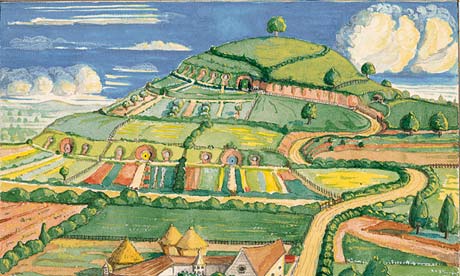
Tolkien's art work for Hobbiton-across-the-water

Hobbiton-across-the-water, by J.R.R. Tolkien

Most writing coaches agree that the first 1/4 of your story is where you reveal your characters and show their world while introducing hints of trouble and foreshadowing the first plot point. That is the first act, so to speak.

The Calamity:

Something large and dramatic must occur right around the 1/4 mark to force the hero into action, an intense, powerful scene that changes everything. Quite often, in epic fantasy the inciting scene will be comparatively disastrous, and one that that forces the protagonist to react. He/she may be thrust into a situation that radically changes their life and forces them to make a series of difficult decisions.

  • What incident or event will occur at the first plot point?
  • What negative effect does this event have for the protagonist and his/her cohorts?
  • How are hero’s efforts countered?
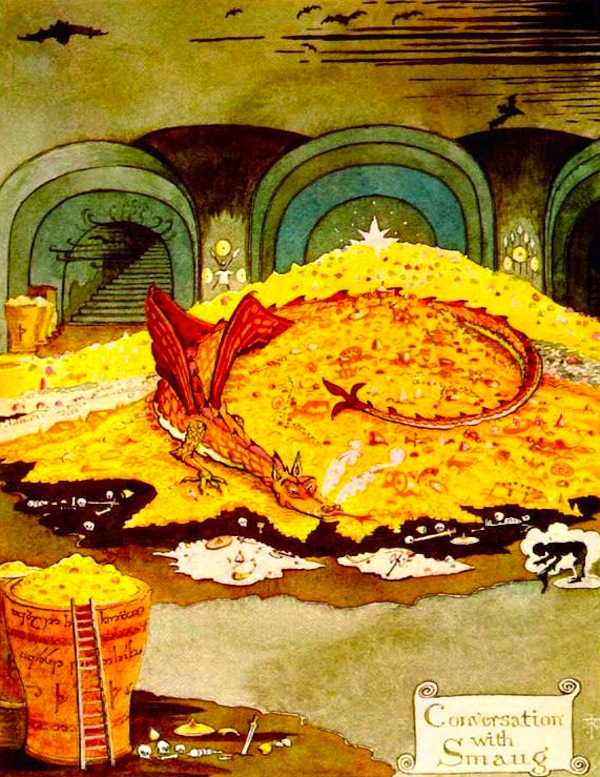
A conversation with Smaug by J.R.R. Tolkien

A conversation with Smaug by J.R.R. Tolkien

The Villain:

Conflict drives the story.  We know a great story has a compelling protagonist, but in order to have a great conflict, you must also have a great adversary. The hero has an objective, and so does the villain.

  • Identify the opponent–who is he/she, and what is their power-base?
  • What is the adversary’s primary goal, and who or what are they willing to sacrifice to achieve it?
  • Do the hero and the villain know each other, or are they faceless enemies to each other?
  • How does the adversary counter the hero’s efforts?

In fantasy, and often in thrillers and horror, we have an adversary who is capable of great evil. They may have supernatural powers, and at first they seem invincible. Their position of greater power forces the hero to become stronger, craftier, to develop ways to beat the adversary at his game. A strong, compelling villain creates interest and drives the conflict. Write several pages of back-story for your own use, to make sure your antagonist is as well-developed in your mind as your protagonist is, so that he/she radiates evil and power when you put them on the page. If you know your antagonist as well as you know the hero, the enemy will be believable when you write about their actions.

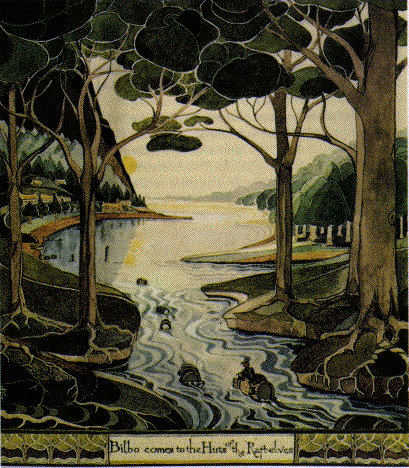
Bilbo comes to the huts of the raftelves by J.R.R. Tolkien

Bilbo comes to the huts of the Raft elves by J.R.R. Tolkien

The Hero’s Struggle:

Now the story is hurtling toward the midpoint, that place called the second plot-point. The characters are acting and reacting to events that are out of their control. Nothing is going right-the hero and his/her cohorts must scramble to stay alive, and now they are desperately searching for the right equipment or a crucial piece of information that will give them an edge. The struggle is the story, and at this point it looks like the hero may not get what they need in time.

Their weaknesses must be first exploited by the adversary, and then overcome and turned into strengths by the hero. The hero must grow.

During this part of the story you must build upon your characters’ strengths.  Identify the hero’s goals, and clarify why he/she must struggle to achieve them.

  • How does the hero react to being thwarted in his efforts during the second act to the midpoint?
  • How does the villain currently control the situation?
  • How does the hero react to pressure from the villain?
  • How does the struggle deepen the relationships between the hero and his cohorts/romantic interest?
  • What complications (for the hero) arise from a lack of information regarding the conflict, and how will he/she acquire that necessary information?
  • Midway between the first plot point and the second plot point, what new incident will occur to once again dramatically alter the hero’s path? This will be a turning point, drama and mayhem will ensue, perhaps offering the hero a slim chance. What stands in his/her way of realizing that small chance and what will the hero sacrifice to attain it?

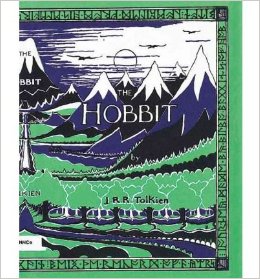
the hobbitThe first half of the book can be exciting or a bore–and because I’m always growing as an author, my new rule is “don’t write boring books.”

I say this because the books I loved to read the most were crafted in such a way that we got to know the characters, saw them in their environment, and bam! Calamity happened, thrusting them down the road to Naglimund or to the Misty Mountains.

Calamity combined with villainy creates struggle, which creates opportunity for great adventure, and that is what great fantasy is all about.

2 Comments

Filed under Adventure, Books, Fantasy, Humor, Literature, Publishing, Self Publishing, Uncategorized, writer, writing

Marketing tips from the eight-year-old

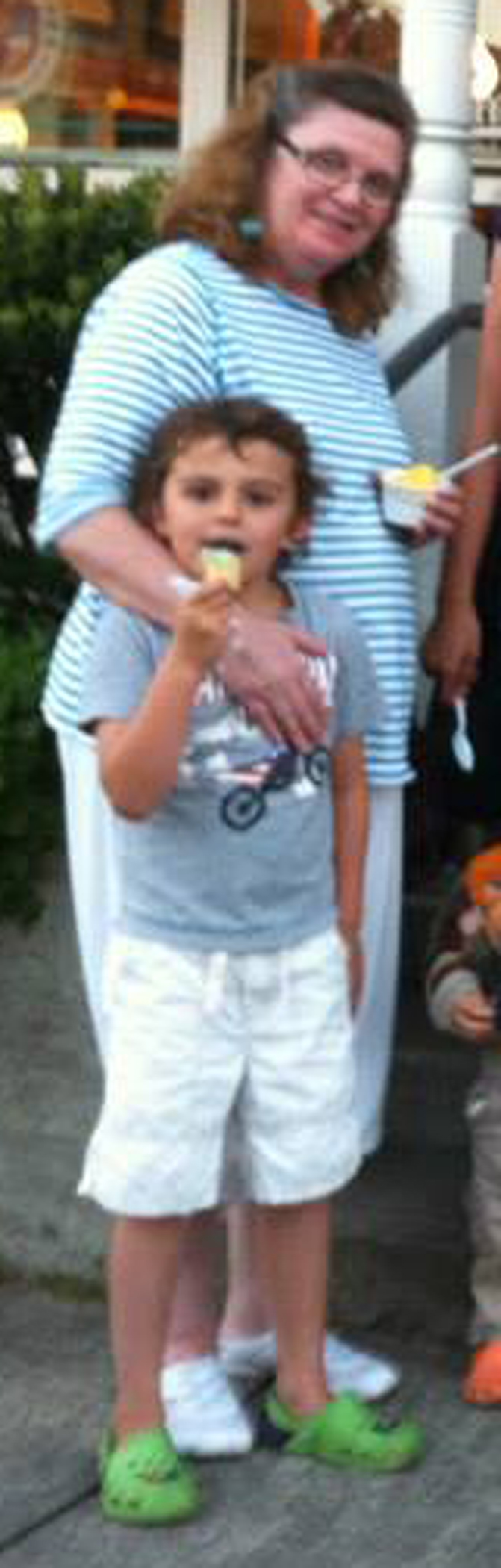
Me & Logan, Cannon Beach Oregon August 2014

Me & The Boy

My oldest daughter and her son came to stay for a long weekend. It was fun, and wonderful, having The Boy around, especially now that he is eight. He is becoming a well-behaved person, and developing a few manners, although he is still only eight, and rather a barbarian in many ways

Of course, it poured down rain while he was here. but we had fun anyway.

He discovered that grandma is a writer, and writes “real books.” He was quite proud. “I’m gonna read these when I’m a grown up.”

I confess, I did bask in the glory, until he explained that I had made a huge marketing error.

My biography is in the back of my books, but not my picture. The Boy said, “I want the kids at school to know that my grandma writes real books, but they won’t believe it if there’s no picture.”

I didn’t want to tell him that the camera steals my soul, and I hate every picture I’ve ever seen of me. But, after thinking about it, I agreed that he might have a point.

I also didn’t tell him that people who write books are a dime a dozen. Everyone you meet either is an author, or has a couple of the ne’er-do-wells in the family. Apparently people who are otherwise unemployable write books, in order to appear useful.

I didn’t tell him that, because for a shining moment, I was special. He was proud of me, his grandma, because I can write real books. I have to admit, that felt pretty good.

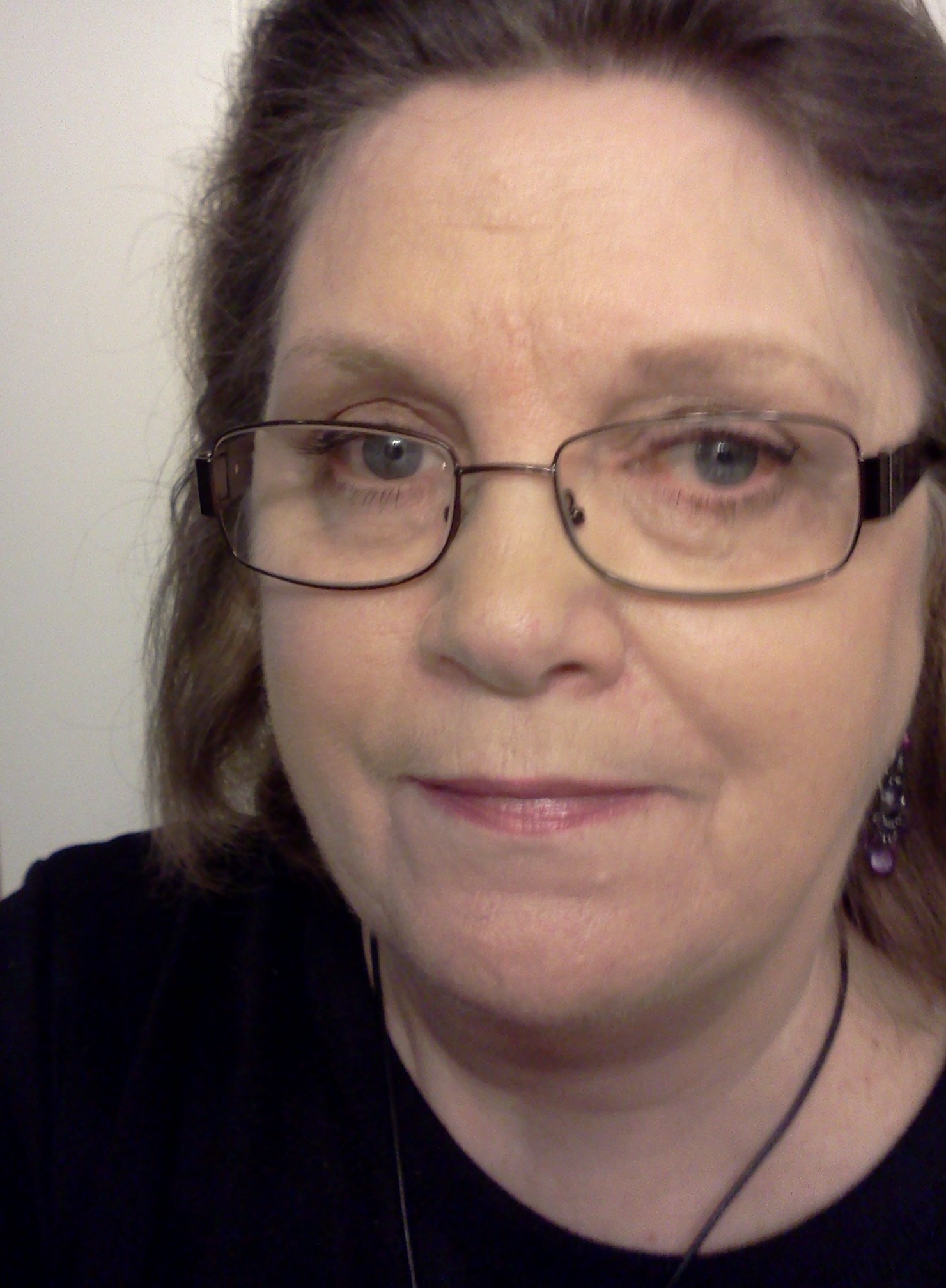
So we looked through the pictures of me. I thought this one would work, as it’s the most recent and hides my ample, middle-aged waistline.

Connie J. Jasperson profile pic 3

He said, “No–it doesn’t really look like you. You’re hair is a lot fuzzier than that.”

I said, “But I combed it just for that photo. I even put on lipstick.”

He wasn’t swayed.

So I tried a different one. “This one is only two years old.”

Connie J. Jasperson Profile Pic

I thought it was perfect, as it also hides the ample, middle-aged, waistline.

He was not impressed.  “Are you kidding? Your hair’s too short in that one.”

Heavy sigh. “This one?”

Connie J. Jasperson


“Get real, Grandma–people want to see the real you. The one who cooks and stuff.”

“No, they don’t,” I said. “People don’t care about that. I don’t think I need a picture in the back of my books.”

“Trust me, Grandma. I’ve read a lot of books, and they all have the writer’s picture in the back. I want my friends to know it’s you.”

After much discussion he picked a picture.  I doubt it will go in the back of a book, but this is what he picked.

Fall 2014 profile foto for avatars

“Why did you pick that one? I use that one as my Facebook icon. ”

“Because that’s how you look. Comfy, and like a grandma. With fluffy hair.”

It’s hard to argue with that sort of logic. But I’ll probably have to have a professional picture made at some point.

One that doesn’t show my middle-aged waistline or the comfy fluffiness of my hair.

extra small caricature of connie  by street artist Stacey Denton


10 Comments

Filed under Books, Fantasy, Humor, Literature, Publishing, Uncategorized, writer, writing

Elements of the story: Circumstances and Objectives

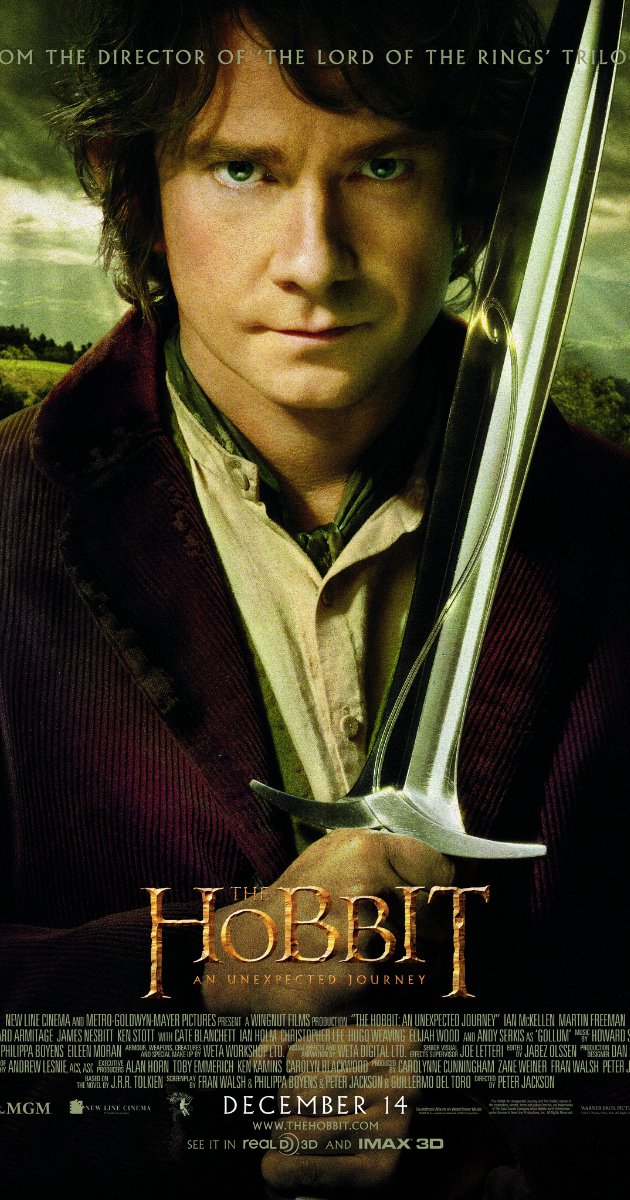
the hobbitAt the outset of any good story, we find our protagonist, and see him/her in their normal surroundings. An event occurs, and Hero is thrown out of his comfort zone and into the Situation, which is the core idea of your plot. This is the circumstance in which your protagonist finds himself in the beginning of the story. 

In the opening pages of The Hobbit, by J.R.R. Tolkien, a respectable hobbit, Bilbo Baggins, is living a comfortable life in a prosperous, sheltered village, and has no desire to change that in any way. However, a casual, polite greeting made to a passing wizard sets a string of events into motion that will eventually change the course of history of Middle Earth.

the hobbit movie poster 3The wizard, Gandalf, tricks Bilbo into hosting a party for Thorin Oakenshield and his band of dwarves, who sing of reclaiming the Lonely Mountain and its vast treasure from the dragon Smaug. When the music ends, Gandalf unveils a map showing a secret door into the Mountain and proposes that the dumbfounded Bilbo serve as the expedition’s “burglar”. The dwarves ridicule the idea, but Bilbo becomes a little indignant, and joins despite himself. The next morning he has second thoughts, but the last minute Bilbo literally runs out the door, with nothing but the clothes on his back.

  • How will the story start?
  • What is the hero’s personal condition (strength, health) at the beginning?
  • How will that condition be changed, for better or worse, by the hero himself or by the antagonistic force?
  • What could possibly entice him out of his comfort zone?

Now we come to the next part of the core of your plot: Objective

the hobbit movie posterA protagonist has no business showing up on the page unless he/she has a compelling objective. If he doesn’t want something badly enough to do just about anything to achieve it over the next couple hundred pages, then he doesn’t deserve to have a story told about him.

Bilbo does have an objective. Once he gets past his feeling of having made a terrible mistake, he desires nothing more than to help his friends achieve their goal: that of regaining their lost kingdom. Gandalf exerts a parental influence over Bilbo at the outset, guiding him and pushing him out of his comfortable existence.  But it is Bilbo who has common sense and compassion, who gradually takes over leadership of the party, guiding and rescuing them from their own greedy mistakes. This is a fact the dwarves can’t bear to acknowledge, and also a fact he doesn’t realize himself.

Those turning points where with each adventure Bilbo gains confidence and a tool or weapon he will later need are what make up the best parts of the adventure. That is what you must inject into your adventure, be it urban fantasy or science fiction.

  • At the beginning of the story, what could the hero possibly want to cause him to risk everything to acquire it?
  • How badly does he want it and why?
  • What moral (or immoral) choice is he going to have to make in his attempt to gain that objective?

Perhaps your tale is set on a space station. What does your protagonist need that is in short supply? What does he have to do to get it?

Perhaps you are writing an urban fantasy. Perhaps your main character is a vampire. He/she requires sustenance–what will he/she do to get it? Or conversely, if a human, what will he/she do to avoid becoming vampire-food?

Protagonists begin their tale in their current surroundings. They are thrown out of their comfortable existence by circumstances, and forced to identify objectives they must achieve or acquire in order to resolve their situation.

hobbit-battle-five-armies-bilbo-posterCircumstances and Objectives combine to form the plot. Character A desires Objective B–and will do anything to acquire it.  Along the way, Character A has a series of adventures that force him to grow and change, but which in the end give him the strength, the moral courage to enable the final resolution.

Thus, whichever you conceive first, characters or objective, you need to know why your character is willing to leave his circumstances and embark on his adventure. That objective must be compelling enough for him to risk everything he values to achieve it.

But what if a side character has such a compelling story that the book becomes about him, and not our hobbit? If you notice that is the case, rewrite your book so that the character with the  most compelling story is the protagonist from page one.

Potential for gain must outweigh the potential for loss–so if he is risking his life, there had better be a damned big payoff at the end, whether monetary or in moral coin. Without that risk and potential for gain, there is no story.


2 Comments

Filed under Books, Fantasy, Humor, Literature, Publishing, Uncategorized, writer, writing

Elements of a story: Identifying your protagonist

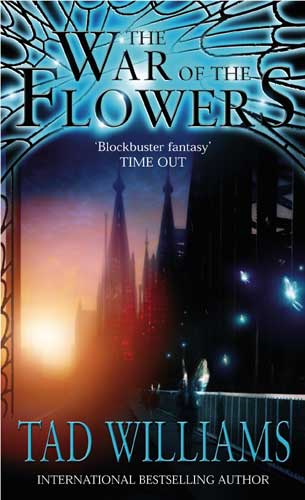
War_of_the_FlowersGreat plots drive great stories, but the best stories start with a character that really moved me. The trouble is, when we first begin to write a story, one character leads to another and soon, each character is vying to tell your their own story. It’s sort of like a family gathering, where they all talk at once, and you love them all.

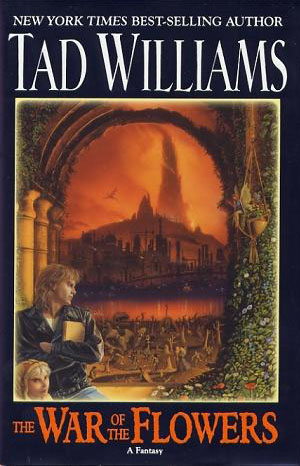
This makes writing a true stand-alone book difficult. Tad Williams managed to do just that in 2003 with The War of the Flowers.  Theo Vilmos is a thirty-year-old lead singer in a marginally successful rock band. Fearing he is past his prime, he seeks refuge in a remote cabin in the woods. There, he reads a memoir written by a (perhaps) dead relative. This relative claimed he had visited the magical world of Faerie. A series of strange events occurs and before Theo knows it, he too is drawn into a place that is both strange and yet familiar to him, revealing the truth about many things that had always puzzled him.
war_flowersWilliams had another great character to draw on in his little fairy, Applecore, but he kept it contained in one wonderful novel detailing Theo Vilmos’ adventures rather than going too far afield and having to serialize it. This is a model we lesser-known fantasy authors might want to take a closer look at and somehow revive: the stand-alone novel.

We might have a great story in our head, and we may have an awesome cast of characters dying to leap onto the page, but until we know who the hero is, we have no story. From the first page to the last, Tad Williams knew who his hero was in The War of the Flowers, and it’s clear that he never doubted it was Theo Vilmos.

Sometimes  identifying just whose emotional and physical journey you will be following is easier said than done. When faced with a pantheon of great characters, ask yourself these questions (listed here in no particular order):

  • Who among these people has the most to lose?
  • Which character do you find the most interesting?
  • Who’s personal story inspired this tale in the first place?
  • Who will be best suited to taking full advantage of all this plot’s possibilities?
Dragonbone_ChairFrom my point of view, one of the best fantasy series of all time is Tad Williams’  epic, three-volume masterpiece, Memory, Sorrow, and Thorn. It opens with volume one, The Dragonbone Chair. This is a very different tale than The War of the Flowers, much larger, and encompassing several entire cultures on the edge of disaster.

In this opening volume, Tad had many great characters to draw on, all of whom had strong stories. Indeed, there is a large cast of characters with incredible possibilities, but as a reader I liked that he managed to tell their stories without losing sight of the original story that sparked the series in the first place.

The fact that Williams was able to weave the many threads of such a large cast of characters into one enthralling story and still leave (Seoman) Simon Snowlock as the main protagonist with a gripping story-line  is amazing.
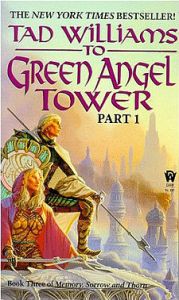
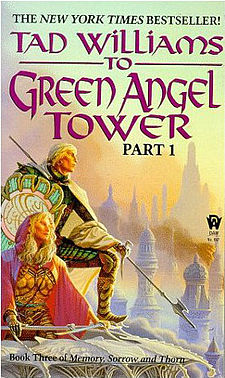
Green_Angel_Tower_P1Yet in this series, Tad Williams does just that. He could have written it as the story of Prince JosuaPrincess Miriamele, Binabik the Troll, or even the Norn prince, Jiriki. They are each compelling characters, with deep, intriguing back-stories, and any of them would have been an awesome protagonist.

Each and every one of the many characters in this series was strong enough to warrant a book of their own, but Simon the kitchen boy remains the central character, and the other story-lines are detailed but remain subordinate to his, fleshing it out and defining his ultimate fate, driving the plot to the final denouement, and the cataclysmic events in Green Angel Tower.
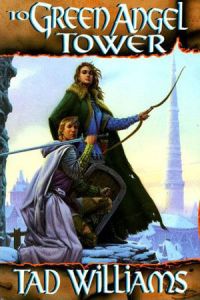
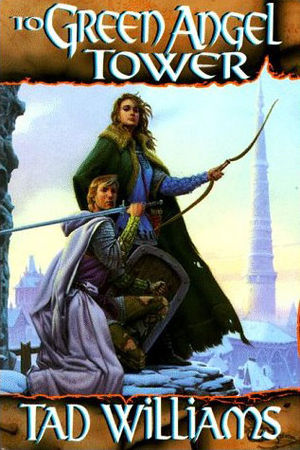
To_Green_Angel_TowerThis juggling act, this ability to not become sidetracked by your wonderful side-characters while telling their story is critical to the progression of your plot. It’s excruciatingly easy to become so enthralled with the story-line of a minor player that you derail your novel in the first draft.

I’m a gamer and I play Final Fantasy type RPGs. I adore side-quests, and I love a little back-story to flesh out whatever tale I’m reading, but just like in a game, the protagonist and the core plot has to stay in motion. Memory, Sorrow, and Thorn has a lot of side-quests, and a lot of back-story, but despite the opportunities for derailment, it is propelled irresistibly toward the final catastrophic event, and does it in three admittedly large books.
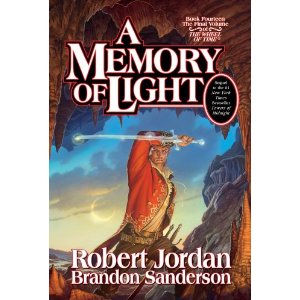
A_Memory_of_Light_cover (1)As much as I adored the Wheel of Time series, Robert Jordan seemed to fall into the trap of loving all his characters too much, and wanting to tell each of their truly epic stories in the one series–and it couldn’t be done without aggravating his fans.

Consider this: although it was originally planned as a six-book series, The Wheel of Time grew to encompass fourteen volumes, a prequel novel, and a companion book.  Jordan began writing the first volume, The Eye of the World, in 1984. It was published in January 1990. With Jordan’s death on 16 September 2007, the conclusion of the series was in question, but Brandon Sanderson stepped in and did a masterful job of taking Jordan’s incredible mass of notes and background, along with the rough draft and finished the series’ final three installments.
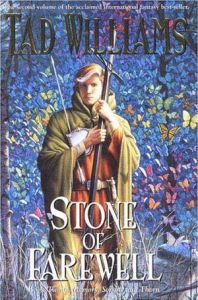
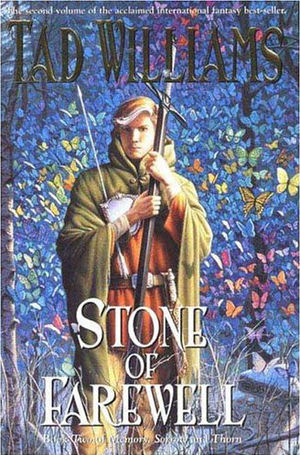
Stone_of_FarewellIt occasionally happens that you have chosen a protagonist, but another character suddenly seems to have a more intriguing way about him. It is up to you to make a decision–who will be the central character? If, after all is said and done, a different character than the one you originally thought was the protagonist comes to the fore, you must go back and rewrite your beginning to to reflect that.

Deciding who that protagonist will be is a matter of knowing which character has the most opportunity to take full advantage of all the possibilities. The other characters serve only to propel him/her to the final conflict.

Sometimes, as in Memory, Sorrow, and Thorn, that character is the 14 year old kitchen boy on the verge of manhood, and not the battle-hardened prince with the tragic history.


Comments Off on Elements of a story: Identifying your protagonist

Filed under Adventure, Books, Fantasy, Humor, Literature, Publishing, Uncategorized, writer, writing

Conventions: Hawking your books vs attending the convention

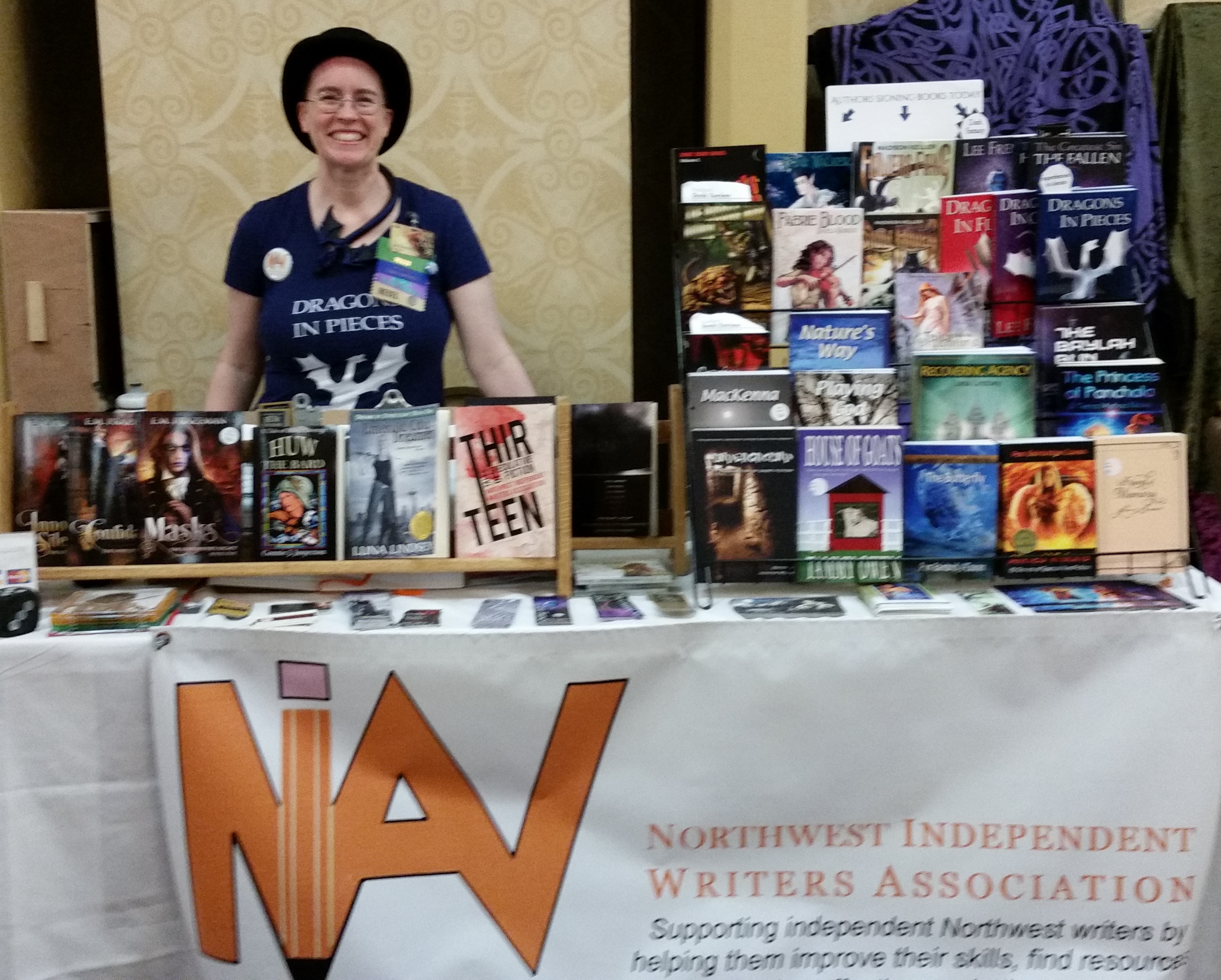
Lee French at Norwescon 2015 in NIWA Booth

Lee French at Norwescon 2015 in NIWA Booth

Going Indie means going it alone, and doing it the hard way. However–there are now small bands of indies coming together to help each other, and in the process, help themselves.
One such organization is Northwest Independent Writers Association, an organization of indie and small-press authors based in Western Oregon and Western Washington. We seem to be situated along the I-5 corridor from south of the Portland area north through the Seattle area.

This last week I attended Norwescon, carpooling the first day with fellow Myrddin Publishing Group author, Lee French. She is an awesome person, as well as a wonderful, creative author.

My book, Huw the Bard, was in the rack at the NIWA table, and I met some of the most wonderful people: Angela Korra’ti, Madison Keller, Jake Elliot, and Luna Lindsey were all there, manning the table and helping each person who stopped to find a book that fit them, regardless of if it was their own book or not–we were selling each others’ books as well as our own.

I ran into my good friend, fellow NIWA  member, Thomas Gondolfi , who was working his own booth.

Saturday night, Lee, Jake, Angela and I had dinner with fellow NIWA member, steampunk author, Jeffrey Cook.

Huw the Bard at NorwesconMy feet are killing me–today, I am not sure I will do it again, but I am glad I did this time.  My view will likely change as I begin to feel rested again.

Huw the Bard was not a good fit for that venue–they were more into fairies and steampunk, which Huw is obviously not. However, I think he would do well at a ren-fair, as the people who were interested in him were all ren-fair people.  Most likely my best books for a gaming venue will be my World of Neveyah series, as it is RPG game-based, and gaming of all varieties is what Norwescon is all about.

Standing in the booth for most of 4 days did me in, I do confess.  I also was somewhat of a 5th wheel, in that the booth was too small for the number of authors who were there and willing to contribute their time and energy to the project. There was only room for 1 chair, and so we stood. I felt a bit unnecessary, at times, which is not a good way to feel, but they very kindly tolerated me.

Angela Korra’ti has a knack for selling her books, and I tried to learn as much as I could from her. Jake Elliot and Lee French seemed to know what they were doing too–there is definitely a learning curve to pitching your book live and in person.

norwesconBeing an indie author, or being published by a small press means you are on your own as far as getting the word out about your books.  This means if you want your books seen at a convention, you have to pay for the table, buy your stock, and get the word out, because no one else will.

It also means you must spend the convention in the dealers’ room at your booth, pitching your product to strangers, rather than taking in the panels and hearing speakers like George R. R.  Martin. But I did see him in the lobby while I was getting coffee, and I saw many, many people who really love his work, far more than I do–and they stood for hours to get to see him.

I would have loved to hear George speak, but I had books of my own to hawk. I never thought I would live long enough to be able to say that.

This is where you discover that going indie means honing an elevator pitch that will sell your book in thirty seconds. That will be my next trick.

cashbox 3This is also where you discover that the Sparco cash-box you bought, and  that was not cheap, is nearly impossible to unlock, but it makes an awesome weapon if you are ever mugged on the way back to your hotel. Which I wasn’t, but I’m an author, and that’s how I think.

It’s also where you discover that your target audience was not at that convention.

Most importantly, this is where you realize that your poor old feet are  just not up to you spending 10 hours a day standing on them.

I understand there is some controversy regarding the Hugo award nominations–but I didn’t hear them announced, as I was trying to sell books. I suppose a shakeup is inevitable, and I will have to do some reading to find out for myself what the problem is, in the eyes of the reading world.  That will be interesting–accusations of blocks of special interest groups gaming the outcome and such intrigue me, and I will definitely want to get to the bottom of that!

14 Comments

Filed under Adventure, Books, Fantasy, Humor, Publishing, Uncategorized, writer, writing

Norwescon 2015

NorWesCon 2015 - 1This weekend I am at Norwescon in Seattle, Washington, along with fellow Myrddin Publishing Group author, Lee French. This is where I get to do both the work and the fun stuff that goes along with being an author–AND Huw the Bard will be offered on the NIWA table!  How cool is that?

Norwescon is a gamer-scifi-fantasy addict’s paradise.  The guests of honor are George R. R. Martin (Author), Julie Dillon (Artist), Amy Mainzer (Science), and Random House (Spotlight Publisher) represented by Anne Groell and Tricia Narwani.

Plus, there will be a large number number of seminars and special events: Thursday, Friday, and Saturday night each feature a DJ’d dance in the grand ballrooms, and Lazer Tag and many other games. Friday features an 18-and-over special event. And, don’t forget the Masquerade, complete with Children’s Masquerade. Holy cosplay!

Michael Tinker Pearce came by our booth on Thursday,  and I have to say I loved his work, Diaries of a Dwarven Rifleman. I really enjoyed meeting him–he’s a charming man.

000510Of course, food is tricky–the vegan must provide for herself while on the road. One can only hope that the room she ordered at her hotel that is within walking distance of the event will have the kitchenette as she had requested. Otherwise she will be downstairs at the breakfast area using the microwave at all hours.

Feeding myself at these events is always a challenge, even at conventions where they claim to provide for “special” dietary needs.  How hard is it to bake a damned potato and garnish it with a little guacamole, and some veggies sauteed in olive oil?  Apparently impossible, as proven by my annual PNWA conference dietary fiasco at the Hilton. I look forward to seeing how they manage to screw up “special” needs every year. Last year I was literally the last person to be served at the banquet, and the food arrived cold and inedible–and my table mates had long since finished theirs when mine was delivered.

Being glared at by the servers for wistfully hoping to eventually see a plate of food was also to be expected–after all, “special dietary needs” are a selfish fad designed to draw attention to ones self, don’t you know.

But Norwescon will be different. It’s far less expensive to attend, less than 1/5 the cost of PNWA (indies pay their own way, you know) and they proved snacks but you aren’t tied to their menu.

The difference is this: PNWA is a writer-focused event with seminars, agent, and editors attending and presenting seminars. I’ve found the writers who give the seminars there to be really entertaining and THAT is why I attend. It is an awesome, inspiring conference that recharges me.

Julie Dillon will be speaking at Norwescon, and as a wannabe artist myself, I’m quite intrigued by her work. The covers art she does for mainstream fantasy authors is just as high a quality as that of the legendary Michael Whelan.

George R. R. Martin photoSo I get to hang out in the dealers area with my friends from NIWA, buy a new T shirt or two designed by some crazy-gifted people, and I will get to hear George R.R. Martin speak on Sunday morning. Don’t love his work, but I adore him as a man and as a speaker.

If I am really crafty, I can get my pristine, barely-been-read first edition of A Game of Thrones signed during one of George’s 3 scheduled signing events–wowsers.

During the hippie era, of which I was a late entry to, most hippies did not refer to themselves as hippies as that was really term used when our parents were complaining about us. Mostly we referred to ourselves as freaks, since the mainstream society considered our willful desire for world peace to be aberrant. But out of that culture grew some of the best scifi and fantasy authors and artists of all time.

And so I say, it’s good to be a freak in a land where freaks really know how to freak! Norwescon will be an adventure for sure!

8 Comments

Filed under Fantasy, Humor, Literature, Publishing, Uncategorized, writer, writing

Creating Conversations

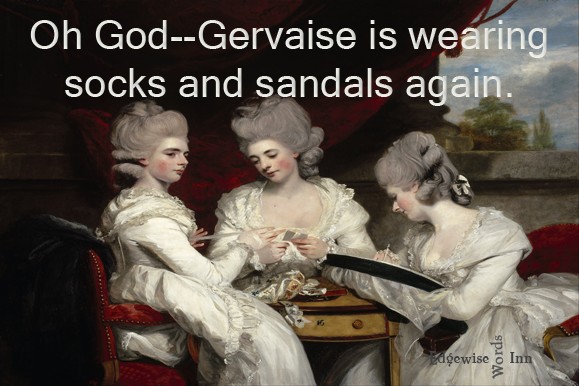
Socks and Sandals MemeConversations are easy to write…badly.

Unless the author thinks about it carefully, they can be stilted, stiff, and an unnatural wall of blah-blah-blah. Good writing involves learning the craft, and nowhere is that more apparent than in a conversation.

So how does the intrepid author write this phenomenon in such a way that it sounds natural? I always think of a conversation as having an arc: It begins, rises to a peak, and ebbs, an integral part of the scene, propelling the story forward to the next scene.

We might jabber about nothing, but in writing,  a good conversation is about something and builds toward something. J.R.R. Tolkien said that good dialogue must have a premise and moves toward a conclusion of some sort. If nothing comes of it, the dialogue is a waste of the reader’s time.

First, when we write about conversations between our characters, we want to ensure they don’t all sound like the same person. Imagine you are at a party. If you look around you, observing the conversations going on in small clusters, you will notice that every person has different mannerisms. The same is true of your characters when you see them in your head. With that image in mind,  you want to include those differences in their gestures, and their manner of speech.

When people talk, they rarely follow grammatical rules. Any English class you’ve taken will have stressed the importance of using proper grammar and punctuation in your writing, and believe me, those rules are important. However, when we attempt to write dialogue, those same rules should be thrown out of the window. People speak in broken sentences, with pauses, and even use incorrect words.

Now we get to the part where my editor and I have our own little conversation—the one where I stick random bits of punctuation in at odd places and she puts them where they belong or removes them entirely:

She: “I agree with the grammar part. I take exception to the punctuation. Punctuation rules MUST be followed especially in dialogue so that the reader reads the dialogue in the same manner the writer intended it to be read.”

Me: “Yes, ma’am.” (Muttering as I find ways to insert action where I want the pauses to go.)

Leonard_Nimoy_William_Shatner_Spock's_Brain_Star_Trek_1968We all take breaths at different places. Some people speak quickly and off the cuff, with short bursts. Others consider their words before they say them and speak more slowly. Every person in a given room speaks with their own unique style and pattern.

What are the roots of these patterns?  Speech habits are born in the environment the speaker grows up in, but they become identifiable mannerisms acquired throughout our lives.

Consider how the conversation fits into the arc of the scene.

We’ve talked about this before, but it bears repeating: first we must identify what must be conveyed in our conversation.

  1. Who needs to know what?
  2. Why must they know it?
  3. And how many paragraphs do you intend to devote to it?

My rule of thumb is, keep the conversations short and intersperse them with scenes of actions that advance the plot. Walls of meaningless conversation don’t keep the action moving and will lose readers, so  the conversations you include in your narrative must be important—and intriguing.

Author James Scott Bell says dialogue has five functions:

  1. To reveal story information
  2. To reveal character
  3. To set the tone
  4. To set the scene
  5. To reveal theme

SHotel California Memeome people will have the characters discuss the back-story, and this can be good if done the right way, in small snippets at critical points, and only when that information is needed. But this can be bad, especially when used as away to dump history in long, bloated paragraphs of dialogue.

Don’t give your characters long paragraphs with lines and lines and lines of uninterrupted dialogue. Those are sometimes seen as a wall of words by the reader. When asked how to write a good book, Elmore Leonard said, “Try to leave out the part that readers tend to skip.”

That goes double for dialogue. When I think of the novels I’ve enjoyed the most, the important information in their conversations is dealt with up front, and the minor details emerge later as they become important.

We don’t want our characters to be just a bunch of talking heads, sitting around, yammering on. It’s unnatural and doesn’t happen in real life except on the nightly news.

I’ve mentioned this before, but your characters should pause in their conversations, and sometimes miss a few beats. Beats are what screenwriters call the little bits of physical action that are inserted into dialogue and which in a novel can serve to indicate who said what without a dialogue tag interfering with it. Actions serve to punctuate the dialogue, to give the scene movement, and to maintain a strong mental picture, especially when an author is trying to balance the use of dialogue tags.

e3-2013-trailer-final-fantasy-x-x-2-hd-remasterRemember, actions are best placed where there’s a natural break in the dialogue. They show the mood and personality of your characters and allow the reader to experience the same pause in the dialogue as the characters do, and increase the sense of immediacy, making the scene real in the reader’s mind. It’s through the small habits we give our characters that we convey a little bit of their back-story, without having to resort to an info dump.


3 Comments

Filed under Books, Fantasy, Humor, Literature, Publishing, Self Publishing, Uncategorized, writer, writing

World Building part 4: Questions to consider when creating a society

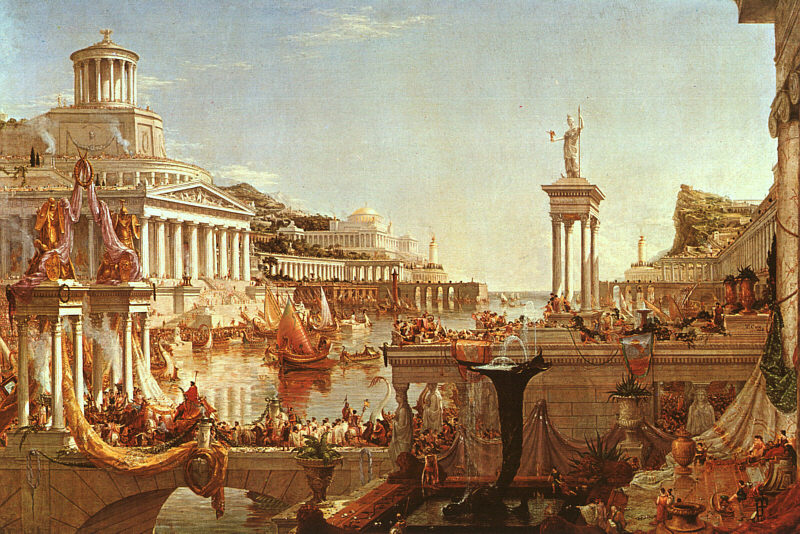
Thomas Cole, 1836: the Course of Empire: the Consummation

Thomas Cole, 1836: the Course of Empire: the Consummation

In speculative fiction, we often have one culture that is more advanced in contrast to the neighboring, somewhat more primitive cultures. Each of these societies have unique cultures, and if you know the culture of your characters’ homeland, you understand your characters and why they think the way they do.

But what is a society formed of? Initially, people come together and form  small communities, or tribes,  for protection. They find it’s a good way to consolidate more consistent sources of food and resources. With adequate food and shelter, people live longer and are generally healthier. Out of a need to get along with each other, they develop certain commonly agreed upon rules-of-the-road for sharing that wealth. Eventually these common rules become a complex social structure. As life becomes easier for the population in general, other amenities of civilization begin to be a part of their culture.

I write in many different worlds with widely varying levels of technology and forms of government. When I first began writing I knew it was important to know what the social structure was in each fantasy world, so I made a list of questions to consider when I begin constructing a new society. I was new at this, so please bear with the randomness of the order in which these things are listed:

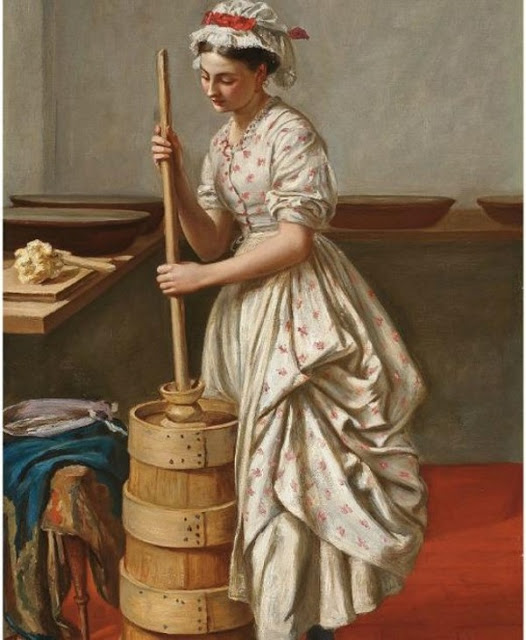
  1. The butter churnSocial Organization: Society is always composed of many layers and classes. How is your society divided? Who has the wealth? are there
  • Nobility?
  • A servant class?
  • A merchant class
  • A large middle class?
  • Who makes up the poorest class?
  • Who has the power, men, women—or is it a society based on mutual respect?
  1. Language, the written word, and accounting: Do they have a written language? This is really important if you are setting your people in a medieval world or in a really low-tech society, because it determines how knowledge is passed on. Low-tech generally equals an oral tradition.
  • How are people educated?
  • Who is allowed to learn to read and write?
  • How are bards, storytellers and other disseminators of knowledge looked upon?
  • How is monetary wealth calculated?
  • Do they use coins? What is their monetary system? If you are inventing it, keep it simple. (I generally use gold,  divided into tens: 10 coppers=a silver/ 10 silvers=a gold)
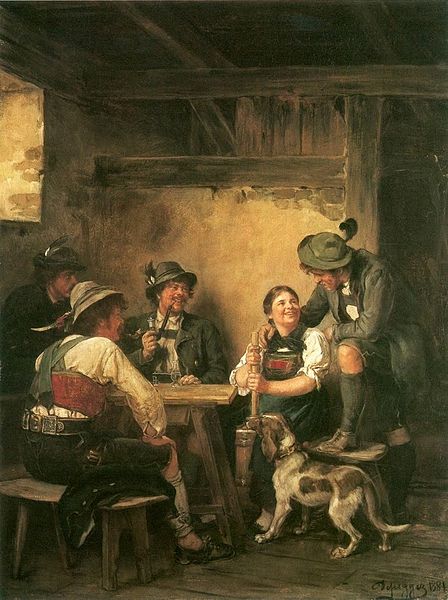
  1. Franz Defregger, 1921: Auf der Alm

    Franz Defregger, 1921: Auf der Alm

    Ethics and Values: What constitutes morality?

  • Is marriage required?
  • How are women treated? How are men treated?
  • How are same-sex relationships viewed?
  • How are unmarried sexual relationships seen in the eyes of society?
  • How important is human life? How is murder punished?
  • How are treachery, hypocrisy, envy, and avarice looked upon?
  • What about drunkenness?
  • How important is truth?
  • What constitutes immorality?
  • How important is it to be seen as honest and trustworthy?
  1. Religion and the Gods: How important is religion in this tale? If it is central, ask yourself: Is there one god/goddess or many? If the worship of a deity is a key part of your tale, you must design the entire theology. You must know the rituals, and know how their deity holds their hearts. You must know how that deity considers his/her worshipers.
  • What sort of political power does the priestly class wield?
  • What is the internal hierarchy of the priesthood?
  • Who has the power?
  • Is this religion a benevolent entity or all-powerful, demanding, harsh?
  • How does the priesthood interact with the community?
  • Who can join the priesthood
  • Do people want to join the priesthood or do they fear it?
  • How is the priesthood trained?
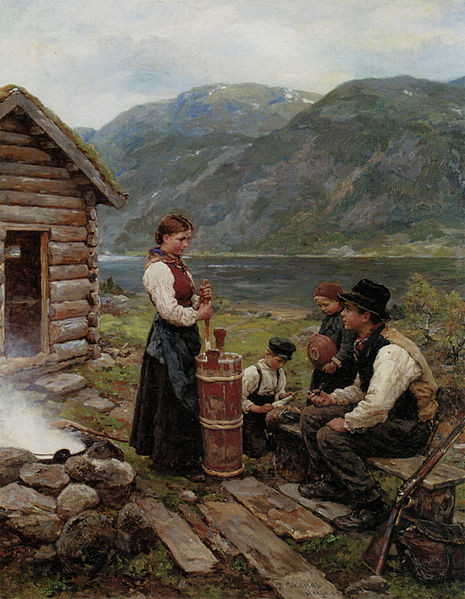
  1. Jahn Ekenæs, 1908: Family in a Norwegian fjord landscape

    Jahn Ekenæs, 1908: Family in a Norwegian fjord landscape

    Level of Technology: What tools and amenities does this society have available to them? What about transport?

  • Hunter/Gatherers?
  • Agrarian/farming
  • Greco-Roman  metallurgy and technology?
  • Medieval metallurgy and technology?
  • Pre-industrial revolution or late Victorian?
  • modern day?
  • Or do they have a magic-based technology?
  • How do we get around and how do we transport goods? On foot, by horse & wagon, by train, or by space shuttle?
  1. Government: There will be a government somewhere, even if it is just the local warlord. Someone is always in charge because it’s easier for the rest of us that way:
  • Is it a monarchy, theocracy, or a democratic form of government?
  • How does the government fund itself?
  • How are taxes levied?
  • Is it a feudal society?
  • Is is a clan-based society?
  • Warlord, President, or King/Queen?
  • How does the government use and share the available wealth?
  • How is the government viewed by the citizens?
  1. Crime and the Legal System: What constitutes criminal behavior and how are criminals treated?
  1. Foreign Relations: Does your country coexist well with its neighbors?
  • If not, why? What causes the tension?
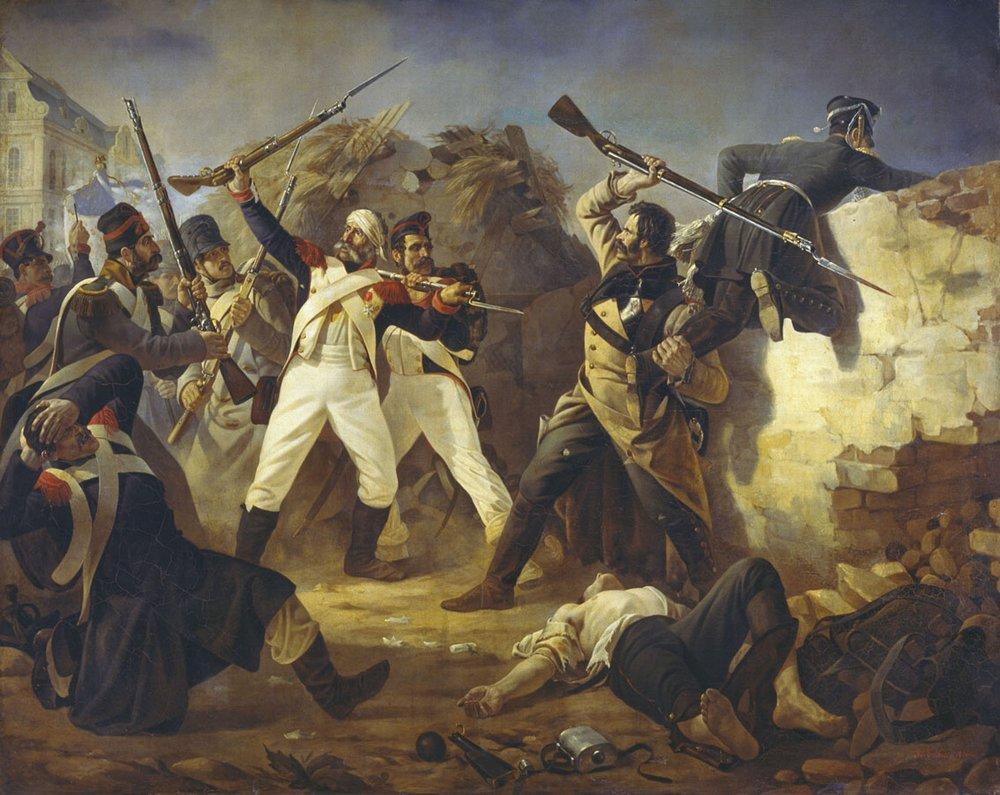
  1. Feat of the grenadier of leib-guards Finnish regiment Leontiy Korennoy in the battle of Leipzig at 1813

    Feat of the grenadier of leib-guards Finnish regiment Leontiy Korennoy in the battle of Leipzig at 1813

    Waging War: This is another area where we have to ask what  their level of technology is. It is critical for you as the author to understand what sort of weapons your characters will bring to the front, and also what the enemy will be packing. Do the research and choose weaponry that fits your established level of technology.

  • What kind of weaponry will they use?
  • How are they trained?
  • Who goes to battle? Men, women, or both?
  • How does social status affect your ability to gain rank in the military?

This is by no means a comprehensive list. It was initially meant to be a jumping off point, just a short list of things for me to ponder, but I thought I would share it with you today. Considering this little list of ideas always leads to my realizing a kajillion other rather large concepts that  combine to make up  a civilization. You are welcome to use this roster to form your own inventory of ideas about society.

What I originally did was to write the whole story of the community my protagonist grew up in, a word-picture of about 5000 words, and then I set it aside, to use as reference material. This is the method I still use today.

When you have cemented the society in your mind,  the world your characters inhabit will flow naturally and your protagonists will fit into it organically. Their society will be visually real to the reader, even if the world it evokes in their minds isn’t exactly your vision of it. You will have done your job, by giving them a solid framework to imagine the story around.

2 Comments

Filed under Books, Fantasy, Humor, Literature, Publishing, Self Publishing, Uncategorized, writer, writing

To swag or not to swag

HTB Bookmark side B copyI’ve several multi-author events coming along in the near future, and I’ve been preparing accordingly. I’m now technologically able to accept any sort of payment for my sales at these events: I actually own a portable store.

Now I have to consider swag–that portable bit of treasure to keep others thinking about you and your books.

It’s always hard to know what sort of swag to invest in, what is going to pay for itself. I can’t really afford to go nuts here, so I’m going to see what my author friends are pushing, and try to determine just what is going to be the right fit for me.  So I ordered the old standby indie swag-item, book marks.  I’ll make sure each book I sell has one in it, and if a passerby asks for one I will hand them out. Some folks like them so I’ll make sure I have some for them, but at various different conferences and conventions, I’ve observed that a lot of things like that just get tossed unless the person actually asked for it. Why invest in something that will just end up littering the mall?

I went to an event and met a lovely man from Alaska who practically forced me to take a cardboard replica of his book cover. As I said, he was friendly and nice, but…it must have been costly and I had no idea what to do with it. By the time I arrived home it was a mangled mess and went out with the recycling. Thus, I don’t even remember his name, or his book.

That incident got me to asking myself: what do I really want out of this? After all, I am selling my brand, and that brand is my author name.  I want people to remember it.

Business card MockupSO: Business Cards–These are an absolute must. They’re cheap and easy to make on my home computer and good to hand out when asked for one. Keep it simple and readable, with just the facts:

  • Your Author Name
  • Your website
  • Your Fan Email Address
  • Any other contact information you feel comfortable giving out
  • Your book title (s)

Remember: Don’t Junk It Up.  Simple and readable is the way to go with business cards.

I have another friend who is investing in postcards that have to do with his book, and each one will have a coupon to redeem a free paper copy of his forthcoming novella–and that’s a good idea, but also costly. I need to keep my costs a low as possible, so that will not be an option for me. Romance authors are encouraged to offer all sorts of little swag items–chap-stick, makeup mirrors, even tote bags–these are costly though. Whatever I do, it has to be effective and low-cost.

HTB Stamp copyI do think custom post it notes might be a good idea.  They seem reasonably priced, and fairly easy to do. Again, I think the key is to do it like business cards and book marks–keep it simple and just the facts: Author Name, website, and book title. If I decide to do those, I’ll let you know how it goes.

I had fun finding clip-art and designing a special Huw the Bard Stamp for an event that will happen in June–each participating author will have a stamp and will stamp the programs of the crowd as they pass through.  This was intriguing, and something I can use later in so many ways. Plus it was only $ 7.95 + shipping.

Anyway, I’m sure my little stamp will be great fun for the grandkids–heh heh…hold still and let grandma stamp this little tattoo on you….

7 Comments

Filed under Books, Fantasy, Humor, Literature, Publishing, Self Publishing, Uncategorized, writer, writing