Category Archives: writing

#FineArtFriday: The Bird Concert by Jan Brueghel the Younger ca. 1640 – 45

OLYMPUS DIGITAL CAMERA

Artist: Jan Brueghel the Younger (1601–1678)

Title: the Bird Concert

Date: between circa 1640 and circa 1645

Medium: oil on copper

Dimensions: height: 13.2 cm (5.1 in); width: 17.9 cm (7 in)

Collection: Herzog Anton Ulrich Museum

What I love about this painting:

This is a joyous, surreal exploration of all the birds the artist had ever seen in his native Antwerp, and many rare birds that he could only imagine. Brueghel has gathered birds from all over the world into a mystical, fairytale glen, posing them around a songbook.

They are learning to sing a in a language they all can understand, a wonderful allegory of the aspirations of the artist for humanity in the turbulent times during which he lived.

This painting also celebrates the new discoveries made by European explorers, as Brueghel had only seen scientific drawings of many of these birds. Even though he hadn’t seen some of these birds personally, he paints them as if they are before him.

The amazing flock of birds gathered here gives us an insight into the mind and sense of humor of Jan Brueghel the Younger, a man not too different from us even though he lived over 300 years ago.

This composition must have been important to Brueghel and says something about him. He went to the expense of getting copper as the base upon which he painted this scene. He was comfortable but not rich, so that tells me he intended this painting to last, to be something he would be remembered for.

About the medium of Oil on Copper, via Wikipedia:

Oil on copper paintings were prevalent in the mid sixteenth century in Italy and Northern Europe. The use of copper as a substrate for an oil painting dates back to Medieval times. The Flemish masters and other artists including Jan Breughel the ElderClaudeEl GrecoGuido ReniGuercinoRembrandtCarlo SaraceniAmbrosius Bosschaert IICopley Fielding and Vernet painted on copper. They favored copper for its smooth surface which allowed fine detail, and its durability. Copper is more durable than canvas or wood panel as a support for oil painting, as it will not rot, mildew or be eaten by insects. Contemporary painters also use copper as a base for paintings, some of them allowing the metal or patina to show through.

The old masters prepared the copper for painting first by rubbing it with fine pumice abrasive. The copper surface was then treated with garlic juice which is believed to improve adhesion of the paint. Finally a white or grey ground layer of oil paint was applied as a primer. After drying the copper panel was ready for the artist to begin painting. Later artists used the patina process, in which the copper is oxidized with the use of various acidic solutions, as part of the art work itself. The resulting patina or verdigris includes darkening of the metal, green and blue tones, depending on the chemical solution used. Patina is characterized by beautiful, variated patterns and textures which occur on the metal’s surface. [1]

About the Artist, via Wikipedia:

Jan Brueghel the Younger was born in Antwerp on 13 September 1601 as the son of Jan Brueghel the Elder and Isabella de Jode. His mother was the daughter of the cartographer, engraver and publisher Gerard de Jode. He trained and collaborated with his father in his workshop. His father was a friend and close collaborator of Peter Paul Rubens. Brueghel likely assisted with his father’s large-scale commissions.

On the wishes of his father he traveled around 1622 to Milan where he was welcomed by Cardinal Federico Borromeo. The cardinal was a patron and friend of his father who had met in Rome about 30 years earlier. In what was likely an act of rebellion against his father, he went to Genoa where he stayed with his cousins, the Antwerp painters and art dealers Lucas de Wael and Cornelis de Wael. Their mother was a sister of Brueghel’s mother. At the time his friend and fellow Antwerp artist Anthony van Dyck was also active in Genoa. He later worked in Valletta on Malta in 1623. From 1624 to 1625 he also resided in Palermo on Sicily at the time when van Dyck was also working there.

Brueghel learned that his father had died on 13 January 1625 from cholera only after his return to Northern Italy in Turin. Wanting to return to Antwerp immediately, he had to delay his departure for 16 days due to a severe fever. After recovering from his illness, he set off for his homeland by way of France. In Paris he met the Antwerp art dealer and painter Peter Goetkint the Younger, who was the son of Peter Goetkint the Elder, the master of Jan’s father. Goetkint was eager to return to Antwerp because his wife was expected to deliver a baby soon. The child was born on 25 August, the day on which Breughel arrived in Antwerp with his traveling companion who himself died a few days later.

Brueghel took over the management of his father’s workshop, sold the finished works of his father and finished some of his father’s unfinished paintings after completing them. In the Guild year 1624-1625, Brueghel became a master painter of the Guild of Saint Luke of Antwerp.

In 1626 he married Anna Maria Janssens, daughter of Abraham Janssens, a prominent history painter in Antwerp. He continued to operate the large workshop of his father. He became dean of the Guild of Saint Luke in 1630. That same year he was commissioned by the French court to paint a series of paintings on the life of Adam. It seems that his studio declined after this period and that he started to paint smaller scale paintings which commanded lower prices than those produced earlier.

In later years, he worked independently in Paris in the 1650s and produced paintings for the Austrian court in 1651. He is recorded again in Antwerp in 1657 where he remained until his death. [2]


Credits and Attributions:

[1] Wikipedia contributors, “Oil on copper,” Wikipedia, The Free Encyclopedia, https://en.wikipedia.org/w/index.php?title=Oil_on_copper&oldid=1060711380 (accessed June 9, 2022).

[2] Wikipedia contributors, “Jan Brueghel the Younger,” Wikipedia, The Free Encyclopedia, https://en.wikipedia.org/w/index.php?title=Jan_Brueghel_the_Younger&oldid=1086952033 (accessed June 9, 2022).

Image: The Bird Concert by Jan Brueghel the Younger ca. 1640 -1645, PD|100. Wikimedia Commons contributors, “File:Bruegel Vogelkonzert@Herzog Anton Ulrich Museum (1).JPG,” Wikimedia Commons, the free media

2 Comments

Filed under #FineArtFriday, writing

How the Written Universe Works: Choreographing Disaster #amwriting

The most powerful books in the Western Canon of Great Literature explore the human experience. Drama, heartache, disaster, and violence are the backdrop against which our lives play out.

Buddha quoteReaders connect with these stories across generations and across the centuries because the fundamental concerns of human life aren’t unique to one society, one technological era, or one point in time.

In my last post, we touched upon choreographing violence, but didn’t discuss some of the root causes. Violence often follows disaster.

Some disasters are caused by the cyclical ebb and flow of weather patterns, and others are the effects of human activity.

  • Possible effects of famine: food deprivation leads to starvation and disease.
  • Possible effects of severe drought: droughts lead to wildfires, famines, and pandemics.

Drought and famine feed societal unrest:

  • Lust for power: The bullies rise to the top, inciting their followers to violence against those perceived as weaker.
  • Lust for wealth: Bully warlords may mount an armed invasion to steal resources a neighboring society has acquired.

Even a slight lowering of the standard of living can feed civil unrest.

One disaster we may all face at some point is famine. Hunger exists in this world, and while many worthwhile charities do their best to alleviate it, famine is an enemy that takes no prisoners.

On a human level, hunger affects a person forever after. People can survive on very little, and unfortunately, many do. To have only enough food to keep you alive forms a person in a singular way. Their physical growth will be less than that of a well-nourished person, and their worldview is narrower. They have no energy to spare for anything beyond their day-to-day existence.

Christian_Krohg-Kampen_for_tilværelsen_1889Acquiring food becomes their first priority. Having a surplus of food becomes a reason to celebrate. To go without adequate food for any length of time changes a person and makes one determined to never go hungry again.

Unfortunately, for some, their desire to be well-fed will lead them to make choices that challenge the accepted morality of those who are not hungry.

Droughts often cause famines and worse. To go without water is to die. Thirst is a more immediate pain than hunger. The human animal can survive for up to three weeks without food but only three to four days without water. Rarely, one might survive up to a week.

Even brackish water must taste sweet when one suffers from a lack of potable water. And when one is without food, foods they would consider repugnant under other circumstances will fill their belly.

Look at the continual strife in third-world countries (not Ukraine, which is different and not a third-world country). You will see how long-term droughts have precipitated widespread famine, leading to civil unrest. Gang wars are fought over the right to own a water source, and these conflicts can erupt into revolution.

We forget this when we have plenty to eat and never have to worry if we will have water in our faucet as long as we can pay the bills.

But if we learn anything from the empty grocery store shelves in 2020 and the current supply chain crisis, it is that our well-fed lives are perched on a one-legged ladder.

Disaster on a wide scale can and will happen. But what of those small tragedies people face each day, deeply personal catastrophes, which only they are experiencing? These are also the seeds of a good story.

ContrastsLove and loss, safety and danger, loyalty and betrayal—the eternal themes of tragedy and resolution. Hardship contrasted against ease provides the story with texture, turning a wall of “bland” into something worth reading.

In real life, everything seems to be going along well. Life is good, calm, and peaceful. Then the tornado hits, the wildfire comes through, or the tidal wave—whatever the tool nature uses to destroy you, it decimates your home, your community, leaving you and your neighbors with nothing.

Then we must deal with the aftermath, cleaning up, searching for belongings, and searching for loved ones. This kind of disaster cuts deep into a person’s psyche.

Severe weather, fires, famines, and floods are terrible to live through, and many harrowing stories emerge from these experiences. Stories of apocalyptic catastrophes resonate because disaster drives humanity to bigger and better things, and those who survive and rise above it become heroes.

However, disasters regularly happen on what seems an unimportant level to people who have resources.

Consider the situation of a single mother working two part-time jobs. If she lives in my town, she lives where there is no public transportation. Other cities in my county have access to public transit, but not my community.

She struggles to pay for fuel, but what if her car breaks down? How will she get to work? All her money goes to fuel, childcare, rent, and utilities. What little she has left after those bills are paid goes to food.

She has no resources and no way to pay to repair her car. Without her car, she will lose both jobs. That is a profoundly personal disaster, one she and her children might not recover from.

How would you write her story?

Augustus_Edwin_Mulready_Fatigued_Minstrels_1883We writers must make our words count. We have to show the comfort zone in the moments leading up to the disaster, not too much, but just enough to show what will soon be lost.

Then, we have to bring on the disaster and write it logically so that the events make sense. We can’t tell the story. We must show it as if we were painters—and we have to inject real, believable emotion into the experience.

Open a new document and save it to your background file. Describe the disaster in great detail. Then save and walk away from it. Let that scene rest and move on to something else. When you return to it, re-read it, and see what you can cut and condense and still have the bones of the action. Use verbs and power words and go light on descriptors.

The window shatters, and I stare, dumbstruck. A two-by-four impales itself in the wall beside David amid a slow-motion shower of glass shards. The wind roars, tearing the door from my hand and slamming it shut.

Verbs in that scene are: stare, impales, shower, roars, tearing, slamming. Show the bones of the event by using verbs with powerful visuals, and the reader’s mind will fill in the rest.

Once the events are in order, we must show the aftermath of the calamity and the roadblocks they must overcome to recovery. We add the characters’ real-time reactions and emotions. Finally, we must leave our characters in a place of comparative happiness and security.

Employing contrast—ease against hardship—gives texture to the fabric of a narrative. When an author makes good use of courage in the face of personal disasters, readers think about the story and those characters long after it has ended.


CREDITS AND ATTRIBUTIONS:

Struggle for Survival by Christian Krohg, 1889, oil on canvas.  Now hanging in the National Gallery of Norway. Wikimedia Commons contributors, “File:Christian Krohg-Kampen for tilværelsen 1889.jpg,” Wikimedia Commons, the free media repository, https://commons.wikimedia.org/w/index.php?title=File:Christian_Krohg-Kampen_for_tilv%C3%A6relsen_1889.jpg&oldid=301415583 (accessed June 7, 2022)

Fatigued Minstrels, by Augustus Edwin Mulready, 1883, oil on canvas. Wikimedia Commons contributors, “File:Augustus Edwin Mulready Fatigued Minstrels 1883.jpg,” Wikimedia Commons, the free media repository, https://commons.wikimedia.org/w/index.php?title=File:Augustus_Edwin_Mulready_Fatigued_Minstrels_1883.jpg&oldid=335802594 (accessed June 7, 2022)

6 Comments

Filed under writing

How the Written Universe Works: Choreographing Violence #amwriting

In most genres, whether it’s mystery, fantasy, sci-fi, thrillers, or horror, the characters are forced to do a certain amount of fighting. However, scenes involving physical action can become a wall of mindless mayhem.

toolsScenes of conflict are crucial to the advancement of the story. They should be inserted into the novel as if one were staging a pivotal scene in a film.

For my own planning purposes, I have four levels of conflict, ranked by the escalation of action and the broadness of the conflict.

Level 1 – Quarrel – interpersonal disagreements, disputes, angry words, shouting, everyone walks away.

Level 2 – Skirmish – 1 to 5 combatants total, with one-on-one physical violence. Minor wounds, everyone walks away.

Level 3 – Melee – small gangs or squads clash, some combatants are seriously wounded, and someone may die.

Level 4 – War – full-on battle, many combatants, each side attempting to annihilate the other.

level 1 confrontation LIRF06052022If you have no experience with combat or fighting, you don’t understand the limits of a normal athlete’s physical abilities. So, you must do the research. Think of how the human body works in reality. If your character knees a foe in the jaw, how is it possible?

Are you really going to go into that much detail to explain how Joe slapped Mary and then bent down for whatever reason, and Mary kneed him in the jaw?

I suggest you don’t include that particular assault because a knee to the jaw is a weird move if both combatants are standing. If Mary has a blackbelt in Tae Kwon Do, she could have clocked him with her foot, but not her knee.

level 2 skirmish LIRF06052022If you don’t show how such a strange hit could happen, the reader will say, “That’s impossible.” It’s a risky choice though, because going into that kind of detail bores the heck out of our readers. Our readers mind will fill in the details and if it’s confusing, they may stop reading.

We must consider what is physically possible and what is not.

After the action is laid down, the next step is fine-tuning it. The reactions and responses of your characters are what make the experience feel authentic to the reader. After you have established that Joe was somehow hit in the jaw, what happened next? Did it knock him out?

Many authors get hung up on the technical side of each fight—how they were dressed, what weapons they had, and so on.

level 3 melee LIRF06052022Don’t do this for every incident. After they are armed and armored as much as they are going to be the first time, just have them meet the enemy, skirmish, and continue on. The reader already knows what armor and weapons they had.

The fight must advance the story.

  • Ask yourself why the quarrel happened.
  • What is the purpose of injecting that conflict into the narrative?
  • And once you establish that the fight happened, did you foreshadow it well enough, or does it seem gratuitous?

level 4 war LIRF06052022In real life, conflict happens on a sliding scale. It begins with a disagreement and escalates to an all-out war. While my outline will have a note alerting me to the level of conflict that must happen, I choreograph my fights to reflect that sliding level of intensity.

Billy Ninefingers begins with a level 1 quarrel that escalates to a level 2 fight. Billy’s sword hand is wounded. Besides the fact Billy is seriously injured in this opening fight, which is the inciting incident and core plot point of the book, I had two other goals with that fight scene:

  1. I needed to show how the Bastard is jealous and acts on any thought that passes through his alcohol-soaked mind.
  2. In the resolution of that scene, I demonstrated that Billy, even with his life in ruins, has a sense of fair play.

Just as physical attacks are in real life, Billy’s confrontation with the Bastard was over in less than a minute. From personal fistfights to waging war, actual combat is quick, bloody, and brutal.

Author-thoughtsPerson-to-person combat doesn’t stretch for hours because no matter how well trained a fighter is, no one has that kind of strength.

Skirmishes may happen in bursts that take place over a length of time, but there are pauses between clashes, allowing the combatants to briefly rest and get their breath.

It may feel like an hour is passing while you are in the middle of each clash, but in reality, each one-on-one fight only lasts a few minutes. At that point, even the strongest fighters are exhausted. Exhausted people make mistakes, and someone will be injured or die.

I suggest that for your own purposes, you map your violence out. Describe it for yourself as you would a journey. On a background document, write every slap and curse word. Write every hack and slash or gunshot, and make sure each occurs at its proper point in the melee.

Then walk away from it. Let that scene rest and move on to something else. When you return to it, ask yourself how many blows and hits your characters have taken.

combat - fencing LIRF06052022A typical fencing match goes until one has scored 15 hits on their opponent, and that match lasts nine minutes or less. Ask yourself how your fighter can survive the injuries that such blows would leave them with in real combat.

They most likely couldn’t.

Combatants block and defend as much as they attack. For the author, acting out each skirmish ensures that the moves are reasonable and make sense. But you aren’t done writing that scene just because the hacking, slashing, and gunshots are on paper.

Open a new document, take what you have already choreographed and consolidate it. While a war will justify ten paragraphs of description, a skirmish won’t. Write a one or two paragraph narrative that hits the high points and end it.

In each quarrel, we have to consider that every character in the fight is, and must remain, a unique individual. There should be no blurring of personalities, which can happen when an author focuses too intently on the action of the fight scene.

It’s a lot of work, but I go back to the first part of that section and make sure the character’s reactions are portrayed so the reader can suspend their disbelief.

powerwordsWordCloudLIRF06192021I try to show this discreetly by sitting back and visualizing the scene after the choreography is laid on paper. I replay it in my mind as if I were a witness to the events and look for each combatant’s facial expressions and reactions.

The strongest reactions get briefly mentioned in the story, the responses that push the plot forward. The other reactions are witnessed but given less prominence, becoming part of the scenery.

When I choreograph a fight, I think of it as if I were composing a conversation. In our literary conversations, we paint the impression of their individuality without boring the reader with insignificant details.

We must approach the fight scene the same way. I keep it concise and linear when it comes to fighting, as drawn-out fight scenes bore me to tears. Just the facts, the immediate emotional impact, and we move on to the recovery scene.

Excalibur London_Film_Museum_ via Wikipedia

Excalibur, London Film Museum, via Wikipedia

While it feels chaotic to those who are involved, violence is orderly and happens in a sequence of actions within a fundamental framework of order.

They block, dodge, hack and slash or shoot – the swiftness of the event and the emotional impact of the violence do the work of conveying the overwhelming sense of chaos.

My next post will examine how to choreograph personal disasters.

13 Comments

Filed under writing

#FineArtFriday: Sheep Grazing in the Dunes on an Italian Coast by Edith Corbet

Edith_Corbet_Sheep_Grazing_in_the_Dunes,_on_an_Italian_CoastTitle: Sheep Grazing in the Dunes, on an Italian Coast

Artist: Edith Corbet (1846 – 1920),

Description: Landscape Art

Medium: oil on canvas

Dimensions: 83.5 x 203 cm. (33 x 80 in.)

What I love about this painting:

There is a softness to this image, and yet it feels as if we are there, viewing the beach and the sheep. We know it was painted in late spring, as the sheep have just been shorn, and a few lambs can be seen with their mothers. To the right of the scene, the sky has darkened, and a storm is moving in.

The beach grass, the color of the dunes, and the shades of the water reflecting the ever-changing colors of the sky feel real, perfectly recreated for us by the artist’s hands. She gives us a peaceful serene moment, a chance to just breathe deeply and let go of the stress of our modern lives.

This kind of day is familiar to me, a scene that could be found on many beaches here in my Northwestern part of the world. I love it when a brief storm moves in over the dunes, stirring the waters, and showing how the sky is the most important part of the scene. It’s as if the sky says to the sea, “You may be big and important, but I am larger and more powerful.”

Little is known about Edith’s life. She travelled a great deal and loved Italy. I suspect her first marriage, to illustrator Arthur Murch, was difficult, as he was in poor health much of the time. It has been said that while he was talented, he rarely finished a project. His reputation was based on the two illustrations he produced for Dalziels’ Bible Gallery, while Edith’s landscapes had begun to bring her some fame. Murch died in Germany, and most of Edith’s life at that time was in Italy.

By the time she painted this scene, in 1897, Edith and her second husband, Matthew Ridley Corbet, may have been living in England for at least part of the year.

About the Artist, via Wikipedia:

Edith Corbet née Edenborough (28 December 1846 – 1920) was a Victorian landscape painter, having close associations with the Macchiaioli group (also known as the Tuscans or Etruscans), who, in a break with tradition, painted outdoors in order to capture natural light effects and favoured a panoramic format for their paintings.

She married the Victorian painter and illustrator Arthur Murch and moved to Rome, where she painted with Giovanni Costa, leader of the Macchiaioli group. In 1876 they both stayed in Venice. Olivia Rossetti Agresti wrote: Costa had a very high opinion of this artist’s gifts and used to remember with pleasure how on that occasion they used to go out together to paint from nature at Fusino (Agresti, 1904).

She frequently exhibited from 1880 to 1890 at the Grosvenor Gallery and the New Gallery. In 1891, after the death of her first husband, she married Matthew Ridley Corbet, one of the Macchiaioli group’s leading members, after which she exhibited mainly at the Royal Academy, visiting Italy and living in London for the remainder of her life. Corbet exhibited her work at the Palace of Fine Arts at the 1893 World’s Columbian Exposition in Chicago, Illinois. She died in Hampstead, north London, in 1920. [1]


Credits and Attributions:

Image: Wikimedia Commons contributors, “File:Edith Corbet Sheep Grazing in the Dunes, on an Italian Coast.jpg,” Wikimedia Commons, the free media repository, https://commons.wikimedia.org/w/index.php?title=File:Edith_Corbet_Sheep_Grazing_in_the_Dunes,_on_an_Italian_Coast.jpg&oldid=617254333 (accessed June 2, 2022).

Comments Off on #FineArtFriday: Sheep Grazing in the Dunes on an Italian Coast by Edith Corbet

Filed under #FineArtFriday, writing

How the Written Universe Works: The Inciting Incident #amwriting

Whether we show it in the prologue or the opening chapter, the first event, the inciting incident, is the one that changes everything and launches the story. The universe that is our story begins expanding at that moment.

the inciting incidentThe first incident has a domino effect. More events occur, pushing the protagonist out of his comfortable life and into danger. Fear of death, fear of loss, fear of financial disaster, fear of losing a loved one—terror is subjective and deeply personal.

I love stories about good people solving terrible problems, but I want them to mean something.

While I have experienced violent situations, I’ve also faced many things that shook my world but didn’t threaten my physical safety.

Arguments and confrontations are chaotic, leaving us wondering what just happened. We want to convey that sense of chaos in writing, but we must consider the reader. Readers want to see the scene and understand what they just read. We must design every action scene to ensure they fit naturally into a narrative from the first incident onwards.

The threat and looming disaster must be made clear to the reader at the outset. Nebulous threats mean nothing in real life, although they cause a lot of stress in our daily lives.

Those vague threats might be the harbinger of what is to come in a book, but they only work if the danger materializes quickly and the roadblocks to happiness soon become apparent.

Resolving disaster is the story. Hold the solution just out of reach for the following ¾ of the narrative. Every time we nearly have it fixed, we don’t, and things get worse.

The arc of the story begins with the first event, the inciting incident. The story’s arc occurs because the characters keep reaching for a resolution but can’t quite grasp it. Every attempt is blocked somehow.

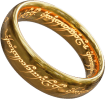
959px-One_Ring_Blender_Render

The One Ring, Peter J. Yost, CC BY-SA 4.0

The characters reap the rewards of minor successes but not the golden ring. Those small rewards keep hope alive and keep the reader involved.

If the first problem was taken care of too quickly, why? What sort of trap was laid, and why did the characters take the bait?

If we do this right, we will move our readers emotionally and they will remain invested in our book.

I mentioned that confrontations are chaotic. It’s our job to control that chaos and make a narrative out of it. Nothing upsets a reader more than a book where the author contradicts something that was said or that happened before.

I choreograph action sequences, which can take a little time. Each character’s reactions must be portrayed in such a way the reader doesn’t say, “He wouldn’t do that.”

In real life, people don’t all react the same way. So, our characters can’t all be superheroes in a fight scene. It’s easy to lose the characters’ individuality in the jumble of actions that a confrontation is.

If your violence is war, go to history and see how battles were waged historically. Any war will do, but let’s say you are writing an account of a soldier’s experiences in modern warfare. Go to the Battle of the Bulgealso known as the Ardennes Counteroffensive.

512px-Western_Front_Ardennes_1944

US Army Center for Military History, Public domain, via Wikimedia Commons

I’ve used this battle as an example before because it was a pivotal point in World War II, and the placement of all the forces on both sides is well documented.

Also, one of my uncles fought and was wounded in that battle. Uncle Don came home with a metal plate in his head. American forces endured most of the attack, suffering their highest casualties of any operation during the war.

But you can look at any historical battle. Just remember that even though your book may explore a real soldier’s experiences, you are still writing a fantasy. The past is just hearsay, stories written by the victors. The future is a rumor that may not happen. The only moment that happens for sure is this moment, that moment you experience now.

Our characters exist in their own now, and the inciting incident kicks off their story. Perhaps the soldier’s inciting incident occurs when they join the army. From that point on, the actions and reactions of our soldiers must be logical even amidst the chaos of battle, or the reader will skip over that scene and possibly put the book down.

We make our characters knowable and likable (or not, as the case may be) through physical actions and conversational interactions. In the early part of the story, each scene should illuminate the characters’ motives. The reader must gain information at the same time as the protagonist does.

toolsHowever, the reader has an edge—they will be offered clues from the antagonists’ side, which the characters don’t know. The antagonist’s actions will affect the plot in the future. Even if the antagonist isn’t an overt enemy at the outset, the readers’ knowledge creates a sense of unease, a subliminal worry that things will go wrong.

Through the first half of the book, subtle foreshadowing is essential. This knowledge raises the stakes, increasing the tension.

Next week, we will look at ways to choreograph confrontations and violent encounters.

10 Comments

Filed under writing

The Business Side of the Business – Choosing your Publishing Path

Authors just starting out, either Indie or traditionally published, rarely earn enough royalties to support their families. Regardless of the path you choose, if your spouse makes enough to support you in your early days, you can devote more time to advancing your career.

Its a BusinessBut not every author has that option.

Before you embark on either path, consider this: publishers, large and small, don’t waste budgets promoting work by unknown authors the way they do the few who have risen to the ranks of their guaranteed bestseller lists.

You will do the work of getting your name out there regardless of whether you choose the traditional route or not.

So, what are the perks of going traditional if you’re an unknown? Why go to the trouble of wooing an agent and trying to court a publisher? Even today, an air of ‘respectability’ clings to those who are traditionally published.

The traditional publishing industry does offer incentives to those who get their foot in the door. Once you are in their flock, you have an editor who works with you personally. Most of the time, you can forge a good working relationship with this editor.

Conversely, Indies must find an independent editor and pay them out of their own pocket.

While the traditional publisher may not treat a new author the way they do their highest sellers, they may dedicate a small budget to marketing your work with newspaper ads, or swag posters for bookstores to place as decoration. That small amount will be more money than you might be able to pay as an Indie.

Traditional publishers have contracts with markets like Target, Walmart, Costco, airports, and grocery store chains. That is a huge thing, assuming your publisher considers your work worthy of such a commitment on their part.

However, your first book most likely won’t see the inside of a Walmart right away. The publisher’s confidence must be earned. You can expect to find your work on the slow track for a while as the publisher tests the water and sees how well your work sells through Amazon and Barnes & Noble.

These are all valid reasons for attempting to go the traditional route.

However, there are equally valid reasons for going Indie. Your book will be published. If you seek a book contract, you must pass a gauntlet of gatekeepers: literary agents, acquisition editors, editorial committees, and publishing-house CEOs.

These people must answer to the international conglomerates that actually own most American publishing companies. This is why you are most likely to be stopped by a rejection letter.

It’s not the quality of your work. It’s the publishers’ perception of what the reading market will purchase and what it means to the accountants, who in turn must answer to their shareholders.

As an Indie, you may not be a bestseller, but you’ll make more money on what you do sell.

McLaine_Pond_In_July_©_2018_ConnieJJapsersonIn most standard book contracts, royalty terms for authors are terrible, and this is especially true for eBook sales. Most eBooks are sold through online retailers like Amazon. If you’re a traditionally published author and your publisher priced your eBook at $9.99, this is how the Amazon numbers break out. No matter what you think of Amazon, it is still the Big Fish in the Publishing and Bookselling Pond:

  1. Amazon takes 30% of the list price, leaving about $7.00 for the publisher, agent, and you to split.
  2. The publisher will keep 75% of that $7.00, or $5.25.
  3. The publisher will pay you 25% of that $7.00—just $1.75.
  4. You then must pay your agent her 15% commission—or 26 cents.
  5. You net just $1.49 on each $9.99 eBook sale. This is assuming your publisher honestly reports your sales and royalties, and in my personal experience, a few small publishers do not.

Unfortunately, traditional publishers usually charge far more than $9.99 for eBooks, charging more than they do for paperbacks in their effort to keep eBook sales down and drive paper sales.

If you self-publish your eBook at that same price, for each sale of your $9.99 eBook, Amazon takes its 30%, leaving you $7.00. I don’t recommend such a high eBook price, but at  $4.99 or even $2.99, you stand to sell books and make a decent profit.

You’ll receive royalties sooner. When a publisher accepts your book, he offers you an advance against sales. These are often paid in installments stretched out over long periods and are tied directly to how well or how poorly your book is doing in real market time. Publishers report sales and pay royalties slowly, as royalty statements are usually issued semiannually. Your royalty checks arrive later, so you can’t rely on this income until you have become an established author in their world.

Conversely, most eBook distributors like Draft2Digital, Barnes & Noble, and print-on-demand services such as Amazon KDP, report your sales virtually. Best of all, they pay your royalties monthly, with just a sixty-day lag from the day sales began.

Finally, and from my point of view, most importantly: You retain all rights to your work.

Legacy book contracts are a terrible danger zone for the author. The sheer complexity of negotiating a contract can be confusing and intimidating. I recommend you hire a lawyer specializing in literary contracts or risk unwittingly signing away secondary and subsidiary rights to your work forever.

Please, read this article, A Publishing Contract Should Not Be Forever, published on the Authors Guild website on July 28, 2015. It is an eye-opening look at the industry and its practices.

Now we arrive at marketing. As I said before, you must do the work of getting your name out there regardless of whether you choose the traditional route or not. You must still work your day job to feed your family.

Being an indie author or being published by a small press means you are on your own as far as getting the word out about your books. Even some traditionally published authors find that if they want their books seen at a convention, they must pay for the table, find their own hotel accommodations, and pay their own way there.

You pay upfront for your book stocks if you are an indie.

If you are traditionally published, the costs of your stock are deducted from future royalties. Publishing houses are not charities, so you will pay for stocking and restocking your inventory either way you choose.

If you choose the indie path, you pay for editing, beta reading, and proofreading. You will also need a graphic designer for book covers and should seek professional formatting services to create the files for your paperback book.

lute-clip-artHowever, to be considered for a traditional contract, you should hire an editor, beta reader, and proofreader to ensure the manuscript you submit to an agent or editor demonstrates your ability to turn out a good, professional product.

Either way, it’s a business, and you must factor these costs into your budget.

Both paths are reasonable in today’s market. There are positive rationales for choosing either direction, as well as negatives. You will have to work hard no matter which path you choose.

The publishing path is a critical choice for an author to make and is one we shouldn’t make lightly. A decision that affects your career as strongly as this deserves deep consideration of the many pros and cons.

13 Comments

Filed under writing

The Business Side of the Business: conferences and conventions #amwriting

If you are a regular here at Life in the Realm of Fantasy, you may have seen my two-part series on the business side of being an author. If not, and if you are interested, I will put the links to those articles at the bottom of this post.

Its a BusinessRegardless of your publishing path, you must budget for certain things. You can’t expect your royalties to pay for them early in your career – and many award-winning authors must still work at their day jobs to pay their bills.

But conferences and conventions are one way to meet agents and editors. Also, if you have a table at sci-fi and fantasy fan conventions (or whatever your genre), you will meet readers and create a fanbase for your work.

No author, indie or traditionally published, can live on their royalties at first, so attending conferences requires planning, possibly up to a year in advance. I suggest you work with your budget and set aside the money for conventions and seminars.

I do have some ways to keep your costs down.

First: Join the association offering the conference, as members get reduced conference fees and many other perks all year long. Take advantage of the early-bird discount if you can. I belong to three writers’ associations, and each one offers something I can use all year long.

Second: Does your library system offer occasional seminars by local authors? If it is a public library, these will likely be free.

Third: Use the internet – google “writers’ conferences in my area.” If you can find a local one, you can eat food that fits your dietary needs and sleep at home, which means you only pay for the conference itself.

Fourth: If you are planning to attend a large convention or conference where you will need to stay in a hotel, take simple foods that can be prepared without a stove, and which are filling. Being vegan, I tend to be an accomplished hotel-room chef, as most coffee bars don’t offer many plant-based options. While that bias is changing, I still go prepared.

road tripConferences are an extension of the self-education process. I have discovered so much about the craft of writing, the genres I write in, and the publishing industry as a whole—things I could only learn from other authors. I gained an extended professional network by joining The Pacific Northwest Writers Association in 2011 and going to their annual conferences.

This last weekend, I attended the first of three conferences I have budgeted for 2022. The Science-fiction & Fantasy Author’s Association held the 2022 Nebula Conference this last weekend. It was a virtual conference again this year, so my only cost was the conference fee itself. That cost was quite reasonable because I took advantage of both my membership discount and the early bird discount.

The Nebula Conference is normally held in Southern California, and I am not a happy flyer, so a virtual conference was optimal for me. I may not attend in person again. However, since SFWA is a global association of professional science fiction and fantasy authors, their conferences will also be available in virtual form from here on out.

The following two conferences I have scheduled will be in September and are in-person events. The first, Southwest Washington Writers Conference (SWWC), is local enough that I can commute from my home. The last one for this year is Pacific Northwest Writers Association (PNWA) in the Seattle area. It’s a 70-mile commute, so I will stay in the hotel. September is the start of virus season, so I expect many people (like me) will wear masks at both events.

Me working in a starbucks, through the fishbowl, copyright Dan Riffero 2013

Me writing in a Seattle Starbucks, taken through a fish tank. I was the big fish in that tank! Photo by Dan Riffero.

As a small fish in a very big ocean, attending these two local conferences puts me in contact with other authors and industry professionals. The attending authors are people I don’t usually come into contact with as they hail from all over Washington State, Oregon, Idaho, and British Columbia.

I always attend as many panels and workshops as I can fit into my schedule. I do this because the seminars offered at each of the three conferences have taught me as much about the craft as about the business of writing.

This weekend at the Nebula Conference, I attended many outstanding panel discussions by famous authors. All the authors on the panels were people who have achieved success, and they shared their insights on current trends in the publishing industry.

My favorite seminar out of all those stellar panels was the one discussing Speculative Fiction Poetry, which was held on Sunday morning. I have always written poetry and love reading it. Many spec fic poets are experimenting with sestinas, which (thanks to the pandemic) became my new favorite poetic form to write in during lockdown. Trying to adhere to a strict structural form challenges my creativity and forces me to grow in all areas of writing craft.

ICountMyself-FriendsSometimes I am invited to participate in panels or offer a workshop, and I can share my experiences with others. Either way, I learn things. In September, I will be on a panel with Lee French, Johanna Flynn, and Ellen King Rice at SWWC, talking about what we wished we had known when we first began writing professionally.

I feel honored (and a bit intimidated) to be a part of this group as they are award-winning writers. But more than that, they are women whose work I enjoy and respect. But facing your fear of public speaking is part of what growing your career entails – putting yourself out there, learning what you can, and sharing what you know.


Two previous posts on the Business side of the Business:

The Business Sequence for Writers, guest post by Ellen King Rice #writerlife | Life in the Realm of Fantasy (conniejjasperson.com)

The Business Side of the Business, part 2: Inventory #writerlife | Life in the Realm of Fantasy (conniejjasperson.com)

8 Comments

Filed under writing

#FineArtFriday: Street Scene in Montmartre Vincent van Gogh 1887

Scène_de_Rue_à_MontmartreArtist: Vincent van Gogh (1853–1890)

Title: Street Scene in Montmartre

Genre: landscape art

Date: 1887

Medium: oil on canvas

Dimensions: height: 46.1 cm (18.1 in); width: 61.3 cm (24.1 in)

Collection: Private collection

What I love about this painting:

Street Scene in Montmartre is a relatively unknown painting by Vincent van Gogh, unknown because it has been held in private collections and not exhibited to the public. It was auctioned by Sotheby’s in 2021, and the image was posted to Wikimedia Commons courtesy of that auction.

The scene feels like an afternoon scene in winter, with a man and woman walking, and two children playing.

Vincent paid particular attention to the visual construction and texture of the fence, and also to the tangle of garden behind. This is the smaller of two windmills featured in several more well-known paintings in the subset of paintings from Van Gogh’s Montmartre series.

While there are people walking down the dirt lane in this scene, they aren’t the focus. Instead, our eye is directed to the way the windmill rises over the ramshackle fence, neglected garden, and above it all, the flag bravely flying.

The dirt lane, the fence, the winter-barren garden, and the windmill falling to ruin beneath the cold sky offer us a glimpse into Vincent’s mood. He finds beauty in the textures of life, both visual and metaphysical – in the cycle of growth aging to ruin. The flag flying in the breeze and the children playing offer us the hope of brighter days and new possibilities.

About this painting, via Wikipedia:

The Montmartre paintings are a group of works that Vincent van Gogh created in 1886 and 1887 of the Paris district of Montmartre while living there, at 54 Rue Lepic, with his brother Theo. Rather than capture urban settings in Paris, van Gogh preferred pastoral scenes, such as Montmartre and Asnières in the northwest suburbs. Of the two years in Paris, the work from 1886 often has the dark, somber tones of his early works from the Netherlands and Brussels. By the spring of 1887, van Gogh embraced use of color and light and created his own brushstroke techniques based upon Impressionism and Pointillism. The works in the series provide examples of his work during that period of time and the progression he made as an artist.

In van Gogh’s first year in Paris he painted rural areas around Montmartre, such as the butte and its windmills. The colors are somber and evoke a sense of his anxiety and loneliness.

The landscape and windmills around Montmartre were the source of inspiration for a number of van Gogh’s paintings. The Moulin de la Galette, still standing, is located near the apartment he shared with his brother. Built in 1622, it was originally called Blute-Fin and belonged to the Debray family in the 19th century. Van Gogh met artists such as Toulouse-Lautrec, Paul Signac and Paul Gauguin who inspired him to incorporate Impressionism into his artwork resulting in lighter, more colorful paintings.

Windmills also featured in some of van Gogh’s landscape paintings of Montmartre.

Montmartre, sitting on a butte overlooking Paris, was known for its bars, cafes, and dance-hall. It was also located on the edge of countryside that afforded Van Gogh the opportunity to work on paintings of rural settings while living in Paris.

When Van Gogh painted he intended not just to capture the subject, but to express a message or meaning. It was through his paintings of nature that he was most successful at accomplishing his goal. It also created a great challenge: how to portray the subject and create a work that would resonate with the audience. [1]

About the Artist, via Wikipedia:

Vincent Willem van Gogh, 30 March 1853 – 29 July 1890) was a Dutch Post-Impressionist painter who posthumously became one of the most famous and influential figures in Western art history. In a decade, he created about 2,100 artworks, including around 860 oil paintings, most of which date from the last two years of his life. They include landscapes, still lifes, portraits, and self-portraits, and are characterised by bold colours and dramatic, impulsive and expressive brushwork that contributed to the foundations of modern art. He was not commercially successful, struggled with severe depression and poverty, and committed suicide at the age of 37.

Van Gogh was born into an upper-middle-class family, While a child he drew and was serious, quiet and thoughtful. As a young man he worked as an art dealer, often traveling, but became depressed after he was transferred to London. He turned to religion and spent time as a Protestant missionary in southern Belgium. He drifted in ill health and solitude before taking up painting in 1881, having moved back home with his parents. His younger brother Theo supported him financially; the two kept a long correspondence by letter. His early works, mostly still lifes and depictions of peasant labourers, contain few signs of the vivid colour that distinguished his later work. In 1886, he moved to Paris, where he met members of the avant-garde, including Émile Bernard and Paul Gauguin, who were reacting against the Impressionist sensibility. As his work developed he created a new approach to still lifes and local landscapes. His paintings grew brighter as he developed a style that became fully realised during his stay in Arles in the South of France in 1888. During this period he broadened his subject matter to include series of olive trees, wheat fields and sunflowers.

Van Gogh suffered from psychotic episodes and delusions, and though he worried about his mental stability, he often neglected his physical health, did not eat properly and drank heavily. His friendship with Gauguin ended after a confrontation between the two when, in a rage, Van Gogh severed a part of his own left ear with a razor. He spent time in psychiatric hospitals, including a period at Saint-Rémy. After he discharged himself and moved to the Auberge Ravoux in Auvers-sur-Oise near Paris, he came under the care of the homeopathic doctor Paul Gachet. His depression persisted, and on 27 July 1890, Van Gogh is believed to have shot himself in the chest with a revolver, dying from his injuries two days later. [2]


Credits and Attributions:

Image: Scène de Rue à Montmartre, Vincent van Gogh PD|100, Wikimedia Commons contributors, “File:Scène de Rue à Montmartre.jpg,” Wikimedia Commons, the free media repository, https://commons.wikimedia.org/w/index.php?title=File:Sc%C3%A8ne_de_Rue_%C3%A0_Montmartre.jpg&oldid=617922499 (accessed May 19, 2022).

[1] Wikipedia contributors, “Montmartre (Van Gogh series),” Wikipedia, The Free Encyclopedia, https://en.wikipedia.org/w/index.php?title=Montmartre_(Van_Gogh_series)&oldid=1086671125 (accessed May 19, 2022).

[2] Wikipedia contributors, “Vincent van Gogh,” Wikipedia, The Free Encyclopedia, https://en.wikipedia.org/w/index.php?title=Vincent_van_Gogh&oldid=1087073450 (accessed May 19, 2022).

3 Comments

Filed under #FineArtFriday, writing

How the Written Universe Works: Time, Maps, and Project Management #amwriting

Scope creep (aka project creep, requirement creep, or kitchen sink syndrome) in project management refers to the changes and continuous (or uncontrolled) growth of a project. This can occur at any point after the project commences.

ProjectManagementLIRF05232021The plan or design is submitted to the client, who likes it. A mockup of the first iteration is submitted to the client, who still likes it, but … their needs have changed a little, and a new adjustment must be incorporated.

Project creep sometimes occurs because we fail to envision and raise potential issues at the outset. Then, situations arise that are out of our control, and which affect production.

Everything takes longer than we thought it would.

We compound the problem by failing to evaluate new requests before approving them, not assessing whether fulfilling these add-ons is even feasible. At some point we must face the unpleasant truth.

These errors and oversights will either kill the entire project or alter it beyond recognition.

Requirement creep occurs when the project’s original scope is brilliant but nebulous, which is how novels are born – a glorious idea that isn’t fully formed but exponentially grows as we write.

dylan moran quote TIMEBooks are one area where project creep is not only appreciated but encouraged. Stories are particularly prone to this continual expansion of the original ideas. Short stories grow into novellas and then into novels, becoming a series of books.

Nothing upsets a reader more than a book where the author contradicts something that has gone before. The storyboard is one visible, easy-to-comprehend way to keep on top of project creep. When creating a story, one must manage both time and distance, a difficult task.

Oh, as you are writing, you think you have it all straight in your head.

But as a child who has ever told a lie knows—stories grow and evolve in the telling. Eventually, it looks nothing like the way it started out.

Even on the surface, writing fiction is complex. Authors who want to take their books from idea to paperback must become project managers.

We don’t consciously think about this, but organizational skills are critical because we want the story to flow easily from scene to scene. This is why successful authors are project managers, even if they don’t realize it.

toolsThe first aspect of this is to Identify your Project Goals – create a rudimentary outline with names, who they are in relation to the protagonist, and decide who is telling the story. Remember, your story is your invention. Some inventions are in development for years before they get to market. Others are complete and ready to market in a relatively short time. Regardless of your production timeline, this is where project management skills really come into play.

I use a phased (or staged) approach. This method breaks down and manages the work through a series of distinct steps to be completed.

  1. Concept: The Brilliant Idea. Make a note of that idea, so you don’t forget it.
  2. The Planning Phase: create a raw outline. Some people don’t need this step, but I do.
  3. The Construction Phase—writing the first draft from beginning to the end and continuing through multiple drafts.
  4. Monitoring and Controlling—This is where you build quality into your product.

Write the basic story. Build your storyboard/stylesheet and note the changes you make as you go. See my post on stylesheets/storyboard’s here: Self-editing: Ensuring Consistency.

  1. Find beta readers and heed their concerns in the rewrites. Take the manuscript through as many drafts as you must, to have the novel you envisioned.
  2. Employ a good line editor to ensure consistency in the quality of your product.
  3. Find reliable proofreaders. (Your writing group is an invaluable resource.)

Completion or Closing—Employ a cover designer if you are going indie.

    1. Find an agent if you are taking the traditional route.
    2. Employ a professional formatter for the print version if you are going indie.
    3. Court a publisher if you are taking the traditional route.

Maps and calendars are essential tools for the author, no matter what genre you are writing in. Regardless of how you create your stylesheet/storyboard, I suggest you include these elements:

  1. GLOSSARY – A list of names and invented words as they arise, all spelled the way you want them.
  2. MAPS – nothing fancy, just something rudimentary to show you the layout of the world.
  3. CALENDAR of events – especially important if the characters must travel.

A fourth thing your stylesheet/storyboard could include is the rough outline of your projected story arc. This is a good tool for fantasy authors because we invent entire worlds, religions, and magic systems. We don’t want to contradict ourselves.

sample-of-rough-sketched-mapYour map doesn’t have to be fancy – all you need are some lines and scribbles telling you all the essential things, like which direction is north and what certain towns are named. Use a pencil, to easily update your map if something changes during revisions.

If you aren’t artistic and want a nice map later, your scribbled map will enable a map artist to provide you with a beautiful and accurate product. You will have a map that contains the information needed for readers to enjoy your book.

If your story takes place in the real world, use Google Maps, and print out a copy for your reference, or scan a map into your storyboard.

You need to know how the land looks to your characters, mountains, lakes, oceans, etc. You also need to know what lies to the north, south, east, and west. You should have some notion of where rivers and forests are relative to towns because those landmarks will be mentioned at some point.

Readers remember the smallest details and use them to visualize the world they are reading about. This is why you need some idea of distances and how long it takes to travel using the common mode of transportation.

calendarTime can get a little mushy when we are winging it through a manuscript. A calendar gives us a realistic view of how long it takes to travel from point A to point B, or how much time it will take to complete a task.

It helps to know what season your events occur in, as foliage changes with the seasons and weather is a part of worldbuilding.

The map shows the terrain your story takes place on, and weather can affect the terrain. Your characters will interact with their environment in different ways, depending on the season and the weather.

Project management is a vital tool for the author. Maps and calendars are the author’s project management tools. They work together to help you visualize your story. They enable you to manage time and distance in a logical way that doesn’t intrude into the reader’s awareness.

And that is important.

1 Comment

Filed under writing

How the Written Universe Works – Warping Time #amwriting

In cosmology, the concept of space-time combines space and time into a single abstract universe. Apparently, we all move through time. Here on earth, time either passes us, or we pass the time. It’s all relative (Einstein humor) to how fast you are going and a lot of sub-atomic particle stuff I can’t really take the time to explain here, and you aren’t interested in anyway.

How the written universe works - warping time.Time interests me because I mostly write fantasy, although I write contemporary short fiction and poetry. Fantasy, and all speculative fiction, relies heavily on worldbuilding, and managing time is a facet of that skill.

But all genres, including contemporary and literary, require worldbuilding. Every story, true or fiction, is set SOMEWHERE, either in this world we are familiar with or in an alternate fantasy universe.

When I begin writing a book, I create a stylesheet in a spreadsheet program like Google Sheets or Excel for the universe, a workbook that has a page devoted to a glossary for that world, and a page for the calendar of events. A calendar is an essential tool that helps you with pacing and consistency.

  • Calendars are good for pacing, as they keep the events moving along the story arc.
  • They ensure you allow enough time to reasonably accomplish large tasks, enabling a reader to suspend their disbelief.
  • They ensure you don’t inadvertently jump from season to season in your visuals surrounding the characters.

So, for me, the calendar is a device that keeps the events happening logically.

Picture2HERE is where I confess my great regret: in 2008, a lunar calendar seemed like a good thing while creating my first world.

  • Thirteen months, twenty-eight days each,
  • one extra day at the end of the year,
  • a Holy Day on the winter solstice. They have two Holy Days and a big party every four years.

That arrangement of thirteen months is actually quite easy to work with. Where it becomes difficult is in the choices we made in naming things. You know how planning meetings are–ideas tossed at the wall like spaghetti and seeing what sticks.

We were just beginning to design the game, and while I had the plot and the synopsis, I didn’t have some details of the universe and the world figured out. So, in a burst of creative predictability, I went astrological in naming the months, to give the player a feeling of familiarity.

  • Caprica, Aquas, Piscus, (winter).
  • Arese, Taura, Geminis (spring)
  • Lunne, Leonid, Virga (summer)
  • Libre, Scorpius, Saggitus (harvest)
  • Holy Month (begins winter). Holy Day falls at the end of this thirteenth month, occurring on the winter solstice. The premise of the game was the War of the Gods, so religion is central.

strange thoughts 2In an even worse bout of predictability, I went with the names we currently use when I named the days, only I twisted them a bit and gave them the actual Norse god’s name. (The gods and goddesses of Neveyah are not Norse.)

That choice is an example of how what seems like a good idea at the time, may not be.

  1. Lunaday
  2. Tyrsday
  3. Odensday
  4. Torsday
  5. Frosday
  6. Sunnaday – this is the confusing day, as it falls where Saturday is in our normal calendar.
  7. Restday

One thing I did right was sticking to a twenty-four-hour day. I can’t stress enough how important it is to keep things simple when we are worldbuilding. Simple things are less likely to add to the chaos when the plot gets complicated.

That game was never built for several reasons, but I retained the rights to my work. I took my maps and the storyline and wrote Mountains of the Moon, an epic portal fantasy. That story was the genesis of an entire series set at various points along the timeline of that universe.

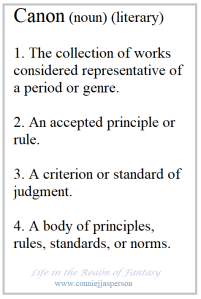
I couldn’t get that story out of my head and onto paper fast enough—it obsessed me. As I wrote, the calendar I had invented for the RPG was incorporated into the world of Neveyah, and now it is canon.

Time can be an abstract thing when we are writing the first draft of a story where many events must occur. Things are accomplished in too short a period to be logical, or we take too long.

Calendars are maps of time. They turn the abstract concept into an image we can understand.

Even though I regret how I named the days in Mountains of the Moon, my characters progress through their space-time continuum at a rate I can comprehend. I can move events forward or back in time by looking at and updating their calendar. The sequence of events forming the plot arc remains believable.

calendarI LEARNED from my mistakes – the timeline for the Billy’s Revenge 3-book series, Huw the Bard, Billy Ninefingers, and Julian Lackland, uses the familiar calendar we use today.

I heartily suggest you stick to a simple calendar. That is the advice I would give any new writer—stick to something close to the calendar we’re familiar with and don’t get too fancy.

Next up: Time and Distance – how calendars and rudimentary maps work together to keep the plot moving and believable.

2 Comments

Filed under writing