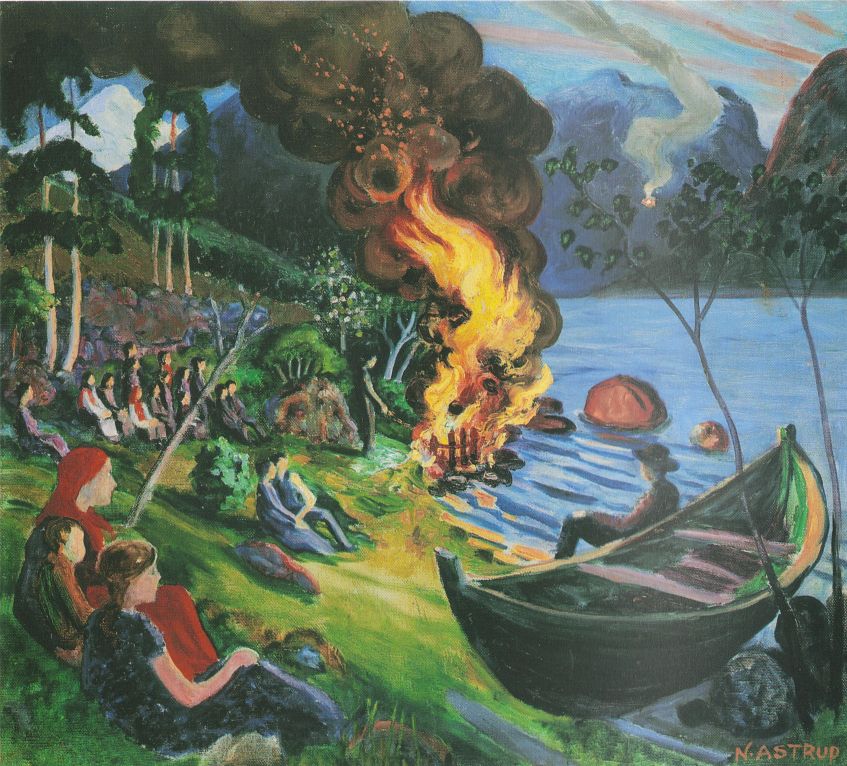
#FineArtFriday: Midsummer Eve Bonfire by Lake Jølstravatnet by Nikolai Astrup 1909

N_Astrup-St._Hansbål_ved_JølstervatnetArtist: Nikolai Astrup  (1880–1928)

Title: Norwegian: St. Hansbål ved Jølstervatnet,

English: Midsummer Eve Bonfire by Lake Jølstravatnet

Date: 1909

Medium: oil on canvas

Inscription: Signature bottom right: NASTRUP

What I love about this painting:

This is a scene that is full of life, family, and tradition. I love the intensity of color, the way people are shown enjoying the company of their loved ones.

Midsummer Eve is the best part of summer. The weather usually cooperates, allowing for an outdoor picnic that goes late into the night. In Norway and in Scandinavian countries, the eve of the Birth of St. John is celebrated with a communal bonfire. The celebration is also known as Jonsok, meaning “the wake of Saint John.”

The summer solstice has just passed and the longest days of the year are upon us. Twilight lasts long into the evening. Nicolai Astrup has shown us a cozy celebration of family and friends gathered at a place he clearly loved. They light bonfires to celebrate the birth of a saint, but more than that, they are there to share the holiday with the people they love.

About the Artist, via Wikipedia:

Nikolai Astrup (Norwegian pronunciation: [nɪkʊˈlɑ̀i̯ ˈɑ̀stɾʉp]) (30 August 1880 – 21 January 1928) was a Norwegian modernist painter. Astrup was a distinctive, innovative artist noted principally for his intense use of color depicting the lush landscapes of Vestlandet featuring the traditional way of life in the region.

Astrup held three significant exhibitions during his lifetime; at Kristiania 1905 and 1911 and at Bergen in 1908. In 1907, he was married to Engel Sunde with whom he had eight children. Astrup struggled with tuberculosis and general poor health as his asthma worsened. In 1913, Astrup settled with his wife and children in Sandalstrand (now Astruptunet) on the south side of Lake Jølstravatn across from the village of Ålhus. He died of pneumonia in 1928 at the age of 47 in the neighboring municipality of Førde. Astrup was buried in Ålhus Cemetery, in Jølster Norway. [1]


Credits and Attributions:

IMAGE: Nikolai Astrup, Public domain, via Wikimedia Commons. Wikimedia Commons contributors. File:N Astrup-St. Hansbål ved Jølstervatnet.jpg [Internet]. Wikimedia Commons; 2024 May 31, 05:34 UTC [cited 2024 Jul 17]. Available from: https://commons.wikimedia.org/w/index.php?title=File:N_Astrup-St._Hansb%C3%A5l_ved_J%C3%B8lstervatnet.jpg&oldid=880323847.

[1] Wikipedia contributors, “Nikolai Astrup,” Wikipedia, The Free Encyclopedia, https://en.wikipedia.org/w/index.php?title=Nikolai_Astrup&oldid=1156381035 (accessed July 17, 2024).

8 Comments

Filed under #FineArtFriday

Art, symbolism, and storytelling #writing

I love looking at visual art. Viewing paintings and photographs offers us a glimpse of a moment in time that may have occurred centuries ago or may not have occurred at all. Regardless, that moment is frozen and will never change.

But I’m a writer. Paintings always show me a story with a past and a possible future.

My Writing LifeI’m not educated as an art historian and would never claim to be one. I’m just a woman who loves the paintings of great artists because they tell a story. Thanks to Wikimedia Commons, an online museum of sorts, anyone with access to the internet can see the great art and photography of the past and the present.

Every week, I scour Wikimedia Commons, looking for images that intrigue me. My goal is to give others like me access to see the art that humanity is capable of, good and bad.

Art can be beautiful or savage, depending on the story the artist is trying to present. I love beautiful scenes, but I like images that tell a story. I feel compelled to look deeper when I view a painting, to see what symbolism the artist snuck into the scene. I want to challenge my perception of the story that is being depicted.

According to Wikipedia, the fount of all knowledge, Perception (from Latin perceptio ‘gathering, receiving’) is the organization, identification, and interpretation of sensory information in order to represent and understand the presented information or environment. (…) Perception is not only the passive receipt of these signals, but it is also shaped by the recipient’s learningmemoryexpectation, and attention. [1]

In other words, looking at art can lead the viewer to new ways of looking at the world.

As I mentioned above, I see paintings as depicting the middle of the story. Unintentionally, I put a personal spin on my interpretation, and ideas are born. I don’t mean to, but everyone does.

Some artists offer us fantasy, and other artists show us the truth of historical events. Both are necessary.

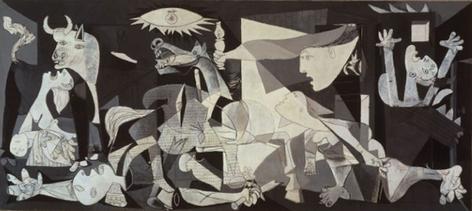
Let’s take a look at Guernica, a 1937 painting by the Spanish artist Pablo Picasso (1881 – 1973). This painting is considered to be one of the most powerful antiwar statements of all time. This single painting, done in shades of black and white, tells the story of the bombing of Guernica, a Basque Country town in northern Spain that Nazi Germany and Fascist Italy destroyed at the request of the Spanish Nationalists. (Yes, a faction in Spain bombed their own country.)

PicassoGuernica

Picasso’s choice to use black and white to tell that story is both brilliant and symbolic. Newsreels of the day were in black and white, and newsreels were how the world was shown the horror of this tragedy.

This piece is powerful because of the emotion the artist painted into the image.

But, Picasso himself was inspired by the great art that he was privileged to see. In planning the layout of Guernica, Picasso was inspired by the Consequences of War by Peter Paul Rubens.

There is a motherlode of symbolism packed into this painting. Watch this excellent YouTube video to see a short explanation of what inspired the artist and his view of both the horrific attack and the fundamentals of classic art. It explains Guernica well: Picasso’s Guernica by Great Art Explained.

We’ve looked at Picasso and his desire to show the horrors of modern warfare. But let’s look at something fun. Let’s see the symbolism of Jan Steen and the scenes he painted of everyday life in the seventeenth century. His paintings were composed with as much symbolism as Picasso’s.

Jan Steen (1626 – 1679) was a celebrated painter during the Dutch Golden Age. He was fond of painting peasants and ordinary people, and the picture I’m featuring for this post is a good example of his art.

Jan_Havicksz._Steen_-_The_Merry_Family-_Google_Art_Project I love the chaos in this painting. Is this a New Year’s party? Whatever they are celebrating, they’re having a great time.

I love the clutter of pans and dishes that have heedlessly fallen to the floor. I love the boisterous enjoyment of wine and song. The obvious lack of parental control is wonderfully depicted. The children are smoking and drinking to excess, vices that weren’t acceptable diversions for youngsters in those days any more than they are now.

The baby is exceedingly plump, which was uncommon in those days. Its chubbiness represents the vice of gluttony–in one hand, it holds bread, and in the other, it waves a spoon.

Chaos reigns, and who knows what these little hooligans will get up to next? Will they be drunks and ne’er-do-wells or sober model citizens?

The best part of the scene goes almost unnoticed unless one looks deeper: The note on the wall contains the moral of the story.

According to the Rijksmuseum website, “The note hanging from the mantelpiece gives away the moral of the story: ‘As the old sing, so shall the young twitter.’ What will become of the children if their parents set the wrong example?”

In modern terms, that means “children learn what they live,” a saying we should all give thought to.

This painting is a wonderful visual reminder to all good people, encouraging them to live a sober life. Steen himself was not a puritan, as he was born into a family of brewers and ran taverns and breweries off and on throughout his life. However, he needed to sell his paintings as he was never a successful businessman, and his allegorical paintings were quite popular.

Consider going out to www.wikimediacommons.org and see what the picture of the day inspires in you. Will you come away with an idea for a story?

steampunk had holding pen smallPerhaps so. But take the time to write those thoughts down. Your notes could become a storyboard, which could become a novel.

A photograph or painting might inspire you, but the way you put those ideas into action will be uniquely yours. They will be expressions of your voice and your art.


Credits and Attributions:

[1] Wikipedia contributors, “Perception,” Wikipedia, The Free Encyclopedia, https://en.wikipedia.org/w/index.php?title=Perception&oldid=1229599104 (accessed July 13, 2024).

Guernica by Pablo Picasso. 1937. Oil on canvas. © Picasso’s Estate and the People of Spain, Fair Use. https://en.wikipedia.org/wiki/Guernica_(Picasso) accessed July 13, 2024.

The Merry Family, Jan Steen, 1668 PD|100 via Wikimedia Commons

Comments Off on Art, symbolism, and storytelling #writing

Filed under writing

#FineArtFriday:  The White Horse by John Constable 1819

The_White_Horse_by_John_Constable_-_Google_Art_ProjectArtist: John Constable  (1776–1837)

Title: The White Horse

Date: 1819

Medium: oil on canvas

Dimensions: 51 3/4 × 74 1/8 in. (131.4 × 188.3 cm)

Collection: The Frick Collection 

What I love about this painting:

John Constable gives us the perfect summer day, one not too warm to work, and not so cool one would have to wear a heavy coat. He paints a sky that I would find familiar, very similar to the Pacific Northwest in early June. Clouds drift above, gathering, but drop no rain. The white horse being ferried across the river will be working in comfort today as it tows the barges up and down the river, ensuring the goods and fresh produce reach the people of Sussex and Essex.

What the Artist had to say about the craft of painting landscapes:

“It will be difficult to name a class of landscape in which the sky is not the key note, the standard of scale, and the chief organ of sentiment… The sky is the source of light in nature and governs everything.”

John Constable, writing to his friend and patron, John Fisher, Bishop of Salisbury

About this Painting, via Wikipedia:

The White Horse is an oil-on-canvas landscape painting by the English artist John Constable. It was completed in 1819 and is now in the Frick Collection in New York City.

The painting marked a vital turning point in the artist’s career. It was the first in a series of six so called ‘Six-Footers’, depicting scenes on the River Stour, which includes his celebrated work The Hay Wain. The subject of the painting is a tow-horse being ferried across the river in Flatford, just below the Lock, at a point where the towpath switches banks.

The painting is based on sketches that Constable produced in his native Suffolk, but the full composition was finished between 1818 – 1819 during his time in London. The painting was completed and exhibited at the Royal Exhibition in 1819, where it was well received. Constable was voted an Associate of the Royal Academy on the strength of it. The painting was purchased for 100 guineas by Constable’s friend John Fisher, the Bishop of Salisbury, who would later commission his painting Salisbury Cathedral from the Bishop’s Grounds. This purchase finally provided Constable with financial security and it’s arguable that without it, he may have given up painting altogether.

The White Horse was one of Constable’s favourite paintings. He commented in a letter to Fisher in 1826:

There are generally in the life of an artist perhaps one, two or three pictures, on which hang more than usual interest – this is mine.

In 1830, when Fisher was heavily indebted, he bought the painting back, also for 100 guineas. He would keep it for the rest of his life. After his death in 1837, the painting passed through the hands of various English collectors, before being brought to the United States by financier J. P. Morgan. [1]

About the Artist, via Wikipedia:

John Constable was born in East Bergholt, a village on the River Stour in Suffolk, to Golding and Ann (Watts) Constable. His father was a wealthy corn (grain) merchant, owner of Flatford Mill in East Bergholt and, later, Dedham Mill in Essex. Golding Constable owned a small ship, The Telegraph, which he moored at Mistley on the Stour estuary, and used to transport corn (grain) to London. He was a cousin of the London tea merchant Abram Newman. Although Constable was his parents’ second son, his older brother was intellectually disabled and John was expected to succeed his father in the business. After a brief period at a boarding school in Lavenham, he was enrolled in a day school in Dedham, Essex. Constable worked in the corn (grain) business after leaving school, but his younger brother Abram eventually took over the running of the mills. [2]

Constable’s story is continued at John Constable – Wikipedia.


Credits and Attributions:

IMAGE: The White Horse by John Constable 1819, PD|100. File:The White Horse by John Constable – Google Art Project.jpg – Wikimedia Commons (accessed July 10, 2024).

[1] Wikipedia contributors, “The White Horse (Constable),” Wikipedia, The Free Encyclopedia, https://en.wikipedia.org/w/index.php?title=The_White_Horse_(Constable)&oldid=1222277388 (accessed July 10, 2024).

[2] Wikipedia contributors, “John Constable,” Wikipedia, The Free Encyclopedia, https://en.wikipedia.org/w/index.php?title=John_Constable&oldid=1232567526 (accessed July 10, 2024).

2 Comments

Filed under #FineArtFriday, writing

The author’s website #writing

I wasn’t always a confirmed blogger. In 2011, I signed up for a free Blogger (Google’s platform) website, taking that plunge only because my former publisher forced me to. He swore it would help get my name out there and give me a regular platform for my opinions.
blogging memeThe posts I wrote for that first attempt at blogging were pathetic attempts to write about current affairs and politics as a journalist, which is something that has never interested me. I was lucky if I managed to post one piece a month and had no readers or followers.

It didn’t take long for me to realize I could not write on the subjects my publisher wanted, and quit writing posts altogether. However (and I hate to say this because we parted ways rather messily), my former publisher was right about one thing. All authors, indie or traditionally published, need to have a website that showcases their work and their ability to write. And if they want to keep in touch with potential readers, they should write the occasional blog post.

After talking to some friends who were successful in marketing their work, it occurred to me there was one subject I could talk about for hours on end, and that was …
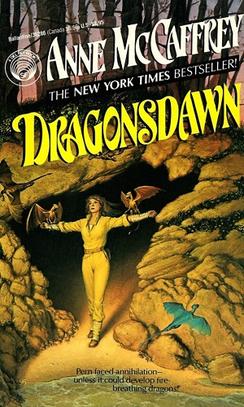
Dragonsdawn_coverBooks.

I read voraciously, so why not talk about what I’m reading, old or new?

I went back to that old site and scrapped the awkward, unloved posts. I changed the site’s name and shifted to writing one in-depth book review a week for the next five years.

A friend mentioned that I was marketing everyone else’s work, but no one was promoting mine. Not only that, she said that, as an indie, self-promotion was a skill I needed to embrace. I understood her point, but I don’t do well at putting myself forward in person, so how could I do this?

I needed a safe place to showcase my work, somewhere I could talk about something I feel passionate about and not sound like an idiot. I don’t believe in the hard sell, so my idea was that people would have the choice to buy my books if they wanted. That’s how this site came into existence.

Once I stopped trying to fit into the mold someone else had designed for me, I discovered how much I love writing for my blog. Regularly updating a blog doesn’t have to be an ordeal. Think of it as an opportunity to connect with a long tweet or Instagram post.
IBM_Selectric (1)I often hear writers complain that they don’t update their author blogs regularly because they have nothing to say. I disagree—they’re writers. Writers have passions and the ability to spew words out the ends of their fingers on the oddest subjects.

I used to write three posts a week for this site but have cut back to two. I write them on Sunday with Grammarly checking for punctuation and obvious flaws. After I have a draft written, I have the narrator app read it aloud to me. Once I’m satisfied they’re as clean as I can get them, I schedule them to publish on regular specific days.

That short time between writing and publishing is an adventure, opening you up to all sorts of embarrassing literary moments. As many of you know, despite my best efforts, my work sometimes posts “warts and all.”

Writing for this site has made me a thinking author as well as a pantser and has proven that I can write to a deadline. When I am discussing my personal take on life, I write using the “stream of consciousness” method. I write it in a separate document and proof it before I post it.

My writing craft pieces are written several days in advance by putting together a quick outline about whatever aspect of the craft occupies my thoughts at the time.
H2G2_UK_front_coverI’ve made many friends through this writing adventure. I now know people from all over the world who I may never meet in person but who I am fond of, nevertheless.

Blogging is only successful if you are passionate about what you are discussing. I talk about writing craft because I’m obsessed with it. However, real life gets in the way of creativity.

When I need to, I talk about the difficulties of traveling while vegan. I’ve written about the challenges of having two children with epilepsy, the dysfunctionality of growing up with a father suffering battle-related PTSD, and many other aspects of just trying to live a happy life in the real world.

I’ve talked about the challenges of having a spouse with late-stage Parkinson’s.

Having a blog on your website and updating it once or twice a month is a way to connect with your readers on a human level. People want to know what your writing goals are. They also want to know where you will be signing books.

Also, they love to hear your opinions about the books you are reading.

Readers enjoy seeing little off-the-cuff pieces once in a while. Articles of less than 1000 words are fun to write and often find their way into your other work, as they are a great way to brainstorm ideas.

steampunk had holding pen smallSome people worry about plagiarism, and in this world of AI and entitlement, it’s a valid concern. To my knowledge, I have never been plagiarized. I have a notice clearly in the sidebar on my website that the content is copyrighted.

I also make sure that any quoted material that I use is credited to the original authors. I include links back to their websites and the post where I found the information so that my readers can read more about that subject.

Writing a blog post is fun if you:

  • Keep it down to about 500 – 1000 words, more or less.
  • Open a new document, write the post in draft form, and don’t publish it right away. Use the spellchecker tool and read it aloud to look for glaring errors. Read it aloud if you don’t have a narrator app, and make corrections.
  • If you quote information that you found elsewhere on the internet, keep the quote short and always credit the author on whose site you found it.
  • Only use images that are either public domain or that you have the legal right to use.

Be Consistent.
Quill_pen smallLife in the Realm of Fantasy has evolved over the years because I have changed and matured as an author.

Writers like to ramble on about their work, but deadlines cause us to go into procrastination mode. Still, although many will claim they aren’t able to write under pressure, that is when I do my best work.

Nothing improves your writing chops more than writing every day, even if it’s only a paragraph. Write a paragraph detailing what’s on your mind, whether it’s the launch of your new book or a rant about your cat’s mysterious fascination with the dripping kitchen faucet. Add to that document as ideas come to you, and soon you’ll have a good post.

When you do an in-person signing event, offer a sign-up sheet for people to receive updates from your blog. They can serve as monthly newsletters, doing double duty and saving you precious time.

I hope this encourages writers to update their blogs more frequently. Some of the best articles about all aspects of life are out there, waiting to be read. You never know who will like your voice and style enough to buy a book, so give your readers a chance to find your work.

Comments Off on The author’s website #writing

Filed under writing

#FineArtFriday: York Harbor, Coast of Maine by Martin Johnson Heade 1877

Martin_Johnson_Heade_-_York_Harbor,_Coast_of_Maine_-_1999.291_-_Art_Institute_of_ChicagoArtist: Martin Johnson Heade  (1819–1904)

Title: York Harbor, Coast of Maine

Genre: marine art

Date: 1877

Medium: oil on canvas

Dimensions: height: 38.7 cm (15.2 in)

Collection: Art Institute of Chicago

What I love about this painting:

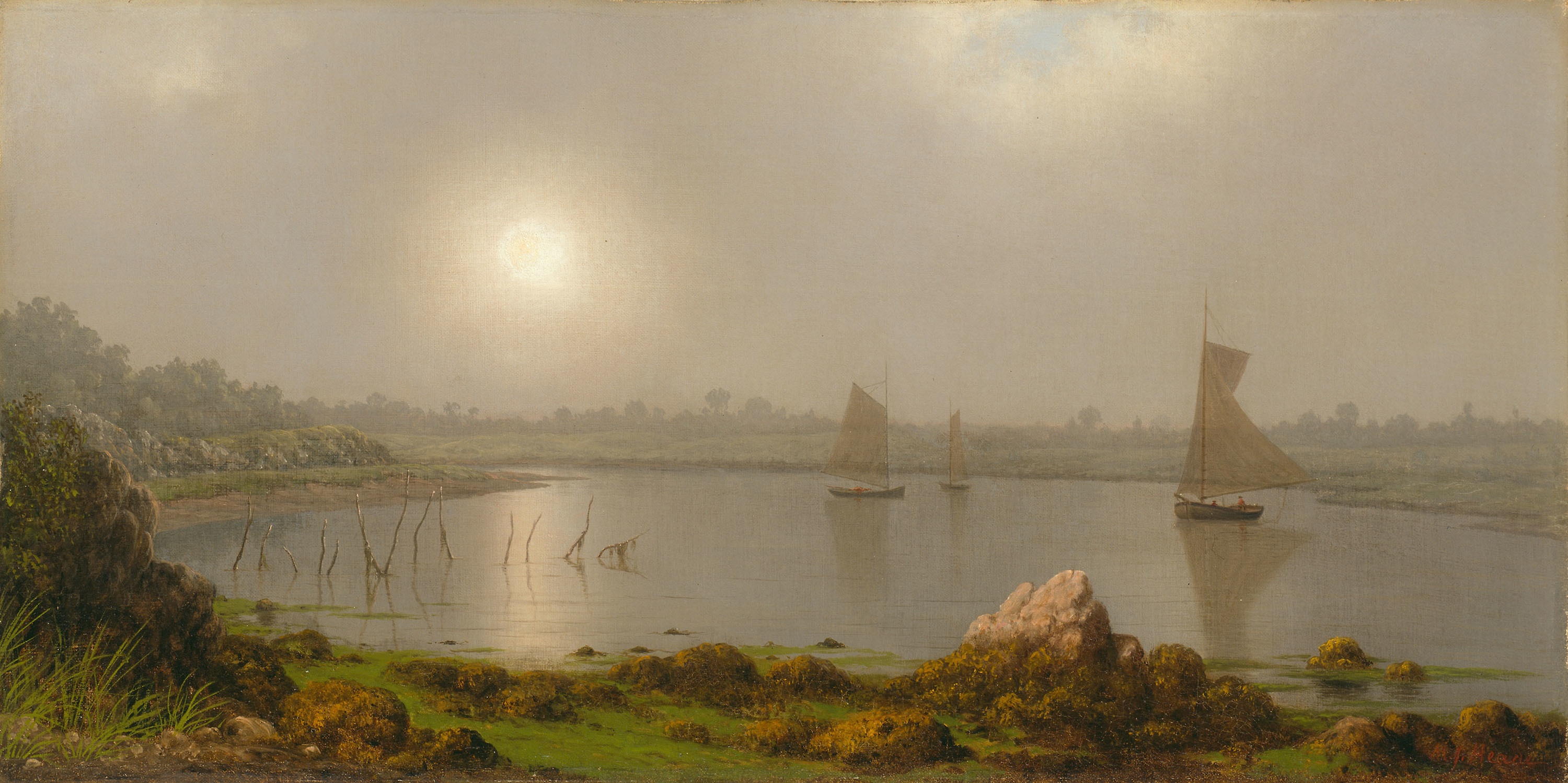
We see the sun rising, slowly burning off the morning mist–my favorite time of the day. I love the detail, the way Martin Johnson Heade shows us the truth about harbors that serve small communities in a low-tech world. They aren’t necessarily fancy, and they don’t accommodate large boats. Somewhere out of the picture is a simple wooden pier, a place for the fishing boats to offload their catch. Perhaps there is a sandy beach where fisherfolk can pull their boats above the waterline, resting them upside down when they’re not in use.

The scene he shows us is a salt marsh, alive with a thriving wildlife community.

The line of branches emerging from the water has been placed there by human hands, but for what purpose? Whatever they are meant to do, they have been there long enough that seaweed clings to them, nourished by the rise and fall of the tide.

About the Artist, via Wikipedia:

Martin Johnson Heade (August 11, 1819 – September 4, 1904) was an American painter known for his salt marsh landscapesseascapes, and depictions of tropical birds (such as hummingbirds), as well as lotus blossoms and other still lifes. His painting style and subject matter, while derived from the romanticism of the time, are regarded by art historians as a significant departure from those of his peers.

Heade’s primary interest in landscape, and the works for which he is perhaps best known today, was the New England coastal salt marsh. Contrary to typical Hudson River School displays of scenic mountains, valleys, and waterfalls, Heade’s marsh landscapes avoided depictions of grandeur. They focused instead on the horizontal expanse of subdued scenery, and employed repeating motifs that included small haystacks and diminutive figures. Heade also concentrated on the depiction of light and atmosphere in his marsh scenes. These and similar works have led some historians to characterize Heade as a Luminist painter. In 1883 Heade moved to Saint Augustine, Florida and took as his primary landscape subject the surrounding subtropical marshland. [1]

To read more about this Artist, go to Martin Johnson Heade – Wikipedia


Credits and Attributions:

IMAGE: Wikimedia Commons contributors, “File:Martin Johnson Heade – York Harbor, Coast of Maine – 1999.291 – Art Institute of Chicago.jpg,” Wikimedia Commons, https://commons.wikimedia.org/w/index.php?title=File:Martin_Johnson_Heade_-_York_Harbor,_Coast_of_Maine_-_1999.291_-_Art_Institute_of_Chicago.jpg&oldid=828607401 (accessed July 3, 2024).

[1] Wikipedia contributors, “Martin Johnson Heade,” Wikipedia, The Free Encyclopedia, https://commons.wikimedia.org/w/index.php?title=File:Martin_Johnson_Heade_-_York_Harbor,_Coast_of_Maine_-_1999.291_-_Art_Institute_of_Chicago.jpg&oldid=828607401 (accessed July 3, 2024).

8 Comments

Filed under #FineArtFriday, writing

Beginning a new #writing project—where to start?

When I have an idea for a new writing project, I ask myself, “What genre will be best for this story?” This is important because how I incorporate certain expected tropes will determine what kind of reader will be interested in this novel.

MyWritingLife2021I write what I am in the mood to read, so my genre is usually a fantasy of one kind or another. However, I sometimes go nuts and write women’s fiction.
I think of a novel as if it were a painting created from words. The story is the picture, and the genre is the frame. When selecting the frame for a picture, what are my choices? Perhaps a heavily carved and gilded frame (literary fiction), or maybe simple polished wood (fiction that appeals to a broader range) … or should we go with sleek polished steel (sci-fi)? I’ll usually opt for the simple wooden frame.

The many subgenres of fantasy usually incorporate aspects of magic, mythical beasts, vampires, or other races, such as elves or dwarves, into the story. These tropes are often used as the set-dressing part of worldbuilding, even when they are characters in that story.

strange thoughts 2But regardless of the genre, the basic premise of any story can be answered in eight questions that we will ask of the characters.
  1. Who are the players?
  2. Who is the POV character?
  3. At what point in their drama does the story open?
  4. What does the protagonist have to say about their story?
  5. How did they arrive at the point of no return?
  6. What do they want, and what will they do to get it?
  7. What stands in their way, and how will they get around it?
  8. How does their story end? Is there more than one way this could go?

So, now we discover who the players are. My stories always begin with the characters, but the ideas for them come to me out of nowhere.

Characters usually arrive in my imagination as new acquaintances inhabiting a specific environment. That world determines the genre.

The idea-seed that became the three Billy’s Revenge novels came about in 2010 when I was challenged to participate in something called NaNoWriMo. It wasn’t really a challenge—it was more of a dare, and I can’t pass one of those up.

Anyway, I had been working on several writing projects for the previous two years and didn’t want to begin something new. But one autumn evening, a random thought occurred to me. What happens when a Hero gets too old to do the job? How does a Hero gracefully retire from the business of saving the world?

Then I thought, perhaps he doesn’t.

Maybe there are so few Heroes that there is no graceful retirement. And then I wondered, how did he find himself in that position in the first place? He had been young and strong once. He must have had companions. Why did he not quit when he was ahead? At that point, I had my story.

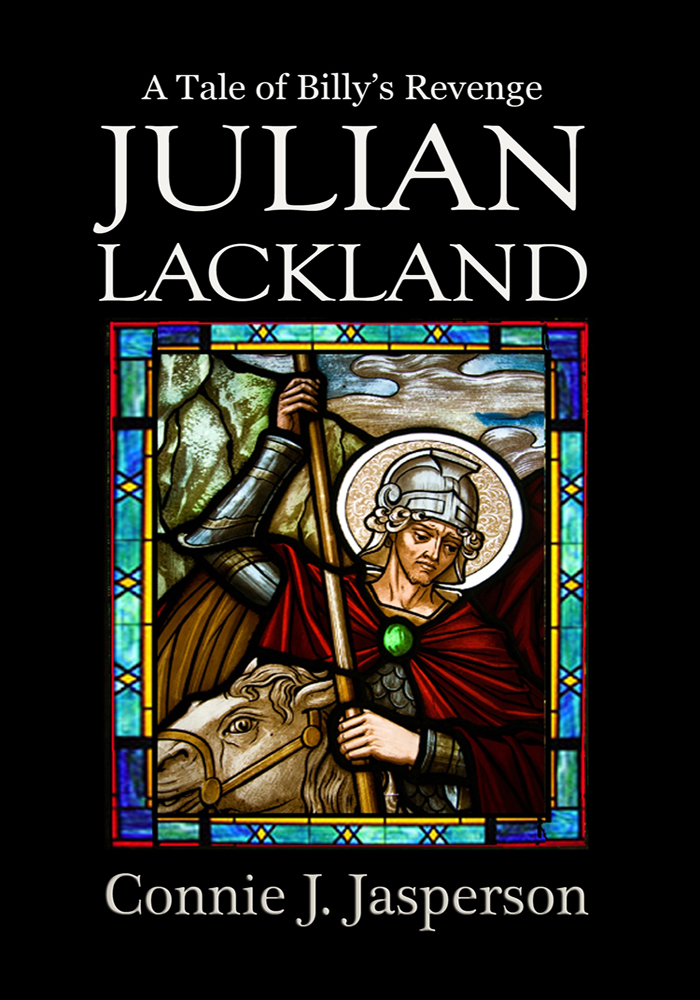
Julian_Lackland Cover 2019 for BowkersAnd thus Julian Lackland and Lady Mags were born, and Huw the Bard and Golden Beau. But they needed a place to live, so along came Billy Ninefingers, captain of the Rowdies, and his inn, Billy’s Revenge. When I first met Billy and his colorful crew of mercenaries, I was hooked. I had to write the tale that became three novels: Julian Lackland, Billy Ninefingers, and Huw the Bard. 
The fantasy subgenre for that series is “alternate medieval world” because the characters live in a low-tech society with elements of feudalism. Waldeyn is an alternate world because I imagined it as a mashup of 16th-century Wales, Venice, and Amsterdam with a touch of modern plumbing. I gave women the right to become mercenary knights as a way of escaping the bonds of society.

It’s never mentioned in the books, but I have always seen Waldeyn as a human-colonized world. Magic occurs in that world as a component of nature, and it affects the flora and fauna. It spawns creatures like dragons, but the dangerous environment and creatures aren’t the point of those books. I see it as a colony cut off from its home world, one that nearly lost the battle to survive but found a way to make it work. Now, a millennium later, they no longer remember their origin and don’t care.

Once I have an idea for a protagonist, I imagine them as people who begin sharing some of their stories the way strangers on a long bus ride might.

I sit and write one or two paragraphs about them as if meeting them for a job interview. They tell me some things about themselves. At first, I only see the image they want the world to see. As strangers always do, they keep most of their secrets close and don’t reveal all the dirt.

However, that little word picture of the face they show the world is all I need to get my story off the ground when the real writing begins.

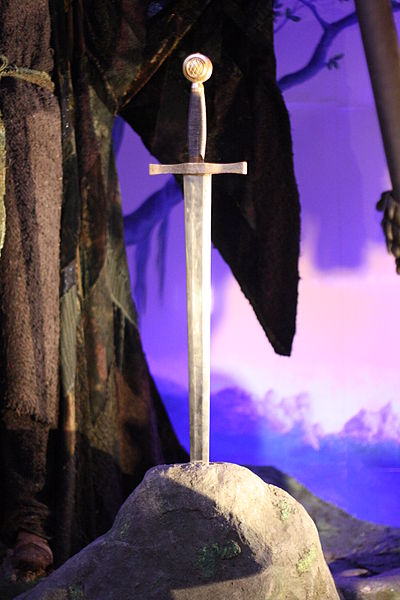
Excalibur London_Film_Museum_ via Wikipedia

Excalibur London_Film_Museum_ via Wikipedia

The unspoken bits of human error and hidden truths they wish to conceal are still mysteries. But those secrets will be pried from them over the course of writing the narrative’s first draft.

Knowing who your characters might be, having an idea of their story, and seeing them in their world is a good first step. Write those thoughts down so you don’t lose them. Keep writing as the ideas come to you, and soon, you’ll have the seeds of a novel.

And I will be here to read it.

4 Comments

Filed under writing

FineArtFriday: Holiday on the Hudson by George Luks ca. 1912

George_Luks_(American,_1866–1933)_-_Holiday_on_the_Hudson_-_1933.2291_-_Cleveland_Museum_of_ArtArtist: George Luks  (1867–1933)

Title: Holiday on the Hudson

Date: circa 1912

Collection: Cleveland Museum of Art

What I love about this painting:

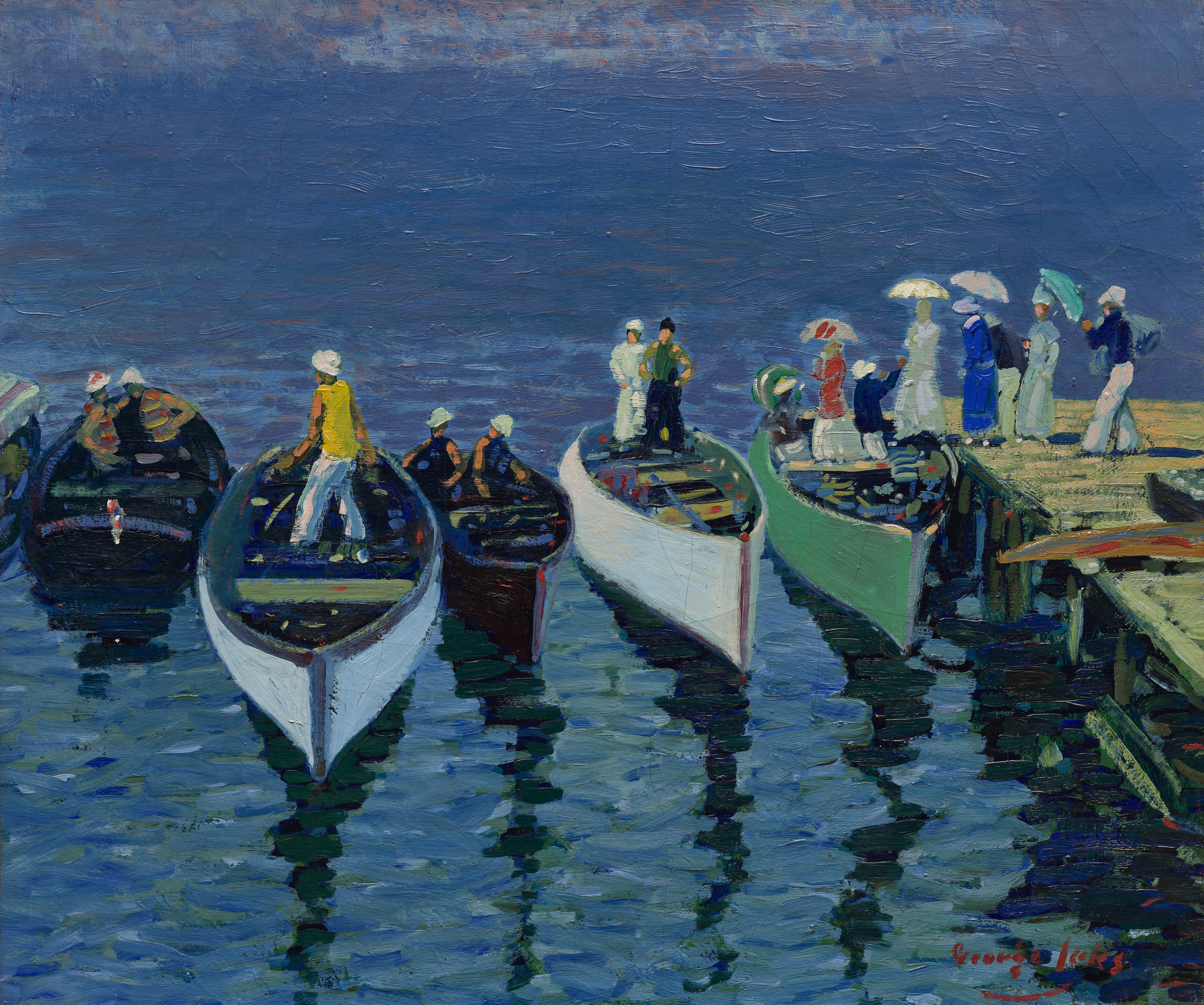
These are the working-class people of New York on a sunny Sunday in high summer. Fishing has been good, and while the oyster boats and small fishing dories have seen heavy use, they’ve been tidied up a bit, and everyone is looking forward to a carefree day on the water. The fishermen in their sleeveless shirts are quickly moving ropes and gear around to make room for the ladies.

I love the life instilled in the painting, the action, the colors, the intensity, and the way it shouts, “Freedom beckons,” even if that freedom is only temporary.

I see a story here, a historical romance. I imagine that some of this group of friends are the servants of the rich enjoying their half-day off. Besides the fishermen, we have footmen, maids, cooks, and housekeepers. I like to think they’re heading to a favorite beach for a clambake, that time-honored seaside picnic that even the poor working-class could afford.

Who is courting whom? Will they get married?

About the artist, via Wikipedia:

George Benjamin Luks (August 13, 1867 – October 29, 1933) was an American artist, identified with the aggressively realistic Ashcan School of American painting.

After travelling and studying in Europe, Luks worked as a newspaper illustrator and cartoonist in Philadelphia, where he became part of a close-knit group, led by Robert Henri, that set out to defy the genteel values imposed by the influential National Academy of Design. His best-known paintings reflect the life of the poor and hard-pressed on Manhattan’s Lower East Side. [1]

For more about George Luks, I highly recommend continuing to read his biography here: George Luks – Wikipedia


Credits and Attributions:

IMAGE: Wikimedia Commons contributors, “File:George Luks (American, 1866–1933) – Holiday on the Hudson – 1933.2291 – Cleveland Museum of Art.jpg,” Wikimedia Commons, https://commons.wikimedia.org/w/index.php?title=File:George_Luks_(American,_1866%E2%80%931933)_-_Holiday_on_the_Hudson_-_1933.2291_-_Cleveland_Museum_of_Art.jpg&oldid=779825858 (accessed June 27, 2024).

[1]Wikipedia contributors, “George Luks,” Wikipedia, The Free Encyclopedia, https://en.wikipedia.org/w/index.php?title=George_Luks&oldid=1217710156 (accessed June 27, 2024).

Comments Off on FineArtFriday: Holiday on the Hudson by George Luks ca. 1912

Filed under #FineArtFriday

Subtext, Mood, and Atmosphere #writing

A reader’s perception of a narrative’s reality is affected by emotions they aren’t even aware of, an experience created by the layers of worldbuilding.

mood-emotions-1-LIRF09152020Mood and atmosphere are separate but entwined forces. They form subliminal impressions in the reader’s awareness, subcurrents that affect our personal emotions.
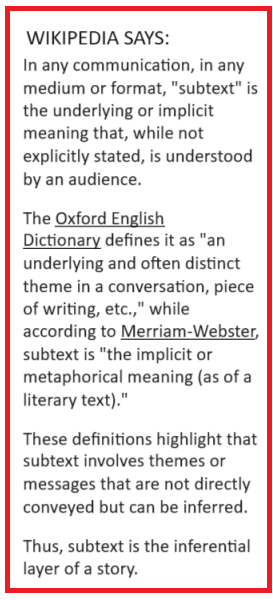
The emotions evoked in readers as they experience the story are created by the combination of mood, atmosphere, and subtext.

SUBTEXT_Def_06222024LIRFSubtext is a complex but essential aspect of storytelling. It lies below the surface and supports the plot and the conversations. It is the hidden story, the secret reasoning we deduce from the narrative. It’s conveyed by the images we place in the environment and how the setting influences our perception of the mood and atmosphere.
Emotion is the experience of contrasts, of transitioning from the negative to the positive and back again. Mood, atmosphere, and emotion are part of the inferential layer of a story, part of the subtext. When an author has done their job well, the reader experiences the emotional transitions as the characters do. It is our job to make those transitions feel personal.

The atmosphere of a story is long-term. Atmosphere is the aspect of mood that is conveyed by the setting as well as the general emotional state of the characters.

The mood of a story is also long-term, but it is a feeling residing in the background, going almost unnoticed. Mood shapes (and is shaped by) the emotions evoked within the story.

Scene framing is the order in which we stage the people and the visual objects we include in a scene, as well as the sequence of scenes along the plot arc. It shapes the overall mood and atmosphere and contributes to the subtext. We choose the furnishings, sounds, and odors that are the visual necessities for that scene, and we place the scenes in a logical, sequential order.

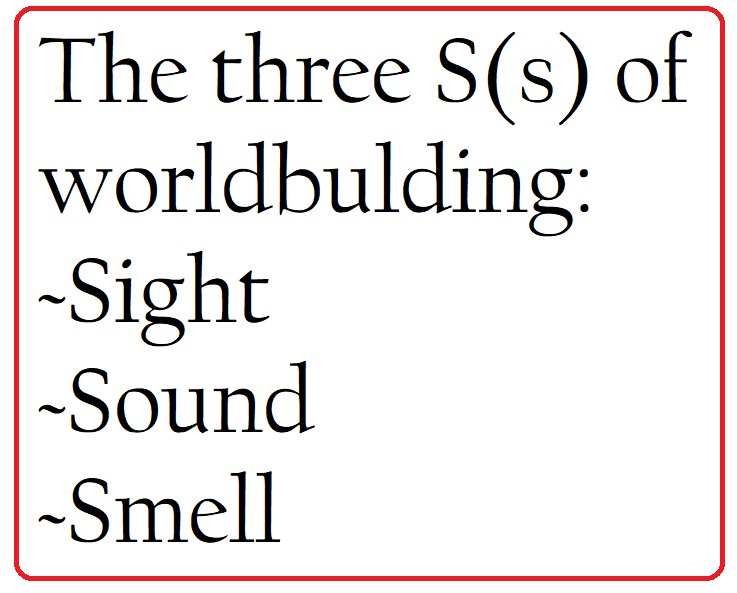
3-Ss-of-worldbuilding-LIRF07182021We want to avoid excessive exposition, and good worldbuilding can help us with that. Let’s say we want to convey a general atmosphere of gloom and show our character’s mood without an info dump. Environmental symbols are subliminal landmarks for the reader. Thinking about and planning symbolism in an environment is key to developing the general atmosphere and affecting the overall mood.
Barren landscapes and low windswept hills feel cold and dark to me. The word gothic in a novel’s description tells me it will be a dark, moody piece set in a stark, desolate environment. A cold, barren landscape, constant dampness, and continually gray skies set a somber tone to the background of the scene.

A setting like that underscores each of the main characters’ personal problems and evokes a general atmosphere of gloom.

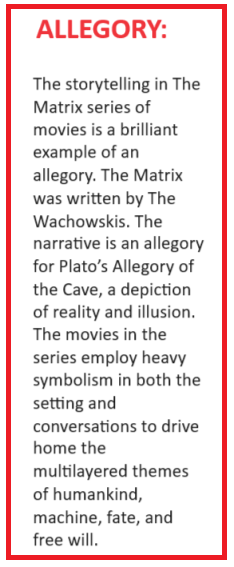
ALLEGORY06222024LIRFWhen we are designing the setting of a scene, which aspect of atmosphere is more important, mood or emotion? As I have said before, both and neither because they are entwined. Our characters’ emotions affect their attitudes toward each other and influence how they view their quest. This, in turn, shapes the overall mood of the characters as they move through the arc of the plot. And the visual atmosphere of a particular environment may affect our protagonist’s personal mood. Their individual attitudes affect the emotional state of the group—the overall mood.
What tools in our writer’s toolbox are effective in conveying an atmosphere and a specific mood? Once we have chosen an underlying theme, it’s time to apply allegory and symbolism – two devices that are similar but different. The difference between them is how they are presented.

  • Allegory is a moral lesson in the form of a story, heavy with symbolism.
  • Symbolism is a literary device that uses one thing throughout the narrative (perhaps shadows) to represent something else (grief).

What are some examples? Cyberpunk, as a subgenre of science fiction, is exceedingly atmosphere-driven. It is heavily symbolic in worldbuilding and often allegorical in the narrative. We see many features of the classic 18th and 19th-century Sturm und Drang  literary themes but set in a dystopian society. The deities that humankind must battle are technology and industry. Corporate uber-giants are the gods whose knowledge mere mortals desire and whom they seek to replace.

The setting and worldbuilding in cyberpunk work together to convey a gothic atmosphere, an overall feeling that is dark and disturbing. This is reflected in the subtext, which explores the dark nature of interpersonal relationships and the often criminal behaviors our characters engage in for survival.

 No matter what genre we write in, we can use the setting to hint at what is to come. We can give clues by how we show the atmosphere with the inclusion of colors, scents, and ambient sounds. We choose our words carefully as they determine how the visuals are shown.

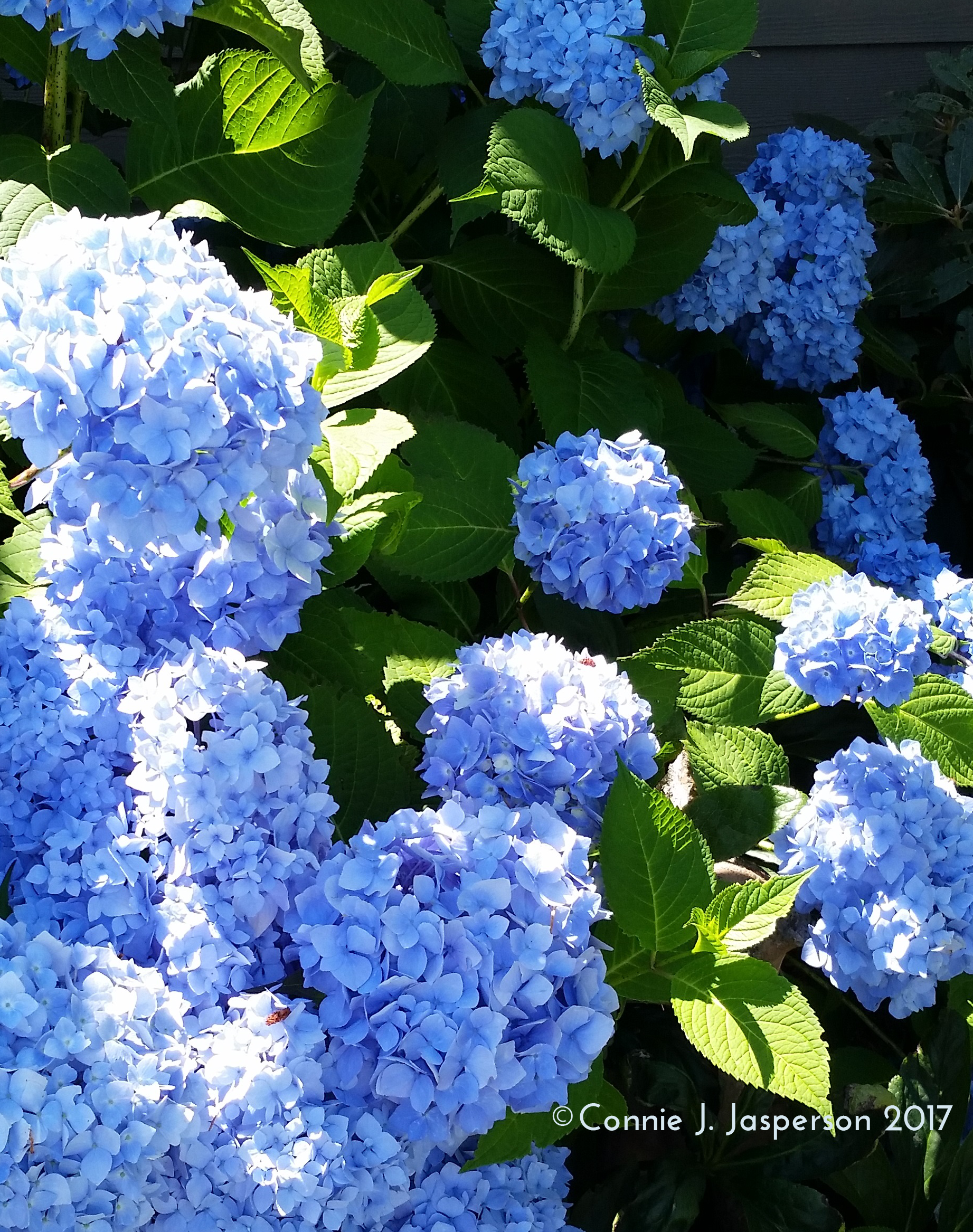
Hydrangea_cropped_July_11_2017_copyright_cjjasperson_2017 copyWe can create an atmosphere and mood that underscores our themes and highlights plot points without resorting to info dumps. We can lighten the mood as easily as we can darken it. When we design a setting, color brightens the visuals, and gray depresses them. Those tones affect the atmosphere and mood of the scene.
Sunshine, green foliage, blue skies, and birdsong go a long way toward lifting my spirits, so when I read a scene that is set in that kind of environment, the mood of the narrative feels lighter to me.

Worldbuilding can feel complicated when we are trying to convey subtext, mood, and atmosphere but the reader won’t be aware of the complexities. All they will know is how strongly the protagonist and her story affected them and how much they loved that novel.

1 Comment

Filed under writing

#FineArtFriday: La Mirenda (The Snack) by Elin Danielson-Gambogi 1904

Elin_Danielson-Gambogi_-_La_Merenda_(1904)Artist: Elin Danielson-Gambogi  (1861–1919)
Title: By the Sea – The Snack (La Merenda)

Date: 1904

Medium: oil on canvas

Dimensions: height: 102 cm (40.1 in)

Collection: K. H. Renlund art collection

What I love about this painting:

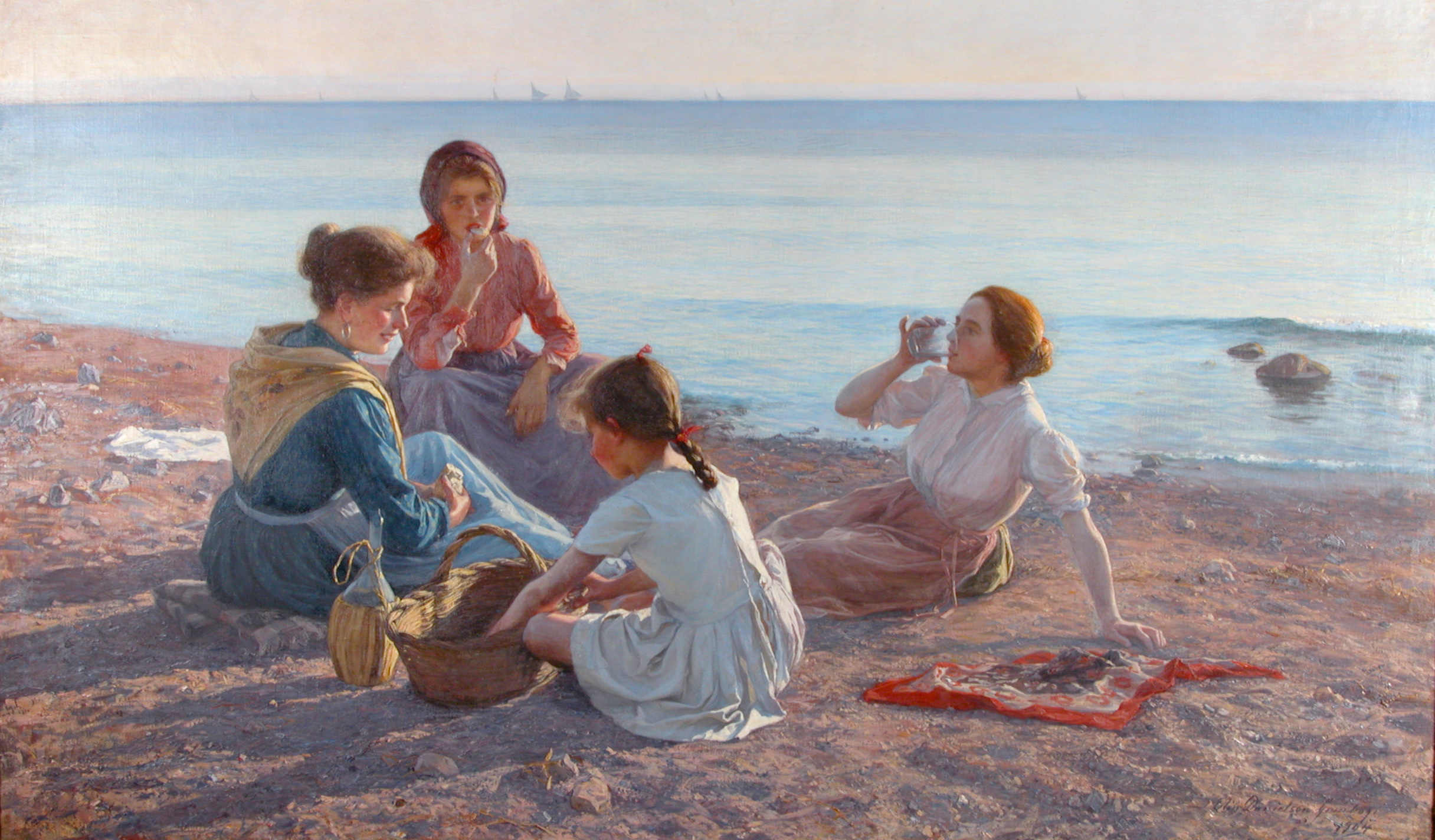
Elin Danielson-Gambogi gives us a perfect afternoon for an afternoon picnic by the sea with friends. An afternoon beside the surf and the company of friends—it doesn’t get any better.

The good years just prior to the outbreak of WWI seem golden in many ways. Women’s work was never done but they have the luxury of a little leisure time, and they are enjoying it. Two women have removed their headscarves as if they don’t care if they get a little sun-browned. The cast-off squares of cloth lie on the rocky beach as if blown by the wind.

The girl is very likely the artist’s niece, as she and her mother figure prominently in many of Elin’s paintings. I like to think she is pleased to have been included in the picnic, proud to be serving the snacks.

There is a pleasant warmth to this image, the peace of a Goldilocks day, that rare summer’s afternoon that is just right.

About the Artist, via Wikipedia:

Elin Kleopatra Danielson-Gambogi (3 September 1861 – 31 December 1919) was a Finnish painter best known for her realist works and portraits. Danielson-Gambogi was part of the first generation of Finnish women artists who received professional education in art, the so-called “painter sisters’ generation”. The group also included Helene Schjerfbeck (1862–1946), Helena Westermarck (1857-1938), and Maria Wiik (1853-1928).

In 1883 Danielson received a grant and moved to Paris. While there, she took lessons at the Académie Colarossi under Gustave Courtois and painted in Brittany during the summertime. A few years later she returned to Finland and lived with her relatives in Noormarkku and Pori. In 1888 she opened an atelier in Noormarkku. During the 1880s and 1890s she worked as a teacher in several art schools around Finland.  She also attended the artists’ colony Önningeby in Ålands.

In 1895, she received a scholarship and traveled to Florence, Italy. A year later she moved to the village of Antignano in Livorno where she met an Italian painter 13 years younger than herself, Raffaello Gambogi (1874–1943). They began working together and got married on February 27, 1898.  They held exhibitions in Paris, Florence (where she was awarded an art prize by the city) and Milan, and in many Finnish cities, and their paintings were also included in the 1900 World’s Fair in Paris, where she again won bronze medal. She also got to second place in the 1901 national portrait painting competition organized by the Finnish state.  In 1899, King Umberto purchased a painting from her. That same year, she participated in the Venice Biennale.

Their marriage was strained when Raffaello had an affair with Danielson’s Finnish friend Dora Wahlroos.  While the affair quickly ended, it had a lasting impact on the Gambogis’ marriage.  She moved to Finland for a while but returned to Antignano in 1903.  Because of World War I, her connection to her homeland was cut, and by the time she died, of pneumonia, at Antignano in 1919, she had been mostly forgotten in Finland.

Because of her choice of rare subject matters that often even caused some offence, Danielson is now seen as one of the central artists of the Golden Age of Finnish Art. Danielson-Gambogi was included in the 2018 exhibit Women in Paris 1850-1900. [1]


Credits and Attributions:

IMAGE: Wikimedia Commons contributors, “File:Elin Danielson-Gambogi – La Merenda (1904).jpg,” Wikimedia Commons, https://commons.wikimedia.org/w/index.php?title=File:Elin_Danielson-Gambogi_-_La_Merenda_(1904).jpg&oldid=848460780 (accessed June 20, 2024).

[1] Wikipedia contributors, “Elin Danielson-Gambogi,” Wikipedia, The Free Encyclopedia, https://en.wikipedia.org/w/index.php?title=Elin_Danielson-Gambogi&oldid=1203975014 (accessed June 20, 2024).

5 Comments

Filed under #FineArtFriday, writing

My checklist for creating societies #writing

Worldbuilding involves far more than the visible environment. We know worlds are comprised of plants, animals, and geology. But if intelligent life forms live in that world, societies will also exist.

WritingCraftWorldbuildingIntelligent creatures communicate in their own languages with each other, sounds that we humans interpret as random and meaningless or simply mating calls. But scientists are discovering their vocalizations must have meanings beyond attracting a mate, words that are understood by others of their kind. This is evident in the way they form herds and packs and flocks, societies with rules and hierarchies.

The BBC says that AI is learning the language patterns of other species. How will that change our view of the world? Will the Powers That Be persist in the view that humans are the only species with internal lives and emotional connections? How artificial intelligence is helping us talk to animals (bbc.com)

So, let’s talk about worldbuilding.

mindwanderingLIRF02212023We humans are tribal. We prefer living within an overarching power structure (a society) because someone has to be the leader. We call that power structure a government.
As a society, the habits we develop, the gods we worship, the things we create and find beautiful, and the foods we eat are evidence of our culture.

If your society is set in modern suburbia, that culture and those values will affect your characters’ view of their world. You will still have to build that world on paper. But the information and maps are all readily available, perhaps in your backyard.

If your story is set on another world, alternate earth, or even in a different era, you must create the background material to show your world logically and without contradictions. Are there specific places or environments where the different fantasy or alien races exist?

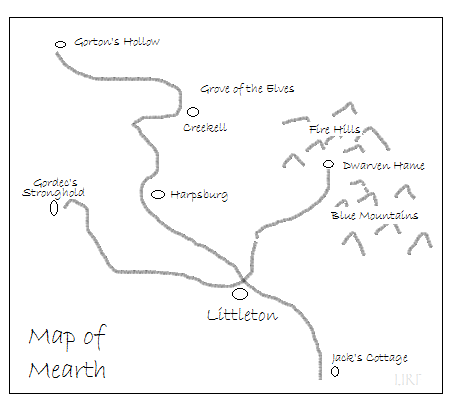
A common trope of fantasy is that elves are close to nature and prefer to live in the forests. If you have other races coexisting with humans, you need to make a map. Where do their territories border your protagonist’s country? Are they at peace with one another? How does this affect your story?

sample-of-rough-sketched-mapWorldbuilding requires us to ask questions of the story we are writing. I go somewhere quiet and consider the world my characters will inhabit. I have a list of points to consider when creating a society, and you’re welcome to copy and paste it to a page you can print out. Jot the answers down and refer back to them if the plot raises one of these questions.

Merchants, scientists, priests, soldiers, teachers, healers, thieves – no matter the setting, how is your society divided? Who has the wealth?

  • Is there a noble class?
  • Is there a servant class?
  • Is there a merchant class?
  • Is there a large middle class?
  • Who makes up the most impoverished class?
  • Who has the power, men or women—or is it a society based on mutual respect?

Ethics and Values: What constitutes morality, and how do we treat each other? Is marriage required?

  • How are women treated?
  • How are men treated?
  • How are the different races viewed?
  • Is there a cisgender bias or an acceptance of different gender identities?
  • How are same-sex relationships viewed?
  • How are unmarried sexual relationships seen in the eyes of society?
  • How important is human life?
  • How is murder punished?
  • How are betrayal, hypocrisy, envy, and avarice looked upon?
  • What about drunkenness?
  • How important is honesty?
  • What constitutes immorality?
  • How important is it to be seen as honest and trustworthy?
  • What is taboo? What is “simply not done” among that group?

Power structures are hierarchies and chains of command. A government is an overall system of restraint and control among selected members of a group. Think of it as a pyramid, a few at the top ruling over a broad base of citizens.

Excalibur London_Film_Museum_ via Wikipedia

Excalibur London_Film_Museum_ via Wikipedia

In a medieval-type society, the accepted age for when a child becomes legally an adult will be much younger than we consider it today. When the majority of people die before the age of forty, adulthood comes at the same time as puberty. Fourteen- and fifteen-year-olds have minimal life experience. They let their hormones do the thinking and are quick-tempered and volatile. When a teenager becomes king or queen, and all of their advisors are also teenagers or in their early thirties at most, a country could suffer. The ruling class might be uncaring of how their decisions affect the lower classes.

Wars take the laborers out of the fields and put them on the front lines, limiting food production. While this hurts everyone, it destroys trade, ruining the merchant class. War falls heaviest upon the peasant class, but the middle class pays most of the taxes. Without a good-sized middle class, one can’t pay an army.

Religion can be a sci-fi trope and often figures prominently in fantasy work. In sci-fi, science and technology frequently take the place of religion or are at odds with it. They both have similar hierarchies and fanatics but with different job titles.

Archbishop might be replaced with Head of Research and Development.

Cardinal or Pope might be replaced with GeneralAdmiral, or CEO (Chief Executive Officer).

Level of Technology: no matter the setting, each occupation has a specific technology. What tools and amenities are available to them? What about transport?

  1. Hunter/Gatherers?
  2. Agricultural/farming?
  3. Greco-Roman metallurgy and technology?
  4. Medieval metallurgy and technology?
  5. Pre-industrial revolution or late Victorian?
  6. Modern-day?
  7. Or do they have a magic-based technology?
  8. How do we get around, and how do we transport goods? On foot, by horse & wagon, train, or space shuttle?

Government: There will be a government somewhere, even if it is just the local warlord. Someone is always in charge because it’s easier for the rest of us that way:

  1. Is it a monarchy, theocracy, or a democratic form of government?
  2. How does the government fund itself?
  3. How are taxes levied?
  4. Is it a feudal society?
  5. Is it a clan-based society?
  6. How does the government use and share the available wealth?
  7. How do the citizens view the government?

Crime and the Legal System: What constitutes criminal behavior, and how are criminals treated?

Foreign Relations: Does your country coexist well with its neighbors?

  • If not, why? What causes the tension?

Waging War: This is another area where we have to ask what their level of technology is. Do the research and choose weaponry that fits your established level of technology.

  • What kind of weaponry will they use?
  • How are they trained?
  • Who goes to battle? Men, women, or both?
  • How does social status affect your ability to gain rank in the military?

A common trope in fantasy is magic, which brings up the need to train magic-gifted people. Do your sorcerers/mages rely on

  • dumb luck and experimentation?
  • apprenticing to sorcerers?
  • training by religious orders?
  • or, as in the case of Harry Potter, a school of some sort? What are the rules of your magic?

The Church/Temple is the governing power in many real-world historical societies. The head of the religion is the ruler, and the higher one rises within the religious organization, the more power one has. The same is true of both universities and research facilities.

Author-thoughtsPower in the hands of only a few people offers many opportunities for mayhem. Zealous followers may inadvertently create a situation where the populace believes their ruler has been anointed by the Supreme Deity. Even better, they may become the God-Emperor/Empress.

Some people are prone to excess when presented with the opportunity to become all-powerful.

Brainstorming worldbuilding is a good exercise if you have a character with a story that needs to be written. If you were unsure what your plot was before you got to this stage, now you might have a real villain, one presented to you by your society.

4 Comments

Filed under writing