Redemption and the Wayward Pen

619px-Lord_Byron_1804-6_CropI started my day today by reading Alison DeLuca’s great blog, Fresh Pot of Tea this morning, and her topic is Redemption.  She has written an awesome post on villains and redemption, and I suggest you pay a visit to her blog and read the post.

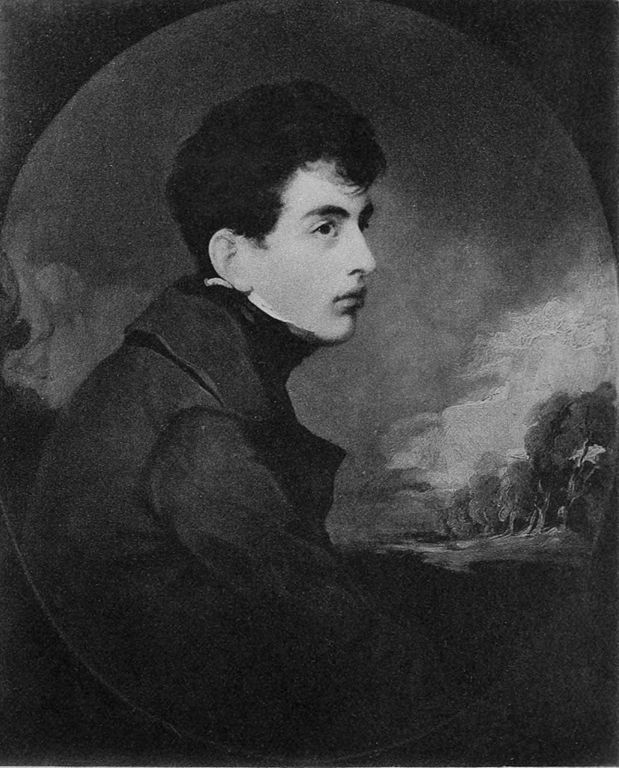
Redemption in your villains is a topic that interests me, because in the Tower of Bones series I have a nasty villain, Baron Stefyn D’Mal, who is, in many ways modeled on the original Mad, Bad and Dangerous To Know man, Lord Byron (if he were wholly devoted to the God of Darkness and was crazy on steroids.)

In the first book, Tower of Bones, we discover some of D’Mal’s history, and there is some reason to feel bad for the child he once was, but he is in no way a good guy.

In Forbidden Road, Stefyn D’Mal interacts with the protagonists somewhat less directly, but his  influence is no less profound on the outcome of the tale, and his evil God has him firmly in hand.

Why are we attracted to tales of Redemption? Is it because we are aware of our own frailties and when we are immersed in the redemption of the fictional evil genius, whom we have secretly admired, we are some how redeemed ourselves? I think for me there is a secret relief in the notion that by one selfless act of heroism a person can counter a lifetime of misdeeds.

I’ve had a novel on the back burner since 1998 that will probably never be published, because it is terribly flawed and pretty outdated now. But I love the characters. In this tale there is one character who is not really a central character but her stubbornness causes no end of trouble for her family. But in the end, she jumps between the shooter and her niece because the desire to protect those you love is sometimes stronger than common sense.

I think that having a really great villain makes a story compelling.  Great villains are why we read Harry Potter, and the Lord of the RingsThe Wheel of Time has great villains–a LOT of them– which is what drives the plot(s).  When I read a book with villains that really frighten me I return to it later and analyze what it is about that character that inspired such an emotional reaction in me.  I’ve spent a lot of time looking at what Robert Jordan did with the Forsaken. Lanfear and Asmodean were frequently pleasant, engaging people and one could feel a certain sympathy for them despite the knowledge that they were evil.  Even Demandred had a certain cachet that one could relate to.

This makes writing your villains complicated. They are bad, or they wouldn’t be villains, they’d be the heroes.  But it is a rare person who is completely consumed by evil, and so when we see the softer side of the devil we grudgingly like him.

Who knew Satan was a cat-lady?

4 Comments

Filed under Adventure, Fantasy, Humor, Literature, writing

Great Collaborations

Rainbow_-_Ritchie_Blackmore's_Rainbow_(1975)_front_coverThis album, Ritchie Blackmore’s Rainbow was a watershed moment for me, musically.  I discovered Rainbow when my first husband and I moved to Bellingham Washington to go to college. We had one child, our daughter Leah.  We were pretty broke, and couldn’t go to many concerts, but we did invest in new music as often as we could.

I was the one who was the Rainbow and Led Zeppelin freak. I liked Deep Purple, but something about Rainbow really grabbed me. Darryl was into The Who and Argent.  We were also crazy about Procol Harum,  Focus and Genesis. Heart also figured largely in the noise that erupted from our small apartment.

The thing about great bands that inspires me is the chemistry between the members that lead to great collaborations.  Some of the most powerful music of my generation was created during the 1970’s.  The collaboration that still reigns supreme in my heart is the Ronnie James Dio and Ritchie Blackmore collaboration in the band Rainbow.  Separately, they were brilliant, unmatched in their skill and talent. Together they were pure magic, creating thunderous, powerful, bone-shaking music like The Gates of Babylon and the beautiful, lyrical Catch the Rainbow. Alas, Dio passed on in 2010 but his legacy lives on.

In books, there are great collaborations that produce incredible tales that change the face of the fantasy genre.  MythAdventures by Robert Lynn Aspirin and Jody Lynn Nye were the game changers for me as far as my reading material went. They brought the fun to the party!

The Darkover Series that was begun by  Marion Zimmer Bradley and which included collaborations with various authors such as Mercedes Lackey and Deborah J. Ross was wildly popular among my friends. The Dragonlance series, which came out of TSR’s Dungeons and Dragons game empire was another series that introduced the fantasy genre to a wide audience of young people. This collaboration between Tracy Hickman and Margaret Weiss hooked my son Daniel as a teenager, and turned him into a rabid fan of speculative fiction.

Currently I’ve been reading The Adventures of Don Valiente and the Apache Canyon Kid. It  a book that is a collaboration between John A. Aragon and Mary W. Walters, and it’s one that is not only NOT a fantasy (it’s a WESTERN) it’s an actual physical book as opposed to a Kindle book.  This awesome book details the adventures of Roz, a young lesbian cowgirl and her mentor, caballero Don Valiente. I’ve never been a fan of westerns, but THIS book is a game changer for me.

I love books and music that expand my boundaries.  Every time I hear something new and powerful, like Apocalyptica, Rammstein or Evanescence or read a book in an unfamiliar genre I am inspired to create on my own and my work benefits.  Music, art and books are like yoga for my soul!

7 Comments

Filed under Adventure, Battles, Books, Heavy Metal, Humor, Music, writing

Vegan and loving it (mostly)

Me at the age of 29

Me at the age of 29

When I  set out to write a novel, I approach it from the viewpoint of a storyteller.  This creates some problems with having “a passive” voice when the first draft is “eye-balled” for revisions.  Of course, I can’t see it unless it is pointed out to me, so I have to allow another person to read it.

Some people will tell you that allowing ANYONE to see a manuscript at that stage of development is just plain suicidal.  It’s certainly difficult for me to do, but I’m doing it. If I am to chug these things out with any speed at all, I have to bite the bullet and let Irene have the first look at it.  Hopefully, getting rid of the passive voice immediately will be a positive step toward making the ms ready to be edited.

In the past I have finished the entire ms before I allowed anyone to see the first draft. Before I let them see it, I went over it a million times.  When I sent it to them, I was sure it was a good as I could get it. Still, the first chapter that was sent back to me was a sea of red.

Sigh.

So, the premise is this–I’m going to have to revise it anyway. If all these strange things I can’t see in my own work are going to still be there after I’ve wasted a year on grooming the story, why bother?  Why not just go for it and see what happens? Irene was bored, and needed something to work on. We agreed that this is a true experiment and if I can’t do it, I won’t feel too embarrassed. (edit: Correction – Irene says she was NOT BORED and may never have been bored in her life. Knowing her as I do, that’s most likely true!)

However, the first chapter arrived back in my Gmail this morning. It was a sea of red just like the finely polished apple would have been, and it said basically the same things. SO maybe this is a more streamlined way to get the process done; I hope so!  It is helping me to stay focused on the final chapters of the book as I write them, and I am keeping the active voice more clearly in my mind.

It’s a first draft. I’m most likely still letting the ‘thats’ and ‘whichs’ fly where they may, and be aware: commas are landmines in my hands.  Hopefully Irene will still like the book when I’ve dragged her all the way to the end.

I’m sure some will remember that on December 31, 2012 I became a vegan.  That means I stopped including meat and dairy in my diet, completely. I got off to a good start with a fun dinner party that was split fairly evenly between vegans and carnivores.  So now, 34 days into this, I am still vegan, and surprisingly I’ve found it to be easy.

The picture at the top left is of me in 1982, two years after my first thyroid tumor was removed.  I’ve lived an active life for the most part, and on the occasions when I did gain weight, I was able to take it off. At the age of 55 I began gaining weight and I was unable to shed it. Now 4 years later I know it was because of two unavoidable things: menopause and the thyroid.

I’ve lost 7 pounds of weight since January 01, 2013.  Losing weight is difficult with a thyroid tumor, and since the tumor is benign and isn’t life threatening, we aren’t opting for surgery. Instead I’m making positive changes in my lifestyle and the weight is slowly coming off.

Some of my weight loss can surely be attributed to the energy I’ve burned reading labels.  I’ve always avoided GMO products and also corn syrups and corn sugars, but now I’ve a whole new world of things to be on the lookout for! For instance, I have discovered that  vitamin D3 is rarely vegan while D2 always is, casein is a milk protein that finds its way into stupid things like soy cheese and honey.  I avoid anything with the word lactose although I’ve been told that most other lac- ingredients are fine. I am not well-educated enough yet to know what is what so I just avoid it if it says ‘lac-‘.

I do know that if the product has any cholesterol, even 1 mg, then the product is not vegan, because cholesterol is not found in any plant-based products. So that means there is some sort of animal-derived ingredient. When I found that out, I looked at my cooking oils, products that I thought were vegan by virtue of being olive or safflower oil and I found that they were spiked! The bastards!  Even margarine can have animal based products in it!

So now, I am careful to carry a list of no-no words and I try to stay vigilant. After all, either you are a vegan, or you are not–there is no such thing as ‘sort-of -a-vegan’.  For me, I think giving up the dairy is what has made the difference in my health.  I feel better, I have more energy, and by golly I did lose seven pounds in 34 days.

I guess I’ll keep on keeping on a while longer, and see what happens. Heck, I have all day to read labels and not much else to do in the way of excercise.

Unless you count ranting, tearing my hair out and desperately squeezing out my self imposed word-count goal of NO LESS THAN 1800 words a day.

I get a lot of excercise from that.

8 Comments

Filed under Adventure, Books, Dragons, Humor, Music, writing

It’s Official

Final forbidden road front cover jpgIt’s official – Forbidden Road is now available as a kindle download!  I’ve even made a tweet:

FORBIDDEN ROAD-bk 2 in #TowerOfBones series http://amzn.to/ForbiddenRoad   Sorrow, Peril and Magic in the Valley of Mal Evol!

This is where it gets strange. I have this weird feeling of being disconnected from the process, even though I am in the middle of doing it.  I’ve done everything I can think of to get the word out, and now I can only hope for the best. I think people who like Tower of Bones will be curious as to where the story goes.

Writing Forbidden Road was an emotional thing in many ways.  There are some serious, dramatic moments in this book.   All I know is the book is done and has left the building!

Now I am taking my imagination backwards in time to finish the book Mountains of the Moon, which covers the events of forty years prior to Tower of Bones.  This book is a stand-alone book as Tower of Bones was and is in many ways a comedy. Wynn, Edwin’s grandfather was a bad-boy!

Once Mountains is finished I can flesh out Valley of Sorrows.  Some of the events in Valley involve John Farmer’s coming to terms with his inability to face the fate of one of Wynn’s companions, in an event he felt responsible for.

So today is the big launch, another chick has left the nest!  Now I must get busy and write, write, write!

3 Comments

Filed under Adventure, Battles, Books, Dragons, Fantasy, Humor, Literature, Uncategorized, writing

Book launch: Forbidden Road by Connie J Jasperson

Book launch: Forbidden Road by Connie J Jasperson.

I was priveleged to be interviewed on Carlie M.A. Cullen’s fine blog, and we talked about the launch of my book, Forbidden Road. Stop on by and check it out!

Comments Off on Book launch: Forbidden Road by Connie J Jasperson

Filed under Adventure, Battles, Books, Dragons, Fantasy, writing

Forbidden Road

Pageflex Persona [document: PRS0000032_00050]On friday, February 1, 2013 the kindle version of Forbidden Road, Book II in the Tower of Bones series will launch, followed closely by the print version.  The print version may be delayed if there are any formatting issues, but it should be through the process by February 15th at the latest.

In print form these books are the size of good doorstops, but not quite as big as most of the Wheel of Time series by Robert Jordan and Brandon Sanderson.

Someone asked me how I could write a book a year, and that made me laugh.  I suppose it LOOKS like that’s what I have done, but in actuality I began writing Tower of Bones in March of 2009. I have two manuscripts going at all times so they do seem to roll out at the rate of one per year, but I was actually two or more years in the writing process for each book before they went to publication.

Tower of Bones began its life as the walk-through for an old-school style RPG along the lines of Final Fantasy Mystic Quest. My nephew Ryan and I thought would be fun to build something we could play and perhaps market as there is a large community of player who enjoy the old games. The game fell through but I liked the storyline and made it into a novel. But, by 2010 I realized it was never going to fly in the form I had originally created it.

In its first incarnation, Tower of Bones read in the “He is; he does; he goes” style of a Brady walk-through.  Not real 51S0EMXZRAL__SL500_AA300_easy to get into as a reader! Present tense: The events of the plot are depicted as occurring now—at the current moment—in real-time. (e.g. “They drive happily. They have found their way and are now preparing to celebrate.”) In English this tense, known as the “historical present”, is more common in spontaneous conversational narratives than in written literature. A recent example of this is the Hunger Games trilogy by Suzanne Collins.

You don’t even want to know the agony that I went through in changing the viewpoint of the entire 150,000 word ms from that awkward present tense point of view to the standard  third person point of view.  Not only that, I had begun Forbidden Road in the same style!  Oh, my goodness–2010 was the year in which Grandma could frequently be heard exclaiming things like, “Sassafras!  And Dirty Words!”

Alison DeLuca and my sister Sherrie DeGraw pored over that ms trying to help me clean it up, and finally by the end of 2011 it was done.

Now, three years after I began Forbidden Road it is in the grinder at Amazon, and the launch day approaches. It just looks like I am chugging them out  one a year.  I have already been working on Huw the Bard for 15 months, and Mountains of the Moon has been in the works for 18 months (and is still not finished.)  Valley of Sorrows (book 3 in Tower of Bones series) has been in the works since November and NaNoWriMo

2010 was also the year I began The Last Good Knight as a NaNoWriMo project. I allowed myself to rush into publishing it when it was not ready.  It is now readable, largely to the assistance of both Rachel Tsoumbakos and Carlie Cullen.  I admit that my view of my own work is skewed by my growing as an author and gaining experience as an editor.  It may be that I see my work in a worse light than the casual reader would, but in my opinion there were enough speed bumps in Billy’s Revenge 1 – TLGK to gag the dog.

One thing I have been working on is dealing with (if I may descend into technical terms) is Hinky Formatting Issues and VooDoo Readability.  Anyone who has ever read an e-book knows what I am talking about, although they may not realize what has caused the strange  appearance of  random question marks where apostrophes should be.  Strange formatting issues are also responsible for the way paragraphs will randomly lose their indentations, making a page look like a wall of words.

Unfortunately several wordprocessing programs are rife with hidden formatting, so if your ms began life in Open Office, you will need to strip all the formatting out of your work and reformat it, saving it as a .RTF.  It gets even more complicated if you switched to using Word halfway through.  As a rule, I strip all the formatting and completely reformat all my manuscripts before I upload them now, it saves time and curse words later.  Rich Text Format files (signified by the extension .rtf) can also be argued to be safer than Word documents, (or .doc and .docx.) This is also, again, because .rtf uses text-based encoding. In simple terms, it’s pretty much impossible for Word to mess up .rtf files, because they are text-based: if there is a mistake while opening the file, the worst that will happen is that Word will open it as a text file, which will look like this:

 \par A question that may often come to the mind of people who watch Mexican soap
operas is, \ldblquote Who the heck invented this ridiculous plot that consists
of the love af
fair between a rich guy and a poor girl who end up getting
married in the end despite all the adversity??\rdblquote This idea,
overexploited and completely clich\’e9

If there is a failure in .rtf you can at least read it.  BUT the optimal goal is to have NO Formatting Failures so never rush to publish.  If you are an indie you can simply move your launch date back until you have straightened out your issues.  Use the option to review it in the handy reader KDP provides when you publish with them.  B&N for Nook also has this option.  Order proofs from your print-publisher and make sure your book looks the way you want it by going over every page of the proof copies line by line before you hear back from your friends that your book is a mess.

In the end I am responsible for what my work looks like so I have to do the footwork and make sure my formatting issues are all solved before the launch date.  This requires both a calendar and the will to use it. Plan for a week of playing with your uploads to Kindle and CreateSpace before your projected launch date, and hopefully your work will go smoothly enough that you won’t need the extra time. Authors are notorious for leaving everything to the last-minute but I do suggest you don’t procrastinate in this endeavor.  Random things go sideways and need to be redone. You’ll be much happier if you do the responsible thing and leave yourself plenty of wiggle-room during the crazy week leading up to your launch.

Comments Off on Forbidden Road

Filed under Adventure, Books, Dragons, Fantasy, Final Fantasy, Humor, knights, writing

Imago Chronicles, Lorna Suzuki

Imago Chronicles Book One  Lorna Suzuki Just like every other obsessed, fanatic reader of High Fantasy, I am always on the lookout for that one special book that presages the advent of a new classic series in the genre. In my opinion, Lorna T. Suzuki has written that book in Imago Chronicles Book One: A Warrior’s Tale.

 As many of you know, I review my favorite fantasy books on a blog called Best in Fantasy, and that is where I first reviewed Suzuki’s work in 2011.  I was blown away by her ability to draw you into her world and keep you there, mesmerized.

Since I began blogging on what I consider to be the best fantasy reads that come across my Kindle, I have read, on average, 4 to 6 fairly good books for every one really good book that made the blog; but ‘fairly good’ is not good enough for me to call a book ‘Best In Fantasy’. Hence, my frequent excursions back to my library of classics. In order for a book to be featured on that blog, I have to LOVE it! In ‘A Warrior’s Tale’, Suzuki has written a book that stands beside the works of my beloved heroes of modern fantasy Jean Auel, Mercedes Lackey, and David Eddings. Imago now ranks as one of my all-time favorite epic fantasy series. And now, joy of all joys! Books 1,2 and 3 have been optioned for a major motion picture trilogy!

And now the story:

In an intriguing twist, A Warrior’s Tale begins with the end. Taking shelter from a freak blizzard, Nayla Treeborn, half elf, half human and not fully either, huddles next to the corpse of a dead soldier; using his body and the now un-needed cloaks of other dead soldiers to shelter her from the killing weather. As she shelters there, she finds herself thinking about her life to that point; going back to a day when she had been a child the mental and physical equivalent of a mortal 12 year old, but was in reality 37 years of age.

Nayla’s father, a high Elf and the Steward of Nagana, Dahlon Treeborn, despises her for reasons which are not made clear in this book. He has punished her for publicly disagreeing with him; nearly beating her to death. Joval Stonecroft discovers her, dreadfully mutilated and bloody and is horrified. Healing her as well as he can, he spirits her out of the elven city of Nagana to the human city of Anshen, home of the legendary Kagai Warriors. Taking the name of Takaro, the young girl embarks upon a lifetime of training, eventually becoming the only female Kagai Warrior ever accepted into the brotherhood. When at long last she reaches womanhood, not only is Takaro fully trained in the manly arts of the warrior, but she is also a woman fully trained in the womanly arts as a spy, a courtesan and an assassin.

In book 1 of the series the main antagonist is Eldred Firestaff, a sorcerer who combines the nicer qualities of Lord Voldemort (Harry Potter) with the personal charm of Ctuchik (The Belgariad), and who is an immortal tool of evil, resurfacing every generation or so. Each time he comes back, he uses the armies of the weak Emperor of East Orien as his power-base in his eternal quest to conquer the world of Imago. However, in this first book of the series, although the battles with this slippery and long-lived villain are colorful and intense, they are almost secondary to Nayla’s personal battle for acceptance and with her own inner demons. This book is concerned with fleshing out Nayla and really whets your appetite for the rest of the tale!

As a half-caste, Takaro/Nayla ages much more slowly than humans, and much more quickly than elves. During the course of the story she outlives three of her Kagai Masters, all of whom live to be very old men. She also outlives their grandsons and their grandson’s grandchildren, yet at the end of the book she appears to be a woman of about twenty-five years of age. Her wisdom and abilities are that of a warrior at the prime of life, and she becomes the most respected of the fierce Kagai Warriors. When her father is maneuvered into asking for the finest Kagai Warrior to train his own warriors, Nayla finds herself back in Nagana, and her father is forced to suffer her presence there; a situation that is bad at best.

The world of Imago is clearly drawn, and is every bit as compelling as that of Tolkien’s Middle Earth. Here we have two distinct cultures living side-by-side in peace and harmony for generations; coming to each other’s aid whenever the other is threatened. Loyalty, honor, hard-work, love and family are the central facets of the human society that Nayla/Takaro finds herself adopted into as an abused child, and these values are echoed in the society of the Elves. Within each society, the political and social divisions are clear and the differences between Elves and Men are well drawn and consistently portrayed throughout the drama that unfolds.

Suzuki is herself a master of the martial arts, being a practitioner and instructor of Bujinkan Budo Taijutsu; a system that incorporates 6 traditional Samurai schools and 3 schools of Ninjutsu. As one who was once a mere grasshopper in the obscure art of Shou Shu, I fully appreciate the wisdom and experience that the master crafts into the fabric of this tale. Every element of this story evokes both the martial and the spiritual aspects of the culture of Imago; every element is vivid and believable to the reader.

With each book in this series, I was drawn deeper into this amazing and very real world of Imago. In book 2 of the series, Tales From the West we discover more about the true evil that threatens Imago, and discover who or what is behind the sorcerer Eldred Firestaff.

What I’ve learned from reading the works of indie author Lorna Suzuki is that to really craft a world and build believability you must know what you are writing about. She understands the warrior culture from the point of view of a female warrior becasue she IS a female and a warrior.

Know thy craft! Write what you want to read, know what you are writing about and readers like me will flock to read it!

Comments Off on Imago Chronicles, Lorna Suzuki

Filed under Adventure, Battles, Books, Dragons, knights, mythology, ninjutsu, Uncategorized, writing

David Eddings – Setting the Scene

Pawn_of_Prophecy_coverIn 1982 I picked up Pawn of Prophecy by the late David Eddings. This was an amazing, eye-opening book for me, as both a reader and an author.  Eddings had the ability to convey a sense of place in a few well-chosen words.  The book opens in the kitchen of a farmhouse with Garion’s memories of playing under the table in a kitchen as small child.

This is the first book in the 5 volume series, the Belgariad and chronicles the childhood of an orphaned boy, Garion, who is being raised by his Aunt Pol who works as the cook on a prosperous farm in a place called Sendaria. Garion has friends, and as time progresses he even has a wistful almost-romance with one of the girls there. But all is not as it appears, and Garion knows nothing of the reality of his family or the world he lives in.

He has other friends; Durnik the smith who is in love with Garion’s Aunt Pol, and a strange old traveling storyteller, Mr. Wolf whom his aunt seems to know well and whom she grudgingly tolerates despite his strange attire and love of ale.

What David Eddings does in the first chapters of this book is truly magical.  He immediately drew me in and within two paragraphs I was immersed in this world–I could smell the smell scents of the kitchen and visualize the people who worked there so companionably in the generous employ of Farmer Faldor. I felt I knew them, and I felt I knew that farm.

I am not a boy, but Eddings put me inside a boy’s mind and I understood that boy on a personal level. Garion’s confusion and dismay as everything he takes for granted begins to crumble around him is real and I felt his anger, his hurt and confusion. I understood his need to stand on his own and I knew fear when he did.

Eddings managed to draw me into that world with an economy of prose. He gives the reader just enough detail to fire the imagination, and the reader’s own mind does the rest, unencumbered by too much of the author’s personal vision of the scene. He does this by describing what the boy remembers of the kitchen, and more emphasis is placed on the emotions evoked by scents and memories of conversations, supported by the merest framework of the scene. Edding’s world is filtered through the eyes of the people who live in it.

Garion’s earliest memories are of being a toddler–the sound of knives deftly dicing vegetable, his aunt keeping him corralled and happy under the table while she works, the sparkle of the gleaming pots and kettles high on the wall lulling him to nap.

“And sometimes in the late afternoon when he grew tired, he would lie in a corner and stare into one of the flickering fires that gleamed and reflected back from the hundred polished pots and knives and long-handled spoons that hung from pegs along the whitewashed walls and, all bemused, he would drift off to sleep in perfect peace and harmony with all the world around him.”

In that passage we see the entire kitchen, and we have a visual image of it. The child’s sense of contentment and safety that the kitchen represented is conveyed by the impressions of the kitchen instead of the image of it. The detail supports the story rather than impeding it.

Many times I see authors try to force an exact, detailed picture of their world on the reader, and it ruins the story for me.  An author doesn’t have to beat me over the head with minute detail; that sort of thing bores me.

What reading the work of David Eddings has taught me is that economy of detail and simple lines often make a more powerful picture than a detailed drawing that looks like a search and find game. Some indie authors set a scene with so much detail it reads like an episode of Hoarders. I understand that, as I too wrestle with the tendency.

In the editing process I have had some of my most cherished passages detailing certain places or people thrown out with the simple phase “This is hokey”, and while it hurts to see those words in the comments, it is true and so it is time to throw out a beloved passage and opt for a lean description.

Sometime I opt for too lean a description and when the comment  “What were they feeling? Howthe belgariad did they show it?” appears in the right hand column  I sometimes wonder why they can’t see it when it is as plain as day.  But upon examination I realize that maybe a line or two more might help explain the emotion of a scene.

Still, it is important to remember that my reader has an idea of what true beauty is, and they may not think a girl with sun-yellow hair in perfect ringlets framing a heart-shaped face with fine, arching eyebrows over corn-flower-blue eyes peering through dark curling lashes is as beautiful as I may think she is. It may be better for me to refer to her as fair-haired and astonishingly pretty, and leave it at that.

If I could ask for any skill, it would be create a world with the precision and fine craftsmanship David Eddings brought to his work. To this end, I read the works of the great masters of fantasy hoping to absorb some of their techniques and wizardry. I also read the works of newly published indie authors hoping to find that one kernel of genius that will strike a chord in my soul and transport me to a world not of my own making.

The next installment in this series will be focusing on just that–indies of great talent whose works are as yet unknown but which have had an impact on me as a reader.

5 Comments

Filed under Adventure, Battles, Books, Dragons, Fantasy, Humor, mythology, writing

What I’ve learned from Piers Anthony

200px-PiersAnthony_ASpellForChameleonThe book, A Spell for Chameleon, first published in 1977 was my introduction to Piers Anthony. I was immediately bewitched by his fantastical vision of a truly magical world, and I loved the fact that he placed it in Florida.  His world of Xanth was a world where magic is as intrinsic to life as is oxygen, and that notion has intrigued me ever since. The concept of making magic a fundamental requirement for life is one that makes complete sense to me.  Not only that, he did it with laugh-out-loud humor using puns and hokey jokes that were transformed into hilarious prose under his pen.

At the beginning of the novel Bink is facing exile from the magical land of Xanth and separation from his fiancée Sabrina for his lack of a magic talent. All human residents of Xanth possess some unique form of magic that ranges from incredibly powerful (such as the current King Aeolus’s ability to summon and control storms) to relatively useless (such as the ability to make a spot appear on a wall). In the hopes of discovering his talent Bink sets out to see the Good Magician Humfrey, a magician whose talent has to do with the gathering of information. Of course, things don’t go the way Bink hopes–it wouldn’t be a good story if they did!

Bink meets three women: Wynne who is pretty but stupid, Dee an average girl and also the sorceress Iris, whose power is the200px-Dragon_on_a_Pedestal creation of illusions. Wynne and Dee are actually different aspects of the same woman, Chameleon, although Bink does not realize this at the time. Chameleon’s intelligence and beauty vary inversely according to the time of the month and she has been unable to find a man who is willing to be with her through all 3 phases.  He also meets the Evil Magician Trent, and discovers that he actually likes him.

This book is one of the better books I had ever read, and I began a lifelong love affair with the works of Piers Anthony. Besides the witty prose and creative plots in this series, the COVERS of his books were AWESOME.  I have been well-known as a person who will buy a book for the cover, and that is exactly how I stumbled onto this series. The Xanth series is one long running pun after another.

I bought A Spell for Chameleon for the same reason I purchase any book–I saw it on the rack in my local Albertson’s grocery store and fell in love with the cover.

I learned several things from Piers Anthony and his Xanth series, the first of which is that Great Covers Sell Books.  I also saw that a true artist can take the most common, overused puns and turn them into the framework for a really fun adventure. I admit I did lose interest at about book ten, but even so, Piers Anthony still manages to have fun with it, and he still sells books.  The Xanth series is incredibly popular, and deservedly so.

SplitInfinityThe series Anthony wrote that really captured my imagination, and which in my mind still reigns as his best works is the Apprentice Adept series, beginning with Split Infinity, Blue Adept and Juxtaposition.

This man has had one of the most prolific and highly regarded writing careers ever, with more than 150 published works to his credit. His sharp wit and amazing gift for world building are legendary, and he has won numerous awards for his work.

But what reading his incredible body of work and following his career has taught me is that even when things around you have gone to hell (as things are wont to do) the writer has the craft of writing fantasy to provide his mind with an escape from the TRUE weirdness of real life.  Anyone who has read his official Wikipedia biography knows that Piers Anthony has had a long life with many personal challenges, through all of which I am sure writing was and is his refuge.  This gives me hope and the impetus to just keep on doing what I can, trying to make silk purses from the sows’ ears of my work when I feel a bit discouraged.

Writing is a journey and you never know what lies around the corner.

If a writer is lucky, his works will eventually be beautifully covered and on sale in the racks at the local Albertson’s store, just waiting for a girl like me to pick it up for the art.

3 Comments

Filed under Adventure, Books, Dragons, Fantasy, Humor, Literature, writing

Mucking out after the dragon

MH900053412I thought I had The Last Good Knight all cleaned up. I was SURE I had it as straight as could be! Many eyes have looked at it, and still there are places that need attention!  Fortunately, Carlie Cullen is applying her red pen to the hitches and halts in the flow, without changing the story or the structure since it has been published for so long.  It’s a good story, probably my favorite but it has had a rough life.

This is the one tale that never had a real line-edit, and I was so new to this business that I thought the brief once-over my former publisher gave it was a true edit.  They were new at the business too, and were learning a lot as they went along. It was a good edit, in that it cleaned up certain obvious things, but it was very quick and not a true, in-depth edit. I was not involved in the actual edit, as the changes that were made were not offered to me for my approval. Thus, getting that book re-edited so that it reads more easily is somewhat like mucking out after a dragon.  Just about the the time I think it’s all done, there is another steaming pile of…goodness…look at the time, I should be cooking dinner.

Having worked with two editors since leaving the former publisher, I now see what was NOT done for The Last Good Knight the first time, and thank god, one of my editors, Carlie Cullen is giving it her attention. The biggest challenge is dealing with these things and moving on, instead of banging my head on my desk in frustration when she points out something I should have seen.

But that is why these sorts of edits are SO critical. We, as authors, only see what we THINK we wrote. This is something I can’t stress strongly enough–get an independent eye on your work.  If you have a friend who has worked as a paralegal for her entire career, proof-reading lawyers briefs as Irene Luvaul did, even better!  If you can’t find an editor you can afford, you can do this: Print your work out one chapter at a time, and sit down with the yellow high-lighter. take an envelope and go down the page one line at a time. You will catch a great deal that way!

I don’t feel nearly so badly about TLGK once I take a close look at my earlier works though – those tales who began their lives on performa-630-192the old Mac  in the mid nineties. Once they were transferred to disc and then transferred again to PC they were put away and forgotten.  Some have great storylines, and really fun characters, but I would have to completely rewrite them in order to make a silk purse out of the sow’s  ear they are right now.  There must be an entire library of badly written prose on those old mac floppies.

There are many flaws in my earlier works, especially the ones going back to my days of pecking them out on the old IBM Selectric.They are rife with misspellings, poor grammar, clichés, head-hopping, and hokey dialogue.  But underneath all the bad fluff I see the bones of the story I was so proud of having written in the first place, and I realize that there was spark there.  This is why I say don’t be discouraged by your first initial draft of any work.  All it needs is a lot more attention from you and the eye of an editor.

IBM_SelectricI was once a singer in a heavy metal band, and the opening lines of one of the songs I wrote went like this:

“It’s a cold and lonely morning, the sky dawns bland and white.

The emptiness inside my heart is as chilling as the night.”

It was cheerful little tune (NOT!) but with my ex-husband’s awesome guitar solos it was quite popular among our friends. We were very hip and very serious about the craft when we played. Of course I was 26 at the time, and quite sure I was the next female Ronnie James Dio. The band as a whole took ourselves far too seriously, and it soon got to the point where it wasn’t fun anymore.    It was a long time before I realized exactly why we fell apart the way we did, when we were having such a good time playing  small gigs as a local band. We became too caught up with the art of the music, instead of getting on with it and we forgot why we were doing it in the first place.

I admit that I don’t need serious anymore.  I don’t need to take my writing so seriously that it’s not fun.

With that said, I do need to turn out the best finished product I am able to do, and that means allowing someone I trust to look at it and say, “This just doesn’t read right. Maybe if you change this a little….”   I am not married to my prose, although I am sure it is the finest prose  in the world. Oh, look…more dragon poo.

3 Comments

Filed under Adventure, Books, Dragons, Fantasy, Humor, Literature, mythology, writer, writing