Self-editing part 1 – seven basic rules of punctuation #writing

Many authors are just starting out and have never written anything longer than a memo or a tweet. Once that first manuscript is finished, they will self-edit it. But what if they didn’t have the luxury of a college education in journalism? Many new writers don’t know how to write a readable sentence or what constitutes a paragraph.

MyWritingLife2021I certainly didn’t. If these authors hope to find an agent or successfully self-publish, they have a lot of work and self-education ahead of them.

Most public schools in the US no longer teach creative writing. While some do have some writing classes, the majority of students leave school with a minimal understanding of basic grammar mechanics.

  • They know when they read something that is poorly written, but they don’t know what grammar error makes it wrong. It just feels awkward, so they stop reading.

We who love to read know good writing when we read it. We might have the idea for the best story and the dedication and desire to write it.

However, getting our thoughts onto paper so other readers can enjoy it is not our best skill—yet.

But it soon will be. First, we must think of punctuation as the traffic signal that keeps the words flowing and the intersections manageable.

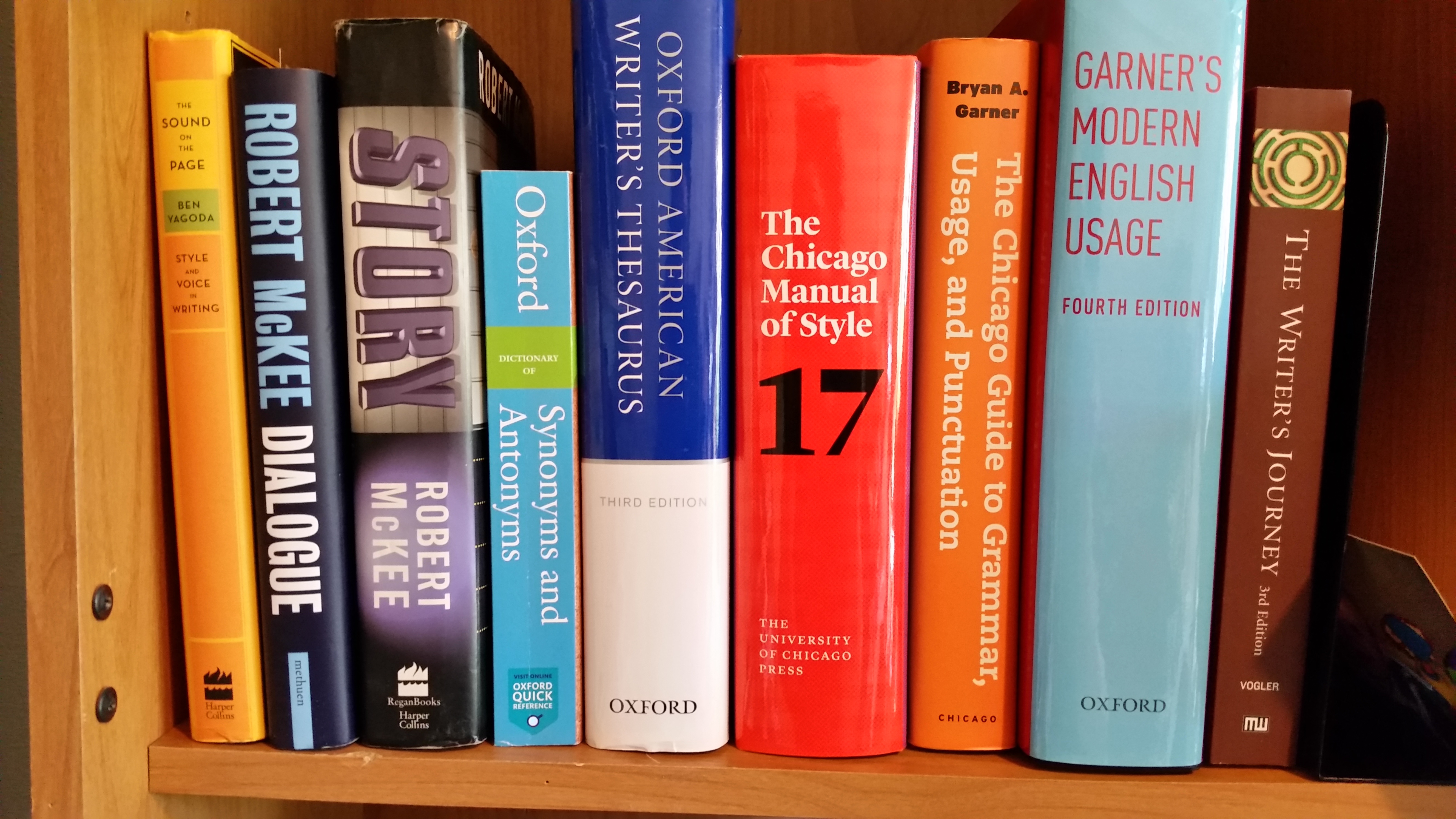
Trying to learn from a grammar manual can be complicated. I learned by reading the Chicago Manual of Style, which is the rule book for American English. Most editors in the large traditional publishing houses refer to this book when they have questions.

chicago guide to grammarIf you are writing in the US, you might consider investing in Bryan A. Garner’s Chicago Guide to Grammar, Usage, and Punctuation. This is a resource with all the answers to questions about grammar and sentence structure. It takes the Chicago Manual of Style and boils it down to just the grammar.

There are other style guides, each of which is tailored to a particular kind of writing, such as the AP manual for journalism and the Gregg manual for business writing. The CMoS is specifically for creative writing, such as fiction, memoirs, and personal essays, but also includes business and journalism rules.

However, the basic rules are simple.

Punctuation seems complicated because some advanced usages are open to interpretation. In those cases, how you habitually use them is your voice. Nevertheless, the foundational laws of comma use are not open to interpretation.

Consistently follow these rules, and your work will look professional.

First, commas and the fundamental rules for their use exist for a reason. If we want the reading public to understand our work, we need to follow them.

Wrong-Way-Traffic-Sign-K-101-1Let’s get two newbie mistakes out of the way:

  1. Never insert commas “where you take a breath” because everyone breathes differently.
  2. Do not insert commas where you think it should pause because every reader sees the pauses differently.

Second: How do we use commas and coordinating conjunctions?

A comma should be used before these conjunctions: and, but, for, nor, yet, or, and so to separate two independent clauses. They are called coordinating conjunctions because they join two elements of equal importance.

However, we don’t always automatically use a comma before the word “and.” This is where it gets confusing.

Compound sentences combine two separate ideas (clauses) into one compact package. A comma should be placed before a conjunction only if it is at the beginning of an independent clause. So, use the comma before the conjunction (and, but, or) if the clauses are standalone sentences. If one of them is not a standalone sentence, it is a dependent clause, and you do not add the comma.

Take these two sentences: She is a great basketball player. She prefers swimming.

  1. If we combine them this way, we add a comma: She is a great basketball player, but she prefers swimming.
  2. If we combine them this way, we don’t: She is a great basketball player but prefers swimming.

The omission of one pronoun makes the difference.

You do not join unrelated independent clauses (clauses that can stand alone as separate sentences) with commas as that creates a rift in the space/time continuum: the Dreaded Comma Splice.

Comma Splice Meme

Boris kissed the hem of my garment, the dog likes to ride shotgun.

The dog has little to do with Boris other than the fact they both worship me. The same thought, written correctly:

Boris kissed the hem of my garment.

The dog likes to ride shotgun.

The dog riding shotgun is an independent clause and does not relate at all to Boris and his adoration of me. It should be in a separate paragraph. If you want Boris and the dog in the same sentence, you must rewrite it:

Boris and the dog worship me, and both like to ride shotgun.

Third, a semicolon in an untrained hand is a needle to the eye of the reader. Use them only when two standalone sentences or clauses are short and relate directly to each other.

Some people (including Microsoft Word) think a semicolon signifies an extra-long pause but not a hard ending. The Chicago Manual of Style and Bryan A Garner say that belief is wrong. Don’t blindly accept what Spellcheck tells you!

Semicolons join short independent clauses that can stand alone but which relate to each other. When do we use semicolons? Only when two clauses are short and are complete sentences that relate to each other. Here are two brief sentences that would be too choppy if left separate.

  • The door swung open at a touch. Light spilled into the room. (2 related short standalone sentences.)

  • The door swung open at a touch; light spilled into the room. (2 related short sentences joined by a semicolon.)

  • The door swung open at a touch, and light spilled into the room. (1 compound sentence made from 2 related standalone clauses joined by a comma and a conjunction.) (A connector word.)

strange thoughts 2All three of the above sentences are technically correct. The usage you habitually choose is your voice.

I generally try to find alternatives to semicolons. they’re too easily abused because Microsoft Word and most people don’t know how to use them.

Fourth: Colons. These head lists but are more appropriate for technical writing. Colons are rarely needed in narrative prose. In technical writing, you might say something like:

For the next step, you will need:

  1. four bolts,
  2. two nail files,
  3. one peach, whole and unpeeled.

Technically speaking, I have no idea what they are building, but I can’t wait to see it!

Fifth:  Oxford commas, also known as serial commas. This is the one war authors will never win or find common ground, a true civil war.

When listing a string of things in a narrative, we separate them with commas to prevent confusion. I like people to understand what I mean, so I always use the Oxford Comma/Serial Comma.

If there are only two things (or ideas) in a list, they do not need to be separated by a comma. If there are more than two ideas, the comma should be used as it would be used in a list.

We sell dogs, cats, rabbits, and picnic tables.

Why do we need clarity? You might know what you mean, but not everyone thinks the same way.

I accept this Nebula award and thank my late parents Irene Luvaul and Poseidon.

That sentence might make sense to some readers, but not in the way I intended. The intention of it is to thank my late parents, my editor, and the God of the Sea. If I don’t thank Poseidon, he’ll pitch a fit.

I accept this Nebula award and thank my late parents, Bob and Marge, my editor Irene Luvaul, and Poseidon, the God of the Sea.

Sixth: We use a comma after common introductory clauses.

After dark, Boris would change into his bat form and go hunting for enchiladas.

Seventh: Punctuating dialogue: All punctuation goes inside the quote marks.

  1. A comma follows the spoken words, separating the dialogue from the speech tag.
  2. The clause containing the dialogue is enclosed, punctuation and all, within quotes.
  3. The speech tag is the second half of the sentence, and a period ends the entire sentence.

The editor said, “I agree with those statements.”

If the dialogue is split by the speech tag, do not capitalize the first word in the second half.

“I agree with those statements,” said the editor, “but I wish you’d stop repeating yourself.”

stoplightWhy are these rules so important? Punctuation tames the chaos that our prose can become. Periods, commas, quotation marks–these are the universally acknowledged traffic signals.

If you follow these seven simple rules, your work will be readable. If your story is creative and well-written, it will be acceptable to acquisitions editors.

6 Comments

Filed under writing

#FineArtFriday:Porto de Leixões by Mário Navarro da Costa 1901

602px-Mário_Navarro_da_Costa_-_Porto_de_Leixões,_1901Artist: Mário Navarro da Costa (1883-1931)

Description: Português: Porto de Leixões (English: Port of Leixões)

Dimensions: 81 x 100 cm

Date: 1901

Source/Photographer: Collection of the Pinacoteca do Estado de São Paulo

What I love about this painting:

I love the intensity of this scene. One can feel the heat of a Portuguese day at the end of summer, a moment lingering on the edge of autumn. He brings his native Brazilian passion for color to the composition, with vibrant hues and strong visual texture.

More than a century after da Costa painted these humble fishing boats, Porto de Leixões is the largest port city in northern Portugal handling giant cargo vessels. The port boasts a 21st century  cruise ship terminal that is a visually stunning structure.

About the artist, via CoPilot GPT (source links included):

Mário Navarro da Costa (1883–1931) was a Brazilian painter and diplomat. He dedicated himself primarily to marine art and received private lessons from José Maria de Medeiros (1849–1925) and Rodolfo Amoedo (1857–1941) 1. His work falls within the realm of Impressionist and Modern painting. Over the years, his pieces have been offered at auction multiple times, with realized prices ranging from $596 to $2,630, depending on the size and medium of the artwork 2One notable work is “Barreiro Old Mills”, which achieved a record price of $2,630 at auction in 2019 2.


Credits and Attributions:

IMAGE: Wikimedia Commons contributors, “File:Mário Navarro da Costa – Porto de Leixões, 1901.jpg,” Wikimedia Commons, https://commons.wikimedia.org/w/index.php?title=File:M%C3%A1rio_Navarro_da_Costa_-_Porto_de_Leix%C3%B5es,_1901.jpg&oldid=841285378 (accessed April 11, 2024).

Comments Off on #FineArtFriday:Porto de Leixões by Mário Navarro da Costa 1901

Filed under #FineArtFriday

Making effective revisions: the short story #writing

In the past few weeks, we have looked at the structural elements of the story, such as theme, narrative mode, point of view, and the author’s voice. We’ve talked about showing emotions and writing believable drama. We have dissected how a story flows from scene to scene.

depthPart1revisionsLIRF05252021So now, we realize that we must submit our work to contests or publications if we ever want to get our name out there. We have looked at our backlog of short stories and gone out to sites like Submittable or the Submission Grinder to discover contests or magazines that we’d like to send them to.

After all, some of these old ramblings could be pretty good if we dusted them off and polished them up a bit.

So now we’re going to look at the structural elements of a story that has been sitting for a while. Let’s have a look at one of many short works I wrote during lockdown but forgot about.

Author-thoughtsThe first thing we’re going to look at is the problem. Is the problem worth having a story written around it? If not, is this a “people in a situation” story, such as a short romance or a scene in a counselor’s office? What is the problem and why did the characters get involved in it?

The following is the core plot of a short story that came in just under 4,000 words.

A messenger, Oriana, and her partner are on a mission to a local ruler from his brother, the king. Before they arrive there, her partner quarrels with her and attempts to steal the coins that belong to the king. She knocks him out, retrieves what he had stolen, and continues her quest to take the coins to the king’s brother.

At the brother’s town, Oriana collects a small jewel, one that is really an item of great magical power. The king will use it to end the drought that has been crippling the country. Now, she must convey it back to the king.

Oriana meets a wanderer, Geran Rose, who, unaware of what she is carrying, joins her. They travel together, but then the next day, the former partner shows up, accompanied by a demon. Now, the messenger realizes what the thief is really after. She can’t let the demon have the jewel but knows she can’t defeat him. However, a dragon can. So, she and her companion lead the demon into dragon country, knowing that they could die as easily as the demon.

First, I look at believability. It is a fantasy set in a world of humans, elves, dwarves, and dragons, so in that world, would the central event I have detailed really happen? More importantly, would it happen in the way I have shown?

  • The dragons are wild creatures, sentient and, most importantly, looking for a good meal. Why would dragons desire to eat a demon? They love the taste of elves, but they love the taste of demons more. These dragons crave the darkness that the demon embodies in the same way I crave chocolate.

sample-of-rough-sketched-mapWorldbuilding is crucial in a short story. Is the setting I have chosen the right place for this event to happen? In this case, I say yes, that it is the only place where such a story could happen.

I absolutely loved writing the scenes set at the edge of the burning lands. But have I left enough clues in the setting for a reader to visualize the world? My writing group will tell me.

The next aspect I look at is characterization, or how I have portrayed the protagonist and other characters. I ask my characters the same questions that I would ask of those in a novel. Answering these questions also tells me if the plot is believable and relatable.

Are these the right people for their roles? Yes, the elf, Oriana is the only one who could carry this off. The human, Geran Rose is the perfect sidekick, intelligent, and a good fighter. The elven thief and the high-ranking demon were easy to write because they were so outrageously fun.

StoryMemeLIRF10052021Point of view: First person – Oriana tells us this story as it happens. We are in her head for the entire story. Do her actions and reactions feel organic and natural? After some work, I think yes, but again, I’ll have to run it by someone to be sure.

In a short story, conversations and brief moments of mind wandering can be vital in advancing the plot. Are the conversations unique to each character? I hope so, but my writing group will tell me more.

This is a short story, so do these scenes of conversation and internal dialogue show us something about my protagonist’s personality and provide information we need to know without dumping it? Again, I hope so.

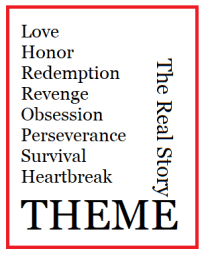
What is the unifying theme, the thread that runs throughout the story and ties things together? In this case, it is the many nuances and ramifications of betrayal. Is that theme strong enough to lend believability to the plot?

The last thing I look at is crucial to a reader’s enjoyment of my short story.

How does it end? Is the ending satisfying and finite? I like the way my short story ends, but will my writing group agree?

In your short story, ask yourself if you wonder what could have happened next. Do you want to write more stories around these characters?

I have another story in the works for Oriana and Geran Rose, which involves a traitor, a ballgown, and the universal womanly desire for clothing with useful pockets.

Writing short stories is fun, a way of clearing the mind when I am stuck for ideas on a longer piece. Do make the effort to examine the structure of your short stories and rearrange the scenes as needed.

On Monday, we’ll walk through the steps for revising and self-editing your short work. This final phase of the process is crucial because what you submit must be grammatically clean and look professional.

short story arc

3 Comments

Filed under writing

What to do with that backlog of unpublished short fiction #writing

There have been times when I wanted to write something but didn’t know what. These are the days when I reach a point where I have nothing useful to add to my still-unfinished novel.

microfictionI am not the only person who experiences these moments of low creative energy. When this happens, I set the longer work aside and go rogue—I write poetry and drabbles and short stories.

And yes, cardinal sinner that I am—some of my poetry rhymes. I can’t help that I was raised on Lord Byron and W.B. Yeats.

There are times when I want to write but have no solid idea what the story could be. Maybe it’s this, or perhaps it’s that. Those are the days when I turn out short stories. For me, writing short stories is like shopping for clothes. I need to try them on to see what fits before I buy them.

strange thoughts 2Maybe you are writing, but so far, you have written nothing novel or even novella-length. Perhaps you have been writing a little of this and a bit of that, and now you have a pile of disparate, exceptionally short fiction, and you don’t know what to do with it.

Two well-known and respected contests that I regularly submit work to are:

A drabble is a microfiction. It is exactly 100 words long.

Extremely short fiction must showcase the same essential components as a longer story:

  1. A setting
  2. One or more characters
  3. A conflict
  4. A resolution.

We have a lot of information to convey and only 100 words to do it. To that end, we must show our story to the reader the way an impressionist paints a picture.

  • We choose nouns and verbs with the most visual impact.

IBM_Selectric (1)Microfiction is the distilled soul of a novel. It has everything the reader needs to know about a singular moment in time. It tells that story and makes the reader wonder what happened next. Each short piece we write increases our ability to tell a story with minimal exposition.

For a longer post on how I write microfiction, see my post of January 31, 2024: Discipline and Micro Fiction #amwriting | Life in the Realm of Fantasy (conniejjasperson.com)

Here are two reliable platforms that list a wide variety of publications and contests with open calls:

Some magazines have open calls for short (well under 4,000 words is best) stories:

There are also opportunities for the visual arts as well as written work:

Submitting to contests is a different process than submitting to magazines and anthologies.

steampunk had holding pen smallWhen submitting to a publication, you send your work directly to the publisher. In return, you can expect to receive a communication from the senior editor, either a rejection or an acceptance.

Most rejections arrive in the form of impersonal emails or (rarely nowadays) letters: “We are not interested in this work at this time. Thank you, and keep writing.”

Contests are large, amorphous entities with a group of writers who have agreed to be readers. They judge submissions based on technical skills as well as creativity. Many contests must charge a fee for submissions.

I’ve said this before, but it bears mentioning again. You have wasted time and money if you don’t follow the prospective contest or publisher’s submission guidelines, which are clearly listed on the contest page or on their website.

We demonstrate our level of professionalism by strictly following submission guidelines. Editors at magazines and publishing houses receive hundreds of unsolicited works each week and have no time to deal with unedited, improperly formatted manuscripts.

Editors (or, in the big houses, their interns) look at the first page and immediately know what they are looking at. They reject the poorly written, unprofessional messes without further consideration.

Veikkaus_LottoTo wind this up—take another look at that backlog of short work. Edit it, read it aloud, and edit it again. Then, consider submitting that work to a contest or magazine. It’s good experience for indie writers, but more than that, you might hit the jackpot!

To paraphrase an old joke, “to win the lottery, you must first buy a ticket.” This is especially true if you want to be published.


Credits and Attributions:

IBM Selectric, By Oliver Kurmis (Self-photographed) [CC BY 2.5 (http://creativecommons.org/licenses/by/2.5)%5D, via Wikimedia Commons, accessed Apr. 6, 2024.

Finnish Lottery Tickets, Wikimedia Commons contributors, “File:Veikkaus Lotto.jpg,” Wikimedia Commons, https://commons.wikimedia.org/w/index.php?title=File:Veikkaus_Lotto.jpg&oldid=632154033 (accessed April 6, 2024).

Comments Off on What to do with that backlog of unpublished short fiction #writing

Filed under writing

#FineArtFriday: Street Scene in Montmartre Vincent van Gogh 1887 (a second look)

Scène_de_Rue_à_MontmartreArtist: Vincent van Gogh (1853–1890)

Title: Street Scene in Montmartre

Genre: landscape art

Date: 1887

Medium: oil on canvas

Dimensions: height: 46.1 cm (18.1 in); width: 61.3 cm (24.1 in)

Collection: Private collection

What I love about this painting:

Street Scene in Montmartre is a relatively unknown painting by Vincent van Gogh, unknown because it has been held in private collections and not exhibited to the public. It was auctioned by Sotheby’s in 2021, and the image was posted to Wikimedia Commons courtesy of that auction.

The scene feels like an afternoon scene in winter, with a man and woman walking, and two children playing.

I wanted to take a second look at this painting because I’ve been reading a great deal about Vincent’s life. His art was an attempt to show the beauty he saw everywhere, especially in the most ordinary of things.

He paid particular attention to the visual construction and texture of the fence, and also to the tangle of garden behind. This is the smaller of two windmills featured in several more well-known paintings in the subset of paintings from Van Gogh’s Montmartre series.

While there are people walking down the dirt lane in this scene, they aren’t the focus. Instead, our eye is directed to the way the windmill rises over the ramshackle fence, neglected garden, and above it all, the flag bravely flying.

The dirt lane, the fence, the winter-barren garden, and the windmill falling to ruin beneath the cold sky offer us a glimpse into Vincent’s mood. He finds beauty in the textures of life, both visual and metaphysical – in the cycle of life, of youth growing old and aging to ruin. The flag flying in the breeze and the children playing offer us the hope of brighter days and new possibilities.

About this painting, via Wikipedia:

The Montmartre paintings are a group of works that Vincent van Gogh created in 1886 and 1887 of the Paris district of Montmartre while living there, at 54 Rue Lepic, with his brother Theo. Rather than capture urban settings in Paris, van Gogh preferred pastoral scenes, such as Montmartre and Asnières in the northwest suburbs. Of the two years in Paris, the work from 1886 often has the dark, somber tones of his early works from the Netherlands and Brussels. By the spring of 1887, van Gogh embraced use of color and light and created his own brushstroke techniques based upon Impressionism and Pointillism. The works in the series provide examples of his work during that period of time and the progression he made as an artist.

In van Gogh’s first year in Paris he painted rural areas around Montmartre, such as the butte and its windmills. The colors are somber and evoke a sense of his anxiety and loneliness.

The landscape and windmills around Montmartre were the source of inspiration for a number of van Gogh’s paintings. The Moulin de la Galette, still standing, is located near the apartment he shared with his brother. Built in 1622, it was originally called Blute-Fin and belonged to the Debray family in the 19th century. Van Gogh met artists such as Toulouse-Lautrec, Paul Signac and Paul Gauguin who inspired him to incorporate Impressionism into his artwork resulting in lighter, more colorful paintings.

Windmills also featured in some of van Gogh’s landscape paintings of Montmartre.

Montmartre, sitting on a butte overlooking Paris, was known for its bars, cafes, and dance-hall. It was also located on the edge of countryside that afforded Van Gogh the opportunity to work on paintings of rural settings while living in Paris.

When Van Gogh painted he intended not just to capture the subject, but to express a message or meaning. It was through his paintings of nature that he was most successful at accomplishing his goal. It also created a great challenge: how to portray the subject and create a work that would resonate with the audience. [1]

About the Artist, via Wikipedia:

Vincent Willem van Gogh, 30 March 1853 – 29 July 1890) was a Dutch Post-Impressionist painter who posthumously became one of the most famous and influential figures in Western art history. In a decade, he created about 2,100 artworks, including around 860 oil paintings, most of which date from the last two years of his life. They include landscapes, still lifes, portraits, and self-portraits, and are characterised by bold colours and dramatic, impulsive and expressive brushwork that contributed to the foundations of modern art. He was not commercially successful, struggled with severe depression and poverty, and committed suicide at the age of 37.

Van Gogh was born into an upper-middle-class family, While a child he drew and was serious, quiet and thoughtful. As a young man he worked as an art dealer, often traveling, but became depressed after he was transferred to London. He turned to religion and spent time as a Protestant missionary in southern Belgium. He drifted in ill health and solitude before taking up painting in 1881, having moved back home with his parents. His younger brother Theo supported him financially; the two kept a long correspondence by letter. His early works, mostly still lifes and depictions of peasant labourers, contain few signs of the vivid colour that distinguished his later work. In 1886, he moved to Paris, where he met members of the avant-garde, including Émile Bernard and Paul Gauguin, who were reacting against the Impressionist sensibility. As his work developed he created a new approach to still lifes and local landscapes. His paintings grew brighter as he developed a style that became fully realised during his stay in Arles in the South of France in 1888. During this period he broadened his subject matter to include series of olive trees, wheat fields and sunflowers.

Van Gogh suffered from psychotic episodes and delusions, and though he worried about his mental stability, he often neglected his physical health, did not eat properly and drank heavily. His friendship with Gauguin ended after a confrontation between the two when, in a rage, Van Gogh severed a part of his own left ear with a razor. He spent time in psychiatric hospitals, including a period at Saint-Rémy. After he discharged himself and moved to the Auberge Ravoux in Auvers-sur-Oise near Paris, he came under the care of the homeopathic doctor Paul Gachet. His depression persisted, and on 27 July 1890, Van Gogh is believed to have shot himself in the chest with a revolver, dying from his injuries two days later. [2]


Credits and Attributions:

Image: Scène de Rue à Montmartre, Vincent van Gogh PD|100, Wikimedia Commons contributors, “File:Scène de Rue à Montmartre.jpg,” Wikimedia Commons, the free media repository, https://commons.wikimedia.org/w/index.php?title=File:Sc%C3%A8ne_de_Rue_%C3%A0_Montmartre.jpg&oldid=617922499 (accessed May 19, 2022).

[1] Wikipedia contributors, “Montmartre (Van Gogh series),” Wikipedia, The Free Encyclopedia, https://en.wikipedia.org/w/index.php?title=Montmartre_(Van_Gogh_series)&oldid=1086671125 (accessed May 19, 2022).

[2] Wikipedia contributors, “Vincent van Gogh,” Wikipedia, The Free Encyclopedia, https://en.wikipedia.org/w/index.php?title=Vincent_van_Gogh&oldid=1087073450 (accessed May 19, 2022).

3 Comments

Filed under #FineArtFriday, writing

 The powerful novella vs. a weak novel #amwriting

MyWritingLife2021BI do a lot of rambling in my first drafts because I’m trying to visualize the story. While I try to write this mental blather in separate documents, the random thought processes often bleed over into my manuscript.

During the editing process, I sometimes find that besides the four chapters that don’t fit the plot anymore, perhaps three more chapters will expand on background info. They can be condensed or cut.

I’m a wordy writer, but sometimes the finished work is shorter than I’d planned—a lot shorter. Sometimes, I get to the end of a story, but it’s only at the 40,000-word mark (or less).

Then I have to make a decision. I could choose to leave it at the length it is now and have it edited. If I am married to the idea of a novel, I could try to stretch the length, but why?

If I know anything, it’s this. When I have nothing of value to add to the tale, it’s best to stop. Fluff weakens the story, and I’d prefer to write a powerful novella rather than a weak novel.

In the second draft of any manuscript, I change verbs to be more active and hunt for unnecessary repetitions of information. At that stage, the manuscript will expand and contract. It hurts the novelist in my soul, but the story may only be 35,000 words long when the second draft is complete.

animal farm george orwell40,000 words in fantasy is less than half a book. That makes it a novella. But I send it to my beta reader to see what she thinks. If she feels the plot lacks substance at that length, I let it rest for a while, then come back to it. Then, I can see where to add new scenes, events, and conversations to round out the story arc. That might bring it up to the 60,000-word mark.

If Sherrie (my sister and beta reader) says the story is good and ends well, I stop adding content and move to the editing process.

So, what sort of scenes do I cut?

A detailed history of everyone’s background is unnecessary. Readers only want to hear a brief mention of historical information. It should be delivered in conversation and only when the protagonist needs to know it.

Unfortunately, when I am building the basic structure of the novel, I sometimes forget to write the cast members’ history in a separate document. Once I shrink or cut those rambling paragraphs, I have a scene that moves the story forward but is much shorter.

1024px-Charles_Dickens-A_Christmas_Carol-Title_page-First_edition_1843In the second draft, I will discover passages where I have repeated myself but with slightly different phrasing. My editor is brilliant at spotting these, which is good because I miss plenty of them when I am preparing my manuscript for editing. I wrote that mess, so even though I try to be vigilant, repetitions tend to blend into the scenery.

Once Irene points them out, I decide which wording I like the best and go with that.

Also, in the first draft, I find a lot of “telling” words and phrases I will later change or cut. I look for active alternatives for words and phrases that weaken the narrative:

  • There was
  • To be

I change my weak, telling sentences to more active phrasing. This means I sometimes gain a few words because showing a scene as it happens requires more words than giving a brief “they did this.”

But then I lose words in other areas—lots of words.

I feel that when writing in English, the use of contractions makes conversations feel more natural and less formal. It shortens the word count because two words become one: was not is shortened to wasn’thas not is changed to hasn’t, etc.

Reading my manuscript out loud is a real eye-opener. I print each chapter out and read it aloud. I find words to cut, sentences and entire paragraphs that make no sense. The story is stronger without them.

In the first draft, I look for crutch words and remove them. This lowers my word count. My personal crutch words are overused words that fall out of my head along with the good stuff as I’m sailing along:

  • So (my personal tic)
  • Very (Be wary if you do a global search – don’t press “replace all” as most short words are components of larger words, and ‘very’ is no exception.)
  • That
  • Just
  • Literally

I try to plot my books in advance, but my characters have agency. This means the character arcs and the story evolves as I write the first draft. New events emerge, and I find better ways to get to the end than what was first planned.

blphoto-Orange-ScissorsI have learned to be brutal. I might have spent days or even weeks writing a chapter that now must be cut.

It hurts when a perfect chapter no longer fits the story. But maybe it bogs things down when you see it in the overall context. It must go, but that chapter will be saved. Those cut pieces often become the core of a new story, a better use for those characters and events.

Once that first draft is complete, no matter how short or long, I measure it against the blueprint of the story arc. I ask the following questions about every story:

  • How soon does my inciting incident occur? It should be near the front, as this will get the story going and keep the reader involved.
  • How soon does the first pinch point occur? This roadblock will set the tone for the rest of the story.
  • What is happening at the midpoint? Are the events of the middle section moving the protagonist toward their goal? Did the point of no return occur near or just after the midpoint?
  • Where does the third pinch point occur? This event is often a catastrophe, a hint that the protagonist might fail.
  • Is the ending solid, and does it resolve the major problems?

blueprint-of-the-story-arcEven if this story is one part of a series, we who are passionate about the story we’re reading need firm endings.

Novellas occupy a special place in my heart. A powerful, well-written novella can be a reading experience that shakes a reader’s world. The following is a list of my favorite novellas. And yes, you’ve seen this list before, and also yes, some are considered literary fiction:

  • The Emperor's Soul - Brandon SandersonThe Emperor’s Soul, by Brandon Sanderson
  • A Christmas Carol, by Charles Dickens
  • Breakfast at Tiffany’s, by Truman Capote
  • Candide, by Voltaire
  • Three Blind Mice, by Agatha Christie
  • The Strange Case of Dr. Jekyll and Mr. Hyde, by Robert Louis Stevenson
  • The Time Machine, by H.G. Wells
  • Of Mice and Men, by John Steinbeck
  • The Old Man and the Sea, by Ernest Hemingway
  • Animal Farm, by George Orwell
  • The Turn of the Screw, by Henry James

Read.

Read widely and try to identify the tricks that impressed you. The real trick is figuring out how to put what you learn to good use.

2 Comments

Filed under writing

Dissecting Voice/Style #writing

What does “voice” refer to in literature? It is an author’s habit, their fingerprint, a recognizable “sound” in the way they communicate their stories.

a writer's styleWhen we speak aloud, we habitually use certain words and phrase our thoughts a particular way. The physiology of our throats is unique to us. While we may sound very similar to other members of our family, pitch monitoring software will show that our speaking voice is distinctive to us.

For some of us, the moment we say “hello,” our friends and family know it’s us on the other end of the telephone, even without caller ID.

The same is true for our writing.

Our voice is comprised of the way we construct paragraphs, the words we choose, and the narrative mode and time/tense we prefer to write in.

Our content is shaped by our deeply held beliefs and attitudes. Those values change and evolve over time. Content includes the themes we instinctively write into our work and the ideals we subconsciously hold dear. Those elements shape a story’s character and plot arcs and represent who we were at the time we wrote it.

Our voice or style is the visual sound of our words as they appear on the page.

Let’s take another look at Gillian Flynn’s novel, Gone Girl.

Gone_Girl_FlynnFlynn’s style of prose is rapid-fire, almost stream-of-consciousness, and yet it is controlled and deliberate. She is creative in how she uses the literary device of narrative mode. Primarily, Gone Girl is written in the first person present tense. But sometimes Flynn breaks the fourth wall by flowing into the second person present tense and speaking directly to us, the reader.

This seamless manipulation of narrative tense reveals Flynn’s thought process.

One criticism you might hear about her style is that, at times, her characters all sound alike. Only the chapter title and subjects covered in that section let you know which person is speaking, Nick or Amy. That means we are hearing the author’s own voice in the role of the characters.

When Flynn slips into the second person mode and speaks directly to the reader, she forces us to consider the ideas she is presenting, involving us in the story.

That flowing from mode to mode is a literary device she is good at, and speaking as an editor, it is neither good nor bad. Whether it works depends on an author’s skill.

Your enjoyment of that kind of narrative depends on your personal taste. Flynn’s style of writing is unique, but her exploration of dark, unlikeable characters makes this a difficult novel for some readers.

A writer’s personal ethics and taste and the kernel of “what if” shape how they approach the subject matter and the themes of their work. Their knowledge of craft is demonstrated in the construction of sentences, paragraphs, and scenes. Skill in the craft shapes the overall arc of a story.

desk_via_microsoft_stickers

courtesy Office 360 graphics

The words we gravitate to and reuse and how we unconsciously punctuate our sentences combine to form our voice, our style.

This personal sound evolves as we develop more skills and knowledge of writing craft.

My own style has changed dramatically since my first novel. When I began writing seriously, I was in the habit of using italicized thoughts and characters talking to themselves to express what was happening inside them. I often employed compound sentences that, when I look back on them now, were too long.

Using italics for thoughts is an accepted practice and is not wrong. When used sparingly, italicized thoughts and internal dialogue have their place. However, thoughts can be used as a means for dumping information, which then becomes a wall of italicized words.

In the last few years, I’ve evolved in my writing habits. I am increasingly drawn to writing shorter sentences, but I vary sentence length to avoid choppiness.

When conveying my character’s internal dialogue, I use the various forms of free indirect speech to show who my characters think they are and how they see their world. So, in that regard, my author voice has changed.

We write for ourselves first. Then, we revise and edit for the enjoyment of other readers.

We do not iron the life out of our work, because that spark of joy that was instilled the moment we laid down those words must still shine through. It takes thought and the ability to recognize and cast aside prose that doesn’t say what we want it to, yet still have it sound like our writing and not someone else’s.

Be consistent with punctuation, whether you are right or wrong. If you “hate the Oxford comma” or some other widely accepted rule of grammar, you must be consistent when you avoid its use.

Inconsistency in a manuscript is not a voice or style.

It’s a mess.

Ernest Hemmingway rarely used commas. However, he was consistent in how he composed his sentences, and his work was original and readable.

MoveableFeast“I was learning something from the painting of Cézanne that made writing simple true sentences far from enough to make the stories have the dimensions that I was trying to put in them. I was learning very much from him but I was not articulate enough to explain it to anyone. Besides it was a secret.”

~~Ernest Hemmingway, A Movable Feast

Some authors’ voices really stand out, and their writing skills are up to the task of conveying what they intend their words to say. Their stories find an important place in our hearts.

They are the writers that agents are desperately seeking.

5 Comments

Filed under writing

#FineArtFriday: Belvedere 1927 Seldon Connor Gile (a second look)

Title: Belvedere

Artist: Seldon Connor Gile

Medium: Oil on Canvas

Date: 1927

Inscription: signed and dated by Artist: Gile 27


What I love about this painting:

This is a view of San Francisco Bay from a hill in the town of Belvedere, California. Belvedere is located on the San Francisco Bay in Marin CountyCalifornia. Consisting of two islands and a lagoon, it is connected to the Tiburon Peninsula by two causeways.

It is a place the artist clearly loved, and he had his home nearby in Tiburon.

The intensity of color as one looks down the hill toward the shanties lends an atmosphere of purity, of fresh air, and approaching springtime to the painting.

Bold strokes of red and blue convey the atmosphere that is quintessential to Northern California. He offers us a sense of wonder, of peace, of modest post-WWI prosperity in this painting. We are shown the depth of color and vibrancy of a time and sense of place that has long vanished.

This is an era we usually see through old black-and-white photographs and jerky, scratchy newsreels.

Even rundown and undeveloped properties in Tiburon and Belvedere now sell in the high millions. Starving artists and middle-class workers can rarely acquire vacation shanties in that area.

About the Artist, Via Wikipedia:

Selden Connor Gile (20 March 1877 – 8 June 1947) was an American painter who was mainly active in northern California between the early-1910s and the mid-1930s. He was the founder and leader of the Society of Six, a Bay Area group of artists known for their plein-air paintings and rich use of color, a quality that would later figure into the work of Bay Area figurative expressionists.

Though Gile was steadily employed at jobs other than art until the age of 50, his artistic output, primarily from marathon weekends spent painting, was considerable. 1915, the year of the Panama–Pacific International Exposition, marked the beginning of his maturation as an artist, despite that fact that Gile and the Society of Six would not exhibit their art beyond a few occasional paintings until 1923. From their first exhibition at the Oakland Art Gallery on March 11, 1923 to the sixth and final show as a group in 1928, Gile and the Society of Six were generally well received by critics. In the spring of 1927, Gile quit his job as an office manager for Gladding, McBean and Company and moved from his cabin on Chabot Road in Oakland (also known as the “Chow House” where the Society of Six would meet on weekends), into a cottage he had kept since the early 1920s on San Francisco Bay in TiburonMarin County to paint full-time.

Selden Gile continued to paint and exhibited in various group shows every year until 1937. During the 1930s, the number of his oil paintings declined in favor of watercolors. Another change likely brought on by the mood around the Great Depression was to include more people, particularly workers, in his paintings. Despite his discomfort with larger formats, Gile took on the town of Belvedere’s only WPA mural commission, painting a mural for the public library, where he served as a part-time librarian. Towards the end of his life, unable to pay his rent, Gile took on another mural commission, this time for a railroad office in San Francisco. He is remembered from his time in the Tiburon/Belvedere area:

“…as a loner, independent, and very proud. [Gile] enjoyed cordial relationships with some of his neighbors, often chatting with them on the street or in doorways, but he consistently refused their hospitality…In the end Gile was a sick, alcoholic old man surrounded by paintings he never sold, lonely, and not painting. The process of painting and camaraderie that he had enjoyed were past now.”

A few months before he died, Selden Gile checked himself into the Marin County Hospital and Farm, where he spent the rest of his life. On June 8, 1947, Gile died of cirrhosis of the liver.


Credits and Attributions:

Belvedere, California 1927 by Selden Connor Gile, Public domain, via Wikimedia Commons

Wikimedia Commons contributors, “File:Selden Connor Gile Belvedere 1927.jpg,” Wikimedia Commons, the free media repository, https://commons.wikimedia.org/w/index.php?title=File:Selden_Connor_Gile_Belvedere_1927.jpg&oldid=525009834 (accessed March 11, 2021).

2 Comments

Filed under #FineArtFriday

How the narrative tense shapes the point of view #writing

Every story is different and requires us to use a unique narrative time. Narrative tense conveys information about time. It relates the time of an event (when) to another time (present, past, or future). So, the narrative tense we choose when writing a particular story indicates its location in time.

MyWritingLife2021In my previous post, we talked about narrative point of view. POV is the perspective, the personal or impersonal “lens” through which we communicate our stories. It is the mode we choose for conveying a particular story.

The narrative tense we gravitate to is also a component of our voice.

We shape our stories by combining narrative time with two closely related aspects:

  • Narrative point of view.
  • Our narrative voice (we’ll explore this more later).

The way that narrative tense affects a reader’s perception of the characters is subtle, an undercurrent that goes unnoticed after the first few paragraphs. It shapes the reader’s view of events on a subliminal level.

  • “I eat.”
  • “I am eating.”
  • “I have eaten.”
  • “I have been eating.”

The above sentences are all in the present tense. They contain the present-tense form of a verb: eatam, and have.

Yet, they are different because each conveys slightly different information, a different point of view about how the act of eating pertains to the present moment.

Revisions are a mess for me because I “think aloud” when writing the first draft. Passive phrasing finds its way into the prose.

Verb ConjugationWhen I begin my second draft, those weak verb forms function as traffic signals. They were a form of mental shorthand that helped me write the story before I lost my train of thought. But in the rewrite, weak verbs are code words that tell me what the scene should be rewritten to show.

I’ve used these examples before. Each sentence says the same thing, but we get a different story when we change the narrative tense, point of view, and verb choice.

  • Henry was hot and thirsty. (Third-person omniscient, past tense, passive phrasing.)
  • Henry trudged forward, his lips dry and cracked, yearning for a drop of water. (Third-person omniscient, past tense, active phrasing.)
  • struggle toward the oasis with dry, cracked lips and a parched tongue. (First-person present tense, Active phrasing.)
  • You stagger toward the oasis, dizzy with thirst. (Second-person, present tense, active phrasing.)

This is a moment in time for these thirsty characters, and the way we show it to our readers is meaningful in how they perceive the scene.

Sometimes, the only way I can get into a character’s head is to write in the first-person present tense. This is because the narrative time I am trying to convey is the now of that story. (This happens to me most often when writing short stories.)

Every story is unique; some work best in the past tense, while others must be set in the present.

WARNING: When we write a story using an unfamiliar narrative mode, watch for drifting verb tense and wandering narrative point of view.

Drifting verb tense and wandering POV are insidious. Either or both can occur if you habitually write using one mode but switch to another. For this reason, I am vigilant when I begin writing in the first-person present tense, but later discover it isn’t working for me. If I were to switch to close third person past tense, each verb must be changed to match the new narrative mode and time.

But changing an entire draft to a different narrative mode isn’t the only danger zone:

  • Time and modes will drift sometimes for no reason other than you were writing as quickly as you could. For this reason, when you begin revisions, it’s crucial to look at your verb forms to ensure your narrative time doesn’t inadvertently drift between past and present.

So, where does voice come into it? An author’s voice is their habit, their fingerprint, a recognizable “sound” in the way a story is communicated.

route recalculatingThe way we habitually phrase sentences, how we construct paragraphs, the words we choose, and the narrative mode and time we prefer to write in is our voice. It includes the themes we instinctively write into our work and the ideals we subconsciously hold dear.

So, our voice (or style) is formed by our deeply held beliefs and attitudes. We may or may not consciously intend to do it. Regardless of intent, our convictions emerge in our writing, leitmotifs that shape character and plot arcs.

As we grow in writing craft and our values and beliefs evolve, that growth is reflected in our voice. We get better at conveying what we intend to say, and our style of writing reflects it.

A fun writing exercise is to write a 100-word short story in a narrative mode that you dislike. Think of it as a little palate cleanser.

Then, rewrite it in that same mode but using a different narrative tense. You might see a wide array of possibilities that a new narrative mode and tense bring to a scene.

3 Comments

Filed under writing

Narrative point of view #writing

I think of books, stories, and literature in general, as a window through which readers can see a small slice of the wider world. The scene we can view through that window is narrow because it is expressed through the eyes of the narrator: the point of view.

WritingCraftSeries_narrative modeIf we move to a different window, the view changes. Some views are better than others.

We focus our readers’ attention on specific details by manipulating the narrative point of view. We narrate the story in one of three different ways by telling it from a first-person, second-person, or third-person narrative point of view.

Other factors will come into play, and we will get to those later, but first, let’s look at the basics.

First-person point of view is relatively common and is told from one protagonist’s personal point of view. The narrator admits they are relating the tale, using the pronouns “I-me-my-mine,” allowing the reader or audience to see their opinions, thoughts, and feelings.

It is told from the view and knowledge of the narrator and not of other characters. As such, it is that of an unreliable narrator. You, as the author, must remember that no one has complete knowledge of anything. The protagonist cannot be all-seeing and all-knowing. The reader will find out the information as the protagonist does, and that will keep them interested in the story.

Second-person point of view, in which the author uses “you” and “your,” is rarely found in a novel or short story. In fiction, it is the mode of an unreliable narrator, as “you” aren’t omniscient and can’t know everything.

It is, however, commonly used in guidebooks, self-help books, do-it-yourself manuals, interactive fiction, role-playing games, gamebooks such as the Choose Your Own Adventure seriesmusical lyrics, and advertisements.

I find using this narrative mode in fiction is tricky. Some authors don’t carry it off well, and it reads like a walkthrough for an RPG. That difficulty is why this mode is rarely used in fiction.

Gone_Girl_FlynnBooks like “Gone Girl” by Gillian Flynn prove it can work well. (Flynn also uses first-person present tense in that book, and we’ll discuss it at length next week when we take a deep dive into voice.)

Now, we’ll move on to the third-person point of view. This is the most commonly used narrative mode in literature. It offers a wide range of flexibility because an author can zoom in close or go to a wide-angle view of the action. In this narrative mode, the characters are referred to by the pronouns “he,” “she,” “it,” or “they.”

Third-person point of view is that of an invisible person describing the events and thoughts of all the characters as they happen.

  1. The writer may choose the third-person omniscient mode, in which the thoughts of every character are open to the reader, or third-person limited, in which the reader enters only one character’s mind, either throughout the entire work or in a specific section.
  2. Third-person limited differs from first-person because while we see the thoughts and opinions of a single character, the author’s voice, not the character’s voice, is what you hear in the descriptive passages. This narrative mode is also that of the unreliable narrator.
  3. The Flâneur (idler, lounger, loiterer.) This is traditionally a form of third-person point of view, but I like to think of it almost as a fourth point of view. Many of you have heard of it as third-person objective or third-person dramatic. The flâneur is an unreliable narrator.

The flâneur is a voice that observes and comments but is not a character. They are the witness to the events, and they narrate the story as they see it.

  • The flâneur is not reliable—he has his own personality, offering subtle judgments and unconscious opinions on the behavior of the characters. Therefore, just as in a first-person narrative, the reader cannot be sure he is telling the unbiased truth.
  • The narrator tells the story without describing any of the character’s thoughts, opinions, or feelings. So, the reader can only guess at character motivations and must assume the objective observer truly is objective. We must hope he has told the truth as he discusses what he sees.
  • It separates the reader from the intimacy of the action and slows the pace down. In some narratives, this mode is exactly what the story needs.

Author-thoughtsLast week, I mentioned headhopping, a disconcerting literary no-no that occurs when an author switches point-of-view characters within a single scene. I’ve noticed it happens more frequently in third-person omniscient narratives because it’s a mode in which the thoughts of every character are open to the reader.

Head-hopping is a first-draft error. Our characters are all speaking as we write. Each character’s thoughts are important, but on paper, they can be chaotic, like a holiday dinner in my family.

Each character’s mental ruminations add something meaningful to the story, but let’s have some manners here. Thoughts are unspoken dialogue, and each scene or chapter should detail the internal dialogue of one character.

As we write, we know what every character is thinking. In the first draft, we may write passages that detail every character’s viewpoint. First, we’re in Joe’s head, and then we are in Mary’s.

Head-hopping will confuse the reader, who will no longer be able to suspend their disbelief.

We don’t want that.

When a side character has something to say that is important for the reader to know, I give that character a separate chapter, even if it is a short one.

My Coffee Cup © cjjasp 2013I find that when I can’t get a handle on a particular character’s personality, I open a new document and have them tell me their story in the first person.

Then, when I go back to the manuscript, I feel like I know them as a friend.

I hope this little refresher on narrative mode helps you in your work. I have written in all the above narrative modes and find myself using either first person or close third person point of view most often.

Next up, we’ll talk about narrative tense and how it can change the tone of a story.

3 Comments

Filed under writing