The second draft: agency and consequences #writing

I plot my stories in advance, but once I begin writing, the characters sometimes take over. The plot veers far from what I had intended when I began writing it. Each time that happens, the code words we use to tell the story find their way into my manuscript, marking the places I need to revisit and rewrite to show the action. (See last week’s post, The Second Draft: Decoding My Mental Shorthand #writing | Life in the Realm of Fantasy (conniejjasperson.com).

WritingCraftSeriesAgencyLIRF01302022This happens because my characters have agency and sometimes run amok. Thus, in the second draft, I examine the freedom I give my characters to introduce their own actions and reactions within the story.

Usually, the ending remains the same as proposed, no matter what the characters do. However, the path to that place can diverge, making the middle quite different from what was initially intended.

This is called giving your characters “agency.” Agency is an integral aspect of the creative process. It allows the written characters to become real, the way Pinocchio wanted to be a real boy and not a puppet.

I want their uniqueness to remain central to the story, even when their motives and actions diverge from the original plot outline.

In literary terms, “agency” is the ability of a character to surprise the author and, ultimately, the reader. If you plan every action and response when you are writing them, the experience of writing might feel canned and boring.

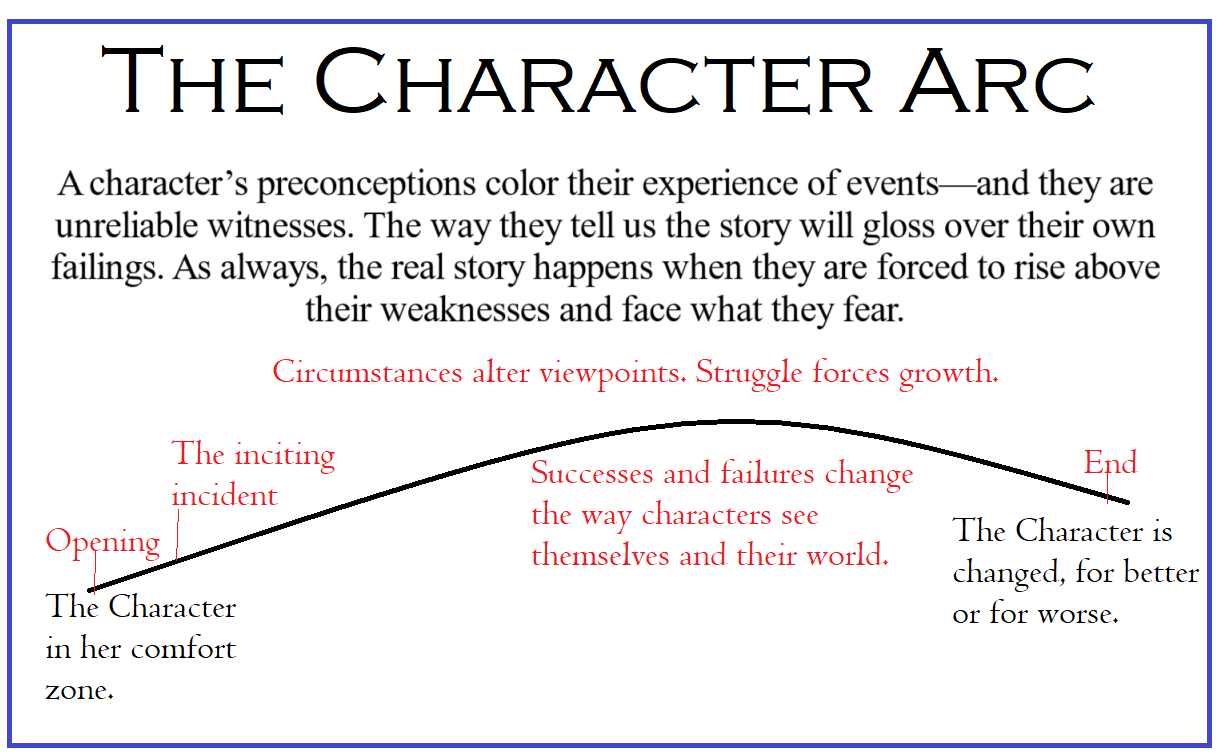
Plotting, for me, means setting out an arc of events for a story that I hope to write. I do this in advance, creating it in the form of a list in a new Excel workbook that is the bible for that universe. My outline workbook will contain several spreadsheets. On one page, I create the characters and give them personality traits. On another, I list the order of events that I think will form the arc of the story. Another page will have a glossary of words and names that are unique to that story. There will be maps and calendars to help keep things logical.

tabs of a stylesheet

Some authors use whiteboards and sticky notes, and still others use Scrivener—a program my style of thinking doesn’t mesh with. Google Sheets works well, too, and it’s free. The way you plot your stories is up to you.

When my characters begin doing things that weren’t planned, the outline evolves. That way, I don’t lose control of the plot and go off on a side quest to nowhere. That is when I get to know my characters as people.

Author-thoughtsWhen the writing commences, the characters make choices and say things that surprise me. They can do this because I allow them agency.

Each character will be left with several consequential choices to make in every situation that arises along the timeline. I consider the personality and allow the characters’ reactions to fit who they are.

No matter how they respond, they will be placed in situations where they have no choice but to go forward. After all, I am their creator, the deity of their universe. I have an outline that predestines them to specific fates, and nothing they can do will stop that train.

The consequences my characters face for their choices affect the atmosphere and mood of the story as it emerges. Think about it—if there are no consequences for a character’s bad decisions, everyone goes home unscathed. What sort of story is that? Why bother writing at all?

Let’s look at both the meanings and synonyms for the word consequences.

ConsequencesLIRF09142024

So now, let’s consider agency and the importance of choice. How will the consequences of their decisions affect our characters’ lives? After all, a story isn’t interesting without a few self-inflicted complications.

A story most fantasy authors are familiar with is J.R.R. Tolkien’s The Hobbit. Let’s have a closer look at Bilbo’s choices and his path to becoming the eccentric, eleventy-one-year-old hobbit who vanishes (literally), leaving everything, including the One Ring, to Frodo.

In the morning, after the unexpected (and unwanted) guests leave, he has two choices. He can stay in the safety of Bag End or hare off on a journey into the unknown. He chooses to run after the dwarves, and so begins the story of how a respectable hobbit embarked on a new career as a burglar and became a hero in the process.

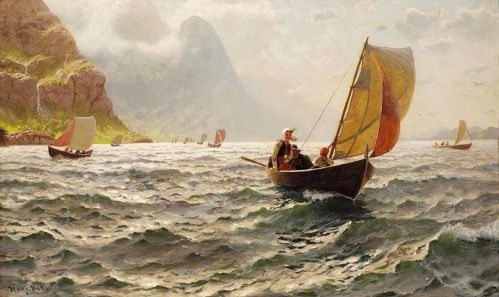
Bilbo comes to the huts of the raftelves by J.R.R. Tolkien

Bilbo comes to the huts of the raft elves by J.R.R. Tolkien

The consequences of Bilbo’s decision will shape his entire life afterward. Where he was once a staid country squire, the pillar of respectability who had inherited a comfortable income and existence, he is now expected to steal an important treasure from a dragon.

At the outset, that particular job doesn’t seem real, and he can’t imagine doing it. More immediate problems beset him. First of all, he has no clue about how a successful burglar works. He knows better than anyone that he is completely unfit for the task.

Second, he’s always been well-fed, highly respected, and not inclined to physical labor. Now, he is a novice on the expedition, so his opinions carry no weight. Not only that, meals are scant by his standards, and they must do way too much walking.

Bilbo’s long-suppressed desire for adventure emerges early when the company encounters a group of trolls. He is supposed to be a thief, so he is sent to investigate a strange fire in a forest. Reluctantly, he agrees. Upon reaching the blaze, he observes that it is a cookfire for a group of trolls.

Bilbo must make a choice. The smart thing would be to turn around at that point and warn the dwarves that they are in mortal danger. However, Bilbo’s bruised ego takes over, and he chooses to do something to prove his worth.

“He was very much alarmed as well as disgusted; he wished himself a hundred miles away—yet somehow he could not go straight back to Thorin and Company empty-handed.” [1]

Bilbo’s desire to impress the Dwarves causes him to make regrettable decisions. His choice leads to everyone nearly getting eaten, which is a negative consequence.

the hobbitFortunately, they are rescued by Gandalf. While he is hiding, Bilbo discovers several historically important weapons. One of them is Sting, a blade that fits Bilbo perfectly as a sword. This is a positive consequence, as the blade is crucial to Bilbo’s story and later to Frodo’s story.

It does not acquire its name until later in the adventure, after Bilbo, lost in the forest of Mirkwood, uses it to kill a giant spider and rescue the Dwarves. This is when Bilbo’s decisions become more thoughtful, and his courageous side begins to emerge.

Choices and consequences, both negative and positive, shape Bilbo’s character.

Sometimes, the decisions our characters make as we write surprise us. But if those choices make the story too easy, they should be discarded.

The best, most exciting moments I’ve had as an author are when my characters surprise me and take over the story. I can’t describe the feeling of exultation I experience when my characters choose to take the story in a different, much better direction than I had planned.

Ultimately, they end at the place I intended for them at the outset, but they always do it their own way and with their own style.

ConsequencesLIRF07122020


Credits and Attributions:

[1] Quote from The Hobbitor There and Back Again, by J.R.R. Tolkien, published 1937 by George Allen & Unwin, Ltd.

5 Comments

Filed under writing

#FineArtFriday: The Peasant and the Nest Robber by Pieter Bruegel the Elder 1568

The_Peasant_and_the_Birdnester_Pieter_Bruegel_the_Elder_1568Artist: Pieter Brueghel the Elder (1526/1530–1569)

Title:  “The Peasant and the Nest Robber”

Date: 1568

Medium: oil on oak wood

Dimensions: 59.3 × 68.3 cm (23.3 × 26.8 in)

Collection: Kunsthistorisches Museum

What I love about this painting

Pieter Brugel the Elder was a man with a sharp eye for the humorous and the ability to wield allegory and symbolism like a knife. He cuts to the heart of things, pointing out the hubris and vanities of people from all walks of life.

Pieter Brugel the Elder was earthy and honest in his depictions of village life in his time. He painted what he saw and celebrated the ups and downs of the human condition. Today, his art is an important source of evidence about the social mores and values governing 16th-century life.

This painting details his favorite subject of human frailty, but he’s taken a different approach, narrowing his usual cast of thousands to just two.

In this case, he is pointing out that people are opportunists. We either have the knowledge and nerve to take what we need or the knowledge and sly desire to point out the failings of others.

Both men in this scene are taking the opportunity to advance themselves. One gains eggs and a good meal, and the other gains a sense of moral superiority.

Neither man feels guilty.

About this painting, via Wikipedia:

This unusual subject apparently illustrates a Netherlandish proverb:

Dije den nest Weet dijen weeten, dijen Roft dij heeten
He who knows where the nest is, has the knowledge, he who robs, has the nest.

The painting presents a moralising contrast between the active, wicked individual and the passive man who is virtuous in spite of adversity (a similar theme appears in his drawing The Beekeepers)] And lastly it could be suggested that the pointing man is making judgement on the robber whilst not aware that he is nearly stepping into the water in front of him.

It has been suggested that, with his knowledge of Italian art, Bruegel intended the peasant’s gesture as a profane parody of the gesture of Leonardo‘s St John. [1]

About the Artist, via Wikipedia:

Pieter Bruegel (also Brueghel or Breughelthe Elder c. 1525–1530 – 9 September 1569) was the most significant artist of Dutch and Flemish Renaissance painting, a painter and printmaker from Brabant, known for his landscapes and peasant scenes (so-called genre painting); he was a pioneer in making both types of subject the focus in large paintings.

He was a formative influence on Dutch Golden Age painting and later painting in general in his innovative choices of subject matter, as one of the first generation of artists to grow up when religious subjects had ceased to be the natural subject matter of painting. He also painted no portraits, the other mainstay of Netherlandish art. After his training and travels to Italy, he returned in 1555 to settle in Antwerp, where he worked mainly as a prolific designer of prints for the leading publisher of the day. Only towards the end of the decade did he switch to make painting his main medium, and all his famous paintings come from the following period of little more than a decade before his early death, when he was probably in his early forties, and at the height of his powers.

Around 1563, Bruegel moved from Antwerp to Brussels, where he married Mayken Coecke, the daughter of the painter Pieter Coecke van Aelst and Mayken Verhulst. As registered in the archives of the Cathedral of Antwerp, their deposition for marriage was registered 25 July 1563. The marriage itself was concluded in the Chapel Church, Brussels in 1563.

Pieter the Elder had two sons: Pieter Brueghel the Younger and Jan Brueghel the Elder (both kept their name as Brueghel). Their grandmother, Mayken Verhulst, trained the sons because “the Elder” died when both were very small children. The older brother, Pieter Brueghel copied his father’s style and compositions with competence and considerable commercial success. Jan was much more original, and very versatile. He was an important figure in the transition to the Baroque style in Flemish Baroque painting and Dutch Golden Age painting in a number of its genres. He was often a collaborator with other leading artists, including with Peter Paul Rubens on many works including the Allegory of Sight.

Other members of the family include Jan van Kessel the Elder (grandson of Jan Brueghel the Elder) and Jan van Kessel the Younger. Through David Teniers the Younger, son-in-law of Jan Brueghel the Elder, the family is also related to the whole Teniers family of painters and the Quellinus family of painters and sculptors, through the marriage of Jan-Erasmus Quellinus to Cornelia, daughter of David Teniers the Younger. [2]


Credits and Attributions:

[1] IMAGE and Quote about this picture: Wikipedia contributors, “The Peasant and the Nest Robber,” Wikipedia, The Free Encyclopedia, https://en.wikipedia.org/w/index.php?title=The_Peasant_and_the_Nest_Robber&oldid=1160869804 (accessed September 12, 2024).

[2] Wikipedia contributors, “Pieter Bruegel the Elder,” Wikipedia, The Free Encyclopedia, https://en.wikipedia.org/w/index.php?title=Pieter_Bruegel_the_Elder&oldid=1218696694 (accessed September 12, 2024).

2 Comments

Filed under #FineArtFriday

The Second Draft: Decoding My Mental Shorthand #writing

Before we set the first words on a blank page, our minds have formed images of scenes we want to describe. Steven Pinker is a professor of psychology at Harvard University who specializes in visual cognition and developmental linguistics. He reminds us that we are not born with language, so we are NOT engineered to think in words alone. We also think in images.

depthPart1revisionsLIRF05252021It follows that certain words become a kind of mental shorthand, small packets of letters that contain a world of images and meaning for us. Code words are the author’s multi-tool—a compact tool that combines several individual functions in a single unit. One word, one packet of letters will serve many purposes and convey a myriad of mental images.

These words are sometimes used too often in the first draft as they are efficient. We write as fast as we can when we have the inspiration. Code words convey a wide range of information concisely, and because we use them, we can write the first draft of a story from beginning to end before we lose the fire for it.

In my current writing, I hope to portray my protagonists as I see them without bashing my readers with how I see their appearance. The big temptation is to go into detail about each person’s specific characteristics.

This is not necessary. We think in images, and so do our readers, who will fill in the details in a way that is pleasing to them. I want to convey their characteristics naturally and without beating the reader over the head.

A few years ago, I read a novel featuring a caterer who solves mysteries. She is continuously described as Junoesque, ample, vast, chubby, size eighteen, fat, large … and on and on. In every chapter, at least once and usually twice, we were given a visual description of her, along with indications of how she aroused the males around her.

Those constant descriptions were meant to emphasize the author’s perception of her protagonist as plump but irresistible to the males. However, as the book wore on, it became jarring and unnecessary. I skipped to the end and then set it aside, never to be read again.

powerwordsWordCloudLIRF06192021I want to avoid that sin in my work, but what are my code words? What words are being inadvertently overused as descriptors? A good way to discover this is to make a word cloud. The words that see the most screen time will be the largest. Free online word cloud generator and tag cloud creator – WordClouds.com.

A word frequency search is also a good tool. Word Frequency Counter – Counts frequency of words in text, free online tool (charactercounter.com)

In my current work, a prominent side character is an important mentor. He is tall with dark skin and dark eyes. His hair is a wiry halo shot with white and trimmed close to his head. This is a mixed-race society, a world where “race” means “species.” One is a human born in the world of Neveyah, a large minotaur from the Bull God’s world, or a small person with rat-like features from the Mountain God’s world. Those are the only racial differences people notice.

So, when showing my people, I use general descriptors, and thanks to my use of word frequency search, the code words are now used only a few times. My hope is that a reader will make appropriate visualizations as needed.

Every author thinks a little differently, so your code words will be different from mine. Another way to find your secret code words is to have the Read Aloud tool read each section. I find many inadvertent crutch words that way.

One of the code words I subconsciously overuse is “felt.” My thesaurus says I could exchange felt for:

  • ozford-american-writers-thesaurusendured
  • experienced
  • knew
  • saw
  • suffered
  • tasted
  • underwent,
  • witnessed

The thesaurus offers some other words related to felt:

  • regarded
  • viewed
  • accepted
  • depended
  • trusted
  • assumed
  • presumed
  • presupposed
  • surmised

It’s natural to overuse certain words without realizing it, but that is where revisions come in.

As you go along, you’ll discover that some words have very few synonyms that work.

Consider the word “smile.” It’s a common code word, a five-letter packet of visualization. Synonyms for “smile” are few and don’t show what I mean:

  • beam
  • grin
  • leer
  • smirk

Each occurrence of the word “smile” in my work must be considered individually. Sometimes, this requires a complete re-visualization of the scene. It hurts my heart to murder my darlings, but I look for a different way to convey my intention.

We don’t have to drag the reader through a long list of ever-moving facial expressions, such as lips turning up, down, drawing to one side, etc.

When done sparingly and combined with a conversation, this kind of visual display can work.

By sparingly, I mean no more than one facial change per interaction, please.

oxford_synonym_antonymSometimes, the only thing that works is the brief image of a smile. Nothing is more boring than reading a story where a person’s facial expressions take center stage. As a reader, I want to know what is happening inside our characters and can be put off by an exaggerated outward display.

Once you become aware of your first draft code words, go to the thesaurus, find all the synonyms you can, and list them in a document for easy access. If it is a word such as smile or shrug, you have your work cut out, but it will speed things up if you make a small list of visuals that you can use and change up as needed.

A list of mood indicators can keep you from losing your momentum and will readily give you the words you need to convey all the vivid imagery you see in your mind. I saved my list to my desktop, so I don’t have to waste time searching for it.

Here are some instances of body language an observer would see if a character was wary.

  • Crossed arms.
  • A stiff posture.
  • Narrowed eyes.

emotion-thesaurus-et-alIf you don’t have it already, a book you might want to invest in is The Emotion Thesaurus by Angela Ackerman and Becca Puglisi. Some of the visuals they list aren’t my cup of tea, but they understand how to use words that show what people are thinking.

This aspect of the revision process is sometimes the most difficult. It takes time to examine each instance of our code words. They don’t always need changing—sometimes, a smile is a smile, and that is okay.

6 Comments

Filed under writing

#FineArtFriday: Morning at Grand Manan by Alfred Thompson Bricher 1878

Morning_at_Grand_Manan_by_Alfred_Thompson_BricherArtist: Alfred Thompson Bricher (1837–1908)

Title: Morning at Grand Manan

Date: 1878

Medium: oil on canvas

Dimensions: height: 25 in (63.5 cm); width: 50 in (127 cm).

Collection: Indianapolis Museum of Art

Current location: Paine Early American Painting Gallery

What I Love about this painting:

This is a satisfying scene capturing the best moments of a morning at the shore. The light falls on the water with an almost photographic sheen. Fishing vessels leave the harbor, heading out to sea. The sea is calm, and the waves roll up to embrace the shore. One could wade in the shallows and search the tidal pools for starfish or crabs and other creatures in safety.

The sun is up and the few clouds in the sky are dissipating. This will be a good day, perhaps the best day of the summer.

About this painting via Wikipedia:

Morning at Grand Manan is an 1878 oil painting by Alfred Thompson Bricher. It is part of the permanent collection at the Indianapolis Museum of Art, and is currently on view in the Paine Early American Painting Gallery.

Painted along Grand Manan Island, a favorite vacation spot of the artist in New Brunswick, Canada, Bricher painted the sunrise coming above the Atlantic Ocean in a tiny inlet on the coast. Four sailing ships are clearly visible against the pink sky. On the left of the canvas, a sharp, rocky cliff face is seen, breaking up the composition. Bricher clearly depicts each wave rolling onto the beach in minute detail. The sun is positioned a little left of center of the canvas, but is the major focal point, drawing the eye in. Just like other Hudson River School painters, Bricher hides his brushstrokes as if to make the canvas disappear.

Alfred Thompson Bricher was part of the American Luminist movement, coming out of the Hudson River School. Much like the Impressionists, they were interested in the play of light in landscapes, with Bricher himself being particularly interested in how light played against the ocean. Bricher, in particular, became famous for his seascapes and depicting the North Atlantic seaboard. Bricher is considered the last important luminist painter. Morning at Grand Manan came at the height of his career, and displayed Bricher’s acquisition of European aesthetics into his own paintings.

About the Artist via Wikipedia:

Alfred Thompson Bricher (April 10, 1837 – September 30, 1908) was an American painter associated with White Mountain art and the Hudson River School.

Bricher was born in Portsmouth, New Hampshire. He was educated in an academy at Newburyport, Massachusetts. He began his career as a businessman in Boston, Massachusetts. When not working, he studied at the Lowell Institute. He also studied with Albert BierstadtWilliam Morris Hunt, and others. He attained noteworthy skill in making landscape studies from nature, and after 1858 devoted himself to the art as a profession. He opened a studio in Boston, and met with some success there. In 1868 he moved to New York City, and at the National Academy of Design that year he exhibited “Mill-Stream at Newburyport.” Soon afterward he began to use watercolors in preference to oils, and in 1873 was chosen a member of the American Watercolor Society. In the 1870s, he primarily did maritime themed paintings, with attention to watercolor paintings of landscape, marine, and coastwise scenery. He often spent summers in Grand Manan, where he produced such notable works as Morning at Grand Manan (1878). In 1879, Bricher was elected into the National Academy of Design as an Associate member.


Credits and Attributions

IMAGE: Wikimedia Commons contributors, “File:Morning at Grand Manan by Alfred Thompson Bricher.jpg,” Wikimedia Commons, https://commons.wikimedia.org/w/index.php?title=File:Morning_at_Grand_Manan_by_Alfred_Thompson_Bricher.jpg&oldid=872660352 (accessed September 5, 2024).

[1] ABOUT THE  IMAGE: Wikipedia contributors, “Morning at Grand Manan,” Wikipedia, The Free Encyclopedia, https://en.wikipedia.org/w/index.php?title=Morning_at_Grand_Manan&oldid=1192844232 (accessed September 5, 2024).

[2] BIO: Wikipedia contributors, “Alfred Thompson Bricher,” Wikipedia, The Free Encyclopedia, https://en.wikipedia.org/w/index.php?title=Alfred_Thompson_Bricher&oldid=1229486559 (accessed September 5, 2024).

4 Comments

Filed under #FineArtFriday

Today is Labor Day in the US #writerlife

The first Monday in September is Labor Day in the US, a holiday marking the end of summer. This is the day we honor those whose labor keeps this country running. Over the years, I have worked in a wide variety of menial jobs. All were low-paying and didn’t garner much respect from those in higher-status positions or from management. But I liked my work and never did less than my best.

MyWritingLife2021BChildcare was always an issue. Sometimes, during the Carter years, I qualified for government-subsidized childcare vouchers, which was the only reason I could work such low-paying entry-level jobs. Later, my uncle cared for my youngest daughter after school until she was about ten.  Because I had that childcare subsidy when my youngest was not yet of school age, I was able to support my family relatively well.

They should bring that childcare subsidy back. Once they reached ten years of age, my kids were latchkey kids, which wasn’t uncommon in those days.

In the 1970s-80s, I worked as a bookkeeper, an automobile detailer, a field hand for a (now defunct) multi-national Christmas tree company, a photo lab tech, a waitress in a bakery, and worked in a delicatessen.

During those years, my favorite job was as a field hand for the J. Hofert Company. They grew Christmas trees of all varieties, and I absolutely loved the work. It was outdoors, paid $3.25 an hour, and was seasonal, so I usually had a month off three times a year.  I was able to work all the overtime hours I wanted during certain seasons, as field hands were as hard to get then as they are now.

coins

Coins, Microsoft content creators

Sometimes, especially during the Reagan years and up to 1996, wages were low, and jobs were scarce.  I held two, and sometimes three, part-time jobs to keep the roof over my children’s heads and food on their table. Trickledown economics never quite trickled down to my town.

In the late 1980s and through the 1990s, I worked as a hotel maid, a photographer’s assistant and darkroom technician, and as a bookkeeper/office manager for a charter bus company.

Life became easier in the 1990s. As a bookkeeper/office manager, I earned $7.50 an hour (two dollars over minimum at the time) and worked less than 30 hours a week with no benefits whatsoever. I drove for an hour each way, morning and afternoon, for that job.

As a hotel housekeeper in a union shop, on the days I wasn’t a bookkeeper, I made $8.50 (three dollars over minimum) and worked about 20 hours a week, giving me enough from the two jobs to live on and provide well for my children. I was still legally married to my 3rd husband, but he was seldom in the picture. The marriage was a shield between me and my well-meaning matchmaker friends.

fireworks via wikipedaI was divorced from hubby number three in 1997, and oddly enough, things became much easier financially. I was able to get by with only one job, even while raising my last teenager. (See? Everyone has a soap opera life, even famously unknown authors.)

For all the years I was married to my 3rd husband, no matter what other job I had, I kept my weekend job at the hotel. I kept it because I always had that to fall back on. I had risen in seniority and could work full-time whenever the other jobs went away.

My hotel was affiliated with a good union. We who did the dirty work earned far more than maids, housemen, and laundresses at other hotels. We also had benefits such as paid sick leave, up to two weeks a year of paid vacations, good health insurance, and a 401k, to which our employer matched our contributions.

In any hotel, housekeepers are considered the lowest of the low by the other employees. No one is of less social value than the person who cleans up after other people. Without the union, we would have had nothing more than the bare minimum wage and a cartload of insincere condescension from management.

Not every union is good or reasonable. But while I don’t agree with everything every union does and stands for, I am grateful that a good, reasonable organization protected my family and me during those years of struggle.

After 2000, I worked as a temp employee at Verisign, a tax preparer for H&R Block, and did data entry for LPB Energy Management. By 2010, I was thoroughly sick of corporate America and had returned to bookkeeping, this time for a local landscape company.

That job was a joy.

In my younger days, I worked every weekend and every holiday, and yes, it was not easy, but it was what it was. My kids were good and supportive, and they knew I was doing my best for them.

Every worker deserves an employer who treats them with respect and offers a fair wage in return for their labor.

The world is a different place now in many ways. Even so, someone must do the dirty jobs, the work that no one else wants. I have nothing but respect for those who work long, hard hours in all areas of the service industry, struggling to support their families.

My experiences working in the lower echelons of the labor force inform my writing. Look around you and see the people who make your life easier by being there every day doing their jobs.

330px-Works_Progress_Administration_maid_poster_cropped

Stylized drawing of a maid on a Works Progress Administration poster via Wikipedia

Every waitress/waiter, housekeeper, laundry worker, caregiver, bartender, welder, mechanic—everyone in the service industry is a living, caring human being with hopes, ambitions, triumphs, and tragedies. Every one of them has a story and a reason to be where they are, doing the task they have been given.

Say a little thank you to all those who endure verbal abuse when a customer is stressed out and “doesn’t have time to wait” or is upset by things they have no control over and vent their anxiety at someone who can’t (or won’t) fight back.

Give a little thanks to those whose labor enables you to live a little easier.

4 Comments

Filed under writing

#FineArtFriday: Newhaven Harbour on the Firth of Forth by Samuel Bough

Samuel_Bough_-_Newhaven_harbour_on_the_Firth_of_ForthArtist: Samuel Bough  (1822–1878)

Title: Newhaven Harbour on the Firth of Forth

Date: Unknown date

Medium: pencil and watercolor, heightened with white

Dimensions: height: 25.4 cm (10 in); width: 35.6 cm (14 in)

Inscriptions: Signature bottom left: Sam Bough

What I love about this painting:

This is a faithful record of a sunny summer day at a busy harbor on Scotland’s Firth of Forth, painted before the port of Newhaven was industrialized. When this painting is viewed from a distance, there is a crispness to the scene, to the women and men purchasing fresh-caught fish, conveyed by the choice of colors, the use of pencils with the watercolors, and the impressionist’s technique.

I like this scene. It’s an active scene, bustling and full of mid-nineteenth-century life.

About the Artist, via Lyon and Turnbull:

Considered to be one of the most influential and prolific Scottish landscape painters of the 19th century, Sam Bough RSA was a self-taught artist who spent much of his career working in Scotland. Born in 1822 in Carlisle, Bough settled in Manchester where he worked as a scene painter in the Theatre Royal.

After moving to Glasgow he continued to paint in the evenings whilst working at the New Princes Theatre, eventually building enough success to move to painting full-time. Bough’s reputation as a topographical and landscape painter grew during the 1850s, and by the time he resettled in Edinburgh he had established himself as a successful landscape artist. Whilst living in the capital he created some of his most important paintings.

Bough was as successful a painter in both oils and watercolours, and was committed to depicting a wide variety of landscape views and effects, urban and rural, bright days and dark storms. However, there are specific locations and landscapes that Bough returns to regularly in his work; the hustle and bustle of harbours and coastal towns, with the distinctive Newhaven harbour a particular favourite, and the hunting forest of Cadzow, near Hamilton. Generally associated with views of Scotland, he did also create a series of Italian views. In general, his spontaneity, loose technique and interest in capturing fleeting atmospheric effects, particularly cloud formations and weather, establishes him as an important predecessor of the Scottish Impressionists, paving the way for the development towards a freer, plein air style. [1]


Credits and Attributions:

[1] Bio Quote: Sam Bough | Scottish 1822 – 1878 (lyonandturnbull.com) accessed August 28, 2024.

Comments Off on #FineArtFriday: Newhaven Harbour on the Firth of Forth by Samuel Bough

Filed under #FineArtFriday, writing

Revisiting the double circular story arc #writing

The story arc can take several forms. It can be linear, a straight shot from the inciting incident to the conclusion. This kind of story takes our protagonist through a series of events that all lead to one ending, a point well away from where it began. The protagonist has left his roots behind and is transformed into a hero.

WritingCraft_short-storyAnother arc takes the protagonist on a journey that can end several different ways, all of them taking our characters down a winding path with many choices, roads not taken. They also are altered by their experiences for good or ill.

Yet another arc takes the protagonist back to their beginnings, transformed and ready to face their future.

My favorite arc to play with is the double circular arc, also known as the infinity arc. The majority of this post appeared here in November 2023, so if you have read it already, thank you for stopping by. The infinity arc is on my mind as it’s a method I am employing in a current short work-in-progress.

When I plan a story, I divide the outline into 3 acts. In a 2,000-word story, act 1 has 500 words, act 2 has 1,000, and act 3 has 500 more words to wind up the events. No matter the length of any story, if you know the intended word count, you can divide the plot outline that way.

The Infinty Story ArcKnowing my intended word count helps me create a story, from drabbles to novels. For me, it works in stories with a traditional arc as well as those with a circular arc.

In any story, the words we use to show the setting, combined with a strong theme, will convey atmosphere and mood, so fewer words are needed.

The story I’m using for today’s example is the Iron Dragon, a 1,025-word story I wrote during NaNoWriMo 2015. That was the year I focused on experimental writing, putting out at least one short story every day and sometimes two.

This is a story of the web of time glitching and the perceptions of the characters who experienced it.

Some speculative fiction stories work well as a double circular arc—something like an infinity sign, a figure-eight lying on its side:

dragonIn a circular narrative, the story begins at point A, takes the protagonist through life-changing events, and brings them home, ending where it started. The starting and ending points are the same, and the characters return home, but they are fundamentally changed by the story’s events.

The infinity arc presents one story from two different viewpoints. The story begins with character 1, takes them through the events, and brings them back. At that point, the story takes up character 2 and retells the events through their point of view, bringing them back to where they began. (Two circular story arcs joined by one event.)

Both characters begin at the same place, experience the event(s) concurrently but separately, and arrive back at the same place. The worldview of both is challenged by what they have lived through.

The two characters may not meet. In the Iron Dragon, my characters physically don’t meet in person. However, they briefly occupy the same patch of ground during a glitch in the space-time continuum.

This story ends where it began but with the two sets of characters having seemingly experienced two different events. Their perception of the meeting is colored by the knowledge and superstitions of their respective eras.

The Infinty Story Arc

The first paragraph of the Iron Dragon begins in the middle of a story—the center of the infinity sign. Those opening sentences establish the world, set the scene, and introduce the first protagonist. The following three paragraphs show the situation and establish the mood. They also introduce the antagonist—what appears to be an immense dragon made of iron.

At this point, our first protagonist knows that he must resolve the problem and protect his people, which he does. There is more to his side of the story, of course. But this is a story with two sides. Aeddan’s point of view is not the entire story.

Again, I had to set the scene and establish the mood and characters. Here, we meet the second protagonist, an engine driver named Owen. He has the same needs as Aeddan and also resolves the problem. Neither character would have understood the strange physics of what just occurred had Michio Kaku been around to explain it to them. Both do what they must to protect their people.

The final paragraphs wind it up. They also contribute to the overall atmosphere and setting of the second part of the story. As a practice piece, this story has good bones. I didn’t feel it was the right kind of story for submission to a magazine or contest, as it’s not a commercially viable piece. So, I posted it here on this blog on November 4th, 2016. #flashfictionfriday: The Iron Dragon

Flag_of_Wales.svgWord choices are essential in showing a world and creating a believable atmosphere when limited to only a small word count. I had challenged myself to write a story that told both sides of a frightening encounter in 1000 words, give or take a few. I wanted to expand on the theme of dragons and use it to show two aspects of a place whose national symbol is the Red Dragon (Welsh: Y Ddraig Goch).

But I also wanted to use the double circular story arc, seeing it as a way to tell one story as lived by two protagonists separated by twelve centuries and a multitude of legends. That meant I had 1000 words to tell two stories.

Short fiction allows us to experiment with both style and genre. It challenges us to build a world in only a few words and still tell a story with a beginning, a middle, and an end.

The act of writing something different, a little outside my comfort zone, forces me to be more imaginative in how I tell my stories. It makes me a better reader as well as a better writer.


Credits and Attributions:

Wikimedia Commons contributors, “File:Flag of Wales.svg,” Wikimedia Commons, https://commons.wikimedia.org/w/index.php?title=File:Flag_of_Wales.svg&oldid=808619174 (accessed November 19, 2023).

3 Comments

Filed under writing

#FineArtFriday: Fisherwomen, Cullercoats by Winslow Homer 1881, a second look

Homer,_Winslow_-_'Fisherwomen,_Cullercoats',_1881,_graphite_&_watercolor_on_paperArtist: Winslow Homer  (1836–1910)

Title: Fisherwomen, Cullercoats

Date:   1881

Medium: watercolor and graphite on paper

Dimensions: height: 34.2 cm (13.4 in); width: 49.2 cm (19.3 in)

Collection: Honolulu Museum of Art

What I love about this painting:

Homer shows us a foggy morning at the beach, capturing the quality of light on the strand at Cullercoats, Tyne and Wear, England. He paints the background with an impressionist’s eye and gives us realistic portraits of the working women whose labors fed the country.

The fish baskets are heavy, but they share the load. Their sleeves are rolled up for work, and skirts are shorter than if they were in town—no one wants wet skirts dragging around their ankles.

I love the way he shows these women as they were that day, treating them with respect. During his lifetime, Winslow Homer depicted men and women of all races, slaves and former slaves, and soldiers. He showed us people who worked hard, not giving us caricatures but painting portraits of real people.

Homer loved the sea and traveled widely, painting everywhere he went. Critics sometimes dismiss his work as “calendar art, appealing to the unschooled masses.” But think about it – calendars and magazines often were the only art poor and working-class people had in their homes. If you don’t have access to art, how can you become “schooled” in it? Some art critics are a little too schooled.

If you are interested in knowing more about the art of Winslow Homer, this documentary is excellent: FAKE OR FORTUNE SE1EO4 WINSLOW HOMER – YouTube

About the Artist, via Wikipedia:

Homer started painting with watercolors on a regular basis in 1873 during a summer stay in Gloucester, Massachusetts. From the beginning, his technique was natural, fluid and confident, demonstrating his innate talent for a difficult medium. His impact would be revolutionary. Here, again, the critics were puzzled at first, “A child with an ink bottle could not have done worse.” Another critic said that Homer “made a sudden and desperate plunge into water color painting”. But his watercolors proved popular and enduring, and sold more readily, improving his financial condition considerably. They varied from highly detailed (Blackboard – 1877) to broadly impressionistic (Schooner at Sunset – 1880). Some watercolors were made as preparatory sketches for oil paintings (as for “Breezing Up”) and some as finished works in themselves. Thereafter, he seldom traveled without paper, brushes and water based paints.

As a result of disappointments with women or from some other emotional turmoil, Homer became reclusive in the late 1870s, no longer enjoying urban social life and living instead in Gloucester. For a while, he even lived in secluded Eastern Point Lighthouse (with the keeper’s family). In re-establishing his love of the sea, Homer found a rich source of themes while closely observing the fishermen, the sea, and the marine weather. After 1880, he rarely featured genteel women at leisure, focusing instead on working women. [1]


Credits and Attributions:

Image: Fisherwomen, Cullercoats by Winslow Homer 1881. Wikimedia Commons contributors, “File:Homer, Winslow – ‘Fisherwomen, Cullercoats’, 1881, graphite & watercolor on paper.jpg,” Wikimedia Commons, https://commons.wikimedia.org/w/index.php?title=File:Homer,_Winslow_-_%27Fisherwomen,_Cullercoats%27,_1881,_graphite_%26_watercolor_on_paper.jpg&oldid=721923030 (accessed August 3, 2023).

[1] Wikipedia contributors, “Winslow Homer,” Wikipedia, The Free Encyclopedia, https://en.wikipedia.org/w/index.php?title=Winslow_Homer&oldid=1168361459 (accessed August 3, 2023).

2 Comments

Filed under #FineArtFriday

Layers of the Scene: conversation #writing

WritingCraftSeries_depth-through-conversationMost of my novels and short stories begin life as exchanges of dialogue between two characters. Their conversations shed light on what each character’s role in the story might be.

We all know that dialogue must do at least one (if not all) of these four things:

  1. It must share information the characters are only now learning.
  2. It should show the characters’ mood and state of mind.
  3. It must shed light on the relationship of the characters to each other.
  4. We include props that show the world and the characters’ places in their society.

So, once I have an idea for a story, I think about the characters and ask what they need to know, either about their quest or themselves. It’s a two-stage process—the scenery and background get filled in after the dialogue has been written.

I picture the scene. Then, I write just the dialogue for several back-and-forth exchanges, getting the basic words down.

“What are you doing?”

“Oh, just drawing.”

“Drawing what?”

“You’ll laugh or find a reason to mock me for it.”

Once I know what they are talking about and have the rudimentary dialogue straight, I add basic scenery and speech tags. The dialogue grows with each layer because the scene becomes sharper in my mind.

The next morning, when his stepmother came down for coffee, John was once again working on something in his notebook.

“What are you doing?” Ann’s clipped tones cut the silence.

“Oh, just drawing.” He stood, gathering his pens. The peace he’d sought had gone earlier than he hoped.

“Drawing what?”

John’s normally open features were closed, inscrutable. “You’ll laugh or find a reason to mock me for it.” Closing his sketchbook, he attempted to leave but stopped when she put her hand on his shoulder.

“Show me. Now.” When Ann repeated her demand, he reluctantly opened the book. Page after page was covered in stylized dragons, leafy vines, and runes. “Why do you waste your time with this crap? You could be brilliant, but no! People want real art, not this drivel.”

“This is how I earn my living.”

Ann poured herself a cup of coffee, pausing only to sneer. “You don’t have a pot to—”

“It pays my mortgage. What more do you want?” John reclaimed the sketchbook. “Coming back here was a mistake. I did it because David asked me to, because Dad is ill, and because it’s Christmas.”

“Don’t talk to me about David. You encouraged my son to abandon a brilliant career in the law firm that has been in the family for four generations.”

“Stop. I encouraged my stepbrother to have faith in himself. Yes, I urged him to try out for the position of symphony concertmaster, and he got the job. He’s incredibly talented and loves what he does.” John crossed toward the dining room, aware that arguing with her would change nothing. “Enjoy your breakfast.” The kitchen door closed behind him, cutting off his stepmother’s rant.

The layers that form this scene are:

  1. good_conversations_LIRFmemeAction: She comes down for coffee. He holds a notebook, gathers pens, and stands.
  2. Dialogue: shows long-simmering resentment between the two players and gives us a time reference—it’s Christmas.
  3. Environment: a kitchen, closed off from the rest of the house.
  4. The story: Ann is under severe stress in her work and at home. In this story, her closed-off kitchen is symbolic of her closed-off personality. The place that is the heart of a home is walled away. She doesn’t want to examine why she is enraged by David and John’s freedom to make their own choices.

We work with layers to create each scene. With these layers, we show the reader everything they need to know about that moment in time.

Over the course of a narrative, conversations will take place in different settings. Readers will gradually see the world through the characters’ eyes. They will visualize the world without our having to dump a floor plan or itinerary on the reader. Remember our basic conversation?

“What are you doing?”

“Oh, just drawing.”

“Drawing what?”

“You’ll laugh or find a reason to mock me for it.”

Let’s keep the names and put that dialogue and the notebook into a fantasy setting. We’ll change how the characters are related to each other and see what comes up:

Logically, Ann knew John wasn’t responsible for David’s death. Two years on, and it still colored her life. But he’d come back alive when her brother hadn’t, and a secret part of her blamed him for that. Still, her curiosity grew stronger every time she saw him with his pencils beside the campfire, drawing something in his notebook.

Ann knelt and turned the flatbread so it would cook evenly. She couldn’t ask him about the stupid notebook. Why had she volunteered to cook? It was bad enough that she was traveling alone with him. The last thing she wanted was for him to think she was open to resuming their old accord.

But curiosity, her greatest curse, got the better of her. To her horror, she heard herself ask, “What are you doing?”

“Oh, just drawing.”

“Drawing what?”

“You’ll laugh or find a reason to mock me for it.” Closing his sketchbook, John attempted to rise but stopped when she put her hand on his shoulder.

“I promise I won’t. Please? I’m just curious.”

John’s guarded expression said he doubted her. Of course, he did. She’d been cold to him since David was killed. But he opened his notebook.

Page after page was covered with portraits of all the members of their clan, including her. Each looked as full of life as if they could step off the page. Tears sprang to her eyes on seeing the many portraits of her brother, handsome and laughing. “All these drawings of David … it’s the way I want to remember him.” She met his gaze. “Thank you.”

John looked away. “I dream all night long of that day and all the things I could have done to change what happened. And then I have to draw. I don’t know why.”

Ann’s eyes burned again. She owed him an apology. But how? “Maybe you draw portraits to keep the people you love alive.” She sighed, saying what she knew was the truth. “It was an avalanche. You couldn’t have changed anything.”

We used the same words as in the previous scene for the core of the conversation and included a sketchbook. We used the same names. John is still an artist, and Ann is still under stress, in this case, grief. However, with different relationships, we have different histories. We end up with different character arcs and a different outcome.

The layers that form this scene are:

Family Camping Clipart

Action: Ann is cooking—the campfire is her kitchen. John opens a notebook.

Dialogue: shows a wary interaction between two people who know each other well but are estranged and who may be entering a different stage in their relationship.

Environment: a campsite, an open fire. It is set in the wide outdoors, yet in the darkness, it is intimate.

The core of the dialogue is the same, but the direction the conversation takes is changed because the story and the characters are different.

By beginning with the conversation and envisioning it as if it were a scene in a movie, I can flesh it out and show everything the reader needs to know. Readers are smart and don’t want to be told what to think. Their minds will supply the details of a kitchen or a campsite, depending on the props I include when I add the set dressing.

The layers of action, dialogue, and environment form the framework that supports the story. Where will the layers you add to your conversations take your stories? The possibilities are endless.

4 Comments

Filed under writing

#FineArtFriday: Two Watermills and an Open Sluice by Jacob van Ruisdael 1653 revisited

Jacob_Isaacksz._van_Ruisdael_-_Two_Watermills_and_an_Open_Sluice_-_WGA20479Artist: Jacob van Ruisdael  (1628/1629–1682)

Title: Two Watermills and an Open Sluice

Genre: landscape art

Date: 1653

Medium: oil on canvas

Dimensions: height: 664 mm (26.1 in)

Collection: Getty Center

What I Love about this painting:

This painting is the perfect writing prompt. Peaceful and serene, the scene shows us two watermills opposite each other on the stream, sharing the power of the water. These mills were examples of the highest technology of that time, and the families who owned them were prosperous middle-class people. Very likely they were literate, well-respected members of the local community.

Were these mills owned by the same family?

Or were they owned by rivals, competing to grind the grain produced by the local farmers? Is one a grist mill and the other a lumber mill? Or a weaver’s mill housing looms?

Was there a love story behind their being so close to each other, perhaps a Romeo and Juliet-style romance? (Tragedy averted, of course, or it wouldn’t be a romance.)

This is a wonderful painting, a window into the past.

About the artist, via Wikipedia, the free encyclopedia:

Jacob Isaackszoon van Ruisdael (Dutch pronunciation: [ˈjaːkɔp fɑn ˈrœyzˌdaːl] ; c. 1629 – 10 March 1682) was a Dutch painter, draughtsman, and etcher. He is generally considered the pre-eminent landscape painter of the Dutch Golden Age, a period of great wealth and cultural achievement when Dutch painting became highly popular.

Prolific and versatile, Ruisdael depicted a wide variety of landscape subjects. From 1646 he painted Dutch countryside scenes of remarkable quality for a young man. After a trip to Germany in 1650, his landscapes took on a more heroic character. In his late work, conducted when he lived and worked in Amsterdam, he added city panoramas and seascapes to his regular repertoire. In these, the sky often took up two-thirds of the canvas. In total he produced more than 150 Scandinavian views featuring waterfalls.

Ruisdael’s only registered pupil was Meindert Hobbema, one of several artists who painted figures in his landscapes. Hobbema’s work has at times been confused with Ruisdael’s. Ruisdael always spelt his name thus: Ruisdael, not Ruysdael.

Ruisdael’s work was in demand in the Dutch Republic during his lifetime. Today it is spread across private and institutional collections around the world; the National Gallery in London, the Rijksmuseum in Amsterdam, and the Hermitage Museum in St. Petersburg hold the largest collections. Ruisdael shaped landscape painting traditions worldwide, from the English Romantics to the Barbizon school in France, and the Hudson River School in the US, and influenced generations of Dutch landscape artists. [1]

To read more about this artist, go to Jacob van Ruisdael – Wikipedia

About this painting via Wikipedia, the free encyclopedia:

Two Water Mills with an Open Sluice, also known as Two Watermills and an Open SluiceTwo Undershot Water Mills with an Open Sluice is a 1653 painting by the Dutch Golden Age painter Jacob van Ruisdael. It is in the collection of the Getty Museum in Los Angeles.

The painting shows two working undershot water mills, with the major one being half-timbered with a cob-facade construction, tie beams, and vertical plank gable. This is characteristic of the water mills in the Bentheim area in Germany, to where Ruisdael had travelled in the early 1650s. This painting is one of six known variations on this theme and the only one that is dated.

Although other Western artists had depicted water mills before, Ruisdael was the first to make it the focal subject in a painting. Meindert Hobbema, Ruisdael’s pupil, started working on the water mills subject in the 1660s. Today Hobbema is more strongly associated with water mills than his teacher.

The painting is known by various names. The painting is called Two Water Mills with an Open Sluice in Seymour Slive‘s 2001 catalogue raisonné of Ruisdael, catalogue number 119. In his 2011 book on Ruisdael’s mills and water mills Slive calls it Two Undershot Water Mills with an Open Sluice. The Getty Museum calls it Two Watermills and an Open Sluice on their website, object number 82.PA.18. [2]


Credits and Attributions:

Wikipedia contributors, “Two Water Mills with an Open Sluice,” Wikipedia, The Free Encyclopedia, https://en.wikipedia.org/w/index.php?title=Two_Water_Mills_with_an_Open_Sluice&oldid=1160869306 (accessed November 16, 2023).

[2] Wikipedia contributors, “Jacob van Ruisdael,” Wikipedia, The Free Encyclopedia, https://en.wikipedia.org/w/index.php?title=Jacob_van_Ruisdael&oldid=1181677660 (accessed November 16, 2023).

9 Comments

Filed under #FineArtFriday