
Whether we are indie or traditionally published, we are responsible for getting our author name out there via the available social media. Expenses can mount up and finding affordable ways to get your name out there can be difficult.
 But when it comes to having a website, don’t sweat it. WordPress and Blogger (Google’s platform) offer free blogs and theme templates. You can have a nice-looking website, with only a small amount of effort and a little self-education.
I began this site in 2011. I used WordPress’s free plan and had no website skills whatsoever. I also had a book review site, Best in Fantasy using Google’s Blogger platform. I used both platforms’ learning tools and can hold my own now.
Your website is your store, a newsletter, and is also your public presence. We want people to find and read our work. It’s a platform where you can advertise your books and have links to where they are available.
I belong to several professional organizations. One of the comments even traditionally published, well-known authors make most often when explaining why they don’t keep their blogs updated, is this:
They don’t know what to write about.
Several years ago, a well-known author told me that updating her blog is as exciting as doing laundry. This is because it hasn’t occurred to her to write about her passions.
She is an avid music fan and gets to every festival she can. I think her fans would have loved to hear about 2022’s Bonnaroo, a music festival I’ve never had the chance to attend. It sounded amazing when she told me about it, and she could have made a quick post featuring photos and tweet-length comments.
However, my friend regularly posts on Instagram and Twitter about her garden and what she had for dinner. Many authors use twitter to connect with fans, but they don’t think their thoughts are worth more than the 280 characters in a tweet.
Yet those small chunks of personal life could be stretched a bit to make a delightful short read.
 A blog post doesn’t have to be long. Think of it as a slightly longer tweet or Facebook post. Just write a paragraph or two about what you are interested in at that moment. You will have 300 – 500 words written in no time.
That is an acceptable length for a blog post. My first posts averaged 400 words and detailed my experience of floundering around as a writer. I began with four followers, and while I’m not burning up the internet, I’m connecting with many more people now than I was then.
Many of us are adept at using Facebook to connect with readers. The work you put into a Facebook post for your author page could easily be turned into a short blog post.
If you fall into that category, even a bi-monthly update on your works in progress and where you will be signing books is a good option. We only need something to keep our fans engaged.
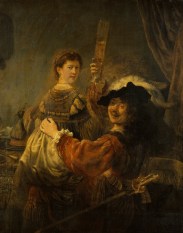
Rembrandt and Saskia as the Prodigal Son.
I have made a personal commitment to post three times a week on this blog. This allows me to rant about the craft of writing and gives me a place to talk about fine art – something I love.
Financial constraints mean I can’t travel the world to view great art in person. Wikimedia Commons allows me to see the works of all the artists from prehistoric times to the present. I love talking about what I have discovered at Wikimedia Commons.
Writing blog posts requires me to be a thinking author as well as a pantser. I can write using the “stream-of-consciousness” method or from an outline of whatever interests me at the time. I do the research, and the post begins to write itself.
This blog never fails to provide me with a sharp dose of reality and has made me a better writer. I proofread my work, run it through Grammarly, have the Read-Aloud function of my word-processing program read it back to me, and then publish it.
Nothing bursts your bubble of self-importance like discovering gross errors and bloopers several days after you published the post.
I do admit, finding new and interesting content can be a challenge. Sometimes, I consider cutting back to publishing only on Mondays and Fridays. I have written posts on nearly every aspect of the craft and am repeating myself.
But then, a complex subject will be raised in a forum, and I hear a new point of view on it. I see things from a different perspective, and I’m fired up again.
I know it’s hard to gain readers when you first start out. But it’s like Twitter, Instagram, or Facebook. If you keep at it, you gain readers. If you write it, readers will come – if you do these three things:
- Tweet the new post’s link.
- Post the link to Instagram.
- Post it to your author Facebook
You can set WordPress up to post automatically to Twitter and Facebook, taking the work out of everything.
I advise writing short posts, scheduling them for a particular day and time and not worrying about how many hits, likes, or comments you get. That’s a stress you don’t need.
Instead, write your posts as if every person on the planet will read them. Just post them and forget about them until it’s time to post the next one.
- Don’t even look at the stats for the first six months.
 After six months, you’ll have a history of stats to look at. Use that information to gauge what topics did best. Make sure the time the blog goes live is a good slot. You want to post it when people are looking for something short to read, like when riding the bus or train to or from work.
Updating your website twice a month to discuss your writing and how life treats you will be interesting to people who read. They are your target audience.
If that’s too much work, approach it like your other social media. Any social media platform post can be converted into a quick blog post.
It is another good way to connect with your readers. And if you go the free route as I did for the first five years, it costs you nothing.
 Who needs a box of corkscrews? Apparently, we do as they go along with our three boxes of wine glasses. Greg’s medication precludes alcohol consumption, and I am a teetotaler. But we proudly serve
  The house seems to have a rhythm. In the morning, a tide of ancient artifacts rolls into the living room from every closet and corner, making me irritable. The afternoon sees boxes of items ebb out to the car, driven away to be donated to charities. By evening the sea of clutter is down to a moderately tidy level, only for the tide of chaos to rise again the next day.
 And over here, we have three PlayStation consoles (1, 2, and 3), an early Wii, a Super Nintendo console, and a cabinet full of the games that go with every platform. I quit playing console games after the PS3, and now I play on the PC with an Xbox controller. It’s simpler and takes up less space.
 Yes, getting our house ready to put on the market is a daunting task, and it sometimes makes me crazy. But something gets done every day, and we’re inching closer to being able to make that final decision.
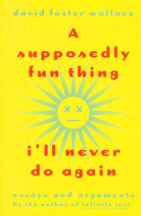
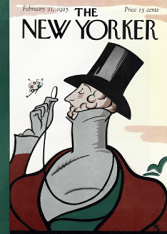
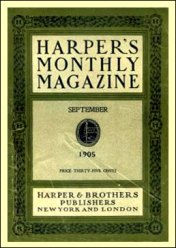
 If you enjoy reading magazines like
  The narrative essay conveys our experiences and ideas in a form that is easy to digest, so writing this kind of piece requires authors to have some idea of the craft of writing.
 A narrative essay is a story that begins with an experience you once had. You know how that event began and ended. Just like any other form of short fiction, a narrative essay has a plot arc.
 We don’t want to disclose too much information about ourselves or the people we have encountered. An honest narrative essay contains an author’s opinions. Sometimes those sentiments are not glowing accolades. One can lose friends if they aren’t careful.
 Take some time to review what you submitted, keeping those comments in mind. Then form a plan to address those issues with a rewrite.
 When a new writer decides to begin their career by embarking on writing a novel, the magnitude of the undertaking soon becomes apparent.
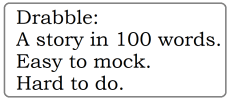
 Writing a drabble takes less time than writing a 3,000-word story or a 70,000-word novel, but all writing is a time commitment. When writing a drabble, you can expect to spend an hour or more getting it to fit within the 100-word constraint.
 I use a loose outline to break the arc of every story I write into acts, each with a specific word count. (I’ve included a graphic at the bottom of this post.)
 I mentioned rewards in the title of this post. The completed story is a small gift you give yourself, and the surge of endorphins you experience in that moment of “Yes! I can write after all!” are the reward.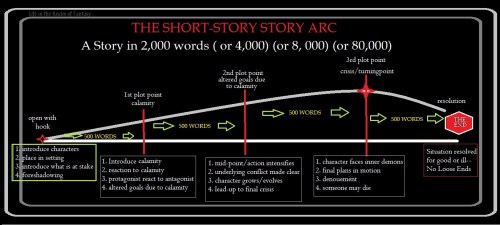
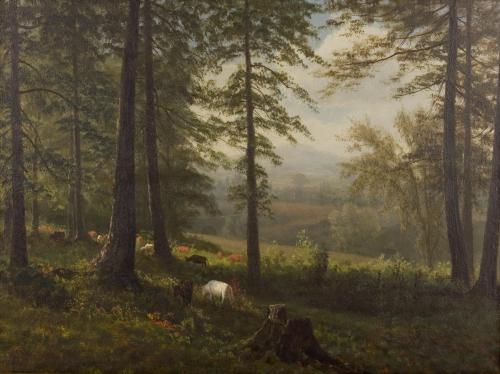
 Strange beasts are a common trope in speculative fiction.
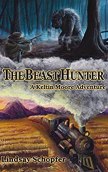 So, why do I feel the need to be so vague on a subject that fans are obviously interested in? The original idea for Keltin Moore’s world came from a RPG video game, which is one of the main reasons why the series shares many conventions with role-playing games, including the presence of a variety of dangerous creatures in an otherwise ‘normal’ world. While some games may give token explanations for their wandering monsters, the majority of enemy units in these games are just accepted as a part of the RPG world, no more unusual than ability cool-downs or health regenerating potions.
 I am more of a planner. Like Lindsay, some of my fantasy work is RPG game-based. My mind works in a linear, logical manner. In real life, if something anomalous to the native plants and animals exists, it arrived there via external means.
 Suburban coyotes, racoons, possums, deer – they all make their living in our backyards. In real life, our local fauna is there, part of the environment. Some are predators, so we keep our cats inside and work around the wildlife as a matter of course.
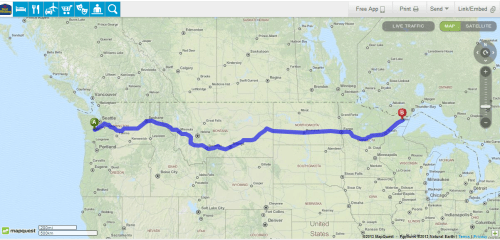
 Here, the shoreline of Puget Sound determines the path of the interstate highway. The major cities and towns are located where there are good deepwater ports.
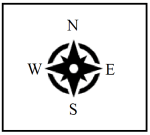 If you are designing a fantasy world, you might want to make a pencil-drawn map. Place north at the top, east to the right, south to the bottom, and west to the left. Those are called
 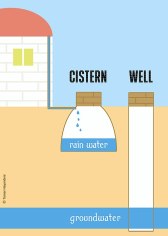 Access to water is crucial to life and prosperity. Humans have long understood the value of clean water for drinking, and you can’t count on getting that from streams or pools. Wells and the technology to make them have been around for a very long time. Cisterns have too, collecting rainwater for drinking and irrigation.
 Those birch trees were nowhere near as tall as the giant cedars and Douglas firs I was familiar with. But once you were away from the road, the birch forests became dark jungles, tangled and mysterious.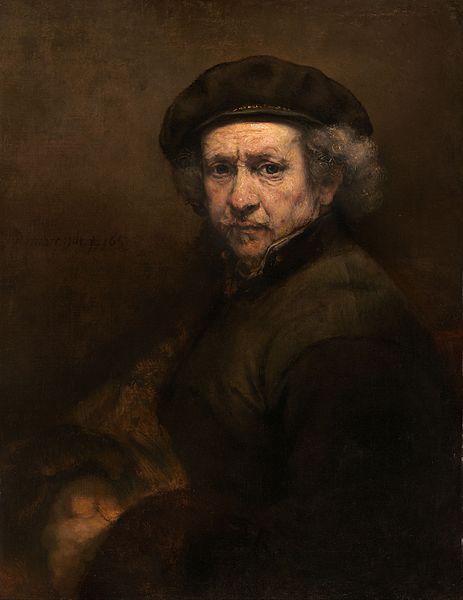


 Life in the Realm of Fantasy

