
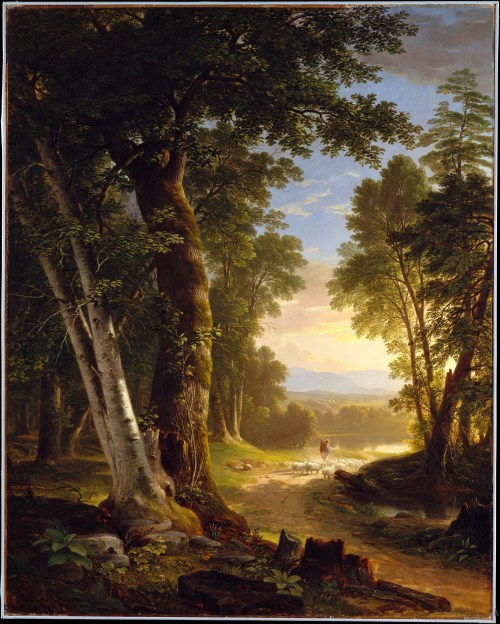
 Artist: Asher Brown Durand (1796–1886)
Title: The Beeches
Genre: landscape art
Date: 1845
Medium: oil on canvas
Dimensions: 60 3/8 x 48 1/8 in. (153.4 x 122.2 cm)
Collection: Metropolitan Museum of Art
Current location: American Paintings and Sculpture
What I love about this painting:
It’s been storming here on the west coast of the US, dumping rain. California has been hard hit with so much rain the soil can’t absorb it. Yet, though the snowpack will bring relief (if the state doesn’t wash away) the drought is not over. California Storms Help Relieve Drought, But How Much Is in Question – The New York Times (nytimes.com)
Here in the Puget Sound area, we’re experiencing the usual wind and rain of a Northwest winter, hopefully a respite from the droughts we’ve suffered in the past decade. So, it’s good time to enjoy the image of sunny day painted in a calmer time.
Asher Brown Durand gives us a summer day on the shore of a large pond, in a grove of beech and birch trees. The large beech tree is magnificent, with its rough, moss-covered bark commanding the center stage. In the distance, as if they were accidentally included, a shepherd leads a flock of sheep, a minor part of the scene as compared to the superb majesty of the beech tree.
Yet, nothing in this painting is accidental. The sheep and their shepherd are painted in exquisite detail, with as much attention as he gives to the texture of the bark and the moss. Each leaf, each blade of grass, each stone—every part of this scene is painted with intention. Each component of this landscape painting is as true and perfect as they were in real life.
I love the natural feeling of the plants, the intense colors of nature, the sense of a place that is vibrant and alive.
This painting is not merely a photographic representation of a summer morning in 1845. It has a life, a sense that you are there. We can almost feel the warming sunshine and slight breeze lifting the morning haze, hear the sheep as they walk to the water, perhaps even catch the earthy scent of the woods around us.
Durand was a master in the Hudson River School, a group of artists who believed that nature in the form of the American landscape was a reflection of God. Durand himself wrote, “The true province of Landscape Art is the representation of the work of God in the visible creation.” [1] This painting demonstrates that conviction.
About the Artist, via Wikipedia:
Asher Brown Durand (August 21, 1796, – September 17, 1886). (He) was an American painter of the Hudson River School. was born in, and eventually died in, Maplewood, New Jersey (then called Jefferson Village). He was the eighth of eleven children. Durand’s father was a watchmaker and a silversmith.
Durand was apprenticed to an engraver from 1812 to 1817 and later entered into a partnership with the owner of the company, Charles Cushing Wright (1796–1854), who asked him to manage the company’s New York office. He engraved Declaration of Independence for John Trumbull during 1823, which established Durand’s reputation as one of the country’s finest engravers. Durand helped organize the New York Drawing Association in 1825, which would become the National Academy of Design; he would serve the organization as president from 1845 to 1861.
Asher’s engravings on bank notes were used as the portraits for America’s first postage stamps, the 1847 series. Along with his brother Cyrus he also engraved some of the succeeding 1851 issues.
Durand’s main interest changed from engraving to oil painting about 1830 with the encouragement of his patron, Luman Reed. In 1837, he accompanied his friend Thomas Cole on a sketching expedition to Schroon Lake in the Adirondacks Mountains, and soon after he began to concentrate on landscape painting. He spent summers sketching in the Catskills, Adirondacks, and the White Mountains of New Hampshire, making hundreds of drawings and oil sketches that were later incorporated into finished academy pieces which helped to define the Hudson River School.
Durand is remembered particularly for his detailed portrayals of trees, rocks, and foliage. He was an advocate for drawing directly from nature with as much realism as possible. [1]
Credits and Attributions:
Image: The Beeches by Asher Brown Durand, PD|100. Wikimedia Commons contributors, “File:The Beeches MET DT75.jpg,” Wikimedia Commons, the free media repository, https://commons.wikimedia.org/w/index.php?title=File:The_Beeches_MET_DT75.jpg&oldid=617658539 (accessed January 12, 2023).
[1] Wikipedia contributors, “Asher Brown Durand,” Wikipedia, The Free Encyclopedia, https://en.wikipedia.org/w/index.php?title=Asher_Brown_Durand&oldid=1129313847 (accessed January 12, 2023).
 Authors make readers when they do in-person book signings. We have the chance to connect with potential readers on a personal level, and they might buy a paper book. If we are personable and friendly, they might tell their friends how much they liked meeting us. Those friends will buy eBooks. (We hope!)


 She also wrote the brilliant, hilarious standalone novel,
  About Ellen King Rice: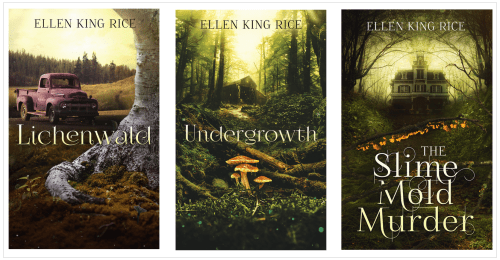
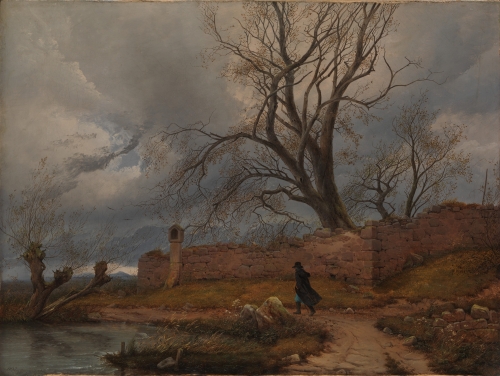 Artist: Carl Julius von Leypold (1806–1874)
 We are looking for markets that will pay you for your work. They are difficult to get into, but once you are in, you will be offered more opportunities.
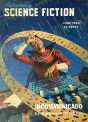
 Fantasy & Science Fiction
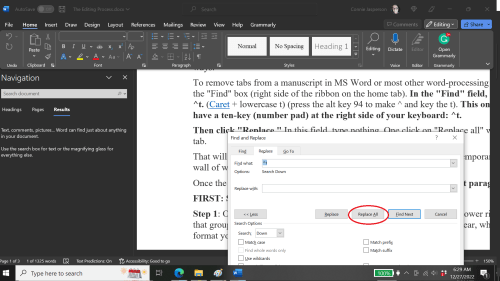
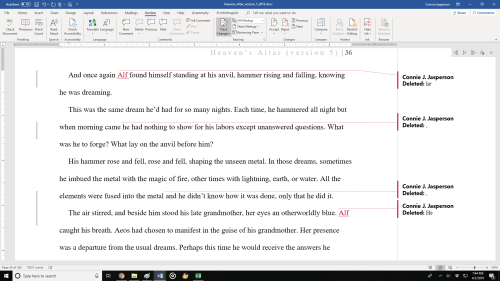
 Third, they want work that looks professional, as if the author read their submission guidelines for formatting the manuscript and followed them. Publishers have specific, standardized formatting they want you to use, and these guidelines are posted on their websites.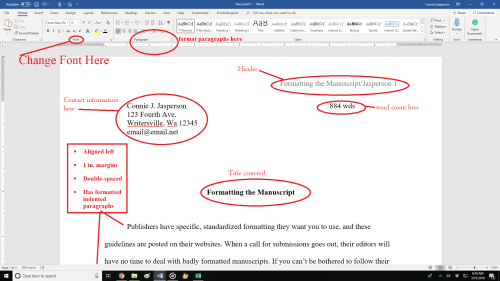
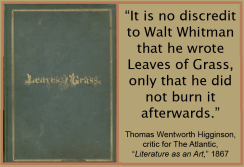 Don’t be discouraged by rejection. Rejection happens far more frequently than acceptance, even to famous authors. Don’t let fear of rejection keep you from writing pieces you’re emotionally invested in.
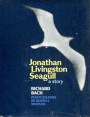 Remember, 18 publishers thought a story about a seagull was ridiculous before Richard Bach’s novella,
  A new year has begun, and open calls for spring and summer contests and anthologies will start appearing in various forums that I frequent. Finding places to submit your work can be challenging, but here are links to two groups on Facebook where publishers post open calls for short stories.
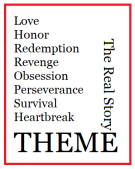 My problem is this: all my stories want to grow longer than 1,000 words. It requires weeks of effort to get my work to fit within that parameter. So, I often write practice stories, limiting myself to telling the whole story in 1000 words or less. These practice shorts serve several purposes: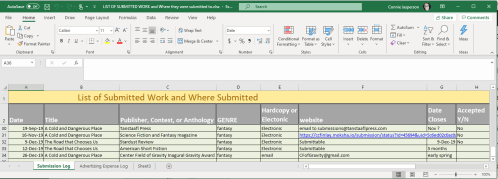
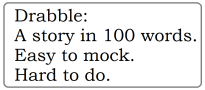 As a poet, I find it far easier to tell a story in 100 words than in 1,000. That 100-word story is called a
  That way, you won’t be left wondering how to attend a conference and still cover your household bills.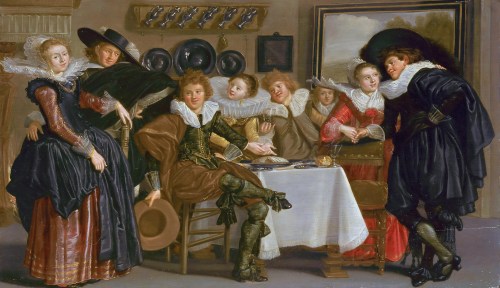
 The publishing world is a rough playground. Editors for traditional publishing companies and small presses have a landslide of work to pick from and are chronically short-staffed. They can’t accept unprofessional work regardless of how good the story is.
 Before you hire an editor, check their qualifications and references.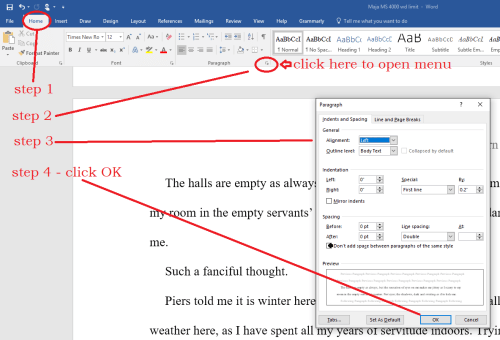
 If you’re a member of a writers’ group, you have a resource of people who will beta read for you at no cost. As a critique group member, you will read for them too.
 Clearly and consistently label each chapter. Ensure the chapter numbers are in the proper sequence, and don’t skip a number. I would label my individual chapter files this way:
 If you are writing in the US, you might consider investing in
 I have talked about this novella many times, as I think it is one of the most enduring stories in Western literature. The opening act of this tale is a masterclass in how to structure a story.
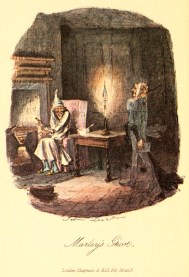 “Marley was dead, to begin with. There is no doubt whatever about that. The register of his burial was signed by the clergyman, the clerk, the undertaker, and the chief mourner. Scrooge signed it. And Scrooge’s name was good upon ‘Change for anything he chose to put his hand to. Old Marley was as dead as a doornail.”
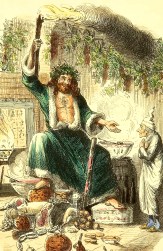 As I mentioned before, this book is only a novella. It was comprised of 66 handwritten pages. Some people think they aren’t “a real author” if they don’t write a 900-page doorstop, but Dickens says differently.


 Life in the Realm of Fantasy
