
Making revisions is quite different from editing, although some people don’t see it that way. Editing is a process that begins when I send the final draft to my editor, usually a year or two out from when the story first lands on paper.
 For me, revisions begin with the second draft and sometimes involve radical changes to the storyline or character arcs. I may take a manuscript through many drafts before finally getting the story right.
The process of revision starts when I write the final lines, finishing the first draft. I’m smarter now than I used to be, so I let that mess sit for a few weeks.
Then I go back and begin reading what I have written. As I read, I make corrections to typos and garbled sentences that I come across, although I miss as many as I catch.
I also notice plot holes, and this is where the second draft becomes work. This is where I might discover I have written myself into a far-fetched corner and my original solution was less than graceful.
Or I may find there is no tension, and the story is nothing but a series of character sketches.
Fortunately, much of what I have written can be recycled into a different project, should the need arise.
 NEVER DELETE months of work. Don’t trash what could be the seeds of another novel. Save it in an outtakes file and use it later. I give the subfile a name like HA_outtakes_20Dec2022. That file name tells me the cut chapters were last changed on December 20, 2022.
The old manuscript, version 1, will also be in that file in its original entirety.
 Then, I give the second draft a new file name: Heavens_Altar_version_2, which becomes the version I work on out of the main file folder.
Why not just delete it? When I get to the second draft stage, I have accomplished many important things with the 3 months of work I might cut from that novel.
- The world is solidly built.
- The characters are firmly in my head, so their interactions will make sense in the new context.
- Some sections I cut can be recycled into the new version, just in a different place.
Sometimes when I’m involved in creating characters, I overlook the misfortunes and struggles that create opportunities for growth. A good storyteller places obstacles on the path, events that must force a transformation upon the protagonists and their companions.
Catastrophes, even small ones on the most personal of levels, are the fertile ground from which adventure springs. When making revisions, we must ensure these growth opportunities are clearly defined, logical, and in the right place.
Events from which there is no turning back are the impetus of change, and that change is what the book is about.
Midpoint in the story’s arc is often a place where a choice is made from which there is no turning back. From that point, the narrative rises to the third plot point, an event that is either an actual death or a symbolic death. If either of these events is a non-starter, I have to either improve them or find better catastrophes.
This major event is critical because it forces the protagonist to be greater than they believed they could be. Conversely, it can break them down into their component parts.
 Either way, the characters will be profoundly changed from who they thought they were on page one, becoming who they are when the final sentence is written. The character arc is formed by their experiences.
How do I find those catalysts for change? Sometimes I need an external eye to point out where I have gone wrong, and I seek ideas from my writing group.
However, most of my writing disasters are preceded by one or more points of no return. Identifying and rectifying those moments takes time. It’s why I take so long to write a book.
When I finally see what must be changed, it may take several days to visualize how to resolve it. But that time spent mind-wandering on paper is not wasted. I will have a better plot arc for my characters and still arrive at the ending I want.
I believe in the joy of writing and the elation of creating something powerful. Sometimes we lose our fire for a story because another story has captured our imagination. If that happens, set the first one aside and write the story you are passionate about.
We who are indies have the freedom to write what we want, when we want. The only deadlines we have to meet are the ones we set for ourselves.
 True inspiration is not an everlasting firehose of ideas. Sometimes there are dry spells. If you take another look at the work you have cut and saved in an outtakes file, you might see it with fresh eyes. You might see the seeds of a different story, and the fire for writing will be reignited.
I may take my first draft through many versions before I have the story written the way I want it. The end result should be worth it—I hope.
 I understand that slight incompatibility has been resolved. In my opinion, both programs are good, and both have pros and cons.
 Most word processing programs have some form of spellcheck and some minor editing assists. Spellcheck is notorious for both helping and hindering you.
 You might disagree with the program’s suggestions. You, the author, have control and can disregard suggested changes if they make no sense. I regularly reject weird suggestions.
 I am wary of relying on Grammarly or ProWriting Aid for anything other than alerting you to possible problems. If you blindly obey every suggestion made by editing programs, you will turn your manuscript into a mess.
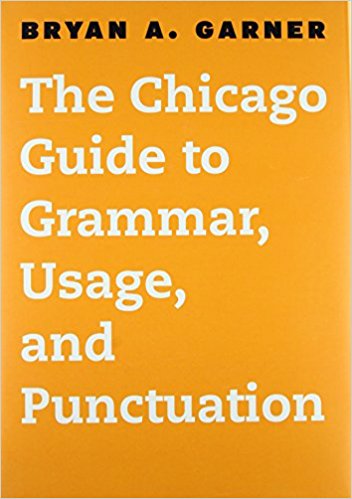
 Also, it never hurts to have a book of synonyms on hand. We all tend to inadvertently repeat ourselves, and the Read Aloud function will shed light on those crutch words. A dictionary of synonyms and antonyms can help us find good alternatives.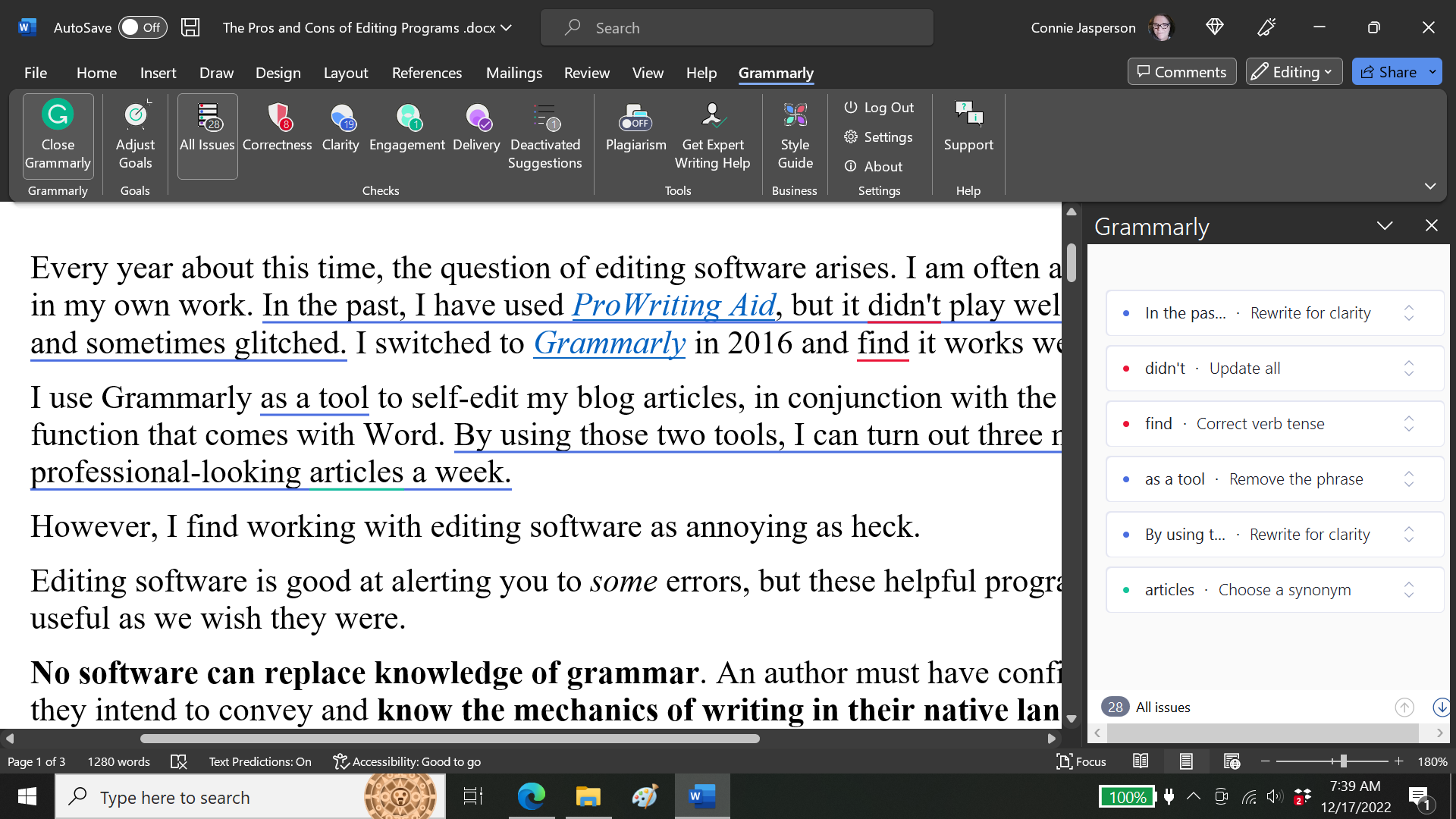
 Our universe is a mysterious, stunning place. One puzzle that has occupied scientists for decades is the observable fact that our universe has more matter and energy than it should.
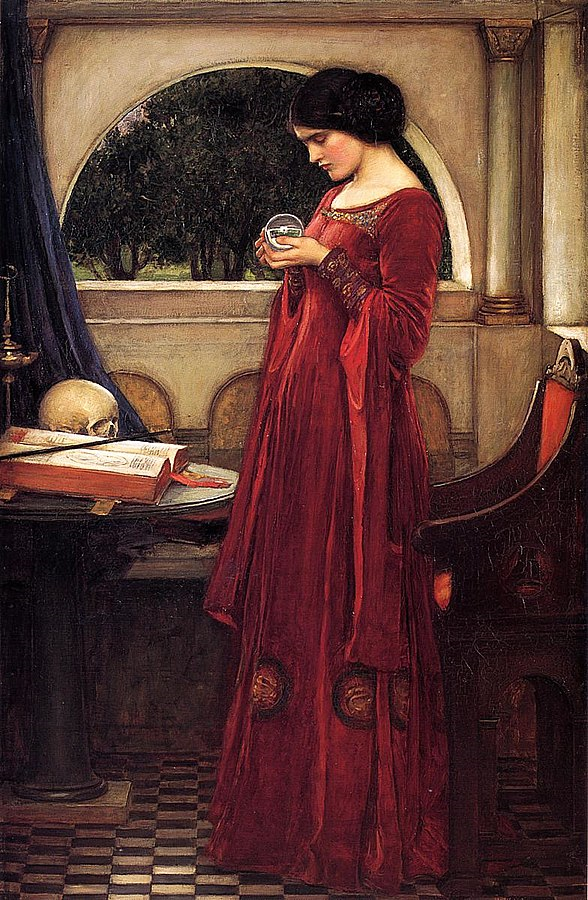 Since mainstream science still pooh-poohs its existence, telepathy and empathic abilities are whatever we who write books decide they are. I choose to see telepathy as an extension of the dark energy that scientists admit is all around us. Some people can tap into it, but others can’t.
 If a real person had the kind of power that our fictional empaths wield, we would hope they were noble, compassionate, and above all, respectful of other people’s wish for privacy. We would want them to be principled, a person who would never rummage in people’s minds uninvited.
 How will you describe it when they are healing on a cellular level? Some authors describe the act of healing as evil-looking lights changing to a healthier color. Others describe healing as angry-looking threads that must be untangled. Still other authors describe it as a feeling of evil that must be smoothed away.
 As a younger reader, I gravitated to fantasy books that feature telepathy, healing, and magic. Two series with well-designed magic and empathic systems are:
 Superpowers are both science and something that may seem like magic, but they are not. Think Spiderman. His abilities are conferred on him by a scientific experiment that goes wrong.
 Artist: Pieter Breughel the Younger (1564–1638)
 Fortunately, Irene is editing the final draft of a book I finished during lockdown. She sends me one or two chapters with notes for final revisions each evening. That makes me happy—it’s been a while since I published a book.
 Agency is an integral aspect of the craft of writing. It means allowing your characters to make decisions that don’t necessarily follow the original plot outline. This gives them a chance to become real, the way
 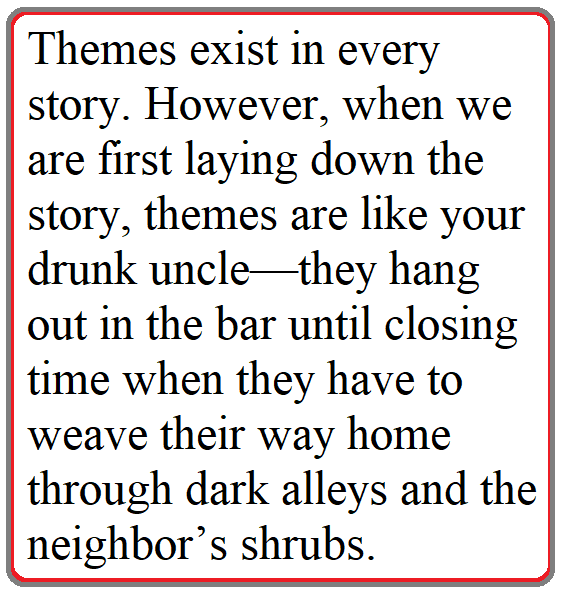 Sometimes we can visualize a complex theme but can’t explain it. If we can’t explain it, how do we show it? For me, that is the real struggle. Grief is a common theme that can play out against any backdrop, sci-fi or reality-based, where humans interact emotionally. But it is a complex theme, and people all react differently to it.
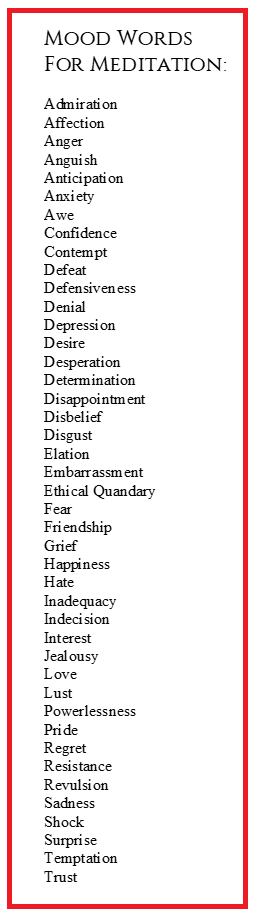 Highlighting a strong theme is challenging, even when I begin with a plan. But once I have identified these personal themes, I’ll be able to write their stories. I’ll use actions, symbolic settings/places,
  We often see memes and quotes about writing that resonate with us. Quotes often become memes because they are true and memorable and sometimes poke fun at us.
 However, obscure and pretentious prose (such as I enjoyed laying down in the preceding sentence) annoys the majority of readers. I want my work to please a reader, so I don’t indulge in ostentatious phrasing except in poetry.
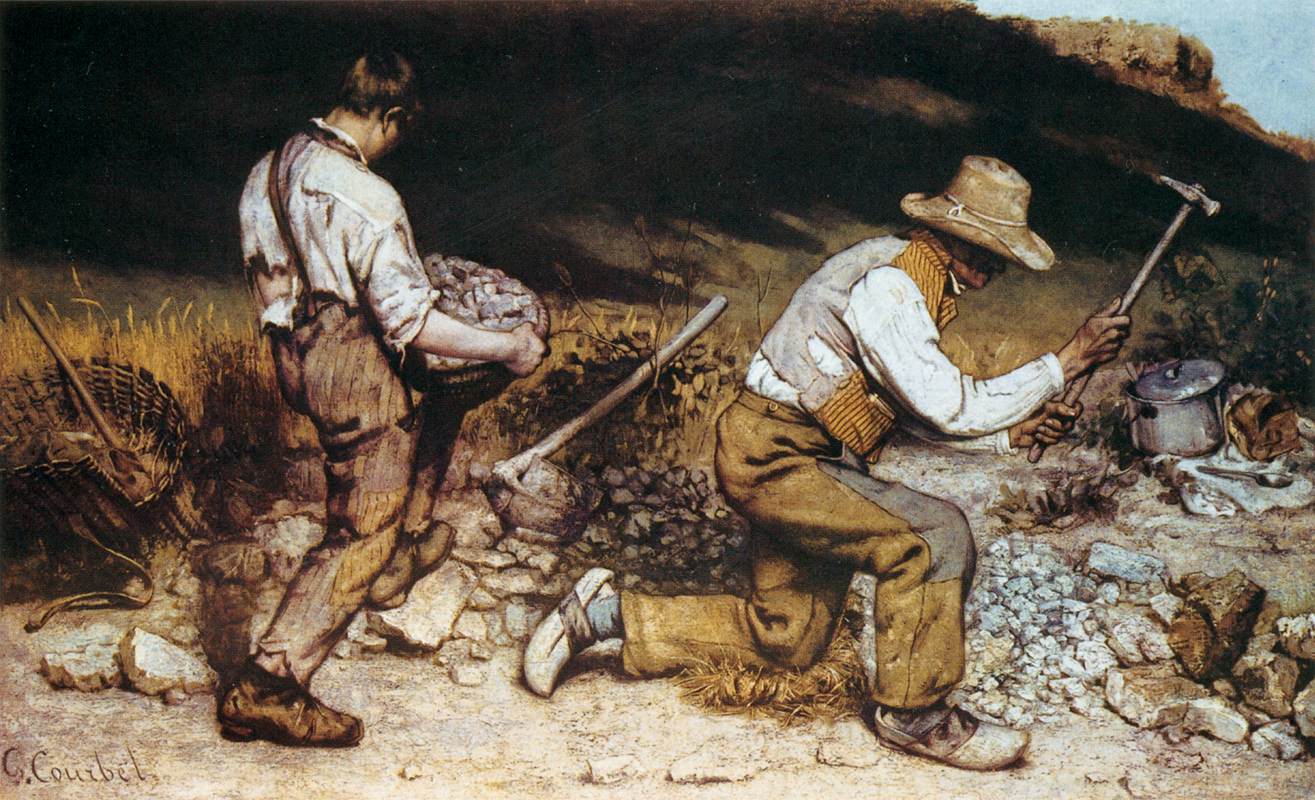 Artist: Gustave Courbet (1819–1877)
 Now that I have most of the foundation built for my novel (the ending is not written), I find myself going back and looking at places where I inserted notes to myself, using red fonts. These are messages like: Build tension between the factions here. Show how it affects the group’s mood. Or another note: Need an atmosphere of fear.
 I know how I want the story to affect a reader’s emotions—it’s perfectly shaped in my head. The trick is making that vision come true in writing. It may take a year or more to get the mood and atmosphere to feel the way I envision it.


 Life in the Realm of Fantasy