
Today marks the final day of NaNoWriMo 2022. I achieved my goal and exceeded it, which was a surprise. The month has been crazy busy here at Casa del Jasperson, but I still managed at least 2000 new words each day and sometimes more.
 Now that I have most of the foundation built for my novel (the ending is not written), I find myself going back and looking at places where I inserted notes to myself, using red fonts. These are messages like: Build tension between the factions here. Show how it affects the group’s mood. Or another note: Need an atmosphere of fear.
When writing those notes to myself, I didn’t stop to fine-tune the story. My personal quest was to get the story laid out from beginning to end and write at least 2000 words each day. At this point the novel is mostly talking heads. The world is there but barely. It’s still at the one-dimensional stage.
I’m still about 30,000 words from the end, but now I find myself relaxing, not worried about getting word count. I will still write new words every day, but I can also look back and add atmosphere.
I love to read. When an author uses mood and atmosphere well, they can elevate their novel from “not bad” to “memorable.” The way Emily Brontë employed atmosphere in Wuthering Heights is stellar. I would love to achieve that level of world building.
 I know how I want the story to affect a reader’s emotions—it’s perfectly shaped in my head. The trick is making that vision come true in writing. It may take a year or more to get the mood and atmosphere to feel the way I envision it.
Mood and atmosphere are two separate but entwined forces. They form subliminal impressions in the reader’s awareness, sub currents that affect our mood.
Where you find atmosphere in the setting, you also find mood in the characters. Like conjoined twins, mood and atmosphere are best discussed together when we talk about instilling depth into a narrative.
Which is more important, atmosphere or mood? The answer is both and neither.
Characters’ emotions affect the overall mood of a story. In turn, the atmosphere of a particular environment may affect the characters’ personal mood. Their individual moods affect the emotional state of the group.
Emotion is the experience of transitioning from the negative to the positive and back again. Experiencing emotion changes a character’s values, and they grow as people. Whether they grow positively or negatively is determined by the requirements of the narrative.
This is part of the inferential layer of a story. The audience must infer (deduce, understand, fathom, grasp, recognize) the experience, and it must feel personal.
Setting can contribute to atmosphere, but the setting is only a place, not atmosphere. Atmosphere is created as much by odors, scents, ambient sounds, and visuals as it is by the characters’ moods and emotions.
While mood and atmosphere work together, there are differences in what they do:
- Mood describes the internal emotions of an individual or group.
- Atmosphere is connected to the setting
Mood and atmosphere are created by phrasing, conversations, descriptive narrative, tone, and setting.

High Sunderland Hall in 1818, shortly before Emily Brontë saw the building. Public Domain, Via Wikimedia Commons.
Some narratives use world building to create an overall atmosphere and affect the characters’ emotional mood. In Wuthering Heights, Brontë uses the environment and setting to manipulate the characters’ moods on a personal level. She then widens the view using the architecture, the landscape, and the gloomy weather to darken the general mood and atmosphere of the entire story. This creates a feeling of insecurity, raising tension in the reader, a sense of the unknown hidden in the shadows.
She begins with seriously flawed characters, instills them with dread and uncertainty, sets their intertwined stories in an isolated environment, and wraps the entire novel in a cocoon of despair, dark skies, and barren moorlands.
Atmosphere is foundational to world building. Will I get it right? I don’t know, but as I write toward the end of this proto-novel, I won’t stop trying.
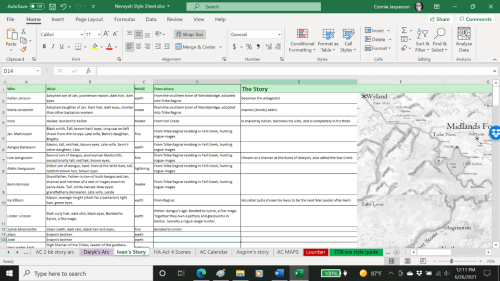
 When a manuscript comes across their desk, editors and publishers create a list of names, places, created words, and other things that may be repeated and pertain only to that manuscript. This is called a stylesheet.
 For short stories, the stylesheet will probably be a Word document. I have written them out by hand on occasion. You can create them in Google Sheets or Docs, which is free.
 Page Two: The projected story arc will be on page two of the workbook. I list each chapter by the events that need to be resolved at various points in the manuscript.
 We never really know how a story will go, even if we begin with a plan. We will probably deviate some from the original outline. Usually, for me, the major events will remain as they were plotted in advance, even though side themes will evolve. The outline keeps me on track with length and ensures the action doesn’t stall.
 The plot usually evolves as I write each event and connect the dots. In one instance, it was completely changed. The original plot didn’t work at all, so drastic measures had to be taken.
 Once the first draft is finished, revisions will mean updating the stylesheet, but that’s part of the job. This ensures my editor will have less work when we get to the final draft.
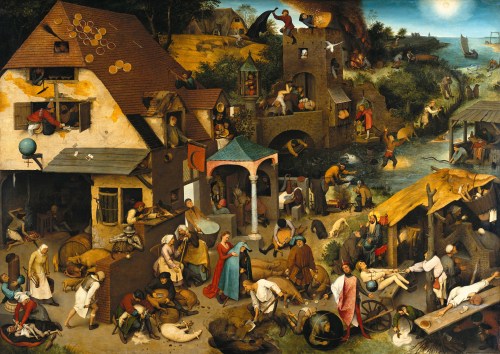 Today I’m revisiting one of the best allegorical paintings of all time,
  This novel was meticulously self-edited. I could see it was run through the author’s writer’s group many times, and the major flaws were ironed out. There were few typos, and the formatting was done well.
 Let’s be real—style and grammar guides are tedious and hard to understand. We may own them but we hate to crack them open. Trust me, researching grammar gets easier and more interesting as you advance in writing craft.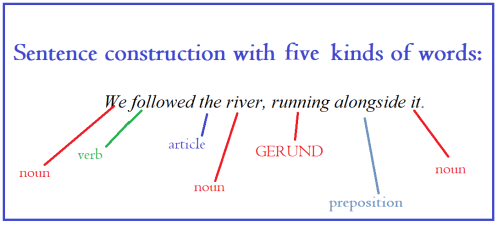
 In this regard, gerunds and other passive code words are the author’s first draft-multi-tool. They are a compact tool that combines several individual functions in a single unit. One word, one packet of letters that serves many purposes and conveys multiple mental images to the author.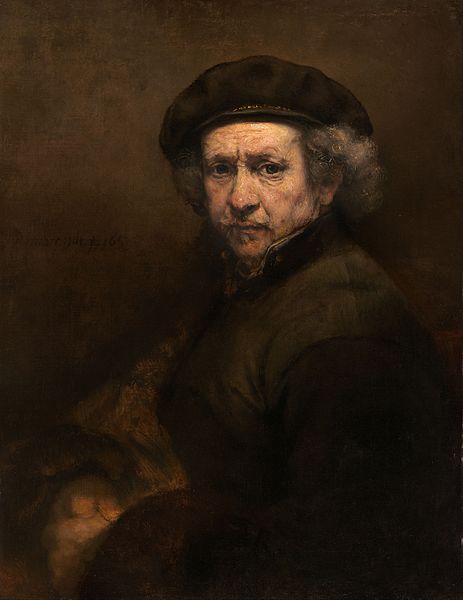
 Sometimes, the story demands a death, and 99% of the time, it can’t be the protagonist. But death must mean something, wring emotion from us as we write it. Since the character we have invested most of our time into is the protagonist, we must allow a beloved side character to die.
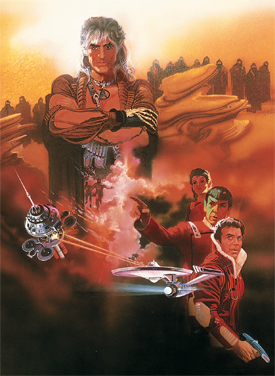 Mortally wounded, the antagonist, Khan, activates a “rebirth” weapon called Genesis, which will reorganize all matter in the nebula, including Enterprise. Though Kirk’s crew detects the activation and attempts to move out of range, they will not be able to escape the nebula in time without the ship’s inoperable warp drive. Spock goes to restore warp power in the engine room, which is flooded with radiation. When McCoy tries to prevent Spock’s entry, Spock incapacitates him with a
 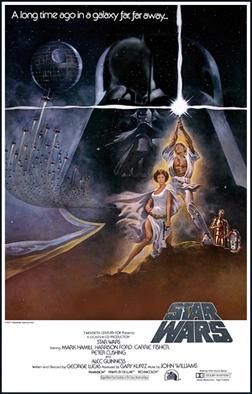 You, as the author, must understand what drives and motivates even the walk-on, disposable characters. Are they “a red shirt,” that iconic Star Trek symbol of the throw-away character? Or are they a “Spock,” the beloved friend who offers themselves up to save others?
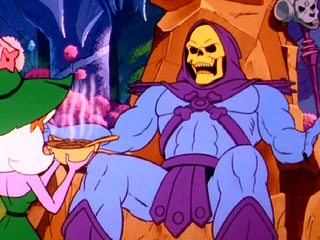 Skeletor is a cartoon villain with one of the least believable storylines in the history of cartoons. He has great passion and drive as a villain, but it’s all noise and show. His ostensible quest is to conquer Castle Grayskull and acquire its ancient secrets. Possession of these would make him unstoppable, allowing him to rule the world of Eternia.
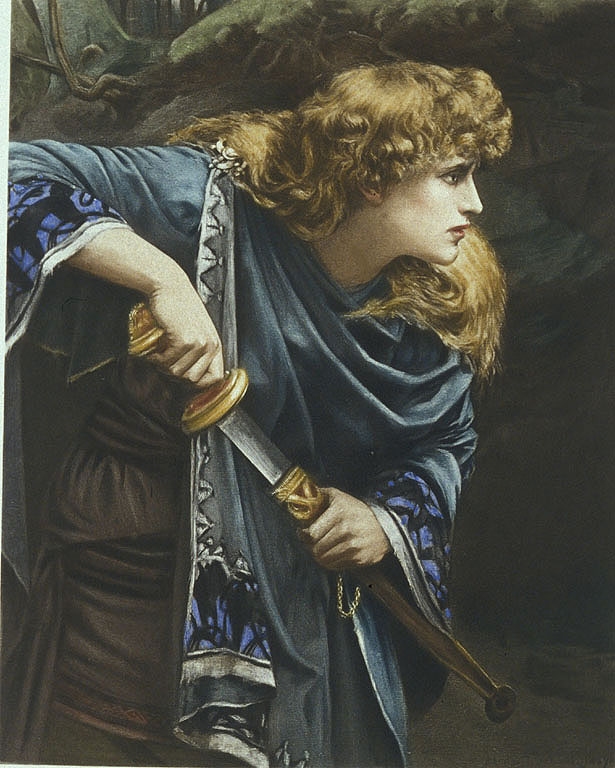 When we write a story, we want the protagonist’s struggle to mean something to the reader. We put them through hell and make their lives miserable. But we must remember that the characters in our stories aren’t going through these horrible trials alone. The moment we begin writing the story, we are dragging the reader along for the ride.
 Artist: Thomas Cole (1801–1848)
 Then there is the marketing of the finished product, but that is NOT my area strength, so I won’t offer any advice on that score.
 However, we must have a fundamental understanding of basic mechanical skills. These rules are the law of the road, and readers expect to see them. Knowledge of standard grammar and punctuation rules prevents confusion. Readers who become confused will set the book aside and give it a one-star review.
 Ernest Hemingway
 Each author is different, and the length of time they take on a book varies. Some authors are slow—their books are in development for years before they get to the finish line. Others are fast—their novels complete and ready to be published in a relatively short time. Regardless of your timeline, this is where project management skills really come into play.
 But as I said earlier, I have no skills in the area of marketing and no advice worth offering.


 Life in the Realm of Fantasy
