

Hello from Casa del Jasperson, and may you all have a Merry Holiday, no matter how you celebrate.
Today I’m revisiting a painting, Frost Fair on the River Thames near the Temple Stairs. by Thomas Wijck (also Thomas Wijk, or Thomas Wyck; 1616–1677). He was a Dutch painter of port views and genre paintings. This painting details a moment in history, the winter of 1686-1684, as seen though the eyes of one who lived it. I first published this post in January of 2018.
About the Artist, via Wikipedia:
Wijck was born into an artist family and received his training from his father. He journeyed to Italy, presumably by 1640, the year in which a ‘Tommaso fiammingo, pittore’ (Thomas the Fleming, painter) is documented as residing in Rome in the Via della Fontanella. Although this evidence of his residence in Rome around this time has been questioned,[1] a number of his pictures depict scenes in and around Rome which would indicate a visit to the city at some point.[2] He also resided in the environs of Naples, where he executed many sketches which he subsequently worked up into drawings of coast views.[3]
In 1642 Wijck returned to the northern Netherlands, where he became a member of the Haarlem Guild of St. Luke.[1] In 1660 he was appointed Dean of the Haarlem Guild.
He went to England about the time of the Restoration and was much employed. He was followed there by his son and pupil Jan Wyck, who remained in Britain for the rest of his career and played an important role in the development of English sporting painting. Thomas Wyck was also the teacher of the Haarlem painter Jan van der Vaart, who later also immigrated to England.
He died in Haarlem in August 1677. Pieter Mulier II was a follower of his style.
What I love about this painting:
Everywhere you look you see color. Red wheels on a cart, red tents, blue tents, and yellow–color is everywhere. We sometimes think of the 17th century as a dark colorless time, but clearly it was not. People were much the same then as they are today. We love to have fun and will find a way to enjoy ourselves even in the harshest conditions.
And winters during that time were harsh. Fuel for heating and cooking was expensive, food was expensive, and many people died from the cold and starvation.
Quoted from Wikipedia: During the Great Frost of 1683–84, the worst frost recorded in England, the Thames was completely frozen for two months, with the ice reaching a thickness of 11 inches (28 cm) in London. Solid ice was reported extending for miles off the coasts of the southern North Sea (England, France and the Low Countries), causing severe problems for shipping and preventing the use of many harbours. Near Manchester, the ground was frozen to 27 inches (69 cm), in Somerset, to more than 4 feet (1.2 m).
In the pedestrian tunnel under the south bank of Southwark Bridge, there is an engraving by Southwark sculptor Richard Kindersley, made of five slabs of grey slate, depicting the frost fair.[19]
The frieze contains an inscription that reads (two lines per slab):
Behold the Liquid Thames frozen o’re,
That lately Ships of mighty Burthen bore
The Watermen for want of Rowing Boats
Make use of Booths to get their Pence & Groats
Here you may see beef roasted on the spit
And for your money you may taste a bit
There you may print your name, tho cannot write
Cause num’d with cold: tis done with great delight
And lay it by that ages yet to come
May see what things upon the ice were doneThe inscription is based on handbills,[20] printed on the Thames during the frost fairs.
Credits and Attributions:
Wikipedia contributors, “Thomas Wijck,” Wikipedia, The Free Encyclopedia, https://en.wikipedia.org/w/index.php?title=Thomas_Wijck&oldid=913753600 (accessed February 7, 2020).
#FineArtFriday: Frost Fair on the River Thames near the Temple Stairs, by Thomas Wyke was first published here on Life in the Realm of Fantasy on January 20, 2018.
Wikipedia contributors, “River Thames frost fairs,” Wikipedia, The Free Encyclopedia, https://en.wikipedia.org/w/index.php?title=River_Thames_frost_fairs&oldid=820904368 (accessed January 19, 2018).
Frost Fair on the River Thames near the Temple Stairs, by Thomas Wyke ca.1683-1684 via Wikimedia Commons (scan from FT magazine, 2007-09-30) [Public domain]
 For me, revisions begin with the second draft and sometimes involve radical changes to the storyline or character arcs. I may take a manuscript through many drafts before finally getting the story right.
 NEVER DELETE months of work. Don’t trash what could be the seeds of another novel. Save it in an outtakes file and use it later. I give the subfile a name like HA_outtakes_20Dec2022. That file name tells me the cut chapters were last changed on December 20, 2022.
 Then, I give the second draft a new file name: Heavens_Altar_version_2, which becomes the version I work on out of the main file folder.
 Either way, the characters will be profoundly changed from who they thought they were on page one, becoming who they are when the final sentence is written. The character arc is formed by their experiences.
 True inspiration is not an everlasting firehose of ideas. Sometimes there are dry spells. If you take another look at the work you have cut and saved in an outtakes file, you might see it with fresh eyes. You might see the seeds of a different story, and the fire for writing will be reignited.
 I understand that slight incompatibility has been resolved. In my opinion, both programs are good, and both have pros and cons.
 Most word processing programs have some form of spellcheck and some minor editing assists. Spellcheck is notorious for both helping and hindering you.
 You might disagree with the program’s suggestions. You, the author, have control and can disregard suggested changes if they make no sense. I regularly reject weird suggestions.
 I am wary of relying on Grammarly or ProWriting Aid for anything other than alerting you to possible problems. If you blindly obey every suggestion made by editing programs, you will turn your manuscript into a mess.
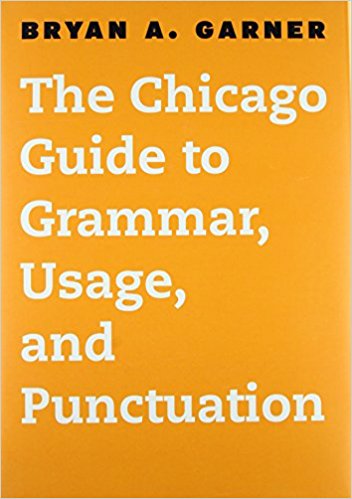
 Also, it never hurts to have a book of synonyms on hand. We all tend to inadvertently repeat ourselves, and the Read Aloud function will shed light on those crutch words. A dictionary of synonyms and antonyms can help us find good alternatives.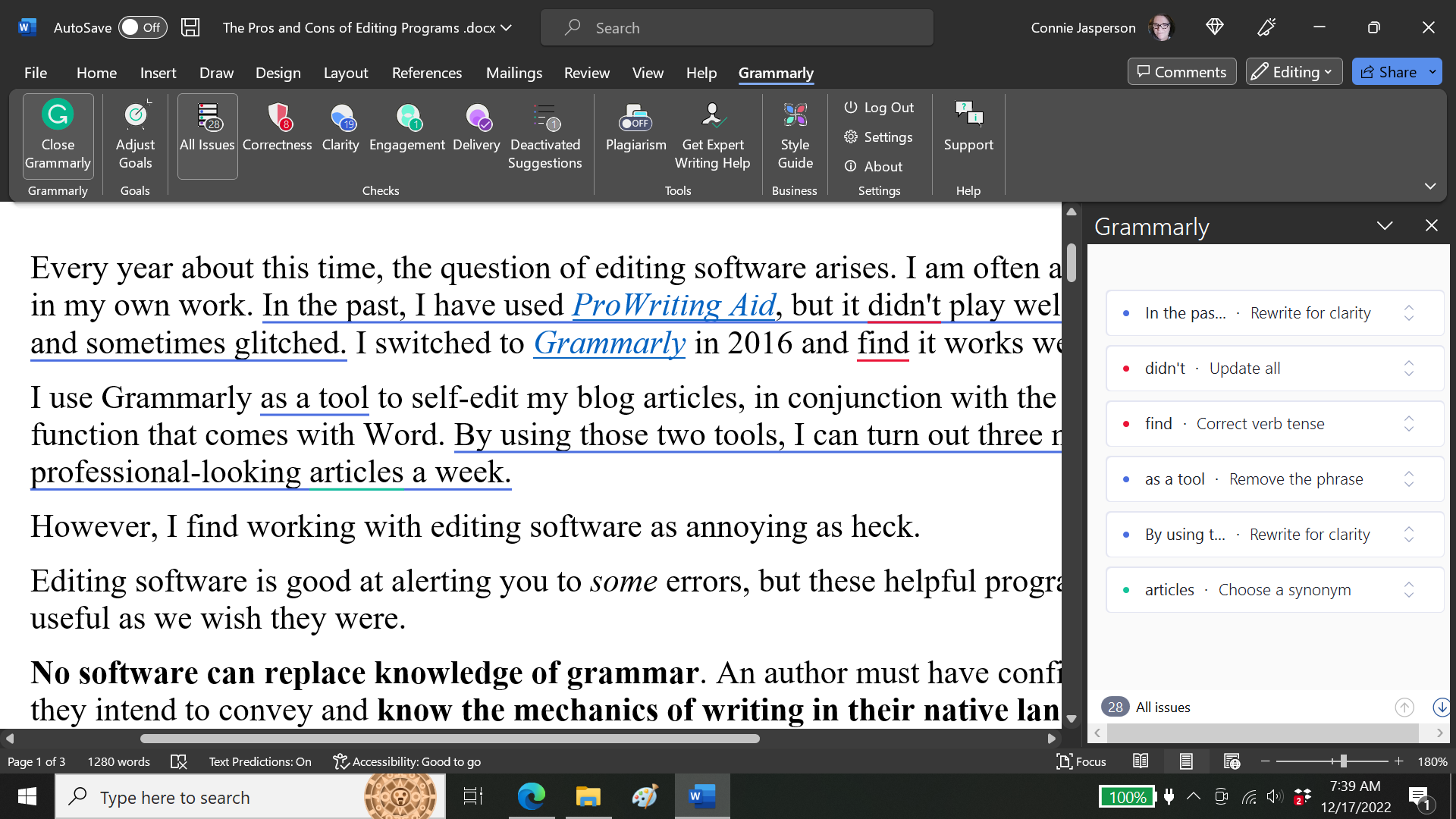
 Our universe is a mysterious, stunning place. One puzzle that has occupied scientists for decades is the observable fact that our universe has more matter and energy than it should.
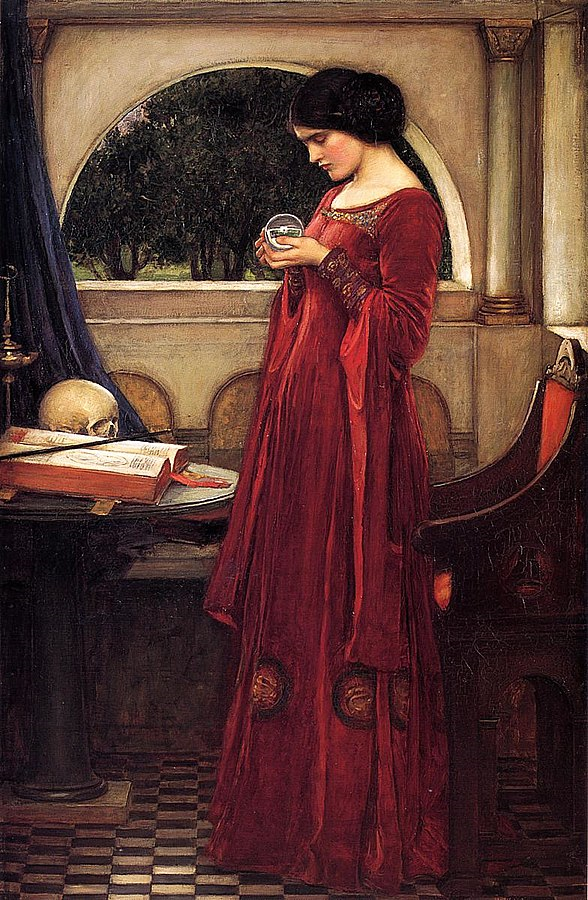 Since mainstream science still pooh-poohs its existence, telepathy and empathic abilities are whatever we who write books decide they are. I choose to see telepathy as an extension of the dark energy that scientists admit is all around us. Some people can tap into it, but others can’t.
 If a real person had the kind of power that our fictional empaths wield, we would hope they were noble, compassionate, and above all, respectful of other people’s wish for privacy. We would want them to be principled, a person who would never rummage in people’s minds uninvited.
 How will you describe it when they are healing on a cellular level? Some authors describe the act of healing as evil-looking lights changing to a healthier color. Others describe healing as angry-looking threads that must be untangled. Still other authors describe it as a feeling of evil that must be smoothed away.
 As a younger reader, I gravitated to fantasy books that feature telepathy, healing, and magic. Two series with well-designed magic and empathic systems are:
 Superpowers are both science and something that may seem like magic, but they are not. Think Spiderman. His abilities are conferred on him by a scientific experiment that goes wrong.
 Artist: Pieter Breughel the Younger (1564–1638)
 Fortunately, Irene is editing the final draft of a book I finished during lockdown. She sends me one or two chapters with notes for final revisions each evening. That makes me happy—it’s been a while since I published a book.
 Agency is an integral aspect of the craft of writing. It means allowing your characters to make decisions that don’t necessarily follow the original plot outline. This gives them a chance to become real, the way
 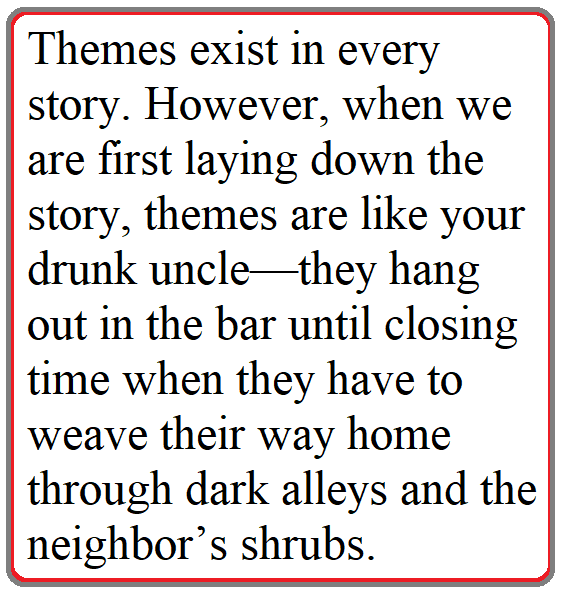 Sometimes we can visualize a complex theme but can’t explain it. If we can’t explain it, how do we show it? For me, that is the real struggle. Grief is a common theme that can play out against any backdrop, sci-fi or reality-based, where humans interact emotionally. But it is a complex theme, and people all react differently to it.
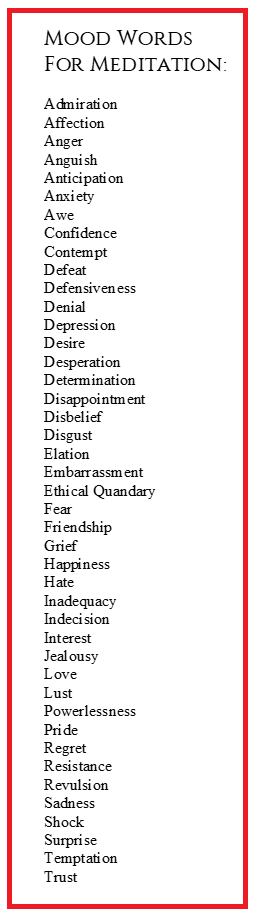 Highlighting a strong theme is challenging, even when I begin with a plan. But once I have identified these personal themes, I’ll be able to write their stories. I’ll use actions, symbolic settings/places,
  We often see memes and quotes about writing that resonate with us. Quotes often become memes because they are true and memorable and sometimes poke fun at us.
 However, obscure and pretentious prose (such as I enjoyed laying down in the preceding sentence) annoys the majority of readers. I want my work to please a reader, so I don’t indulge in ostentatious phrasing except in poetry.
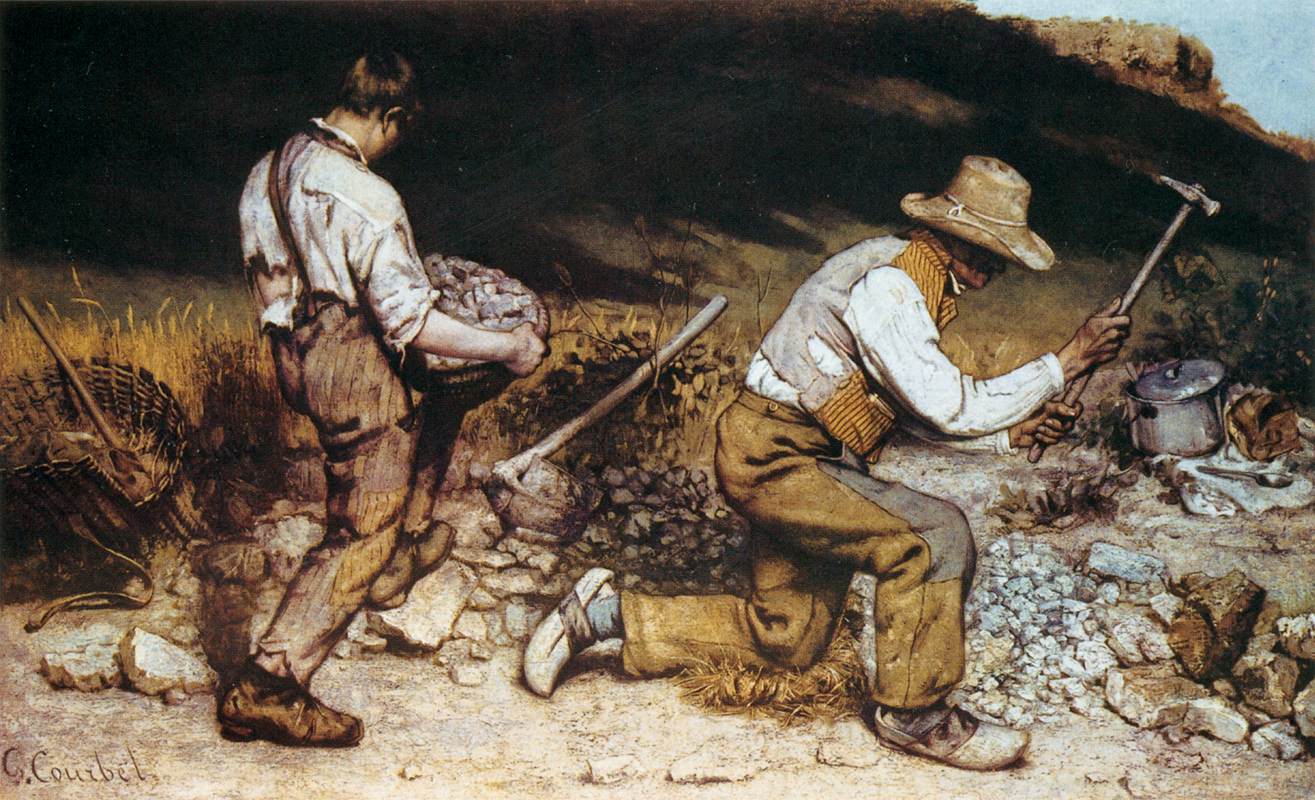 Artist: Gustave Courbet (1819–1877)


 Life in the Realm of Fantasy