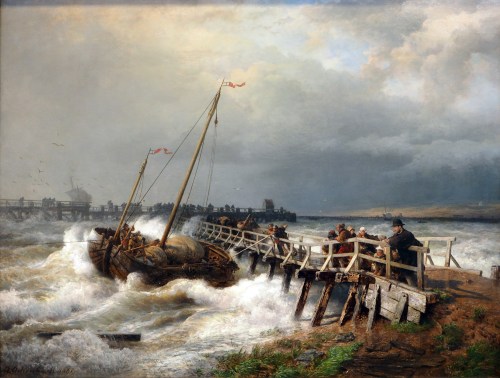
#FineArtFriday: Accident at the Old Pier, by Andreas Achenbach 1863

OLYMPUS DIGITAL CAMERA

Artist: Andreas Achenbach  (1815–1910)

Title: Accident at the Old Pier, by Andreas Achenbach 1863

Genre: landscape art

Date: 1863

Medium: oil on panel

Dimensions: Height: 92.5 cm (36.4 in) Width: 70.8 cm (27.8 in)

Collection: Kunsthalle Bremen 

Object history: 1865: purchased by Kunsthalle Bremen

Inscriptions: Signature and date bottom left: A. Achenbach 1863

What I love about this painting:

The scene depicted here is both historical, and current. It is a scene that plays out in our modern world in the same way as it did in 1863.

No matter what part of the world you live, anyone who lives near the sea will recognize the style of the rickety, weathered pier. Storms and saltwater wreak their will on both the wooden docks and the hubris of those who think to conquer the waves. Wood is no match for the storm; we fish and travel the waters at the mercy of the weather, and if the wind is wrong, approaching the dock can be dicey.

Along the pier, men work to keep the boat from crashing. A ship of that size would take out at least a section of the dock, if not the whole dock.

To this day, there is only one way to fend a boat away from a bad docking if they are at the mercy of the storm, and that is what we see here. Dockworkers push the vessel with poles to hold it off, hoping to reduce its momentum. A timber floats in the waves, as the boat has struck the pier at least once with the full force of the gale winds.

For the crew, disembarking will be a challenge. Should these sailors remain on board or try to jump onto the pier, risking being crushed between the rolling, lurching ship and the waves?

About the Artist, via Wikipedia:

Andreas Achenbach (29 September 1815, Kassel – 1 April 1910, Düsseldorf) was a German landscape and seascape painter in the Romantic style. He is considered to be one of the founders of the Düsseldorf School. His brother, Oswald, was also a well known landscape painter. Together, based on their initials, they were known as the “Alpha and Omega” of landscape painters. [1]


Credits and Attributions:

Wikimedia Commons contributors, “File:Achenbach Havarie am alten Pier@Albert König Museum20160904.jpg,” Wikimedia Commons, the free media repository, https://commons.wikimedia.org/w/index.php?title=File:Achenbach_Havarie_am_alten_Pier@Albert_K%C3%B6nig_Museum20160904.jpg&oldid=526736266 (accessed August 19, 2021).

[1] Wikipedia contributors, “Andreas Achenbach,” Wikipedia, The Free Encyclopedia, https://en.wikipedia.org/w/index.php?title=Andreas_Achenbach&oldid=1037476363 (accessed August 19, 2021).

1 Comment

Filed under #FineArtFriday, writing

The Writer’s Holiday

This week we are in Cannon Beach, Oregon, for our annual family pilgrimage. It is the place where sand and sea meet grandchildren and dogs. This year, no toddlers, but one of the older grandchildren is here with his friend.

Sunset_Cannon_Beach_05_August_2019We booked in January, so we got our favorite condo on the beach. Some years we don’t get it, but we always have fun. My sister-in-law and her husband are in a small house a bit further toward the other end of town. The daughter with the teenagers is staying in the neighboring town of Seaside, which is more oriented to teenagers and caters to their idea of fun.

Cannon Beach is a pleasant village, with flowers in every public place, gardens that are maintained by the city. It’s an attractive tourist town, easily walkable, and with a free transit system.

There is a brewery, several coffee roasters, numerous art galleries, and bookstores. On the main street we find a fabulous wine shop, my all-time favorite bakery, and an old-fashioned candy factory that is to die for.

Most important of all, on the corner near our condo is the grandchildren’s favorite toy store of all time, Geppetto’s. No one can walk past it without stopping in. (Shh – don’t tell anyone, but I’m getting the youngest ones their Christmas presents today.) This store has the most amazing variety of board games and puzzles.

Our condo is in the thick of things, so pizza night is easy to arrange, and a great pub is just around the corner.

We usually stay at the north end of town in the same area every year. I have a full kitchen, essential for the vegan on the road, and can walk out my door to where Ecola Creek enters the sea. The creek is wide here at the estuary but so shallow we can wade across.

Amaranthus and Savvy at the needles by haystack rock cannon beach 2012

The best part of this condo is the lovely gas fireplace for when the teenagers come in dripping seawater and sand, with blue lips and chilled to the bone.

They never listen to Grandma. “Come in before you get hypothermia!”

Just sayin’.

The view from our condo is one that never fails to soothe me. Tillamook Head is just off to the north. A mile out to sea, resting atop a sea stack of basalt, the notorious Tillamook Rock Lighthouse, nicknamed “Terrible Tilly,” has had a long history of strife and tragedy. Although long closed to the public, she still stands today, battered and bruised. Her continued existence is a testament to the quality of construction, as she is much stouter than the rock she was built upon.

About Terrible Tilly, from Wikipedia:

Tillamook Rock Lighthouse Cannon Beach Aughust 2014In September 1879, a third survey was ordered, this time headed by John Trewavas, whose experience included the Wolf Rock lighthouse in England. Trewavas was overtaken by large swells and was swept into the sea while attempting a landing, and his body was never recovered. His replacement, Charles A. Ballantyne, had a difficult assignment recruiting workers due to the widespread negative reaction to Trewavas’ death, and a general desire by the public to end the project. Ballantyne was eventually able to secure a group of quarrymen who knew nothing of the tragedy, and was able to resume work on the rock. Transportation to and from the rock involved the use of a derrick line attached with a breeches buoy, and in May 1880, they were able to completely blast the top of the rock to allow the construction of the lighthouse’s foundation.

On October 21, 1934, the original lens was destroyed by a large storm that also leveled parts of the tower railing and greatly damaged the landing platform. Winds had reached 109 miles per hour (175 km/h), launching boulders and debris into the tower, damaging the lantern room and destroying the lens. The derrick and phone lines were destroyed as well. After the storm subsided, communication with the lighthouse was severed until keeper Henry Jenkins built a makeshift radio from the damaged foghorn and telephone to alert officials.

The lighthouse was decommissioned in 1957 and replaced with a whistle buoy, having become the most expensive U.S. lighthouse to operate. During the next twenty years, the lighthouse changed ownership several times; in 1980 a group of realtors purchased the lighthouse and created the Eternity at Sea Columbarium, which opened in June of that year. After interring about 30 urns, the columbarium‘s license was revoked in 1999 by the Oregon Mortuary and Cemetery Board and was rejected upon reapplication in 2005.

Access to the lighthouse is severely limited, with a helicopter landing the only practical way to access the rock, and it is off-limits even to the owners during the seabird nesting season. The structure was listed on the National Register of Historic Places in 1981 and is part of the Oregon Islands National Wildlife Refuge. [1]

I spend a lot of time on the porch, looking out to sea at Terrible Tilly. The view is soothing, although the Northern Pacific waters are wild and untamed.

The lighthouse that I think of as a friend stubbornly clings to life, providing a home for seabirds. I watch it, sitting in solitude and letting my mind go free, and then I write.

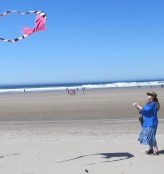
KiteFlying2018When I feel need to clear my mind, I go to the water’s edge and fly my kite. While I do that, my husband roams the beach, watching the seabirds nesting on the God-rock of Cannon Beach, Haystack Rock.

I will admit, we overindulge in treats reserved only for holidays. On days when we have no grandchildren, we visit our favorite restaurants and pubs. Often we go to a play at the community theater.

Each year, when we return home, my thoughts are clearer for having come to this place of wildness and beauty. I feel invigorated for having spent a week in the company of our loved ones.

Winters on this coast are notoriously awful, as witness the battering of Terrible Tilly, but August is peaceful, with mists rising at dawn, sun all afternoon, and stars falling over the vast ocean.

Every year, the moment we arrive back in our inland valley, I long for this place, my spiritual home. In the days and months to come, this week will shine in my memories, a sliver of paradise outside of the pandemic, a quiet time of rest and rejuvenation.


Credits and Attributions:

[1] Wikipedia contributors, “Tillamook Rock Light,” Wikipedia, The Free Encyclopedia, https://en.wikipedia.org/w/index.php?title=Tillamook_Rock_Light&oldid=1026355176 (accessed August 14, 2021).

All images used in this post are the author’s own work and are copyrighted.

3 Comments

Filed under writing

Character Development: Narrative Time

Last week, we discussed how the descriptive narrative of a story is comprised of three aspects:

Narrative point of view is the perspective, a personal or impersonal “lens” through which a story is communicated.

Narrative time is the grammatical placement of the story’s time frame in the past or the present, i.e., present tense (we go) or past tense (we went).

Narrative voice is how a story is communicated. It is the author’s fingerprint.
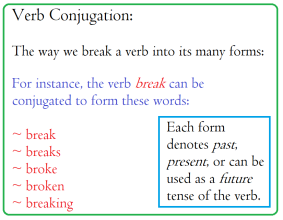
verb-conjugationToday we’re discussing how narrative time, or what we call tense, affects a reader’s perception of character development. In grammartense is a category that expresses time reference. Tenses are usually shown by how we use the forms of verbs, particularly in their conjugation patterns. The main tenses found in most languages include the pastpresent, and future.

The way that narrative tense affects a reader’s perception of characters is subtle, an undercurrent that goes unnoticed after the first few paragraphs. It shapes the reader’s view of events, but on a subliminal level.

Every story is different and requires us to use a unique narrative time.

Tense conveys information about time. It relates the time of an event (when) to another time (now or then). The tense you choose indicates the event’s location in time.

Consider the following sentences: “I eat,” “I am eating,” “I have eaten,” and “I have been eating.”

All are in the present tense, indicated by the present-tense verb of each sentence (eatam, and have).

Yet, they are different because each conveys unique information or points of view about how the action pertains to the present.

We often “think aloud” in writing the first draft. We insert many passive phrasings into the raw narrative, words that I think of as traffic signals. These words are a shorthand that helped us get the story down when we were writing the raw first draft, a guide that now shows us how we intend the narrative to go.

Subjunctives are insidious. The subjunctive (in the English language) is used to form sentences that do not describe known objective facts. In other words, subjunctives describe unknown intangible possibilities.

Maeve Maddox, in her article The Many Forms of the Verb To Be, says:

Of all Modern English verbs, to be has the most forms: am, are, is, was, were, be, being, been. In addition, the helping verb will is used to form a future tense with be (e.g. I will be with you in a minute.)

The forms are so different in appearance that they don’t seem to belong to the same verb. The fact is, they don’t. Oh, they do now, but they came from three different roots and merged in the Old English verbs beon and wesan.

William Shakespeare said it best in Hamlet: “To be or not to be… that is the question.”

Should he exist, or should he not exist—for the deeply depressed Dane, suicide or not suicide is the question. In his soliloquy, Hamlet contemplates death and suicide. He regrets the pain and unfairness of life but ultimately acknowledges that the alternative might be worse.

Subjunctives are small verbs of existence, but just like adverbs, they are telling words. These words fall into our narrative in the first draft because they are signals for the rewrite.
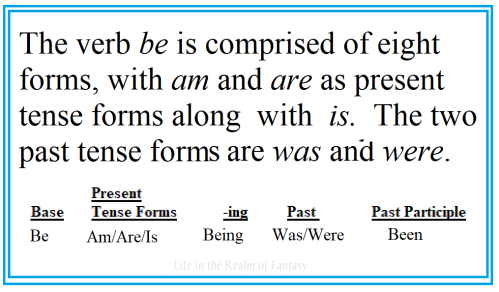
Be_Eight_Forms_LIRF05122019In the rewrite, we look for the code words that tell us the direction in which we want the narrative to go.

We look at each instance and rewrite the paragraph to show the event rather than tell about it.

If we write a sentence that says a character was hot and thirsty, we leave nothing to the reader’s imagination. The reader is on the outside, looking in.

When we take that experience of thirst and make it immediate, no matter what narrative tense we are writing in, it changes everything.

Which sentence feels stronger, more pressing?

  • They were hot and thirsty.
  • They trudged on with dry, cracked lips, yearning for a drop of water.
  • I walk toward the oasis with dry, cracked lips and parched tongue.

The way we show the perception of time for these thirsty characters is the same – the narrative is in the past tense in the first two cases and the present in the third.

Each sentence says the same thing, but we get a different story when we change the narrative tense, point of view, and verb choice.

“Were” is a verb, but it is subjunctive and is perceived as a weak word, where “trudged” conveys power. The narrative time in which the story is set (past or present tense), verb choice, and expansion of the imagery – these combine to change how we see the characters at that moment.

No matter what narrative tense you choose for your story, using strong verbs to describe their actions and emotions will reinforce the reader’s connection to the characters.

For my short story, View from the Bottom of a Lake, the narrative tense that worked best was a past tense, close third person.

Peggy Jayne smiled. Beneath the green-glittering gaze, her toothsome smile flayed her daughter, leaving Sarah breathless, panicking and longing for her lake.
Who are youSometimes the only way you can get into a character’s head is to write them in the first-person present tense, which happened to me with Thorn Girl. I struggled with her story for nearly six months until a member of my writing group suggested changing the narrative tense and point of view.

Once I did that, the story fell out of my head the way I had envisioned but couldn’t articulate, and I wrote it in one evening.

My first instinct is to shake my head and back away.

But I don’t. Long ago, my Lady told me that in every life, a time will come when you arrive at a precipice. You must either leap the chasm or fall to your death.

I stand at that place now.

In traditional first-person POV, the protagonist is the narrator. We must keep in mind that no one ever has complete knowledge of anything, so the first-person narrator cannot be omnipotent.
powerwordsWordCloudLIRF06192021Every story is unique, and some work best in the past tense, while others need to be in the present. When we begin writing a story using a narrative time that is unfamiliar to us, we may have trouble with drifting tense and wandering narrative points of view.

This happens most frequently if you habitually write using one mode, say the third-person past tense, but switch to the first-person present tense.

For this reason, when you begin revisions, it’s crucial to look for your verb forms to make sure your narrative time doesn’t inadvertently drift.


PREVIOUS POSTS IN THIS SERIES:

Storyboarding character development 

Character Development: Motivation drives the story 

Character Development: Emotions

Character Development: Showing Emotions

Character Development: Managing the Large Cast of Characters

Character Development: Point of View

This post: Character Development: Narrative Time


Credits and Attributions:

Maeve Maddox, The Many Forms of the Verb To Be, Copyright © 2007 – 2021 Daily Writing Tips. All Right Reserved

Quote from View from the Bottom of a Lake, © 2020 Connie J. Jasperson. Story first appeared in the anthology Escape, published by the Northwest Independent Writers Association and edited by Lee French.

Quote from Thorn Girl, © 2019 Connie J. Jasperson. Story first appeared in the anthology Swords, Sorcery, and Self-rescuing Damsels, edited by Lee French and Sara Craft.

14 Comments

Filed under writing

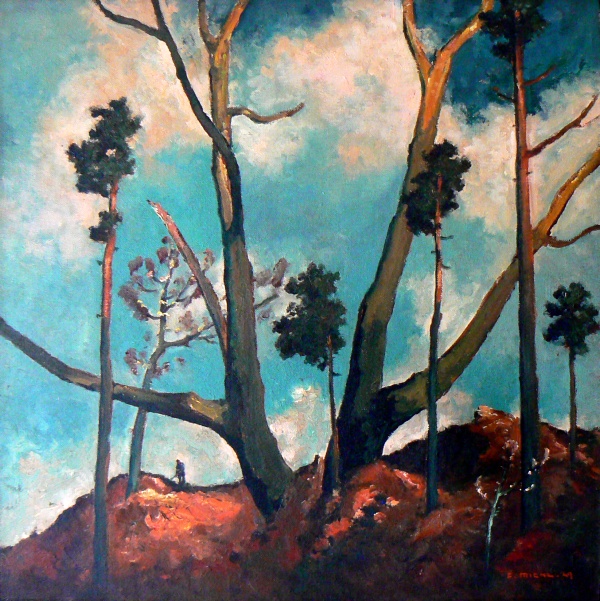
#FineArtFriday: Autumn by František Michl 1949

1949-Autumn

Artist: František Michl

Title:  Autumn, 1949.

Medium: oil on canavas (private collection)


What I love about this painting:

This is a powerful, moody piece. It conveys the chill and dampness of a day in late autumn, contrasted against the brilliant blue of the skies between rain squalls. Some trees cling to their leaves, defying the cold breeze while others are bare, mingled among the tall evergreens. The grass is brown, and a solitary hiker takes advantage of the sunshine, making their way over the ridge in solitary peace.

One feels that soon this hillside will be covered with snow.

About the Artist, via Wikipedia:

[1] František Michl (20 November 1901, – 4 June 1977), Czech academic painter, graphic artist, and original designer of the Škoda Works emblem, the “Winged Arrow”. He was imprisoned in Pankrac Prison, and the concentration camps Terezin and Flossenbürg after his arrest by Nazis for an anti-fascist demonstration at Domažlice. After the war he was arrested in the Czechoslovak Socialist Republic for listening to the anticommunist Radio Liberty.

Michl, being a free-minded and anticommunist spirit, was imprisoned in Plzeň Prison in 1961. The trial was based on the accusation that Michl listened to Radio Liberty, which was considered by the totalitarian regime as treason. His name was blacklisted and his family persecuted.

The diminished political pressure in 1967 opened new prospects for Michl’s art in Czechoslovakia and abroad. In March 1968 his paintings were exhibited in Montreal. The Rullos Gallery in New York bought 165 paintings in November 1968. Unfortunately, preparation of Michl’s exhibition in the London National Gallery was interrupted by the Soviet invasion in August 1968.

The time of normalization brought back the ban on Michl’s name. Michl was not allowed to publicly display his art (though several illegal exhibitions, organized by his friends, took place, camouflaged under fake titles, for example “Successes of building socialism”). After his first brain stroke in 1972, which left half of his body paralyzed, Michl kept painting. It was only after his sixth stroke that Michl remained permanently bedridden until his death on June 4, 1977.

In 1991, František Michl’s name was fully politically rehabilitated, and his contribution to the anti-fascist and anticommunist resistance was recognized. Michl’s work, however, is still awaiting public recognition. [1]


Credits and Attributions:

Wikimedia Commons contributors, “File:1949-stromy.jpg,” Wikimedia Commons, the free media repository, https://commons.wikimedia.org/w/index.php?title=File:1949-stromy.jpg&oldid=423191687 (accessed August 13, 2021).

[1] Wikipedia contributors, “František Michl,” Wikipedia, The Free Encyclopedia, https://en.wikipedia.org/w/index.php?title=Franti%C5%A1ek_Michl&oldid=1002262176 (accessed August 13, 2021).

2 Comments

Filed under #FineArtFriday

Character Development: Point of View. Who is Telling the Story?

The descriptive narrative of a story is comprised of three aspects:

Narrative point of view is the perspective, a personal or impersonal “lens” through which a story is communicated.

Narrative time is the grammatical placement of the story’s time frame in the past or the present, i.e., present tense (we go) or past tense (we went).

Narrative voice is the way in which a story is communicated. How it is written is the author’s fingerprint.

WritingCraftSeries_narrative modeToday, we’re focusing on the narrative point of view, discussing who can tell the story most effectively, a protagonist, a sidekick, or an unseen witness.
The words objective narrator and omniscient narrator (in modern literary terminology) are reserved for non-participant voices: the 3rd Person narrator. We can use this mode in several ways for our descriptive passages.

The 3rd person omniscient narrative mode refers to a narrating voice that is not one of the participants. This narrator views and understands the thoughts and actions of all the characters involved in the story. This is an external godlike view.

David remembered Selina’s instructions, but things had changed. With no other option, he turned and dropped the gun into the nearest dumpster.

The third-person point of view provides the greatest flexibility and thus is the most commonly used narrative mode in literature. In the third-person narrative mode, every character is referred to by the narrator as “he,” “she,” “it,” “they,” or other gender terms that best serve the story.

The writer may choose third-person omniscient, in which every character’s thoughts are open to the reader, or third-person limited, in which the reader enters only one character’s mind, either throughout the entire work or in a specific section.

Third-person limited differs from first-person because while we see the thoughts and opinions of a single character, the author’s voice, not the character’s voice, is what you hear in the descriptive passages.

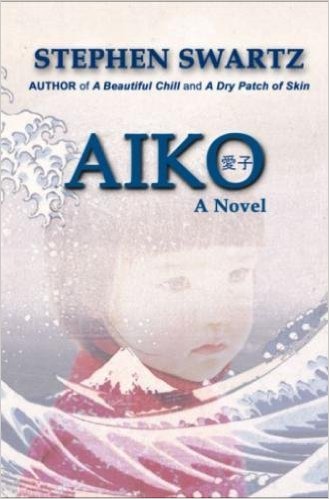
aikoSome third-person omniscient modes are also classifiable as “third-person subjective,” modes that switch between the thoughts, feelings, etc. of all the characters.

This mode is also referred to as close 3rd person. At its narrowest and most personal, the story reads as though the viewpoint character were narrating it. Because it is always told in the third person, this is an omniscient mode.

This mode is comparable to the first-person in that it allows an in-depth revelation of the protagonist’s personality but always uses third-person grammar.

Some writers will shift perspective from one viewpoint character to another. I don’t care for that but occasionally find myself falling into it. I then have to stop and make hard scene breaks because it’s easy to fall into head-hopping, which is a serious no-no.

Head-hopping occurs when an author switches point-of-view characters within a single scene. It happens most commonly when using a third-person omniscient narrative, because each character’s thoughts are open to the reader.

To wind up this overview of the third-person narrative mode, we have the Flâneur (idler, lounger, loiterer.) This is traditionally a form of third-person point of view, but I like to think of it almost as a fourth POV. Many of you have heard of it as third-person objective or third-person dramatic.

Clementines_Bed_and_BreakfastThe flâneur is the nameless external observer, the interested bystander who reports what they see and overhear about a particular person’s story. They garner their information from the sidewalk, window, garden, or any public place where they commonly observe the protagonists. They are an unreliable narrator, as their biases color their observations. In many of the most famous novels told by the flâneur, the reader comes to care about the unnamed narrator because their prejudices and commentary about the protagonists are endearing.
On Saturday mornings, at seven o’clock, Wilson always passed my gate as he walked to the corner bakery. He bought a box of maple bars, which he carefully held with both hands as he returned. I imagined he served them to his wife with coffee, his one thoughtful deed for the week.

Sometimes, the story works best when it’s told by the characters central to the story’s main action. Other times it is best told by the witnesses. So now we come to the two terms, reliable narrator and unreliable narrator, that describe participant narrator/observers.

The first-person point of view is common and is told from one protagonist’s personal point of view. It employs “I-me-my-mine” in the protagonist’s speech, allowing the reader or audience to see the primary character’s opinions, thoughts, and feelings.

Many authors employ the first-person point of view to convey intimacy when they want to tell a story through the protagonist’s eyes. With the first-person point of view, a story is revealed through the thoughts and actions of the protagonist within their own story.

The waves carried me, and I fell upon the shore, a drowning man, clutching at the stones with a desperation I had never before known.

Second-person point of view, in which the author uses “you” and “your,” is rarely found in a novel or short story. However, it can be an effective mode when done right.

You enter the room, unsure if you’re dreaming. Yet, here you are, in the tangible reality of devastation, stumbling over the wreckage of your life.

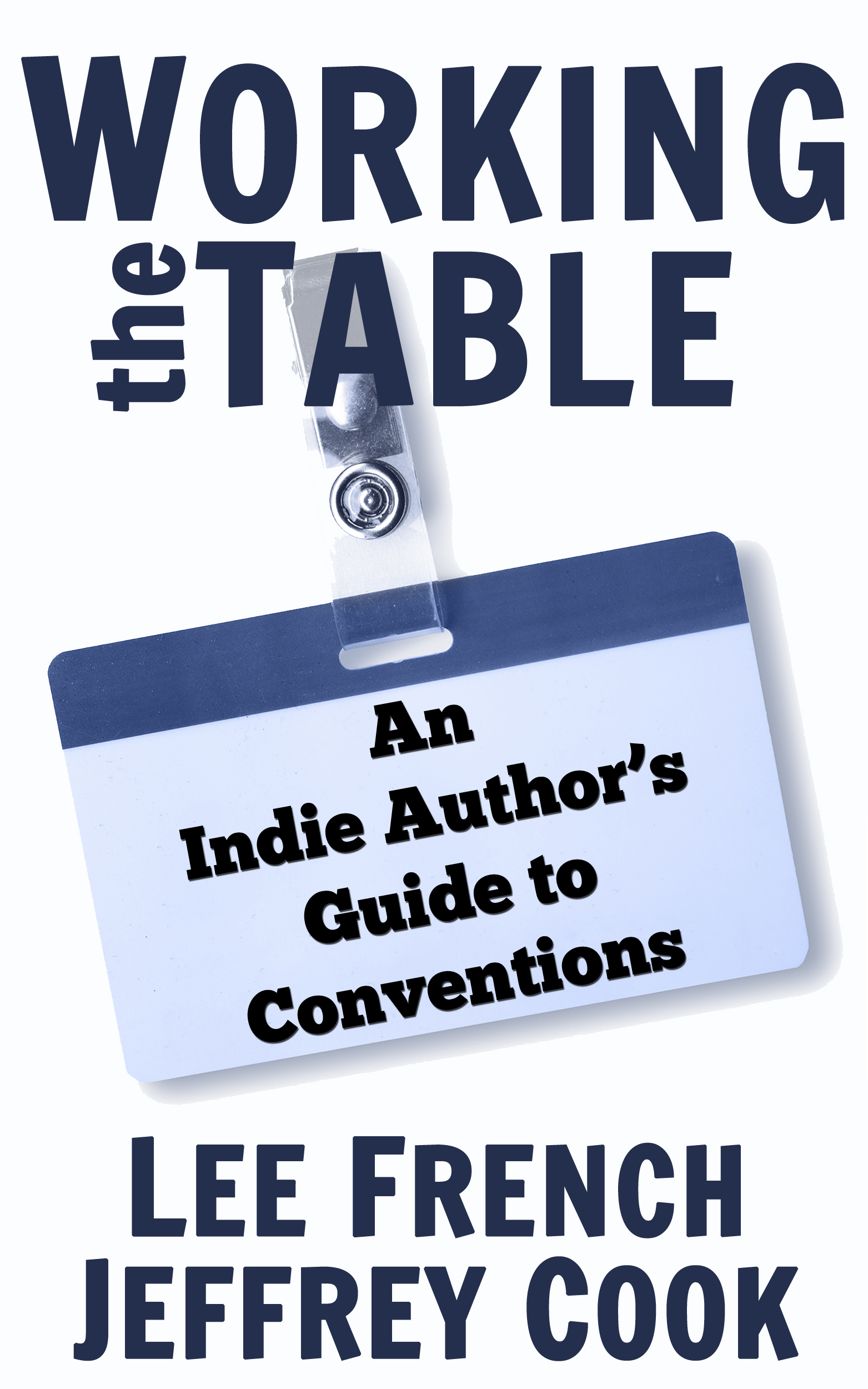
IndieGuideCoverSecond-person point of view is commonly used in guidebooks and self-help books. It’s also common for do-it-yourself manuals, interactive fiction, role-playing games, gamebooks such as the Choose Your Own Adventure series, musical lyrics, and advertisements.
Some stories seem to demand a first-person narrator, while others are too large and require an omniscient narrator.

Your homework for the week, should you choose to try it: Experiment with point-of-view. Write a scene from one of your works in progress using all the different narrative modes discussed. How does the way you see your story change with each change of point-of-view?


Previous Posts in this Series:

Storyboarding character development 

Character Development: Motivation drives the story 

Character Development: Emotions

Character Development: Showing Emotions

Character Development: Managing the Large Cast of Characters

This Post: Character Development: Point of View

7 Comments

Filed under writing

Character Development: Managing the Large Cast of Characters

This has been a productive summer for me. My sister, who kindly gives all my manuscripts a final reading and critique before I send them off to be line edited, is now reading the novel I accidentally began last November. I have inadvertently started a second book featuring these characters, which, only a week ago, I had no intention of writing.

WritingCraftSeries_character-arcI had no intention of writing book one either, but there it is. These characters won’t let go of me, so now I’m storyboarding a new plot.
But enough about that.

Today, we’re continuing our discussion of characters and characterization. Ordinarily, I keep the ensemble narrow, limiting point of view to only one, two, or three characters at most. I keep the supporting cast limited to four or five, as that’s all I personally can keep separate and unique.

Also, I keep my stylesheet/storyboard updated whenever a large change occurs, such as a character’s name being a duplicate. Any number of evolutionary occurrences can happen in the first draft, and for the sake of continuity, the stylesheet is how I keep track of them.

What if your plot is in a setting where the events affect a large group of characters, all of whom must interact with each other? How do you keep the threads straight and generate sympathy for each of them?

First, writers absolutely must acquire and read novels written by best-selling authors and dissect their work. That’s the only way to discover what works for you as a reader and what doesn’t. You also discover what the public is buying in that genre.

I write fantasy novels, but my published short stories are a mix of sci-fi, fantasy, and contemporary women’s fiction. I read in all genres.

What I really want as a reader is a damn good story, and I don’t care about the genre.

Give me a novel that rings my bells and rattles my world. After that first reading, I will sit down and dissect that book line by line, trying to see what hooked me. I may have bought the book for the blurb and the cover, but it was the characters who sucked me into their world.

So, let’s talk about books with large casts of characters. How does one keep them separate, prevent the reader from becoming confused, and ensure the plot rolls forward at a good pace?

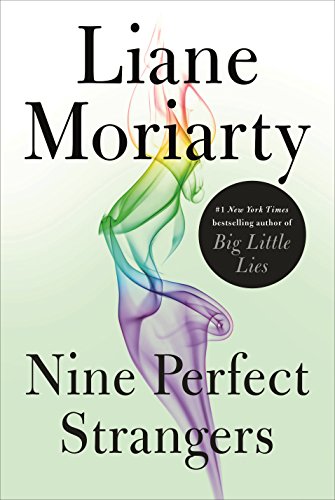
Nine_Perfect_Strangers_Liane_MoriartySeveral years ago, I read Nine Perfect Strangers by Australian author Liane Moriarty, and I talked about it on this blog. The book details the experiences of nine people booked into an exclusive Australian health spa and three staff members.

Moriarty’s characters are immediately engaging. They sucked me into their world in the opening pages. I couldn’t set the book down, as I wanted to know everyone’s dark secrets. I was hooked; I had to know what led each person to book themselves into that very unusual health spa.

By the time I reached the truly startling conclusion, I looked forward to the informational epilogues just because I didn’t want to let go of the characters.

Moriarty introduces us to the cast by opening with Yao and his experience as an EMT and introducing us to Masha as she suffers a heart attack.

Ten years later, the story picks up when nine people meet at an exceedingly remote health spa. The brochure advertising it promises to change their guests’ lives, guaranteeing a complete transformation in only ten days.

All the reviews are glowing, but none explain how such a change will be accomplished. Each guest arrives with secrets and personal reasons for wanting to be remade into something better than what they believe they are. Several chapters in, Masha is revealed as the benevolent antagonist, and Yao has become her disciple.

Structurally, the novel is a bit jerky, and the ending is a series of infodumps.

But it works.

Liane Moriarty’s characters are captivating because, at the outset, she establishes each as an individual in physical appearance, personality, history, and endows them with a mystery.

Each character is a “fish out of water.” They are thrust immediately into an unknown and possibly dangerous environment.

I had no trouble following who was who. Every character has an unmistakable surface persona, an outward personality that is different from the others, and their names are unique.

Soon after meeting them, we see glimpses of weaknesses and fears, the sorrows and guilts that drive them.

The nine guests have each signed contracts prior to arriving at the wilderness spa. When it becomes clear that the rules they have agreed to obey are iron-clad and strictly enforced, each guest becomes angry and afraid.

Yet, they are willing to continue because of what they hope to gain on a personal level.

All the characters’ stories combine and connect to make a larger, powerful story of personal transformation.

So, what did I learn from reading that novel?

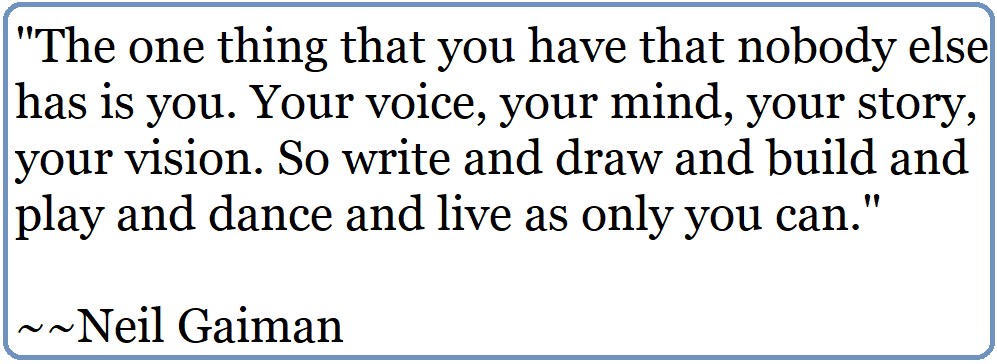
Neil_Gaiman_QuoteI had a reaffirmation of sorts; the reassurance that no writer can follow every writing group rule and no book that does would be worth reading.
Info-dump-epilogues often follow Moriarty’s endings, but only an experienced writer or another editor would notice (as I did) or care.

This little bunny-trail habit is a trait I’ve observed in all Moriarty’s books. The lingering epilogue is her fingerprint, a style of storytelling that is immediately recognizable as hers. In some ways, the imperfections of her structure add to the flavor.

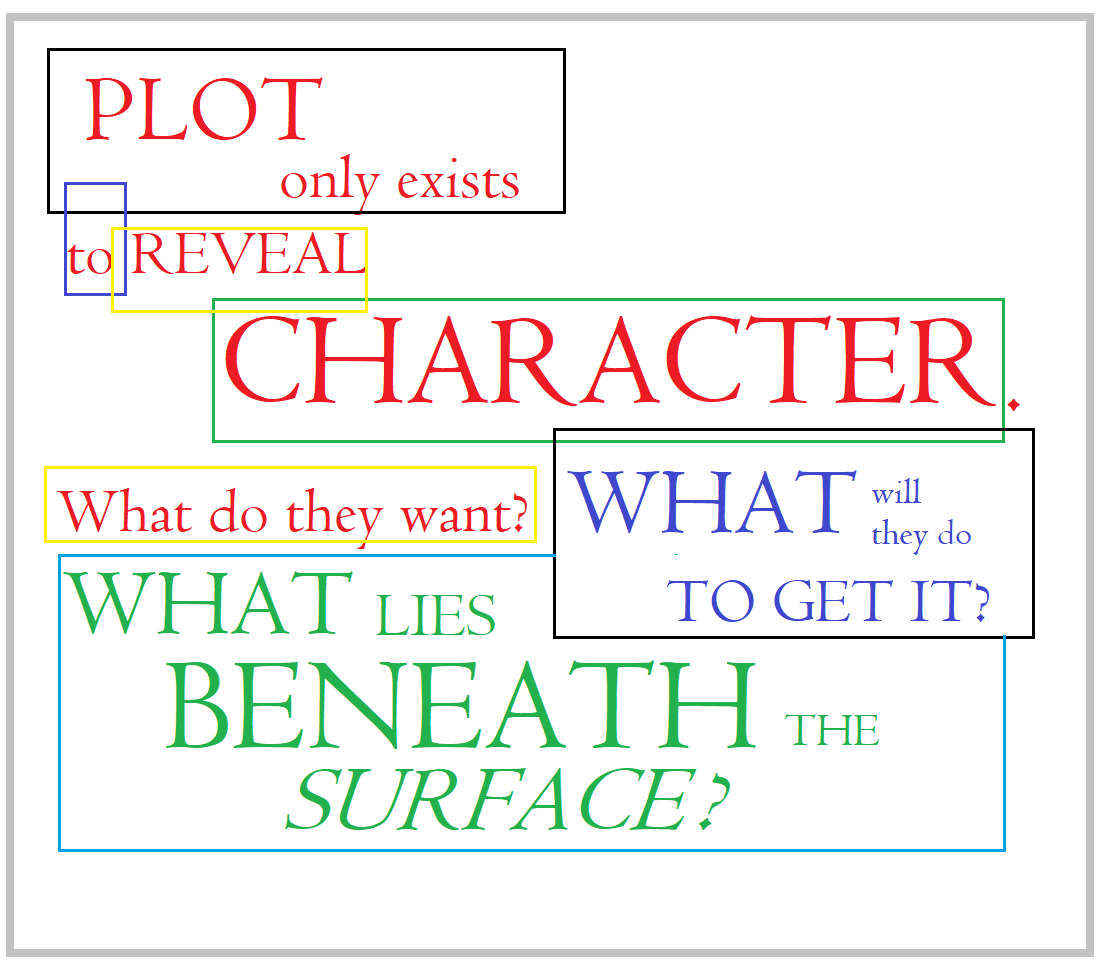
To keep our imaginary people unique, it’s crucial to reveal snippets of their character arcs with each scene. Then we must blend those secrets into the evolving plot. Moriarty is a master at this.

Her narratives are smooth and easily readable, and for me, the lingering backstory dump at the end of her novels isn’t a deal-breaker.

Plot-exists-to-reveal-characterEvery successful writer has habits that are technical wrongs, habits that don’t fly when offered to a critique group. Yet, these patterns persist in their work over their career because they are part of that author’s creative process.

I love discovering how and where a successful author commits a large technical no-no but doesn’t derail the story. It reinforces my belief that good writing and great characterization require developing a voice and style.

Most readers read for fun and are forgiving of the flaws that we who write and edit for other writers notice. Good prose, compelling storylines, and strong character arcs engage the reader and overcome most writing wrongs.


Previous posts in this series:

Storyboarding character development 

Character Development: Motivation drives the story 

Character Development: Emotions

Character Development: Showing Emotions

This post: Character Development: Managing the Large Cast of Characters

Next up: Character Development: Point of View

11 Comments

Filed under writing

#FineArtFriday: The Hay Harvest by Pieter Bruegel the Elder, 1565

Haymaking,_Pieter_Brueghel_the_Elder (1)Artist: Pieter Bruegel the Elder (1526/1530–1569)
Title: The Hay Harvest

Genre: genre art

Date: 1565

Medium: oil on panel

Dimensions: Height: 117 cm (46 in) Width: 161 cm (63.3 in)

According to the Web Gallery of Art, Haymaking, also known as The Hay Harvest, belongs to the Series of the Months. All the other panels in this series are dated 1565. July and August are the months when most summer crops are harvested. This painting and the August panel (The Corn Harvest) show the bringing-in of the harvest.

Workers scythe grain in the large field toward the center of the painting. In the foreground, other laborers harvest vegetables and pick berries. Everyone works to bring in the food, men, women, and children, as winter isn’t that far away, and the hay will sustain the draft animals in the long cold months ahead.

While each painting in the series shows the traditional occupation of that month, Bruegel’s real subject is the landscape itself, its ever-changing appearance.

I have always loved Bruegel the Elder’s work because he portrays the gathering of food as a fundamental human activity. He shows us that the quantity of food we have on our tables is determined by the knowledge and labor of others.

The variety of foods we have available to us is dictated by the form of the landscape. To carve a living from the earth a farmer must understand and care for the land that sustains them. They must know what areas of soil will be best for each crop and use that knowledge when laying out how the fields will be planted, as each crop has different nutrient requirements. Within one valley, many types of soils will exist, so what serves to grow hay may not work for more delicate vegetables.

In the lush bounty of this painting, Bruegel the Elder shows us the wisdom of farmers, knowledge that sustains us to this day. He illustrates the way all people who grow and gather our food are bound to the land.

In this regard, we who grow food in our back gardens understand and respect the labors of those small farmers who grow produce for our local markets.

About the series, Months of the Year, via Wikipedia:

(Bruegel’s) famous set of landscapes with genre figures depicting the seasons are the culmination of his landscape style; the five surviving paintings use the basic elements of the world landscape (only one lacks craggy mountains) but transform them into his own style. They are larger than most previous works, with a genre scene with several figures in the foreground, and the panoramic view seen past or through trees. Bruegel was also aware of the Danube School‘s landscape style through prints.

The series on the months of the year includes several of Bruegel’s best-known works. In 1565, a wealthy patron in Antwerp, Niclaes Jonghelinck, commissioned him to paint a series of paintings of each month of the year. There has been disagreement among art historians as to whether the series originally included six or twelve works. Today, only five of these paintings survive and some of the months are paired to form a general season. Traditional Flemish luxury books of hours (e.g., the Très Riches Heures du Duc de Berry; 1416) had calendar pages that included the Labours of the Months, depictions set in landscapes of the agricultural tasks, weather, and social life typical for that month.

Bruegel’s paintings were on a far larger scale than a typical calendar page painting, each one approximately three feet by five feet. For Bruegel, this was a large commission (the size of a commission was based on how large the painting was) and an important one. In 1565, the Calvinist riots began and it was only two years before the Eighty Years’ War broke out. Bruegel may have felt safer with a secular commission so as to not offend Calvinist or Catholic. Some of the most famous paintings from this series included The Hunters in the Snow (December–January) and The Harvesters (August). [1]

About the Artist, Via Wikipedia:

Pieter Bruegel (also Brueghel or Breughelthe Elder c. 1525–1530 – 9 September 1569) was the most significant artist of Dutch and Flemish Renaissance painting, a painter and printmaker, known for his landscapes and peasant scenes (so-called genre painting); he was a pioneer in making both types of subject the focus in large paintings.

He was a formative influence on Dutch Golden Age painting and later painting in general in his innovative choices of subject matter, as one of the first generation of artists to grow up when religious subjects had ceased to be the natural subject matter of painting. He also painted no portraits, the other mainstay of Netherlandish art. After his training and travels to Italy, he returned in 1555 to settle in Antwerp, where he worked mainly as a prolific designer of prints for the leading publisher of the day. Only towards the end of the decade did he switch to make painting his main medium, and all his famous paintings come from the following period of little more than a decade before his early death, when he was probably in his early forties, and at the height of his powers.

As well as looking forwards, his art reinvigorates medieval subjects such as marginal drolleries of ordinary life in illuminated manuscripts, and the calendar scenes of agricultural labours set in landscape backgrounds, and puts these on a much larger scale than before, and in the expensive medium of oil painting. He does the same with the fantastic and anarchic world developed in Renaissance prints and book illustrations.

He is sometimes referred to as “Peasant Bruegel”, to distinguish him from the many later painters in his family, including his son Pieter Brueghel the Younger (1564–1638). From 1559, he dropped the ‘h’ from his name and signed his paintings as Bruegel; his relatives continued to use “Brueghel” or “Breughel”. [2]


Credits and Attributions:

Wikimedia Commons contributors, “File:Haymaking, Pieter Brueghel the Elder.jpg,” Wikimedia Commons, the free media repository, https://commons.wikimedia.org/w/index.php?title=File:Haymaking,_Pieter_Brueghel_the_Elder.jpg&oldid=431869636 (accessed August 5, 2021).

[1] Wikipedia contributors, “Pieter Bruegel the Elder,” Wikipedia, The Free Encyclopedia, https://en.wikipedia.org/w/index.php?title=Pieter_Bruegel_the_Elder&oldid=1028859234 (accessed August 5, 2021).

[2] Wikipedia contributors, “Pieter Bruegel the Elder,” Wikipedia, The Free Encyclopedia, https://en.wikipedia.org/w/index.php?title=Pieter_Bruegel_the_Elder&oldid=1028859234 (accessed August 5, 2021).

Comments Off on #FineArtFriday: The Hay Harvest by Pieter Bruegel the Elder, 1565

Filed under #FineArtFriday

Character Development: Showing Emotions

Most authors who have been in writing groups for any length of time become adept at writing emotions on a surface level. We bandage our wounded egos and work at showing our characters’ inner demons. We spend hours writing and rewriting, forcing words into facial expressions.

depth-of-characterHappiness, anger, spite – all the emotions get a description. Eyebrows raise or draw together; foreheads crease and eyes twinkle; shoulders slump and hands tremble. Lips turn up, lips curve down, and eyes spark – and so on and so on.
Using facial expressions as dialogue tags can work when done sparingly and combined with a conversation.

But that solution can easily become a crutch that keeps us from delving deeper into our characters.

Also, it’s aggravating when it becomes repetitive.

And this brings me to the core of this post. In the early drafts of my most recent work in progress, I struggled to give my characters balanced personalities. During NaNoWriMo, when I was writing new words as quickly as I could, I leaned too heavily on the external, with a LOT of smiling and shrugging.

Those facial expressions were code words for the second draft, places where more work would be required to flesh out the scene.

Nothing is more ordinary than a story where a person’s facial expressions take center stage, hollow displays of emotion with no substance. Lips stretch into smiles, but the musculature of the face is only a small part of the signals that reveal the character’s interior emotions.

Then, there are the stories where the author leans too heavily on the internal. Creased foreheads are replaced with stomach-churning, gut-wrenching shock, or wide-eyed trembling of hands.

And don’t forget the recurring moments of weak-kneed nausea.

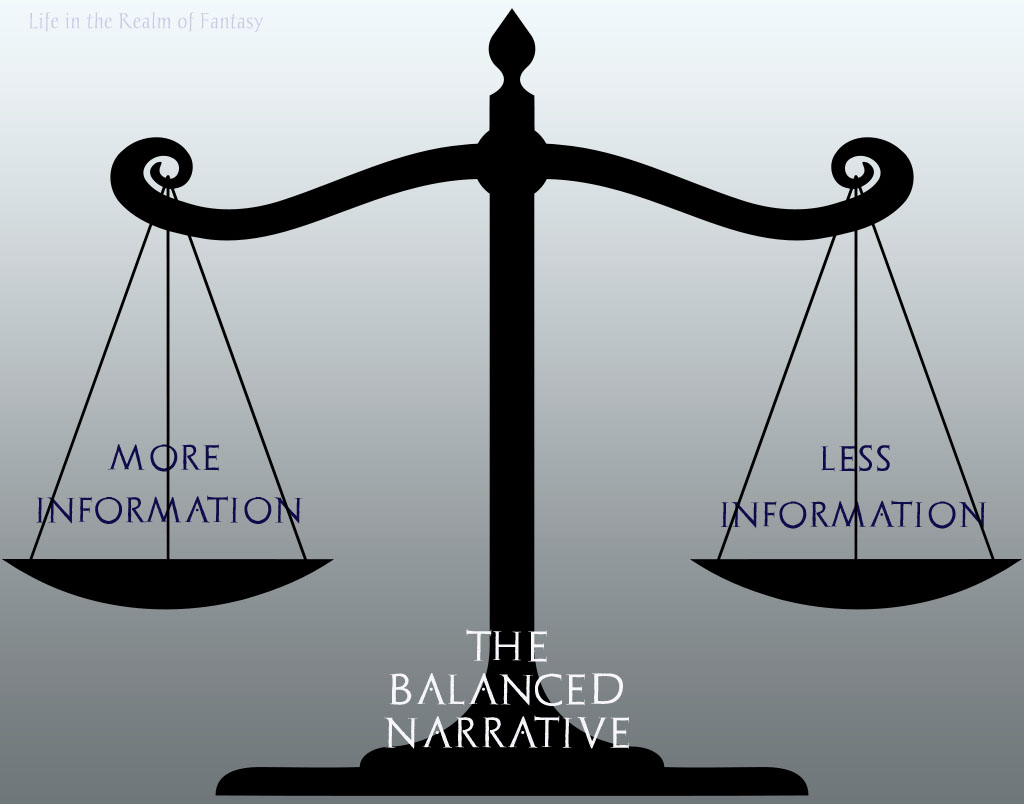
the balanced narrativeFor me, the most challenging part of writing the final draft of any novel is balancing the visual indicators of emotion with the more profound, internal clues.
It takes effort to write a narrative so that we aren’t telling the reader what to experience. We allow the reader to infer what to feel (remember we are still in the inferential layer of the Word-Pond). We must make the emotion feel as if it is the reader’s idea.

If you haven’t seen this before, here is my list of surface emotions:

  • Admiration
  • Affection
  • Anger
  • Anguish
  • Anticipation
  • Anxiety
  • Awe
  • Confidence
  • Contempt
  • Defeat
  • Defensiveness
  • Denial
  • Depression
  • Desire
  • Desperation
  • Determination
  • Disappointment
  • Disbelief
  • Disgust
  • Elation
  • Embarrassment
  • Ethical Quandary
  • Fear
  • Friendship
  • Grief
  • Happiness
  • Hate
  • Inadequacy
  • Indecision
  • Interest
  • Jealousy
  • Love
  • Lust
  • Powerlessness
  • Pride
  • Regret
  • Resistance
  • Revulsion
  • Sadness
  • Shock
  • Surprise
  • Temptation
  • Trust
  • Unease
  • Weakness

These are emotions you can show with either a facial expression or a physical reaction, combined with internal dialogue or conversations.

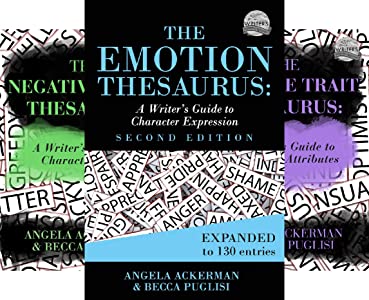
emotion-thesaurus-et-alI have mentioned The Emotion Thesaurus by Angela Ackerman and Becca Puglisi. Sometimes all we need is a hint of how to show what a character is feeling, someone to point the way when we’re suffering from a blank mind.

Just don’t go overboard when describing emotions, as it can turn into mawkishness, maudlin caricatures of emotions, and over-the-top melodrama.

Readers form mental visions of the scenes you describe, and you don’t want them to find your protagonist’s reactions repulsive.

A few subtle physical hints and some internal dialogue laced into the narrative show a rounded character, one who is not mentally unhinged.

Each of us experiences emotional highs and lows in our daily lives. We have deep-rooted, personal reasons for our emotions.  Our characters must have credible reasons, too. A flash of memory or a sensory prompt can inspire emotions that a reader can empathize with.

Why does a blind alley or a vacant lot make a character nervous?

Why does a grandmother hoard food?

Why does the sight of daisies make an old woman smile?

Writing genuine emotions requires practice and thought. Motivation is the foundation of emotion in a narrative. If a character’s eyes light up at the sight of daisies, WHY does she react with that emotion?

Emotions that are undermotivated have no base for existence, no foundation. They lack credibility and leave us, the reader, feeling as if the story is shallow, a lot of noise about nothing.

Timing and pacing are essential. Let’s say the sight of a river sparks a memory.

The emotion hits, and the character processes it, experiencing a physical reaction.

If something sparks a memory that advances the plot or explains something about the character, simply mention it in passing. That way, you avoid dumping backstory, and the reader can extrapolate the needed information.

ozford-american-writers-thesaurusOpen the thesaurus and find words that carry visual impact in your narrative, and you won’t have to resort to a great deal of description.
Weak word choices separate the reader from the experience of the narrative, dulling the emotional impact of what could be a highly charged scene.

Balancing the internal and external reactions our characters experience is necessary. Otherwise, all we have is a bunch of drama queens on a quest for sanity instead of heroes looking to rid the world of evil.

The books I love are written with bold, strong words and phrasing. The emotional lives of their characters are real and immediate to me. Those are the kind of characters that have depth and are memorable.

Homework assignment: A good exercise for writing deep emotions is to create scenes involving characters you currently have no use for.

  1. My Coffee Cup © cjjasp 2013The setting is a coffee shop.
  2. You must create two to four characters.
  3. One of them is hiding a gun.
  4. One of them is angry.
  5. Give them conversations and mental dialogue and practice using their body language instead of dialogue tags.

Mixing body language into paragraphs in place of dialogue tags to show who is speaking serves several purposes:

  • It describes what they are thinking and feeling in fewer words.
  • It keeps the “he said, they said” problem down to a dull roar.

Again, common sense is required, or the scene becomes nothing but words followed by grimaces, foot shuffling, and paper rattling.

Remember, just as in all the many other skills necessary to the craft of writing a balanced narrative, practice is required.

PREVIOUS POSTS IN THIS SERIES:

Storyboarding character development 

Character Development: Motivation drives the story 

Character Development: Emotions

14 Comments

Filed under writing

Character Development: Emotions

Severe emotional shock strikes us with a one-two-three punch. When you dissect them, you will see that all emotions, from the mildest to the strongest, affect us both physically and mentally in a 1-2-3 order:

  1. Initial gut reaction
  2. Flash of mental processing
  3. Body language, expression, etc.

WritingCraftSeries_character-arcWhen we write mild reactions, it’s unnecessary to offer too many emotional descriptions because mild is boring.

But if you want to emphasize the chemistry between two characters, good or bad, strong gut reactions on the part of your protagonist are a good way to do so.

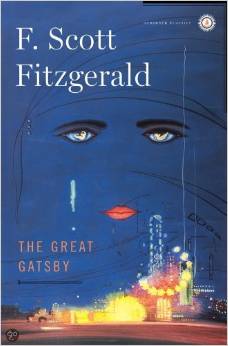
I often use examples of simple emotions from F. Scott Fitzgerald’s The Great Gatsby. The prose has power despite the fact it was written a century ago.

About The Great Gatsby, via Wikipedia:

The Great Gatsby is a 1925 novel by American writer F. Scott Fitzgerald. Set in the Jazz Age on Long Island, near New York City, the novel depicts first-person narrator Nick Carraway‘s interactions with mysterious millionaire Jay Gatsby and Gatsby’s obsession to reunite with his former lover, Daisy Buchanan.

The novel was inspired by a youthful romance Fitzgerald had with socialite Ginevra King and the riotous parties he attended on Long Island’s North Shore in 1922. Following a move to the French Riviera, Fitzgerald completed a rough draft of the novel in 1924. He submitted it to editor Maxwell Perkins, who persuaded Fitzgerald to revise the work over the following winter. After making revisions, Fitzgerald was satisfied with the text, but remained ambivalent about the book’s title and considered several alternatives. Painter Francis Cugat‘s cover art greatly impressed Fitzgerald, and he incorporated aspects of it into the novel. [1]

The following passages show us what is going on inside Nick Carraway, the protagonist. Every word is placed intentionally, put in that place for a reason, meant to evoke a strong reaction in the reader.

Here, Fitzgerald describes a feeling of hopefulness:

And so with the sunshine and the great bursts of leaves growing on the trees—just as things grow in fast movies—I had that familiar conviction that life was beginning over again with the summer.

Next, he describes shock:

It never occurred to me that one man could start to play with the faith of fifty million people—with the single-mindedness of a burglar blowing a safe.

Jealousy:

Her expression was curiously familiar—it was an expression I had often seen on women’s faces but on Myrtle Wilson’s face it seemed purposeless and inexplicable until I realized that her eyes, wide with jealous terror, were fixed not on Tom, but on Jordan Baker, whom she took to be his wife.

f scott fitzgerald The Great GatsbyThe discomfort of witnessing a marital squabble:
The prolonged and tumultuous argument that ended by herding us into that room eludes me, though I have a sharp physical memory that, in the course of it, my underwear kept climbing like a damp snake around my legs and intermittent beads of sweat raced cool across my back.

We not only see Nick’s emotions – we see his view of everyone else’s emotions, shown by his view of their physical reactions. We are never told what people feel but are shown through visual cues and conversations.

Choose a narrative POV and stick with it. Whether we are writing in the first-person or close third-person point of view, seeing the reactions of others is a key to conveying the sometimes-tumultuous dynamics of any group.

Writing emotions with depth is a balancing act. The internal indicator of a particular emotion is only half the story. We see those reactions in the characters’ body language.

This is where we write from real life. When someone is happy, what do you see on the outside? Bright eyes, laughter, and smiles.

When a friend looks happy, you assume you know what they feel on the inside. You presume they feel energized, confident.

So now you need to combine the surface of the emotion (physical) with the deeper aspect of the emotion (internal). Not only that, but we want to write it so that we aren’t telling the reader what to experience.

We allow the reader to decide what to feel. We must make the emotion seem as if it is the reader’s feeling.

If you have no idea how to begin showing the basic emotions of your characters, a good handbook that offers a jumping-off point is The Emotion Thesaurus by Angela Ackerman and Becca Puglisi.

Their entire series of Writers Helping Writers books is quite affordable and full of hints that you can use to give depth to your characters.

emotion-thesaurus-et-alJust don’t go overboard. They will offer nine or ten hints that are physical indications for a wide range of surface emotions. You can usually avoid dragging the reader through numerous small facial changes in a scene simply by giving their internal reactions a little thought.

I usually reread The Great Gatsby every summer, along with several other classic novels in various genres.

Fitzgerald’s prose is written in the literary style of the 1920s. It was a time in which we still liked words and the many ways they could be used and abused, hence the massive amount of Jazz Age slang that seems incomprehensible to us only a century later.

Students taking college-level classes in literature and English are often required to read The Great Gatsby and other classic novels from that era, such as James Joyce’s Ulysses.

While these novels are too complex for most people’s casual reading, there is a reason why these books are still required.

We twenty-first-century writers can learn something important from studying how Fitzgerald showed his characters’ thoughts and internal reactions. We can convey a wide range of emotions without resorting to cliché descriptions.

Next in this series, we’ll explore some of the trickier aspects of showing a character’s physical reaction.

Previous posts in this series:

Storyboarding character development 

Character Development: Motivation drives the story 


Credits and Attributions:

[1] Wikipedia contributors, “The Great Gatsby,” Wikipedia, The Free Encyclopedia, https://en.wikipedia.org/w/index.php?title=The_Great_Gatsby&oldid=1036037007 (accessed July 31, 2021).

Quotes from The Great Gatsby by F. Scott Fitzgerald, © 1925 Charles Scribner’s Sons. PD|75 Fair Use.

Original Cover of The Great Gatsby by F. Scott Fitzgerald, © 1925 Charles Scribner’s Sons. Cover artist: Francis Cugat. PD|75 Fair Use.

6 Comments

Filed under writing

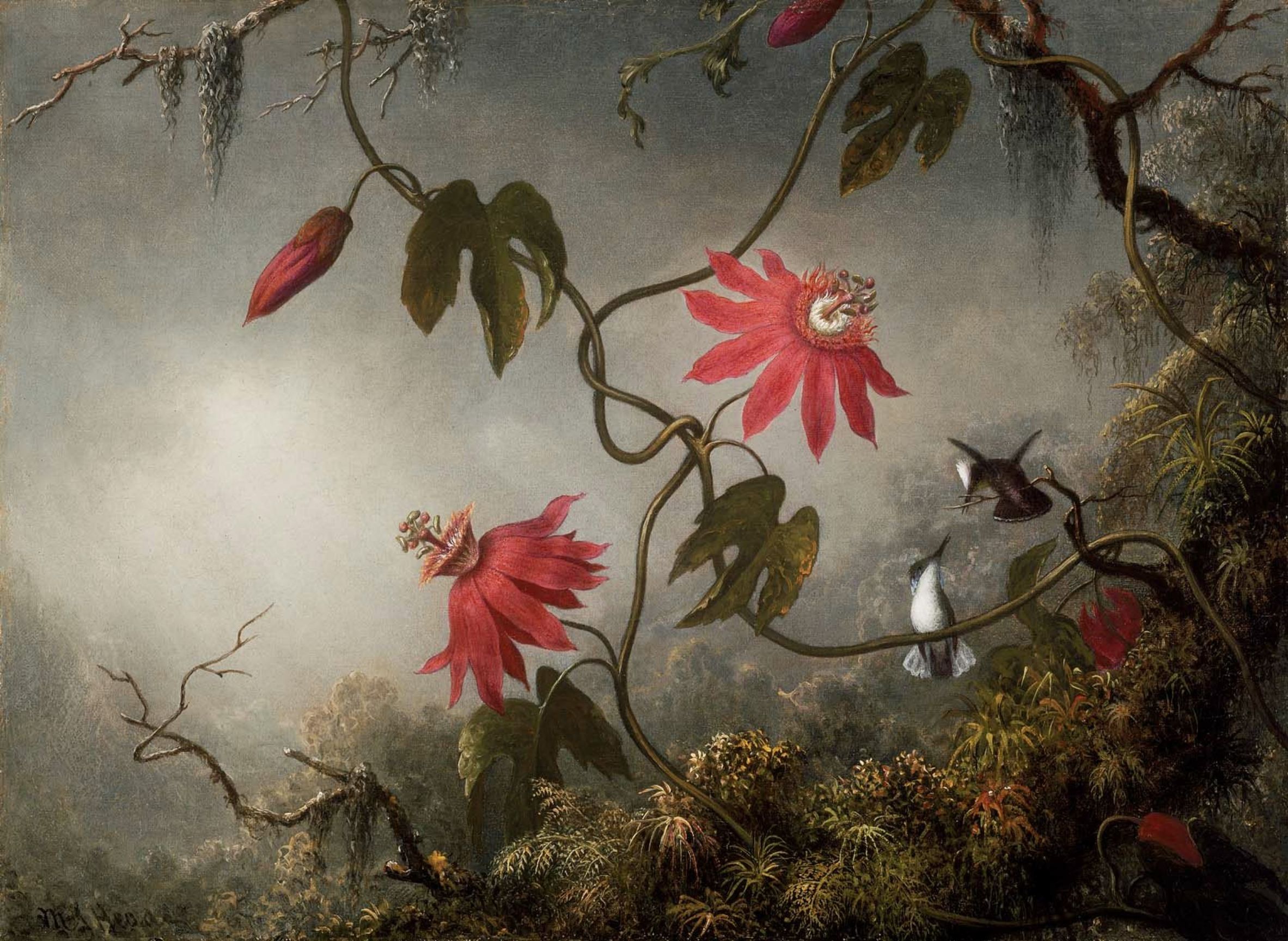
#FineArtFriday: Passion Flowers and Hummingbirds by Martin Johnson Heade

MJ_Heade_Passion_Flowers_and_HummingbirdsArtist: Martin Johnson Heade (1819–1904)

Title: Passion Flowers and Hummingbirds

Genre:  floral painting

Date: circa 1870–83

Medium: oil on canvas

Dimensions: Height: 39.3 cm (15.5 in); Width: 54.9 cm (21.6 in)


About this painting, via Wikimedia Commons:

[1] In Passion Flowers and Hummingbirds, Heade depicted two snowcap hummingbirds, small black-and-white birds found in Panama, and the most brilliantly colored species of passionflower, Passiflora racemosa, in a steamy, lush jungle setting.

The passionflower is so named because missionaries saw correspondences between the parts of the flower and the Passion (or sufferings) of Christ. For example, the ten petals represent the ten apostles present at the crucifixion, the corona filaments resemble the crown of thorns, and the three stigmas relate to the nails.

In this work, Heade successfully combined his scientific interests and his aesthetic sensitivity. He rendered the birds and the passionflowers accurately in a close-up view but also gracefully composed the winding stems across the surface of the picture and contrasted the cool greens and grays with the dazzling red of the flowers.

Although Heade was one of the first to reflect Darwin’s theories in his paintings of flowers in their natural habitats, other artists were subsequently affected by Darwin’s view of the vitality of plants and the interaction of plants with their environment. [1]

About the Artist, via Wikipedia:

[2] Martin Johnson Heade (August 11, 1819 – September 4, 1904) was an American painter known for his salt marsh landscapes, seascapes, and depictions of tropical birds (such as hummingbirds), as well as lotus blossoms and other still lifes. His painting style and subject matter, while derived from the romanticism of the time, are regarded by art historians as a significant departure from those of his peers.

Heade was born in Lumberville, Pennsylvania, the son of a storekeeper. He studied with Edward Hicks, and possibly with Thomas Hicks. His earliest works were produced during the 1840s and were chiefly portraits. He travelled to Europe several times as a young man, became an itinerant artist on American shores, and exhibited in Philadelphia in 1841 and New York in 1843. Friendships with artists of the Hudson River School led to an interest in landscape art. In 1863, he planned to publish a volume of Brazilian hummingbirds and tropical flowers, but the project was eventually abandoned.

He travelled to the tropics several times thereafter, and continued to paint birds and flowers. Heade married in 1883 and moved to St. Augustine, Florida. His chief works from this period were Floridian landscapes and flowers, particularly magnolias laid upon velvet cloth. He died in 1904. His best known works are depictions of light and shadow upon the salt marshes of New England.

Heade was not a widely known artist during his lifetime, but his work attracted the notice of scholars, art historians, and collectors during the 1940s. He quickly became recognized as a major American artist. Although often considered a Hudson River School artist, some critics and scholars take exception to this categorization. Heade’s works are now in major museums and collections. His paintings are occasionally discovered in unlikely places such as garage sales and flea markets. [2]


Credits and Attributions:

[1] Wikimedia Commons contributors, “File:MJ Heade Passion Flowers and Hummingbirds.jpg,” Wikimedia Commons, the free media repository, https://commons.wikimedia.org/w/index.php?title=File:MJ_Heade_Passion_Flowers_and_Hummingbirds.jpg&oldid=577409420 (accessed July 29, 2021).

[2] Wikipedia contributors, “Martin Johnson Heade,” Wikipedia, The Free Encyclopedia, https://en.wikipedia.org/w/index.php?title=Martin_Johnson_Heade&oldid=1013422150 (accessed July 29, 2021).

Comments Off on #FineArtFriday: Passion Flowers and Hummingbirds by Martin Johnson Heade

Filed under #FineArtFriday, writing