The habits of productive writers #amwriting

I am friends with many productive writers, people who publish two or more good, high-quality books a year. One thing they have in common is discipline. They have a grip on time management. They understand that if you set aside a block time that is just for writing, it becomes less of a chore. It becomes part of your daily routine, habitual. Some writers have office hours, others must carve time outside work and family obligations.

Productivity is relative. I feel productive if I publish one book a year and sell a short story or two.

I write every day, and I also work on other aspects of book production every day. But I am not prolific. I always have several manuscripts in various stages of completion, which is why I can get one out the door every year, even though it takes me four years to write them.

Barbara Cartland dictated over 700 novels, and her secretary typed them up. In 1976  she published 23 novels. I think that’s crazy dedication to the craft, and I don’t have that many ideas, lol! Productivity depends on what you decide you want to achieve for your writing career.

Author Simon Wood writes to an outline. He publishes regularly, but not as often as some authors do. He gets at least one book published every year, sometimes two. Simon keeps to his production schedule, which is why he publishes regularly. He was kind enough to talk about how he plots his novels for my post in September of last year, Author Simon Wood on Plotting. In that post, he offers some awesome advice on how he uses pre-planning to keep the momentum going.

For Indies, writing involves more than just laying words on paper. It requires a work ethic and the commitment to doing the dirty work as well as the fun stuff.

  • We must find time to write,
  • Find editors to work with,
  • Carve out time to make revisions,
  • We format our books,
  • Arrange for cover art,
  • Arrange for tablespace at conventions and book signings, and market promotions and appearances.
  • Purchase swag (I use bookmarks as my business card) to give away, banners to dress up the booth, and make sure we have a reasonable stock of hardcopies of our books to sell at personal appearances. (Yes – we do have to pay for this.)

Each of these tasks requires discipline, sitting down and doing it.

It’s a time consuming business, and while you are doing these things, you aren’t writing. SO that must be fit into the process too.

Goals are good.

Many authors set deadlines, arbitrary dates for each aspect of the book to be finished. Be warned—to achieve your deadlines, you may have to establish firm boundaries to limit incursions into your writing time by friends and family members.

Consider establishing a dedicated working space—someplace where you aren’t bothered by the TV or ambient neighborhood sounds. Also, it should be strictly off limits to others, if possible. This will protect your files.

  • Finish the work, whether it’s a novel or short story.
  • You aren’t productive if you never finish the work.

One final thing I’ve noticed—productive authors are also dedicated readers. As a young adult I read every sci-fi or fantasy novel that came out in paperback, budgeting for books the way others of my acquaintance budgeted for beer. I’ve never stopped reading and researching great literature.

Reading for entertainment is my happy place. In the old days I jonesed for new books by the great ones, Anne McCaffrey, Jack Chalker, Marion Zimmer Bradley, Tad Williams, Robert Jordan, and Roger Zelazny, reading and rereading them until they were shreds held together with duct tape. Now I have the Kindle eReader and I still read two or three books a week.

Self-discipline and love of reading are common traits that the most productive authors of my acquaintance have in common. Realistic expectations and the ability to set goals and achieve them are also common traits.

We will be talking with two highly productive authors about how they work over the next few posts.

7 Comments

Filed under writing

Thoughts on the Industry #amwriting

Indie authors sometimes feel pressured by Amazon and the publishing industry as a whole to write fast and publish often. Certain genres are more prone to this sort of pressure than others. The push to produce a new book every sixty days (or less) has spawned a scandal and prompted a debate about ethics.

First of all, why are authors writing in some genres pressured to produce new work so quickly?

Let’s look at Romance, as it is the most visibly dysfunctional of the popular genres right now. There is a root cause to this, something all Romance authors face, whether traditionally published or Indie. Financial rewards favor Romance authors who publish frequently, which drives the emotions behind this free-for-all.

Emotions are hard to conquer when it comes to your career.

You might ask why readers of Romance feel they have the right to demand new books from an author every month? Do they not understand that the kind of work they will get will be stamped from an established mold with the names changed and decorated differently?

The fact is, a large majority of readers in all genres don’t know what it takes to get an original idea from concept to print, and don’t care. Readers of Romance like the comfort of the predictable plot and the sureness of the happy ending. The books they crave are devoured and then forgotten as the reader moves on to the next Romance fix. These readers demand a new book regularly from their favorite authors, and if not immediately satisfied, they move on to a new author and forget the old.

Amazon has placed an added burden on all authors, not just indies. Regularly releasing new work helps an author when it comes to Amazon algorithms. See Mindy Klasky’s post, Rapid-Release Publishing: How to Do It, and Whether It’s Right for You.

To meet this challenge, Romance authors must develop a work ethic that would daunt even the most driven CEO. They must have several formulas, a one-size-fits-all basic plot outline, and a set of stock characters they can repurpose to fit any scenario. The author limits their word count to 50,000 or so words, has a set length of time to write the book, a short window in which to edit, and then they publish. Some authors write in the morning, send the morning’s work to an editor and make revisions on the previous day’s work in the afternoon. These authors inject as much creativity into their work as they can and put in long office hours to meet this challenge.

Some authors hire ghost writers to help with the workload.

A few desperate authors resort to plagiarism.

That someone could be so desperate to keep their name up in the rankings is a scandal that has had repercussions throughout the industry, as it affects traditionally published authors as well as Indie Romance authors. See this Inside Hook article, This Plagiarism Scandal Has Rocked the World of Romance Novels by Reed Richardson 24 Feb 2019.

Big name, traditionally published authors like George R.R. Martin, the late Robert Jordan, and Patrick Rothfuss are regularly treated to a landslide of verbal abuse from anxious, misguided readers because they choose to write at their own pace.

Some fans don’t understand that if you love the quality of an author’s first works, you must allow them the time to write the succeeding novels the way they want to, no matter how long it takes. After all, it’s their creation.

I’m not what you would call prolific. Fortunately, I don’t have a large fanbase, nor do I have to sell books in order to eat, so I don’t feel this sort of pressure. It takes me four years to get a book from concept to print. For me, short stories and novellas fill the gap, but even those can only emerge once or twice a year.

Fortunately for me, readers of literary fantasy and epic fantasy are more patient, willing to wait a year or two if that is what it takes. These readers understand that authors are not machines.

I have friends in the industry who are prolific compared to me, and their work is both original and well-written. They aren’t spewing a book a month, but they have established a publishing schedule and are able to stick to it.

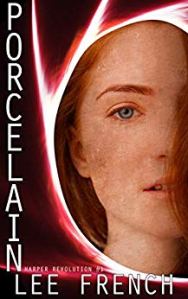
My next series will focus on how these successful Indies work. We will explore ways to write successfully with a co-author in an interview with USA Today bestselling author, Lee French. I will also be looking at the careers of several other well-known authors, and show how method and discipline are the backbones of their success.

7 Comments

Filed under writing

#FineArtFriday: A View of a Lake in the Mountains by George Caleb Bingham


  • Title: A View of a Lake in the Mountains
  • Artist: George Caleb Bingham
  • Medium: Oil on canvas
  • Date: between circa 1856 and circa 1859
  • Dimensions: Height: 53.9 cm (21.2 ″); Width: 76.5 cm (30.1 ″)
  • Current Location: Los Angeles County Museum of Art

What I love about this picture:

This scene depicts an hour of utter serenity in the turbulent life of the artist. The late afternoon sunlight falls gently on the rocky path above the calm waters. Shadows fall in all the right places but don’t darken the moment.  There is a dreamlike quality to the day, as if the artist painted his deepest wish. This is a pleasant, restful painting.

About the Artist, via Wikipedia:

George Caleb Bingham (March 20, 1811 – July 7, 1879) was an American artist, soldier and politician known in his lifetime as “the Missouri Artist”. Initially a Whig, he was elected as a delegate to the Missouri legislature before the American Civil War where he fought the extension of slavery westward. During that war, although born in Virginia, Bingham was dedicated to the Union cause and became captain of a volunteer company which helped keep the state from joining the Confederacy, and then served four years as Missouri’s Treasurer. During his final years, Bingham held several offices in Kansas City, as well as became Missouri’s as Adjutant General. His paintings of American frontier life along the Missouri River exemplify the Luminist style.

Bingham ran for election as a Whig to the Missouri House of Representatives the following year. He appeared to have won in 1846 by 3 votes but lost in a recount. In a reprise of the election in 1848, Bingham won the seat by a decisive margin, becoming one of the few artists to serve in elected political office. He actively opposed the pro-slavery “Jackson resolutions” in 1849, although their proponent was also a resident of Saline County. He would also represent Missouri’s eighth district at the Whig National Convention in June 1852. Bingham’s political interests would be reflected in his vivid paintings of frontier political life.

About the Luminist style, via Wikipedia:

Luminism is an American landscape painting style of the 1850s to 1870s, characterized by effects of light in landscape, through the use of aerial perspective and the concealment of visible brushstrokes. Luminist landscapes emphasize tranquility, and often depict calm, reflective water and a soft, hazy sky.

As defined by art historian Barbara Novak, luminist artworks tend to stress the horizontal, and demonstrate the artist’s close control of structure, tone, and light. The light is generally cool, hard, and non-diffuse; “soft, atmospheric, painterly light is not luminist light”. Brushstrokes are concealed in such a way that the painter’s personality is minimized. Luminist paintings tend not to be large so as to maintain a sense of timeless intimacy. The picture surface or plane is emphasized in a manner sometimes seen in primitivism. These qualities are present in different amounts depending on the artist, and within a work.

Luminism has also been considered to represent a contemplative perception of nature.

Novak states that luminism, of all American art, is most closely associated with transcendentalism. The definitional difficulties have contributed to over-use of the term.[5]

The artists who painted in this style did not refer to their own work as “luminism”, nor did they articulate any common aesthetic philosophy outside of the guiding principles of the Hudson River School.


Credits and Attributions:

A View of a Lake in the Mountains by George Caleb Bingham, via Wikimedia Commons.  Los Angeles County Museum of Art [Public domain].

Wikipedia contributors, “George Caleb Bingham,” Wikipedia, The Free Encyclopedia, https://en.wikipedia.org/w/index.php?title=George_Caleb_Bingham&oldid=900386053 (accessed June 6, 2019).

Wikipedia contributors, “Luminism (American art style),” Wikipedia, The Free Encyclopedia, https://en.wikipedia.org/w/index.php?title=Luminism_(American_art_style)&oldid=886912140 (accessed June 6, 2019).


2 Comments

Filed under #FineArtFriday

World building – immediate community #amwriting

We have discussed the larger aspects of world-building – power structures such as religion and politics. We’ve talked about food, and about how word choices convey imagery which contributes to the reader’s visualization of the written world. Now we’re going to examine the immediate world, the community your character lives in.

If I were writing a story starring me as the main character, I would open it with a couple of 50-something empty nesters moving to a small quarry town, twenty miles south of the state capitol.

But what sort of town is this?

Tenino is a bedroom community; the commute isn’t too bad and homes here are affordable, whereas homes in Olympia tend to be quite expensive. This town has a long history of boom and bust; quarrymen, loggers, and farmers settled here.

Timber is no longer big here. Nowadays our town is famous for Wolf Haven International, sandstone art, crafted whiskey, and wine. We still have a few large cattle ranches out on the Violet Prairie, but 5-to-7-acre executive “horse properties,” llama farms, alpaca ranches, goat yoga, and soap-making classes have found fertile ground here. In the early part of the 20th century bootlegging was an industry here (my maternal grandfather) so having the distilleries is the legal continuation of an old tradition.

It’s an isolated town, filled with quirky, wonderful people, and situated in a valley with heavily forested hills on the outskirts. If a fictional story were set in this town, it would feature the same political schisms that divide the rest of our country. There are other tensions. Some families have been here for generations, and  a few don’t appreciate the influx of low-paid state workers buying cookie-cutter tract homes here.

Other than the few local businesses, most people commute to work in Olympia or one of the other surrounding communities.

My street is a stretch of rough blacktop with no sidewalks. It runs east and west, with a fabulous view of Mount Rainier rising at the east end. It is lined with homes on both sides, but it’s divided. A nicely landscaped mobile home park is on the north side of the street, across from my front door. On the south side of the street is the long row of forty stick-built homes, built in 2005 just before the housing bubble crashed. On my side of the street, the row of homes are nearly identical, as there are only two types of floor plans, one for three bedrooms (mine) or the four-bedroom version.

This makes for a seriously boring-looking neighborhood, so for a few years we had the only house with an orange door.

The day we moved into our brand-new home in 2005, two inches of rain fell, making moving a misery. Our new house rose out of a sea of mud and rocks. With a lot of effort, we made a pleasant yard. When the housing bubble burst, many of the people on my side of the street lost their jobs, and their homes went into foreclosure.

For several years, wherever there were two or more empty houses, it looked somewhat like a ghost town. Also, there was a long period when our house was valued at far less than we paid for it, which meant that had we wanted to, we couldn’t sell it.

My town has one grocery store, which carries the basics, but their produce is awful, and you really have to check the pull dates on things like eggs, hummus, and cottage cheese. It’s more affordable to shop in Olympia.

We have a historic district, where the buildings are all built from sandstone quarried at the old quarries. Many of the old buildings are home to antique stores. The masonic lodge is made of Tenino sandstone.

The city park is a pleasant place to go on a hot Saturday afternoon, with a large public swimming pool in one of the flooded quarries.

It’s a nice place, a quiet town with several large Baptist churches, a Catholic church, and a large number of small off-shoot fundamentalist churches. Alas, those of us of the Lutheran persuasion must go to Olympia to find God.

In the morning, birdsong fills the air. Robins, wrens, finches, hummingbirds, crows, Stellar’s jays, mourning doves – the neighborhood is alive with birds.

Odors are important. The meat department at the grocery store smokes their own ribs and other cuts, and the wind carries the scent all over the neighborhood. When they mow the fields at the edge of our town the smell of cut hay fills the air.

During the day when I go outside, I can hear the children playing at the school. In the evening, the neighborhood is filled with the sounds of kids playing in each other’s yards.

Other familiar sounds are the traffic on Highway 507, and the horns sounding from the trains passing at the west end of town. Annoyingly, helicopters from the nearby military base sometimes buzz our town—flying low over our roofs, shaking the houses, rattling dishes in the cupboards.

It’s the perfect setting for a paranormal fantasy or a murder mystery.

Your characters subtly identify with the community they live in. Small town or large city, village or hut in the forest – where they are from shapes how they think, how they see the world. This is true of fantasy and sci-fi stories as well as murder mysteries and thrillers.

Visualize your own community and write a word picture of it. Then visualize the community your characters live in and write a word picture of this imaginary place.

Ambient sounds, odors, places the characters regularly frequent—these form the general environment, the setting of your story. This is the immediate world, the world of community.


Credits and Attributions

Photos and images in this post are from the authors personal collection © Connie Jasperson 2019

5 Comments

Filed under writing

World Building – creating political structures #amwriting

Every society, fantasy, sci-fi, or real-world, must have an overarching political structure—a government of some sort. Humans are tribal – like all primates we are comfortable when we have a hierarchy of decision-makers to guide the tribe.

A simple society might consist of an elder and several trusted advisors.

A more complex society might have a monarch leading a society composed of multiple layers:

Monarch/Royalty

→Nobility

→→Lesser Nobility

→→→Upper Middle Class

→→→→Middle Class

→→→→→Lower Middle Class

→→→→→→Lower Class

→→→→→→→Poorest Class

Every human society, large or small, is divided into layers and classes, whether we want to admit it or not. Change the word “Monarch” to “Mayor,” Governor,” “President,” “Pope,” or “Prime Minister,” and the society they lead falls into the same layers.

This is because someone is always more important, richer, has more power, makes the rules.

The politics of a society are an invisible construct that affects every aspect of a story, even if it isn’t directly addressed. Our characters have a place within that structure. When you know what that place is, you write their story accordingly. If you know your characters’ social caste, you know if they are rich or poor; hungry or well-fed. This will shape them throughout the story:

  • Hunger drives conflict
  • Well-fed could mean a complacent society

Every society has laws, inviolable rules. Breaking these laws has consequences.

Some small tribal societies have unwritten codes of ethics, but they are as firmly enforced as any written laws. When a character goes against the commonly accepted rules, they must face the consequences.

That flouting of civil laws is an opportunity for conflict.

Sometimes I run short of words on a new project but I can’t set it aside. At that point I go deep into the backstory and examine the hidden underpinnings of their society. Little, if any, of this backstory will enter into the finished product. But I have found that when my characters are sure of what their station in society is, I can write their journey with confidence and authority.

I need to know who they are, how they see themselves and their future, and how they fit organically into their world.

One aspect that is a hidden support structure of every fantasy society is the government.  Even if it doesn’t come into the story, take a few moments to examine the political power structure of your world. It’s a good idea to write down a page or so of information detailing the political and monetary structure of the world your characters inhabit.

As I create the political power-structure, I find that the opportunities for creating tension within the story also grow. I keep a list of those ideas so that when I run short on creativity, I have a bit in the bank, so to speak.

However, in order to convey that information logically and without contradictions, you must have an idea of how things work. Does the government/legal system affect your characters? If not, this exercise is a waste of time, sorry.

  • Who has the power and privilege in that society, and who is the underclass?
  • How is your society divided? Who has the wealth?
  • Who has the power? Men, women—or is it a society based on mutual respect? Is one race more entitled than another?
  • Monarchy, Elected officials, Warlords, Shamans, or what?
  • How do they get that power? Hereditary, elected, military coup?
  • What laws affect your characters or hinder them?
  • How are the governing people perceived? Foolish or wise? Honest or Corrupt?
  • What place does religion have in this society? We examined religion last week in the post Creating Power Structures and Religions.
  • What passes for morality? You only need to worry about the moral dilemmas that come into your story.
  • If a character goes against society’s unwritten or moral laws, what are the consequences?

One critical aspect of society that governments have control of is money. If you have a fantasy society, design a simple monetary system. Keep it simple, so you don’t contradict yourself over the course of the story.

I use the same system in all three of my fantasy worlds. A Gold is comprised of 10 Silvers. A Silver is comprised of 10 Coppers.

In a sci-fi world, you can get away with using a blanket term like credits. These are easy concepts for a reader to imagine without your having to go into detail. Examples might be:

  • Innkeeper: “A mug of ale is three coppers. No coppers, no ale.”
  • Spaceport pawnbroker: “It’s unregistered. A weapon like this is worth five hundred credits, don’t you agree?”

If you’re writing in a speculative fiction world and you absolutely must use created names for money and positions, make those words simple to read and pronounce, and once you have established them, don’t deviate from them.

Good world building takes the familiar and shapes it into unfamiliar ways. It’s only my opinion, but I suggest you keep to familiar terms for leaders. King/queen, president, mayor, admiral, captain—these are terms that convey an image with no effort on your part. Anything the reader doesn’t have to research is good. If you are too enthusiastic in creating an entire language in order to convey a sense of foreignness, you have gone to a great deal of trouble only to lose the majority of readers.

When you are building a world that only exists on paper, you must be sparing with the space you devote to conveying the social, religious, and political climate of your story.  This is atmosphere. This is knowledge the characters have, but the reader does not.

There is no need to have an introductory chapter describing the laws and moral codes of the religious order of St Anthony, or the political climate of East Berlin in 1962. The way you convey this is to show how these larger societal influences affect your character and his/her ability to resolve their situation.

You show this in small ways, with casual mentions in conversation ONLY when it becomes pertinent, and not through info dumps.

Familiar words convey familiar images. Use them wisely in showing an entire fantasy world. Consider the politics in a medieval setting:

Setting:

  1. the village of Imaginary Junction, in the Barony of Blackthorn.

General atmosphere:

  1. the weather is unseasonably cold

Introduce the protagonist and show him in his situation:

  1. In an alley, a bard, Sebastian, is  hiding.

Introduce the antagonist(s):

  1. Soldiers of Baron Blackthorn, whom Sebastian has inadvisably humiliated in a song are searching for him.

Introduce the way politics and power affect the protagonist:

  1. the soldiers surround and capture Sebastian
  2. he is hauled before the angry baron and
  3. thrown into prisonsentenced to hang at dawn.

The bolded words above offer a reader powerful images of both the physical and political world Sebastian lives in. These words are familiar to every reader of fantasy. They convey emotions and a feudal atmosphere without you having to resort to an info dump of the history of Imaginary Junction.

Show the coldness of the alley, show the irate nobleman’s anger, show the wretchedness of the protagonist in prison, show the arrogance of the soldiers. Use familiar terms to convey entire packets of images wherever possible, and they will be unobtrusive, allowing the reader to live the story, to fear the coming dawn as much as Sebastian does.


Image Credits and Attributions:

Henry VIII by Hans Holbein 1540 / Wikimedia Commons contributors, “File:Enrique VIII de Inglaterra, por Hans Holbein el Joven.jpg,” Wikimedia Commons, the free media repository, https://commons.wikimedia.org/w/index.php?title=File:Enrique_VIII_de_Inglaterra,_por_Hans_Holbein_el_Joven.jpg&oldid=344005488 (accessed June 2, 2019

Wikimedia Commons contributors, “File:Augustus Edwin Mulready Fatigued Minstrels 1883.jpg,” Wikimedia Commons, the free media repository, https://commons.wikimedia.org/w/index.php?title=File:Augustus_Edwin_Mulready_Fatigued_Minstrels_1883.jpg&oldid=335802594 (accessed June 2, 2019).

Wikimedia Commons contributors, “File:Ernst Meyer – A Roman Alley – KMS2097 – Statens Museum for Kunst.jpg,” Wikimedia Commons, the free media repository, https://commons.wikimedia.org/w/index.php?title=File:Ernst_Meyer_-_A_Roman_Alley_-_KMS2097_-_Statens_Museum_for_Kunst.jpg&oldid=330745323 (accessed June 2, 2019).

7 Comments

Filed under writing

#FineArtFriday: Vincent van Gogh Painting Sunflowers by Paul Gauguin 1888

Title: Van Gogh Painting Sunflowers

Artist: Paul Gauguin

Genre: portrait

Date: 1888

Medium: oil on jute

Dimensions: Height: 73 cm (28.7 ″); Width: 91 cm (35.8 ″)

About this Painting, via Wikipedia:

The portrait was painted when Gauguin visited Van Gogh in Arles, France. Vincent had pleaded with Gauguin to come to Arles to start an art-colony. Gauguin eventually agreed after funding for the transportation and expenses was provided by Vincent’s brother Theo Van Gogh; however Gauguin only stayed for two months as the two often quarreled and the famous incident where Van Gogh severed his left ear with a razor occurred after an argument with Gauguin.

Van Gogh’s first impression on seeing the painting was that Gauguin had depicted him as a madman. He later softened his view. “My face has lit up after all a lot since, but it was indeed me, extremely tired and charged with electricity as I was then.”

About the Artist, via Wikipedia:

Eugène Henri Paul Gauguin (UK: /ˈɡoʊɡæ̃/, US: /ɡoʊˈɡæ̃/; French: [øʒɛn ɑ̃ʁi pɔl ɡoɡɛ̃]; 7 June 1848 – 8 May 1903) was a French post-Impressionist artist. Unappreciated until after his death, Gauguin is now recognized for his experimental use of color and Synthetist style that were distinctly different from Impressionism. Toward the end of his life, he spent ten years in French Polynesia, and most of his paintings from this time depict people or landscapes from that region.

Gauguin’s relationship with Vincent proved fraught. In 1888, at (van Gogh’s brother)Theo’s instigation, Gauguin and Vincent spent nine weeks painting together at Vincent’s Yellow House in Arles. Their relationship deteriorated and eventually Gauguin decided to leave. On the evening of 23 December 1888 according to a much later account of Gauguin’s, van Gogh confronted Gauguin with a razor blade. Later the same evening, van Gogh cut off his own left ear. He wrapped the severed tissue in newspaper and handed it to a woman who worked at a brothel both Gauguin and van Gogh had visited, and asked her to “keep this object carefully, in remembrance of me”. Van Gogh was hospitalized the following day and Gauguin left Arles.


Credits and Attributions:

Vincent van Gogh Painting Sunflowers by Paul Gauguin 1888 [Public domain]

Wikipedia contributors, “Paul Gauguin,” Wikipedia, The Free Encyclopedia, https://en.wikipedia.org/w/index.php?title=Paul_Gauguin&oldid=899278654 (accessed May 31, 201 Wikipedia contributors, “The Painter of Sunflowers,” Wikipedia, The Free Encyclopedia, https://en.wikipedia.org/w/index.php?title=The_Painter_of_Sunflowers&oldid=853391418 (accessed May 31, 2019). 9).

Wikimedia Commons contributors, “File:Paul Gauguin – Vincent van Gogh painting sunflowers – Google Art Project.jpg,” Wikimedia Commons, the free media repository, https://commons.wikimedia.org/w/index.php?title=File:Paul_Gauguin_-_Vincent_van_Gogh_painting_sunflowers_-_Google_Art_Project.jpg&oldid=321446852 (accessed May 31, 2019).

Comments Off on #FineArtFriday: Vincent van Gogh Painting Sunflowers by Paul Gauguin 1888

Filed under #FineArtFriday

World Building: Creating Power Structures and Religions #amwriting

ALL societies have an overarching power structure of some sort because someone has to be the leader. Similarly, all smaller segments within societies, from families to business, to churches, to governments have organized leadership structures, even if they aren’t formally described as such.

Power structure: the hierarchy that encompasses the most powerful people in an organization. An overall system of influence between individuals within any selected group of people.

Leader

→Assistant Leader(s)

→ →Assistant(s) to the Assistant Leader(s)

→ → → Middle-Level Clawing-their-way-to-Assistant Assistants

→ → → →Lower-Level-Hoping-to Survive-to-Retirement Assistants

→ → → → →Peons-Who-Do-the-Actual-Work-But-Don’t-Get-to-be-Called-Assistants

Religion rarely is a component of sci-fi but often figures prominently in fantasy work.

This is because a common way to train magic-gifted people is by apprenticeships, religious orders, or a school of some sort.

If you are taking the religious route, how important is the actual worship of the deity(s) in your tale?

Is there one god/goddess or many?

Benevolent or malevolent?

In many historical societies in this world, the Church/Temple was the governing power. The head of the religion was the ruler, and the higher one rose within the religious organization, the more power one had.

SO, in your world, how important is religion to your characters’ journey?

To convey that information logically and without contradictions, you must have an idea of how things work in the cities and towns, the segments of society outside the church.  Merchants, priests, teachers, healers, thieves—each occupation has a place in the hierarchy.

  • Is religion central to the governance of the society, or is it a peripheral, perhaps nonexistent thing?
  • What segment of society outside the church has the power and privilege, and who is the underclass?
  • How does the underclass live, and what is the role of religion in keeping them in their place?
  • How is your society divided? Who has the wealth?
  • Who has the power? Men, women—or is it a society based on mutual respect? Is one race more entitled than another?
  • What passes for morality? Is sex before marriage taboo? What constitutes murder, and how is it viewed? You only need to worry about the moral dilemmas that come into your story.
  • If a character goes against society’s unwritten or moral laws, what are the consequences?

If the worship of a deity is a key part of your tale, you must design the entire theology. You must know the rituals and know how their deity holds their hearts. You must know how that deity considers his/her worshipers.

  1. What sort of political power does the priestly class wield?
  2. What is the internal hierarchy of the priesthood?
  3. Who has the power?
  4. Is this religion a benevolent entity or all-powerful, demanding, harsh?
  5. How does the priesthood interact with the community?
  6. Who can join the priesthood?
  7. Do people want to join the priesthood, or do they fear it? How is the priesthood trained?

In the Tower of Bones series, the overarching government in Neveyah is the Temple of Aeos, which is really a large commune run by mages. Mage-gifted children must be trained, and a school exists for that purpose. Aeos is the Goddess of Hearth and Home, so her style is a gentler, community based kind of religion.

Tauron is the Bull God, who rules the world of Serende, but who wants to be the only god in the universe. Hoping to force Aeos to become his wife, Tauron has attacked and imprisoned Aeos’s husband, the Mountain God Ariend, and has taken half of Ariend’s world. In Tauron’s world, only the strongest are worthy of survival.

Aeos managed to find her husband’s prison and reclaimed half his world, but she can’t undo another god’s work. Thus, her husband’s prison remains a prize in the ongoing war of the gods.

These actions of the deities brought civilization to its knees on the three worlds. At the time of the Tower of Bones series, the worlds have mostly recovered.

When I created the religious power-structure in the Tower of Bones series, the opportunities for creating tension within the story grew exponentially.

As I said, the underlying premise of the story is that the gods are at war. But the imprisonment of Ariend caused the Universe to bar the deities from acting directly against each other ever again.

Thus, their battles are fought through their people, their clergy who are gifted with the ability to use magic.

When one god makes a move that affects the balance of the worlds, the others make a change to counter it and their people are the playing pieces in their great game.

That meant I had two radically different religions to create, that of Aeos, and that of Tauron. Highly structured religion is central to my characters’ worlds of Neveyah and Serende. Their places in their respective societies revolves around their positions within those hierarchies.

But what if your work has no religious element?

On Monday, we will explore creating political power structures.


Credits and Attributions:

Wikimedia Commons contributors, “File:Carl Pippich Karlskirche Wien.jpg,” Wikimedia Commons, the free media repository, https://commons.wikimedia.org/w/index.php?title=File:Carl_Pippich_Karlskirche_Wien.jpg&oldid=234767606 (accessed May 29, 2019).

Wikimedia Commons contributors, “File:Dommersen Gothic cathedral in a medieval city.jpg,” Wikimedia Commons, the free media repository, https://commons.wikimedia.org/w/index.php?title=File:Dommersen_Gothic_cathedral_in_a_medieval_city.jpg&oldid=319795786 (accessed May 29, 2019).

Wikimedia Commons contributors, “File:Cole Thomas The Return 1837.jpg,” Wikimedia Commons, the free media repository, https://commons.wikimedia.org/w/index.php?title=File:Cole_Thomas_The_Return_1837.jpg&oldid=301862305 (accessed May 29, 2019).

6 Comments

Filed under writing

World Building – Where Magic and Science Converge #amwriting

Today we are examining the close relationship of two facets of world building in speculative fiction, science, and magic. Both are tools our characters employ.

Science is not magic. It is logical, rooted in the realm of real theoretical physics. The writer of true science fiction must know the difference, and never “let the streams cross.”

Egon: Don’t cross the streams.

Peter: Why?

Egon: It would be bad.

Peter: I’m fuzzy on the whole good/bad thing. What do you mean “bad”?

Egon: Try to imagine all life as you know it stopping instantaneously and every molecule in your body exploding at the speed of light.

~ Ghostbusters, Screenwriters: Dan Aykroyd and Harold Ramis, for Columbia Pictures, ©1984

Magic is not an accepted trope of hard science fiction so don’t even try to justify it. If you are writing a sci-fi fantasy mix, don’t try to pass it off as hard sci-fi. It is science-fantasy at that point, a subgenre of spec-fic.

Mushy science is just as offensive to fans of hard sci-fi as magic is, maybe more. Mushy science means the author didn’t research the possibilities thoroughly. When science fails the truth test, hard sci-fi fans will voice their opinions in bad reviews.

Those of us who are physics-geeks know what the cutting edge of propulsion technology is.  We read publications that tell us the new advances in laser tech. We know what is being discovered about exoplanets, how nothing truly earthlike has been discovered as of this writing.

We know all the ways currently being discussed regarding terraforming Mars. This planet is in our backyard and is within humanity’s grasp if we can work together and keep the greedy hotheads running our many different countries from screwing it up for the rest of us. So many possibilities, so many stories to imagine and write.

But what of Interstellar Propulsion? After all, we want to get to these newly found exoplanets and see if we can either adapt to them or make them fit us. My current favorite way to bring humans to another world is through the use of generation ships. Entire colonies living for generations on a moon-sized ship, traveling through the cosmos offers so many opportunities for drama. For some good research-reading and a plethora of ideas to investigate further, check out Futurism: Here is the Future of Interstellar Spacecraft.

When writing science fiction, the science is fundamental to the world:

Communications – This is the Future of Communication Thanks to Technology

Transportation – What’s the Future of Transportation?

Agriculture – High-rise Urban Farming

Waste management – The future of waste: five things to look for by 2025

Resource management – Resources for the Future: website  https://www.rff.org/

The environment of any spacefaring society must be created of technology, or they would not be able to leave the safety of this world. Earth is the only world known to harbor life as we know it.

Writers of science fiction must become futurists. They must take what is theoretically possible and think ahead. Your task is to take what science says is conceivable and make it feel true and solid.

Know the limits of whatever theoretical tech you are exploring in your work, write stories that stretch them, but don’t ignore them “for the sake of the story.” Limits are what keeps science from feeling like magic.

So, now we agree that science should never feel like magic. But shouldn’t magic feel like magic? Yes, but just like science, magic shouldn’t confer absolute power.

In both science and magic, forcing our characters to work around the limits is the key to good stories.

For me, as a reader, magic should only be possible if certain conditions have been met. This means the author has created a system that regulates what is possible. Magic works

  • if the number of people who can use it is limited.
  • if the ways in which it can be used are limited.
  • if the majority of mages are limited to one or two kinds of magic and only certain mages can use every kind of magic.
  • if there are strict, inviolable rules regarding what each kind of magic can do and the conditions under which it will work.
  • if there are some conditions under which the magic will not work.
  • if the damage it can do as a weapon or the healing it can perform is limited.
  • if the mage or healer pays a physical/emotional price for the use.
  • if the mage or healer pays a hefty price for abusing it.
  • if the learning curve is steep and sometimes lethal.

These conditions set the stage for you to create the Science of Magic, an underlying, invisible layer of the world you have built, one that possibly won’t get mentioned. But if you create this “science” and follow the arbitrary rules you have designed, your story won’t contradict itself.

For example, if in chapter three you declare that lightning mages cannot sense their magic in the rain, then it stands to reason they cannot sense it if immersed in a river in chapter twenty-three.

What challenges does your character have to overcome when learning to wield magic?

  • Are they unable to fully use their abilities?
  • If that is so, what is the block?
  • How does that inability affect their companions, and how do they feel about it?
  • Are the companions hampered in any way themselves?
  • What has to happen before your hero can fully realize their abilities?

Even if this aspect does not come into the story, for your own information, you should decide who is in charge of teaching the magic, how that wisdom is dispensed, and who will be allowed to gain that knowledge.

  • is the prospective mage born with the ability to use magic or
  • is it spell-based and any reasonably intelligent person can learn it if they can find a teacher?

This is where science and magic converge. Magic and the ability to wield it confers power. Good technology does the same.

Merlin, by Douglas Baulch, Via Wikimedia Commons

That means the enemy must have access to equal or better Science/Magic. So, if the protagonist and their enemy are not from the same “school,” you now have two systems to design for that story. You must create the ‘rules of magic’ or ‘the limits of science’ for both the protagonist and antagonist. Take the time to write it out and be sure the logic has no hidden flaws.

In creating science technologies and magic systems, you are creating a hidden framework that will support and advance your plot. Within either system, there can be an occasional exception to a rule, but there must be a good reason for it, and it must be clear to the reader why that exception is acceptable.

An important thing to consider whether using magic or technology: the only time the reader needs to know these systems exist is when it affects the characters and their actions. Dole information out in conversations or in other subtle ways and it will become a natural part of the environment rather than an info dump.

Science and magic are two sides of the personal-power coin we who write the two radically divergent sides of speculative fiction give our characters. In either sub-genre, these fundamental tropes offer your characters opportunities for success, but those opportunities must not be free and unlimited.

In both sci-fi and fantasy, the struggle is the story. How the characters overcome the limitations takes a person out of their comfortable environment. Roadblocks to success forces ordinary people to become more than they believe they are.

They become heroes.


Credits and Attributions:

Quote from the movie, Ghostbusters, Screenwriters: Dan Aykroyd and Harold Ramis, for Columbia Pictures, ©1984, Fair Use.

Ghostbusters theatrical release poster, Columbia Pictures ©1984, Fair Use.

Merlin, by Douglas Baulch, Via Wikimedia Commons


10 Comments

Filed under writing

#FineArtFriday: Ruins of the Oybin (Dreamer) – Caspar David Friedrich 1835


What I like about this image:

This is a mystical, fairy tale place, painted by a man who believed in fairy tales. As was his habit, he took the image of a place  he knew, Oybin Castle, and turned it into a world apart. This is a thing genre authors regularly do – like fantasy painters we take what we know and reshape  it into something wonderful.

This particular view didn’t exist in this exact form, ever. But it did in his mind, and he painted it, placing himself in the middle of it. The smallest details of the perfect trees combined with the broad red coloration of the walls and the dusk-red of the sky to create the image of a moment he wished for, an hour of serenity.

Sunset, the hour of twilight, is a powerful moment, a time of transition between the worlds. We move from the world of daylight to the world of darkness. The same moment of spiritual power occurs at dawn. Fantasy painters are like authors, capable building a fantasy world in one image.

Friedrich found his happy place in the fantasy worlds he painted.

About the Artist, via Wikipedia:

Caspar David Friedrich (5 September 1774 – 7 May 1840) was a 19th-century German Romantic landscape painter, generally considered the most important German artist of his generation. He is best known for his mid-period allegorical landscapes which typically feature contemplative figures silhouetted against night skies, morning mists, barren trees or Gothic ruins. His primary interest was the contemplation of nature, and his often symbolic and anti-classical work seeks to convey a subjective, emotional response to the natural world. Friedrich’s paintings characteristically set a human presence in diminished perspective amid expansive landscapes, reducing the figures to a scale that, according to the art historian Christopher John Murray, directs “the viewer’s gaze towards their metaphysical dimension.”

Artist: Caspar David Friedrich  (1774–1840)

Title:  German: Klosterruine Oybin (Der Träumer)

             English: Ruins of the Oybin (Dreamer)

Genre:  landscape art

Date:  circa 1835

Medium:  oil, on canvas

Dimensions:  Height: 27 cm (10.6 ″); Width: 21 cm (8.2 ″)

Collection: Hermitage Museum


Credits and Attributions

Ruins of the Oybin (Dreamer) – Caspar David Friedrich 1835 [Public domain]

Wikimedia Commons contributors, “File:Caspar David Friedrich 011.jpg,” Wikimedia Commons, the free media repository, https://commons.wikimedia.org/w/index.php?title=File:Caspar_David_Friedrich_011.jpg&oldid=326731449 (accessed May 24, 2019).

Wikipedia contributors, “Caspar David Friedrich,” Wikipedia, The Free Encyclopedia, https://en.wikipedia.org/w/index.php?title=Caspar_David_Friedrich&oldid=897812018 (accessed May 24, 2019).

2 Comments

Filed under writing

World building Part 2 – the Commonalities of Need #amwriting

Need shapes the environment and forms an obvious but unobtrusive layer of the world our characters inhabit.

What our characters do for a living, the tools they use, what they must acquire – these things form a layer that grows out of need. This layer shows the reader the level of technology, the society they inhabit, and their standing within that culture. This layer is easy to construct in many ways but can be a stumbling block to the logic of your plot.

First, no matter what genre you are writing in, you must establish the level of technology and stick to it. Do the research and then create your technology.

The Romans had running water, central heating, and toilets in their homes. So did the Minoans. However, all their great architectural creations required human hands to do the physical work. They walked, rode horses, donkeys, or oxen, and were limited to wagons drawn by those same domestic beasts.

In the ordinary environment, cups will be cups, bowls will be bowls. The materials they are made of might be different, but those items will always be the same. Furniture will be similar—people need somewhere to sit or sleep. They need a place to cook and somewhere to store preserved food.

Clothing styles are up to you, but I suggest you keep it simple and don’t wax poetic about it.

Some aspects of a story require planning if you are to keep to the logic of your established world setting.

Characters remain the same, no matter what genre you are writing. Beneath the obvious tropes of a particular genre is a human being. Consider the soldier:

I write fantasy, so the following is an excerpt from a short story written this last year, The Way of the Seventh Door.

Worlds are like clothes. I could drop Jared into any world, and he would still be who he is—a young, hapless schmuck with potential. Genre defines the visuals, but the characters are paper dolls we dress to fit the society we have placed them in. The clothes and world of Soldier Barbie fits Corporate Barbie… and Malibu Barbie… and Star Wars Barbie.

We will take one protagonist and place them in one of three kinds of settings: fantasy, sci fi, or contemporary. As we go, write your own version of this scene.

  • A soldier, your choice of gender, gears up for an impending battle. It will take place on foreign soil and could involve personal, face-to-face combat.
  1. First, we must consider what garments they might wear.
  2. Next, we armor them.
  3. Then we give them weaponry.
  4. Finally, we equip them with some sort of rations and water, as sustenance becomes an issue if a battle stretches for several days.
  5. We do it in one paragraph.

Now let’s put Jared, my luckless protagonist from the previous example into this scenario. Fortunately for the safety of everyone in Neveyah, he isn’t preparing for war, but he does have a mission, and it requires dressing appropriately, and ensuring he has what he might need to complete it:

In any setting, there are certain commonalities with only minor literary differences for soldiers: they all need garments, weapons, armor, and sustenance, and you can use those things to

  1. offer more clues about your character’s personality and
  2. set your protagonist up for a meeting with destiny by inserting clues: white armor, new boots – what could go wrong?

Whether the weapon is a rifle, a sword, or a phaser is dependent on the level of technology you have established.

Logic determines how each need is met. In the case of weapons, within each category there are many varieties of each. Which kind of hand-held weapon your protagonist will use is dependent on their skill level and physical strength as well as what is stocked in the armory.

When it comes to weaponry, if you are writing about them, you need to research them to know what is logically possible. Within each of the three world settings, strength and skill are determining factors—a cutlass is an efficient blade and is much lighter than a claymore. A one-handed blade allows the wielder to carry a shield. A shotgun is much lighter than a machine-gun but is less effective, so be true to the logic and research what might be most useful to your characters and don’t introduce an element that doesn’t fit.

Sci-fi writers—I suggest that for advanced weaponry, you should do the research into theoretical applications of lasers, sonic, and other theoretically possible weapons. Sci fi readers know their science, so if you don’t consider the realities of physics, your work won’t appeal to the people who read in that genre.

For soldiers of any technology level, from Roman to medieval, to contemporary, to futuristic—armor will always consist of the same elements: breast and back plate, shin-guards, vambraces, a helmet of some sort, and maybe a shield. These elements won’t vary much, although the materials they’re made of will differ widely from technology to technology. For the sake of expediency and logic, garments must be close-fitting as they will go under the armor.

Expediency affects logic which affects need. The same is true for any occupation–bookkeeper, lawyer, home-maker–the setting changes from genre to genre, but the fundamental needs for each occupation remain the same.

In every aspect of a world, expediency decides what must be mentioned and how important it is. At times, you must go back to an earlier place and make changes that allow for a certain necessary turn of events.

For instance, in a battle situation, food must be extremely compact, lightweight, and must provide nutrients the soldier needs. Nutrition bars, jerky—battle rations and how the soldier carries them must be considered. How do you fit that into the world building? Casually, with one sentence, a few words.

What basic things do you need in your real-world? You need food, water, clothing, and shelter, and a means of providing those things. Place the character in a room and call it a kitchen, and the reader will immediately imagine a kitchen. Mention the coffeemaker, and the reader’s mind will furnish the cups.

Need manifests in other, more subtle ways.

Do you require a way to communicate with others quickly? Messengers, letters, telephones, social media, or telepathy? Choose a method for long distance communication that fits your technology and stick to it.

If you are writing a sci fi tale, what sort of personal power does that technology confer on the characters? What powers it? What are the limits of that technology, and how do those limits hamper the protagonist? What do they need to acquire to overcome those limitations?

If magic is a part of your world, you must design the way it is used, what powers it, and set rigid limits. Limits create opportunities for both failure and creative thinking.

In all levels of technology, some of what the characters need should be denied to them.

Obstruction offers the opportunity for heroism.

No matter the genre, need and human failure makes the story more real.

Next week, we will explore the commonalities of science and magic and how they are applied to world building.


Credits and Attributions:

Excepts from The Way of the Seventh Door, © Connie J. Jasperson 2019, All Rights Reserved.

Gladys Parker [Public domain] “Mopsy Modes” paper doll published in TV Teens, Vol. 2, No. 9 Wikimedia Commons contributors, “File:Mopsy Modes – TV Teens, Vol. 2, No. 9.jpg,” Wikimedia Commons, the free media repository, https://commons.wikimedia.org/w/index.php?title=File:Mopsy_Modes_-_TV_Teens,_Vol._2,_No._9.jpg&oldid=344503399 (accessed May 21, 2019).

Metropolitan Museum of Art [CC0] Japanese Paper Doll, ca. 1897-1898 Wikimedia Commons contributors, “File:MET DP147723.jpg,” Wikimedia Commons, the free media repository, https://commons.wikimedia.org/w/index.php?title=File:MET_DP147723.jpg&oldid=305535412 (accessed May 21, 2019).

9 Comments

Filed under writing