Tag Archives: J.R.R. Tolkien

Finding demographics is not finding Nemo

My New Year’s resolution this year is to identify who I am writing for, and tailor my marketing strategy to that segment of the population.

I should have picked something simple, like losing weight, or bringing about world peace.

I would be lying if I said I write for one particular type of person–although Huw the Bard falls into the not-for-children category. I like to think my books can be enjoyed by both men and women.

Who are youIt’s just that I write whatever I’m in the mood to read, and I read everything, Fantasy first, sci-fi second, then mystery, historical, paranormal, books of political intrigue, books filled with naughty vampires. Romance, YA, hard sci-fi, epic fantasy–I read it all. This makes it difficult to categorize myself .

Looking in the mirror doesn’t help.

At IHop, I am a 55+, getting discounts and a special old people’s menu. I am a senior, according to AARP, and am entitled certain discounts when I produce that all-important AARP card.

These things tell me I am an older person, as does the mirror.

However, these visible signs don’t show the woman with mad kick-ball-skills, who plays Lego Star Wars until the grandchild says she’s had enough games for one day, and he’d like to play outside now. They don’t shed any light on me. the person who will read and reread a book until it is nothing but shreds–if I fell in love with it. The gray hair, the slightly less-than-svelte physique–these clues don’t offer a hint about my obsession with Final Fantasy XII.

And that is the problem.

I write for me, and I don’t know who I am.

The Creative Penn offers 5 tips to assist me in this process:

1. First we must isolate what types and/or groups of people the content of the book would interest.

Well-that is just the problem, isn’t it…but they do give an idea on how to approach that:
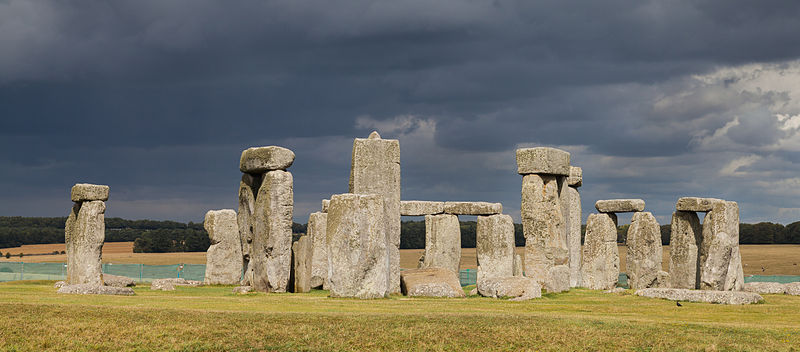
 "Diego Delso, Wikimedia Commons, License CC-BY-SA 3.0

“Diego Delso, Wikimedia Commons, License CC-BY-SA 3.0

“Example: If your book is about an archaeologist who uses Stone Henge to travel into the future, your book would probably interest history buffs as well as fans of speculative fiction/sci-fi.  If that hero happens to be a former Marine, your book might also interest military personnel and/or the families.” (It’s a direct quote, so I am ignoring the terrible itch to edit out the misspelling of Stonehenge.)

Okay–I think I can do this. My book details the adventures of a bard who is forced to  flee his comfortable existence and who finds himself running from one disaster to another with death-defying regularity.

2. Second, we must: identify other books that are comparable to your book and look at the profiles of those books’ main buyers/readers.

They also explain that concept a little further “The target audience isn’t always who the book was written for, but rather, who it ends up appealing to.  Twilight draws in tween and teenage girls with its premise involving a normal, everyday girl falling into a romance with an young, attractive male (the bread and butter of many young girls’ dreams), but it’s appeal stretched to the cross-section of middle-age female readers who love romance and enjoyed Anne Rice in her heyday.”  

Alrighty then–I was heavily drawn, as a reader, to David Eddings, Anne McCaffrey, Tad Williams, J.R.R. Tolkien, P.D. James, Carl Sagan, Agatha Christie, Piers Anthony, and Fritz Lieber–so I suppose my books reflects a certain amount of their (rather jumbled) influence.

Oh, and don’t forget Roger Zelazney. And Mercedes Lackey.

Well that has narrowed it down quite a bit! (Sarcasm–I know, it’s a nasty habit.) I could have included Tolstoy, James Joyce, Horace Walpole, and Louisa May Alcott, but I didn’t have time.

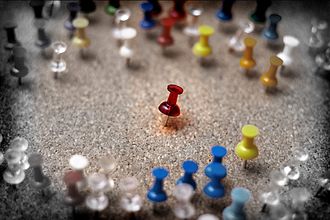
330px-Pin-artsy3. You are next encouraged to pinpoint what is special about your book.

Again, the Creative Penn offers us some insights on how to go about this: “If you tell someone you’re writing a book about a witch who uses her power of communing with animals to rescue a lost dog from an evil dog-napper, then A. Wow, you have an interesting imagination!  B. You may or may not have taken in 101 Dalmatians too much as a child and C. With such a premise, chances are, your story is more light-hearted than scary, so your target readers to which the mystery aspect of your story will entice are more cozy-type mystery consumers.” So what are the few key words, the hook I can use to sell Huw the Bard? How do I boil the plot down to a few key words? This could take a while, but I’m sure I can do it.

Honest.

4. Now we need to determine some demographics.

That’s the problem–I am the demographic, and I don’t know who I am. Mature Audiences, definitely. There is some graphic sex, although it doesn’t devolve into a porn-fest, There is violence, a witnessed rape, and murder. These are all there because they are watershed moments in Huw’s life, things that change his view of the world. There are also a haunted village and a bisexual knight who talks to his horse, so there is humor midst the misery.
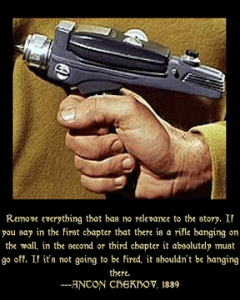
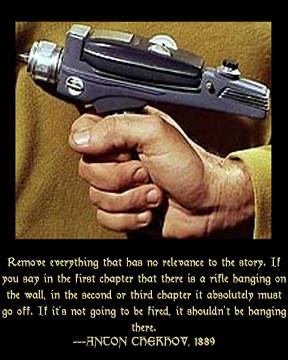
chekhov's gun5. Finally, the Creative Penn suggests we feed the previous four tips into each other to gain even more insight and narrow down who our target audience/s is/are.

Just give me Chekhov’s gunnow. I need to shoot something.

Several times.

Seriously–the article I’ve drawn these suggestions from is a good article, and it goes on to discuss how to use your target audience, which I did find somewhat illuminating.

At this point, if I can get even ONE concrete idea that works, I am feeling good about it. After all, it’s January! I’ve got a whole year to get this down, before I have to admit that this New Year’s resolution has gone the way of my weight-loss dreams and visions of world peace.

2 Comments

Filed under Adventure, Battles, Books, Fantasy, Humor, Literature, Publishing, Self Publishing, Uncategorized, writer, writing

What I’m reading

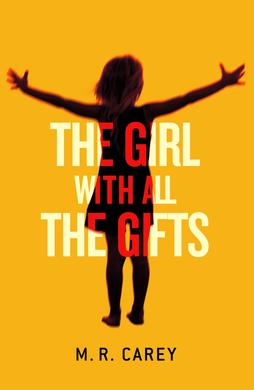
The_Girl_with_All_the_Gifts m.r. careyI just finished reading a great book, The Girl With All the Gifts, by UK author M.R. Carey (Mike Carey, of X-Men Legacy fame). I loved it as much as I did The Martian, by Andy Weir. At first glance the two novels have nothing in common other than they are both considered speculative fiction, but they do have one common feature–they both really rang my bells.

My friend, who also does not normally read dystopian fiction, directed me to it. The action is intense, and it is at times gory, but what makes this book so significant is not the fact it is about Zombies and the war against the undead (which is a theme I don’t usually gravitate to.) The truly powerful character of Melanie, the ten-year-old girl is the real driving force behind this novel.

I really get into character-driven works. That’s why I enjoy such a wide variety of genres in my eternal search for a good read.

The main character in this tale is Melanie, a girl who loves school and her favorite teacher is Miss Justineau.  Melanie is multi-layered and despite the horrible truth of what she is, she is innocent and trusting.

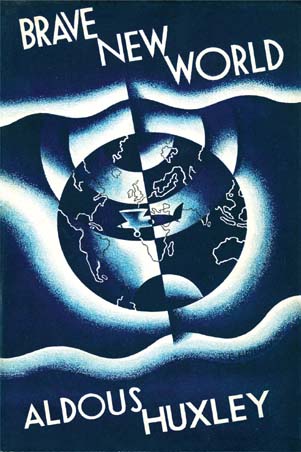
BraveNewWorld_FirstEditionSo what is dystopian fiction? The core plot of dystopian fiction revolves around the premise that society has crumbled for one reason or another, and details the struggle to survive and raise humanity from the ashes. According to Wikipedia, the fount of all knowledge:

Dystopia is defined as a society characterized by a focus on negative societies such as mass poverty, public mistrust, police state, squalor, suffering, or oppression, that society has most often brought upon itself. Most authors of dystopian fiction explore at least one reason why things are that way, often as an analogy for similar issues in the real world. In the words of Keith M. Booker, dystopian literature is used to “provide fresh perspectives on problematic social and political practices that might otherwise be taken for granted or considered natural and inevitable.”

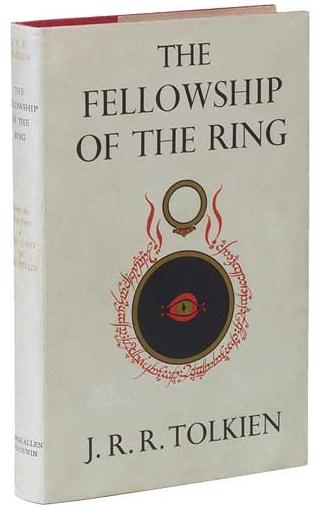
FellowshipOfTheRingNo matter the genre, stories are all driven by one of two elements, plot or character. A plot driven story is one where the plot defines who a character is. Take J.R.R. Tolkien’s Lord of the Rings: Even if you remove Frodo, who is the main protagonist and replace him with another hobbit, the event, which is the battle for middle earth still takes place, the call to action still exists. He is an awesome character who leaps off the page, yes–but this is a plot-driven tale.

But in  The Girl With All the Gifts, the plot is completely driven by Melanie. Her emotions, her love for her teacher and the innocent faith she has in both Miss Justineau, who sees her as a child, albeit a dangerous one, and Sergeant Eddie Parks, who sees her as a monster, but who nonetheless does the right thing–take these away and you just have a book about humanity dealing with zombies and the collapse of society.

In all of the books I have lately read, several that were character driven really stand out. Characters who are not flat, who leap off the page and grab you–characters who strike some chord within you and who stay with you long after the last page. When I close the book after the final paragraphs, if those characters are still with me, that book is a winner.

2 Comments

Filed under Adventure, Battles, Blogger, Books, Fantasy, Humor, Literature, Publishing, Self Publishing, Uncategorized, WordPress, writer, writing

Philosophy and Crafting a Tale

buddha-225x300The Buddha once said, “We are what we think. All that we are arises with our thoughts. With our thoughts, we make the world.”  I believe this to be true, and try to live my life accordingly. I am a basically happy person.

I think a certain amount of my personal philosophy finds its way into my writing. It’s only human nature to want to make the world to fit your idea of what is good and beautiful. In my worlds, good people always find themselves in bad situations, but through the drama, heartache and violence, what I hope to express is the beauty of life, the emotions that are experienced when joys are contrasted against sorrows.

If you have never felt hunger, you can never understand what it is to have plenty. In the same context, if you have never known sorrow, how can you know joy? The contrasts of life are the flavors, the textures that give it meaning.

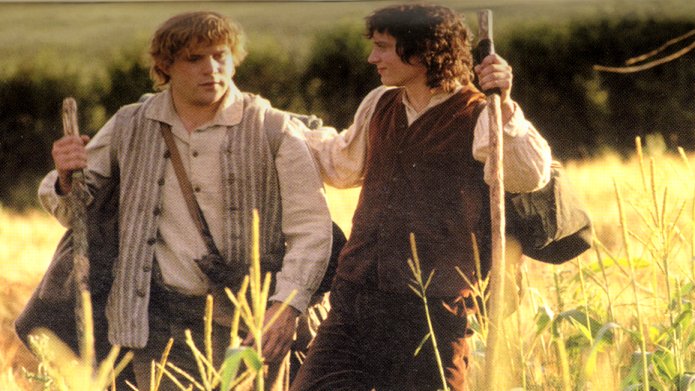
The LOTR advance posterBuddha also said, “There has to be evil so that good can prove its purity above it.”  This is a fundamental truth for all writers of traditional fantasy fiction when devising plots, one that J.R.R.Tolkien understood quite clearly. After all, what would have been the point of Frodo and Sam going to the depths of Mordor, suffering the hardships they endured if not to destroy the One Ring and negate the power of Sauron? And why would they do this, if Sauron was not the embodiment of evil?

sam-frodo-frontdoorIn the Lord of the Rings trilogy, we have one of the most enduring works of modern fiction. It is an epic quest where through it all, we have joy and contentment sharply contrasted with deprivation and loss, drawing us in and inspiring the deepest emotions. This use of contrast is why Tolkien’s work is the foundation upon which modern epic fantasy is built.

If I can create a tale in which the reader experiences the full gamut of human emotion, I will have done my job.  The longer I am at this craft, the more I see that the rest of my life will be a training ground, teaching me new things, and widening my writing horizons everyday. With each thing I have written over the years, my work has evolved. Because the universe follows certain fundamental laws and nothing is static, my work and that of all dedicated craftsman-authors will continue to evolve.

Comments Off on Philosophy and Crafting a Tale

Filed under Adventure, Battles, Books, Fantasy, Humor, Literature, writer, writing

William Morris, Tolkien, and Modern Elves

Pauline Baynes' map poster of Middle-earth published in 1970 by George Allen & Unwin and Ballantine Books.

Pauline Baynes’ map poster of Middle-earth published in 1970 by George Allen & Unwin and Ballantine Books.

Lately I have been ‘guru-ed’ to death on various different writers forums by a few indie authors, whose own work is a great deal less than stellar, harshly criticizing the quality of writing of everyone from J.R.R. Tolkien to Robert Jordan.

Some people–I wonder, do they even read the comments they write? I am going to tell you straight up: Tolkien did NOT use too many words in The Hobbit, and the movie was not better.  Tolkien was Professor of Anglo-Saxon Studies at Pembroke College, Oxford, he invented the elfin language and as such, we may be assured he had a moderately good grasp of the English language, and the literature of his time.

He wrote in a lyrical style, with descriptions and side quests, things that enthralled avid readers like me who understood how to set aside a day to just to enjoy a good read.

The movie, while it is awesome, exciting and great fun, bears some relation to the actual book but certainly does not chronicle it. In the book for starters, Legolas was not a character, he did not have a love interest, and neither did Kili.  If you read the credits at the end of the movie, you will see it clearly says “BASED ON” the book, The Hobbit by J.R.R. Tolkien.

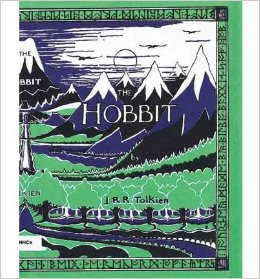
the hobbitThe problem with the book is not in Tolkien’s writing. It is in the eye of the beholder who never learned patience, or appreciation of a well-told story.

Fortunately, we now have an emerging generation of young women who consider “Pride and Prejudice” to be their favorite book of all time, and this gives me hope. Pride and Prejudice is about manners, yes–but it is also about that intrinsic thing all great novels consider, the search for self, and underneath the trappings of fantasy, the elves and goblins, so is the Hobbit.

That quest to discover who we are and what we are capable of is what drives Bilbo to keep  going, even in the face of terrible events. I have hope that if Jane Austen’s work is once again considered to be popular reading among young people, then the love of a beautifully crafted tale will never entirely disappear and the true appreciation of Tolkien’s great works will once again be celebrated.

What I frequently see in these forums see is an aggressive type of person who criticizes but lacks an understanding of what he/she is ranting about. They claim to be in writing groups, but if they are, I feel sorry for their fellow writers.  These people are the carrion-eaters, the ones who will pick an author’s work to the bone, and casually dismiss it, destroying a fellow authors sense of self-worth.

What a person who writes fantasy needs to know is what the masters of the genre wrote, and what made their work classics.  In other words,  stop looking AT the words as disparate parts that you could write better, and read them in context. You might be surprised at what you will find!

Well at World's End, William MorrisEven Tolkien had inspiration for his works, and he freely admitted he was a great devotee of the work of William Morris, an English textile designer, artist, writer, and socialist associated with the Pre-Raphaelite Brotherhood and English Arts and Crafts Movement. He loved Morris’s prose and poetry romances. Tolkien’s own work follows the general style and approach of Morris’s work. The Desolation of Smaug as portraying dragons as detrimental to landscape, has been noted as an explicit motif borrowed from Morris, just as countless fantasy authors borrow the modern concept of Orcs, Elves, and many other high fantasy motifs from Tolkien.

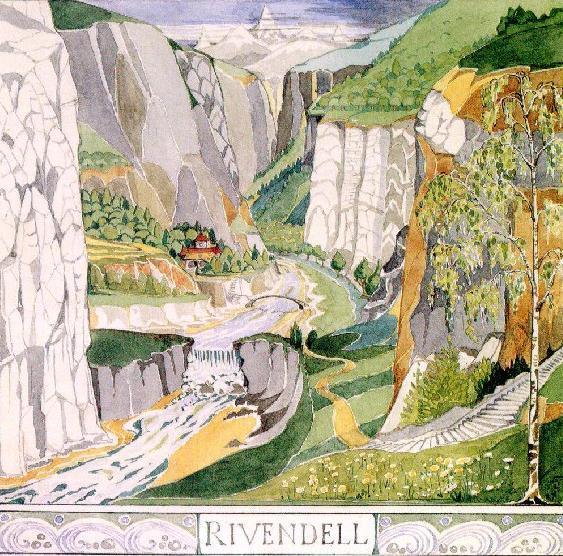
Rivendell_illustrationThe modern image and mythology of the elf as he is written into most of today’s fantasy has been directly modeled on the elves of Tolkien’s Rivendell, whether the author knows it or not. Even the elves we find in the onslaught of urban-fantasy-romances are created in Tolkien’s image.

So, now that I’ve had my rant about internet writer’s forums and the bad apples who occasionally haunt them, you’re probably wondering what  I find that is good out there? A great deal more good than bad, actually.  There are an incredible number of people who are willing to be helpful to aspiring authors, and who regularly share good information. The following is a list of good forums you might want to look into.

Writers Digest

Writers Cafe

Absolute Write

National Novel Writing Month (NaNoWriMo)

I’ve had a lot of fun on these forums and I learned a great deal. I never respond to Trolls, because acknowledging them encourages them to think they have power. How you handle them is up to you. Do your homework, research the great literature of your genre and write because you love it.

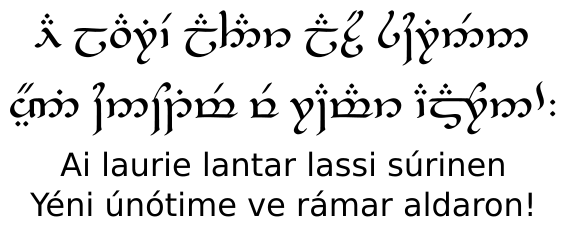
Ah! like gold fall the leaves in the wind, long years numberless as the wings of trees! The beginning of the Quenya poem Namárië written in tengwar and in Latin script, by J.R.R. Tolkien.

Ah! like gold fall the leaves in the wind, long years numberless as the wings of trees! The beginning of the Quenya poem Namárië written in tengwar and in Latin script, by J.R.R. Tolkien.

7 Comments

Filed under Adventure, Battles, Books, Dragons, Fantasy, Humor, Literature, mythology, Uncategorized, writer, writing